
Malignant diseases and autoimmune disorders are treated with cyclophosphamide (CPA). However, as a result of its serious negative consequences, including liver damage associated with oxidative stress, its therapeutic usage is restricted. The most potent antioxidant among flavonoid chemicals is quercetin, the aim of this study was to evaluate the protective effect of quercetin against cyclophosphamide. An explanation of quercetin’s hepatoprotective effects against cyclophosphamide-induced hepatotoxicity. Twenty-eight male Westar rats (that weighed 200–250 g) were chosen at random and divided into four equal groups for this investigation. During the initial periods of acute exposure, the animals had treatment with quercetin (50 mg/kg) for 30 days on consecutive days. Cyclophosphamide (100 mg/kg) was administered intraperitoneally only on 10 and 30 days six hours after the final dosage of quercetin. After 24 hours, all of the animals were led into sacrificed and their blood and livers were collected identically for analysis of the liver enzymes and hepatic oxidative stress indicators. Cyclophosphamide significantly increased malondialdehyde (MDA), liver biomarkers (ALT, AST, ALP, and TP), and prothrombin time. Otherwise, glutathione (GSH), and total protein (TP) level was substantially reduced in the control group. Studies have demonstrated quercetin’s capacity to decrease cyclophosphamide’s effects on (MDA, ALT, ALP, TP, and AST) while increasing GSH. Also, quercetin significantly affects body weight for their group and mixed group with cyclophosphamide. The results demonstrated quercetin’s capacity to lessen the cyclophosphamide-induced changes in MDA, ALT, ALP, TP, and AST while enhancing the changes in GSH. Moreover, quercetin notably impacts body weight for both the quercetin and cyclophosphamide mix groups. Conclusion: The hepatoprotective efficacy of quercetin against cyclophosphamide’s cytotoxic effects was investigated in this study after showing the results concluded when used quercetin as protective.
Research Article · Volume 11, Issue 10, 20 October 2023 · Open Access
Biochemical Effect Of The Protective Effect Of Quercetin After Induced Hepatotoxicity By Cyclophosphamide In Male Rats
·
Affiliations & Notes ⌄
- 1Department of Physiology, Biochemistry and Pharmacology, College of Veterinary Medicine, University of Baghdad, Iraq. *Correspondence | Rana A Salih Department of Physiology, Biochemistry and Pharmacology, College of Veterinary Medicine, University of Baghdad, Iraq
- 2Email: rana.a@covm.uobaghdad.edu.iq
Article Info ⌄
- Journal:
- Advances in Animal and Veterinary Sciences
- Published:
- 20 October 2023

From the article
- The subacute exposure as in Table (1) and Figure (1) the Quercetin group exhibits a significant decrease at (P≤0.05) when comparison to the control group and a non-significant change with cyclophosphamide and mixed group.
- The ALT, AST, and ALP liver enzymes that drop in the cyclophosphamide group.
Selected from the article's own text.
Abstract
INTRODUCTION
Hepatotoxicity refers to liver damage or harm caused by contact with drugs such as NSAID , chemotherapy for long time or with other non-pharmacological substances : . Hepatotoxic symptoms include acute and chronic hepatitis microvesicular steatosis or macrovesicular steatosis. It is possible to think about hepatotoxicity as the outcome of a negative relationship between two xenophobic systems in the liver, cholestasis, granulomatous hepatitis, fulminant hepatitis, ductopenia, and steatosis (Al-Rikabi, 2012;. Chemotherapeutic is the use of artificial substances or medications derived from plants that are hazardous to cancer cells and inhibit their growth and division . The hepatic microsomal P450 enzyme breaks down cyclophosphamide into its two active ingredients, phosphoramide, and acrolein metabolite :. Acrolein is toxic to normal cells, and Phosphoramide induces cytotoxicity . Reactive oxygen species are activated by acrolein, which also causes peroxynitrite production, severely destroying production of peroxynitrite and severely destroying peroxynitrite, which severely destroys the cell’s proteins, lipids, and DNA The liver along with the kidneys are vital organ in the metabolism and excretion of CYP and its reactive metabolites, hence renal toxicity and liver toxicity are two of them that are regarded as being the most severe . Chemotherapy improves the quality of life for cancer patients. On the other hand, it has a variety of harmful effects on normal cells and tissue .From early life, there has been a progressively greater interest in developing herbal-based medications for use as complementary therapies . Quercetin, A major flavonoid that may be found highly contained in red wine, leafy greens, and fruits, is a dietary flavonoid that is present in many of our foods, including berries, onions, and apples. Black cumin contains a significant quantity of quercetin, a flavonoid that exhibits antioxidant capabilities against a number of diseases, including cirrhosis, biliary obstructions, liver fibrosis, atherosclerosis, renal damage, and others. Quercetin has recently attracted attention for its remarkable health advantages, establishing it as a key ingredient for creating innovative foods that have beneficial effects and medications (Al-Mazaien, 2012; ; . There has been a lot of interest recently in the use of dietary antioxidants when combined with chemotherapeutic drugs to lessen their negative side effects and the oxidative organ damage they cause after delivery . Their impact on hepatic damage brought on by cyclophosphamide has not yet been determined. So, the purpose of the study was to observe the way natural antioxidants like quercetin protect the liver from cyclophosphamide-induced liver damage in rats.
METHODS AND MATERIALS
Animals And Experimental Protocol Of Subacute Exposure
Twenty-eight ale rats will be randomly grouped into four groups of seven rats each. Until the experiment’s ending (10 days), animals get the following daily treatment:
1- Group I (7 rats) was receive distilled water (D.W) orally (control group)
2- Group II (7 rats) induced subacute toxicity by cyclophosphamide at doses each with (100 mg/kg B.W) in (day1) and (day 30) (+ve control) intraperitoneally (I.P) to induce subacute liver injury .
3- Group III (7 rats) was treated with quercetin 50 mg/kg B.W orally for (thirty days) till the end of the experiment .
4- Group IV (7 rats) was treated with quercetin (50 mg/kg body. W) orally daily for (thirty consecutive days.) induced subacute liver injury by giving cyclophosphamide six hours after the quercetin administered at doses each with 100 mg/kg B.W in (day1) and (day thirty ) intraperitoneally (I.P) to induce subacute liver injury (I.P) ; .
Sample Collection From Rats
At the end of the investigation, all of the rats were slaughtered, put the needle directly in heart after anesthesia and drops of blood were collected in tube, then centrifuged for 15 minutes at 4 °C, and the results were analyzed. A portion of serum was kept at -20 °C after biochemical analysis of liver enzymes. Liver samples were rapidly collected, and one section of the remaining portion of the liver was immediately frozen and proceeded to -20 °C for homogenate preparation while the small part was stored in 10% buffered formalin for histological investigation.
Assessment Of Liver Function Tests
Alkaline phosphatase, total serum protein aspartate aminotransferase, and alanine aminotransferase in the end of the experiment, blood samples were collected from the heart, and the blood was centrifuged for 15 minutes at 4000 rpm. Serum samples from all groups were collected and then put to use for different biochemical evaluations and plasma samples were used to evaluate the prothrombin time test .
Determination Of Hepatic Oxidative Stress Markers
Tissue Homogenization For Mda, Gsh: Using the homogenization process, rat liver homogenates’ (MDA and GSH) concentrations are determined by: As soon as the animals had been slaughtered, the livers were quickly removed from them and homogenized using Brinkman polytron in homogenization buffer (pH 7.2, 4 °C, PBS with 0.05% sodium azide, 0.5% Triton X-100, and a cocktail of protease inhibitors). After that, the livers were quickly sonicated for ten minutes. Following a ten-minute centrifugation at 12,000 x g, the supernatants of homogenates were analyzed for MDA and GSH concentrations using an ELISA. The MDA and GSH levels were expressed as Pg/mg of total protein. .
Estimation of Prothrombin Time: When tissue factor is added to citrated plasma that has been recalcified in lab equipment on point-of-care (POC) devices, PT monitors the amount of time it takes for clotting to occur. The quantity of clot formation is measured as the PT when a patient’s citrated plasma sample is combined with thromboplastin, a substance comprised of tissue factor, calcium, and phospholipid. The coagulation factors fibrinogen, and factors (II, V, VII, and X) can all be used as screening assays. .
Statistical Analysis
The Statistical Analysis System- SAS (2018) program was used to detect the effect of difference factors in study parameters. Least significant difference –LSD test (Analysis of Variation-ANOVA) was used to significantly compare between means in this study (SAS, 2018)
RESULTS AND DISCUSSION
The subacute exposure as in Table (1) and Figure (1) the Quercetin group exhibits a significant decrease at (P≤0.05) when comparison to the control group and a non-significant change with cyclophosphamide and mixed group. The cyclophosphamide group exhibits a significant decrease at (P≤0.05) when comparison to the control group and a non-significant change with quercetin and mixed group when comparison to the control group, the mixed group exhibits a substantial (P≤0.05) decline, but the cyclophosphamide plus quercetin group does not.
The result agreed with our study which discovered that cyclophosphamide caused weight loss, activity decline, and starvation in cyclophosphamide-treated rats. Reduced adipose tissue and proteins, which may be related to decreased appetite brought on by anticancer drugs, may be to blame for the difference in body weight between the two points in time. gastrointestinal toxicity and subsequent decrease in food intake with the animal’s loss of appetite or excessive loss of water, salts, and proteins due to kidney injury, dehydration, and weight loss in anti-cancer drug-treated rats due to the loss of appetite or excessive loss of water, salts, and proteins due to kidney injury and weight loss (Greggi et al., 2000; this result conformity with that show Quercetin (50 mg/kg B.W for (30 days) , demonstrates a broad variety of pharmacological and health-promoting actions, including antibacterial, anti-inflammatory, cancer prevention. and liver-protective properties. Additionally, quercetin inhibits obesity by activating the adenine monophosphate-activated protein kinase and mitogen-activated protein kinase signaling pathways.
The Effects Of Cyclophosphamide And Quercetin On Serum Liver Enzymes (Ast, Alt, Alp).
All rats treated are shown in Table (2) and Figures (2, 3, 4) in ALT the subacute exposure there is a significant increase in cyclophosphamide levels when comparison with the control, quercetin, and mixed group, the quercetin group shows a non-significant with the control and mixed group, mixed group (quercetin and cyclophosphamide) show a significant decrease at (P≤0.05) when compared with a cyclophosphamide group and a non-significant with the control and quercetin group. In ALP show Table (2) in the subacute exposure there is a significant increase at (P≤0.05) in cyclophosphamide levels when in comparison with the control, quercetin, and mixed group, the quercetin group shows a significant decrease at (P≤0.05) when compared with the cyclophosphamide group and there is a non-significant with control and mixed group. The mixed group (quercetin and cyclophosphamide) show a significant decrease when in comparison with the cyclophosphamide group and have a significant increase at (P≤0.05) with the control group, a non-significant with the quercetin group. The AST results Table (2) in the subacute exposure there is a significant increase at (P≤0.05) in cyclophosphamide levels when in comparison with the control, and mixed group, the quercetin group shows a non-significant decrease when compared with the cyclophosphamide, quercetin, and control group. The mixed group (quercetin and cyclophosphamide) shows a significant decrease at (P≤0.05) when in comparison with the cyclophosphamide and a non-significant with the quercetin and control groups.
The result of liver enzymes (ALP, ALT, and AST) agreed with those obtained by The CP-induced hepatotoxicity in this investigation was demonstrated by significant variations in the serum liver enzyme (AST, ALT, and ALP) as in Table (2, 3, and 4).
Table 1: Effect of quercetin and cyclophosphamide on body weight of male rats for subacute exposure 30 days
| Group/ periods | Mean ± SE of Body weight(gm) | LSD value | ||
| Zero time | Two week | Fourth week | ||
| Control | 249.57 B b | 259.00 A ab | 271.86 A a | 20.86 * |
| Cyclophosphamide | 267.17 AB a | 258.33 A a | 246.00 B a | 19.71 NS |
| Quercetin | 274.13 A a | 263.57 A ab | 250.28 B b | 22.08 * |
| Cyclophosphamide+ quercetin | 270.00 AB a | 259.86 A a | 241.14 B a | 18.98 NS |
| LSD value | 21.84 * | 17.694 NS | 20.066 * | |
This means with different big letters in the same column and small letters in the same row are significantly different. * (P≤0.05).
Table 2: Effect of cyclophosphamide and quercetin sub-acute exposure in serum ALP, ALT, and AST level
| Group | Mean ± SE (mu/ml) | ||
| Subacute ALP (30 Days) | Subacute ALT (30 Days) | Subacute AST (30 Days) | |
| Control | 79.211 ±3.07 C | 18.731 ±0.88 B | 18.624 ±0.77 B |
| Cyclophosphamide | 107.371 ±5.41 A | 28.20 ±1.86 A | 23.514 ±1.29 A |
| Quercetin | 87.938 ±4.18 BC | 21.387 ±1.03 B | 21.261 ±1.15 AB |
| Cyclophosphamide+ quercetin | 93.473 ±4.63 B | 23.021 ±1.09 B | 19.177 ±1.31 B |
| LSD value | 9.815 * | 5.037 * | 4.238 * |
This means with different big letters in the same column are significantly different. * (P≤0.05).
Table 3: The Effects of Cyclophosphamide and Quercetin on GSH and MDA in hepatic tissue sub-acute Exposure.
| Group | Mean ± SE (Pg/mg) | |
| Subacute GSH (30 Days) | Subacute MDA (30 Days) | |
| Control | 73.841 ±3.41 A | 1.284 ±0.09 B |
| Cyclophosphamide | 17.815 ±0.86 C | 3.967 ±0.18 A |
| Quercetin | 37.317 ±1.95 B | 1.706 ±0.08 B |
| Cyclophosphamide+ quercetin | 34.921 ±2.15 B | 2.03 ±0.14 AB |
| LSD value | 8.673 * | 1.982 * |
This means with different big letters in the same are significantly different. * (P≤0.05).
Hepatocyte membranes become damaged and necrosis as a result of the free radicals’ attachment to them. This causes structural breakdowns in the membranes, which caused intracellular cytosol (AST, ALT, and ALP) to be released into the blood . These results are in agreement with those obtained by (Adikwu and Bokolo, 2018) Aminotransferases are the most prevalent and reliable indicators of hepatocellular necrosis. These enzymes respectively catalyze the transfer of the alpha-keto groups of ketoglutaric acid and aspartate, two alpha-amino acids, respectively . A marker enzyme for the plasma and endoplasmic reticulum known as alkaline phosphatase is frequently used to evaluate the integrity of the plasma membrane . Normal correlations between abnormal increases in ALT, ALP, AST levels, and liver damage exist. The loss of enzymes from
hepatocytes as a result of Cyclophosphamide-induced hepatic damage causes an increase in systemic circulation and activity . During the present investigation, rats given CP showed clearly increased liver and serum ALT, AST, and ALP levels. This finding reflects the destruction of liver cells and altered membrane function it is important that when rats were given cimetidine and CP, the levels of these enzymes were recovered. However, in comparison to rats treated with cyclophosphamide alone, those given quercetin (prior to cyclophosphamide administration) showed substantial decreases in the level of liver enzymes (AST, ALT, and ALP). However, there was a considerable drop in liver enzyme levels that brought them close to control values, and these findings were consistent with this study that demonstrate rats treated with quercetin showed a substantial decrease in blood liver enzymes when comparison to rats treated with cyclophosphamide. Due to its capacity to maintain the structural integrity of the liver and prove its hepatoprotective efficacy, Chen (2010) found that quercetin effectively reduced the rise of blood ALT and AST levels brought on by ethanol poisoning . Similar final results were reported in a different research by (Olayinka and his colleagues, 2014), demonstrating quercetin’s hepatoprotective properties in a rat model of melphalan’s hepatotoxicity, an alkylating anticancer drug .
The Effects Of Cyclophosphamide And Quercetin Mda And Gsh In Hepatic Tissue.
The result of GSH as in Table (3) and in subacute exposure there is a significant decrease at (P≤0.05) in cyclophosphamide levels when comparison with another group, the quercetin group shows a significant decrease at (P≤0.05) when comparison with the control group, and there is a non-significant between quercetin and mixed group. The MDA results as in Table (3) In subacute exposure there is a significant increase at (P≤0.05) in cyclophosphamide levels when comparison with the control and quercetin groups, the quercetin group shows a significant at (P≤0.05) decrease when comparison with the control group and there is a non-significant between quercetin and mixed group.
This result that finds in agreement with other research (El-Sheikh., 2017) a drop in GSH, as well as a rise in the lipid peroxidation product MDA, which are signs of tissue oxidative stress brought on by cyclophosphamide. It’s interesting to note that prior studies suggested that cyclophosphamide itself was not the cause of multiorgan toxic effects, but rather that this was due to its toxic metabolites, which, especially at high doses, caused the release of significant amounts (ROS), such as H2O2, HOCl, O2, and OH (Nishikawa et al., 2015), reduces oxidative stress in many tissues. High ROS levels have been associated with the degeneration of cellular antioxidant defense systems, disruption of intracellular oxidant/antioxidant balance, and depletion of intracellular GSH levels , the primary detoxifier of ROS and antioxidant scavenger. It’s possible that the direct toxicity of cyclophosphamide’s metabolites or the harmful effects of ROS caused the resulting lipid peroxidation (Nishikawa et al., 2015), involves the production of the MDA byproduct of lipid peroxidation. Important antioxidant enzymes may also be depleted as a result of oxidative stress . This elevation of MDA and decrease of GSH in hepatic tissue were restored when rats were treated with quercetin post-injected with cyclophosphamide and show a significant decrease of these levels when compared to the cyclophosphamide and quercetin group. More studies that agree with this result, study shows the protective effect of quercetin against cyclophosphamide used The study demonstrated that quercetin supplementation decreased MDA levels and increased GSH levels in hepatic tissue, in contrast to rats administered Cyclophosphamide poisoning . However, studies have demonstrated that quercetin pretreatment with melphalan dramatically raised hepatic levels of GSH, lowered hepatic MDA levels, and scavenged free radicals. This shows that by increasing the hepatic antioxidant enzymes SOD and catalas, quercetin was able to shield the liver from the damaging effects of melphalan . Flavonoid abundant in grape seeds is quercetin, which has been epidemiologically linked to defense against lipid peroxidation. .
The Effects Of Cyclophosphamide And Quercsetin On Total Serum Protein.
The result of total serum protein as in Table (4) and figure (7) in the subacute exposure there is a significant decrease at (P≤0.05) in cyclophosphamide levels when comparison with the control and a non-significant change with quercetin and mixed group, the quercetin group shows a significant decrease at (P≤0.05) when comparison with the control group and there is a non-significant with the cyclophosphamide and mixed group, mixed group (quercetin and cyclophosphamide) show a significant decrease at (P≤0.05) when comparison with a control group and a non-significant with the cyclophosphamide and mixed groups.
Cyclophosphamide signification reduced in level total serum protein (TP) in group rats treated compared to the control group and quercetin group caused by the pathological cytotoxic effect of cyclophosphamide, quercetin that show a significant decrease of total serum protein (TP) that produced by malabsorption and reduced of digestive of protein and may cause a decrease of body weight and total serum protein, this result that agreed with another study. Quercetin results agree with a non-specific inhibitory efficacy is shown by the fact that a little Ki/IC50 ratios in the micromolar or submicromolar range, quercetin has been shown to inhibit the proteolytic activities of numerous serine proteases, Quercetin’s crystal
Table 4: The Effects of Cyclophosphamide and Quercetin on Total serum protein in Sub-acute Exposure.
| Group | Mean ± SE of Total serum protein (mg/dl) |
| Subacute (30 Days) | |
| Control | 4.713 ±0.35A |
| Cyclophosphamide | 1.814 ±0.09B |
| Quercetin | 2.048 ±0.16B |
| Cyclophosphamide + quercetin | 1.745 ±0.20B |
| LSD value | 1.863 * |
This means with different big letters in the same column are significantly different. * (P≤0.05).
structure in combination with urokinase-type plasminogen activator (uPA) was previously found . The fact that the uPA residues on trypsin that bind to quercetin are identical to those on those residues in our crystal structure is particularly intriguing, suggesting that quercetin may inhibit trypsin through a similar mechanism. The catechol moiety of quercetin, which is deeply inserted into the S1-specific pocket, is primarily responsible for the inhibitory efficacy of quercetin binding. The fact that catechol alone only had a very mild inhibitory effect on trypsin (IC50 > 3 mM) shows that another moiety could be quite important in the binding. Quercetin, morin, kaempferol, and isorhamnetin all shown close to IC50 values for trypsin inhibition; however, rutin displayed lower inhibitory activity, possibly as a result of the steric hindrance of the bulky glycoside on its B3 position.
For cyclophosphamide, it was decided to use a lower total serum protein level. additionally, it was discovered that after receiving CP injections, the total protein and albumin levels in the rats significantly decreased. The current findings are consistent with those from prior investigations . A measure of the severity of liver injury is provided by the levels of serum total protein and albumin. Hepatocyte dysfunction was seen as the procedure progressed (after the administration of greater dosages of the medication), including disruptions in the production of certain proteins ; . In addition, discovered that rats given CP injections for two days showed signs of hypoproteinemia. They explained that by preventing protein synthesis, the CP caused liver damage to cells. Therefore, hepatotoxicity was demonstrated by the reduced blood total protein levels in the Cyclophosphamide-injected animals.
The Effects Of Cyclophosphamide And Quercetin On Total Prothrombin Time Test.
The result of prothrombin time as in Table (5), and Figure (8) In the subacute exposure there is a significant increase at (P≤0.05) in cyclophosphamide levels when comparison with the control and quercetin group a non-significant change with a mixed group, the quercetin group shows a significant decrease at (P≤0.05) when comparison with the cyclophosphamide and mixed groups, and there is a non-significant with the control group, mixed group (quercetin and cyclophosphamide) show a significant increase at (P≤0.05) when comparison with a control group.
Table 5: Effects of cyclophosphamide and Quercetin on prothrombin time test for Sub-acute exposure.
| Group | Mean ± SE of Prothrombin time (sec) |
| Subacute (30 Days) | |
| Control | 14.261 ±0.71B |
| Cyclophosphamide | 25.760 ±1.44A |
| Quercetin | 19.15 ±0.88B |
| Cyclophosphamide + quercetin | 24.338 ±1.52A |
| LSD value | 5.027 * |
This means with different big letters in the same are significantly different. * (P≤0.05).
The effect of cyclophosphamide shows a significant increase in prothrombin time this result is caused by the hepatotoxic effect of cyclophosphamide, the quercetin caused a significantly prolonged prothrombin time the result of cyclophosphamide that agreed with another study That observed a considerable, slow rise in the Pt that began one day after the Cyclophosphamide injection and peaked four days later, The platelet count significantly dropped along with the increase in Pt, This could be linked to the activation of platelets brought on by the coagulation cascade being activated, Injured tissue attracts blood coagulation factors, involves the release of chemotactic molecules and adhesion molecules from activated platelets, inflammatory mediators, leukocytes, and other platelets from circulation thrombocytopenia . Quercetin results agreed with the study studies suggest it could control coagulation by preventing the production of fibrin and coagulation components and by directly causing blood clots to break down, Additionally, flavonoids prevented thrombin and FXa from acting as pro-coagulant proteinases. It has been observed that both direct and indirect inhibitory strategies can control pro-coagulant proteinases , According to the results of the thrombin and FXa assays, quercetin and its glucoside may attach directly or react with procoagulant proteins, decreasing their enzymatic activity. Other research It was discovered that the additive antiplatelet activity of the pomegranate peel extract may have contributed to the rise in PT values after dosing rats with the extract, The effect of guava leaves, specifically its quality marker quercetin, Quercetin, a flavonoid included in guava leaf extract that has been previously shown to raise the risk of bleeding or amplify the effects of warfarin medication, may also have an impact on PT and INR readings.
CONCLUSION AND RECOMMENDATIONS
1: It is clear from the current study’s findings of the levels of numerous biochemical indicators that quercetin provides liver protection against cyclophosphamide. The ALT, AST, and ALP liver enzymes that drop in the cyclophosphamide group
2: After quercetin treatment also show a reduced in MDA and an increase in GSH after treatment, and quercetin also causes a decrease in total serum protein
3: The effectiveness of hepatoprotective increased in liver with quercetin compared to individual cyclophosphamide alone.
ACKNOWLEDGMENTS
I would like to thank the staff of the physiology and Pharmacology Department/ College of Vet. Med. Baghdad University for their flexibility, professional ideas, and advice throughout my study.
CONFLICT OF INTEREST
The author declares that there is no conflict of interest.
novelty statement
The novelty of the study is focused on pharmacological Effect of quercetin as an effective hepatoprotective, and to reduce the toxicity of the cytotoxic effect of cyclophosphamide on the liver.
AUTHORS CONTRIBUTION
The authors each contributed equally.
Figures

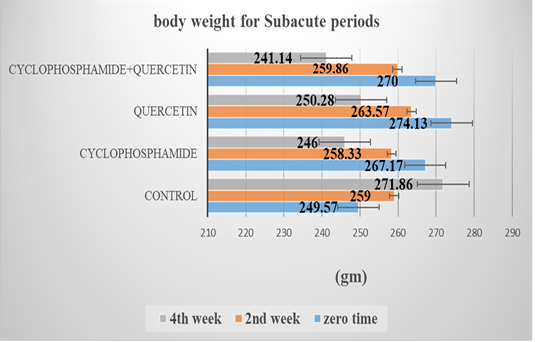
Effect of quercetin and cyclophosphamide on body weight of male rats for subacute exposure 30 days
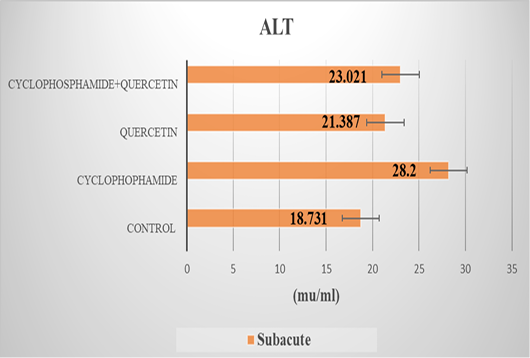
Effect of cyclophosphamide and quercetin for sub-acute periods in serum ALT level
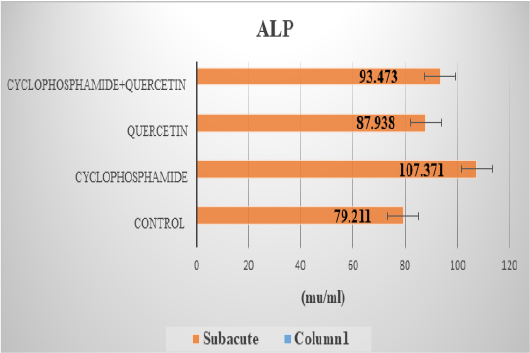
Effect of cyclophosphamide and quercetin for sub-acute periods in serum ALP level
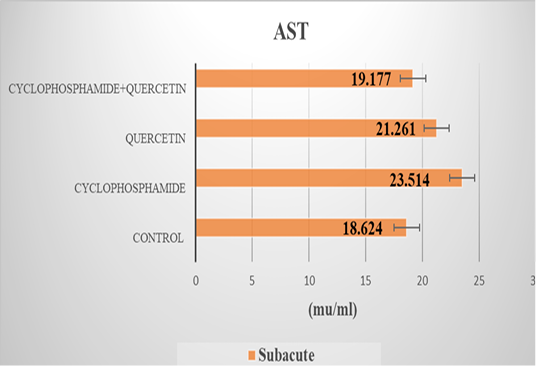
Effect of cyclophosphamide and quercetin for sub-acute periods in serum AST level in male rats
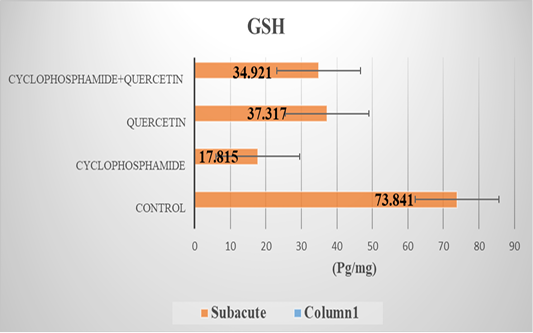
The Effects of Cyclophosphamide and Quercetin on GSH in hepatic tissue for Sub-acute Exposure.
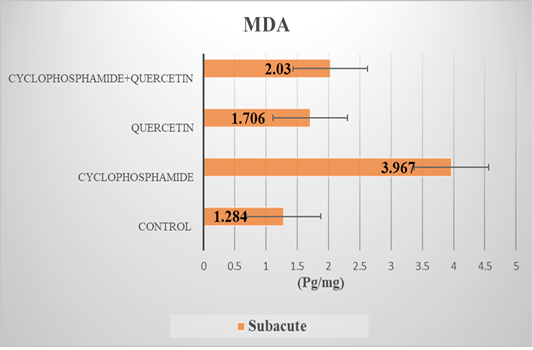
The Effects of cyclophosphamide and Quercetin on MDA in hepatic tissue for sub-acute exposure in male rats.
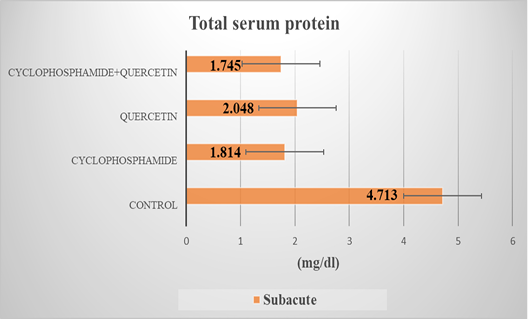
The Effects of Cyclophosphamide and Quercetin on Total serum protein for Sub-acute Exposure.
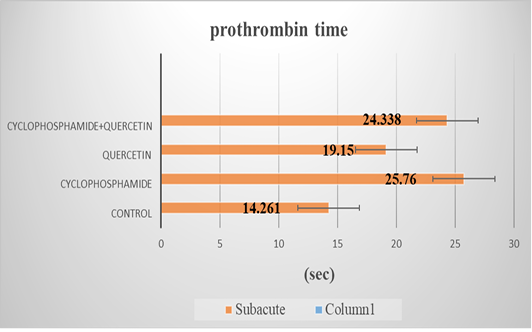
The Effects of cyclophosphamide and Quercetin on prothrombin time test for Sub-acute exposure
References
- Adikwu E, Bokolo B (2018). Effect of cimetidine on cyclophosphamide-induced liver toxicity in albino rats. Asian J. Med. Sci., 9(5): 50-56. https://doi..org/10.3126/ajms.v9i5.19910
- Ahmed RA (2018). Hepatoprotective and antiapoptotic role of aged black garlic against hepatotoxicity induced by cyclophosphamide. J. Basic Appl. Zool., 79:8 https://doi.org/10.1186/s41936-018-0017-7[CrossRef]
- Al-Ameedi I, K, Al-Rekabi M, Al-Rikabi J (2016). Hepatotoxic effect of chronic exposure of Tacrolimus in male Albino rats. Iraqi J. Vet. Med., 40(1): 161-166. https://doi.org/10.30539/iraqijvm.v40i1.155[CrossRef]
- Al-Jammas S (2019). the histological changes induced by cytarabine on rabbits kidneys (with and without vitamin E administration). Iraqi J. Vet. Sci., 33(2): 311-316. https://doi.org/10.33899/ijvs.2019.162910[CrossRef]
- Al-Jammas S, Al-Saraj A (2019). The histological changes induced by cytarabine on rabbits kidneys (with and without vitamin E administration). Iraqi Journal of Veterinary Sciences, 33(2). https://doi.org/10.33899/ijvs.2019.162910[CrossRef]
- Ali FA, Hasan HF (2016). The Ameliorative Effects of Persia americana Pulps Alcoholic Extract on Fertility of Female Rats Treated with Cyclophosphoamide. J. Nat. Sci. Res., 6 (18):93-100.
- Al-Mzaien KA (2012). Assessment the Antioxidant and Hypolipidmic Effect of Black Cumin (Nigella sativa L.) Flavonoids in Induced Oxidative Stressed Male Rabbits. Iraqi J. Vet. Med., 36(2): 163-173. https://doi.org/10.30539/iraqijvm.v36i2.459[CrossRef]
- Alnaqeeb M, Mansor KA Mallah EM Ghanim BY, Idkaidek N Qinna NA (2019). Critical pharmacokinetic and pharmacodynamic drug-herb interactions in rats between warfarin and pomegranate peel or guava leaves extracts. BMC Complement. Alternat. Med., 19(1): 1-12. https://doi.org/10.1186/s12906-019-2436-5[CrossRef]
- Al-Rikabi FMK (2012). Evaluation of selected parameters of rat liver injury following repeated administration of oseltamivir for different periods. Iraqi J. Vet. Med., 36(1): 145–156. https://doi.org/10.30539/iraqijvm.v36i1.559[CrossRef]
- Ansell J, Hirsh J, Poller L, Bussey H, Jacobson A, Hylek E (2004). The pharmacology and management of the vitamin K antagonists: the Seventh ACCP Conference on Antithrombotic and Thrombolytic Therapy. Chest J., 126(3): 204S-233S. https://doi.org/10.1378/chest.126.3_suppl.204s[CrossRef]
- Antunes LMG, DARIN JDAC, Bianchi MD (2000). Protective effects of vitamin C against cisplatin-induced nephrotoxicity and lipid peroxidation in adult rats: a dose-dependent study. Pharmacological research, 41(4): 405-411. https://doi.org/110.1006/phrs.1999.0600
- Atessahin A, Yilmaz S, Karahan I, Ceribasi A , Karaoglu A (2005). Effects of lycopene against cisplatin-induced nephrotoxicity and oxidative stress in rats. Toxicology., 212(2-3): 116-123. . https://doi.org/10.1016/j.tox.2005.04.016[CrossRef]
- Basiglio CL, Crocenzi FA, Sánchez Pozzi EJ, Roma MG, (2021). Oxidative stress and localization status of hepatocellular transporters: Impact on bile secretion and role of signaling pathways. Antioxid. Redox Signal., 35(10): 808-831. https://doi.org/10.1089/ars.2021.0021[CrossRef]
- Basu A, Bhattacharjee A, Roy S, Ghosh P, Chakraborty P, Das I, Bhattacharya S (2014). Vanadium as a chemoprotectant: effect of vanadium (III)-L-cysteine complex against cyclophosphamide-induced hepatotoxicity and genotoxicity in Swiss albino mice. JBIC Journal of Biological Inorganic Chemistry., 19: 981-996. https://doi.org/10.1007/s00775-014-1141-6[CrossRef]
- Bernacki RJ, Bansal S K, Gurtoo HL (1987). Combinations of mesna with cyclophosphamide or Adriamycin in the treatment of mice with tumors. Cancer Res., 47(3): 799-802.
- Bhatia K, Ahmad F, Rashid H, Raisuddin S (2008). Protective effect of Sallylcysteine against cyclophosphamide-induced bladder hemorrhagic cystitis in mice. Food Chem. Toxicol., 46:3368–3374. https://doi.org/10.1016/j.fct.2008.08.011[CrossRef]
- Borovikova L V, Ivanova S, Zhang M, Yang H, Botchkina G I, Watkins LR, Tracey KJ (2000). Vagus nerve stimulation attenuates the systemic inflammatory response to endotoxin. Nature., 405(6785): 458-462. https://doi.org/10.1038/35013070[CrossRef]
- Casak SJ, Lemery S J, Shen YL, Rothmann MD, Khandelwal A, Zhao H, Pazdur R (2011). US Food and Drug Administration approval: rituximab in combination with fludarabine and cyclophosphamide for the treatment of patients with chronic lymphocytic leukemia. Oncologist., 16(1): 97-104. https://doi.org/10.1634/theoncologist.2010-0306[CrossRef]
- Cerig S, Geyikoglu F, Bakir M, Colak S, Sonmez M, Koc K (2016). Hepatoprotective effect of oleuropein against cisplatin-induced liver damage in rat. World Acad. Sci. Eng. Technol. Int. J. Med. Health Biomed. Bioeng. Pharm. Eng, 10: 260-7. https://doi.org/10.1155/2016/2986796[CrossRef]
- Chen X (2010). Protective effects of quercetin on liver injury induced by ethanol. Pharmacog. Mag., 6(22): 135. https://doi.org/10.4103/0973-1296.62900[CrossRef]
- Cheng Y, Liu Y, Chen D, Zhou Y, Yu S, Lin H, Huang M (2021). Dual effects of quercetin on protein digestion and absorption in the digestive tract. Food Chem., 358: 129891. https://doi.org/10.1016/j.foodchem.2021.129891[CrossRef]
- Choi J, H, Kim K, J, Kim S (2016). Comparative effect of quercetin and quercetin‐3‐O‐β‐d‐glucoside on fibrin polymers, blood clots, and in rodent models. J. Biochem. Molecul. Toxicol., 30(11): 548-558. https://doi.org/10.1002/jbt.21822[CrossRef]
- Cichoż-Lach H, Michalak A (2014). Oxidative stress as a crucial factor in liver diseases. World journal of gastroenterology: WJG., 20(25): 8082. https://doi.org/10.3748/wjg.v20.i25.8082[CrossRef]
- Costa LG, Garrick JM, Roquè PJ, Pellacani C (2016). Mechanisms of neuroprotection by quercetin: counteracting oxidative stress and more. Oxidat. Med. Cellul. Long., 20-26.
- Elsayed A, Elkomy A, Elkammar R, Youssef G, Abdelhiee EY, Abdo W, Aboubakr M (2021). Synergistic protective effects of lycopene and N-acetylcysteine against cisplatin-induced hepatorenal toxicity in rats. Scient. Rep., 11(1): 1-10. https://doi.org/10.1038/s41598-021-93196-7[CrossRef]
- Elshater AE, Haridy MA, Salman MM, Fayyad AS, Hammad S (2018). Fullerene C60 nanoparticles ameliorated cyclophosphamide-induced acute hepatotoxicity in rats. Biomed. Pharmacother., 97: 53-59. https://doi.org/10.1016/j.biopha.2017.10.134[CrossRef]
- El-Sheikh AA, Morsy MA, Okasha AM (2017). Inhibition of NF-κB/TNF-α pathway may be involved in the protective effect of resveratrol against cyclophosphamide-induced multi-organ toxicity. Immunopharmacol. Immunotoxicol., 39(4): 180-187. https://doi.org/10.1080/08923973.2017.1318913[CrossRef]
- Emeka P, M, Morsy MA, Alhaider IA, Chohan MS (2020). Protective effect of caffeic acid phenethyl ester against acute and subchronic mice cardiotoxicity induced by cyclophosphamide alone or plus naproxen. Pharmacog. Mag., 16(71): 585-585. https://doi.org/10.4103/pm.pm_159_20[CrossRef]
- Ewees MG, Messiha BA, Abo-Saif AA, Bayoumi AM, Abdel-Bakky MS (2018). Interference with coagulation cascade as a novel approach to counteract cisplatin-induced acute tubular necrosis; an experimental study in rats. Front. Pharmacol., 9: 1155. https://doi.org/10.3389/fphar.2018.01155[CrossRef]
- Gedikli S, Şengül E (2019). The effects of quercetin on cyclophosphamide induced hepatotoxicity in the rats. Dicle Med. J., 46(1): 41-50. https://doi.org/10.21203/rs.3.rs-672759/v1[CrossRef]
- Gelen V, Sengul E, Yıldırım S, Celebi F, Cınar A (2018). Effects of rutin on bladder contractility and histopathology in cyclophosphamide-induced hemorrhagic cystitis in rats. Ataturk University J. Vet. Sci ., 13(3): 337–346. https://doi.org/10.1096/fasebj.28.1_supplement.690.15[CrossRef]
- Gelen V, Şengül, E, Gedikli S, Atila G, Uslu H, Makav M (2017). The protective effect of rutin and quercetin on 5-FU-induced hepatotoxicity in rats. Asian Pacific J. Trop. Biomed., 7(7): 647-653. https://doi.org/10.1016/j.apjtb.2017.06.013[CrossRef]
- Gianazza E, Miller I, Palazzolo L, Parravicini C, Eberini I (2016). With or without you—Proteomics with or without major plasma/serum proteins. J. Proteom., 140: 62-80. https://doi.org/10.1016/j.jprot.2016.04.002[CrossRef]
- Gresele P, Page C, Fuster V, Vermylen J, Page CP (2017). Thrombotic and Non-Thrombotic Disorders: Pathophysiology, Pharmacology and Therapeutics. Cambridge: Cambridge Univ. Press, https://doi.org/10.1017/cbo9780511545283[CrossRef]
- Greggi LM, Darc C. Darin J, Bianchi MP. Protective effects of vitamin C against cisplatin-induced nephrotoxicity and lipid peroxidation in adult rats: A dose-dependent study. Pharmacol Res. 2000;41(4):405-11. https://doi.org/10.1006/phrs.1999.0600[CrossRef]
- Gu X, Manautou JE (2012). Molecular mechanisms underlying chemical liver injury. Expert reviews in molecular medicine, 14: 4. https://doi.org/10.1017/s1462399411002110[CrossRef]
- Gunes S, Sahinturk V, Karasati P, Sahin IK, Ayhanci A (2016). Cardioprotective Effect of Selenium Against Cyclophosphamide-Induced Cardiotoxicity in Rats. Biol. Trace Elem. Res., 1-8. https://doi.org/10.1007/s12011-016-0858-1[CrossRef]
- Habeeb AA, (2018). Moringa oleifera leaf extract: a potent ameliorator of cyclophosphamide induced liver toxicity in rat model. J. Biosci Appl. Res., 4(1):22–38. https://doi.org/10.21608/jbaar.2018.129732[CrossRef]
- Hashim CS (2012). Synthesisand studying new complexes of some transition metals Ions on RD cell line. M.Sc. Thesis, university of Baghdad, Iraq, 10-80.
- Hasan HF, Khazal KF, Luaibi OK (2014). The effect of crude alcoholic extract of Withania somnifera leaves in experimentally induced arthritis in mice. J.Thi-Qar Sci., 4 (2):45-51.
- Henry BL, Monien BH, Bock PE, Desai UR (2007). A novel allosteric pathway of thrombin inhibition: Exosite II mediated potent inhibition of thrombin by chemo-enzymatic, sulfated dehydropolymers of 4-hydroxycinnamic acids. J. Biolog. Chem., 282(44): 31891-31899. https://doi.org/10.1074/jbc.m704257200[CrossRef]
- Hmod AM, Jasim RZ, Yaseen SM (2012). Study the effect of polyphenols extracted from Iraqi grape seeds on glucose, MDA levels and GST activity in streptozotocin (STZ) induced diabetic mice. Baghdad Sci. J., 9: 2. https://doi.org/10.21123/bsj.9.2.322-329[CrossRef]
- Hoofnagle JH, Björnsson ES (2019). Drug-induced liver injury—types and phenotypes. New England J. Med., 381(3): 264-273. https://doi.org/10.1056/nejmra1816149[CrossRef]
- Hsieh C L, Lin Y C, Yen GC, Chen HY (2007). Preventive effects of guava (Psidium guajava L.) leaves and its active compounds against α-dicarbonyl compounds-induced blood coagulation. Food Chem., 103(2): 528-535. https://doi.org/10.1016/j.foodchem.2006.08.022[CrossRef]
- Kern JC, Kehrer J P (2002). Acrolein-induced cell death: a caspase-influenced decision between apoptosis and oncosis/necrosis. Chemico-biological interactions, 139(1): 79-95. https://doi.org/10.1016/s0009-2797(01)00295-2[CrossRef]
- Kim SH, Lee IC, Ko JW, Moon C, Kim SH, Shin IS, Seo YW, Kim HC, Kim JC (2015). Diallyl disulfide prevents cyclophosphamideinduced hemorrhagic cystitis in rats through the inhibition of oxidative damage, MAPKs, and NF-κB pathways. Biomol. Ther., 23(2): 180–188. https://doi.org/10.4062/biomolther.2014.126[CrossRef]
- Komolafe OA, Arayombo BE, Abiodun AA, Saka OS, Abijo AZ, Ojo SK, Fakunle OO (2020). Immunohistochemical and Histological Evaluations of Cyclophosphamide-Induced Acute Cardiotoxicity in Wistar Rats: The Role of Turmeric Extract (Curcuma). Morphologie, 104(345): 133-142. https://doi.org/10.1016/j.morpho.2019.10.047[CrossRef]
- Koriem KM, Soliman RE (2014). Chlorogenic and caftaric acids in liver toxicity and oxidative stress induced by methamphetamine. J. Toxicol., 13-23. https://doi.org/10.1155/2014/583494[CrossRef]
- Korkmaz T, Topal S, Oter G (2007). Pathophysiological aspects ofcyclophosphamide and ifosfamide induced hemorrhagic cystitis;implication of reactive oxygen and nitrogen species as well as PARPactivation, Cell Biol. Toxicol., 23 (5): 303–312). https://doi.org/10.1007/s10565-006-0078-0[CrossRef]
- Kumar G, Banu GS, Kannan V, Pandian MR (2005). Antihepatotoxic effect of β-carotene on paracetamol induced hepatic damage in rats. 1(2):5-8.
- Kwo PY, Cohen SM, Lim JK (2017). ACG clinical guideline: evaluation of abnormal liver chemistries. Official J. American College Gastroenterol., 112(1): 18-35. https://doi.org/10.1038/ajg.2016.517[CrossRef]
- Lin SY, Wang YY, Chen WY, Chuang YH, Pan PH, Chen CJ, (2014). Beneficial effect of quercetin on cholestatic liver injury. J. Nutr. Biochem., 25: 1183–1195. https://doi.org/10.1016/j.jnutbio. 2014.06.003[CrossRef]
- Lockyer WJ, (2014). Essentials of ABO-Rh Grouping and Compatibility Testing: Theoretical Aspects and Practical Application. Elsevier, 3(6):3-9. https://doi.org/10.1016/b978-0-7236-0635-2.50009-0[CrossRef]
- Ludeman SM (1999). The chemistry of the metabolites of cyclophosphamide. Curr. Pharm. Des., 5: 627– 644. https://doi.org/10.2174/1381612805666230110215458[CrossRef]
- Mahdavi Shahri M, (2019). The antioxidant and anticoagulant effects of coumarin and quercetin from cinnamon methanolic extract, and the assessment of cinnamon powder effect on plasma parameters in diabetes, and the disinfectant activity in diabetic patients. Herbal Med. J., 4(3): 103-110.
- Mahmoud AM, Al Dera HS (2015). 18b-Glycyrrhetinic acid exerts protective effects against cyclophosphamide-induced hepatotoxicity: potential role of PPARc and Nrf2 upregulation. Genes Nutr., 10: 41. https://doi.org/10.1007/s12263-015-0491-1[CrossRef]
- Mahmoud AM, Germoush MO, Alotaibi MF, Hussein OE (2017). Possible involvement of Nrf2 and PPARγ up-regulation in the protective effect of umbelliferone against cyclophosphamide-induced hepatotoxicity. Biomed. Pharmacotherap., 86: 297-306. https://doi.org/10.1016/j.biopha.2016.12.047[CrossRef]
- Mano Y, Tsukada H, Kurihara T, Nomura M, Yokogawa K, Miyamoto KI (2006). Development of dosage design of hepatic metabolizing drugs using serum albumin level in chronic hepatic failure. Biolog. Pharmaceut. Bullet., 29(8): 1692-1699. https://doi.org/10.1248/bpb.29.1692[CrossRef]
- Mansour DF, Salama AA, Hegazy RR, Omara EA, Nada SA (2017). Whey protein isolate protects against cyclophosphamide-induced acute liver and kidney damage in rats. J. Appl. Pharm. Sci., 7(06): 111–120. https://doi.org/10.7324/japs.2017.70615[CrossRef]
- Messelmani T, Morisseau L, Sakai Y, Legallais C, Le Goff A, Leclerc E, Jellali R (2022). Liver organ-on-chip models for toxicity studies and risk assessment. Lab Chip., 13. https://doi.org/10.1039/d2lc00307d[CrossRef]
- Mozzicafreddo M, Cuccioloni M, Eleuteri A, Fioretti E, Angeletti M (2006). Flavonoids inhibit the amidolytic activity of human thrombin. Biochimie, 88(9): 1297-1306. https://doi.org/10.1016/j.biochi.2006.04.007[CrossRef]
- Nabavi SF, Russo GL, Daglia M, Nabavi SM (2015). Role of quercetin as an alternative for obesity treatment: you are what you eat!. Food Chem., 179: 305-310. https://doi.org/10.1016/j.foodchem.2015.02.006[CrossRef]
- Nishikawa T, Miyahara E, Kurauchi K, Watanabe E, Ikawa K, Asaba K, Kawano Y (2015). Mechanisms of fatal cardiotoxicity following high-dose cyclophosphamide therapy and a method for its prevention. PLoS One, 10(6): e0131394. https://doi.org/10.1371/journal.pone.0131394[CrossRef]
- Obaid A, Alsammak M, Fadhil M (2022). The effect of vitamin E on the histological structure of kidney in rats treated with cyclophosphamide. Iraqi J. Vet. Sci., 36(2): 513-517. https://doi.org/10.33899/ijvs.2021.130689.1865[CrossRef]
- Olayinka E, Ore A, Ola O, Adeyemo O, (2014). Protective effect of quercetin on melphalan-induced oxidative stress and impaired renal and hepatic functions in rat. Chemotherap. Res. Pract., 2(1):5. https://doi.org/10.1155/2014/936526[CrossRef]
- Ponticelli C, Escoli R, Moroni G (2018). Does cyclophosphamide still play a role in glomerular diseases?. Autoimmun. Rev., 17(10): 1022-1027.
- Prabu S, Muthumani M, Shagirtha K (2013). Quercetin potentially attenuates cadmium induced oxidative stress mediated cardiotoxicity and dyslipidemia in rats. Eur. Rev. Med. Pharmacol. Sci., 17(5): 582-595.
- Rehman MU, Tahir M, Ali F, Qamar W, Lateef A, Khan R, Quaiyoom A, Oday-O-Hamiza, Sultana S (2012). Cyclophosphamide-induced nephrotoxicity, genotoxicity and damage in kidney genomic DNA of Swiss albino mice: the protective effect of Ellagic acid. Mol. Cell Biochem., 365(1-2):119-27. https://doi.org/10.1007/s11010-012-1250-x[CrossRef]
- Ren SJ, Yang TF, Kalhorn JT, Slattery T (1997) Oxidation of cyclophos-phamide to 4- hydroxycyclophosphamide and deschloroethylcy-clophosphamide in human liver microsomes, Cancer Res., 57 (19): 4229–4235.
- Rosen HR, Keeffe EB (2000). Evaluation of abnormal liver enzymes, use of liver test, and the serology of viral hepatitis. Liver Dis. Diagnosis Manage., 24-35.
- Salih RA (2020). Clinical and Histopathological Study of Diclofenac SodiumAcetylsalicylic Acid Toxic Effect on Liver of Mice. Indian J. Forensic Med. Toxicol., 15(1): 2314–2321. https://doi.org/10.37506/ijfmt.v15i1.13747[CrossRef]
- Salman MM, Kotb AM, Haridy MA, Hammad S (2016). Hepato-and nephroprotective effects of bradykinin potentiating factor from scorpion (Buthus occitanus) venom on mercuric chloride-treated rats. EXCLI journal, 15: 807.
- Salman MM, Kotb AM, Haridy MA, Golka K, Hammad S (2017). Effect of a bradykinin-potentiating factor isolated from scorpion venom (Leiurus quinquestriatus) on some blood indices and lipid profile in irradiated rats. Molecul. Cellul. Biochem., 434, 1-6. https://doi.org/10.1007/s11010-017-3029-6[CrossRef]
- Şengül E, Gelen V, Gedikli S, Özkanlar S, Gür C, Çelebi F, Çınar A (2017). The Protective Effect of Quercetin on Cyclophosphamide-Induced Lung Toxicity in Rats. Biomed. Pharmacotherap., 92: 303-307. https://doi.org/10.1016/j.biopha.2017.05.047[CrossRef]
- Senthilkumar S, Devaki T, Manohar BM, Babu MS (2006). Effect of squalene on cyclophosphamide-induced toxicity. Clin. Chimica Acta, 364(1-2): 335-342. https://doi.org/10.1016/j.cca.2005.07.032[CrossRef]
- Senthilkumar S, Ebenezar KK, Sathish V, Yogeeta S, Devaki T (2006). Modulation of the tissue defense system by squalene in cyclophosphamide induced toxicity in rats. Archiv. Med. Sci., 2(2): 94-100. https://doi.org/10.1016/j.cbi.2006.02.004[CrossRef]
- Sherif IO (2018). The effect of natural antioxidants in cyclophosphamide-induced hepatotoxicity: Role of Nrf2/HO-1 pathway. Int. Immunopharmacol., 61: 29-36. https://doi.org/10.1016/j.intimp.2018.05.007[CrossRef]
- Sherif IO, Nakshabandi ZM, Mohamed MA, Sarhan OM (2016). Uroprotective effect of oleuropein in a rat model of hemorrhagic cystitis. Int. J. Biochem. Cell Biol., 74: 12-17. https://doi.org/10.1016/j.biocel.2016.02.012[CrossRef]
- Somerset SM, Johannot L (2008). Dietary flavonoid sources in Australian adults. Nutrit. Cancer., 60(4): 442-449. https://doi.org/10.1080/01635580802143836[CrossRef]
- Steinbrecht S, Kiebist J, König R, Thiessen M, Schmidtke KU, Kammerer S, Scheibner K (2020). Synthesis of cyclophosphamide metabolites by a peroxygenase from Marasmius rotula for toxicological studies on human cancer cells. AMB Express., 10(1): 1-13. https://doi.org/10.1186/s13568-020-01064-w[CrossRef]
- Subramaniam SR, Cader RA, Mohd R, Yen KW, Ghafor HA (2013). Low-dose cyclophosphamide-induced acute hepatotoxicity. Am. J. Case Rep., 14: 345-349. https://doi.org/10.12659/ajcr.889401[CrossRef]
- Thabit ZA (2018). Evaluation of some bioactive effect of phenolic compounds in Costus speciosus rhizome extract. Iraqi J. Sci., 38-43. https://doi.org/10.24996/ijs.2018.59.1a.6[CrossRef]
- Tripathi VK, Kumar V, Pandey A, Vatsa P, Dhasmana A, Singh RP, Lohani M (2017). Monocrotophos induces the expression of xenobiotic metabolizing cytochrome P450s (CYP2C8 and CYP3A4) and neurotoxicity in human brain cells. Molecul. Neurobiol., 54: 3633-3651. https://doi.org/10.1007/s12035-016-9938-7[CrossRef]
- Tripodi A, Caldwell SH, Hoffman M, Trotter J F, Sanyal AJ (2007). The prothrombin time test as a measure of bleeding risk and prognosis in liver disease. Aliment. Pharmacol. Therapeut., 26(2): 141-148. https://doi.org/10.1111/j.1365-2036.2007.03369.x[CrossRef]
- Xue G, Gong L, Yuan C, Xu M, Wang X, Jiang L, Huang M (2017). A structural mechanism of flavonoids in inhibiting serine proteases. Food Funct., 8(7): 2437–2443. https://doi.org/10.1039/c6fo01825d[CrossRef]
- Zhai X, Zhang Z, Liu W, Liu B, Zhang R, Wang W, Zheng W, Xu F, Wang J, Chen Y (2018) Protective effect of ALDH2 against cyclophosphamide-induced acute hepatotoxicity via attenuating oxidative stress and reactive aldehydes. BBRC 499:93–98.
- Zhu H, Long MH, Wu J, Wang MM, Li XY, Shen H, Xu JD, Zhou L, Fang ZJ, Luo Y, Li SL (2015). Ginseng alleviates cyclophosphamide-induced hepatotoxicity via reversing disordered homeostasis of glutathione and bile acid. Sci. Rep., 2 (5): 1753. https://doi.org/10.1038/srep17536[CrossRef]
- SAS. (2018). Statistical Analysis System, User’s Guide. Statistical. Version 9.6th ed. SAS. Inst. Inc. Cary. N.C. USA.
Services
Article usage statistics
Loading…