
Recent advancements in nanotechnology have been linked to enormous potential, especially in the field of virology. Nanomaterials including metal nanoparticles, lipid carriers, carbon nanostructures and dendrimers are linked to promising results mainly because of their tailored delivery, multivalent binding, enhanced stability in their structures and high specificity for both diagnostics and therapeutic purposes. Nanotechnology can benefit humankind because it enables the development of vaccines, drugs and specific biosensors to tackle viruses efficiently. The main areas of focus include biocompatibility and scalability of nanoparticles including their environmental impacts. Future aspects of nanoparticles include formulation of extremely personalized, stimulus controlled, multivalent drugs to target the mutable and challenging viral entities.
Research Article · 22 October 2026 · Open Access
Applications of Nanotechnology in Virology
· · · ·
Affiliations & Notes ⌄
- 1Centre of Excellence in Molecular Biology, University of thePunjab, Lahore, Pakistan 2Forman Christian College (A Chartered University), Lahore, Pakistan * Corresponding author: samiaraza@live.com
Article Info ⌄
- Journal:
- South Asian Journal of Zoology
- Published:
- 22 October 2026

From the article
- Nanotechnology offers transformative potential in virology by enabling precise, safe and effective strategies to combat viral infections.
- The distinct features of nanomaterials such as high surface area, tunable structures and functional versatility, facilitate targeted delivery of therapeutics, multivalent viral inhibition and enhanced stability under physiological conditions.
- Moving forward, innovations in multivalent and stimuli-responsive nanoplatforms, tailored to individual viral threats, will likely shape the future of diagnostics, vaccines and antiviral therapies.
- The convergence of nanotechnology, virology and biotechnology holds promise for redefining our approach to viral disease management.
Selected from the article's own text.
Abstract
Introduction
Viruses have been posing threat to human health, agricultural yield and veterinary care across the world. Influenza, Ebola, Zika, HIV and SARS-CoV-2 are a few well known persistent examples of viral diseases that strained the global health and economical status . COVID-19 is another recent pandemic that profoundly affected every aspect of the world globally including healthcare systems, education, food supply chains and also international travel, while resulting in loss of millions of life leading to disturbed socioeconomic balance. Long established strategies to eradicate viruses include the use of vaccines and small antiviral molecules were promising but are limiting in terms of their clinical use and economic feasibility . Traditional vaccinations engage extensive production needs and their storage conditions are focused to maintain potency and stability, thus requiring a cold chain which is financially draining procedure. Poor bio-distribution, non-specific site targeting and eventual resistance in small molecule antivirals is a big challenge. Furthermore, classical diagnostic methods are hindered because of lack of specificity and sensitivity particularly in case of genomic mutations, thus insisting on to the need of novel combat strategies.
Nanotechnology has unleashed a new era where the focus is to develop efficient strategies against viral attacks. It can remodel the future of virology, with enhanced tools to target emerging mutated viral particles . Nanoparticles because of their minute size (typically in the range of 1–100 nanometers) to large surface area, their multivalent nature and ability to functionalize with a range of molecules can be utilized to bind to a multivalent target and act as a carrier to deliver drugs in a controlled manner . Nanocarriers can be encapsulated to protect fragile vaccines or drugs from degradation, leading to increased circulation time and enabling the delivery of the drug directly to infected cells eventually helping in reduced side effects with improved therapeutic results . These particles hold the tendency to be modified in response to the specific signal or stimulus. This review aims to explore the diverse applications of nanomaterials in the field of virology and how nanotechnology can revolutionize antiviral strategies. It highlights their potential in diagnostics, therapeutics, vaccine delivery and the limitations of conventional approaches.
TYPES of Nanomaterials in Virology
Types of nanomaterials and their applications in virology have been presented in Figure 1. The figure illustrates five major categories along with their unique functional property that suits antiviral drug delivery, diagnostics or vaccine development: metallic nanoparticles (e.g., gold, silver, iron-oxide), lipid-based nanocarriers (e.g., liposomes, solid lipid nanoparticles), polymeric nanoparticles (e.g., PLGA, chitosan), carbon-based nanomaterials (e.g., graphene, carbon nanotubes) and other nanomaterials (e.g., quantum dots, dendrimers, nanogels).
Metallic nanoparticles
Gold, silver and iron oxide are the noble metals that can be employed to generate metallic nanoparticles. This is because their magnetic nature, optical and plasmonic properties can be exploited . Strong surface plasmonic resonance is an attribute of gold nanoparticles and due to this attribute, these can be used in imaging as well as in making colorometric biosensors . Silver nanoparticles have antimicrobial properties, hence can be utilized to stop viral attachment to the cell and prevent its entry . Similarly, iron oxide has superparamagnetic characteristics, which can be useful especially in magnetic resonance imaging and will be able to guide the delivery of the nanoparticle loaded with any drug to very specific sites in the body under an external magnetic field .
Lipid-based nanocarriers
Liposomes are composed of phospholipid bilayers or lipid cores. These along with solid lipid nanoparticles serve as another diverse delivery mechanism that has the ability to encapsulate a range of therapeutic agents, from small drug molecules to large macromolecular vaccines . These lipid containing structures can be loaded with special molecules like antibodies or peptides . These special structures will protect their cargo from degrading, enhancing stability and eventually leading to controlled, targeted drug release . It will eventually lower the risk of side effects and thereby conversely improving drug efficacy.
Polymeric nanoparticles
Biocompatible and biodegradable polymers including poly(lactic-co-glycolic acid) (PLGA) and chitosan can be designed specifically to release their loaded cargo in a sustained or stimulus-triggered manner . Polymeric nanoparticles can encapsulate a wide range of drugs, vaccines and also small interfering RNAs (siRNAs). These polymeric nanoparticles can protect the attached drugs from releasing prematurely, leading to better, targeted delivery over time . Chitosan is a biopolymer that occurs naturally. It has mucoadhesive properties which makes them very efficient delivery mode for nasal vaccines targeted towards respiratory viruses (van der Lubben et al., 2001).
Carbon-based nanomaterials
According to Anbarasu et al. (2022), carbon containing graphene molecules and carbon nanotubes are very desirable for delivery purposes and diagnostic application due to their large surface area, mechanical strength and electrical properties. They enable multivalent drug and probe attachment because of their large surface area. One of the benefits of these carbon containing structures is that, they can be used to develop extremely sensitive electrochemical biosensors.
Other types of nanomaterials
Quantum dots, dendrimers and nanogels are the specialized nanomaterials, which can be utilized as potential tools for virology applications . Quantum dots provide size-tunable fluorescence and multicolor imaging capabilities. This makes them useful for diagnostics and multivalent viral detection . Dendrimers contain well-defined branching structure. These can multivalently display viral antigens and drugs on their surface. It results in enhanced binding and delivery . Nanogels are cross-linked, porous networks. They have the ability to respond to environmental signals that include pH or temperature, resulting them to release their cargo in a site-specific and controlled manner .
APPLICATIONS IN VIROLOGY
Types of nanomaterials in virology and their applications has been summed up in Table I. Table I categorizes key nanomaterials used in virology. It highlights their unique characteristics and potential applications. Metallic nanoparticles are widely employed due to their plasmonic and antimicrobial properties. Lipid-based systems offer biocompatibility and encapsulation capabilities. Polymeric nanoparticles enable controlled and sustained release. Carbon-based nanomaterials facilitate multivalent interactions and diagnostic imaging. Other nanomaterials, such as dendrimers and nanogels, are customizable for targeted or responsive delivery.
Antiviral therapeutic delivery
Specific nanoparticles can be developed with specific receptors or ligands that have the ability to recognize surface markers on the cells, it will result in targeted delivery of antivirals to infected cells . Encapsulation of drugs inside the nanocarriers not only protects the drugs from degrading prematurely during circulation but it also minimizes unwanted delivery to healthy tissues, thereby reducing side effects and improved therapeutic outcomes. This approach can be tweaked to release drugs in a stimulus-dependent manner. The stimulus could be change in pH, enzyme activity or other signals present at the site of infection. This will improve the efficacy of drug delivery and will add another layer of control to the delivery process. How efficiently the nanoparticles deliver antivirals, is dictated by the cellular uptake and endocytic pathways. Nanocarriers with better cellular transport, higher efficacy and fewer side effects can be designed by mapping the mentioned mechanisms .
Vaccine development
Nanoparticles mimic the dimensions of viruses. They can multivalently display viral antigens on their surface. Due to this ability these nanoparticles can serve as potent carriers and adjuvants for vaccines . The humoral and cellular immune responses can be strengthened by nanovaccines as they efficiently activate B-cells and dendritic cells. This is due to the multivalency and repetitive array of antigens presented by the nanovaccines . In addition, these nanoparticles can also be designed in a way to release their cargo in a sustained or pulse-like manner. This technique prolongs the delivery of antigens as well as yields durable and robust protective immunity against viruses.
Vaccine development against viral infections has been revolutionized by the recent advancements in the field of nanovaccines and RNA therapeutics. Exceptional success has been demonstrated by the lipid nanoparticles as they serve as a delivery vehicle for messenger RNA vaccines by protecting nucleic acids from degradation, thus promoting efficient intracellular delivery. Utilizing nanotechnology, next generation vaccine platforms co-deliver diverse antigens to elicit strong humoral and cell-mediated immunity, thus enabling swift response towards emerging zoonotic pathogens and viral variants. Additionally, artificial intelligence assisted vaccine design is streamlining the identification of immunogenic targets as well as helping refine and optimize the nanoparticle formulations, ultimately enhancing vaccine efficacy and production scalability ; .
Table I. Types of nanomaterials in virology and their applications.
|
Nanomaterial |
Characteristics |
Applications |
Reference |
|
Metallic (e.g., Gold, Silver, Copper) |
Plasmonic properties, strong antimicrobial effects |
Viral diagnostics, surface disinfection, biosensors |
Qiu et al., 2023 |
|
Lipid-based (e.g., Liposomes, Solid lipid nanoparticles) |
Biocompatible, protective delivery vehicle |
Antiviral delivery, vaccines, adjuvants |
Hou et al., 2021 |
|
Polymeric (e.g., PLGA, Chitosan) |
Biodegradable, sustained release |
Drug delivery, vaccines, sustained release of antivirals |
Zhao et al., 2020 |
|
Carbon-based (e.g., Graphene, quantum dots) |
Large surface area, unique optical properties |
Biosensors, imaging, multivalent binding |
Dong et al., 2021 |
|
Other (e.g., Dendrimers, Nanogels) |
Highly customizable, multivalent |
Decoy therapy, stimulus-responsive delivery |
Guo et al., 2022 |
Immune boosters and immunotherapeutic applications
Nanotechnology has also emerged as an effective platform for immunomodulation and immune enhancement. The bioavailability and targeted delivery of immune boosters and immunotherapeutic agents can be improved by the nanoparticle-based delivery systems, which can eventually enhance both innate as well as adaptive immune responses. Viral infections, allergic diseases and cancer can be managed via improved antigen presentation, activation of cytotoxic T cells and reduction of systemic toxicity which is generally associated with conventional therapies. Moreover, elucidating the crosstalk between the immune system and regulatory molecules has led to better immunotherapeutic strategies and personalized interventions ; , b; .
Recent advances in the field of nanotechnology have provided a platform for immunomodulation and cancer immunotherapy. The efficiency of immune boosters can be enhanced using delivery systems based on nanoparticles. This is done by facilitating targeted delivery of immunomodulatory compounds, cytokines, and bioactive molecules. Innate and adaptive immune responses may be enhanced by the above mentioned techniques and these techniques have also shown potential in managing viral infections, allergic disorders and cancer. Moreover, antigen presentation, stimulate cytotoxic T-cell responses can be improved using the nanoparticle-mediated delivery of immunotherapeutic agents. This way systemic toxicity that is associated with conventional therapies is reduced. Such advances highlight the escalating significance of nanotechnology in assimilating antiviral therapy with immune regulation and cancer management ; .
Viral detection and biosensors
Viruses are detected in a rapid, sensitive and specific manner using nanotech biosensors. Nanotech Biosensors are based on the mechanisms of colorometric assays with gold nanoparticles, electrochemical sensors and fluorescent quantum dot platforms . Gold nanoparticles can offer simple, low-cost, point-of-care diagnostic tool because of their ability to exhibit a dramatic color change upon binding to viral components . Quantum dots can be used for multicolor, multiplexed detection of viruses as they produce strong fluorescent signals when they bind to viruses . Similarly, when electrochemical sensors are functionalized with nanomaterials, they can translate binding events into measurable electrical signals . This helps in achieving low limits of detection and high specificity.
Antiviral coatings and disinfection applications
Silver, copper and zinc nanoparticles can serve as functional nanocoatings. These can destroy viruses upon contact by damaging their envelope or surface proteins. This inactivates the viruses and prevents further transmission . In addition to this, the nanocoatings can be used to manufacture protective equipments, hospital furniture and frequently touched surfaces as well as water and air purification systems. These nanocoatings release metal ions in a sustained manner that provides a long-lasting protective barrier against microbial and viral contamination .
Viral neutralization and binding (Decoy therapy)
Nanoparticles can be functionalized with receptors. This will neutralize molecules or ACE2 mimetics to directly bind viruses and in return blocking their attachment to host cells . These “decoy” nanoparticles effectively act as a sink, capturing viruses in the circulation and preventing their interaction with the actual target cells. Importantly, this approach does not require a traditional immune response and therefore may retain its neutralizing ability against viruses that have undergone mutations in their surface proteins, thus making it a broadly applicable and adaptable therapeutic strategy.
ADVANTAGES OF NANOTECH APPLICATIONS IN VIROLOGY
Table II compares the traditional antiviral strategies with nanotechnology-based approaches. Nanomaterials offer enhanced specificity, improved delivery systems, better storage stability and adaptability to emerging viral mutations that surpasses many limitations associated with conventional therapies.
Large surface area for multivalent binding
Nanoparticles typically possess a large surface area-to-volume ratio. This provides numerous binding sites for multivalent attachment of viruses, antigens, drugs or targeting molecules . This multivalency strengthens binding affinities through a phenomenon known as the avidity effect. This also allows for the concurrent delivery of multiple copies of a therapeutic or diagnostic moiety. Consequently, multivalent nanoparticles can effectively block viruses from attaching to host cells. They neutralize their infectivity or present numerous copies of an epitope to the immune system eventually eliciting a robust immune response .
Table II. Conventional approaches and nanotech-based approaches in virology.
|
Aspect |
Conventional approach |
Nanotech-based approach |
|
Size/Design |
Large, non-specific compounds |
Nanoscale, multivalent, functionalized |
|
Targeting |
Mostly passive, non-specific |
Active, receptor-mediated, multivalent |
|
Delivery |
Limited delivery; poor biodistribution |
Controlled, sustained and site-specific |
|
Efficacy |
May diminish due to resistance or poor delivery |
Higher due to multivalency and tailored delivery |
|
Side effects |
May affect healthy cells |
Lower side effects due to specificity |
|
Storage conditions |
Often require refrigeration and careful handling |
May be more stable under different conditions |
|
Adaptability |
Less flexible; hard to modify |
Easily adaptable to different viral strains |
Table III. Applications of nanotech in virology with examples from 2020–2024.
|
Application |
Nanomaterial |
Mechanism |
Example |
Reference |
|
Antiviral delivery |
Polymer nanoparticles |
Encapsulation and sustained release |
PLGA delivering Remdesivir |
Bush et al., 2024 |
|
Vaccines |
Liposomes |
Antigen delivery and adjuvant effects |
mRNA vaccines against COVID-19 |
Patel et al., 2021 |
|
Biosensors |
Gold nanoparticles |
Plasmonic color change upon binding |
Gold biosensors for Zika, SARS-CoV-2 |
Zhang et al., 2021 |
|
Disinfection |
Copper, Silver nanoparticles |
Viral membrane damage |
Coatings to deactivate viruses on hospital equipment |
Majhi et al., 2022 |
|
Neutralization |
Dendrimers, nanodecoys |
Bind to viruses to block attachment |
ACE2-mimicking nanodecoys for SARS-CoV-2 |
Liu et al., 2020 |
Targeted delivery, reducing side effects
Targeting moieties such as antibodies, aptamers or peptides, when these are functionalized with nanoparticles, it enables the delivery of drugs or vaccines directly to infected cells or tissues. At the same time it avoids damaging the healthy cells . Off-target effects are reduced due to this specificity and it also minimizes damage to healthy cells. Consequently, it improves the safety profile of the intervention and reduces side effects that are often associated with the conventional drugs.
Encapsulation provides stability and prolongs circulation
Encapsulating drugs or vaccines within nanocarriers protects these agents from premature degradation by metabolic and enzymatic components in the body as well as it also prolongs their circulation time in the bloodstream . Certain nanoparticles especially that are composed of biodegradable polymers or lipid materials, can release their cargo in a sustained and controlled fashion. It helps maintain therapeutic concentrations for extended periods and reducing the need for frequent administration.
Higher specificity and sensitivity for diagnostics
Nanoparticles can be engineered to display distinctive optical, magnetic or electrochemical properties when they interact with viruses or their components. These changes produce clear, measurable signals, allowing for highly specific and sensitive detection . The use of Gold nanoparticles, quantum dots and electrochemical sensors functionalized with nanosensors help in achieving low limits of detection and provides high specificity.
Theranostic applications combine diagnostics and delivery in a single platform
Theranostics holds great potential for personalized medicine, it refers to a strategy that combines therapeutic and diagnostic properties into a single nanoplatform . Theranostic nanoparticles have the ability to identify viral infections and administer specific therapies at the infection site. For instance, a nanoparticle can be engineered in such a way that it releases an antiviral agent to eradicate the virus-infected cell after first it detects through imaging. “Find-and-destroy” approach is implemented as imaging, diagnosis and treatment, all three are all skillfully combined into a single unified intervention (Table III).
LIMITATIONS AND CONSIDERATIONS
Biocompatibility
Despite numerous benefits offered, when introduced into the human body certain nanomaterials might exhibit cytotoxic effects or might induce unwanted immune responses . To assure safety for clinical applications extensive biocompatibility testing is required since oxidative stress, inflammation or other adverse effects are sometimes triggered by the surface properties, size, shape and composition of nanoparticles as they interact with cells and tissues.
Scalability
A challenging step during large scaled production of nanoparticles is retaining uniform properties like their size, morphology, surface functionality and stability . It is required to design the mass production process in order to maintain the desired characteristics similar to lab scale production. Batch to batch variation can impact the reliability and reproducibility, a key factor for their commercial use.
Cost
Designing, functionalizing and characterizing nanoparticles is a costly project which requires very sophisticated materials and specialized techniques . Further steps include purification and validation. Up scaling of the production is very expensive process, which is currently acting as a barrier to its extensive applications. Future aspects are being exploited to make the process cost effective in a low resource setting.
Environmental impact
Currently, the nanomaterials are eventually being disposed off into the environment, which is a question mark as it has extensive ecological effects and health implications . Nanoparticles are being introduced in water bodies, soil ecosystem and air. Their smaller size and reactive nature is affecting microbial communities, flora and fauna, adversely. Another hazard being bioaccumulation of nanoparticles in food chains, eventually risking human health and environmental stability. This urges to develop environmental friendly nanoparticles along with sophisticated disposal methodologies in future.
FUTURE TRENDS AND INNOVATIONS
The advances in the field of nanotechnology spreads beyond the biomedical applications including agriculture and sustainable production systems. This advancement continues to contribute to the development of novel nanomaterials and manufacturing approaches which will eventually benefit the antiviral diagnostics, vaccine delivery and the therapeutic formulations .
Personalized nanovaccines tailored to mutations of viruses
In nature, viral entities are mutating to develop new variants, forcing the need of personalized nanovaccines to combat these ever-changing pathogens . Unique mutations in viral variant require vaccines that match the mutations to generate targeted immune response. Nanoparticles being multivalent compound, can be used to incorporate multiple antigens.
Stimuli-controlled delivery for site-specific release
Stimuli-controlled delivery systems utilize the nano carriers, in response to a specific signal such as pH, temperature or enzyme activity, causing them to release their load directly at the site of infection . Like acidic viral lesion will have high pH that will trigger the release of the drug inside the lesion. Disease specific proteases can trigger the release of drug attached on enzyme active nanocarriers, resulting in efficient and maximum concentration on site and lesser side effects.
Multifunctional platforms integrating diagnostics and delivery
The future of nanotech in virology will thrive due to multifunctional platforms .These future particles are coined as “theranostic” nanoparticles which combines the diagnostics and delivery into a single, unified system . This allows for real time monitoring of treatment and its efficacy whereas the patient will be treated without multiple step treatments.
Machine-learning-assisted design to match properties to viruses
Machine-learning techniques are popularizing the concept of a guide that can design nanoparticles by identifying them based on their size, shape, surface functionalization and making efficient drug to viral particle interaction possible . By training the AI algorithms on large datasets of nanomaterial characteristics and their biological responses, researchers will be able to develop sophisticated nanoparticles. Such data-centric approach will reduce the steps of trial-and-error approach, cutting down on resources and resulting in more sophisticated and effective nanotech solutions for diagnostics purposes and formation of vaccines and antivirals.
The development of personalized vaccines and antiviral therapies is expected to be accelerated by
the integration of artificial intelligence, machine learning, and nanotechnology. These computational approaches can help predict the viral mutations, identification of the suitable antigens as well as optimization of the nanoparticle characteristics which includes size, charge and surface functionalization. Vaccine development timelines can be shortened by adapting computational technology and can help us enable rapid responses during future pandemics , 2025).
Conclusion
Nanotechnology offers transformative potential in virology by enabling precise, safe and effective strategies to combat viral infections. The distinct features of nanomaterials such as high surface area, tunable structures and functional versatility, facilitate targeted delivery of therapeutics, multivalent viral inhibition and enhanced stability under physiological conditions. These platforms can also enhance immune responses and be engineered for stimulus-responsive, personalized interventions.
However, clinical translation faces challenges, including the need for thorough biocompatibility assessments, scalable manufacturing and consideration of environmental impact. Moving forward, innovations in multivalent and stimuli-responsive nanoplatforms, tailored to individual viral threats, will likely shape the future of diagnostics, vaccines and antiviral therapies. The convergence of nanotechnology, virology and biotechnology holds promise for redefining our approach to viral disease management.
Declarations
Acknowledgement
The authors would like to thank their respective institutions for providing academic support and an environment conducive to the preparation of this review article.
Funding
The authors received no specific financial support for the research, authorship, or publication of this article.
Generative AI and AI assisted technology statement
The authors declare that no generative AI and AI assisted technology was used in the creation of this manuscript.
Statement of conflict of interest
The authors have declared no conflict of interest.
Figures
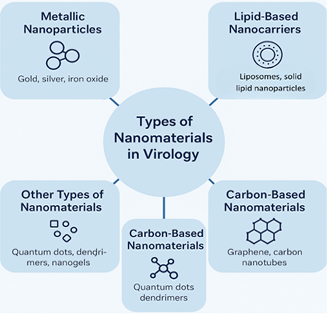
Types of nanomaterials and their applications in virology.
References
- Ahmad, Z.N., Arshad, N., Alsaab, H.O., Selamoğlu, Z. and Shah, A., 2024. Exploration of cellular uptake and endocytosis mechanisms for doxorubicin-loaded poly (amino acid) nanocarriers. Polym. Bull., 81: 15019–15042. https://doi.org/10.1007/s00289-024-05413-8[CrossRef]
- Ali, A., Naeem, M.Y., Selamoglu, Z. and Naqvi, M.R., 2025. Exploring quantum in cancer biology: A comprehensive review of nontrivial quantum events. Arch. Razi Inst., 80: 395–400.
- Anbarasu, K., Jaynathi, S., Neethirajan, S and Kumar, S., 2022. Graphene and carbon nanomaterials in biosensors for viruses. Biosens. Bioelectron., 202: 114044.
- Bozzuto, G. and Molinari, A., 2015. Liposomes as nanomedical devices. Int. J. Nanomed., 10: 975–999. https://doi.org/10.2147/IJN.S68861[CrossRef]
- Bush, J., Wang, R., Smith, J., Zhange, J. and Davis, M., 2024. AI-assisted design of nanovaccines against viruses. ACS Nano, 18: 30–42.
- Cheng, Y., Zhao, L., Li, Y. and Xu, T., 2008. Design of biocompatible dendrimers for cancer therapeutics. Chem. Soc. Rev., 37: 1928–1946.
- Dong, Y., Pang, H., Yang, H. B., Guo, C., Shao, J., Chi, Y. and Yu, T., 2021. A review of carbon dots and graphene quantum dots in electrochemical biosensing. Nanomaterials, 9: 634. https://doi.org/10.3390/nano9040634[CrossRef]
- Dykman, L.A. and Khlebtsov, N.G., 2012. Gold nanoparticles in biology and medicine: Recent advances and prospects. Acta Naturae, 4: 34–55. https://doi.org/10.32607/20758251-2011-3-2-34-55[CrossRef]
- Ebadi, A.G., Selamoglu, Z., Issa, H.Y., Alp Arici, E.C. and Abbas, S., 2025. Next-generation vaccines and antiviral platforms: Molecular advancements in the struggle against emerging zoonotic and viral diseases. Arch. Razi Inst., 80: 555–568. https://doi.org/10.66224/ARI.2025.80.3.555[CrossRef]
- Guo, Y., Zhang, T., Huang, J., Wang, W. and Zhou, H., 2022. Dendrimer-based drug delivery systems: History, challenges, and future. J. Biol. Eng., 16: 1–17. https://doi.org/10.1186/s13036-022-00298-5[CrossRef]
- Hou, X., Zaks, T., Langer, R. and Dong, Y., 2021. Lipid nanoparticles for mRNA delivery. Nat. Rev. Mater., 6: 1078–1094. https://doi.org/10.1038/s41578-021-00358-0[CrossRef]
- Kamaly, N., Yameen, B., Wu, J. and Farokhzad, O.C., 2016. Degradable controlled-release polymers and polymeric nanoparticles: Mechanisms of controlling drug release. Chem. Rev., 116: 2602–2663. https://doi.org/10.1021/acs.chemrev.5b00346[CrossRef]
- Kiessling, L.L., Gestwicki, J.E. and Strong, L.E., 2006. Synthetic multivalent ligands as probes of signal transduction. Angew. Chem. Int. Ed., 45: 2348–2368. https://doi.org/10.1002/anie.200502794[CrossRef]
- Kumar, A., Patel, R., Sharma, V. and Gupta, S., 2022. Stimuli responsive nanocarriers for delivery of vaccines and drugs against viruses. J. Control. Release, 340: 635–654.
- Lin, C., Zhang, Y., Lui, H. and Wang J., 2024. Nanotech-enabled platforms for point-of-care viral diagnostics. Biosens. Bioelectron., 220: 116984.
- Liu, Q., Chen, X., Zhao, Y., Zhang, M. and Wang, Y., 2020. Design of multivalent nanomaterials to block viral entry. Nat. Commun., 11: 2455.
- Majhi, S., Kumar, P., Singh, R. and Das, A., 2022. Antiviral applications of metal and metal oxide nanoparticles. ACS Appl. Nano Mater., 5: 967–984.
- Medintz, I.L., Uyeda, H.T., Goldman, E.R. and Mattoussi, H., 2005. Quantum dot bioconjugates for imaging, labelling and sensing. Nat. Mater., 4: 435–446. https://doi.org/10.1038/nmat1390[CrossRef]
- Mody, V.V., Siwale, R., Singh, A. and Mody, H.R., 2010. Introduction to metallic nanoparticles. J. Pharm. Bioall. Sci., 2: 282–289. https://doi.org/10.4103/0975-7406.72127[CrossRef]
- Naeem, M.Y., Alinia-Ahandani, E., Shirani-Bidabadi, B., Hajipour, S., Selamoglu, Z. and Hosseinnejad, S., 2023. Nanotechnology applications in the production of sustainable agricultural products: A comprehensive review. Indian J. Pure appl. Biosci., 11: 10–25. https://doi.org/10.18782/2582-2845.9029[CrossRef]
- Naeem, M.Y., Alp Arici, E.C., Abbas, S. and Selamoglu, Z., 2025a. Current research on the relationships between oxytocin and the immune system: An updated study. Arch. Razi Inst., 81: 557–568. https://doi.org/10.32598/ARI.81.3.3451[CrossRef]
- Naeem, M.Y., Issa, H.Y., Abbas, S. and Selamoglu, Z., 2025b. Immunomodulatory and therapeutic potentials of honeybee products: A comprehensive review of their role in health and disease management. Arch. Razi Inst., Preprint. https://doi.org/10.22092/ari.2025.368827.3570[CrossRef]
- Naeem, M.Y., Issa, H.Y., Abbas, S. and Selamoglu, Z., 2025c. Integrating lymphatic and immune health: From molecular targets to lifestyle medicine. Arch. Razi Inst., 81: 289-294. https://doi.org/10.22092/ari.2025.369040.3609[CrossRef]
- Naeem, M.Y., Selamoglu, B. and Selamoglu, Z., 2022. Use of artificial machines in medical sciences. Euras. J. Med. biol. Sci., 2: 36–40.
- Naeem, M.Y., Selamoglu, B., Danebekovna, K.G., Selamoglu, M. and Selamoglu, Z., 2025. The use and importance of artificial intelligence in vaccine research, development, and production. Arch. Razi Inst., 80: 365-370. https://doi.org/10.66224/ARI.80.5.3442[CrossRef]
- Naqvi, M.R., Abbas, S., Abbas, M., Batool, A., Mansoor, G., Bashir, S., Shah, A. and Selamoglu, Z., 2025. Immune boosters and immunotherapy in allergic diseases and cancer management. Arch. Razi Inst., 80: 371–374. https://doi.org/10.32592/ARI.2025.80.1.371[CrossRef]
- Oh, J.K., Drumright, R.J., Siegwart, D.J. and Matyjaszewski, K., 2009. The development of microgels/nanogels for drug delivery applications. Progr. Polym. Sci., 33: 448–477. https://doi.org/10.1016/j.progpolymsci.2008.01.002[CrossRef]
- Pankhurst, Q.A., Connolly, J., Jones, S.K. and Dobson, J., 2003. Applications of magnetic nanoparticles in biomedicine. J. Phys. D: Appl. Phys., 36: R167. https://doi.org/10.1088/0022-3727/36/13/201[CrossRef]
- Patel, H., Sharma, M., Gupta, R. and Verma, A., 2021. Functionalized nanoparticles for diagnostics and delivery of antivirals. J. Contr. Release, 334: 14–28.
- Qiu, L., Song, W., Cong, J. and Chen, M., 2023. Advanced plasmonic nanoparticle-based techniques for the detection, treatment, and prevention of SARS-CoV-2. Plasmonics, 18: 1283–1304.
- Rai, M., Yadav, A. and Gade, A., 2016. Silver nanoparticles as a new generation of antimicrobials. Biotechnol. Adv., 27: 76–83. https://doi.org/10.1016/j.biotechadv.2008.09.002[CrossRef]
- Ren, L., Wang, y., Zhang, X. and Liu, Z., 2021. Dendrimer nanocarriers for multivalent delivery of vaccines and antivirals. ACS Biomater. Sci. Eng., 7: 2025–2041.
- Selamoglu, Z., Ebadi, A.G., Selamoglu, B., Abbas, S. and Selamoglu, M., 2025. Current molecular approaches for prevention of infectious diseases: Nanovaccines, RNA therapeutics, and immunomodulation. Arch. Razi Inst., (In press) https://doi.org/10.22092/ari.2025.370752.3855[CrossRef]
- Sercombe, L., Veerati, T., Moheimani, F., Wu, S.Y., Sood, A.K. and Hua, S., 2015. Advances and challenges of liposome assisted drug delivery. Front. Pharmacol., 6: 286. https://doi.org/10.3389/fphar.2015.00286[CrossRef]
- Van der Lubben, I.M., Verhoef, J.C., Borchard, G. and Junginger, H.E., 2001. Chitosan for mucosal vaccination. Adv. Drug Deliv. Rev., 52: 139–144. https://doi.org/10.1016/S0169-409X(01)00197-1.[CrossRef]
- Wang, C., Wang, J. and Zhang, X., 2021. Nanocarriers for combination therapy of cancer and microbial infections: A new approach. Adv. Funct. Mater., 31: 2008190.
- Wang, J., 2006. Electrochemical biosensors: Towards point of care cancer diagnostics. Biosens. Bioelectron., 21: 1887–1892. https://doi.org/10.1016/j.bios.2005.10.027[CrossRef]
- Zhang, L., Chen, H., Wang, Y. and Liu, X., 2021. Stimuli-responsive nanocarriers for antiviral drug delivery. ACS Appl. Polym. Mater., 5: 289–305.
- Zhao, L., Seth, A., Wibowo, N., Zhao, C.X., Mitter, N., Yu, C. and Middelberg, A.P.J., 2014. Nanoparticle vaccines. Vaccine, 32: 327–337. https://doi.org/10.1016/j.vaccine.2013.11.069[CrossRef]
- Zhao, L., Seth, A., Wibowo, N., Zhao, C.-X., Tao, W. and Zhang, X., 2020. Polymeric nanoparticle vaccines to combat emerging and pandemic threats. NPJ Vaccines, 5: 1–14.
Services
Article usage statistics
Loading…