Research Article · Volume 12, Issue 1, 27 December 2023 · Open Access
Anti-Inflammatory Activity of Clove (Syzygium aromaticum) Oil Extract Against Chronic Inflammation in Rat
·
Affiliations & Notes ⌄
- 1Department of Physiology, Biochemistry and Pharmacology, College of Veterinary Medicine, University of Baghdad, Baghdad, Iraq. *Correspondence | Rana Mahmood Ahmad, Department of Physiology, Biochemistry and Pharmacology, College of Veterinary Medicine, University of Baghdad, Baghdad, Iraq
- 2Email: rana.mahmood1993@yahoo.com
Article Info ⌄
- Journal:
- Advances in Animal and Veterinary Sciences
- Published:
- 27 December 2023

From the article
- Based on the data, the results of the current study concluded that Petroleum ether is the best organic solvent for extraction, producing a good yield percentage of clove active compound.
- Clove oil shows a strong anti-inflammatory effect with no side effects.
- Clove oil reduced the concentration of TNF-α in serum and tissue while the concentration of IL10 was increased.
Selected from the article's own text.
Abstract
Introduction
Inflammation is a vascular and cellular reaction of the body against invasion by the irritant. It is characterized by the cardinal signs of this inflammation, which are swelling, redness, pain, and other symptoms in reaction to an infection or injury ; . It is regarded as the foundation of pathology (Greten and Grivennikov, 2019). The beneficial host response eventually restores cellular homeostasis and tissue form and function . Without an inflammatory response, infections, wounds, and tissue damage cannot be repaired ; . Acute inflammation begins minutes after an injury , but it takes up to 3 days for the inflammatory response to fully manifest . When there is acute inflammation, the symptoms appear quickly . The inflammation of chronic events is defined by fibroblast proliferation, connective tissue formation, collagen fibres, fibrosis, angiogenesis and mononuclear cell infiltration .
Although there are numerous medications available to treat a variety of inflammatory illnesses, their extended usage has substantial negative effects ; . Clove is an aromatic flower that is grown all over the world as a flavouring ingredient for medical uses and for use in perfumes . According to a few reports, Syzygium aromaticum contains approximately 15-20% wt. of essential oil (EO). Clove essential oil (CEO) includes a high concentration of phenolic compounds, which have various biological effects, including antibacterial, anti-inflammatory, antioxidant, analgesic, anesthetic, and insecticidal action . In traditional medicine, clove bud oil is a frequent treatment for wounds and burns infection . Hence, the current study aimed to evaluate the anti-inflammatory effects of clove (Syzygium aromaticum) oil extract against chronic inflammation in rats.
MATERIALS AND METHODS
Preparation of clove oil
Syzygium aromaticum (clove), the buds of the Syzygium aromaticum plant, were obtained from the Iraqi local market and treated with a 5% solution of sodium hypochlorite for sanitization purposes. Subsequently, the specimens were rinsed thrice with distilled water and set aside for desiccation. Clove oil was synthesized using petroleum ether, following the methodology outlined by .
Gas chromatography–mass SPE/ometry (GC-MS)
The extract serving as the mother extract was analyzed using gas chromatography (GC) and mass spectrophotometry (MS) with the GC/MS Thermo Trace GC Ultra/TSQ Quantum GC GC-MS instrument. The analysis involved injecting 1 μL of the sample (0.1% in absolute methanol) and utilising scan mode and splitless technique. The phytochemical study used an Agilent HP- 5ms Ultra Ineit capillary column (30m × 0.25μm film thickness). The Ramp rates were (ramp 1 was 60 °C hold to 3 min, ramp 2 was 60-180 °C hold to 7 min, ramp 3 was 180-280 °C hold to 8 min, ramp 4 was 280 °C hold to 3 min). The operation circumstances have been as follows: Helium as a carrier gas 99.99%, injector and detector temperatures were 250 °C. The chemical elements of the clove bud extract were recognized by comparing the GCMS analysis findings and the reference retention time and spectral mass data of the NIST database .
Determination of median lethal dose (LD50)
The LD50 of the extract was determined by administering it to 36 male rats weighing 200-250g that were six months old. The extract was administered intraperitoneally (i.p.), and the data was analysed using the Probit method. Probit analysis is mainly employed to study data obtained from bioassays, explicitly focusing on the response of organisms. The technique involves examining the impact of a stimulus’s dosage on the all-or-nothing response, known as the quantal response . A standard quantal response experiment was conducted, where six groups of six rats each were administered varying doses of the extract (ranging from 1000 to 3500 mg/kg). The animals were monitored for any visible indications of poisoning. The percentage of deaths at each dosage level is measured within 24 hours. Subsequently, Probit Analysis was employed to analyses the data.
Anti-inflammatory activity of clove oil extract on cotton pellet granuloma in rats
Test animal
We used eighteen mature male Wistar albino rats that weighed between 200 and 250 grams at six months of age. Rats were housed in plastic cages and acclimated for two weeks while being given regular rat pellets and tap water. The temperature in the cage was 20–25 oC, which was regularly changed by the ventilation suction. The cage’s light-dark cycle was 14–10, and it was cleaned once a week. Before commencing this study, ethical approval was obtained from the local committee of animal care and use at the College of Veterinary Medicine/University of Baghdad (IACUC#: P.G.-2145).
Experimental design
The winter and porter approach was applied to the study of inflammation. Diethyl ether was employed as an anesthetic, and although the animals were fasting, they had unrestricted access to water. After shaving, 70% ethanol was used to sterilize the skin on the abdomen. A cut was made, and one autoclaved cotton pellet weighing 10 mg each was aseptically inserted subcutaneously in one side of the belly using blunt forceps .
After that, they were divided randomly into 3 groups, each group containing 6 rats.
- Group 1 was kept as a positive control group without treatment
- Group 2 was receive clove oil extract orally, (10 mg/kg B.W.) daily for 8 days
- Groups 3 was receive orally Piroxicam (5mg/kg B.W) daily for 8 days.
On the ninth day, the rats underwent another round of anesthetized, during which the cotton pellet was surgically extracted, ensuring that it was separated from any further tissue. Subsequently, the pellets were carefully removed, and the weight of the wet cotton pellets was recorded. Then, the cotton pellets were dried in a 60°C oven for 12 hours to obtain the weight of the dry cotton pellets. The average weight of the granuloma tissue formed around each pellet was measured, and the percentage of inhibition was calculated.
Percentage inhibition = Control - Treated/ Control X 100 .
Specimen preparation
Ketamine (90 mg/kg) and Xylazine (40 mg/kg) were used to anesthetize the animals and the blood was drawn from the animals to evaluate the TNF level by using an ELISA kit. Tumor necrosis factor (TNF)-ɑ in granuloma tissue was examined using the Dako EnVision detection immunohistochemistry kit in accordance with the manufacturer’s instructions after the animals were killed. (Envision FLEX, Dako, K8000, Denmark).
Statistical analysis
The current study data was subjected to several statistical analysis tests using GraphPad Prism (GraphPad Software, San Diego, California USA, www.graphpad.com” Version 8.0). A one-way ANOVA was conducted, followed by Dunnett’s multiple comparison tests, using a significance level of P < 0.05 to determine statistical differences.
Table 1: List of abbreviations.
| Abbrev | Full name |
| TNF-α | Tumor necrosis factor alpha |
| B.W | Body weight |
| IL-10 | Interleukin10 |
| NSAIDs | Non-steroidal anti-inflammatory medications |
| LD50 | Lethal does 50 |
| CEO | Clove Essential oil |
| GC-MS | Gas chromatography-mass spectrometry |
RESULT and DISCUTION
Extraction of clove oil
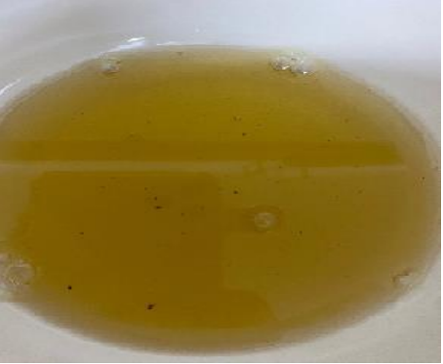
Extraction of clove bud with petroleum ether revealed a bright yellow color extract with a typical clove oil smell and bud, and the percentage of the powder yield was 44%. This has been accomplished by the equation below .
Percentage yield of the extract = weight of extract (g) / weight of clove bud powder (g) × 100
22 (g) /50 (g)× 100 = 44%
The extraction procedure gave a bright yellow color oil with typical clove oil smell as show in Figure 1.
Analysis of clove oil by (GC-MS)
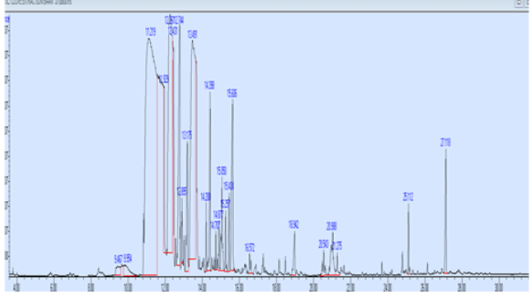
The active ingredients in clove buds plant extract with petroleum ether have been listed in Table 2 and Figure 2. Analysis of botanical sprouts revealed the presence of sixteen distinct elements, making up 100% of all known compounds. The major ingredient, eugenol, made up 49.10% of the total compounds. Caryophyllene came in second with 15.22%, while phenols came in third with 20.12%. Additionally, to different substances.
Table 2: Analysis of the phytochemicals in S. aromaticum essential oil.
| Compounds | Retention time | Area % |
| Eugenol | 12.40 | 49.10 |
| Caryophyllene | 15.20 | 15.22 |
| Phenol | 14.35 | 20.12 |
| Humulene | 11.92 | 5.49 |
| Trimethoxyacetophenone | 12.85 | 3.83 |
| Octadecanoic acid | 21.27 | 3.01 |
| 1,2,-benzenedicarboxylic acid | 27.118 | 2.12 |
| Tetracycltridecan-9-Oi, 4.4-dimethyl-Adamantane | 16.572 | 1.95 |
| n-Hexadecanoic acid | 18.942 | 0.93 |
| Gamma-Muurolene | 12.995 | 0.66 |
| Bis (2-ethylhexy) phthalate | 2.431 | 0.66 |
| Isoaromadendrene epoxide | 15.438 | 0.65 |
| Longifolene | 15.060 | 0.62 |
LD50 determination of clove oil extract in rat
Table 3 demonstrates that clove oil’s median lethal dose (LD50) was 2225 mg/kg. The lack of aberrant symptoms in rats fed with up to 1500–2000 mg/kg clove oil and monitored for 96 hours is consistent with no change in food intake. Additionally, no fatalities were noted. These facts suggest that clove oil has a relatively low level of toxicity. Within 45 minutes of receiving orally with dosages of 2500 mg/kg body weight, rats displayed ataxia, drowsiness, and reduced motor activity, as well as piloerection, tremor, ptosis, and 33.3% mortality. Additionally, after increasing the dosages, dose-dependent mortality was seen: 3500 mg/kg of clove oil was 100% deadly Table 3.
Table 3: LD50 determination of clove oil extract in rat.
| Number of rat (36) | |||
| Group | No. | Doses (mg/kg body weight) | %Mortality |
| 1 | 6 | 1500 | 0% |
| 2 | 6 | 2000 | 0% |
| 3 | 6 | 2500 | 33.3% |
| 4 | 6 | 3000 | 83.3% |
| 5 | 6 | 3500 | 100% |
| 6 | 6 | Control | 0% |
The impact of clove oil extract on cotton pellet induced granuloma on rats
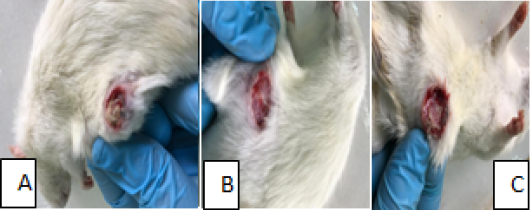
The effectiveness of the treatment against the proliferative stage of inflammation, which is characterized by tissue degradation and fibrosis, was evaluated using the widely used cotton pellet granuloma method in this experiment, The clinical signs was licking, scratching at painful site, Teeth chattering, vocalization, rapid respirations, Decreased food and/or water intake, Abnormal posture. a sizable of anti-proliferative effect was seen. The results obtained as percentage inhibition of granuloma formation are shown in Table 4 and Figure 3, the groups treated with clove oil extract and piroxicam daily for eight days. The percentage inhibitions of clove oil extract more than piroxicam (25.85% and 20.87%), respectively.
Table 4: Effect of clove oil extract on cotton pellet granuloma weight and percent of inhibition in rats.
| Groups | Wight of granuloma (mg) | % inhibition of granuloma formation |
| Positive control | 60.88±0.5A | -- |
| Treat with clove extract 10 mg/kg.BW | 45.14±0.7B | 25.85B |
| Treat with piroxicam 5mg/Kg.BW | 48.23±0.3B | 20.87B |
| LSD value | 7.88 * | |
N= 6, Means having with the different capital letters in same column and small letters in same row differed significantly, * (P≤0.05).
Inflammatory marker
Measurment of TNF-α level
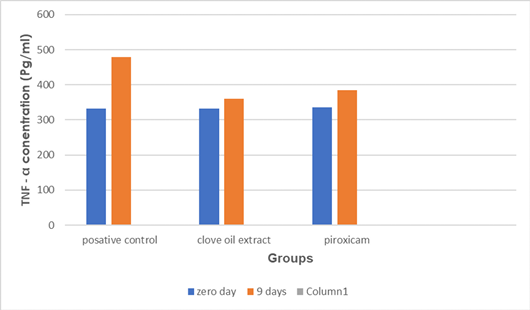
TNF-α level in serum: TNF-α concentration (pg/ml) was show in Figure ٤. In zero day there are no significant differences (P<0.05) among all groups, while animals treated with clove oil extract showed decrease TNF-α value more than piroxicam after nine day of treatment.
B-TNF-α in tissue
Measurement of IL-10 levels in serum
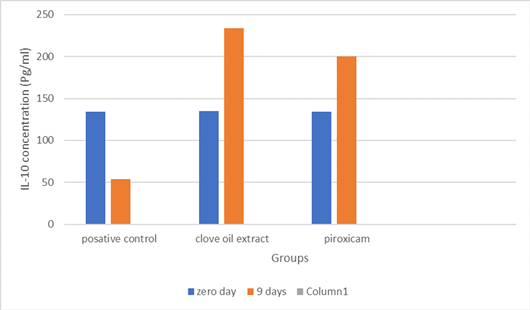
Serum interleukin-10 concentration (pg/ml) is shown in Figure 7. On zero days, there are no significant differences (P<0.05) between all groups, while on day nine, after treatment with clove, showed more increased significance (p ˂ 0.05) than piroxicam. On the other hand, the positive control groups showed no improvement in the level of the anti-inflammatory cytokine (IL-10) in serum.
Extraction of clove oil
Solvent extraction with different organic solvents (petroleum ether, dichloromethane, acetone, and ethanol) is the best method for extracting essential oils from plant components due to its lower energy consumption and higher extraction efficiency . Oil can be well extracted with petroleum ether because it contains a wide variety of isomers, and it is easy to isolate it from the oil or extract. This result is roughly consistent with those of , who discovered that when extracting clove bud powder using ethanol solvent, the extract yield was 40%. The high percentages of clove oil extracted by the solvent are primarily because essential oils are stored in the plant’s reservoirs, glands, conduits, or glandular hairs. As a result, the distillation vapour’s activity leads to the softening and disintegration of the oily glands’ walls, resulting in the release of oils and promoting a higher extraction yield, as evidenced by .
Analysis of clove oil by (GC-MS)
Petroleum ether extract, followed by caryophyllene and phenol. This is consistent with earlier research findings that showed the same elements in clove oil. In the study conducted by , the range of eugenol percentage was 75.22%, and these differences may be connected to the influence of environmental conditions and harvesting as well as the ability to obtain high-quality clove oil with elevation rise. The floral smell is caused by benzyl benzoate and Farnese. While eugenol, caryophyllene, and -muurolene were associated with the presence of the spicy aroma. The chemical constituents of essential oils are strongly influenced by environmental conditions, geographic location, the harvest season, the location of drying, the temperature and the drying duration .
LD50 determination of clove oil extract in rat
The oil exhibited no symptoms of toxicity when administered to rats. Although long-term toxicity was not investigated in this study, the widespread use of this substance in folk medicine can be attributed to the absence of acute harmful effects. With an estimated LD50 of 2225 mg/kg, clove oil’s necessary dose to elicit therapeutic benefits is significantly lower than the toxic dose.
Effect of the clove oil extract on cotton pellet induced granuloma on rat
The purpose of the current investigation was to assess the anti-inflammatory activity of clove oil extracts on experimental rat granuloma tissue development and to demonstrate their efficacy in decreasing inflammation in chronic inflammatory models. Decreased in granuloma weight suggests that the proliferative phase has been successfully suppressed. The results were in agreement with , who found that clove may have an inhibitory impact on granulocyte infiltration and the production of inflammatory mediators that encourage cell proliferation and angiogenesis, which would explain their inhibitory effect on cotton pellet granuloma. As a sub-chronic and chronic inflammatory test paradigm for investigating anti-inflammatory drugs, the cotton pellet granuloma is frequently employed to assess the proliferative components of chronic inflammation. The dry weight of the pellets corresponds with the quantity of granulomatous tissue generated, whereas the wet weight of the pellets correlates with transude. The formation of proliferating cells, which might take the form of dissemination or granuloma, causes chronic inflammation. In response to immune mediation, granulomas develop when macrophages, lymphocytes, epitheloids, and giant cells generated from macrophages gather around inert foreign particles that have not been removed. The suppression of fibroblasts, neutrophil infiltration, and exudation are signs of anti-inflammatory drug effectiveness in chronic inflammatory conditions ; . Our results about piroxicam were similar to the results of ; . They reported that Non-steroidal anti-inflammatory medications (NSAIDs), such as piroxicam, reduce the size of granulomas by preventing granulocyte infiltration, delaying the production of collagen fibers, and suppressing mucopolysaccharides.
Inflammatory marker
Measurment of IL 10 level in serum and TNF-α Level in serum and tissue
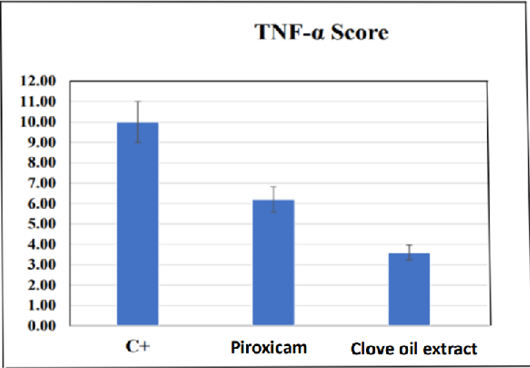
The results of this study were in accordance with results obtained by , who observed that the subcutaneous implantation of a cotton pellet in rodents leads to the development of a granuloma at the implant site as a response to prolonged inflammation. In their study, Müller et al. (2021) observed that the early stages of the process involve the buildup of fluid and proteinaceous material, along with the infiltration of macrophages, neutrophils, and fibroblasts, as well as the proliferation of small blood vessels. These factors form a highly vascularized reddish mass known as granulation tissue. This phenomenon arises when the immune system endeavours to sequester foreign chemicals otherwise unable to eliminate. Macrophages are immune system cells that contribute to the synthesis of mediators (such as pro-inflammatory cytokines and nitric oxide) that are critical to cellular and vascular processes during the establishment and advancement of an inflammatory response. Thus, investigations have shown that eugenol can alter macrophage activities and adversely regulate inflammation. Pro-inflammatory cytokine like TNF-α plays a critical role in inflammatory disease, that have important mechanisms include Investigations have demonstrated that eugenol can modify macrophage activities and negatively control inflammation. TNF-α, a pro-inflammatory cytokine, plays a crucial role in inflammatory diseases by activating macrophages, promoting cellular migration towards the site of inflammation, and facilitating leukocyte adherence. These processes are essential for the development and progression of inflammatory diseases. Tumour necrosis factor-alpha (TNF-α) is accountable for the first synthesis of chemokines, which serve to recruit mononuclear cells to the specific location of inflammation ; . The anti-inflammatory properties of eugenol are attributed to its ability to inhibit the production of nitric oxide, nuclear factor kappa B (NF-κB), and caspase-1. These inhibitory effects result in the suppression of pro-IL-1β activation, leading to reduced production of IL-1α and TNF-α .
Interleukin 10 (IL-10) is a cytokine produced by Treg cells that is crucial in mitigating tissue damage resulting from inflammation . It is mainly produced by monocytes/macrophages. It exerts a significant anti-inflammatory effect on T-lymphocyte and monocyte functions by inhibiting T-lymphocyte growth and reducing monocyte antigen presentation. The present investigation found that administering clove oil extract to infected rats led to a notable elevation in the levels of the anti-inflammatory cytokine IL-10 while simultaneously causing a reduction in the levels of the pro-inflammatory cytokine TNF-α. Based on these findings, we formulated the hypothesis that the use of clove oil extract therapy accelerates the transition from an inflammatory to an anti-inflammatory response in the healing process.
CONCLUSIONS AND RECOMMENDATIONS
Based on the data, the results of the current study concluded that Petroleum ether is the best organic solvent for extraction, producing a good yield percentage of clove active compound. Clove oil shows a strong anti-inflammatory effect with no side effects. Clove oil reduced the concentration of TNF-α in serum and tissue while the concentration of IL10 was increased. Additional research is necessary to determine the extract’s mechanism of action and isolate and purify the active components responsible for its pharmacological and physiological actions.
ACKNOWLEDGEMENTS
The authors are thankful to everyone who helped me complete the research.
NOVELTY STATEMENT
The novelty of the study is focus on physiologically active of clove oil extract that can be employed as novel anti-inflammatory pharmaceuticals due to the great side effect of present drugs and some case of chronic inflammation that need long time use medicines, it is imperative to seek into alternate sources of anti-inflammatory medications.
AUTHOR’S CONTRIBUTION
These authors each contributed equally.
Conflict of interests
The authors have declared no conflict of interest.
Figures

Clove oil extract.

Phytochemicals analysis of S. aromaticum essential oil by GC-MS.

Show the Pus and granuloma after implanted Cotton Pellet A: Positive control, B: treated with clove oil extract 10 mg/kg, C: treated with piroxicam 5mg/kg.

TNF-α concentration in serum (pg/ml) values after nine days on cotton pellet granuloma in rat treated with clove oil and piroxicam.

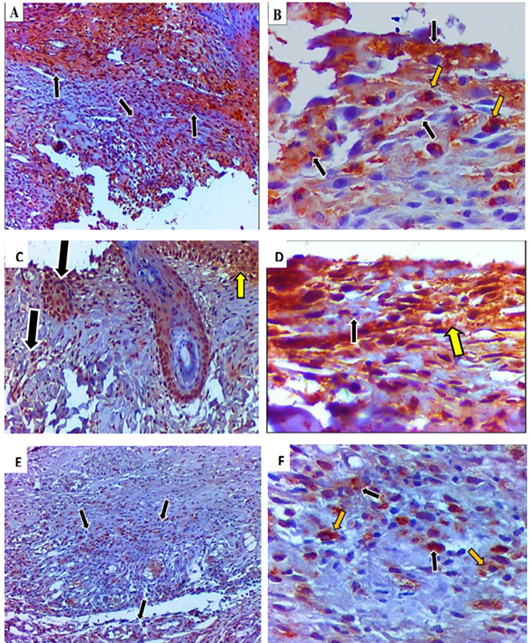
Photomicrograph in AandB: G1 (control positive group): Overexpression of TNF-α in fibroblasts (black arrow) and macrophages (yellow arrow) in dermis layer of affected area. Note, massive expression of TNF-αcovered more than 75% of tissue area. Also, the affected dermis layer showed deposition of collagen fibers due to chronic inflammation. C and D: (G2) Weak of TNF-αin fibroblasts (black arrow) and macrophages (yellow arrow) in dermis layer of affected area. Note, expression of TNF-α covered less than 20% of tissue area. EandF: (G3) Moderate expression of TNF-α in fibroblasts (black arrow) and macrophages (yellow arrow) in dermis layer of affected area. Note, expression of TNF-α covered more than 30% of tissue area. DAB and Hematoxylin. A,C,E: 100x and B, D, F: 400x.

TNF-α score.

IL-10 concentration in serum (pg/ml) values after nine days on cotton pellet granuloma in rat treated with clove oil and piroxicam.
References
- Abdul-Ghani MR, Naser AS (2023). Assessment anti-granuloma activity of Alpha-lipoic acid in chicks models. J. Hellen. Vet. Med. Soc., 74(1): 5277-5282.
- Abdulhadi SL, Qasir AJ, Razzak NAA (2013). Synthesis of new conjugates of some NSAIDs with sulfonamide as possible mutual prodrugs using tyrosine spacer for colon targeted drug delivery. Iraqi J. Pharm. Sci., 22(2): 22-29. https://doi.org/10.31351/vol22iss2pp22-29[CrossRef]
- Agarwal H, Nakara A, Shanmugam VK (2019). Anti-inflammatory mechanism of various metal and metal oxide nanoparticles synthesized using plant extracts: A review. Biomed. Pharmacother., 109: 2561-2572. https://doi.org/10.1016/j.biopha.2018.11.116[CrossRef]
- Al-Awadi AQ (2014). The influence of whole sonicated Pseudomonas aeruginosa antigens on experimental P. aeruginosa arthritis in rabbits. (eds. A.Q. Al-Awadi and M.J. Alwan). Iraqi J. Vet. Med., 38(1): 1-10. https://doi.org/10.30539/iraqijvm.v38i1.246[CrossRef]
- Ali BM, Ibrahim O (2023). Antifungal activity of clove (Syzygium aromaticum) essential oil extract against induced topical skin infection by candida albicans in mice in vivo. Egypt. J. Hosp. Med., 91(1): 3855-3861. https://doi.org/10.21608/ejhm.2023.293468[CrossRef]
- Al-Juburi LI, Al-Sammarraae IA (2023). The protective role of salmonella typhimurium-whole sonicated killed antigen and Syzygium aromaticum extract on the histopathological changes against its infection in rabbits. Iraqi J. Vet. Med., 46(2): 12–19. https://doi.org/10.30539/ijvm.v46i2.1399[CrossRef]
- Al-Khedairy EB (2012). Effect of additives on the solubility and dissolution of piroxicam from prepared hard gelatin capsule. Iraqi J. Pharma. Sci., 21(1): 117-122. https://doi.org/10.31351/vol21iss1pp117-122[CrossRef]
- Bakheet NZ, Al-Qayim MAJ, Falih IB (2020). Intestinal anti-inflammatory improvement with fenugreek seeds as a prebiotic and synbiotic with Lactobacillus acidophilus in rats experimentally infected with Escherichia coli. Iraqi J. Vet. Med., 44(2): 1-14. https://doi.org/10.30539/ijvm.v44i2.984[CrossRef]
- Batiha GES, Alkazmi LM, Wasef LG, Beshbishy AM, Nadwa EH, Rashwan EK (2020). Syzygium aromaticum L. (Myrtaceae): Traditional uses, bioactive chemical constituents, pharmacological and toxicological activities. Biomolecules, 10(2): 202-208. https://doi.org/10.3390/biom10020202[CrossRef]
- Bindu S, Mazumder S, Bandyopadhyay, U (2020). Non-steroidal anti-inflammatory drugs (NSAIDs) and organ damage: A current perspective. Biochem. Pharma., 180: 114147. https://doi.org/10.1016/j.bcp.2020.114147[CrossRef]
- Čoma M, Fröhlichová L, Urban L, Zajíček R, Urban T, Szabo P, Gál P (2021). Molecular changes underlying hypertrophic scarring following burns involve specific deregulations at all wound healing stages (inflammation, proliferation and maturation). Int. J. Mol. Sci., 22(2): 897. https://doi.org/10.3390/ijms22020897[CrossRef]
- El-Nour AMM, El-Mokadem MT, Mohammad ZK, Abdel-Wahab GS (2018). Potential of diethyl ether clove (Syzygium aromaticum) extract against different pathogens and in combination with antibiotic against Mdr-resistant Staphylococcus aureus. Egypt. J. Micro., 53(1): 49-68.
- Furman D, Campisi J, Verdin E, Carrera-Bastos P, Targ S, Franceschi C, Slavich GM (2019). Chronic inflammation in the etiology of disease across the life span. Nat. Med., 25(12): 1822-1832. https://doi.org/10.1038/s41591-019-0675-0[CrossRef]
- Greten FR, Grivennikov SI (2019). Inflammation and cancer: Triggers, mechanisms, and consequences. Immunity, 51(1): 27-41. https://doi.org/10.1016/j.immuni.2019.06.025[CrossRef]
- Haro-González JN, Castillo-Herrera GA, Martínez-Velázquez M, Espinosa Andrews H (2021). Clove essential oil (Syzygium aromaticum L. Myrtaceae): Extraction, chemical composition, food applications, and essential bioactivity for human health. Molecules, 26(21): 6387. https://doi.org/10.3390/molecules26216387[CrossRef]
- Hasan HF (2019). Evaluation of the effect of flavonoids isolated from Spinacia oleracea leaves on pituitary-adrenal ovarian axis in mice treated with doxorubicin. J. Adv. Pharm. Educ. Res., 9(3): 91-95.
- Hasan HF, Khazal KF, Luaibi OK (2014). The effect of crude alcoholic extract of Withania somnifera leaves in experimentally induced arthritis in mice. Univ. Thi-Qar J. Sci., 4(2): 45-52.
- Husain WM, Kadhim JA, Ibrahim OMS (2019). Effect of different doses from znonps on the pituitary-testes axis function in adult male rats. Adv. Anim. Vet. Sci., 7(7): 550-556. https://doi.org/10.17582/journal.aavs/2019/7.7.550.556[Full text][CrossRef]
- Ibrahim OMS, Sarhan SR, Salih SI (2016). Activity of isolated Staphylococcal bacteriophage in treatment of experimentally induced chronic osteomyelitis in rabbits. Adv. Anim. Vet. Sci., 4(11): 593-603. https://doi.org/10.14737/journal.aavs/2016/4.11.593.603[Full text][CrossRef]
- Kareem AA, Aziz TA, Ahmed ZA, Othman HH, Hussain SA (2022). Anti-inflammatory activity of gingko biloba extract in cotton pellet-induced granuloma in rats: A comparative study with prednisolone and dexamethasone. I J. Pharma. Sci., 31(1): 184-193. https://doi.org/10.31351/vol31iss1pp184-193[CrossRef]
- Kumar V, Sheoran OP, Rani S, Malik K (2020). Development of a web-based tool for probit analysis to compute LC50/LD50/GR50 for its use in toxicology studies. J. Appl. Natl. Sci., 12(4): 641-646. https://doi.org/10.31018/jans.v12i4.2408[CrossRef]
- Li J, Wang P, Zhou T, Jiang W, Wu H, Zhang S, Wang H (2023). Neuroprotective effects of interleukin 10 in spinal cord injury. Fron. Mol. Neurosci., 16. https://doi.org/10.3389/fnmol.2023.1214294[CrossRef]
- Mahmoud SS, Croteau RB (2002). Strategies for transgenic manipulation of monoterpene biosynthesis in plants. Trends in plant science, 7(8), 366-373. https://doi.org/10.1016/S1360-1385(02)02303-8.[CrossRef]
- Medzhitov R (2021). The spectrum of inflammatory responses. Science, 374(6571): 1070-1075. https://doi.org/10.1126/science.abi5200[CrossRef]
- Mostafa AAF, Yassin MT, Al–Askar AA, Al-Otibi FO (2023). Phytochemical analysis, antiproliferative and antifungal activities of different Syzygium aromaticum solvent extracts. JKS Univ. Sci., 35(1): 102362. https://doi.org/10.1016/j.jksus.2022.102362[CrossRef]
- Müller A, Krause B, Kerstein-Stähle A, Comdühr S, Klapa S, Ullrich S, Holl-Ulrich K, Lamprecht P (2021). Granulomatous inflammation in ANCA-associated vasculitis. Int. J. Mol. Sci., 22(12): 6474. https://doi.org/10.3390/ijms22126474[CrossRef]
- Pérez S, Rius-Pérez S (2022). Macrophage polarization and reprogramming in acute inflammation: A redox perspective. Antioxidants, 11(7): 1394. https://doi.org/10.3390/antiox11071394[CrossRef]
- Pumnuan J, Sarapothong K, Sikhao P, Pattamadilok C, Insung A (2021). Film seeds coating with hexane extracts from Illicium verum Hook. f. and Syzygium aromaticum (L.) merrill and perry for controlling Callosobruchus maculatus (F.) and Callosobruchus chinensis L. Pest Manage. Sci., 77(5): 2512-2521. https://doi.org/10.1002/ps.6283[CrossRef]
- Radhi HA, Saliem AH (2021). Anti-inflammatory effect of grape seed proanthocyanidin extract. Ann. Roman. Soc. Cell Biol., pp. 6768-6778
- Ratri PJ, Ayurini M, Khumaini K, Rohbiya A (2020). Clove oil extraction by steam distillation and utilization of clove buds waste as potential candidate for eco-friendly packaging. J. Bahan Alam Terbaruk., 9(1): 47-54. https://doi.org/10.15294/jbat.v9i1.24935[CrossRef]
- Robert M, Miossec P (2021). Reactivation of latent tuberculosis with TNF inhibitors: Critical role of the beta 2 chain of the IL-12 receptor. CM Immunol.,18(7): 1644-1651. https://doi.org/10.1038/s41423-021-00694-9[CrossRef]
- Shafira KF, Azad AK, Labu ZK, Helal UA (2020). Extraction and quantification of eugenol from clove buds using HPLC. Curr. Chromatogr., 7(1): 17-23. https://doi.org/10.2174/2213240607999200818161356[CrossRef]
- Sharma VM, Jagdhane VC (2023). Role of leech therapy to encounter heel pain in associated conditions of retrocalcaneal bursitis, plantar fasciitis with tenosynovitis: A case study. W J. Pharma. Res., 9(11): 686-694.
- Singha LR, Das S, Das MK (2023). Plant-derived anti-arthritic nanomedicines for effective therapy in the management of inflammatory diseases. Pharmacogn. Rev., 17(33): 104-122. https://doi.org/10.5530/097627870287[CrossRef]
- Swaliha CK, Jayachandran TP, Shadiya CK (2022). Evaluation of anti-inflammatory activity of novel HDAC inhibitors using in vitro methods. R. J. Pharm. Technol., 15(12): 5455-5458. https://doi.org/10.52711/0974-360X.2022.00919[CrossRef]
- Yassin MT, Mostafa AAF, Al-Askar AA (2020). In vitro anticandidal potency of Syzygium aromaticum (clove) extracts against vaginal candidiasis. BMC Complement. Med. Ther., 20(1): 1-9. https://doi.org/10.1186/s12906-020-2818-8[CrossRef]
- Zhao H, Wu L, Yan G, Chen Y, Zhou M, Wu Y, Li Y (2021). Inflammation and tumor progression: Signaling pathways and targeted intervention. Signal Trans. Target. Ther., 6(1): 263. https://doi.org/10.1007/s10753-020-01346-2[CrossRef]
- Zuhair AA, Ibrahim O (2020). Evaluation of anti-inflammation and mechanisms of the anti-inflammatory activities of thymoquinine. Biochem. Cell. Arch., 20(2): 4457-4463.
Cited by 1 article
In journals published by ResearchersLinks.
Services
Article usage statistics
Loading…