Research Article · Volume 13, Issue 6, 17 May 2025 · Open Access
Zinc Supplementation on Boosting Reproductive Efficiency, Milk Production and Blood Profile in Holstein: A Meta-Analysis Perspective
· · · · ·
Affiliations & Notes ⌄
1Department of Animal Health, Polytechnic of Agriculture Development, Bogor, Indonesia
2Research Center for Animal Husbandry, Research Organization for Agriculture and Food, BRIN, Bogor, Indonesia
3Faculty of Animal Science, Jenderal Soedirman University, Purwokerto, Indonesia. *Correspondence | Wahyuningsih, Department of Animal Health, Polytechnic of Agriculture Development, Bogor, Indonesia
In dairy cattle, including Holstein cows, zinc supplementation has been linked to improved lipid metabolism and overall health status.
However, without or with cholesterol lowering, zinc has mechanism to increase energy-corrected milk in dairy cattle by enhancing milk production and modifying its composition, particularly fat and protein content.
Zinc supplementation in Holstein cattle positively affects milk production, reproductive performance, and blood parameters although some variables showed no significant changes.
Zinc also increased ECM and lowered blood cholesterol levels, indicating improved lipid metabolism and overall health.
Selected from the article's own text.
Abstract
inc (Zn) is an essential micro-nutrient for dairy cattle. It plays a key role in immune function, oxidative metabolism, and milk production. Supplementation frequently deviates from recommended levels to enhance productivity and health, its effectiveness is largely influenced by Zn dosage. The meta-analysis provides recommendations that align with up-to-date available data of zinc usage on Holstein breed. Twenty-one articles selected from international reputable journals using meta-analysis method to integrate the results from multiple studies while accounting for the variability across studies. Zinc supplementation significantly improved open days, conception rate and service per conception with the optimal doses being 1.212 ppm for open days and 370.4 ppm for conception rate. Energy-Corrected Milk (ECM) increased linearly with zinc supplementation (p < 0.05) but other milk production parameters were unaffected. Among blood parameters, only cholesterol levels decreased significantly while zinc concentration increased. Other blood parameters, including albumin, globulin, glucose, and urea showed no significant changes. Zinc supplementation in Holstein cattle improved milk production, reproductive performance, and blood parameters, reducing open days, enhancing conception rates, and lowering service per conception. It also increases ECM and lowers blood cholesterol, suggesting better lipid metabolism and health.
Zinc (Zn) is a crucial micronutrient for dairy cattle, playing vital roles in immune function, oxidative metabolism, and milk production ; . Zinc is strongly recommended and its utilization is optimized from locally available feed sources that are rich in bioavailable forms, ensuring improved nutritional quality and health benefits for livestock. Current nutritional models recommend a zinc supplementation level of 60 ppm of dry matter (DM); however, North American dairy farmers commonly exceed this recommendation . Increasing zinc supplementation to approximately 97 ppm DM has been shown to enhance milk yield, protein yield and udder health, although it initially results in a reduction in dry matter intake . The evidence above show zinc supports carbon-negative farming concept by increasing cattle productivity. Among dairy breeds, Holstein cattle are the most important and widely utilized due to their superior milk production (Usman et al., 2014), making them the backbone of the global dairy industry. Zn deficiency may lead to various health issues, including reduced growth, impaired reproduction, and increased disease susceptibility ; . Severe deficiency causes skin parakeratosis, growth cessation, and lethargy, but recovery is rapid with proper supplementation . While 9 ppm Zn was adequate in some studies, practical diets sometimes required 20-40 ppm for optimal performance , highlighting the complexity of Zn nutrition in cattle.
In dairy farming, Zn supplementation has been widely implemented to enhance production efficiency and animal health. Several studies have reported that Zn supplementation improves reproductive performance by optimizing oestrous cycles, increasing conception rates, and accelerating postpartum recovery . Additionally, Zn plays a crucial role in boosting milk production by supporting metabolic and immune functions . However, the effectiveness of zinc supplementation is influenced by various factors, including the source of zinc (organic vs. inorganic), dosage levels, environmental conditions, and farm management practices, making the establishment of universally applicable supplementation strategies increasingly complex. These challenges are further exacerbated by inconsistencies in dosing guidelines, a lack of breed-specific data—particularly for Holsteins—and an insufficient synthesis of the trade-offs between productivity and potential environmental or health risks. The absence of standardized dosing recommendations results in considerable variation in supplementation practices, increasing the likelihood of both zinc deficiency, which can impair animal health and productivity, and excessive zinc excretion, which may contribute to environmental contamination . Moreover, the limited availability of breed-specific data hinders precise nutritional planning, as genetic differences in nutrient metabolism may render extrapolations from other breeds unreliable . Additionally, while zinc supplementation has been shown to enhance growth, immune function and reproductive performance, the lack of comprehensive assessments integrating these benefits with potential long-term environmental and animal health implications complicates decision-making for dairy producers ; . While Zn is essential for livestock, excessive supplementation can lead to increased Zn excretion, contributing to soil and water contamination through runoff and raising concerns about heavy metal pollution. Given the narrow margin between beneficial and harmful levels, careful management is necessary to optimize Zn intake, ensuring its positive effects on cattle health and productivity while minimizing environmental risks.
A meta-analytical approach is a powerful statistical method that integrates findings from multiple studies to provide stronger and more comprehensive conclusions. By synthesizing data from various sources, meta-analysis assist address the limitations of individual studies, reduces publication bias, and offers more precise estimates of the effects of Zn supplementation on reproductive performance, milk yield, and blood parameters in dairy cattle (Borenstein et al., 2009). Until now, there are no meta-analyses that conduct specifically on Holstein cattle, despite the fact that Holsteins are widely recognized as a premier breed for dairy production and are extensively utilized in global dairy farming. Therefore, this study aimed to systematically evaluate the effects of Zn supplementation on milk production and health parameters in dairy cattle, including reproductive performance, milk yield, and blood parameters, using a meta-analytical approach. The findings of this study are expected to provide a stronger scientific foundation for Zn supplementation strategies in dairy.
MATERIALS AND METHODS
Article Search Via Search Engine
The articles were acquired through a systematic search using various search engines and academic databases, ensuring relevance and credibility of this study. Google Scholar, Science Direct, and Scopus included to use as selection of relevant and reputable sources for this research. We conducted detailed search using a selected combination such as “Zinc, Dairy Cow, Milk”, “Reproduction or Reproductive and Performance”, with a focused filter applied to retrieve only peer-reviewed articles. As a result of the comprehensive search using specified keywords, a total of 48 relevant articles were retrieved (from 1982 – 2024).
Selection of Articles
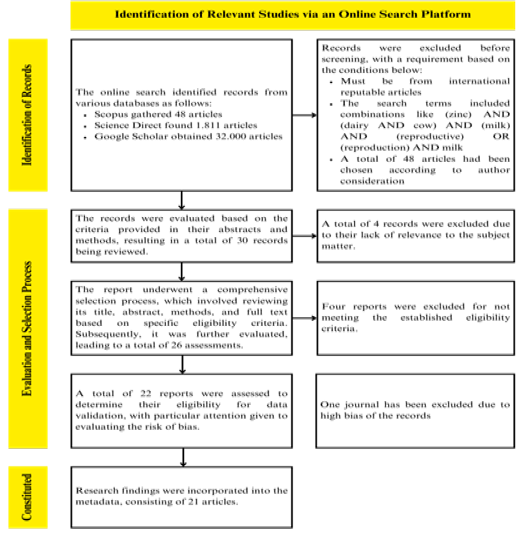
The selection of articles adhered to the Preferred Reporting Items for Systematic Reviews and Meta-Analyses (PRISMA) guidelines that incorporated previously available reviews. These methods were employed to ensure that the chosen articles were both relevant and of high quality, minimizing the risk of bias during the selection process. The following five criteria were used: i) the article’s title and abstract contained relevant keywords; ii) the studies were based on experimental research; iii) sufficient details about the materials, methods, and experimental design were provided; iv) the articles included data on zinc types, levels, and units; and the studies focused exclusively on the effects of zinc supplementation on reproductive performance, milk yield and blood parameter. A representative diagram of the selection process and the number of articles reviewed is provided in Figure 1. Articles failing to meet these criteria that were excluded from the analysis.
Metadata Assembly and Verification
As many as 48 studies had been assembled from twenty-one journals. All data used in this study were presented in Table 1 according to selection by PRISMA guidelines. The collected data consisted of type and dosage of Zinc, breed of dairy cattle, condition of the livestock, amount of livestock and selected parameters. All measured parameter in the final stage was uniformized the unit, such as Open Days (day), body condition score (BCS) (unit), Day to First Oestrous (day), Day to First Service (day), Conception Rate (%), Service per Conception (%), Milk Production (litre), ECM (kg d-1), Fat-Corrected Milk (FCM) (kg d-1), Milk Fat (%), Milk Protein (%), Milk Lactose (%), Milk Solid Non Fat (%), Milk Somatic Cell Count (105 ml-1), Blood Albumin (g dL-1), Blood Globulin (g dL-1), Blood Glucose (mg dL-1), Blood Cholesterol (mg dL-1), Blood Urea (mg dL-1) and Blood Zinc (µmol L-1). All the parameters mentioned above were used because they met the minimum data requirements for the meta-analysis. After recording twenty-one journals, all articles reported zinc treatments performed on Holstein Cattle. Descriptive analysis is also included for this study (Table 2).
Development of a Mathematical Framework
The dataset was subjected to statistical analysis using mixed model methodology, a widely recognized approach in meta-analysis study within the field of animal nutrition ; .
Table 1:
No
Reference
Holstein Status
Zinc Type
Dose
1
Azizipour et al. (2024)
Unmentioned
Unmentioned
994 – 1032
2
Kropyvka et al. (2024)
Dry period
Organic
54.7 – 60.8
3
Abu El-Hamd et al. (2023)
Postpartum
Inorganic
0.00 – 4.92
4
Chen et al. (2023)
Pregnant and Dry period
Organic
0.00 – 12.5
5
Machado et al. (2013)
Pregnant and Dry period
Organic
0.00 – 80.8
6
Peralta et al. (2011)
Lactation
Organic
0.00 – 25.8
7
Hackbart et al. (2010)
Lactation
Organic
68.8 – 72.9
8
Deshmukh et al. (2001)
Multiparous
Inorganic
0.00 – 500
9
Ballantine et al. (2002)
Multiparous
Organic and Inorganic
13.4 – 14.2
10
Toni et al. (2007)
Dry period
Organic and Inorganic
36.0 – 241
11
Phiri et al. (2007)
Lactation
Unmentioned
0.00 – 1,472
12
Miller et al. (1989)
Unmentioned
Inorganic
0.00 – 2,000
13
De Boer et al. (1981)
Multiparous and Uniparous
Unmentioned
40.0 – 79.0
14
De et al. (2014)
Postpartum
Unmentioned
0.00 – 80.0
15
Cope et al. (2009)
Primiparous and Multiparous
Organic and Inorganic
103 – 370
16
Griffiths et al. (2007)
Primiparous and Multiparous
Inorganic
0.00 – 360
17
Campbell et al. (1999)
Lactation
Inorganic
170 – 444
18
Xu et al. (2021)
Multiparous
Inorganic
0.00– 10.4
19
Kellogg et al. (2004)
Multiparous
Inorganic
0.00 – 380
20
Patel et al. (2017)
Lactation
Inorganic
0.00 – 120
21
Bakhshizadeh et al. (2019)
Primiparous and Multiparous
Organic and Inorganic
0.00 – 34.0
In this analysis, variations among studies were treated as random effects, while the zinc dosage levels were analyzed as fixed effects. Expected output for this study was linear and quadratic model as expected output from linear mix model (LMM). Mathematical framework was presented below:
Figure 1.
Note: The mathematical model describes the relationship between zinc levels (Bzinc) and the predictor variable (level) using both linear and quadratic terms. The intercept (β0) represented the baseline zinc level when all predictors are zero. The fixed effect coefficients (β1) and (β2) capture the linear and quadratic effects of the predictor (level), respectively, where (β2) accounts for any potential non-linear influence on zinc levels. Additionally, the model incorporates a random effect (ustudy) to account for variability between studies. The residual error (ε) represents the unexplained variability in the model and was assumed to follow a normal distribution. Significance was determined at p< 0.05. Trends toward significance were considered for 0.05 ≤ p-value < 0.10. This mixed model framework enabled the integration of both fixed effects to examine systematic relationships and random effects to address heterogeneity across studies, making it particularly suitable for meta-analyses in which data resulted from multiple independent sources.
Table 2: Descriptive statistics of the measured parameters.
Variable
N
Mean
SD
Median
Min
Max
Range
SE
Open Days
40
110
32.1
111
24.0
158
134
5.07
Body Condition Score
16
7.13
4.08
7.50
1.00
13.0
12.0
1.02
Day to First Oestrus
6
3.17
1.47
3.50
1.00
5.00
4.00
0.60
Day to First Service
6
2.83
1.47
2.50
1.00
5.00
4.00
0.60
Conception Rate
43
17.6
9.97
18.0
1.00
34.0
33.0
1.52
Service/Conception
26
12.7
6.75
13.5
1.00
23.0
22.0
1.32
Milk Production
58
24.1
13.9
23.5
1.00
48.0
47.0
1.82
Energy Corrected Milk
25
29.2
8.42
28.2
4.33
40.5
36.2
1.68
Fat Corrected Milk
27
31.5
4.94
32.0
24.5
40.7
16.2
0.95
Milk Fat
42
4.62
5.77
3.70
3.01
41.0
38.0
0.89
Milk Protein
40
3.85
5.75
3.10
0.03
39.0
39.0
0.91
Milk Lactose
14
5.14
2.29
4.57
4.07
13.0
9.00
0.61
Milk Solid-Not-Fat
10
3.90
2.51
3.50
1.00
8.00
7.00
0.80
Milk Somatic Cell Count
11
8.90
7.92
7.60
1.00
17.0
16.0
2.38
Albumin
43
3.74
0.62
3.70
2.50
5.00
2.50
0.09
Globulin
43
2.91
0.60
2.90
1.70
4.50
2.80
0.09
Glucose
44
70.4
11.7
70.0
50.0
95.0
45.0
1.77
Cholesterol
42
129
28.6
130
69.0
181
112
4.40
Urea
43
40.1
10.8
38.0
21.0
70.0
49.0
1.63
Zinc
44
0.85
0.33
0.80
0.30
1.90
1.60
0.05
Publication Bias
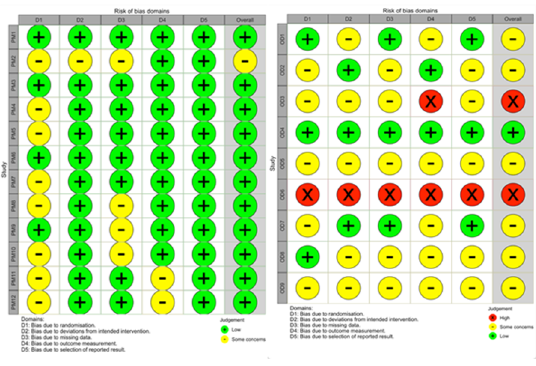
The risk of bias (ROB) in the studies included in this meta-analysis was assessed using the Cochrane Collaboration’s risk-of-bias tool . A total of 21 studies were evaluated, including 9 studies that examined open days and 12 studies that analyzed milk production (Figure 2). The assessment was conducted based on five key criteria: bias arising from the randomization process (D1), bias because of deviations from intended interventions (D2), bias because of missing outcome data (D3), bias in the measurement of outcomes (D4), and bias in the selection of reported results (D5). Each study was systematically evaluated using a scoring system, where a score of 3 showed a low risk of bias, a score of 2 represented some concerns, and a score of 1 showed a high risk of bias. The overall risk of bias for each study was determined based on these scores. The individual assessments for each criterion were compiled into a summary table and subsequently visualized using the RoBVIS (Risk-of-Bias Visualization) tool that generated both traffic light plots (illustrating the risk of bias for individual studies) ; .
Statistical Analysis Assessment
The statistical analysis for this meta-analysis was performed using R. The analysis was Akaike Information Criterion (AIC) to assess the performance of the statistical model with the formula:
Figure 2.
k represents the number of parameters in the model, and L is the likelihood of the model, that quantifies the probability of observing the data given the model. The natural logarithm of the likelihood, ln (L) is used in the calculation. AIC serves as a tool for model comparison with a lower AIC value showed a better balance between model fit and complexity. It penalizes models with more parameters to
Table 3: Regression analysis of varying levels of zinc (mg kg-1) on Holstein breed.
prevent overfitting, favouring simpler models that explain the data efficiently.
RESULTS AND DISCUSSIONS
Results
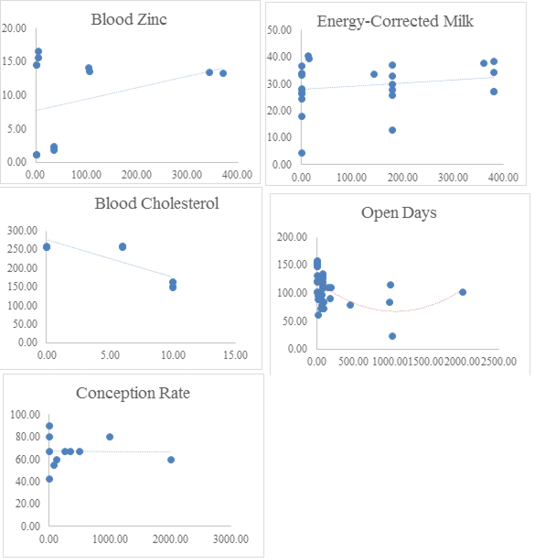
Meta-analysis approach to evaluate zinc parameter on Holstein cattle feed is presented in Table 3 and Figure 3. Based on Table 3 and Figure 3 indicated zinc supplementation on Holstein cattle feed improved quality of milk production, reproductive performance and blood constituent even though not all parameter affect. In reproductive performance, based on all measured parameter such as open days, body condition score, day to first oestrous, day to first service, conception rate and service per conception, only open days, conception rate, and service per conception were significantly affected (p<0.05) in the linear model. Zinc supplementation effectively reduced open days, increased conception rate, and decreases service per conception in dairy cows. In open days and conception rate, if quadratic model affect significantly, best zinc supplementation dosage for Holstein cattle can be considered by 1.212 and 370.4 ppm respectively.
ECM increased linearly (p < 0.05) with increasing zinc supplementation in the diet of Holstein cows. However, other milk production parameters, including total milk yield, 4% Fat-Corrected Milk (FCM), milk fat, protein, lactose, solid-not-fat (SNF), and somatic cell count (SCC), were not significantly affected by zinc supplementation. Among the blood parameters analysed, only cholesterol levels showed a significant decrease (p < 0.05) while blood zinc concentration increased in response to zinc supplementation. Other blood parameters, including albumin, globulin, glucose, and urea, remained unaffected.
Discussions
Zinc plays catalytic, structural, and regulatory roles in enzymatic function. It facilitates catalytic reactions by activating water molecules or polarizing substrates and it contributes to to over 50 enzymes . Structurally, zinc stabilizes enzyme conformation by forming complexes with apoenzymes, ensuring proper substrate binding . Additionally, zinc regulates enzyme activity by modulating substrate affinity and influencing gene expression . Zinc influences substrate affinity by directly interacting with enzymes, leading to conformational modifications that either enhance or suppress their catalytic activity, thereby modulating enzymatic efficiency and metabolic processes ; Furthermore, zinc plays a crucial role in gene regulation through zinc-finger transcription factors, which bind to DNA to control gene transcription. Additionally, zinc exerts regulatory effects through epigenetic mechanisms, including histone modifications and DNA methylation, thereby influencing key cellular processes such as growth, differentiation, and apoptosis ; . For dairy cattle, zinc has many functions to elevate production of milk. Zinc is an essential trace mineral for dairy cattle, supporting metabolism, immunity, and physiological balance . Deficiency impairs growth, reproduction, and disease resistance while increasing oxidative stress . A balanced diet with zinc and synergistic nutrients is necessary for health and productivity. Ongoing research continues to investigate the use of organic and inorganic zinc in dairy cattle nutrition (Balabánov et al., 2011), exploring their effects on metabolism, immune function, and productivity . Studies also evaluate various supplementation levels to determine optimal dosages from 1971 until 2024 for this analysis that support health while preventing deficiencies or imbalances. These efforts is to improve dairy cattle well-being and performance through improved zinc supplementation strategies.
Interestingly, the dietary intake of zinc appears to align with its concentration in the bloodstream, suggesting a strong correlation between zinc consumption and the body’s physiological status. Once ingested, zinc is absorbed primarily in the small intestine, particularly in the duodenum and jejunum through passive diffusion via ion channels and active transport mediated by zinc transporters . Absorbed zinc then binded to albumin and α2-macroglobulin in the portal vein , facilitating its transport to the liver where it is further distributed to peripheral tissues. Excess zinc that is not absorbed is primarily excreted through faeces . The increase in circulating zinc concentrations following zinc supplementation highlights the direct influence of dietary zinc intake on its systemic availability. Studies have consistently demonstrated that zinc with its higher bioavailability, leads to elevated blood zinc levels, facilitating its distribution to various tissues and enhancing physiological functions. In dairy cattle, this increase in zinc status supports key metabolic processes including protein synthesis and milk production, further reinforcing the critical role of dietary zinc in optimizing animal health and productivity ; .
One blood constituent that directly affect is cholesterol. The available zinc in feed or bloodstream plays an important role in regulating blood cholesterol levels in dairy cattle, particularly in the Holstein breed by influencing lipid metabolism, oxidative stress, and inflammatory responses. Based on the research, zinc deficiency is associated with elevated inflammatory cytokines and increased oxidative stress, both of which contribute to endothelial dysfunction and apoptosis—mechanism that accelerate atherosclerosis and disrupt cholesterol homeostasis . By modulating inflammatory pathways and acting as an antioxidant, zinc helps maintain endothelial integrity, thereby reducing the risk of cholesterol-induced vascular complications. In dairy cattle, including Holstein cows, zinc supplementation has been linked to improved lipid metabolism and overall health status. Adequate zinc intake improves enzymatic functions related to cholesterol synthesis and breakdown, promoting a balanced lipid profile. Furthermore, the bioavailability of zinc, particularly in organic forms facilitates its systemic absorption. It leads to increase blood zinc concentrations and improved metabolic efficiency. As a result, zinc serves as a key nutritional component in maintaining optimal cholesterol levels and cardiovascular health in Holstein dairy cattle .
Meanwhile, result-based showed cholesterol in blood decrease due to zinc supplementation indirectly increase energy-corrected milk in Holstein breed. Cows mobilize body reserves to meet the heightened energy demands of lactation that may lead to blood cholesterol reduction. Simultaneously, hormonal and metabolic changes enhance the cow’s ability to efficiently utilize nutrients for milk production, potentially driving an increase in ECM ; . However, without or with cholesterol lowering, zinc has mechanism to increase energy-corrected milk in dairy cattle by enhancing milk production and modifying its composition, particularly fat and protein content. As an essential trace mineral, zinc is involved in various metabolic processes, immune function, and protein synthesis, which collectively contribute to improved dairy cow productivity (Spears, 1996).
Zinc plays a pivotal role in enhancing energy-corrected milk (ECM) through its involvement in protein synthesis and fat metabolism. It supports enzymatic activities essential for protein metabolism that increases milk protein content, particularly casein, a crucial determinant of milk quality. Kagya-Agyemang et al. (2007) demonstrated that organic zinc supplementation significantly boosts milk protein levels, thereby improving ECM. Additionally, zinc influences fat metabolism by participating in lipase enzyme activity and fatty acid synthesis, both critical for milk fat production. Kumar et al. (2011) reported that supplementation with organic zinc, such as zinc methionine, resulted in higher milk fat content, contributing to enhanced ECM.
Moreover, zinc plays an essential role in immune function, indirectly supporting ECM by maintaining overall cow health. A strong immune system reduces the risk of diseases, such as mastitis, that negatively impact milk yield and composition. Overton and Waldron (2004) highlighted that zinc supplementation lowers mastitis incidence and strengthens immune responses, thereby sustaining optimal milk production. Zinc improves feed efficiency by enhancing nutrient absorption and utilization, as it is integral to carbohydrate, protein, and fat metabolism (National Research Council (2001). This enhanced feed efficiency enables cows to convert dietary nutrients into milk more effectively, further supporting ECM. The efficacy of zinc in improving ECM is also influenced by its form, with organic sources like zinc methionine and zinc chelate showing greater bioavailability than inorganic forms like zinc oxide, leading to superior milk production outcomes .
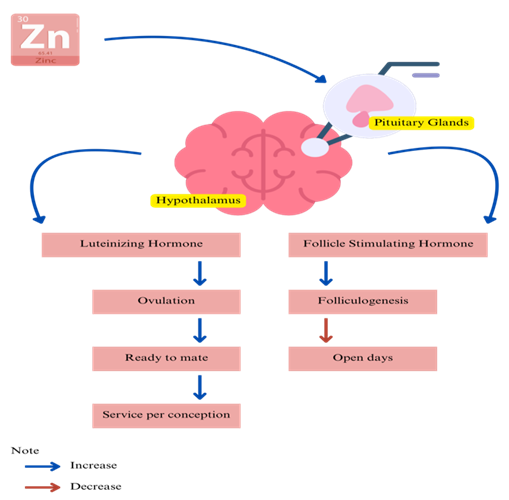
Zinc is essential for the function and regulation of the hypothalamus and pituitary gland, as their activity depends on its availability (Kasim Baltaci et al., 2019). As presented in Figure 4, sufficient zinc levels are necessary to maintain endocrine homeostasis and support key physiological processes within the hypothalamic-pituitary axis including main role of reproduction regulation. Zinc is important material for dairy cattle , because it is related to future milk production. Pituitary that regulated by zinc can predispose follicle-stimulating hormone (FSH) and luteinizing hormone (LH), both of which are essential for reproductive function through its action on granulosa cells in the ovary . On LH and FSH respectively greatly affect the improvement of reproductive performance. LH regulates ovulation by maturate follicle and corpus luteum formation meanwhile FSH enhance aromatase production and follicular growth. Zinc follows as mention before stimulate, storing and releasing hormones has been shown to improve the service per conception rate (due to readiness fertilization) and reduce open days (as a result of follicle maturity). The illustration how zinc can influence open days and service per conception.
CONCLUSIONS AND RECOMMENDATIONS
Zinc supplementation in Holstein cattle positively affects milk production, reproductive performance, and blood parameters although some variables showed no significant changes. It reduced open days, improved conception rates, and decreased service per conception at optimal dosages. Zinc also increased ECM and lowered blood cholesterol levels, indicating improved lipid metabolism and overall health.
ACKNOWLEDGEMENTS
The author would like to express gratitude to all those who contributed indirectly to the completion of this work
NOVELITY STATEMENT
This meta-analysis is the first to quantitatively synthesize the effects of zinc supplementation on reproduction and production in Holstein cattle, the primary dairy breed used worldwide, providing clearer evidence to support effective nutritional strategies in dairy herd management
AUTHOR’S CONTRIBUTIONS
Wahyuningsih: conceptualized and designed the study.
Chomsiatun Nurul Hidayah, Ari Dwi Nurasih and Merryafinola Ifani: were responsible for data collection.
Novia Qomariyah, Chomsiatun Nurul Hidayah, Ari Dwi Nurasih and Merryafinola Ifani: contributed to the drafting of the original manuscript and participated in the review and revision of the final version.
Tri Rachmanto Prihambodo: critically reviewed the final manuscript and conducted the formal analysis and managed data curation.
All authors have read and approved the final version of the manuscript.
Conflict of Interest
The authors declare that they have no conflict of interest.
Figures
Figure 1:.
Identification, evaluation and selection of literature using the PRISMA method.
Figure 2:.
ROB of selected parameter of individual involved literature.
Figure 3:.
Response of open days, service per conception, energy-corrected milk, cholesterol and zinc of blood due to zinc supplementation. The blue line symbolized increasing effect, while the red line is the opposite.
Figure 4:.
Illustration of the effect of zinc on open days and service per conception.
References
Abu-El-Hamd MA, Gabr SA, Soliman SH, Sayah MS, Badr EAA, Ouf GM (2023). Effect of Different Zinc Sources on Milk Production and Reproductive Performance of Friesian Cows. Egypt. J. Vet. Sci., 54: 45–56. https://doi.org/10.21608/ejvs.2023.232883.1587[CrossRef]
Azizipour E, Makki M, Nikvand AA, Jalali SM (2024). Evaluation of serum ceruloplasmin to copper ratio in repeat breeder Holstein dairy cows. J. Hellenic Vet. Med. Soc., 75: 7155–60.
Bakhshizadeh S, Aghjehgheshlagh FM, Taghizadeh A, Seifdavati J, Navidshad B (2019). Effect of zinc sources on milk yield, milk composition and plasma concentration of metabolites in dairy cows. Afr. J. Anim. Sci., 49: 884–91. https://doi.org/10.4314/sajas.v49i5.11[CrossRef]
Balabánová M, Hošková Š, Zeman L (2011). The Effect of Inorganic and Organic Form of Zinc on Digestibility of Nutrient in Dairy Cows in Three Stages of Reproductive Cycle. Acta Univ. Agric. et Silvic. Mendelianae Brunensis, 59: 17–24. https://doi.org/10.11118/actaun201159060017[CrossRef]
Ballantine HT, Socha MT, Tomlinson DADJ, Johnson AB, Fielding AS, Shearer JK (2002). Effects of Feeding Complexed Zinc, Manganese, Copper, and Cobalt to Late Gestation and Lactating Dairy Cows on Claw Integrity, Reproduction, and Lactation Performance. Prof. Anim. Sci., 18: 211–8. https://doi.org/10.15232/S1080-7446(15)31524-2[CrossRef]
Bao B, Prasad AS, Beck FWJ, Fitzgerald JT, Snell D, Bao GW (2010). Zinc decreases C-reactive protein, lipid peroxidation, and inflammatory cytokines in elderly subjects: A potential implication of zinc as an atheroprotective agent. Am. J. Clin. Nutr., 91: 1634–41. https://doi.org/10.3945/ajcn.2009.28836[CrossRef]
Beyersmann D (2002). Homeostasis and Cellular Functions of Zinc. Materwiss Werksttech, 33: 764–9. https://doi.org/10.1002/mawe.200290008[CrossRef]
Campbell MH, Miller JK, Schrick FN (1999). Effect of Additional Cobalt, Copper, Manganese, and Zinc on Reproduction and Milk Yield of Lactating Dairy Cows Receiving Bovine Somatotropin. J. Dairy Sci., 82: 1019–25. https://doi.org/10.3168/jds.S0022-0302(99)75322-1[CrossRef]
Chen YH, Chen YM, Tu PA, Lee KH, Chen JY, Hsu JT (2023). Effect of Supplementing Vitamin E, Selenium, Copper, Zinc, and Manganese during the Transition Period on Dairy Cow Reproductive Performance and Immune Function. Vet. Sci., 10: 1-15. https://doi.org/10.3390/vetsci10030225[CrossRef]
Cope CM, MacKenzie AM, Wilde D, Sinclair LA (2009). Effects of level and form of dietary zinc on dairy cow performance and health. J. Dairy Sci., 92: 2128–35. https://doi.org/10.3168/jds.2008-1232[CrossRef]
Cortinhas CS, Freitas JE, Naves J, De R, Porcionato MA, De F, Silva LFP, Rennó FP (2012). Organic and inorganic sources of zinc, copper and selenium in diets for dairy cows: intake, blood metabolic profile, milk yield and composition. Rev. Bras. de Zoo., 41: 1477–83. https://doi.org/10.1590/S1516-35982012000600023[CrossRef]
De Boer G, Buchanan-Smith JG, Macleod GK, Walton JS (1981). Responses of Dairy Cows Fed Alfalfa Silage Supplemented with Phosphorus, Copper, Zinc, and Manganese. J. Dairy Sci., 64: 2370–7. https://doi.org/10.3168/jds.S0022-0302(81)82859-7[CrossRef]
De K, Pal S, Prasad S, Dang AK (2014). Effect of micronutrient supplementation on the immune function of crossbred dairy cows under semi-arid tropical environment. Trop. Anim. Health Prod., 46: 203–211. https://doi.org/10.1007/s11250-013-0477-1[CrossRef]
Deshmukh BT, Nagvekar AS, Talvelkar BA, Dalvi SH, Chinchkar SR (2001). Effect of bovine somatotropin on blood serum minerals, thyroid hormones and reproductive performance of lactating crossbred cows. India J. Anim. Sci., 71: 663–6.
Duffy R, Yin M, Redding LE (2023). A review of the impact of dietary zinc on livestock health. J. Trace Elem. Miner., 5: 100085. https://doi.org/10.1016/j.jtemin.2023.100085[CrossRef]
Fiore E, Piccione G, Rizzo M, Morgante M, Barberio A, Giudice E (2018). Adaptation of some energetic parameters during transition period in dairy cows. J. Appl. Anim. Res., 46: 402–5. https://doi.org/10.1080/09712119.2017.1313742[CrossRef]
Foote JW, Delves HT (1984). Albumin bound and alpha 2-macroglobulin bound zinc concentrations in the sera of healthy adults. J. Clin. Pathol., 37: 1050–4. https://doi.org/10.1136/jcp.37.9.1050[CrossRef]
Gabbianelli R, Scotti R, Ammendola S, Petrarca P, Nicolini L, Battistoni A (2011). Role of ZnuABC and ZinT in Escherichia coli O157: H7 zinc acquisition and interaction with epithelial cells. BMC Microbiol., 11: 36. https://doi.org/10.1186/1471-2180-11-36[CrossRef]
Garner TB, Hester JM, Carothers A, Diaz FJ (2021). Role of zinc in female reproduction. Biol. Reprod., 104: 976–94. https://doi.org/10.1093/biolre/ioab023[CrossRef]
Gilston BA, Wang S, Marcus MD, Canalizo-Hernández MA, Swindell EP, Xue Y (2014). Structural and Mechanistic Basis of Zinc Regulation Across the E. coli Zur Regulon. PLoS Biol., 12: e1001987. https://doi.org/10.1371/journal.pbio.1001987[CrossRef]
Goff JP, Stabel JR (1990). Decreased Plasma Retinol, α-Tocopherol, and Zinc Concentration During the Periparturient Period: Effect of Milk Fever. J. Dairy Sci., 73: 3195–9. https://doi.org/10.3168/jds.S0022-0302(90)79010-8[CrossRef]
Griffiths LM, Loeffler SH, Socha MT, Tomlinson DJ, Johnson AB (2007). Effects of supplementing complexed zinc, manganese, copper and cobalt on lactation and reproductive performance of intensively grazed lactating dairy cattle on the South Island of New Zealand. Anim. Feed Sci. Technol., 137: 69–83. https://doi.org/10.1016/j.anifeedsci.2006.10.006[CrossRef]
Hackbart KS, Ferreira RM, Dietsche AA, Socha MT, Shaver RD, Wiltbank MC (2010). Effect of dietary organic zinc, manganese, copper, and cobalt supplementation on milk production, follicular growth, embryo quality, and tissue mineral concentrations in dairy cows. J. Anim. Sci., 88: 3856–70. https://doi.org/10.2527/jas.2010-3055[CrossRef]
Hashimoto A, Kambe T (2022). Overview of the zinc absorption mechanism for improving zinc nutrition. Metallomics Res., 1: 20–8.
Higgins JPT, Altman DG, Gøtzsche PC, Jüni P, Moher D, Oxman AD (2011). The Cochrane Collaboration’s tool for assessing risk of bias in randomised trials. BMJ, 343: 1-9.https://doi.org/10.1136/bmj.d5928[CrossRef]
Hurlbert JL, Baumgaertner F, McCarthy KL, Long T, Wieland C, Sedivec KK (2023). Effects of feeding a vitamin and mineral supplement to cow-calf pairs grazing native range. Transl. Anim. Sci., 7: 1-8.
Jarosz M, Olbert M, Wyszogrodzka G, Młyniec K, Librowski T (2017). Antioxidant and anti-inflammatory effects of zinc. Zinc-dependent NF-κB signaling. Inflammopharmacology, 25: 11–24. https://doi.org/10.1007/s10787-017-0309-4[CrossRef]
Kagya-Agyemang J, Takyi-Boampong G, Adjei M, Karikari-Bonsu F (2007). A note on the effect of <, i>, Gliricidia sepium<, /i>, leaf meal on the growth performance and carcass characteristics of broiler chickens. J. Anim. Feed Sci., 16: 104–8. https://doi.org/10.22358/jafs/66731/2007[CrossRef]
Kasim-Baltaci A, Mogulkoc R, Bugra-Baltaci S (2019). The role of zinc in the endocrine system. 32: 231-239.
Kellogg DW, Tomlinson DJ, Socha MT, Johnson AB (2004). REVI EW: Effects of Zinc Methionine Complex on Milk Production and Somatic Cell Count of Dairy Cows: Twelve-Trial Summary. 20: https://doi.org/10.15232/S1080-7446(15)31318-8[CrossRef]
King JC (2011). Zinc: An essential but elusive nutrient. Am. J. Clin. Nutr., 94: 679-684. https://doi.org/10.3945/ajcn.110.005744[CrossRef]
Kropyvka Y, Bomko V, Tytariova O (2014). Efficiency of using different levels of mixed ligand complexes of Zinc, Manganese, and Cobalt in cow feeding. Anim. Sci. Food Technol., 15: 29–41. https://doi.org/10.31548/animal.1.2024.29[CrossRef]
Kumar S, Pandey AK, Razzaque WAA, Dwivedi DK (2011). Importance of zinc in livestock and poultry nutrition: A review. J. Appl. Anim. Res., 39: 3–12.
Lewis T, Stone WL (2023). Biochemistry, Proteins Enzyme. Treasure Island, Florida: StatPearls Publish.,
Lowe NM, Hall AG, Broadley MR, Foley J, Boy E, Bhutta ZA (2024). Preventing and Controlling Zinc Deficiency Across the Life Course: A Call to Action. Adv. Nutr., 15: 100181. https://doi.org/10.1016/j.advnut.2024.100181[CrossRef]
Ma Z, Jacobsen FE, Giedroc DP (2009). Coordination Chemistry of Bacterial Metal Transport and Sensing. Chem. Rev., 109: 4644–81. https://doi.org/10.1021/cr900077w[CrossRef]
Maas J (1987). Relationship between nutrition and reproduction in beef cattle. Vet. Clin. North Am. Food Anim. Pract., 3: 633–41. https://doi.org/10.1016/S0749-0720(15)31135-X[CrossRef]
Machado VS, Bicalho MLS, Pereira RV, Caixeta LS, Knauer WA, Oikonomou G (2013). Effect of an injectable trace mineral supplement containing selenium, copper, zinc, and manganese on the health and production of lactating Holstein cows. Vet. J., 197: 451–6. https://doi.org/10.1016/j.tvjl.2013.02.022[CrossRef]
McGuinness LA, Higgins JPT (2021). Risk-of-bias VISualization (robvis): An R package and Shiny web app for visualizing risk-of-bias assessments. Res. Synth. Methods, 12: 55–61. https://doi.org/10.1002/jrsm.1411[CrossRef]
Miller WJ, Amos HE, Gentry RP, Blackmon DM, Durrance RM, Crowe CT (1989). Long-Term Feeding of High Zinc Sulfate Diets to Lactating and Gestating Dairy Cows. J. Dairy Sci., 72: 1499–508. https://doi.org/10.3168/jds.S0022-0302(89)79260-2[CrossRef]
Miller WJ, Blackmon DM, Gentry RP, Pate FM (1970). Zinc Distribution in Various Tissues of Zinc-Deficient and Normal Bull Calves with Time after Single Intravenous or Oral Dosing. J. Anim. Sci., 31: 149–56. https://doi.org/10.2527/jas1970.311149x[CrossRef]
National Research Council (NRC) (2001). Nutrient requirements of dairy cattle. 7th revised edition. Washington, D. C.: National Academy Press.
Oconitrillo M, Wickramasinghe J, Omale S, Beitz D, Appuhamy R (2024). Effects of Elevating Zinc Supplementation on the Health and Production Parameters of High-Producing Dairy Cows. Animals, 14: 395. https://doi.org/10.3390/ani14030395[CrossRef]
Overton TR, Waldron MR (2004). Nutritional Management of Transition Dairy Cows: Strategies to Optimize Metabolic Health. J. Dairy Sci., 87: 105–19. https://doi.org/10.3168/jds.S0022-0302(04)70066-1[CrossRef]
Overton TR, Yasui T (2014). Practical applications of trace minerals for dairy cattle. J. Anim. Sci., 92: 416–26. https://doi.org/10.2527/jas.2013-7145[CrossRef]
Page MJ, Moher D, Bossuyt PM, Boutron I, Hoffmann TC, Mulrow CD (2021). PRISMA 2020 explanation and elaboration: Updated guidance and exemplars for reporting systematic reviews. The BMJ, 372: 372-384. https://doi.org/10.1136/bmj.n160[CrossRef]
Patel B, Kumar N, Jain V, Ajithakumar HM, Kumar S, Raheja N (2017). Zinc Supplementation Improves Reproductive Performance of Karan-Fries Cattle. 38: 20-22.
Pekary AE, Lukaski HC, Mena I, Hershman JM (1991). Processing of TRH precursor peptides in rat brain and pituitary is zinc dependent. Peptides, 12: 1025–32. https://doi.org/10.1016/0196-9781(91)90055-T[CrossRef]
Peralta OA, Monardes D, Duchens M, Moraga L, Nebel RL (2011). Supplementing transition cows with calcium propionate-propylene glycol drenching or organic trace minerals: Implications on reproductive and lactation performances. Arch. Med. Vet., 43: 65–71. https://doi.org/10.4067/S0301-732X2011000100009[CrossRef]
Phiri ECJH, Nkya R, Pereka AE, Mgasa MN, Larsen T (2007). The effects of calcium, phosphorus and zinc supplementation on reproductive performance of crossbred dairy cows in Tanzania. Trop. Anim. Health Prod., 39: 317–23. https://doi.org/10.1007/s11250-007-9016-2[CrossRef]
Saleem S, Malik A, Khan ST (2023). ZnO nanoparticles in combination with Zn biofertilizer improve wheat plant growth and grain Zn content without significantly changing the rhizospheric microbiome. Environ. Exp. Bot., 213: 105446. https://doi.org/10.1016/j.envexpbot.2023.105446[CrossRef]
Sauvant D, Schmidely P, Daudin JJ, St-Pierre NR (2008). Meta-analyses of experimental data in animal nutrition. Animal, 2: 1203–14. https://doi.org/10.1017/S1751731108002280[CrossRef]
Spears JW, Weiss WP (2008). Role of antioxidants and trace elements in health and immunity of transition dairy cows. The Vet. J., 176: 70–6. https://doi.org/10.1016/j.tvjl.2007.12.015[CrossRef]
St-Pierre NR (2001). Invited review. Integrating quantitative findings from multiple studies using mixed model methodology. J. Dairy Sci., 84: 741–55. https://doi.org/10.3168/jds.S0022-0302(01)74530-4[CrossRef]
Tendilla-Beltrán H, Aguilar-Alonso P, Hernández-González CA, Baltazar-Gaytán E, Orduña AA, Nicolini H (2024). Dysregulated zinc homeostasis and microadenomas in the anterior pituitary: pathological insights into suicide risk. Front Psychiatry, 15: 1-11. https://doi.org/10.3389/fpsyt.2024.1446255[CrossRef]
Thundathil JC, Dance AL, Kastelic JP (2016). Fertility management of bulls to improve beef cattle productivity. Theriogenology, 86: 397–405. https://doi.org/10.1016/j.theriogenology.2016.04.054[CrossRef]
Toni F, Grigoletto L, Rapp CJ, Socha MT, Tomlinson DJ (2007). Effect of Replacing Dietary Inorganic Forms of Zinc, Manganese, and Copper with Complexed Sources on Lactation and Reproductive Performance of Dairy Cows. Prof. Anim. Sci., 23: 409–16. https://doi.org/10.15232/S1080-7446(15)30996-7[CrossRef]
Usman T, Suhail SM, Zhang X, Guo G, Ullah I, Sadique U Wang Y (2014). Effects of non-genetic factors on age at first conception and calving interval in Holstein cattle under subtropical conditions. Indian J Anim Sci., 84: 45-49.
Velázquez MML, Peralta MB, Angeli E, Stassi AF, Gareis NC, Durante L (2019). Immune status during postpartum, peri-implantation and early pregnancy in cattle: An updated view. Anim. Reprod. Sci., 206: 1–10. https://doi.org/10.1016/j.anireprosci.2019.05.010[CrossRef]
Wan Y, Zhang B (2022). The Impact of Zinc and Zinc Homeostasis on the Intestinal Mucosal Barrier and Intestinal Diseases. Biomolecules, 12: 1-15. https://doi.org/10.3390/biom12070900[CrossRef]
Xu NN, Yang DT, Miao C, Valencak TG, Liu JX, Ren DX (2021). Organic zinc supplementation in early-lactation dairy cows and its effects on zinc content and distribution in milk and cheese. 2: 110-113. https://doi.org/10.3168/jdsc.2020-0070[CrossRef]
Yadav RC, Sharma SK, Varma A, Singh UB, Kumar A, Bhupenchandra I (2023). Zinc-solubilizing Bacillus spp. in conjunction with chemical fertilizers enhance growth, yield, nutrient content, and zinc biofortification in wheat crop. Front Microbiol, 14: 1-17. https://doi.org/10.3389/fmicb.2023.1210938[CrossRef]
Zinc Supplementation on Boosting Reproductive Efficiency, Milk Production and Blood Profile in Holstein: A Meta-Analysis Perspective · ResearchersLinks