
In forensic science, Human Y-chromosome markers are extensively used for DNA analysis of such cases with limited information of autosomal DNA profiling, difficult to obtain data or identification has to be made from Y-chromosome markers. This review describes the uniqueness of structure and relative position of Y-STRs loci, history of Y- chromosome, role of genetic markers like Y- Short tandem repeat (Y-STR) and Y- Single nucleotide polymorphism (Y-SNP), and reveal the importance of next generation sequence (NGS) as an advanced technology in forensic genetics. This manuscript also demonstrates the unique features of Y-STR markers and their different application in forensic like significance of population genetics and genealogical pattern of Y-chromosome STRs diversity in different regions of world which helps to understand the pattern of variation in DNA within and between species, importance of Y-STR in relation of its haplotype diversity and frequencies among different population, role of paternal lineages identification which helps to determine the mutation rate of Y-STR and its relationship with paternal lineages determination. When familial searching is coupled with genealogy inquiry, the review article will help us comprehend the combined use of Y-chromosome information and family information and understand the cases on the basis of specific forensic instances.
Review · 16 June 2023 · Open Access
Y-STR Markers: Development, Applications and Future Prospects: An Updated Review
· · · · · ·
Affiliations & Notes ⌄
- 1Institute of Chemistry, University of Sargodha-40100, Pakistan
- 2Centre for Applied Molecular Biology, University of the Punjab, Lahore-53700, Punjab, Pakistan
- 3Institute of Biochemistry and Biotechnology, University of Veterinary and Animal Sciences, Lahore-54000, Pakistan
- 4Institute of Molecular Biology and Biotechnology, The University of Lahore, Lahore Pakistan
- 5International committee of Red Cross, Markaz G11, Islamabad, Pakistan. *Correspondence | Tahir Mehmood, Institute of Chemistry, University of Sargodha-40100, Pakistan
- 6Email: tahir.camb@pu.edu.pk
Article Info ⌄
- Journal:
- Biologia (Lahore)
- Published:
- 16 June 2023
From the article
- In the field of forensic science, the importance of Y-chromosome analysis and its application has endured fast development in recent years.
- Study of DNA helps to establish the probability of the evidence for DNA markers particularly Y-STRs helps in amplification of DNA (particular male).
- Y-STR application in the analysis of paternity investigations, missing person identification, population genetics and haplotype diversity of given population.
- Many Y-STR markers are available but still more need to be worked out to realize the worth about these new markers in relation to the ones extensively used today.
Selected from the article's own text.
Abstract
Introduction
The forensic science helps to investigate the criminal or civil cases. In forensic there are different areas of interest like human identification which was first described by Henry Faulds in 1880. He was Scottish physician who participated in a medical missionary to Japan for the discovery of fingerprint identification. Afterward in 1880, Faulds published a letter titled “On the Skin-furrows of the hand” in nature (Oct. 28), in which he revealed how he had discovered human and later animal fingerprints, as well as racial distinctions in the patterns. He demonstrated how to make impressions using printer’s ink and stated some assumptions concerning the use of prints in ethnological classification, forensic criminal identification, and ascertaining identity through relatives’ prints. Specifically, he cited the “for-ever irreversible finger-furrows of important offenders (Jobling and Gill, 2004). There are 23 pair of chromosomes present in human cells out of which there are 22 pairs of autosomal chromosomes and one pair of sex chromosome (Female = XX, Male = XY). Y- chromosome is specific to male character which is absent in normal human females”. In early embryogenesis, development of testis is particularly used to determine maleness by Y chromosome (Roewer and Epplen, 1992). Y- chromosome have ability to pass from father to his son and so on without change by steady addition of mutation, (Hammer and Redd, 2006; Karch, 2007; Tao et al., 2019). There are different techniques to evaluate DNA profile includes DNA profiling, STR profiling, Y- chromosome analysis, Mitochondrial DNA analysis, SNP analysis, Familial searching, low template DNA analysis, biogeographic ancestry testing, Forensic DNA phenotyping and next-generation sequencing. The significance of STRs is clear due to their widespread use as DNA repeat identifiers, and they are simple to amplify using the polymerase chain reaction (PCR) without causing discrepancy amplification. Because the repeat size is minimal, the size of both alleles in a heterozygous individual is similar. STR markers consist of a short DNA sequence (e.g., GATA) which shows repetition in changeable number and period and it accounts approximately 3% of total genome and are prevalent all over the genome (Ellegren, 2004; Mo et al., 2019). Commonly used STR’s have more than 10 alleles which makes a unique multi locus STR DNA profile. The FBI (Federal Bureau of Investigation) decided on 13 STR markers known as CODIS loci in the 1990s. The acronym CODIS, which stands for “Combined DNA Index System,” refers to both the software that powers the FBI’s criminal justice DNA databases and the databases itself. According to Budowle et al. (1999), CODIS was created to match a target DNA record to the DNA records kept in the database. CSF1PO, FGA, THO1, TPOX, VWA, D3S1358, D5S818, D7S820, D8S1179, D13S317, D16S539, D18S51, D21S11, D1S1656, D2S441, D2S1338, D10S1248, D12S391, D19S433, and D22S1045 are among the 20 CODIS Core Loci. In recent years, a great deal of progress has been achieved in the field of STRs with smaller amplicon sizes (i.eminiSTRs) (Wiegand and Kleiber, 2001).
Since there are no homologs on the X chromosome, Y chromosome STRs display haplotype in contrast to autosomal STRs, which do not. Y chromosome STRs can be used to follow down paternal lineages because this haplotype is passed down as a set from father to son, much to how mitochondrial DNA highly variable region haplotyping may be used to do so. In population genetics, the Y chromosome’s STRs are very important. Indeed, these markers that demonstrate geographical heterogeneity in Y chromosome haplotype frequencies are a useful tool for migration studies. Y-STR marker is presently used as marker in genetic genealogy which relates both the history of families and genetic data. The most accepted and popular characteristic of Y-STR is based on its haploid nature and its close relationship with inherited paternal surname and patrilineage. Y-STR usage in genealogy has led to different applications in different disciplines of research like family history, forensic science, demography and population genetics. The DNA donor, his immediate family, and his distant namesakes are the primary causes of this popularity’s drawbacks (Calafell and Larmuseau, 2017).
Uniqueness of Y-chromosome
Y-chromosome mainly inherited paternally and haploid in number, it does not recombine with any other at meiosis and having characteristics of sex determination and facilitates the study of population genetics. With the help of Y- chromosome useful information comes out that helps to collect the data about human evolution as Y chromosome is passed down from father to son without any change apart from the gradual accumulation of mutations (Song et al., 2020; Zhang et al., 2019). As a standard current Y’s and using DNA polymorphisms to reconstruct paternal lineage histories. The Y- chromosome is about 60 Mb in size, out of which 24Mb is of euchromatin region while 30Mb shares to the heterochromatin region and both of these regions are combined to form male specific region (MSY). Y-chromosome provides a haplotype system with identification of more than 40 short tandem repeats (STR’s) and about 220 single nucleotide polymorphisms (SNP’s).
The regions in the Y chromosome include.
1- Heterochromatic and pseudo autosomal region.
2- Male specific region (MSY).
3- The coding region genes, transcriptional units and pseudogenes (Figure 1).
Y chromosome is so broad and it provides for a wide range of variations. Range of polymorphisms is limited to those that may be detected using the polymerase chain reaction (PCR) and it is remarkable. Substitution of bases and the insertion of the YAP Alu element have an extremely low mutation rate (approximately 5 ×10⁻⁷persite per generation for base substitutions) (Jobling, 2001). There are now more than 2 ×10⁹ Y chromosomes in the human population, it is apparent that the same change at the same site will occur in some individuals around the world in any current generation; nevertheless, such parallel substitutions will occur at extremely low frequency unless they occurred long ago. Four base substitutions are therefore expected to offer markers that are both abundant and indicate distinct mutational events. For instance, three base alterations were found in a 2.6 kb region sequenced from 16 individuals (Jobling, 2001). The current population should include thousands of these base alterations if the Y’s euchromatin (Figure 1) is 30 Mb in size. The other regions PAR1 and PAR2 make up 5% of the overall chromosome, whereas the so-called “Non-Recombining Y” makes up the majority of the length of the chromosome (95%) (NRY). The euchromatic and heterochromatic sections of the chromosome are included in this category. While the heterochromatic region is thought to be genetically inert, the euchromatic region contains multiple highly repetitive sequences as well as certain genes that play important roles in biology. On the basis of these different regions the Y chromosome is unique and has significant value in forensic. In Y-chromosome there are different repeat units available which includes 6% dinucleotide repeats, 39% trinucleotide repeats, 45 % tetranucleotide, 9% pentanucleotide repeats and 1% hexanucleotide repeats (Hanson and Ballantyne, 2006).
The Y chromosome contains unique and ideal markers like STRs to explain the difference between populations for many reasons.
1- Ability to be transmitted without recombination in uniparental fashion.
2. They are responsive for genetic drift.
3. Haplotype construction can be done by these markers. In forensic Y- chromosome makes Y- STR valuable with addition to well characterized autosomal STRs.
Y- chromosome marker development
History of Y-chromosome marker development: Humans are always curious about their history and migration pattern which has been facilitated much with Y- chromosome marker developments (Calì et al., 2002; Helgason et al., 2000; Kayser et al., 2003; Nebel et al., 2000; Zerjal et al., 2002). First, Y- chromosome marker Y-27H39 was described by Roewer and colleagues in 1992. This marker is nowadays known as DYS19 (Dekairelle and Hoste, 2001) till the following decade there was no remarkable progress on Y- chromosome. Lutz Roewer is one of the famous scientists who transformed DNA forensic through studying the Y- chromosome and revealed the value of Y-STR analysis for forensic casework. After that in 1994 a group of scientists described the marker DYS413 and DXYS156 (Hara et al., 2007). Later on in 1996 Jobling and the group described DYF371, DYS425 and DYS426 (Wells et al., 2001). European forensic community has been established the Y-STR markers as minimal haplotype in 1997 as a core set that includes DYS19, DYS390, DYS392, DYS393, DYS389I/II, DYS391, YCAII a/b and DYS385 a/b as an elective marker to form an “extended haplotype” (Lim et al., 2007; Mathias et al., 1994). With the commencement of 2000 there were more markers included in the genome database now known as DYS434, DYS435, DYS436, DYS437, DYS438, DYS439 (Song et al., 2020). In the start of 2003 in the U.S (SWGDAM) scientific working group on DNA analysis methods elected a core set of markers that have 9 markers in the minimal haplotype plus DYS438 and DYS439. In the start of 2002, there were only 30 markers available but after 2003 about 200 more markers were added in the genome database and after that development has been made continuously and build up for Y-STR haplotyping (Kampuansai et al., 2020; Kayser and Sajantila, 2001; Shonhai et al., 2020).
Variable number tandem repeats
There are different classes of forensic markers developed that provide different advantages and disadvantages as well. Variable number tandem repeats (VNTR) which are the mostly polymorphic and have provided advantage of ease in analysis of mixed DNA samples have high differentiation resolution power but due to some disadvantages VNTR usages become limited like less forensic confirmed loci in laboratory. Single nucleotide polymorphisms (SNP’s) are representing an important class of Y-chromosome marker which includes insertion/deletion (Raza et al., 2016).
Single nucleotide polymorphisms
SNP’s have low mutation rate because these are bi-allelic and provide less information per marker as compared to STR’s which have lots of allele. The first bi-allelic marker was an Arthrobacterluteus (Alu) insertion (DYS287) which is also known as Yes-associated protein (YAP). Beside this some other important SNP’s consisted of SY81 (DYS271), DYS199 (M3) (Kumawat et al., 2020), 92R7 (Mathias et al., 1994) and SRY- 8299 (Whitfield et al., 1995). Further development was continued for the discovery of several hundred SNP’s which is facilitated by denaturing high performance liquid chromatography (DHPLC) (Lang et al., 2019; Ralf et al., 2019). Snapshot assay and luminex assay are the most prominent technologies to study the Y-SNP markers. In forensic single-nucleotide polymorphism (SNP) genotyping can be determined by SNaPshot single-base extension (SBE) system. SNaPshot will also provide the realistic way to review the multiplexing adaptability of SNP loci in small scale PCR multiplex assays, before these SNP sets are extended to much larger marker assay in NGS (Fondevila et al., 2017). Luminex assay is a multiplexed microsphere-based suspension array platform of analyzing and reporting up to 100 different reactions in a single reaction vessel. This technology enables us to provide a new platform for high-throughput nucleic acid detection and is being utilized with enhancing frequency. It helps to determine nucleic acid detection in the areas of SNP genotyping, genetic screening, gene expression profiling and microbial detection. There are some limitations of SNPs which include no forensic validation commercial kit, lower sensitivity than STRs and difficulty in analysis of mixed sample. STRs have several advantages over VNTR in degraded samples (miniSTR), including (1) rapid and automated analysis (1-2 days), (2) high sensitivity (0.1-2ng DNA), (3) excellent discrimination power over SNPs, and (4) high multiplex capacity and availability of commercial kits.
Importance of next generation sequencing
In the last few years, working on sequencing has been remarkably improved. In this context the role of Next Generation Sequence (NGS) was very important to construct a million sequences just in a small span of time Alvarez-Cubero et al. (2017). Next-generation sequence (NGS) is the platform to determine human identification with the help of genotyping. With the help of NGS it is possible to determine the typing of single nucleotide polymorphism (SNPs) which helps to find out the DNA phenotyping and ancestral origin. Different studies show the capacity of NGS to use it as a platform to perform the multiplexed suite assays. According to forensic scientist if there is a DNA to determine the STR profile by using different techniques like capillary electrophoresis (CE) assay, Mitochondrial DNA (mtDNA) by sequencing and SNP profiling to these comparisons a single multiplexed NGS assay may be more convenient, faster and cheaper. Moreover, NGS has ability to interpret the data that can be useful for forensic work, it’s also important to relate the legacy database with compatibility but it always creates an issue, but it can be solved by formatting the NGS data to be formatted with a set of alleles database (Faith et al., 2011). NGS plays a very important role in forensic particularly for human DNA typing for cases like mass disasters and some cases when sample is degraded or compromised from a crime scene (Alvarez-Cubero et al., 2017). There are some limitations of NGS which includes, nuclear bi-allelic SNP markers do not allow for proficient finding and resolution of mixtures and discrimination power of mtDNA is comparatively low. Even though STR and mtDNA markers allow for detection of mixture but they do not allow for physical separation of the component within a mixture (Primorac and Schanfield, 2014). In such cases a new technology has been developed for pedigree sample analysis in which scientists combined next generation sequence (NGS), capillary electrophoresis and pyrosequencing under the term NGS+ for the typing of Y-STRs and Y-SNPs. This approach enables the forensic scientist for determination of pedigree analysis of Y-STR haplotype’s mismatching. So NGS+ will modernize pedigree searches in forensic science, particularly when the person of concern was not found in the forensic DNA database (Qian et al., 2017).
Y-STR
The source of variation between the individuals of same population and different populations more profoundly determined by the number of repeat units, although there are many different regions and repeat units available in DNA but the important part of DNA region is microsatellites which is 2 to 7 bp in length and is known as short tandem repeats (STRs) or simple sequence repeats (SSRs) (Imad et al., 2014). On the basis of these repeats’ DNA sequences are classified by which the length of repeats units can be determined (Butler, 2011). These repeats have a particular position along the Y-chromosome (Budowle, 1995; Butler et al., 2004; Imad et al., 2013).
Y-STR markers development provides an important breakthrough in forensic science as it is facilitating in providing the solutions for important applications than other genetic markers. It helps to determine the forensic investigations where 98% of violent crime is done by men; it helps in biodefense particularly in male terrorist profiling and genealogical and evolutionary studies. Y-STR also established the important role in human identity testing specially in paternal lineages, some cases where no spermatozoa and assess the number of male donors/ contributors.
The unique features of Y-STRs are:
- It can help to identify the number of males involved in sexual assault evidences
- It can determine paternity of disputed child
- Helps in unknown dead body identification
- Patrilineal relationship testing (Dekairelle and Hoste, 2001; Goray et al., 2019; Mapes et al., 2019; Novroski et al., 2018; Prinz et al., 2001; Shewale et al., 2003; Sinha et al., 2003; van Oorschot et al., 2019).
- Y-STRs helps to conduct missing person investigation (Dettlaff-Kakol and Pawlowski, 2002) and facilitate genealogical research (Jobling, 2001; Sykes and Irven, 2000).
- Comparison of Y chromosome can help to determine the paternity of a son in question
- It is also applied to determine the genetic reason for male infertility (Krausz et al., 2001; Zhou et al., 2020).
Moreover, there are many cases of sexual assault which has been resolved by identification of the presence of Y- peak on amelogenin locus. Almost more than 90% of violent crimes are committed by male members. In rape cases these markers give particular information because in such cases victim’s female DNA and assailant male DNA is mixed with each other. The presence of Identifier STRs in the victim’s vaginal swabs cast doubt on the case’s validity, but the Y-Filer STR assisted in identifying the male contributor from the alleged accused. This finding emphasizes the importance of Y-STRs in forensic DNA analysis.
Y-STR markers applications
Population genetics and genealogy: The biological variation in human beings was firstly described by the understanding of human migration particularly in Europe and Africa (Cavalli-Sforza et al., 1994; Menozzi et al., 1978). Y-chromosome and its genetic variation observed in Europe along all gradients like southeast and northwest (Cavalli-Sforza et al., 1994; Novembre et al., 2008; Semino et al., 2000). This kind of population studies was also conducted in the Indo- Pak continent, regardless of no fossil evidence but some evidence points like Clary (2000) found evidence of hominids on the subcontinent as early as 200,000–400,000 years ago, and they are related to archaic Homo species. On the basis of evidence, the Mehrghar, in southwestern Pakistan, shows Neolithic settlements from as long ago as 7,000 B.C (Jarrige, 1991).
More than 2000 studies have been conducted on the Y-chromosomes sequence variation and traces of African origin offspring to determine the evolution of archaic humans with Y- chromosome in Eurasia from the lineages of left Africans. The study also suggested that the modern humans that left Africa 35,000 to 89,000 years ago (Collins et al., 1998) have descendants in the East Africans and Khoisan by studying their patrilineages (Figure 2). Most of the evidence that provides the information about skull measurement’s variation decreases with distance from Africa. Native population’s then human genetic diversity decreased with migratory distance from Africa and this migration was slower and eventually decreased the population size (Manica et al., 2007; Phillips et al., 2011). By evaluating all these studies, we can easily understand the pattern of Y-DNA migration/transfer which provides the valuable information about discrimination between individuals in crime, rape and missing person identification (Cokic et al., 2019).
On the other hand, the population studies with the help of new marker development became quick which helps to make direct comparison of available markers with the new marker sets (Alvarez-Cubero et al., 2017). Numerous studies have been carried out to understand the genetic genealogy factors in the past and in recent past. Y-chromosome testing plays an important role to understand the surname from genealogical relationship (Jobling, 2001; Sykes and Irven, 2000). Population genetics data has been exclusively produced in the field of genomic evolution and that provides far beyond the dreams of any pre, molecular population genetics (Casillas and Barbadilla, 2017; Imam et al., 2018).
Haplotype diversity for Y-chromosomal STRs
Haplogroup which belongs to a group of the same haplotype that shares a common ancestor but can have mutation with single nucleotide polymorphism (SNP). Haplogroups have been characterized to retain the deep ancestral origin dating thousands of years back. The frequently used haplogroups are Y- chromosome and mitochondrials DNA (mtDNA), which helps to define the genetic population. Only Y- DNA is transferred to patrilineal line i-e from father to son and on the other hand mtDNA is transferred to matrilineal line i-e from mother to both daughters and sons (Cokic et al., 2019).
A collection of alleles that an organism inherits from a single parent collectively is known as a haplotype. Haplotype is used for specific allele collection in a cluster of tightly linked genes and identification of SNPs on a chromosome. Moreover, haplotype frequencies of 7 different populations have been compared with each other. It included Central African (n=408) (Redd et al., 2002) U.S Caucasian (n=148) (Raza et al., 2016), Chinese (n=36) (Casillas and Barbadilla, 2017), German (n=88) (Imam et al., 2018), Indian (n=25) (Adnan et al., 2020), Italian (n= 100) (Kayser et al., 2001), Pakistani (n=718), Qamar et al. (2002), Turkish (n=280) Henke et al. (2001) and Japanese (n=161), Hara et al. (2007) these population showing the variation of 17- Y-STR loci (Jorde et al., 2000) that can be shown a higher understanding about genetic drift found by non-recombining Y-chromosomal marker.
New phylogenetic approaches based on analytical methods were quickly created, incorporated into the comparative method, and used to a wide range of physiological, biochemical, morphological, and behavioral studies (Forster et al., 2000; Garland Jr et al., 2005). Highly variable haplotypes can be constructed on the basis of Y-STRs. With the help of these haplotype diversity comparison and haplotype of specific population it is possible to evaluate the differences in population. Haplotype frequencies have been tabulated (Table 1).
Table 1: Haplotype diversity comparison in various populations worldwide.
| Population | Central Africa | U.S Caucasian | Iraq | German | China | Pakistan | India |
| No of samples | 408 | 148 | 320 | 88 | 36 | 718 | 25 |
| Haplotype number | 383 | 126 | 276 | 77 | 34 | 503 | 16 |
| Haplotype diversity | 0.8626 | 0.8132 | 0.8392 | 0.9963 | 0.9968 | 0.8011 | 0.950 |
| Marker tested | 16 Y-STRs | 26 Y-STRs | 17YSTRs | 7YSTRs | 7 YSTRs | 16 YSTRs | 17 YSTRs |
| References | (Raza et al., 2016) | (Redd et al., 2002) | (Collins et al., 2004) | (Kayser et al., 2001) | (Kayser et al., 2001) | (Qamar et al., 2002) | (Kayser et al., 2001) |
Y-STRs role in paternal lineage identification
Standard profiling of DNA is possible by selecting principally standardized and highly polymorphic autosomal STR’s which is appropriate for the identification of a particular donor in a careful person’s STR profile that can be traced back to a murder scene which is previously available with investigation authorities.
A forensic DNA database is the sole source of knowledge, where the convicted crime offender’s profile and crime scene traces could be matched (Kayser, 2017). To obtain the high haplotype diversity there are many tools which provide the paternal lineage, although not too high degree of assurance particularly if sample comes from fast growing population and information provides the paternal lineage with the help of Y-STR haplotype (Purps et al., 2014; Roewer, 2009; Roewer et al., 1992). It has been established that Y-STR haplotypes have more variation probabilities as compared to a single autosomal STR loci. 1-Y-STR are used frequently because they provide more accurate information about paternal lineage through Y-STR haplotyping because at Y chromosome-pseudo autosomal loci are genetically connected, Y-STR single locus typing can be extended to a more distinct Y haplotype analysis. To create highly informative Y chromosomal haplotypes, different sets of STRs were employed (Kayser et al., 1997). In population genetics, Y-STR markers are useful for identifying the paternal lineage in the traditional background based on diversity measure (Kayser et al., 1997; Hanson and Ballantyne, 2004; Vermeulen et al., 2009). The DNA commission of international society of forensic genetics has established the recommendations on forensic analysis of Y-STR (Gill et al., 2001; Gusmao et al., 2006). These information offers forensic scientist to identify the male suspects indulged in the offense as well.
The Y-STR haplotype is used to identify paternal lineages donors by matching Y-STR haplotype (Krenke et al., 2005; Gopinath et al., 2016; Roewer, 2009; Mulero et al., 2006; Thompson et al., 2013). Moreover Y-STR haplotyping provides the appropriate solution for paternity dispute of male offspring and Y-STR haplotype usually common among the men who are paternally linked belongs to the same paternal lineages. Male-line ancestors in various populations must have lived long enough for the observed autosomal STR variety to have accrued, primarily by random assortment and recombination, and for Y-STR mutations to have accumulated. It also indicated that even when huge numbers of Y-STRs are employed, guys who are not directly related based on autosomal DNA evidence and may be difficult to distinguish by Y-chromosomal DNA analysis. It facilitates the male identification cases connecting human leftovers like victims of disaster and missing person reorganization where just far relatives are present. Till now with the help of genotyping it became possible to determine the 590 unrelated males across the 51 globally population integrated in the CEPH-HGDP panel for 67 Y-STRs, with 17 Y-STRs supplied as standard for two commercial sets (Power Plex-Y and Y-filer) (Vermeulen et al., 2009).
Effect of mutation and mutation rate on paternal lineage determination
In diversity-driven approach, the main disadvantage is the limitation of haplotype frequency approaches and its mutation rate estimation to select suitable markers while selecting Y-STRs. Besides the mutation we cannot ignore the other important aspects which affect the diversity driven approach such as migration, genetic drift, variable population size and putative selection, which creates complication for identification of suitable markers. In Y-STRs there are a number of repeats available which determine the mutation rate (Ballantyne et al., 2010, 2014). This quality of mutation provides the power of Y-STRs to differentiate between paternal lineages (Vermeulen et al., 2009). There is a study which showed that mutation rate of 186Y-STRs present in the almost 2000 DNA, established that father-son pair not only defined the rate of mutation for these two Y-STR’s but recognized 11 supplementary Y-STRs with almost same high mutation rate (Ballantyne et al., 2010). Later on, multiple studies were conducted which included 12,272 not related males from 111 of global populations out of which 12,156 about (99%) can be differentiated by distinctive rapidly mutating (RM) Y-STR haplotype (Ballantyne et al., 2014). These rapidly mutating Y-STRs are particularly beneficial for paternal lineages. On the basis of mutation same STR loci can be easily differentiated between the populations, furthermore the difference in mutation rate can occur only in Y-STR depending (Wei et al., 2013) upon the uninterrupted repeats with long or short stretches either in favor or not in Y-STR mutations respectively (Ballantyne et al., 2010). However, the Y-STR mutation rate is different between and or within populations for same loci (Gusmao et al., 2006). According to study it is observed that new panel of rapidly mutating (RM) Y-STR, contained 13 markers that’s have mutation rate above 1×10⁻², while most Y-STRs particularly used in forensic have mutation rates in order of 1×10⁻³ or lower) (Ballantyne et al., 2012). Generally, Y- STR haplotyping is the powerful tool to provide the information about suspects and perpetrators in crime scenes by indicating the non-match haplotype identification of male relatives which belongs to same parental lineages with match haplotypes (Adnan et al., 2016).
Y-STRs amplification and commercial kits for analysis
Available kits for amplification of Y-STR and with the discovery of male contributors as a typical cases of sexual assault (Purps et al., 2015). The International Society of Forensic Genetics (Fan et al., 2019; Gusmo et al., 2006) was founded to make recommendations on Y-STRs and forensic analyses. Validation for these Y-STRs kits has been established (Gopinath et al., 2016; Morgan et al., 2019; Mulero et al., 2006; Thompson et al., 2013). Polymerase chain reaction (PCR) is one of the more reliable technologies for amplification of DNA sequences and it provides billions of copies. It has been observed that 15 autosomal STRs are done at the same time by using DNA from even very small quantities of contaminated samples. There are different ways to carry out typing of PCR products. Polyacrylamide Gel Electrophoresis (PAGE) in which products are fluorescently tagged and can easily be observed under UV trans-illuminator and secondly the laser induced fluorescence detection in Capillary Electrophoresis (CE) (Bai et al., 2019). The Y-filer Plus® PCR Amplification Kit was used to amplify 27 Y-chromosome STR loci. These loci are: DYS576, DYS389I, DYS635, DYS389II, DYS627, DYS460, DYS458, DYS19, YGATAH4, DYS448, DYS391, DYS456, DYS390, DYS438, DYS392, DYS518, DYS570, DYS437, DYS385 a/b, DYS449, DYS393, DYS439, DYS481, DYF387S1a/b and DYS533 tabulated in Table 2 (Ahmed, 2017).
The allelic ladder is used to compare the sample of common alleles going through the same electrophoretic conditions (Fan et al., 2019; Shea, 2002; Sinha et al., 2003). Locus-specific brackets (LBSs) provide the information about the alleles of outer range and it is possible to calibrate the unique STR marker (Dau and Liu, 2013). These locus-specific brackets (LSBs) are simulated alleles with flanking sequences that are the same (or extremely similar) to the naturally occurring alleles for a STR locus. With the help of LSBs the analysis of following STR markers possible likes DYS389I, DYS389II, DYS390, DYS 391 and DYS385 (Butler et al., 2005).
Table 2: Y-filer plus® PCR amplification kit, loci and alleles.
| Locus designation | Allele range included in Allelic ladder | Dye label | DNA control 007 |
| DYS576 | 10 to 25 | 19 | |
| DYS389I | 9 to 17 | 13 | |
| DYS635 | 15 to 30 | 6- FAMTM | 24 |
| DYS389II | 24to 35 | 29 | |
| DYS627 | 11 to 27 | 21 | |
| DYS460 | 7 to 14 | 11 | |
| DYS458 | 11 to 24 | 17 | |
| DYS19 | 9 to 19 | VICTM | 15 |
| YGATAH4 | 8 to 15 | 13 | |
| DYS448 | 14 to 24 | 19 | |
| DYS391 | 5 to 16 | 11 | |
| DYS456 | 10 to 24 | 15 | |
| DYS390 | 17 to 29 | 24 | |
| DYS438 | 6 to 16 | NEDTM | 12 |
| DYS392 | 4 to 20 | 13 | |
| DYS518 | 32 to 49 | 37 | |
| DYS570 | 10 to 26 | 17 | |
| DYS437 | 10 to 18 | TAZTM | 15 |
| DYS385a/b | 6 to 28 | 11,24 | |
| DYS449 | 22 to 40 | 30 | |
| DYS393 | 7 to 18 | 13 | |
| DYS439 | 6 to 17 | 12 | |
| DYS481 | 17 to 32 | SIDTM | 22 |
| DYS387SI | 30 to 44 | 35,37 | |
| DYS533 | 7 to 17 | 13 |
Moreover, the facilitation has been achieved by multiplex polymerase chain reaction, this multiplex technology saves time and it helps out to conserve the samples when attempting to collect about lots of genetic markers (Markoulatos et al., 2002). Multiplex reactions yielded better results if they contained good PCR primers design and best quality primers (Butler et al., 2001; Schoske et al., 2003). Different attempts have been made by scientists for the development of multiplexes and in this attempt the first multiplex was developed in the U.S. National Institute of Standard and Technology (NIST). In 2001, 11 markers containing Y-STR 20 plex assay prepared for European extended haplotype that included trinucleotide loci DYS388 and DYS426, the tetranucleotide loci DYS437, DYS439, GATA A7.1 (DYS460) and H4, the pentanucleotide loci DYS438 and DYS447, and the hexanucleotide marker DYS448 (Butler et al., 2002). Various commercial kits for Y-STR profiling are available and these are Relia Gene Technology (New Orleans, LA), Promega Corporation (Medison, WI), Thermo Fisher Scientific (U.S) and Applied Biosynthesis (Foster City, CA). The commonly used commercially available Y-STR kits are Power Plex® Y, AmpF/STR® Y- filer, Power Plex® Y23 and Y filer® Plus (Kayser, 2017), Table 3.
Table 3: Y-STR makers in forensic analysis (Kayser, 2017).
| Y- STR marker | Commercial Y-STR kits |
| |||
| Power plex® Y | Amp/STR® Y filer | Power plex® Y 23 | Y filer® Plus | ||
| DYS19 | √ | √ | √ | √ | |
| DYS385a/b | √ | √ | √ | √ | |
| DYS389I | √ | √ | √ | √ | |
| DYS389II | √ | √ | √ | √ | |
| DYS390 | √ | √ | √ | √ | |
| DYS391 | √ | √ | √ | √ | |
| DYS392 | √ | √ | √ | √ | |
| DYS393 | √ | √ | √ | √ | |
| DYS437 | √ | √ | √ | √ | |
| DYS438 | √ | √ | √ | √ | |
| DYS439 | √ | √ | √ | √ | |
| DYS448 | √ | √ | √ | ||
| DYS456 | √ | √ | √ | ||
| DYS458 | √ | √ | √ | ||
| DYS635 | √ | √ | √ | ||
| Y-GATA-H4 | √ | √ | √ | ||
| DYS481 | √ | √ | |||
| DYS533 | √ | √ | |||
| DYS549 | √ | ||||
| DYS570 | √ | √ | |||
| DYS576 | √ | √ | |||
| DYS643 | √ | ||||
| DYS449 | √ | ||||
| DYS460 | √ | ||||
| DYS518 | √ | ||||
| DYS627 | √ | ||||
| DYF387S1a/b | √ | ||||
Futuristic approaches in forensic science using Y-STRs
A key benefit of STRs is that they effectively can interpret the victimized DNA sample mixture because of its multi allelic ability as compared to bi-allelic markers. Currently most of the database like YHRD org can help to examine the 12–27 Y-STR loci with haplotype frequencies and can also provide the familial searching candidate group forced with Y-STR screening but in futuristic approaches, Y-STR casework data can help to find the latent surname of perpetrator in few cases from the bigger population database as well as genetic genealogy database information. Next-generation sequencing (NGS) is also a particularly comparable sequencing that gives the prospect to gather information from abundant STRs and SNPs at once (Kayser et al., 2003). The addition of STR allele sequence analysis adds depth to the data by describing internal sequence variation for equal-sized alleles that cannot seen with CE analysis. There is an example of sequence version difference of 8 alleles out of which 21 were identified as D12S391 among 197 samples examined (Nebel et al., 2000).
Development in Y-STR kits has been remarkably improved in the recent years that will provide the opportunity for forensic scientists to determine the paternal lineage in a better way.
Limitations of Y-STR
In spite of this Y- STR kits have some limitations that they cannot distinguish all unrelated men in the population. Presently commercial Y-STR kits contain the more than 27- Y-STRs that restrict the approaches to analysis on the basis of capillary electrophoresis. This problem can be trounced by developing more fluorescence dyes with new chemistry. Development in Y-STR kits has been remarkably improved in recent years that can provide the opportunity to forensic scientists to determine the paternal lineage in a better way. In spite of this Y- STR kits have some limitations that they cannot distinguish all unrelated men in the population. In future if scientists develop such kits which contain more markers including RM Y-STRs. Many scientists gave valuable suggestions particularly about predicting the surname of the person from his Y- chromosome DNA (Garland Jr et al., 2005). However, when family searching is combined with genealogical research, we may quickly analyze and solve the cases on the basis of specific forensic cases using Y-chromosome data and surname information.
Conclusions and Recommendations
In the field of forensic science, the importance of Y-chromosome analysis and its application has endured fast development in recent years. Study of DNA helps to establish the probability of the evidence for DNA markers particularly Y-STRs helps in amplification of DNA (particular male). Y-STR application in the analysis of paternity investigations, missing person identification, population genetics and haplotype diversity of given population. Moreover, commercially available kits facilitate the scientist to simply carry out Y-STR typing. Modern investigations established that Y-STR typing is reliable. Many Y-STR markers are available but still more need to be worked out to realize the worth about these new markers in relation to the ones extensively used today.
Novelty Statement
The review provides up-to-date details on Y-STR Markers, their development, applications, and potential future uses.
Author’s Contribution
MSI, TM, SS planned and collected the review of literature data for review article. SF, FN, TM, HS and MIMK took the lead in writing the manuscript. All authors provided critical feedback and helped to shape the collected data and writing manuscript.
Conflict of interest
The authors have declared no conflict of interest.
Figures
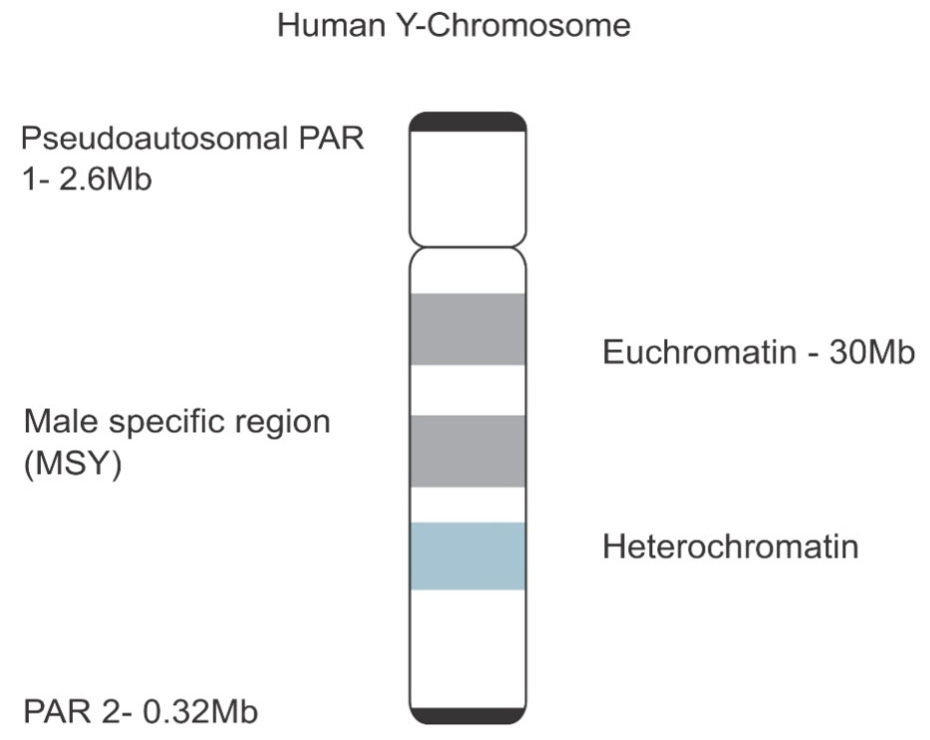
Human Y-Chromosome structure and location of specific regions.
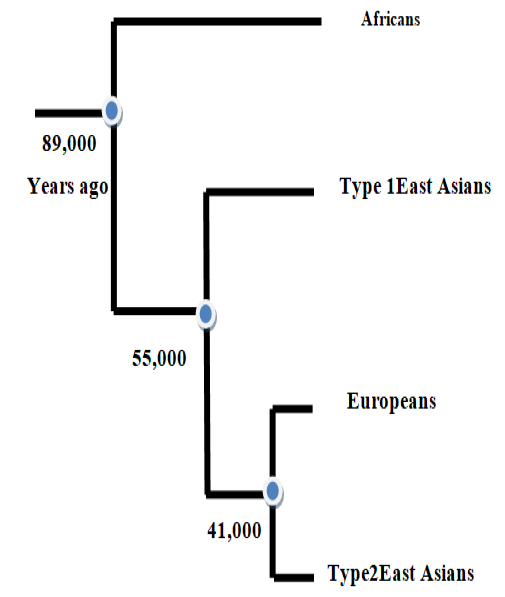
Human population phylogenetic tree.
References
- To generate the haplotype frequency of Y-STR that evaluated for least and extended Y-STR haplotype and Y-SNP which is used in the quantitative evaluation of different genealogical casework?
- It is also important to determine the male population satisfaction among the worldwide population.
Services
Article usage statistics
Loading…