
This research was intended to screen β-Thalassemia Major patients for Xmn1 Polymorphism, accountable for increased Fetal Hemoglobin, an important ameliorating factor in minimizing disease severity. PCR-RFLP was employed for securitizing Xmn1 polymorphism among thalassemia (Major) patients. Out of total 206 screened patients, sole Xmn1 homozygous (+/+) and heterozygous (-/+) case was reported with a band size of 418 bp, 230 bp and 641 bp, 418 bp, 230 bp respectively. Xmn1 restriction site was present at 158 bp upstream of the Gamma globin gene on chromosome 11 of positive patients (GenBank KY927385). Fetal hemoglobin level in Xmn1 (-/+) and (+/+) was 59.1% and 19% respectively which minimize their transfusion frequency to 30 days in comparison to 7-15 days in Xmn1 -/- patients. Hematological analysis of thalassemic patients revealed low Hb, WBCs and platelets counts in contrast to control. The reported polymorphism was meant to be lowering the frequency of blood transfusions and to some extent responsible for diminishing the disease burden among ‘Thalassemia Major’ patients.
Research Article · Volume 51, Issue 1, 17 December 2018 · Open Access
Xmn1 Polymorphism: A Silver Lining for β-Thalassemia Patients
· · · ·
Affiliations & Notes ⌄
- 1Institute of Biochemistry and Biotechnology, University of the Punjab-54590, Lahore , * Corresponding author: saba.ibb@pu.edu.pk
Article Info ⌄
- Journal:
- Pakistan Journal of Zoology
- Published:
- 17 December 2018

From the article
- In the present study, Xmn1 -/+ and +/+ patients have elevated level of HbF in their blood, can be a source of the reported polymorphism.
- In the present study, two Xmn1 polymorphic (-/+ and +/+) cases were reported out of 206 tested patients, and their connexion with levels of Hb and HbF were questioned.
- The outcomes specified that HbF level in Xmn1 positive patients minimize their transfusion frequency to some extent responsible for diminishing the disease burden among ‘Thalassemia Major’ patients.
- Hence genetic screening at this level can make the diagnosis precise and relevant to treatment along with securitization of Xmn1 polymorphism making it a silver lining for thalassemia patients.
Selected from the article's own text.
Abstract
INTRODUCTION
β-Thalassemia, also known as Cooley’s anemia, most commonly stirring in South East Asia, Middle East and Mediterranean countries, is a genetic blood disorder characterized by reduced synthesis or complete absence of β-hemoglobin; a component of red blood cells that carries oxygen around the body . Variation in the sequence of HBB gene located on chromosome 11 fallouts defective transcription eventually led to weak and anemic individuals with faulty hemoglobin reservoirs .
Based on the mutations present, the disease has three severity levels and can be diagnosed by the onset of disease, start of blood transfusion and time between successive transfusions. Thalassemia is categorized as minor; when the mutation repressed single allele, Intermedia; when the disease is mild, and thalassemia major; when mutation repressed both alleles ; . Patients with thalassemia major are also susceptible to other complications involving infection of liver, spleen and gall bladder. The average life expectancy of Thalassemia major patients is 10-15 years with a maximum of 30 years. It became evident through clinical investigation that malfunctioning of spleen, anemia, stunted growth, jaundice and dental problems are some of its alarming indications. Patients undergo various tests to ensure diagnosis which includes; serum transferrin, total iron binding capacity (TIBC), urine urobilin, complete blood count, ferritin, hemoglobin electrophoresis, peripheral blood smear and serum bilirubin . DNA analysis was also employed for genetic assessment of thalassemia patients centered on the site of mutation in the β globulin gene. Thalassemia major patients required repeated blood transfusion to fulfill their oxygen demands whereas less frequent transfusions are needed for Intermedia patients.
β-thalassemia arises due to miscellaneous deletions, insertions and single nucleotide substitutions (SNPs) leading to frameshifts. Some of these reported mutations are, Fr 8-9 (+G), Cd 15 (G-A), IVSI-1 (G-T), Fr 41-42 (–TTCT), Cd 5 (–CT), Cd30 (G-C), Fr 16 (–C), IVSII-1 (G-A), Cd 26 (G-T) (Hb-E), Cap +1 (A-C), Cd 30 (G-A), Fr 47-48 (+ATCT), Del 619 bp, IVSI-25 (25b del) and IVSI-5 (G-C) ; ; Usman et al., 2010; , categorized as βo; no formation of β chains and β+; with little β chain formation.
In β-Thalassemia, many genetic variations play a significant role in determining the severity of disease, for example, observations showed that raise in HbF level neutralizes the imbalance between β and α globin chains. One such example is Xmn1 polymorphism, characterized by C>T transition at 158 bp upstream of the gamma-globin gene and responsible for increased HbF concentration and reduced thalassemic burden ; . The abundance of this polymorphism varies depending upon the geographical location and the β-thalassemia mutation present.
In the present study, we attempted to screen a cohort of β-Thalassemia patients for the presence of Xmn1 trait and to evaluate its overall impact on the severity of disease.
Materials and methods
Sample collection
After receiving the ethical approval from center authorities and patients, 206 clinically diagnosed cases of thalassemia (Major) with age ranges from 2-22 years old were selected for this study from different parts of Punjab province, at Sundas Foundation, Lahore, Pakistan. A total of 54 normal individuals were selected as control from different regions of Lahore that fall within the same age group. After informed consent of patients about 2-3 ml of blood samples were collected from the antecubital vein in EDTA vials. The samples were stored at 4oC to prevent damage.
DNA extraction and mutational analysis
DNA isolation of control and experimental group was conducted by using standard DNA isolation protocol . Isolated DNA samples were assessed by DNA spectrometry and 1 % agarose gel electrophoresis for their qualitative and quantitative analysis. The DNA was subjected to a PCR using the Bio-Rad PCR Machine to amplify the 641 bp fragment containing the gamma-globin gene. The primers used for the reaction are shown in Table I . The reaction was set with 25 cycles of denaturation at 95° C for 10 sec, primer annealing at 54° C for 45 sec and DNA extension at 72° C for 10 sec. Final extension reaction was prolonged to 10 min at 72° C and amplicon was subjected to electrophoresis on a 2 % agarose gel.
Table I.- Sequence of the gamma-globin gene primers.
| Sequence | Tm (oC) |
| F: 5’-GAACTTAAGAGATAATGGCCTAA-3’ | 54°C |
| R: 5’-ATGACCCATGGCGTCTGGACTAG-3’ | 54°C |
Restriction fragment length polymorphism (RFLP)
The amplified 641 bp fragments were subjected to overnight digestion with Xmn1/Pdm1 restriction enzyme and Tango Buffer at 37o C. Restriction mixture was incubated for 16 h and reaction was then transferred on ice to avoid any aver digestion. The product of restriction digestion was observed on 2 % agarose gel.
Sequencing of Xmn1 +/- and +/+ patients
Amplified products were purified by using Favorgen Biotech Corp. Gel Extraction Kit FAGPK 001-1 (FavorPrep™ GEL Purification Kit). Purified products were sequenced by First Base Laboratories (Sdn Bhd No. 7-1 to 7-3, Jalan SP 2/7, Taman Serdang Perdana, Seksyen 2, 43300 Seri Kembangan, Selangor, Malaysia). Sequencing results were evaluated by BLAST, Clustal Omega, Bio Edit and submitted to NCBI.
Results
Mutational analysis
Genomic DNA was isolated by following standard protocol. The standard PCR, with required set of primer was executed with affected and control samples. The banding pattern of amplified product was examined on 2 % agarose gel electrophoresis. Results showed that polymorphism exists in 2 out of 206 screened β-thalassemia patients and amplified region of their gamma beta globin gene displayed multiple banding patterns after overnight restriction digestion. 641bp band was seen in Xmn1 -/- patients, 418bp and 230bp bands were existed in Xmn1 +/+ patient (Annexure І) and three bands were observed in +/- patient as shown in Figure 1.
Sequencing of Xmn1 polymorphic patients
Sequencing results of the Xmn1 positive patients (GenBank KY927385) were aligned with the Homo sapiens hemoglobin, gamma G (HBG2) gene, located on chromosome 11 (GenBank: GU324926.1). Gamma-globin gene starts at position 34478 and terminates at 36069. The cleavage site for restriction enzyme occurs at 34320. This position falls in the intronic region, 158 nucleotides backwards from the initiation point. Results made it clear that the said polymorphism (Xmn1) existed at position 158 upstream of the gamma-globin gene in B-globin gene cluster (Figs. 2, 3). Thus the mutation lies in the intronic promoter region.
Clinical findings of Xmn1 patients
Two out of a cohort of selected patients with reported Xmn1 polymorphism (+/- and +/+), were subjected to hematological analysis that included estimation of Hb (g/dL), HbF (%), WBCs (103/µL) and Platelets (103/µL) level in their blood (Table II). The age of diagnosis for both patients was the age at which they first examined by a physician. Blood groups and family history of β-thalassemia was also assessed on same day (Table II). HbB level in +/- patient was 1.3 g/dL. HBF was 59.1 %, higher than normal individuals. HbB was 5 g/dL and HbF was 19 % in the +/+ patient, again higher than normal values of < 0.1 %. WBCs were 24.8 x 10³/µL and 5.4 x 10³/µL of blood while Platelets 70 x 103/µL and 301 x 103/µL of blood in Xmn1 +/- and +/+ patient respectively. The age of diagnosis for both patients was three years and the age at which they received their first transfusion was 3.5 years. Blood type of -/+ patient was AB- and +/+ was B+ while no family history of β-Thalassemia was available.
Table II.- Hematological analysis of Xmn1 polymorphic (+/- and +/+) β-Thalassemia patients.
| Hematological analysis | Xmn1 +/- | Xmn1 +/+ |
| HbB (g/dL) | 1.3 | 5 |
| HbF (%) | 59.1 | 19 |
| WBCs count | 24.8 x 10³/µL | 5.4 x 10³/µL |
| Platelets count | 70 x 103/µL | 301 x 103/µL |
| Age of diagnosis | 3 years | 3 years |
| Age of first Transfusion | 3.5 years | 3.5 years |
| Blood type | AB- | B+ |
| Family history of thalassemia | N/A | N/A |
Discussion
β-Thalassemia is seldom stirring genetic disorder in Pakistani population with children being the most affected. The sole temporary treatment is blood transfusion, often horrendous for weak anemic affectees . Genetic screening can make the diagnosis precise and relevant to treatment along with securitization of Xmn1 polymorphism; a silver lining for thalassemia patients .
In the present study, Xmn1 -/+ and +/+ patients have elevated level of HbF in their blood, can be a source of the reported polymorphism. However, the onset of disease in these patients was the same as that on Xmn1 -/- patients. This can be encouraged by some other genetic factors e.g, BCL11A, SNP and 5’HS4-LCR that may contribute to the onset of disease . The frequency of transfusions was less i.e. 30 days as compared to 7-15 days in Xmn1 negative patients, diminishes the iron overload and related complications.
Table III.- Hematological analysis of Xmn1 -/- β-thalassemia patients.
| Statistical analysis | WBCs (x103/µL) | Platelets (x103/µL) | Hb (g/dL) | HbF (% of whole blood) |
| Mean | 11.281 | 288 | 6.85 | 46.80 |
| SD | ±11.58919 | ±201.7007 | ±2.29557 | ±37.78964 |
Fetal hemoglobin did not indicate a regular trend in thalassemia patients. The Xmn1 negative patients also had high levels of HbF in blood (Table III), an indicator that Xmn1 polymorphism is not solely responsible for elevated fetal hemoglobin level and here other genetic factors might play their role. Garner et al. (2000) also pointed out that, only one-third of hyper HbF cases were linked to Xmn1 Polymorphism. Other genetic factors are responsible for the high HbF in Xmn1 -/- negative patients as reported by Ho et al. (1998), who wrote that Xmn1 polymorphism is inadequate for elucidation of high HbF production. According to Hanif et al. (2015) CAP+1 mutation proved to be another factor that can be used in disease prognosis.
Xmn1 +/+ patient was B+ and +/- was AB-, chances might exist that Xmn1 is linked to a certain blood group but no research has been conducted to evaluate this aspect. However a study directed by Sachdeva et al. (2005), put forward their idea that O+ blood group was least significant blood type among Xmn1 positive patients as supported by our results.
Thus presence of the Xmn1 polymorphism upstream of promoter region increases the expression of the Gamma-globin up to 11 times and confer an ‘open’ conformation to DNA make it accessible to transcription factors for prompt transcription (Fig. 4). Thus Xmn1 polymorphism is a modifier that decreases severity by increasing gamma-globin protein production but its effect on HbF is conditional and can exist in normal individuals as well .
Conclusion
In the present study, two Xmn1 polymorphic (-/+ and +/+) cases were reported out of 206 tested patients, and their connexion with levels of Hb and HbF were questioned. The outcomes specified that HbF level in Xmn1 positive patients minimize their transfusion frequency to some extent responsible for diminishing the disease burden among ‘Thalassemia Major’ patients. Hence genetic screening at this level can make the diagnosis precise and relevant to treatment along with securitization of Xmn1 polymorphism making it a silver lining for thalassemia patients.
Acknowledgements
We would like to thank Dr. Imran from Sundas Foundation for his assistance and permitting us to collect blood samples of patients registered over there. During this research, 4 patients expired from β-Thalassemia Major. The deaths were caused likely due to complications caused by iron overload.
Statement of conflict of interest
All authors declare that there is no conflict of interests regarding the publication of this article. Otherwise, we should mention any conflict of interest in this section of the manuscript.
Figures
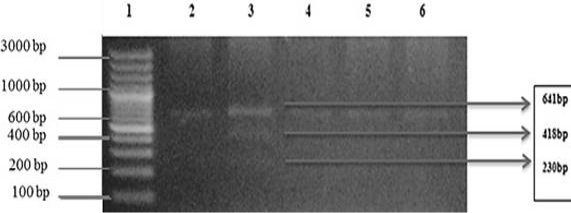
Agarose gel for RFLP analysis. Lane 1, 100bp ladder; Lanes 2-6, samples of B-thalassemia patients; Lanes 2 and 4-6, Xmn1 -/-; Lane 3, Xmn1 -/+.
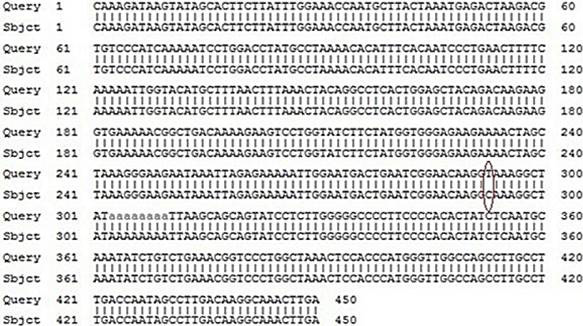
Sequence alignment of (query) Xmn1 polymorphic β-thalassemia patient sample (GenBank KY927385) with the (subject) reported sequence of gamma globin gene retrieved from NCBI (GenBank: GU324926.1). Red outline indicates the transversion of C>T at position 158 bp upstream of the gamma-globin gene.
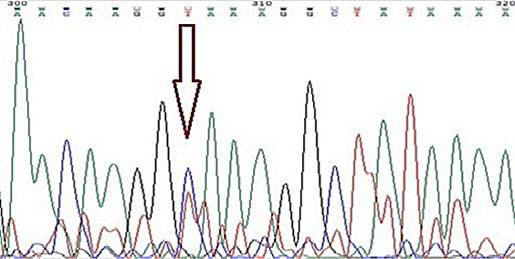
Sequence Chromatogram of Xmn1 polymorphic β-thalassemia patient at reference position 300 to 320. Black arrowhead indicates C>T transversion at 158 bp upstream of gamma globin gene.
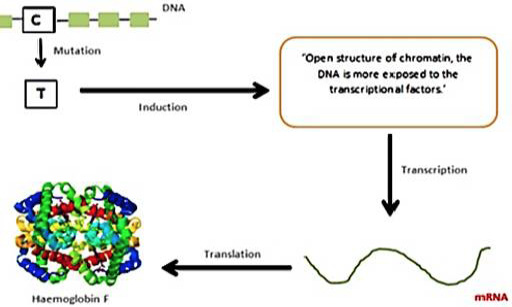
Hypothetical illustration for increased gamma-globin gene expression by C>T polymorphism in the promoter region.
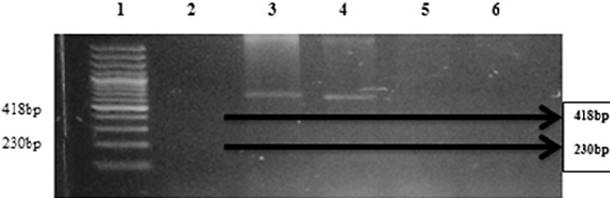
2 % agarose gel for RFLP analysis. Lane 1, contains 100bp ladder; Lanes 2-6, samples of β-Thalassemia patients; Lane 2, 418bp and 230bp of Xmn1 +/+ patient; Lanes 3-4, Xmn1 -/-; Lanes 5-6, no bands.
References
- Aditya, R., Verma, I.C., Saxena, R., Kaul, D. and Khanna, V.K., 2006. Relation of Xmn-1 polymorphism and five common Indian mutations of thalassaemia with phenotypic presentation in b-thalassaemia. JK Science, 8: 139-143.
- Akhavan-Niaki, H., Derakhshandeh-Peykar, P., Banihashemi, A., Mostafazadeh, A., Asghari, B., Ahmadifard, M.R. and Elmi, M.M., 2011. A comprehensive molecular characterization of beta thalassemia in a highly heterogeneous population. Blood Cells Mol. Dis., 47: 29-32. https://doi.org/10.1016/j.bcmd.2011.03.005[CrossRef]
- Ali, N., Ayyub, M., Khan, S.A., Ahmed, S., Abbas, K., Malik, H.S. and Tashfeen, S., 2015. Frequency of Gγ-globin promoter− 158 (C> T) XmnI polymorphism in patients with homozygous/compound heterozygous beta thalassaemia. Hematol. Oncol. Stem Cell Ther., 8: 10-15. https://doi.org/10.1016/j.hemonc.2014.12.004[CrossRef]
- Garner, C., Tatu, T., Game, L., Cardon, L.R., Spector, T.D., Farrall, M. and Thein, S.L., 2000. A candidate gene study of F cell levels in sibling pairs using a joint linkage and association analysis. GeneScreen, 1: 9-14. https://doi.org/10.1046/j.1466-9218.2000.00001.x[CrossRef]
- Hanif, T.B., Ahmed, S., Anwar, J. and Kazmi, S.K.A., 2015. XmnI Polymorphism and disease severity in patients with beta thalassemia from northern Pakistan. J. Ayub med. Coll. Abbottabad, 27: 13-16.
- Hardison, R.C., Chui, D.H., Giardine, B., Riemer, C., Patrinos, G.P., Anagnou, N., Miller, W. and Wajcman, H., 2002. HbVar: A relational database of human hemoglobin variants and thalassemia mutations at the globin gene server. Hum. Mutat., 19: 225-233. https://doi.org/10.1002/humu.10044[CrossRef]
- Ho, P.J., Hall, G.W., Luo, L.Y., Weatherall, D.J. and Thein, S.L., 1998. Beta-thalassaemia intermedia: Is it possible consistently to predict phenotype from genotype? Br. J. Haematol., 100: 70-78. https://doi.org/10.1046/j.1365-2141.1998.00519.x[CrossRef]
- Khelil, A.H., Morinière, M., Laradi, S., Khelif, A., Perrin, P., Chibani, J. B. and Baklouti, F., 2011. Xmn I polymorphism associated with concomitant activation of G γ and A γ globin gene transcription on a β 0-thalassemia chromosome. Blood Cells Mol. Dis., 46: 133-138. https://doi.org/10.1016/j.bcmd.2010.11.002[CrossRef]
- Miller, S.A., Dykes, D.D. and Polesky, H.F.R.N., 1988. A simple salting out procedure for extracting DNA from human nucleated cells. Nucl. Acids Res., 16: 1215. https://doi.org/10.1093/nar/16.3.1215[CrossRef]
- Muncie, Jr. H.L. and Campbell, J., 2009. Alpha and beta thalassemia. Am. Fam. Phys., 80: 339-344.
- Neishabury, M., Zamani, F., Keyhani, E., Azarkeivan, A., Abedini, S.S., Eslami, M.S., Kakroodi, S.T., Vesiehsari, M.J. and Najmabadi, H., 2013. The influence of the BCL11A polymorphism on the phenotype of patients with beta thalassemia could be affected by the beta globin locus control region and/or the Xmn1-HBG2 genotypic background. Blood Cells Mol. Dis., 51: 80-84. https://doi.org/10.1016/j.bcmd.2013.02.007[CrossRef]
- Origa, R., 2015. Beta-thalassemia. GeneReviews®, NCBI Bookshelf.
- Orkin, S.H., Nathan, D.G., Ginsburg, D., Look, A.T., Fisher, D.E. and Lux, S., 2008. Nathan and Oski’s hematology of infancy and childhood e-book. Elsevier Health Sciences.
- Peri, K.G., Gagnon, J., Gagnon, C. and Bard, H., 1997. Association of-158 (C→ T)(XmnI) DNA polymorphism in Gγ-Globin promoter with delayed switchover from fetal to adult hemoglobin synthesis. Pediatr. Res., 41: 214-217. https://doi.org/10.1203/00006450-199702000-00010[CrossRef]
- Rund, D. and Rachmilewitz, E., 2005. β-Thalassemia. N. Engl. J. Med., 353: 1135-1146. https://doi.org/10.1056/NEJMra050436[CrossRef]
- Sachdeva, A., Raina, A., Khanna, V.K., Arya, S.C., Yadav, S.P. and Verma, I., 2005. Genotype phenotype correlation in thalassemia syndromes and their correlation with Xmn-1 polymorphism. Blood, 106: 3845.
- Sharma, D.C., Arya, A., Kishor, P., Woike, P. and Bindal, J., 2017. Overview on thalassemias: A review article. Med. Res. Chronicles, 4: 325-337.
- Sidell, B.D. and O’Brien, K.M., 2006. When bad things happen to good fish: The loss of hemoglobin and myoglobin expression in Antarctic icefishes. J. exp. Biol., 209: 1791-1802. https://doi.org/10.1242/jeb.02091[CrossRef]
- Usman, M., Moinuddin, M. and Ghani, R. 2010. Molecular genetics of beta-thalassaemia syndrome in Pakistan/Génétique moléculaire de la bêta-thalassémie au Pakistan. East Mediterr. Hlth. J., 16: 972. https://doi.org/10.26719/2010.16.9.972[CrossRef]
- Wong, Y.C., George, E., Tan, K.L., Yap, S.F., Chan, L.L. and Tan, M.A., 2006. Molecular characterisation and frequency of Gγ Xmn I polymorphism in Chinese and Malay β-thalassaemia patients in Malaysia. Malaysian J. Pathol., 28: 17-21.
- Wood, W.G., 2001. Hereditary persistance of fetal hemoglobin and β-thalassemia. In: Disorders of hemoglobin: Genetics, pathophysiology, and clinical management. Cambridge University Press, pp. 356.
Cited by 1 article
In journals published by ResearchersLinks.
Services
Article usage statistics
Loading…