The main scope of most previous researches concerning gastrointestinal nematodes on goat was haematological alterations (Williamson et al., 2003) and histopathological changes (Mir et al., 2007) but there were no reports available about determination of oxidants / antioxidants parameters in tissue of goats.
A. sativum resembles any herbal plants, rises up the formation of non degradable complicated components with amino acids inside the stomach which provides high levels of supplemented protein, this followed up by improvement of the immune system of the affected species and the ability to overcome the parasitic infection. The active principle of anthelmintic effect in garlic is tannin component which highly represented, this substance can be reconciled the live functions as motor function, food metabolism and reproduction this concept is in harmony with Duval (2004) who mentioned garlic does not inhibit the production of egg but prevent the egg from developing into larvae. This lowering in larvae numbers will subsequently lower the worm burden in the hosts. The current study, supporting the previous concept, showed that A. sativum has the ability to lower the FEC. While mode of action of coriander is through propagation along cuticular membrane, this manner is widely known as a method of entry for any non food materials in nematodes (Geary et al., 1999). The present work showed that coriander is less effective on Haemonchus contortus infection in goat than garlic.
The first component of PUFA damage during lipid peroxidation is total peroxide while the end product is malondialdehyde (MDA), so that their high levels is considered as a mark of high production of free radicals and oxidative stress (Halliwell and Chirico, 1993). In addition, The increase in reactive hydroxyl radical (OH•) which is generated by high concentration of H2O2 is considered to be responsible for the formation of PC (Oliver, 1987), As well, The usage of PC is an indicator of early carbonylated protein formation and stability (Dalle-Donne et al., 2003). Dimitrijevi´c et al. (2012) reported that the level of MDA and PC were raised up in the same manner as Strongyloides papillosus infestation in goat increased, Supporting this, our work exhibited high degrees of T.pereoxide, MDA and PC values in C+ve group. Balasenthil et al. (1999) observed that treatment hamsters with DMBA (Dimethylbenz anthracene), a carcinogenic component administrated with of an aqueous extract of garlic exhibited diminished lipid peroxidation (T.peroxides, MDA) and PC as well as ameliorative effect in the levels of catalase, SOD and GSH in oral tumor tissue. Our data is in harmony with the previous author.
Seeds of coriander contain antioxidants (Wangensteen et al., 2004). The main antioxidant content in coriander is carotenoids. The carotenoids act as a scavenger of hydroxyl radicals, thereby protecting cells from oxidative damage (Peethambaran et al., 2012). These findings support the ameliorative action happened in Coriander treated group.
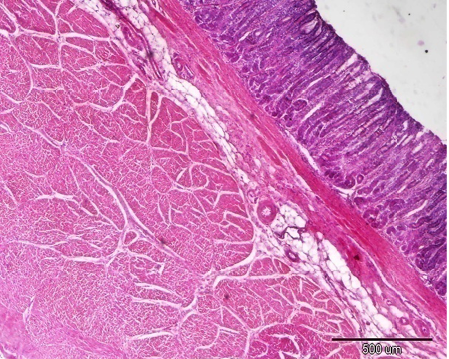
As chung, 2006 mentioned that A. sativum contains high levels of powerful antioxidant agents represented in alliin, allyl cysteine, allyl disulfide, and allicin. In this fact, previous literatures explained illustrated that elevated antioxidant capacity in the damaged tissue area, spread the regeneration process (Rasik, Shukla, 2000; Farahpour et al., 2015). Moreover, the anti-inflammatory action of these components harry up regeneration process. The control of inflammation during regeneration will speed the proliferative action for more cell formation (Hemmati, Mohammadian, 2000; Rasik, Shukla, 2000). Polymorph nuclear cells play an important role in healing process as they act as scavenger for microorganisms and clear cellular debris (Guo, Dipietro, 2010). Regard to Shin et al. (2013), A. sativum has massive anti-inflammatory effects. Accordingly, our work showed high regenerative effect of garlic on abomasal tissue which in turn restoring the normal histological features.
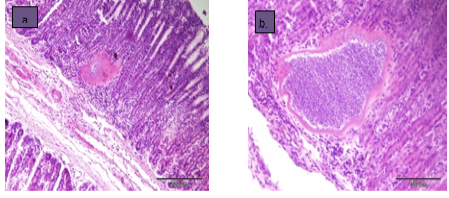
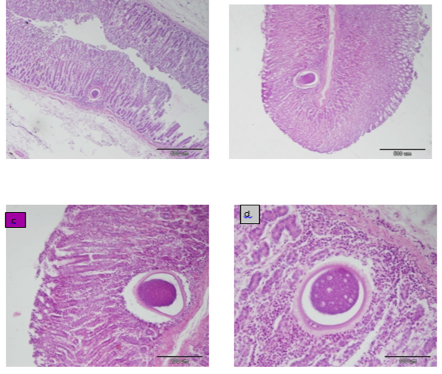
The active substance of Coriandrum savitum is isoquercitrin (quercetin-3-O-β-d-glucopyranoside) which is a one of the major glycosidic form of quercetin. It plays an important role to counteract oxidative damage, inflammation and apoptosis (Liang et al., 2020). It is the major bioactive component of the Coriander. Quercetin, can be an important dietry supplement to inhibit chronic degenerative diseases. Quercetin and other flavonoids can play an important role in modification of eicosanoid bioformation (antiprostanoid and anti-inflammatory responses) (Nambiar et al., 2010). In addition, some flavonoids act as precursor for enzymes needed for gene transcription and expression against oxidative damage insults (Rohrdanz et al., 2002). On this basis the degenerated larvae with a moderate inflammatory cells attributed to the antiinflammatory and antioxidant effect of coriander that counteract the action of parasitic propagation regardeless this effect is less than that of garlic.