
Numerous studies have identified members of the erythroblast transformation specific (Ets) transcription factors family showing aberrant expression in various stages of tumor formation in breast tissue. However, their use as a prognostic factor is not very clear. Therefore, a meta-analysis was performed to analyze their aberrant expression in breast tumorigenesis. A thorough literature search was performed and 73 relevant studies were identified which were further scrutinized and finally 26 studies covering 4553 subjects were included for analysis. A random effect model was applied and correlation was calculated using odds ratios (OR) at 95% confidence intervals (CI). Combined OR calculated showed a significant relation between Ets factor expression and breast cancer risk (OR=3.185, 95% CI=2.161–4.69, p<0.001). In subgroup analysis, Ets-1 overexpression was found highly associated (OR=2.149, 95% CI=1.141–4.048, p= 0.018) with breast cancer as compared to other Ets factors. Funnel plots confirmed no publication bias. Our study suggested Ets overexpression (especially Ets-1) might indicate an increased progression rate of breast cancer. However, to make a conclusive statement further in vitro and in vivo investigations and clinical trials are needed.
Research Article · Volume 55, Issue 6, 31 October 2023 · Open Access
The Significance of Erythroblast Transformation Specific (Ets) Transcription Factors in Breast Cancer Progression: A Meta-Analysis
· · · ·
Affiliations & Notes ⌄
- 1Department of Zoology, GC university, Lahore, Pakistan 2Basic Sciences Department, Shaukat Khanum Memorial Cancer Hospital and Research Center, Lahore, Pakistan * Corresponding author: nailamalkani@gcu.edu.pk
Article Info ⌄
- Journal:
- Pakistan Journal of Zoology
- Published:
- 31 October 2023

From the article
- The meta-analysis results showed that Ets transcription factors family overexpression increases the odd ratios of breast cancer in a significant way (combined OR= 3.262).
- Among the selected 26 studies the increased expression of Ets transcription factors was observed in all types of breast cancer cases as compared to respective controls.
- Among these factors, the Ets-1 was most significantly related to breast cancer progression with minimum heterogeneity i.e. tau2 was 0.54 as compared to 0.67 and 2.66 for Ets-2 and ETV-4, respectively.
- From this meta-analysis; we conclude that Ets family members can serve as the biomarkers for the progression of breast cancer.
Selected from the article's own text.
Abstract
Introduction
Breast cancer is the most common cause of cancer-related deaths in women all over the world . It is a multifactorial disease that has many environmental and genetic causes . A combination of genetic abnormalities and environmental factors decides the fate of the spreading tumor. Angiogenesis plays a critical part in metastasizing cancer as blood vessels are required for the nutrient supply to the growing tumor for stabilization and maintenance .
Erythroblast transformation specific (Ets) family of transcription factors has a significant role in angiogenesis and hence in cancer initiation and progression . Several genes from this family have atypical expression during various stages of breast cancer . Ets proteins, a family of mitogen-activated protein kinase (MAPK), are highly conserved proteins with a unique winged-helix turn helix DNA binding domain . It is divided into 12 subfamilies or subgroups based on Ets binding domain (EBD) sequence homology. These subgroups are ETS, ERG, PEA3, ETV-2, TCF, GABP, SPI, ELF, ERF, TEL, PDEF, and ESE .
The conversion of Ets factors from normal to oncogene is important in cancer progression. Many studies show that about three Ets proteins can bind to one eukaryotic gene at a time. So instead of an individual Ets factor, a dynamic regulatory network of multiple factors is involved in cancer progression. Ets family members are related to breast carcinoma by their increased or reduced expression. This abnormality in expression leads to migration, invasion, angiogenesis, cell growth, and adhesion of tumor cells. They interact with other transcription factors like p53, N-MYC, GATA and disturb cell homeostasis . Chromosomal alterations and rearrangements like gene amplification, deletions, and translocations in Ets family members lead to abnormal expressions. Several dysregulations in breast cancer include upregulation of ETS-1, increased level of PEA-3 along with HER-2 overexpression of ESE-1 in invasive ductal carcinoma, and reduced expression of PDEF and FLI-1 in invasive breast cancer tissues .
The diverse results of multiple studies related to a medical question often make clinical decisions difficult. The same is true in this case as there are quite some studies with different results which make it difficult to formulate a statement about the role of Ets factors in breast cancer. Therefore, a meta-analysis was performed to collect information from different studies and determine the relationship between ETS factors and breast cancer.
Materils and Methods
Literature search strategy
The electronic search was performed in databases, PubMed and Google Scholar for identification of the studies related to Ets transcription factors expression in breast cancer. Keywords used were Ets transcription factors; Ets expression; Breast cancer; Breast carcinoma and Breast tumors. All Ets transcription family factors were also searched individually. Studies published before December 2020 were included while there was no lower date limit. Appropriate references of retrieved studies were also searched for data.
Selection criteria
For the selection of literature following criteria were followed; (i) only original and independent studies were included for analysis, (ii) samples used in the study were of human breast tissue or human breast cell line, (iii) patients must be diagnosed originally with breast malignancy, (iv) expression of Ets transcription factors must be checked, and (v) number or percentage for positive expression of Ets or odds ratio with 95% Confidence Interval must be mentioned. Studies lacking this information, having samples taken from other than human breast tissue like mice, rabbits, or other animals, and review articles were excluded from the analysis.
Literature retrieval and data extraction
A total of 250 articles were selected as a result of a preliminary search through databases. Out of these, 177 studies that were irrelevant to our research were excluded from further evaluation. 73 relevant studies were assessed at the abstract level. 58 retained studies were assessed for further full-text assessment. After full-text assessment 26 studies were selected for performing meta-analysis in which complete required information was given.
Data extracted from selected articles included first author name, year of publication, the country where the study was conducted, name of Ets transcription factor, mean age of patients (if mentioned), several breast tissue samples, and positive expression of Ets transcription factor in both cancer and normal tissue, odds ratio with upper and lower limit with 95% confidence interval (CI), methods of expression analysis like immunohistochemistry, western blotting, qPCR, etc., relation or effect of Ets factor on other genes expression and type of breast cancer like HER2 positive, etc. Supplementary data were also retrieved if required information was not mentioned in the article.
Statistical analysis
The expression of Ets transcription factors was measured by calculating the odds ratio and standard error. For analyzing the significance of expression, a forest plot for the random effect model was used. The weight and residual of each study used in the meta-analysis were also calculated. A subgroup analysis was performed on the individual Ets factor family members. Bias in studies was checked by funnel plots followed by Egger’s regression and the Begg-Mazumdar test. Heterogeneity within the study was estimated using I-squared and between the studies, variation was checked by the Tau2 statistics . All calculations were done with Comprehensive Meta-Analysis Version 3.0.
Results
Literature retrieval
After thoroughly analyzing 250 studies finally, 26 studies were selected for performing meta-analysis in which complete required data was given (Supplementary Fig. 1). Supplementary Table S1 summarizes the characteristics of the included studies. In 10 studies the expression of the ETS factor was analyzed at the mRNA level ; ; ; ; ; ; ; ; ; , in 14 studies it was at protein level ; Mitas et al., 2001; ; , 2006; ; ; ; ; ; ; ; ; while in remaining 2 studies expressions was analyzed both at mRNA and protein levels . Studies included in this systematic review illustrated 11 Ets transcription factors having important roles in breast cancer. These Ets transcription factors are ETS-1, ETS-2, ELK-1, ERM, ETV-4, PDEF, ELF-3, ETV-6, ETV-3, SPDEF, and ELK-4. All studies were about a single Ets transcription factor except ; Mesquita et al., 2013) in which more than one Ets factor was evaluated. The individual study sample size ranged from 13 to 364 patients. The mean patient age was 48-64 years. In two studies odds ratio was directly calculated ; . In most studies, RT-PCR was used to evaluate mRNA expression ; ; ; ; ; ; ; ; ; , while for protein analysis immunohistochemistry ; Mitas et al., 2001; , 2006; ; ; ; ; ; ; ; , western blotting ; ; , 2009; , ELISA , 2006), and other methods ; were used. The most common types of carcinoma in selected studies were ductal and lobular invasive carcinomas. One study involved a very rare subtype that is secretory breast cancer . Breast cancer subtypes in these studies were triple-negative , luminal , and HER2 +ve breast cancer. In 7 studies, the subtype was not specified ; ; ; , 2006; ; .
Ets factors and breast cancer
The studies for which meta-analysis was performed, the expression of Ets transcription factors was closely related to breast cancer. In 19 studies, the increased expression of Ets factors was observed in breast cancer patients ; ; Mitas et al., 2001; ; ; ; ; ; ; ; ; ; ; ; ; ; . In 9 studies the expression was almost equal in both cases ; ; ; ; ; ; while in 2 studies expressions of ETS factor in breast cancer samples were less than that of normal samples ; .
A random effect model was chosen to calculate the odds ratio and heterogeneity. OR (Odds Ratio) value of individual studies and forest plot is illustrated in Supplementary Fig. 2. Combined odds ratio was OR = 3.185, 95% CI (2.161-4.693) and P < 0.001. This shows a statistically significant relationship between ETS factors overexpression and breast cancer risk. The I-square statistics to measure heterogeneity between studies showed I2= 86% meaning that 86% of the observed variance between studies is due to the real difference in effect size and only 14% of observed variance should be expected to base on a random error. The tau2 value to measure the variance among studies was 0.841. It was observed that this heterogeneity was due to studies ; ; ; ; ; , therefore a meta-analysis was performed excluding these studies. The combined OR after excluding these studies is OR = 2.564, 95% CI (1.88-3.48) and P < 0.001. After excluding these studies the I2 and tau2 values reduced to 76% and 0.369, respectively (Fig. 1).
Bias in studies was calculated by funnel plot for standard error of random effect model as shown in Figure 2 and Supplementary Figure 2. The symmetrical plot indicates that there are no biases in studies included in the meta-analysis. The Egger’s regression test and Begg and Mazumdar test details are shown on funnel plots. Sub-group analysis was performed for the individual Ets- family factors to minimize heterogeneity among the included studies. In each specific group, the effect of individual Ets factor was evaluated on breast cancer. The forest plots for Ets-1 (OR = 2.149, 95% CI = 1.141 – 4.048, P = 0.018), Ets-2 (OR = 3.06, 95% CI = 1.226 – 7.648, P = 0.017) and ETV-4 (OR = 2.885, 95% CI = 0.779 – 10.684, P = 0.113) are shown in Figure 4a, b, c. The funnel plots for publication bias were also determined and shown in Figures 3 and 4. All reported p values were two-sided and p values < 0.05 were regarded as statistically significant.
Discussion
The progression of breast cancer is rather unpredictable due to the greater variation and heterogeneity in the underlying causes . It is, therefore, particularly important to identify the biomarkers that can predict the progression of the disease. Several molecular targets have been identified which can serve as potential biomarkers for breast cancer but still there is a need to find better targets for metastatic breast cancer (Polyak, 2011). Ets family of transcription factors have emerged to play a significant role in the progression of breast malignancy. In the present study, a meta-analysis of 26 studies was performed after scrutiny to determine the relationship between Ets factors overexpression and breast cancer progression. A thorough literature survey could not find any study which has comprehensively analyzed and reviewed the Ets factors and breast cancer occurrence.
The random effect model was selected for the meta-analysis, as this model allowed examining the true variation in effect size (odds ratio) among individual studies. Effect size can be slightly higher or lower according to the characteristics or condition of subjects in a study. In combined effect size, the random effect model gives the mean effect size for all studies and more precise effect size from studies having a large number of samples or patients as compared to small sample size studies can be obtained ; . The publications finalized in our meta-analysis had variable Ets factors for breast cancer patients, so the random effect model was found to be more appropriate. In contrast, the fixed-effect model was not selected because it assumes the same effect size for all studies.
The meta-analysis results showed that Ets transcription factors family overexpression increases the odd ratios of breast cancer in a significant way (combined OR= 3.262). However, the Ets family factor Ets-1 was found more closely related to breast cancer occurrence (OR= 2.149) compared to others.
Multiple pieces of evidence suggested the regulation of breast cancer metastasis by the combined action of several Ets factors affecting various pathways. Ets factors are also associated with the poor prognosis of breast cancer. The possible mechanism of their action on breast cancer progression is maybe through the angiogenesis pathway . Among the selected 26 studies the increased expression of Ets transcription factors was observed in all types of breast cancer cases as compared to respective controls. However, there was one study showing the downregulation of the Ets factor, PEA3 in HER-2/neu breast metastasis and was not associated with clinicopathological features.
Ets family of transcription factors regulates the expression of numerous signaling molecules and regulators of tumor progression. The pathways of the tumor microenvironment and their interactions are also under influence of Ets factors . It is evident from the literature that some Ets factors have coordinated functions and control tissue homeostasis for the tumor microenvironment. Ets factors altered expression in breast tumorigenesis is determined in several studies. Some Ets factors are overexpressed while others are down-regulated during breast tumorigenesis thus acting as both activators and suppressors of the process.
Our literature search and meta-analysis results have demonstrated that Ets-1 is the most investigated factor among all Ets proteins. The subgroup analysis was performed with Ets-1, Ets-2, and ETV-4 only because for other factors number of studies was not enough (3 or less). Among these factors, the Ets-1 was most significantly related to breast cancer progression with minimum heterogeneity i.e. tau2 was 0.54 as compared to 0.67 and 2.66 for Ets-2 and ETV-4, respectively.
Ets-1 has been found closely related to angiogenic pathways where it is involved in inducing the expression of pro-angiogenic factors . By enhancing the angiogenic mechanism Ets-1 can contribute to invasiveness and progression of breast cancer. Several findings have shown that Ets-1 expression is related to aggressive angiogenesis and invasive phenotypes ; . Ets-1 has a significant correlation with several important molecules like uPA (Urokinase activator) and HER2/neu (a proto-oncogene) , therefore, its over-expression can be associated with breast tumor progression. Moreover, there is also a significant correlation between Ets-1 expression and VEGF and PAI-1 . Based on these observations Ets-1 can be used as a prognostic factor to determine breast cancer progression.
Conclusions
From this meta-analysis; we conclude that Ets family members can serve as the biomarkers for the progression of breast cancer. However further validation needs to be done. It is worth mentioning that instead of causative factors Ets proteins are more involved in the development of metastasis in breast cancer. Since Ets proteins appeared at various stages of breast cancer, therefore, their expression can predict the disease progression.
Acknowledgments
The authors are thankful to the Department of Statistics, GC University, Lahore, Pakistan for their support. No funding of any type was received for this project.
Funding disclosure
None to declare
Supplementary material
There is supplementary material associated with this article. Access the material online at: https://dx.doi.org/10.17582/journal.pjz/20220119060146
Statement of conflict of interest
The authors have declared no conflict of interest.
Figures
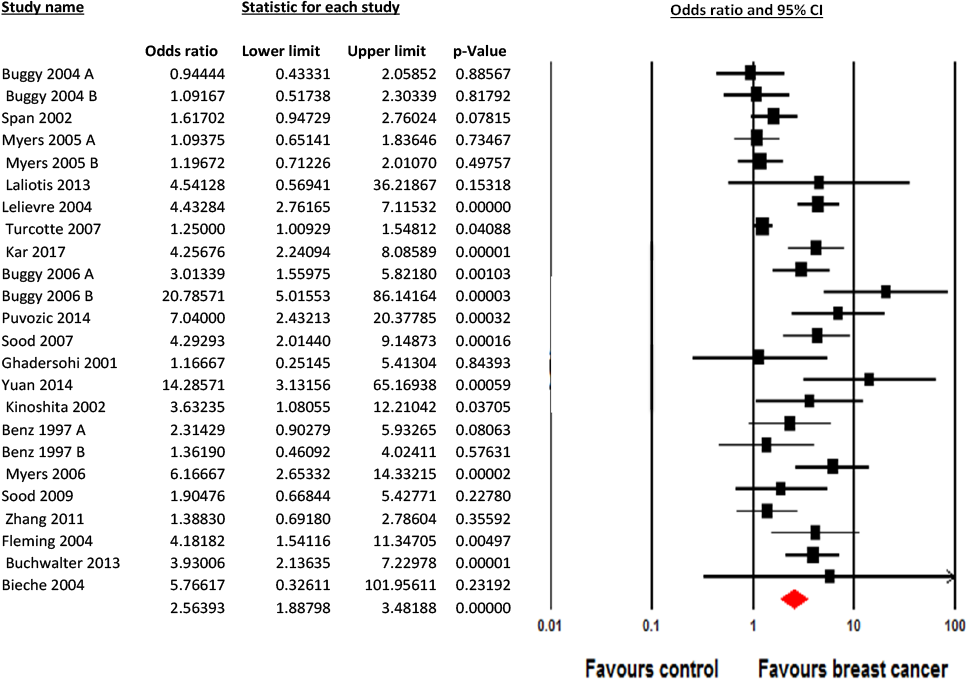
Forest plot of odd ratio with a random-effects model for prognosis between increased expression of ETS factors and control in breast cancer after exclusion of some studies.
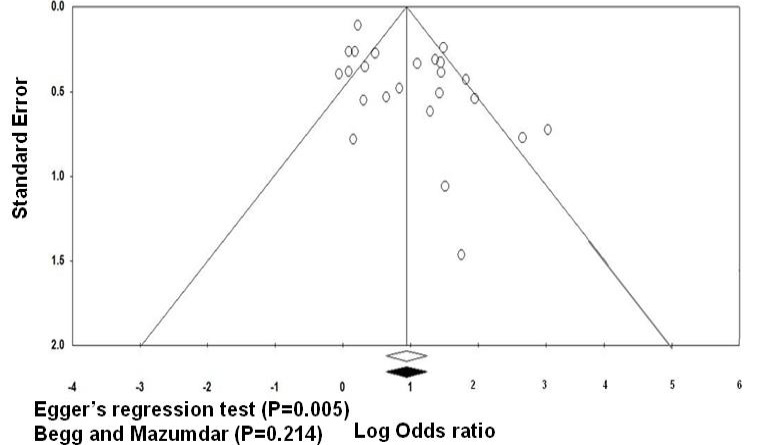
Funnel plot of standard error by log odd ratio for increased expression of ETS factors in breast cancer and control group for 21 selected studies.
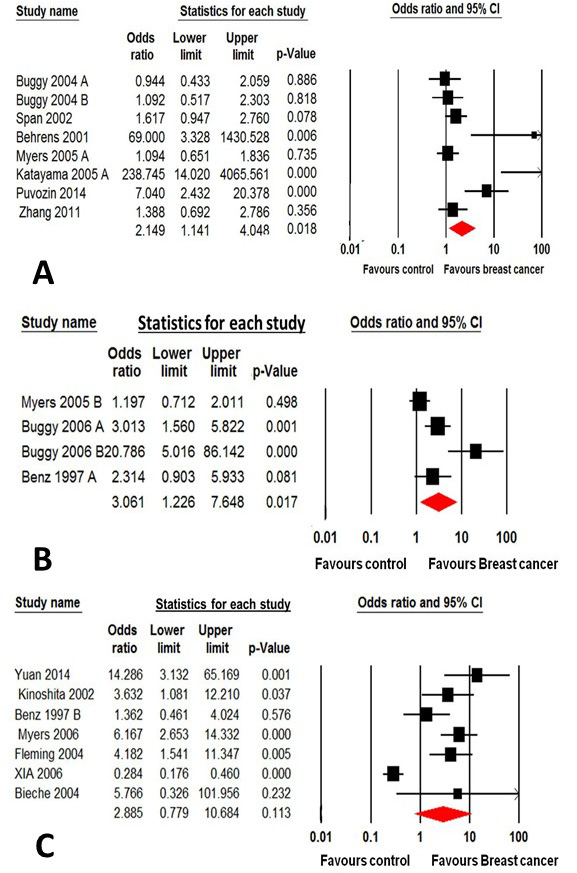
Forest plot of odd ratio with a random-effects model for prognosis between increased expression of Ets-1 (A), Ets-2 (B) and ETV-4 (C) and control in breast cancer.
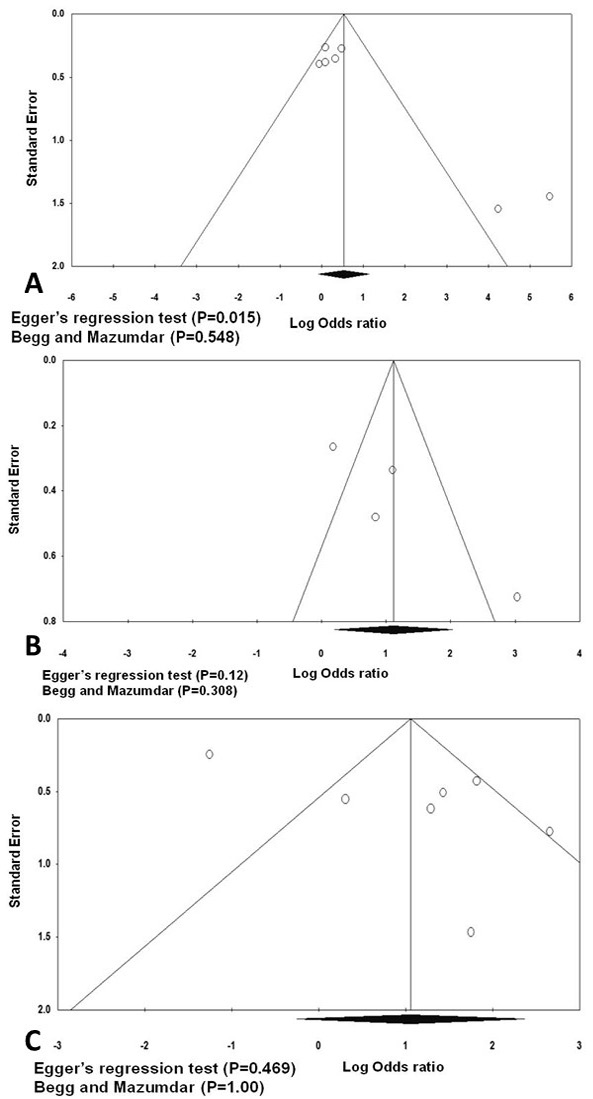
Funnel plot of odd ratio with a random-effects model for prognosis between increased expression of Ets-1 (A), Ets-2 (B) and ETV-4 (C) and control in breast cancer.
References
- Begg, C.B., and Mazumdar, M., 1994. Operating characteristics of a rank correlation test for publication bias. Biometrics, pp. 1088-1101. https://doi.org/10.2307/2533446[CrossRef]
- Behravan, H., Hartikainen, J.M., Tengström, M., Kosma, V.M. and Mannermaa, A., 2020. Predicting breast cancer risk using interacting genetic and demographic factors and machine learning. Sci. Rep., 10: 1-16. https://doi.org/10.1038/s41598-020-66907-9[CrossRef]
- Behrens, P., Rothe, M., and Wellmann, A., 2001. The Ets-1 transcription factor is up-regulated together with MMP 1 and MMP 9 in the stroma of pre-invasive breast cancer. J. Pathol., 194: 43-50. https://doi.org/10.1002/path.844[CrossRef]
- Benz, C.C., O’Hagan, R.C., and Richter, B., 1997. HER2/Neu and the Ets transcription activator PEA3 are coordinately upregulated in human breast cancer. Oncogene, 15: 1513. https://doi.org/10.1038/sj.onc.1201331[CrossRef]
- Bièche, I., Tozlu, S., and Girault, I., 2004. Expression of PEA3/E1AF/ETV4, an Ets-related transcription factor, in breast tumors: Positive links to MMP2, NRG1 and CGB expression. Carcinogen, 25: 405-411. https://doi.org/10.1093/carcin/bgh024[CrossRef]
- Buchwalter, G., Hickey, M.M., and Cromer, A., 2013. PDEF promotes luminal differentiation and acts as a survival factor for ER-positive breast cancer cells. Cancer Cell, 23: 753-767. https://doi.org/10.1016/j.ccr.2013.04.026[CrossRef]
- Buggy, Y., Maguire, T.M., McDermott, E., Hill, A.D.K., O’higgins, N. and Duffy, M.J., 2006. Ets2 transcription factor in normal and neoplastic human breast tissue. Eur. J. Cancer, 42: 485-491. https://doi.org/10.1016/j.ejca.2005.10.018[CrossRef]
- Buggy, Y., Maguire, T.M., and McGreal, G., 2004. Overexpression of the Ets-1 transcription factor in human breast cancer. Br. J. Cancer, 91: 1308-1315. https://doi.org/10.1038/sj.bjc.6602128[CrossRef]
- Chotteau-Lelièvre, A., Révillion, F., and Lhotellier, V., 2004. Prognostic value of ERM gene expression in human primary breast cancers. Clin. Cancer Res., 10: 7297-7303. https://doi.org/10.1158/1078-0432.CCR-04-0593[CrossRef]
- Ehrenfeld, P., Cordova, F., Duran, W.N. and Sanchez, F.A., 2019. S-nitrosylation and its role in breast cancer angiogenesis and metastasis. Nitric Oxide, 87: 52-59. https://doi.org/10.1016/j.niox.2019.03.002[CrossRef]
- Fleming, F.J., 2004. Expression of SRC-1, AIB1 and PEA3 in HER2 mediated endocrine resistant breast cancer; a predictive role for SRC-1. J. clin. Pathol., 57: 1069-1074. https://doi.org/10.1136/jcp.2004.016733[CrossRef]
- Folkman, J., 1995. Angiogenesis in cancer, vascular, rheumatoid and other disease. Nat. Med., 1: 27-30. https://doi.org/10.1038/nm0195-27[CrossRef]
- Furlan, A., Vercamer, C., Heliot, L., Wernert, N., Desbiens, X. and Pourtier, A., 2019. Ets-1 drives breast cancer cell angiogenic potential and interactions between breast cancer and endothelial cells. Int. J. Oncol., 54: 29-40. https://doi.org/10.3892/ijo.2018.4605[CrossRef]
- Ghadersohi, A., and Sood, A.K., 2001. Prostate epithelium-derived Ets transcription factor mRNA is overexpressed in human breast tumors and is a candidate breast tumor marker and a breast tumor antigen. Clin. Cancer Res., 7: 2731-2738.
- Haibe, Y., Kreidieh, M., El Hajj, H., Khalifeh, I., Mukherji, D., Temraz, S. and Shamseddine, A., 2020. Resistance mechanisms to anti-angiogenic therapies in cancer. Front. Oncol., 10: 221. https://doi.org/10.3389/fonc.2020.00221[CrossRef]
- Haidich, A.B., 2010. Meta-analysis in medical research. Hippokratia, 14: 29.
- Hsu, T., Trojanowska, M., and Watson, D.K., 2004. Ets proteins in biological control and cancer. J. cell. Biochem., 91: 896-903. https://doi.org/10.1002/jcb.20012[CrossRef]
- Kar, A., and Gutierrez-Hartmann, A., 2017. ESE-1/ELF3 mRNA expression associates with poor survival outcomes in HER2+ breast cancer patients and is critical for tumorigenesis in HER2+ breast cancer cells. Oncotarget, 8: 69622. https://doi.org/10.18632/oncotarget.18710[CrossRef]
- Katayama, S., Nakayama, T., and Ito, M., 2005. Expression of the ets-1 proto-oncogene in human breast carcinoma: Differential expression with histological grading and growth pattern. Histopathology, 20: 119-126.
- Kinoshita, J., Kitamura, K., and Tanaka, S., 2002. Clinical significance of PEA3 in human breast cancer Surgery. Breast Cancer, 131: 222-225. https://doi.org/10.1067/msy.2002.119792[CrossRef]
- Krishnamoorthy, K., and Lee, M., 2014. Improved tests for the equality of normal coefficients of variation. Comput. Stat., 29: 215-232. https://doi.org/10.1007/s00180-013-0445-2[CrossRef]
- Laliotis, A., Vrekoussis, T., and Kafousi, M., 2013. Immunohistochemical study of pElk-1 expression in human breast cancer: Association with breast cancer biologic profile and clinicopathologic features. Breast, 22: 89-95. https://doi.org/10.1016/j.breast.2012.09.013[CrossRef]
- Li, J., Zhang, Z., and Rosenzweig, J., 2002. Proteomics and bioinformatics approaches for identification of serum biomarkers to detect breast cancer. Clin. Chem., 48: 1296-1304. https://doi.org/10.1093/clinchem/48.8.1296[CrossRef]
- Macleod, K., Leprince, D., and Stehelin, D., 1992. The ets gene family. Trends Biochem. Sci., 17: 251-256. https://doi.org/10.1016/0968-0004(92)90404-W[CrossRef]
- Madunić, J., 2018. The urokinase plasminogen activator system in human cancers: An overview of its prognostic and predictive role. J. Thromb. Haemost., 118: 2020-2036. https://doi.org/10.1055/s-0038-1675399[CrossRef]
- Mesquita, B., Lopes, P., and Rodrigues, A., 2013. Frequent copy number gains at 1q21 and 1q32 are associated with overexpression of the ETS transcription factors ETV3 and ELF3 in breast cancer irrespective of molecular subtypes. Breast Cancer Res. Treat., 138: 37-45. https://doi.org/10.1007/s10549-013-2408-2[CrossRef]
- Mitas, M., Mikhitarian, K., and Hoover, L., 2001. Prostate-specific ets (PSE) factor: A novel marker for detection of metastatic breast cancer in axillary lymph nodes. Br. J. Cancer, 86: 899. https://doi.org/10.1038/sj.bjc.6600190[CrossRef]
- Myers, E., Hill, A.D.K., Kelly, G., McDermott, E.W., O’Higgins, N.J., and Young, L.S., 2006. A positive role for PEA3 in HER2-mediated breast tumour progression. Br. J. Cancer, 10: 1404-1409. https://doi.org/10.1038/sj.bjc.6603427[CrossRef]
- Myers, E., Hill, A.D., and Kelly, G., 2005. Associations and interactions between Ets-1 and Ets-2 and coregulatory proteins, SRC-1, AIB1, and NCoR in breast cancer. Clin. Cancer Res., 11: 2111-2122. https://doi.org/10.1158/1078-0432.CCR-04-1192[CrossRef]
- Nazir, S.U., Kumar, R., Rasool, I., Bondhopadhyay, B., Singh, A., Tripathi, R., Singh, N., Khan, A., Tanwar, P., Agrawal, U., and Mehrotra, R., 2019. Differential expression of Ets-1 in breast cancer among North Indian population. J. cell. Biochem., 120: 14552-14561. https://doi.org/10.1002/jcb.28716[CrossRef]
- Oikawa, T., and Yamada, T., 2003. Molecular biology of the Ets family of transcription factors. Gene, 303: 11-34. https://doi.org/10.1016/S0378-1119(02)01156-3[CrossRef]
- Oikawa, T., Yamada, T., Kihara-Negishi, F., Yamamoto, H., Kondoh, N., Hitomi, Y. and Hashimoto, Y., 1999. The role of Ets family transcription factor PU. 1 in hematopoietic cell differentiation, proliferation and apoptosis. Cell Death Differ., 6: 599-608. https://doi.org/10.1038/sj.cdd.4400534[CrossRef]
- Polyak, K., 2017. Heterogeneity in breast cancer. J. clin. Invest., 121: 3786-3788. https://doi.org/10.1172/JCI60534[CrossRef]
- Puzovic, V., Brcic, I., Ranogajec, I., and Jakic-Razumovic, J., 2014. Prognostic values of ETS-1, MMP-2 and MMP-9 expression and co-expression in breast cancer patients. Neoplasma, 61: 439-447. https://doi.org/10.4149/neo_2014_054[CrossRef]
- Randi, A.M., Sperone, A., Dryden, N.H., and Birdsey, G.M., 2009. Regulation of angiogenesis by ETS transcription factors. Biochem. Soc. Trans., 37: 1248-1253. https://doi.org/10.1042/BST0371248[CrossRef]
- Scheiber, M.N., Watson, P.M., and Rumboldt, T., 1997. FLI1 expression is correlated with breast cancer cellular growth, migration, and invasion and altered gene expression. Neoplasia, 16: 801-813. https://doi.org/10.1016/j.neo.2014.08.007[CrossRef]
- Sood, A.K, Wang, J., and Mhawech-Fauceglia, P., 2009. Sam-pointed domain containing ets transcription factor in luminal breast cancer pathogenesis. Cancer Epidemiol. Biomarkers Prev., 18: 1899-1903. https://doi.org/10.1158/1055-9965.EPI-09-0055[CrossRef]
- Sood, A.K., Saxena, R., and Groth, J., 2007. Expression characteristics of prostate-derived Ets factor support a role in breast and prostate cancer progression. Hum. Pathol., 38: 1628-1638. https://doi.org/10.1016/j.humpath.2007.03.010[CrossRef]
- Span, P.N., Manders, P., and Heuvel, J.J., 2002. Expression of the transcription factor Ets-1 is an independent prognostic marker for relapse-free survival in breast cancer. Oncogene, 21: 8506. https://doi.org/10.1038/sj.onc.1206040[CrossRef]
- Sung, H., Ferlay, J., Siegel, R.L., Laversanne, M., Soerjomataram, I., Jemal, A. and Bray, F., 2021. Global cancer statistics 2020: GLOBOCAN estimates of incidence and mortality worldwide for 36 cancers in 185 countries. CA Cancer J. Clin., 71: 209-249. https://doi.org/10.3322/caac.21660[CrossRef]
- Tognon, C., Knezevich, S.R., and Huntsman, D., 2002. Expression of the ETV6-NTRK3 gene fusion as a primary event in human secretory breast carcinoma. Cancer Cell, 2: 367-376. https://doi.org/10.1016/S1535-6108(02)00180-0[CrossRef]
- Turcotte, S., Forget, M.A., and Beauseigle, D., 2007. Prostate-derived ets transcription factor overexpression is associated with nodal metastasis, hormone receptor positivity in invasive breast cancer. Neoplasia, 9: 788-796. https://doi.org/10.1593/neo.07460[CrossRef]
- Walker, E., Hernandez, A.V., and Kattan, M.W., 2008. Meta-analysis: Its strengths and limitations. Cleve. Clin. J. Med., 75: 431. https://doi.org/10.3949/ccjm.75.6.431[CrossRef]
- Watson, D.K., Turner, D.P., and Scheiber, M.N., 2020. ETS transcription factor expression and conversion during prostate and breast cancer progression. Open Cancer J., 3: 24-39. https://doi.org/10.2174/1874079001003010024[CrossRef]
- Xia, W.Y., Lien, H.C., and Wang, S.C., 2006. Expression of PEA3 and lack of correlation between PEA3 and HER-2/neu expression in breast cancer. Breast Cancer Res. Treat., 98: 295-301. https://doi.org/10.1007/s10549-006-9162-7[CrossRef]
- Yuan, Z.Y., Dai, T., and Wang, S.S., 2014. Overexpression of ETV4 protein in triple-negative breast cancer is associated with a higher risk of distant metastasis. OncoTargets Ther., 1733. https://doi.org/10.2147/OTT.S66692[CrossRef]
- Zhang, Y., Yan, L.X., and Wu, Q.N., 2011. miR-125b is methylated and functions as a tumor suppressor by regulating the ETS1 proto-oncogene in human invasive breast cancer. Cancer Res., 71: 3552-3562. https://doi.org/10.1158/0008-5472.CAN-10-2435[CrossRef]
Supplementary material
Services
Article usage statistics
Loading…