
This animal study aimed to investigate the regulatory effect of FAM209, and PICK1protein in SD rats with Rodent pest. SD rats are randomly divided into control group, low (10 mg/kg of plant complex sterility agent) and high dose (20 mg/kg of plant complex sterility agent) groups. Hematoxylin and eosin staining is used to observe the pathological changes of testis tissue. The testis organ index, male seminal vesicle, and sperm were also detected. The expression of FAM209, and PICK1protein in testis tissue are detected by Western blotting. Compared with the control group, the cell structure in the testis tissue of the model group is damaged, and testis organ index, male seminal vesicle, the sperm density level in the control group, low dose group are significantly increased (P<0.05). The results of WB confirm the expression of FAM209 (P<0.05). downregulated of FAM209, and PICK1protein may be involved in the development of rodent pest.
Research Article · Volume 56, Issue 4, 21 May 2024 · Open Access
The Role of Plant Complex Sterility Agent in Rats via FAM209 Regulating PICK1
· · ·
Affiliations & Notes ⌄
- 1College of Biological Science and Engineering, North Minzu University, Yinchuan 750021, Ningxia, China * Corresponding author: sc191206@yeah.net
Article Info ⌄
- Journal:
- Pakistan Journal of Zoology
- Published:
- 21 May 2024

From the article
- Findings in present studies have pointed out that FAM209 protein value in control group, low dose group, high dose group are 0.934±0.01, 0.951±0.018, 0.503±0.112, respectively, and FAM209 protein value in high dose group is drastically decreased compared with the control rats.
- To further investigate the role of PICK1 protein in development of preventing rodent pest, we investigate the relationship between rodent pest and rodent pest, the results in present study show that down-regulation of PICK1 can damage the testis tissue.
- We can conclude that FAM209, and PICK1 level in testis tissue in rats is associated with the sperm density and the FAM209, and PICK1 level can control rodent pest by damaging the sperm and the testis tissue.
- In conclusion, we can conclude from our study that FAM209, and PICK1 is a promising target that can prevent or inhibit rodent pest development.
Selected from the article's own text.
Abstract
Introduction
Rodent pest refers to the density of rodents that exceeds a certain threshold, and it severely damages human health by spreading infectious diseases ; . In addition, it also causes severe economy loss in agriculture, livestock farming, forestry ; . Therefore, it is a key link to ensure the sustainable development of agriculture, forestry, and animal husbandry by effectively controlling development of rodent pest. Currently, numerous methods including physical method, chemical method, biological control approach, contraception control approach have been used to prevent the rodent pest, and these intervention measurements have certain protective effect on relieving the development progress of the rodent pest ; ; . However, the intervention results still do not meet the requirement of people and the recurrence rate for the rodent pest is high and the effect of controlling for the rodent pest is still poor. To decrease the incidence of the rodent pest, it is urgent to find the effective methods prevent the development of rodent pest ; ; . Interestingly, contraception control approach is considered the most potential approach of controlling the rodent pest and plant complex sterility agent play a key role in preventing the development of the rodent pest ; ; . However, the detailed mechanism regarding the plant complex sterility agent controlling the rodent pest is still elusive and controversial. A previous study suggests that plant complex sterility agent has associated with the development of the rodent pest by targeting rat sperm gene DPY19L2 and can effectively alleviate and prevent the development of the rodent pest, and rat sperm gene DPY19L2 play a key role in the development of the rodent pest . However, these results in previous only provide limit information. Therefore, we should conduct further studies to reveal the mechanism of plant complex sterility agent in controlling the rodent pest. Those outcomes in our previous studies have suggested that the plant complex sterility agent, FAM209, PICK1 have associated with the development of the rodent pest. Nevertheless, the specific role of plant complex sterility agent in the development of the rodent pest is still unclear. Plant complex sterility agent, FAM209, PICK1 in present study are used to investigate the mechanism of the rodent pest and find the targets of preventing the rodent pest.
In our trial, an anti-fertility rat model induced by different dose of the plant complex sterility agent is used and the expression level of FAM209, PICK1 in rats are measured.
Materials and Methods
Rats model
In this animal study, a total of 48 Sprague-Dawley (SD) male rats (aged 3-months old, weighing 180-220 g) are provided by Chengdu Dashuo Laboratory Animal Co., LTD (Chengdu, China), and these rats are randomly divided into following 3 groups: Control group, low dose group, high dose group, with 16 rats in each group. Except for the control group, the rats in low dose group, high dose group are intervened by intragastric administration for two weeks with an interval of 48 h at 10 mg/kg of plant complex sterility agent, 20 mg/kg of plant complex sterility agent, respectively. and then male seminal vesicle, testis organ index, sperm concentration is calculated by experienced technicians. 8 h after the last administration, the rats are anesthetized with 25% pentobarbital via i.p. injection and sacrificed, and the testis tissue is collected for analysis.
Testis organ index detection male seminal vesicle detection the sperm density detection
Two weeks after rats induced by plant complex sterility agent, all rats were anesthetized by intraperitoneal injection of 1.5% sodium pentobarbital (35 mg/kg) and can keep spontaneously breathing. And then rat testis, the epididymis, prostate, weight of seminal vesicle in all rats are obtained and we can calculate testis organ index according to rat testis, the epididymis, prostate, weight of seminal vesicle, and then these data about samples are input the SPSS software to store and analyze. The detailed calculation formula is as follow: Organ index = weight of organ / carcass mass of rats × 100%
Male seminal vesicle detection
Two weeks after rats induced by plant complex sterility agent, all rats were anesthetized, and then seminal vesicle tissues were obtained. The hematoxylin-eosin staining, (H & E) technology is used to analyze the male seminal vesicle. The male seminal vesicle tissues in rats from the three groups were paraffin-embedded and sectioned at 5 μm for H & E analysis. After the paraffin sections dewaxed and washed, then pathological sections were subjected to detailed routine: A series of alcohol concentrations of 70%, 80%, 90% and anhydrous ethanol are dehydrated step by step, and then with xylene, followed by immersed in wax and embedded in paraffin. The staining signal is observed with a fluorescence microscope and photographed.
Western blot detection
Protein extracts are obtained from the testis tissue in rats from the three groups. Firstly, the samples are fully grinded in liquid nitrogen and then 1 mL mixture consist of 100:1:10 Lysate-Protease Inhibitor-Phosphatase Inhibitor is added to the sample, and the proteins are lysed on ice for 1 h, then centrifuged at 12 000 r/min for 10 min at 4 ℃, then the supernatant is collected for protein concentration determination using BCA protein quantification kit (ASPEN Institute of Biotechnology). The protein samples are subjected to 10% SDS-PAGE and load, transferred to PVDF membrane, washed with TBST for 5 min, and then blocked with 5% skim milk powder for 1 h at room temperature. FAM209, PICK1 and β-actin (1: 2000; Bioworld Technology, Inc, China) primary antibodies are added and incubated overnight at 4 ℃. After washing with TBST for 10 min and for 3 times, secondary antibody (1:10 000; Bioworld Technology, Inc, China) is added and blocked for 2 h at room temperature. After washing with TBST for 10 min and for 3 times, ECL luminescent reagent is added for development, and the gray value of the bands s analyzed by Image J software.
The sperm density detection
Two weeks after rats induced by plant complex sterility agent, seminal plasma in all rats is collected by experienced technicians, The detailed calculation method is as follows: 10 ml of seminal plasma was added to 100 ml red cell counting chamber, then 90 ml of physiological saline is added to the added to 100 ml red cell counting chamber. The mixed liquid shall be filled into the counting cell after the seminal plasma was well mixed. After standing for 3–5 min, number of sperm of total 5 square lattice near and central in 25 square lattice is calculated. Detailed calculation formula is as follow:
The sperm concentration= number of sperm × dilution ratio × 5 × 104 × 100%
Statistical analysis
SPSS 22.0 (IBM SPSS, Chicago, IL, USA) is used for statistical analysis. Measurement data were described by mean ± standard deviation, and One-way ANOVA is used for significance analysis. Non-parametric test (Kruskal-Wallis test) is used for significance analysis.
Results
Expression of FAM209, PICK1 expression
The FAM209, PICK1 expression level in the testis tissue between the experimental group and control group are measured using WB and the outcomes are presented in Figure 1. Compared to FAM209, PICK1 protein expression level in the control group, the FAM209, PICK1 protein level in model rats are downregulated. Our study results reveal that FAM209, PICK1 protein expression level may have association with the development progress of ACS.
Pathological analysis
The pathological tissue outcomes by H & E between three group rats are shown in Figure 2. compared to cell constructure in control group rats, cell in low dose group rats have no inflammatory infiltration. However, the cell constructure in high dose group showed significant inflammatory infiltration. We can see that plant complex sterility agent damage the testis tissue by killing the cell.
The protein levels in the genioglossus muscle by immunohistochemistry are presented in Figure 2.
Testis organ index
The testis organ index between three groups is shown in Figure 3. these results in our study suggest that the testis organ index in control group, low dose group, high dose group are 0.0085±0.0009, 0.0078±0.0007, 0.0058±0.0007, respectively. Compared to the testis organ index in control group, the testis organ index in high dose group is significantly decreased. However, the testis organ index in low dose group is no significantly decreased verses that in control group.
Sperm density detection
The sperm density detection between three group rats in control group, low dose group, high dose group are (16.23±3.31), (15.56±3.05), (8.60±1.85) × 106/mL, respectively (Fig. 4). Compared to the sperm density in control group, The sperm density in high dose group is significantly decreased. However, the testis organ index in low dose group is no significantly decreased verses that in control group.
Discussion
Rodent pest refers to the density of rodents that exceeds a certain threshold. And it severely damages human health by spreading infectious diseases. In addition, it also causes severe economy loss in agriculture, livestock farming, forestry. Therefore, it is a key link to ensure the sustainable development of agriculture, forestry, and animal husbandry by effectively controlling development of rodent pest. Currently, numerous methods including physical method, chemical method, biological control approach, contraception control approach have been used to prevent the rodent pest, and these intervention measurements have certain protective effect on relieving the development progress of the rodent pest. Findings in present studies have pointed out that FAM209 protein value in control group, low dose group, high dose group are 0.934±0.01, 0.951±0.018, 0.503±0.112, respectively, and FAM209 protein value in high dose group is drastically decreased compared with the control rats. These results in present study are consistent with those reported in previous studies ; ; . To further investigate the role of PICK1 protein in development of preventing rodent pest, we investigate the relationship between rodent pest and rodent pest, the results in present study show that down-regulation of PICK1 can damage the testis tissue. the testis organ index in control group, low dose group, high dose group are 0.0085±0.0009, 0.0078±0.0007, 0.0058±0.0007, respectively. The sperm density detection between three group rats in control group, low dose group, high dose group are (16.23±3.31), (15.56±3.05), (8.60±1.85) × 106/mL, respectively. These outcomes are consistent with those in relative studies. We can conclude that FAM209, and PICK1 level in testis tissue in rats is associated with the sperm density and the FAM209, and PICK1 level can control rodent pest by damaging the sperm and the testis tissue. These findings are consistent with those reported by corresponding studies ; ; .
There are some limitations in the present study. Firstly, the effect of plant complex sterility agent was only examined in SD rats. Whether the same effects would be observed in other rodent models need to be explored. Secondly, female animals should be included in future experiments.
In conclusion, we can conclude from our study that FAM209, and PICK1 is a promising target that can prevent or inhibit rodent pest development.
Acknowledgement
This study was supported by College of Biological Science and Engineering, North Minzu University, Yinchuan,Ningxia, China
Funding
Key R & D project of Ningxia Hui Autonomous Region (2021BEG03009).
IRB approval and ethical statement
This study was been approved by the Animal Research Committee, North Minzu University with approval number (20200816).
Statement of conflict of interest
The authors have declared no conflict of interest.
Figures
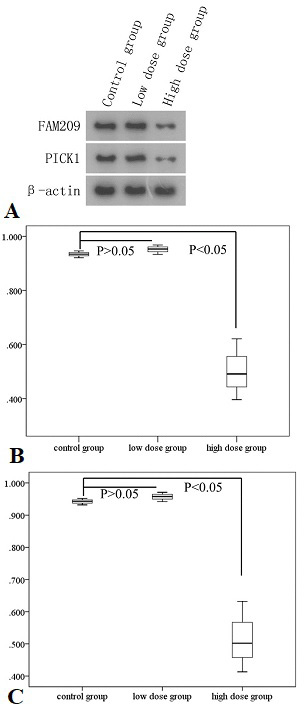
The level of FAM209, PICK1 protein in the testis tissue by western blotting. A shows protein bands of FAM209, PICK1. B and C show the level of FAM209 and PICK1 protein, respectively. Compared to FAM209 protein value (0.942±0.010) in control group, FAM209 protein value (0.957±0.014) in low dose group had no significant difference, but FAM209 protein value (0.516±0.110) in high dose group is significantly decreased. PICK1 protein value in three groups is consistent with FAM209 protein value in three groups.
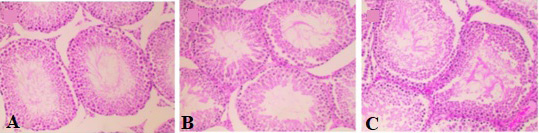
The histological structure of control group (A), low dose group (B), and high dose group (C).
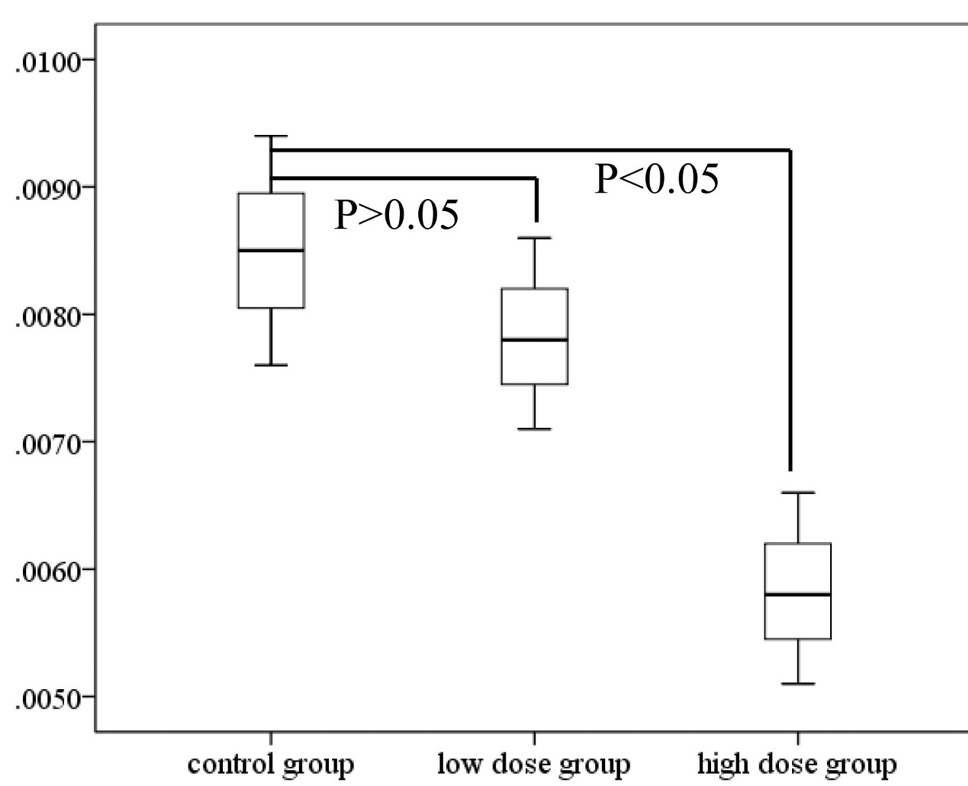
The testis organ index in control group, low dose group, high dose group are presented as mean ± standard deviation. Compared to the control group, P<0.05 is significantly difference. * P<0.05 is significantly difference versus control group.
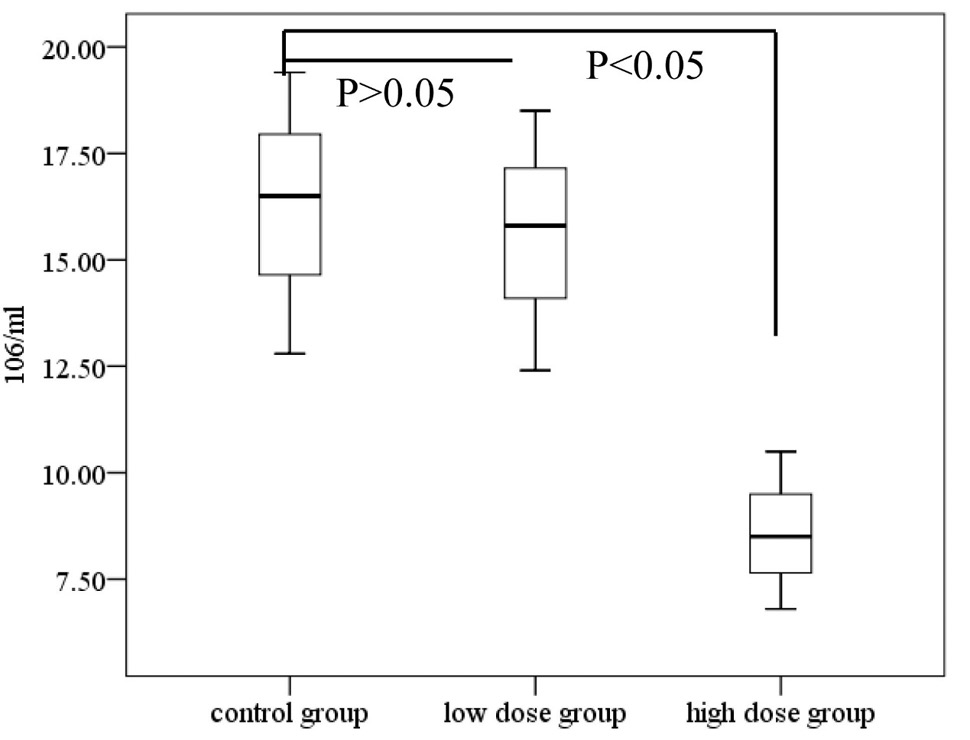
The sperm density detection in control group, low dose group, high dose group are presented as mean ± standard deviation. Compared to the control group, P<0.05 is significantly difference. * P<0.05 is significantly difference versus control group.
References
- Agha, B. and Johal, A., 2017. Facial phenotype in obstructive sleep apnea-hypopnea syndrome: A systematic review and meta-analysis. J. Sleep Res., 26: 122-131. https://doi.org/10.1111/jsr.12485[CrossRef]
- Ceccarelli, I., Bioletti, L., Peparini, S., Solomita, E., Ricci, C., Casini, I., Miceli, E. and Aloisi, A.M., 2022. Estrogens and phytoestrogens in body functions. Neurosci. Biobehav. Rev., 132: 648-663. https://doi.org/10.1016/j.neubiorev.2021.12.007[CrossRef]
- Chang, H.P., Chen, Y.F. and Du, J.K., 2020. Obstructive sleep apnea treatment in adults. Kaohsiung J. med. Sci., 36: 7-12. https://doi.org/10.1002/kjm2.12130[CrossRef]
- Fleury, C.T., Oliven, A., Sennes, L.U., Polotsky, V.Y., Eisele, D. and Schwartz, A.R., 2018. Neurostimulation treatment of OSA. Chest, 154: 1435-1447. https://doi.org/10.1016/j.chest.2018.08.1070[CrossRef]
- Gulotta, G., Iannella, G., Vicini, C., Polimeni, A., Greco, A. and de Vincentiis, M., 2019. Risk factors for obstructive sleep apnea syndrome in children: State of the art. Int. J. environ. Res. Publ. Hlth., 16: 3235. https://doi.org/10.3390/ijerph16183235[CrossRef]
- Ko, C.Y., Liu, Q.Q., Su, H.Z., Zhang, H.P., Fan, J.M., Yang, J.H., Hu, A.K., Liu, Y.Q., Chou, D. and Zeng, Y.M., 2019. Gut microbiota in obstructive sleep apnea-hypopnea syndrome: Disease related dysbiosis and metabolic comorbidities. Clin. Sci. (Lond.). 133: 905-917. https://doi.org/10.1042/CS20180891[CrossRef]
- Lebek, S., Hegner, P., Schach, C., Reuthner, K., Tafelmeier, M., Maier, L.S., Arzt, M. and Wagner, S., 2020. A novel mouse model of obstructive sleep apnea by bulking agent-induced tongue enlargement results in left ventricular contractile dysfunction. PLoS One, 15: e0243844. https://doi.org/10.1371/journal.pone.0243844[CrossRef]
- Mediano, O., Romero-Peralta, S., Resano, P., Cano-Pumarega, I., Sánchez-de-la-Torre, M., Castillo-García, M., Martínez-Sánchez, A.B., Ortigado, A. and García-Río, F., 2019. Obstructive sleep apnea: Emerging treatments targeting the genioglossus muscle. J. clin. Med., 8: 1754. https://doi.org/10.3390/jcm8101754[CrossRef]
- Mehrtash, M., Bakker, J.P. and Ayas, N., 2019. Predictors of continuous positive airway pressure adherence in patients with obstructive sleep apnea. Lung, 197: 115-121. https://doi.org/10.1007/s00408-018-00193-1[CrossRef]
- Otto-Yáñez, M., Torres-Castro, R., Nieto-Pino, J. and Mayos, M., 2018. Síndrome de apneas-hipopneas obstructivas del sueño y accidente cerebrovascular (Obstructive sleep apnea-hypopnea and stroke). Medicina (B Aires). 78: 427-435.
- Patel, S.R., 2019. Obstructive sleep apnea. Annls Int. Med., 171: ITC81-ITC96. https://doi.org/10.7326/AITC201912030[CrossRef]
- Pauwaert, K., Goessaert, A.S., Ghijselings, L., Monaghan, T.F., Depypere, H., Everaert, K., 2021. Nocturia through the menopausal transition and beyond: A narrative review. Int. Urogynecol. J., 32: 1097-1106. https://doi.org/10.1007/s00192-020-04640-7[CrossRef]
- Pavlidi, P., Kokras, N. and Dalla, C., 2021. Antidepressants effects on testosterone and estrogens: What do we know? Eur. J. Pharmacol., 899: 173998. https://doi.org/10.1016/j.ejphar.2021.173998[CrossRef]
- Roche, F., Mouhli, L., Pichot, V. and Celle, S., 2021. Obstructive sleep apnea/hypopnea syndrome phenotypes after night sleep recordings: How to get to precision medicine in 2021. Sleep, 44: zsab154. https://doi.org/10.1093/sleep/zsab154[CrossRef]
- Rundo, J.V., 2019. Obstructive sleep apnea basics. Cleve Clin. J. Med., 86(Suppl 1): 2-9. https://doi.org/10.3949/ccjm.86.s1.02[CrossRef]
- Sun, B.C., Liu, L., Yang, L., Zou, M., Hou, Y.X., 2017. Effect of estrogen on genioglossus and hypoglossal nucleus of female rats. Shanghai Kou Qiang Yi Xue, 26: 146-150.
- Wang, W.J., Lu, G., Ding, N., Huang, H.P., Ding, W.X. and Zhang, X.L., 2013. Adiponectin alleviates contractile dysfunction of genioglossus in rats exposed to chronic intermittent hypoxia. Chin. med. J. (Engl.). 126: 3259-3263.
- Yu, W.W., Zhu, H.M. and Xu, H.H., 2021. Efficacy of Han-uvulopalatopharyngoplasty (HUPPP) combined with radiofrequency ablation of tongue base or HUPPP with traction of tongue base on moderate to severe patients with obstructive sleep apnea hypopnea syndrome (OSAHS): A multicenter randomized controlled trial. Zhonghua Er Bi Yan Hou Tou Jing Wai Ke Za Zhi, 56: 1248-1255.
- Zhang, L., Ou, X., Zhu, T. and Lv, X., 2020. Beneficial effects of estrogens in obstructive sleep apnea hypopnea syndrome. Sleep Breath, 24: 7-13. https://doi.org/10.1007/s11325-019-01896-2[CrossRef]
- Zhou, Y.Q., Zhao, D., Yin, G.P., Li, J.J., Cao, X., Zhang, Y.H. and Ye, J.Y., 2019. Effectiveness of continuous positive airway pressure ventilation in improving genioglossus electromyography in patients with moderate to severe obstructive sleep apnea. Zhonghua Er Bi Yan Hou Tou Jing Wai Ke Za Zhi, 54: 584-590.
Services
Article usage statistics
Loading…