
Endotoxin stress persuaded by the avian pathogenic Escherichia coli threatens egg production and costs the poultry business significantly in lost revenue. This investigation was carried out to determine the beneficial effects of dietary Lactobacillus acidophilus (LA) on laying hens exposed to endotoxic shock induced by intravenously injection of lipopolysaccharides (LPS). A total of one hundred twenty, 40-week-old, laying hens from the Hy-line breed were allocated at random into four groups of 30 hens each. For eight consecutive weeks (40–48 weeks of age), two groups of the layers were given a basal diet as control, while the remaining two groups were given a basal diet enhanced with a 2 g/kg diet of LA bacteria. At 47 wk of age, layers in one of the control or LA groups received an intravenous injection for 7 consecutive days with 0.5 ml of sterile saline contained LPS at 8 mg per kg of layer body weight, whereas the layers in the other ones of the control or LA groups received intravenous injection of 0.5 ml saline only. The four treatment groups (control, LPS, LPS+LA, and LA groups, respectively) were monitored for their productive performance over the course of the entire experiment (40–48 weeks). At the conclusion of the trial (48 wk of age), stress indicator parameters including body temperature (BT), H/L ratio, plasma malondialdehyde (MDA), and corticosterone (CORT) concentrations were evaluated in the treatment groups (n=10). Additionally, samples of the spleen and duodenum were taken from layers in each group (n=10) to assess heat shock protein 70 (HSP70) density and glutathione peroxidase (GHS-px) activity, respectively. The general linear model procedure with one-way analysis of variance (GLM-ANOVA) was used to analyze the data. The results showed a significant (P<0.05) increase in the BT, H/L ratio, MDA, and CORT, and over-expression of HSP70 in the hens of LPS group. Also, significant (P<0.05) impairments were perceived in the feed consumption and conversion, and in the egg weight and production rates. In contrast, the elevated stress markers and HSP70 expression in the challenged birds were significantly (P<0.05) alleviated when LA was given to laying hens, and the GSH-px activity was noticeably increased by 13.7% in the LPS+LA compared to the LPS group. Furthermore, LA increased egg production by 8.5 and 3.1 percent points and improved feed efficiency by 6.11 and 4.56% in both LPS-challenged and non-challenged birds, respectively. Therefore, supplementing layer diets with 2 g/kg LA could be successfully applied to improve the productive performance and minimize the endotoxic stress induced by Escherichia coli LPS challenge in laying hens.
Research Article · Volume 11, Issue 7, 16 June 2023 · Open Access
The Effect of Lactobacillus acidophilus on Alleviating Stress Response and Production Impairment Induced by Escherichia coli Lipopolysaccharide in Laying Hens
Affiliations & Notes ⌄
- 1Department of Animal and Fish Production, College of Agricultural and Food Sciences, King Faisal University, P.O. Box 420, Al-Ahsa 31982, Saudi Arabia. *Correspondence | Abdulaziz A. Alaqil, Department of Animal and Fish Production, College of Agricultural and Food Sciences, King Faisal University, P.O. Box 420, Al-Ahsa 31982, Saudi Arabia
- 2Email: aalaqil@kfu.edu.sa
Article Info ⌄
- Journal:
- Advances in Animal and Veterinary Sciences
- Published:
- 16 June 2023

From the article
- However, we found that including LA into layer diets enhanced the productive performance and alleviated the deterioration effects when the layers were challenged with LPS injection.
- On the other hand, we found that LA significantly (P < 0.05) reduced the stress parameters indicators and alleviated the HSP70 expression in the LPS+LA group compared to the LPS group.
- In conclusion, our results showed that Hy-line laying hens expressed several stress indicators, such as CORT, MDA, H/L ratio and body temperature elevation, in response to intravenous injection of Escherichia coli LPS.
- The study showed that probiotic LA supplementation into layer diets can stimulate the intestinal GSH-PX activity, alleviate the stress, and neutralize the productive performance of laying hens, especially those challenged with LPS.
Selected from the article's own text.
Abstract
INTRODUCTION
Numerous factors can cause stress in the contemporary poultry industry . Stress is defined as any factors that endanger the physiological homeostasis of animals or birds and lead to various biological responses by body tissues and cells . The release of the stress hormone corticosterone (CORT) is one of the first documented responses to stress in birds, which involves in the hypothalamic-pituitary-adrenal (HPA) axis stimulation . Several criteria are also determined as indicators of stress in poultry such as the differential and total counts of leucocytes and determination of heterophil to lymphocyte cell ratio . Stress biomarkers known as heat shock proteins (HSPs) can regulate cellular homeostasis and protein recovery and are additionally produced in excess by stressed cells . It was also reported that the function of some antioxidant enzymes, such as superoxide dismutase and glutathione peroxidase, were inhibited by exposure of birds to severe stress ; .
Lipopolysaccharide (LPS) is a glycolipid component existed in surface of gram-negative bacteria, including Escherichia coli . LPS is known as endotoxin which can stimulate the immune system of other organisms and can mimic some aspects of tissue injury caused by bacterial infection . There is an evidence that birds and mammals respond similarly to LPS administration ; . LPS administration to chickens either directly or indirectly activates the HPA axis and induces fever . It was reported that broilers’ intestinal redox status and antioxidant defense system were compromised by the exposure to LPS . Furthermore, it was found that oral administration of LPS tablets to broiler chickens drastically affected gut health and induced over-expression of HSP genes .
The Lactobacillus species, including L. bulgaricus, L. plantarum, L. casei, L. rhamnosus, and L. acidophilus, are the most often utilized probiotic bacteria for avoiding enteropathogenic diseases . Lactobacilli are categorized within the Gram+ bacteria and normally colonize in the epithelium cells of the digestive system. There, they generate lactic acid and serve as effective probiotics . L. acidophilus (LA) is one such beneficial probiotic that is often employed to enhance poultry production ; ; ; ; . It was demonstrated that LA probiotic supplementation to laying hens’ diets can improve their productive performance, egg yolk cholesterol, and immune response . LA has been shown to be able to boost immune system defenses and stop the activity of various entero-toxigenic and entero-invasive bacteria . LA has been characterized by the high competition for adherence sites in the intestines against enteropathogenic bacteria . Additionally, it has been demonstrated that probiotic bacteria, such as LA, interact with the epithelial cells and specifically regulate the synthesis of inflammatory mediators .
Even though probiotic bacteria have been found in numerous trials to reduce intestinal inflammation, there are no research examining the effectiveness of probiotics in reducing the challenge effects of LPS’s ability to generate inflammation in poultry. Therefore, we investigated how probiotic LA counteracting the LPS challenge in laying hens and explored the underlying mechanisms.
MATERIALS AND METHODS
Ethical statement
The care, handling, and treatments of the chickens were applied considering the protocols recommended by the research ethical commission of King Faisal University in Saudi Arabia.
Lactobacillus Culture Preparation
The lyophilized LA culture was purchased from a private enterprise in Germany (Wisby Gmbh Co. & Kg, Niebüll). The bacteria were incubated for 24 h at 37 °C. After cold centrifuging at 2,000 × g for 10 min, the pellets were collected then lyophilized and kept at –20 °C. Cornstarch and skim milk powder were combined with the bacteria to adjust the concentration to 1×10⁹ cells per gram (colony forming unit, CFU). To make sure that the viable bacterial cells maintained at the same concentration (1×10⁹ CFU/g) throughout the experiment, the bacteria culture was introduced to the diet and the vitality of the bacterial cells was evaluated every two weeks.
Experimental Design
In the current study, one hundred twenty, 40-wk-old, laying hens (Hy-line) were individually housed in battery cages in an open structure provided with 16L/8D hours daily. Similar environmental and hygienic conditions were provided to all birds throughout the experimental period. Feed and water were introduced ad libitum to the layers. Based on the dietary recommendations for the commercial Hy-line layers, a basal diet was created and utilized as a control diet (Table 1). The hens were allocated into four groups of 30 birds at random. For eight consecutive weeks (40–48 weeks of age), two groups of the layers were given a control diet, while the remaining two groups were given a control diet enriched with 2 g/kg LA bacteria. At 47 wk of age, layers in one of the control or LA groups were intravenously injected for 7 consecutive days with 0.5 ml of sterile saline contained LPS extracted from Escherichia coli O55:B5 breed (Sigma-Aldrich, St. Louis, MO, USA) at a concentration of 8 mg/kg of layer body weight, whereas the layers in the other ones of the control or LA groups received an intravenous injection with 0.5 ml saline only. The Doses of LA and LPS injection were chosen based on previous works of Alaqil et al. (2020) and Geng et al. (2018), respectively. The productive performance was noted throughout the entire experimental time (40-48 wk) for the four treatment groups (control, LPS, LPS+LA, and LA groups, respectively). On the last day of the trial (48 wk of age), 10 layers in each treatment group were assigned to measure the rectal temperature. In addition, 10 blood samples were gathered from the layers to determine the heterophil to lymphocyte cell (H/L) ratio, and the plasma malondialdehyde (MDA) and corticosterone (CORT) concentrations. Moreover, the spleens and duodenums were also taken out of ten layers per treatment group to measure the splenic heat shock protein 70 (HSP70) expression and the duodenal glutathione peroxidase (GHS-px) enzyme activity.
Table 1: Ingredients and nutrient composition (%) of the basal diet.
| Ingredient | % |
| Yellow corn | 56.55 |
| Soybean meal (44%) | 27.60 |
| Wheat bran | 1.00 |
| soybean oil | 3.00 |
| Bone meal | 3.00 |
| Limestone | 8.00 |
| Salt (NaCl) | 0.40 |
| Vit. & min. mixture * | 0.30 |
| DL-Methionine | 0.15 |
| Total | 100 |
| Nutrient composition | Calculated per kg dry matter( DM) |
| Metabolizable energy | 2800 Kcal |
| Crude protein | 174.7 g |
| Calcium | 40.2 g |
| None-phytate phosphorus (NPP) | 5.2 g |
| Lysine | 9.5 g |
| Methionine | 4.2 g |
| Linoleic acid | 28.8 g |
* Vitamin and mineral mixture at 0.3% of the diet supplies the following per Kg of the diet: vitamin A, 8,000 IU/kg; vitamin D, 1,500 IU/kg; riboflavin, 4 mg/kg; cobalamin, 10 μg/kg; vitamin E, 15 mg/kg; vitamin K, 2 mg/kg; choline, 500 mg/kg; niacin, 25 mg/kg; manganese, 60 mg/kg; zinc, 50 mg/kg.
Productive Performance
Throughout the trial period (40-48 weeks), egg counts and weights were recorded daily per hen. The average egg weight, egg mass (egg number × egg weight), and daily feed intake as well as egg production rate (egg number %) per hen were determined for all the treatment groups. Then, using the total mass of eggs produced over the whole trial time divided by the total amount of feed consumed, the feed conversion ratio was calculated.
Body Temperature
A thermocouple rectal thermometer (Physitemp Instruments Inc., Clifton, NJ) with a 3-cm entry tip was used to measure the body temperatures of the chickens. The temperature was recorded when the measurement remained steady for 15 seconds.
Blood Samples And Measurements
Approximately 3 mL of blood were drawn from the chickens’ brachial veins and put right away into heparinized tubes. Two drops of the blood sample were expelled separately on a clean slide to make a thin smear. The dried smears were fixed and stained with a HEMA-3 solution (Fisher Scientific, Pittsburg, PA, USA). A total of 100 leukocyte cells in each slide were differentiated under light microscope using oil immersion at 1000× magnification. The average counts of the 2 slides were pointed out and the H/L ratio was then detected . The remaining blood samples underwent a centrifugation of 5,000 × g for 10 minutes at 4 °C. The plasma samples were separated and kept at −20 °C to further determine the MDA and CORT concentrations.
Plasma Malondialdehyde
Chicken-specific ELISA kits (MBS260816, MyBioSource, San Diego, CA, USA) was used to detect the plasma MDA levels. In brief, 100 µL of plasma were combined with 300 µL of thiobarbituric acid (T.B.A.) solution and incubated for 30 minutes at 95 °C, according to the manufacturer’s instructions. The mixture was centrifuged at 10000 x g for 10 minutes at 25 °C after chilling in an ice bath for 10 minutes. The absorbance was measured at 532 nm using a microplate reader (Bio-Rad Laboratories Inc., USA) after aliquots of 200 µL of the supernatants were transferred to a 96-well microplate. The detection range for the analysis was 1.56-100 mol/mL, and the intra- and inter-assay coefficient of variations (CVs) were less than 8% and 12%, respectively, according to the manufacturer.
Plasma Corticosterone
ELISA kits specialized for chicken CORT (MBS701668; MyBioSource, San Diego, CA, USA) were utilized and the manufacturer protocol was employed in this analysis. Briefly, 50 µL of the standard or the sample were mixed with 50 μL of the antibody in pre-coated-antigen microplate wells. Following a 30-minute incubation period at 25°C, the wells were aspirated and washed three times with 250 µL of washing buffer, with the residues removed by flipping the plate and blotting it on clean paper towels. Each well received 100 μL of horseradish peroxidase (H.R.P.) conjugated reagent, which was heated around 25°C for 30 min. 100 μL of T.M.B. ELISA-substrate was added to each well in the dark and incubated for another 15 minutes. Subsequently, 50 μL of the stop-reaction solution was added to each well and gently mixed, and the optical density was measured using a microplate reader (Bio-Rad Laboratories Inc., USA) at 450 nm. The intra- and inter-assay CVs were respectively 8% and 10%. The assay’s sensitivity was <0.0625 ng/mL with a dynamic range of 0.5-20 ng/mL.
Hsp70 Expression Analysis
The entire spleen was obtained, stored in liquid nitrogen, and kept at −20°C until HSP70 density analysis. Three milliliters of cooled Tris-buffer mixed with 10 μl/ml of protease inhibitor cocktail were used to homogenize 0.5 g of spleen samples in a Potter-Elvehjem tissue grinder from Sigma-Aldrich. The samples were centrifuged at 23,000 × g for 45 min at 4°C. Protein contents in the supernatant were assessed using bicinchoninic acid protein assay kit, BCA-1 (B9643, Sigma-Aldrich). A mini-gel device (Cleaver Scientific Ltd., Warwickshire, UK) was used to separate 25 g of total protein on Sodium Dodecyl Sulfate–polyacrylamide gels 10% (0.75×70×80 mm). Gels were subjected to 120 V electrophoresis until the tracking dye accumulated at the gel’s base. Protein fractions were transferred on polyvinylidene difluoride membranes (MSI, Westborough, MA, USA) using Coomassie Blue staining or a Trans-Blot semidry electrophoretic transfer cell (Cleaver Scientific Ltd.). After rinsing the membranes with distilled water, 10 mL of a cold-blocking buffer (Kirkegaard and Perry Labs Inc., Gaithersburg, MD, USA) was added for 60 minutes to block nonspecific binding sites. The membranes were treated for 1 h in 5 mL of blocking buffer with 1:20,000 HSP70 antiserum (monoclonal mouse antibody; ab6535, Abcam, Cambridge, MA, USA). The blots were cleaned with 10 mL of chilled Tris-buffered saline Tween 20 three times for five minutes each. Horseradish peroxidase-conjugated rabbit anti-mouse secondary antibody (cat. no. ab6728, Abcam) was then used to treat the blots for 30 min. The blots were subjected to an extended chemiluminescent reagent (ChemiGlow, Alpha Innotech, San Leandro, CA, USA) after three 5-minute rinses with cold Tris-buffered saline Tween 20. Chemiluminescent imaging (FluorChem 5500, Alpha Innotech) and Image-Pro Plus image processing and analysis software (Media Cybernetics, Silver Spring, MD, USA) were used to visualize and quantify the band summation density. Immunodetected protein sizes were verified by molecular weight markers (Precision Plus Protein, Bio-Rad, Hercules, CA, USA). All solutions were made with Milli-Q water (Millipore, Bedford, MA, USA).
Glutathione Peroxidase (Gsh-Px) Activity
The digestive tract was immediately removed after decapitation, and the duodenum was separated and refrigerated to zero °C in 0.85% NaCl solution. From the center of the duodenum, a piece of about 10 cm in length was removed, sliced, and thoroughly cleaned in 0.85% NaCl solution. The mucosa was gently disposed of the luminal face and placed inside 2.5 mL aseptic tubes and then stored at −20 °C. The scraped mucosa was weighed, homogenized in nine lots of ice-cold 0.85% NaCl solution in a cold homogenizer, then centrifuged at 3,000 × g for 10 min at 4 °C, and then the supernatant was collected for further detection . The total protein was first determined in the supernatant using the Bradford method . Ten μL of the sample was mixed well with a reaction mixture contained 1 mL of assay buffer (phosphate buffer and Triton X-100, pH 7.0), 100 μL of nicotinamide adenine dinucleotide phosphate (NADPH) reagent (glutathione, glutathione reductase and NADPH), and 100 μL of H2O2 (previously diluted 100 times). Finally, the GSH-Px activity was detected using an automated analyzer at 550 nm following the biochemical methods indicated in the corresponding reagent kit (Cat. No.: A005, Nanjing Jiancheng Bioengineering Institute of China, Nanjing, China).
Statistical Analysis
The general linear model (GLM) procedure with one-way analysis of variance (ANOVA) of SAS/STAT® 9.3 software (Copyright 2011, SAS Institute Inc., Cary, NC, USA) was used to analyze the main effects of the treatment groups (Control, LPS, LPS+LA, and LA) on the studied parameters in the current study. Data were assessed for normality using the Shapiro–Wilk test. The variances in the data were homogeneous, as indicated by results with use of the Levene’s test. For each successfully completed test, the experimental unit was the number of observations per treatment group (n=30 for the productive performance traits, and n=10 for the remaining parameters). Significant treatment effects were detected by Duncan’s multiple range test at a P-value < 0.05.
RESULTS
Productive Performance
Table 2 illustrates the impact of dietary LA inclusion on the productive performance of laying hens challenged with LPS. Compared to the control group, the challenge with LPS significantly (P < 0.05) impaired the layers’ productive performance parameters. In contrast, LA supplementation
Table 2: Effect of dietary Lactobacillus acidophilus (LA) supplementation and lipopolysaccharides (LPS) challenge on the productive performance of laying hens 1.
| Traits | Control | LPS | LPS+LA | LA |
| Egg production (%) | 92.2 ± 0.55 b | 70.4 ± 0.46 d | 78.9 ± 0.62 c | 95.3 ± 0.72 a |
| Egg weight (g) | 61.8 ± 0.32 a | 57.1 ± 0.33 b | 58.8 ± 0.35 b | 62.0 ± 0.37 a |
| Feed intake (g/d/hen) | 137.3 ± 2.34 a | 104.8 ± 2.45 b | 111.2 ± 2.35 b | 135.5 ± 2.38 a |
| Feed/egg ratio | 2.41 ± 0.037 b | 2.62 ± 0.036 a | 2.46 ± 0.030 b | 2.30 ± 0.038 c |
1All data are presented as means ± SE of 30 hens per treatment group. Means within a row with no common superscripts (a, b, c, d) significantly differ at P < 0.05. Treatment groups: control, layers were fed on a basal diet and injected with 0.5 mL saline; LPS, layers were fed on a basal diet and injected with 0.5 mL LPS at 8 mg/kg body weight; LPS+LA, layers were fed on a basal diet containing 2×10⁹ CFU/kg LA and injected with 0.5 mL LPS at 8 mg/kg body weight; LA, layers were fed on a basal diet containing 2×10⁹ CFU/kg LA and injected with 0.5 mL saline.
Table 3: Effect of dietary Lactobacillus acidophilus (LA) supplementation and lipopolysaccharides (LPS) challenge on stress parameter indicators 1.
| Trait | Control | LPS | LPS + LA | LA |
| Body temperature (˚C) | 41.8 ± 0.21 c | 43.5 ± 0.30 a | 42.4 ± 0.17 b | 41.5 ± 0.23 c |
| H/L ratio | 0.57 ± 0.08 c | 0.71 ± 0.07 a | 0.61 ± 0.05 b | 0.49 ± 0.06 c |
| Plasma malondialdehyde (µmol/mL) | 1.57 ± 0.14 c | 5.11 ± 0.19 a | 3.19 ± 0.18 b | 1.23 ± 0.11 c |
| Plasma corticosterone (ng/mL) | 2.16 ± 0.54 c | 7.75 ± 0.60 a | 4.24 ± 0.52 b | 2.88 ± 0.66 c |
1All data are presented as means ± SE of 10 samples per treatment group. Means within a row with no common superscripts (a, b, c) significantly differ at P < 0.05. Treatment groups: control, layers were fed on a basal diet and injected with 0.5 mL saline; LPS, layers were fed on a basal diet and injected with 0.5 mL LPS at 8 mg/kg body weight; LPS+LA, layers were fed on a basal diet containing 2×10⁹ CFU/kg LA and injected with 0.5 mL LPS at 8 mg/kg body weight; LA, layers were fed on a basal diet containing 2×10⁹ CFU/kg LA and injected with 0.5 mL saline.
significantly (P < 0.05) improved the egg production rate by 3.1 p.p. and feed conversion ratio by 4.56% in comparison with the control. Moreover, the supplementation of LA to LPS-challenged layers markedly (P < 0.05) alleviated the decrease in feed efficiency and egg production, while it normalized the egg weight and feed intake to similar levels as that in the control group.
Stress Indicators
Table 3 displays the impact of dietary LA inclusion on the stress indicator parameters of laying hens challenged with LPS. Data showed that LA did not affect the stress indicator parameters compared to the control. In contrast, a significant (P< 0.05) increase in the body temperature by 1.7 °C, H/L ratio by 24.6%, plasma MDA concentration by 3.3-fold, and plasma CORT concentration by 3.6-fold, in comparison to the control. Moreover, LA inclusion significantly (P< 0.05) ameliorated the elevation of stress indicators in the LPS-challenged layers by approximately 1.3 °C in the body temperature, 14.1% in the H/L ratio, 37.6% in the MDA, and 45.3% in the CORT, respectively.
Hsp70 Expression
Results showed that dietary LA inclusion and LPS challenge had clear impacts on HSP70 expression in the layer spleen (Figure 1). It was found that LPS induced an over-expression of HSP70 in the challenged layers when
compared with the control layers. However, dietary LA inclusion ameliorated the over-expression of HSP70 in the LPS+LA group compared to the LPS-challenged group.
Gsh-Px Activity
Figure 2 illustrates the effects of dietary LA inclusion and LPS injection on the stimulation of intestinal GSH-px activity. Intestinal GSH-px activity did not significantly differ between the control and LPS treatment groups. When compared to the control group, the layers fed on LA showed a substantial (P< 0.05) increase in GSH-px activity by 26.5% and 20.2% in the LPS+LA and LA groups, respectively. Additionally, the GSH-px activity in the LPS+LA group was 13.7% higher (P< 0.05) than that in the LPS treatment group.
DISCUSSION
LPS challenge in the present study adversely affected the layer performance traits (Table 2). Similarly, it has been demonstrated that LPS injection reduced the performance of laying hens ; Nie et al., 2018; and broilers ; . It was pointed out that feed intake and nutrient’s absorption became very low due to the immunological stress induced by LPS exposure . However, we found that including LA into layer diets enhanced the productive performance and alleviated the deterioration effects when the layers were challenged with LPS injection. Previous research examining the advantages of dietary LA supplementation to laying hens also came to similar conclusions ;. The beneficial effects of LA may be linked to lactobacilli’s capacity to sustain gut microbial balance, produce active metabolites, attach to the intestinal mucosa, and antagonize pathogenic bacteria in chickens ; . It was suggested that LA secrets some active enzymes which improve nutrient absorption and digestion . Furthermore, LA attenuated the LPS-induced intestinal inflammation through the nuclear factor kappa B (NF-kB) pathway and cytokine/chemokine gene production .
Intravenous injection of E. coli. LPS induced a significant rise in stress indicator parameters (Table 3). Earlier, it was found similar results upon the injection of LPS from Salmonella typhimurium to broiler chickens . It was reported that the production of endogenous pyrogens and some cytokines from different immune cells causes fever signs after LPS exposure (Nadukkandy et al., 2022). Such pro-inflammatory cytokines were over-produced in the gut, liver, and brain tissues of mice exposed to LPS-induced oxidative stress . These pro-inflammatory cytokines could explain the increased plasma levels of CORT since they activate the HPA axis which in turn increase the adrenocorticotropic hormone (ACTH) and CORT concentrations . Elevated CORT could be associated with the elevated H/L ratio in the LPS-challenged birds since CORT can directly alter the distribution of leukocyte constituents in the circulation in the way of reproducing essential cells for the nonspecific immune response, such as heterophils . In line with earlier research , MDA concentration was increased with LPS injection. Plasma MDA is a major oxidative stress indicator in animal and birds . LPS injection caused over expression of HSP70 (Figure 1). It was reported that LPS injection causes plasma, liver, and heart damage through oxidative stress , and reduces protein functionality . Exposure of cells to endotoxic stress plays a key factor in inhibiting global protein synthesis and stimulates heat shock protein synthesis . Therefore, HSP70 is expressed upon exposure to LPS stress to prevent injury, promote recovery, and support resistance to further stresses .
On the other hand, we found that LA significantly (P < 0.05) reduced the stress parameters indicators and alleviated the HSP70 expression in the LPS+LA group compared to the LPS group. Other studies agree with our results and report that probiotics like LA can reduce the HSP70 expression, MDA levels and other stress indicators in chickens ; ; . Our results also displayed a significant stimulation in the intestinal GSH-px activity due to LA supplementation in both the LA and LPS+LA groups compared to the control and LPS groups, respectively (Figure 2). These results agree with a previous study which concluded that lactobacilli species supplementation to the diets of piglets had the capability to substantially enhance antioxidant enzymes, including GSH-px, activity. GSH-px, one of the cell’s powerful antioxidant enzymes, catalyzes the transformation of superoxide ions into oxygen and hydrogen peroxide. Therefore, it is considered as a biomarker for the oxidative stress . It was explained that probiotic bacilli can enhance the activity of superoxide dismutase (SOD) and GSH-px, which show antimicrobial effect and strong ability to detoxify toxins produced from pathogenic bacteria, and therefore, can recover liver protein synthesis and ameliorate the liver and kidney tissue damage ; Ma et al., 2012). It was found that GSH-px activity was dramatically decreased by oxidative factors in mice, yet both modest and high doses of lactobacillus reversed such effect ; . Moreover, it was manifested that bacilli endospores are lysed during their transit through the gastrointestinal tract and release their intracellular antioxidative constituents, which in turn absorbed from the small intestine and flow to the circulation to extend the potential antioxidant effects .
In conclusion, our results showed that Hy-line laying hens expressed several stress indicators, such as CORT, MDA, H/L ratio and body temperature elevation, in response to intravenous injection of Escherichia coli LPS. In addition, an increase in HSP70 expression was recorded in the LPS-challenged chickens. These consequences negatively affected the productive performance of the laying hens. The study showed that probiotic LA supplementation into layer diets can stimulate the intestinal GSH-PX activity, alleviate the stress, and neutralize the productive performance of laying hens, especially those challenged with LPS.
acknowledgements
The authors would like to thank the Deanship of Scientific Research and Vice Presidency for Graduate Studies and Scientific Research, King Faisal University, Saudi Arabia for the financial support provided to conduct and publish the discussed research.
conflict of interest
The authors have declared no conflict of interest.
NOVELTY STATEMENT
Chicken eggs have been a considerable component for every-day human food. However, LPS endotoxin stress persuaded by the avian pathogenic Escherichia coli threatens egg production and costs the poultry business significantly in lost revenue. The current study explores the beneficial impacts of dietary enrichment with LA probiotic on alleviating the negative stress indicators induced by LPS challenge in addition to the positive effects on the productive performance of laying hens.
authors contribution
Abdulaziz A. Alaqil contributed to the conceptualization, investigation, data collection, analysis, writing-original draft, reviewing, and approving the current version of the manuscript.
Figures

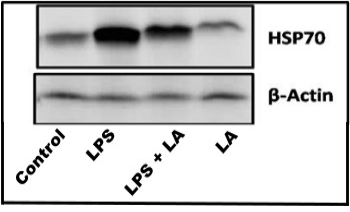
Effect of dietary Lactobacillus acidophilus (LA) supplementation and lipopolysaccharides (LPS) challenge on spleen heat shock protein 70 (HSP70) expression (n=10). Treatment groups: control, layers were fed on a basal diet and injected with 0.5 mL saline; LPS, layers were fed on a basal diet and injected with 0.5 mL LPS at 8 mg/kg body weight; LPS+LA, layers were fed on a basal diet containing 2×10⁹ CFU/kg LA and injected with 0.5 mL LPS at 8 mg/kg body weight; LA, layers were fed on a basal diet containing 2×10⁹ CFU/kg LA and injected with 0.5 mL saline.
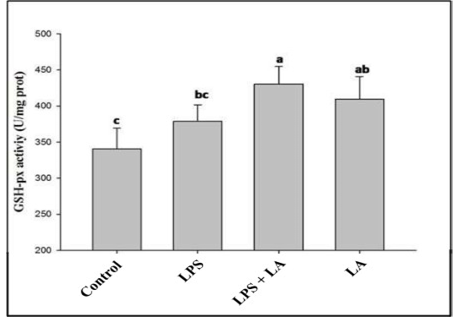
Effect of dietary Lactobacillus acidophilus (LA) supplementation and lipopolysaccharides (LPS) challenge on intestinal glutathione peroxidase (GSH-px) activity (n=10). Treatment groups: control, layers were fed on a basal diet and injected with 0.5 mL saline; LPS, layers were fed on a basal diet and injected with 0.5 mL LPS at 8 mg/kg body weight; LPS+LA, layers were fed on a basal diet containing 2×10⁹ CFU/kg LA and injected with 0.5 mL LPS at 8 mg/kg body weight; LA, layers were fed on a basal diet containing 2×10⁹ CFU/kg LA and injected with 0.5 mL saline.
References
- Abo-Al-Ela H.G., El-Kassas S., El-Naggar K., Abdo S.E., Jahejo A.R., Al Wakeel R.A. (2021). Stress and immunity in poultry: light management and nanotechnology as effective immune enhancers to fight stress. Cell Stress Chaperones. 26: 457. https://doi.org/10.1007/S12192-021-01204-6[CrossRef]
- Alabi O., Aderemi F., Afolabi D., Alabi B. (2014). Changes in Stress Indicators of Egg-Type Chickens in Response to Different Intensive Housing Systems in Humid Tropics. J. Agricult. Sci. 6: p151. https://doi.org/10.5539/JAS.V6N4P151[CrossRef]
- Alagar Boopathy L.R., Jacob-Tomas S., Alecki C., Vera M. (2022). Mechanisms tailoring the expression of heat shock proteins to proteostasis challenges. J. Biolog. Chem. 298: 101796. https://doi.org/10.1016/J.JBC.2022.101796[CrossRef]
- Alaqil A.A., Abbas A.O., El-Beltagi H.S., Abd El-Atty H.K., Mehaisen G.M.K., Moustafa E.S. (2020). Dietary supplementation of probiotic lactobacillus acidophilus modulates cholesterol levels, immune response, and productive performance of laying hens. Animals. 10: 1–12. https://doi.org/10.3390/ani10091588[CrossRef]
- Arthur J.R. (2000). The glutathione peroxidases. Cellul. Molecul. Life Sci. 57: 1825–1835. https://doi.org/10.1007/PL00000664/METRICS[CrossRef]
- Balevi T., An U.S.U., Coskun B., Kurtoglu V., Etingül I.S. (2001). Effect of dietary probiotic on performance and humoral immune response. Br Poult. Sci. 42: 456–461. https://doi.org/10.1080/00071660120073133[CrossRef]
- Bernardeau M., Vernoux J.P., Henri-Dubernet S., Guéguen M. (2008). Safety assessment of dairy microorganisms: the Lactobacillus genus. Int. J. Food Microbiol. 126: 278–285. https://doi.org/10.1016/J.IJFOODMICRO.2007.08.015[CrossRef]
- Bertani B., Ruiz N. (2018). Function and Biogenesis of Lipopolysaccharides. EcoSal Plus. 8. https://doi.org/10.1128/ECOSALPLUS.ESP-0001-2018/ASSET/A8443875-5D1F-483A-9B6C-7E045102612E/ASSETS/GRAPHIC/ESP-0001-2018_FIG_008.JPG[CrossRef]
- Blas J. (2015). Stress in Birds, in: Scanes, C.G. (Ed.), Sturkie’s Avian Physiology: Academic Press, New York, pp. 769–810. https://doi.org/10.1016/B978-0-12-407160-5.00033-6[CrossRef]
- Boostani A., Mahmoodian Fard H.R., Ashayerizadeh A., Aminafshar M. (2013). Growth performance, carcass yield and intestinal microflora populations of broilers fed diets containing thepax and yogurt. Rev. Bras Cienc. Avic. 15: 1–6. https://doi.org/10.1590/S1516-635X2013000100001[CrossRef]
- Borthakur A., Bhattacharyya S., Kumar A., Anbazhagan A.N., Tobacman J.K., Dudeja P.K. (2013). Lactobacillus acidophilus Alleviates Platelet-Activating Factor-Induced Inflammatory Responses in Human Intestinal Epithelial Cells. PLoS One. 8: 75664. https://doi.org/10.1371/JOURNAL.PONE.0075664[CrossRef]
- Bos M.P., Robert V., Tommassen J. (2007). Biogenesis of the gram-negative bacterial outer membrane. Annu. Rev. Microbiol. 61: 191–214. https://doi.org/10.1146/ANNUREV.MICRO.61.080706.093245[CrossRef]
- Bradford M.M. (1976). A rapid and sensitive method for the quantitation of microgram quantities of protein utilizing the principle of protein-dye binding. Anal. Biochem. 72; 248–254. https://doi.org/10.1016/0003-2697(76)90527-3[CrossRef]
- Candela M., Perna F., Carnevali P., Vitali B., Ciati R., Gionchetti P., Rizzello F., Campieri M., Brigidi P. (2008). Interaction of probiotic Lactobacillus and Bifidobacterium strains with human intestinal epithelial cells: Adhesion properties, competition against enteropathogens and modulation of IL-8 production. Int. J. Food Microbiol. 125: 286–292. https://doi.org/10.1016/J.IJFOODMICRO.2008.04.012[CrossRef]
- Cengiz Ö., Köksal B.H., Tatll O., Sevim Ö., Ahsan U., Üner A.G., Ulutaş P.A., Beyaz D., Büyükyörük S., Yakan A., Önol A.G. (2015). Effect of dietary probiotic and high stocking density on the performance, carcass yield, gut microflora, and stress indicators of broilers. Poult. Sci. 94: 2395–2403. https://doi.org/10.3382/PS/PEV194[CrossRef]
- Chen L., Pan D.D., Zhou J., Jiang Y.Z. (2005). Protective effect of selenium-enriched Lactobacillus on CCl4-induced liver injury in mice and its possible mechanisms. World J. Gastroenterol. 11: 5795–5800. https://doi.org/10.3748/WJG.V11.I37.5795[CrossRef]
- Csernus B., Biró S., Babinszky L., Komlósi I., Jávor A., Stündl L., Remenyik J., Bai P., Oláh J., Pesti-Asbóth G., Czeglédi, L. (2020). Effect of carotenoids, oligosaccharides and anthocyanins on growth performance, immunological parameters and intestinal morphology in broiler chickens challenged with Escherichia coli lipopolysaccharide. Animals. 10. https://doi.org/10.3390/ani10020347[CrossRef]
- De Boever S., Beyaert R., Vandemaele F., Baert K., Duchateau L., Goddeeris B., De Backer P., Croubels S. (2008). The influence of age and repeated lipopolysaccharide administration on body temperature and the concentration of interleukin-6 and IgM antibodies against lipopolysaccharide in broiler chickens. Avian Pathol. 37: 39–44. https://doi.org/10.1080/03079450701784875[CrossRef]
- De Cesare A., Sirri F., Manfreda G., Moniaci P., Giardini A., Zampiga M., Meluzzi A. (2017). Effect of dietary supplementation with Lactobacillus acidophilus D2/CSL (CECT 4529) on caecum microbioma and productive performance in broiler chickens. PLoS One. 12. https://doi.org/10.1371/journal.pone.0176309[CrossRef]
- Dokladny K., Lobb R., Wharton W., Ma T.Y., Moseley P.L. (2010). LPS-induced cytokine levels are repressed by elevated expression of HSP70 in rats: possible role of NF-kappaB. Cell Stress Chaperones. 15: 153–163. https://doi.org/10.1007/S12192-009-0129-6[CrossRef]
- French C.E., Sales M.A., Rochell S.J., Rodriguez A., Erf G.F. (2020). Local and systemic inflammatory responses to lipopolysaccharide in broilers: new insights using a two-window approach. Poult. Sci. 99: 6593–6605. https://doi.org/10.1016/J.PSJ.2020.09.078[CrossRef]
- Gallazzi D., Giardini A., Mangiagalli G.M., Marelli S., Ferrazzi V., Orsi C., Cavalchini G.L. (2008). Effects of Lactobacillus acidophilus D2/CSL on laying hen performance. Ital J. Anim. Sci. 7: 27–37. https://doi.org/10.4081/ijas.2008.27[CrossRef]
- Gao X., Ma Q., Zhao L., Lei Y., Shan Y., Ji C. (2011). Isolation of Bacillus subtilis: Screening for aflatoxins B1, M1, and G1 detoxification. Euro. Food Res. Technol. 232: 957–962. https://doi.org/10.1007/S00217-011-1463-3/TABLES/4[CrossRef]
- Gehad A.E., Lillehoj H.S., Hendricks G.L., Mashaly M.M. (2002). Initiation of humoral immunity. I. The role of cytokines and hormones in the initiation of humoral immunity using T-independent and T-dependent antigens. Dev Comp. Immunol. 26: 751–759. https://doi.org/10.1016/S0145-305X(02)00020-4[CrossRef]
- Geng Y., Ma Q., Wang Z., Guo Y. (2018). Dietary vitamin D3 supplementation protects laying hens against lipopolysaccharide-induced immunological stress. Nutr. Metab. (Lond). 15. https://doi.org/10.1186/s12986-018-0293-8[CrossRef]
- Gou Z., Jiang S., Zheng C., Tian Z., Lin X (2015). Equol Inhibits LPS-Induced Oxidative Stress and Enhances the Immune Response in Chicken HD11 Macrophages. Cellul. Physiol. Biochem. 36: 611–621. https://doi.org/10.1159/000430124[CrossRef]
- Habashy W.S., Milfort M.C., Rekaya R., Aggrey S.E. (2019). Cellular antioxidant enzyme activity and biomarkers for oxidative stress are affected by heat stress. Int. J. Biometeorol. 63: 1569–1584. https://doi.org/10.1007/s00484-019-01769-z[CrossRef]
- Han F., Lu Z., Liu Y., Xia X., Zhang H., Wang X., Wang Y. (2016). Cathelicidin-BF ameliorates lipopolysaccharide-induced intestinal epithelial barrier disruption in rat. Life Sci. 152: 199–209. https://doi.org/10.1016/J.LFS.2016.03.041[CrossRef]
- Jin L.Z., Ho Y.W., Abdullah N., Jalaludin S. (2000). Digestive and bacterial enzyme activities in broilers fed diets supplemented with Lactobacillus cultures. Poult. Sci. 79: 886–891. https://doi.org/10.1093/ps/79.6.886[CrossRef]
- Kurtoglu V., Kurtoglu F., Seker E., Coskun B., Balevi T., Polat E.S. (2004). Effect of probiotic supplementation on laying hen diets on yield performance and serum and egg yolk cholesterol. Food Addit Contam 21, 817–823. https://doi.org/10.1080/02652030310001639530[CrossRef]
- Lin H., Decuypere E., Buyse J. (2006). Acute heat stress induces oxidative stress in broiler chickens. Comp. Biochem. Physiol. Mol. Integr. Physiol. 144: 11–17. https://doi.org/10.1016/J.CBPA.2006.01.032[CrossRef]
- Liu F., Gao Y., Jiao J., Zhang Y., Li J., Ding L., Zhang L., Chen Z., Song X., Yang G., Yu J., Wu J. (2023). Upregulation of TLR4-Dependent ATP Production Is Critical for Glaesserella parasuis LPS-Mediated Inflammation. Cells 12. https://doi.org/10.3390/CELLS12050751[CrossRef]
- Liu X. qiu Hu, X. jian, Xu H.X., Zeng X.Y. (2013). Xiaochaihu Decoction attenuates the vicious circle between the oxidative stress and the ALP inactivation through LPS-catecholamines interactions in gut, liver and brain during CCI4+ethanol-induced mouse HCC. BMC. Complement. Altern. Med. 13. https://doi.org/10.1186/1472-6882-13-375[CrossRef]
- Lu S., Wei F., Li G. (2021). The evolution of the concept of stress and the framework of the stress system. Cell Stress 5, 76. https://doi.org/10.15698/CST2021.06.250[CrossRef]
- Ma Q.G., Gao X., Zhou T., Zhao L.H., Fan Y., Li X.Y., Lei Y.P., Ji C., Zhang J.Y. (2012). Protective effect of Bacillus subtilis ANSB060 on egg quality, biochemical and histopathological changes in layers exposed to aflatoxin B1. Poult. Sci. 91: 2852–2857. https://doi.org/10.3382/PS.2012-02474[CrossRef]
- Mehaisen G.M.K.K., Eshak M.G., Elkaiaty A.M., Atta A.-R.R.M.M.A.-R.M.M., Mashaly M.M., Abass A.O. (2017). Comprehensive growth performance, immune function, plasma biochemistry, gene expressions and cell death morphology responses to a daily corticosterone injection course in broiler chickens. PLoS One. 12: 172684. https://doi.org/10.1371/journal.pone.0172684[CrossRef]
- Moura L.N., Neumann E., Vieira L.Q., Nicoli J.R. (2001). Protection by Lactobacillus acidophilus UFV-H2B20 against experimental oral infection with Salmonella enterica subsp. enterica Ser. Typhimurium in gnotobiotic and conventional mice. Brazilian J. Microbiol. 32: 66–69. https://doi.org/10.1590/S1517-83822001000100015[CrossRef]
- Muchacka R., Sosnówka-Czajka E., Skomorucha I., Kapusta E., Greń A. (2018). The activity of antioxidant enzymes in blood plasma and eggs of laying hens kept in various rearing systems during the summer heat period. Euro. Poult. Sci. 82: 1–16. https://doi.org/10.1399/eps.2018.240[CrossRef]
- Nadukkandy P., Balachandran M.K., Valappil M.P. (20220. Assessment of inflammatory response on pyrogenic induction by in vitro and in vivo methods. Biointerface Res. Appl. Chem. 12: 7668–7684. https://doi.org/10.33263/BRIAC126.76687684[CrossRef]
- Nie W., Wang B., Gao J., Guo Y., Wang Z. (2018). Effects of dietary phosphorous supplementation on laying performance, egg quality, bone health and immune responses of laying hens challenged with Escherichia coli lipopolysaccharide. J. Anim. Sci. Biotechnol. 9. https://doi.org/10.1186/s40104-018-0271-z[CrossRef]
- Nissen L., Chingwaru W., Sgorbati B., Biavati B., Cencic A. (2009). Gut health promoting activity of new putative probiotic/protective Lactobacillus spp. strains: a functional study in the small intestinal cell model. Int. J. Food Microbiol. 135: 288–294. https://doi.org/10.1016/J.IJFOODMICRO.2009.08.027[CrossRef]
- Oelschlaeger T.A. (2010). Mechanisms of probiotic actions - A review. Int. J. Med. Microbiol. 300: 57–62. https://doi.org/10.1016/J.IJMM.2009.08.005[CrossRef]
- Pham-Huy L.A., He H., Pham-Huy C. (2008). Free radicals, antioxidants in disease and health. Int. J. Biomed. Sci.
- Reisinger N., Emsenhuber C., Doupovec B., Mayer E., Schatzmayr G., Nagl V., Grenier B. (2020). Endotoxin Translocation and Gut Inflammation Are Increased in Broiler Chickens Receiving an Oral Lipopolysaccharide (LPS) Bolus during Heat Stress. Toxins. 12, Page 622 12: 622. https://doi.org/10.3390/TOXINS12100622[CrossRef]
- Salarmoini M., Fooladi M.H. (2011). Efficacy of Lactobacillus acidophilus as Probiotic to Improve Broiler Chicks Performance. J. Agr. Sci. Tech. 13: 165–172.
- Silverman M.N., Pearce B.D., Biron C.A., Miller A.H. (2005). Immune Modulation of the Hypothalamic-Pituitary-Adrenal (HPA) Axis during Viral Infection. Viral Immunol. 18: 41. https://doi.org/10.1089/VIM.2005.18.41[CrossRef]
- Sohail M.U., Ijaz A., Yousaf M.S., Ashraf K., Zaneb H., Aleem M., Rehman H. (2010). Alleviation of cyclic heat stress in broilers by dietary supplementation of mannan-oligosaccharide and Lactobacillus-based probiotic: Dynamics of cortisol, thyroid hormones, cholesterol, C-reactive protein, and humoral immunity. Poult. Sci. 89: 1934–1938. https://doi.org/10.3382/PS.2010-00751[CrossRef]
- Sukarieh R., Sonenberg N., Pelletier J. (2009). The eIF4E-binding proteins are modifiers of cytoplasmic eIF4E relocalization during the heat shock response. Am J. Physiol. Cell Physiol. 296. https://doi.org/10.1152/AJPCELL.00511.2008[CrossRef]
- Sun Z., Li H., Li Y., Qiao J. (2020). Lactobacillus salivarius, a Potential Probiotic to Improve the Health of LPS-Challenged Piglet Intestine by Alleviating Inflammation as Well as Oxidative Stress in a Dose-Dependent Manner During Weaning Transition. Front Vet. Sci. 7. https://doi.org/10.3389/FVETS.2020.547425[CrossRef]
- Tang S.G.H., Sieo C.C., Ramasamy K., Saad W.Z., Wong H.K., Ho Y.W. (2017). Performance, biochemical and haematological responses, and relative organ weights of laying hens fed diets supplemented with prebiotic, probiotic and synbiotic. BMC Vet. Res. 13: 1–12. https://doi.org/10.1186/S12917-017-1160-Y/TABLES/5[CrossRef]
- Torres-Maravilla E., Reyes-Pavón D., Benítez-Cabello A., González-Vázquez R., Ramírez-Chamorro L.M., Langella P., Bermúdez-Humarán L.G. (2022). Strategies for the Identification and Assessment of Bacterial Strains with Specific Probiotic Traits. Microorganisms. 10. https://doi.org/10.3390/MICROORGANISMS10071389[CrossRef]
- Trela J., Kierończyk B., Hautekiet V., Józefiak D. (2020). Combination of bacillus licheniformis and salinomycin: Effect on the growth performance and git microbial populations of broiler chickens. Animals. 10. https://doi.org/10.3390/ani10050889[CrossRef]
- Wang J., Ding X., Zeng Q., Bai S., Zhang K., Mao X., Xu S., Zhuo Y., Xuan Y., Peng H., Liu J., Yin H. (2023). Dietary 25-hydroxyvitamin D improves productive performance and intestinal health of laying hens under Escherichia coli lipopolysaccharide challenge. Poult. Sci. 102. https://doi.org/10.1016/j.psj.2022.102371[CrossRef]
- Wang J., Ishfaq M., Guo Y., Chen C., Li J. (2020). Assessment of Probiotic Properties of Lactobacillus salivarius Isolated From Chickens as Feed Additives. Front Vet. Sci. 7: 415. https://doi.org/10.3389/FVETS.2020.00415/BIBTEX[CrossRef]
- Wang R.R., Pan X.J., Peng Z.Q. (2009). Effects of heat exposure on muscle oxidation and protein functionalities of pectoralis majors in broilers. Poult. Sci. 88: 1078–1084. https://doi.org/10.3382/PS.2008-00094[CrossRef]
- Wu B., Cui H., Peng X., Fang J., Zuo Z., Deng J., Huang J. (2013). Dietary nickel chloride induces oxidative intestinal damage in broilers. Int. J. Environ. Res. Pub. Health. 10: 2109–2119. https://doi.org/10.3390/ijerph10062109[CrossRef]
- Wu Z., Pan D., Jiang M., Sang L., Chang B. (2021). Selenium-Enriched Lactobacillus acidophilus Ameliorates Dextran Sulfate Sodium-Induced Chronic Colitis in Mice by Regulating Inflammatory Cytokines and Intestinal Microbiota. Front Med (Lausanne) 8. https://doi.org/10.3389/FMED.2021.716816[CrossRef]
- Xie H., Rath N.C., Huff G.R., Huff W.E., Balog J.M. (2000). Effects of Salmonella typhimurium lipopolysaccharide on broiler chickens. Poult Sci 79, 33–40. https://doi.org/10.1093/PS/79.1.33[CrossRef]
- Yang X., Guo Y., He X., Yuan J., Yang Y., Wang Z. (2008). Growth performance and immune responses in chickens after challenge with lipopolysaccharide and modulation by dietary different oils. Animal 2, 216–223. https://doi.org/10.1017/S1751731107001188[CrossRef]
- Zhang J., Han H., Zhang L., Wang T. (2021). Dietary bisdemethoxycurcumin supplementation attenuates lipopolysaccharide-induced damages on intestinal redox potential and redox status of broilers. Poult. Sci. 100: 101061. https://doi.org/10.1016/J.PSJ.2021.101061[CrossRef]
Services
Article usage statistics
Loading…