Research Article · Volume 13, Issue 3, 10 July 2025 · Open Access
The Effect of Body Weight on the Hormone Level and Reproductive Characteristics in Females of Japanese Quail
· · ·
Affiliations & Notes ⌄
- 1Department of veterinary surgery and obstetrics, College of veterinary medicine, University of Kirkuk, Kirkuk, Republic of Iraq
- 2Medical Laboratory Technology, Al-Qalam University College, Kirkuk, Iraq
- 3Department of Basic sciences, College of dentistry, AL-Iraqia University. *Correspondence | Karima Akool Al-Salihi, Department of Basic sciences, College of dentistry, AL-Iraqia University
- 4Email: kama18_akool@aliraqia.edu.iq
Article Info ⌄
- Journal:
- Journal of Animal Health and Production
- Published:
- 10 July 2025

From the article
- This study demonstrated no significant differences in estrogen, LH, FSH levels, ovary weight, or oviduct length among Japanese quails of different body weight groups.
- These findings suggest that reproductive traits in Japanese quails are influenced more by internal physiological interactions than by body weight alone.
Selected from the article's own text.
Abstract
INTRODUCTION
Changes in human lifestyles across many countries, along with economic development and rising living standards, have driven a growing demand for rich and accessible food sources, such as poultry. Globally—and particularly in the Middle East, including Iraq—rapid population growth in recent years has further intensified this demand . At the same time, the price of animal feed has risen significantly, largely due to the increase in fuel prices . This, in turn, has led to higher prices for meat from livestock such as cattle, sheep and buffalo , with sheep meat seeing the most notable impact, given the species’ importance as a primary source of red meat in many regions .
There is a growing global demand for poultry-based protein. Among avian species, the Japanese quail (Coturnix japonica) is one of the most commonly used laboratory animals in scientific research due to several advantages: small body size, resistance to disease, dual-purpose utility (meat and eggs), low maintenance costs, high egg production, rapid growth, and early sexual maturity ; .
Notably, selection for body weight in Japanese quails has been shown to influence production performance, expected body weight and the genetic improvement of related traits . However, a review of the literature reveals a decline in the number of studies focusing on Japanese quails over the past decade . This decline may be attributed, in part, to challenges in accurately tracking commercial quail production, particularly in meat and egg yields and reproductive development . Moreover, previous studies have noted regional disparities in research output, with an increase in publications from countries such as Brazil, while fewer studies have been conducted in the Middle East.
This gap is significant, especially considering that the Middle East has been home to Japanese quails for thousands of years. Historically, these birds originated from this region before spreading globally, and they are considered migratory wild birds . Japanese quails are small in size, with males typically weighing less than females. In the wild, their weight ranges from 90 to 100 grams, while domestic birds weigh between 100 and 140 grams. However, commercial meat-producing strains can reach up to 300 grams . Domestication and selective breeding have also resulted in a wide variety of feather colors and strains . Experimental studies have confirmed that Japanese quails respond quickly to selection for body weight .
Sex hormones such as estrogen, follicle-stimulating hormone (FSH) and luteinizing hormone (LH) play crucial roles in the reproductive success and function of female poultry. However, previous studies have not clearly demonstrated a direct relationship between body weight and hormone levels. For instance, Prastiya et al. (2022) reported an association between a high frequency of daily egg laying and elevated FSH levels in ISA Brown hens, but their study did not address the potential impact of body weight on hormone concentrations.
Despite this, ovary weight has been found to have a positive association with body weight, oviduct length, and FSH levels, suggesting indirect links between somatic growth and reproductive physiology. In another study, Molokwu and Abbaya (2018) investigated the effects of sex over a 16-week period on growth, feed intake, and reproductive traits in Japanese quails in Nigeria. They observed significant differences between males and females across most growth and reproductive parameters and recommended the use of these traits for improving quail lines. However, their study also did not explore the specific relationship between body weight and hormone levels. Consequently, the current study aims to determine the relationship between sex hormones, some anatomical characteristics of the female reproductive system, and the weights of females of Japanese quails.
MATERIALS AND METHODS
Ethical Approval
This study was approved by animal and research committee / college of veterinary medicine / Kirkuk university (No. 21/47/ 7/ SH.A / 19.02.2024).
Experimental Description
The current study was conducted in the poultry field of the College of Agriculture, Department of Livestock, Kirkuk University from 1/2/2022 until 1/4/2022. The grouping of the animal was done according to standard procedures described previously . 10 days old, 144 unsexed Japanese quail chicks were purchased from local breeder market in Kirkuk province and grown in ground cages. During the first four weeks, the birds were fed a starter diet containing 24% crude protein and 2900 kcal/kg energy and a breeder diet containing 20% crude protein and 2900 kcal/kg. Each bird had unlimited access to food and water. After 35 days, body weight was measured for all birds, and accordingly the birds were divided into groups. When the flocks were completely the sexually maturity, the feed was withdrawn before 6 hours, and randomly, five birds were scarifying according to ; . Blood was taken from the hens after the experiment. Fresh blood samples were collected from the chicken’s wing vein by a 3 ml (22G) syringe, kept in without anticoagulant test tubes, and allowed to stand for six hours. The serum was then separated by centrifuging for fifteen minutes at three thousand revolutions per minute and stored at -20°C until biochemical tests were conducted. Subsequently, hormone levels were measured using specific ELISA kits, following the manufacturers’ instructions for each hormone. The kits used included Follicle-Stimulating Hormone (FSH), Chicken Luteinizing Hormone (LH), and Chicken Estrogen Hormone. In addition, an electronic balance (0.01) was used to weigh the ovaries, and the oviduct length was measured with a ruler.
Statistical Analysis
The General Linear Model within the statistical program Pallant (2011) was used to study the effect of body weight classes and the level of hormones. Duncan Multiple Range Test was conducted to diagnose the significant differences between the means of the traits.
RESULTS AND DISCUSSION
In the present study, as shown in Table 1, the body weight of the birds at 90 days ranged from 149 g to over 200 g. The birds were grouped arbitrarily into weight classes using equal intervals of 10 g. These findings differ from those reported by Arora and Samples (2011), likely due to individual differences such as sex, genetic makeup, energy intake, feed availability, metabolic rate, environmental factors, and the levels of gonadotropins and other metabolic hormones. Additionally, direct feeding practices can influence body growth and metabolism, both of which are regulated by the endocrine system . Furthermore, the chemical composition of blood samples is also affected by these physiological and environmental factors .
Table 1: The descriptive analysis for the effect of body weight class on the level of hormones (estrogen, LH, and FSH).
| Body Weight class (g) | Estrogen (pg/ml) | LH (mIU/mL) | FSH (mIU/mL) | |||
| Mean ±SE | SD | Mean ±SE | SD | Mean ±SE | SD | |
| 1 (0-149) | 89.13± 11.87a | 16.79 | 0.78± 0.24a | 0.33 | 0.37± 0.17 a | 0.24 |
| 2 (150-159) | 108.31± 24.37a | 73.11 | 0.23± 0.02a | 0.04 | 0.27± 0.07 a | 0.13 |
| 3 (160-169) | 67.01± 13.59a | 33.28 | 0.40± 0.20a | 0.44 | 0.46± 0.26 a | 0.58 |
| 4 (170-179) | 161.31± 96.04a | 214.76 | 0.49± 0.29a | 0.51 | 0.22± 0.02 a | 0.03 |
| 5 (180-189) | 85.98± 24.71a | 65.37 | 0.29± 0.06a | 0.12 | 0.22± 0.02 a | 0.05 |
| 6 (190-199) | 44.14± 12.86a | 28.75 | 0.78± 0.30a | 0.52 | 1.18± 0.50 a | 0.86 |
| 7 (>200) | 74.08± 12.85a | 44.52 | 0.45± 0.25a | 0.66 | 0.39± 0.13 a | 0.34 |
| Sig. | NS | NS | NS | |||
Note: Similar letters in a column indicate that there is no significant difference.
Table 1 also presents the standard error and standard deviation for the concentrations of the three studied hormones—estrogen, LH, and FSH. No statistically significant differences were observed in the hormone levels among the different body weight classes (p > 0.05). In contrast, a previous study conducted in Basra, Iraq, reported a significant increase (p ≤ 0.05) in serum FSH concentrations in male chickens compared to females at four months of age, along with elevated triglyceride and cholesterol levels in males. This suggests that local male chickens may exhibit faster growth than females and are characterized by higher levels of FSH, cholesterol, and triglycerides .
Luteinizing hormone (LH) and follicle-stimulating hormone (FSH) are two essential gonadotropins required for healthy reproduction and fertility. A direct relationship exists between their levels in the body, indicating coordinated regulation of reproductive function. FSH is a heterodimeric glycoprotein hormone secreted by gonadotropes in the anterior pituitary gland. In females, it plays a critical role in regulating ovarian folliculogenesis and steroidogenesis. FSH receptors are predominantly located on the surface of ovarian target cells, and impairments in the production of this hormone, its receptors, or related signaling pathways are commonly linked to reproductive disorders .
Moreover, the findings of the present study support emerging evidence that FSH may also exert extragonadal effects, particularly in the regulation of bone mass and adiposity .
Regarding estrogen, the current results align with the findings of Çiftci (2012), who reported that administering 0.1 mg of estradiol-17β resulted in increased body weight. This effect may be attributed to elevated growth hormone secretion from the pituitary gland, increased production of IGF-1 from the liver, or a combination of both. Conversely, a higher dose (0.2 mg) of estradiol-17β had no significant effect on weight or was associated with weight loss. Estrogen plays a key role in metabolic regulation, and its deficiency can lead to increased fat deposition and body weight gain.
Table 2: The descriptive analysis for the effect of the body weight class on the ovary weight and oviduct length.
| Body Weight class (g) | Ovary weight (g) | Oviduct length (mm) | ||
| Mean±SE | SD | Mean±SE | SD | |
| 1 (0-149) | 3.65±0.64 a | 1.56 | 33.06±2.33 a | 5.70 |
| 2 (150-159) | 3.82±0.39 a | 1.34 | 31.68±1.20 a | 4.16 |
| 3 (160-169) | 3.85±0.48 a | 1.58 | 34.53±1.29 a | 4.29 |
| 4 (170-179) | 3.90±0.47 a | 1.55 | 35.23±1.45 a | 4.81 |
| 5 (180-189) | 4.09±0.38 a | 1.33 | 35.22±1.01 a | 3.49 |
| 6 (190-199) | 5.08±0.33 a | 1.10 | 34.54±1.26 a | 4.19 |
| 7 (>200) | 5.01±0.36 a | 1.56 | 33.72±0.69 a | 2.99 |
| Sig. | NS | NS | ||
Note: Similar letters in a column indicate that there is no significant difference.
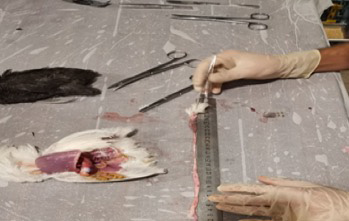
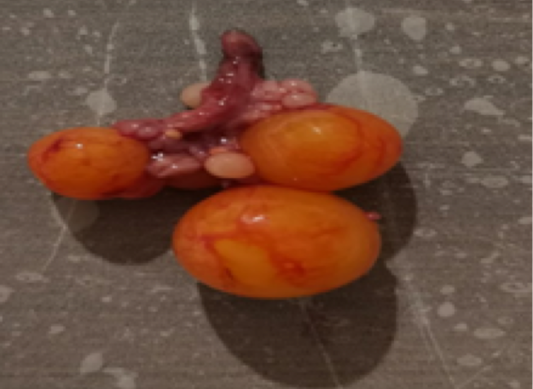
The mean, standard error, and standard deviation for ovary weight and oviduct length are presented in Table 2 and Figures 1 and 2. No statistically significant differences were observed in ovary weight or oviduct length among the different body weight classes (p > 0.05), although some arithmetic differences were noted. These findings are in line with the results of Arora and Samples (2011), who reported that body weight can significantly influence the size of reproductive organs and the physiological characteristics of quail. They observed that birds with higher body weights (ranging from 150 to 160 g) had larger ovaries and oviducts compared to birds with lower body weights, though the differences were not statistically significant (p > 0.05).
These observations also align with more recent research on hybrid quails by Abdel-Halim et al. (2024), who evaluated the relationship between body weight and carcass traits. Their findings indicated positive phenotypic correlations between live body weight, carcass weight, and the percentages of edible parts, all of which were shown to influence egg production traits.
Phenotypic correlations among the studied traits are presented in Table 3. A significant positive correlation was observed between body weight and ovary weight (r = 0.348), which aligns with findings by Diaz and Anthony (2013). Their study confirmed that excessive feed intake in broilers leads to rapid weight gain and accelerated ovarian follicle development. This early follicular growth is attributed to the accumulation of body fat and associated metabolic changes, which promote early sexual maturation. Conversely, restricting feed intake can mechanically inhibit ovarian follicle development by limiting the energy and physiological resources available for reproduction.
Table 3: The phenotypic correlation among the studied traits.
| Traits | Body weight | Ovary weight | Overy length | Estrogen | LH | FSH |
| Body weight | 1 | |||||
| Ovary weight | 0.348** | 1 | ||||
| Oviduct length | 0.114NS | 0.283** | 1 | |||
| Estrogen | -0.170NS | -0.215NS | -0.058NS | 1 | ||
| LH | 0.214NS | 0.233NS | -0.041NS | -0.172NS | 1 | |
| FSH | 0.159NS | 0.351* | 0.034NS | -0.164NS | 0.489** | 1 |
In the current study, no significant correlations were found between body weight and other traits such as oviduct length, estrogen, LH, and FSH levels (p > 0.05). However, ovary weight showed significant positive correlations with both oviduct length (r = 0.283) and FSH levels (r = 0.351). Additionally, LH levels were significantly positively correlated with FSH levels (r = 0.489). No significant correlation was detected between estrogen and FSH levels, a result consistent with the findings of Çiftci (2012), who reported that blood FSH concentrations were not influenced by estradiol-17β administration.
These findings are also in agreement with previous research conducted in Nigeria by Nosike et al. (2020), who observed significant correlations (p < 0.01) between body weight and morphometric traits in broiler strains, with the exception of breast length, which showed a weak but statistically significant correlation. Their study confirmed positive phenotypic correlations across multiple chicken strains and body weight parameters.
Furthermore, the current results are consistent with recent research by Hu et al. (2025), who examined the relationship between body weight and ovarian function in relation to feathering rate—early-feathering (EF) vs. late-feathering (LF) birds. Their findings support a link between feathering phenotype, ovarian development, hormone gene expression, and overall body weight, which ultimately influences reproductive traits such as egg production.
CONCLUSIONS AND RECOMMENDATIONS
This study demonstrated no significant differences in estrogen, LH, FSH levels, ovary weight, or oviduct length among Japanese quails of different body weight groups. However, positive correlations were observed between body weight and ovary weight, as well as between ovary weight and both oviduct length and FSH levels. Additionally, a significant correlation was found between LH and FSH levels. These findings suggest that reproductive traits in Japanese quails are influenced more by internal physiological interactions than by body weight alone. This study contributes valuable insights into the reproductive physiology of Japanese quails, highlighting the complex relationship between somatic growth and reproductive function. The authors recommend further research, particularly at the molecular level, to investigate gene expression related to hormonal receptors and ovarian development in this species.
ACKNOWLEDGEMENTS
I would like to thank Dr. Ahmed Sami Shaker, Dr. Questan Ali Ameen and Dr. Luay Waleed Alsalihi for their scientific and technical assistance during sample collection and sharing the data in the tables.
NOVELITY STATEMENT
This study uniquely provides facts how the somatic growth relates to the internal reproductive functions and hormonal correlations in Iraq with scare existing data. The results of this study revealed new insights into the complex interactions between growth and reproductive development, although no statistical differences between weight classes.
AUTHOR’S CONTRIBUTIONS
Fatima Juma Azgar: suggested the concept of the research, field work and writing the original draft of the manuscript.
Ahmed S. Shaker: did the measurements and edited the final version of the manuscript.
Basma A. Jasim: did the data analysis and revised the final article version.
Karima A. AlSalihi: wrote and revised the final version of the article.
Ethical Consideration
This study was conducted in full compliance with ethical research standards. No ethical issues such as plagiarism, data fabrication, falsification, research misconduct, duplicate publication or submission, or redundancy were involved. All procedures and data reporting were carried out with academic integrity and transparency, where applicable, appropriate permissions for publication were obtained.
Conflict of Interest
The authors have no conflict of interest.
Figures

Shows the measuring of the length of the oviduct.

Showing the measuring ovary weight.
References
- Abdel-Halim AA, El-Komy EM, Abdelsalam AM, Ramadan GS (2024). Evaluating Body Weight and Carcass Traits in Six Hybrid Quail Varieties over a Five Week Period. Adv. Anim. Vet. Sci., 12(8): 1474-1482. https://doi.org/10.17582/journal.aavs/2024/12.8.1474.1482[Full text][CrossRef]
- Akintunde AO, Ndubuisi-Ogbonna LC, Ladele MM, Olorunfemi OA, Ojo OA, Akinboye OE, Shobo BA, Afodu OJ (2023). Reproductive Potentials of Female Japanese Quails to Administration of Egg-Lime-Molasses Mixture. J. Appl. Anim. Sci., 16(2): 9–20.
- Ahmed LS (2022). Impact of Egg Shell and Spots Colour on the Quality of Hatching Eggs Derived from Three Lines of Local Quail. Iraqi J. Agric. Sci., 53(6): 1256–1269. https://doi.org/10.36103/ijas.v53i6.1640[CrossRef]
- AL-Tamemy SMA, Al-Obaidy MH (2019). The Effects of Addition of Omega-3 Fatty Acids on Some Quality of Awassi Ram’s Chilled Sperm. Plant Arch., 19(2): 131–134.
- Arora KL, Samples O (2011). Role of Body Weight on Reproductive and Physiological Traits in Japanese Quail Layers (Coturnix japonica). Int. J. Poult. Sci., 10(8): 640–643. https://doi.org/10.3923/ijps.2011.640.643[CrossRef]
- Balıkcı E, Yıldız A, Gürdoğan F (2007). Blood metabolite concentrations during pregnancy and postpartum in Akkaraman ewes. Small Ruminant Res., 67(2–3): 247–251. https://doi.org/10.1016/j.smallrumres.2005.10.011[CrossRef]
- Bülent G (2023). Reproductive Development of Japanese Quail (Coturnix coturnix japonica) in Males and Females Subjected to Leptin Injections. Acta Vet. Eurasia, 49(3): 149–154. https://doi.org/10.5152/actavet.2023.23026[CrossRef]
- Çiftci HB (2012). Effect of estradiol-17β on follicle-stimulating hormone secretion and egg-laying performance of Japanese quail. Animals, 6(12): 1955–1960. https://doi.org/10.1017/S1751731112000997[CrossRef]
- Diaz FJ, Anthony K (2013). Feed restriction inhibits early follicular development in young broiler-breeder hens. Anim. Reprod., 10(2): 79–87.
- Hertamawati RT, Soedjarwo E, Sjofjan O, Suyadi S (2019). Implication of feed restriction during growth period on the growth hormone profiles and morphology ovary of quail hen (Coturnix coturnix japonica). J. Indones. Trop. Anim. Agric., 44(4): 415. https://doi.org/10.14710/jitaa.44.4.415-422[CrossRef]
- Hu Z, Xu H, Zhang Z, Lu Y, Zhou Y, Zhu J, Deng Q, Wang X, Liu Y, Zhang Y, Wang Y (2025). Comparative analysis of the performance, egg quality and ovarian immune function of fast and slow feather strains in tianfu green shell laying hens at various stages of egg production. Poult. Sci., 104(2): 104747. https://doi.org/10.1016/j.psj.2024.104747[CrossRef]
- Hussen SH, Al‐Khdri AMA, Hassan AM (2016). Response to Selection for Body Weight in Japanese Quail (Coturnix coturnix japonica). Iran. J. Appl. Anim. Sci., 6(2): 453–459.
- Kayang BB, Vignal A, Inoue‐Murayama M, Miwa M, Monvoisin JL, Ito S, Minvielle F (2004). A first‐generation microsatellite linkage map of the Japanese quail. Anim. Genet., 35(3): 195–200. https://doi.org/10.1111/j.1365-2052.2004.01135.x[CrossRef]
- Marks HL (1993). Carcass Composition, Feed Intake, Feed Efficiency Following Long-Term Selection for Four-Week Body Weight in Japanese Quail. Poult. Sci., 72(6): 1005–1011. https://doi.org/10.3382/ps.0721005[CrossRef]
- Marwan HA, Al-Obaidy, Zirak MR, Palani, Sirwan K, Hameed K (2020). Effect of Adding Different Percentages of Glycerin in Rations on Some Blood Serum Biochemical and Antioxidants Traits in Male Lamb’s Awassi Breed Sheep. Biochem. Cell Arch., 20(1): 2253–2257.
- Milad A, Badi, Khalid CK, Al-Salhie, Asaad Y, Ayied (2023). Effect of Age and Gender on the Body Weight and Some Physiological parameters of Local chickens. Euphrates J. Agric. Sci., 15(1): 298–303.
- Minvielle F (2004). The future of Japanese quail for Research and production. World’s Poult. Sci. J., 60(4): 500–507. https://doi.org/10.1079/WPS200433[CrossRef]
- Mizutani M, Nunoya T, Yamasaki H, Itakura C (1992). The Hypotrophic Axonopathy Mutant in Japanese Quail. J. Hered., 83(3): 234–235. https://doi.org/10.1093/oxfordjournals.jhered.a111201[CrossRef]
- Mohammed AK, Abass KS (2021). Effect of Age, Lambs Sex and Birth Type on Some Haematological and Biochemical Parameters of Awassi Ewes in Iraq. Vet. Pract., 22(1): 45–47.
- Molokwu NN, Abbaya HY (2018). Sexual dimorphism in growth and feeding of Japanese quails in Northern Guinea Savanah. Agric. Sci. Technol., 10(2): 96–101.
- Nosike RJ, Obasi EN, Nwose RN, Igwe RO, Onunkwo DN, Amaduruonye W, Nwakpu OF, Inyang EC (2020). Phenotypic correlations between body weight and morphometric traits in broiler chicken strains. Niger. J. Anim. Prod., 45(3): 20-24. https://doi.org/10.51791/njap.v45i3.420[CrossRef]
- Pallant, J. (2011) SPSS survival manual: A step by step guide to data analysis using the SPSS program. 4th Edition, Allen & Unwin, Berkshire.
- Prastiya RA, Madyawati SP, Sari SY, Nugroho AP (2022). Effect of follicle-stimulating hormone and luteinizing hormone levels on egg-laying frequency in hens. Vet. World, 15(12): 2890–2895. https://doi.org/10.14202/vetworld.2022.2890-2895[CrossRef]
- Recchia K, Jorge AS, Pessôa LV, De F, Botigelli RC, Zugaib VC, de-Souza AF, Martins DS, Ambrósio CE, Bressan FF, Pieri NCG (2021). Actions and Roles of FSH in Germinative Cells. Int. J. Mol. Sci., 22(18): 10110. https://doi.org/10.3390/ijms221810110[CrossRef]
- Sauder DC, DeMars CE (2019). An Updated Recommendation for Multiple Comparisons. Adv. Methods Pract. Psychol. Sci., 2(1): 26–44. https://doi.org/10.1177/2515245918808784[CrossRef]
- Shaker AS, Mohammed AK, Razuki WM, Hermiz HN, Ameen QA, Al-Obaidi RM (2024). Estimation of genetic parameters for body weight in different periods of Japanese quail that selected for immune responses and fed different levels of dietary L-arginine. Dijlah J. Agric. Sci., (Special Issue): 1–7. https://doi.org/10.58928/ku23.14106[CrossRef]
- Tavaniello S (2013). Effect of cross-breed of meat and egg line on productive performance and meat quality in Japanese quail (Coturnix japonica) from different generations. Int. Ph.D. “Welfare, Biotechnol. Qual. Anim. Prod.” (Xxv Cycle).
- Zirak M.R. Palani, Marwan H.A. Al-Obaidy, Khansa Hameed, Kawan Sirwan. (2020). Effect of selenium and zinc supplements on each individual or mixture on some carcass characteristics and glutathione activity in male Lambs kurdi breed sheep. Plant Archives Vol. 20, Supplement 1, 2020 pp. 231-234.
Services
Article usage statistics
Loading…