
Pulses, which include a wide range of leguminous crops such as lentils, beans, chickpeas, and peas, play an important part in sustainable agriculture due to their numerous benefits. This comprehensive review aims to provide insight into the benefits of soil enrichment, the ability to tolerate drought, and intercropping for sustainable agriculture by controlling erosion as cover crop protection. Pulses provide essential nutrients for human health, providing a high protein content, dietary fiber, vitamins, and minerals. It also ranked low in fat. Beyond the dietary composition, pulses contribute significantly to soil health through N-fixation, improve soil fertility and structure, and reduce demand for synthetic fertilizer. Furthermore, pulses have incredible drought resistance, making them vital in arid and semi-arid regions cropping systems. Their thick root systems and efficient water utilization help to retain soil moisture and overall ecosystem stability. Farmers increase yield and adopt better sustainable farming techniques using pulses in crop rotation and/or intercropping. This review emphasizes the value of pulses in addressing global concerns such as food security, soil degradation, and climate change adaptation and calls for expanded cultivation and consumption worldwide. In conclusion, pulses represent a pivotal component of sustainable agriculture, offering a unique combination of nutritional, environmental, and agronomic benefits. Their ability to enhance soil fertility as green manure, improve water use efficiency, and adapt to water deficit conditions makes them an essential crop for addressing food security and climate resilience. Promoting the cultivation and consumption of pulses is a practical and effective strategy for building more sustainable and resilient agricultural systems worldwide.
Review · Volume 42, Issue 4, 23 August 2026 · Open Access
Sustainable Soil Management and Climate Adaptation through Pulses Cultivation: A Comprehensive Review
· · · · ·
Affiliations & Notes ⌄
- 1Department of Agronomy Muhammad Nawaz Shareef University of Agriculture Multan, Pakistan
- 2College of Resources and Environment, Southwest University, Chongqing, China
- 3Department of Soil and Environmental Sciences, Ghazi University Dera Ghazi Khan. *Correspondence | Muhammad Waqas Yonas, Department of Agronomy Muhammad Nawaz Shareef University of Agriculture Multan, Pakistan
- 4Email: its_yonas@outlook.com
Article Info ⌄
- Journal:
- Sarhad Journal of Agriculture
- Published:
- 23 August 2026
From the article
- Pulses play a pivotal role in promoting sustainable agriculture through their multifaceted contributions to soil health, climate resilience, and economic stability.
- Intercropping and rotation systems involving pulses improve land-use efficiency, suppress weeds and pests, and increase biodiversity, making these systems particularly beneficial for resource-constrained and rainfed farming environments.
- Furthermore, pulses exhibit significant drought tolerance mechanisms, including deep rooting systems, osmotic regulation, antioxidant defense, and stomatal control, making them highly suitable for cultivation in arid and semi-arid regions.
- Overall, integrating pulses into cropping systems represents a sustainable and climate-smart strategy that supports food security, soil regeneration, and rural livelihoods.
Selected from the article's own text.
Abstract
Introduction
Pulse is originated from Latin word “Puls,” which means pottage or cooked seeds often used to produce thick soup or porridge . The word “legume,” means “to gather,” is derived from a Latin word “legere,” which refers to traditional practices of collecting seeds by hand rather than having them threshed from plants like cereals . Pulse crops are actually dry seeds of leguminous plants containing low fat content hence, distinguishable from leguminous oil seeds. The most well-known and frequently used types of pulses are dried beans, lentils, chickpeas, and peas . In terms of food and vegetable protein sources, as well as fodder, it is second largest family after Poaceae (formerly Gramineae). Their flowering is often photoperiodic, and productivity is determined by an annual fruiting cycle, whose duration is controlled by the day length response . Beans (Phaseolus vulgaris), lentil (Lens culinaris; approximately 9000 years , and soybean (Glycine max; approximately 3000 years are some of the earliest domesticated legumes. One of the seven Prehistoric crops of Near East is chickpea (Cicer arietinum). Groundnut (peanut) and soyabean are grain legumes, but they are not considered pulses because they are primarily used for oil extraction . Pulses contribute 30% of the total amount of protein and nitrogen needed by humans in the diet, and they are produced on about 12–15% arable (cultivated) land of the world . Pulses are high in protein and are often referred to as “poor man’s meat” . Pulses contain same number of calories but twice the protein content as compared to cereals (20-25%) and are almost as high as meat and chicken. However, protein content is of lower quality than animal protein, which are a staple diet all around the world.100g of dry pulses contains around 350 Kcal of energy . Pulses are a major source of dietary fiber, have little to no fat and have no cholesterol (Table 1). Additionally, they don’t contain gluten and are loaded with vitamins and minerals that are essential for a healthy life .
About 89 percent of people in India consume pulses at least once a week, compared to only 35.4% who consume fish, poultry, or beef at least once a week. This makes pulses the most common protein source consumed in India . Pulses can be cultivated in low fertilize soils and require less time and moisture to grow and harvest than that of cereals. Due to early harvest “Haricot” beans are referred as “First Aid Crops” by farmers . Pulses are a significant food path in the world. They contribute significantly to food production system by enriching soil health through biological N-fixation and reduce need of synthetic nitrogen fertilizer. It also mobilize essential micro- and macro-nutrients . The deep root system and organic matter of pulses also increase diversity of micro flora hence adding to soil physical properties by increasing porosity, cohesion and water holding capacity . Benefits of pulses as showed in Figure 1.
Table 1: Types of Pulses and their nutritional values
|
Sr. no |
Type |
Fibers (g) |
Carbs (g) |
Proteins (g) |
|
1 |
Pigeon pea |
7 |
23.5 |
7.19 |
|
2 |
Lentils |
7.9 |
20.13 |
9.02 |
|
3 |
Chickpea |
7.6 |
27.42 |
8.86 |
|
4 |
Dry peas |
5.5 |
14.45 |
5.42 |
|
5 |
Horse gram |
6.7 |
20.39 |
6.2 |
|
6 |
Lupin beans |
37.6 |
12.57 |
36.17 |
|
7 |
Dry broad beans |
7 |
19 |
7 |
|
8 |
Bambra-groundnut |
8.4 |
63.88 |
6.57 |
|
9 |
Blacked-eye pea |
6.7 |
20.39 |
6.2 |
|
10 |
Mung bean |
7.6 |
19.15 |
7.02 |
|
11 |
Pinto beans |
9 |
20 |
9 |
|
12 |
Kidney beans |
37.8 |
12 |
36 |
|
13 |
Lima beans |
6.2 |
19.68 |
7.8 |
|
14 |
Black gram |
12.5 |
30.6 |
7.31 |
|
15 |
Navy Beans |
10.5 |
19 |
8 |
Drought is a major issue worldwide, however some pulses like chickpea, lentils and Mung-bean complete their lifecycle in a short duration and avoid stress and maintain water supply by access to deeper soil moisture. It also increase xylem vessel diameter to improve hydraulic conductivity . Pulses can survive under drought condition by maintaining cell wall elasticity and preventing cell membrane leakage, scavenging reactive oxygen species (ROS) by enhanced antioxidant systems . Pulses also have ability to fix N under drought stress by selecting drought-tolerant rhizobium from inoculation and accumulating N reserves in stem, adjusting root-shoot ratio for remobilization during grain filling stages .
This review is aimed to synthesize current knowledge on pulses, including their nutritional value, role in soil enrichment through biological N-fixation and organic matter dynamics, drought tolerance mechanisms, benefits in intercropping and crop rotation systems for sustainable agriculture, and effectiveness as cover crops in soils to control erosion.
Legumes as soil benefits
Legumes have long been recognized and valued as “soil building” crops. Growing legumes have improved soil quality through their beneficial effects on soil biological, chemical and physical conditions by enhancing soil fertility through biological nitrogen fixation, organic residue inputs, and stimulation of soil microbial processes that regulates nutrient cycling. When properly managed, legumes can enhance the following soil properties.
N-supply power
Legumes have the ability to fix atmospheric N through a symbiotic relationship with rhizobia, a kind of bacteria, available in soil. A hallmark trait of legumes is their ability to develop root nodules and to fix N2 in symbiosis with compatible rhizobia . Formation of symbiotically effective root nodules involves signaling between host-plants and microsymbiont. Flavonoids and/or is flavonoids released from roots of legumes hosts induce transcription of nodulation genes in compatible rhizobia, leading to the formation of lipo-Chito oligosaccharide molecules that, in turn, signal the host plant to begin nodule formation . This process adds in a significant amount of N to the soil, reducing needs for synthetic nitrogen fertilizer. Through symbiosis with Rhizobium spp., legumes convert atmospheric N2 into plant available ammonia via the nitrogenase enzyme complex, contributing approximately 50-300 kg N ha-1 year-1 depending on species and environmental conditions . Some 40 to 60 million metric tons (Mt) of N2 are annually fixed by important legumes, with another 3-5 million Mt fixed by legumes in natural ecosystems . In comparison with artificially produced nitrogen fertilizer, which consume huge amount of fossil fuels and significantly contributes to GHS nitrogen fixation biologically by legume crops offers a low emission renewable pathway to enhance nitrogen pool of the soil. While diazotrophs like cyanobacteria and Azotobacter also contribute to fix nitrogen and improve the productivity depending on the soil organic matter . In contrast, symbiosis between legumes and rhizobia provides a reliable and effective source of nitrogen, capable of supplying 100-300 Kg N ha-1 Year-1 , significantly reducing the dependence on artificial inputs.
Soil reserve as organic matter
Incorporating legume green manures increase organic matter content of the soil. Incorporation of legume biomass increases soil organic carbon pools because it contains relatively low C:N ratis, which promotes rapid microbial decomposition and efficient nutrient mineralization . During decomposition, legume residues release labile carbon substrates that stimulate microbial growth and enzymatic activity, leading to the formation of stable soil aggregates and improved water retention capacity . Enhanced organic matter also leads to better nutrient cycling, which is critical for maintaining soil fertility. The advantages of green manures are diverse and can contribute to sustainability of agro- ecosystems through different ways . Detailed illustration is presented in (Figure 2). Green manuring is an agricultural practice that involves growing specifics crops especially pulses and then incorporating them into the soil before seeds development, these crops are not harvested for food or fodder but are turned under while still to green decomposes and enrich the soil. Pulses like green gram (Vigna radiata), cowpea (Vigna unguiculata), lentil (Lens culinaris), and chickpea (Cicer arietinum) are excellent options for green manuring due to their high biomass, nitrogen fixation ability and drought resilient . Green
manuring consists of two types, in-situ green manuring in which pulses are grown in a same field where the following crop are cultivated, after reaching the flowering the green biomass is incorporating directly into the soil. The other one is ex-situ green manuring in which pulses are grown in separated field then harvest and green biomass is transport and apply as a mulch or incorporating into others field for soil enrichments . Legumes have the ability to form a symbiotic relationship with Rhizobium bacteria in their root’s nodules. These bacteria can fix atmospheric N2 into usable forms by crops, when biomass of legumes return to the soil increases the availability of N and reduces the need of synthetic fertilizers, and allows to improve N-uptake effectiveness and decrease N leaching losses . It also enhances soil organic matter (SOM), through the direct additions of biomass, when pulses are incorporated into soil their materials like shoot and roots becomes and source of organic input, and this biomass contains a mix readily degradable compounds like (sugars and amino acids), and structural carbohydrates (Cellulose and hemicellulose), which decomposes, soil microorganisms begin breaking down these materials using the simpler compounds for rapid energy and slowly the processing the more resistance ones (Kumar et al., 2020b). This microbial activity transforms the biomass into various organic forms, including microbial biomass, organic acid and humic substances. Some of these products becomes stabilize in the soil through interaction with minerals or incorporation into soil aggregates, contributing to the long term buildup of stable SOM . As a result, it enhances the soil fertility by improving its ability to retain and cycle nutrients. When pulses like green gram, cowpea, and sun hemp are grown and incorporated into soil, they decompose the gradually and release key nutrients particularly nitrogen into the soil profile. Unlike synthetic fertilizers that releases nutrients rapidly and are prone to leaching, despite this green manuring provides a slowly, and steady release of nutrients which reduces the losses of N . As research reported that green gram as green manures added N 30 kg ha-1, which becomes available to subsequent crop in wheat . As other research reported that green manuring accumulated N 53-76 kg ha-1 under soybean-wheat, fallow-wheat, huai bean-wheat, and green gram-wheat cropping system and amount of N utilized by wheat was 7-27 kg ha-1 . Under rice-wheat cropping system green manuring of Sesbania and mungbean resulted in recycling of N 77-113 kg ha-1 and increased the productivity of rice-wheat cropping system by 0.5-1.3 t-1 ha y-1 .
Stimulate soil biological activity
Legume plants support a diverse microbial community by releasing root exudates e.g., amino acids, sugars, and organic acids that serve as substrate for soil microorganisms, lending a greater stability into the total soil life . Legumes also foster production of a greater total biomass in the soil by providing additional N . As research showed that SOM increased by 0.1-0.3% per year, and addition of dry biomass before wheat sowing into soil was 3.5 t ha-1 .
Soil microbial diversity plays a fundamental role in sustaining soil health and ecosystem functionally. It encompasses a wide range of microorganism, including bacteria, fungi, actinomycetes, protozoans, and archaea each performing distinct but interconnected with ecological functions . This diversity underpins key soil processes such as nutrient cycling, organic matter decomposition, soil structure formation, pathogen suppression, and plant growth promotion making it cornerstones of productive and sustainable agroecosystem (Van Der Heijden et al., 2008). Microorganisms regulate the mineralization and immobilization of nutrients like nitrogen (N), phosphorous (P), and sulfur (S), nitrogen fixing bacteria e.g Rhizobium Azotobacter convert atmospheric N2 into plant available form, while phosphate- solubilizing microbes enhances the bioavailability of phosphorus bound in soil minerals (Figure 2).
Legumes, through their root exudates and symbiotic relationships with nitrogen-fixing bacteria (Rhizobium spp.) and arbuscular mycorrhizal fungi (AMF), stimulate the growth and diversity of beneficial soil microbes, which allow soil system to maintain stability and resilience under stress conditions, such as drought, salinity and heavy metals ; . These microbes contribute significantly to soil aggregation by producing extracellular polysaccharide and glomalin particularly from AMF. These compounds bind soil particles into stable aggregates, thereby improving soil porosity, aeration, and water infiltration, which are vital for healthy root growth and microbial colonization ; . Furthermore, the organic residues and root biomass provided by legumes serves as substrates for decomposition, promoting the formation and stabilization of soil organic matter, this not only enhances the long-term soil fertility but also contribute to carbon sequestration, supporting sustainable agriculture practices ; . Thus pulses not only enrich soil fertility but also boost soil health by fostering a biological active and structurally sound soil environment. .
Improve soil physiochemical properties
Legumes play a significant role in improving soil structure, porosity, and water holding capacity through various mechanisms that enhance soil quality . The decomposition of legume residues adds nitrogen-rich organic matter, which enhances the formation of stable soil aggregates. This aggregation is crucial as it creates more pore spaces within the soil, leading to better aeration and reduced soil erosion . The protein glomalin, produced by soil microbes in association with legume roots, acts as a “glue” that binds soil particles together, further enhancing aggregate stability and improving soil tilth . The deep taproots of many legume species can penetrate compacted soil layers, creating channels that increase soil porosity. This process allows for improved air movement and water infiltration deep into the soil profile. Additionally, the activity of earthworms, stimulated by the nitrogen-rich residues of legumes, contributes to the formation of burrows that enhance soil porosity . Whereas, legumes also improve the water holding capacity of soil by increasing the amount of organic matter present. Higher soil organic matter enhance the soil water retention by improving aggregate stability and enhanced micropores that store plant-available water, which is particularly beneficial in drought-prone areas . The incorporation of legume residues into soil significantly affects its chemical properties such as electrical conductivity (EC), pH, buffer capacity and nutrient dynamics etc. The addition of legume residues has been shown to increase soil pH. For instance, one study reported an increase of up to 0.6 units at Day 0 and 0.7 units at Day 28 after the addition of legume residues at rates of 1.54 and 3.08 g/kg of soil . The chemical composition of legume residues also influences the soil’s buffering capacity, which is critical for maintaining stable pH levels during various environmental conditions . The addition of legume residues can influence soil EC, primarily through the release of nutrients during decomposition . When legume residues are incorporated into the soil, allelochemicals released from legumes can alter the EC values, particularly when accumulated beyond certain threshold levels. This alteration can affect the soil’s overall chemical balance and its suitability for subsequent crops . The rate at which legume residues decompose can vary, influencing how quickly EC levels change. Faster decomposition leads to a more rapid increase in nutrient availability and consequently a quicker rise in EC . Legume residues can also enhance the availability of essential nutrients, particularly nitrogen, due to their lower carbon-to-nitrogen (C:N) compared to non-leguminous plants. This quality facilitates quicker decomposition and nutrient release, improving soil fertility .
Intercropping of pulses and sustainable agriculture
Intercropping cultivation of two or more crops simultaneously on the same piece of land has re-emerged as a promising approach for advancing sustainable agriculture (Table 2). Among the various intercropping systems, those incorporating pulses (legumes) offer particularly significant benefits. Pulses possess the unique ability to fix atmospheric nitrogen through symbiotic associations with Rhizobium bacteria, thereby enriching soil fertility naturally. This biological nitrogen fixation reduces the reliance on synthetic nitrogen fertilizers, leading to lower production costs and minimizing environmental pollution . Pulse-based intercropping improves land use efficiency and crop productivity by maximizing the use of available sunlight, water, and nutrients. It also contributes to pest and disease suppression, reduces weed pressure, and provides a more stable income through crop diversification . Additionally, legumes improve soil structure, organic matter content, and microbial activity, which are essential indicators of soil health . These systems are especially suitable for smallholder and resource-poor farmers in rainfed and semi-arid regions like South Asia and Sub-Saharan Africa. By contributing
Table 2: Intercropping of Pulses with other crops
|
Main crop |
Pulse crop |
Region |
Intercropping pattern |
Sustainability benefit |
Reference |
|
Maize |
Cowpea |
Sub-Saharan Africa |
Row intercropping (1:1) |
Nitrogen fixation, weed suppression |
(Namatsheve et al., 2020) |
|
Sorghum |
Pigeon pea |
India |
Strip intercropping (2:1) |
Soil fertility, drought tolerance |
(Maruthi et al., 2017) |
|
Wheat |
Chickpea |
India |
Relay intercropping |
Efficient land use, income diversification |
(Chaudhary et al., 2021) |
|
Sugarcane |
Mungbean |
Punjab, Pakistan |
Paired-row intercropping |
Enhances N economy, early returns |
(Afghan et al., 2024) |
|
Cotton |
Black gram |
South India |
Mixed cropping |
Soil improvement, pest control |
(Lithourgidis et al., 2011) |
|
Millet |
Lentil |
Nepal, Bangladesh |
Inter-row spacing (2:2) |
Moisture retention, erosion control |
(Gangaiah and Yadav, 2024) |
to improved food security, income stability, and ecological balance, pulse-based intercropping aligns with the core principles of sustainable agriculture and climate resilience .
Erosion control as a cover crop
Leguminous cover crops play a vital role in controlling soil erosion through a combination of ground cover, root stabilization, and enhancement of soil structure. Their dense canopy effectively shields the soil surface from raindrop impact, reducing the detachment and transport of soil particles . Additionally, the extensive root systems of legumes such as hairy vetch and crimson clover bind soil particles and improve structural stability, especially on sloped or erosion-prone lands . The incorporation of organic residues from legume biomass contributes to soil aggregation and water infiltration, thereby limiting surface runoff (Kumar et al., 2020a). Furthermore, legumes can provide continuous soil cover during fallow periods or off-seasons, ensuring year-round protection against erosive forces . These characteristics make legumes particularly valuable in conservation agriculture and integrated soil fertility management systems aimed at sustaining long-term soil productivity. Moreover, cover crops reduce soil surface temperatures and evaporation losses by providing canopy cover, effectively shading the soil and preserving moisture . Legumes also promote deeper rooting in companion or subsequent crops by improving subsoil conditions, which enhances drought resilience.
Drought tolerate capacity
Unlike pulses, which have a deeper taproot system, cereals have a fibrous root system. As a result, pulses have a greater capacity to endure drought and absorb water from deeper soil, root growth rate, root density, spread, and size are vital responses of pulses under drought stress (Figure 3). A well-developed root system enables pulses to reach water from deeper soil layers, which contributes to their drought avoidance strategy . Pulses have mechanism of drought tolerance like, several types of pulses grow fast, developing seeds and blooms with little vegetative growth, allowing them to avoid drought. Maturity and early flowering are critical attributes for pulses to survive under water limit conditions . By preserving a greater tissue water content through stomatal closure, wax formation, limited vegetative growth, and improved water uptake by deep root systems, they are able to endure drought stress . By regulating stress-responsive genes and transmission pathways, such as those involving phytohormones, osmolytes, and antioxidant defense systems, tolerance pulses can sustain physiological activity during extreme drought . A “QTL-hotspot” region has been identified in chickpea that is linked to 12 QTLs that control multiple drought tolerance traits, including yield under drought stress (YLD), seed weight under drought (SWD), relative water content (RWC), and membrane stability index (MSI) . Some pulses in dry conditions, may reduce water loss by enclosing their stomata, resulting in water conservation . During dry spells, they can store solutes like proline to keep their osmotic balance intact and avoid themselves from losing water . Under stress conditions many of the plants loss their water throughout stomata opening, but pulses has the ability to close their stomata, closes the door for Co2 and store water for stress limit condition this help them to survive for some period . They have defense system to mitigate stresses, drought one of them so they have antioxidant enzyme such as super peroxide dissimulate (SOD), catalase (CAT), ascorbate peroxidase that helps them to neutralize the ROS . Likewise, they also accumulate glutathione and proline, which act as antioxidants and help maintain cellular redox equilibrium . Some pulse has phenotypic plasticity, which allows them to modify their morphology and physiology in response to changing environmental conditions, like as drought . The antioxidant system in them has a close relationship to the redox regulatory network, which helps regulate ROS levels and maintain cellular homeostasis . Drought avoidance mechanism, they restrict transpiration to prevent water loss during drought conditions. This reduction helps preserve water and maintain adequate water levels within the plant . So by reduction in transpiration the water use efficiency and uptake water from root zone under stress condition, some of them have naturally mechanism to avoid drought stress by preserving water from root zone and do minimum losses of water by closure of stomata .
Water requirement
Water requirement of pulses as against the major crops are low because of their deep root system that’s allow them to access water from deeper soil layers . The main difference between pulses and major crops water requirement is of canopy development, pulses develop their canopy slower than other crops like wheat, cotton, sugarcane and rice they are faster in developing canopy, at the end water requirement increased . As showed in Figure 4.
Economic importance
Legumes offer significant economic benefits to farming systems by reducing input costs, enhancing productivity, and providing diverse market opportunities. One of their primary contributions is through biological nitrogen fixation, which minimizes the need for synthetic nitrogen fertilizers a major cost factor in crop production . This not only lowers production expenses but also contributes to long-term soil fertility, reducing future input requirements. Additionally, legumes often serve as dual-purpose crops, providing both grain and fodder, thereby diversifying farm income and improving resilience to market fluctuations. In intercropping or rotational systems, legumes can increase overall land productivity and stabilize yields, leading to higher economic returns per unit area . Moreover, many legumes such as soybeans, chickpeas, lentils, and mung beans have growing domestic and export markets, especially due to rising demand for plant-based proteins. These characteristics make legumes an economically sustainable choice, especially for smallholder farmers seeking cost-effective, climate-resilient, and market-responsive cropping strategies.
Conclusions and Recommendations
Pulses play a pivotal role in promoting sustainable agriculture through their multifaceted contributions to soil health, climate resilience, and economic stability. Their unique ability to biologically fix atmospheric nitrogen reduces dependency on synthetic fertilizers, thereby enhancing soil fertility and lowering production costs. Intercropping and rotation systems involving pulses improve land-use efficiency, suppress weeds and pests, and increase biodiversity, making these systems particularly beneficial for resource-constrained and rainfed farming environments. Furthermore, pulses exhibit significant drought tolerance mechanisms, including deep rooting systems, osmotic regulation, antioxidant defense, and stomatal control, making them highly suitable for cultivation in arid and semi-arid regions. Their ability to function as cover crops and green manures also helps prevent soil erosion, enhances organic matter content, and improves the physical, chemical, and biological properties of the soil. Economically, pulses contribute to input savings, yield stability, income diversification, and access to growing domestic and international markets. Overall, integrating pulses into cropping systems represents a sustainable and climate-smart strategy that supports food security, soil regeneration, and rural livelihoods. Expanding their cultivation and adoption is critical to meeting future agricultural and environmental challenges.
Novelty Statement
This review uniquely consolidates the nutritional, soil-regenerating, drought-resilient, and erosion-control benefits of pulses into a unified climate-smart agriculture framework. It emphasizes pulse cultivation as a practical strategy to reduce fertilizer dependence, improve soil health, and strengthen sustainable food production under climate stress.
Authors’ Contribution
Shoaib Zawar: Writing, conceptualization, data curation and investigation.
Muhammad Waqas Yonas: Helped in data curation, investigation and writing.
Muhammad Mujahid Akbar: Helped in investigation and writing.
Mudassir Aziz: Critical review and helped in writing.
Muhammad Ibrahim: Helped in investigation
Taha Ishfaq: Helped in investigation
Funding
This research did not receive any specific funding or grant from agencies in the public, commercial, or not-for-profit sectors. The literature review and article analysis conducted did not have any external financial support or sponsorship.
Generative AI and AI-assisted technology statement
The authors declare that no generative AI and AI assisted technology was used in the creation of this manuscript.
Conflict of interest
All the authors have no conflict of interest.
Figures
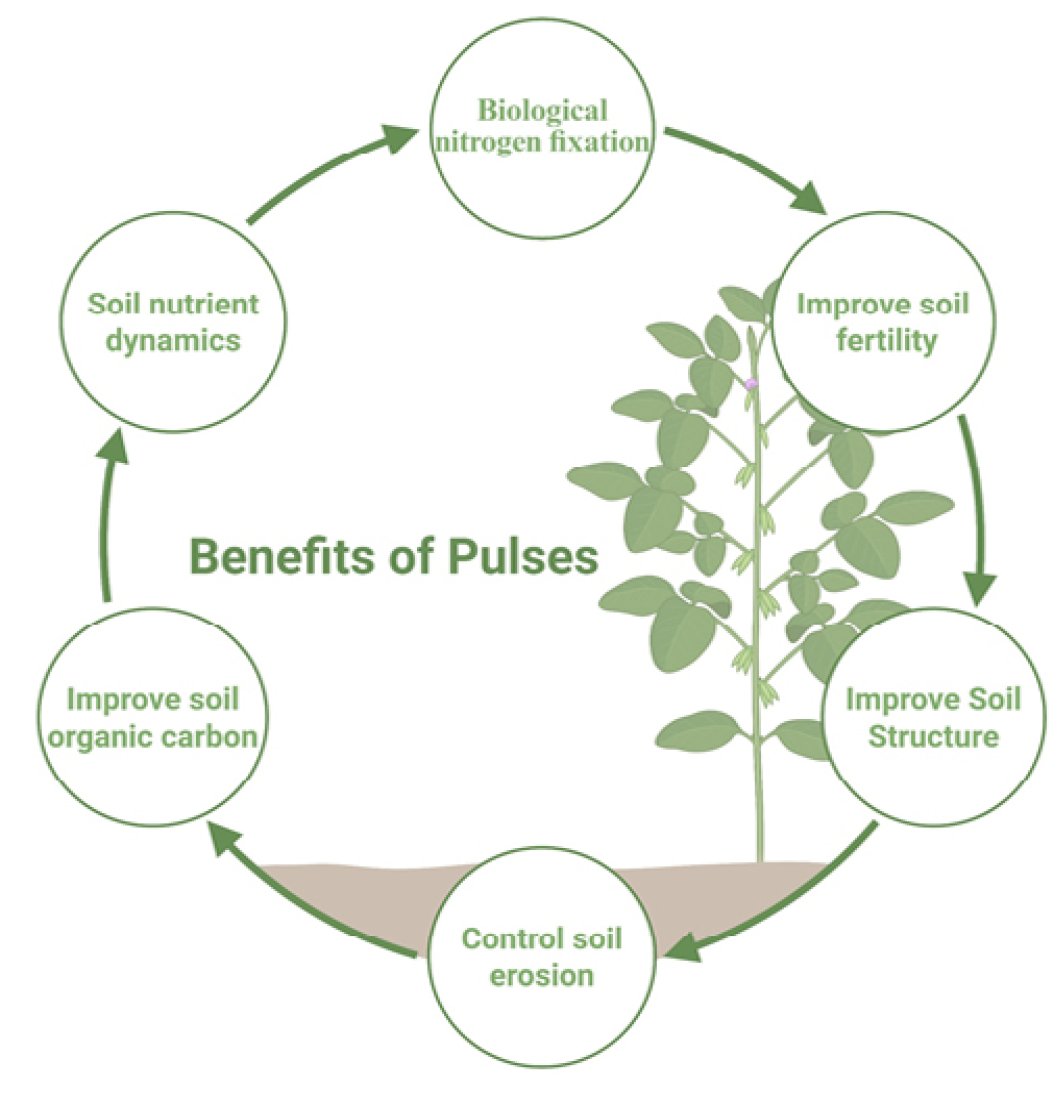
Benefits of pulses for soil
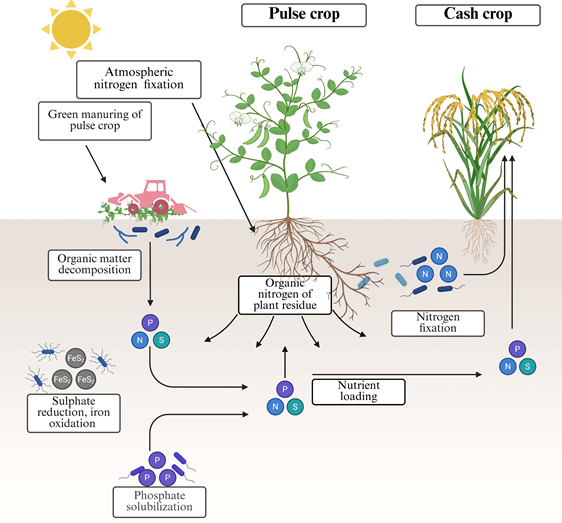
Conceptual diagram of nutrient dynamics associated with pulse crops and their effects on the subsequent cash crops
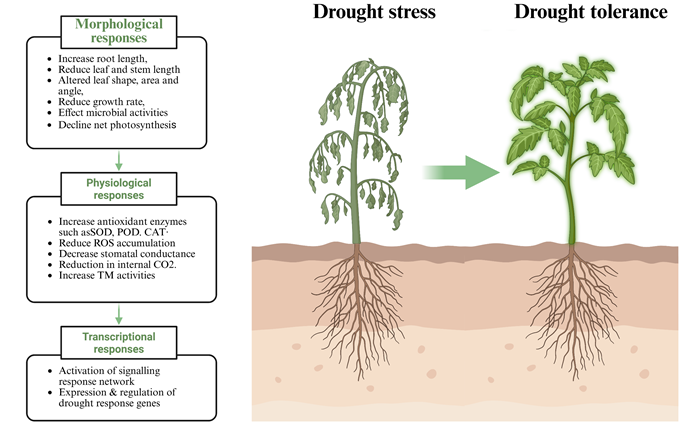
Schematic illustration of plant responses to drought stress and the development of drought tolerance
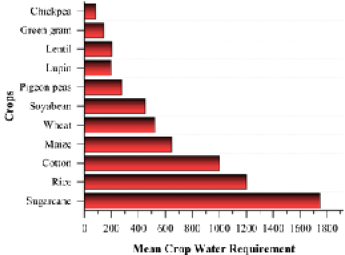
Mean crop water requirement of selected crops
References
- Adetunji, A.T., B. Ncube, A.H. Meyer, O.S. Olatunji, R. Mulidzi and F.B. Lewu. 2021. Soil pH, nitrogen, phosphatase and urease activities in response to cover crop species, termination stage and termination method. Heliyon., 7. https://doi.org/10.1016/j.heliyon.2021.e05980[CrossRef]
- Agegnehu, G., A. Ghizaw and W. Sinebo. 2006. Yield performance and land-use efficiency of barley and faba bean mixed cropping in Ethiopian highlands. Eur. J. Agron., 25: 202-207. https://doi.org/10.1016/j.eja.2006.05.002[CrossRef]
- Ananda, M.R., S. Vaiahnav, P.R. Naide and N. V Aruna. 2022. Long term benefits of legume based cropping systems on soil health and productivity. An overview. Int. J. Environ. Clim. Chang., 12: 299-315. https://doi.org/10.9734/ijecc/2022/v12i930767[CrossRef]
- Benouis, K. 2017. Phytochemicals and bioactive compounds of pulses and their impact on health. Chem. Int., 3: 224-229.
- Bhatia, C.R. 2008. Role of microbial diversity for soil, health and plant nutrition. Molecular mechanisms of plant and microbe coexistence. Springer. pp.53-74. https://doi.org/10.1007/978-3-540-75575-3_2[CrossRef]
- Blanco-Canqui, H., T.M. Shaver, J.L. Lindquist, C.A. Shapiro, R.W. Elmore, C.A. Francis and G.W. Hergert. 2015. Cover crops and ecosystem services: Insights from studies in temperate soils. Agron. J., 107: 2449-2474. https://doi.org/10.2134/agronj15.0086[CrossRef]
- Cleveland, C.C., A.R. Townsend, D.S. Schimel, H. Fisher, R.W. Howarth, L.O. Hedin, S.S. Perakis, E.F. Latty, J.C. Von Fischer and A. Elseroad. 1999. Global patterns of terrestrial biological nitrogen (N2) fixation in natural ecosystems. Global Biogeochem. Cycl., 13: 623-645. https://doi.org/10.1029/1999GB900014[CrossRef]
- Dabin, Z., Y. Pengwei, Z. Na, Y. Changwei, C. Weidong and G. Yajun. 2016. Contribution of green manure legumes to nitrogen dynamics in traditional winter wheat cropping system in the Loess Plateau of China. Eur. J. Agron. 72:47-55. https://doi.org/10.1016/j.eja.2015.09.012[CrossRef]
- Das, A. and P.K. Ghosh. 2012. Role of legumes in sustainable agriculture and food security: an Indian perspective. Outlook Agric., 41: 279-284. https://doi.org/10.5367/oa.2012.0109[CrossRef]
- Del-Canto, A., Á. Sanz-Saez, A. Sillero-Martínez, E. Mintegi and M. Lacuesta. 2023. Selected indigenous drought tolerant rhizobium strains as promising biostimulants for common bean in Northern Spain. Front. Plant Sci., 14: 1046397. https://doi.org/10.3389/fpls.2023.1046397[CrossRef]
- Dutta, T., N.R.R. Neelapu, S.H. Wani and S. Challa. 2018. Response of pulses to drought and salinity stress response: a physiological perspective. Pulse Improv. Physiol. Mol. Genet. Perspect., 77-98. https://doi.org/10.1007/978-3-030-01743-9_4[CrossRef]
- Elhaissoufi, W., C. Ghoulam, A. Barakat, Y. Zeroual and A. Bargaz. 2022. Phosphate bacterial solubilization: a key rhizosphere driving force enabling higher P use efficiency and crop productivity. J. Adv. Res., 38: 13-28 https://doi.org/10.1016/j.jare.2021.08.014.[CrossRef]
- Erisman, J.W., M.A. Sutton, J. Galloway, Z. Klimont and W. Winiwarter. 2008. How a century of ammonia synthesis changed the world. Nat. Geosci., 1: 636-639 https://doi.org/10.1038/ngeo325.[CrossRef]
- Fierer, N. 2017. Embracing the unknown: disentangling the complexities of the soil microbiome. Nat. Rev. Microbiol., 15:579-590 https://doi.org/10.1038/nrmicro.2017.87.[CrossRef]
- Fowler, C.J.E., L.M. Condron and R.D. McLenaghen. 2004. Effects of green manures on nitrogen loss and availability in an organic cropping system. https://doi.org/10.1080/00288233.2004.9513575[CrossRef]
- Fratini, R.M., M. Pérez de la Vega and M.L. Ruiz Sánchez. 2014. Lentil. Broadening Genet. base grain Legum., 115-147. https://doi.org/10.1007/978-81-322-2023-7_6[CrossRef]
- Getachew, T. 2019. Pulse crops production opportunities, challenges and its value chain in Ethiopia: A review article. J. Environ. Earth Sci., 9.
- Graham, P.H. and C.P. Vance. 2003. Legumes: importance and constraints to greater use. Plant Physiol., 131: 872-877. https://doi.org/10.1104/pp.017004[CrossRef]
- Hakim, S., T. Naqqash, M.S. Nawaz, I. Laraib, M.J. Siddique, R. Zia, M.S. Mirza and A. Imran. 2021. Rhizosphere engineering with plant growth-promoting microorganisms for agriculture and ecological sustainability. Front. Sustain. Food Syst., 5: 617157. https://doi.org/10.3389/fsufs.2021.617157[CrossRef]
- Hall, A.E. 2012. Phenotyping cowpeas for adaptation to drought. Front. Physiol., 3: 155. https://doi.org/10.3389/fphys.2012.00155[CrossRef]
- Hutchinson, J.B. 1970. The evolutionary diversity of the pulses. Proc. Nutr. Soc., 29: 49-55. https://doi.org/10.1079/PNS19700009.[CrossRef]
- Jha, C.K., A. Kumar and S.K. Sinha. 2021 Legumes as Soil Building Crops for Improving Soil Quality Index in Sugarcane Production System. Agric. Food e-newsletter.
- Joshi, R.K., S.S. Bharat and R. Mishra. 2020. Engineering drought tolerance in plants through CRISPR/Cas genome editing. 3 Biotech., 10: 400. https://doi.org/10.1007/s13205-020-02390-3[CrossRef]
- Kebede, E. 2021. Contribution, utilization, and improvement of legumes-driven biological nitrogen fixation in agricultural systems. Front. Sustain. Food Syst., 5: 767998. https://doi.org/10.3389/fsufs.2021.767998[CrossRef]
- Khatun, M., S. Sarkar, F.M. Era, A.K.M.M. Islam, M.P. Anwar, S. Fahad, R. Datta and A.K.M.A. Islam. 2021. Drought stress in grain legumes: Effects, tolerance mechanisms and management. Agron., 11: 2374. https://doi.org/10.3390/agronomy11122374[CrossRef]
- Kocira, A., M. Staniak, M. Tomaszewska, R. Kornas, J. Cymerman, K. Panasiewicz and H. Lipińska. 2020. Legume cover crops as one of the elements of strategic weed management and soil quality improvement. A review. Agric., 10:394. https://doi.org/10.3390/agriculture10090394[CrossRef]
- Kumar, P. 2024. Sustaining Food and Nutritional Security in India: An Assessment of Agri-Food Systems and Scoping for Future. Ind. J. Agric. Econ., 79. https://doi.org/10.63040/ijae.vol.79.issue.01.001[CrossRef]
- Kumar, S., R.S. Meena, R. Datta, S.K. Verma, G.S. Yadav, G. Pradhan, A. Molaei, G.K.M.M. Rahman and H.A. Mashuk. 2020a. Legumes for carbon and nitrogen cycling: an organic approach. Carbon nitrogen Cycl. Soil., 337-375. https://doi.org/10.1007/978-981-13-7264-3_10[CrossRef]
- Kumar, S., Samiksha and P. Sukul. 2020b. Green manuring and its role in soil health management. Soil Heal., 219-241. https://doi.org/10.1007/978-3-030-44364-1_13[CrossRef]
- Kushwaha, A. and A. Kumar. 2013. A Comprehensive Review on Physical Properties, Nutritional Composition, Culinary Uses and Processing of Cowpea (Vigna unguiculata L.). Int. J. Pure App. Biosci., 1:51-69.
- Lawongsa, P., S. Somboon, R. Rungthong, P. Saenjan and P. Vityakon. 2018. Effects of Legume Residues with and without Allelochemicals on Biodiversity of Plant Growth Promoting Bacteria in Long-Term Organic Residues Amendment Systems. Int. J. Environ. Rural Dev., 9: 57-62.
- Mahey, H.K., K. Sharma, A. Singh, V.K. Rampal and P. Kaushik. 2024. Green Manuring Crop Plants: Harnessing Natural Processes to Enhance Soil Health and Promote Sustainable Agricultural Practices. https://doi.org/10.20944/preprints202406.0340.v1[CrossRef]
- Marinangeli, C.P.F., J. Curran, S.I. Barr, J. Slavin, S. Puri, S. Swaminathan, L. Tapsell and C.A. Patterson. 2017. Enhancing nutrition with pulses: defining a recommended serving size for adults. Nutr. Rev., 75: 990-1006. https://doi.org/10.1093/nutrit/nux058[CrossRef]
- Mat Hassan, H., P. Marschner, A. McNeill and C. Tang. 2012. Grain legume pre-crops and their residues affect the growth, P uptake and size of P pools in the rhizosphere of the following wheat. Biol. Fertil. Soil., 48:775-785. https://doi.org/10.1007/s00374-012-0671-8[CrossRef]
- Meena, B.L., R.K. Fagodiya, K. Prajapat, M.L. Dotaniya, M.J. Kaledhonkar, P.C. Sharma, R.S. Meena, T. Mitran and S. Kumar. 2018. Legume green manuring: an option for soil sustainability. Legum. soil Heal. Sustain. Manag., 387–408. https://doi.org/10.1007/978-981-13-0253-4_12[CrossRef]
- Montagnini, F. and M.S. Ashton. 1999. The silvicultural basis for agroforestry systems. CRC Press. https://doi.org/10.1201/9780367802240[CrossRef]
- Mucheru-Muna, M., P. Pypers, D. Mugendi, J. Kung’u, J. Mugwe, R. Merckx and B. Vanlauwe. 2010. A staggered maize–legume intercrop arrangement robustly increases crop yields and economic returns in the highlands of Central Kenya. F. Crop. Res., 115:132-139. https://doi.org/10.1016/j.fcr.2009.10.013[CrossRef]
- Nadarajah, K.K. 2020. ROS homeostasis in abiotic stress tolerance in plants. Int. J. Mol. Sci., 21: 5208. https://doi.org/10.3390/ijms21155208[CrossRef]
- Nadeem, M., J. Li, M. Yahya, A. Sher, C. Ma, X. Wang and L. Qiu. 2019. Research progress and perspective on drought stress in legumes: A review. Int. J. Mol. Sci., 20: 2541. https://doi.org/10.3390/ijms20102541[CrossRef]
- Nath Bhowmik, S. and A. Das. 2018. Biofertilizers: a sustainable approach for pulse production. Legum. soil Heal. Sustain. Manag., 445-485. https://doi.org/10.1007/978-981-13-0253-4_14[CrossRef]
- Obaisi, A.I., M.J. Adegbeye, M.M.M.Y. Elghandour, A. Barbabosa-Pliego and A.Z.M. Salem. 2022. Natural resource management and sustainable agriculture. Handbook of climate change mitigation and adaptation. Springer. pp.2577-2613. https://doi.org/10.1007/978-3-030-72579-2_133[CrossRef]
- Ouda, S., S. Ouda, K.A. El-Latif and F. Khalil. 2016. Water requirements for major crops. Major Crop. Water Scarcity Egypt Irrig. Water Manag. under Chang. Clim., 25-32. https://doi.org/10.1007/978-3-319-21771-0_2[CrossRef]
- Patel, P.K. and A. Hemantaranjan. 2012. Antioxidant defence system in chickpea (Cicer arietinum L.): influence by drought stress implemented at pre-and post-anthesis stage. Am. J. Plant Physiol., 7:164-173. https://doi.org/10.3923/ajpp.2012.164.173[CrossRef]
- Peoples, M.B., D.F. Herridge and J.K. Ladha. 1995. Biological nitrogen fixation: an efficient source of nitrogen for sustainable agricultural production? Management of Biological Nitrogen Fixation for the Development of More Productive and Sustainable Agricultural Systems: Extended versions of papers presented at the Symposium on Biological Nitrogen Fixation for Sustainable Agriculture at the 15th Congress of Soil Science, Acapulco, Mexico, 1994. Springer. pp.3-28. https://doi.org/10.1007/978-94-011-0053-3_1[CrossRef]
- Petrushin, I.S., I.A. Vasilev and Y.A. Markova. 2023. Drought Tolerance of legumes: Physiology and the role of the Microbiome. Curr. Issues Mol. Biol. 45:6311-6324. https://doi.org/10.3390/cimb45080398[CrossRef]
- Pretty, J.N., S. Williams and C. Toulmin. 2012. Sustainable intensification: increasing productivity in African food and agricultural systems. Routledge. https://doi.org/10.4324/9781849776844[CrossRef]
- Ray, L.I.P., K. Swetha, A.K. Singh and N.J. Singh. 2023. Water productivity of major pulses–A review. Agric. Water Manag., 281:108249 https://doi.org/10.1016/j.agwat.2023.108249.[CrossRef]
- Rillig, M.C. 2004. Arbuscular mycorrhizae and terrestrial ecosystem processes. Ecol. Lett. 7:740-754. https://doi.org/10.1111/j.1461-0248.2004.00620.x[CrossRef]
- Rodríguez, B.C., V.H.D. Zuazo, M.S. Rodríguez, I.F. García-Tejero, B.G. Ruiz, M.A.R.-R. de Torres, R. Ordóñez-Fernández, R.M. Carbonell-Bojollo and S.C. Tavira. 2022. Legumes protect the soil erosion and ecosystem services. Advances in Legumes for Sustainable Intensification. Elsevier. pp.247-266. https://doi.org/10.1016/B978-0-323-85797-0.00010-0[CrossRef]
- Ruiz, N., P. Lavelle and J. Jiménez. 2008. Soil macrofauna field manual.
- Sá Pereira, E. de, M.E. Duval and J.A. Galantini. 2017. Decomposition from legume and non-legume crop residues: Effects on soil organic carbon fractions under controlled conditions. Spanish J. Soil Sci., 7:86-96. https://doi.org/10.3232/SJSS.2017.V7.N2.06[CrossRef]
- Sánchez-Navarro, V., R. Zornoza, Á. Faz and J.A. Fernández. 2019. Comparing legumes for use in multiple cropping to enhance soil organic carbon, soil fertility, aggregates stability and vegetables yields under semi-arid conditions. Sci. Hortic., (Amsterdam). 246:835-841. https://doi.org/10.1016/j.scienta.2018.11.065[CrossRef]
- Sangakkara, U.R., P. Stamp, A. Soldati and M. Liedgens. 2002. Green manures stimulates root development of maize and mungbean seedlings. J. Agron., 19: 225-237.
- Seleiman, M.F., N. Al-Suhaibani, N. Ali, M. Akmal, M. Alotaibi, Y. Refay, T. Dindaroglu, H.H. Abdul-Wajid and M.L. Battaglia. 2021. Drought stress impacts on plants and different approaches to alleviate its adverse effects. Plant., 10: 259. https://doi.org/10.3390/plants10020259[CrossRef]
- Sharma, S.N. and R. Prasad. 1999. Effects of sesbania green manuring and mungbean residue incorporation of productivity and nitrogen uptake of a rice-wheat cropping system. Bioresour. Technol., 67: 171-175. https://doi.org/10.1016/S0960-8524(98)00101-1[CrossRef]
- Singh, B., J.P. Singh, K. Shevkani, N. Singh and A. Kaur. 2017. Bioactive constituents in pulses and their health benefits. J. Food Sci. Technol., 54:858-870. https://doi.org/10.1007/s13197-016-2391-9[CrossRef]
- Singh, R.J., K.P. Kollipara and T. Hymowitz. 1987. Intersubgeneric hybridization of soybeans with a wild perennial species, Glycine clandestina Wendl. Theor. Appl. Genet., 74: 391–396 https://doi.org/10.1007/BF00274723.[CrossRef]
- Smith, S.E. and D.J. Read. 2010. Mycorrhizal symbiosis. Academic press.
- Subbaramamma, P., M. Sangamitra and D. Manjusha. 2017. Mitigation of drought stress in production of pulses. Int. J. Multidiscip. Adv. Res. Trend., 4: 41-62.
- Subbarao, G. V, C. Johansen, A.E. Slinkard, R.C. Nageswara Rao, N.P. Saxena, Y.S. Chauhan and R.J. Lawn. 1995. Strategies for improving drought resistance in grain legumes. CRC. Crit. Rev. Plant Sci., 14: 469-523. https://doi.org/10.1080/07352689509701933[CrossRef]
- Talukdar, D. 2016. Exogenous thiourea modulates antioxidant defence and glyoxalase systems in lentil genotypes under arsenic stress. J. Plant Stress Physiol., 2: 9-21. https://doi.org/10.19071/jpsp.2016.v2.3041[CrossRef]
- Tang, C. and Q. Yu. 1999. Impact of chemical composition of legume residues and initial soil pH on pH change of a soil after residue incorporation. Plant Soil., 215: 29-38. https://doi.org/10.1023/A:1004704018912[CrossRef]
- Tanveer, A., H.H. Ali and N.A. Ikram. 2019. Green manuring for soil health and sustainable production of agronomic crops. Agron. Crop. Vol. 2 Manag. Pract., 429-444. https://doi.org/10.1007/978-981-32-9783-8_20[CrossRef]
- Thorup-Kristensen, K., D.B. Dresbøll and H.L. Kristensen. 2012. Crop yield, root growth, and nutrient dynamics in a conventional and three organic cropping systems with different levels of external inputs and N re-cycling through fertility building crops. Eur. J. Agron., 37: 66–82. https://doi.org/10.1016/j.eja.2011.11.004[CrossRef]
- Turner, N.C., G.C. Wright and K.H.M. Siddique. 2001. Adaptation of grain legumes (pulses) to water-limited environments. https://doi.org/10.1016/S0065-2113(01)71015-2[CrossRef]
- Van Der Heijden, M.G.A., R.D. Bardgett and N.M. Van Straalen. 2008. The unseen majority: soil microbes as drivers of plant diversity and productivity in terrestrial ecosystems. Ecol. Lett., 11: 296-310. https://doi.org/10.1111/j.1461-0248.2007.01139.x[CrossRef]
- Vance, C.P. 1991. Root-bacteria interactions. Symbiotic nitrogen fixation.
- Virk, A.L., G.S. Yadav, X. Zhao, Z.-R. Kan, J.-Y. Qi, N. Ahmad, R. Lal and H.-L. Zhang. 2021. Role of legumes in managing soil organic matter and improving crop yield. Soil Organic Matter and Feeding the Future. CRC Press. pp.259-278. https://doi.org/10.1201/9781003102762-11[CrossRef]
- Wagg, C., S.F. Bender, F. Widmer and M.G.A. Van Der Heijden. 2014. Soil biodiversity and soil community composition determine ecosystem multifunctionality. Proc. Natl. Acad. Sci., 111: 5266-5270. https://doi.org/10.1073/pnas.1320054111[CrossRef]
- Yadav, M.K., A.K. Singh and N.K. Shukla. 2015. Influence of legumes residues decomposition on change in physico-chemical properties of alluvial soil. J. Progress. Sci., 6.
- Yadava, Y.K., P. Chaudhary, S. Yadav, A.H. Rizvi, T. Kumar, R. Srivastava, K.R. Soren, C. Bharadwaj, R. Srinivasan and N.K. Singh. 2023. Genetic mapping of quantitative trait loci associated with drought tolerance in chickpea (Cicer arietinum L.). Sci. Rep., 13:17623. https://doi.org/10.1038/s41598-023-44990-y[CrossRef]
- Yao, Z., D. Zhang, N. Liu, P. Yao, N. Zhao, Y. Li, S. Zhang, B. Zhai, D. Huang and Z. Wang. 2019. Dynamics and sequestration potential of soil organic carbon and total nitrogen stocks of leguminous green manure-based cropping systems on the Loess Plateau of China. Soil Tillage Res., 191:108-116. https://doi.org/10.1016/j.still.2019.03.022[CrossRef]
- Yonas, M.W. and S. Zawar. 2024. Optimizing chickpea growth: Unveiling the interplay of arbuscular mycorrhizal fungi and rhizobium for sustainable agriculture. Soil Use Manag., 40: e13057. https://doi.org/10.1111/sum.13057[CrossRef]
- Yuvaraj, M., M. Pandiyan and P. Gayathri. 2020. Role of legumes in improving soil fertility status. Legum. Crop. Prod. Use., 16–27.
Services
Article usage statistics
Loading…