
The supercooling point is a good predictor of cold hardiness. In this study, supercooling capacity of Brachmia macroscopa was determined. The 4th instar larvae, pupae and adults survived in January, in which their supercooling points were -12.79 ± 0.67 °C, -19.92 ± 0.66 °C and -21.23 ± 0.99 °C, respectively. Body water contents of these stages in B. macroscopa have no negative or positive correlation with the supercooling points. Supercooling points of these stages are lower than the air temperature during the winter, which suggested that these stages are the potential overwintering stages of this species in Wuhan City.
Short Communication · Volume 50, Issue 2, 29 March 2018 · Open Access
Supercooling Capacity of the Sweet Potato Leaf Folder, Brachmia macroscopa Meyrick (Lepidoptera: Gelechiidae)
· · · · ·
Affiliations & Notes ⌄
- 1Guangxi Key Laboratory of Agric-Environment and Agric-Products Safety, College of Agriculture, Guangxi University, Nanning 530004, China 2Institute of Vegetable Wuhan Academy of Agricultural Science and Technology, Wuhan 430345, China , Xia-Lin Zheng and Pan Wang contributed equally to this work. , * Corresponding author: luwenlwen@163.com
Article Info ⌄
- Journal:
- Pakistan Journal of Zoology
- Published:
- 29 March 2018

From the article
- Body water contents of these stages in B. macroscopa have no negative or positive correlation with the supercooling points.
- Supercooling points of these stages are lower than the air temperature during the winter, which suggested that these stages are the potential overwintering stages of this species in Wuhan City.
- Body water contents of pupae and adults were significantly lower than 4th instar larvae (F2, 80 = 98.50, P < 0.001).
- In this study, supercooling capacity of overwintering larvae, pupae and adults in B. macroscopa was obviously lower than the air temperature during the winter.
Selected from the article's own text.
Abstract
Materials and methods
Brachmia macroscopa larvae were collected from sweet potato fields (114°20´E, 30°28´N) on Ipomoea batatas L. (Solanales: Convolvulaceae) in Wuhan suburb, Hubei Province, P. R. China in October, 2010. Ipomoea batatas was also collected from the field and cultured in the incubator (SPX-250IC, Boxun Medical Instrument Manufacturer of Shanghai, Shanghai, P. R. China) at 26 ± 1 °C with a 16L: 8D photoperiod and 70-80% humidity. Larvae were reared with leaves of the host plant in a Petri dish (Ф = 9 cm) at room temperature to allow pupation or eclosion. Leaves were replaced daily. In January 2011 (air temperature was the lowest during the winter in this month; Fig. 1), all stages, including 4th instar larvae, pupae and adults (3 days old), were sampled for the following experiment.
Supercooling point was measured using surface-contact thermometry following the approach developed by Zheng et al. (2011). The larvae were weighed for fresh weight, and then their supercooling point was determined. Each larva was weighed again after oven drying for 24 h at 60 °C to determine dry weight. For the supercooling point determination, a larva (or pupa or adult) was fixed in a 1-mL polyethylene pipette tip to a copper–constantan thermocouple linked to an automatic multichannel temperature recorder (Jiangsu Senyi Economic Development Co., Ltd., Jiangsu Province, China). The pipette tip opening was plugged with cotton wool, which anchored the sensing junction of the thermocouple against the larval (or pupal or adult’s) body. The thermocouple, together with the specimens protected by the pipette tips, was placed into a water bath (DW-40L188, Qingdao Haier Medical and Low Temperature Technology Co., Ltd., Shandong Province, China) that resulted in a highly repeatable temperature decline rate that corresponded to an approximate 1.5 °C min-1 decrease from room temperature to 0 °C that slowed to approximately 0.5 °C min-1 decrease sub-zero. Larval body temperatures were recorded at 1 s intervals. We ended each observation after 20 min at the minimum freeze temperature. A total of 30, 35 and 16 individuals for 4th instar larvae, pupae and adults were respectively observed. Body water content was measured according to the following formula: Body water content (%) = [(fresh weight – dry weight) / fresh weight] × 100 Statistical analysis was used SPSS 16.0 (SPSS Inc., Chicago, Illinois, U.S.A.). Supercooling points and body water contents were compared using one-way analysis of variance (ANOVA), followed by Tukey HSD test for multiple comparisons. Regression analysis was used to determine the relationship between supercooling points and body water contents. A level of P ≤ 0.05 was accepted as statistically significant. Results Supercooling capacities of 4th instar larvae, pupae and adults in B. macroscopa have significant difference (F2, 80 = 36.85, P < 0.001). Although supercooling capacities of 4th instar larvae were lower than pupae and adults, there is no statistical difference between the latter two stages (Fig. 2). Body water contents of pupae and adults were significantly lower than 4th instar larvae (F2, 80 = 98.50, P < 0.001). However, there is no statistical difference both pupae and adults (Fig. 3). Moreover, supercooling points of 4th instar larvae, pupae and adults have no negative or positive correlation with body water contents (Fig. 4). Discussion Our data illustrated that supercooling capacity of larvae, pupae and adults in B. macroscopa was obviously lower than the air temperature during the winter. Results suggested that larvae, pupae and adults are the potential overwintering stages, which correspond to the data of the field investigation (unpublished data). This information is helpful to understand the local population sources, establish an accurate forecasting system and draw up an effective plan against this species (Bale and Hayward, 2010). Survival of insects during winter is often predicted by laboratory experiments, like freezing body temperature measurements (i.e., supercooling point). Supercooling point, which is the temperature at which their body water freezes, regard as the lower limit of survival (Zachariassen, 1985). So, the supercooling capacity was one of the important predictors of cold hardiness in insects. In this study, supercooling capacity of overwintering larvae, pupae and adults in B. macroscopa was obviously lower than the air temperature during the winter. This result hints that the sweet potato leaf folder has potential ability to resist the extreme cold temperature in Wuhan City. Bale (1996) indicated that the body water content was an essential component for the development and growth of insects and played an important role in cold hardiness due to its effects on the concentration of low-molecular-weight substances and the activity of ice-nucleating agents. Generally, a high percentage of body water content negatively affects the cold hardiness and survival of insects (Zachariassen, 1991; Chapman, 1998; Holmstrup et al., 2002; Sinclair et al., 2013). In our experiment, the body water contents of 4th instar larvae, pupae and adults in B. macroscopa have no negative or positive correlation with the supercooling points. We speculated that the cause as a consequence of it’s physiologically complex in their body. It is well known that the relationship between supercooling point and body water content is very complex and is influenced by a variety of other physical and chemical factors within and among various species, such as the level and combination of biochemical antifreeze compounds, the presence of ice nucleating bacteria, antifreeze proteins, and the presence or absence of nucleating agents. Thus, further systematic studies are required to explore this issue. It is well known that supercooling point is not the only predictor for survival of insects during the winter. Exposure time to low temperature (non-lethal temperature) couldn’t be neglected when survival of insects under natural conditions was accurately evaluated. Many studies confirmed that long-term exposure to subfreezing non-lethal lower temperature can also decrease the survival of insects. For example, indirect chilling injury, which is caused by the long-term exposure to the low temperature above freezing point, found in the beet armyworm, Spodoptera exigua. Results indicated that several day-exposures to 5°C gave significant nonfreezing injuries such as low egg hatchability, retarded larval development, and low pupation rates (Kim and Song, 2000). In Wuhan City, air temperature was the lowest in January, in which days below 0 and 5°C was 11 and 30 days, respectively (Supplementary Table I). In this study, the survival of B. macroscopa exposure to non-lethal low temperature was not tested. From the perspective of cold hardiness of insects, this experiment will need to be further studied. Acknowledgments We are grateful to the anonymous referees and editor for their valuable comments on an earlier version. There is supplementary material associated with this article. Access the material online at: http://dx.doi.org/10.17582/journal.pjz/2018.50.2.sc5 Statement of conflict of interest Authors have declared no conflict of interest. . References Bale, J.S., 1996. I. Eur. J. Ent., 93: 369–382. Bale, J.S., 2002. Phil. Trans. R. Soc. Lond. B, 357: 849–862. https://doi.org/10.1098/rstb.2002.1074 Bale, J.S. and Hayward, S.A.L., 2010. J. exp. Biol., 213: 980–994. https://doi.org/10.1242/jeb.037911 Chapman, R.F., 1998. The insects: structure and function (4th edition). Cambridge University Press, New York, pp. 788. https://doi.org/10.1017/CBO9780511818202 Chen, Y.H. and Chen, Y.M., 1982. Fujian Agric. Sci. Technol., 6: 25–28. Chi, M.F., Jiang, H.S., Qin, S.M., Wu, H.X. and Leng, D.X., 2000. B. Agric. Sci. Technol., 8: 25. Denlinger, D.L. and Lee Jr., R.E., 2010. Low temperature biology of insects. Cambridge University Press, UK, pp. 406. https://doi.org/10.1017/CBO9780511675997 Duman, J.G., 2001. Annu. Rev. Physiol., 63: 327–357. https://doi.org/10.1146/annurev.physiol.63.1.327 Hance, T., van Baaren, J., Vernon, P. and Boivin, G., 2007. Annu. Rev. Ent., 52: 107–126. https://doi.org/10.1146/annurev.ento.52.110405.091333 Hirano, C. and Muramoto, H., 1976a. Appl. Ent. Zool., 11: 154–159. Hirano, C. and Muramoto, H., 1976b. Kontyû, Tokyo, 44: 214–216. Hirano, C., Muramoto, H. and Horiike, M., 1976. Naturwissenschaften, 63: 439. https://doi.org/10.1007/BF00599423 Holmstrup, M., Bayley, M. and Ramløv, H., 2002. Proc. natl. Acad. Sci. U.S.A., 99: 5716–5720. https://doi.org/10.1073/pnas.082580699 Huang, M., 1983. Chin. J. appl. Ent., 20: 129–130. Jiang, H.M., 2010. J. Res., 4: 173–175. Kim, Y. And Song, W., 2000. J. Asia-Pac. Ent., 3: 49–53. Muramoto, H., Souda, E. and Hirano, C., 1976. Japan. J. appl. Ent. Zool., 20: 77–80. https://doi.org/10.1303/jjaez.20.77 Nakayama, S., 1939. J. Pl. Prot. (Tokyo), 26: 159–161. Sinclair, B.J., Ferguson, L.V., Salehipour-Shirazi, G. and Macmillan, H.A., 2013. Integr. Comp. Biol., 53: 545–556. https://doi.org/10.1093/icb/ict004 Sinclair, B.J., Vernon, P., Klok, C.J. and Chown, S.L., 2003. Trends Ecol. Evol., 18: 257–262. https://doi.org/10.1016/S0169-5347(03)00014-4 Wang, J.L. and Tan, R.R., 2011. J. Changjiang Vegetab., 4: 75–77. Wen, L. and Wang, C.C., 2010. China Vegetab., 13: 28–29. Wu, Z.Q., 1982. J. Fujian Agric. Coll., 2: 53–57. Xiong, S.G., 2007. Biol. Dis. Sci., 30: 32. Zachariassen, K.E., 1985. Physiol. Rev., 65: 799–832. Zachariassen, K.E., 1991. Insects at low temperature (eds. R.E. Lee Jr. and D.L. Denlinger), Chapman and Hall, New York, pp. 47–63. https://doi.org/10.1007/978-1-4757-0190-6_3 Zhang, J.C., Cong, Z.F., Song, Y.Y., Zhang, F. and Sun, M., 2003. . J. Shandong Agric. Univ., 34: 206–208. Zhang, S.M., 1981. Sci. Technol., 11: 10–11. Zheng, X.L., Cheng, W.J., Wang, X.P. and Lei, C.L., 2011. Cryobiology, 63: 164–169. https://doi.org/10.1016/j.cryobiol.2011.07.005 Zheng, X.L. and Wang, P., 2009. J. Changjiang Vegetab., 21: 35–36.
Figures
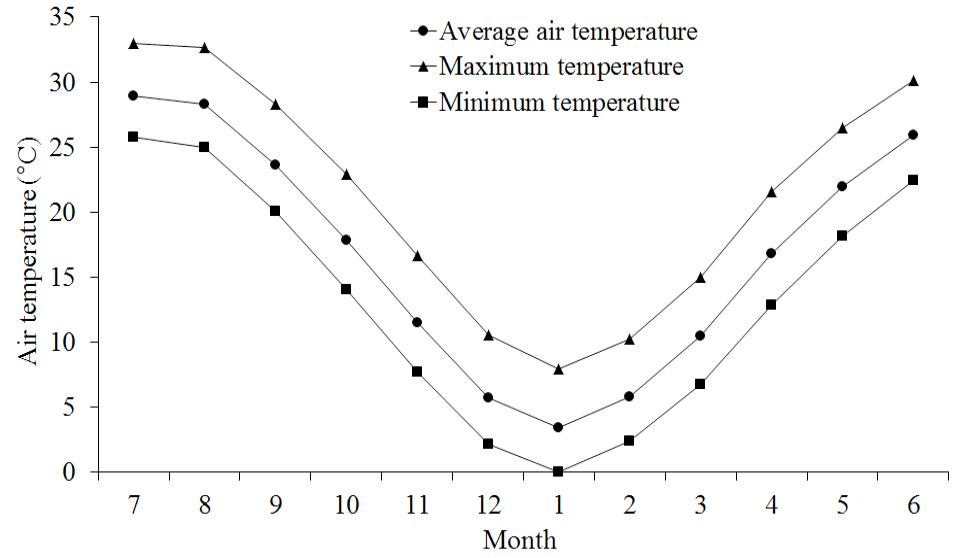
Seasonal changes in air temperature (average, maximum and minimum) during 1951-2011 periods in Wuhan City (Hubei Province, China). Air temperature data provided by Climate Data Centre, China Meteorological Administration.
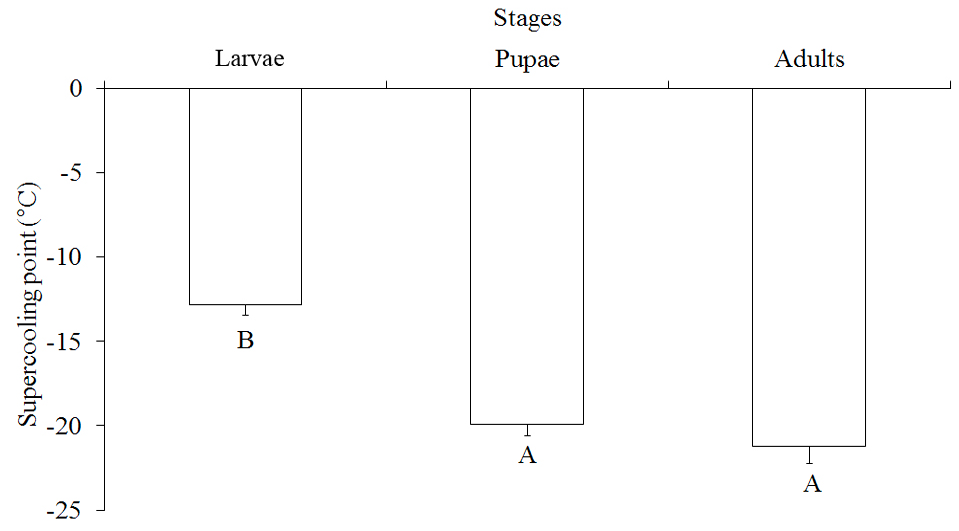
Supercooling points of larvae, pupae, and adults of Brachmia macroscopa in January.
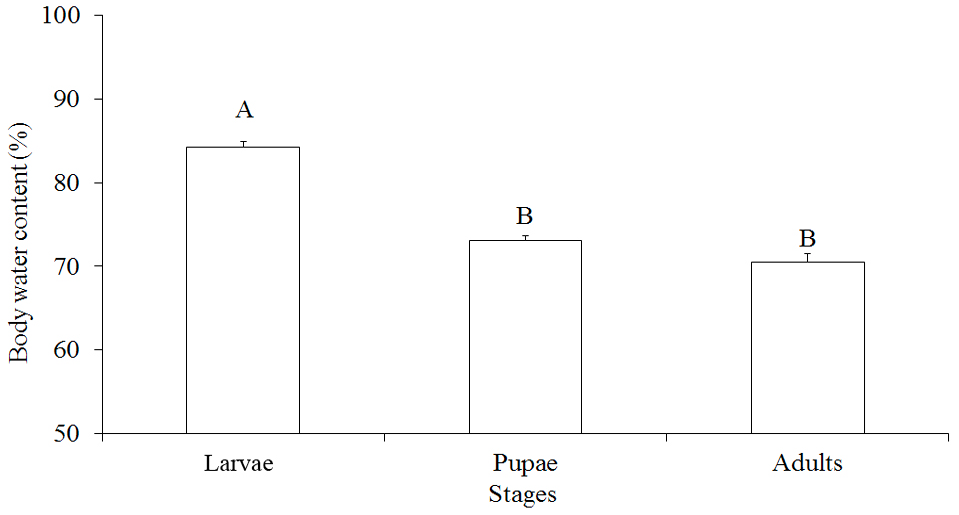
Body water contents of larvae, pupae, and adults of Brachmia macroscopa in January.
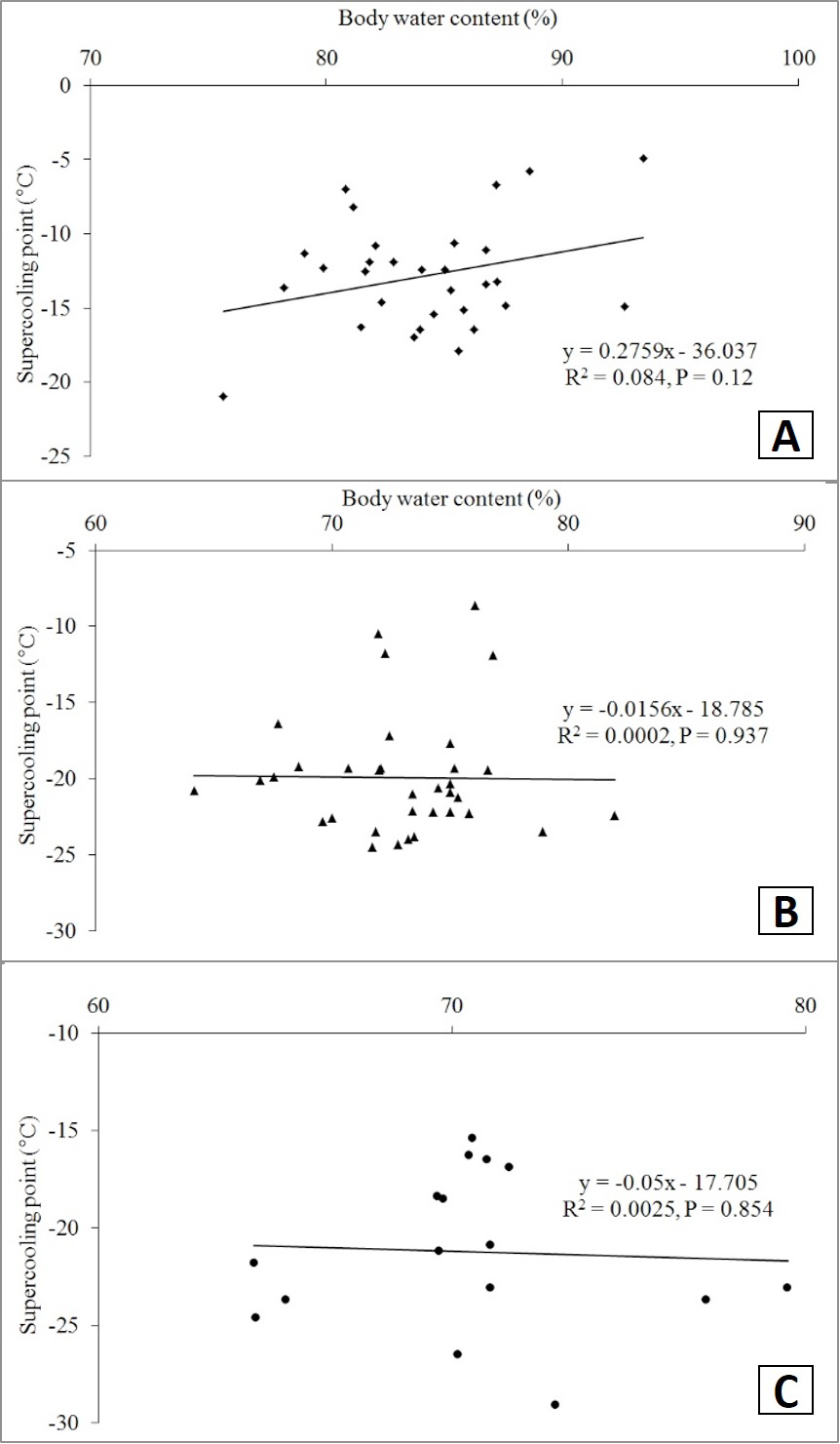
Regression analysis between supercooling points and body water contents of larvae (A), pupae (B) and adults (C) in Brachmia macroscopa.
Supplementary material
Services
Article usage statistics
Loading…