
Medicinal plants have played a vital role in drug production. Herbal medicines have proved to be safe to use. Crude extract of Caralluma tuberculata stem was used to examine its antibacterial activity and phytochemical screening. Antibacterial assay was carried out by well diffusion method. A maximum number of compounds were eluted by methanolic extract by thin-layer chromatography and a total of 70 compounds were identified by GC-MS analysis. The phytochemical screening showed that the methanolic extract of the whole plant was rich in alkaloids and tannins. Zones of inhibition around the bacterial colonies show the antibacterial activity of the plant. Extract of the targeted plant was effective against all test organisms Escherichia coli, Bacillus, Staphylococcus, and Pseudomonas that revealed methanolic extract of medicinal plant Caralluma possesses high antimicrobial activity against E. coli. and Bacillus causing 16mm±0.53 and 12.6±0.43 while ethyl acetate solvent of plant extract against E. coli. and Bacillus inhibited 08±0.0.03 and 9.6±0.32mm respectively. Ethyl acetate extract showed the best inhibition against Pseudomonas and Staphylococcus 15.6±0.54 and 9.8±0.41mm respectively and the same extract exhibited the zone inhibition 0.68±0.14 and 0.53±0.51mm against B. subtilis and P. aeruginous. The inhibitory effect was compared to standard gentamycin. Four bioactive compounds were subjected to molecular docking from which all targeted compounds received scores ranging from (−3.5 to −5.9) kcal/mol with targeted protein. Hence the study revealed that bioactive compounds derived from the Caralluma tuberculata plant pose highly antibacterial activity and might be used to synthesize the antibacterial drug.
Research Article · Volume 39, Issue 4, 12 December 2023 · Open Access
Screening of Phytochemical Compounds and Antimicrobial Activity of Caralluma tuberculate by In-Silico Study
· · ·
Affiliations & Notes ⌄
- 1Department of Plant Genomics and Biotechnology (NIGAB), National Agriculture Research Centre (NARC), Islamabad 44000, Pakistan
- 2Institute of Biotechnology Genetic Engineering, The University of Agriculture, Peshawar, 25130, Khyber Pakhtunkhwa, Pakistan. *Correspondence | Ghulam Muhammad Ali, Department of Plant Genomics and Biotechnology (NIGAB), National Agriculture Research Centre (NARC), Islamabad 44000, Pakistan
- 3Email: drgmali5@gmail.com
Article Info ⌄
- Journal:
- Sarhad Journal of Agriculture
- Published:
- 12 December 2023
Abstract
Introduction
Caralluma tuberculata is a perennial succulent herb, wild-growing in Pakistan, India (Andra Pradesh), the United Arab Emirates, Saudia Arabia, Iran, and Nigeria ; . The plant is widely distributed in Waziristan, Punjab, K.P., Dir, and Baluchistan . Caralluma tuberculate locally known as Chung, marmot, pamanghi, aputag, and pamanky in Pashto ; ; . The genus Caralluma has a hundred species that are found in dry regions of the world. The genus belongs to the subfamily Asclepiadoideae and the family Apocynaceae .
C. tuberculata is an upright, succulent herb without leaves. Fresh juice of C. tuberculata is used for the treatment of diabetes due to having some hypoglycemic activities.
Caralluma species have been used in folk medicine for hundreds of years in the treatment of various ailments. Its traditional application is reported in curing of simple disorders such as cuts, colds, coughs, and some complicated diseases including malaria, diabetes, kidney stones blood disorders, leprosy, diabetes, and rheumatism. It is also used for blood disorders, rheumatism, and leprosy ; . Both the urban and rural populations of Pakistan have employed the plant as a traditional anti-bacterial, antifungal, and anti-diabetic therapeutic agent ; . Microorganisms have developed resistance to many antibiotics. Resistant bacteria are responsible for infections that are more difficult to treat, requiring the use of drugs that are more toxic and more expensive. In some cases, bacteria have become resistant to all known antibiotics, so there is a need to develop alternative antibiotic drugs from plants (Serwecinsk, 2020). One method is to identify plants that possess high antimicrobial activity. Current studies are based on the identification of antimicrobial activity and screening of medicinal bio-active compounds by using qualitative techniques and drug designing.
Materials and Methods
Collection of samples
The plants were collected from a glass house at the National Institute for Genomics and Advance Biotechnology, National Agriculture Research Center, Islamabad.
Sample preparation
To get rid of undesired foreign objects like soil and dust, fresh Caralluma tuberculata stems were washed with distilled water and then bleached with Clorox. Following washing, the plant material was air dried at room temperature in the shade, and shielded from the sun. It was then, finely pulverized into powder by using liquid nitrogen in piston and mortar. For extraction in a sonicator, set the frequency to 35 kHz, 4 g of dried stem powder was combined with 40 mL of methanol in a solvent to sample ratio of 1: 10 at 45°C and for 60 minutes, respectively. Extracts were micro-filtered through 0.45 m cellulose membrane filters, centrifuged, and solvent evaporated by vacuum evaporator .
Chromatographic instrument and conditions
The screening of phytochemical compounds of Caralluma tuberculata was done by using TLC and GC-MS.
Thin layer chromatography (TLC)
Based on molecular weight and mobility, bioactive substances can be identified using a technique called TLC. Different solvents, methanol, ethanol, ethyl acetate, and chloroform were used to elute a maximum number of active compounds from the crude extract of the plant. The targeted sample was loaded on a silica plate. After loading the sample, the plate was dried and put into the TLC tanks having different solvents (methanol, ethanol, ethyl acetate, and chloroform) in each tank and the baseline sample did not directly touch the tank surface. The spots and colored bands were visualized under the short and long UV (254 and 365 nm respectively). Sprayed the dragendorffs and sulphuric acid reagent to evaluate the alkaloids and terpenoids compounds .
Gas chromatography and mass spectrum analysis
The column used for the GC program was DB-5 (0.32mm x 30m x 0.25µm) length of 30m. The equipment was Agilent 6890 6ºC, version N. 04.12, MS-5973. The carrier gas used in the GC-MS program was helium ml/min, and the software was chemstation. The oven’s temperature was increased from 200 °C to 700 °C at a pace of 6 °C per minute without holding. The temperature of the injector was 250 °C. The GC ran for 37 minutes in total. The MS’s library was NIST version-year 2011. The MS program’s source temperature was 280°C, and the inletline temperature was 230°C. The MS ran for 37 minutes in total (Aunsha and Sathish, 2021). The components of the test materials’ names, molecular weights, and structures were determined .
Antibacterial screensing
Different microbial strains E. coli, Bacillus, Pseudomonas, and Staphylococcus were used to evaluate the antimicrobial effect of plant extract. The strains were ATTC strains obtained from the Food Sciences Research Institute (FSRI) NARC, Pakistan ; . The disc diffusion method was carried out for antibacterial susceptibility testing according to the standard method (Paskialakshmi and Naziya, 2014).
Molecular docking
The Auto Dock Vina software has been used in the molecular docking study . Four bioactive compounds 3,4-di-fluroanisole, d-fructose, acetyldimethy l, and 2-propionic acid of Caralluma plant were used as ligands to increase the expression of calprotectin anti-microbial protein in plants that inhibit the growth of pathogens by tightly binding transition metals e.g., Mg, Zn thereby preventing their uptake and utilization by invading microbes. The targeted ligands were docked against the active site of the calprotectin protein in plants (Falodu et al., 2009). The co-crystallized ligand (Parathion) of the enzyme was used to identify the binding location. The grid boxes had the following coordinates (x = −9.682; y = 4.274; z = −23.145 and x = 45.424; y = 92.375; z = 34.811). The grid’s box dimensions were set to 20 Å. Each docking experiment generated ten poses. Pymol software was used to analyze and display docking poses .
Results and Discussion
Thin layer chromatography
Bioactive compounds present in plants were detected by thin-layer chromatography scanning procedure. Elution and separation of bioactive compounds from crude extract vary with different solvents based on the nature of the solvent. Precise separation of compounds was done in a methanolic solvent. The spots and bands were visualized under short and long UV (254 and 365) respectively shown in Figure 1. Dragendorff reagent was used to detect alkaloids and 15% sulphuric acid was used to detect terpenoids. A red color band was shown on the top far away from the baseline that indicated the highest retention factor as compared to the terpenoid compound.
According to recent results, the Caralluma plant possesses many phytochemical compounds with highly medicinal properties. TLC results depicted that tannins and alkaloids bioactive compounds have highly anti-parasitic, anti-inflammatory, antifungal, antidiabetic, anticancer, and antibacterial activity . TLC showed that as compared to the other solvents, methanol eluted many spots that were determined after spraying of Dragendorff and 15% sulphuric acid under the wavelength of (254 and 365 nm) the little bit results were similar to a previous study . Plant extract contains many phytochemical compounds that possess highly medicinal properties.
Phyto-components by GC-MS report
Phytochemicals present in methanolic extracts of Caralluma tuberculata are tabulated and represented by a graphical method. 70 compounds were identified in the targeted plant by GC-MS analysis which are shown in Figure 2. The Prevailing compound was, 3, 4-di-fluroanisole, D-fructose, Acetyldimethyl, and 2-propionic acid identified by the GC-MS analysis.
The compounds identified in methanolic solvents by GC-MS analysis are medicinally valuable ; because Methanol was the best solvent for the extraction among the tested solvents .
Antibacterial analysis
In the current study, the antibacterial results revealed that the methanolic extract of the medicinal plant Caralluma possesses high antimicrobial activity against E. coli. and Bacillus causing 16mm±0.53 and 12.6±0.43 while ethyl acetate solvent of plant extract against E. coli. and Bacillus inhibited 08±0.0.03 and 9.6±0.32, respectively. Ethyl acetate extract showed the best inhibition against Pseudomonas and Staphylococcus at 15.6±0.54 and 9.8±0.41 respectively and the same extract exhibited the zone inhibition 0.68±0.14 and 0.53±0.51 against B. subtilis and P. aerugonosa represented in Table 1. In the current study, the antibacterial activity was indicated due to the presence of secondary metabolites phenolic, saponins, alkaloids, and tannins . These compounds have the potential to restrain the growth of many pathogenic bacteria. Our results are also to those of . The high antibacterial activity of the Caralluma plant depicts that some natural compounds present in plants may lead to isolating the antibiotics.
Table 1: Antibacterial activity of methanolic and ethylacetate crude extract of Caralluma tuberculata.
| Bacterial strain | Methanolic extract | Ethanolic extract |
| E. coli | 16mm±0.53 | 08±0.0.03 |
| B. subtilis | 12.6±0.43 | 9.6±0.32 |
| P. aerugonosa | 0.68±0.14 | 15.6±0.54 |
| S. aureus | 0.53±0.51 | 9.8±0.41 |
In the present study, the methanolic extract obtained from Caralluma tuberculate extract exhibited strong antimicrobial activities against (E. coli and Bacillus) while ethyl acetate extract showed strong antimicrobial activity against (Pseudomonas, Staphylococcus, B. subtilis, and P. aeruginous) (Al-Snafi, 2017; ).
Molecular docking
The four bioactive compounds were subjected to molecular docking to enhance the expression of the antimicrobial protein calprotectin as shown in (Table 2 and Figure 3). All targeted compounds received scores ranging from (−3.5 to −5.9) kcal/mol with targeted protein. The ligand 1st received scores -5.9 kcal/mol, the ligand 2nd received -5.9 kcal/mol, the 3rd ligand secured -3.8 kcal/mol, and the 4th received -3.5 kcal/mol respectively. The compounds that achieved the best score (−5.9 kcal/mol) with calprotectin protein while the standard compound Parathion received a score of -5.6 which is slightly lower than the targeted ligand and hence −5.9 kcal/mol was selected as the best compound to enhance the expression of protectin antimicrobial protein in Caralluma plant.
Table 2: Docking sores and estimated absolute binding free energies (in kcal/mol) of the targeted ligands and protein, along with standard Parathion.
| Ligand name | Protein name | Docking scores |
| 3,4-Di-fluroanisole | Calprotectin | -5.9 |
| D-fructose | Calprotectin | -5.9 |
| Acetyldimethyl | Calprotectin | -3.5 |
| 2-propeonoic acid | Calprotectin | -3.8 |
| Parathion | Calprotectin | -5.6 |
Image of docking analysis
The present study was conducted to isolate and design the antimicrobial drug by In-silico study. The identified phyto-components need further research on toxicological parameters to develop safe drugs.
Conclusions and Recommendations
The present study highlights the screening of bioactive compounds by chromatographic techniques and detects the antimicrobial activities of targeted phytochemicals by In-silico study. However, the identified phyto-components studies need further research on toxicological parameters to synthesize safe drugs.
Acknowledgments
Department of National Institute for Genomics and Advanced Biotechnology (NIGAB), National Agriculture Research Center (NARC) Islamabad, Department of Food Sciences Research Institute (FSRI), National Agriculture Research Center (NARC) Islamabad, Institute of Biotechnology and Genetic Engineering (IBGE) and Higher Education Commission (HEC) Pakistan.
Novelty of Statement
According to this research findings Caralluma tuberculata possesses a novel antibacterial compound that can increase the efficiency of calprotectin antibacterial protein which can be used to synthesize novel antibacterial drugs.
Author’s Contribution
Khansa Jamil: Principal author, conducted research, analysis and wrote draft of the manuscript.
Muhammad Ramzan Khan: Helped and guidance in the research.
Asad Jan: Provided in technical assistance
Ghulam Muhammad Ali: Supervised the research and helped in proofreading.
Conflict of interest
The authors stated that there were no conflicts of interest present throughout the conduct of the current study. It is a part of my Ph.D. thesis and is submitted to the HEC repository directory.
Figures
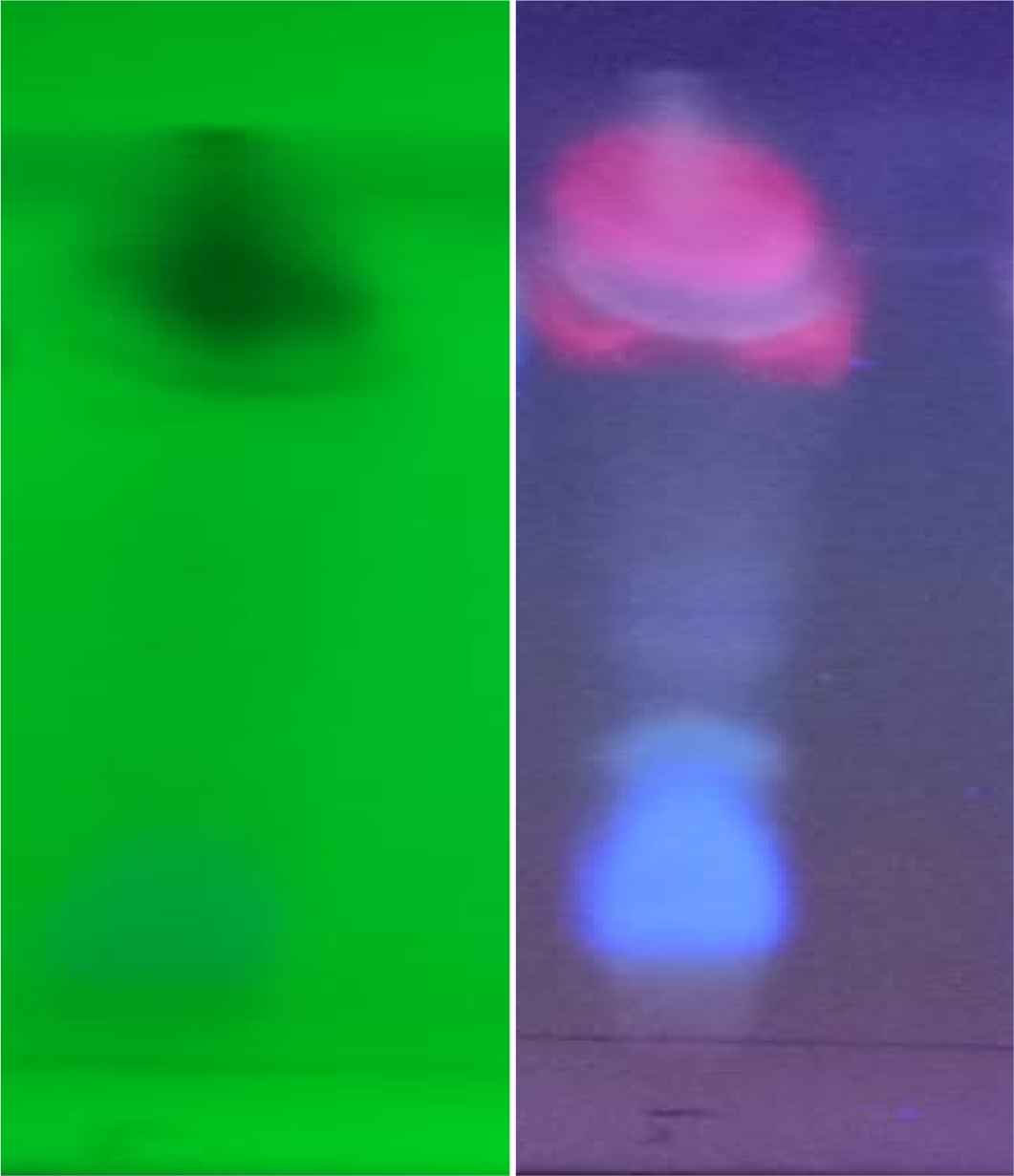
TLC of Caralluma plant (A) short wavelength (254 nm), (B) long wavelength (365 nm).
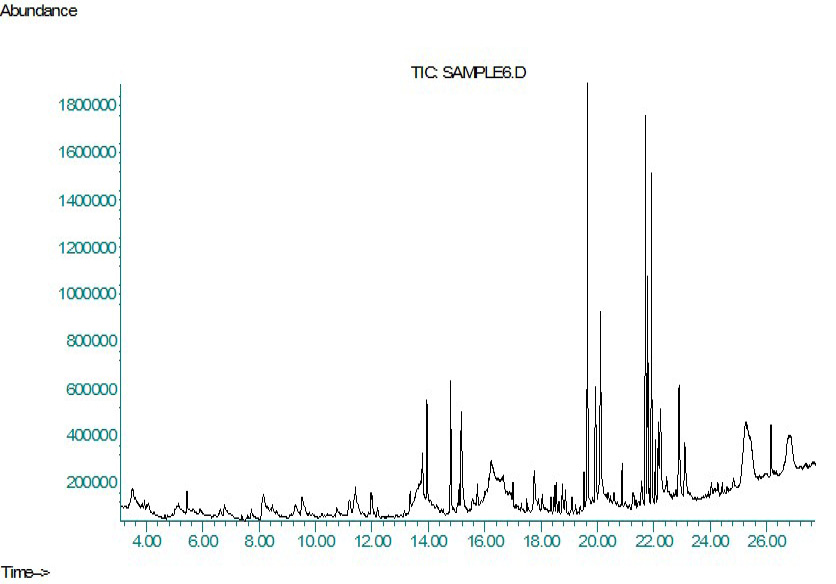
GC-MS Chromatogram of Caralluma tuberculata. aerugonosa) (Al-Snafi, 2017; Bibi et al., 2015).
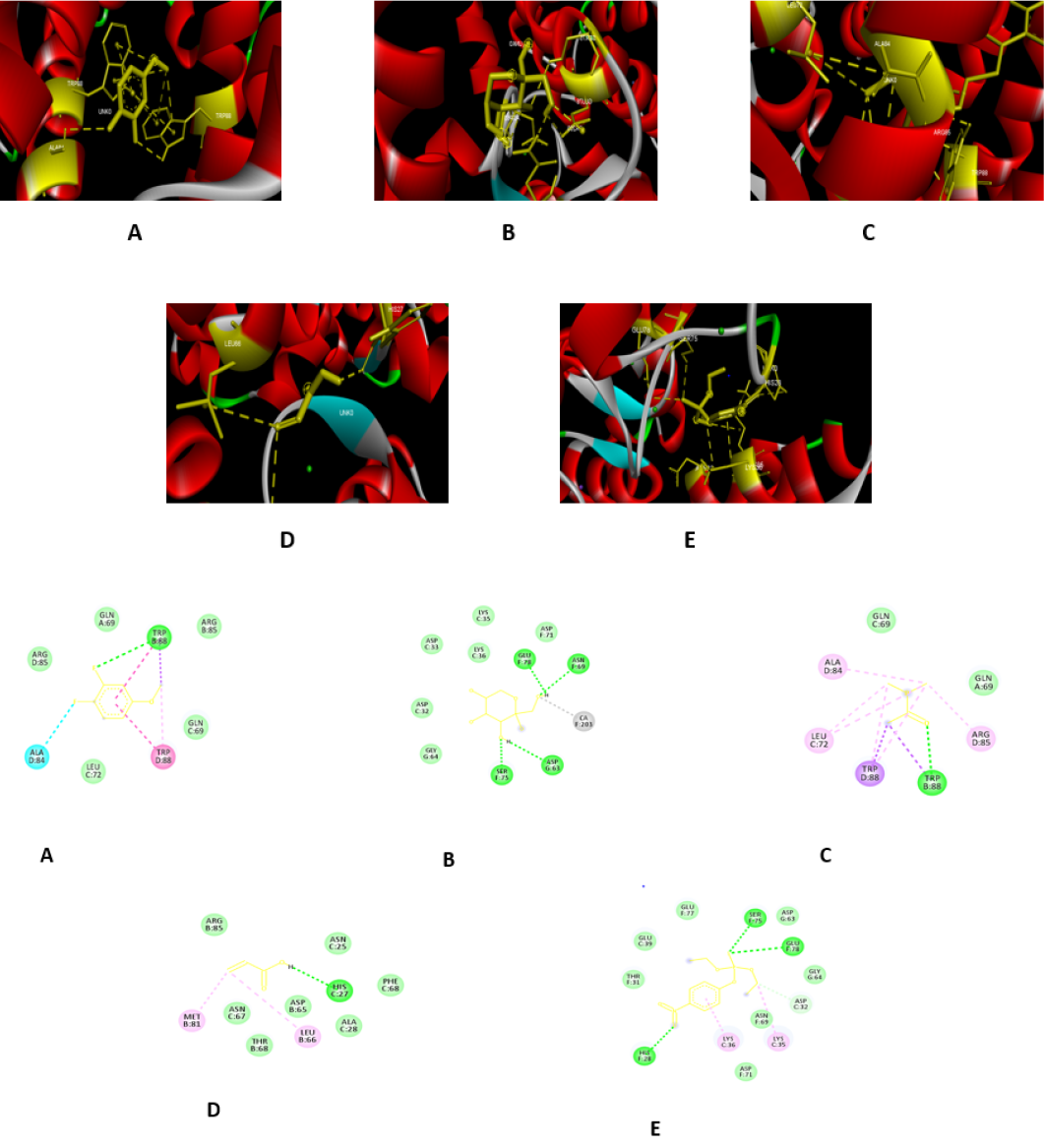
Docking confirmation for selected ligand compound and targeted proteins (3D and 2D) structures, respectively.
References
- Abdel, S.E., F.M. Harraz, S.A. Ghareib, A.A. Elberry, S. Gabr and M.I. Suliaman. 2011. Antihyperglycaemic and hypolipidaemic effects of the methanolic extract of Caralluma tuberculata in streptozotocin-induced diabetic rats. Nat. Prod. 25: 1171–1179. https://doi.org/10.1080/14786419.2010.490782[CrossRef]
- Abdel-Sattar, E.A., H.M. Abdallah, A. Khedr, A.B. Abdel-Naim and I.A. Shehata. 2013. Antihyperglycemic activity of Caralluma tuberculata in streptozotocin-induced diabetic rats. Food Chem. Toxicol., 59: 111–117. https://doi.org/10.1016/j.fct.2013.05.060[CrossRef]
- Abdel-Sattar, E., M.R. Meselhy and M.A. Al-Yahya. 2002. New oxypregnane glycosides from Caralluma penicillata. Planta Med., 68(5): 430-434. https://doi.org/10.1055/s-2002-32078[CrossRef]
- Adnan, M., S. Jan, S. Mussarat, A. Tariq, S. Begum, A. Afroz and Z.K. Shinwari. 2014. A review on ethnobotany, phytochemistry and pharmacology of plant genus Caralluma R. Br. J. Pharm. Pharmacol., 66: 1351–1368. https://doi.org/10.1111/jphp.12265[CrossRef]
- Ahmad, B.A., I.R. Abbas, S.J. Hussain, F. Bashir and D. Ahmad. 2014. Study on Caralluma tuberculata nutritional composition and its importance as medicinal plant. Pak. J. Bot., 46(5): 1677-1684.
- Ahmad, V.U. and A. Basha. 2007. Spectroscopic data of steroid glycosides. Springer Sci. Bus. Media, 5: 142-189. https://doi.org/10.1007/978-0-387-39576-0[CrossRef]
- Albalawi, M.A., N.A. Bashir and A. Tawfik. 2015. Anticancer and antifolate activities of extracts of six Saudi Arabian wild plants used in folk medicine. J. Life Sci., 9: 34-40.
- Al-Snafi, A.E., 2017. The pharmacology of Equisetum arvense. A review. IOSR J. Pharma., 7(2): 31-42.
- Al-Yahya, M., E. Abdel-Sattar and E. Guittet. 2000. Pregnane glycosides from Caralluma russeliana. J. Natl. Prod., 27, 63(10): 14-51. https://doi.org/10.1021/np990530c[CrossRef]
- Anusha, S. and S. Sathish. 2021. UV, FT-IR, and GC-MS analysis of Caralluma fimbriata. J. Pharmacog. Phytochemist., 10(5): 288-291.
- Baig, M.W., Ahmed, M., Akhtar, N., Okla, M.K., Nasir, B., Haq, I.U., Al-Ghamdi, J., Al-Qahtani, W.H. and AbdElgawad, H., 2021. Caralluma tuberculata NE Br manifests extraction medium reliant disparity in phytochemical and pharmacological analysis. Molecules, 26(24): 7530. https://doi.org/10.3390/molecules26247530[CrossRef]
- Bibi, Y., S. Tabassum, K. Zahara, T. Bashir, S. Haider. 2015. Ethnomedicinal and pharmacological properties of Caralluma tuberculata NE Brown. A review. Pure Appl. Biol., 4: 503. https://doi.org/10.19045/bspab.2015.44008[CrossRef]
- Bodoprost, J. and H. Rosemeyer. 2007. Analysis of phenacylester derivatives of fatty acids from human skin surface by reversed-phase HPTLC: Chromatography mobility as a function of physicochemical properties. Int. J. Mol. Sci., 8: 1111-1124. https://doi.org/10.3390/i8111111[CrossRef]
- Bourhia, M., M. Slighoua, S. Ibnemoussa, A. Bari, R. Ullah, A. Amaghnouje and D. Bousta. 2020. Phytochemical study on antioxidant and antiproliferative activities of Moroccan Caralluma europaea extract and its bioactive compound classes. Evid. Based Complement. Altern. Med., 2: 12-34. https://doi.org/10.1155/2020/8409718[CrossRef]
- Bruyns, P.V., A. Farsi and T. Hedderson. 2010. Phylogenetic relationships of Caralluma R. Br. (Apocynaceae). Taxon, 59(4): 1031-1043. https://doi.org/10.1002/tax.594004[CrossRef]
- De-Fatima, A., L.V. Modolo, L.S. Conegero, R.A. Pilli, C.V. Ferreira and L.K. Kohn. 2006. Lactones and their derivatives: Biological activities, mechanisms of action and potential leads for drug design. Curr. Med. Chem., 13: 3371-3384. https://doi.org/10.2174/092986706779010298[CrossRef]
- Falodun, A., R. Siraj and M.I. Choudary. 2009. GC- MS analysis of insecticidal stem essential oil of Pyrenacantha staudtii Hutch and Dalz (Icacinaceae). Trop. J. Pharm. Res., 8: 139-143. https://doi.org/10.4314/tjpr.v8i2.44522[CrossRef]
- Fayyaz, M., U. Sarwar, F. Nurjis, J.S. Ali, S. Tabassum and A. Raza. 2023. In vitro anti-cancer effect of polymeric nanoparticles encapsulating Caralluma tuberculata in cancer cells. Int. J. Adv. Nano Comput. Anal., 2(1): 22-38.
- Fernie, A.R., R.N. Trethewey, A.J. Krotzky and K. Willmitzer. 2004. Metabolite profiling: From diagnostics to systems biology. Nat. Rev. Mol. Cell Biol., 5: 763-769. https://doi.org/10.1038/nrm1451[CrossRef]
- Haider, S.I., A. Asif, H.M.F. Rasheed, A. Akram and Q. Jabeen. 2022. Caralluma tuberculata exhibits analgesic and anti-arthritic potential by downregulating pro-inflammatory cytokines and attenuating oxidative stress. Inflammopharmacology, 30: 621–638. https://doi.org/10.1007/s10787-022-00949-5[CrossRef]
- Hamburger, M. and K. Hostettmann. 1991. Bioactivity in plants: the link between phytochemistry and medicine. Phytochemistry, 30: 3864-3874. https://doi.org/10.1016/0031-9422(91)83425-K[CrossRef]
- Harborne, J.B., 1986. Plant flavonoids in biology and medicine: Biochemical pharmacological, and structure–activity relationships. pp. 15-24.
- Hussain, W., M. Ullah, G. Dastagir and L. Badshah. 2018. Quantitative ethnobotanical appraisal of medicinal plants used by inhabitants of lower Kurram, Kurram agency, Pakistan. Avicenna J. Phytomed. 8: 313.
- Iftikhar, N., A. Saleem, M.F. Akhtar, G. Abbas, S. Shah, S. Bibi, G.M. Ashraf, B.S. Alghamdi and T.S. Abujamel. 2022. In vitro and in vivo anti-arthritic potential of Caralluma tuberculata NE brown and its chemical characterization. Molecules, 27(19): 6323. https://doi.org/10.3390/molecules27196323[CrossRef]
- Ishaq, H., K. Rajendran and K. Nisar. 2023. A comprehensive review of medicinal uses and phytochemicals isolated from Caralluma tuberculata. Rheumatism, 176(96): 98. https://doi.org/10.25081/ia.2023-06[CrossRef]
- Javed, H., S. Tabassum, S. Erum, I. Murtaza, A. Muhammad, F. Amin and M.F. Nisar. 2018. Screening and characterization of selected drugs having antibacterial potential. Pak J. Pharmaceutical Sci., 31(3). http://142.54.178.187:9060/xmlui/handle/123456789/16359
- Khan, M.A., K.H. Maqsood and O.S. Uslu. 2008. Caralluma tuberculata-An important medicinal plant to beconserved. Pak. J. Bot. 41(2): 1271-1582.
- Khan, M.A., K. Maqsood and O.S. Uslu. 2019. Caralluma tuberculate- An important medicinal plant to be conserved. Biol. Divers. Conserv. 12: 189–196. https://doi.org/10.5505/biodicon.2019.33043[CrossRef]
- Makeen, H.A., S.J. Menachery, S.S. Moni, S.S. Alqahtani, Z. ur Rehman, M.S. Alam, S. Mohan and M. Albratty. 2020. Documentation of bioactive principles of the exudate gel (EG) from the stem of Carallumaretrospiciens (Ehrenb) and in vitro antibacterial activity–Part A. Arabian J. Chem., 13(8): 6672-6681.
- Mathekaga, A.D. and J.J.M. Meyer. 1998. Antibacterial activity of South African Helichrysum species. South Afr. J. Bot., 64: 293-295. https://doi.org/10.1016/S0254-6299(15)30903-0[CrossRef]
- Noreen, S. 2017. A mini review on a Caralluma tuberculata NE Br. uncommon and wild succulents but having exciting pharmacological attributes. Pure Appl. Biol., 6(2): 748-761. https://doi.org/10.19045/bspab.2017.60080[CrossRef]
- Packialakshmi, N. and S. Naziya. 2014. Screening of antibacterial and phytochemical analysis of Caralluma fimbriata. Pharma Innovat., 3(6, Part B): 65.
- Rauf, A., M. Jan, W. Rehman, and Muhammad, N. 2013. Phytochemical, phytotoxic and antioxidant profile of Carallumatuberculata NE Brown. Wudpecker J. Pharm. Pharmacol., 2(2): 21-25.
- Rehman, R., M. Chaudhary, K. Khawar, G. Mannan and M. Zia. 2014. In vitro propagation of Caralluma tuberculata and evaluation of antioxidant potential. Biologia, 69(3): 341-349. https://doi.org/10.2478/s11756-013-0322-z[CrossRef]
- Roberts, J.K.M. and J.H. Xia. 1995. High-resolution NMR methods for study of higher plants Methods. Cell Biol., 49: 245-258. https://doi.org/10.1016/S0091-679X(08)61458-2[CrossRef]
- Ronald, H.A., 1997. Gas chromatography mass spectroscopy: Handbook of instrumental techniques for analytical chemistry. pp. 609-611.
- Rahman, S., M. Zahid, A.A. Khan, T. Aziz, Z. Iqbal, W. Ali, F.F. Khan, S. Jamil, M. Shahzad, M. Alharbi and A. Alshammari. 2022. Hepatoprotective effects of walnut oil and Caralluma tuberculata against paracetamol in experimentally induced liver toxicity in mice. Acta Biochim. Polonica, 69(4): 871-878.
- Salih, A.M., F. Al-Qurainy, M. Nadeem, M. Tarroum, S. Khan, H.O. Shaikhaldein, A. Al-Hashimi, A. Alfagham and J. Alkahtani. 2021. Optimization method for phenolic compounds extraction from medicinal plant (Juniperus procera) and phytochemicals screening. Molecules, 26(24):7454.
- Serwecińska, L., 2020. Antimicrobials and antibiotic-resistant bacteria: A risk to the environment and to public health. Water, 12(12): 3313.
- Vanitha, A., K. Kalimuthu, V. Chinnadurai and K.J. Nisha. 2019. Phytochemical screening, FTIR and GC-MS analysis of aqueous extract of Caralluma bicolor–An endangered plant. Asian J. Pharm. Pharmacol., 5(6):1122-1130.
- Waheed, A., J. Barker, S.J. Barton, G.M. Khan, Q. Najm-us-Saqib, M. Hussain, S. Ahmed, C. Owen and M.A. Carew. 2011. Novel acylated steroidal glycosides from Caralluma tuberculata induce caspase-dependent apoptosis in cancer cells. J. Ethnopharmacol., 137: 1189–1196. https://doi.org/10.1016/j.jep.2011.07.049[CrossRef]
- Zarei, Z., D. Razmjoue and J. Karimi. 2020. Green synthesis of silver nanoparticles from Caralluma tuberculata extract and its antibacterial activity. J. Inorgan. Organ. Polymers Mater., 30: 4606-4614. https://doi.org/10.1007/s10904-020-01586-7[CrossRef]
Services
Article usage statistics
Loading…