
Synthetic insecticides have been a prime and indispensable tool of plant protection all over the world. Farmers relay exclusively on extensive and indiscriminate use of various synthetic insecticidal formulations for safeguarding their crops from insect pest infestations. Such widespread use of persistent and toxic synthetic insecticides results into different ecological consequences such as environmental pollution, health hazards and pest resistance to pesticides. Although it seems not feasible to halt or avoid their usage in agricultural production systems, one of the major tactics to mitigate the pesticidal harmful effects of synthetic insecticides, particularly the resistance development in insect pests, is rotating their applications with unlike modes of action or target sites. This document presents a comprehensive review of the modes of action and target sites of different contemporary insecticidal groups and their examples with an objective to concisely gather the information relevant to the modes of action of various available synthetic insecticidal groups. This review document will facilitate farmers and plant protection advisors to have wise selection from the available synthetical insecticides exhibiting differential modes of action and targeting sites, thereby would help farmers to mitigate or delay the insecticidal resistance development and enhancing the efficiency of chemical control of insect pests.
Review · Volume 58, Issue 2, 25 February 2026 · Open Access
Rotational Use of Insecticides: Elucidating Modes of Action of Contemporary Synthetic Insecticides
· · · · · ·
Affiliations & Notes ⌄
- 1Department of Entomology, College of Agriculture, University of Sargodha, 40100 Sargodha, Pakistan 2Department of Agricultural Extension and Rural Studies, College of Agriculture, University of Sargodha, 40100 Sargodha, Pakistan 3College of Resources and Environmental Sciences, Hebei Minzu Normal University, Chengde 067000, China 4Centre for Agriculture and Biosciences International (CABI), Rawalpindi 46000, Punjab, Pakistan * Corresponding author: zeeshan.majeed@uos.edu.pk
Article Info ⌄
- Journal:
- Pakistan Journal of Zoology
- Published:
- 25 February 2026

From the article
- Synthetic insecticides are inevitable and crucial part of plant protection sector throughout the world.
- Farmers rely exclusively on the application of a wide range of synthetic insecticides combating insect pests’ infestations on their crops.
- Redundant and extensive use of synthetic insecticides with akin mode of action or attacking the same target site within the body of target insect pests is one of the major causes of pesticide resistance development among insect pests.
- Rotation and shuffling of pesticides with distinct modes of action is the most valuable tool to mitigate insecticides resistance development.
Selected from the article's own text.
Abstract
Introduction
Use of synthetic insecticides has a long history. Since ages, people have been using different compounds or elements against different insect pests. The pest control revolution began in the 1970s with the discovery of insecticides based on metal precursors, including arsenic, mercury, lead and copper. However, the application of pesticides as synthetic substances began in the middle of the 20th century . Dichlorodiphenyl-trichloroethane (DDT) was the first synthetic organic insecticide discovered in 1939 by a Swiss chemist Paul Muller ; . Due to its remarkable efficacy against all insect species, even at low concentrations, this discovery acquired broad acceptance. However, as DDT remains in soils for months or even for years or decades without reducing its toxicity, its effects on the environment and human health were more noticeable as usage increased ; ; . As a result, DDT was outlawed for use in households and agriculture, which prompted the development of additional synthetic pesticides such as carbamates, organophosphates and pyrethroids .
Prevailing synthetic insecticides, as illustrated in Figure 1, can be categorized into various groups based on their chemical nature and modes of action such as conventional synthetic insecticides including organochlorines, organophosphates, carbamates, pyrethroids, neonicotinoids and novel or non-conventional synthetic insecticides including nereistoxins, sulfoxamines, avermectins, spinosyns, diamides, oxadizines, thioureas, ketoenoles, pyrroles, phenylpyrazoles, insect growth regulators including juvenile mimics, ecdysone agonists and chitin synthesis inhibitors ; ; . Contemporary issues being manifested by the extensive use of the synthetic insecticides include human health hazards, environmental contaminations and pest resistance to pesticides. One of the ways forward for farmers and agricultural stakeholders to mitigate these ecological consequences of synthetic insecticides is to use them as rationally and appropriately as possible. Along with the use of insecticidal mixtures and mosaics, rotational use of these synthetic insecticides with differential modes of action have been one of the prime and valuable strategies to manage insecticide-resistance .
MODES OF ACTION OF SYNTHETIC INSECTICIDAL GROUPS
Organophosphates
Organophosphate pesticides are esters derived from phosphoric acid ; . In organophosphates, two oxygen atoms and a phosphorus atom typically bond together to produce a carbonyl group. The ability of organophosphates to inhibit acetylcholinesterase (AChE) activity depends on this carbon-oxygen double bond. Organophosphate pesticides include parathion, malathion, and chlorpyrifos ; Araujo et al., 2023). Chlorpyrifos is extensively employed globally as an organophosphate insecticide in various sectors, including public health, agriculture, and residential applications, owing to its efficacy against a diverse array of pests (Wolejko et al., 2022; . Moreover, chlorpyrifos has the potential to bioaccumulate in the food chain and biomagnify in non-target organisms, posing a risk to human health as well . Triazophos is another phosphorothioate with excellent insecticidal, acaricidal and nematicidal properties. It is being applied against a wide range of insect pests including fruit flies, mealybugs, lepidopterous pests, defoliating beetles, nematodes and rhizophagous insect pests of agricultural and horticultural crops . One of the effective and widely used organophosphate insecticide is profenophos being widely used against lepidopteran pests, thrips and mealybugs on fruits and vegetables and on many agricultural crops including cotton ; . Organophosphates are basically neurotoxics because these insecticides inhibit AchE, an enzyme that hydrolyzes acetylcholine which basically is a neurotransmitter at neuromuscular junctions and at synaptic clefts ; . It primarily works by irreversibly binding to AChE and inhibits the hydrolysis of acetylcholine, which can lead to an over-excitation of cholinergic neurotransmission that may be fatal ; .
Carbamates
Carbamate pesticides comprise of various kinds of pesticidal molecules and being applied as fungicides, insecticides and herbicides e.g. carbaryl, carbendazim, aminocarb, carbofuran, mancozeb, thiodicarb etc. ; . The first carbamate marketed as insecticide was carbaryl, a white crystalline solid that remained in use more frequently than all other carbamates combined . Some of the frequently used carbamate pesticides include aminocarb, carbofuran, and carbaryl . In terms of carbamate insecticides, this family includes more than fifty chemicals that are used primarily as insecticides but additionally as fungicides, herbicides, and nematicides (Araujo et al., 2023). Carbamates are described as a group of insecticides that share structural and mechanistic similarities with organophosphate pesticides. Chemically, carbamates are N-methyl carbamates that are derived from amino formic acid . They function by inhibiting the activity of AChE, similar to organophosphate pesticides. A distinguishing feature between carbamates and organophosphates is that the former bind to AChE reversibly, while the other one phosphorylates AChE irreversibly .
Pyrethroids
Pyrethroids are synthetic analogs of the naturally occurring pyrethrins found in the flower Chrysanthemum cinerariaefolium that exhibit a natural insect repellent effect ; . Pyrethroids have been used to replace very toxic and highly resistant organochlorine and organophosphorus pesticides ; . Based on their toxicity and physical properties, pyrethroids are grouped into two types. Class I includes permethrin, phenothrin, allethrin, bifenthrin, tefluthrin, tetramethrin and resmethrin and these contain cyclopropane carboxylic ester as their basic structural unit. While class II pyrethroids include cypermethrin, fenpropathrin, cyfluthrin, fenvalerate, cyhalothrin, deltamethrin, flumethrin,
flucythrinate, fluvalinate and tralomethrin ; . The US Environmental Protection Agency (EPA) has declared several pyrethroid insecticides as potentially carcinogenic to humans ; . Pyrethroids alter the insects normal nerve functioning by changing the kinetics of voltage sensitive sodium channels (VSSCs) at axonic membranes, causing a temporary increase in sodium ion permeability across the nerve membrane and affecting the nerve’s action potential. As a result of these changes, insects experience hyper-excitability leading to a knockdown effect ; .
Neonicotinoids
Neonicotinoids is a well-known synthetic insecticidal group being broadly used to protect agricultural crops against a variety of sucking insect pests as well as in home and garden commodities. These insecticides exhibit a systemic mode of action as these get absorbed and translocate withing all plant parts ; ; . Neonicotinoids successfully control phloem-feeding insect pests including leaf and planthoppers, whiteflies, thrips and aphids, and as well as chewing insect pests including defoliating beetles and lepidopterous beetles. These insecticides are chemically related to nicotine. Imidacloprid was the first neonicotinoid introduced by Hachikusan, Japan in 1993. Currently, there are two N-cyanoamidines (acetamiprid and thiacloprid), four N-nitroguanidines (imidacloprid, thiamethoxam, clothianidin, and dinotefuran) and one nitromethylene (nitenpyram) neonicotinoids present in the market ; . Nicotinic acetylcholine receptor (nAChR) is a receptor polypeptides that respond to the acetylcholine and play a crucial role in nerve signaling . Neonicotinoid insecticides exhibit a highly target specificit against nAChRs of different insect pests and show a relatively low mammalian toxicity . Neonicotinoids act as nAChR agonists and bind themselves to nAChRs at the post-synaptic neuron in the insect nervous system and slower down the nerve transmission at lower concentrations, while their higher concentrations result into nAChR blockage, hinder the nerve transmission resulting into paralysis and death of the exposed insects . Neonicotinoids are water-soluble and can be absorbed by plants and dispersed throughout tissues. These systemic qualities allow them to be applied to seeds before planting, providing crop protection without the need for repeated spraying ; . Nevertheless, neonicotinoids exert negative impact on insect pollinators. Their residues in pollen and nectar can harm honeybee navigation, individual survival, bumblebee colony establishment, and queen bee production (Martinez et al., 2022; .
Nereistoxin
Nereistoxin (NTX), a neurotoxic extracted from annelid worm Lumbriconereis heteropoda, acts as an antagonist of the nicotinic acetylcholine receptor (nAChR) ; . Insects, especially lepidopteran larvae such as those of the rice stem boring insects, are comparatively poisonous to NTX. As a result, some NTX analogs, such as cartap, have been used as insecticides. Padan® has been a famous and effective cartap hydrochloride insecticide which was marketed by FMC company. In insects, the central nervous system is the primary site for expression for the many nAChRs. NTX functions as an antagonist at insect nAChRs and decreases electrical signaling within the insect central nervous system ; . Being a systemic insecticidal molecule, cartap is effectively used against sugarcane, rice and maize borers . Because of their excellent efficacy for controlling pests, neurotoxic insecticides were frequently used as foliar sprays throughout fruit trees, different phases of development, including the flowering period .
Sulfoxamines
The relatively new insecticidal chemical sulfoxaflor targets pest insects that feed on sap . Because of its unique chemistry, sulfoxaflor differs significantly from other insecticides in terms of how it interacts with its target site and how susceptible it is to metabolic enzymes linked to pesticide resistance ; . Sulfoxalfor acts on insect nAChRs . IRAC has categorized sulfoxaflor as a Group 4 insecticide due to its nAChR effective modulator/agonist (nAChR competitive modulators) (IRAC, 2024; . The very first sulfoxamine-class insecticide to be introduced commercially is sulfoxaflor . These insecticides work identically to neonicotinoids in that these exhibit a nAChRs agonist behavior in insect nervous systems, opening cation channels (Fig. 1), and they show low mammalian toxicity ; Devender and Yang, 2019).
Avermectins
Avermectins are a class of pharmaceuticals with several medicinal uses. Their anthelmintic and insecticidal properties make them a common choice for treating parasitic worms and pests as pesticides ; . Avermectins are naturally occurring substances that are produced during the fermentation process of Streptomyces avermitilis, an actinomycete that is isolated from soil. Insecticidal derivatives of avermectins primarily include ivermectin, abamectin and emamectin benzoate . Abamectin belongs to a macrocyclic lactone compound and is a combination of B1a and B1b avermectins . It acts as a neurotoxic effector of γ-aminobutyric acid (GABA) neurotransmitter and is effectively applied against a wide range of insect and mite pests . Avermectin B1 is used to regulate insects such as mites and cockroaches. Another important avermectin is emamectin benzoate which is basically a semisynthetic bio-insecticidal molecule derived from a naturally occurring avermectin compound and contains B1a and B1b avermectins as active ingredients. It is being used against a wide range of lepidopteran pests on many agricultural and horticultural crop plants . Emamectin benzoate is also a synaptic poison acts as chloride channel activator, impairing the muscle contraction and resulting in the feeding cessation and ultimately causes the death . Avermectin generally acts by increasing the glutamate effects on the gated chloride channel, specifically in invertebrates, thus suppressing the flow of electrical nerves in their neurons and muscles . This makes space for more chloride ions to enter the cells, which triggers hyperpolarization and eventually paralyses the invertebrates’ neuromuscular systems. Mammals do not have the glutamate-gated chloride channel; thus, the levels that cause this damage are not toxic to them .
Spinosyns
Ubiquitous soil bacteria Saccharopolyspora spinosa produce spinosyns, a class of insecticidal secondary compounds, through aerobic fermentation . Two spinosyn-based insecticidal compounds have been developed so far i.e., spinetoram (DelegateTM, RadiantTM) and spinosad (SuccessTM, TracerTM). Because of their broad insecticidal spectrum and minimal impact on the environment, spinosyns can be used in integrated pest management tactics . Spinosyns operate as neurotransmitter ligand-gated ion channels by acting as allosteric agonists of nAChRs on target insects . The nervous system of insects is affected by spinosyns, which further activate motor neurons . These insecticides induce unconscious rapid muscle contractions, and eventually result into the body paralysis and death of the insect upon ingestion or contact. Their antagonistic action on the GABA receptor and agonistic, allosteric binding to the nAChRs are the foundation for their insecticidal effects . The latter’s effect is well-known, although it is far less understood than the impact on the chemical receptor .
Diamides
Diamide insecticides are known for their effective targeting of pests, rapid action, and favorable toxicological characteristics . These attributes have played a significant role in their success as a class of insecticides in the commercial market . Diamide insecticides, like chlorantraniliprole and flubendiamide, are a novel class of insecticides that primarily activate the insect ryanodine receptor (RyR) by a novel mechanism of action . These insecticides induce selective activation of the ryanodine receptor (RyR) in the endoplasmic reticulum of insects’ muscle cells . These specialized channels play a crucial role in facilitating the rapid release of intracellular Ca2+, a process essential for muscle contraction . Flubendiamide is distinguished by its commendable biological and ecological characteristics , along with a favorable toxicological profile . According to the MoA classification scheme of IRAC (Insecticide Resistance Action Committee), flubendiamide was categorized as the first insecticide belonging to the new group 28 (ryanodine receptor modulator) class . This is an highly effective insecticidal molecule against diamond back moth (P. xylostella), particularly when applied against its larvae . Similarly, chlorantraniliprole is comparatively less dangerous to non-target fauna including insect predators and parasitoids, and does not show cross-resistance when applied along with existing insecticides . The first anthranilic diamide is chlorantraniliprole, which is quite beneficial for controlling insects in the order Lepidoptera, similar to flubendiamide .
Oxadiazines
The only insecticide included in oxadiazine group is indoxacarb, which was originally discovered by E.I. DuPont Co. and used to protect agricultural production . This insecticide exhibits low toxicity to mammals and presents a diminished risk of pesticide overuse. It effectively manages an array of insect pests belonging to the Homoptera, Lepidoptera and Coleoptera orders . It inhibits numerous insect species, such as the diamondback moth, cabbage looper, beet armyworm, fall armyworm, corn earworm, tomato pinworm, southern armyworm, tomato fruitworm and imported cabbageworm . Indoxacarb exhibits both larvicidal and ovicidal properties. In its larvicidal role, its effectiveness is achieved through absorption and/or ingestion by the insect. The significance of the entry pathway depends on the specific species and crop conditions . Indoxacarb acts as a pro-insecticide and undergoes metabolic transformation facilitated by esterase and amidase enzymes . This metabolic process generates an active metabolite N-decarbomethoxylated, which binds with the VSSC at axonic membrane of neurons inhibiting their function and impeding the movement of sodium ions into nerve cells. Consequently, this leads to insect paralysis and eventual death . Cessation of feeding promptly occurs upon the intake or absorption of indoxacarb, despite the fact that exposed insect might take many days to succumb . Numerous sap-feeding insects exhibit the ability to absorb and bioactivate indoxacarb, whether through dermal or oral intake. However, this process occurs at a considerably slower pace compared to Lepidoptera .
Thiourea
Diafenthiuron proves to be a potent thiourea-based insecticide and acaricide, exhibiting notable efficacy through stomach, contact, and systemic toxicity mechanisms . Its insecticidal action effectively manages pests concealed within the plant canopy or beneath leaf surfaces because of its translaminar action . Its volatile properties make it suitable for application in dense cropping systems . It acts as a pro-insecticide, transforming into a more potent form known as carbodiimide upon entering the insect body or exposure to sunlight . The biocidal effectiveness of thiourea insecticides arises from the presence of carbodiimide . This active component specifically acts on insect mitochondria, interferes with the ATP synthesis in mitochondria by interacting with ATPase and by disrupting the oxidative phosphorylation process. As a result, it disrupts the insect respiratory system . Diafenthiuron exhibits low toxicity in mammals . Nevertheless, it poses a significant threat to non-target organisms such as aquatic life, silkworms, and honeybees .
Ketoenoles
These are a novel class of insecticides and include two major insecticidal molecules i.e., spirotetramat and spiromesifen. The latter is a spirocyclic tetronic acid’s derivative and acts as a non-systemic acaricide and insecticide ; . It is being effectively used as foliar applications against whiteflies and mites particularly against Tetranychus mites in a wide range of cropping systems including cotton, vegetables and horticultural crops . This insecticide penetrates the bodies of arthropods either through contact or ingestion and hinders the biosynthesis of lipids and fatty acids in mites and insects. As a consequence, it disrupts the growth of eggs and immature stages and diminishes the reproductive capacity of adult females . Spirotetramat is a derivative of spirocyclictetramic acid, functions as an inhibitor of lipid biosynthesis and demonstrates notable efficacy against various developmental stages of phloem-feeding insect pests, including whiteflies, aphids, mealybugs, scales and psyllids . Its impact on reducing the fecundity and fertility of adult female insects significantly contributes to population control . This compound exhibits full systemic properties, particularly notable for its unique translocation abilities . Upon foliar application and absorption, spirotetramat disperses throughout the plant’s vascular system, moving both upwards through the xylem and downwards through the phloem . This two-way systemic action, also termed ambimobile, enables effective management of hidden pests such as root aphids while also safeguarding newly emerging shoots or leaves post-application. These distinctive features underscore the potential of spirotetramat in pest management strategies .
Pyrroles
Pyrroles is group of synthetic insecticides with a broad-spectrum contact and stomach toxicity . These insecticides behave as pro-insecticides and within insect body are activated by the cytochrome P450 monooxygenases enzymes into their more active metabolites . Pyrroles trigger and isolate oxidative phosphorylation in mitochondria. These pesticides affect the proton gradient across mitochondrial membranes, reducing their ability to make ATP . This disrupts respiratory routes, causes the death of cells, and eventually leads to insect death . Because of their novel approach, pyrroles (e.g., chlorfenapyr) have been approved in more than 19 countries for the treatment of numerous insect and mite problems . Direct application of the chemical on the walls of infected flats turned out in a 61% drop in bed insect counts in just three days . Cyanopyrrole and chlorfenapyr have broad-spectrum biocidal activity against various insect species, including Lepidoptera, Coleoptera, Thysanoptera and Acarina . Chlorfenapyr is a non-repellent chemical with long residual activity against Cimex lectularius, as shown in laboratory experiments .
Phenylpyrazoles
Ethiprol and fipronil are the two major phenylpyrazole insecticides although the latter being frequently used. Fipronil shows considerable mortality of insect pests belonging to Thysanoptera, Lepidoptera, Coleoptera, Hemiptera, Diptera and Isoptera, particularly against termites and rice borers . Fipronil is effective against a number of insects that have evolved resistance to most insecticides, including those acting on the gamma-aminobutyric acid receptor, and is considerably more harmful to insects than to mammals . Fipronil at a low concentration offers long-term protection against important orthopterous and lepidopterous pests on crops as well as coleopterous larvae in soil . Fipronil mainly targets the GABA receptors in the insect’s central nervous system, where it serves as a non-competitive blocker. Its antagonist activity generates hyperexcitation of the central nervous system by suppressing the inhibitory action of GABA neurotransmitter . Fipronil has been demonstrated in cockroach neurons to effectively inhibit glutamate-activated chloride channels . Fipronil has the unique advantage of being one of the most selective insecticides which block the GABA-gated chloride channels, with a more favorable safety factor among mammals and insects . Fipronil is hazardous to insects that feed on plants due to its systemic dispersion across all plant tissues . This protects plants from herbivorous insects that feed on sap, as well as plant viruses transmitted by insects .
Juvenile hormone agonists or analogs (JHAs)
Insect growth regulators (IGRs) are relatively safe for the humans and environment and are crucial in IPM systems because of their insect-specific functions . JHAs have been developed as effective insecticides that result in the inhibition of various developmental processes and affect metamorphosis, embryogenesis, reproduction and larval development . JHA-based insecticides are frequently distributed in various formulations to manage a wide range of pests, including mosquitos, flies, fleas and mites . JHAs exhibit minimal toxicity towards birds, fish and mammals due to their distinct biochemical composition compared to vertebrate hormones . Most important active ingredients in this synthetic insecticidal group are pyriproxyfen, hydroprene, fenoxycarb, methoprene and kinoprene . These substances exhibit toxicity towards insects by mimicking the juvenile hormone (JH), a crucial regulator of insect development, growth, and maturation. Elevated levels of JH in the hemolymph of immature insects hinder their transition to adulthood. Throughout development, the concentration of JH decreases as a result of enzymatic degradation . JHAs contribute in retaining JH levels high within the insect body at the time when it should not be present naturally . The condition has a major effect on insect reproduction and survival, changing reproductive physiology and interrupting development . JHAs frequently cause death or sterility . For example, after being exposed to JHA-based baits, fire ant queens ceased producing eggs . Hydroprene functions as a juvenile hormone analogue (JHA), replicating the effects of naturally produced Juvenile Hormones . The use of hydroprene during the larval phase impedes typical growth and development, resulting in larvae being unable to emerge as mature adults or producing abnormal, sterile adults . Fenoxycarb was the first phenoxy JHA discovered to be successful . Fenoxycarb is a non-neurotoxic carbamate, which disrupts the hormonal control, causing interruptions in insect metamorphosis, growth, and development .
Ecdysone agonists
A class of insecticides known as ecdysone agonists mimics the actions of 20-hydroxyecdysone (20E), the hormone that insects release when they molt . The creation of a nonsteroidal ecdysone agonist, N-tert-butyl-N, N′-dibenzoylhydrazine (RH-5849) , sparked the emergence of a novel insect growth regulator (IGR) centered on ecdysteroid function. This compound possesses the diacylhydrazine (DAH) core structure , and five DAH analogs-including tebufenozide were subsequently created as pesticides for use in agriculture . Ecdysone agonists disrupt stages of development by linking with the complex’s EcR component and constantly activating the 20E signaling cycle, which eventually kills insects . This dibenzoylhydrazine possesses insecticide properties in along with molting hormone action . After the structural modification of RH-5849, two novel insecticides targeted particularly at lepidopterans tebufenozide (RH-5992) and methoxyfenozide (RH-2485) were brought into the market. Later, a chlorinated derivative, halofenozide (RH-0345), was released as an insecticide targeting mainly Coleoptera and specific Lepidoptera ; .
Chitin synthesis inhibitors
Compounds possessing unrelated mechanisms of action, such as insect growth regulators (IGRs), are recognized as promising alternatives for mitigating the challenge posed by field populations exhibiting resistance to conventional insecticides . Approximately 100 billion metric tons of chitin are synthesized annually by living things, making it the second most prevalent natural polysaccharide on Earth after cellulose . Chitin plays a crucial part in the growth, development, and reproduction of these organisms . It is an essential part of fungal cell walls and the exoskeletons of insects and crustaceans . Chitin synthesis inhibitors encompass a chemically diverse group of compounds. These inhibitors include oxazolines, pyrimidine-nucleoside peptides, thiazolidines, tetrazines, benzoylureas, thiophthalimides and thiadiazines, as well as certain fluoro- and chromophores . Pyrimidine-nucleoside peptides are known to interfere with the enzyme’s nucleotide binding site(s) at the catalytic sites . Diflubenzuron (DFB) was the first IGR to be applied commercially as a chitin synthesis inhibitor (CSI), initially for controlling flies, which were essential for veterinarians and crop pests . Similarly, an inhibitor of chitin synthesis, novaluron acts through both ingestion and contact .
Conclusion and Recommendations
Synthetic insecticides are inevitable and crucial part of plant protection sector throughout the world. Farmers rely exclusively on the application of a wide range of synthetic insecticides combating insect pests’ infestations on their crops. Redundant and extensive use of synthetic insecticides with akin mode of action or attacking the same target site within the body of target insect pests is one of the major causes of pesticide resistance development among insect pests. Rotation and shuffling of pesticides with distinct modes of action is the most valuable tool to mitigate insecticides resistance development. Farmers and plant protection advisors should know this essential information so that they can opt or recommend wisely the most appropriate insecticidal molecules from the prevailing synthetic insecticidal products.
Declarations
Acknowledgment
Authors are thankful to Muhammad Asam Riaz and Abu Bakar Muhammad Raza (Department of Entomology, College of Agriculture, University of Sargodha, Sargodha, Pakistan) for their assistance in technical proofreading of the manuscript.
Funding
The study was financially supported by the internal grant of the Department of Entomology, University of Sargodha, Sargodha, Pakistan.
IRB approval
This study did not require any ethical committee’s approval or any other ethical consideration.
Statement of conflict of interest
The authors have declared no conflict of interest.
Figures
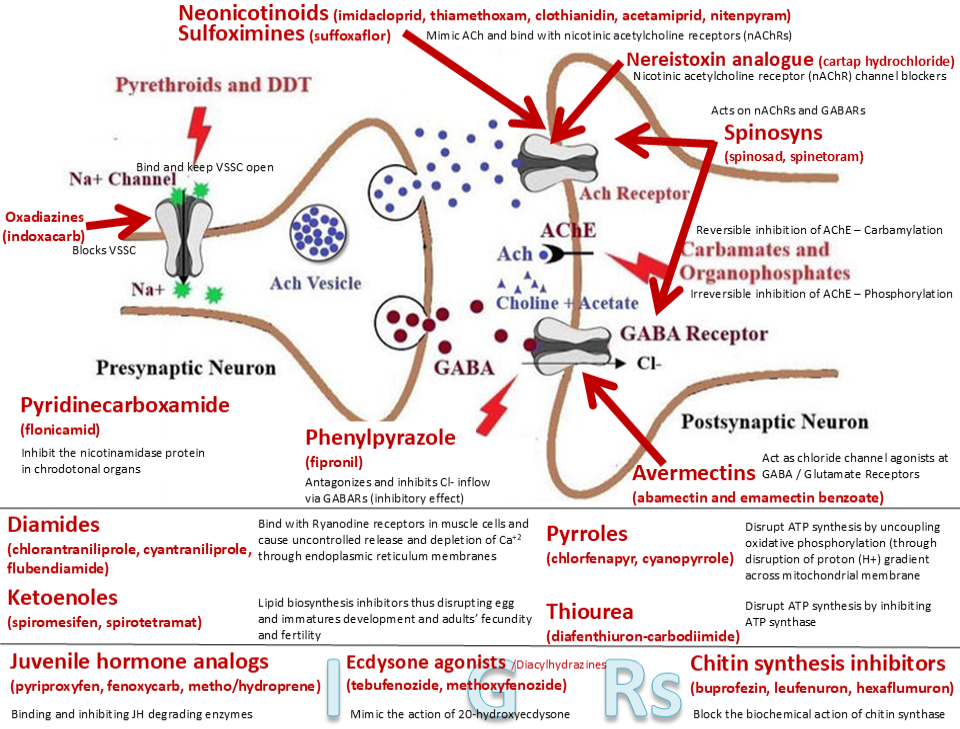
Diagrammatic illustration of modes of action and target sites of different groups of synthetic insecticides (Adapted and modified from Shamjana and Grace, 2021).
References
- Abbas, A., Iqbal, J., Zeshan, A., Ali, Q., Nadeem, I., Malik, H. and Iqbal, B.B., 2022. Lethal and sublethal effects of flonicamid (50 WG) and spirotetramat (240 SC) on Bemisia tabaci (Homoptera: Aleyrodidae): An age-stage two sex life table study. Phytoparasitica, 50: 727–742. https://doi.org/10.1007/s12600-022-01002-5[CrossRef]
- Abubakar, M., Koul, B., Chandrashekar, K., Raut, A. and Yadav, D., 2022. Whitefly (Bemisia tabaci) management (WFM) strategies for sustainable agriculture: A review. Agriculture, 12: 1317. https://doi.org/10.3390/agriculture12091317[CrossRef]
- Agboola, A.R., Okonkwo, C.O., Agwupuye, E.I. and Mbeh, G., 2022. Biopesticides and conventional pesticides: Comparative review of mechanism of action and future perspectives. AROC Agric., 1: 14–32. https://doi.org/10.53858/arocagr01011432[CrossRef]
- Ahamad, A. and Kumar, J., 2023. Pyrethroid pesticides: An overview on classification, toxicological assessment and monitoring. J. Hazard. Mater. Adv., 10: 100284. https://doi.org/10.1016/j.hazadv.2023.100284[CrossRef]
- Ahamad, A., Ahamad, J. and Naim, M.J., 2023. Current perspective on pesticides: Their classification, behaviour, potential use and toxic effects. J. Angiother., 7. https://doi.org/10.25163/angiotherapy.719360[CrossRef]
- Ahmad, M.F., Ahmad, F.A., Alsayegh, A.A., Zeyaullah, M., AlShahrani, A.M., Muzammil, K. and Hussain, S., 2024. Pesticides impacts on human health and the environment with their mechanisms of action and possible countermeasures. Heliyon. https://doi.org/10.1016/j.heliyon.2024.e29128[CrossRef]
- Alsafran, M., Rizwan, M., Usman, K., Saleem, M.H. and Al-Jabri, H., 2022. Neonicotinoid insecticides in the environment: A critical review of their distribution, transport, fate, and toxic effects. J. Environ. Chem. Eng., 10: 108485. https://doi.org/10.1016/j.jece.2022.108485[CrossRef]
- Ara, Z.G. and Haque, A.R., 2021. A comprehensive review on synthetic insecticides: Toxicity to pollinators, associated risk to food security, and management approaches. J. Build. Eng., 46: 254–272. https://doi.org/10.1007/s42853-021-00104-y[CrossRef]
- Araújo, M.F., Castanheira, E.M. and Sousa, S.F., 2023. The buzz on insecticides: A review of uses, molecular structures, targets, adverse effects, and alternatives. Molecules, 28: 3641. https://doi.org/10.3390/molecules28083641[CrossRef]
- Aroniadou-Anderjaska, V., Figueiredo, T.H., de Araujo Furtado, M., Pidoplichko, V.I. and Braga, M.F., 2023. Mechanisms of organophosphate toxicity and the role of acetylcholinesterase inhibition. Toxics, 11: 866. https://doi.org/10.3390/toxics11100866[CrossRef]
- Athiappan, M., Kumar, S.D., Umamaheswari, S. and Rajaprabu, M., 2022. Rhizosphere engineering through pesticides-degrading beneficial bacteria. In: Rhizosphere. Eng. Academic Press. pp. 239–257. https://doi.org/10.1016/B978-0-323-89973-4.00014-4[CrossRef]
- Atta, B., Rizwan, M., Sabir, A.M., Gogi, M.D., Farooq, M.A. and Jamal, A., 2021. Lethal and sublethal effects of clothianidin, imidacloprid and sulfoxaflor on the wheat aphid, Schizaphis graminum (Hemiptera: Aphididae) and its coccinellid predator, Coccinella septempunctata. Int. J. Trop. Insects Sci., 41: 345–358. https://doi.org/10.1007/s42690-020-00212-w[CrossRef]
- Aznar-Alemany, Ò. and Eljarrat, E., 2020. Introduction to pyrethroid insecticides: Chemical structures, properties, mode of action and use. PIs, pp. 1–16. https://doi.org/10.1007/698_2019_435[CrossRef]
- Basak, M., Choudhury, R.A., Goswami, P., Dey, B.K. and Laskar, M.A., 2021. A review on non-target toxicity of deltamethrin and piperonyl butoxide: Synergist. J. Pharm. Res. Int., 33: 85–89. https://doi.org/10.9734/jpri/2021/v33i51B33517[CrossRef]
- Bass, C. and Field, L.M., 2018. Neonicotinoids. Curr. Biol., 28: R772–R773. https://doi.org/10.1016/j.cub.2018.05.061[CrossRef]
- Bele, T., Turk, T. and Križaj, I., 2024. Nicotinic acetylcholine receptors in cancer: Limitations and prospects. Biochim. Biophys. Acta Mol. Basis Dis., 1870: 166875. https://doi.org/10.1016/j.bbadis.2023.166875[CrossRef]
- Bhardwaj, K., Abraham, J. and Kaur, S., 2020. Natural product as avermectins and milbemycins for agriculture perspectives. Nat. Bioact. Prod. Sust. Agric., pp. 259–271. https://doi.org/10.1007/978-981-15-3024-1_12[CrossRef]
- Bhatt, P., Gangola, S., Ramola, S., Bilal, M., Bhatt, K., Huang, Y. and Chen, S., 2023. Insights into the toxicity and biodegradation of fipronil in contaminated environment. Microbiol. Res., 266: 127247. https://doi.org/10.1016/j.micres.2022.127247[CrossRef]
- Bhuvaneswari, K., Mani, M., Suganthi, A. and Manivannan, A., 2022. Novel insecticides and their application in the management of horticultural crop pests. Trends Hortic. Ent., pp. 419–454. https://doi.org/10.1007/978-981-19-0343-4_13[CrossRef]
- Brockmann, A., 2023. Implementation of a high throughput screening assay to identify and characterize insecticides acting on ion channels. Doctoral dissertation, Universitäts-und Landesbibliothek Bonn.
- Carbonell-Rozas, L., Canales, R., Lara, F.J., García-Campaña, A.M. and Silva, M.F., 2021. A natural deep eutectic solvent as a novel dispersive solvent in dispersive liquid-liquid microextraction based on solidification of floating organic droplet for the determination of pesticide residues. Anal. Bioanal. Chem., 413: 6413–6424. https://doi.org/10.1007/s00216-021-03605-z[CrossRef]
- Cardona, B. and Rudel, R.A., 2020. US EPA’s regulatory pesticide evaluations need clearer guidelines for considering mammary gland tumors and other mammary gland effects. Mol. Cell. Endocrinol., 518: 110927. https://doi.org/10.1016/j.mce.2020.110927[CrossRef]
- Cens, T., Chavanieu, A., Bertaud, A., Mokrane, N., Estaran, S., Roussel, J. and Charnet, P., 2022. Molecular targets of neurotoxic insecticides in Apis mellifera. Eur. J. Org. Chem., 2022: e202101531. https://doi.org/10.1002/ejoc.202101531[CrossRef]
- Cerna-Chávez, E., Rodríguez-Rodríguez, J.F., García-Conde, K.B. and Ochoa-Fuentes, Y.M., 2024. Potential of Streptomyces avermitilis: A review on avermectin production and its biocidal effect. Metabolites, 14: 374. https://doi.org/10.3390/metabo14070374[CrossRef]
- Chand, A., 2023. Toxicological parameters and risk assessment of some novel insecticides: An in-depth analysis. CCAI Agric. Sci. IGI Glob., pp. 17–32. https://doi.org/10.4018/979-8-3693-0200-2.ch002[CrossRef]
- Chauhan, V., Vashisht, S.D., Sharma, L. and Gandhi, V., 2021. Assessment of leaf hopper, management of Earias vittella and population dynamics of sucking pests of Okra: A review. J. Pharm. Innov., SP-10: 95–100.
- Cheng, J., Chen, Y., Wang, W., Zhu, X., Jiang, Z., Liu, P. and Du, L., 2024. Chlorfenapyr poisoning: mechanisms, clinical presentations, and treatment strategies. World J. Emerg. Med., 15: 214. https://doi.org/10.5847/wjem.j.1920-8642.2024.046[CrossRef]
- Comstock, G.T., Nguyen, H., Bronstein, A. and Yip, L., 2024. Chlorfenapyr poisoning: A systematic review. Clin. Toxicol., 62: 412–424. https://doi.org/10.1080/15563650.2024.2367658[CrossRef]
- Costas-Ferreira, C. and Faro, L.R., 2021. Neurotoxic effects of neonicotinoids on mammals: What is there beyond the activation of nicotinic acetylcholine receptors? A systematic review. Int J. mol. Sci., 22: 8413. https://doi.org/10.3390/ijms22168413[CrossRef]
- Devendar, P. and Yang, G.F., 2019. Sulfur-containing agrochemicals. S. Chem., pp. 35–78. https://doi.org/10.1007/978-3-030-25598-5_2[CrossRef]
- Dhadialla, T.S., Carlson, G.R. and Le, D.P., 1998. New insecticides with ecdysteroidal and juvenile hormone activity. Annu. Rev. Ent., 43: 545–569. https://doi.org/10.1146/annurev.ento.43.1.545[CrossRef]
- Du, J. and Fu, Y., 2023. Diamide insecticides targeting insect ryanodine receptors: Mechanism and application prospect. Biochem. biophys. Res. Commun., 670: 19–26. https://doi.org/10.1016/j.bbrc.2023.05.107[CrossRef]
- Du, S. and Hu, X., 2023. Comprehensive overview of diamide derivatives acting as ryanodine receptor activators. J. Agric. Fd. Chem., 71: 3620–3638. https://doi.org/10.1021/acs.jafc.2c08414[CrossRef]
- Ekoka, E., Maharaj, S., Nardini, L., Dahan-Moss, Y. and Koekemoer, L.L., 2021. 20-Hydroxyecdysone (20E) signaling as a promising target for the chemical control of malaria vectors. Parasit. Vectors, 14: 1–17. https://doi.org/10.1186/s13071-020-04558-5[CrossRef]
- El-Sheikh, E.S.A. and Ashour, M.B.A., 2022. Diamide insecticides: Efficacy, toxicity and analytical methods for residue monitoring in food samples. Egypt. J. Chem., 65: 165–177.
- Ensley, S.M., 2018. Pyrethrins and pyrethroids. Vet. Toxicol. Academic Press, pp. 515–520. https://doi.org/10.1016/B978-0-12-811410-0.00039-8[CrossRef]
- Gad, M., Aref, S., Abdelhamid, A., Elwassimy, M. and Abdel-Raheem, S., 2021. Biologically active organic compounds as insect growth regulators (IGRs): Introduction, mode of action, and some synthetic methods. Curr. Chem. Lett., 10: 393–412. https://doi.org/10.5267/j.ccl.2021.5.004[CrossRef]
- Gajendiran, A. and Abraham, J., 2018. An overview of pyrethroid insecticides. Front. Biol., 13: 79–90. https://doi.org/10.1007/s11515-018-1489-z[CrossRef]
- Ganesh, B.H., Raj, A.G., Aruchamy, B., Nanjan, P., Drago, C. and Ramani, P., 2024. Pyrrole: A decisive scaffold for the development of therapeutic agents and structure-activity relationship. Chem. Med. Chem., 19: e202300447. https://doi.org/10.1002/cmdc.202300447[CrossRef]
- Ghoneim, K. and Hamadah, K., 2024. Compatibility of entomopathogenic nematodes with agrochemicals and biocontrol potential of their combinations against insect pests: An updated review. Egypt. Acad. J. biol. Sci. A Ent., 17: 107–171. https://doi.org/10.21608/eajbsa.2024.365899[CrossRef]
- Graf, J.F., 1993. The role of insect growth regulators in arthropod control. Trends Parasitol., 9: 471–474. https://doi.org/10.1016/0169-4758(93)90106-P[CrossRef]
- Grenier, S. and Grenier, A.M., 1993. Fenoxycarb, a fairly new insect growth regulato: Review of its effects on insects. Annls appl. Biol., 122: 369–403. https://doi.org/10.1111/j.1744-7348.1993.tb04042.x[CrossRef]
- Guedes, R.N.C., Biondi, A., Agathokleous, E. and Nunes-Nesi, A., 2023. Systemic insecticides in plants: Phytotoxicity, bioactivation, or hormesis? Agric. Commun., 1: 100002. https://doi.org/10.1016/j.agrcom.2023.100002[CrossRef]
- Gul, H., Gadratagi, B.G., Güncan, A., Tyagi, S., Ullah, F., Desneux, N. and Liu, X., 2023. Fitness costs of resistance to insecticides in insects. Front. Physiol., 14: 1238111. https://doi.org/10.3389/fphys.2023.1238111[CrossRef]
- Guleria, N., Kumar, R., Nebapure, S.M. and Saini, N., 2024. Dilemma hovers over the rationality of biorational insecticides: Their unintended effects and consequences. B and B Pest Manage., pp. 373. https://doi.org/10.1515/9783111204819-018[CrossRef]
- Gupta, R.C., 2020. Neurotoxicity of organophosphate nerve agents In: Advances in neurotoxicology (eds. M. Aschner and L.G. Costa). Academic Press, pp. 79–112. https://doi.org/10.1016/bs.ant.2019.11.001[CrossRef]
- Guru, P., 2018. Investigation on use pattern, efficacy and persistence of insecticides in/on Capsicum grown in polyhouse. Doctoral dissertation, Mahatma Phule Krishi Vidyapeeth, Rahuri.
- Hamaidia, K. and Soltani, N., 2021. Methoxyfenozide, a molting hormone agonist, affects autogeny capacity, oviposition, fecundity, and fertility in Culex pipiens (Diptera: Culicidae). J. med. Ent., 58: 1004–1011. https://doi.org/10.1093/jme/tjaa260[CrossRef]
- Hamida, Z.C., Farine, J.P., Ferveur, J.F. and Soltani, N., 2021. Pre-imaginal exposure to Oberon® disrupts fatty acid composition, cuticular hydrocarbon profile and sexual behavior in Drosophila melanogaster adults. Comp. Biochem. Physiol. Toxicol. Pharmacol., 243: 108981. https://doi.org/10.1016/j.cbpc.2021.108981[CrossRef]
- Han, C. and Kim, J., 2024. Transcriptome profiling reveals novel insights into the regulation of calcium ion and detoxification genes driving chlorantraniliprole resistance in Spodoptera exigua. Heliyon. https://doi.org/10.1016/j.heliyon.2024.e40556[CrossRef]
- Hekal, M.H., Hashem, A.I., El-Azm, F.S.A., Abdel-Haleem, D.R., Rafat, E.H. and Ali, Y.M., 2024. Rational design and synthesis of new pyrrolone candidates as prospective insecticidal agents against Culex pipiens L. larvae. Sci. Rep., 14: 24467. https://doi.org/10.1038/s41598-024-74011-5[CrossRef]
- Hsu, A.C. and Aller, H.E., 1991. Insecticidal N’-substituted-N, N’-diacylhydrazines. US Patent US4985461.
- Hu, J., Wang, J., Yu, Y., Rao, W., Chen, F., Wang, C. and Fan, G., 2022. Cross-resistance pattern and genetic studies in spirotetramat-resistant citrus red mite, Panonychus citri (Acari: Tetranychidae). Agriculture, 12: 737. https://doi.org/10.3390/agriculture12050737[CrossRef]
- Hu, X.L., Tang, Y.Y., Kwok, M.L., Chan, K.M. and Chu, K.H., 2020. Impact of juvenile hormone analogue insecticides on the water flea Moina macrocopa: Growth, reproduction and transgenerational effect. Aquat. Toxicol., 220: 105402. https://doi.org/10.1016/j.aquatox.2020.105402[CrossRef]
- Huang, P., Yan, X., Yu, B., He, X., Lu, L. and Ren, Y., 2023. A comprehensive review of the current knowledge of chlorfenapyr: Synthesis, mode of action, resistance, and environmental toxicology. Molecules, 28: 7673. https://doi.org/10.3390/molecules28227673[CrossRef]
- Iber, B.T., Kasan, N.A., Torsabo, D. and Omuwa, J.W., 2022. A review of various sources of chitin and chitosan in nature. J. Renew. Mater., 10: 1097. https://doi.org/10.32604/jrm.2022.018142[CrossRef]
- Ihara, M., 2022. Ligand-gated ion channels as targets of neuroactive insecticides. Biosci. Biotechnol. Biochem., 86: 157–164. https://doi.org/10.1093/bbb/zbab202[CrossRef]
- Insecticide Resistance Action Committee, 2024. http://www.irac-online.org. (12 December, 2024)
- Jayaprakas, C.A., Tom, J. and Sreejith, S., 2023. Impact of insecticides on man and environment. Biomed. Applicat. Toxic. Nanomater. Springer Nature Singapore, Singapore, pp. 751–768. https://doi.org/10.1007/978-981-19-7834-0_28[CrossRef]
- Jeschke, P., 2021. Status and outlook for acaricide and insecticide discovery. Pest. Manage. Sci., 77: 64–76. https://doi.org/10.1002/ps.6084[CrossRef]
- Jeschke, P., Witschel, M., Krämer, W. and Schirmer, U., 2019. Modern crop protection compounds. John Wiley and Sons. https://doi.org/10.1002/9783527699261[CrossRef]
- Jones, M., Kujundzic, M., John, S. and Bismarck, A., 2020. Crab vs. mushroom: A review of crustacean and fungal chitin in wound treatment. Mar. Drugs, 18: 64. https://doi.org/10.3390/md18010064[CrossRef]
- Karakoti, H., Mahawer, S.K., Kabdal, T., Kumar, R., Rawat, S., Devrani, A. and Joshi, S., 2024. Role of insect growth regulators in insect/pest control. B B: Pest Manage., 77. https://doi.org/10.1515/9783111204819-004[CrossRef]
- Karunaratne, S.H.P.P. and Surendran, S.N., 2022. Mosquito control: A review on the past, present and future strategies. J. Nat. Sci. Found. Sri Lanka., pp. 277-292 https://doi.org/10.4038/jnsfsr.v50i0.11244[CrossRef]
- Kem, W.R., Andrud, K., Bruno, G., Xing, H., Soti, F., Talley, T.T. and Taylor, P., 2022. Interactions of nereistoxin and its analogs with vertebrate nicotinic acetylcholine receptors and molluscan ACh binding proteins. Mar. Drugs, 20: 49. https://doi.org/10.3390/md20010049[CrossRef]
- Khan, B.A., Nadeem, M.A., Nawaz, H., Amin, M.M., Abbasi, G.H., Nadeem, M. and Ayub, M.A., 2023. Pesticides: impacts on agriculture productivity, environment, and management strategies. In: Emerging contaminants and plants: Interactions, adaptations and remediation technologies (Ed. T. Aftab). Springer International Publishing. https://doi.org/10.1007/978-3-031-22269-6_5[CrossRef]
- Khan, S.A., Verma, P., Parasharami, V.A. and Rahman, L.U., 2018. In vitro manipulations for value addition in potent herbal insecticidal activities of Chrysanthemum cinerariaefolium. Med. Aromat. Pl Sci. Biotech. CGU, pp. 395–416. https://doi.org/10.1007/978-981-13-0535-1_18[CrossRef]
- Khanna, S., Sharma, S., Kumari, M., Tyagi, K., Handique, J., Mishra, L. and Mayandi, D.G., 2023. Molecular docking of triterpenoids from Neem with the ecdysone receptor of lepidopteran pests. Indian J. Nat. Prod. Res., 14: 237–248.
- Knigge, T., LeBlanc, G.A. and Ford, A.T., 2021. A crab is not a fish: Unique aspects of the crustacean endocrine system and considerations for endocrine toxicology. Front. Endocrinol., 12: 587608. https://doi.org/10.3389/fendo.2021.587608[CrossRef]
- Kumar, M.A., Kamboj, N., Pandey, M.N., Bisht, M.A., Kamboj, V., Bharti, M.M. and Sharma, M.H., 2021. Legume crop wild relatives: their role in improving climate resilient legumes. J. Positive Sci. Sci. Publ. India. pp. 168–187.
- Liu, G., Feng, X., Guo, Y., Wang, X., An, K., Dong, J. and Liu, Y., 2023. Uptake and biotransformation of spirotetramat and pymetrozine in lettuce (Lactuca sativa L. var. ramosa Hort.). J. Agric. Fd. Chem., 71: 8356–8366. https://doi.org/10.1021/acs.jafc.3c00998[CrossRef]
- Madesh, K., Komala, G., Chandralekha, R. and Tripathi, P., 2024. Mode of action of novel insecticides. Adv. Trends Pl. Prot. PK Publ. Distrib. Delhi, India. pp. 255–291.
- Madgwick, P.G. and Kanitz, R., 2024. What is the value of rotations to insecticide resistance management? Pest Manage. Sci., 80: 1671–1680. https://doi.org/10.1002/ps.7939[CrossRef]
- Malhotra, H., Kaur, S. and Phale, P.S., 2021. Conserved metabolic and evolutionary themes in microbial degradation of carbamate pesticides. Front. Microbiol., 12: 648868. https://doi.org/10.3389/fmicb.2021.648868[CrossRef]
- Malik, M.A., Sajid, M.S., Abbas, R.Z., Aleem, M.T., Anjum, F.R., Khan, A. and Tahir, U.B., 2022. Anthelmintic drug resistance in livestock: Current understanding and future trends. In: Parasitic helminths and zoonoses-from basic to applied research (eds. J. Morales-Montor, V.H. Del Río-Araiza and R. Hernandéz-Bello), IntechOpen, London, UK..
- Mani, M., 2022. Pest management in horticultural crops under protected cultivation. Trends. Hortic. Ent., pp. 387–417. https://doi.org/10.1007/978-981-19-0343-4_12[CrossRef]
- Marican, A. and Durán-Lara, E.F., 2018. A review on pesticide removal through different processes. Environ. Sci. Poll. Res., 25: 2051–2064. https://doi.org/10.1007/s11356-017-0796-2[CrossRef]
- Martin, K., Brannen, P.M., Holladay, T. and Severns, P.M., 2022. No efficacy of post plant nematicides in Vitis vinifera wine grapes in Georgia, USA. Pl. Hlth. Prog., 23: 449–455. https://doi.org/10.1094/PHP-02-22-0017-RS[CrossRef]
- Martínez de Castro Dubernard, A., Goulson, D., Solís-Montero, L. and Vandame, R., 2022. Effects of imidacloprid on survival and nest development in the neo-tropical bumblebee Bombus ephippiatus. Apidologie, 53: 34. https://doi.org/10.1007/s13592-022-00946-1[CrossRef]
- Masetti, A., Rathé, A., Robertson, N., Anderson, D., Walker, J., Pasqualini, E. and Depalo, L., 2023. Effects of three chitin synthesis inhibitors on egg masses, nymphs and adults of Halyomorpha halys (Hemiptera: Pentatomidae). Pest Manage. Sci., 79: 2882–2890. https://doi.org/10.1002/ps.7465[CrossRef]
- McCann, R.S. and Johnston, J.C., 1992. Locus of the single-channel bottleneck in dual-task interference. J. exp. Psychol. Hum. Percept. Perform., 18: 471. https://doi.org/10.1037//0096-1523.18.2.471[CrossRef]
- McInnes, E.F., Papineni, S., Rinke, M., Schorsch, F. and Marxfeld, H.A., 2023. Agrochemicals. H and R Handb. Toxicol. Pathol. Acad. Press, pp. 727–763. https://doi.org/10.1016/B978-0-443-16153-7.00011-3[CrossRef]
- Mdeni, N.L., Adeniji, A.O., Okoh, A.I. and Okoh, O.O., 2022. Analytical evaluation of carbamate and organophosphate pesticides in human and environmental matrices: A review. Molecules, 27: 618. https://doi.org/10.3390/molecules27030618[CrossRef]
- Mezei, I., Valverde-Garcia, P., Siebert, M.W., Gomez, L.E., Torne, M., Watson, G.B. and Sparks, T.C., 2022. Impact of the nicotinic acetylcholine receptor mutation R81T on the response of European Myzus persicae populations to imidacloprid and sulfoxaflor in laboratory and in the field. Pestic. Biochem. Physiol., 187: 105187. https://doi.org/10.1016/j.pestbp.2022.105187[CrossRef]
- Mohan, K., Kandasamy, S., Rajarajeswaran, J., Thanigaivel, S., Bjeljac, M., Surendran, R.P. and Ganesan, A.R. 2024. Chitosan-based insecticide formulations for insect pest control management: A review of current trends and challenges. Int. J. Biol. Macromol., pp. 135937. https://doi.org/10.1016/j.ijbiomac.2024.135937[CrossRef]
- Mora-Gutiérrez, A., Rubio, C., Romero-López, Á.A. and Rubio-Osornio, M., 2021. Neurotoxic effects of insecticides chlorpyrifos, carbaryl, imidacloprid, in different animal species. Neurotoxicity, Rijeka, Croatia: IntechOpen. https://doi.org/10.5772/intechopen.100527[CrossRef]
- Motaung, T.E., 2020. Chloronicotinyl insecticide imidacloprid: Agricultural relevance, pitfalls and emerging opportunities. Crop Prot., 131: 105097. https://doi.org/10.1016/j.cropro.2020.105097[CrossRef]
- Moustafa, M.A., Fouad, E.A., Ibrahim, E., Erdei, A.L., Kárpáti, Z. and Fónagy, A., 2023. The comparative toxicity, biochemical and physiological impacts of chlorantraniliprole and indoxacarb on Mamestra brassicae (Lepidoptera: Noctuidae). Toxics, 11: 212. https://doi.org/10.3390/toxics11030212[CrossRef]
- Munjal, K., Gauttam, V.K., Mir, S.R., Nain, N. and Gupta, S., 2023. Insect growth regulators. Handb. Biopestic. CRC Press, pp. 223–242. https://doi.org/10.1201/9781003265139-18[CrossRef]
- Naughton, S.X. and Terry Jr, A.V., 2018. Neurotoxicity in acute and repeated organophosphate exposure. Toxicology, 408: 101–112. https://doi.org/10.1016/j.tox.2018.08.011[CrossRef]
- Nguyen, J., Ghazali, R., Batterham, P. and Perry, T., 2021. Inhibiting the proteasome reduces molecular and biological impacts of the natural product insecticide, spinosad. Pest Manage. Sci., 77: 3777–3786. https://doi.org/10.1002/ps.6290[CrossRef]
- Niklas, B., Rydzewski, J., Lapied, B. and Nowak, W., 2023. Toward overcoming pyrethroid resistance in mosquito control: The role of sodium channel blocker insecticides. Int. J. mol. Sci., 24: 10334. https://doi.org/10.3390/ijms241210334[CrossRef]
- Noriega, F.G. and Nouzova, M., 2020. Approaches and tools to study the roles of juvenile hormones in controlling insect biology. Insects, 11: 858. https://doi.org/10.3390/insects11120858[CrossRef]
- O’Hara, F., 2022. Defining toxicological endpoints of Aphis gossypii feeding. Master’s thesis, Louisiana State University and Agricultural and Mechanical College.
- Ore, O.T., Adeola, A.O., Bayode, A.A., Adedipe, D.T. and Nomngongo, P.N., 2023. Organophosphate pesticide residues in environmental and biological matrices: Occurrence, distribution and potential remedial approaches. J. Environ. Chem. Ecotoxicol., 5: 9–23. https://doi.org/10.1016/j.enceco.2022.10.004[CrossRef]
- Ortiz, D.M.D., Park, J., Lee, H. and Park, K., 2024. Integrated assessment for the estrogenic effects of pyrethroid compounds: Defining the molecular initiating events and key events for the adverse outcome pathway. Toxics, 12: 218. https://doi.org/10.3390/toxics12030218[CrossRef]
- Ozoe, Y., 2021. Ion channels and G protein-coupled receptors as targets for invertebrate pest control: From past challenges to practical insecticides. Biosci. Biotechnol. Biochem., 85: 1563–1571. https://doi.org/10.1093/bbb/zbab089[CrossRef]
- Papke, R.L. and Lindstrom, J.M., 2020. Nicotinic acetylcholine receptors: Conventional and unconventional ligands and signaling. Neuropharmacology, 168: 108021. https://doi.org/10.1016/j.neuropharm.2020.108021[CrossRef]
- Parthasarathy, R. and Palli, S.R., 2021. Stage-specific action of juvenile hormone analogs. J. Pestic. Sci., 46: 16–22. https://doi.org/10.1584/jpestics.D20-084[CrossRef]
- Pfeiffer, D.G., Bergh, J.C., Wilson, J.M., Quesada, C., Hooks, C.R.R., Sherif, S. and Parkhurst, J., 2022. Spray bulletin for commercial tree fruit growers: Virginia, West Virginia, and University of Maryland Extension.
- Ponkarpagam, S., Vennila, K.N. and Elango, K.P., 2023. Intercalation of diafenthiuron insecticide with calf thymus DNA: spectroscopic and molecular dynamics analysis. J. Biomol. Struct. Dyn., 41: 5961–5969. https://doi.org/10.1080/07391102.2022.2098824[CrossRef]
- Radwan, W.H., Abdelhafez, A.A., Mahgoub, A.E. and Zayed, M.S., 2024. Streptomyces avermitilis MICNEMA2022: A new biorational strain for producing abamectin as an integrated nematode management agent. BMC Microbiol., 24: 329. https://doi.org/10.1186/s12866-024-03466-3[CrossRef]
- Rafique, S., Hanif, M., Hussain, A., Rafeeq, H. and Ahmad, S., 2023. Environmental remediation and protection. In: Bionanocatalysis: from design to application. pp. 451–476. https://doi.org/10.1016/B978-0-323-91760-5.00006-3[CrossRef]
- Raisch, T. and Raunser, S., 2023. The modes of action of ion-channel-targeting neurotoxic insecticides: lessons from structural biology. Nat. Struct. Mol. Biol., 30: 1411–1427. https://doi.org/10.1038/s41594-023-01113-5[CrossRef]
- Raj, A., Kumar, A. and Khare, P.K., 2024. The looming threat of profenofos organophosphate and microbes in action for their sustainable degradation. Environ. Sci. Poll. Res., 31: 14367–14387. https://doi.org/10.1007/s11356-024-32159-7[CrossRef]
- Ramachanderan, R. and Schaefer, B., 2020. Spinosyn insecticides. Chem. Texts, 6: 1–29. https://doi.org/10.1007/s40828-020-00113-y[CrossRef]
- Ranabhat, S., 2020. Bed bug resistance to selected insecticides and effect of moisture on efficacy of insecticide dusts against the common bed bug, Cimex lectularius. Master’s thesis, Rutgers the State University of New Jersey, School of Graduate Studies. https://doi.org/10.1093/jee/toaa122[CrossRef]
- Ranganathan, S., Ilavarasi, A.V., Palaka, B.K., Kuppusamy, D. and Ampasala, D.R., 2022. Cloning, functional characterization and screening of potential inhibitors for Chilo partellus chitin synthase A using in silico, in vitro and in vivo approaches. J. Biomol. Struct. Dyn., 40: 1416–1429. https://doi.org/10.1080/07391102.2020.1827034[CrossRef]
- Ray, S. and Shaju, S.T., 2023. Bioaccumulation of pesticides in fish resulting toxicities in humans through food chain and forensic aspects. Environ. Anal. Hlth. Toxicol., 38. https://doi.org/10.5620/eaht.2023017[CrossRef]
- Ren, Q., Ma, L., Zhang, X., Chen, L., Mao, Z., Li, D. and Jiang, X., 2023. Effect of juvenile hormone on worker behavioral transition in the red imported fire ant, Solenopsis invicta (Hymenoptera: Formicidae). Insects, 14: 934. https://doi.org/10.3390/insects14120934[CrossRef]
- Richards, D.P., Patel, R.N., Duce, I.R., Khambay, B.P., Birkett, M.A., Pickett, J.A. and Mellor, I.R., 2022. Adaline from the Adalia Genus of ladybirds is a potent antagonist of insect and specific mammalian nicotinic acetylcholine receptors. Molecules, 27: 7074. https://doi.org/10.3390/molecules27207074[CrossRef]
- Richardson, E.B., Troczka, B.J., Gutbrod, O., Davies, T.E. and Nauen, R., 2020. Diamide resistance: 10 years of lessons from lepidopteran pests. J. Pest Sci., 93: 911–928. https://doi.org/10.1007/s10340-020-01220-y[CrossRef]
- Rocha, F.A.D., Martinez, L.C., Lima, B.S.A., Farder-Gomes, C.F., Cossolin, J.F.S. and Serrão, J.E., 2023. Toxicological and morphological effects of flubendiamide on the midgut of the Spodoptera cosmioides (Lepidoptera: Noctuidae) caterpillar. https://doi.org/10.21203/rs.3.rs-3313838/v1[CrossRef]
- Sahayaraj, K. and Hassan, E., 2023. Biosafety assessment of synthetic pesticides. World Pred. Insects Agroecosyst. Springer Nature Singapore, Singapore. pp. 735–783. https://doi.org/10.1007/978-981-99-1000-7_20[CrossRef]
- Samurkas, A., Yao, L., Hadiatullah, H., Ma, R., Xie, Y., Sundarraj, R. and Yuchi, Z., 2022. Ryanodine receptor as insecticide target. Curr. Pharma. Des., 28: 26–35. https://doi.org/10.2174/1381612827666210902150224[CrossRef]
- Sayed, A.M., Abdel-Wahab, N.M., Hassan, H.M. and Abdelmohsen, U.R., 2020. Saccharopolyspora: An underexplored source for bioactive natural products. J. appl. Microbiol., 128: 314–329. https://doi.org/10.1111/jam.14360[CrossRef]
- Shamjana, U. and Grace, T., 2022. Review of insecticide resistance and its underlying mechanisms in Tribolium castaneum, insecticides-impact and benefits of its use for humanity. Review of insecticide resistance and its underlying mechanisms in Tribolium castaneum; IntechOpen: London, UK. https://doi.org/10.5772/intechopen.100050[CrossRef]
- Sharma, P. and Awasthi, P., 2021. Synthesis, characterization, in vivo, molecular docking, ADMET and HOMO-LUMO study of Juvenile hormone analogues having sulfonamide feature as an insect growth regulator. J. mol. Struct., 1231: 129945. https://doi.org/10.1016/j.molstruc.2021.129945[CrossRef]
- Sharma, R.K., Singh, P., Setia, A. and Sharma, A.K., 2020. Insecticides and ovarian functions. Environ. Mol. Mutagen., 61: 369–392. https://doi.org/10.1002/em.22355[CrossRef]
- Sierras, A. and Schal, C., 2020. Lethal and sublethal effects of ingested hydroprene and methoprene on development and fecundity of the common bed bug (Hemiptera: Cimicidae). J. med. Ent., 57: 1199–1206. https://doi.org/10.1093/jme/tjaa038[CrossRef]
- Silberman, J. and Taylor, A., 2018. Carbamate toxicity.
- Singh, S., Mukherjee, A., Jaiswal, D.K., de Araujo Pereira, A.P., Prasad, R., Sharma, M. and Verma, J.P., 2022. Advances and future prospects of pyrethroids: Toxicity and microbial degradation. Sci. Total Environ., 829: 154561. https://doi.org/10.1016/j.scitotenv.2022.154561[CrossRef]
- Soares, S., Rosado, T., Barroso, M., Vieira, D.N. and Gallardo, E., 2019. Organophosphorus pesticide determination in biological specimens: Bioanalytical and toxicological aspects. Int. J. Legal Med., 133: 1763–1784. https://doi.org/10.1007/s00414-019-02119-9[CrossRef]
- Song, X., Wang, X., Liao, G., Pan, Y., Qian, Y. and Qiu, J., 2021. Toxic effects of fipronil and its metabolites on PC12 cell metabolism. Ecotoxicol. environ. Saf., 224: 112677. https://doi.org/10.1016/j.ecoenv.2021.112677[CrossRef]
- Song, Y., Li, L., Li, C., Lu, Z., Ouyang, F., Liu, L. and Men, X., 2021. Comparative ecotoxicity of insecticides with different modes of action to Osmia excavata (Hymenoptera: Megachilidae). Ecotoxicol. environ. Saf., 212: 112015. https://doi.org/10.1016/j.ecoenv.2021.112015[CrossRef]
- Sparks, T.C., Crouse, G.D., Benko, Z., Demeter, D., Giampietro, N.C., Lambert, W. and Brown, A.V., 2021. The spinosyns, spinosad, spinetoram, and synthetic spinosyn mimics-discovery, exploration, and evolution of a natural product chemistry and the impact of computational tools. Pest Manage. Sci., 77: 3637–3649. https://doi.org/10.1002/ps.6073[CrossRef]
- Srivastava, P.K., Singh, V.P., Singh, A., Tripathi, D.K., Singh, S., Prasad, S.M. and Chauhan, D.K., 2020. Pesticides in crop production: Physiological and biochemical action. John Wiley and Sons. https://doi.org/10.1002/9781119432241[CrossRef]
- Su, M., Bao, R., Wu, Y., Gao, B., Xiao, P. and Li, W., 2023. Diafenthiuron causes developmental toxicity in zebrafish (Danio rerio). Chemosphere, 323: 138253. https://doi.org/10.1016/j.chemosphere.2023.138253[CrossRef]
- Subbanna, A.R.N.S., Stanley, J., Rajasekhara, H., Mishra, K.K., Pattanayak, A. and Bhowmick, R., 2020. Perspectives on microbial metabolites as pesticides in agricultural pest management. Co-Evol. Sec. Metabol., pp. 925–952. https://doi.org/10.1007/978-3-319-96397-6_44[CrossRef]
- Tafreshi, F.A., Fatahi, Z., Ghasemi, S.F., Taherian, A. and Esfandiari, N., 2020. Ultrasensitive fluorescent detection of pesticides in real sample by using green carbon dots. PLoS One, 15: e0230646. https://doi.org/10.1371/journal.pone.0230646[CrossRef]
- Toprak, U., Doğan, C. and Hegedus, D., 2021. A comparative perspective on functionally-related, intracellular calcium channels: the insect ryanodine and inositol 1, 4, 5-trisphosphate receptors. Biomolecules, 11: 1031. https://doi.org/10.3390/biom11071031[CrossRef]
- Tudi, M., Yang, L., Wang, L., Lv, J., Gu, L., Li, H. and Connell, D., 2023. Environmental and human health hazards from chlorpyrifos, pymetrozine and avermectin application in China under a climate change scenario: A comprehensive review. Agriculture, 13: 1683. https://doi.org/10.3390/agriculture13091683[CrossRef]
- Ung, S.P.M. and Li, C.J., 2023. From rocks to bioactive compounds: A journey through the global P (V) organophosphorus industry and its sustainability. RSC Sustain., 1: 11–37. https://doi.org/10.1039/D2SU00015F[CrossRef]
- Visveswaran, S., 2021. Dissipation and distribution of fipronil, carbosulfan and their metabolites in banana var. Nendran (AAB) and soil. Doctoral dissertation, Department of Soil Science and Agricultural Chemistry, College of Agriculture, Vellayani. https://doi.org/10.22271/chemi.2021.v9.i2g.11859[CrossRef]
- Voris, D.G., Cavalcante, S.F., Borges, C.V. and Lima, A.L., 2024. Carbamates: Are they good or bad guys? J. Braz. Chem. Soc., 35: e-20240058. https://doi.org/10.21577/0103-5053.20240058[CrossRef]
- Wakil, W., Kavallieratos, N.G., Eleftheriadou, N., Sami, U.M., Naeem, A., Rasool, K.G. and Aldawood, A.S., 2023. Treatment of four stored-grain pests with thiamethoxam plus chlorantraniliprole: Enhanced impact on different types of grain commodities and surfaces. Insects, 14: 619. https://doi.org/10.3390/insects14070619[CrossRef]
- Wang, L., Cui, L., Wang, Q., Chang, Y., Huang, W. and Rui, C., 2022. Sulfoxaflor resistance in Aphis gossypii: Resistance mechanism, feeding behavior and life history changes. J. Pest Sci., 95: 811–825. https://doi.org/10.1007/s10340-021-01407-x[CrossRef]
- Wang, Z.J., Wang, N.M., Yu, Q.T. and Xue, C.B., 2023. Sublethal effects of an indoxacarb enantiomer insecticide on Plutella xylostella caterpillar and Chrysoperla sinica predator. Ecotoxicol. environ. Saf., 249: 114400. https://doi.org/10.1016/j.ecoenv.2022.114400[CrossRef]
- Watson, G.B., Siebert, M.W., Wang, N.X., Loso, M.R. and Sparks, T.C., 2021. Sulfoxaflor-A sulfoximine insecticide: Review and analysis of mode of action, resistance and cross-resistance. Pestic. Biochem. Physiol., 178: 104924. https://doi.org/10.1016/j.pestbp.2021.104924[CrossRef]
- Wołejko, E., Łozowicka, B., Jabłońska-Trypuć, A., Pietruszyńska, M. and Wydro, U., 2022. Chlorpyrifos occurrence and toxicological risk assessment: A review. Int. J. environ. Res. Publ. Hlth., 19: 12209. https://doi.org/10.3390/ijerph191912209[CrossRef]
- Yang, S.H. and Choi, H., 2024. Insecticides chlorantraniliprole and flubendiamide in Aster scaber: Dissipation kinetics, processing effects, and risk assessment. Heliyon. https://doi.org/10.1016/j.heliyon.2024.e33216[CrossRef]
- Yasin, M., Qazi, M.S., Wakil, W. and Qayyum, M.A., 2020. Evaluation of nuclear polyhedrosis virus (NPV) and emamectin benzoate against Spodoptera litura (F.) (Lepidoptera: Noctuidae). Egypt. J. Biol. Pest Contr., 30: 1–6. https://doi.org/10.1186/s41938-020-00271-8[CrossRef]
- Ye, L., Li, J., Gong, S., Herczegh, S.M., Zhang, Q., Letcher, R.J. and Su, G., 2023. Established and emerging organophosphate esters (OPEs) and the expansion of an environmental contamination issue: A review and future directions. J. Hazar. Mater., 2023: 132095. https://doi.org/10.1016/j.jhazmat.2023.132095[CrossRef]
- Yokoi, T., Nabe, T., Ishizuka, C., Hayashi, K.I., Ito-Harashima, S., Yagi, T. and Miyagawa, H., 2022. A luciferase reporter assay for ecdysone agonists using HEK293T cells. Biosci. Biotechnol. Biochem., 86: 1490–1496. https://doi.org/10.1093/bbb/zbac139[CrossRef]
- Yu, A., Beck, M., Merzendorfer, H. and Yang, Q., 2023. Advances in understanding insect chitin biosynthesis. Insect Biochem. mol. Biol., pp. 104058. https://doi.org/10.2139/ssrn.4598524[CrossRef]
- Yu, L., Dai, A., Zhang, W., Liao, A., Guo, S. and Wu, J., 2022. Spiro derivatives in the discovery of new pesticides: A research review. J. Agric. Fd. Chem., 70: 10693–10707. https://doi.org/10.1021/acs.jafc.2c02301[CrossRef]
- Zaller, J.G., 2020. Daily poison. Pesticides-an underestimated danger, Springer Nature: Cham, Switzerland, pp. 315. https://doi.org/10.1007/978-3-030-50530-1[CrossRef]
- Zhang, X., Huang, Y., Chen, W.J., Wu, S., Lei, Q., Zhou, Z. and Chen, S., 2023. Environmental occurrence, toxicity concerns, and biodegradation of neonicotinoid insecticides. Environ. Res., 218: 114953. https://doi.org/10.1016/j.envres.2022.114953[CrossRef]
- Zhang, X., Yuan, J., Li, F. and Xiang, J., 2021. Chitin synthesis and degradation in crustaceans: A genomic view and application. Mar. Drugs, 19: 153. https://doi.org/10.3390/md19030153[CrossRef]
Cited by 1 article
In journals published by ResearchersLinks.
Services
Article usage statistics
Loading…