
Soil salinity is a major abiotic factor that significantly reduces crop productivity and threatens sustainable agriculture in many regions of the world. The Salt Overly Sensitive (SOS) signaling pathway plays a critical role in maintaining ionic balance within plants exposed to saline conditions. In the present study, the transcriptional response of the TaSOS2 gene was analyzed in bread wheat genotypes differing in their tolerance to salt stress. Gene expression levels were evaluated using quantitative real-time PCR under different NaCl concentrations. The analysis revealed clear differences in TaSOS2 expression between tolerant and sensitive wheat cultivars. The tolerant genotype showed a noticeable increase in TaSOS2 expression under salt stress, suggesting that this gene may contribute to the regulation of adaptive responses to salinity. These findings provide insights intsso the molecular mechanisms of salt tolerance in wheat.
Research Article · Volume 43, Issue 1, 22 October 2026 · Open Access
Quantitative Expression Analysis of the TaSOS2 Gene under Salt Stress in Bread Wheat (Triticum aestivum. L ) Plants
· · · · · · · · · ·
Affiliations & Notes ⌄
- 1Scientific Research Institute of Plant Genetic Resources, National Center for Knowledge and Innovation in Agriculture, Uzbekistan
- 2Institute of Genetics and Plant Experimental Biology, Academy of Sciences of the Republic of Uzbekistan, Uzbekistan
- 3Center of Genomics and Bioinformatics, Academy of Sciences of the Republic of Uzbekistan, Uzbekistan
- 4Bukhara State University, Uzbekistan. *Correspondence | Abdurauf A. Dolimov, Scientific Research Institute of Plant Genetic Resources, National Center for Knowledge and Innovation in Agriculture, Uzbekistan
- 5Email: dolimovabdurauf01@gmail.com
Article Info ⌄
- Journal:
- Sarhad Journal of Agriculture
- Published:
- 22 October 2026

From the article
- The elevated expression of TaSOS2 observed in E’zoz suggests the efficient activation of salt stress signaling pathways associated with ion homeostasis and membrane stability.
- The higher expression of this gene in the tolerant cultivar suggests that it contributes to improved ion homeostasis and enhanced salt tolerance.
- The results demonstrated that the salt-tolerant cultivar ‘E’zoz’ exhibited significantly higher expression of the TaSOS2 gene under saline conditions compared to the salt-sensitive cultivar ‘Fawwon-43’.
- This increased expression of TaSOS2 in the tolerant genotype contributes to improved regulation of sodium (Na+) and potassium (K+) ion homeostasis through the activation of the SOS signaling pathway.
Selected from the article's own text.
Abstract
Introduction
Salinity is recognized as one of the major abiotic constraints in plant growth that significantly reduce agricultural productivity across the world . The progressive increase of soil salinization adversely influences plant growth, development, and overall crop yield, especially in arid and semi-arid environments . This issue is becoming increasingly serious in many agricultural regions, including Central Asia, Middle East, and several parts of Africa, where intensive irrigation practices together with climate change accelerate the accumulation of soluble salts in soil . Elevated salt concentrations disturb cellular homeostasis, induce ionic toxicity, and create osmotic stress, which ultimately disrupts essential physiological processes in plants and .
To survive under saline conditions, plants have to evolve a wide range of physiological and molecular strategies that helps them mitigate the harmful effects of salt stress . Numerous salt-responsive genes have been identified, which participate in regulating ion transport, osmotic balance, and stress-related signaling pathways. In bread wheat (Triticum aestivum L.), several genes including TaNHX1, TaHKT1, TaP5CS, TaDREB1, TaSOS1, TaSOS2, and TaSOS3 have been reported to play important roles in plant adaptation to salinity stress . These genes contribute to maintain ionic equilibrium within cells, synthesizing osmo-protective compounds, and activating regulatory networks associated with stress responses.
For example, TaNHX1 gene encodes, a vacuolar Na-/H- antiporter, enable the sequestration of sodium ions into vacuoles , thereby minimizing sodium toxicity in the cytoplasm . In a similar manner, TaHKT1 encodes, a sodium transporter, controls Na+ distribution within plant tissues and helps to prevent excessive accumulation of sodium in above-ground plant organs . TaP5CS gene is involved in proline biosynthesis, and proline acts as an osmoprotectant to stabilize cellular structures under osmotic stress conditions . Moreover, transcription factors such as TaDREB1 regulate the expression of multiple stress-related genes and enhance plant tolerance to various environmental stresses and .
Among the known mechanisms of salinity tolerance, Salt Overly Sensitive (SOS) signaling pathway plays a crucial role in maintaining Na+ and K+ ion balance within plant cells. This pathway includes several important components, namely SOS1, SOS2, and SOS3, which function cooperatively to regulate sodium transport and maintain cellular ionic homeostasis and . The Ca²⁺-dependent SOS signaling system is activated when plants are exposed to salt stress, initiating a series of molecular events that enhance plant tolerance to high salinity.
The SOS1 gene encodes a plasma membrane Na+/H+ antiporter responsible for removing excess sodium ions from cytoplasm. The SOS2 gene encodes a serine/ threonine protein kinase, while SOS3 encodes a calcium-binding protein that detects salt-induced Ca²+ signals. Interaction between SOS2 and SOS3 leads to a formation of a protein complex that activates SOS1, thereby promoting the efflux of sodium ions and helping to restore ionic balance within plant cells and .
Among these components, SOS2 serves as an important regulatory element in the SOS signaling pathway. This protein kinase functions as a central regulator that integrates calcium signaling to activate downstream ion transporters, such as SOS1, to maintain cellular ion homeostasis. When activated under salt stress conditions, SOS2 initiates phosphorylation processes to regulate ion transporters and to maintain intracellular ionic equilibrium and . Therefore, proper functioning of the SOS2 gene is essential for plant adaptation to saline environments.
Although considerable progress has been made in understanding salinity tolerance mechanisms, the genotype-specific expression patterns of TaSOS2 in bread wheat under different salt stress conditions have not yet been fully characterized. In this study, we focus on investigating how this gene is regulated in salt-tolerant and salt-sensitive wheat cultivars to provide important insights into the molecular basis of salinity tolerance.
The aim of the present study was to evaluate the transcriptional response of the TaSOS2 gene in bread wheat genotypes with contrasting salt tolerance using quantitative real-time PCR (qRT-PCR) under salinity stress. By analyzing the expression patterns of TaSOS2 in these genotypes, this research seeks to improve the understanding of the molecular mechanisms associated with salt tolerance and to identify potential genetic targets for wheat breeding programs aimed at improving salinity resistance
In this study, two bread wheat cultivars, E’zoz (salt-tolerant) and Fawwon-43 (salt-sensitive), were used as contrasting models due to their well-documented differences in physiological responses and biomass maintenance under saline conditions and .
Materials and Methods
Plant material
Two bread wheat (Triticum aestivum L.) genotypes with contrasting responses to salt stress were used in this study. The salt-tolerant cultivar E’zoz, developed at the Institute of Genetics and Plant Experimental Biology of the Academy of Sciences of Uzbekistan, was selected as the tolerant genotype and . This cultivar is characterized by its ability to maintain higher biomass and lower Na+ accumulation under saline conditions compared to sensitive varieties. The salt-sensitive cultivar Fawwon-43 was obtained from the ICARDA germplasm collection. These genotypes were selected based on their distinct physiological and phenotypic differences in response to abiotic stresses, as detailed in the Introduction.
Seedlings of both cultivars were subjected to specific salinity treatments (0, 100, and 200 mM NaCl) to investigate the expression patterns of the TaSOS2 gene. These concentrations were chosen to represent moderate and severe salt stress conditions. The phenotypic responses of the wheat seedlings to control and salt treatments are presented in Figure 1.
Growth conditions and salt stress treatment
Wheat seeds were first surface sterilized using 70% ethanol for 3 minutes seeds retention, followed by several rinses with sterile distilled water. Sterilized seeds were germinated in a growth chamber (Cooling Incubator SPX-250BIII) maintained at 25°C under controlled conditions. Ten days old seedlings were transferred to petri dishes containing two treatments (I) 100 mM and (II) 200 mM NaCl solutions. Untreated seedlings grown in the distilled water were used as the control treatment. The plants were exposed to salt stress for 48 hours under controlled light conditions, consisting of a 16/8-h light/dark photoperiod with a light intensity of 200 μmol ∙ m-2 ∙ s-1 provided by fluorescent lamps. The temperature was maintained at 25±2˚C with a relative humidity of 60-65% throughout the treatment period.
Each treatment was replicated three times, and each biological replicate included three technical replicates. After the 48-hour treatment, leaf tissues were immediately harvested for molecular analysis. The collected leaf samples were rapidly frozen in liquid nitrogen at −80°C until RNA extraction.
RNA isolation and cDNA synthesis
Total RNA was extracted from leaf tissues using a modified protocol based on method described by Abdurakhmonov et al. (2014). Approximately 100 mg of fresh leaf tissue was ground into a fine powder in liquid nitrogen using a chilled mortar and pestle. Subsequently, 2 ml of preheated Wu buffer (80°C) was added to the homogenized tissue. Next, 60 μl of proteinase K solution (25 mg ml-¹) was added and the mixture was thoroughly homogenized. The homogenate was transferred into 2 ml microcentrifuge tubes and incubated at room temperature for 15 minutes. Following incubation, samples were centrifuged at high speed for 20 minutes at 4°C using an Eppendorf 5415R centrifuge (Germany).
The supernatant was carefully transferred into new tubes, followed by addition of phenol (Sigma-Aldrich, USA) and chloroform: isoamyl alcohol (24:1). The mixture was vortexed and centrifuged again under the same conditions. RNA precipitation was performed by adding 1.2 M NaCl and 150 μl of 0.8 M sodium citrate, followed by one volume of 96% ethanol. The resulting RNA pellet was washed with 70% ethanol, air-dried under a laminar flow hood, and dissolved in 0.1% DEPC-treated water. RNA samples were stored at −80°C until further analysis. RNA concentration and quality were measured using a Qubit 3 Fluorometer (Thermo Fisher Scientific, USA).
For cDNA synthesis and removal of residual genomic DNA, the SuperScript™ IV VILO™ Master Mix with ezDNase Enzyme kit (Thermo Fisher Scientific, USA) was used according to the manufacturer’s protocol. The synthesized cDNA was diluted 1:15 and used as a template for gene expression analysis.
Quantitative real-time PCR (qRT-PCR)
The expression level of the TaSOS2 gene was quantified using quantitative real-time PCR (qRT-PCR). The Actin gene was used as an endogenous reference gene for normalization of gene expression data. Actin was selected because it is widely recognized as a stable housekeeping gene in wheat and has been reported to maintain relatively constant expression under different abiotic stress conditions, including salinity. Gene-specific primers used in this study are listed in (Table 1).
Table 1: Gene-specific primers used for RT-PCR analysis
|
Gen |
Forward sequence |
Reverse sequence |
|
SOS2 |
5’- CTGCCCAAGGAAATGTTCAG-3 |
5’-ATCCTATTCCTGTACACCACCAGT-3’ |
|
Actin |
5'-CTTGTATGCCAGCGGTCGAACA -3 |
5'- CTCATAATCAAGGGCCACGTA -3' |
Gene expression analysis was performed using a CFX96 Touch Real-Time PCR Detection System (Bio-Rad, Hercules, CA, USA). Each amplification reaction was prepared in a total volume of 25 μl. The reaction mixture consisted of 12.5 μl of SYBR Green PCR Master Mix (2×), 0.35 μl of forward and reverse primers (10 μM each), 6 μl of diluted cDNA template, and 6.15 μl of nuclease-free water.
The PCR amplification program included an initial denaturation step at 95°C for 10 minutes, followed by 40 amplification cycles. Each cycle consisted of denaturation at 95°C for 15 seconds and annealing/extension at 65°C for 45 seconds. The SYBR Green PCR Master Mix contained AmpliTaq Gold DNA polymerase, deoxynucleotide triphosphates (dNTPs) including dUTP, SYBR Green I fluorescent dye, and an optimized magnesium chloride buffer (Applied Biosystems, USA). To ensure the reliability and reproducibility of the results, all experiments were performed with three biological replicates and three technical replicates. Gene-specific primers were designed using Primer3 software and further evaluated using the IDT OligoAnalyzer tool (Integrated DNA Technologies, USA).
Statistical analysis
Relative transcript levels of the TaSOS2 gene were determined using the 2-ΔΔCt method. Statistical evaluation of the obtained data was conducted using GraphPad Prism software (version 8.0.1). Differences among treatments were analyzed using one-way analysis of variance (ANOVA). Statistical significance was determined at p < 0.05.
Results and Discussion
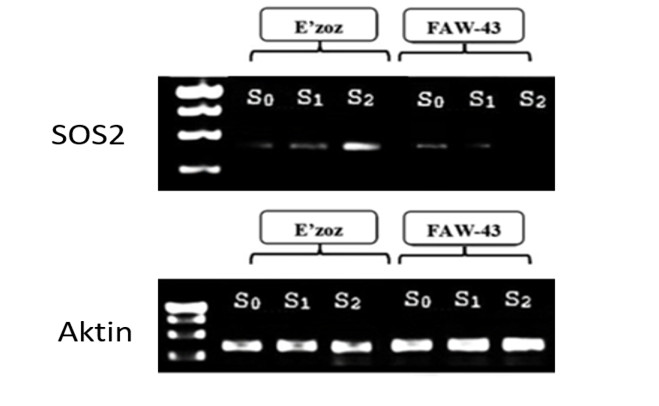
Electrophoretic analysis of the RT-PCR products confirmed the successful amplification of the TaSOS2 gene in the studied wheat samples. Distinct and clearly visible DNA bands were observed on a 1.5% agarose D1 High EEO gel, indicating the specificity and efficiency of the PCR amplification process . The amplified fragments corresponding to the target gene (TaSOS2) and the reference gene (Actin) were visualized using a Gel Doc Imaging System (GelDoc Go, USA), as shown in (Figure 2). The presence of clear amplification bands confirms that the RNA extraction, cDNA synthesis, and PCR amplification procedures were successfully performed and that the selected primers specifically amplified the target gene.
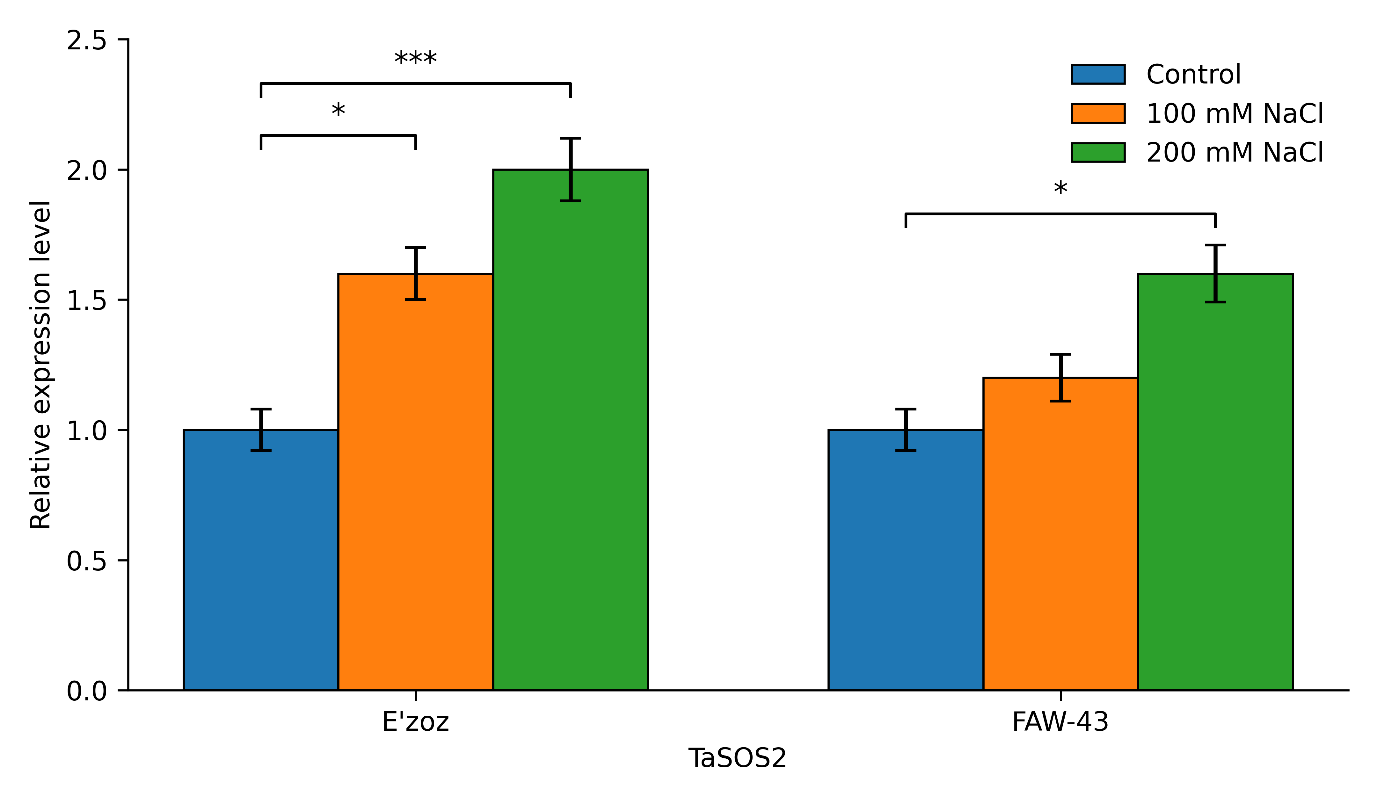
Quantitative analysis of gene expression demonstrated significant genotype-dependent variation in the transcriptional activity of the TaSOS2 gene under different salinity levels. In the salt-tolerant wheat cultivar E’zoz, the expression level of TaSOS2 increased progressively in response to increasing NaCl concentrations. Under 100 mM NaCl treatment, TaSOS2 expression increased significantly compared with the control condition, whereas exposure to 200 mM NaCl resulted in an approximately two-fold increase in transcript accumulation. The highest expression level observed under severe salt stress indicates that the TaSOS2 gene is strongly induced in response to salinity and may play an important regulatory role in the adaptive response of tolerant wheat plants to ionic and osmotic stress conditions.
The elevated expression of TaSOS2 observed in E’zoz suggests the efficient activation of salt stress signaling pathways associated with ion homeostasis and membrane stability. Activation of SOS pathway genes is one of the major mechanisms responsible for salt tolerance in higher plants. Likewise enhanced expression of SOS pathway-related genes contributes directly to the regulation of Na- exclusion and cellular ion balance under saline environments. The strong induction of TaSOS2 in the tolerant genotype observed in the present study is therefore consistent with previous reports indicating that tolerant cultivars possess a more effective molecular defense system against salt-induced ionic toxicity.
In contrast, the salt-sensitive cultivar Faw-43 exhibited a substantially weaker transcriptional response under salt stress conditions. Under control conditions, TaSOS2 expression remained relatively low, and exposure to 100 mM NaCl caused a slight reduction in transcript accumulation. Although expression increased moderately under 200 mM NaCl treatment, the transcript level remained significantly lower than that observed in the tolerant genotype E’zoz. This limited induction of TaSOS2 may indicate insufficient activation of salt-responsive signaling pathways in the sensitive cultivar. Similar genotype-specific differences in salt-responsive gene expression have been described by Munns and Tester (2008), who suggested that sensitive genotypes often fail to maintain ion homeostasis due to weaker regulation of stress-responsive transport systems.
The observed differential expression patterns between the tolerant and sensitive genotypes may be associated with the functional role of the SOS signaling pathway in regulating sodium and potassium ion homeostasis in plant cells under saline conditions. According to Yokoi et al. (2002), the SOS signaling system protects plant cells from ionic toxicity by controlling the transport, compartmentalization, and exclusion of excess sodium ions. The SOS2 gene encodes a serine/threonine protein kinase that interacts with the calcium-binding protein SOS3. Together, these proteins activate the plasma membrane Na+/H+antiporter encoded by SOS1, thereby facilitating sodium extrusion from the cytoplasm and contributing to cellular ionic balance under salt stress conditions .
Previous studies have further demonstrated that activation of SOS2-dependent signaling pathways is closely associated with improved salt tolerance and stress adaptation in several crop species. Yang et al. (2009) reported that efficient SOS pathway activation enhances membrane integrity, osmotic adjustment, and antioxidant defense under salinity stress. Similarly, Yokoi et al. (2002) observed that increased expression of SOS pathway genes improved Na+ exclusion efficiency and reduced salt-induced cellular damage in wheat plants. In addition, Amit et al. (2018) demonstrated that overexpression of SOS-related genes significantly enhanced salt tolerance by improving ion transport regulation and reducing oxidative stress injury.
The relatively high expression level of TaSOS2 in E’zoz under severe salt stress conditions therefore indicates that this genotype possesses a more efficient regulatory mechanism for maintaining ionic homeostasis and protecting cellular metabolism under salinity stress. Conversely, the weak transcriptional response observed in Faw-43 may explain its reduced salt tolerance capacity and greater susceptibility to ionic toxicity. These findings suggest that TaSOS2 may serve as an important molecular marker associated with salinity tolerance in bread wheat and could potentially be utilized in breeding programs aimed at improving salt tolerance in wheat cultivars.
The Actin gene was used as an endogenous reference gene for normalization of qRT-PCR data because of its stable expression across all treatments and experimental conditions. Stable expression of housekeeping genes is essential for reliable quantitative gene expression analysis, as reported by Abdurakhmonov (2014). Relative expression levels of the TaSOS2 gene were calculated using the 2^-ΔΔCt method and graphically represented using GraphPad Prism 8.0.1 software (GraphPad Software, San Diego, CA, USA), as presented in Figure 3.
The increased expression of TaSOS2 observed in the tolerant cultivar E’zoz suggests that this genotype is able to activate the SOS signaling pathway more efficiently under saline conditions. Enhanced activity of this pathway likely improves sodium ion exclusion and maintains Na+/K+ homeostasis in plant cells. Similar findings have been reported in previous studies where enhanced expression of ion transport-related genes improved salt tolerance and reduced sodium toxicity in wheat plants .
In contrast, the reduced expression of TaSOS2 observed in the salt-sensitive genotype may indicate a disruption or insufficient activation of the SOS signaling pathway. As a result, excessive accumulation of sodium ions may occur in plant tissues, leading to ionic toxicity, oxidative stress, and impaired physiological processes. Previous studies have also reported that inefficient regulation of ion transport systems can significantly reduce plant tolerance to salinity stress .
Overall, the results of this study demonstrate that the TaSOS2 gene plays a significant role in the molecular response of bread wheat to salt stress. The higher expression of this gene in the tolerant cultivar suggests that it contributes to improved ion homeostasis and enhanced salt tolerance. These findings indicate that TaSOS2 may serve as a valuable molecular marker for identifying salt-tolerant wheat genotypes and could potentially be used in wheat breeding programs aimed at improving salinity tolerance.
Conclusions and Recommendations
The present study investigated the expression pattern of the TaSOS2 gene in two bread wheat genotypes under salinity stress. The results demonstrated that the salt-tolerant cultivar ‘E’zoz’ exhibited significantly higher expression of the TaSOS2 gene under saline conditions compared to the salt-sensitive cultivar ‘Fawwon-43’. This differential expression pattern, characterized by a rapid and sustained upregulation of TaSOS2 mRNA levels in ‘E’zoz’, suggests that this gene plays a critical role in the molecular mechanisms responsible for salinity tolerance in wheat. This increased expression of TaSOS2 in the tolerant genotype contributes to improved regulation of sodium (Na+) and potassium (K+) ion homeostasis through the activation of the SOS signaling pathway. Efficient functioning of the SOS pathway enhances the plant’s ability to cope with ionic and osmotic stress caused by salinity levels ranging from 100 to 200 mM NaCl.
Overall, the findings indicate that TaSOS2 represents a promising molecular component for salt stress adaptation. These results provide valuable insights into the genetic basis of salinity tolerance and suggest that TaSOS2 could be utilized as a potential molecular marker in breeding programs aimed at developing salt-tolerant bread wheat cultivars. Further studies focusing on the functional characterization of TaSOS2 and its interaction with other salt-responsive genes will contribute to a deeper understanding of the molecular networks controlling salinity tolerance in wheat.
Acknowledgments
The authors sincerely acknowledge the Scientific Research Institute of Plant Genetic Resources and the Center of Genomics and Bioinformatics, Academy of Sciences of the Republic of Uzbekistan, for providing laboratory facilities and technical support for this research.
Novelty Statement
This study provides new information on the differential expression of the TaSOS2 gene in salt-tolerant and salt-sensitive bread wheat genotypes under increasing NaCl concentrations. The strong induction of TaSOS2 in the tolerant cultivar E’zoz indicates its potential use as a molecular marker for screening and breeding salt-tolerant wheat genotypes.
Author’s Contribution
Abdurauf A. Dolimov: Conceived the study, performed the molecular analyses, interpreted the results, and drafted the manuscript.
Ozod S. Turaev and Doston Sh. Erjigitov: Contributed to experimental design and plant material preparation.
Dilshod E. Usmonov and Behkzod O. Mamajonov: Assisted with laboratory analyses.
Khamida R. Adizova and Umiddijan Sh. Bakhadirov: Contributed to data analysis and literature review.
Durdona Sh. Shokirova and Saidmurod K. Baboev: Supervised the experimental work and critically revised the manuscript.
Zafar M. Ziyaev and Fakhriddin N. Kushanov: Provided scientific guidance, reviewed the results, and approved the final manuscript.
All authors read and approved the final version.
Generative AI and AI-assisted technology statement
The authors declare that no generative AI and AI assisted technology was used in the creation of this manuscript.
Conflict of interest
The authors have declared no conflict of interest.
Figures
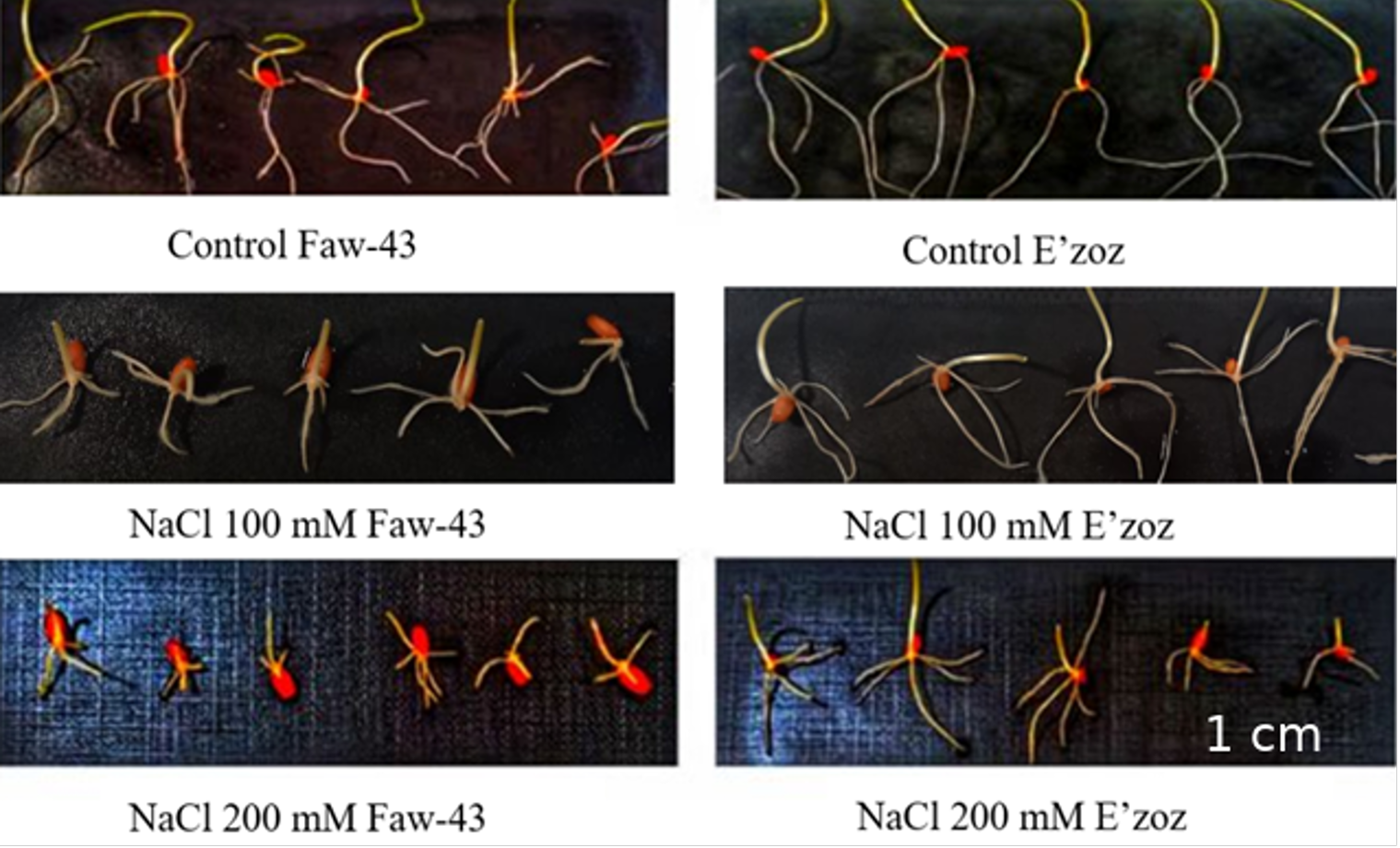
Morphological response of wheat seedlings exposed to different NaCl concentrations (control, 100 mM NaCl and 200 mM NaCl).
References
- Abdurakhmonov, I.Y.U., Z.T. Buriev, S. Saha, et al., 2014. Phytochrome RNAi enhances major fibre quality and agronomic traits of the cotton Gossypium hirsutum L. Nat. Commun., 5: 3062. https://doi.org/10.1038/ncomms4062[CrossRef]
- Amit, K.S., C.H. Shiksha, K. Sundeep, S. Rakesh, K. Jyoti, C.Y. Mahesh, S. Nidhi, G. Sonam, and R. Sherry. 2018. Identification, analysis and development of salt responsive candidate gene based SSR markers in wheat. BMC Plant Biol., 18: 300. https://doi.org/10.1186/s12870-018-1476-1[CrossRef]
- Bakhadirov, U.Sh., O.S. Turaev, D.Sh. Erjigitov, A.A. Dolimov, B.T. Tursunmurodova, A.Z. Fayzullaev, F.I. Matkarimov, D.E. Qulmamatova, S.K. Baboev, Z.M. Ziyaev, and F.N. Kushanov. 2024. Determining aphid resistance genes in bread wheat (Triticum aestivum L.) cultivars using DNA markers. SABRAO J. Breed. Genet., 56: 582-590. http://doi.org/10.54910/sabrao2024.56.2.11[CrossRef]
- Borsani, O., V. Valpuesta, and M.A. Botella. 2001. Evidence for a role of salicylic acid in the oxidative damage generated by NaCl and osmotic stress in Arabidopsis seedlings. Plant Physiol., 126: 1024–1030.
- Shokirova, D.Sh., A.N. Kholikov, Kh.S. To‘rakulov, S.K. Meliev, Sh.A. Samanov, A.A. Dulanazarov, M.V. Turdaliev, N.Y. Azizov, A.A. Dolimov. 2026. Genetic Identification of Yellow Rust Disease Resistance in Bread Wheat (Triticum aestivum L.) Samples Using DNA Markers. Plant Breed. Biotechnol., 14: 139-151. https://doi.org/10.9787/PBB.2026.14.139[CrossRef]
- Erjigitov, D.Sh., O.S. Turaev, A.A. Dolimov, G.F. Mamatkulova, O.A. Mukhammadiev, B.T. Tursunmurodova, and F.N. Kushanov. 2025. Molecular Characterization of heat tolerance in bread wheat (Triticum aestivum L.) cultivars/lines using genomic SSR markers. J. Plant Interact., 20: 1. https://doi.org/10.1080/17429145.2025.2546997[CrossRef]
- Guo, Y., Q. Jiang, Z. Hu, X. Sun, S. Fan, and H. Zhang. 2018. Function of the auxin-responsive gene TaSAUR75 under salt and drought stress. Crop J., 6: 181–190.
- Hasegawa, P.M., R.A. Bressan, J.K. Zhu, and H.J. Bohnert, 2000. Plant cellular and molecular responses to high salinity. Annu. Rev. Plant Physiol. Plant Mol. Biol., 51: 463-499. doi: https://doi.org/10.1146/annurev.arplant.51.1.463[CrossRef]
- Horie, T. and J.I. Schroeder. 2004. Sodium Transporters in Plants. Diverse Genes and Physiological Functions. Plant Physiol., 136: 2457–2462. https://doi.org/10.1104/pp.104.046664[CrossRef]
- Hou, L., Z. Liu, D. Zhang, S. Liu, Z. Chen, Q. Wu, Z. Shang, J. Wang, and J. Wang. 2024. BR regulates wheat root salt tolerance by maintaining ROS homeostasis. Planta., 260(1): 5. https://doi.org/10.1007/s00425-024-04429-8[CrossRef]
- Li, Z., J. Zhong, F. Guo, J. Chen, Z. Song, & Y. Zhang. 2022. Improving Wheat Salt Tolerance for Saline Agriculture. J. Agric. Food Chem., 70(48): 14989–15006. https://doi.org/10.1021/acs.jafc.2c06381[CrossRef]
- Liang, X., J. Li, Y. Yang, C. Jiang, and Y. Guo. 2024. Designing salt stress-resilient crops: Current progress and future challenges. J. Integrat. Plant Boil., 66(3): 303–329. https://doi.org/10.1111/jipb.13599[CrossRef]
- Meliev, S., B. Chinniqulov, I. Aytenov, S. Isoqulov, B. Ochilov, D. Shokirova, S. Murodova, A. Dolimov, X. To’raqulov, T. Bozorov, and S. Baboev, 2023. Characteristics of CIMMYT bread wheat germplasm for resistance to yellow rust and environmental factors. SABRAO J. Breed. Genet., 55: 1865-1877. http://doi.org/10.54910/sabrao2023.55.6.1[CrossRef]
- Munns, R. and M. Tester, 2008. Mechanisms of salinity tolerance. Ann. Rev. Plant Biol., 59: 651–681. https://doi.org/10.1146/annurev.arplant.59.032607.092911[CrossRef]
- Norboyeva D.S., U.X. Yuldashov, A.A. Dolimov U.S.H. Bakhadirov, J.S. Doschanov, D.K.H. Khalikulov, D.Y.E. Musirmanov, N.S.H. Kayumov, D.K.H. Khalmirzaev, K.H.G. Mansurov. 2026. Triticale (× Triticosecale wittmack) evaluation for drought stress tolerance based on morpho-physiological traits and DNA markers. SABRAO J. Breed. Genet., 58(1) 54-65. http://doi.org/10.54910/sabrao2026.58.1.6.[CrossRef]
- Rengasamy, P. 2006. World salinization with emphasis on Australia. J. Experimen. Bot., 57: 1017–1023. https://doi.org/10.1093/jxb/erj108[CrossRef]
- Sharma, H., M. Taneja, and S.K. Upadhyay. 2020. Identification, characterization and expression profiling of cation-proton antiporter superfamily in Triticum aestivum L. and functional analysis of TaNHX4-B. Genom., 112: 356–370.
- Shen, Q., L. Fu, T. Su, L. Ye, L. Huang, L. Kuang, L. Wu, D. Wu, Z.H. Chen, and G. Zhang. 2020. Calmodulin HvCaM1 negatively regulates salt tolerance via modulation of HvHKT1s and HvCAMTA4. Plant Physiol., 183: 1650–1662.
- Shi, H., L. Xiong, B. Stevenson, T. Lu, and J.K. Zhu. 2002. The Arabidopsis salt overly sensitive 4 mutants uncover a critical role for vitamin B6 in plant salt tolerance. Plant Cell., 14: 575-588. doi: https://doi.org/10.1105/tpc.010417[CrossRef]
- Suzuki, Y., A. Makino, and T. Mae. 2001. An efficient method for extraction of RNA from rice leaves at different ages using benzyl chloride. J. Experimen. Bot., 52: 1575–1579. https://doi.org/10.1093/jexbot/52.360.1575[CrossRef]
- Turaev, O.S., S.K. Baboev, Z.M. Ziyaev, J.K. Norbekov, D.Sh. Erjigitov, U.Sh. Bakhadirov, B.T. Tursunmurodova, A.A. Dolimov, Kh.S. Turakulov, D.K. Ernazarova, and F.N. Kushanov, 2023. Present status and future perspectives of wheat (Triticum aestivum L.) research in Uzbekistan. SABRAO J. Breed. Genet., 55: 1463-1475. http://doi.org/10.54910/sabrao2023.55.5.2[CrossRef]
- Yang, Q., Z.Z. Chen, X.F. Zhou, H.B. Yin, X. Li, X.F. Xin, X.H. Hong, and Z. Gong. 2009. Overexpression of SOS (Salt Overly Sensitive) genes increase salt tolerance in transgenic Arabidopsis. Mol. Plant., 2: 22–31.
- Yokoi, S., R.A. Bressan, and P.M. Hasegawa. 2002. Salt stress tolerance of plants. JIRCAS Work. Repor., 25–33. https://www.researchgate.net/publication/225040559
Services
Article usage statistics
Loading…