
Food insecurity persists in many agrarian regions, despite abundant natural resources, revealing that resource availability does not guarantee household food security. This study analyzes the internal and external factors influencing food diversification among farming households in Boalemo Regency, Indonesia, and formulates appropriate strategic interventions. Employing a mixed-methods approach combining field observations, interviews, and secondary data, the study uses SWOT analysis to identify strengths, weaknesses, opportunities, and threats. Results indicate that households face internal constraints, including low income, limited education, weak technological literacy, and dependence on rice consumption. Externally, inadequate infrastructure, limited institutional support, and restricted market access hinder diversification. The analysis situates households in a turnaround strategy, highlighting the need for integrated, corrective interventions. Accordingly, the study proposes a multi-actor strategy: households should adopt organic home gardening; extension systems should provide ongoing, participatory mentoring; communities should develop local food-processing enterprises; and the government should invest in integrated farming systems, infrastructure, financing, and land protection policies. These actions collectively aim to connect production, consumption, and institutional support, transforming local resources into sustainable and accessible food systems.
Research Article · Volume 43, Issue 1, 19 October 2026 · Open Access
Overcoming Food Insecurity through Diversification: A SWOT Analysis of Farming Households in Central Indonesia
· ·
Affiliations & Notes ⌄
- 1Agribusiness Department, Faculty of Agriculture, Gorontalo State University, Gorontalo, Indonesia. , *Correspondence | Yuliana Bakari, Agribusiness Department, Faculty of Agriculture, Gorontalo State University, Gorontalo, Indonesia
- 2Email: yulianabakari@ung.ac.id
Article Info ⌄
- Journal:
- Sarhad Journal of Agriculture
- Published:
- 19 October 2026

From the article
- It highlights the internal factors, including strengths that support sustainable food diversification by farming households, and identifies weaknesses that may hinder its implementation.
- Low level of education, knowledge, and social engagement: Farmer households often lack education about the benefits of consuming and managing diverse, nutritious foods.
- The turnaround strategy emphasizes addressing internal weaknesses and external threats that may hinder the effectiveness of food diversification programs, while simultaneously capitalizing on available opportunities.
- These findings confirm that the research objective has been achieved by linking internal and external factors with practical strategies, suggesting that effective food diversification requires integrated interventions that transform local resources into sustainable, accessible, and economically valuable food system.
Selected from the article's own text.
Abstract
Introduction
Food diversification is increasingly recognized as an important pathway to strengthen food and nutrition security, especially under climate change, population growth, and increasingly homogeneous diets. In Indonesia, this issue is particularly relevant because rice remains the dominant staple food. To address this, the Indonesian government has promoted food diversification as a long-standing national program aimed at encouraging the consumption of alternative staples such as corn and cassava ; ; . This policy orientation is also reflected in the Minister of Agriculture Decree No. 484/KTPS/RC.020/M/8/2021, which designates cassava and corn as rice substitutes. Beyond strengthening food availability, diversification is expected to support more balanced diets and reduce structural vulnerability in food systems .
Despite Indonesia’s strong policy commitment and the abundance of locally available alternative food sources, food diversification remains poorly implemented at the community level, particularly in rural and agrarian regions. Boalemo Regency in Gorontalo Province illustrates this challenge. Although the region is a leading producer of corn and other secondary crops, rice continues to dominate household consumption patterns. According to regional consumption data, monthly rice consumption per capita in Gorontalo is approximately 7.31 kg, whereas corn and tubers account for only 0.47 kg 58 and 0.59 kg, respectively (Statistic of Boalemo Regency, 2023). This indicates a significant disconnect between the availability of diverse food commodities and the actual dietary behaviors of the population. In addition, a large proportion of rice produced by farming households is sold to short-term economic needs, leaving only a small share for home consumption; previous evidence shows that only 14% of rice output is retained for household use . As a result, this pattern suggests a mismatch between local production potential and actual consumption behavior, and it helps explain why food insecurity can persist even among food-producing households.
A number of previous studies have examined the role of food diversification in improving household food security, and these studies provide important insights while also revealing several limitations. emphasized the strategic function of diversification in strengthening food security and reducing social inequality in Indonesia, although their analysis largely focused on national level policy without addressing regional disparities. developed an extension model to encourage staple food diversification, yet their approach remains limited in scope regarding implementation challenges in marginalized rural areas. Studies from other contexts also identified important drivers such as institutions, education, gender, and climate adaptation, yet their findings were either geographically specific or less attentive to local implementation systems and structural barriers ; ; ; ; . Lastly, In Indonesia, Toiba et al. (2020) discussed broader food system transformation and its implications for smallholders, but provided a limited explanation of region-specific constraints in areas such as Boalemo.
Despite confirmation of food diversification’s significance, these studies expose a crucial gap. Few have closely examined rural areas with high agricultural potential, yet household diets remain heavily dependent on rice, and food insecurity persists ; . This gap is especially relevant in places where food-producing households have access to alternative crops but remain unwilling or unable to diversify their consumption due to structural, behavioral, and cultural constraints. Therefore, this study offers a novel contribution by investigating food diversification in an agrarian area with substantial crop diversity but a continuing dependence on rice,such as in Boalemo Regency. Rather than claiming a wholly new perspective, this study extends existing research by offering a localized analysis of food diversification among farming households in a resource-rich yet food-insecure setting. The study uses field-based evidence and SWOT analysis to identify internal and external factors that may support or hinder diversification in this context, thereby contributing an empirical case to the broader literature on food diversification, rural livelihoods, and household food security. Based on this context, the study addresses two research questions: (1) What internal strengths and weaknesses, and what external opportunities and threats, influence the implementation of sustainable food diversification among farming households in Boalemo Regency? and (2) What strategies can support the operationalization of food diversification in the short and long term within this agrarian context? Accordingly, the objective of this study is to analyze the opportunities, constraints, and strategic options for food diversification in rural areas using a SWOT framework.
Materials and Methods
Study area
This research was conducted in Boalemo Regency, Gorontalo Province, Indonesia. The regency lies between 0°24’04” and 1°02’30” N, and 121°08’04” and 123°32’09” E. A geo-referenced map of the area is included as Figure 1. This map shows administrative boundaries, selected sub-districts, and Boalemo’s location within Gorontalo Province. Boalemo is agriculturally fertile with diverse crop production and annual rainfall above 200 mm. There are 25,323 agricultural holdings (Statistic of Boalemo Regency, 2023). Despite these resources, poverty and food insecurity remain. In 2024, the number of poor people fell by 0.41 thousand. However, the Poverty Depth Index and Poverty Severity Index rose to 3.75 and 1.12 (Statistics Boalemo Regency, 2024), indicating persistent inequality and vulnerability. Moreover, the sample collection employed a multistage purposive sampling approach to focus on areas with high agricultural potential and food vulnerability. Three sub-districts; Wonosari, Tilamuta, and Paguyaman Pantai, were selected based on criteria of major corn production, food insecurity status, high poverty incidence, and dominance of farming livelihoods, representing the analytical focus rather than the only eligible areas in the regency. The sampling frame consisted of poor food-crop farmers. According to (Statistic of Boalemo Regency, 2024), from a total population of 18,989 farmers, 16.23% (3,082 farmers) were classified as poor and used as the target population. The sample size was determined using the Slovin/Yamane formula (n = N / (1 + Ne²)), considering an error tolerance range of 5%–10%. With N = 3,082, the estimated sample size ranged from 97 (10% error) to 354 (5% error). A final sample of 146 respondents was selected within this range, representing a balance between statistical reliability and field feasibility (8% error).
Research desaign and data analysis
This study employed a mixed-methods research design, combining qualitative and quantitative approaches to capture the complexity of food diversification among farming households. Primary data were collected through field observations and semi-structured interviews, allowing in-depth exploration of household behaviour, local knowledge, and food consumption practices. Secondary data were obtained from the Provincial Agriculture Service, Food Security Office, and the Central Statistics Agency (BPS). The qualitative data supported contextual understanding, while the quantitative data were used to identify and analyse strategic factors through SWOT analysis, ensuring a comprehensive and empirically grounded assessment. SWOT analysis was used as a data analysis to recognize the factors affecting household food diversification. These factors were chosen based on field interviews, direct observations, and secondary data. Internal factors described household and production conditions, while external factors covered what could help or hinder diversification. Internal factors became strengths or weaknesses in the IFAS matrix; external factors were opportunities or threats in the EFE/EFAS matrix.
The procedure was conducted in several stages. First, strategic internal and external factors were identified from primary and secondary data. Internal factors included, for example, land availability, farming experience, local food resources, educational level, infrastructure conditions, technological literacy, and dependence on rice consumption. External factors
included government support programs, market opportunities, awareness of food diversification, climate variability, price fluctuation, land conversion, and competition from imported food. Second, each factor was assessed by expert informants using a Likert scale from 1 to 5 based on its level of importance or urgency. In this scale, 1 = not important, 2 = less important, 3 = moderately important, 4 = important, and 5 = very important. The number of informants and the method used ensured all identified indicators, both internal and external, were evaluated. The scores given for each indicator were then summed to obtain the total score of each factor. Third, each factor’s weight was found by dividing its total score by the sum of scores for all factors in its matrix. This yielded a weight range of 0.0 to 1.0, with all weights in each matrix summing to 1.0. Weights showed the relative influence of each factor. Fourth, the rating for each factor was determined by averaging the expert informants’ scores for each indicator. Thus, the rating represented the collective perception of the informants regarding the condition or influence of each factor. The score of each factor was then calculated by multiplying its weight by its rating. In other words:
Score = Weight × Rating
Fifth, the weighted scores of all indicators were summed to obtain the total IFAS and EFE/EFAS scores. These totals were used to show the overall strategic condition of the internal and external environment affecting household food diversification. Finally, the IFAS and EFE/EFAS scores were plotted in the SWOT matrix to determine the strategic position of farming households and to formulate the most appropriate strategic alternatives. Based on this matrix, the strategy options were classified into SO (strength-opportunity), WO (weakness-opportunity), ST (strength-threat), and WT (weakness-threat) categories. This stepwise procedure enabled the analysis to move systematically from factor identification, weighting, and scoring to strategic interpretation and policy recommendation.
Results and Discussion
Based on field data (primary data) and also from secondary data obtained from the Provincial Agriculture Service, Provincial Food Service, and Central Statistics Agency, it was found that there are various types of food that have been cultivated in Boalemo Regency, demonstrating its potential to implement a sustainable food diversification program. Table 1 presents the types of agricultural products that have been cultivated in the Regency (Statistic of Boalemo Regency, 2023).
Table 1: Distribution of agricultural holdings by type in boalemo regency
|
Agricultural type |
Number of agricultural holdings (unit) |
|
Food crops |
18,986 |
|
Paddy |
2,176 |
|
Secondary food crops |
17,464 |
|
Maize |
16,040 |
|
Cassava |
115 |
|
Sweet potato |
25 |
|
Peanut |
543 |
|
Mung bean |
35 |
|
Taro |
2 |
|
Soybean |
21 |
|
Porang |
1 |
|
Sorghum |
2 |
|
Horticulture |
4,072 |
|
Estate crops |
10,687 |
|
Livestock |
12,286 |
|
Fishery |
2,180 |
|
Aquaculture |
175 |
|
Captured fishery |
2,012 |
|
Forestry |
629 |
Source: Agricultural Census, 2023.
The data presented in Table 1 shows that rice is not the type of food that dominates this agricultural area, but rather corn and other secondary crops. Therefore, a SWOT analysis method is needed to assist the decision-making process regarding the transition from consuming rice which is actually very rare in this area to alternative foods which are actually abundantly available.
SWOT Analysis results
Table 2 shows SWOT analysis data from deep interviews and field observations. It highlights the internal factors, including strengths that support sustainable food diversification by farming households, and identifies weaknesses that may hinder its implementation.
Table 2: Internal factor analysis summary (ifas) for household food diversification in boalemo regency
|
Variable |
Weight |
Rating |
Score |
|
|
1 |
2 |
3 |
4 |
|
|
Strength (S) |
||||
|
1 |
Diverse Crops Production This region produces a variety of agricultural products; in fact, corn, which is highly nutritious, is more widely grown here than rice. |
0.091 |
4 |
0.362 |
|
2 |
Abundantly available: Alternative food crops to replace rice are abundantly available in this region, both in designated farmlands and home gardens. |
0.084 |
3 |
0.253 |
|
3 |
Diverse Dietary pattern: Some farmers have long adopted a tradition of mixing rice with maize or other crops for their daily meals. |
0.083 |
3 |
0.250 |
|
4 |
Varied Food Preparation: Farming households are accustomed to making a wide range of foods (traditional cakes, snacks, and shredded meat dishes) from agricultural and fishery products. |
0.077 |
3 |
0.230 |
|
5 |
Owning livestock: Some farmers also raise livestock, either as a hobby or to provide a daily source of protein for their households. |
0.071 |
3 |
0.214 |
|
6 |
Housewives’ engagement: housewives actively participate in agricultural activities and social engagements within the community. |
0.083 |
3 |
0.248 |
|
Total |
0.489 |
|
1.558 |
|
|
Weakness (W) |
||||
|
1 |
Low income of farmer households: The low income of farmers makes it difficult for them to purchase superior seeds and agricultural tools needed to sustainably cultivate various crops in their home gardens. Additionally, low income hinders farmers' ability to afford alternative food supplies during crop failures. |
0.088 |
4 |
0.351 |
|
2 |
Very limited access and infrastructure farmers in remote villages with poor access and inadequate infrastructure face challenges in marketing or purchasing alternative foods during shortages. |
0.090 |
4 |
0.360 |
|
3 |
Low level of education, knowledge, and social engagement: Farmer households often lack education about the benefits of consuming and managing diverse, nutritious foods. They face difficulties using technologies that could simplify agricultural tasks and improve the marketing of produce. Many farmers also neglect their health and quality of life, with some unable to afford medical treatment, which can result in long-term health issues. For example, one farmer’s child, left untreated during a high fever, is now paralyzed for life. |
0.089 |
4 |
0.355 |
|
4 |
Member size of household: Large household sizes with unproductive working family members are still found, which makes it increasingly difficult for members to meet their daily basic food needs, with or without diverse and nutritious food. |
0.085 |
4 |
0.341 |
|
5 |
Limited food processing industry and storage facilities: Housewives struggle to produce large quantities of food because they lack adequate cooking equipment, reliable electricity, and proper storage facilities. As a result, processed food and agricultural products often spoil during transportation to urban areas. |
0.077 |
3 |
0.232 |
|
6 |
Complex market chain and widespread usurious practices: Large households with unproductive working members remain common, making it harder for families to meet daily basic food needs, regardless of the diversity or nutritional value of the food. |
0.082 |
3 |
0.245 |
|
Total |
0.511 |
1.884 |
||
|
IFAS Total |
1.000 |
|
3.442 |
|
Moreover, Table 3 presents data on the opportunities and threats that may influence the success of implementing the sustainable food diversification program in this region.
The total IFAS score of 3.442 and EFAS score of 3.323 show that the strengths and opportunities in Boalemo Regency outweigh the weaknesses and threats. Despite challenges such as climate variability, land conversion, food imports, and rural poverty, the region has strong potential for sustainable food diversification. Figure 2 presents the SWOT Analysis Matrix, which maps internal and external factors and suggests the best strategic orientation.
Table 3: External factor evaluation (efe/efas) for household food diversification in boalemo regency
|
Variable |
Weight |
Rating |
Score |
|
|
1 |
2 |
3 |
4 |
|
|
Opportunity (O) |
||||
|
1 |
Healthy lifestyle: Increasing public awareness of healthy lifestyles encourages the consumption of diverse foods to meet nutritional needs |
0.090 |
4 |
0.362 |
|
2 |
Fertile land: he region's fertile, expansive land allows farmers to cultivate a variety of food crops. Additionally, most farmers have home gardens suitable for both farming and livestock rearing. |
0.088 |
3 |
0.263 |
|
3 |
Rice scarcity and fluctuating pricesRice shortages are becoming more frequent, leading to price instability. As food aid often fails to reach farmers, many are considering a transition to sustainable food diversification to address these challenges. |
0.097 |
4 |
0.388 |
|
4 |
Government support for food diversification, technology adoption, and research innovation: The Indonesian government actively supports programs that diversify food, adopt agricultural technologies, and encourage innovative research to enhance agricultural yields. |
0.084 |
3 |
0.252 |
|
5 |
Alternative sources of income: ome farmers take on side jobs outside agriculture to supplement their household food need |
0.086 |
3 |
0.259 |
|
6 |
Infiltration of social media, modern retail, and e-commerce: Indonesia is experiencing very rapid growth in the e-commerce sector which makes it easier to market various agriculture products, and Indonesian people are accustomed to sharing information and education on social media which can be a source of new knowledge for farmers because this social media accessible. |
0.079 |
3 |
0.237 |
|
Total |
0.525 |
|
1.762 |
|
|
Threat (T) |
||||
|
1 |
Climate change: npredictable weather and climate patterns across Indonesia, including in Boalemo, are increasingly causing crop failures due to droughts, floods, wildfires, and other extreme conditions. |
0.099 |
4 |
0.397 |
|
2 |
Increased food import: Indonesia often imports more affordable, visually appealing commodities, including premium white rice, fruits, vegetables, potatoes, bananas, chili, salt, and second-hand clothing. These imports reduce the attractiveness of locally produced goods. |
0.080 |
3 |
0.240 |
|
3 |
Conversion of agricultural land: Many agricultural lands are being sold to urban buyers for residential development. Farmers often sell due to urgent financial needs, such as paying for their children's education. |
0.073 |
3 |
0.219 |
|
4 |
Infiltration of modern markets into semi-rural areas: Urban entrepreneurs are establishing modern markets in villages near urban centers, offering comfortable, clean, and stylish shopping experiences. These markets mainly feature imported goods, drawing shoppers away from traditional markets and local stores because of their greater appeal. As a result, local products are less favoured, leading consumers to shift their preferences toward imported items. |
0.057 |
2 |
0.115 |
|
5 |
Increasing population and poverty in rural areas: Rising population and poverty in rural regions are driven by farmers' lack of skills for non-agricultural work and limited education. These challenges are worsened by poor agricultural conditions caused by unfavourable climate, weather, and demographics. |
0.072 |
3 |
0.216 |
|
6 |
Increasing and unpredictable fluctuations in food prices: Rising prices make it difficult for farming households here to afford daily food and operational supplies such as oil, flour, gas, and electricity, thereby impacting their ability to produce food for extra family income. |
0.094 |
4 |
0.374 |
|
Total |
0.475 |
|
1.561 |
|
|
EFAS Total |
1.000 |
|
3.323 |
|
As illustrated in Figure 2, the SWOT Analysis Matrix positions farming households in Boalemo within a strategic quadrant that highlights the importance of maximizing internal strengths while responding to external opportunities and threats. To translate these findings into practical recommendations, the SWOT components were further developed into a set of strategic alternatives. Based on the illustration, the strength score exceeds the weakness score by (–) 0.326, while the opportunity score surpasses the threat score by (+) 0.210. This positioning places the farming households of Boalemo in Quadrant III of the SWOT Analysis Matrix, also known as the turnaround strategy. The turnaround strategy emphasizes addressing internal weaknesses and external threats that may hinder the effectiveness of food diversification programs, while simultaneously capitalizing on available opportunities. Key recommendations include: improving infrastructure, enhancing technological literacy, and expanding market access. These actions can mitigate vulnerabilities and enable farming households to benefit from supportive government policies, rising consumer demand for healthier diets, and the region’s natural agricultural potential. Consequently, the turnaround strategy provides a crucial roadmap for converting structural challenges into pathways toward sustainable food diversification and improved food security.
Discussion
The findings of this research positioned farming households in Boalemo Regency within Quadrant III (turnaround strategy) of the SWOT analysis, indicating that their strengths and opportunities are outweighed by structural weaknesses and external threats. This result demonstrates that sustainable food diversification cannot rely solely on natural resource abundance, such as fertile land and crop diversity, but requires targeted interventions to address systemic barriers including low educational attainment, poor infrastructure, technological illiteracy, and limited access to markets. The analysis further highlights that government investment in infrastructure, capacity building, and regulatory frameworks, together with farmers’ active participation, extension services, and community engagement, are critical enablers for long-term food security.
Sustainability in this context must be understood as a long-term, systematic, and continuous process, and the turnaround strategy identified in this study provides a framework to initiate change through collaborative efforts across multiple stakeholders. According to ; research findings suggest that the successful implementation of this strategy requires simultaneous and synergistic contributions from four key areas of focus: farmers, as the primary agents of food security; extension workers, experts, and researchers, as mentors and facilitators of knowledge and innovation; communities, as role models and social support systems; and the government, as regulator, financier, and enabler of policies that create a favorable environment for sustainable agricultural practices and food diversification.
First focus: Farmers/Households
A key weakness among farming households in Boalemo is low household income, which directly affects the diversity of food consumed. Limited income forces families to prioritize staple foods to prevent hunger, while dietary variety and nutritional quality receive less attention. This explains why households in productive agricultural areas may rely heavily on rice and consume few alternative local foods. The issue of food diversification at the household level is linked not only to food availability but also to purchasing power, food preferences, and the capacity to produce diverse foods for consumption. This condition is consistent with findings that household expenditure and economic access significantly influence food security and diversification ; .
Based on this awareness, the turnaround strategy should encourage households to engage in home gardens for organic farming. Many households still have wide, fertile yards suitable for cultivating vegetables, tubers, and other local foods. By practicing organic gardening at home, families can produce healthier, more varied foods for daily consumption, reduce their reliance on purchased products, and improve household nutrition. Previous studies highlight the use of local resources, family participation, and household-level food production as strategies to strengthen food security among farming households ; ; ; .
This strategy connects household weaknesses with existing opportunities. To maximize benefits, households should prioritize organic home-garden farming as a subsistence strategy and market surplus products for extra income. Farmers are encouraged to sell vegetables, tubers, and other organic foods via local markets, community networks, or digital platforms such as social media and e-commerce. This is supported by studies showing that digital platforms and market innovation expand consumer access and improve marketing performance ; ; .
Farmers are key actors in household food security, but their efforts should focus on practical, achievable changes. Rather than solely shifting away from rice, strategies should promote the productive use of fertile home gardens. Gradual organic cultivation enables households to diversify diets, improve nutrition, and create income sources. This operational approach addresses low income and dietary diversity while leveraging external opportunities such as demand for healthy food and digital marketing channels ; .
Second focus: Agricultural extension/ Expert/Researcher
The second focus highlights a key challenge: extension services still prioritize production-oriented messages, while practical guidance for household-level food diversification such as home gardening, basic processing, dietary diversity, and local market connections in farmers’ households in Boalemo regency remains limited. As a result, farmers often receive information that does not directly support improvements in their daily food practices. In addition, infrequent extension visits and the use of complex language reduce comprehension and limit the sustainability of new practices, leading to low adoption rates and minimal long-term impact.
To address these gaps, the SWOT analysis suggests strengthening the role of extension workers, experts, and researchers in building farmers’ capacity for sustainable diversification. Extension services should become a continuous, practice-oriented, and participatory process. Key actions are: establishing organic plots in home gardens to provide practical experience; selecting short-cycle vegetables and tubers for consistent and regular harvests; practicing basic post-harvest handling and simple processing techniques to diversify household food consumption; and adopting entry-level digital marketing by using platforms such as WhatsApp or local marketplaces to connect with consumers. Effective implementation requires two-way, contextualized communication, using simple language, demonstrations, and regular follow-up to reinforce learning and address practical constraints ; .
In addition, extension activities need to be embedded in continuous and participatory learning systems. Approaches such as Participatory Action Research (PAR) enable farmers, extension agents, and researchers to collaboratively identify problems, test solutions, and refine practices through iterative cycles, thereby supporting gradual behavioral change and sustained adoption . Furthermore, the development of field schools in collaboration with local universities provides an important opportunity to strengthen knowledge exchange. These platforms allow farmers, students, and researchers to jointly test innovations, observe results in real time, and adapt practices to local conditions. Such experiential and face-to-face learning environments not only bridge the gap between scientific knowledge and field application but also provide farmers with role models and tangible examples of successful food diversification (van den Berg et al., 2021).
Third focus: Community
The third focus emphasizes the community’s role as a social and economic driver of food diversification. The findings indicate that farming households possess a key internal strength: the knowledge and skills of farmers’ wives in preparing local dishes such as bubur sada (corn porridge) and nasi tiwul. Nevertheless, this potential remains underutilized because local food processing requires specialized techniques, additional time, and working capital. These constraints reduce motivation to regularly prepare local foods, helping to explain rice’s continuing dominance in daily consumption even in areas with abundant local resources.
To address this weakness, the turnaround strategy should include three key actions: promote the development of local food-processing micro, small, and medium-sized enterprises (MSMEs) managed by farmers’ wives; provide training on efficient food-processing techniques; and facilitate access to working capital. Collectively, these actions can transform household cooking skills into an organized community-based economic activity. MSMEs make local food products more efficiently processed, attractively packaged, and readily available to households that lack the time or skills for independent preparation. Ultimately, MSMEs can increase the availability of local foods, strengthen household food diversification, and reduce dependence on rice-based diets.
This strategy is supported by existing opportunities in Boalemo, where corn, cassava, tubers, and other local food commodities provide a strong raw material base for food processing. Concurrently, heightened awareness of healthy and local food consumption creates market potential for traditional products. Community-based food enterprises can thus empower farmers’ wives with additional income and encourage households to consume a wider range of local foods. Previous studies reinforce the importance of community participation, social capital, and role models in supporting food security and influencing household food practices ; ; . The collaborative community approach ensures continuity and reinforces the MSME strategy described above. In addition, the strategy recommends three actions to strengthen connections: facilitating farmers’ access to raw materials, supporting farmers’ wives in processing them into value-added products, and enabling the community to promote consumption through local markets, social networks, and digital platforms. These actions align with studies that show participation in modern markets can improve income and food security, while social media and community networks can support agricultural knowledge sharing and product promotion ; ;
Overall, the community strategy should move beyond general awareness campaigns and focus on four specific actions: building community-based economic institutions, developing MSMEs managed by farmers’ wives, supporting household income, and facilitating access to local raw materials and markets. Implementing these actions will help the community address key weaknesses limited income, low motivation to process local foods, and dependence on rice while leveraging opportunities in local raw materials, traditional food knowledge, and growing market demand for healthy local products.
Fourth focus: Government
The study reveals that government support has not been consistently directed toward strengthening household food diversification. Although national and regional programs exist, many still focus on rice production or short-term poverty alleviation rather than on creating enabling conditions for diversified food systems. In Boalemo, farming households continue to rely heavily on government rice assistance, which highlights the limited availability of sustainable alternatives for accessing or producing diverse food sources. Weak infrastructure, inadequate financing, exploitative lending practices, and limited enforcement of land conservation policies further undermine household resilience. These structural barriers align with findings that physical and economic access strongly influence household food security ; . Without clear and sustained government intervention, farming households are likely to remain dependent on rice aid and unable to adopt diversification practices.
In response, the SWOT analysis recommends a turnaround strategy, specifying government actions as the key regulator, targeted financier, and enabler of sustainable diversification. Investment in integrated agricultural systems, including food crops, horticulture, livestock, and fisheries, reduces dependence on a single staple crop, expands diverse sources of food and income, improves land-use efficiency, supports soil fertility, reduces production risks, and ensures year-round food availability. To ensure cohesive policy support, the government should strengthen infrastructure by upgrading irrigation, constructing storage facilities, improving access roads, and expanding renewable energy systems. Equally important, the government must provide accessible credit schemes, such as interest-free or low-interest financing, to support diversification initiatives. These actions collectively help farmers avoid exploitative lending, invest in crop diversification and food processing, and gain access to markets. In addition, According to Kapoor et al. (2024) policies must control excessive food imports and prevent land conversion, protecting local production systems and maintaining agricultural land for diversified farming.
These findings are consistent with previous studies. Awoyemi et al. (2023) showed that investment in rural infrastructure improves household food security, while van den Berg et al. (2021) emphasized the role of government-supported programs in strengthening diversified farming systems. highlighted the importance of targeted financial mechanisms and regulatory frameworks in reducing household vulnerability, and Kapoor et al. (2024) and emphasized the role of institutional frameworks in sustaining diversification strategies. Together, the evidence supports the SWOT-based turnaround framework proposed in this study, showing that government investment in integrated agricultural systems, infrastructure, credit access, and land protection is a key structural foundation for household food diversification. With these interventions, farming households can gradually move beyond rice aid toward more resilient and sustainable food systems, reinforcing the cohesive progression from challenge to solution throughout the analysis.
Conclusions and Recommendations
This study demonstrates that although Boalemo Regency has strong agricultural potential, household food diversification remains limited due to internal constraints, such as low income, limited education, and dependence on rice, as well as external barriers, such as weak infrastructure and inadequate institutional support. Using SWOT analysis, the study identifies a turnaround strategy with coordinated stakeholder roles across households, extension systems, communities, and government. At the household level, actions include promoting organic home-garden production and encouraging dietary diversity. Extension systems should provide continuous, participatory mentoring to enhance knowledge and skills. Communities can develop local food-processing MSMEs managed by farmers’ wives to increase the production of value-added products. Government actions should focus on investing in integrated farming systems, improving infrastructure, facilitating accessible financing, and implementing land protection policies. These findings confirm that the research objective has been achieved by linking internal and external factors with practical strategies, suggesting that effective food diversification requires integrated interventions that transform local resources into sustainable, accessible, and economically valuable food system.
Acknowledgments
The authors acknowledge financial support from Universitas Negeri Gorontalo through the Institute for Research and Community Service (Lembaga Penelitian dan Pengabdian kepada Masyarakat / LPPM). This research was funded under the Accelerated Research–Higher Education Collaboration (Riset Akselerasi–Kolaborasi Perguruan Tinggi / RAKPT) 2024 scheme (Rector’s Decree No. 63/UN47/HK.02/2024). Additional funding for publication in a reputable international journal was provided by the Ministry of Higher Education, Science and Technology through the Directorate General of Research and Development under the Reputable Journal Publication Assistance Program 2025 (Contract No. 038/SPK/C3/DT.05.00/2025 and No. 2542/UN47.D1/HK.07.00/2025).
Novelty Statement
This study offers a novel contribution by advancing a SWOT-based turnaround framework that explicitly addresses the paradox of food insecurity within resource-abundant agrarian households. Unlike prior research that examines food diversification separately from either production or consumption perspectives, this study integrates both dimensions within a single analytical framework and links them to household behaviour, institutional support, and structural constraints. The originality of this research lies in its multi-actor, system-based approach, positioning farmers, extension workers, researchers, communities, and government as interconnected agents driving food diversification at the household level.
Authors’ Contribution
Yuliana Bakari: The research team collaboratively developed this study, serving as the team leader and correspondence author, was responsible for designing the research, analyzing the data, and drafting the manuscript for publication.
Ria Indriani: Conducted a comprehensive literature review, authored various sections of the manuscript, and undertook revisions.
St. Aisyah: Tasked with data collection, tabulation, and data analysis.
Generative AI and AI-assisted technology statement
The authors declare that no generative AI and AI assisted technology was used in the creation of this manuscript.
Conflict of interest
There are no conflicts of interest to declare.
Figures
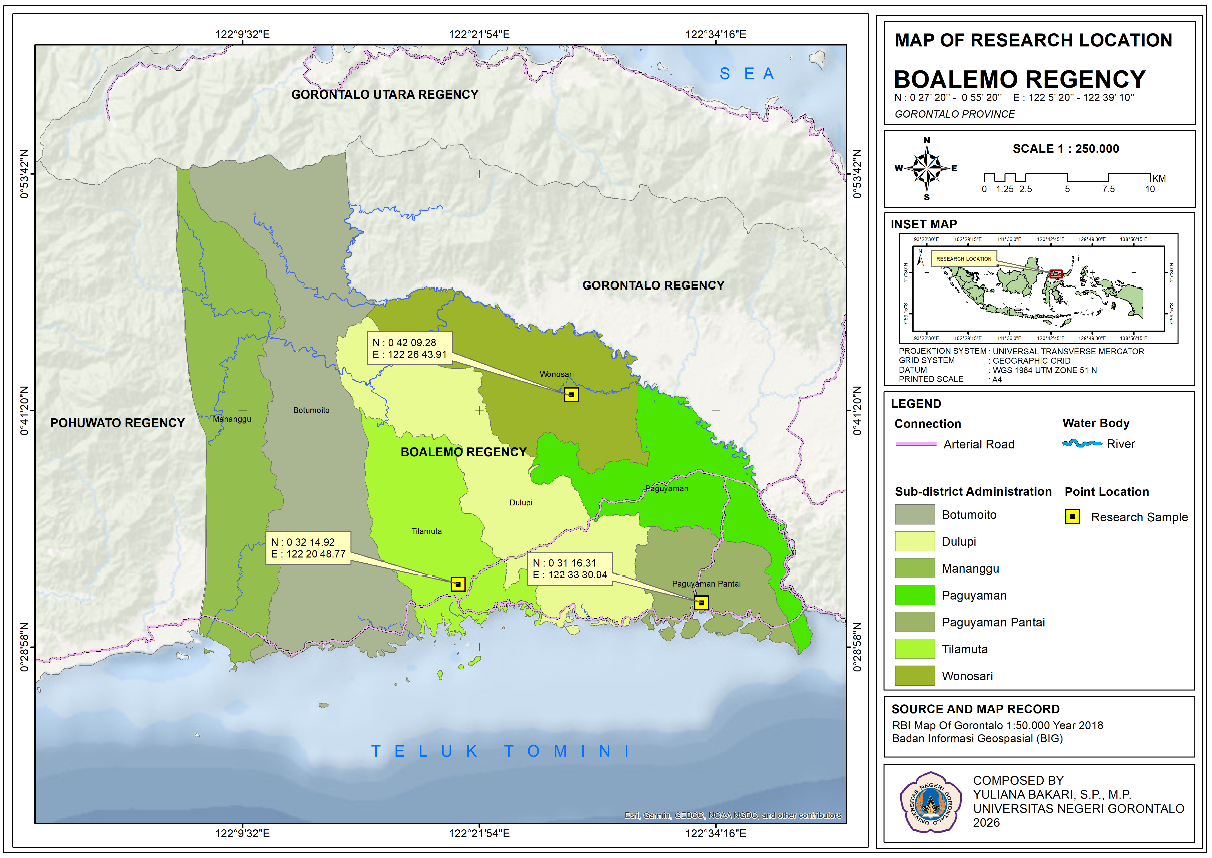
A geo-referenced map of the study area
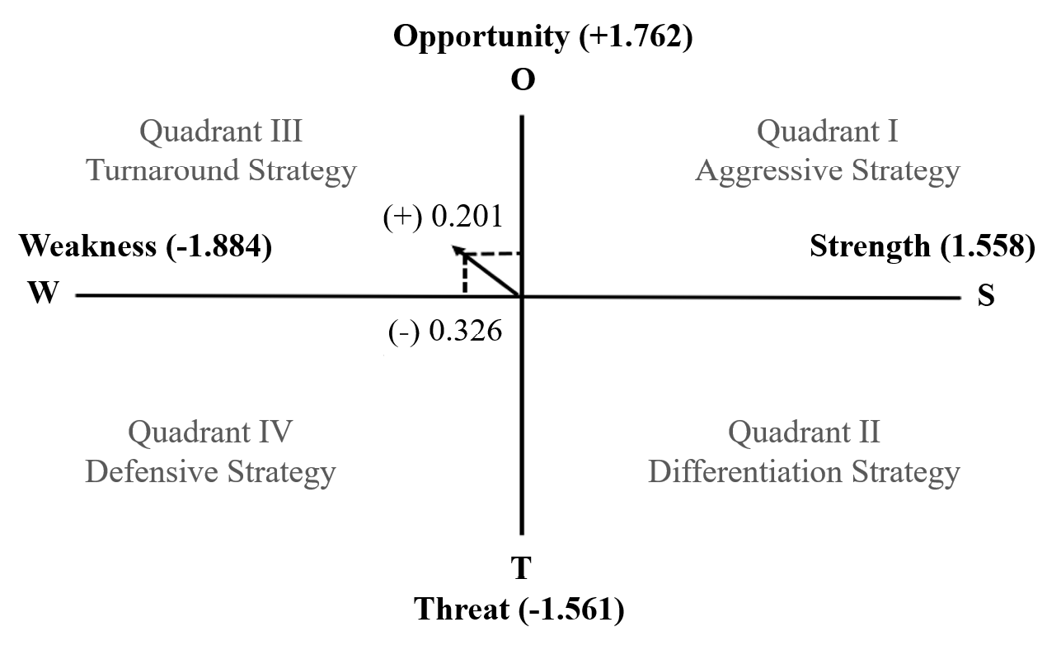
SWOT analysis matrix illustrating the strategic position of farming households for the implementation of sustainable food diversification in boalemo regency.
References
- Abokyi, E., B.O. Asante and C.A. Wongnaa. 2023. Women’s role of caregiving for under-five children: implications for dietary diversity and food security in Ghana. Cogent Food Agric., 9(1). https://doi.org/10.1080/23311932.2022.2153415[CrossRef]
- Andoko, E., D. Damat and A. Candida. 2021. Food diversification promoting food security and diabetes mellitus alleviation in Indonesia. FFTC Agric. Policy Platform., 1(1):1-10.
- Atiki, N.L., Y. Bakari and M.Z. Hippy. 2025. Analysis of food diversification consumption patterns in increasing food security of farming households. Mimbar Agribisnis: Jurnal Pemikiran Masyarakat Ilmiah Berwawasan Agribisnis., 11(2):2947. https://doi.org/10.25157/ma.v11i2.18640[CrossRef]
- Awoyemi, A.E., G. Issahaku and J.A. Awuni. 2023. Drivers of household food security: evidence from the Ghana living standards survey. J. Agric. Food Res., 13: 100636. https://doi.org/10.1016/j.jafr.2023.100636[CrossRef]
- Ayele, A.W. 2020. Determinant factors of food security among households in Northern Ethiopia: an application of binary logistic regression model. J. Glob. Econ., 8(4): 4-10. https://doi.org/10.37421/economics.2020.8.352[CrossRef]
- Bakari, Y. 2018. The determinant factors of rice’s marketed surplus in Bone Bolango Regency. J. Int. Conf. Proc., 1(2): 1-8. https://doi.org/10.32535/jicp.v1i2.319[CrossRef]
- Berg, H.V.D., S. Phillips, A.S. Poisot, D. Marcel and F. Marjon. 2021. Leading issues in implementation of farmer field schools: A global survey. J. Agril. Edu. Ext., 27(3): 341-353. https://doi.org/10.1080/1389224X.2020.1858891[CrossRef]
- Burbi, S. and K.H. Rose. 2016. The role of Internet and social media in the diffusion of knowledge and innovation among farmers. 12th European IFSA Symposium: Social and Technological Transformation of Farming Systems: Diverg. Converg. Pathway. https://doi.org/10.13140/RG.2.1.4290.4567[CrossRef]
- Chi, N.T.K. and B.T. Hien. 2022. Green innovation in agriculture development: the impact of environment awareness, technology spillover, and social networks. Int. J. Sustain. Agric. Manag. Inform., 1(1): 1. https://doi.org/10.1504/IJSAMI.2022.10051008[CrossRef]
- Fauziah, S.H., G. Prayitno, D. Dinanti and I.I. Hidayana. 2023. The relationship between social capital and food security in farmer households: case study: Sedayulawas Village, Lamongan Regency, Indonesia. Region: Jurnal Pembangunan Wilayah dan Perencanaan Partisipatif., 18(2): 517. https://doi.org/10.20961/region.v18i2.67435[CrossRef]
- Fekede, G., Z. Lemma and Y. Jemal. 2016. Determinants of farm household food security in Hawi Gudina district, West Hararghe zone, Oromia Regional National State, Ethiopia. J. Agric. Ext. Rural Dev., 8(2): 12-18. https://doi.org/10.5897/jaerd2014.0660[CrossRef]
- Fernández, M.J.G. 2015. Improving food access for poor households in Indonesia: cash transfers and the Raskin program reform. 58.
- Gezie, M. 2019. Farmer’s response to climate change and variability in Ethiopia: a review. Cogent Food Agric., 5(1): 1613770. https://doi.org/10.1080/23311932.2019.1613770[CrossRef]
- Hidayati, B., E. Yusida, V. Qurrata, N. Nasikh and W. Huang. 2023. The digital agriculture model for sustainable food system: an analysis of agricultural technology adoption in East Java, Indonesia. J. Sustain. Sci. Manag., 18(4): 172-190. https://doi.org/10.46754/jssm.2023.04.013[CrossRef]
- James, E., A. Milenkiewicz and M.T. Bucknam. 2008. Cycles of PAR: the power of the iterative process. p. 145-158. In: Participatory Action Research for Educational Leadership: Using Data-Driven Decision Making to Improve Schools. SAGE Publications, Inc. https://doi.org/10.4135/9781483329369.n9[CrossRef]
- Kapoor, S., A. Sma, H. Pathak and M. Pradhan. 2024. Farming for the future: prioritization of climate-smart agriculture technologies in SAARC countries. International Food Policy Research Institute.
- Koni, M.D.J., Y. Bakari and Y. Boeckoesoe. 2025. Accessibility and household food security of fishermen in the coastal area of Gorontalo: a case study of Bangga Village, Paguyaman Pantai District. J. Ilmiah Membangun Desa dan Pertanian., 10(2): 225-235. https://doi.org/10.37149/jimdp.v10i2.1803[CrossRef]
- Krause, H., A. Faße and U. Grote. 2019. Welfare and food security effects of commercializing African indigenous vegetables in Kenya. Cogent Food Agric., 5(1): 1700031. https://doi.org/10.1080/23311932.2019.1700031[CrossRef]
- Macoa Gau, A. and N. Saleh. 2024. Exploring e-commerce potential: improving sales performance through product innovation in the agriculture sector. J. Econ. Resour., 7(1): 47-56. https://doi.org/10.57178/jer.v7i1.836[CrossRef]
- Mahmud, N.H., Y. Bakari and M.Z. Hippy. 2025. Analysis of the level of household food accessibility of farmers in Saritani Village, Wonosari District, Boalemo Regency. Mimbar Agribisnis: Jurnal Pemikiran Masyarakat Ilmiah Berwawasan Agribisnis., 11(2): 2956. https://doi.org/10.25157/ma.v11i2.18641[CrossRef]
- Maman, U., N. Murodi, Nindyantoro, E. Mujahidin, D. Zaenuddin, Muhyani and Muksin. 2021. Formulating extension model to encourage staple food diversification: a solution to food crisis potential. Univ. J. Agric. Res., 9(4): 138-148. https://doi.org/10.13189/UJAR.2021.090405[CrossRef]
- Mustafayeva, R., Y. Abbasova, R. Qambarova and Z. Bayramov. 2024. The assessment of the development of grain production in ensuring food security in Azerbaijan. Bulg. J. Agric. Sci., 30(1): 3-10.
- Rahmanto, F., E.P. Purnomo and A.N. Kasiwi. 2021. Food diversification: strengthening strategic efforts to reduce social inequality through sustainable food security development in Indonesia. Caraka Tani: J. Sustain. Agric., 36(1): 33-44. https://doi.org/10.20961/carakatani.v36i1.41202[CrossRef]
- Sadono, E.D. 2018. Impact evaluation of Raskin program using matching method: case of IFLS 5. Jejak., 11(1): 207-223. https://doi.org/10.15294/jejak.v11i1.9192[CrossRef]
- Statistic of Boalemo Regency. 2023. Boalemo Regency in figures. Statistic of Boalemo Regency, Boalemo.
- Statistic of Boalemo Regency. 2024. Complete enumeration results of the 2023 census of agriculture – Edition 2: food crops individual agricultural holdings, Boalemo Regency. Statistic of Boalemo Regency, Boalemo.
- Statistics Boalemo Regency. 2024. The poverty condition of Boalemo in 2024. Statistics Boalemo Regency. 02.
- Sulandjari, K., Z. Abidin, M.M. Lubis and D.R. Dwi Hastuti. 2023. Effect of community participation, knowledge transfer, technology adoption on community food security and agricultural sustainability: a study on farmer entrepreneurs in Indonesia. West Sci. Interdiscip. Stud., 1(10): 1068-1079. https://doi.org/10.58812/wsis.v1i10.310[CrossRef]
- Toiba, H., T.W. Nugroho, D. Retnoningsih and Moh. S. Rahman. 2020. Food system transformation and its impact on smallholder farmers’ income and food security in Indonesia. Cogent Econ. Finan., 8(1): 1854412. https://doi.org/10.1080/23322039.2020.1854412[CrossRef]
- van den Berg, H., S. Phillips, A.S. Poisot, M. Dicke and M. Fredrix. 2021. Leading issues in implementation of farmer field schools: a global survey. J. Agric. Educ. Ext., 27(3): 341-353. https://doi.org/10.1080/1389224X.2020.1858891[CrossRef]
- Veisi, H., M.S. Carolan, A. Alipour and A.V. Besheh. 2022. Competing fields in sustainable agriculture: on farmer-expert understandings of good farming, good farmers and organic farming. Int. J. Agric. Sustain., 20(3): 289-301. https://doi.org/10.1080/14735903.2021.1929740[CrossRef]
- Waaswa, A., A. Oywaya Nkurumwa, A. Mwangi Kibe and J. Ng’eno Kipkemoi. 2024. Adapting agriculture to climate change: institutional determinants of adoption of climate-smart agriculture among smallholder farmers in Kenya. Cogent Food Agric., 10(1). https://doi.org/10.1080/23311932.2023.2294547[CrossRef]
- Woleba, G., T. Tadiwos, E. Bojago and M. Senapathy. 2023. Household food security, determinants and coping strategies among small-scale farmers in Kedida Gamela district, Southern Ethiopia. J. Agric. Food Res., 12: 100597. https://doi.org/10.1016/j.jafr.2023.100597[CrossRef]
- Yanfika, H., I. Listiana, K.K. Rangga, S. Gitosaputro, T. Dame Gultom and I. Nurmayasari. 2024. Building appropriate strategy for improving the capabilities of agricultural extension services in Indonesia. Bulg. J. Agric. Sci., 30(1): 17-27.
Services
Article usage statistics
Loading…