In further purification by ion–exchange methods, experimental findings showed that although activity of enzyme increased as compared to crude extract but close to that of partially purified fraction.
Results also showed that procedures of purification of enzymes may not have inhibitory effects on laccase activity.
Most fungi have indicated that the optimal pH for laccase activity is between 3-5.
The successfully produced and purified laccase enzyme to homogenity from A. flavus strain isolated from industrial wastewater sample collected from industrial area near Lahore Pakistan showed thermal as well as pH stabilities.
Selected from the article's own text.
Abstract
Laccases belong to family oxidoreductase are widely present in nature and possess broad range of substrates. Vast application of these enzymes demands their production in a large quantity. In this study production and optimization of laccase enzyme production from locally isolated and screened potential fungal strain of Aspergillus flavus was monitored. During this study culture medium and different parameters such as incubation period and inoculum size were optimized and inducers were employed for enhanced production of laccase. Partial purification was accomplished through Ammonium-Sulphate precipitation and for further purification gel filtration and anion exchange methods were used along with protein estimation. The purified fraction was then subjected to enzymatic characterization to find its thermal stability, effect of pH and selected chemical compounds. Other significant experimental findings were; optimum incubation period was 7 days, inoculum size was 3 discs of 0.5 cm, CuSO4 as inducer improved production, laccase activity of crude extract i.e. 10.89U/ml increased to 15.07U/ml with purification of the enzyme, the purified samples of enzyme was significantly greater protein concentration than crude sample so, the optimum pH was 5.0 for laccase activity and the enzymatic extract was thermostable up to 60oC for 1 hour with guaiacol as substrate. The biological production of enzyme have an ecofriendly impact in current scenario.
Novelty Statement | The study is novel in suggesting ecofriendly impact of production of laccase enzyme from locally isolated Aspergillus flavus strain.
Introduction
The most widely occurring group of phytochemicals as plant secondary metabolites is polyphenols . Laccases are polyphenol oxidases and also known as multicopper oxidases because they are members of the blue multi-copper protein family as their catalytic site contains four copper atoms . As laccases are oxido-reductive enzymes, oxidize substrates with the elimination of electrons and a free unstable radical is formed that undergoes non enzymatic processes like polymerization or hydration. Electrons are picked up by the oxygen molecule and reduced into water at the same time . These enzymes are advantageous because they do not require hydrogen per oxide for oxidation of substrate rather oxygen act as an unlimited electron acceptor . It is an important industrial catalyst, helpful in fuel production ; . Besides that, it has a variety of actions, such as azodye oxidation , pulp bleaching via biochemical means , processes of polymerization or depolymerization, as well as biosensors .
Laccases have been found in bacteria, plants, and numerous fungal species (Marques de Souza and Peralta, 2003). Fungal laccases are useful in food microbiology like ethnol production from pulp, clarification of wine and manufacturing of lightening cream etc. . These enzymes are attracting attention because of their potential industrial application in textile dye bleaching, effluent detoxification, degradation of aromatic pollutants bio-pulping, bio-sensor and bio-remediation . Both extracellular and intracellular types of laccases are present in fungi but most fungal laccases are extracellular . Extra cellular types of laccases are produced in small amount but inducers can be used to enhance their production . Fungal laccases are preferred over plant and bacterial laccases because of their high redox potential, they are involved in a variety of biotechnological processes .
In recent years major interest of scientists lies in production of active and stable laccases in enhanced quantity but at relatively low cost by using biotechnological techniques. Laccases obtained from filamentous fungi provides stable, reliable and cost effective source due to production of improved level and ease of extraction. . A serious issue regarding the low production rate of fungal laccases by native hosts makes them suitable for industrial utilization and high cost. This problem can be solved by using inducers to enhance production rate among laccase positive producers including Trichoderma and Aspergillus species and using cost-effective substrates.
Due to the presence of many isoforms of laccases, the most appropriate system of purification has not been established (Flukery, 2003). Purification of laccases obtained from white rot fungi, on the other hand, has been documented . It has been found that purified laccases remained stable if stored frozen (Flukery, 2003). Moreover, use of these enzymes in food industry require high level of purified preparations so the discovery of a simple and effective purification method is eagerly awaited . The aim of present research was to produce and partially purify laccases from extracellular crude culture extract of locally isolated and screened Aspergillus flavus strain including enzymatic characterization for thermal stability, optimum level of pH and substrate optimization.
Materials and Methods
The current studies were conducted in PCSIR Laboratories, Ferozpur road, Lahore.
Production of laccase
Screening of culture medium
A locally isolated fungal strain of A. flavus was cultured on five different media for inducing enzyme production, using submerged fermentation technique at 30oC for ten days of incubation. Then filtered and centrifuged culture was used as enzyme source. Sampling was done after every 24 hours for determination of enzyme activity.
Inoculum size
The enzyme activity was measured by using various inoculum discs sizes. The flasks were incubated at 120 rpm on ±30oC for 7 days.
Incubation period
The impact of incubation time for maximum enzyme production was determined through sampling and measuring laccase activity at regular intervals such as 24, 48, 72, 96, 120, 144, 168, 196 hours.
Impact of copper sulphate laccase production
To investigate the effect of copper sulphate on enzymes, various Conc. of Copper sulphate was used and compare with control.
Impact of inducers on laccase production
Various inducers were introduced to enhance enzyme production and its activity 0.02 % of each inducer, crystal violet, methylene blue, congo red, trypan blue, ethanol were used.
Purification of laccases
Partial purification of enzyme
The partial purification of recovered concentrated crude, the ammonium sulphate precipitation technique was used to obtain the enzymatic extract at temperature of 4oC . The crude laccase suspension was fed by solid ammonium-sulphate and stirred continuously at saturation of 0 to 20%. The suspension was then allowed to settle down for approximately half an hour. We get precipitates after centrifugation for half an hour at 10,000 g. The supernatant obtained as a result was further subjected to saturation at different concentrations like 20-40%., 40-60%, 60-80% and 80-100%. Following that, the fractions were pooled separately and centrifuged 10,000 g, for half an hour and resulting precipitates were dissolved in a minimum amount of 0.1 M sodium acetate buffer having pH 5.0 and desalted by dialysis, utilizing a dialysis tubing membrane that has a cut-off 12-14 kDa and using a 0.01 M sodium acetate buffer with a pH of 5.0. The protein fraction obtained as a result of dialyzation was assayed for enzyme positive activity. The fraction containing laccase enzyme (60-80%) had been selected as the partially purified enzymatic extracts and lyophilized in the presence of 2.5% of mannitol. The purified fraction after lyophilization was kept at -80oC and then used for the characterization in further studies.
Purification of enzyme
We got precipitates as a result of partial purification of laccases by ammonium sulphate method for Gel-permeation chromatography sephadex G 100 column of size 2.0 x 40 cm was used. The sample obtained after DEAE-cellulose anion-exchange chromatography was then loaded into this column for further purification. A 3 ml of enzyme fraction was pooled and active eluted fraction was dialysed. A graph was plotted between dependent and independent variables to get a slope of variables for the calculation of protein concentration.
Protein estimation
Protein was estimated using the Lowery et al. (1951). To prepare alkali solution of copper, 2g sodium carbonate (Na2CO3), 2ml copper sulphate, 0.5%, 2 ml of sodium potassium tartrate, 1% dissolved in 100ml of 0.1N sodium hydro-oxide. Protein solution 0.5ml and alkaline copper reagent 5ml was combined and left at room temperature for 10 to 15 minutes. Follins reagent 0.5ml, diluted with distilled water in 1:1 was added in order to complete the reaction. Absorbance was taken at 600nm and values were compared to that of bovine serum albumin.
Total protein= Absorbance value × Standard factor (BSA)
Laccase characterization
For characterization of purified laccases fraction, the comparative bio-assay was carried out against various treatments including temperature, pH, activators and inhibitors.
Impact of pH on enzyme stability and activity
Laccase activity was checked at different pH levels. Other cultural conditions such as temperature, time of incubation, concentration of substrate were remained constant. The purified laccase enzyme was incubated in a variety of buffers ranging in pH from 2 to 8. After incubation of 1 h laccase enzyme activity was calculated. For all enzyme assay, assay conditions were kept same.
Impact of temperature on enzyme activity and stability
Laccase activity was measured in percentage and investigated at different temperatures for 1 to 4 hours. All enzyme assays used the same conditions.
Effects of activators and inhibitors
Different solutions of inhibitors (strontium chloride, bismuth nitrate, lead chromate, sodium chloride, silver nitrate) were prepared to investigate the effect on activity of laccase enzyme. Enzyme extract mixed with inhibitor solution and incubated at 30°C for one hour and then the assay method was used to determine laccase activity.
Statistical analysis
From the initial data of this present investigation, mean and standard error were determined. Values regarding the coloured oxidizing zones under different parameters were also analysed statistically by using LSD (least significant difference) method to deliberate mean differences .
Results
Production of laccases
Screening of different culture media
Aspergillus flavus strain SAf5 was culture on five different media for inducing enzyme production using submerged fermentation technique at 30oC for ten days of incubation. Results showed that among different media used for cultivation of A. flavus strain and laccase enzyme production, medium 3 i.e. of Olga et al. (1993) proved best for maximum production under shake flask conditions with enzyme activity 0.246 U/ml followed by medium 4 (Coll et al., 1993).
Fungal Strain and culture conditions
Following protocol of Harley et al. (1993), A. flavus locally isolated from industrial waste water and screened for laccase enzyme synthesis was sustained by transferring enzymes on a regular basis to malt extract agar medium plates and incubating them at 20oC. A basal liquid medium was chosen for laccase synthesis, screened with the previously optimized conditions in which 30oC temperature and 5pH with the addition of 3.5% sugarcane bagasse as carbon and peptone (2%) for nitrogen source.
Incubation time
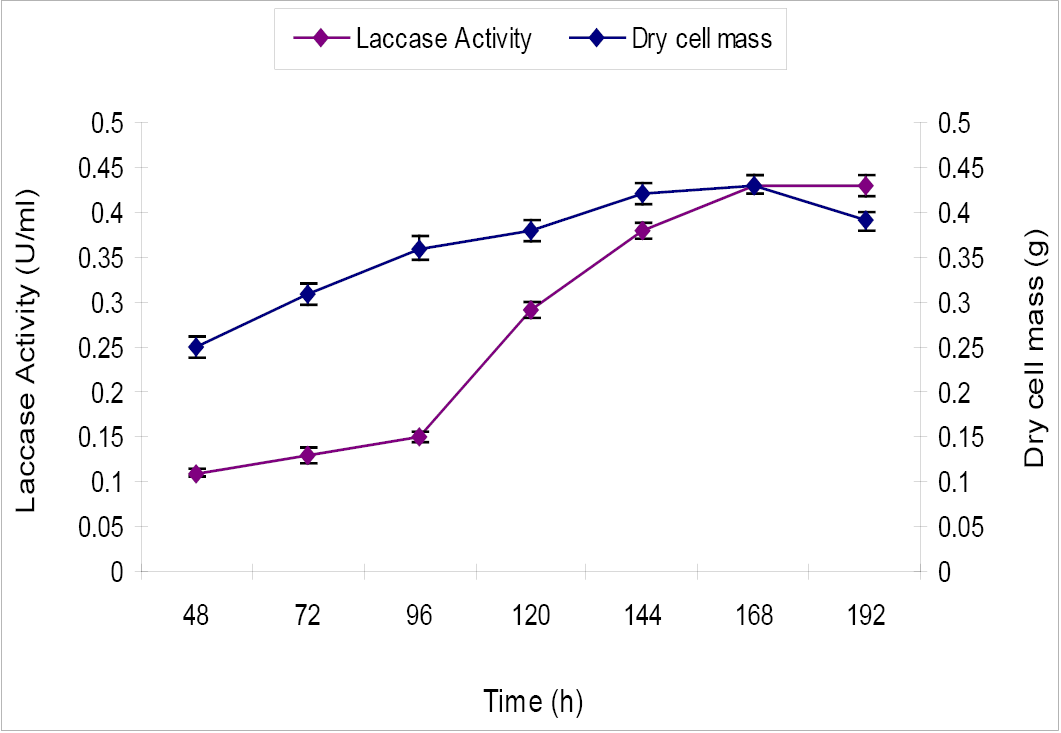
Figure 1 shows the effect of range of incubation time duration on the production of laccase enzyme. Laccases enzyme production and fungal dry mycelial mass was maximum at seventh day.
Inoculum size
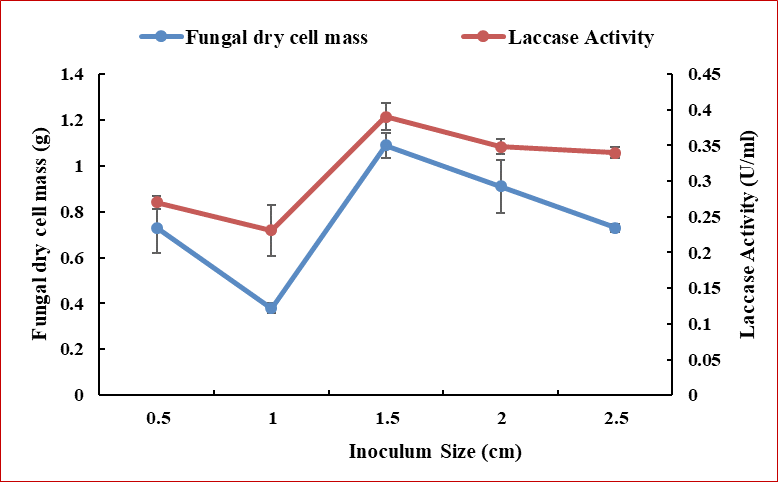
Inoculum size optimization was carried out for laccase activity by employing different number of sterilized inoculum discs (0.5 cm diameter) such as 1, 2, 3, 4 and 5 discs in medium. Optimum size of inoculum was 1.5 cm with highest production (0.390 U/ml). However, the optimum size of inoculum, activity of enzyme was low gradually. But the dry mycelial mass was found utmost in reaction mixture having inoculum amount 1.09g while smallest amount in reaction mixture 0.38g having 02 discs of inoculum (Figure 2).
Effect of copper sulphate on enzyme production
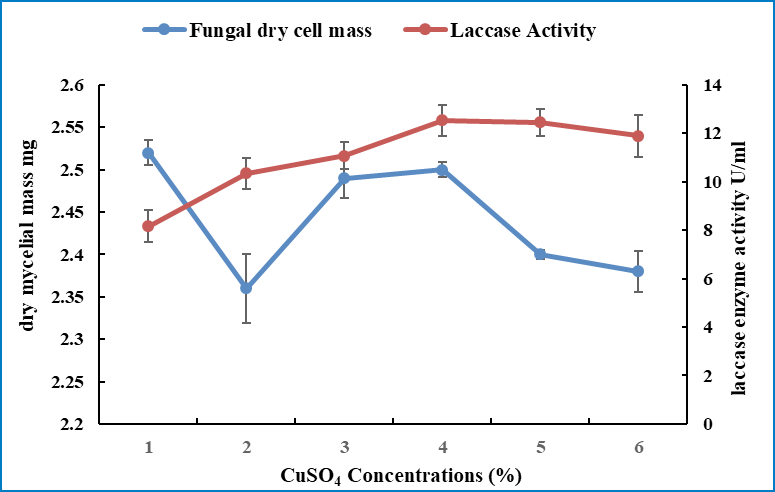
Enzyme activity and dry cell mass of A. flavus was estimated at various copper sulphate conc. i.e. 0.2, 0.4, 0.6, 0.8 and 1.0 mM CuSO4 conc., the maximum laccase activity was observed as 0.4mM CuSO4 concentration. Dry cell mass was also estimated maximum with o.4 mM CuSO4 concentration. This investigation indicated, laccase production from A. flavus was improved by Copper sulphate.
Inducers effect on Laccase Activity
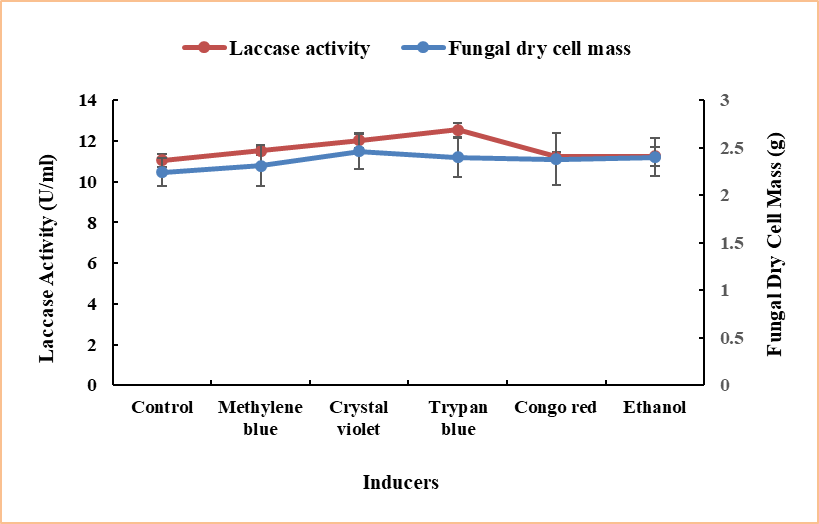
Effect of various compound were investigated on enzyme production. Results indicated that some of the compounds encourage laccase production (Figure 4). The highest activity was noticed trypan blue (12.54 U/ml) while the smallest amount was noted in case of congo red (11.23 U/ml). But, maximum mycelial biomass was calculated in case of crystal violet (2.46 g).
Purification of enzyme
Recovery of crude extract
After seven days of incubation of culture in selected medium, the mycelia pellets were removed with cheese cloth and liquid culture medium was filtered by using Whatman filter paper no 1. The filterate was used as concentrated crude enzyme extract.
Partial purification of enzyme
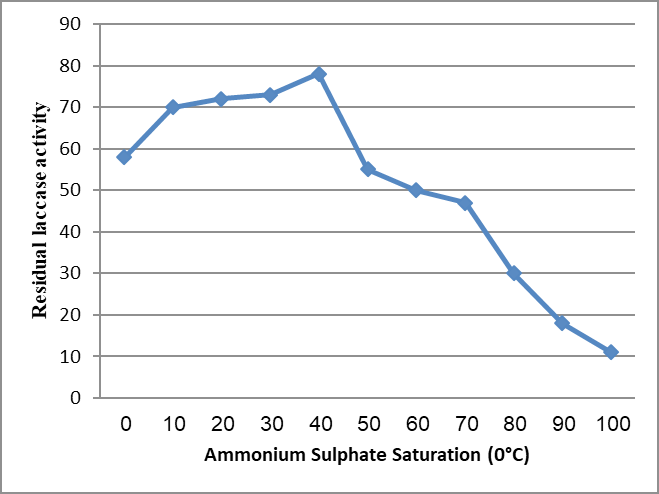
Partial purification of active laccases was conducted from culture filtrate of fermentation medium by using the simple technique of ammonium-sulfate percentage saturation method. In this method, we employed different concentrations of ammonium sulphate from 20 to 100% for protein purification. The results indicated that complete precipitation of proteins was obtained at 80% saturation of ammonium sulfate at 0oC. Thus the enzyme activity of partially purified proteins started at 25% saturation and maximum activity was calculated at 80% ammonium sulfate saturation in pellet at 0oC .
Purification of extracellular laccase
After purification of crude enzyme by ammonium sulphate saturation method, the partially purified laccase enzyme was further subjected to different purification steps. By employing these purification steps, enzyme proteins were further purified 5.23 folds and 21.4% yield. Fungal laccases obtained from A. flavus adsorbed strongly on DEAE cellulose and then displaced creating a linear gradient of citrate buffer with 40-370 Mm concentration. Single band of extracellular laccase enzyme was obtained when we employed activity staining for purified protein. Gel chromatography using sephadex G-100 was performed for further verification of molecular wt. of laccase that was determined as 65±2 KDa .
Total proteins (mg) defined as multiplication of total volume of culture medium by protein concentration (mg /mL).
Total enzyme activity (U) defined as multiplication of total protein by specific activity and expressed as nmol of product/min.
Specific activity defined as nmol of product/ mg of protein/ min.
Purification factor of enzymes can be calculated by dividing specific activity of each sample by that of crude enzyme extract.
Evaluation of protein concentration
The data showed very low protein pellets activity was obtained underneath 30% of ammonium sulfate saturation however; protein pellets active conc. was noticed subsequent gradual boost from 30% to 80% dispersion of ammonium sulfate. This clearly showed, in crude sample protein conc. was considerably high as compared to purified protein samples. The specific activity was considerably improved by purification steps and overall purification was found to be 1.82 folds.
Characterization of purified laccase enzyme from A. flavus
To study the properties of laccase enzyme by A. flavus comparative bioassay was performed to differentiate the purified laccase beside different treatments including temperature, pH, activators and inhibitors.
Effect of different pH levels on enzyme activity and stability
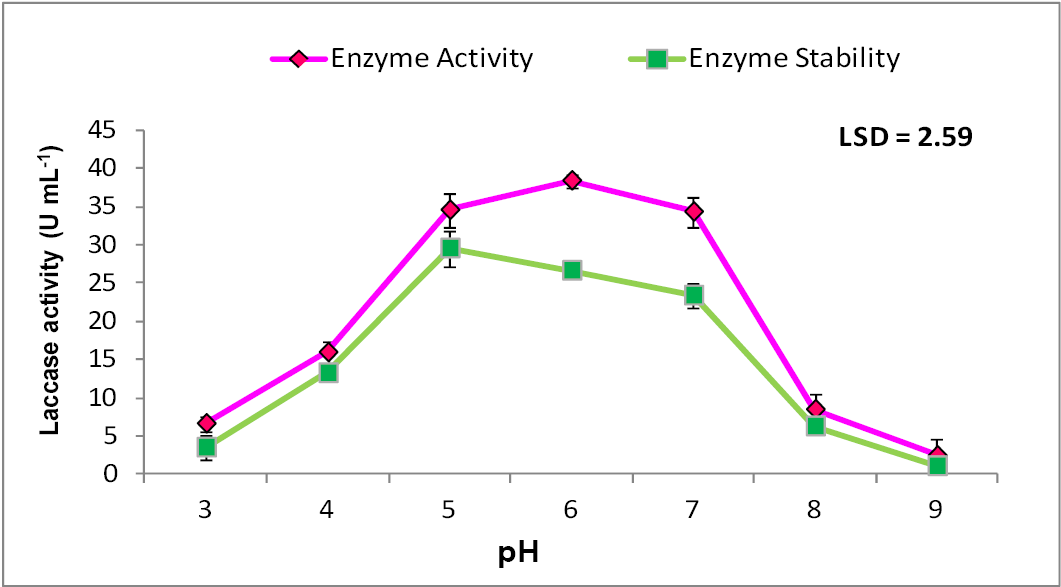
Two buffer systems were used to determine the pH range. It was shown that the purified laccase enzyme was active in a broad range of pH i.e., 3.0 to 6.0, and the maximum activity was noticed at pH 5 (Figure 6).
Effect of temperature on laccase enzyme activity and stability
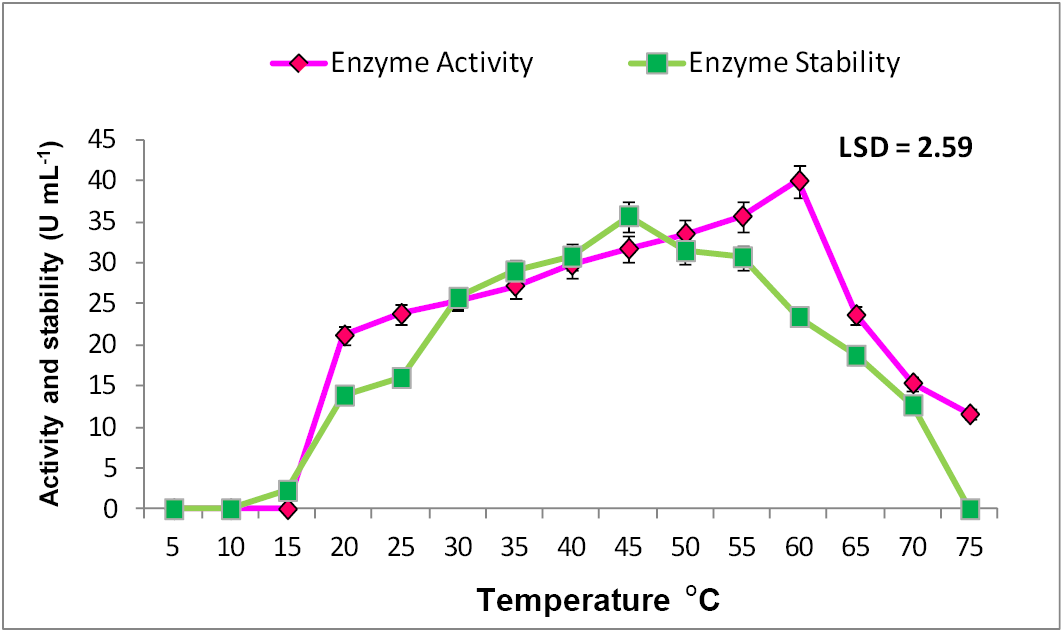
The purified sample of enzymes was incubated to various temperatures range between 5oC to 75oC. The results indicated that laccase enzyme activity was found to be weakening at 70oC. The laccase activity increased sharply at and above 50oC and became 100% between 60 and 65oC then gradual decline in activity started till 75oC. In stability of enzyme exposure time also played an important role towards different temperatures. In this investigation laccase was stable at 60oC for about 1 hour. Enzyme stability was up to 40 minutes at 75oC and completely lost after 120 minutes i.e inhibition in enzyme activity was 100% (Figure 7).
Effects of inducers
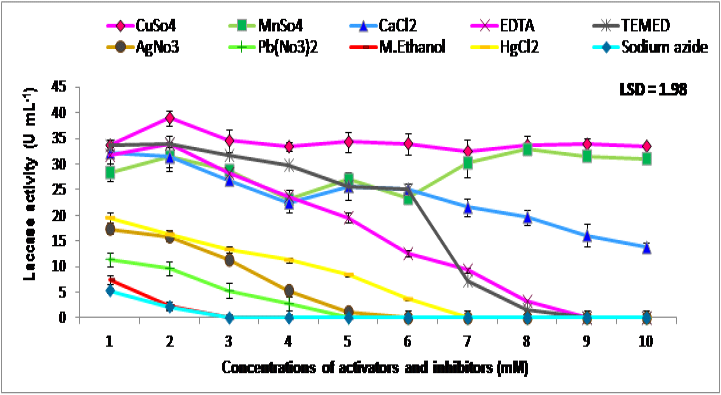
Effect of different ions and compounds were studied, it was shown that only 2 mM copper sulphate (CuSO4) induce the activity of laccase enzyme among selected ions and compounds. Laccase activity showed no significant increase or decrease in case of Mn2+. In the presence of mercury (Hg2+) 3 mM, almost 70% of enzyme activity was lost and sodium azide completely inhibited enzyme activity while EDTA acted as moderate inhibitor of purified fraction of laccase. Another tested compound lead nitrate act as a denaturing agent and also effectively inhibited enzyme activity. Mercaptethanol lowers activity of laccases and acted as repressor. TEMED did not show any significant effect on the enzyme activity (Figure 8).
Discussion
The most widespread saprophytic organisms are fungi that degrade organic materials by the secretion of ligninolytic enzymes including laccase. In present work production, purification and characterization of laccase enzyme from isolated strain A. flavus was investigated. Previous studies showed that different parameters such as inoculum size, incubation period and addition of inducers were found vital for improved enzyme production. In this study, as fungal inoculum increased, the production was increased till optimum level. Similar results have been described regarding laccase production from Penicillium martensii by ; ; .
In the growth of microorganisms, enzyme secretion, and enzyme activity, the incubation time is critical. In current investigation maximum enzyme production and activity was monitored at 168 h of culture growth due to a lack of macro and micronutrients in the production medium, enzyme synthesis began to decline. The incubation time in this study is shorter than studies carried out by Sivakumar et al. (2010) observed highest laccase activity at 240 h of incubation with Ganoderma sp.
Enzymes are sensitive to metal ions even at low concentrations and inhibit enzyme activity. This is because copper ions attach to type-2 copper binding sites and also because catalytic center of laccase enzymes contains copper ions . Figure 3 showed increased production of enzyme by the addition of CuSO4, this can be described as the culture organism’s defence response to the imposed metallic stress . As copper induces production of laccase isozymes that leads to improved enzyme production . Higher copper concentrations beyond the optimum level, according to Baldrian (2003), may be harmful to fungi and limit their growth and enzymatic activity. Similar to present study results Ganoderma sp. produced the most laccase when exposed to CuSO4 at a concentration of 30 µM. sp. . Baldrin et al. (2003) came to similar conclusions. Inhibition of enzyme activity by other metals (like sodium, silver, hydrogyrum) as shown in our results may be due to formation of SH groups with enzymes that leads to inactivation of enzyme . Figure 8 shows when testing the effect of some inhibitors the enzyme activity was inhibited by sodium azide at different tested concentrations. This inhibition may be due to binding of azide ions to the laccase copper ions causing disruption in laccase inhibition is caused by the electron transport system . In this study, Figure 8. The enzyme interaction with different metals are essential for the understanding and improvement of a bioremediation process. Metal ions have a significant impact on enzyme catalytic activity, depending on the type of metals employed as metal ions. Compared to the previous literature (Sahay et al., 2009) the experimental findings (Table 1) showed that partial purification of enzymes leads to higher purification folds and higher enzymatic activity with lower yield. Table 1 also indicate partial purification of enzyme precipitated at 60-80% Ammonium sulphate contain higher laccase activity as compared to crude extract. In further purification by ion–exchange methods, experimental findings showed that although activity of enzyme increased as compared to crude extract but close to that of partially purified fraction. Purification yield with ammonium sulphate precipitation method is minimum as compared to gel filtration method, it may be because of denaturation of the enzyme by the salt ammonium sulphate. Using ion-exchange method, purification yield is also not considerable because of enzyme ability of absorption on cellulose matrix. Maximum purification yield obtained with gel filteration using sephadex G-100 resin column owing to improved enzyme adsorption on sephadex gel this resin has purified a lot of fungal laccases. Kumar et al. (2016) described purification of laccases, produced by A. flavus on sephadex G-100 resins. It also suggests purification of enzymes by size exclusion eliminates reasonable amount of proteins that had no effects on activity of laccases. Results also showed that procedures of purification of enzymes may not have inhibitory effects on laccase activity.
In many fungal species laccase productions were reported at mesophilic temperature and acidic pH . In its natural state, the laccase under investigation was mesophilic, and it was stable up to its optimal temperature (Figure 7). The enhance in laccase activity via pre incubation process was because of conformational changes that increases flexibility and so the catalytic activity. It is also investigated that conformational changes in metallo-proteins like laccases lead to efficient electron transfer . Koroleva et al. (2001) reported increase in temperature cause changes
Table 1: Purification of fungal laccase by A. flavus.
Purification
Total proteins (mg)
Total enzyme units (U)
Specific activity (U mg-1)
Purification factor
Laccases (crude)
144
9268
63
1
(NH4)2SO4 precipitation
87
7548
86
1.36
DEAE-cellulose
32
4149
129
2.04
Sephadex G-100
12
1856
154
2.57
in copper centers and protein conformation. They also indicated enzyme activity increase with the increase in temperature up to certain limits and then thermos inactivation starts. This cannot be explained by protein unfolding, as protein unfolding starts at temperature above 80oC. Inactivation of enzymes at 60oC and above may because Increases in temperature trigger the release of type 2-copper ions, and at temperatures more than 70°C, the types 1 and 3 copper sites are entirely dissolved. The activity and stability of laccase for longer duration at broad range of temperatures from 20oC to 60oC and at variable pH range from acidic to alkaline is because of presence of specific substrates for example guaiacol or ABTS and is made to enable for the most cost-effective production of it as well as its utilisation in bioremediation of effluents. Several researchers, including Kumar et al. (2016), have found excellent laccase stability and activity across a wide temperature range and pH in strains of A. flavus. Most fungi have indicated that the optimal pH for laccase activity is between 3-5. (Galhaup et al., 2002; ; . The instability of the enzyme at enhance pH is mostly because of the fact that there is inhibition of the enzyme activity by the presence of hydroxide (OH) ions that generally stop catalysis of the substrate. The presence of numerous laccase isoforms with different properties may account for the differences in experimental results ; .
Conclusion
Laccases have a lot of biotechnological importance because they can help oxidize a lot of different chemical substances. Because fungus create enzymes and grow swiftly on cheap food, there has been a lot of investigation into how laccases are made by them. The successfully produced and purified laccase enzyme to homogenity from A. flavus strain isolated from industrial wastewater sample collected from industrial area near Lahore Pakistan showed thermal as well as pH stabilities. In the future, we’d like to investigate environmentally friendly laccase mediators for industrial use. Moreover, it is possible to obtain high levels of production by the exploration of genes using suitable hosts.
Acknowledgements
The authors gratefully acknowledge the Higher Education Commission (HEC) of Pakistan for funding this research.
Conflict of interest
The authors have declared no conflict of interest.
Figures
Figure 1:.
Effect of Incubation time on the production of laccase and mycelial mass of Aspergillus flavus.
Figure 2:.
Optimization of size of Inoculum for enzyme production from A. flavus.
Figure 3:.
Optimization of Copper sulphate conc. for enzyme production from A. flavus.
Figure 4:.
Effect of various Inducers on enzyme production from A. flavus.
Figure 5:.
Ammonium sulphate precipitation of laccase enzyme by A. flavus.
Figure 6:.
Impact of different pH on laccase activity by A. flavus.
Figure 7:.
Impact of Temperature on laccase activity by A. flavus.
Figure 8:.
Impact of activators and inhibitors on laccase activity by A. flavus.
References
Abd El-Monssef, R.A., Hassan, E.A., and Ramadan, E.M., 2016. Production of laccase enzyme for their potential application to decolorize fungal pigments on aging paper and parchment. Annal. Agric. Sci., 61: 145–154. https://doi.org/10.1016/j.aoas.2015.11.007[CrossRef]
Aberoumand, A., and Deokule, S.S., 2008. Comparison of phenolic compounds of some edible plants of Iran and India. Pak. J. Nutr., 7: 582-585. https://doi.org/10.3923/pjn.2008.582.585[CrossRef]
Baldrian, P., 2003. Interaction of heavy metals with white rot fungi. Enzyme Microbiol. Technol., 32: 78–91. https://doi.org/10.1016/S0141-0229(02)00245-4[CrossRef]
Bilal, M., Jing, Z., Zhao, Y., and Iqbal, H.M.N., 2019. Immobilization of fungal laccase on glutaraldehyde cross-linked chitosan beads and its bio-catalytic potential to degrade bisphenol A. Biocat.Agric. Biotechnol., 19: 101174.
Brijwani, K., Rigdon, A., and Vadlani, P.V., 2010. Fungal laccases: Production, function, and applications in food processing. Enzyme Res., 2010: 1-10. https://doi.org/10.4061/2010/149748[CrossRef]
Bukh, C., and Bjerrum, M.J., 2010. The reversible depletion and reconstitution of a copper ion in Coprinus cinereus laccase followed by spectroscopic techniques. J. Inorg. Biochem., 104: 1029-1037. https://doi.org/10.1016/j.jinorgbio.2010.05.010[CrossRef]
Chefetz, B., Chen, Y., and Hadar, Y., 1998. Purifcation and characterization of laccase from Chaetomium thermophilium and its role in humifcation. Appl. Environ. Microbiol., 64: 3175–3179. https://doi.org/10.1128/AEM.64.9.3175-3179.1998[CrossRef]
Coll, P.M., Abalos, J.R., Villanueva, S., and Perez, P., 1993. Purification and characterization Phenoloxidase (Laccase) from the Lignin-Degrading Basidiomycete PM1 (CECT 2971). Appl. Environ. Microbiol., 59: 2607-2613. https://doi.org/10.1128/aem.59.8.2607-2613.1993[CrossRef]
Couto, S.R., and Herrera, J.L.T., 2006. Industrial and biotechnological applications of laccases. A review. Biotechnol. Adv., 24: 500-513. https://doi.org/10.1016/j.biotechadv.2006.04.003[CrossRef]
Desai, S.S., and Nityanand, C., 2011. Microbial laccases and their applications: A review. Asian J. Biotechnol., 3: 98-124. https://doi.org/10.3923/ajbkr.2011.98.124[CrossRef]
D’Souza, D.T., Verma, A.K., Mathew, M., and Raghukumar, C., 2006. Effect of nutrient nitrogen on laccase production, its isozyme pattern and effluent decolorization by a fungus isolated from mangrove wood. Ind. J. Mar. Sci., 35: 364372.
Elsayed, M.A., Hassan, M.M., and Elshafei, A.M., 2012. Optimization of cultural and nutritional parameters for the production of laccase by Pleurotus ostreatus ARC280. Br. Biotechnol., 2: 115-132. https://doi.org/10.9734/BBJ/2012/1305[CrossRef]
Elshafei, A.M., Hassan, M.M., Haroun, B.M., Elsayed, M.A., and Othman, A.M., 2012. Optimization of laccase production from Penicillium martensii NRC 345. Adv. Life Sci., 2: 31-37. https://doi.org/10.5923/j.als.20120201.05[CrossRef]
Fernandez-Larrea, J., and Stahl, U., 1996. Isolation and characterization of a laccase gene from Podospora anserina. Mol. Genet., 252: 539–551. https://doi.org/10.1007/BF02172400[CrossRef]
Flurkey, W.H., 2003. Laccase. In: Hand book of food enzymology (eds. J.R. Whitaker, A.G.J. Voragen and D.W.S. Wong). Marcel Dekker, Inc., New York, pp. 525-537.
Fortina, M.G., Acquati, A., Rossi, P., Manachini, P.L., and Gennaro, C.D., 1996. Production of laccase by Botrytis cinerea and fermentation studies with strain F226. J. Indus Microbiol., 17: 69–72. https://doi.org/10.1007/BF01570044[CrossRef]
Freixo, M., Karmali, A., and Arteiro, J., 2011. Production, purification and characterization of laccase from Pleurotus ostreatus grown on tomato pomace. World J. Microbiol. Biotechnol., 27: 1-10.
Galhaup, C., Goller, S., Peterbauer, C., Strauss. C. and Haltrich, D., 2002. Characterization of the major laccase isoenzyme from Trametes pubescens and regulation of its synthesis by metal ions. Microbiology, 148: 2159–216. https://doi.org/10.1099/00221287-148-7-2159[CrossRef]
Gianfreda, L., Xu, F., and Bollag, J., 1999. Laccases: A useful group of oxidoreductive enzymes. Biorem. J., 3: 1-25. https://doi.org/10.1080/10889869991219163[CrossRef]
Giardina, P., and Sannia, G., 2015. Laccases: Old enzymes with a promising future. Cell Mol. Life Sci., 72: 855–856. https://doi.org/10.1007/s00018-014-1821-y[CrossRef]
Gomi, N., Yoshida, S., Matsumato, K., Okudomi, M., Konno, H., Hisabori, T., and Sugano, Y., 2011. Degradation of the synthetic dye amaranth by the fungus Bjerkendera adusta inference of the degradation pathway from an analysis of decolorized products. Biodegradation, 22: 1239–1244. https://doi.org/10.1007/s10532-011-9478-9[CrossRef]
Harley, H.G., Rundle, S.A., MacMillan, J.C., Myring, J., Brook, J.D., Crow, S., Reardon, W., Fenton, I., Shaw, D.J. and Harper, P.S., 1993. Size of the unstable CTG repeat sequence in relation to phenotype and parental transmission in myotonic dystrophy. Am. J. Hum. Genet., 52(6): 1164–1174.
Kalra, K., Chauhan, R., Shavez, M., and Sachdeva, S., 2013. Isolation of laccase producing Trichoderma spp. and efect of pH and temperature on its activity. Int. J. Chem. Tech., 5: 2229–2235.
Kalyani, D., Dhiman, S.S., Kim, H., Jeya, M., Kim, I., and Lee, J., 2012. Characterization of a novel laccase from the isolated Coltricia perennis and its application to detoxifcation of biomass. Proc. Biochem., 47: 671–678. https://doi.org/10.1016/j.procbio.2012.01.013[CrossRef]
Koroleva, O., Stepanova, E., Binukov, V., Timofeev, V., and Pfeil W., 2001. Temperature induced changes in copper centers and protein conformation of two fungal laccases from Coriolus hirsutus and Coriolus zonatus. Biochem. Biophys. Acta, 1547: 397-440. https://doi.org/10.1016/S0167-4838(01)00209-6[CrossRef]
Kumar, R., Kaur, J., Jain, S., and Kumar, A., 2016. Optimization of laccase production from Aspergillus flavus by design experiment technique: Partial purification and characterization. J. Genet. Eng. Bitechnol., 14: 125-131. https://doi.org/10.1016/j.jgeb.2016.05.006[CrossRef]
Levin, L., Ramos. A.M., Parisi, M., and Gallys, M., 2007. Screening of Colletotrichum (Ascomycota) isolates, causal agents of soybean anthracnose, for laccase production. Bol. Soc. Argent. Bot., 42: 71-77.
Lisova, Z.A., Lisov, A.V., and Leontievsky, A.A., 2010. Two laccase isoforms of the basidiomycete Cerrena unicolor VKMF-3196. Induction, isolation and properties. J. Basic Microbiol., 50: 72-82. https://doi.org/10.1002/jobm.200900382[CrossRef]
Lowry, O.H., Rosebrough, N.J., and Randal, R.J., 1951. Protein measurement with folin phenol reagent. J. Biol. Chem., 193: 265-275. https://doi.org/10.1016/S0021-9258(19)52451-6[CrossRef]
Madani, W., Kermasha, S., Goetghebeur, M., and Tse, M., 1997. Partial purification and characterization of a polyphenol esterase from Aspergillus niger. Process Biochem., 32: 61-69. https://doi.org/10.1016/S0032-9592(96)00046-5[CrossRef]
Marques de Souza, C.G., and Peralta, R.M., 2003. Purification and characterization of the main laccase produced by the white-rot fungus Pleurotus pulmonarius on wheat bran solid state medium. J. Basic Microbiol., 43: 278-286. https://doi.org/10.1002/jobm.200390031[CrossRef]
Michizoe, J., Ichinose, H., Kamiya, N., Maruyama, T., and Goto, M., 2005. Biodegradation of phenolic environmental pollutants by a surfactant-laccase complex in organic media. J. Biosci. Bioeng., 99: 642-647. https://doi.org/10.1263/jbb.99.642[CrossRef]
Niladevi, K.N., Jacob, N., and Prema, P., 2008. Evidence for a halotolerant-alkaline laccase in Streptomyces psammoticus: Purification and characterization. Process Biochem., 43: 654-660. https://doi.org/10.1016/j.procbio.2008.02.002[CrossRef]
Octavio, L.C., Irma, C., Ricardo, B.R.J., and Francisco, V.O., 2006. Laccases. In advances in agricultural and food biotechnology. Kerala, India, pp. 323- 340.
Olga, N., Dmitry, M. and Mykola, S., 1993. The influence of alkylammonium modified clays on the fungal resistance and biodeterioration of epoxy-clay nanocomposites. Int. Biodet. Biodegrad., 110: 136-140.
Palmieri, P., Giardin, P., Bianco, C., Fontallella. B., and Sannina, G., 2000. Copper induction of laccase isoenzyme in the ligninolytic fungus Pleurotus ostreatus. Appl. Microbiol. Biotechnol., 66: 920–924. https://doi.org/10.1128/AEM.66.3.920-924.2000[CrossRef]
Patel, H., Gupte, A., and Gupte, S., 2009. Effect of different cultural conditions and inducers on production of laccase by a basidiomycete fungal isolate Pleurotus ostreatus HP-1 under solid state fermentation. Bioresour. Technol., 4: 268-284.
Sabu, A., Pandey, A., Daud, M.J., and Szakacs, G., 2005. Tamarind seed powder and palm kernel cake: Two novel agro residues for the production of tannase under solid state fermentation by Aspergillus niger ATCC 16620. Bioresour. Technol., 96: 1223-1228. https://doi.org/10.1016/j.biortech.2004.11.002[CrossRef]
Sahay, B., Patsey, R.L., Eggers, C.H. and Salazar, J.C., 2019. CD14 signaling restrains chronic inflammation through induction of p38-MAPK/SOCS-dependent tolerance. PLoS. https://doi.org/ 10.1371/journal.ppat.1000687
Saparrat, M.C., Guillén, F., Arambarri, A.M., Martínez, A.T., and Martínez, M.J., 2002. Induction, isolation, and characterization of two laccases from the white rot basidiomycete Coriolopsis rigida. Appl. Environ. Microb., 68: 1534–1540. https://doi.org/10.1128/AEM.68.4.1534-1540.2002[CrossRef]
Saparrat, M.C.N., Mocchiutti, P. Liggieri, C.S., Aulicino, M.B., Caffini, N.O., Balatti, P.A., and Martinez, M.J., 2008. Ligninolytic enzyme ability and potential biotechnology applications of the white-rot fungus Grammothele subargentea LPSC no. 436 strain. Process Biochem., 43T: 368-375. https://doi.org/10.1016/j.procbio.2007.12.016[CrossRef]
Sharma, D.K., Tiwari, M., and Behere, B.K., 1996. Solid state fermentation of new substrates for production of cellulase and other biopolymer hydrolyzing enzymes. Appl. Biochem. Biotechnol., 15: 495-500. https://doi.org/10.1007/BF02933450[CrossRef]
Sivakumar, R., Rajendran, R., Balakumar, C., and Tamilvendan, M., 2010. Isolation, screening and optimization of production medium for thermostable laccase production from Ganoderma sp. Int. J. Eng. Sci. Technol., 2: 7133-7141.
Steel, R.G.D., and Torrie, J.H., 1980. Principles and procedures of statistics (2nd ed.). McGraw-Hill Book Co., New York.
Thurston, C.F., 1994. The structure and function of fungal laccases. Microbiology, 1401: 9–26. https://doi.org/10.1099/13500872-140-1-19[CrossRef]
Vandana, P., Harison, M., Yashab, K., Ajay, K.S., and Jyotsna, K.P., 2014. Production parameter optimization for laccases by Aspergillus niger. Int. J. Inf. Bio Sci., 2: 179-188. https://doi.org/10.5958/2321-7111.2014.00015.8[CrossRef]
Vivekanandan, K.E., Sivaraj, S., and Kumaresan, S., 2014. Characterization and purification of laccase enzyme from Aspergillus nidulans CASVK3 from valley estuary south coast of India. Int. J. Curr. Microbiol. Appl. Sci., 10: 213-222.
Wesenberg, D., Kyriakides, I., and Agathos, S.N., 2003. White-rot fungi and their enzymes for the treatment of industrial dye effluents. Biotechnol. Adv., 22: 161-187. https://doi.org/10.1016/j.biotechadv.2003.08.011[CrossRef]
Xiao, Y.Z., Chen, Q., Hang, J., Shi, Y.Y., Xiao, Y.Z., Wu, J., Hong, Y.Z., and Wang, Y.P., 2004. Selective induction, purification and characterization of a laccase isozyme from the basidiomycete Trametes sp. AH28-2. Mycology, 96: 26-35. https://doi.org/10.1080/15572536.2005.11832993[CrossRef]
Xu, F., Shin, W., Brown, S., Wahleithner, J., Sundaram and Solomon E., 1996. Prot. Str. Mol. Enzym. Biochim. Biophys. Acta, 1292: 303-311. https://doi.org/10.1016/0167-4838(95)00210-3[CrossRef]
Yang, S., Hai, F.I., and Nghiem, L.D., 2013. Understanding the factors controlling the removal of trace organic contaminants by white-rot fungi and their lignin modifying enzymes: A critical review. Bioresour. Technol., 141: 97-108. https://doi.org/10.1016/j.biortech.2013.01.173[CrossRef]
Yoshida, H., 1983. Chemistry of lacquer urushi immobilized laccase for decolorization of reactive black 5 part 1. J. Chem. Soc., 43: 472-486. https://doi.org/10.1039/CT8834300472[CrossRef]