Research Article · Volume 14, Issue 4, 20 October 2026 · Open Access
Potential of Lactic Acid Bacteria Isolated from Dadih as Single-Strain Starter Cultures for Fermented Goat Milk Production
· · · · · · · · ·
Affiliations & Notes ⌄
1Faculty of Animal Science and Technology, Universitas Brawijaya, Malang, East Java, Indonesia
2Study Program of Animal Science, PSDKU Universitas Brawijaya Kediri, Kediri, East Java, Indonesia
3Faculty of Engineering, Universitas Brawijaya, Malang, East Java, Indonesia
4Faculty of Science, Technology, and Mathematics, Universitas Brawijaya, Malang, East Java, Indonesia
5Faculty of Sustainable Agriculture, Universiti Malaysia Sabah, Sandakan, Sabah, Malaysia. â¶Dinas Ketahanan Pangan dan Pertanian Kota Kediri, East Java, Indonesia. *Correspondence | Lilik Eka Radiati, Faculty of Animal Science and Technology, Universitas Brawijaya, Malang, East Java, Indonesia
This study demonstrates that dadih-derived presumptive LAB isolates can be used as single-strain starter candidates to support more standardized fermented goat milk production.
These results provide a scientific basis for using indigenous microbial resources from traditional fermented milk as starter candidates for functional goat milk product development.
Selected from the article's own text.
Abstract
Dadih is a traditional Indonesian fermented milk produced through spontaneous fermentation in bamboo tubes; however, its quality is often inconsistent due to uncontrolled microbial activity and environmental variation. This inconsistency limits product standardization and highlights the need for selected lactic acid bacteria (LAB) that can be applied as single-strain starter cultures. Therefore, this study aimed to evaluate LAB isolated from dadih as single-strain starter cultures for fermented goat milk production. Dadih samples were subjected to serial dilution on De Man, Rogosa, and Sharpe (MRS) agar supplemented with calcium carbonate. Among the 45 isolates obtained, 14 demonstrated proteolytic activity and were further screened; of these, 5 (Starters 11, 21, 25, 29, and 41) with the lowest pH and highest titratable acidity (TA) were selected for goat milk fermentation. The isolates were phenotypically characterized using standard microbiological tests. Goat milk was fermented at 37°C for 48 h before analysis. Fermented samples were analyzed for pH, TA, protein content using the Kjeldahl method, total LAB count, total antioxidant activity (TAA) using the DPPH assay, and curd formation. Sensory evaluation was conducted using descriptive and hedonic tests involving 30 untrained panelists. All experiments were performed in triplicate. Data were analyzed using one-way analysis of variance followed by Duncan’s multiple range test. Starters 11 and 41 showed the strongest acidification, reaching final pH values of 4.76 and 4.78 and TA of 0.57% and 0.51%, respectively. LAB counts ranged from 8.25 to 8.45 log CFU/mL. Both starters demonstrated TAA above 21% and enhanced proteolysis. Starter 41 showed lower perceived goat milk odor and bitterness, while Starter 21 demonstrated relatively higher overall acceptability, although the differences in overall acceptability were not statistically significant. Dadih-derived isolates showed potential as standardized starter cultures for fermented goat milk production.
Indonesia is widely recognized for its rich diversity of traditional fermented foods, including dadih (dadiah), a spontaneously fermented buffalo milk product originating from West Sumatra, Indonesia. Dadih from Tanah Datar and Agam showed different nutritional and microbiological compositions, with protein, lipid, moisture, ash, pH, and titratable acidity values ranging from 10.89–12.41%, 5.70–18.00%, 61.94–66.09%, 0.72–1.14%, 4.33–4.55, and 0.51–1.70%, respectively . This product is commonly prepared in bamboo tubes, particularly using bamboo ampel (Bambusa vulgaris) or bamboo gombong (Gigantochloa verticillata). Dadih is traditionally produced by fermenting fresh milk in bamboo tubes covered with banana leaves at ambient temperature. However, spontaneous fermentation leads to high variability in microbial composition, physicochemical properties, and sensory quality due to uncontrolled environmental conditions and undefined microbial consortia ; . Recent studies have confirmed that temperature fluctuations and raw material variability significantly influence acidification rate, microbial succession, and final product characteristics . Despite these findings, most studies on dadih have focused on microbial diversity profiling rather than on developing defined starter cultures for standardized fermentation.
The use of lactic acid bacteria (LAB) as defined starter cultures has been extensively studied in dairy fermentation to improve product consistency, safety, and functional properties ; ; ; a, b). LAB contribute to acid production, inhibition of spoilage microorganisms, proteolysis, and enhancement of total antioxidant activity (TAA) (Bin-Masalam et al., 2018; . Previous studies have reported several specific LAB taxa in dadih, including Lactococcus lactis subsp. lactis, Lactiplantibacillus plantarum subsp. plantarum, Lactococcus lactis subsp. cremoris, Pediococcus pentosaceus, and Lactobacillus pentosus, supporting the potential of dadih as a source of indigenous starter culture candidates ; . Compared with commercial starter cultures, dadih-derived LAB may offer specific advantages because they originate from a traditional milk fermentation ecosystem and are naturally associated with acidification, curd formation, and adaptation to complex dairy substrates. However, previous research on dadih-derived LAB has primarily characterized their phenotypic traits without evaluating their performance as single-strain starters in alternative dairy substrates. Moreover, limited studies have investigated their application in goat milk fermentation, which differs in protein composition and buffering capacity compared to buffalo milk. Buffalo milk is nutritionally characterized by approximately 16–18% total solids, 4.38–4.61% protein, 6.30–8.60% fat, 3.69–5.03% lactose, and high calcium and phosphorus contents, whereas goat milk contains approximately 12–13% total solids, 3.0–3.53% protein, 3.5–5.5% fat, 4.1–4.31% lactose, and 0.79–0.89% ash, with notable levels of calcium, potassium, phosphorus, and magnesium ; .
Goat milk possesses distinct nutritional and functional characteristics, including lower αs1-casein content and improved digestibility, making it suitable for individuals with cow milk sensitivity ; . However, its unique protein composition, buffering capacity, and sensory characteristics may influence acidification, curd formation, texture development, and consumer acceptance during fermentation. Therefore, the use of appropriate starter cultures is essential to support consistent acid production, protein coagulation, microbial growth, and desirable sensory properties in fermented goat milk ; . Although fermentation has been proposed as a strategy to improve goat milk acceptability and value ; , studies integrating indigenous LAB from traditional fermented products into goat milk systems are still scarce.
Therefore, this study addresses the existing gap by evaluating the fermentation performance, functional properties, and sensory characteristics of goat milk fermented using single-strain LAB isolated from dadih. This study also contributes to the Sustainable Development Goals (SDGs), particularly SDG 2 (Zero Hunger), SDG 3 (Good Health and Well-Being), and SDG 12 (Responsible Consumption and Production), by promoting the development of standardized functional dairy products based on indigenous microbial resources. This approach aims to bridge traditional microbial resources with standardized dairy production, offering both cultural preservation and product innovation.
MATERIALS AND METHODS
Materials
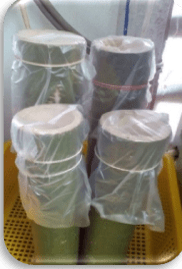
The materials used in this study included Thorni bamboo (Bambusa stenostachya Hackel) (Figure 1), fresh goat’s milk, and banana leaves as bamboo tube covers for dadih preparation. For microbial isolation and cultivation, a sterile saline solution was prepared by dissolving sodium chloride (1.06404, Merck, Germany) in distilled water. De Man, Rogosa, and Sharpe (MRS) agar (1.10660, Merck, Germany) supplemented with 1% (w/v) calcium carbonate (1.02066, Merck, Germany) was used for bacterial isolation. Glycerol (77067, Merck, Germany) and Snapseal graduated microtubes (Scientific Specialties Incorporated, USA) were used for isolate preservation. MRS broth (1.10661, Merck, Germany) supplemented with 5% skim milk powder (Fonterra, Netherlands) was used for starter propagation. Hydrogen peroxide (H₂O₂) (1.07209, Merck, Germany) was used for catalase testing. Additional reagents included skim milk powder (Fonterra, Netherlands), methyl red indicator (1.06076, Merck, Germany), phenolphthalein solution (1.07233, Merck, Germany), buffer solutions pH 4.01 (M51302069, Mettler Toledo, Switzerland) and pH 7.00 (MT51302047, Mettler Toledo, Switzerland) were used for pH meter calibration., sulfuric acid (1.00731, Merck, Germany), sodium hydroxide (1.06498, Merck, Germany), ethanol 95% (1.00983, Merck, Germany), and DPPH/ 2,2-diphenyl-1-picrylhydrazyl (D9132, Sigma-Aldrich, USA).
Methods
Isolation, screening, and selection process of LAB
The procedure began with the collection of original dadih, followed by isolation and incubation under anaerobic conditions. A total of 45 colonies were randomly selected from 2 plates and subsequently screened for LAB-like characteristics. The isolates were further identified through microscopy, motility testing, Gram staining, and catalase testing. A total of 14 isolates showing proteolytic activity in 5% skim milk were obtained, from which the 5 best starter isolates were selected based on curd formation and pH reduction in milk, modified from .
Preparation of original dadih
Dadih is made by pasteurizing goat’s milk for 30 min at 85 °C, then fermented in an incubator at 37 °C for 24 h. The incubation temperature of 37 °C for 24 h was chosen based on previous experimental findings indicating that dadih fermentation exhibits optimal LAB and bacterial growth at this temperature, which corresponds to the mesophilic LAB’s optimal growth range .
Isolation of LAB
One dadih sample was purposively selected based on its traditional bamboo-tube fermentation and absence of commercial starter cultures. The fermented dadih is then taken in 5 g portions, and the isolated LAB is isolated by serial dilution using saline solution. Continued plating on the diluted samples were then plated on MRS agar supplemented with 1% (w/v) CaCO₃ with MRS agar. After serial dilution, dadih was incubated for 48 h at 37 °C under anaerobic conditions. Incubation at 37 °C for 48 h was applied because LAB isolated from dadih are predominantly mesophilic and exhibit optimal growth and acid production under these conditions .
Selection of colonies
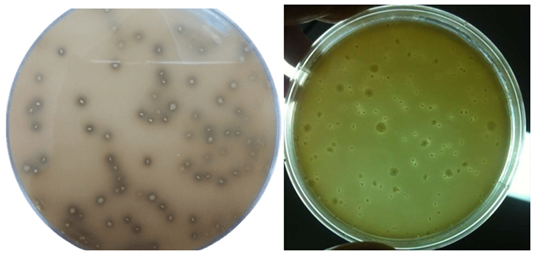
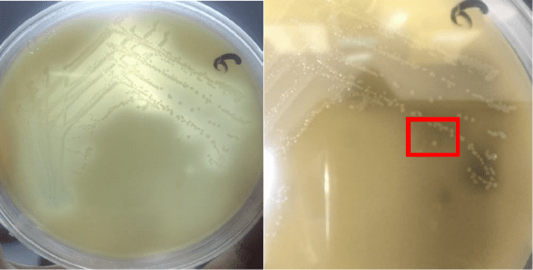
After incubation, colonies grown on MRS agar supplemented with CaCO₃ were observed, and colonies surrounded by clear zones were considered presumptive acid-producing LAB because acid production can dissolve CaCO₃ in the medium Colonies were randomly selected from two representative plates as a preliminary screening step to obtain diverse LAB candidates from dadih. A total of 45 colonies were collected, each characterized by a clear zone surrounding it. Colonies with clear zones were selected because they resembled LAB, which are capable of degrading CaCO₃ in the medium, thereby producing a clear zone (Figure 2). This experiment is consistent with the findings of , who reported that LAB typically exhibits a clear zone around the colony. In addition to clear zones, the colonies obtained in this study also displayed typical LAB characteristics, including a white to milky-white color, entire margins, a circular shape, and an opaque internal structure (Figure 3). The colonies grown on MRS agar were not directly classified as LAB based solely on growth under anaerobic conditions and colony morphology, as MRS is selective but not entirely specific. According to previous literature, confirmation of acid-producing LAB is more reliably indicated by the presence of clear CaCO₃ dissolution zones, which was therefore used as an additional selection criterion. Molecular identification, such as PCR, was not performed in the present study due to the unavailability of molecular facilities at the time of experimentation; however, this analysis is planned for subsequent research to provide species-level confirmation. The colonies were subsequently purified on fresh MRS agar medium, rejuvenated, and preserved at freezing temperature with the addition of glycerol to maintain their viability. Glycerol was diluted to 20% (v/v) in distilled water, homogenized for 1 min, and autoclaved. For preservation, 500 µL of bacterial culture was mixed with 500 µL of sterile 20% (v/v) glycerol to achieve a final glycerol concentration of 20% (v/v), and the mixtures were stored at −20 °C until further use.
Preservation of isolates
Purified isolates were preserved in sterile cryovials for subsequent analyses. Snapseal graduated microtubes were sterilized by autoclaving at 121 °C for 20 min and dried at 54 °C before use. Sterile glycerol was prepared at a final concentration of 20% (v/v) and used as a cryoprotectant. Bacterial cultures were grown in MRS broth supplemented with 5% skim milk powder and incubated until visible turbidity and curd formation were observed. For preservation, bacterial suspensions were mixed with sterile 20% (v/v) glycerol to obtain the desired final concentration. In skim milk medium, 500 µL of culture was combined with 500 µL of sterile glycerol; in broth medium, 700 µL of culture was combined with 300 µL of sterile glycerol. The mixtures were homogenized by gentle vortexing and stored at −20 °C until further use.
Microscopic identification and motility test
Microscopic examination was performed using a wet-mount preparation to observe cell morphology and confirm the absence of motility, a typical characteristic of LAB. A loopful of bacterial culture was placed on a clean glass slide and covered with a coverslip to ensure even distribution of the suspension and optimal visualization under the microscope. The preparation was examined using a light microscope (Nikon Corporation, Japan) .
Gram staining
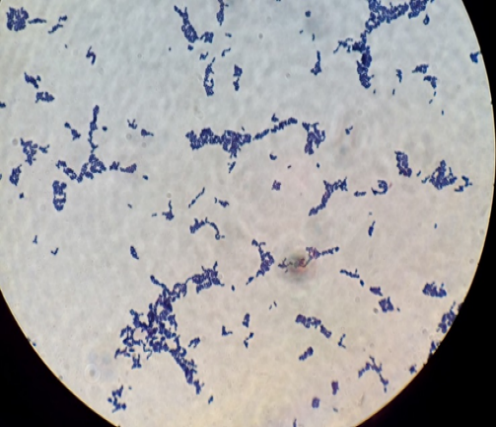
Gram staining was performed according to standard microbiological procedures to determine the Gram reaction of the isolates. Briefly, bacterial smears were prepared on clean glass slides, heat-fixed, and sequentially stained with crystal violet, iodine solution, decolorized with ethanol, and counterstained with safranin. The stained slides were examined under a light microscope (Nikon Corporation, Japan) and processed as described by .
Catalase test
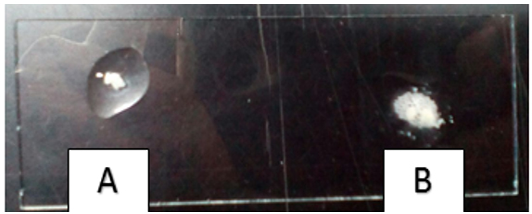
A loopful of the bacterial isolate was transferred onto a microscope slide containing one drop of 3.0% H₂O₂. The slide was subsequently placed in a covered Petri dish and observed for bubble production as an indicator of catalase activity . To confirm the validity of the catalase test, the obtained colonies were compared with Bacillus colonies as a positive control.
Proteolytic activity
To evaluate the isolates’ ability to coagulate milk via protein degradation during the formation of fermented milk, the starters were tested in 5% skim milk supplemented with 3% starter culture. The purpose of this step was to select starter cultures capable of coagulating skim milk .
Selection of starters
From the 14 isolates capable of coagulating skim milk, five potential starters were selected based on their performance in cow’s milk. Pasteurized cow’s milk (85 °C for 30 min) was inoculated with 3% (v/v) of each isolate and incubated at 37 °C for 24 h. Starter selection was based on the lowest pH and highest titratable acidity (TA) values .
Preparation of the LAB
At the beginning, the experiment was isolating LAB from traditional dadiah. After isolating LAB, some tests before using these LAB were shape, Gram staining, motility test, and catalase test. Characteristics of these LAB included rod shape, Gram stain positivity, negative motility test, and negative catalase test .
Dadih making
After obtaining the 5 selected isolates, namely Starters 11, 21, 25, 29, and 41, each starter was subcultured in MRS broth and incubated at 37 °C for 20 h. The active culture was then propagated in sterile 10% skim milk at 3% (v/v) and incubated at 37 °C before being used as the inoculum. The initial bacterial concentration of the inoculum was not determined; therefore, the inoculation was standardized based on inoculum volume, using 3.0% (v/v) of each starter culture under the same propagation conditions. Raw goat milk was homogenized and pasteurized at 85 ℃ for 30 min, inoculated with 3.0% (v/v) of each starter culture, and fermented aerobically at 37 °C for 48 h in an incubator . The temperature of 37 °C was selected because it supports the growth and acid production of mesophilic LAB isolated from dadih, while the 48 h fermentation period was chosen to allow sufficient acidification and curd formation in goat milk.
Analysis of protein
Protein analysis was performed using the Kjeldahl method. Briefly, 20 ml of H₂SO₄, 1.0 g of sample, and a small amount of selenium catalyst were digested using a Büchi K-436 digestion unit (BÜCHI Labortechnik AG, Switzerland) for 3 h and cooled to room temperature. Subsequently, 25 ml of 4.0% boric acid solution and 2–3 drops of methyl red indicator were added to an Erlenmeyer flask (Kimax, USA), and the distillation was performed using a Büchi K-355 distillation unit (BÜCHI Labortechnik AG, Switzerland). Distilled water and 35% Sodium Hydroxide (NaOH) were used during distillation. The distillate was titrated with 0.1 N Sulfuric acid (H₂SO₄), modified from .
Analysis of titratable acidity
Titratable acidity (TA) was determined with 9 g samples diluted with 9 ml sterile water, then titrated with 0.1 N NaOH using 2 drops of phenolphthalein solution .
Analysis of pH
A pH meter (Suntex Instruments Co., Ltd., Taiwan) was used for determining pH. Before determination, the pH meter was calibrated by using buffer solutions no. 4 and 7 .
Analysis of total antioxidant activity
Total antioxidant activity (TAA) was evaluated using DPPH. Whey from fermented goat milk was mixed with 2 mL of DPPH solution in ethanol (500 μM) and incubated for 30 min in the dark at room temperature. Three preparations were used: 95% ethanol as the blank, DPPH solution as the control, and whey with DPPH as the sample. Absorbance was recorded at 517 nm using an S800 Spectrawave Visible Diode Array Spectrophotometer (Biochrom Ltd., United Kingdom) Modified from (Wołosiak et al., 2022). TAA (%) was calculated as the difference between the control absorbance and sample absorbance, divided by the control absorbance, and multiplied by 100.
Anlalysis of LAB count
In this experiment, samples (5 ml) were homogenized in 45 ml of sterile 0.1% peptone water and then serially diluted; 1 ml of the 10⁻¹ dilution was transferred into 9 ml sterile distilled water, before plating 1 ml aliquots of higher dilutions (10⁶-10⁸) on MRS agar supplemented with 1% CaCO₃. For each sample and selected dilution, plating was performed in duplicate, and the results were expressed as log CFU/mL. Plates were incubated at 37 ℃ for 48 h, and LAB colonies were identified by the clear zones surrounding colonies and counted using a colony counter. These procedures align with recent methods reported by , who isolated homofermentative lactobacilli using MRS agar with CaCO₃, and by , who similarly employed serial dilution on MRS medium followed by acid-zone identification for LAB enumeration. Both studies confirm that CaCO₃ supplementation helps differentiate acid-producing colonies through visible clearing zones and is critical for accurate LAB counts under these incubation conditions.
Sensory evaluation
Sensory evaluation of fermented goat milk was performed using both hedonic and descriptive tests with 30 untrained panelists aged 18–29 years (7 males and 23 females). The hedonic assessment included goat milk odor, sour aroma, bitterness, goat milk flavor, sourness, smoothness, and thickness, evaluated using a 5-point scale: 1 = dislike very much, 2 = dislike, 3 = neither like nor dislike, 4 = like, and 5 = like very much. Additional attributes evaluated included color, texture, aftertaste, and overall acceptability. The samples (15 g) were thoroughly homogenized and refrigerated at 4 °C overnight before sensory assessment. Each sample was presented in transparent glasses identified by randomly assigned three-digit codes. These methods are in line with , who reported that untrained panelists using a 5- or 7-point hedonic scale are effective in comparing texture, taste, and aroma among multiple goat milk treatments. Further, demonstrated that keeping samples chilled and using coded glasses helps reduce bias in the evaluation of aftertaste and texture in goat yoghurt sensory panels.
Statistical analysis
All experiments were conducted in triplicate (n= 3). Data are presented as mean values ± standard deviation. Statistical differences among treatments were analyzed using one-way analysis of variance (ANOVA) followed by Duncan’s multiple range test to determine significant differences at p < 0.05. Statistical analyses were performed using SPSS software (IBM Corp., Armonk, NY, USA).
RESULTS AND DISCUSSION
Microscopic identification and motility test
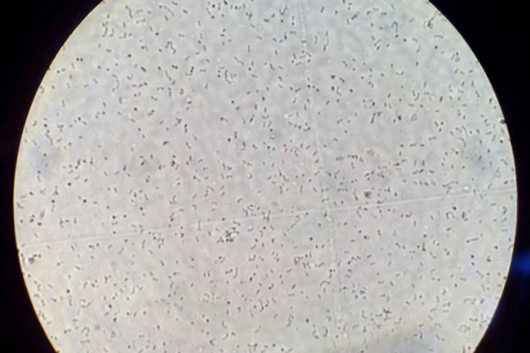
Microscopic examination of the 45 isolates showed rod-shaped and nonmotile characteristics, suggesting that they were presumptive LAB isolates based on phenotypic observation (Figure 4). LAB are typically characterized as Gram-positive, non-sporulating rods or cocci that are catalase-negative and nonmotile, as confirmed by Shah et al. (2024).
Catalase test
Catalase tests conducted on 45 isolates returned negative results (Table 1), as indicated by the absence of bubble formation upon the addition of H₂O₂, thereby indicating a catalase-negative reaction under the tested conditions (Figure 5). Catalase is responsible for decomposing H₂O₂ into water and oxygen, a critical reaction in organisms exposed to oxidative stress, but most LAB are catalase-negative due to their non-respiratory metabolism and limited heme synthesis . In this experiment, isolates were compared to Bacillus spp. as a positive control; consistent with expectations, Bacillus produced bubbles when exposed to H₂O₂ while the LAB isolates did not. This aligns with the comprehensive descriptions in microbial identification protocols, which define bubble formation as the hallmark of catalase presence, and confirm that LAB lacks the enzymatic capacity for catalase-mediated H₂O₂ degradation .
Gram staining
Gram staining was performed to determine whether the isolates were Gram-positive or Gram-negative. All LAB isolates exhibited a positive reaction, appearing blue to purple under microscopic observation. A total of 45 isolates showed Gram-positive characteristics (Figure 6; Table 1). Gram staining differentiates bacteria based on the structural composition of their cell walls. Gram-positive bacteria possess a thick, highly cross-linked peptidoglycan layer (approximately 20–80 nm) that retains the primary stain–mordant complex, resulting in purple coloration .
Proteolitic activity
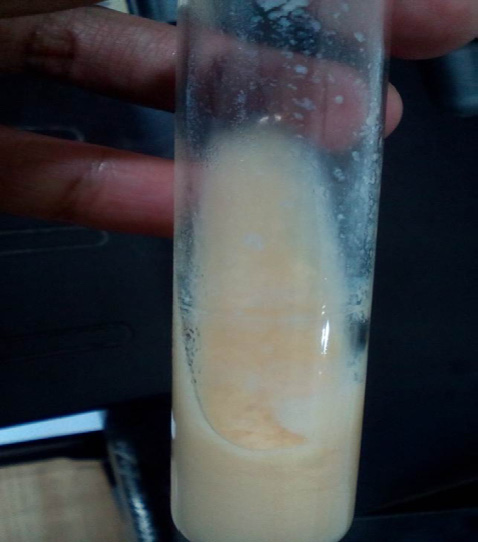
The isolates were evaluated for proteolytic activity using tubes containing 5.0% skim milk. As shown in Table 1, of 45 colonies, only 14 isolates formed curd at the end of fermentation. These isolates were selected for their potential to serve as starter cultures (Figure 7). The isolates were evaluated for proteolytic activity using tubes containing 5.0% skim milk. As shown in Table 1, among the 45 colonies tested, only 14 isolates formed curd at the end of fermentation, namely isolates 9, 11, 15, 16, 21, 22, 24, 25, 29, 32, 33, 35, 41, and 44. Curd formation indicates the ability of these isolates to coagulate milk proteins during fermentation, suggesting their potential proteolytic and acidifying activities . These characteristics are important for starter cultures because they contribute to milk fermentation, texture development, and curd formation. Therefore, these 14 isolates were selected from the initial 45 colonies for further evaluation as potential starter cultures for fermented goat milk production.
Table 1: Phenotypic characteristics of presumptive lactic acid bacteria isolates.
Note: Data are presented as the number of isolates showing positive or negative reactions.
Starter selection
The five starters selected for further application were those with the lowest pH and the highest TA (Table 2). Lower pH and higher TA are desirable characteristics of LAB, as they indicate greater acidification capacity, which plays a critical role in inhibiting the growth of spoilage and pathogenic microorganisms, thereby improving product safety. Furthermore, efficient acid production contributes to the development of desirable sensory attributes such as flavor, texture, and aroma in fermented dairy products. According to , the acidification ability of LAB is one of the most important criteria in selecting starter cultures for dairy fermentation, as it ensures rapid coagulation and enhances product stability. Similarly, , emphasized that LAB with high acidification activity are preferred in industrial applications because they contribute to both food preservation and the improvement of organoleptic qualities. Functionally, these selected isolates are promising starter candidates because their acidification and curd-forming abilities may contribute to fermentation control, microbial stability, and texture development in fermented goat milk.
The selection of the best starter cultures was based on their ability to coagulate milk and reduce the pH of raw milk. Five isolates were chosen according to their lower pH values, higher TA, and capacity to form curd in cow’s milk. As shown in Table 2, isolates 11, 21, 25, 29, and 41 demonstrated superior performance and were therefore selected for further application in fermented goat milk production. Only these 5 isolates were used in the subsequent experiment to develop fermented goat milk. The selection of the best starter cultures was based on their ability to coagulate milk and reduce the pH of raw milk. From the 14 curd-forming isolates previously selected from the initial 45 colonies, five isolates were further chosen based on their lower pH values, higher TA, and stronger ability to form curd in cow’s milk. As shown in Table 2, isolates 11, 21, 25, 29, and 41 demonstrated superior performance and were therefore selected for further application in fermented goat milk production. The reduction in pH and increase in TA indicate active lactic acid production, which is essential for milk fermentation, protein coagulation, and texture development. Therefore, only these five isolates were used in the subsequent experiment to develop fermented goat milk .
Table 2: Selecting potential starters with cow’s milk.
Isolates
9
11
15
16
21
22
24
25
29
32
33
35
41
44
pH
5.17 ± 0.02e
5.13 ± 0.02fg
5.24 ± 0.02b
5.35 ± 0.02a
5.14 ± 0.02f
5.24 ± 0.02b
5.22 ± 0.02c
5.11 ± 0.02g
5.03 ± 0.02i
5.24 ± 0.02bc
5.20± 0.02d
5.16 ± 0.02e
5.07 ± 0.02h
5.24 ± 0.02b
TA (%)
0.31 ± 0.02ef
0.34 ± 0.02cd
0.27 ± 0.02h
0.23 ± 0.02i
0.34 ± 0.02d
0.27 ± 0.02h
0.29 ± 0.02g
0.35 ± 0.02c
0.41 ± 0.02a
0.27± 0.02h
0.30± 0.02f
0.32± 0.02e
0.39 ± 0.02b
0.27 ± 0.02h
Appearance*
++
++
+
+
++
+
+
++
+++
+
+
++
+++
+
Data are expressed as mean values ± standard deviation (n = 3). a–i Mean values within the same row with different superscript letters differ significantly (p < 0.05).
Table 3: pH, TA, and curd formation of fermented goat milk.
Parameter
11
21
25
29
41
pH (24 h)
5.20±0.02b
5.40±0.02a
5.40±0.02a
5.35±0.02a
5.17±0.02b
TA (24 h)
0.23±0.02b
0.21±0.02c
0.22±0.02c
0.23±0.02b
0.37±0.02a
Curd (24 h)
–
–
–
–
–
pH (48 h)
4.76±0.03c
4.96±0.02a
4.90±0.03ab
4.87±0.03b
4.78±0.02c
TA (48 h)
0.57±0.03a
0.42±0.02c
0.43±0.02c
0.44±0.02c
0.51±0.02b
Curd (48 h)
++
+
++
++
++
Data are presented as mean ± standard deviation (n=3). Curd formation was evaluated as follows: (–) no coagulation; (+) weak curd; (++) moderate curd. Within each parameter, mean values followed by different superscript letters indicate significant differences at p<0.05.
pH
Different starters exhibited significant differences (p < 0.05) in pH values (Table 3), with readings at 24 h ranging from 5.17 ± 0.02 for Starter 41 to 5.40 ± 0.02 for Starter 21. Fermented goat milk proved more resistant to pH reduction compared to cow milk. This resilience is likely due to goat milk’s higher buffering capacity, attributed to greater levels of protein, phosphate, and non-protein nitrogen, including bioactive components such as lactoferrin ; . Moreover, found that pH decline during cold storage in fermented goat milk could be modulated by adjuncts such as carob molasses and specific probiotic strains, which affected both acidity and viscosity. Additionally, goat milk contains numerous bioactive peptides with antimicrobial and antioxidative activities, which can inhibit over-acidification by limiting microbial acid production .
Titratable acidity
TA differed significantly (p < 0.05) among the starters (Table 3), with values at 24 h ranging from 0.21 ± 0.02 (Starter 21) to 0.37 ± 0.02 (Starter 41), and at 48 h from 0.42 ± 0.02 (Starter 21) to 0.57 ± 0.03 (Starter 11); furthermore, TA and pH were strongly negatively correlated, when TA increased, pH decreased, and TA continued to climb for all starters by the 48 h mark. These patterns coincide with recent findings by , who observed that increasing fermentation time significantly elevates TA and lowers pH in goat whey fermented with Pediococcus acidilactici BK01, and by , who reported notable TA increases over time in fermented cow’s milk samples due to lactic acid accumulation, while Chelladhurai et al. (2025) demonstrated comparable negative TA–pH relationships in fermented camel and cow milk products (p < 0.05), underscoring that longer incubation uniformly drives TA up and pH down. The superior acidification of Starters 11 and 41 may be related to isolate-specific metabolic activity and better adaptation to goat milk substrates, as reflected by their lower pH, higher TA, and curd-forming ability.
Curd formation
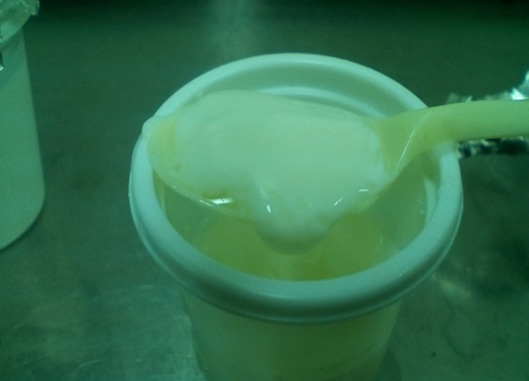
In this experiment, curd formation, pH, and TA of fermented goat milk were strongly correlated: lower pH and higher TA favored curd formation (Table 3). At 24 h, all starters remained liquid because pH values were still relatively high; by 48 h, Starters 11, 25, 29, and 41 had formed curds, whereas Starter 21 remained semi-liquid, consistent with its higher pH (Figure 8). Goat milk tends to produce weaker curd and lower viscosity compared to cow milk, largely due to its lower αs1-casein content and overall protein level . Additionally, showed that fortifying goat milk yogurt with whey protein concentrate significantly improved gel structure and viscosity, facilitating firmer curd formation. Studies of coagulation kinetics in goat milk also indicate that pH drop, protein content, and casein composition critically impact curd firmness and gelation speed .
Protein content
The protein content of the fermented products showed significant differences (p<0.05) among the different starters (Table 4). Starter 11 (3.09 ± 0.24) and Starter 41 (3.88 ± 0.21) had lower protein content than the others. Interestingly, this decrease in protein content was correlated with higher bacterial viability and TA. This occurred because the starters utilized protein from goat milk as a nutrient source for growth, leading to lower measured protein levels. The reduction in protein content may be associated with the proteolytic activity of LAB during fermentation, intracellular peptidases, and oligopeptide transporters (Opp/Dpp), which hydrolyze casein into peptides and amino acids . The consumption of nitrogen from this hydrolysis explains the reduction in protein content when bacterial viability and metabolic activity increase ; . In line with this, other reviews have reported that LAB’s ability to degrade food proteins into peptides and amino acids is a key feature of fermentation, closely related to bacterial growth and increased TA.
Table 4: Characteristics of fermented goat milk.
Starter #
Protein content (%)
TAA (%)
LAB (Log CFU/ml)
11
3.09 ± 0.24c
21.38 ± 0.83
8.45 ± 0.06a
21
4.76 ± 0.25a
20.65 ± 2.22
8.25 ± 0.02b
25
4.61 ± 0.23a
19.12 ± 1.22
8.26 ± 0.02b
29
4.64 ± 0.08a
18.84 ± 0.95
8.26 ± 0.02b
41
3.88 ± 0.21b
22.72 ± 1.09
8.37 ± 0.02a
Data are expressed as means values ± standard deviation (n = 3). Mean values in same column with different letter have statistically significant difference (p<0.05).
Total antioxidant activity
TAA showed no significant differences (p>0.05) among the different starters (Table 4); however, Starters 11 and 41 exhibited higher values compared to the others. This activity was correlated with TA, pH, and bacterial viability. Starters 11 and 41 demonstrated higher TAA, consistent with increased bacterial viability and TA, as well as lower pH values. In this study, TAA was measured using the DPPH method, which indicates the capacity of antioxidants to donate hydrogen or electrons . These results are consistent with previous findings showing that LAB isolated from spontaneously fermented yak milk exhibited TAA ranging from 16.22% to 22.57% . Furthermore, LAB isolated from traditional fermented wheat products were reported to possess significant TAA, including DPPH scavenging activity, ferric-reducing capacity, and glutathione (GSH) production, with lipid peroxidation inhibition levels of 20–39% . These results are consistent with previous fermented goat milk studies showing that TAA is closely associated with peptide release during fermentation, particularly low-molecular-weight bioactive peptides derived from goat milk proteins .
LAB count
Different starters exhibited significant differences in LAB activity (p < 0.05) as shown in Table 4, with Starter 11 (8.45 ± 0.06) and Starter 41 (8.37 ± 0.02) demonstrating the highest activity among the groups. This observation aligns with the findings of , who reported that different LAB strains, such as Lactobacillus sakei, L. plantarum, and Pediococcus pentosaceus, display varying growth and acidification capabilities when used as starter cultures for fermented sausages . Similarly, , documented that multi-strain starter cultures in the industrial-scale fermentation of “Tonda di Cagliari” olives significantly enhanced LAB counts compared to spontaneous fermentation, indicating distinct microbial activity profiles. Furthermore, demonstrated variability in functional enzyme activity of Glutamate Decarboxylase (GAD) across 20 LAB strains, reinforcing the notion that physiological differences among starters lead to significantly different performance levels . These results corroborate similar evidence by , who showed significant increases in viable cell counts with different Lactobacillus starters in fermented camel milk (p < 0.05), and by , who observed that starter choice (fast vs. medium acidification) significantly influenced microbiological and physico-chemical traits during Salame Napoli production.
Sensory evaluation
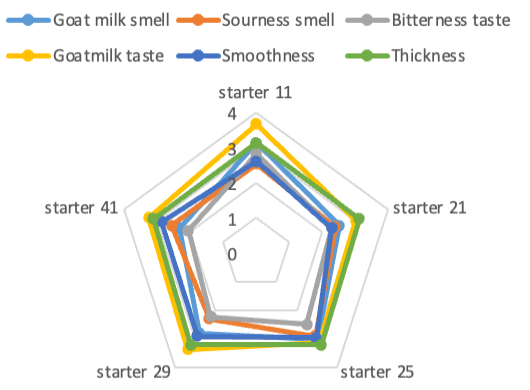
In the sensory attribute scores (descriptive test), different starters had a significant effect (p < 0.05) on goat-milk aroma and bitterness (Figure 9). However, they did not significantly affect sour aroma, goat-milk flavor, sour taste, smoothness, or thickness. Starter 11 (3.13 ± 0.23) and Starter 25 (3.03 ± 0.24) exhibited the strongest goat-milk aroma, whereas Starter 41 (2.33 ± 0.18) had the weakest.
The bitterness scores were higher in Starter 11 (2.83 ± 0.23) and lower in Starter 41 (2.06 ± 0.22), though overall bitterness remained mild across all starters. This may be linked to the release of bitter peptides or fatty acids, which can arise from the proteolytic and lipolytic activity of starter cultures (Rita de Cássia et al., 2019; . Despite low pH, high TA, and high bacterial viability, the goat-milk aroma remained perceptible and moderated any undesirable sour notes.
Smoothness, defined as the absence of detectable particles, was rated moderate, as improved texture and microstructure are often associated with exopolysaccharide-producing starters and processing methods that enhance viscosity and uniformity . In this experiment, the thickness ranging from moderate to thick was influenced by milk coagulation. Fermented goat milk with low pH, high TA, and elevated viscosity contributed significantly to its perceived thickness in sensory evaluation. Recent studies show that as LAB-fermented milk acidifies, casein micelles destabilize, aggregate, and form a gel network, thereby increasing thickness .
Moreover, a moderate positive correlation has been documented between viscosity and acidity in fermented milk systems (r= 0.395, P= 0.0214), highlighting the role of acid-induced protein aggregation in texture development . Additionally, process techniques such as high-pressure homogenization and the inclusion of stabilized casein prevent excessive micelle aggregation and smooth texture formation, further modulating thickness perception .
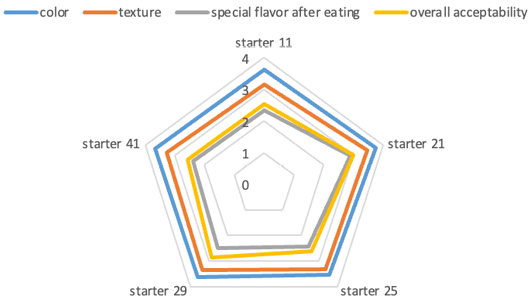
Different starters had a significant effect (p < 0.05) on the special flavor after eating fermented goat milk, but did not produce significant differences in color, texture, or overall acceptability (Figure 10). Panelists rated color and texture as neutral (neither liked nor disliked), likely because these attributes resembled those of yogurt; similarly, , found no significant change in color or texture when goat milk yogurt was enriched with spent coffee grounds, though aftertaste remained influential in consumer acceptance.
Starter 21 showed the highest score for special flavor after eating, which may be connected to its lower goat-milk taste score (3.03 ± 0.22). This aligns with findings by Wang et al. (2025), who noted that fatty acids such as capric, caproic, and caprylic acids contribute to a unique tangy flavor characteristic in goat milk products that can reduce acceptability. Li et al. (2024), also reported that specific volatile lipids (e.g., acetoin, 2,3-pentanedione, 2,3-butanedione) affect the flavor profiles of fermented goat milk, which could underlie the varying perceptions of special flavor among different starters. Overall acceptability in this experiment was low for starters 11, 25, 29, and 41, as these treatments tended to receive dislike responses from the panelists. In contrast, starter 21 obtained a neutral rating, indicating neither like nor dislike. The relatively higher acceptability of Starter 21 may be attributed to its more balanced sensory profile, in which moderate acidification did not produce excessive sourness, bitterness, or strong goat-milk flavor, suggesting that consumer preference may not always correspond directly with the strongest physicochemical performance. The panelists preferred samples with a more pronounced aftertaste and a milder goat flavor, which were associated with higher overall acceptability scores.
Conclusion
This study demonstrates that dadih-derived presumptive LAB isolates can be used as single-strain starter candidates to support more standardized fermented goat milk production. The findings indicate that selected isolates with acidifying and curd-forming abilities may improve fermentation control, product stability, and texture development, while the sensory results highlight the importance of balancing technological performance with consumer preference. These results provide a scientific basis for using indigenous microbial resources from traditional fermented milk as starter candidates for functional goat milk product development. Further molecular identification, probiotic evaluation, and pilot-scale validation are required to confirm their suitability for commercial application.
Acknowledgements
The authors acknowledge the technical assistance provided by the staff of the Bioscience Laboratory, Universitas Brawijaya PSDKU Kediri.
Novelty Statement
This study highlights the potential of indigenous LAB isolated from dadih as single-strain starter cultures for fermented goat milk production. The novelty lies in evaluating their fermentation performance, physicochemical characteristics, antioxidant activity, and sensory properties to support the development of standardized fermented dairy products.
Author’s Contribution
AMW contributed to investigation, data analysis, and manuscript writing; LER to conceptualization, supervision, and validation; SHP to formal analysis and manuscript review; YDJ to methodology and validation; AM to methodology and data interpretation; HE to methodology and manuscript review; TES to supervision and validation; AS to data interpretation and manuscript review; RK to data interpretation and manuscript editing; and ACY to review and editing. All authors reviewed and approved the final manuscript.
Ethical consideration
All panelists involved in the sensory evaluation were adult volunteers. Before participation, they were informed about the sensory evaluation procedures, and written informed consent was obtained. No personal identifying information was collected. Ethical clearance for the sensory evaluation was approved by the Institutional Review Board with reference number 22.5.3/UN32.14/PB/2026.
Generative AI and AI assisted technology statement
The authors declare that no generative AI and AI assisted technology was used in the creation of this manuscript.
Conflict of interest
The authors have declared no conflict of interest.
Figures
Figure 1:.
Thorni bamboo (Bambusa stenostachya Hackel) used as a traditional fermentation container for dadih production.
Figure 2:.
Formation of clear zones around colonies on MRS agar containing 1% CaCO₃, demonstrating acidproducing activity of presumptive LAB
Figure 3:.
Representative colonies of presumptive LAB isolated from original dadih were grown on MRS agar after incubation at 37 °C for 48 h under anaerobic conditions.
Figure 4:.
Microscopic examination and motility assessment of LAB isolates under 1000× magnification
Figure 5:.
Catalase test results showing negative reactions (absence of bubble formation) in the isolates (A) and a positive reaction (bubble formation) in Bacillus spp. used as a control (B).
Figure 6:.
Representative Gram staining results of the isolates demonstrating Gram-positive (purple/blue) rodshaped morphology under 1000× magnification.
Figure 7:.
Proteolytic activity in tubes showing curd formation of skim milk after fermentation.
Figure 8:.
Curd formation in goat milk samples after fermentation.
Figure 9:.
Sensory attribute scores (descriptive test) of fermented goat milk. Data are expressed as mean values ± standard deviation (n = 3). Sensory evaluation was performed using a 5-point scale: 1 = none/not sour/not smooth/very thick; 2 = weak/ slightly sour/slightly smooth/thick; 3 = moderate; 4 = strong/sour/smooth/thin; 5 = very strong/very sour/very smooth/very thin.
Figure 10:.
Sensory attribute scores (acceptance test) of fermented goat milk. Data are expressed as mean values ± standard deviation (n= 3). Sensory evaluation was performed using a 5-point hedonic scale: 1 = dislike very much; 2 = dislike; 3 = neither like nor dislike; 4 = like; 5 = like very much.
References
Abiola RR, Okoro EK, Sokunbi O (2022). Lactic acid bacteria and the food industry–A comprehensive review. Int. J. Health Sci. Res., 12: 128–142. https://doi.org/10.52403/ijhsr.20220516[CrossRef]
Abou-Soliman NHI, Abd-Rabou HS, Awad S, Ibrahim AA (2025). Impact of thermal treatment on the quality, total antioxidant and antibacterial properties of fermented camel milk. Sci. Rep., 15: 8533. https://doi.org/10.1038/s41598-025-91548-1[CrossRef]
Ahmed T, Sabuz AA, Mohaldar A, Sazzad Fardows HM, Inbaraj BS, Sharma M, Rana MR, Sridhar K (2023). Development of novel whey-mango based mixed beverage: Effect of storage on physicochemical, microbiological, and sensory analysis. Foods, 12: 237. https://doi.org/10.3390/foods12020237[CrossRef]
Anumudu CK, Miri T, Onyeaka H (2024). Multifunctional applications of lactic acid bacteria: Enhancing safety, quality, and nutritional value in foods and fermented beverages. Foods, 13: 3714. https://doi.org/10.3390/foods13233714[CrossRef]
Ardhi FP, Amertaningtyas D, Wati AM, Saleha RA (2024). Effects of tea (Camellia sinensis) addition on soaking salted eggs of organoleptic quality, protein content, fat content, and ash content. J. Ilmu Teknol. Hasil Ternak, 19: 189–206. https://doi.org/10.21776/ub.jitek.2024.019.03.5[CrossRef]
Aritonang SN, Roza E, Rossi E, Purwati E (2017). Isolation and identification of lactic acid bacteria from okara and evaluation of their potential as candidate probiotics. Pak. J. Nutr., 16: 618–628. https://doi.org/10.3923/pjn.2017.618.628[CrossRef]
Arnold M, Rajagukguk YV, Gramza-Michałowska A (2021). Characterization of dadih: Traditional fermented buffalo milk of Minangkabau. Beverages, 7: 60. https://doi.org/10.3390/beverages7030060[CrossRef]
Atmaja PP, Toiba H, Suhartini (2025). Competitiveness and determining factors of Indonesian shrimp exports to main importer countries. Egypt. J. Aquat. Biol. Fish., 29: 3011–3029. https://doi.org/10.21608/ejabf.2025.357920.5344[CrossRef]
Aydogdu T, O’Mahony JA, McCarthy NA (2023). pH, the fundamentals for milk and dairy processing: A review. Dairy, 4: 395–409. https://doi.org/10.3390/dairy4030026[CrossRef]
Ayivi RD, Gyawali R, Krastanov A, Aljaloud SO, Worku M, Tahergorabi R, da Silva RC, Ibrahim SA (2020). Lactic acid bacteria: Food safety and human health applications. Dairy, 1: 202–232. https://doi.org/10.3390/dairy1030015[CrossRef]
Azizah S, Latifah SI, Djunaidi IH, Wati AM, Apryliasari D (2023). Peasant women’s time allocation in the beef cattle Gaduhan Partnership, Baluran National Park. Univ. J. Agric. Res., 11: 136–145. https://doi.org/10.13189/ujar.2023.110113[CrossRef]
Azizah S, Latifah SI, Djunaidi IH, Wati AM, Rachmawati A, Hamidah S (2023). Peasant women contribution in Adegen beef cattle farming partnership. Adv. Anim. Vet. Sci., 11: 725–731. https://doi.org/10.17582/journal.aavs/2023/11.5.725.731[Full text][CrossRef]
Bai Y, Li Z, Shi K, Song H, Hou Y, Zhang D, Wen R, Li H, Ma H, Shi J (2025). Flavor profile of milks fermented with six starter cultures. J. Food Compos. Anal., 148: 108191. https://doi.org/10.1016/j.jfca.2025.108191[CrossRef]
Benguiar R, Benaraba R, Farhat C, Chouchane H, Boughaddou D, Belalem F, Cherif A (2025). Antioxidant, anti-inflammatory, antagonistic, and probiotic properties of lactic acid bacteria isolated from traditional Algerian fermented wheat. Microorganisms, 13: 1852. https://doi.org/10.3390/microorganisms13081852[CrossRef]
Bin Masalam MS, Bahieldin A, Alharbi MG, Al-Masaudi S, Al-Jaouni SK, Harakeh SM, Al-Hindi RR (2018). Isolation, molecular characterization and probiotic potential of lactic acid bacteria in Saudi raw and fermented milk. Evid.-Based Complement. Altern. Med., 2018: 7970463. https://doi.org/10.1155/2018/7970463[CrossRef]
Campus M, Corrias F, Angioni A, Arru N, Sedda P, Addis M, Fiori M, Paba A, Chessa L, Comunian R (2025). Efficacy of a native microbial starter in promoting table olive fermentation: An industrial-scale trial at controlled and ambient temperature. Foods, 14: 2159. https://doi.org/10.3390/foods14132159[CrossRef]
Chelladhurai K, Warakaulle S, Ali SN, Turner MS, Ayyash M, Kamal-Eldin A (2025). Differences in the growth, acidification, and proteolytic activities of Lactobacillus helveticus, Lactobacillus delbrueckii subsp. bulgaricus, and Streptococcus thermophilus in camel and cow milk fermentation. Int. Dairy J., 160: 106075. https://doi.org/10.1016/j.idairyj.2024.106075[CrossRef]
Ding W, Wang L, Zhang J, Ke W, Zhou J, Zhu J, Guo X, Long R (2017). Characterization of antioxidant properties of lactic acid bacteria isolated from spontaneously fermented yak milk in the Tibetan Plateau. J. Funct. Foods, 35: 481–488. https://doi.org/10.1016/j.jff.2017.05.018[CrossRef]
Dosuky AS, Elsayed TR, Yousef ET, Barakat OS, Nasr NF (2022). Isolation, identification, and application of lactic acid-producing bacteria using salted cheese whey substrate and immobilized cells technology. J. Genet. Eng. Biotechnol., 20: 26. https://doi.org/10.1186/s43141-021-00266-4[CrossRef]
El-Sayed MI, Aly E, El-Deeb AM (2024). Improving the physicochemical and antioxidative properties of fermented goat milk using carob molasses and some probiotic strains. Food Sci. Biotechnol., 33: 657–666. https://doi.org/10.1007/s10068-023-01382-2[CrossRef]
Froböse NJ, Bjedov S, Schuler F, Kahl BC, Kampmeier S, Schaumburg F (2020). Gram staining: a comparison of two automated systems and manual staining. J. Clin. Microbiol., 58: e01914-20. https://doi.org/10.1128/JCM.01914-20[CrossRef]
Groenenboom AE, Shindano J, Cheepa N, Smid EJ, Schoustra SE (2020). Microbial population dynamics during traditional production of Mabisi, a spontaneous fermented milk product from Zambia: A field trial. World J. Microbiol. Biotechnol., 36: 184. https://doi.org/10.1007/s11274-020-02946-8[CrossRef]
Helmizar H, Yuswita E, Putra AE (2018). Analysis of the nutrients and microbiological characteristics of the Indonesian dadih as a food supplementation. Glob. J. Health Sci., 11: 155. https://doi.org/10.5539/gjhs.v11n1p155[CrossRef]
Khatoon H, Anokhe A, Kalia V (2022). Catalase test: A biochemical protocol for bacterial identification. AgriCos e-Newsletter, 3: 18.
Kieliszek M, Pobiega K, Piwowarek K, Kot AM (2021). Characteristics of the proteolytic enzymes produced by lactic acid bacteria. Molecules, 26: 1858. https://doi.org/10.3390/molecules26071858[CrossRef]
Kotsiou K, Andreadis M, Manessis G, Lazaridou A, Biliaderis CG, Basdagianni Z, Bossis I, Moschakis T (2025). Effects of farming system on the rheological behavior of rennet-induced coagulation in milk from Skopelos breed goats. Foods, 14: 1316. https://doi.org/10.3390/foods14081316[CrossRef]
Lad SS, Aparnathi KD, Mehta B, Velpula S (2017). Goat milk in human nutrition and health: A review. Int. J. Curr. Microbiol. Appl. Sci., 6: 1781–1792. https://doi.org/10.20546/ijcmas.2017.605.193[CrossRef]
Lee PA (2023). Phenotypic tests and biochemical procedures. In: ClinMicroNow. Wiley. https://doi.org/10.1002/9781683670438.cmph0196[CrossRef]
Li Y, Wang D, Zheng W, He J, Xiao M, Yang X, Yu X, Zhao D, Shi Y, Huang A (2024). Revealing the mechanism of flavor improvement of fermented goat milk based on lipid changes. Food Chem., 458: 140235. https://doi.org/10.1016/j.foodchem.2024.140235[CrossRef]
Liu Y, Gao S, Cui Y, Wang L, Duan J, Yang X, Liu X, Zhang S, Sun B, Yu H, Gao X (2024). Characteristics of lactic acid bacteria as potential probiotic starters and their effects on the quality of fermented sausages. Foods, 13: 198. https://doi.org/10.3390/foods13020198[CrossRef]
Maisoglou I, Koureas M, Dimitriou L, Meleti E, Alexandraki M, Kossyva V, Tzereme A, Vrontaki M, Manouras V, Manouras A (2025). Functional goat milk yogurt dessert enriched with antioxidant extract from spent coffee grounds: Sensory and consumer insights. Dietetics, 4: 34. https://doi.org/10.3390/dietetics4030034[CrossRef]
Maji S, Ray PR, Ghatak PK (2020). Fortification of lassi with herbal extracts–effects on quality and total phenolic content. Int. J. Curr. Microbiol. Appl. Sci., 9: 444–453. https://doi.org/10.20546/ijcmas.2020.911.055[CrossRef]
Melia S, Juliyarsi I, Kurnia YF, Pratama YE, Azahra H (2022). Examination of titratable acidity, pH, total lactic acid bacteria and sensory properties in whey fermented with probiotic Pediococcus acidilactic BK01. Adv. Anim. Vet. Sci., 10: 114–119. https://doi.org/10.17582/journal.aavs/2022/10.1.114.119[Full text][CrossRef]
Miller BA, Lu CD (2019). Current status of global dairy goat production: An overview. Asian-Australas. J. Anim. Sci., 32: 1219–1232. https://doi.org/10.5713/ajas.19.0253[CrossRef]
Mishra S, Kannaujia S, Dipt A, Singh S, Meena S, Duary RK, Meena KK (2026). Exploring the multifaceted potential of goat milk: Nutritional, processing, and commercial applications. Int. Dairy J., 172: 106447. https://doi.org/10.1016/j.idairyj.2025.106447[CrossRef]
Moreno-Montoro M, Olalla-Herrera M, Rufián-Henares JA, Giménez Martínez R, Miralles B, Bergillos T, Navarro-Alarcón M, Jauregi P (2017). Antioxidant, ACE-inhibitory and antimicrobial activity of fermented goat milk: Activity and physicochemical property relationship of the peptide components. Food Funct., 8: 2783–2791. https://doi.org/10.1039/C7FO00666G[CrossRef]
Mota-Rojas D, Napolitano F, Fernandes Bettencourt A, Bragaglio A, Nannoni E, Lanzoni L, Chay-Canul A, Álvarez-Macías A, Domínguez-Oliva A, Fischer V, Abd El-Aziz AH, Martínez-Burnes J, Hernández-Avalos I, Mora-Medina P, Olmos-Hernández A, Torres-Bernal F, Jose N, Braghieri A (2026). Water buffalo milk: physicochemical, nutritional properties, and potential benefits for human health. Front. Nutr., 13: 1742552. https://doi.org/10.3389/fnut.2026.1742552[CrossRef]
Mudoor Sooresh M, Willing BP, Bourrie BCT (2023). Opportunities and challenges of understanding community assembly in spontaneous food fermentation. Foods, 12: 673 https://doi.org/10.3390/foods12030673.[CrossRef]
Muelas R, Romero G, Díaz JR, Monllor P, Fernández-López J (2022). Quality and functional parameters of fermented milk obtained from goat milk fed with broccoli and artichoke plant by-products. Foods, 11: 2601. https://doi.org/10.3390/foods11172601[CrossRef]
Nayik GA, Jagdale YD, Gaikwad SA, Devkatte AN, Dar AH, Ansari MJ (2022). Nutritional profile, processing and potential products: A comparative review of goat milk. Dairy, 3: 622–647. https://doi.org/10.3390/dairy3030044[CrossRef]
Nayik GA, Jagdale YD, Gaikwad SA, Devkatte AN, Dar AH, Dezmirean DS, Bobis O, Ranjha MMAN, Ansari MJ, Hemeg HA, Alotaibi SS (2021). Recent insights into processing approaches and potential health benefits of goat milk and its products: A review. Front. Nutr., 8: 789117. https://doi.org/10.3389/fnut.2021.789117[CrossRef]
Niu M, Jin Q, Guo H, Meng X (2025). Study on improving the quality of fermented goat milk and its mechanism by exopolysaccharide-producing Bifidobacterium breve. Food Sci. Anim. Prod., 3: 9240121. https://doi.org/10.26599/FSAP.2025.9240121[CrossRef]
Paquin P, Durmort C, Paulus C, Vernet T, Marcoux PR, Morales S (2022). Spatio-temporal based deep learning for rapid detection and identification of bacterial colonies through lens-free microscopy time-lapses. PLoS Digit. Health, 1: e0000122. https://doi.org/10.1371/journal.pdig.0000122[CrossRef]
Peacock T, Hassan HM (2021). Role of the Mn-catalase in aerobic growth of Lactobacillus plantarum ATCC 14431. Appl. Microbiol., 1: 615–625. https://doi.org/10.3390/applmicrobiol1030040[CrossRef]
Phukpattanachai K, Praditseree N, Skjolaas S, Klaychaiya S, Trongtrakul K (2024). Accuracy of pH strip testing and pH liquid testing versus standard pH meter of gastric contents in critically ill patients: A diagnostic accuracy study. Br. Med. J. Open, 14: e081830. https://doi.org/10.1136/bmjopen-2023-081830[CrossRef]
Polizzi G, Casalino L, Di Paolo M, Sardo A, Vuoso V, Franco CM, Marrone R (2024). Influence of different starter cultures on physical–chemical, microbiological, and sensory characteristics of typical Italian dry-cured ‘Salame Napoli’. Appl. Sci., 14: 3035. https://doi.org/10.3390/app14073035[CrossRef]
Prosser CG (2021). Compositional and functional characteristics of goat milk and relevance as a base for infant formula. J. Food Sci., 86: 257–265. https://doi.org/10.1111/1750-3841.15684[CrossRef]
Rachmawati A, Setyarini PH, Mahendra VI, Wati AM, Fajriani S, Ambayoen MA, Azizah S (2022). Aluminum oyster mushroom frying surface quality improvement through anodizing. Key Eng. Mater., 935: 49–54. https://doi.org/10.4028/p-65ldby[CrossRef]
Rai DC, Rathaur A, Yadav AK, Shraddha (2022). Nutritional and nutraceutical properties of goat milk for human health: A review. Indian J. Dairy Sci., 75: 1–10. https://doi.org/10.33785/IJDS.2022.v75i01.001[CrossRef]
Rita de Cássia R, Neta MTSL, Donizete R, Sandes D, Narain N, Galvão MS, Madruga MS, Costa RG (2019). An insight in key volatile compounds in goat milk based on their odor active values. J. Food Sci. Nutr. Res., 2: 49–60. https://doi.org/10.26502/jfsnr.2642-1100008[CrossRef]
Rohde M (2019). The Gram-positive bacterial cell wall. Microbiol. Spectr., 7: GPP3-0044-2018. https://doi.org/10.1128/microbiolspec.GPP3-0044-2018[CrossRef]
Santos C, Raymundo A, Moreira JB, Prista C (2025). Exploring the potential of lactic acid bacteria fermentation as a clean label alternative for use in yogurt production. Appl. Sci., 15: 2686. https://doi.org/10.3390/app15052686[CrossRef]
Shah AB, Baiseitova A, Zahoor M, Ahmad I, Ikram M, Bakhsh A, Shah MA, Ali I, Idress M, Ullah R (2024). Probiotic significance of Lactobacillus strains: A comprehensive review on health impacts, research gaps, and future prospects. Gut Microbes, 16: 2431643. https://doi.org/10.1080/19490976.2024.2431643[CrossRef]
Shori AB (2024). Comparative analysis of Lactobacillus starter cultures in fermented camel milk: Effects on viability, antioxidant properties, and sensory characteristics. Foods, 13: 3711. https://doi.org/10.3390/foods13223711[CrossRef]
Sil A, Kumar P, Kumar R, Das NK (2019). Selection of control, randomization, blinding, and allocation concealment. Indian Dermatol. Online J., 10: 601–605. https://doi.org/10.4103/idoj.IDOJ_149_19[CrossRef]
Stephen JM, Saleh AM (2023). Homofermentative Lactobacilli isolated from organic sources exhibit potential ability of lactic acid production. Front. Microbiol., 14: 1297036. https://doi.org/10.3389/fmicb.2023.1297036[CrossRef]
Tamang JP, Watanabe K, Holzapfel WH (2016). Diversity of microorganisms in global fermented foods and beverages. Front. Microbiol., 7: 377. https://doi.org/10.3389/fmicb.2016.00377[CrossRef]
Taye Y, Degu T, Fesseha H, Mathewos M (2021). Isolation and identification of lactic acid bacteria from cow milk and milk products. Sci. World J., 2021: 4697445. https://doi.org/10.1155/2021/4697445[CrossRef]
Uriho A, Omedi JO, Chen C, Chen K, Zhang S, Liang L, Xu Y, Li N, Huang W (2025). Screening of LAB strains and their co-culture fermentation with Bacillus subtilis of Cili fruit substrate: Impact on γ-Aminobutyric acid enrichment, key enzyme activities, bioactive and functional properties. Front. Nutr., 12: 1622745. https://doi.org/10.3389/fnut.2025.1622745[CrossRef]
Wang H, Bai B, Wang Y, Bai T, Shi W, Wang X, Wang W, Yang J, Pan S (2025). Current trends and perspectives on the color of fish during low-temperature preservation: A focus on evaluation methods, discoloration mechanism, and protection methods. Food Chem., 474: 143199. https://doi.org/10.1016/j.foodchem.2025.143199[CrossRef]
Wang Y, Wu J, Lv M, Shao Z, Hungwe M, Wang J, Bai X, Xie J, Wang Y, Geng W (2021). Metabolism characteristics of lactic acid bacteria and the expanding applications in food industry. Front. Bioeng. Biotechnol., 9: 612285. https://doi.org/10.3389/fbioe.2021.612285[CrossRef]
Warakaulle S, Mohamed H, Ranasinghe M, Shah I, Yanyang X, Chen G, Ayyash MM, Vincent D, Kamal-Eldin A (2024). Advancement of milk protein analysis: From determination of total proteins to their identification and quantification by proteomic approaches. J. Food Compos. Anal., 126: 105854. https://doi.org/10.1016/j.jfca.2023.105854.[CrossRef]
Wati AM, Jatmiko YD, Pramono SH, Manab A, Evanuarini H, Susilorini TE, Susilo A, Kobun R, Radiati LE (2026a). Variation in growth of candidate lactic acid bacteria isolated from dadih under varying total solids concentration and incubation times. J. Trop. Resour. Sustain. Sci., 14: 498–504 https://doi.org/10.47253/jtrss.v14i2.2301.[CrossRef]
Wati AM, Pramono SH, Manab A, Evanuarini H, Susilorini TE, Susilo A, Kobun R, Radiati LE (2026). Multimodal visual quality evaluation of dadih from Java and Sumatra using deep learning-based electronic eye, CIELab colorimetry, and sensory analysis. Adv. Anim. Vet. Sci., 14: 1280–1292. https://doi.org/10.17582/journal.aavs/2026/14.6.1280.1292[Full text][CrossRef]
Wirawati CU, Sudarwanto MB, Lukman DW, Wientarsih I, Srihanto EA (2019). Diversity of lactic acid bacteria in dadih produced by either back-slopping or spontaneous fermentation from two different regions of West Sumatra, Indonesia. Vet. World, 12: 823–829. https://doi.org/10.14202/vetworld.2019.823-829[CrossRef]
Wołosiak R, Drużyńska B, Derewiaka D, Piecyk M, Majewska E, Ciecierska M, Worobiej E, Pakosz P (2022). Verification of the conditions for determination of antioxidant activity by ABTS and DPPH assays: A practical approach. Molecules, 27: 50. https://doi.org/10.3390/molecules27010050[CrossRef]
Xavier LS, Pacheco FC, Nalon GA, Cunha JS, dos Santos FR, Pacheco AFC, Tribst AAL, Leite Júnior BRC (2024). Strategies to improve the quality of goat yogurt: Whey protein supplementation and milk pre-treatment with high shear dispersion assisted by ultrasound. Foods, 13: 1558. https://doi.org/10.3390/foods13101558[CrossRef]
Yilmaz-Ersan L, Ozcan T, Akpinar-Bayizit A, Sahin S (2016). The antioxidative capacity of kefir produced from goat milk. Int. J. Chem. Eng. Appl., 7: 22–26. https://doi.org/10.7763/IJCEA.2016.V7.540[CrossRef]
Yuliana T, Tyano FN, Harlina PW, Cahyana Y, Marta H, Krama A (2023). Characterizing probiotic lactic acid bacteria from buffalo milk fermentation (Dadih) for beef Biopreservation. Appl. Sci., 13: 13089. https://doi.org/10.3390/app132413089[CrossRef]
Zhang X, Tong Y, Wang J, Lyu X, Yang R (2021). Screening of a Bacillus subtilis strain producing both nattokinase and milk-clotting enzyme and its application in fermented milk with thrombolytic activity. J. Dairy Sci., 104: 9437–9449. https://doi.org/10.3168/jds.2020-19756[CrossRef]
Zhang Z, Shu G, Nan J, Meng F, Zhang M, Chen L (2025). Exploring the healthy potential of goat milk fermented by novel isolated lactic acid bacteria: Genetic identification, bioactive peptides, nutritional mechanism and sensory evaluation. Int. J. Food Microbiol., 442: 111354. https://doi.org/10.1016/j.ijfoodmicro.2025.111354[CrossRef]