
Small mammals had their own adaptive strategies to changes of food resources. In order to investigate the adaptive changes of white adipose tissue (WAT) in Tupaia belangeri under food restriction (FR, fed 70% of ad libitum food intake) and refeeding (Re), body mass, food intake, resting metabolic rate (RMR), morphology, the positive expressions of uncoupling protein 1 (UCP1) and Cd137, and the relative expressions of PR domain containing 16 (PRDM16), bone morphogenetic proteins 7 (BMP7), peroxisome proliferator-activated receptor α (PPARα), cyclooxygenase 2 (COX-2) and peroxisome proliferator-activated receptor coactivator 1α (PGC-1α) of WAT were measured. The results showed that body mass, food intake and RMR were decreased in T. belangeri under FR condition, and the relative expressions of COX-2 and BMP7 in WAT were also declined. After refeeding, the above indexes were all recovered to the control level. But there were no significant differences between morphology and positive expressions of UCP1 and Cd137. All of the above results suggested that the physiological indexes in T. belangeri showed plasticity under the condition of FR and Re. Moreover, WAT played an important role in the survival environment of T. belangeri to adapt to the fluctuation of food resources.
Research Article · Volume 54, Issue 1, 11 November 2021 · Open Access
Plasticity of White Adipose Tissue in Tupaia belangeri under Food Restriction and Refeeding
· · · ·
Affiliations & Notes ⌄
- 1Key Laboratory of Ecological Adaptive Evolution and Conservation on Animals-Plants in Southwest Mountain Ecosystem of Yunnan, School of Life Sciences, Yunnan Normal University
- 2Engineering Research Center of Sustainable Development and Utilization of Biomass Energy Ministry of Education
- 3Key Laboratory of Yunnan Province for Biomass Energy and Environment Biotechnology, Kunming, 650500, China 2Yunnan University of Business Management, Kunming, 650106, China. Dong-Min Hou and Chun-yan Liu contrib
Article Info ⌄
- Journal:
- Pakistan Journal of Zoology
- Published:
- 11 November 2021

From the article
- It suggested that FR may reduce the RMR and inhibit the expression of fat transdifferentiation factors (BMP7 and COX 2) of WAT in T. belangeri.
- In conclusion, FR reduced body mass, food intake, RMR and the expressions of BMP7 and COX 2 in WAT, which can be recovered to the control level after Re.
Selected from the article's own text.
Abstract
INTRODUCTION
Phenotypic plasticity was the response ability of an organism’s phenotype to environmental changes, which described the quantitative relationship between environmental variables and phenotypes of a specific genotype . For example, the genetic variations of sexual behavior in male Permyscus leucopus were different under different photoperiods . However, insects cannot self-repair when their physiological balance were disturbed by environmental factors . Physiological adaptation was one of the main strategies for animals to cope with the fluctuation of natural environment, which can improve their survival abilities . Food restriction (FR) or fasting occurred frequently in small mammals, which played important roles in survival of animals . Small rodents reduced body mass, body temperature or activity behavior to adapt to the environment of food shortage , ; , they can also regulate the expressions of related metabolic proteins . Previously studies showed that FR reduced body mass, food intake, metabolic rate and serum leptin levels in Eothenomys miletus, Apodemus chevrieri, and Meriones unguiculatus; and these indexes recovered to the control level after refeeding (Re) ; .
Mammalian adipose tissues were mainly divided into white adipose tissue (WAT), brown adipose tissue (BAT) and beige adipose tissue . WAT stored in animals was controlled by the sympathetic nervous system, which can regulate fat production and decomposition . Beige adipose tissue was considered to be the expression form of thermogenesis by WAT, which can express Cd137 specifically . Moreover, uncoupling protein 1 (UCP1) was highly expressed under cold induction in beige adipose tissue . They were essential for the regulation of adaptive thermogenesis and other key physiological processes . Peroxisome proliferator-activated receptor α (PPAR α) was a major transcriptional regulator in lipid metabolism and energy homeostasis , which can promote the expression of UCP1 ; bone morphogenetic proteins 7 (BMP7) can induce adipose derived mesenchymal stem cells to differentiate into brown adipose like cells ; cycloxygenase 2 (COX-2) can induce the formation of brown adipocytes in WAT ; peroxisome proliferator-activated receptor coactivator 1 α (PGC-1 α) was an important transcription factor in the differentiation and regulation of brown adipocytes ; ; PR domain containing 16 (PRDM16) had the function of regulating the formation of BAT-WAT and the mutual transformation among various organizations , 2008). The up-regulation of the above-mentioned gene differentiation factors can promote the thermogenesis of adipose tissue; on the contrary, down-regulation can reduce the thermogenesis.
Tupaia belangeri (Mammalia: Scandentia: Tupaiidae), which was a unique species of Oriental community, mainly distributed in Yunnan, Sichuan, Guizhou and other places in China. It had a close relationship with primates, which had a fast reproduction and low feeding cost. Therefore, it is widely used in medical and biological researches . Previous studies of our group showed that adipose tissue in T. belangeri increased thermogenesis under cold acclimation . In winter, the thermogenesis of adipose tissue was significantly higher than that of spring, summer and autumn, and the expression of adipose differentiation factors were also higher than that of the other three seasons ; FR (fed 80% of ad libitum food intake) reduced WAT mass in T. belangeri significantly (Gao et al., 2016a). However, there were no reports on the plasticity of morphology and biochemical indexes in WAT of T. belangeri under FR and Re condition. The purpose of the present study was to explore the plasticity of WAT in T. belangeri under the condition of FR and Re from the individual, tissue and molecular levels, so as to provide scientific basis for the energy homeostasis mechanism of T. belangeri to adapt to food shortage.
MATERIALS AND METHODS
Samples
Adult T. belangeri used in the present study were captured from farmland near the city of Luquan (25°25’-26°22’N, 102°14’-102°56’E, altitude 1650-1700 m). Then transported to School of Life Sciences of Yunnan Normal University, which were housed individually (40 × 30 × 30 cm) and were maintained at a room temperature of 25 ± 1°C, under a photoperiod of 12 h light: 12 h dark (lights on at 08:00 h). Food (corn flour 30%, wheat meal 20%, eggs 20%, fishmeal 5%, wheat bran 6%, milk powder 3.6%, sugar 10%, yeast 2%, multidimensional 3% and salt 0.4%) and water were provided ad libitum for 4 weeks. All animal procedures were compliant with the Animal Care and Use Committee of the School of Life Science, Yunnan Normal University. This study was approved by the Committee (13-0901-011).
Effects of FR and Re on body mass, food intake and RMR
We randomly divided 16 adult and healthy tree shrews of weight-matched into two groups: the control group (n=8, 4♀:4♂) and FR-Re group (n=8, 4♀:4♂). Control group was fed ad libitum during 8 weeks, while FR-Re group was fed 70% of ad libitum food intake for 4 weeks, then fed ad libitum for a further 4 weeks. Food intake was calculated as the mass of food missing from the hopper, subtracting orts mixed in the bedding. Body mass, food intake and RMR were measured every two days.
Effects of FR and Re on WAT
Forty eight adult weight-matched T. belangeri were randomly assigned to a control group (n=24, 12♀:12♂) and a FR-Re group (n=24, 12♀:12♂). After the acclimatizing period, the animals of controls were fed ad libitum during 8 weeks, and FR-Re were acclimated to food restriction (70% of ad libitum food intake) for 4 weeks, and then refeeding for another 4 weeks, animals were acclimated for 8 weeks. On day 0, 28 and 56, animals were randomly sacrificed by decapitation from control and FR-Re group for the extraction of WAT, respectively.
Measurement of metabolic rates and food intake
Body mass, food intake and RMR were measured using the metabolic system (BXY-R, Sable Systems). T. belangeri were acclimated to calorimetry cages prior to 30 min the study and data collection .
Histomorphological analysis
After WAT was washed with PBS, it was fixed in 4% paraformaldehyde. WAT was dehydrate in ethanol and xylene solution from low concentration to high concentration gradient, embedded in wax and their sections were cut which were then stained with hematoxylin and eosin.
Flow cytometry analysis
WAT was cut it into pieces in EP tube contaning 1ml of 0.1% type I collagenase, incubated at 37 oC for 40 min; separate the tissue and cell fully. After centrifugation the pellet was fixed in 4% paraformaldehyde and centrifuged to pellet 600 μL 0.1% Triton X-100 was added for 30 min. The pellet was suspended after centrifugation in 600 μL PBS. The precipitate was mixed (1) In FR-Re, the UCP1 antibody was added, and the blank control group was kept for 40 min; (II) the antibody Cd137 was added for 40 min, and the fluorescent antibody (Alexa fluor 488) was added in FR-Re group; only the fluorescent antibody (Alexa fluor 488) was added in the control group, and the experimental group and the control group were kept for 40 min at the same time. After centrifugation for 10 min at 1000 R / min, the supernatant was removed and PBS was added to 1 mL. Mix into the flow tube, avoid light, and use flow cytometer (CyFlow Space) to operate.
Gene expression analysis
Real-time qRT-PCR was used to assay expressions of PRDM16, BMP7, PPARα, COX-2 and PGC-1α. Species-specific primer sets for PRDM16, BMP7, PPARα, COX-2 and PGC-1α, and beta-actin in tree shrews were designed according to the gene sequences of Gao et al. (2016b) and Mei et al. (2019).
The total RNA kit II Extraction Kit (omega, USA) was used to extract RNA from WAT, and tgem-plus (Tiangen, China) was used to detect the concentration of RNA. Using total RNA as template, cDNA was synthesized according to the method provided by fast quant RT Kit (with gdnase) kit (Tiangen, China). SYBR Green Master Mix (Kapa) was used to amplify cDNA in ABI stepone (USA), and then the gene expression of PRDM16, PPAR α, COX-2, BMP 7 and PGC-1 α were measured. Each gene in each sample was repeated three times by FQ-PCR. The relative quantity of gene expression was calculated by 2–ΔΔCt .
Statistical analysis
Data were analyzed using the software package SPSS 20.0. Prior to all statistical analyses, data were examined for assumptions of normality and homogeneity of variance using Kolmogorov–Smirnov and Levene tests, respectively. Since sexual effects were found on almost none of the measured parameters, data from females and males were combined. Differences in body mass, food intake and RMR for each group were analyzed by repeated measurement ANOVA in Experiment 1. Differences between groups on a single experimental day were examined using independent t-tests, differences in positive expression of UCP1, Cd137 and gene expressions for each group were analyzed by one-way ANCOVA with body mass as a covariate, followed by Tukey’s post hoc test Experiment 2. Results were presented as means ± SE, and P<0.05 was considered to be statistically significant.
RESULTS
Effect of FR and Re on body mass, food intake and RMR
There were no significant differences in body mass (t=0.23, P>0.05), food intake (t=0.16, P>0.05) and RMR (t=0.21, P>0.05) between the control and FR-Re group before the experiment. There was no significant changes in body mass in the control group (F=0.45, P>0.05), but had significant differences in the FR-Re group (F= 8.59,
P<0.01) during the whole acclimation. It showed significant differences of body mass on day 2 between two groups (t=2.03, P<0.05, Fig. 1A), which decreased 6.79% on day 28 in FR-Re group compared with control group. There was no significant changes in food intake and RMR in the control group (food intake: F=0.65, P>0.05, Fig. 1B; RMR: F=0.65, P>0.05, Fig. 1C), but had significant differences in the FR-Re group (food intake: F=15.36, P<0.01; RMR: F=6.21, P<0.01), respectively. Body mass and food intake reached the maximum value on day 30 in FR-Re group, which were 6.30% and 44.35% higher than those of the control group. It showed significant differences for RMR on day 8 between two groups (t=2.12, P<0.05). All three indices could recover to the level of control group after Re.
Effects of FR and Re on WAT
There was no significant change in the morphology of WAT cells in the control group (Fig. 2A, B, C). WAT cells were slightly shrunken on day 28 in FR-Re group (Fig. 2E), but the morphological changes were not obvious during the whole FR-Re group (Fig. 2F). The positive expression of UCP1 was 5.31% on day 0, 4.13% on day 28, 4.92% on day 56, the positive expression of Cd137 was 13.21% on day 0, 2.16% on day 28, and 3.94% on day 56 (Fig. 3), which had no significant differences among three groups (P>0.05). There was no significant difference in the expression of PRDM16, BMP7, COX-2, PPARα and PGC-1α gene on day 0. On day 28, the expressions of COX-2 and BMP7 gene decreased significantly, which recovered to the level of control group on day 56 (Fig. 4A, B), but PRDM16, PPARα and PGC-1α expressions had no significant difference during the acclimation (Fig. 4C, D, E).
DISCUSSION
Phenotypic plasticity in physiological and ecological characteristics of small mammals changed with the environmental variations, so as to achieve a balance between energy intake and expenditure . Body mass was an important indicator to reflect the nutrition of small mammals, and its stability also depends on the balance of energy budgets . Small mammals often faced the threat of food shortage in the wild due to climate changes . Changes of body mass, energy intake, organs and digestive tract were the important strategies for animals to adapt to the fluctuation of FR . In order to maintain the energy balance of body mass regulation, most animals usually showed a decreasing in body mass and RMR in response to food shortage . The present results showed that body mass, food intake and RMR in T. belangeri were all decreased under the condition of FR, and returned to the control level after Re. It may indicate that in response to food shortage, T. belangeri can make up for the lack of energy intake by reducing body mass, energy intake and thermogenesisi, so as to keep its physiological metabolism in a dynamic balance, which was similar with the studies of Rattus norregicus, Cricetulus barabensis and Eothenomys miletus in the condition of FR ; ; .
Adipose tissue was not only an energy storage organ, but also an endocrine organ with metabolic and immune functions ; . White fat cells contain lipid droplets, which filled almost all of the cytoplasm and played important role in energy storage of mammals . In the present study, it showed that the white fat cells in T. belangeri were slightly smaller after FR, and the cell morphology restored to the control group after Re, suggesting that T. belangeri can restore WAT function to maintain its survival, which was consisted with the changes of positive expressions of UCP1 and Cd137. It showed that aerobic exercise can promote energy metabolism by increasing the expression of BMP7 in rats . COX 2 is not only an effective molecule in the adrenaline signaling pathway of WAT, but also an essential factor for the synthesis of UCP1 in the process of inducing the formation of brown adipocytes in WAT ; . In our results, the relative expressions of BMP7 and COX 2 in WAT decreased under the condition of FR, which recovered to the level of control group after Re. It suggested that FR may reduce the RMR and inhibit the expression of fat transdifferentiation factors (BMP7 and COX 2) of WAT in T. belangeri.
CONCLUSION
In conclusion, FR reduced body mass, food intake, RMR and the expressions of BMP7 and COX 2 in WAT, which can be recovered to the control level after Re. T. belangeri can regulate energy metabolism by reducing thermogenesis and inhibiting the expression of fat transdifferentiation factors under the environment of food shortage, and adjust energy metabolism when the food resource was restored, leading energy homeostasis reached to a dynamic balance, so as to adapt to the habitat environment of food resource fluctuation.
ACKNOWLEDGMENTS
This research was financially supported by National Science Foundation of China (No. 31760118), and Young and Middle-aged Academic and Technical Leaders Reserve Talents Project of Yunnan Province (2019HB013). We wish to thank Pro. Burkart Engesser at Historisches Museum Basel, Switzerland for correcting the English usage in the draft. Thank you for the anonymous reviewers and the editor of the journal for their valuable comments.
Statement of conflict of interests
The authors have declared no conflict of interests.
Figures
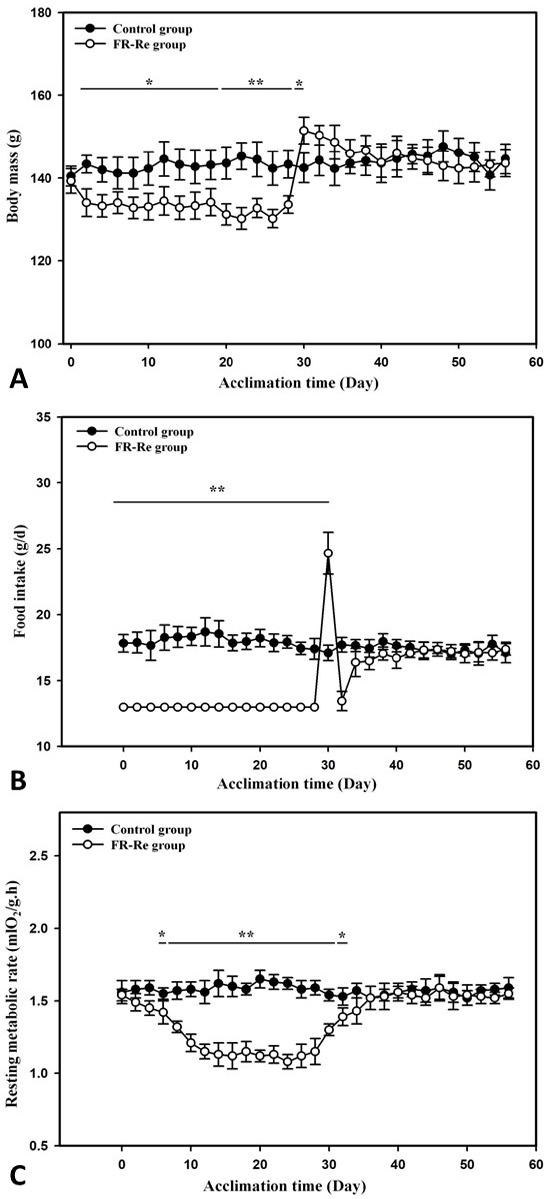
Effects of food restriction and refeeding on body mass (A) food intake (B) and RMR (C) in T. belangeri. *P<0.05, **P<0.01 (compare with control group).
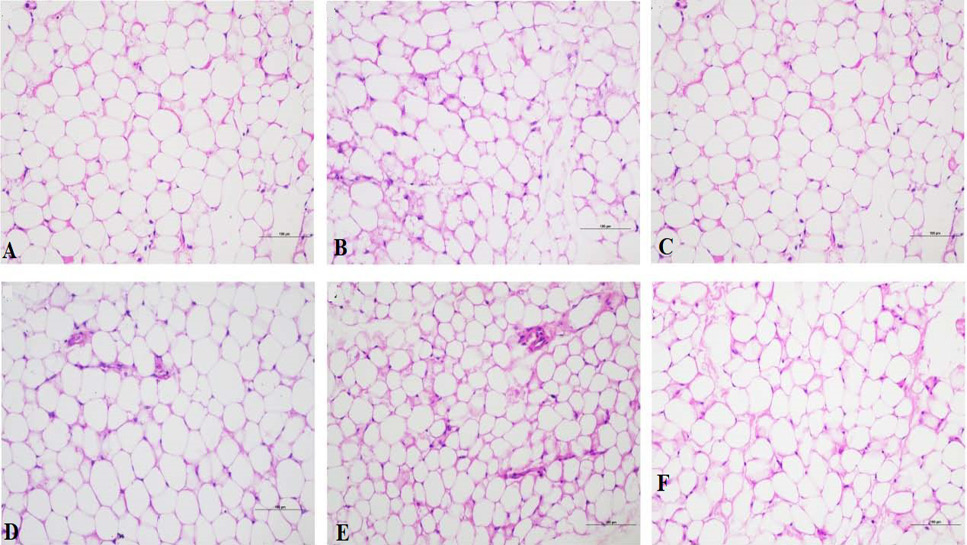
Morphological study of food restriction and refeeding on WAT in T. belangeri.
Control group: 0 d(A), 28 d (B), 56 d (C); FR-Re group: 0 d (D), 28 d of FR (E), 28 d of Re (F).
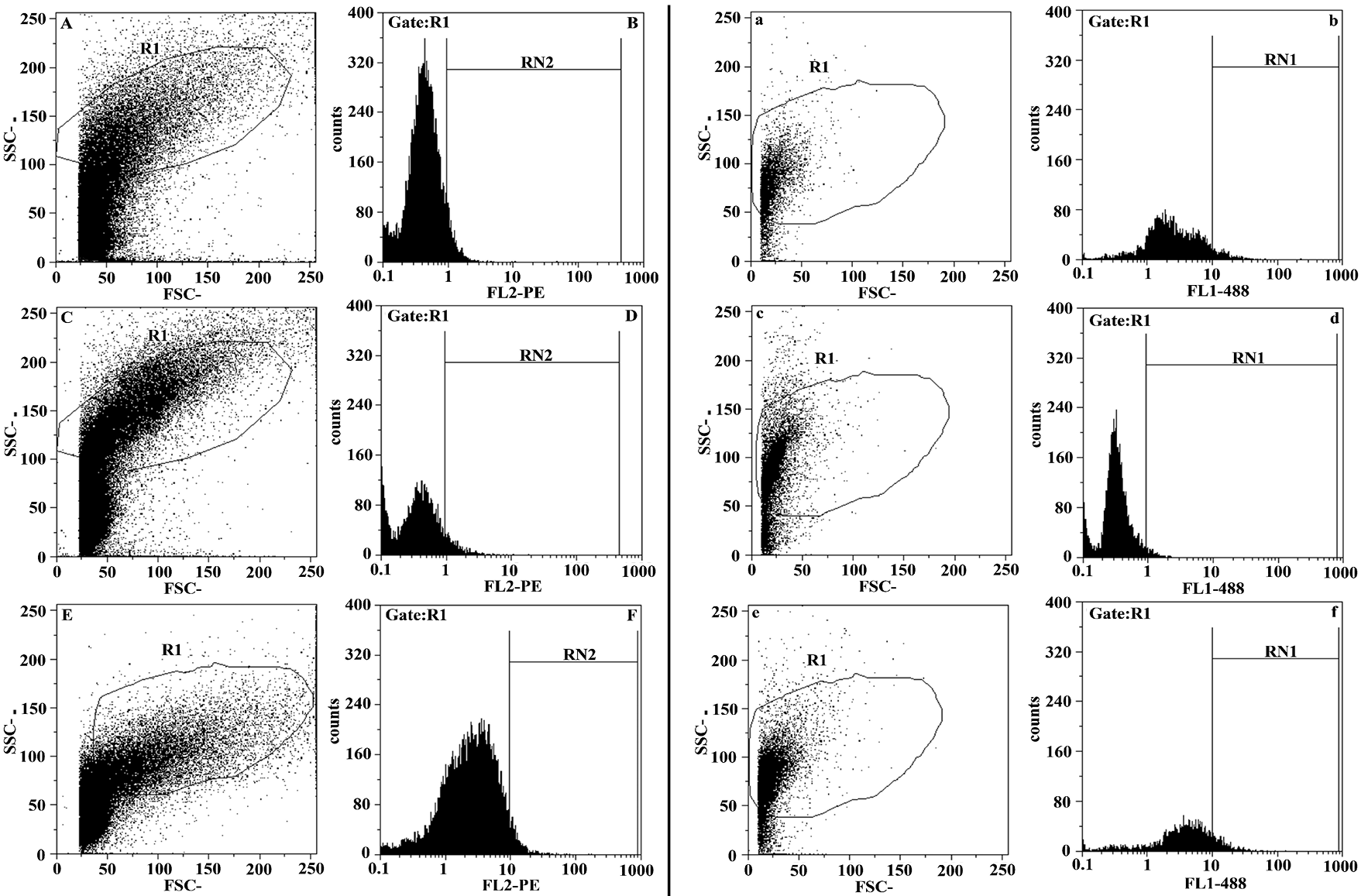
The flow cytometric analysis diagram on UCP1 and Cd137 of WAT in T. belangeri.
UCP1: 0 d (A, B), 28 d of FR (C, D), 28 d of Re (E, F); Cd137: 0 d (a, b), 28 d of FR (c, d), 28 d of Re (e, f).
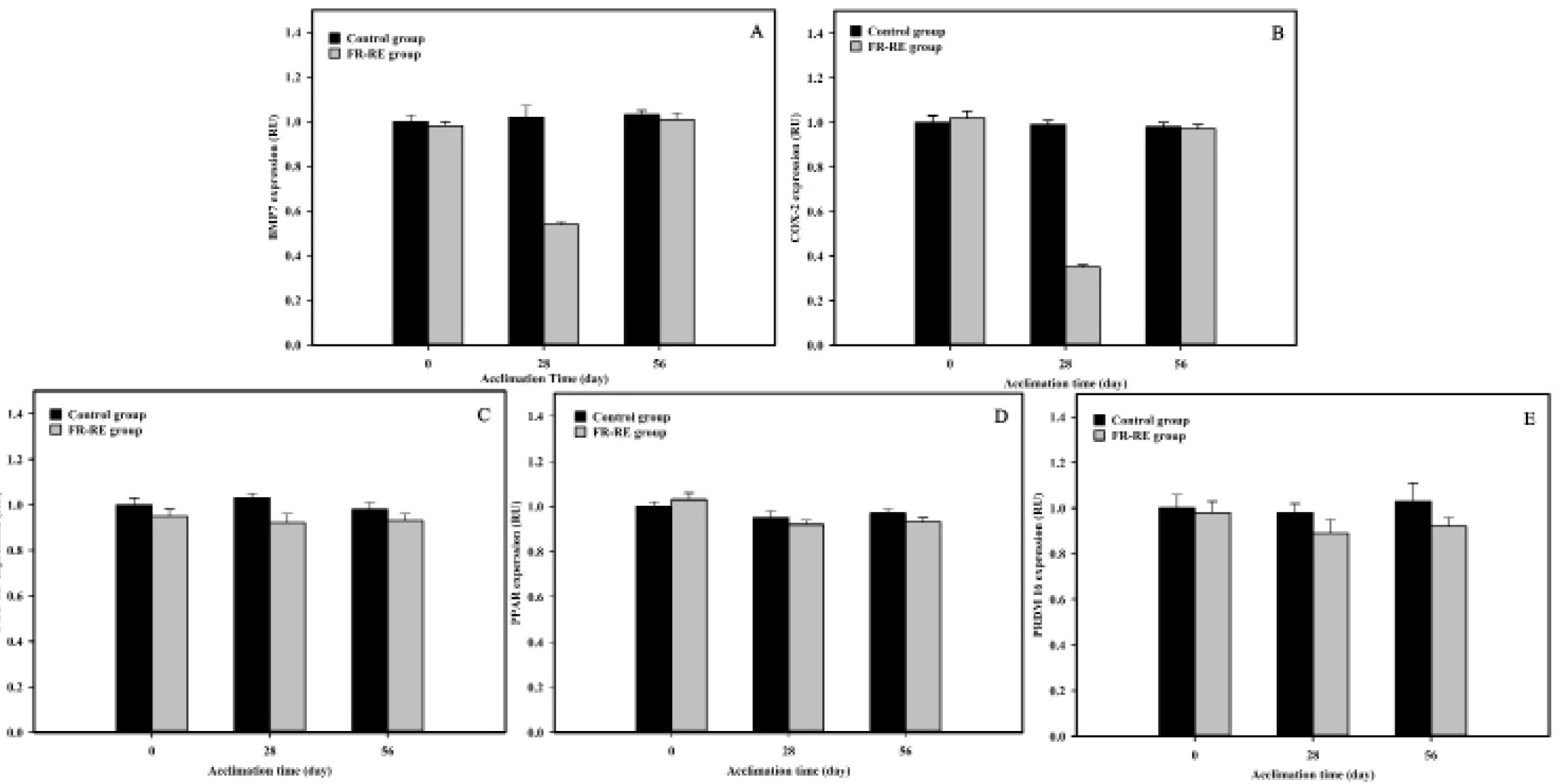
The expression level on COX-2 (A), PGC-1α (B), PPARα (C), BMP7 (D), PRDM16 (E) gene of WAT in T. belangeri.
Data were presented as means ± SE, the letters on the column express significant difference between groups (P< 0.05).
References
- Aguirre, L., Milton-Laskibar, I., Hijona, E., Bujanda, L., Rimando, A.M. and Portillo, M.P., 2016. Effects of pterosilbene in brown adipose tissue from obese rats. J. Physiol. Biochem., 73: 457-464. https://doi.org/10.1007/s13105-017-0556-2[CrossRef]
- Alvarenga, T.A., Andersen, M.L., Papale, L.A., Antunes, I.B. and Tufik, S., 2005. Influence of long-term food restriction on sleep pattern in male rats. Brain Res., 1057: 49-56. https://doi.org/10.1016/j.brainres.2005.07.024[CrossRef]
- Barbatelli, G., Murano, I., Madsen, L., Hao, Q., Jimenez, M., Kristiansen, K., Giacobino, J.P., De Matteis, R. and Cinti, S., 2010. The emergence of cold-induced brown adipocytes in mouse white fat depots is determined predominantly by white to brown adipocyte transdifferentiation. Am. J. Physiol. Endocrinol. Metab., 298: E1244-E1253. https://doi.org/10.1152/ajpendo.00600.2009[CrossRef]
- Bartness, T.J., Liu, Y., Shrestha, Y.B. and Ryu, V., 2014. Neural innervation of white adipose tissue and the control of lipolysis. Front. Neuroendocrinol., 35: 473-493. https://doi.org/10.1016/j.yfrne.2014.04.001[CrossRef]
- Callier, V. and Nijhout, H.F., 2014. Plasticity of insect body size in response to oxygen: integrating molecular and physiological mechanisms. Curr. Opin. Insect Sci., 1: 59-65. https://doi.org/10.1016/j.cois.2014.05.007[CrossRef]
- Chen, Y.Y., Yan, Y., Zhao, Z., Shi, M.J. and Zhang, Y.B., 2016. Bofutsushosan ameliorates obesity in mice through modulating PGC-1αexpression in brown adipose tissues and inhibiting inflammation in white adipose tissues. Chin. J. nat. Med., 14: 449-456. https://doi.org/10.1016/S1875-5364(16)30042-5[CrossRef]
- Chmelar, J., Chung, K.J. and Chavakis, T., 2013. The role of innate immune cells in obese adipose tissue inflammation and development of insulin resistance. Thromb. Haemost., 109: 399-406. https://doi.org/10.1160/TH12-09-0703[CrossRef]
- Ehrhardt, N., Heldmaier, G. and Exner, C., 2005. Adaptive mechanisms during food restriction in Acomys russatus: the use of torpor for desert survival. J. Comp. Physiol. B., 175: 193-200. https://doi.org/10.1007/s00360-005-0475-3[CrossRef]
- Ferguson, M., Sohal, B.H., Forster, M.J. and Sohal, R.S., 2007. Effect of long-term caloric restriction on oxygen consumption and body temperature in two different strains of mice. Mech. Ageing Dev., 128: 539-545. https://doi.org/10.1016/j.mad.2007.07.005[CrossRef]
- Fujii, N., Narita, T., Okita, N., Kobayashi, M., Furuta, Y., Chujo, Y., Sakai, M., Yamada, A., Takeda, K., Konishi, T., Sudo, Y., Shimokawa, I. and Higami, Y., 2017. Sterol regulatory element-binding protein-1c orchestrates metabolic remodeling of white adipose tissue by caloric restriction. Aging Cell, 16: 508-517. https://doi.org/10.1111/acel.12576[CrossRef]
- Gao, W.R., Zhu, W.L., Ye, F.Y., Zuo, M.L. and Wang, Z.K., 2016a. Plasticity in food intake, thermogenesis and body mass in the tree shrew (Tupaia belangeri) is affected by food restriction and refeeding. Anim. Biol., 66: 201-217. https://doi.org/10.1163/15707563-00002498[CrossRef]
- Gao, W.R., Wang, Z.K., Hou, D.M. and Zhu, W.L., 2016b. Roles of PRDM16 and BMP7 gene expressions in body mass regulation in Tupaia belangeri. Chin. J. Ecol., 35: 3315-3322.
- Gburcik, V., Cawthorn, W.P., Nedergaard, J., Timmons, J.A. and Cannon, B., 2012. An essential role for Tbx15 in the differentiation of brown and “brite” but not white adipocytes. Am. J. Physiol. Endocrinol. Metab., 303: 53-60. https://doi.org/10.1152/ajpendo.00104.2012[CrossRef]
- Jackson, D.M., Trayhum, P. and Speakman, R.J., 2001. Associations between energetics and over-winter survival in the short-tailed field vole Microtus agrestis. J. Anim. Ecol., 70: 633-640. https://doi.org/10.1046/j.1365-2656.2001.00518.x[CrossRef]
- Kouda, K., Nakamura, H. and Kohno, H., 2004. Dietary restriction: effects of short-term fasting on protein uptake and cell death/proliferation in the rat liver. Mech. Ageing Dev., 125: 375-380. https://doi.org/10.1016/j.mad.2004.02.006[CrossRef]
- Lau, K.H., Kothari, V., Das, A., Zhang, X.B. and Baylink, D.J., 2013. Cellular and molecular mechanisms of accelerated fracture healing by (COX2) gene therapy: studies in a mouse model of multiple fractures. Bone, 53: 369-381. https://doi.org/10.1016/j.bone.2013.01.003[CrossRef]
- Lema, S.C., 2020. Hormones, developmental plasticity, and adaptive evolution: Endocrine flexibility as a catalyst for ‘plasticity-first’ phenotypic divergence. Mol. cell. Endocrinol., 502: 110678. https://doi.org/10.1016/j.mce.2019.110678[CrossRef]
- Li, L., Xu, J.F., Fang, G.L. and Su, H., 2019. Effects of aerobic exercise or resistance exercise training on energy metabolism by activating BMP7 in rats. Chin. J. Sports Med., 38: 960-968.
- Mei, L., Zhang, H., Zhu, W.L. and Wang, Z.K., 2019. Seasonal variations of adipose tissue in Tupaia belangeri (Mammalia: Scandentia: Tupaiidae). Eur. Zool. J., 86: 54-62. https://doi.org/10.1080/24750263.2019.1572798[CrossRef]
- Norheim, F., Langleite, T.M., Hjorth, M., Holen, T., Kielland, A., Stadheim, H.K., Gulseth, H.L., Birkeland, K.I., Jensen, J. and Drevon, C.A., 2014. The effects of acute and chronic exercise on PGC-1 alpha, irisin and browning of subcutaneous adipose tissue in humans. FEBS J., 281: 739-749. https://doi.org/10.1111/febs.12619[CrossRef]
- Passadore, M.D., Griggio, M.A., Nunes, M.T. and Luz, J., 2004. Effects of ageing on the energy balance of food-restricted rats. Acta Physiol. Scand., 181: 193-198. https://doi.org/10.1111/j.1365-201X.2004.01281.x[CrossRef]
- Peng, H.B., Hou, D.M., Zhang, D. and Zhu, W.L., 2020. Effects of food restriction on body mass, energy metabolism and thermogenesis in a tree shrew (Tupaia belangeri). Anim. Biol., 70: 175-187. https://doi.org/10.1163/15707563-20191148[CrossRef]
- Pfeifer, A. and Hoffmann, L.S., 2015. Brown, beige, and white: the new color code of fat and its pharmacological implications. Annu. Rev. Pharmacol., 55: 207-227. https://doi.org/10.1146/annurev-pharmtox-010814-124346[CrossRef]
- Qian, S.W., Tang, Y., Li, X., Liu, Y., Zhang, Y.Y., Huang, H.Y., Xue, R.D., Yu, H.Y., Guo, L., Gao, H.D., Liu, Y., Sun, X., Li, Y.M., Jia, W.P. and Tang, Q.Q., 2013. BMP4-mediated brown fat-like changes in white adipose tissue alter glucose and energy homeostasis. Proc. natl. Acad. Sci. USA, 110: E798-E807. https://doi.org/10.1073/pnas.1215236110[CrossRef]
- Seale, P., Bjork, B., Yang, W.L., Kajimura, S., Chin, S., Kuang, S.H., Scime, A., Devarakonda, S., Conroe, H.M., Erdjument-Bromage, H., Tempst, P., Rudnicki, M.A., Beier, D.R. and Spiegelman, B.M., 2008. PRDM16 controls a brown fat/skeletal muscle switch. Nature, 454: 961-967. https://doi.org/10.1038/nature07182[CrossRef]
- Seale, P., Kajimura, S., Yang, W.L., Chin, S., Rohas, L.M., Uldry, M., Tavernier, G., Langin, D. and Spiegelman, B.M., 2007. Transcriptional control of brown fat determination by PRDM16. Cell Metab., 6: 38-54. https://doi.org/10.1016/j.cmet.2007.06.001[CrossRef]
- Sharp, K., Bucci, D., Zelensky, P.K., Chesney, A., Tidhar, W., Broussard, D.R. and Heideman, P.D., 2015. Genetic variation in male sexual behaviour in a population of white-footed mice in relation to photoperiod. Anim. Behav., 104: 203-212. https://doi.org/10.1016/j.anbehav.2015.03.026[CrossRef]
- Tong, Y.H., Hara, A., Komatsu, M., Tanaka, N., Kamijo, A., Gonzalez, F.J. and Aoyama, T., 2005. Suppression of expression of muscle-associated proteins by PPARalpha in brown adipose tissue. Biochem. biophys. Res. Commun., 336: 76-83. https://doi.org/10.1016/j.bbrc.2005.08.041[CrossRef]
- Townsend, K.L., An, D., Lynes, M.D., Huang, T.L., Zhang, H.B., Goodyear, L.J. and Tseng, Y.H., 2013. Increased mitochondrial activity in BMP7-treated brown adipocytes, due to increased CPT1- and CD36-mediated fatty acid uptake. Antioxid. Redox. Sign., 19: 243-257. https://doi.org/10.1089/ars.2012.4536[CrossRef]
- van Dam, A.D., Boon, M.R., Berbée, J.F.P., Rensen, P.C.N. And van Harmelen, V., 2017. Targeting white, brown and per vascular adipose tissue in atherosclerosis development. Eur. J. Pharmacol., 816: 82-92. https://doi.org/10.1016/j.ejphar.2017.03.051[CrossRef]
- Wang, G.H., 2018. PIK3R3 regulates PPARα expression to stimulate fatty acid β-oxidation and decrease hepatosteatosis. Exp. mol. Med., 50: 1-9. https://doi.org/10.1038/emm.2017.243[CrossRef]
- Wang, Y., Zhu, T.T., Ke, S.S., Fang, N., Irwin, D.M., Lei, M., Zhang, J.P., Shi, H.Z., Zhang, S.Y. and Wang, Z., 2014. The great Round leaf Bat (Hipposideros armiger) as a good model for cold-induced browning of intra-abdominal white adipose tissue. PLoS One, 9: e112495. https://doi.org/10.1371/journal.pone.0112495[CrossRef]
- Weir, J.B., 1949. New methods for calculating metabolic rate with special reference to protein metabolism. J. Physiol., 109: 1-9. https://doi.org/10.1113/jphysiol.1949.sp004363[CrossRef]
- Wen, Y.L. and Niu, H.X., 2010. Effect of food restriction and normal feeding after food restriction on physiological indicators of Mongolian gerbils (Meriones unguiculatus). Acta Theriol. Sin., 30: 182-187.
- Xu, D.L., Liu, X.Y. and Wang, D.H., 2011. Food restriction and refeeding have no effect on cellular and humoral immunity in mongolian gerbils (Meriones unguiculatus). Physiol. Biochem. Zool., 84: 87-98. https://doi.org/10.1086/657687[CrossRef]
- Zhan, X.M., Li, Y.L. and Wang, D.H., 2009. Effects of fasting and refeeding on body mass, thermogenesis and serum leptin in Brandt’s voles (Lasiopodomys brandtii). J. therm. Biol., 34: 237-243. https://doi.org/10.1016/j.jtherbio.2009.02.006[CrossRef]
- Zhao, Z.J. and Wang, D.H., 2007. Effects of diet quality on energy budgets and thermogenesis in Brandt’s voles. Comp. Biochem. Physiol. A, 148:168-177. https://doi.org/10.1016/j.cbpa.2007.04.001[CrossRef]
- Zhao, Z.J. and Cao, J., 2009. Plasticity in energy budget and behavior in Swiss mice and striped hamsters under stochastic food deprivation and refeeding. Comp. Biochem. Physiol. A, 154: 84-91. https://doi.org/10.1016/j.cbpa.2009.05.004[CrossRef]
- Zhao, Z.J., Chi, Q.S., Cao, J. and Wang, D.H., 2014. Seasonal changes of body mass and energy budget in striped hamsters: The role of leptin. Physiol. Biochem. Zool., 87: 245-256. https://doi.org/10.1086/674974[CrossRef]
- Zhu, W.L., Hou, D.M., Sun, S.R. and Wang, Z.K., 2017. White adipose tissue undergoes ‘browning’ in tree shrews (Tupaia belangeri) during cold acclimation. Mammal. Study, 42: 231-238. https://doi.org/10.3106/041.042.0405[CrossRef]
- Zhu, W.L., Mu, Y., Zhang, H. and Zhang, L., 2013. Effects of food restriction on body mass, thermogenesis and serum leptin levels in Apodemus chevrieri (Mammalia: Rodentia: uridae). Ital. J. Zool., 80: 337-344. https://doi.org/10.1080/11250003.2013.796409[CrossRef]
- Zhu, W.L., Mu, Y., Zhang, H., Gao, W.R., Zhang, L. and Wang, Z.K., 2014. Effects of random food deprivation on body mass, behavior and serum leptin levels in Eothenomys miletus (Mammalia: Rodentia: Cricetidae). Ital. J. Zool., 81: 227-234. https://doi.org/10.1080/11250003.2014.902511[CrossRef]
Services
Article usage statistics
Loading…