Tianhoun Denté Fidèle1*, Meda Nag-Tiero Roland2, Konate Almamy1, Kabore Adama1, Tamboura H. Hamidou1, Belem Adrien Marie Gaston3
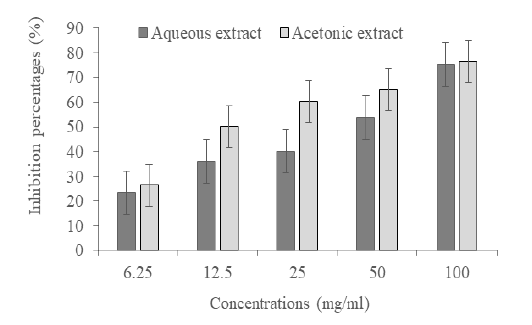
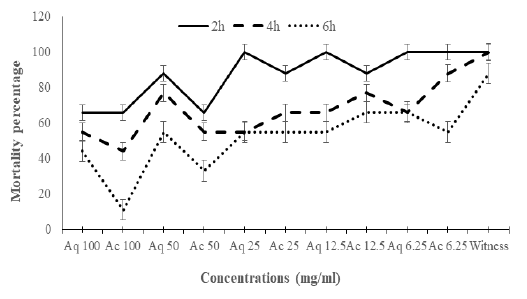
1Laboratoire de Biologie et Santé Animales du Département Productions Animales / Institut de l’Environnement et de Recherches Agricoles, Ouagadougou, Burkina Faso; 2Unité de Formation et de Recherche / Science et Technologie / Université Nazi Boni, Bobo-Dioulasso, Burkina Faso; 3Institut du Développement Rural / Université Nazi Boni, Bobo-Dioulasso, Burkina Faso.Abstract | In Burkina Faso, small ruminant livestock owners face internal parasitism, particularly gastro-intestinal strongylosis (GIS), which causes severe losses on their farms. In response to this situation, endogenous strategies are being developed through the use of medicinal plants such as Cassia alata to combat GIS in the field. Thus, the present study was conducted to evaluate the anthelmintic efficacy of aqueous and hydroacetonic extracts of Cassia alata leaves on Haemonchus contortus, one of the most dominant strongles of small ruminants in Burkina Faso. For this purpose, a phytochemical screening of two extracts was carried out followed by in vitro antiparasitic tests with five increasing concentrations (6.25, 12.5, 25, 50 and 100 mg/ml) of the extracts on two stages life of the Haemonchus contortus parasite. The results obtained from the phytochemical analysis revealed the presence of steroidal and triterpenic compounds, anthracenosides, saponosides, polyphenols (tannins) and reducing compounds in the aqueous and hydroacetone extracts of the leaves of Cassia alata. In the in vitro tests, the percentages of egg hatch inhibition increased significantly (pË‚0,05) with increasing concentrations and compared to the control. All concentrations tested showed vermicidal activity on adult Haemonchus contortus worms after 6 hours of exposure to freeze-dried extracts. These results show that both extracts have ovicidal and vermicidal activity on the Haemonchus contortus parasite. Further studies could be envisaged to evaluate the toxicity of the plant extracts followed by in vivo anthelmintic efficacy tests to support breeders in their use.
Keywords | Cassia alata, Anthelmintic activity, In vitro, Haemonchus contortus.