Department of Agriculture, Center for Isotope and Radiation Application, National Nuclear Energy Agency of Indonesia (BATAN).
Abstract | Five rice straw cultivars in Indonesia (Atomita 1, Bestari, Inpari Sidenuk, Situ Gintung and Ciherang) were investigated for nutrient and in vitro digestibility as ruminants roughage. Except Ciherang, all cultivars were mutant rice variety. This study aimed to: 1) assess the influence of variety on the nutrient and fiber variation of rice straw; 2) predict the nutrient value of rice straw using fiber content; and 3) evaluate the in vitro digestibility of five rice straw cultivars in Indonesia. Except for acid detergent lignin (ADL) (P= 0.09), a significant difference (P<0.05) were observed for all nutrient and fiber contents between all varieties. Acid detergent fiber (ADF) and cellulose content in mutant varieties were significantly higher than Ciherang variety. Based on fiber content, the range in relative feed value (RFV) varied by 60.99 – 68.89. However, all rice straw varieties are included in reject forage class. There were significant differences at 48 and 72 h in vitro gas production (P<0.05) between all varieties. Highly significant differences (P<0.001) were observed for optimum (a+b) and rate gas production (c) traits. The in vitro organic matter digestibility (IVOMD) varied from 30.30 – 35.87%. Those results could explain differences in nutritional quality and digestibility of rice straw according to cultivars. Ciherang variety had a good prospect for ruminant roughage due to the highest nutrient value and digestibility.
Keywords | In vitro digestibility, Nutrient, Rice straw, Roughage, Ruminant
INTRODUCTION
Indonesia, which accounts for about 83.04 million ton rice production, coming in the third in rice production after China and India (FAO, 2020). To attain self-sufficiency in food, Indonesia has endeavored to develop high-yielding varieties of paddy rice. Ciherang is commonly rice variety cultivated by local farmers. National Nuclear Energy Agency of Indonesia (BATAN) also developed various rice varieties based on mutation radiation breeding. Some of them are Atomita 1, Bestari, Inpari Sidenuk (lowland rice) and Situ Gintung (upland rice). All four varieties have specific genetic and agronomic characteristics. Increased production of rice results enchanced residue production . In many of rice-growing areas in Asia, rice straw is used as animal feed . In Indonesia, Rice straw is an important roughage resource for livestock. Rice straw is generally used as roughage due to its low protein content and high fiber fraction. Farmers rely on the availability of rice straw as a cheap and easy source of feed. High lignin and low nitrogen contents are also the biggest constraints of rice straw . Various treatments have been used in rice straw to improve the nutrient quality, including ammoniation , fermentation and physical treatment with gamma irradiation . However, only few concepts have been discussed by scientists in Indonesia, which are related to the selection of rice varieties that produce high quality rice straw (genetically). Dong et al. (2018) also reported that various treatments on rice straw only changed the physical structure of rice straw, but did not increase the nutrient digestibility.
In previous studies, several countries in Asia have screened rice varieties that produce nutritious straw, including India ; , China ; , Philippines and Bangladesh . The study of rice varieties screening as roughage sources is necessary for Indonesia. Rice as dual-purpose plants (food-feed) need to be improved in quality and popularity. Fodder value of the rice crop residue has become an integral part of plant breeding . Wang et al. (2006) reported that a gene mutants in crop rice resulted in a beneficial effect on the nutrient and digestibility of rice straw. Superior quality of rice straw could significantly contribute to increase the farmer’s income . Subudhi et al. (2020) reported that collaboration between agricultural and animal nutrition disciplines is necessary to study rice varieties that will be used as roughage. Therefore, this study aimed to: 1) assess the influence of variety on the nutrient and fiber variation of rice straw; 2) predicting the nutrient value of rice straw using fiber content; and 3) evaluating the in vitro digestibility of five rice straw cultivars in Indonesia.
MATERIALS AND METHODS
Rice Straw Preparation
The 5 rice straw cultivars were obtained from Plant Mutation Breeding Laboratory (research collection), Center for Isotopes and Radiation Application (CIRA), National Nuclear Energy Agency of Indonesia (BATAN). Five Indica rice cultivars were: Atomita 1, Bestari, Inpari Sidenuk, Situ Gintung and Ciherang. All cultivars were cultivated under similar agronomic conditions on the same field in the experimental farm of CIRA, BATAN. The whole crop was harvested after being 10 cm above the ground, chopped to 2-3 cm and dried at 60oC for 72 hours. The materials were ground with hammer mill to 1 mm (mesh 18).
Nutrient and Fiber Analyses
All samples were analyzed for ash, organic matter (OM), crude protein (CP) and ether extract (EE) according to the methodology of the AOAC (2016). Neutral detergent fiber (NDF), acid detergent fiber (ADL) and acid detergent lignin (ADL) were determined by the method of . Hemicellulose and cellulose content were determined using following equations:
Nutrient Value Prediction
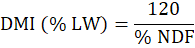
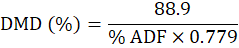
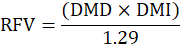
The value of NDF and ADF were used to calculate dry matter intake (DMI), dry mater digestibility (DMI) and relative feed value (RFV). All prediction were calculated by formulas:
The RFV were based on the Quality Grading Standard assigned by The Hay Marketing Task Force of the American Forage and Grassland Council, as follows: prime (> 151), premium (151 – 125), good (124 – 103), fair (102 – 87), poor (86 – 75) and reject (< 75).
The Net energy of lactation (NEL), estimated net energy (ENE) and total digestible nutrients (TDN) were calculated according to Undersander et al. (1993), as follows:
Prediction equation from Pennsylvania State:
Prediction equation from New York State:
Mcal/lb was converted to Mcal/kg
In vitro Ruminal Fermentation Assay
In vitro digestibility was measured using in vitro gas production technique as described by Menke and Steingass (1988). Rumen liquor was obtained from 3 cattle freshly slaughtered (approximate live weight 250 kg) at a local abattoir (Pamulang, South Tangerang, Indonesia).
Table 1: Nutrient profile and fiber characteristics of five rice straw cultivars in Indonesia
Values in a column followed by a similar superscripts are statistically similar after the DMRT test at a level of confidence 95%.
Standard error of mean (SEM).
Table 2: Nutrient value predictions from five rice straw cultivars in Indonesia
Cultivars
DMI (% LW)
DMD (%)
RFV
Pennsylvania state equation*
New York state equation*
NEL (Mcal/ kg)
ENE (Mcal/ 100 kg)
TDN (%)
NEL (Mcal/ kg)
ENE (Mcal/ 100 kg)
TDN (%)
Atomita 1
1.67ab
51.42c
66.55
1.05c
86.71c
47.69c
0.80c
66.10c
54.19c
Bestari
1.72d
50.20bc
66.89
1.01bc
83.09bc
45.91bc
0.75bc
61.84bc
52.95bc
Inpari Sidenuk
1.71cd
49.55b
65.58
0.98b
81.17b
44.96b
0.72b
59.56b
52.28b
Situ Gintung
1.64a
48.08a
60.99
0.93a
76.79a
42.80a
0.66a
54.39a
50.78a
Ciherang
1.68bc
52.87d
68.89
1.10d
91.01d
49.82d
0.86d
71.18d
55.67d
SEM
0.008
0.373
0.662
0.013
1.108
0.547
0.016
1.308
0.382
*Prediction equation from Undersander et al. (1993).
Dry matter intake (DMI), dry matter digestibility (DMD), relative feed value (RFV), net energy of lactation (NEL), Estimated net energy (ENE), total digestible nutrients (TDN).
Values in a column followed by a similar superscripts are statistically similar after the DMRT test at a level of confidence 95%.
Standard error of mean (SEM).
Table 3: Cumulative and kinetics gas production of five rice straw cultivars in Indonesia (ml/200 mg DM)
Cultivars
Incubation time (h)
Kinetics gas
3
6
9
12
24
48
72
a+b
c
Atomita 1
3.14
5.44
6.91
8.48
12.98
23.65b
29.83bc
52.49b
0.011b
Bestari
3.17
5.38
7.07
8.33
13.61
23.42b
30.06bc
51.96b
0.012b
Inpari Sidenuk
3.75
4.70
6.14
7.36
11.79
21.85b
27.39b
49.04b
0.012b
Situ Gintung
3.28
5.84
7.59
8.92
12.32
18.99a
24.42a
36.42a
0.015c
Ciherang
3.06
5.27
6.74
8.11
12.22
23.38b
30.44c
77.22c
0.007a
SEM
0.771
0.771
0.218
0.243
0.328
0.479
0.456
0.415
0.555
Optimum gas production (a+b); gas production rate (c).
Values in a column followed by a similar superscripts are statistically similar after the DMRT test at a level of confidence 95%.
Standard error of mean (SEM).
Rumen liquor were mixed, strained through four layers of cheesecloth and mixed into buffer solution (1:2, v/v). Rumen-buffer solution was maintained in 39oC waterbath and infused with CO2. The rumen-buffer (30 ml) was filled into 100 ml glass syringes (Fortuna, Labortechnik, Germany) containing 200 mg of samples and immediately incubated into waterbath at 39oC. Gas production was recorded after 3, 6, 9, 12, 24, 48 and 72h of incubation. The kinetics gas were fitted to the exponential equation: , where P represents gas production at t time, a is the gas production from soluble fraction (ml/200 mg DM), b is the gas production from
Table 4: In vitro digestibility and rumen fermentation characteristics of five rice straw cultivars in Indonesia
Cultivars
Parameters
IVOMD (%)
Metabolisable energy (kcal/kg DM)
Microbial protein (g/kg IVOMD)
pH
NH3(mM)
TVFA (mM)
Atomita 1
35.16b
1560.58bc
4240.89b
6.74a
2.69a
47.86a
Bestari
35.87b
1575.72c
4326.40b
6.76a
3.15ab
50.60ab
Inpari Sidenuk
33.48b
1481.88b
4038.24b
6.81ab
2.72a
49.24ab
Situ Gintung
30.30a
1376.55a
3655.29a
6.76a
3.45ab
42.39a
Ciherang
35.21b
1572.59c
4246.85b
6.86b
3.65b
65.24b
SEM
0.525
19.67
63.268
0.014
0.129
2.720
In vitro organic matter digestibility (IVOMD), ammonia (NH3), total volatile fatty acids (TVFA).
Values in a column followed by a similar superscripts are statistically similar after the DMRT test at a level of confidence 95%.
Standard error of mean (SEM).
Table 5: The Correlation coefficient between nutrient composition and digestibility of five rice straw cultivars in Indonesia (n = 25)
insoluble fraction (ml/200 mg DM) and (c) gas production rate (ml/h).
Gas production (GP), crude protein (CP), ash and ether extract (EE) content were used to calculate IVOMD and metabolizable energy (ME) according to Menke et al. (1979), as follows:
MJ/kg DM was converted to kcal/kg DM
The value of IVOMD was used to calculate microbial protein (MP) according to Czerkawski (1986), as follows:
MP (g/kg IVOMD) = IVOMD x 19.3 x 6.25
An amount of 10 ml in vitro fermentation medium was collected after 72 h incubation to determine pH, total volatile fatty acids (TVFA) and ammonia (NH3) concentration.
Statistical Analyses
Data of nutrient composition, nutrient value prediction and in vitro rumen fermentation were analyzed using completely randomized design. Data were analyzed using a one-way analysis of variance (ANOVA) and tested by Duncan multiple range test (DMRT). Moreover, data of nutrient content and in vitro digestibility were analyzed by pairwise correlation of variables using SPSS 25.0 (IBM, Armonk, New York, USA).
RESULTS
Nutrient and Fiber Contents of Rice Straw
Mean values (of five replicates) of nutrient composition and fiber characteristics are reported in Table 1. Except for ADL (P= 0.09), significant difference (P<0.05) was observed for all contents. The ash content in rice straw of Inpari Sidenuk was the highest of all (31.24%) and the lowest of all was that of Ciherang (20.39%). The OM and hemicellulose contents in mutant rice straw varieties were significantly lower than Ciherang variety, but ADF and cellulose content in mutant varieties were significantly higher than Ciherang. The cellulose content of Bestari and Ciherang were the lowest of all, 34.39 and 34.27%, respectively. The range in NDF and ADF values varied by 68.76 – 71.92 and 46.25 – 52.40 %, respectively. Ciherang had highest EE content (4.45 %), but not significantly different compared with Bestari (3.21 %).
Nutrient Value Predictions
The estimation of DMI, DMD, RFV, NEL, ENE and TDN were presented in Table 2. High Significant difference (P<0.01) was observed for all parameters. Bestari and Ciherang had the highest value on DMI and DMD predictions, respectively. The range in RFV values varied by 60.99 – 68.89. However, All varieties are included in the reject class of forage. The NEL and ENE value predictions of Situ Gintung were lowest, while Ciherang tended to have a more superior nutrient value. The TDN value of Situ Gintung, which had the lowest value, was 7.02 and 5,11 % lesser than Ciherang variety, respectively in Pennsylvania and New York State equation.
In vitro Gas Production and Digestibility of Rice Straw
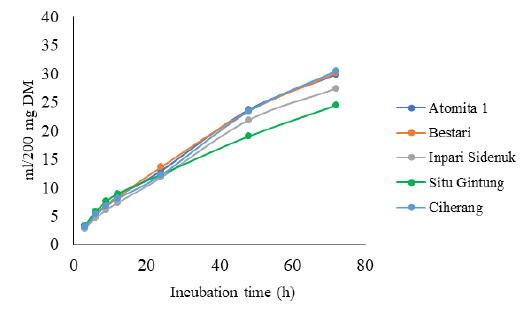
Data for in vitro gas production, digestibility and rumen fermentation characteristics of rice straws are given in Table 3 and 4. In vitro gas pattern also showed in Figure 1. There was no significant difference between all varieties on in vitro gas production at 3 – 24 h incubation times. However, there were significant differences between 48 and 72 h (P<0.05). Highly significant differences (P<0.001) were observed for optimum (a+b) and rate gas production (c) traits. The optimum gas production (a+b) of Situ Gintung varieties, which had the lowest value, was 40.80% lesser than Ciherang as national variety. High rate value (c = 0.007) in Ciherang variety related to the pattern of increased gas production illustrated in Figure 1.
Except for TVFA (P=0.76), significant differences (P<0.05) among varieties were observed for all in vitro digestibility and rumen fermentation traits. The IVOMD of rice straw for the five varieties varied from 30.30 – 35.87%. Atomita 1 had the lowest NH3 concentration, whereas Ciherang produced superior NH3 value (2.69 vs 3.65 mM). The TVFA varied from 42.39 – 65.24 mM, which Ciherang also produced the highest value.
Relationship Between Nutrient Composition and Digestibility of Rice Straw
The Correlation coefficient between nutrient content and in vitro digestibility parameters are presented in Table 5. The EE value was medium and significantly positively associated with cumulative gas production (r = 0.453), optimum gas production (r = 0.548) and IVOMD (r = 0.408). Neutral detergent fiber value was medium significantly negatively associated with cumulative gas production (r = -0.415) and IVOMD (r = -0.486). Acid detergent fiber was highly significantly negative correlated with cumulative (r = -0.639) and optimum (a+b) gas production (r = 0.792). Acid detergent fiber and ADL also had medium significantly negatively correlation with TVFA (r = -0.454 and r = -0.406, respectively). The correlation between fiber fractions of rice straw and NH3 concentration were statistically non-significant.
DISCUSSIONS
Nutrient Content Variations in Rice Straws and Quality Value Predictions
Five varieties of rice were grown under similar soil and climate conditions, thus the difference in nutrient and fiber content between them may be related to varietal characteristics. In this research, the variation in nutrient content was consistent with the previous reports by Ansah et al. (2017); Ravi et al. (2019); Subudhi et al. (2020) and Virk et al. (2019). These findings also agree with an investigation in maize ; , Field Pea , Groundnut , Wheat ; and Sorghum ; . Genetic changes through mutation breeding programs could increase grain productivity, however this will affect the nutrient content of straw. The gene mutant caused altered biosynthesis of fiber fractions (hemicellulose, cellulose and lignin) .
Mutants gene had developed increased plant height, increased vegetative tissues and changed other morphological traits . Except for Situ Gintung, all varieties are included in lowland rice. In present study, Situ Gintung as upland variety had higher NDF and ADF content than lowland variety. This phenomenon reflects that the mechanism of fiber fractions assembling in upland rice is higher than lowland rice. However, these allegations need to be observed further. Situ Gintung Variety has a relatively long harvesting age (140 d) compared to the other four varieties (103 – 127 d). This difference will affect the variation of fiber fractions, ash and silica of rice straw. The later the date of harvesting, the lower net energy and nutrient value .
In previous studies, the fiber fraction represented in the NDF value was in the range of 72-86 , 62.28 – 74.68% , 72.16 – 77.57% , 62.10 – 67.10% , 64.30 – 66.30% and 66.00 – 76.60% . These differences can be caused by several factors: 1) environmental conditions; 2) nutrient management in the soil; 3) grain handled after harvested and 4) genetically effect . In the present study, all varieties recorded higher ADL content (11.97 – 15.45%). These findings are extremely higher than previous results by Subudhi et al. (2020) (3.30 – 5.30%) and Ravi et al. (2019) (2.80 – 3.30%). The differences in grain processing in each country and the composition of plant parts can cause differences in lignin levels.
The NDF, ADF and ADL contents are three main fiber characteristics that are negatively associated with digestibility and nutrient value in roughage . The lack of easily available energy and high structural carbohydrate are the major constraint of rice straw . The total digestion of fiber fraction is the major determinant of energy value from diets . The roughage proportion in diet have a significant impact on rumen microbiome and microbial diversity . High ash content was observed in present study (20.39 – 31.24%). The higher ash concentration could be due to the high silica content . Silica cotent in detergent fiber fractions related to low fermentability and digestibility . Wang et al. (2006) reported that silica was found in many parts of blade and sheath during growth. In addition to fiber and silica, CP is a key component and quality traits to determine the quality of forage. This could be improved by breeding and selection ; .
Based on practically in the field, it is necessary to predict the nutrient quality of rice straw based on the prediction by calculating the nutrient value . The RFV of rice straw (Table 2) is quite low due to the high value of NDF and ADF content (Table 1). The RFV prediction for rice straw is approximately between 70.78 – 75.94 . While the RFV predictions of roughage obtained from other crop by-products approximately in value of 61 – 69 . Relative feed value prediction is obtained from the Alfalfa standard value, thus rice straw will be included in the reject group if converted to these calculations. In present study, the appropriate TDN calculation was based on the Pennsylvania State Equation. Based on these calculations, the TDN value matches the actual value of 43.20% . The work observed here explores the use of some chemical (ash, CP, NDF, ADF and ADL) and nutrient value prediction (RFV and TDN) roughage quality traits for the assessment of rice straws.
Differences in In vitro Gas Production and Digestibility of Rice Straws
Improving the quality of straw is the right solution to increase the utilization of agriculture by-product as a fodder (Suhubdy et al., 2020). In vitro cumulative gas production represents the quality and level of digestibility, observed at 3 – 72 h of incubation time. However, it should be noted that in vitro gas test can only evaluate for one aspect of rice straw as fodder. Also besides, the effect of straw used as fodder was affected by many other factors, such as particle size, stem proportion and feed intake . In the digestive pathway, components of starch and water soluble carbohydrate are digested earlier, then structural carbohydrates. In this case, hemicellulose and cellulose as structural carbohydrates are broken down into simple sugar components . The differences in in vitro cumulative gas production began to occur during 48 and 72 h incubation times. It can be explained that the variation in gas production was influenced by the differences in structural carbohydrate contents (Table 1). The lowest cumulative and optimum gas production were produced by Situ Gintung variety (P<0.05) due to the high structural carbohydrate contents (NDF and ADF). The high rate of degradation (c) also causes high optimum gas production in Ciherang variety. The high content of NDF, ADF, ADL and silica had negatively associated with straw digestibility ; . Increasing lignin and cellulose tended to decrease degradation . The high content of lignocellulose and NDF proportion can affect the lower rate of fiber digestion .
The upland rice (Situ Gintung) had the lowest IVOMD, ME and MP values. This due to the low digestibility was negatively associated with high fiber content (Table 1). Differences in genetic-agronomic characteristics influence IVOMD variations. Situ Gintung as upland variety, had a fairly high proportion of stems. The dominant stem proportion would reduce fodder digestibility. Wamatu et al. (2017) reported that stem has low IVOMD due to the rich of NDF, ADF and ADL contents. The upland varieties in India also tended to have poor IVOMD . Furthermore, IVOMD variations are influenced by interactions between genetic and ecological factors. Differences in maize stover varieties can produce IVOMD variations by 2.3 – 2.7% . In present study, the IVOMD of rice straws varied from 30.30 – 35.87%. This value was lower than previous study by Ravi et al. (2019) and Doyle et al. (1986) with a value of 40 – 48% and 38 – 40%, respectively. These differences due to several factors, such as: 1) environmental conditions; 2) nutrient management in the soil; 3) grain handled after harvested and 4) genetically effect . Straw fodder quality related to the available energy in the straw represented by IVOMD and ME values . The high nutrient value will minimize the cost of rice straw pretreatment to improve the fodder quality .
Ammonia level in ruminal fluid is importance due to ruminal microbes is dependent on it . Furthermore, there are some ammonia routes that need attention, including: 1) ammonia-N incorporated into microbial cells; 2) ammonia outfow in the rumen and 3) ammonia absorption . Ammonia concentration depends on CP content of the substrate. In present study, there was no difference on CP fraction between all variety. The ruminal NH3 values from all the cultivars were 2.69-3.65 mM and not required the most suitable concentration in the rumen (5.17 mM; . Apparently, this is related to low CP content in all cultivars. High NH3 concentration obtained from higher CP content due to proteolysis and deamination by proteolytic microbes . The TVFA concentration represent carbohydrate fermentation rate and ruminal microbes condition . Despite Ciherang variety produce the highest TFVA production, the ruminal TVFA values from all the cultivars were lower than a rice straw study reported by Wanapat et al. (2009). This difference might be due to the variation in cultivar and agro-ecological zone. In another perspective, variations in nutrients and digestibility parameters produced by these five varieties could provide a good oppurtinity for breeding and selection of dual purpose rice varieties. The wide range in nutrient and IVOMD in straw fodder offers good opportunity for multi-dimensional crop improvement ; .
Relationship Between Nutrient Quality and In vitro Digestibility
The relationship between nutrient content and digestibility parameters is necessary to determine the variable of rice straw quality. The rice straw quality analyzed in the present study can be classified into positive traits such as EE and negative traits such as NDF, ADF, ADL and ash. These results are following previous studies. Ravi et al. (2019) reported that the straw fodder quality traits can be classified into positive traits (N, IVOMD and ME) and negative traits (NDF, ADF, ADL and silica). In vitro organic matter digestibility and N were significantly related to straw fodder quality traits . Fiber components had negative correlations with IVOMD . Structural carbohydrates are degraded slowly, thus it associated with slow digestion rate . Neutral detergent fiber, ADF and ADL were negatively associated with DMI and DMD, while IVOMD and ME were closely correlated with in vivo measurements . Furthermore, ADF, IVOMD and ME are suitable laboratory traits for fodder quality assessment.
Based on present works, the principal nutrient contents that need to be considered to develop the good rice straw quality were ligno-cellulose and ligno-hemicellulose. However, this needs to be compromised by the function of lignin as a natural plant protector against various external invading diseases. Wamatu et al. (2017) reported that high-disease resistant varieties may tend to have lower nutritive value. Also besides, variations in the genotype of straw should not be exploited at the expense of grain production , especially degraded plant protection systems against various diseases. Sharma et al. (2010) and Ravi et al. (2019) propose the option to exploit existing variations in food and roughage characteristics that come by unintentionally, better than genetic improvement activated. Based on another perspective, dual-purpose crops are very important to be developed for dryland areas, where there is a presence of livestock that needs biomass quality to compensate for the low grain yields . Therefore, the selection and breeding of rice cultivars with good straw characteristics are needed by farmers. Better quality rice straw will benefit the mix crop-livestock farmers who use straw for animal roughage .
CONCLUSION
The results showed that different cultivars affect the variation of nutrients and fiber contents of rice straw. After predicting the feed quality value, all of five cultivars are included in the reject forage class due to the high fiber contents. Situ Gintung (as upland rice) straw had the lowest digestibility. Ciherang variety had a good prospect for ruminant roughage due to the highest optimum gas production (77.22 ml/200 mg DM) and TVFA production (65.24 mM). The new paradigm on rice straw genetic improvement as a fodder source is necessary. However, the selection process needs to consider the main function of a rice plant as a main crop in Indonesia.
ACKNOWLEDGEMENTS
This study was financed by the Center for Isotope and Radiation Application, National Nuclear Energy Agency of Indonesia. We are thankful for the kind support from Science and Technology Scholarship, Education and Training Center, Ministry of Research and Technology/National Research and Innovation Agency of Indonesia.
CONFLICT OF INTEREST
Authors declare that there is no conflict of interest.
AUTHORS CONTRIBUTION
Teguh Wahyono performed the experiment, data analysis, wrote and revised the article draft; Wahidin Teguh Sasongko designed and supervised the experiment; Irawan Sugoro supervised the experiment; Firsoni checked data analysis and revised the article draft.
References
• Ansah T, Dogbe W, Cudjoe S, Abdul-Basit Iddrisu AR, Eseoghene AS (2017). Agronomic performance of five rice varieties and nutritive value of the straw from these varieties. West Afr. J. Appl. Ecol. 25: 1-10.
• AOAC (2016). Official Method of Analysis (20th Edition). Maryland: Association of Official Analytical Chemists.
• Bezabih M, Adie A, Ravi D, Prasad KVSV, Jones C, Abeyo B, Tadesse Z, Zegeye H, Solomon T, Blümmel M (2018). Variations in food-fodder traits of bread wheat cultivars released for the Ethiopian highlands. Field Crops Res. 229: 1-7. https://doi.org/10.1016/j.fcr.2018.09.006[CrossRef]
• Czerkawski JW (1986). An Introduction to Rumen Studies. Oxford: Pergamon Press.
• Dong C, Xu N, Ding C, Gu H (2018). Rapid evaluation method for rice (Oryza sativa L.) straw feeding quality. Field Crops Res. 228: 204-209. https://doi.org/10.1016/j.fcr.2018.09.007[CrossRef]
• Dong C, Xu N, Ding C, Gu H, Zhang W, Sun L (2020). Developing ratoon rice as forage in subtropical and temperate areas. Field Crops Res. 245: 107660. https://doi.org/10.1016/j.fcr.2019.107660[CrossRef]
• Doyle PT, Devendra C, Pearce GR (1986). Rice Straw as a Feed for Ruminants. Canberra: International Development Program of Australian Universities and Colleges Limited (IDP).
• Duncan A, Samaddar A, Blümmel M (2020). Rice and wheat straw fodder trading in India: Possible lessons for rice and wheat improvement. Field Crops Res. 246: 107680. https://doi.org/10.1016/j.fcr.2019.107680[CrossRef]
• Fekadu D, Walelegn M, Terefe G (2017). Indexing Ethiopian feed stuffs using relative feed value: dry forages and roughages, energy supplements, and protein supplements. J. Biology Agric. Healthcare. 7: 57–60.
• Firsoni, Hardani SNW, Wahyono T (2019). Fiber content and relative feed value estimation of gamma irradiated rice straw. In Proceedings of 9th Annual Basic Science International Conference, Malang: IOP Conference Series: Mat. Sci. Eng. 546.
• Ganai IA, Rastogi A, Sharma RK, Haq Z, Kumar H (2017). Effect of feeding wheat and paddy straw on blood parameters and serum enzymes in goats. J. Anim. Health Prod. 5(3): 97-102. https://doi.org/10.17582/journal.jahp/2017/5.3.97.102[CrossRef]
• Homann-Kee Tui S, Blümmel M, Valbuena D, Chirima A, Masikati P, van Rooyen AF, Kassie GT (2013). Assessing the potential of dual-purpose maize in Southern Africa: a multi-level approach. Field Crops Res. 153: 37–51. https://doi.org/10.1016/j.fcr.2013.07.002[CrossRef]
• Huang M, Xu Y, Wang H (2019). Field identification of morphological and physiological traits in two special mutants with strong tolerance and high sensitivity to drought stress in upland rice (Oryza Sativa L.). J. Integr. Agric. 18: 970–981. https://doi.org/10.1016/S2095-3119(18)61909-4[CrossRef]
• Hume ID, Moir RJ, Somers M (1970). Synthesis of microbial protein in the rumen. I. Influence of the level of nitrogen intake. Aust. J. Agric. Res. 21: 283-296.
• Joshi AK, Kumar U, Mishra VK, Chand R, Chatrath R, Naik R, Biradar S, Singh RP, Budhlakoti N, Devulapalli R, Blümmel M (2019). Variations in straw fodder quality and grain–straw relationships in a mapping population of 287 diverse spring wheat lines. Field Crops Res. 243. https://doi.org/10.1016/j.fcr.2019.107627[CrossRef]
• Khan NA, Theodoridou K, Yu P (2015). Dietary Fiber: Production Challenges, Food Sources and Health Benefits. Role of fiber in dairy cow nutrition and health. New York: Nova Science Publishers, Inc.
• Khattab LM, Salem AZM, Abdel-wahed AM, Kewan KZ (2013). Effects of urea supplementation on nutrient digestibility, nitrogen utilisation and rumen fermentation in sheep fed diets containing dates. Livest. Sci. 155: 223-229. http://dx.doi.org/10.1016/j.livsci.2013.05.024[CrossRef]
• Kondo M, Yoshida M, Loresco M, Lapitan RM, Herrera JRV, Barrio AND, Uyeno Y, Matsui H, Fujihara T (2015). Nutrient contents and in vitro ruminal fermentation of tropical grasses harvested in wet season in the philippines. Adv. Anim. Vet. Sci. 3: 694–699. https://doi.org/10.14737/journal.aavs/2015/3.12.694.699.[CrossRef]
• Leng RA, Nolan JV (1984). Symposium: protein nutrition of the lactating dairy cow. Nitrogen metabolism in the rumen. J. Dairy Sci. 67: 1072-1089. https://doi.org/10.3168/jds.S0022-0302(84)81409-5[CrossRef]
• McDonald P, Edwards RA, Greenhalgh JFD, Morgan CA, Sinclair LA, Wilkinson RG (2010). Animal Nutrition (7th edition). London: Pearson.
• Menke KH, Raab L, Salewski A, Steingass H, Fritz D, Schneider W (1979). The estimation of the digestibility and metabolizable energy content of ruminant feedingstuffs from the gas production when they are incubated with rumen liquor in vitro. J. Agr. Sci. Camb. 93: 217–222.
• Menke KH, Steingass H (1988). Estimation of the energetic feed value obtained from chemical analysis and gas production using rumen fluid. Anim. Res. Develop. 28: 7–55.
• Mulianda R, Harahap RP, Laconi EB, Ridla M, Jayanegara A (2020). Nutritional evaluation of total mixed ration silages containing maggot (Hermetia illucens) as ruminant feeds. J. Anim. Health Prod. 8: 138-144. https://doi.org/10.17582/journal.jahp/2020/8.3.138.144[CrossRef]
• Nathani NM, Patel AK, Mootapally CS, Reddy B, Shah SV, Lunagaria PM, Kothari RK, Joshi CG (2015). Effect of roughage on rumen microbiota composition in the efficient feed converter and sturdy Indian Jaffrabadi buffalo (Bubalus bubalis). BMC Genomics 16: 1116. https://doi.org/10.1186/s12864-015-2340-4[CrossRef]
• Nigam SN, Blümmel M (2010). Cultivar-dependent variation in in food-feed traits in groundnut (Arachis hypogaea L.). Anim. Nutr. Feed Technol. 10S: 39-48.
• Ørskov ER, Mcdonald I (1979). The estimation of protein degradability in the rumen from incubation measurements weighted according to rate of passage. J. Agr. Sci. Camb. 92: 499–503. https://doi.org/10.1017/S0021859600063048[CrossRef]
• Rahman MM, Alam MR, Amin MR, Das NG (2010). Comparative study of the nutritive values of the different varieties of rice straw. Bang. J. Anim. Sci. 39(1&2): 75–82. https://doi.org/10.3329/bjas.v39i1-2.9679[CrossRef]
• Ravi D, Subba Rao IV, Jyothi B, Sharada P, Venkateswarlu G, Reddy Ch RK, Prasad KVSV, Blümmel M (2019). Investigation of fifteen popular and widely grown Indian rice varieties for variations in straw fodder traits and grain-straw relationships. Field Crops Res. 241. https://doi.org/10.1016/j.fcr.2019.107566[CrossRef]
• Ravi D, Khan AA, Sai Butcha Rao M, Blümmel M (2013). A note on suitable laboratory stover quality traits for multidimensional maize improvement. Field Crops Res. 153: 58–62. https://doi.org/10.1016/j.fcr.2013.01.013[CrossRef]
• Santos MB, Nader GA, Robinson PH, Kiran D, Krishnamoorthy U, Gomes MJ (2010). Impact of simulated field drying on in vitro gas production and voluntary dry matter intake of rice straw. Anim. Feed Sci. Tech. 159: 96-104. https://doi.org/10.1016/j.anifeedsci.2010.05.012[CrossRef]
• Sarnklong C, Cone JW, Pellikaan W, Hendriks WH (2010). Utilization of rice straw and different treatments to improve its feed value for ruminants: a review. Asian Austral. J. Anim. 23: 680–692. https://doi.org/10.5713/ajas.2010.80619[CrossRef]
• Sasongko WT, Larasati TRD, Mulyana N, Wahyono T (2019). In vitro gas and methane production from fermented rice straw using Trichoderma viride and Phanerochaete chrysosporium inoculant. In Proceedings of 9th Annual Basic Science International Conference, Malang: IOP Conference Series: Mat. Sci. Eng. 546. https://doi.org/10.1088/1757-899X/546/2/022023[CrossRef]
• Sriagtula R, Karti PDMH, Abdullah L, Supriyanto, Astuti DA (2017). Nutrient changes and in vitro digestibility in generative stage of M10-BMR sorghum mutant lines. Med. Pet. 40: 111–117. https://doi.org/10.5398/medpet.2017.40.2.111[CrossRef]
• Subudhi HN, Prasad KVSV, Ramakrishna Ch, Rameswar PS, Pathak H, Ravi D, Khan AA, Padmakumar V, Blümmel M (2020). Genetic variation for grain yield, straw yield and straw quality traits in 132 diverse rice varieties released for different ecologies such as upland, lowland, irrigated and salinity prone areas in India. Field Crops Res. 245: 107626.
• Tanuwiria UH, Yulianti A, Mayasari N (2006). Agriculture by product as potential feed and its carrying capacity in Sumedang. Jur Ilmu Ternak. 6: 112–120.
• Undersander D, Mertens DR, Thiex N (1993). Forage Analyses Procedures. Method A1: Relative Feed Value Index. Omaha: National Forage Testing Association.
• Van Soest PJ, Robertson JB, Lewis BA (1991). Methods for dietary fiber, neutral detergent fiber, and nonstarch polysaccharides in relation to animal nutrition. J. Dairy Sci. 74: 3583–3597. https://doi.org/10.3168/jds.S0022-0302(91)78551-2[CrossRef]
• Virk P, Xianglin L, Blümmel M (2019). A note on variation in grain and straw fodder quality traits in 437 cultivars of rice from the varietal groups of aromatic, hybrids, indica, new planting types and released varieties in the Philippines. Field Crops Res. 233: 96–100. https://doi.org/10.1016/j.fcr.2018.12.007[CrossRef]
• Wahyono T, Sugoro I, Jayanegara A, Wiryawan KG, Astuti DA (2019). Nutrient profile and in vitro degradability of new promising mutant lines sorghum as forage in Indonesia. Adv. Anim. Vet. Sci. 7(9): 810–818. https://doi.org/10.17582/journal.aavs/2019/7.9.810.818[CrossRef]
• Wamatu J, Alkhatib A, Abate D, Kemal SA, Rischkowsky B (2017). Nutritive value of field pea (Pisum Sativum L.) straw as influenced by variety, season, botanical fractions and urea pretreatment. Anim. Feed Sci. Tech. 225: 54–61. https://doi.org/10.1016/j.anifeedsci.2017.01.003[CrossRef]
• Wanapat M, Polyorach S, Boonnop K, Mapato C, Cherdthong A (2009). Effects of treating rice straw with urea or urea and calcium hydroxide upon intake, digestibility, rumen fermentation and milk yield of dairy cows. Livest. Sci. 125: 238-243. https://doi.org/10.1016/j.livsci.2009.05.001[CrossRef]
• Wang H, Wu Y, Liu J, Qian Q (2006). Morphological fractions, chemical compositions and in vitro gas production of rice straw from wild and brittle culm1 variety harvested at different growth stages. Anim. Feed Sci. Tech. 129: 159–171 https://doi.org/10.1016/j.anifeedsci.2005.12.009.[CrossRef]
• Zaidi PH, Vinayan MT, Blümmel M (2013). Genetic variability of tropical maize stover quality and the potential for genetic improvement of food-feed value in India. Field Crops Res. 153: 94–101. https://doi.org/10.1016/j.fcr.2012.11.020[CrossRef]