Research Article · Volume 11, Issue 11, 5 November 2023 · Open Access
Analysis of Correlation between Nutrient Content, Digestibility, and Gas Production of Forages in Indonesia
· · · ·
Affiliations & Notes ⌄
1Research Center for Animal Husbandry, National Research and Innovation Agency, Bogor 16915, Indonesia
2Research Center for Food Technology and Processing, National Research and Innovation Agency, Gunung Kidul 55861, Indonesia. *Correspondence | Slamet Widodo, Research Center for Animal Husbandry, National Research and Innovation Agency, Bogor 16915, Indonesia
The research showed significant correlations among different components in forage as positively correlation of digestibility with crude protein and negatively with fiber fraction (ADF and NDF) that could provide essential information to research scientists and farmers.
Gas production was also positively correlated with Selenium.
However, it is important to note that the nutrient content and digestibility of forages can be influenced by several factors, including the species of plant, the stage of growth, and the method of harvest and storage.
Additionally, individual factors such as the age, breed, and health status of the animal can also affect nutrient content and digestibility.
Selected from the article's own text.
Abstract
Forage encompasses a diverse range of plants, each possessing its own characteristic physical and biological traits that contribute to its individual ability to adapt, grow, and produce. While some generalizations can be made, it is vital to recognize the quality differences between various plant species and even different cultivated varieties. This study was conducted to evaluate the relationship between nutrient content, digestibility, and gas production of several forages in Indonesia that could help to develop prediction equations about feed digestibility and gas production to these forages. Parameters measured in this study were crude protein (CP), neutral detergent fiber (NDF), acid detergent fiber (ADF), lignin, fat, minerals, dry matter digestibility with pepsine (DMdPeps), organic matter digestibility with pepsine (OMdPeps), nitrogen digestibility with pepsin (NdPepsin), gas production. The results showed that CP, NDF, and ADF had the highest variability among the nutrients. A total of 27 significant (p<0.05) among nutrient content, digestibility, and gas production were determined in this study. The most significant correlations were between OMdPeps and NdPepsin, CP and NdPepsin, OMdPeps and CP, CP and Fat, CP and Ca, OMdPeps and Fat, DMdPeps-Fat with the highest R (0.853 to 0.985) and R2 (0.728 to 0.970). In conclusion, there were significant correlations among different components in forage that could provide essential information to research scientists and farmers.
Keywords | Correlation, Digestibility, Forage, Gas production, Nutrient content
INTRODUCTION
Ruminants are essential to humans in converting forages to valuable products such as meat, milk, wool, and traction. Plant fiber is digested by rumen microbials to produce products that the animal can absorb and converts to useful products for human consumption . Forages are the main feed ingredient for ruminant. It can be described as the edible part of plants (root are excluded) and are suited to utilization by herbivores with their substantial capability for microbial digestion of cell-wall constituents. The structure and nutrient content of forages fluctuate, both overall and within forage types. This indicates that different forages can make very different contributions to the production system. Forage crops can provide nutrients to ruminants at low cost because of its high yields to dry matter and energy and its possibility for in situ utilization by grazing . Carbohydrates, proteins, and lipids are plant constituents that supply the majority of energy for animals. Carbohydrates supply up to 80% of ruminant energy whereas fat contribute less than 5% . Energy substrates, primarily fiber, account for a bigger part of common forages, fodders, and agricultural wastes .
Forages include a wide variety of plants. Each plant has its distinct morphology and physiology that contribute to its unique capacity for adaptability, growth, and production. Although certain generalizations may be established, it is crucial to understand the variations in quality that occur among different plant species and even different cultivars. Additionally, the environment and growth stage interact with these distinctions . Forage quality is positively correlated with crude protein and total digestible nutrients (TDN) content, which are indicative of energy and forage digestibility. On the other hand, forage quality is negatively correlated with acid detergent fiber (ADF) and neutral detergent fiber (NDF) content, which are indicators of fiber content and digestibility, that can affect forage intake potential .
The age, breed, and health status of the animal being fed can also affect forage suitability. For example, older animals may have a more limited ability to digest forages, while certain breeds may be more efficient at digesting certain types of forages. The rumen digestibility of forages is essential in assessing their nutritional value. Digestibility can be determined using three methods; in vivo, semi-in vivo, and in vitro. The in vivo method is a direct method to evaluate the degradation of forage in the rumen. Due to high accuracy, this method becomes a standard method for other methods to correct. The semi-in vivo method (also known as in SACCO technique) accurately reflects the physiological condition of rumen digestion. The in vitro method mainly simulates rumen condition using the artificial solution and rumen fluid as microbial sources. Based on this method, it is possible to determine the digestibility of dry matter, organic matter, and protein and measure gas production. The advantages of in vitro method are that it is simple to operate, has good repeatability, and is relatively inexpensive . The total gas produced by in vitro method can reflect the nutritional value of forages .
Despite considerable data reporting the nutrient content of several forages in Indonesia, to the best of our knowledge, no data are available regarding evaluating correlations between nutrient content, digestibility, and gas production. Therefore, the current study aimed to screen all possible correlations among nutrient content, digestibility, and gas production of several forages in Indonesia to predict feed digestibility and gas production to these forages.
MATERIALS AND METHODS
Data collection
The data used in this study were taken from data provided by Feedipedia (www.feedipedia.org) , specifically for Indonesian feedstuffs. Feedstuffs are selected from the following categories: Fresh roughages from grasses, Fresh roughages from legumes, Fresh roughages from other plants, and Forage trees (n = 76). The type and number of feed samples collected are presented in Table 1.
Parameter measured
Parameters measured in this study include; CP (% DM) = Crude protein, NDF (% DM) = Neutral Detergent Fiber, ADF (%DM) = Acid Detergent Fiber, Lignin (%DM), Fat (% DM), Ca (%DM) = Calcium, P (% DM) = Phosphor, Mg (% DM) = Magnesium, Mn (mg/kg DM) = Manganese, Zn (mg/kg DM) = Zinc, Cu (mg/kg DM) = Copper, Fe (mg/kg DM) = Iron, Se (mg/kg DM) = Selenium, Co (mg/kg DM) = Cobalt, S (mg/kg DM) = Sulfur, Mo (mg/kg DM) = Molybdenum, DMdPeps (%) = Dry matter digestibility with pepsine, OMdPeps (%) = Organic matter digestibility with pepsine, NdPepsin (% N)= Nitrogen digestibility with pepsin, and GasProd (ml/200g) = Gas production.
Table 1: Type and number of samples used in the study.
Descriptive statistics calculations were initially conducted for each forage to determine the best result and continued to calculating Pearson’s matrix correlations. The correlations were visualized using the R Program (R Core Team, 2022) along with the corrplot package . Following this, variables that exhibited significant differences (p<0.05) were further analyzed through single linear regression. The regression equations were generated using the R Program (R Core Team, 2022) in conjunction with the Hmisc package .
RESULTS AND DISCUSSION
Nutrient content
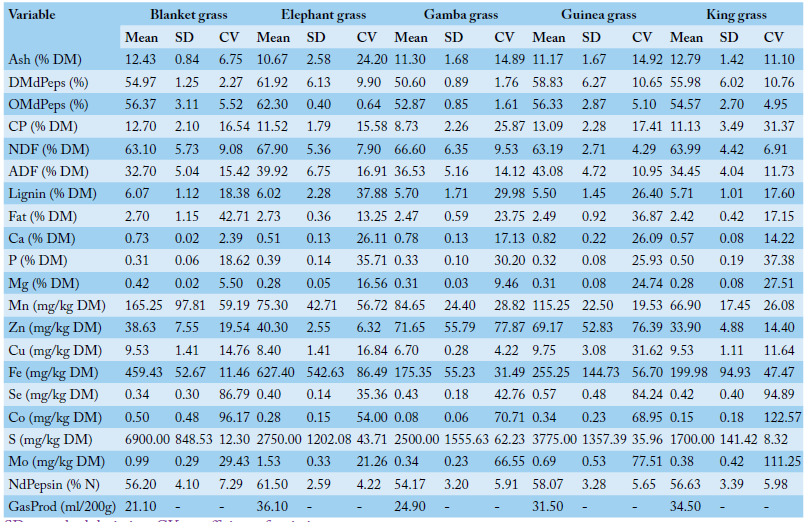
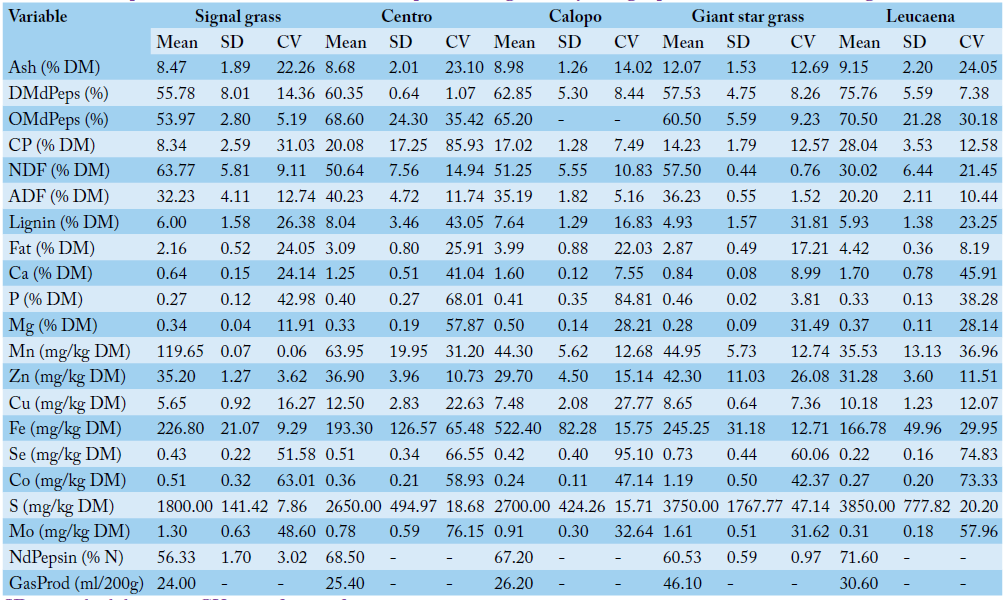
Nutrient content, digestibility, and gas production from several feedstuffs in this study are presented as descriptive in Table 2. The results of descriptive analysis showed that the grass with the highest CP content is C. dactylon with CP 14.23% DM, while the legume with the highest CP content is L. leucocephala with CP content reaches 28.04% DM. While the lowest CP content is B. decumbens with CP 8.34% DM. Most legume has higher CP content than grass. In contrast to Minson (1990), that reported CP content from tropical forage to be lower than 7%, resulting in low activity in the rumen microbe. Generally, the CP content of several forages in Indonesia is relatively high and adequate to meet protein requirements from ruminants. Capstaff and Miller (2018) stated that protein availability in ruminants is mainly supplied by forage.
The grass and legume species that have the highest NDF content are P. purpureum and C. mucunoides at 67.90 and 51.25% DM, respectively. The results obtained in this study were in agreement than those reported by Sampaio et al. (2009), who reported that the NDF content from tropical forage is about 60% DM. The NDF content in the feed directly affect the quality and digestibility of the feed. The high NDF affects the rumen microbes, endogenous enzymes, total gas production, kinetic gas production, and ruminal pH . These findings indicate a potentially negative effect of high NDF content on the mentioned aspects. The level of effect may vary depending on the specific values and measurements obtained in the research.
The highest ADF content of grass is found in M. maximus while in legumes found in C. mole with values of 43.08 and 40.23% DM, respectively. This ADF is considered relatively high compared to typical values for forage Tambara et al. (2017), mentioned that the ADF content of mixed grass and legumes in the tropics is around 20.31% DM. This difference may be due to an increase in ADF content influenced by the vegetative mass of grasses and legumes. Higher ADF levels indicate a greater amount of fibrous material in the forage, which can negatively impact digestibility and nutrient availability for animals. ADF includes cellulose, lignin, cutin, silica, and lignified nitrogen, that indicates forage digestibility, and limits structural carbohydrate degradation in the rumen .
A. compressus has the highest lignin content of grass species with a value of 6.07% DM, while C. molle has the highest lignin content of legume species with a value of 8.04% DM. The results of this study are almost the same as those reported by that the lignin content of tropical is about 6.3% while in legumes is about 9.2% DM. Lignin is not classified as a carbohydrate and has a dramatic impact on the digestibility of cellulose and hemicellulose. Ruckle et al. (2017) stated that lignin is associated with structural carbohydrates and cell wall proteins and reduces nutrient availability. High lignin cont ent in forage reduces nutrient digestibility.
Minerals
Calcium (Ca) was the predominant macromineral in the forages, followed by phosphor (P) and Magnesium (Mg). The type of grass that have the highest content of Ca, P, and Mg was C. plectostachyus, P. purpureum x P. glaucum, and A. compressus with value 0.84, 0.50, and 0.42 % DM, respectively. While legumes that have high Ca, P, and Mg content are L. leucocephala and C. mucunoides with values of 1.70, 0.41, and 0.50% DM, respectively. In general, the macrominel content found in legumes is higher.
Calcium (Ca) was the predominant macromineral in the forages, followed by phosphor (P) and Magnesium (Mg). The type of grass that have the highest content of Ca, P, and Mg was C. plectostachyus, P. purpureum x P. glaucum, and A. compressus with value 0.84, 0.50, and 0.42 % DM, respectively. While legumes that have high Ca, P, and Mg content are L. leucocephala and C. mucunoides with values of 1.70, 0.41, and 0.50% DM, respectively. In general, the macromineral content found in legumes is higher. Mineral content from forage is beneficial for ruminant to maintain their health . Extracellular calcium (Ca) is required for skeletal tissue formation, nerve impulse transmission, stimulation of skeletal and cardiac muscle contraction, blood clotting, and as a component of milk. Intracellular Ca, while only 1/10.000 the concentration of extracellular Ca, is involved in the action of a wide range of enzymes and acts as an essential second messenger transporting information from the cell’s exterior to its inside (National Academies of Sciences Engineering and Medicine, 2021).
The most abundant trace minerals found in forage are Sulfur (S) and Iron (Fe). Two grass types, C. plectostachyus and P. purpureum, have high S and Fe content, measuring 6,900 and 627.40 mg/kg DM, respectively. Among legumes, L. leucocephala and C. mucunoides are rich in S and Fe, with values of 3850 and 522.40 mg/kg DM, respectively. On the other hand, Selenium (Se) and Cobalt (Co) are the least prevalent trace minerals. The grass species C. plectostachyus contains the highest amounts of Se and Co, with values of 0.73 and 1.19 mg/kg DM, respectively. Among legumes, C. mole has the highest Se and Co content, with values of 0.51 and 0.36 mg/kg DM, respectively. Crooks et al. (2018) explained that Iron and Sulfur form clusters (Fe-S), in which they are essential elements needed as cofactors of several types of proteins. Selenium is useful for all livestock within a small dose range . Forages cultivated in Se-deprived soils can result in oxidative stress and pose a severe threat to the immune function of livestock . In general, the content of Se in forage in Indonesia has been able to meet the daily needs of livestock following the recommendations given by NRC (2001), that Se allowance for many livestock species should be in range 0.1–0.3 mg/kg DM depending upon their growth performance. Rumen microorganisms require Co to synthesize vitamin B12 (Cyanocobalamin) (NRC, 2007).
Digestibility
P. purpureum is a type of grass known for its exceptional digestibility, with dry matter and organic matter values reaching 61.92% and 62.30%, respectively. In contrast, the average digestibility values for dry matter and organic matter of grass in the overall study were found to be 56.52% and 56.70%. Among legumes, L. leucocephala stands out with the highest digestibility values for dry matter and organic matter, measuring 75.76% and 70.50%, respectively. On average, legumes show a digestibility rate of 66.32% for dry matter and 68.10% for organic matter. Data reported from this study is almost the same as that from Jayasinghe et al. (2022), who reported that the average dry matter digestibility of the tropical forage is about 57.9%. Capstaff and Miller (2018) stated that forage consists of 50–80% of carbohydrates (on dry matter basis). The primary groups of carbohydrates are the insoluble structural saccharides cellulose and hemicellulose. This group is also known as the storage forms, such as starch and water-soluble polymers. Those carbohydrates are degraded into sugar via glycosidic bonds, either by livestock or microbial digestion (on ruminants). The result of this study was higher than of Al-Arif et al. (2017), who reported that in the dry season, organic matter digestibility of forage is about 28.5-37.2%, in the intermediate season is about 38.9-45.5% and in the wet season, about 23.3-36.3%. This difference may occur because the types used in this study are more varied.
Regarding dry matter and organic matter digestibility, P. purpureum and L. leucocephala exhibit the highest nitrogen digestibility rates, at 61.50% and 71.60%, respectively. Comparatively, the average nitrogen digestibility in grass stands at 57.63%, whereas in legumes, it reaches 69.10%. The average protein digestibility of forage can be affected by the presence of tannins. Tannins can bind to dietary proteins, forming tannin-protein complexes. These complexes can reduce protein digestibility by making proteins less accessible to digestive enzymes in the animal’s gut. Protein digestibility was affected by the amount of protein that can be utilized, degraded pepsin and the presence of secondary metabolites in the forage. Secondary metabolites such as tannins can bind with proteins, resulting in low digestibility. Most forages from tropical areas contain high crude protein but also high contents of plant secondary compounds, particularly tannins ; . Nutrient digestibility, especially protein, was inhibited by increasing tannin levels, as confirmed both in vitro and in vivo. This suggests that tannin may interact more closely with protein than those other organic components .
Gas production
C. plectostachyus produces the highest gas production compared to other grass species, which is 46.10 ml/200 g samples. While in the legume category, L. leucocephala produced the highest gas production of 30.60 ml/200 g samples. The results of this study show that gas production in grass is higher than that of legumes. The protein content of legumes is rather high, although tannin acts as a constraint. Tannin, on the other hand, can bind to protein and limit protein availability in addition to lowering methane . Tannins may reduce methanogen growth and development activities . The effects of tannin in rumen fermentation are represented in total gas generation in the in vitro gas production technique .
Correlation between nutrients, digestibility, and gas production
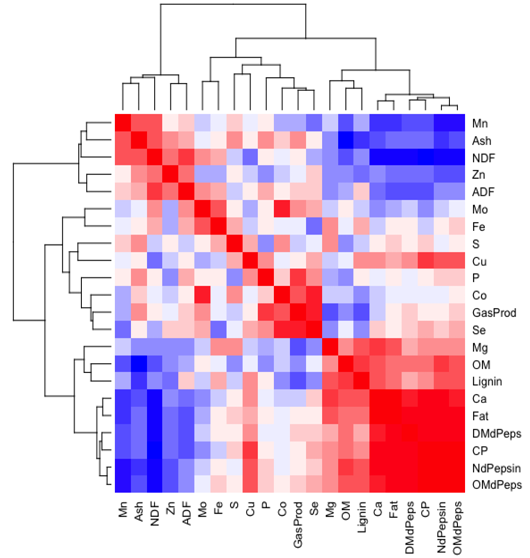
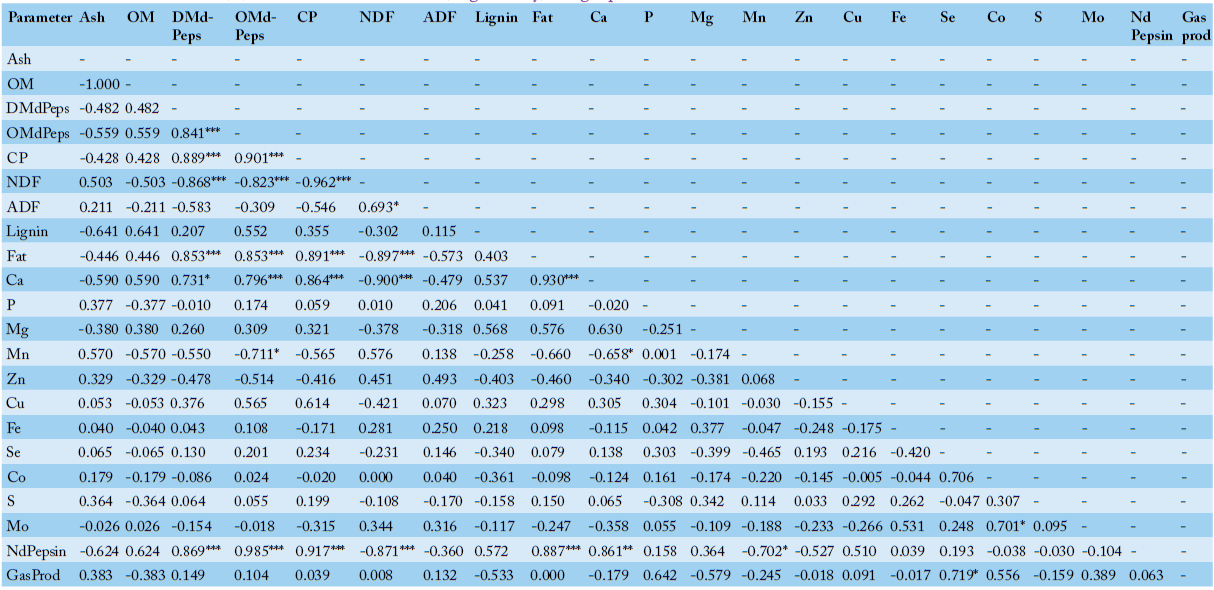
The correlation between variables is presented in Table 3. Although there are many significant correlations between the variables studied at the level p<0.05, p<0.01, and p<0.001, only variables that show significance at the level p<0.001 are considered essential and discussed in this study, except for gas production the significant level used was p<0.05. Correlation at significance level p<0.001, which has an R-value of ±0.65 and ±0.84, was classified as “moderate” while those showed R-value between ±0.85 and ±1 was classified as “high”. The correlation between variables is visualized in Figure 1, The cells are color-coded based on the magnitude of the correlation coefficient, with positive correlations being depicted in red and negative correlations being depicted in blue. The prediction equations generated from the significant correlations are given in Table 4.
Variables that are positively correlated and included in the high category are; OMdPeps and NdPepsin (0.985), CP and NdPepsin (0.917), OMdPeps and CP (0.901), CP and Fat (0.891), CP and Ca (0.864), OMdPeps and Fat (0.853), DMdPeps-Fat (0.853). OMdPeps and NdPeps are interconnected and positively correlated. This is because nitrogen is one of the main constituents of protein, and protein is one of the most easily digestible elements in organic matter composition. Jayanegara et al. (2016) explained that CP content in forage positively correlates with protein digestibility and ammonia production (NH3). The correlation between Fat and Digestibility from this study is coherent with the result from Bain et al. (2016) That feed that have high fat content (fat = 4.01 and 4.03% DM) has higher digestibility of dry matter and organic matter in Bali cattle compared to control treatment (fat = 2.90% DM).
While variables that showed strong negative correlation were; CP and NDF (-0.962), NDF and Ca (-0.900), NDF and Fat (-0.897), NDF and NdPepsin (-0.871), DMdPeps and NDF (-0.868). These results are in accordance with Jayanegara et al. (2016), who stated that fiber fraction from forage, especially ADF and NDF, negatively correlated with dry matter and organic matter digestibility. While the correlation between NDF and Ca contrasted with the result from Leuchner et al. (2017), who reported that NDF fermentability
Table 5: Equations generated from single linear regression between variables that showed significant correlations.
Correlations
Units
P-value
R
R2
Equation
DMdPeps-OMdPeps
(% DM-% DM)
***
0.841
0.707
DMdPeps (% DM) = (0.900 x OMdPeps) + 5.368
DMdPeps-CP
(% DM-% DM)
***
0.889
0.790
DMdPeps (% DM) = (1.013 x CP) + 44.778
DMdPeps-NDF
(% DM-% DM)
***
-0.868
0.753
DMdPeps (% DM) = (-0.514 x NDF) + 89.156
DMdPeps-Fat
(% DM-% DM)
***
0.853
0.728
DMdPeps (% DM) = (7.976 x Fat) + 36.056
DMdPeps-Ca
(% DM-% DM)
*
0.731
0.534
DMdPeps (% DM) = (11.724 x Ca) + 48.411
DMdPeps-NdPepsin
(% DM-% N)
***
0.869
0.755
DMdPeps (% DM) = (0.976 x NdPepsin) - 0.157
OMdPeps-CP
(% DM-% DM)
***
0.901
0.812
OMdPeps (% DM) = (0.959 x CP) + 46.225
OMdPeps-NDF
(% DM-% DM)
***
-0.823
0.677
OMdPeps (% DM) = (-0.455 x NDF) + 86.440
OMdPeps-Fat
(% DM-% DM)
***
0.853
0.728
OMdPeps (% DM) = (7.464 x Fat) + 38.224
OMdPeps-Ca
(% DM-% DM)
***
0.796
0.634
OMdPeps (% DM) = (11.894 x Ca) + 48.915
OMdPeps-Mn
(% DM-% DM)
*
-0.711
0.506
OMdPeps (% DM) = (-0.084 x Mn) + 68.055
OMdPeps-NdPepsin
(% DM-% N)
***
0.985
0.970
OMdPeps (% DM) = (1.034 x NdPepsin) - 3.018
CP-NDF
(% DM-% DM)
***
-0.962
0.925
CP (% DM) = (-0.500 x NDF) + 43.385
CP-Fat
(% DM-% DM)
***
0.891
0.794
CP (% DM) = (7.310 x Fat) - 6.958
CP-Ca
(% DM-% DM)
***
0.864
0.746
CP (% DM) = (12.119 x Ca) + 3.071
CP-NdPepsin
(% DM-% N)
***
0.917
0.841
CP (% DM) = (0.904 x NdPepsin) - 40.719
NDF-ADF
(% DM-% DM)
*
0.693
0.480
NDF (% DM) = (1.265 x ADF) + 13.421
NDF-Fat
(% DM-% DM)
***
-0.897
0.805
NDF (% DM) = (-14.155 x Fat) + 99.324
NDF-Ca
(% DM-% DM)
***
-0.900
0.810
NDF (% DM) = (-24.298 x Ca) + 80.686
NDF-NdPepsin
(% DM-% N)
***
-0.871
0.759
NDF (% DM) = (-1.653 x NdPepsin) + 158.722
Fat-Ca
(% DM-% DM)
*
0.930
0.865
Fat (% DM) = (1.588 x Ca) + 1.438
Fat-NdPepsin
(% DM-% N)
**
0.887
0.787
Fat (% DM) = (0.107 x NdPepsin) - 3.585
Ca-Mn
(% DM- mg/kg DM)
*
-0.658
0.433
Ca (% DM) = (-0.005 x Mn) + 1.434
Ca-NdPepsin
(% DM-% N)
**
0.861
0.741
Ca (% DM) = (0.061 x NdPepsin) - 2.757
Mn-NdPepsin
(mg/kg DM -% N)
*
-0.702
0.493
Mn (mg/kg DM) = (-6.226 x NdPepsin) + 474.456
Se-GasProd
(mg/kg DM- ml/200g)
*
0.719
0.517
Se (mg/kg DM) = (0.011 x GasProd) + 0.153
Single asterisk (*) indicated p < 0.05, double asterisk (**) indicated p < 0.01, and triple asterisk (***) indicated p < 0.001
positively correlates with calcium absorption in ruminants. The correlation between NDF and Fat is coherent with the result from Weld and Armentano (2017), who stated that fat could reduce NDF digestion in the rumen. When fat is absorbed in the small intestine, the digestible NDF that escapes from the rumen is fermented in the large intestine.
Variables that are positively correlated and classified as moderate are, DMdPeps and OMdPeps (0.841), OMdPeps and Ca (0.796). These results follow the statement from Imsya et al. (2013) that forage with high dry matter digestibility tends to have high organic matter digestibility. This is related to the dry matter fraction in the forage, mainly composed of organic matter. Doreau et al. (1993) reported that feed containing higher Ca showed higher organic matter digestibility in dairy cattle. At the same time, the variable that showed a moderate negative correlation was OMdPeps and NDF (-0.823). These results follow those reported by Cherdthong et al. (2011), that organic matter digestibility has a negative correlation with NDF content because high NDF content decreases the digestibility of feed due to the capability of rumen microbes to digest fiber fraction.
The variable that showed a significant correlation with gas production was Se (p<0.05), with an R-value of 0.719, classified as moderate. This finding is coherent with the finding from who showed that selenium supplementation significantly increases total gas production during in vitro studies. Mihaliková et al. (2005) added that Selenium could act as an antioxidant in the rumen, stimulating microbial growth and increasing rumen fermentation.
CONCLUSIONS
The research showed significant correlations among different components in forage as positively correlation of digestibility with crude protein and negatively with fiber fraction (ADF and NDF) that could provide essential information to research scientists and farmers. Gas production was also positively correlated with Selenium. However, it is important to note that the nutrient content and digestibility of forages can be influenced by several factors, including the species of plant, the stage of growth, and the method of harvest and storage. Additionally, individual factors such as the age, breed, and health status of the animal can also affect nutrient content and digestibility.
ACKNOWLEDGEMENT
The authors gratefully acknowledge Association Française de Zootechnie (AFZ) and New Zealand Agricultural Greenhouse Gas Research Centre (NZAGRC) for providing a dataset to conduct this study.
NOVELTY STATEMENT
The study outcomes correlated among nutrients in forages and developed an equation to predict nutrient digestibility and gas production of forages in Indonesia.
AUTHOR’S CONTRIBUTION
SW, TW and MIS: Conceptualized the study.
SW: Developed experimental design, prepared manuscripts, and edited according to the title.
SW, ZM and YW: Collect data experiments and literature, edit and finalize manuscripts.
All authors read and approved the final manuscript.
Conflict of interest
The authors have declared no conflict of interest.
Figures
Figure 1:.
Heatmap matrix of Pearson’s correlation analysis shows the correlation coefficients among parameters.
Table 2:.
Descriptive statistics for the nutrient composition, digestibility, and gas production of several forages in Indonesia (cont.).
SD= standard deviation; CV= coefficient of variation.
Table 3:.
Descriptive statistics for the nutrient composition, digestibility, and gas production of several forages in Indonesia.
SD = standard deviation; CV = coefficient of variation.
Table 4:.
Pearson’s correlation (R) between nutrients content, digestibility, and gas production.
Significant correlations are expressed using a single asterisk (*) for P < 0.05, double asterisk (**) for P < 0.01, and triple asterisk (***) for P < 0.001, respectively.
References
AFZ-NZAGRC (2022). Feed data for African and ASEAN countries. Paris, France. https://www.feedipedia.org/node/27625, 3 October 2022
Al-Arif MA, Suwanti LT, Estoepangestie AS, Lamid M (2017). The nutrients contents, dry matter digestibility, organic matter digestibility, total digestible nutrient, and NH3 rumen production of three kinds of cattle feeding models. KnE Life Sci., 3: 338. https://doi.org/10.18502/kls.v3i6.1142[CrossRef]
Bain A, Astuti DA, Suharti S, Arman C, Wiryawan KG (2016). Performance, nutrient digestibility, and meat quality of bali cattle fed a ration supplemented with soybean oil calcium soap and cashew fruit flour. Media Peternakan Fakultas Peternakan Institut Pertanian Bogor, 39: 180–188. https://doi.org/10.5398/medpet.2016.39.3.180[CrossRef]
Ball D, Collins M, Lacefield G, Martin N, Mertens D, Olson K, Putnam D, Undersander D, Wolf M (2001). Understanding forage quality. Am. Farm Bureau Feder. Publ., 1: 1–15.
Buxton DR, Mertens DR, Moore KJ (1995). Forage quality for ruminants: Plant and animal considerations. Prof. Anim. Sci., 11: 121–131. https://doi.org/10.15232/S1080-7446(15)32575-4[CrossRef]
Capstaff NM, Miller AJ (2018). Improving the yield and nutritional quality of forage crops. Front Plant Sci., 9. https://doi.org/10.3389/fpls.2018.00535[CrossRef]
Cherdthong A, Wanapat M, Wachirapakorn C (2011). Influence of urea-calcium mixtures as rumen slow-release feed on in vitro fermentation using a gas production technique. Arch. Anim. Nutr., 65: 242–254. https://doi.org/10.1080/1745039X.2011.568277[CrossRef]
Cieslak A, Szumacher-Strabel M, Stochmal A, Oleszek W (2013). Plant components with specific activities against rumen methanogens. Animal, 7(Suppl 2): 253–265. https://doi.org/10.1017/S1751731113000852[CrossRef]
Coleman SW, Moore JE (2003). Feed quality and animal performance. Field Crops Res., 84: 17–29. https://doi.org/10.1016/S0378-4290(03)00138-2[CrossRef]
Crooks DR, Maio N, Lane AN, Jarnik M, Higashi RM, Haller RG, Yang Y, Fan TWM, Marston LW, Rouault TA (2018). Acute loss of iron–Sulfur clusters results in metabolic reprogramming and generation of lipid droplets in mammalian cells. J. Biol. Chem., 293: 8297–8311. https://doi.org/10.1074/jbc.RA118.001885[CrossRef]
Datt C, Singh N, Chhabra A, Dhiman KR (2009). Nutritional evaluation of cultivated fodder crops grown under agro-climate of Tripura. Indian J. Anim. Sci., 79: 1143–1148.
Doreau M, Ferlay A, Elmeddah Y (1993). Organic matter and nitrogen digestion by dairy cows fed calcium salts of rapeseed oil fatty acids or rapeseed oil. J. Anim. Sci., 7: 499–504. https://doi.org/10.2527/1993.712499x[CrossRef]
Gomes DI, Detmann E, Valadares FSC, Fukushima RS, de Souza, MA, Valente TNP, Paulino MF, de Queiroz AC (2011). Evaluation of lignin contents in tropical forages using different analytical methods and their correlations with degradation of insoluble fiber. Anim. Feed Sci. Technol., 168: 206–222. https://doi.org/10.1016/j.anifeedsci.2011.05.001[CrossRef]
Huo B, Wu T, Song C, Shen X (2020). Studies of selenium deficiency in the Wumeng semi-fine wool sheep. Biol. Trace Elem. Res., 194: 152–158. https://doi.org/10.1007/s12011-019-01751-1[CrossRef]
Imsya A, Laconi EB, Wiryawan KG, Widyastuti Y (2013). In vitro digestibility of ration containing different level of palm oil frond fermented with Phanerochaetae chrysosporium. Media Peternakan Fakultas Peternakan Institut Pertanian Bogor 36: 131–136. https://doi.org/10.5398/medpet.2013.36.2.131[CrossRef]
Jayanegara A, Palupi E (2010). Condensed tannin effects on nitrogen digestion in ruminants: A meta-analysis from in vitro and in vivo studies. Media Peter. Fak. Petern. Inst. Pertanian Bogor, 33: 176–181. https://doi.org/10.5398/medpet.2010.33.3.176[CrossRef]
Jayanegara A, Dewi SP, Ridla M (2016). Nutrient content, protein fractionation, and utilization of some beans as potential alternatives to soybean for ruminant feeding. Med. Petern. Fak. Petern. Inst. Pertanian Bogor 39: 195–202. https://doi.org/10.5398/medpet.2016.39.3.195[CrossRef]
Jayasinghe P, Ramilan T, Donaghy DJ, Pembleton KG, Barber DG (2022). Comparison of nutritive values of tropical pasture species grown in different environments, and implications for livestock methane production: A meta-analysis. Animals, 12: https://doi.org/10.3390/ani12141806[CrossRef]
Leuchner L, Nofs SA, Dierenfeld ES, Horvath P (2017). Chitin supplementation in the diets of captive giant anteaters (Myrmecophaga tridactyla) for improved gastrointestinal function. J. Zoo. Aquar. Res., 5: 92–96.
Makkar HPS, Francis G, Becker K (2007). Bioactivity of phytochemicals in some lesser-known plants and their effects and potential applications in livestock and aquaculture production systems. Animal, 1: 1371–1391. https://doi.org/10.1017/S1751731107000298[CrossRef]
Mihaliková K, Boldižárová K, Faix Š, Kišidayová S (2005). The effects of organic selenium supplementation on the rumen ciliate population in sheep. Folia Microbiol., 50: 353–356. https://doi.org/10.1007/BF02931418[CrossRef]
Minson DJ (1990). Forage in ruminant nutrition. Academic Press, San Diego.
Miranda-Romero LA, Tirado-González DN, Tirado-Estrada G, Améndola-Massiotti R, Sandoval-González L, Ramírez-Valverde R, Salem AZM (2020). Quantifying non-fibrous carbohydrates, acid detergent fiber and cellulose of forage through an in vitro gas production technique. J. Sci. Food Agric., 100: 3099–3110. https://doi.org/10.1002/jsfa.10342[CrossRef]
Mueller-Harvey I (2006). Unravelling the conundrum of tannins in animal nutrition and health. J. Sci. Food Agric., 86: 2010–2037. https://doi.org/10.1002/jsfa.2577[CrossRef]
National Academies of Sciences Engineering and Medicine (2021). Nutrient requirements of dairy cattle: Eighth revised edition. The National Academies Press, Washington, DC.
Nelson CJ, Moser LE (1994). Plant factors affecting forage quality. In: Forage Quality, Evaluation, and Utilization. G.C. Fahey (Ed.). pp. 115–154. https://doi.org/10.2134/1994.foragequality.c3[CrossRef]
NRC (2001). Nutrient requirements of dairy cattle. National Research Council.
NRC (2007). Nutrient requirements of small ruminants: Sheep, goats, cervids, and new world camelids. The National Academies Press, Washington, DC.
Pashaei S, Razmazar V, Mirshekar R (2010). Gas production: A proposed in vitro method to estimate the extent of digestion of a feedstuff in the rumen. J. Biol. Sci., 10: 573–580. https://doi.org/10.3923/jbs.2010.573.580[CrossRef]
R Core Team, 2022. R: A language and environment for statistical computing (R Foundation for Statistical Computing: Vienna, Austria). URL https://www.R-project.org/.
Ruckle ME, Meier MA, Frey L, Eicke S, Kölliker R, Zeeman SC, Studer B (2017). Diurnal leaf starch content: An orphan trait in Forage legumes. Agronomy, 7. https://doi.org/10.3390/agronomy7010016[CrossRef]
Sampaio CB, Detmann E, Lazzarini I, de Souza MA, Paulino MF, Filho SCV (2009). Rumen dynamics of neutral detergent fiber in cattle fed low-quality tropical forage and supplemented with nitrogenous compounds. Rev. Brasil. Zoot., 38: 560–569. https://doi.org/10.1590/S1516-35982009000300023[CrossRef]
Shi L, Ren Y, Zhang C, Yue W, Lei F (2017). Effects of maternal dietary selenium (Se-enriched yeast) on growth performance, antioxidant status and haemato-biochemical parameters of their male kids in Taihang black goats. Anim. Feed Sci. Technol., 231: 67–75. https://doi.org/10.1016/j.anifeedsci.2017.07.002[CrossRef]
Tambara AAC, Sippert MR, Jauris GC, Flores JLC, Henz ÉL, Velho JP (2017). Production and chemical composition of grasses and legumes cultivated in pure form, mixed or in consortium. Acta Sci., 39: 235–241. https://doi.org/10.4025/actascianimsci.v39i3.34661[CrossRef]
Ungerfeld EM (2018). Inhibition of rumen methanogenesis and ruminant productivity: A meta-analysis. Front. Vet. Sci., 5. https://doi.org/10.3389/fvets.2018.00113[CrossRef]
van Soest PJ (1994). Nutritional ecology of the ruminant. 2nd Edition. Cornell University Press, Ithaca. https://doi.org/10.7591/9781501732355[CrossRef]
Wang J, Zhang Z, Liu H, Xu J, Liu T, Wang C, Zheng C (2022). Evaluation of gas production, fermentation parameters, and nutrient degradability in different proportions of sorghum straw and ammoniated wheat straw. Fermentation, pp. 8. https://doi.org/10.3390/fermentation8080415[CrossRef]
Wei, T. and Simko, V., (2021). R package “corrplot”: Visualization of a Correlation Matrix (Version 0.92). Available from https://github.com/taiyun/corrplot
Weld KA, Armentano LE (2017). The effects of adding fat to diets of lactating dairy cows on total-tract neutral detergent fiber digestibility: A meta-analysis. J. Dairy Sci., 100: 1766–1779. https://doi.org/10.3168/jds.2016-11500[CrossRef]
Wilkins RJ (2000). Forages and their role in animal systems. In: Forage evaluation in ruminant nutrition. Givens, D.I., Owen, E., Axford, R.F.E., Omed, H.M., eds. CABI International, Wallingford, Oxon (CABI). Pages 1–14.
Zheng Y, He T, Xie T, Wang J, Yang Z, Wang W, Li S (2022). Hydroxy-selenomethionine supplementation promotes the in vitro rumen fermentation of dairy cows by altering the relative abundance of rumen microorganisms Funding information China Agriculture Research System of Ministry of Finance and Ministry of Agriculture and Rural Affairs. J. Appl. Microbiol., 132: 2583–2593. https://doi.org/10.1111/jam.15392[CrossRef]