
Toxigenic fungi, particularly Aspergillus, Fusarium, and Penicillium species, pose a persistent threat to global cereal production by generating mycotoxins that endanger food safety and human health. Traditional control methods often fail to provide long-term and environmentally safe solutions. The aims of this review are to advance the field by delivering a targeted, up-to-date use of nanotechnology applications for preventing fungal contamination and mycotoxins build up in cereals, emphasis mechanistic insights, comparative advantages over conventional methods, and actionable knowledge gaps. It critically evaluates the antifungal and antimycotoxigenic properties of key nanomaterials such as silver, zinc oxide, copper oxide, titanium dioxide, and iron oxide nanoparticles, emphasizing several mechanisms of action, including membrane disruption, oxidative stress induction, and inhibition of mycotoxin biosynthesis. The potential of biopolymer-based nanocarriers and green-synthesized nanoparticles for sustainable and eco-friendly management practices is also discussed. Particular attention is given to their integration with pre-harvest, post-harvest, and packaging systems. While nanoformulations demonstrated promising results in wheat, maize, and rice systems, this review underscores the need for comprehensive biosafety evaluations, standardized regulatory frameworks, and environmental risk assessments. This review is a critical evaluation of studies conducted on use of nanoformulations in management of fungal contamination and mycotoxins production in cereal crops. Moreover, it emphasizes their practical use in providing grains without residues and having extended shelf life, which is a key for food safety and health. Nanotechnology offers a green technology to address toxigenic fungi as climatic changes continue to rise and alter agricultural ecosystems.
Review · Volume 10, Issue 1, 12 February 2026 · Open Access
Nanoformulations Use for Control of Fungal Contamination and Mycotoxins Production in Cereal Crops: Advances, Mechanisms and Future Prospects
· · · ·
Affiliations & Notes ⌄
- 1Department of Agricultural Microbiology, Faculty of Agriculture, Cairo University, 12613, Giza, Egypt
- 2Plant Pathology Research Institute, Agricultural Research Center (ARC), 12619, Giza, Egypt. *Correspondence | Kamel A. Abd-Elsalam, Plant Pathology Research Institute, Agricultural Research Center (ARC), 12619, Giza, Egypt
- 3Email: kamelabdelsalam@gmail.com
- 4Department of Agricultural Botany, Faculty of Agriculture, Cairo University, 12613, Giza, Egypt
Article Info ⌄
- Journal:
- Novel Research in Microbiology Journal
- Published:
- 12 February 2026
From the article
- Nano-formulations are a revolutionary scheme in fighting fungal infections and mycotoxins synthesis in cereal plants, having better efficacy, focused delivery, and minimal environmental hazard compared to the traditional chemical means.
- Ag, ZnO, and TiO2 NPs exhibit effective antifungal action by various mechanisms such as membrane disruption, ROS production, and inhibition of enzymes.
- Combination of green synthesis techniques, intelligent delivery, and precision agriculture technologies has gigantic potential in sustainable crops protection.
Selected from the article's own text.
Abstract
Introduction
Cereal crops, including wheat, rice, and maize represent the main food sources of carbohydrates, proteins, vitamins, and major minerals in human and animal diets globally . Nonetheless, in addition to their food properties, grains are highly susceptible to fungal infection and accumulation of toxins in their layers ; . Mycotoxin-producing fungi, including species of the genera Aspergillus, Fusarium, and Penicillium produce secondary metabolites such as aflatoxins, fumonisins, ochratoxin A, deoxynivalenol, and zearalenone ; . These compounds show high levels of toxicity to human, including hepatotoxic, mutagenic, teratogenic, and immunosuppressive properties, and pose high dangers to food safety globally ; . An estimated 25-50 % of global production of grains is contaminated with mycotoxins . Traditional antifungal treatments and chemical fungicides have been ineffective in offering sustainable protection and, in some cases, pose concerns related to environmental impact and safety . Thus, the need to create innovative, ecofriendly, and potent antifungal strategies is a pressing task.
Figure 1 provides an overview of the major toxigenic fungi, key nanomaterials with antifungal and antimycotoxigenic activity, their mechanisms of action, and their integration into sustainable pre-harvest and post-harvest management strategies.
Nanotechnology presents one such innovative strategy, with the ability to create sophisticated materials with antifungal properties to control fungal growth and mycotoxins production throughout the processing of cereals . Nanostructures, such as nano-silica, metal, metal oxide nanoparticles (NPs), and polymeric nanocomposites exhibit distinct physicochemical properties, including high surface area, reactivity, and sustained release, which may further potentiate the antifungal properties ; . These materials interact with fungal cell membranes, hinder spore germination, and suppress mycotoxins production. Furthermore, their application in coatings, storage, and biosensor development helps in detecting the antifungal agents or mycotoxins contamination in a real-time throughout the food chain .
Antifungal NP approaches contribute to food security through the prevention of fungal infection and mycotoxins production, along with the minimization of synthetic pesticides and supporting environmentally sustainable agricultural practices . Understanding of antifungal mechanisms, antifungal efficacy, and biosafety is important to bring innovative laboratory results into practical and implementable solutions to secure safely consumed cereals .
Recent advances in management of toxigenic fungi combine biological, physical, and nano-based strategies. Examples include the use of biocontrol agents ; ; , essential oils , antifungal nano-coatings and sensors made from NPs further improve detection and control measures , and biosynthesized metal NPs with remarkable antifungal and antimycotoxigenic potentials against key genera, such as Aspergillus, Fusarium, and Penicillium ; . These findings support the growing relevance of nano-enabled solutions in cereals protection.
The objectives of the current review are to provide recent advances on synthesis of nano-systems used as antifungals and antimycotoxins in cereal systems, consolidates mechanical evidence, appraises performance of various nano-formulations, and outlines their uses in pre-harvest, post-harvest, and packaging as well. Specific attention is paid to safety, toxicity, and environmental concerns, filling existing gaps and offering a more understandable template for future research and actual practice (Figure 1).
Major toxigenic fungi and mycotoxins in cereal systems
Aspergillus spp. and aflatoxins
Globally, Aspergillus species are considered as the primary toxigenic fungi affecting cereal production, due to their production of aflatoxins (AFs), hepatotoxic, and carcinogenic compounds (Mesterhazy et al., 202٢). The major AF producers are A. flavus, followed by A. parasiticus, while other species including A. nomius also produce aflatoxins in lower amounts ; .
A. flavus is known to frequently infests maize, wheat, sorghum, and groundnuts, with AFB1 being the most toxic and frequently occurring. It belongs to Group 1 human carcinogens, which cause hepatotoxicity and immunosuppression . Many countries around the world experience periodic aflatoxins contamination due to fungal appropriate climatic factors, including high temperatures of 36-38°C and high humidity level above 85%, ; . There are four AFs; AFB1, B2, G1, and G2 distinguished by their fluorescence and chromatographic properties. Warm, damp, and slightly acidic conditions are strong determinants of aflatoxin’s production by aflatoxigenic A. flavus, and several studies have demonstrated a large increase in aflatoxin’s levels when the climatic and storage conditions are appropriate .
Moreover, the high levels of Aspergillus contamination observed in Egyptian grains can be attributed, in part, to storage under conditions of elevated humidity and inadequate air circulation. Furthermore, data confirm the existence of such levels in Africa, where AFs contamination exists at high levels with considerable repercussions on food security and health ; .
Fusarium spp. and their mycotoxins
Fusarium species are the most important toxigenic fungi in the production of mycotoxins contaminated grains, contributing to remarkable economic losses, due to their production of various toxins such as deoxynivalenol (DON). Trichothecenes (T-2, and HT-2 toxins), fumonisins (FBs), and zeareleone (ZAN), posing appreciable threats to both yield and food safety .
Mycotoxin’s profiles and pathogenicity
There are several major groups of mycotoxins produced by Fusarium species, each with distinct biological functions. The F. graminearum–F. culmorum complex is primarily associated with the production of deoxynivalenol (DON) , whereas F. verticillioides and F. proliferatum are high producers of FBs (mainly FB1). T-2/HT-2 type A are largely species-specific (e.g., F. sporotrichioides and other related species) , while Zearalenone (ZEA) is synthesized by a broader group of Fusarium species. Notably, these toxins act as virulence factors: DON and FB1 suppress the host immune system, and host plants respond using detoxification enzymes and resistance genes (e.g., TaFROG, TaSnRK1-alpha, and TaNFXL1). Comparative evidence indicates that the toxin class has a strong influence on pathogenic strategies and host defense pathways of plants . A confirmatory study revealed the pervasive nature of F. graminearum in Egyptian and global food systems, often contaminating wheat, maize, and barley . High-performance liquid chromatography–tandem mass spectrometry (HPLC-MS/MS) and quantitative polymerase chain reaction (qPCR) analysis revealed the levels of DON, ZEA, T-2, HT-2, and FB contamination in grains in diverse regions, with DON being the most abundant ; . In the Urals and West Siberia, 16 species of Fusarium have been detected, with F. sporotrichioides and F. avenaceum being the most abundant. Parallel studies in Sichuan Province revealed the pre-eminent fungi in wheat and maize to be F. asiaticum (nivalenol, NIV chemotype) and F. graminearum (15-acetyldeoxynivalenol, 15-ADON chemotype) .
More advanced analytical tools such as Liquid chromatography–tandem mass spectrometry (LC–MS/MS), Chromatography–mass spectrometry (GC–MS), and electronic noses enhanced with machine-learning algorithms have remarkably improved the detection of Fusarium toxins, achieving recall efficiencies of up to 94% in both contaminated and uncontaminated grains . Although these technologies offer a high level of accuracy in mycotoxin identification; however, their costs, limited field portability, and the need for specialized expertise reinforce the growing importance of nano-enabled detection systems.
Nanomaterial-based sensors including nanoparticle-modified electrodes, nano-enhanced e-noses, and plasmonic or carbon-nanotube biosensors provide rapid, sensitive, and on-site detection capabilities that can be used in complement to or in place of traditional analytical techniques . Such advancements are particularly vital given the frequent co-occurrence of multiple Fusarium mycotoxins in agricultural commodities. Therefore, nanotechnology-driven monitoring strategies and the resulting nano-mediated control measures are increasingly necessary.
Penicillium spp. and associated mycotoxins
Penicillium species are soil-borne and storage fungi contaminating a wide array of agricultural commodities, such as grains, nuts, and dried fruits. Among them, certain species produce toxic secondary compounds (i.e., OTA, patulin, citrinin, and roquefortine C); with deteriorating effects on food quality and safety ; . There have been identified two species of Penicillium, including P. expansum and P. verrucosum, known to produce OTA, whereas P. citrinum and P. roqueforti produce citrinin and roquefortine C, respectively . OTA is identified as being both nephrotoxic and hepatotoxic, with carcinogenic and immunosuppressive effects due to prolonged dietary exposure . Penicillium species, particularly P. verrucosum are frequently associated with contamination of stored cereals, such as wheat, barley, and other grains stored under suboptimal conditions . A recent systematic review (2013–2023) identified Penicillium as a major contaminant of cereal-based products worldwide, including flours and bread, with occasional occurrences of OTA levels exceeding safety limits in certain regions . Although OTA concentrations generally remain below regulatory thresholds, environmental surveys continue to detect Penicillium species in cereal storage ecosystems . Meanwhile, volatiles produced by Cyberlindnera jadinii have been shown to suppress Penicillium growth, highlighting their potential as biocontrol agents .
Mycotoxins derived by fermentation with Penicillium, like MPA, CPA, and ROQ-C have been found in cereals in combination, showing that several low-priority toxins can co-exist in cereal matrices . Their status as minor contaminants have traditionally been viewed as minor; however, the fact that these compounds do occur in some cases at quite high levels underscores the emergence of food-safety issues due to Penicillium metabolites. Most of these metabolites have not been regulated, although not shown under standard monitoring initiatives. This highlights the necessity of more extensive surveillance measures and modern regulatory consideration. Table 1 lists a summary of the major toxigenic species, their accompanying mycotoxins, and their host crops. These findings underscore the continuous threat of OTA and the growing realization of the roles of Penicillium-derived compounds, which have not been previously regulated in food webs.
Cereals-specific challenges in mycotoxins contamination
The sensitivity of cereal crops to fungal infections and mycotoxins accumulation depends on the crop species, the environment, and post-harvest storage. The major mycotoxins involved in contamination of cereals include AFs, OTA, FB, DON, and ZEA, mostly produced by Aspergillus and Fusarium spp. .
Wheat: Wheat is also susceptible to the prevalent causative mycotosigenic fungi; mainly Fusarium head blight (FHB), Fusarium graminearum, and F. culmorum, causing wheat contamination with T-2 mycotoxins, including DON and its acetylated products, and nivalenol (NIV). High humidity and warm temperature during anthesis favor disease severity. The fungal colony is most prevalent in the grain germ and crease area, and the level of mycotoxins rises with the long storage time and conditions of low ventilation ; .
Maize: Maize is the most susceptible cereal to contamination with mycotoxinic Fusarium verticillioides and F. proliferatum, which produce FB1, FB2, and A. flavus, producing aflatoxins . These toxins are frequently co-occurring during a hot and dry climate, especially when drying is not fast. Accumulation of mycotoxins highly depends on crop management practices instead of physiology of the kernels, with F. verticillioides becoming the most prevalent in later stages of the kernels growing . High amounts of FB exceeding EU concentration are a common issue of maize in Africa, Asia, and the Mediterranean region, highlighting current food safety concerns .
Table 1: Comparative profiles of the key toxicogenic fungi and their mycotoxins in cereal systems.
| Species | Major mycotoxins produced | Mechanism of toxicity/ mode of action | Optimal environmental conditions | Main cereal hosts | Health and economic impacts | References | |
| Aspergillus spp. | A. flavus, A. parasiticus, and A. nomius | AFs (B1, B₂, G₁, G₂) | Disrupt protein synthesis, induce oxidative stress and DNA damage, and hepatotoxic and carcinogenic activity | 33–38°C, RH > 85%, and poor storage aeration | Maize, wheat, sorghum, and peanuts | Liver cancer, immuno-suppression, growth retardation, and recurrent contamination in Egypt and Africa | ; ; ; |
| Fusarium spp. | F. graminearum, F. culmorum, F. verticillioides, F. proliferatum, and F. avenaceum | DON, T-2, HT-2), ZEA, and FB1, FB₂ | Inhibit protein and sphingolipid biosynthesis, cause oxidative stress and apoptosis in plants, and estrogenic and neurotoxic potential in mammals | 15–28°C, humid or rainy flowering, and drought stress before harvest | Wheat, barley, maize, oats, and rice | FHB, yield loss, feed refusal, reproductive toxicity, and cancer risk | ; Gab-Allah et al., 2022; ; |
| Penicillium spp. | P. verrucosum, P. expansum, P. roqueforti, and P. citrinum | OTA, Citrinin, Patulin, Roque-fortine C, and Myco-phenolic acid (MPA) | Inhibit protein synthesis and mitochondrial respiration, nephrotoxic and hepatotoxic potency, and chronic exposure linked to carcino-genicity. | 10–25°C, RH > 80%, and damp storage and poor ventilation | Wheat, barley, maize, oats, and rice | Chronic kidney disease, carcinogenic potential, and post-harvest spoilage losses | (Otero et al., 2020; Alkuwari et al., 2022; Topi et al., 2022; Deligeorgakis et al., 2023;) |
Where; This table represents the most important interrelationship between Aspergillus, Fusarium and Penicillium species, environmental preference, types of mycotoxins, toxicological processes. and health effects in the cereal systems.
Rice: Rice, representing the second most popular cereal in the world, is getting exposed to aflatoxins and OTA. The Chinese and Vietnamese surveys revealed that the prevalence of Fusarium-associated mycotoxins, including ZEA, DON, FB, and beauvericin has been practiced ; ; . The agro-ecological zone affects the Fusarium communities, where F. proliferatum is most common during harvest and storage conditions, whereas F. asiaticum and F. graminearum are more common in the field .
Barley: Barley has a mycotoxin side view similar to wheat; mainly associated with DON and NIV produced by Fusarium graminearum and F. culmorum, respectively . DON and NIV occur in 70% of barley samples in Brazil, while DON and ZEA in Tunisia ; .
Oats: This crop is especially prone to infection with F. langsethiae, which produces type A T-2, HT-2 toxins. These toxins tend to be more common in temperate zones, such as the UK and Scandinavian countries. However, previous studies conducted using visible and near-infrared (Vis-NIR) spectroscopy demonstrated an accuracy up to 93% in identifying contaminated grains above the EU thresholds .
Comparative perspectives
Globally, maize and wheat are the most mycotoxins contaminated grains in the world, as far as rice and barley come the second and third, while oats becoming more susceptible to T-2 and HT-2 toxins ; ; ; . Climatic conditions, practice of crop rotation, and storage environment play critical roles in deriving these patterns of contamination . Remarkably, the fungal ecological and toxin disparities among crops highlight the necessity for ecologically specific mitigation methods, debated in the subsequent passages with the accent on advanced measures of control and prevention. Climate, crop rotation, and storage continue to play an important role in defining the levels of mycotoxins contamination as presented in Table 2 and Figure 2.
Table 2: Comparative overview of major toxigenic fungi and their mycotoxins in cereal systems.
| Cereal crop | Predominant fungal genera/ species | Principal mycotoxins | Environmental & agronomic drivers | Major findings / Geographic evidence | Health and economic implications | Mitigation / control approaches |
| Wheat | F. graminearum, and F. culmorum | DON, ZEA, and NIV | High humidity and rainfall during anthesis, delayed harvest, and poor storage | F. graminearum dominates in humid zones, DON prevalent in wheat of Europe and Egypt, and trichothecene accumulation linked to rainfall ; | FHB disease, yield loss, and T-2 and HT-2 toxicity in humans and livestock | Crop rotation, resistant varieties, fungicide application, and humidity control |
| Maize | F. verticillioides, F. proliferatum, and A. flavus | FB1, FB₂, and AFB₁, AFB₂ | Warm, dry climate, drought stress, delayed drying, and storage | Highest mycotoxin prevalence globally, and co-contamination is common in Africa, Mediterranean, and Asia ; | Liver cancer, neural tube defects, feed contamination, and trade losses | Rapid drying to <13% moisture, resistant hybrids, and improved storage and transport |
| Rice | F. proliferatum, F. asiaticum, and A. flavus | ZEA, DON, FBs, OTA, and Beauvericin | High post-harvest humidity, temperature >30 °C, and poor ventilation | Fusarium spp. dominates during harvest, A. flavus post-harvest, and high DON and ZEA in Southeast Asia ; | Aflatoxins and OTA exposure via rice products, and food safety concern in humid climates | Controlled drying, aerated storage, and regular mycotoxin testing |
| Barley | F. graminearum, F. culmorum, and P. verrucosum | DON, NIV, and OTA | Cool and wet conditions, and storage at high relative humidity (RH) | DON and NIV detected in >70% of samples in South America, and OTA in stored barley in North Africa ; | Reduced malt quality, feed contamination, and OTA nephrotoxicity | Timely harvest, storage aeration, and antifungal treatments |
| Oats | F. langsethiae, and F. avenaceum | T-2 and HT-2 toxins | Cool, humid climates, and poor drying efficiency | Prevalent in northern Europe, Vis–NIR spectroscopy detects contamination with >90% accuracy | Trichothecene exposure risk in humans and livestock, and economic loss in oat trade | Rapid drying, optical sorting, resistant cultivars, and routine toxin monitoring |
Where; This table summarizes the crop-specific fungal genera, mycotoxins, and factors associated with the environment/field related to wheat, maize, rice, barley, and oats (2013-2025) in various regions.
Environmental and storage factors influencing fungal infection and mycotoxins production
Fungal growth and mycotoxins accumulation in grains are strongly influenced by agricultural practices and storage conditions. Globally, high-humidity climatic conditions promote the growth of Fusarium, Aspergillus, and Penicillium species .
Environmental and climatic factors
The ecological factors that are important as determinants of fungal colonization and mycotoxins production in cereals are temperature, relative humidity, and rainfall. Aspergillus species that produce aflatoxins thrive better in high temperatures (33 to 38°C) and relative humidity greater than 85%, while Fusarium species grow mainly in cooler and wetter environments. During the pre-harvest season, anthesis in the face of drought stress may also augment Fusarium infection and cause rise in T-2 production within diverse rainfall regimes . Kinetic and probabilistic predictive modeling has shown that temperature and water activity work together to affect the growth rate of A. parasiticus and its AFB1 yield in stored paddy .
Crop management practices and agronomic practices
Fungal infection and mycotoxins contamination of cereal crops are highly affected by the agronomic practices. The benefits of intensive tillage have been linked to the rise of Fusarium infection and rise in DON concentrations, attributable to the increase in moisture in the soil and a decrease in the earthworm activity (Borràs et al., 2022). Conversely, reduced tillage, crop rotation, and harvesting at the right time are conservation activities that can remarkably reduce the risk of mycotoxins contamination. Unfavorable weather conditions and changes of pathogen dominance have the potential to facilitate co-contamination of the spring wheat with DON, ZEA, and T-2 toxin . Another study using agronomic models has also demonstrated that flowering, soil management, and pest pressure are the main factors that determine pre-harvest AFs contamination, especially in maize .
Post-harvest and storage conditions
Post-harvest handling highly influences mycotoxins production. In the Central Highlands region of Vietnam, conventional post-harvest handling practices such as delayed drying, in-field shelling, and storage in ground pits promote the growth of F, verticillioides, leading to FB contamination . Improved handling practices such as off-field shelling and drying in cement yards considerably suppress fungal concentrations. Comparable results have been obtained in Ethiopia, wherein poor storage and lack of sorting remarkably increased the concentration of FB1 in maize, exceeding the permissible levels set by the World Health Organization (WHO) .
Predictive and biological insights
Integrative approaches involving both environmental modeling and microbial community analyses have made it possible to effectively predict levels of fungal contamination risk. On the other hand, a large-scale study involving wheat samples from 12 provinces in China has been able to demonstrate the accuracy of DON levels predicted by Fusarium detection, along with other environmental factors, with more than 90% accuracy by random forest models . On the whole, the synergistic combination of climatic factors, agricultural practice, and storage practice determines the landscape of mycotoxins risk. Adaptive managements, including climate forecasting, resistant varieties, and optimal drying and storage methods are therefore critical to ensure the sustainability of safe crop production chains in cereal growing areas ; . Predictive models of mycotoxins contamination are a crucial tool for managing the impact of climate change on food safety. These models integrate climate data with crop phenology and fungal biology to forecast mycotoxin’s levels, allowing for targeted management and adaptation strategies ; .
Types of nanomaterials used in fungal and mycotoxins management
Silver (Ag), ZnO, CuO, TiO2, and Fe2O3 are examples of metal and metal oxide NPs that exhibit strong antifungal and antimycotoxigenic effects and are increasingly being explored for protection of cereal crops . Their effectiveness arises from shared nanoscale characteristics such as small particle size, a large surface-to-volume ratio, and generation of ROS, all of which interfere with fungal growth and mycotoxins production . These common mechanisms make metal-based NPs functionally versatile candidates and potentially cost-effective alternatives to traditional chemical fungicides .
Silver nanoparticles (AgNPs)
Silver nanoparticles (AgNPs) are among the most widely studied antifungal nanomaterials and consistently have demonstrated broad-spectrum activity against Aspergillus, Penicillium, Candida, and Fusarium species. Their efficacy is strongly size-dependent, with smaller particles generating higher levels of ROS that damage fungal membranes and intracellular components . AgNPs also suppress mycotoxins biosynthesis, including reductions in AFB1 production in maize, and remain effective even against fungicide-resistant strains such as F. graminearum ; . Both chemically synthesized and plant extract-mediated AgNPs have demonstrated consistent antifungal performance across multiple cereal-associated pathogens ; .
Zinc oxide nanoparticles (ZnO NPs)
Zinc oxide NPs (ZnO NPs) have good optical and photocatalytic characteristics that increase their antifungal and anti-mycotoxigenic properties (Kalia et al., ٢٠٢٠). Green synthesized ZnO NPs are often more active than chemically produced counterparts . As an illustration, 100 µg/g ZnO NPs lowered A. flavus attacks in maize from 67% to 30% and lowered AFs concentrations from 45 ng/g to 14 ng/g . Synthesized ZnO NPs from Syzygium aromaticum have induced oxidative stress and disturbed the ergosterol synthesis in F. graminearum, remarkably reducing the production of mycotoxins .
Copper-oxide and copper nanoparticles
Copper-based nanomaterials are highly reactive and possess strong redox potential, underlying their pronounced antifungal activity. Biosynthesized copper NPs (CuNPs) completely inhibited F. oxysporum and Phytophthora capsici at relatively low dosages, whereas larger CuNPs (20–50 nm) reduced F. oxysporum growth by more than 90% at higher concentrations ; . Compared to AgNPs, CuNPs generally require higher concentrations to achieve comparable antifungal efficacy, but offer advantages in terms of cost and compatibility with integrated pest-management systems. CuNPs have also exhibited higher redox-driven activity than ZnO NPs; however, they may suffer from stability limitations due to oxidation to copper (I) oxide (Cu2O), copper(II) oxide (CuO), or copper hydroxide [Cu(OH)2], which may influence their persistence and toxicity profiles ; .
Nanoparticles of titanium dioxide (TiO2 NPs)
Sol-gel, co-precipitate, or green routes produced TiO2 NPs have shown to display antifungal and mycotoxins-reduction properties ; . TiO2 NPs with a size of 70 nm at 80 µg/ml inhibited 95% of OCTA production. Pomegranate peel and Trianthema portulacastrum serve as sustainable green sources for synthesizing TiO2 NPs, which could be successfully used as a sustainable source of these NPs against Colletotrichum graminicola and Ustilago tritici ; .
Nanoparticles of magnetite (Fe2O3 NPs)
Fe2O3 NPs (approximately 5 nm) have been effective in controlling F. oxysporum, reducing disease symptoms and triggering plant defense mechanisms . Fe2O3NPs (40 mg/ L) coated with humic acid (Fe2O3/HA NPs) have enhanced yield and plant defense enzymes without exhibiting toxicity . Additionally, Fe-based NPs synthesized using spinach or coffee extracts considerably inhibited T. roseum and P. chrysogenum ; . Fe2O3NPs have moderate antifungal activity, higher biocompatibility, and plant defense induction, and therefore, can be considered especially effective in the context of sustainable cereal protection approaches .
Biopolymer-based nanocarriers
Biopolymer-based nanocarriers (e.g. chitosan, alginate, starch, and cellulose nanocomposites) provide eco-friendly platforms or antifungal and anti-mycotoxigenic delivery. These systems are biocompatible, biodegradable, and have controlled-release capacity, making them applicable in the strategies of safe cereals protection .
Chitosan nanoparticles (CNPs)
Chitosan nanoparticles (CNPs) created by ionic gelation usually have stable spherical mesoparticle structures and preferential biocompatibility. Their safety profiles have been shown to be good in cytotoxicity tests, since they are non-toxic at a concentration of 500 µg/mL and can be used as a carrier of plant-derived bioactive compounds, explaining why they are suitable in antifungal practices . Shrimp-head-derived chitosan has produced fungistatic activity against A. parasiticus, preventing mycelial growth, germination of spores, and production of AFB1 at IC50 levels of 6.71 and 10.66 g/L .
Functional and loaded CNPs
Entrapment of L. rhamnosus bioactive compounds in CNPs has yielded natural antifungal agents, inhibiting 89.4% of A. flavus aflatoxins production in maize at 7 mg/mL concentration .
Composite and hybrid systems
Chitosan NP composites can maximize antifungal activities because chitosan is biocompatible, and inorganic nanomaterials may expound their activity in this area. The CS/ZnO nanocomposites have inhibited the growth of Aspergillus spp. and AFB1 production , and the hybrids of Cu–chitosan have suppressed the expression of aflR with lower metal toxicity . Collectively, the hybrid systems have yielded a higher stability, better antimicrobial properties, and less toxicity compared to their constituent parts, and herein lies the importance of composite architecture in nanotechnology-based fungicides.
Starch and cellulose nanocomposite films
Starch-based films containing biosynthesized Ag, ZnO, TiO2 NPs, and cold plasma treatment along with carboxymethyl cellulose/polyvinyl alcohol/nanoclay (CMC/PVA/nanoclay) films have successfully reduced the contamination by A. terreus and A. flavus in maize and wheat flour, respectively, displaying their efficacy in combination, along with retaining gluten and starch levels ; .
Sustainability perspective
Green NPs, especially Ag, ZnO, TiO2, and iron oxides have been observed as ecologically safer antifungal agents with multifaceted properties, including adsorption, antioxidant properties, and UV-light-induced photocatalysis . Green nanotechnology aims to achieve sustainability in terms of reduced environmental risks with retained potency . Thus, biopolymeric NPs represent a promising means of achieving sustainable antifungal treatment and protecting against mycotoxins contamination in cereal crops.
Green-synthesized nanoparticles from plants and microorganisms
Green synthesis involves the utilization of biological resources, such as plant extracts, algae, fungi, and bacteria, as reducing and stabilizing factors in the production of nanomaterials in an eco-friendly manner. Electrons are donated to the metal ions by phytochemical constituents, forming NPs without using dangerous reagents ; . This method has the benefits of low toxicity, energy consumption, and low-cost relative to the traditional chemical synthesis . Green nanotechnology greatly reduces potential adverse effects on the environment and community health, offering an eco-friendly alternative for managing plant pathogens .
Plant-mediated nanoparticles
Plant-mediated NPs consistently demonstrate strong antifungal and anti-mycotoxigenic properties across multiple studies. Green-synthesized metal and metal-oxide NPs such as cerium oxide, Ag, Se, and ZnO effectively suppress fungal growth and, in many cases, reduce associated mycotoxins in cereals and other crops ; ; ; ; . These plant-derived systems provide eco-friendly, biocompatible alternatives that inhibit pathogenic fungi and limit mycotoxins production, supporting their potential in sustainable crop protection strategies .
Microbial-mediated nanoparticles
Microbial-mediated NPs synthesis is a relatively emerging but relatively underutilized area of green nanotechnology. Bacteria and cyanobacteria fungi are also good reducing and stabilizing agents because of their tolerance to metals bioaccumulation ability and internal metal ions processing, allowing the size and morphology of NPs to be controlled. Fungi in specific also serve as scalable nanofactories . Examples are AgNPs synthesized by Spirulina platensis or Moringa oleifera extracts, which depicted good antifungal activity against A parasiticus, with S. platensis being more effective because it has a high concentration of phenolics .
Comparative perspectives
Green-synthesized NPs have antifungal combination effects, including induction of oxidative stress, cell membrane destabilization and blockage of mycotoxins synthesis ; . Plant-based synthesis pathways can be produced in large quantities extremely quickly and are amenable to high-scale production, but can be unable to produce homogenous phytochemical composition, resulting in poor reproducibility between batches ; . Conversely, microbial synthesis provides a greater degree of control over NPs size and morphology and offers more reproducible production conditions, but generally is not scalable and may face increased regulatory scrutiny because of biosafety issues ; . These biosynthetic solutions can be used together to promote sustainable nanotechnology of cereal protection and improve food safety.
Lipid- and protein-based nanoformulations
Nanocarriers made of lipids and proteins are biocompatible platforms having the potential to entrap bioactive antifungal compounds to increase their stability and targeted delivery. These nanosystems shield delicate actives and enhance solubility, and provide food-grade strategies to manage mycotoxins, showing promise in controlling mycotoxins production .
Lipid-based systems
Lipid nanocarriers, such as nanoemulsions, solid lipid NPs (SLNPs), liposomes, and nanostructured lipid carriers are natural lipids mixed with surfactants to create colloidal suspension and prevent fungal growth in agricultural and food matrices . They can be particularly used in controlled-release applications due to their inherent biocompatibility and capability to entrap both hydrophilic and lipophilic molecules . Indicatively, the essential oil of tea-tree (Melaleuca alternifolia) added to solid liposomes has turned out to be a complete inhibitor of Monilinia fructicola, the pathogen of brown rot .
Liposomes: Liposomes are the first and most studied lipid nanocarriers. These are self-assembled amphiphilic phospholipid bilayers which entrap active molecules in aqueous or lipidic compartments. Such two loading provides an opportunity to deliver various antifungal agents with a low level of toxicity . Phosphatidylcholine and oleic acid liposomes containing garlic extract have exhibited high antimycosis activity, high entrapment and inference, thermal stability, and ability to inhibit molds growth in the wheat bread for up to five days . A novel approach to food safety and public health protection may be provided by the Carotenoid-Loaded Nanostructured Lipid Carriers, showing promise in enhancing their protective effects against OTA toxicity . The stability of fludioxonil-loaded liposomes, including Nano-PEGylated and cationic liposomes is high with sustained release and Botrytis cinerea inhibition, and therefore, these liposomes have potential to be used in controlling fungal infection in cereal crops .
Protein-based nanoparticles: Gelatin, soy, and zein are renewable and biodegradable proteins that can be used in the fabrication of NPs ; . Plant proteins are especially appreciated in terms of safety and versatility. They have numerous reactive groups allowing them to be surface modified by conjugation with carbohydrates or ligands to enhance targeting and stability ; . A recent research has proved that zein and gelatin NPs are effective to encapsulate phenolic and enzymatic bioactives and improve antifungal and antioxidant activity in cereals . Small peptides, resembling proteins, can mimic the catalytic sites of natural enzymes to generate synthetic enzymes with lyase, hydrolase and oxidoreductase activities. This approach offers a promising strategy for mycotoxins degradation, supported by their structural diversity, excellent biocompatibility, and well-established synthesis protocols ; .
Comparative insight: Lipid-based formulations are very good at delivering vulnerable or hydrophobic antifungal agents ; ; , while the protein NPs offer tunable surface chemistry and low toxicity . Combination of these biopolymeric nanosystems may facilitate the shift towards environmental sustainability and food safety, supporting the move towards greener antifungal technologies ; .
Hybrid and smart nanocomposites
Hybrid nanocomposites combining organic inorganic and biological components provide multifunctional synergistic antimicrobial adsorptive and photocatalytic activity, offering potential solutions for fungal pathogens and cereal mycotoxins reduction ; .
Graphene-based hybrids: Hybrids of graphene oxide exhibit multifunctional antifungal activity due to their synergistic antimicrobial, antibiofilm, and photocatalytic properties. For example, reduced graphene oxide combined with NiO has demonstrated strong UV-activated antifungal effects, causing severe cellular deformation in Candida and Aspergillus species . Likewise, green-synthesized ZnO, CuO, graphene hybrids have inhibited A. flavus and reduced AFB1–associated phytotoxicity, enhancing fungicidal performance and promoting seeds growth .
Polymer–metal hybrids: Bacillus-derived MgO NPs (2960 nm) used in the synthesis of chitosan magnesium (CSM) nanocomposites demonstrated a high degree of antimicrobial activity against Acidovorax oryzae and Rhizoctonia solani, and the nanostructure has been verified by ultraviolet–visible spectroscopy (UV–Vis), Fourier-transform infrared spectroscopy (FTIR), X-ray diffraction (XRD), scanning electron microscopy (SEM), and transmission electron microscopy (TEM) analyses . Chitosan based hybrids such as CS -ZnO, CS –CuO, and CS -SiO 2 have had better antifungal activity against F. solani and Alternaria solani compared to nystatin. Their small size (60170 nm) and cationic surfaces are beneficial in disruption of membranes and production of oxidative stress .
Magnetic graphene and adsorptive composites: Graphene oxide (GO) has considerably inhibited Bipolaris sorokiniana in vitro and in vivo, and decreased crop infection, whereas GO -FeO nanocomposites have reduced the severity of downy mildew . Graphene oxide–silver nanoparticles (GO-AgNPs) are antifungals possessing a high affinity against F. graminearum, reducing leaf spot symptoms and displaying synergetic antimicrobial efficacy, three folds stronger than AgNPs and seven folds higher than GO . According to Horky et al. (2018), magnetic graphene is an inexpensive mycotoxins adsorbent that binds mycotoxins to facilitate magically easy removal. Control of mycotoxins through nanotechnology encompasses fungal suppression, mycotoxins adsorption, and toxicity reduction by employing NP technologies Horky et al. (2018). The integration of mechanical strength, catalytic reactivity, and biocompatibility is brought together by hybrid and smart nanocomposites . Combining various functional stages, allows dual or triple activities, such as antifungal, detoxification, and self-regeneration. These witnessed characteristics thereby place the nanoformulations as the next generation technologies in sustainable reduction of mycotoxins ; . Nevertheless, these inventions will have to be converted into realistic cereals production systems and will demand strategic elimination of challenges linked to regulatory approval, large scale production, and sustenance of regular performance in field conditions (Figure 3).
Mechanisms of antifungal and antimycotoxigenic action
Disruption of fungal cell wall and membrane integrity
The antifungal effects of nanomaterials are through direct contact to the cell wall, interfering with the electrostatic and structural stability of the fungal cell wall, penetrating the chitin-glucan matrix, and damaging the plasma membrane, leading to loss of integrity, intracellular leakage, and fungal cell death ; . When in contact, NPs like AgNPs and ZnO NPs interact with membrane lipids and proteins resulting in depolarization and high permeability. Such an interaction interferes with the distribution of ergosterol; a major sterol needed to sustain the integrity of fungal membranes, and causes the leakage of important cellular organelles such as ions, amino acids, and nucleotides . The presence of such membrane perturbations has been confirmed in A. flavus and F. oxysporum by scanning and TEM, which have shown wrinkled, ruptured, and collapsed hyphal structures . There are also considerable membrane-disruptive effects of biopolymeric NPs, especially of chitosan-based systems .
Reactive oxygen species generation and oxidative stress
As fungicide substitutes, biopolymers, for instance, have unique qualities making them sustainable: they are non-toxic, biodegradable, and derived from renewable sources . Moreover, they can directly inhibit fungal growth, stimulate the plant immune system (elicitors), or act as carriers for controlled release of active ingredients. Their use frequently involves nanoformulations for increased efficacy and decreased environmental impact, making them eco-friendly and effective for plant protection .
During the interaction between fungal cells with NPs, redox reactions on the surface and in the cytoplasm cause the appearance of highly active species, superoxide anion (O--2), hydroxyl radical (•OH), and hydrogen peroxide (H2O2). These molecules impair redox homeostasis, leading to lipid, protein, and nucleic acid degradation and increase of oxidative damage ; . Metallic NPs, especially Ag, ZnO, CuO, and TiO2 have a high ROS-generating potential. AgNPs mediate the reaction of dissolved oxygen into ROS by transferring electrons between Ag+ ions to react with cell constituents. Conversely, ZnO NPs cause oxidative stress through photochemical excitation and ionic dissolution releasing Zn²+ ions that accelerate the intracellular accumulation of ROS . TiO2 NPs also increase oxidative reactions under a light source, producing electron-hole pairs that react with oxygen and water to produce radicals of the free •OH radicals, which may oxidize fungus membranes and organelles . The resultant oxidative stress causes cell membrane lipid peroxidation, enzyme and structural protein oxidation, and DNA fragmentation, leading to cell death. Fluorescence measurements of 2′,7′-dichlorofluorescein diacetate (DCFH-DA) are used to ascertain a sharp rise in the ROS fluorescence intensity after the addition of Ag and ZnO NPs in A. flavus and F. graminearum .
Conclusively, the generation of ROS caused by NPs is a dual process directing fungal tissues to oxidative processes and indirectly preventing the synthesis of mycotoxins by modifying the redox signaling of the cells.
Inhibition of spore germination and hyphal growth
Another substantial mode of nanomaterials antifungal action is through the inhibition of fungal growth and germination of spores. Spores are very resistant propagules that trigger the fungal colonization under favorable conditions. This process is interrupted by NPs, which adsorb onto the surface of spores, hamper nutrients uptake, and cause oxidative and ionic stress that inhibits the emergence of propagule germ tube . Metal-based NPs such as Ag, ZnO, and CuO) inhibit fungal growth by disrupting membrane integrity, releasing metal ions, and interfering with ions transport. These mechanisms collectively prevent spore germination and the formation of germ tubes. Notably, AgNPs have exhibited potent antifungal activity against Fusarium and Aspergillus spp. . Similarly, ZnO NPs have prevented conidial germination of P. expansum up to 80% by causing oxidative damage and disrupting mitochondrial activity .
Nanoparticles of biopolymers, especially chitosan-based systems, also prevent the germination of spores and form a film of polymer covering the spores, preventing movements of gases and nutrients. The amino groups in chitosan are positively charged, which interact with negatively charged walls of the fungal spores through electrostatic forces, preventing swelling and appearance of the germ tube . In addition to inhibiting spore germination, nanomaterials suppress mycelial elongation and branching. Metal and hybrid NPs interfere with cytoskeletal organization and microtubule-based systems that mediate directional growth; thus, hyphal extension is impaired . The outcomes of the NPs action are the shortening, irregularity or even swelling of hyphae with lower sporulation capacity. Together, the inhibition of spore germination and elongation of hyphae by NPs interferes with the initial establishment of fungi, which does not allow colonization and subsequent production of mycotoxins in stored or field crops.
Modulation of mycotoxins biosynthetic pathways
Besides its structural and oxidative processes, nanomaterials can directly disrupt the biosynthetic pathways of mycotoxins production . The fungal biosynthetic gene clusters (BGCs) afl, TRI and FUM encode pathways for mycotoxins production (i.e., AFs, T-2, and FBs) . These gene clusters are arranged as gene families for coordinated mycotoxins production, enabling pathway-level inhibition rather than targeting individual genes, disrupting the entire mycotoxins production process through common regulators or cluster-wide epigenetic control (Gacek and Strauss, 2012), providing broad-spectrum antifungals or disease biocontrol.
The biosynthetic pathways for mycotoxins are regulated through NPs; mainly by redox mediated signaling and transcriptional regulation . Oxidative stress caused by the metal and metal oxide NPs alters the redox balance within the cell, subsequently influencing the transcription factors that regulate biosynthesis of mycotoxins ; Gjorgieva-Ackova et al., 2025). In one example, the high concentration of ROS decreases the expression of the aflatoxin cluster regulatory genes, including aflR and aflS, and subsequent down-regulating the downstream enzymes, including O-methyltransferase and versicolorin desaturase ; . AgNPs and ZnO NPs have been reported to silence TRI5 and TRI6 expression in F. graminearum, therefore, inhibiting the synthesis of trichothecenes . On the same note, FUM1 and FUM13 genes become downregulated when TiO2 and CuO NPs are applied in F. verticillioides, resulting in reduced FB1 concentrations .
Chitosan-based nanocomposites interfere with the production of mycotoxins mainly by blocking the binding of indispensable metal cofactors, in particular, Mg²+ and Zn²+, disrupting the normal functioning of critical enzymatic pathways necessary for production of mycotoxins .Transcriptomic and metabolomic data have validates the fact that NPs treatment causes globalization of secondary metabolism, where cell resources are reallocated to repair and stress-response pathways in place of mycotoxins production . Therefore, nanomaterials have a strong control over the metabolism of fungi as the mycotoxins in treated cultures have decreased considerably up to 90% of aflatoxin B1 and 75% of DON in several previous studies. All these results presented in this review suggest that nanomaterials are effective not only as physical and chemical antifungal agents, but also as molecular sources that inhibit the expression of biosynthetic genes and metabolic flux of mycotoxins, which are useful in food safety and growth control of fungi.
Synergistic effects of nanomaterials with natural antifungal compounds or conventional fungicides
Hybrid nanomaterials are composites combined with metals and organic molecules, and have synergistic properties that can be used to increase antifungal efficacy . The synergistic effect between the nanomaterials with other antifungal agents, such as natural bio-actives or chemical agents is a potential approach in increasing efficacy and reducing environmental and toxicological effects. Carriers NPs can be used as carriers, stabilizers, or catalytic enhancers that enhance the biological performance of companion molecules through increasing their solubility, degradation protection, and release control .
Synergy with natural antifungal compounds. Integrating nanomaterials with the plant-based compounds, including essential oils, polyphenols, and organic acids, may increase antifungal efficacy to a large degree . AgNPs and clove essential oil provide a remarkable increase in the inhibition of A. flavus and P. expansum at a much lower concentration than either of the individual agents . This enhanced functionality is consistent with a bigger trend based on the fact that nano-based delivery systems enhance membrane permeability and deeper permeation of volatile bio-actives, and extend the antifungal activity. Similar synergistic impacts have been also reported of other plant based compounds used in chitosan based nanocomposites, stabilizing the bio-actives, decrease volatility, and strengthen interactions with the negatively charged fungal cell walls .
Metal and metal oxide NPs have the potential to complement the synthetic fungicides with respect to their modes of action. As an example, ZnO or CuO NPs combined with triazole fungicides (i.e., tebuconazole, difenoconazole) have been more effective in inhibiting F. graminearum and A. niger using half the dose of conventional fungicides . In maize, case studies have revealed that nano-enabled fungicides and storage coatings reduce AFs and FBs contamination, and enhance kernel integrity during drying and storage. Nanoformulations based on chitosan and lipid at silk stage have lowered the frequency of ear-rot, while ZnO/Ag nanocomposites liners have stopped secondary invasion by fungi during storage . NPs enhance the penetration of fungicides and generate a second effect of oxidative stress, both cause cellular destruction of fungal membrane and fungal metabolism . Fungicide resistance is also covered by this synergistic approach, as the combination of NPs with chemical agents acts on more than one site in the fungal cell, decreasing the chances of fungal adaptation. This combination of strategies offers general effectiveness, and reduces the amount of chemicals used and the amount of chemical residue in the environment .
In summary, nanomaterial fungicide and nanomaterial-bioactive synergism provides a new and sustainable method of dealing with toxigenic fungi. Such systems combine physical, chemical, and biological antifungal approaches, offering foundations to the next-generation formulations, which can be more effective, less resistant, and safer in agricultural use.
Overview of antifungals and antimycotoxigenic activity mechanisms
Nanomaterials exert antifungal and antimycotoxigenic effects through an integrated and multi-target modes of action. Initial disruption of the fungal cell wall and plasma membrane is followed by ROS generation, leading to oxidative damage that inhibits colonization, nutrients uptake, hyphal growth, and spore germination. At the molecular level, NPs suppress key mycotoxins biosynthetic genes such as aflR, TRI5 and FUM1, reducing mycotoxins production. In addition, nanomaterials enhance the efficacy of natural bio-actives and conventional fungicides through synergistic interactions. Collectively, these coordinated mechanisms position nanotechnology as a sustainable tool for managing fungal pathogens and their mycotoxins in agricultural systems (Mechanistic overview in Figure 4).
Cereals production and nanomaterials post-harvest system applications
Multiple studies conducted on food science have confirmed that NPs have outstanding barriers, mechanical characteristics, and excellent antifungal and self-cleaning functionality. Due to these unique properties and their extensive prospects for use in the sphere of food and agriculture, nanomaterials have been suggested and adopted extensively ; .
Pre-harvest protection: Nano-enabled fungicides and biocontrol delivery
Post-harvest fungal infections further increase cereal yield losses, which is estimated to be 10–20% globally, attributed to the appreciable contributions by Fusarium, Aspergillus, and Alternaria spp. in rice, wheat, maize, and soybean . Annual economic losses in the world amount to USD 60 billion due to resistant phytopathogens . AFs poisoning, especially in maize, is a serious problem in areas that have a lack of appropriate storage facilities ; .
Equally, a nanocrystalline cellulose–TiO2 composite (GNC) derived from recycled cotton waste has shown exhibited synergistic antifungal activity between nanocrystalline cellulose and TiO2 NPs against F. graminearum and Phytophthora spp. activities, suggesting that the nanomaterial can be used to develop a sustainable, environmentally friendly nanofungicide for pre-harvest crop protection . Colletotrichum gloeosporioides, P. steckii, and Cladosporium oxysporum infections in fruit systems are greatly mitigated with the help of chitosan/nano-TiO2 composite that has inhibited the growth of molds and enhanced protein and nucleic acid leakage, which is a symptom of membrane disruption .
Integration of nanoformulations in packaging and coating materials
Nano-packaging technologies are gaining use to improve the shelf life and safety of food products based on cereals. Compared to traditional biopolymer films, the mechanical strength, water resistance, and thermal stability of barrier-enhancing nanocomposites are higher (biopolymer films reinforced with montmorillonite, ZnO, TiO2, kaolinite, or AgNPs) . CMC/PVA/nanoclay (CPN) films modified with cold plasma also add to the barrier performance but maintain the intrinsic gluten and starch structure of wheat flour . Antifungal and active-packaging nanomaterials further contribute to cereal preservation. Zein films loaded with pomegranate peel extract encapsulated in CNPs have demonstrated strong antioxidant and antimicrobial activity, particularly when surface-modified with cold plasma . Starch/TiO2 bio-nanocomposites improve hydrophobicity and reduce water vapor permeability, offering eco-friendly options for grain storage . Green-synthesized AgNPs embedded in microcrystalline cellulose films extend food shelf life by suppressing microbial degradation, where AgNPs grown on chitosan derived from wheat residues effectively inhibit F. oxysporum and Aspergillus spp. without phytotoxicity ; .Other findings have also associated the dynamics of fungal infection in stored cereals with the inoculum location, water activity, and respiration of fungi, proving that nanotechnology-based interventions have to target the storage micro-environment as well . C. gloeosporioides, P. steckii, and Cladosporium oxysporum infections in fruit systems have been greatly mitigated with the help of chitosan/nano-TiO2 composite that has inhibited the growth of molds and enhanced protein and nucleic acid leakage; a symptom of membrane disruption .
Case studies in wheat, rice and maize
In wheat, Gluten-based nanocomposite films containing quercetin nanoliposomes and ZnO NPs have enhanced the mechanical strength, antioxidant activity, and antimicrobial activity against wheat-associated microorganisms, which proves to be promising in active packaging . In rice, nano-encapsulated B. amyloliquefaciens D203 has shown promising results in enhancing the biocontrol of Magnaporthe oryzae , and increased the activation of antioxidants and defense enzymes in treated seedlings, demonstrating induced systemic resistance and reduced disease severity . All these investigations confirm the effectiveness of nanoformulations in maintaining major cereals, with an enhanced deposition, persistence, and safety at low active-ingredient levels, compared to the traditional fungicides (Figure 5).
Safety, toxicity and environmental implications of nanoparticles
Ecotoxicological concerns and nanoparticles persistence
The growing application of carbon nanomaterials in agricultural settings has raised concerns with respect to their probable phytotoxicity. These nanomaterials can penetrate plant tissues, translocate systemically, and destabilize physiological, biochemical, and gene-expression pathways. Therefore, these perturbations can be observed in the form of reduced seed germination, malformed root growth, and alterations in expression of genes related to plant growth . In the case of metal-based NPs, ecotoxicological and environmental persistence are the areas of concern. Despite the researches undertaken on exposure pathways and exposure toxicity mechanisms, there remains a critical gap of comprehensive and long-term risk assessment . Soil, temperature, moisture, and light are in control of plant growth; however, NPs can prevent the early growth by inhibiting germination and seedling formation . The growth of maize root has been suppressed by the ZnO NPs in a particle-selective manner but not by the release of Zn²+, and the inhibitory activity caused by the NPs in cucumber is being mainly ionic . Toxicity of the metal based NPs has a dose dependence relation whereby ZnO and specifically CuO have been found to be phytotoxic at high levels. The toxicological effects also differ depending on the physicochemical form with AgNPs exhibiting relatively lower chronic toxicity and bioaccumulation, compared to the Ag+ ion. These effects are further being species-specifically regulated, and hence there is a dire need to continue with surveillance, although current environmental concentrations of AgNPs are typically below the internationally recognized safety thresholds. Meanwhile, continued surveillance is necessary due to species-specific responses and potential long-term ecological effects .
Risk assessment and regulatory perspectives
Application of Ag, ZnO, and TiO2 NPs in the antifungal studies to control mycotoxins production offers opportunities and challenges. The NPs are very reactive and stable hence useful in the fight against toxigenic fungi and mycotoxins that are common in staple foods and are very hazardous to human health ; . Nevertheless, the regulatory procedures and risk evaluations of such applications are complicated, and the multiple issues of biosafety, acceptance of applications by consumers, farmers, and environmental impact need to be addressed to enable NPs extensive application in the food sector ; .
Nanoparticles safety and toxicological concerns involve:
- Evidence indicates that AgNPs can inhibit fungal growth and reduce mycotoxins production. For example, biosynthesized AgNPs mediated by Juglans regia have reduced AF levels and improved liver and kidney function markers in an animal study at a dietary dose of 50 µg/kg . However, AgNPs may accumulate in plant tissues, and their broader toxicological effects remain insufficiently understood, highlighting the need for further evaluation before large-scale agricultural application .
- ZnO NPs safety: A commercial mixture of ZnO and metallic NPs hasn’t induced any cytotoxicity or inflammatory effect in THP 1 human macrophage cells under the selected concentrations, suggesting that some formulations may be used safely ;
- TiO2 NPs, the available literature does not provide sufficient, directly supported data on their antifungal efficacy or toxicological effects in mycotoxins control. Consequently, definitive conclusions regarding their safety and effectiveness cannot yet be drawn, indicating a clear evidence gap .
Regulatory frameworks and guidelines
Management of the use of NPs in agriculture and food is uneven, with some countries having biocide regimes with little specific regulation of nanoforms. The corpus reviews recommend that the rules become harmonized and evaluated on a case-by-case basis.
- Biocide and food safety regulations in place: The European Union is mentioned as a pioneer in integrated food safety and biocide laws that situate risk accountabilities within the food chain, and the provisions within these models are the basis beginnings of dealing with nano-enabled antifungals .
- Regulatory loopholes and uncertainty: Multiple reviews point to the absence of technical definitions, standardized testing protocols, and clear nano specific regulations on agricultural/food applications, producing regulatory uncertainty on Ag, ZnO, and other nanoformulations .
- Nano specific guidance needed the authors suggest the use of life cycle assessment (LCA), ecotoxicology, and standardized toxicological testing in regulatory decision making to analyse nanoforms not based on their bulk forms .
- Consumers acceptance and biosafety concerns: Reviews indicate that biosafety data and consumer’s acceptance are pre-conditions to regulatory and market acceptances, which means that regulators will demand strong safety dossiers .
Risk benefit analysis and future perspectives
In literatures, there are encouraging examples of antifungal/mycotoxins properties of some NP preparations, but there are also considerable gaps in the evidence base that do not allow making conclusive and generalizable risk-benefit assertions. Standardized testing, comparative risk assessment, and targeted regulation should be considered as the priorities of the work in the future.
- Proven benefits: Multiple studies and review findings indicate good antifungal efficacy and mycotoxin synthesis reductions of AgNPs and efficacy markers of ZnO preparations, having the potential to benefit human health and crops when used properly ; ;
- Documented and potential risks: There is evidence of plant tissue deposition of NPs, environmental release issues, and incomplete toxicological data resulting in the ecological and human health hazards not yet able to be preclusively ruled out in most usage cases ; .
Biodegradable and “green” nanomaterials as safer alternatives
Green chemistry is focused on the development of high-performance processes that reduce or avoid use and formation of hazardous substances throughout the product lifecycle . In situ generation of NPs using biodegradable, bio-derived reducing and capping materials (e.g. plant polyphenols) can mitigate the risk of handling and provide low-toxicity recyclable nanocatalysts . ZnO and Ag NPs with a variety of morphologies and functionality have been synthesized through plant-mediated synthesis with the use of whole plants or organ/tissue extracts . As an example, AgNPs produced using Hagenia abyssinica leaf extract has yielded stable crystalline NPs with confirmed structural integrity .
Challenges, limitations and future perspectives
Scale-up and cost-effectiveness
One of the greatest challenges in nanotechnology is scaling up the production of nanostructures . In terms of the out-scaling, plant/microorganism-driven-metal NPs (MNPs) production encounters certain obstacles like keeping uniformity (size and shape), reproducibility, purification in an efficient way, and economic feasibility despite being inherently ecofriendly and possibly-affordable option compared to the chemical routes, due to demand of optimized bioreactors and protocols and defeating low yields for a truly industrial scale. In principle cost effectiveness being good (since using natural agents), but the yields are low and the complexities of purification and lack of standardisation raise the costs remarkably to make this approach commercially viable. The barriers to plant-mediated green synthesis of MNPs include the lack of raw plant materials (especially non-cultivated ones), limited large-scale processing equipment, inability to control molecular composition, and heterogeneity of the biochemical profiles of plant extracts . Although NPs synthesis is possible through plant tissue cultures -mediated by plant metabolites, several major difficulties lie in the scale-up of the production process because of the variability in the metabolites, and the lack of reproducibility . Despite the fact that the regulatory authorities have started to regulate nano-objects such as MNPs, the debate continues to be scarce, and it is mainly directed at the differentiation between traditional-made and green-made NPs . It is important to note that green synthesis methods have appreciable benefits, namely, they are less toxic, ecofriendly, cost-effective, fast, and easy to work with .
Role of omics and AI in designing next generation nanoformulations
The next-generation nanobiocomposite formulations (NBFs) are nanotechnology- and biotechnology-based approaches that incorporate better performance, functionality, and sustainability at the nanoscale. They have major strengths such as being ecofriendly, non-toxicity, size on the nanoscale, controllable morphology, and efficient delivery, making them lucrative candidates for safe and sustainable use in agricultural and environmental systems . The combination of nanotechnology, precision agriculture, and artificial intelligence (AI) makes it possible to conduct real-time monitoring of crops, delivery of the necessary nutrients, and effective resource utilization. Such convergence can be used to develop smart nanoformulations to improve uptake, distribution, and sustainability, which could help to overcome climate-related challenges, enhance the health of soils, and provide a safe and effective agrochemical performance . NBFs have become a useful tool in the contemporary agricultural settings because of their prospects of application .
Artificial intelligence has become one of the revolutionary tools in the agricultural industry, used to forecast crop yields, identify pests, and evaluate crop health in real-time . AI systems can be used proactively to respond to the emerging mycotoxigenic pathogens against a particular crop when combined with next generation NBFs. Nanosensors, drones, imaging tools, and automated systems with AI constantly scan the field conditions, giving an accurate detection of pests, pathogens, and soil health. There are new applications such as Plantix that enable farmers to take photos of crops, upload them to the AI to evaluate them instantly, identify illnesses and infestations, and not only depend on human assessment . On the other hand, Hasteer et al. (2024) study has identified nine key obstacles limiting AI adoption in agriculture, highlighting inadequate skilled labor and harsh climatic conditions as the most substantial factors restricting its effective implementation.
Environmental, human and regulatory considerations
Nanoparticles can threaten plants and soil ecosystems by reducing microbial biomass, enzymatic activity, and diversity, with increasing environmental concentrations raising risks of long-term exposure, persistence, and cumulative ecological impacts . NPs in fertilizers, pesticides, and food-related products can migrate through the food chain, increasing human exposure, with previous findings like C60 accumulation in rice highlighting potential food-safety risks . Similarly, cerium oxide NPs have accumulated in rice grains, causing nutrient losses, altered grain composition, and reduced antioxidant levels, demonstrating dietary exposure risks and negative impacts on rice nutritional quality . Nanomaterials use in cereals introduces dietary, occupational, and environmental exposure risks. Humans may ingest NPs migrating into edible grain fractions, while absorption varies with particle properties . Because exposure pathways and toxicokinetics differ widely, each nanoformulation requires thorough, and use-specific toxicological evaluation. Regulating nano-enabled agricultural products is challenging due to limited long-term safety data and lack of standardized testings. European Food Safety Authority (EFSA), Food and Drug Administration (FDA), and Codex require detailed nanomaterial characterization, including particle size, dissolution, migration, and toxicokinetics ; . EFSA mandates nano-specific risk assessments, while FDA requires safety evidence for nano-enabled food-contact and agricultural materials . Codex lacks harmonized global nanomaterial guidelines. Inconsistent regulatory criteria and unvalidated exposure models hinder commercialization and underscore the need for clearer global standards.
Conclusions and Recommendations
Nano-formulations are a revolutionary scheme in fighting fungal infections and mycotoxins synthesis in cereal plants, having better efficacy, focused delivery, and minimal environmental hazard compared to the traditional chemical means. Ag, ZnO, and TiO2 NPs exhibit effective antifungal action by various mechanisms such as membrane disruption, ROS production, and inhibition of enzymes. Nonetheless, there are still serious issues of standardization, long-term safety testing, and harmonization of regulations. Combination of green synthesis techniques, intelligent delivery, and precision agriculture technologies has gigantic potential in sustainable crops protection. Future studies are highly recommended to focus on: (1) full toxicological testing’s along the food chain; (2) enforcement of international food safety regulations toward agricultural nanomaterials; (3) lifecycle assessment of nanoformulations production up to environmental fate; (4) optimization of application methods used in field tests; and (5) use of novel strategies of engaging people to deal with consumer’s insecurities and promoting the adoption of nanotechnology in global food security projects.
Acknowledgement
I would like to express my sincere gratitude and warm appreciation to all thesis supervisors, and special thanks to Plant Pathology Research Institute, Agricultural Research Center (ARC), Giza, for hosting me during practical work, and unwavering support throughout the execution of my master’s thesis entitled “Antifungal Effects of Some Nanostructure Compounds on Toxigenic Fungi in Cereals.”
Novelty Statement
This review is a unique study in which multidisciplinary approaches to nanoformulations use for the control of fungi and mycotoxins production in cereal crops are incorporated, encompassing nanotechnology, phytopathology, food safety, and regulatory science. In contrast to the previous studies, it thoroughly discusses the mechanistic synergies among various types of NPs (Ag, ZnO, and TiO2) in relation to their specific actions on mycotoxigenic fungi during pre-harvest and post-harvest periods. The review critically analyzes the emerging smart delivery systems, green synthesis methods, and precision agriculture integration, and fills critical knowledge gaps related to risk assessment frameworks and environmental fate. This study represents a comprehensive roadmap to converting nano-enabled laboratory inventions into field-deployable technologies, by integrating current developments with regulatory considerations and commercialization challenges toward the sustainable protection of cereal crops.
Author’s Contribution
Mohamed M. Ramadan: Data curation, writing – original draft
Nasr Fawzy Nasr, Mohammed Zakaria Sedik and Mohamed Usama El-Segai: Writing – review & editing
Kamel A. Abd-Elsalam: Supervision
Generative AI and AI-assisted technology statement
The authors attest that no artificial intelligence (AI) or AI-assisted technology was used in the creation of this work. Only figure 4 designed and cited NanoBanana
Ethical approval
Non-applicable.
Funding source
This study did not receive any fund.
Conflict of interests
The authors have declared no conflicts of interest.
Figures
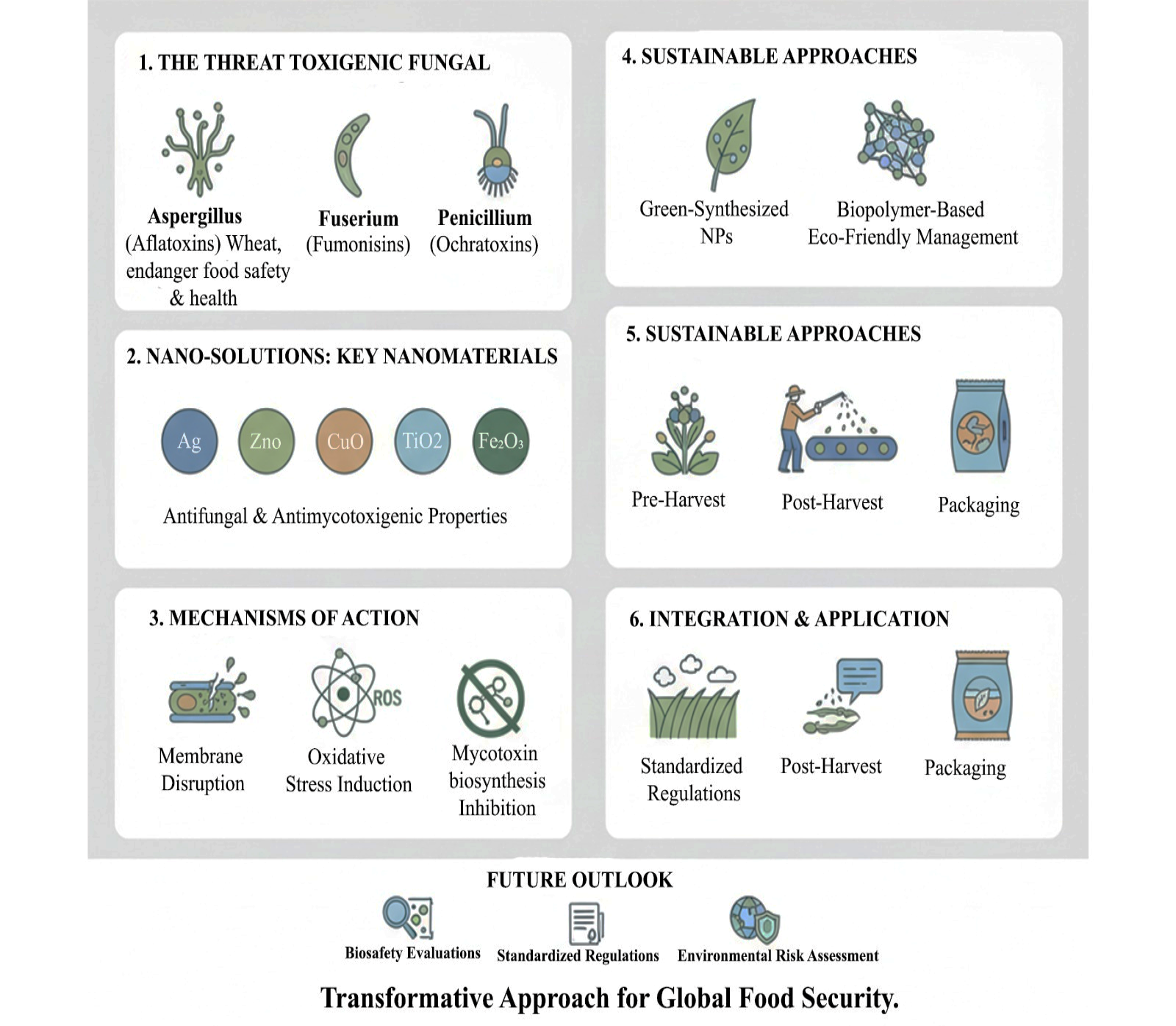
Nanotechnology for cereal biocontrol: Mitigating fungal and mycotoxins threats.
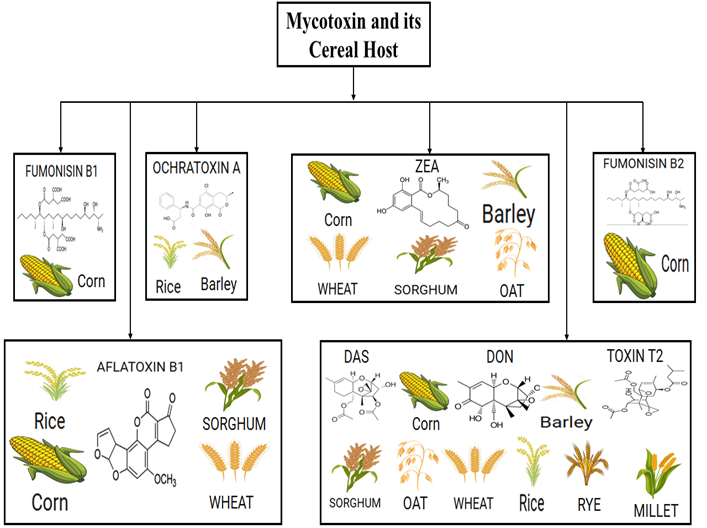
Major mycotoxins produced by toxigenic fungi including: AF, OTA, FB, DON, ZEN, and T-2 toxin are toxic fungal metabolites that contaminate most cereals such as maize, wheat, barley, oats, rice, and sorghum. Each toxin is linked to a specific fungus (i.e., Aspergillus, Fusarium, and Penicillium) and causes severe health effects ranging from cancer and kidney damage to reproductive disorders and immune suppression.
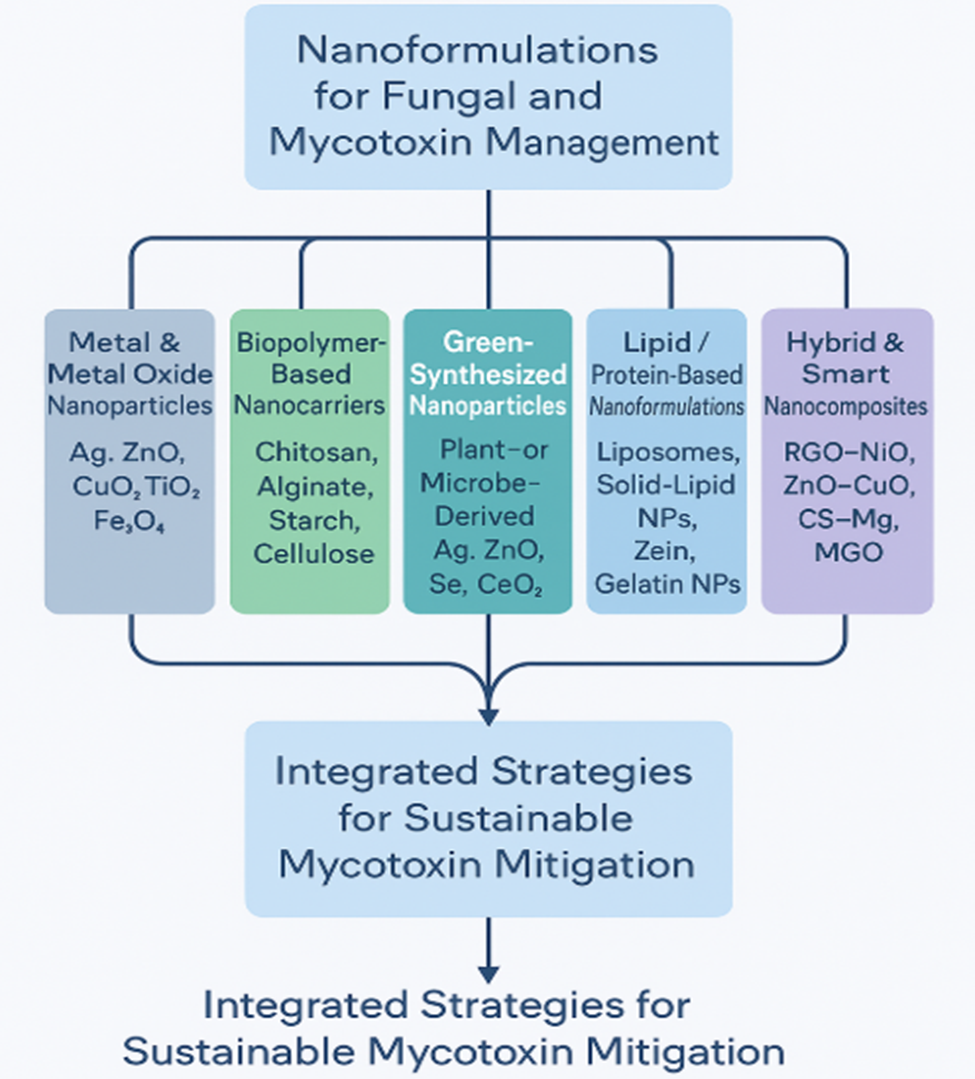
Hierarchical nanoformulations classification to control fungi and their associated mycotoxins production.
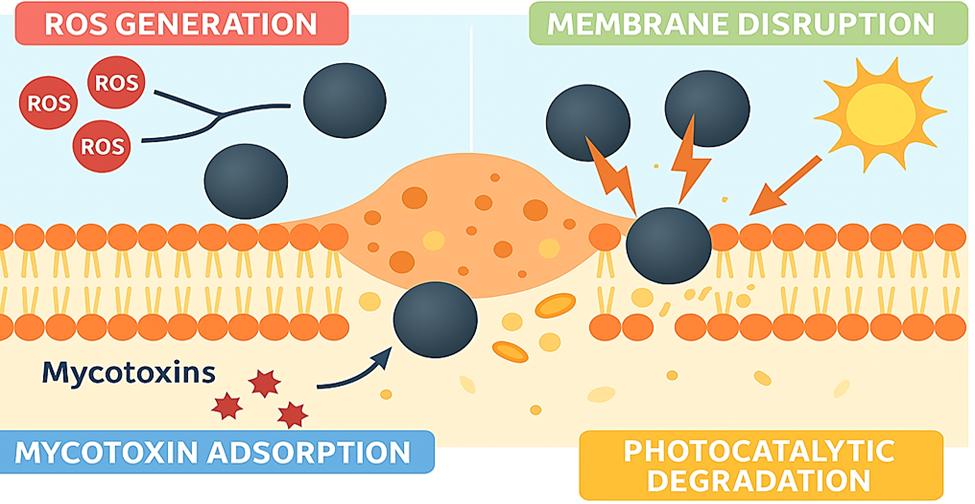
Mechanistic overview of nanomaterials antifungal actions (created by Nano Banana AI).
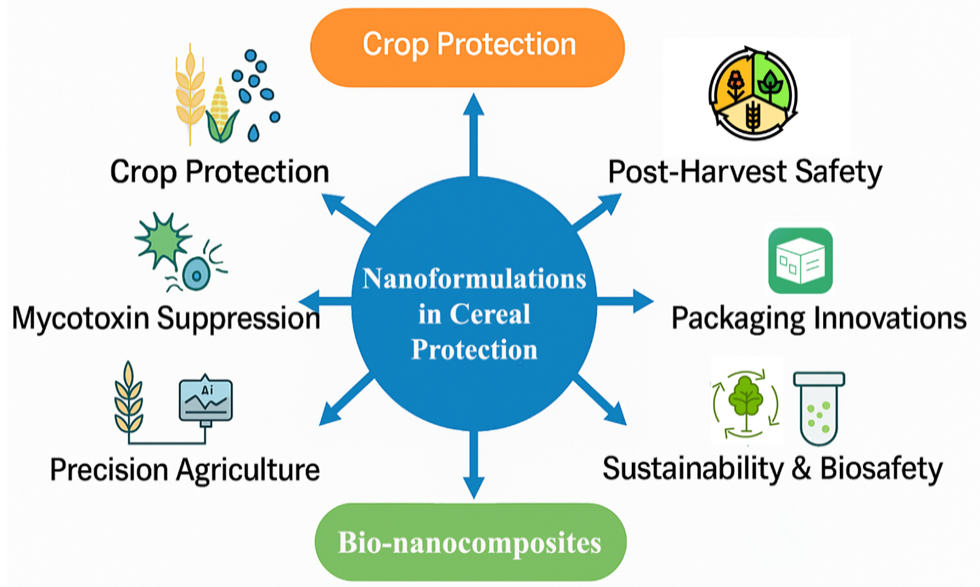
Applications of bio-nanocomposites for mycotoxins and toxigenic fungi management in cereal systems.
References
- Abdelhamid, H.N. and Mahmoud, G.A.E., 2023. Antifungal and nanozyme activities of metal–organic framework-derived CuO@C. Appl. Organomet. Chem., 37(3): e7011. https://doi.org/10.1002/aoc.7011[CrossRef]
- Abdel-Nasser, A., Fathy, H.M., Badr, A., Hathout, A. and Barakat, O.S., 2022. Prevalence of aflatoxigenic fungi in cereal grains and their related chemical metabolites. Egypt. J. Chem., 65(10): 455–470.
- Abdel-Nasser, A., Fathy, H.M., Badr, A.N., Barakat, O.S. and Hathout, A.S., 2025. Chitosan nanoparticles loaded with Lactobacillus rhamnosus bioactive metabolites: preparation, characterization and antifungal activity. Heliyon, 11(2). https://doi.org/10.1016/j.heliyon.2025.e41875[CrossRef]
- Abd-Elsalam, K.A., 2024. Next-generation fungicides based on nanohybrids: A preliminary review. Nanohybrid Fungicides, pp. 3-23. https://doi.org/10.1016/B978-0-443-23950-2.00017-5[CrossRef]
- Abd-Elsalam, K.A., Hashim, A.F., Alghuthaymi, M.A. and Said-Galiev, E., 2017. Nanobiotechnological strategies for toxigenic fungi and mycotoxin control. In: Food Preservation, pp. 337–364. https://doi.org/10.1016/B978-0-12-804303-5.00010-9[CrossRef]
- Abramson, D., 2020. Toxicants of the genus Penicillium. In: Handbook of plant and fungal toxicants, pp. 303–317. https://doi.org/10.1201/9780429281952-21[CrossRef]
- Achugbu, A.N., Amadi, J.E. and Ekwealor, K.U., 2022. Pre- and post-harvest evaluation of approaches in controlling aflatoxin-producing fungi in maize (Zea mays L.): A review.
- Agnusdei, A., Maurelli, A.M., Gerin, D., Monopoli, D., Pollastro, S., Catucci, L. and De Leo, V., 2024. Fungicide-loaded liposomes for the treatment of fungal diseases in agriculture: an assessment of Botrytis cinerea. Int. J. Mol. Sci., 25(15): 8359. https://doi.org/10.3390/ijms25158359[CrossRef]
- Ahmed, A.F., Mahmoud, G.A.E., Hefzy, M., Liu, Z. and Ma, C., 2023. Overview on the edible mushrooms in Egypt. J. Future Foods, 3(1): 8–15. https://doi.org/10.1016/j.jfutfo.2022.09.002[CrossRef]
- Ahmed, T., Noman, M., Luo, J., Muhammad, S., Shahid, M., Ali, M.A. and Li, B., 2021. Bioengineered chitosan magnesium nanocomposite: A novel agricultural antimicrobial agent against Acidovorax oryzae and Rhizoctonia solani for sustainable rice production. Int. J. Biol. Macromol., 168: 834–845. https://doi.org/10.1016/j.ijbiomac.2020.11.148[CrossRef]
- Alabdallah, N.M., Irshad, M.A., Rizwan, M., Nawaz, R., Inam, A., Mohsin, M. and Ali, S., 2023. Synthesis, characterization and antifungal potential of titanium dioxide nanoparticles against fungal disease (Ustilago tritici) of wheat (Triticum aestivum L.). Environ. Res., 228: 115852. https://doi.org/10.1016/j.envres.2023.115852[CrossRef]
- Alghuthaymi, M.A., R.C., P.R., Kalia, A., Bhardwaj, K., Bhardwaj, P. and Kuca, K., 2021. Nanohybrid antifungals for control of plant diseases: Current status and future perspectives. J. Fungi (Basel): 7(1): 48. https://doi.org/10.3390/jof7010048[CrossRef]
- Alkuwari, A., Hassan, Z.U., Zeidan, R., Al-Thani, R. and Jaoua, S., 2022. Occurrence of mycotoxins and toxigenic fungi in cereals and application of yeast volatiles for their biological control. Toxins (Basel): 14(6): 404. https://doi.org/10.3390/toxins14060404[CrossRef]
- Alotaibi, M.O., Alotaibi, N.M., Ghoneim, A.M., ul Ain, N., Irshad, M.A., Nawaz, R. and Ali, S., 2023. Effect of green-synthesized cerium oxide nanoparticles on fungal disease of wheat plants: A field study. Chemosphere, 339: 139731. https://doi.org/10.1016/j.chemosphere.2023.139731[CrossRef]
- Al-Saji, L.R. and Al-Nazzal, A.I., 2021. The effect of nano-zinc oxide and nano-titanium dioxide on inhabitation of ochratoxin A. Iraqi J. Sci., 62(11): 4406–4415. https://doi.org/10.24996/ijs.2021.62.11(SI).21[CrossRef]
- Amenta, V., Aschberger, K., Arena, M., Bouwmeester, H., Moniz, F. B., Brandhoff, P. and Peters, R.J., 2015. Regulatory aspects of nanotechnology in the agri/feed/food sector in EU and non-EU countries. Regulatory Toxicology and Pharmacology, 73(1): 463-476. https://doi.org/10.1016/j.yrtph.2015.06.016[CrossRef]
- Amini, M., Rasouli, M., Shoja, S., Mozaffar, M. and Bekeschus, S., 2024. Preserving wheat flour with cellulose nanocomposite packaging and cold plasma treatment: eliminating fungal contamination and improving functionality. Innov. Food Sci. Emerg. Technol., 93: 103632. https://doi.org/10.1016/j.ifset.2024.103632[CrossRef]
- Anand, U., Carpena, M., Kowalska-Góralska, M., Garcia-Perez, P., Sunita, K., Bontempi, E. and Simal-Gandara, J., 2022. Safer plant-based nanoparticles for combating antibiotic resistance in bacteria: A comprehensive review on potential applications, recent advances and future perspective. Sci. Total Environ., 821: 153472. https://doi.org/10.1016/j.scitotenv.2022.153472[CrossRef]
- Anumudu, C.K., Ekwueme, C.T., Uhegwu, C.C., Ejileugha, C., Augustine, J., Okolo, C.A. and Onyeaka, H., 2024. A review of the mycotoxin family of fumonisins, their biosynthesis, metabolism, methods of detection and effects on humans and animals. Int. J. Mol. Sci., 26(1): 184. https://doi.org/10.3390/ijms26010184[CrossRef]
- Anuradha, M., Balasubramanya, S., Subbalakshmi, G. and Shilpa, P., 2025. Commercialization of in vitro secondary metabolite production: Challenges and opportunities. In in vitro production of plant secondary metabolites: Theory and practice, pp. 321–346. https://doi.org/10.1007/978-981-97-8808-8_25[CrossRef]
- Arata, A.F., Martínez, M., Pesquero, N.V., Cristos, D. and Dinolfo, M.I., 2024. Contamination of Fusarium spp. and mycotoxins at different ear physiological stages of maize in Argentina. Int. J. Food Microbiol., 410: 110493. https://doi.org/10.1016/j.ijfoodmicro.2023.110493[CrossRef]
- Asghar, M.A., Ahmed, F., Qamar, A.R., Khan, K. and Anwar, A., 2025. Synthesis and characterization of chitosan/zinc oxide nanocomposite for enhanced applications as antibacterial, antifungal and aflatoxin B₁ adsorption. J. Cluster Sci., 36(2): 47. https://doi.org/10.1007/s10876-024-02760-4[CrossRef]
- Ashique, S., Raikar, A., Jamil, S., Lakshminarayana, L., Gajbhiye, S.A., De, S. and Kumar, S., 2025. Artificial intelligence integration with nanotechnology: A new frontier for sustainable and precision agriculture. Curr. Nanosci., 21(2): 242–273. https://doi.org/10.2174/0115734137275111231206072049[CrossRef]
- Ashraf, H., Batool, T., Anjum, T., Illyas, A., Li, G., Naseem, S. and Riaz, S., 2022. Antifungal potential of green synthesized magnetite nanoparticles: Black coffee–magnetite nanoparticles against wilt infection by ameliorating enzymatic activity and gene expression in Solanum lycopersicum L. Front. Microbiol., 13: 754292.
- Auyeung, A., Casillas-Santana, M.A., Martinez-Castanon, G.A., Slavin, Y.N., Zhao, W., Asnis, J. and Bach, H., 2017. Effective control of molds using a combination of nanoparticles. PLoS One, 12(1): e0169940. https://doi.org/10.1371/journal.pone.0169940[CrossRef]
- Awuchi, C.G., Ondari, E.N., Eseoghene, I.J., Twinomuhwezi, H., Amagwula, I.O. and Morya, S., 2021. Fungal growth and mycotoxins production: types, toxicities, control strategies and detoxification. In: Fungal Reproduction and Growth. IntechOpen.
- Awuchi, C.G., Ondari, E.N., Nwozo, S., Odongo, G.A., Eseoghene, I.J., Twinomuhwezi, H. and Okpala, C.O.R., 2022. Mycotoxins’ toxicological mechanisms involving humans, livestock and their associated health concerns: A review. Toxins (Basel): 14(3): 167. https://doi.org/10.3390/toxins14030167[CrossRef]
- Badmos, A., Odedokun, D., Oni, E., Oloyede, A., Sojinu, S. and Oluwafemi, F., 2025. Antifungal efficacy of biosynthesized selenium nanoparticles from clove (Syzygium aromaticum) extract on mycotoxigenic fungi associated with staple cereals. Microbe, 100574. https://doi.org/10.1016/j.microb.2025.100574[CrossRef]
- Bahrulolum, H., Nooraei, S., Javanshir, N., Tarrahimofrad, H., Mirbagheri, V.S., Easton, A.J. and Ahmadian, G., 2021. Green synthesis of metal nanoparticles using microorganisms and their application in the agrifood sector. J. Nanobiotechnol., 19(1): 86. https://doi.org/10.1186/s12951-021-00834-3[CrossRef]
- Bakeshlou, H., Pirsa, S., Mohtarami, F. and Bener, M., 2024. Investigating the structural and antimicrobial properties of wheat gluten nanocomposite film containing zinc oxide nanoparticles and quercetin nanoliposomes. J. Polym. Environ., 32(10): 4925–4944. https://doi.org/10.1007/s10924-024-03267-9[CrossRef]
- Biswas, R., Alam, M., Sarkar, A., Haque, M.I., Hasan, M.M. and Hoque, M., 2022. Application of nanotechnology in food: Processing, preservation, packaging and safety assessment. Heliyon, 8(11). https://doi.org/10.1016/j.heliyon.2022.e11795[CrossRef]
- Borowik, P., Dyshko, V., Tkaczyk, M., Okorski, A., Polak-Śliwińska, M., Tarakowski, R. and Oszako, T., 2024. Analysis of wheat grain infection by Fusarium mycotoxin producing fungi using an electronic nose, GC–MS, and qPCR. Sensors (Basel): 24(2): 326. https://doi.org/10.3390/s24020326[CrossRef]
- Borowik, P., Tkaczyk, M., Pluta, P., Okorski, A., Stocki, M., Tarakowski, R. and Oszako, T., 2024. Distinguishing between wheat grains infested by four fusarium species by measuring with a low-cost electronic nose. Sensors, 24(13): 4312. https://doi.org/10.3390/s24134312[CrossRef]
- Borràs-Vallverdú, B., Ramos, A.J., Cantero-Martínez, C., Marín, S., Sanchis, V. and Fernández-Ortega, J., 2022. Influence of agronomic factors on mycotoxin contamination in maize and changes during a 10-day harvest-till-drying simulation period: a different perspective. Toxins (Basel): 14(9): 620. https://doi.org/10.3390/toxins14090620[CrossRef]
- Bouqellah, N.A., Abdulmajeed, A.M., Alharbi, F.K.R., Mattar, E., Al-Sarraj, F., Abdulfattah, A.M. and Soliman, M.H., 2025. Optimizing encapsulation of garlic and cinnamon essential oils in silver nanoparticles for enhanced antifungal activity against Botrytis cinerea pathogenic disease. Physiol. Mol. Plant Pathol., 136: 102522. https://doi.org/10.1016/j.pmpp.2024.102522[CrossRef]
- Calisi, A., Lorusso, C., Gallego-Urrea, J.A., Hassellöv, M. and Dondero, F., 2022. Ecotoxicological effects of silver nanoparticles in marine mussels. Sci. Total Environ., 851: 158113. https://doi.org/10.1016/j.scitotenv.2022.158113[CrossRef]
- Cardoso e Bufalo, T., Buttrós, V.H., de Paiva, A.B., de Oliveira, D.D., Ribeiro, C.S.F. and Dória, J., 2025. Nanopesticides in Brazilian crops: Classes, mechanisms, efficacy, risks, and photocatalytic remediation. Plants, 14(18): 2880. https://doi.org/10.3390/plants14182880[CrossRef]
- Chandervanshi, Y., Mandal, P. and Tewari, S., 2025. Next generation nanobioformulation: A fascinating field for smart and sustainable agriculture. Plant Nano Biol., 100191. https://doi.org/10.1016/j.plana.2025.100191[CrossRef]
- Chaudhary, P., Fatima, F. and Kumar, A., 2020. Relevance of nanomaterials in food packaging and its advanced future prospects. J. Inorg. Organomet. Polym. Mater., 30(12): 5180–5192. https://doi.org/10.1007/s10904-020-01674-8[CrossRef]
- Chávez-Hernández, J.A., Velarde-Salcedo, A.J., Navarro-Tovar, G. and Gonzalez, C., 2024. Safe nanomaterials: from their use, application and disposal to regulations. Nanoscale Adv., 6(6): 1583–1610. https://doi.org/10.1039/D3NA01097J[CrossRef]
- Chen, J., Guo, Y., Zhang, X., Liu, J., Gong, P., Su, Z. and Li, G., 2023. Emerging nanoparticles in food: sources, application, and safety. J. Agric. Food Chem., 71(8): 3564-3582. https://doi.org/10.1021/acs.jafc.2c06740[CrossRef]
- Chen, J., Sun, L., Cheng, Y., Lu, Z., Shao, K., Li, T. and Han, H., 2016. Graphene oxide-silver nanocomposite: Novel agricultural antifungal agent against Fusarium graminearum for crop disease prevention. ACS Appl. Mater. Interf., 8(36): 24057-24070. https://doi.org/10.1021/acsami.6b05730[CrossRef]
- Cota-Arriola, O., Cortez-Rocha, M.O., Rosas-Burgos, E.C., Burgos-Hernández, A., López-Franco, Y.L. and Plascencia-Jatomea, M., 2011. Antifungal effect of chitosan on the growth of Aspergillus parasiticus and production of aflatoxin B₁. Polym. Int., 60(6): 937–944. https://doi.org/10.1002/pi.3054[CrossRef]
- Cui, H., Surendhiran, D., Li, C. and Lin, L., 2020. Biodegradable zein active film containing chitosan nanoparticle encapsulated with pomegranate peel extract for food packaging. Food Packag. Shelf. Life, 24: 100511. https://doi.org/10.1016/j.fpsl.2020.100511[CrossRef]
- Davidova, S., Galabov, A.S. and Satchanska, G., 2024. Antibacterial, antifungal, antiviral activity and mechanisms of action of plant polyphenols. Microorganisms, 12(12): 2502. https://doi.org/10.3390/microorganisms12122502[CrossRef]
- de Oliveira Mallia, J., Galea, R., Nag, R., Cummins, E., Gatt, R. and Valdramidis, V., 2022. Nanoparticle food applications and their toxicity: current trends and needs in risk assessment strategies. J. Food Prot., 85(2): 355–372. https://doi.org/10.4315/JFP-21-184[CrossRef]
- Deligeorgakis, C., Magro, C., Skendi, A., Gebrehiwot, H.H., Valdramidis, V. and Papageorgiou, M., 2023. Fungal and toxin contaminants in cereal grains and flours: Systematic review and meta-analysis. Foods, 12(23): 4328. https://doi.org/10.3390/foods12234328[CrossRef]
- Diener, U.L., Cole, R.J., Sanders, T.H., Payne, G.A., Lee, L.S. and Klich, M.A., 1987. Epidemiology of aflatoxin formation by Aspergillus flavus. Annu. Rev. Phytopathol., 25(1): 249–270. https://doi.org/10.1146/annurev.py.25.090187.001341[CrossRef]
- Dikshit, P.K., Kumar, J., Das, A.K., Sadhu, S., Sharma, S., Singh, S. and Kim, B.S., 2021. Green synthesis of metallic nanoparticles: Applications and limitations. Catalysts, 11(8): 902. https://doi.org/10.3390/catal11080902[CrossRef]
- Dube, E. and Okuthe, G.E., 2025. Silver nanoparticle-based antimicrobial coatings: sustainable strategies for microbial contamination control. Microbiol. Res., 16(6): 110. https://doi.org/10.3390/microbiolres16060110[CrossRef]
- Edo, G.I., Mafe, A.N., Ali, A.B., Akpoghelie, P.O., Yousif, E., Isoje, E.F. and Alamiery, A.A., 2025. Green biosynthesis of nanoparticles using plant extracts: mechanisms, advances, challenges and applications. BioNanoScience, 15(2): 267. https://doi.org/10.1007/s12668-025-01883-w[CrossRef]
- EFSA Scientific Committee., 2021. Guidance on risk assessment of nanomaterials to be applied in the food and feed chain: Human and animal health. EFSA J., 19(8): e06768.
- El-Araby, A., Janati, W., Ullah, R., Ercisli, S. and Errachidi, F., 2024. Chitosan, chitosan derivatives, and chitosan-based nanocomposites: Eco-friendly materials for advanced applications. A review. Front. Chem., 11: 1327426. https://doi.org/10.3389/fchem.2023.1327426[CrossRef]
- Elbasuney, S., El-Sayyad, G.S., Tantawy, H. and Hashem, A.H., 2021. Retracted article: Promising antimicrobial and antibiofilm activities of reduced graphene oxide-metal oxide (RGO-NiO, RGO-AgO, and RGO-ZnO) nanocomposites. RSC Adv., 11(42): 25961–25975. https://doi.org/10.1039/D1RA04542C[CrossRef]
- El-Ganainy, S.M., El-Bakery, A.M., Hafez, H.M., Ismail, A.M., El-Abdeen, A.Z., Ata, A.A.E. and Iqbal, Z., 2022. Humic acid-coated Fe₃O₄ nanoparticles confer resistance to Acremonium wilt disease and improve physiological and morphological attributes of grain sorghum. Polymers (Basel): 14(15): 3099. https://doi.org/10.3390/polym14153099[CrossRef]
- Fang, J., Sheng, L., Ye, Y., Ji, J., Sun, J., Zhang, Y. and Sun, X., 2025. Recent advances in biosynthesis of mycotoxin-degrading enzymes and their applications in food and feed. Crit. Rev. Food Sci. Nutr., 65(8): 1465-1481. https://doi.org/10.1080/10408398.2023.2294166[CrossRef]
- Fei, L., Liang, J., Fu, S., Xu, Y. and Hao, L., 2025. Green synthesis of silver nanoparticles using fermentation extracts from a mangrove soil bacterium: morphological characterization, and antifungal activities against rice blast fungus. Pest Manage. Sci., 82(2): 2035-2047. https://doi.org/10.1002/ps.70358[CrossRef]
- Firdous, S.M., Das Kirtania, M., Barik, A., Nayak, A.K. and Dey, S., 2024. Biosynthesis of silver nanoparticles with antifungal potential. Curr. Nanomed., 15. https://doi.org/10.2174/0124681873323798241105025029[CrossRef]
- Focker, M., van Eupen, M., Verweij, P., Liu, C., van Haren, C. and Van der Fels-Klerx, H.J., 2023. Effects of climate change on areas suitable for maize cultivation and aflatoxin contamination in Europe. Toxins (Basel): 15(10): 599. https://doi.org/10.3390/toxins15100599[CrossRef]
- Gacek, A. and Strauss, J., 2012. The chromatin code of fungal secondary metabolite gene clusters. Applied Microbiology and Biotechnology, 95(6): 1389-1404. https://doi.org/10.1007/s00253-012-4208-8[CrossRef]
- Gacem, M.A. and Abd-Elsalam, K.A., 2022. Nanomaterials for the reduction of mycotoxins in cereals. In Cereal diseases: Nanobiotechnological approaches for diagnosis and management, Springer Nature Singapore. pp. 371–406. https://doi.org/10.1007/978-981-19-3120-8_18[CrossRef]
- Gachara, G., Suleiman, R., Kilima, B., Taoussi, M., El Kadili, S., Fauconnier, M.L. and Lahlali, R., 2024. Pre- and post-harvest aflatoxin contamination and management strategies of Aspergillus spoilage in East African Community maize: Review of etiology and climatic susceptibility. Mycotoxin Res., 40(4): 495–517. https://doi.org/10.1007/s12550-024-00555-0[CrossRef]
- Gai, Y. and Wang, H., 2024. Plant disease: A growing threat to global food security. Agronomy, 14(8): 1615. https://doi.org/10.3390/agronomy14081615[CrossRef]
- Gangopadhyay, P.K., Khatri-Chhetri, A., Shirsath, P.B. and Aggarwal, P.K., 2019. Spatial targeting of ICT-based weather and agro-advisory services for climate risk management in agriculture. Clim. Change, 154(1): 241–256. https://doi.org/10.1007/s10584-019-02426-5[CrossRef]
- Gavrilova, O.P., Gagkaeva, T.Y., Orina, A.S. and Gogina, N.N., 2023. Diversity of Fusarium species and their mycotoxins in cereal crops from the Asian territory of Russia. Dokl. Biol. Sci., 508(1): 9–19. https://doi.org/10.1134/S0012496622700156[CrossRef]
- Gelaye, Y. and Luo, H., 2025. Green-synthesized nanomaterials for aflatoxin mitigation: A review. Nano Technol. Sci. Appl., pp. 211–223. https://doi.org/10.2147/NSA.S520121[CrossRef]
- Gjorgieva Ackova, D. and Kadifkova-Panovska, T., 2025. Silver nanoparticles: Toxicity and inhibitory effects against aflatoxins. Plant Sci. Today, 12(1): 1-8.
- Goel, M. and Pandey, M., 2024. Crop yield prediction using AI: A review. In Proc. 2nd Int. Conf. on Disruptive Technologies (ICDT 2024): pp. 1547–1553. IEEE. https://doi.org/10.1109/ICDT61202.2024.10489432[CrossRef]
- Goudarzi, V., Shahabi-Ghahfarrokhi, I. and Babaei-Ghazvini, A., 2017. Preparation of eco-friendly UV-protective food packaging material by starch/TiO₂ bio-nanocomposite: Characterization. Int. J. Biol. Macromol., 95: 306–313. https://doi.org/10.1016/j.ijbiomac.2016.11.065[CrossRef]
- Grenier, B. and Applegate, T.J., 2013. Modulation of intestinal functions following mycotoxin ingestion: Meta-analysis of published experiments in animals. Toxins (Basel), 5(2): 396–430. https://doi.org/10.3390/toxins5020396[CrossRef]
- Guimarães, D., Cavaco-Paulo, A. and Nogueira, E., 2021. Design of liposomes as drug delivery systems for therapeutic applications. Int. J. Pharm., 601: 120571. https://doi.org/10.1016/j.ijpharm.2021.120571[CrossRef]
- Gurikar, C., Shivaprasad, D.P., Sabillón, L., Gowda, N.N. and Siliveru, K., 2023. Impact of mycotoxins and their metabolites associated with food grains. Grain Oil Sci. Technol., 6(1): 1–9. https://doi.org/10.1016/j.gaost.2022.10.001[CrossRef]
- Gwad, M.M.A., El-Sayed, A.S., Abdel-Fattah, G.M., Abdelmoteleb, M. and Abdel-Fattah, G.G., 2024. Potential fungicidal and antiaflatoxigenic effects of cinnamon essential oils on Aspergillus flavus inhabiting stored wheat grains. BMC Plant Biol., 24(1): 394. https://doi.org/10.1186/s12870-024-05065-w[CrossRef]
- Hashem, A.H., Saied, E., Amin, B.H., Alotibi, F.O., Al-Askar, A.A., Arishi, A.A. and Elbahnasawy, M.A., 2022. Antifungal activity of biosynthesized silver nanoparticles (AgNPs) against Aspergilli causing aspergillosis: Ultrastructure study. J. Funct. Biomater., 13(4): 242. https://doi.org/10.3390/jfb13040242[CrossRef]
- Hassan, A.A., Oraby, N.H., El-Mesalamy, M.M. and Sayed-ElAhl, R.M.H., 2022. Effect of hybrid nanomaterial of copper–chitosan against aflatoxigenic fungi in poultry feed. J. World’s Poult. Res., 12(3): 157–164. https://doi.org/10.36380/jwpr.2022.18[CrossRef]
- Hasteer, N., Mallik, A., Nigam, D., Sindhwani, R. and Van Belle, J.P., 2024. Analysis of challenges to implement artificial intelligence technologies in agriculture sector. International Journal of System Assurance Engineering and Management, 15(5), 1841-1860. https://doi.org/10.1007/s13198-023-02164-z[CrossRef]
- Hernández-Meléndez, D., Salas-Téllez, E., Zavala-Franco, A., Téllez, G., Méndez-Albores, A. and Vázquez-Durán, A., 2018. Inhibitory effect of flower-shaped zinc oxide nanostructures on the growth and aflatoxin production of a highly toxigenic strain of Aspergillus flavus Link. Materials (Basel): 11(8): 1265. https://doi.org/10.3390/ma11081265[CrossRef]
- Hong, S., Choi, D.W., Kim, H.N., Park, C.G., Lee, W. and Park, H.H., 2020. Protein-based nanoparticles as drug delivery systems. Pharmaceutics, 12(7): 604. https://doi.org/10.3390/pharmaceutics12070604[CrossRef]
- Horky, P., Skalickova, S., Baholet, D. and Skladanka, J., 2018. Nanoparticles as a solution for eliminating the risk of mycotoxins. Nanomaterials, 8(9): 727. https://doi.org/10.3390/nano8090727[CrossRef]
- Hudson, K., 2023. The interaction of Fusarium graminearum and Fusarium poae inoculation in barley (Hordeum vulgare L.). PhD thesis, Université d’Ottawa/University of Ottawa.
- Hussein, F.A.H. and Owied, O.A.R., 2024. Efficiency evaluation of ordinary and nanoscale extracts of Agaricus bisporus on inhibition of mycelial growth and aflatoxin production of Aspergillus flavus in maize grain. J. Stored Prod. Res., 108: 102374. https://doi.org/10.1016/j.jspr.2024.102374[CrossRef]
- Hussein, M.A., Gherbawy, Y.A., Abd El-Sadek, M.S., Al-Harthi, H.F. and El-Dawy, E.G.A.M., 2025. Phylogeny of Aspergillus section Circumdati and inhibition of ochratoxins potential by green-synthesised ZnO nanoparticles. Mycology, 16(2): 891–902. https://doi.org/10.1080/21501203.2024.2379480[CrossRef]
- Ilkhechi, N.N., Mozammel, M. and Khosroushahi, A.Y., 2021. Antifungal effects of ZnO, TiO₂ and ZnO-TiO₂ nanostructures on Aspergillus flavus. Pestic. Biochem. Physiol., 176: 104869. https://doi.org/10.1016/j.pestbp.2021.104869[CrossRef]
- Islam, T., Danishuddin, Tamanna, N.T., Matin, M.N., Barai, H.R. and Haque, M.A., 2024. Resistance mechanisms of plant pathogenic fungi to fungicide, environmental impacts of fungicides and sustainable solutions. Plants, 13(19): 2737. https://doi.org/10.3390/plants13192737[CrossRef]
- Jedidi, I., Mateo, E.M., Marín, P., Jiménez, M., Said, S. and González-Jaén, M.T., 2021. Contamination of wheat, barley and maize seeds with toxigenic Fusarium species and their mycotoxins in Tunisia. J. AOAC Int., 104(4): 959–967. https://doi.org/10.1093/jaoacint/qsab020[CrossRef]
- Jian, Y., Chen, X., Ahmed, T., Shang, Q., Zhang, S., Ma, Z. and Yin, Y., 2022. Toxicity and action mechanisms of silver nanoparticles against the mycotoxin-producing fungus Fusarium graminearum. J. Adv. Res., 38: 1–12. https://doi.org/10.1016/j.jare.2021.09.006[CrossRef]
- Jin, P., Yao, R., Qin, D., Chen, Q. and Du, Q., 2019. Enhancement in antibacterial activities of eugenol-entrapped ethosome nanoparticles via strengthening its permeability and sustained release. J. Agric. Food Chem., 67(5): 1371–1380. https://doi.org/10.1021/acs.jafc.8b06278[CrossRef]
- Jobe, M.C. and Mwanza, M., 2025. Inhibitive effect of Urginea epigea methanolic extract and silver/zinc oxide nanoparticles on Aspergillus and aflatoxin production. PLoS One, 20(4), e0320454. https://doi.org/10.1371/journal.pone.0320454[CrossRef]
- Kalia, A., Abd-Elsalam, K.A. and Kuca, K., 2020. Zinc-based nanomaterials for diagnosis and management of plant diseases: Ecological safety and future prospects. J. Fungi, 6(4): 222. https://doi.org/10.3390/jof6040222[CrossRef]
- Keller, B., Russo, T., Rembold, F., Chauhan, Y., Battilani, P., Wenndt, A. and Connett, M., 2022. The potential for aflatoxin predictive risk modelling in sub-Saharan Africa: A review. World Mycotoxin J., 15(2): 101–118. https://doi.org/10.3920/WMJ2021.2683[CrossRef]
- Khan, N.T., Khan, M.J., Jameel, J., Jameel, N. and Rheman, S.U.A., 2017. An overview: Biological organisms that serves as nanofactories for metallic nanoparticles synthesis and fungi being the most appropriate. Bioceram Dev. Appl., 7(101): 1-4. https://doi.org/10.4172/2090-5025.1000101[CrossRef]
- Khan, R., Anwar, F. and Ghazali, F.M., 2024. A comprehensive review of mycotoxins: toxicology, detection, and effective mitigation approaches. Heliyon, 10(8). https://doi.org/10.1016/j.heliyon.2024.e28361[CrossRef]
- Kianfar, E., 2021. Protein nanoparticles in drug delivery: Animal protein, plant proteins and protein cages, albumin nanoparticles. J. Nanobiotechnol., 19(1): 159. https://doi.org/10.1186/s12951-021-00896-3[CrossRef]
- Kochiieru, Y., Mankevičienė, A., Cesevičienė, J., Semaškienė, R., Ramanauskienė, J., Gorash, A. and Venslovas, E., 2021. The impact of harvesting time on Fusarium mycotoxins in spring wheat grain and their interaction with grain quality. Agronomy, 11(4): 642. https://doi.org/10.3390/agronomy11040642[CrossRef]
- Kong, M., Wang, F., Jing, H., Yang, X., Chang, X., Xu, H. and Shen, Y., 2025. Sustainable disease management in tomatoes: Fe₃O₄ nanoparticles as an eco-friendly alternative to conventional fungicides for Fusarium wilt control. Pest Manag. Sci., 81(7): 4121–4134. https://doi.org/10.1002/ps.8778[CrossRef]
- Krnjaja, V., Mandić, V., Petrović, T., Stanković, S., Lučev, M., Obradović, A. and Mićić, N., 2024. Fusarium spp. infection, mycotoxin contamination, and some agronomic traits in winter barley as affected by N fertilization under Serbia conditions. Chilean J. Agric. Res., 84(5): 632–643. https://doi.org/10.4067/s0718-58392024000500632[CrossRef]
- Krumova, E., Benkova, D., Stoyancheva, G., Dishliyska, V., Miteva-Staleva, J., Kostadinova, A. and Elshoky, H.A., 2024. Exploring the mechanism underlying the antifungal activity of chitosan-based ZnO, CuO and SiO₂ nanocomposites as nanopesticides against Fusarium solani and Alternaria solani. Int. J. Biol. Macromol., 268: 131702. https://doi.org/10.1016/j.ijbiomac.2024.131702[CrossRef]
- Kumar, R. and Lal, S., 2014. Synthesis of organic nanoparticles and their applications in drug delivery and food nanotechnology: A review. J. Nanomater. Mol. Nanotechnol., 3(4): 11–22.
- Kumari, R., Suman, K., Karmakar, S., Mishra, V., Lakra, S.G., Saurav, G.K. and Mahto, B.K., 2023. Regulation and safety measures for nanotechnology-based agri-products. Front. Genome Edit., 5: 1200987. https://doi.org/10.3389/fgeed.2023.1200987[CrossRef]
- Kurul, F., Doruk, B. and Topkaya, S.N., 2025. Principles of green chemistry: Building a sustainable future. Discov. Chem., 2(1): 68. https://doi.org/10.1007/s44371-025-00152-9[CrossRef]
- Lakshmeesha, T.R., Kalagatur, N.K., Mudili, V., Mohan, C.D., Rangappa, S., Prasad, B.D. and Niranjana, S.R., 2019. Biofabrication of zinc oxide nanoparticles with Syzygium aromaticum flower buds extract and finding its novel application in controlling the growth and mycotoxins of Fusarium graminearum. Front. Microbiol., 10: 1244. https://doi.org/10.3389/fmicb.2019.01244[CrossRef]
- Liew, M. X. X., Nakajima, Y., Maeda, K., Kitamura, N. and Kimura, M., 2023. Regulatory mechanism of trichothecene biosynthesis in Fusarium graminearum. Frontiers in Microbiology, 14, 1148771. https://doi.org/10.3389/fmicb.2023.1148771[CrossRef]
- Macías-Rubalcava, M.L., Lappe-Oliveras, P. and Villanueva-Silva, R., 2025. Disruption of cell wall and membrane integrity as antioomycete and antifungal mode of action by fusaric and 9,10-dehydrofusaric acids from endophytic fungus Fusarium lactis strain SME13-2. J. Appl. Microbiol., 136(1): lxae301. https://doi.org/10.1093/jambio/lxae301[CrossRef]
- Maity, D., Gupta, U. and Saha, S., 2022. Biosynthesized metal oxide nanoparticles for sustainable agriculture: Next-generation nanotechnology for crop production, protection and management. Nanoscale, 14(38): 13950-13989. https://doi.org/10.1039/D2NR03944C[CrossRef]
- Malandrakis, A.A., Kavroulakis, N. and Chrysikopoulos, C.V., 2022. Metal nanoparticles against fungicide resistance: Alternatives or partners? Pest Manage. Sci., 78(10): 3953–3956. https://doi.org/10.1002/ps.7014[CrossRef]
- Mani, V.M., Nivetha, S., Sabarathinam, S., Barath, S., Das, M.A., Basha, S. and Pugazhendhi, A., 2022. Multifunctionalities of mycosynthesized zinc oxide nanoparticles (ZnONPs) from Cladosporium tenuissimum FCBGr: Antimicrobial additives for paints coating, functionalized fabrics and biomedical properties. Prog. Org. Coat., 163: 106650. https://doi.org/10.1016/j.porgcoat.2021.106650[CrossRef]
- Manojkumar, U., Kaliannan, D., Srinivasan, V., Balasubramanian, B., Kamyab, H., Mussa, Z.H. and Palaninaicker, S., 2023. Green synthesis of zinc oxide nanoparticles using Brassica oleracea var. botrytis leaf extract: Photocatalytic, antimicrobial and larvicidal activity. Chemosphere, 323: 138263. https://doi.org/10.1016/j.chemosphere.2023.138263[CrossRef]
- Mansoor, S., Zahoor, I., Baba, T.R., Padder, S.A., Bhat, Z.A., Koul, A.M. and Jiang, L., 2021. Fabrication of silver nanoparticles against fungal pathogens. Front. Nanotechnol., 3: 679358. https://doi.org/10.3389/fnano.2021.679358[CrossRef]
- Mashaghi, S., Jadidi, T., Koenderink, G. and Mashaghi, A., 2013. Lipid nanotechnology. Int. J. Mol. Sci., 14(2): 4242–4282. https://doi.org/10.3390/ijms14024242[CrossRef]
- Mateo, E.M., Mateo, F., Tarazona, A. and Jiménez, M., 2025. Engineered metal nanoparticles: A possible small solution to big problems associated with toxigenic fungi and mycotoxins. Toxins (Basel): 17(8): 378. https://doi.org/10.3390/toxins17080378[CrossRef]
- Medina, A., Akbar, A., Baazeem, A., Rodriguez, A. and Magan, N., 2017. Climate change, food security and mycotoxins: do we know enough? Fungal Biol. Rev., 31(3): 143–154. https://doi.org/10.1016/j.fbr.2017.04.002[CrossRef]
- Meijer, N., Kleter, G., de Nijs, M., Rau, M.L., Derkx, R. and van der Fels-Klerx, H.J., 2021. The aflatoxin situation in Africa: Systematic literature review. Compr. Rev. Food Sci. Food Saf., 20(3): 2286–2304. https://doi.org/10.1111/1541-4337.12731[CrossRef]
- Melkamu, W.W. and Bitew, L.T., 2021. Green synthesis of silver nanoparticles using Hagenia abyssinica (Bruce) JF Gmel plant leaf extract and their antibacterial and antioxidant activities. Heliyon, 7(11). https://doi.org/10.1016/j.heliyon.2021.e08459[CrossRef]
- Mesterhazy, A., Szieberth, D., Tóth, E.T., Nagy, Z., Szabó, B., Herczig, B. and Tóth, B., 2022. The role of preharvest natural infection and toxin contamination in food and feed safety in maize, South-East Hungary, 2014–2021. J. Fungi (Basel): 8(10): 1104. https://doi.org/10.3390/jof8101104[CrossRef]
- Meza, S.L.R., Brugnerotto, P., Schmiele, M., Rodrigues, L.A., Gaioso Filho, C.A. and de Oliveira, M., 2025. A brief overview of the nutritional profile of cereal grains. In: Cereal grains: Processing methods for preserving nutritional value, pp. 1–15.
- Mhlongo, J.K., 2013. Chitosan nanoparticles functionalized with plant extracts for the inhibition of the toxic effects of aflatoxin B1 and ochratoxin A. Master’s thesis, University of Johannesburg (South Africa).
- Mohammed, A., Seid, A., Terefe, H., Cervini, C. and Verheecke-Vaessen, C., 2022. Harvest and post-harvest handling practices associated with fumonisin B1 contamination in maize (Zea mays L.): dietary exposure and risk characterization in eastern Ethiopia. Mycotoxin Res., 38(4): 275–287. https://doi.org/10.1007/s12550-022-00468-w[CrossRef]
- Mohammed, A.E., Al-Qahtani, A., Al-Mutairi, A., Al-Shamri, B. and Aabed, K., 2018. Antibacterial and cytotoxic potential of biosynthesized silver nanoparticles by some plant extracts. Nanomaterials (Basel): 8(6): 382. https://doi.org/10.3390/nano8060382.[CrossRef]
- Mondéjar-López, M., López-Jimenez, A.J., Ahrazem, O., Gómez-Gómez, L. and Niza, E., 2023. Chitosan-coated biogenic silver nanoparticles from wheat residues as green antifungal and nanopriming agents in wheat seeds. Int. J. Biol. Macromol., 225: 964–973. https://doi.org/10.1016/j.ijbiomac.2022.11.159[CrossRef]
- Monisha, B., Sridharan, R., Kumar, P.S., Rangasamy, G., Krishnaswamy, V.G. and Subhashree, S., 2023. Sensing of azo toxic dyes using nanomaterials and its health effects: A review. Chemosphere, 313: 137614. https://doi.org/10.1016/j.chemosphere.2022.137614[CrossRef]
- Mukhopadhyay, A., 2025. Global Regulatory Framework for Nano-Agri-Input Products for Commercialization. In: Nanobiotechnology for agricultural sciences (pp. 175-195). Apple Academic Press. https://doi.org/10.1201/9781003620273-6[CrossRef]
- Nabi, G., Anjum, T., Aftab, Z.E.H., Rizwana, H. and Akram, W., 2024. TiO₂ nanoparticles: Green synthesis and their role in lessening the damage of Colletotrichum graminicola in sorghum. Food Sci. Nutr., 12(10): 7379–7391. https://doi.org/10.1002/fsn3.4297[CrossRef]
- Naqvi, S. I. Z., Kausar, H., Afzal, A., Hashim, M., Mujahid, H., Javed, M. and Anjum, S., 2023. Antifungal activity of juglans-regia-mediated silver nanoparticles (AgNPs) against aspergillus-ochraceus-induced toxicity in in vitro and in vivo settings. J. Funct. Biomater., 14(4): 221. https://doi.org/10.3390/jfb14040221[CrossRef]
- Naseer, B., Srivastava, G., Qadri, O.S., Faridi, S.A., Islam, R.U. and Younis, K., 2018. Importance and health hazards of nanoparticles used in the food industry. Nanotechnol. Rev., 7(6): 623-641. https://doi.org/10.1515/ntrev-2018-0076[CrossRef]
- Nguyen, D.H., Lee, J.S., Park, K.D., Ching, Y.C., Nguyen, X.T., Phan, V.G. and Hoang Thi, T.T., 2020. Green silver nanoparticles formed by Phyllanthus urinaria, Pouzolzia zeylanica and Scoparia dulcis leaf extracts and the antifungal activity. Nanomaterials (Basel): 10(3): 542. https://doi.org/10.3390/nano10030542[CrossRef]
- Ngwenya, S.C., Sithole, N.J., Mthiyane, D.M., Jobe, M.C., Babalola, O.O., Ayangbenro, A.S. and Ramachela, K., 2025. Effects of green-synthesised copper oxide–zinc oxide hybrid nanoparticles on antifungal activity and phytotoxicity of aflatoxin B1 in maize (Zea mays L.) seed germination. Agronomy, 15(2): 313. https://doi.org/10.3390/agronomy15020313[CrossRef]
- Noireaux, J., López-Sanz, S., Vidmar, J., Correia, M., Devoille, L., Fisicaro, P. and Loeschner, K., 2021. Titanium dioxide nanoparticles in food: comparison of detection by triple-quadrupole and high-resolution ICP-MS in single-particle mode. J. Nanopart. Res., 23(4): 102. https://doi.org/10.1007/s11051-021-05198-1[CrossRef]
- Ogwu, M.C. and Izah, S.C., 2025. Nanotechnology for fungal pathogen control in crops: Innovations, public health impacts, and disease prevention. Front. Fungal Biol., 6: 1653214. https://doi.org/10.3389/ffunb.2025.1653214[CrossRef]
- Olariu, R.M., Fiţ, N.I., Bouari, C.M. and Nadăş, G.C., 2025. Mycotoxins in broiler production: impacts on growth, immunity, vaccine efficacy and food safety. Toxins (Basel), 17(6): 261. https://doi.org/10.3390/toxins17060261[CrossRef]
- Olayil, R., Prabu, V.A., DayaPrasad, S., Naresh, K. and Sreekanth, P.R., 2022. A review on the application of bio-nanocomposites for food packaging. Mater. Today: Proc., 56: 1302–1306. https://doi.org/10.1016/j.matpr.2021.11.315[CrossRef]
- Oliveira-Pinto, P.R., Oliveira-Fernandes, J., Pereira-Dias, L., Sousa, R.M. and Santos, C., 2024. Organic nanoparticles as delivery tools for bio-based antimicrobials. In: Nanoparticles in plant biotic stress management, pp. 107–179. https://doi.org/10.1007/978-981-97-0851-2_5[CrossRef]
- Otero, C., Arredondo, C., Echeverría-Vega, A. and Gordillo-Fuenzalida, F., 2020. Penicillium spp. mycotoxins found in food and feed and their health effects. World Mycotoxin J., 13(3): 323–343. https://doi.org/10.3920/WMJ2019.2556[CrossRef]
- Ouma, G.O., Okanda, P., Awuor, F.M. and Makiya, C.R., 2023. Adopting digital solutions for large-scale surveillance of crop pests and diseases in developing countries: A review. 12(2): 22–44.
- Paek, S.M., Oh, J.M. and Choy, J.H., 2011. A lattice-engineering route to heterostructured functional nanohybrids. Chem. Asian J., 6(2): 324–338. https://doi.org/10.1002/asia.201000578[CrossRef]
- Pandian, H., Senthilkumar, K., Naveenkumar, M. and Samraj, S., 2023. Azadirachta indica leaf extract–mediated silver nanoparticles impregnated nanocomposite film (AgNP/MCC/starch/whey protein) for food packaging applications. Environ. Res., 216: 114641. https://doi.org/10.1016/j.envres.2022.114641[CrossRef]
- Parveen, S., Wani, A.H., Shah, M.A., Devi, H.S., Bhat, M.Y. and Koka, J.A., 2018. Preparation, characterization and antifungal activity of iron oxide nanoparticles. Microb. Pathog., 115: 287–292. https://doi.org/10.1016/j.micpath.2017.12.068[CrossRef]
- Pastuszak, J., Szczerba, A., Dziurka, M., Hornyák, M., Kopeć, P., Szklarczyk, M. and Płażek, A., 2021. Physiological and biochemical response to Fusarium culmorum infection in three durum wheat genotypes at seedling and full anthesis stage. Int. J. Mol. Sci., 22(14): 7433. https://doi.org/10.3390/ijms22147433[CrossRef]
- Pei, P., Xiong, K., Wang, X., Sun, B., Zhao, Z., Xu, J. and Kong, J., 2021. Modelling the effect of environmental factors on the growth of Aspergillus parasiticus and mycotoxin production in paddy during storage. J. Stored Prod. Res., 93: 101846. https://doi.org/10.1016/j.jspr.2021.101846[CrossRef]
- Perochon, A. and Doohan, F.M., 2024. Trichothecenes and fumonisins: Key players in Fusarium–cereal ecosystem interactions. Toxins (Basel): 16(2): 90. https://doi.org/10.3390/toxins16020090[CrossRef]
- Pham, N.D., Duong, M.M., Le, M.V., Hoang, H.A. and Pham, L.K.O., 2019. Preparation and characterization of antifungal colloidal copper nanoparticles and their antifungal activity against Fusarium oxysporum and Phytophthora capsici. C. R. Chim., 22(11–12): 786–793. https://doi.org/10.1016/j.crci.2019.10.007[CrossRef]
- Phan, L.T.K., Tran, T.M., Audenaert, K., Jacxsens, L. and Eeckhout, M., 2021. Contamination of Fusarium proliferatum and Aspergillus flavus in the rice chain linked to crop seasons, cultivation regions and traditional agricultural practices in Mekong Delta, Vietnam. Foods, 10(9): 2064. https://doi.org/10.3390/foods10092064[CrossRef]
- Piecková, E., Ahmed, F. K., Lehotská, R. and Globanová, M., 2021. Novel silver-based nanomaterials for control of mycobiota and biocide analytical regulations in agri-food sector. In: Silver nanomaterials for Agri-Food Applications (pp. 187-216). Elsevier. https://doi.org/10.1016/B978-0-12-823528-7.00027-5[CrossRef]
- Pillai, A.M., Sivasankarapillai, V.S., Rahdar, A., Joseph, J., Sadeghfar, F., Rajesh, K. and Kyzas, G.Z., 2020. Green synthesis and characterization of zinc oxide nanoparticles with antibacterial and antifungal activity. J. Mol. Struct., 1211: 128107. https://doi.org/10.1016/j.molstruc.2020.128107[CrossRef]
- Pinilla, C.M.B., Thys, R.C.S. and Brandelli, A., 2019. Antifungal properties of phosphatidylcholine-oleic acid liposomes encapsulating garlic against environmental fungi in wheat bread. Int. J. Food Microbiol., 293: 72–78. https://doi.org/10.1016/j.ijfoodmicro.2019.01.006[CrossRef]
- Pinna, N., Vila-Donat, P., Pașca, D., Blasi, F., Schoubben, A. and Manyes, L., 2024. Protective Effects of Carotenoid-Loaded Nanostructured Lipid Carriers Against Ochratoxin-A-Induced Cytotoxicity. Foods, 13(21): 3351. https://doi.org/10.3390/foods13213351[CrossRef]
- Portell, X., Verheecke-Vaessen, C., Torrelles-Ràfales, R., Medina, A., Otten, W., Magan, N. and García-Cela, E., 2020. Three-dimensional study of F. graminearum colonisation of stored wheat: post-harvest growth patterns, dry matter losses and mycotoxin contamination. Microorganisms, 8(8): 1170. https://doi.org/10.3390/microorganisms8081170[CrossRef]
- Qi, Z., Tian, L., Zhang, H., Zhou, X., Lei, Y. and Tang, F., 2024. Mycobiome mediates the interaction between environmental factors and mycotoxin contamination in wheat grains. Sci. Total Environ., 928: 172494. https://doi.org/10.1016/j.scitotenv.2024.172494[CrossRef]
- Qiu, J., Gu, H., Wang, S., Ji, F., He, C., Jiang, C. and Xu, J., 2024. A diverse Fusarium community is responsible for contamination of rice with a variety of Fusarium toxins. Food Res. Int., 195: 114987. https://doi.org/10.1016/j.foodres.2024.114987[CrossRef]
- Qureshi, A.K., Farooq, U., Shakeel, Q., Ali, S., Ashiq, S., Shahzad, S. and Manachini, B., 2023. The green synthesis of silver nanoparticles from Avena fatua extract: Antifungal activity against Fusarium oxysporum f. sp. lycopersici. Pathogens, 12(10): 1247. https://doi.org/10.3390/pathogens12101247[CrossRef]
- Rai, J.P., Narware, J., Kumar, R., Kumar, R., Pandey, P., Prakash, N. and Ghatak, A., 2024. Aflatoxin’s toll on health: Insights into human and animal impact. https://doi.org/10.20944/preprints202405.1618.v1[CrossRef]
- Rajput, V. D., Minkina, T., Sushkova, S., Tsitsuashvili, V., Mandzhieva, S., Gorovtsov, A. and Gromakova, N., 2018. Effect of nanoparticles on crops and soil microbial communities. J. Soils Sediments, 18(6): 2179-2187. https://doi.org/10.1007/s11368-017-1793-2[CrossRef]
- Rana, A., Pathak, S., Kumar, K., Kumari, A., Chopra, S., Kumar, M. and Sharma, S.N., 2024. Multifaceted properties of TiO2 nanoparticles synthesized using Mangifera indica and Azadirachta indica plant extracts: Antimicrobial, antioxidant and non-linear optical activity investigation for sustainable agricultural applications. Mater. Adv., 5(7): 2767–2784. https://doi.org/10.1039/D3MA00414G[CrossRef]
- Rico, C.M., Morales, M.I., Barrios, A.C., McCreary, R., Hong, J., Lee, W.Y. and Gardea-Torresdey, J.L., 2013. Effect of cerium oxide nanoparticles on the quality of rice (Oryza sativa L.) grains. J. Agric. Food Chem., 61(47): 11278-11285. https://doi.org/10.1021/jf404046v[CrossRef]
- Ropejko, K. and Twarużek, M., 2021. Zearalenone and its metabolites. General overview, occurrence, and toxicity. Toxins, 13(1): 35. https://doi.org/10.3390/toxins13010035[CrossRef]
- Samal, I., Bhoi, T.K., Pradhan, A.K. and Mahanta, D.K., 2023. Plantix app: A success story of artificial intelligence in plant protection. Van Sangyan, 10: 24–44.
- Samson Prince, H., Macarius, N.M.N., Chandrashekhar Walkikar, S., Das, S., Rajan, A.P. and Deepankumar, K., 2025. Harmonizing nature and innovation: Sustainable Environmental solutions through nano-biotech synergy. In: Sustainable environmental remediation: Avenues in nano and biotechnology. (pp. 35-83). Cham: Springer Nature Switzerland. https://doi.org/10.1007/978-3-031-78483-5_2[CrossRef]
- Santos, A.R., Carreiró, F., Freitas, A., Barros, S., Brites, C., Ramos, F. and Sanches Silva, A., 2022. Mycotoxins contamination in rice: Analytical methods, occurrence and detoxification strategies. Toxins (Basel): 14(9): 647. https://doi.org/10.3390/toxins14090647[CrossRef]
- Shabana, Y.M., Ghoneem, K.M., Rashad, Y.M., Arafat, N.S., Fitt, B.D., Richard, B. and Qi, A., 2022. Distribution and biodiversity of seed-borne pathogenic and toxigenic fungi of maize in Egypt and their correlations with weather variables. Plants, 11(18): 2347. https://doi.org/10.3390/plants11182347[CrossRef]
- Shafey, A.M.E., 2020. Green synthesis of metal and metal oxide nanoparticles from plant leaf extracts and their applications: A review. Green Process. Synth., 9(1): 304–339. https://doi.org/10.1515/gps-2020-0031[CrossRef]
- Shankar, P.A., Parida, P., Bhardwaj, R., Yadav, A., Swapnil, P., Seth, C.S. and Meena, M., 2024. Deciphering molecular regulation of reactive oxygen species (ROS) and reactive nitrogen species (RNS) signalling networks in Oryza genus amid environmental stress. Plant Cell Rep., 43(7): 185. https://doi.org/10.1007/s00299-024-03264-1[CrossRef]
- Sharma, C., Rana, A., Kesharwani, A.K., Singh, D., Srivastava, R. and Sharma, S.N., 2025. Synergistic antimicrobial effects of waste cotton cloth extracted cellulose with phytofabricated TiO₂ for potential application in agriculture. Sustain. Food Technol., 3(2): 537–548. https://doi.org/10.1039/D4FB00182F[CrossRef]
- Sharma, M., Tellili, N., Kacem, I. and Rouissi, T., 2024. Microbial biopolymers: from production to environmental applications: A review. Appl. Sci., 14(12): 5081. https://doi.org/10.3390/app14125081[CrossRef]
- Sharma, N.K., Vishwakarma, J., Rai, S., Alomar, T.S., AlMasoud, N. and Bhattarai, A., 2022. Green route synthesis and characterization techniques of silver nanoparticles and their biological adeptness. ACS Omega, 7(31): 27004-27020. https://doi.org/10.1021/acsomega.2c01400[CrossRef]
- Singh, N. and Gupta, N., 2016. ICT-based decision support systems for integrated pest management (IPM) in India: A review. Agric. Rev., 37(4): 309–316. https://doi.org/10.18805/ag.v37i4.6461[CrossRef]
- Singh, R. and Kumar, S., 2023. Regulatory and safety concerns regarding the use of active nanomaterials in the food industry. In: Nanotechnology advancement in agro-food industry, Springer Nature Singapore. pp. 269–306. https://doi.org/10.1007/978-981-99-5045-4_8[CrossRef]
- Slavin, Y.N. and Bach, H., 2022. Mechanisms of antifungal properties of metal nanoparticles. Nanomaterials (Basel): 12(24): 4470. https://doi.org/10.3390/nano12244470[CrossRef]
- Smitha, S.L., Philip, D. and Gopchandran, K.G., 2009. Green synthesis of gold nanoparticles using Cinnamomum zeylanicum leaf broth. Spectrochim. Acta A Mol. Biomol. Spectrosc., 74(3): 735–739. https://doi.org/10.1016/j.saa.2009.08.007[CrossRef]
- Solano, R., Patiño-Ruiz, D., Tejeda-Benitez, L. and Herrera, A., 2021. Metal- and metal/oxide-based engineered nanoparticles and nanostructures: A review on the applications, nanotoxicological effects and risk control strategies. Environ. Sci. Pollut. Res., 28(14): 16962–16981. https://doi.org/10.1007/s11356-021-12996-6[CrossRef]
- Soltys, L., Olkhovyy, O., Tatarchuk, T. and Naushad, M., 2021. Green synthesis of metal and metal oxide nanoparticles: Principles of green chemistry and raw materials. Magnetochemistry, 7(11): 145. https://doi.org/10.3390/magnetochemistry7110145[CrossRef]
- Sonwani, S., Madaan, S., Arora, J., Suryanarayan, S., Rangra, D., Mongia, N. and Saxena, P., 2021. Inhalation exposure to atmospheric nanoparticles and its associated impacts on human health: A review. Front. Sustain. Cities, 3: 690444. https://doi.org/10.3389/frsc.2021.690444[CrossRef]
- Steinberg, G. and Gurr, S.J., 2020. Fungi, fungicide discovery and global food security. Fungal Genet. Biol., 144: 103476. https://doi.org/10.1016/j.fgb.2020.103476[CrossRef]
- Tarhini, M., Greige-Gerges, H. and Elaissari, A., 2017. Protein-based nanoparticles: from preparation to encapsulation of active molecules. Int. J. Pharm., 522(1–2): 172–197. https://doi.org/10.1016/j.ijpharm.2017.01.067[CrossRef]
- Teixido-Orries, I., Yang, L., Molino, F., Medina, A., Marín, S. and Verheecke-Vaessen, C., 2025. Detection of Fusarium spp. and T-2 and HT-2 toxins contamination in oats using visible and near-infrared spectroscopy. Int. J. Food Microbiol., 441: 111301. https://doi.org/10.1016/j.ijfoodmicro.2025.111301[CrossRef]
- Thipe, V.C., Batista, J.G. and Lugão, A.B., 2022. Copper nanomaterials for eliminating the risk of mycotoxins. In: Copper nanostructures: Next-generation of agrochemicals for sustainable agroecosystems, pp. 243–262. Elsevier. https://doi.org/10.1016/B978-0-12-823833-2.00026-X[CrossRef]
- Thipe, V.C., Bloebaum, P., Khoobchandani, M., Karikachery, A.R., Katti, K.K. and Katti, K.V., 2020. Green nanotechnology: Nanoformulations against toxigenic fungi to limit mycotoxin production. In Nanomycotoxicology, pp. 155–188. Academic Press. https://doi.org/10.1016/B978-0-12-817998-7.00007-0[CrossRef]
- Topi, D., Spahiu, J., Rexhepi, A. and Marku, N., 2022. Two-year survey of aflatoxin M1 in milk marketed in Albania, and human exposure assessment. Food Contr., 136: 108831. https://doi.org/10.1016/j.foodcont.2022.108831[CrossRef]
- Tran, T.M., Ameye, M., Phan, L.T.K., Devlieghere, F., De Saeger, S., Eeckhout, M. and Audenaert, K., 2021. Post-harvest contamination of maize by Fusarium verticillioides and fumonisins linked to traditional harvest and post-harvest practices: A case study of small-holder farms in Vietnam. Int. J. Food Microbiol., 339: 109022. https://doi.org/10.1016/j.ijfoodmicro.2020.109022[CrossRef]
- Viet, P.V., Nguyen, H.T., Cao, T.M. and Hieu, L.V., 2016. Fusarium antifungal activities of copper nanoparticles synthesized by a chemical reduction method. J. Nanomater., 2016(1): 1957612. https://doi.org/10.1155/2016/1957612[CrossRef]
- Vishnu, M., Kannan, M., Soundararajan, R.P., Suganthi, A., Subramanian, A., Senthilkumar, M. and Govindaraju, K., 2024. Nano-bioformulations: Emerging trends and potential applications in next-generation crop protection. Environ. Sci. Nano, 11(7): 2831–2860. https://doi.org/10.1039/D4EN00263F[CrossRef]
- Vurro, M., Miguel-Rojas, C. and Pérez-de-Luque, A., 2019. Safe nanotechnologies for increasing the effectiveness of environmentally friendly natural agrochemicals. Pest Manage. Sci., 75(9): 2403–2412. https://doi.org/10.1002/ps.5348[CrossRef]
- Wagacha, J.M. and Muthomi, J.W., 2008. Mycotoxin problem in Africa: Current status, implications to food safety and health and possible management strategies. Int. J. Food Microbiol., 124(1): 1–12. https://doi.org/10.1016/j.ijfoodmicro.2008.01.008[CrossRef]
- Wang, J., Sufar, E.K., Bernhoft, A., Seal, C., Rempelos, L., Hasanaliyeva, G. and Leifert, C., 2024. Mycotoxin contamination in organic and conventional cereal grain and products: A systematic literature review and meta-analysis. Compr. Rev. Food Sci. Food Saf., 23(3): e13363. https://doi.org/10.1111/1541-4337.13363.[CrossRef]
- Wang, W., Ren, Y., He, J., Zhang, L., Wang, X. and Cui, Z., 2020. Impact of copper oxide nanoparticles on the germination, seedling growth and physiological responses in Brassica pekinensis L. Environ. Sci. Pollut. Res., 27(25): 31505–31515. https://doi.org/10.1007/s11356-020-09338-3[CrossRef]
- Wang, Y., Li, B., Shang, H., Ma, R., Zhu, Y., Yang, X. and Jiao, Z., 2022. Effective inhibition of fungal growth, deoxynivalenol biosynthesis and pathogenicity in cereal pathogen Fusarium spp. by cold atmospheric plasma. Chem. Eng. J., 437: 135307. https://doi.org/10.1016/j.cej.2022.135307[CrossRef]
- Wen, H., Shi, H., Jiang, N., Qiu, J., Lin, F. and Kou, Y., 2023. Antifungal mechanisms of silver nanoparticles on mycotoxin-producing rice false smut fungus. iScience, 26(1). https://doi.org/10.1016/j.isci.2022.105763[CrossRef]
- Xing, Y., Yi, R., Yang, H., Xu, Q., Huang, R., Tang, J. and Yu, J., 2021. Antifungal effect of chitosan/nano-TiO₂ composite coatings against Colletotrichum gloeosporioides, Cladosporium oxysporum and Penicillium steckii. Molecules, 26(15): 4401. https://doi.org/10.3390/molecules26154401[CrossRef]
- Xu, J., Huang, Y., Zhu, S., Abbes, N., Jing, X. and Zhang, L., 2021. A review of the green synthesis of ZnO nanoparticles using plant extracts and their prospects for application in antibacterial textiles. J. Eng. Fibers Fabr., 16: 15589250211046242. https://doi.org/10.1177/15589250211046242[CrossRef]
- Xu, Y., Wei, Y., Jiang, S., Xu, F., Wang, H. and Shao, X., 2022. Preparation and characterization of tea tree oil solid liposomes to control brown rot and improve quality in peach fruit. LWT–Food Sci. Technol., 162: 113442. https://doi.org/10.1016/j.lwt.2022.113442[CrossRef]
- Yadav, V.K., Dhanasekaran, S., Choudhary, N., Nathiya, D., Thakur, V., Gupta, R. and Patel, A., 2025. Recent advances in nanotechnology for Parkinson’s disease: Diagnosis, treatment, and future perspectives. Front. Med., 12: 1535682. https://doi.org/10.3389/fmed.2025.1535682[CrossRef]
- Yang, X., Liu, X., Nie, Y., Zhan, F. and Zhu, B., 2023. Oxidative stress and ROS-mediated cellular events in RSV infection: Potential protective roles of antioxidants. Virol. J., 20(1): 224. https://doi.org/10.1186/s12985-023-02194-w[CrossRef]
- Yassein, A.S., Elamary, R.B. and Alwaleed, E.A., 2025. Biogenesis, characterization and applications of Spirulina selenium nanoparticles. Microb. Cell Fact., 24(1): 39. https://doi.org/10.1186/s12934-025-02656-6[CrossRef]
- Yassin, M.T., Al-Otibi, F.O., Maniah, K., Mohamed, S., Hasan, K.A., Negi, A. and AbdelGawwad, M.R., 2025. Synergistic antifungal efficiency of eco-friendly synthesized zinc oxide nanoparticles in combination with fluconazole against drug-resistant Candida strains. Pol. J. Environ. Stud., 34(2): 1851-1865. https://doi.org/10.15244/pjoes/188144[CrossRef]
- Yisa, A.S., 2023. Synthesis and characterization of silver, zinc oxide and titanium dioxide starch-based nanocomposites film for maize packaging. PhD thesis.
- Yousef, H., Abd-Elsalam, K. A. and Abdel-Momen, S. M., 2025. Endophytic Fungi for Reduction of Mycotoxin Contamination in Crops. In: Fungal endophytes volume II: Applications in agroecosystems and plant protection (pp. 185-224). Singapore: Springer Nature Singapore. https://doi.org/10.1007/978-981-97-8804-0_7[CrossRef]
- Zhang, R., Zhang, H., Tu, C., Hu, X., Li, L., Luo, Y. and Christie, P., 2015. Phytotoxicity of ZnO nanoparticles and the released Zn²⁺ ion to corn (Zea mays L.) and cucumber (Cucumis sativus L.) during germination. Environ. Sci. Pollut. Res., 22(14): 11109–11117. https://doi.org/10.1007/s11356-015-4325-x[CrossRef]
- Zhang, X., Cao, H., Wang, J., Li, F. and Zhao, J., 2022. Graphene oxide exhibits antifungal activity against Bipolaris sorokiniana in vitro and in vivo. Microorganisms, 10(10): 1994. https://doi.org/10.3390/microorganisms10101994[CrossRef]
- Zhao, J., Wang, L., Xu, D. and Lu, Z., 2017. Involvement of ROS in nanosilver-caused suppression of aflatoxin production from Aspergillus flavus. RSC Adv., 7(37): 23021-23026. https://doi.org/10.1039/C7RA02312J[CrossRef]
- Zhao, Z., Zhang, Z., Zhang, H. and Liang, Z., 2022. Small peptides in the detection of mycotoxins and their potential applications in mycotoxin removal. Toxins, 14(11): 795. https://doi.org/10.3390/toxins14110795[CrossRef]
- Zhen, H., Hu, Y., Xiong, K., Li, M. and Jin, W., 2024. The occurrence and biological control of zearalenone in cereals and cereal-based feedstuffs: A review. Food Addit. Contam. Part A, 41(10): 1344–1359. https://doi.org/10.1080/19440049.2024.2385713[CrossRef]
Services
Article usage statistics
Loading…