ResearchersLinks

Special Issue: Emerging and Re-Emerging Animal Health Challenges in Low and Middle-Income Countries · Volume 13, Issue 1, 10 September 2025 · Open Access

Molecular Characterization and Zoonotic Potential of Giardia Species in Livestock with Respect to Their Transmission Dynamics and Host Adaptation

· · · · · · ·

Affiliations & Notes ⌄
  1. 1General Directorate Education of Salah-Aldin, Ministry of Education, Iraq
  2. 2Department of Microbiological Quality Control of Water, Kirkuk Governorate, Iraq
  3. 3Baghdad University, College of Science for Women, Department of Biology, Iraq
  4. 4Department of Chemistry and Biochemistry, Al-Zahraa College of Medicine, University of Basrah, Iraq
  5. 5Collage of Pharmacy, National University of Science and Technology, Dhi Qar, 64001, Iraq
  6. 6Department of Medical Physics, Faculty of Medical Applied Sciences, University of Kerbala, 56001, Karbala, Iraq
  7. 7Department of Anesthesia Techniques and Intensive Care, Al-Taff University College, 56001, Kerbala, Iraq
  8. 8Department of Basic Sciences, College of Dentistry, University of Kerbala, 56001, Karbala, Iraq
  9. 9Department of Anesthesia Techniques, Al-Safwa University College, Karbala, Iraq
  10. 10Al-Farahidi University, Baghdad, Iraq. *Correspondence | Mustafa Mudhafar, Department of Medical Physics, Faculty of Medical Applied Sciences, University of Kerbala, 56001, Karbala, Iraq
  11. 11Email: almosawy2014@gmail.com
Article Info ⌄
Journal:
Journal of Animal Health and Production
Published:
10 September 2025

From the article

  • The study delivers an extensive investigation of Giardia duodenalis isolates from Iraq to establish their multiple genetic profiles and their specific attachment to hosts alongside zoonotic characteristics.
  • Molecular surveillance confirms its importance for studying zoonotic transmission patterns because sub-assemblage AII exists in human cases while both humans and animals harbor AI.
  • Results from risk factor analysis revealed water source contamination and calf diarrhea together with unrestricted animal movement as important infection factors but proper manure management with rodent control and delay of pasture entry limited transmission occurrence effectively.
  • Research evidence shows G. duodenalis spreads through multiple factors so control programs need to unite tests with environmental evaluations alongside efficient livestock care methods.

Selected from the article's own text.

Abstract

Giardia duodenalis (G. duodenalis) is a two-sided sword that infects both the animal and human population. Genetic adaptation techniques applied in this study revealed genetic diversity patterns of G. duodenalis and environmental stability characteristics in spite of their hosts and natural habitats situation at various levels. In this regard, we have sampled 320 bovine faeces during the years 2023-2024, complemented by water and soil samples in the farmlands around dairy farms. The joint analysis of β-giardin gene sequences and bg, gdh and tpi loci, 88.7 % of the bovine specimens had Assemblage E, yet 11.3 % of the specimens harbored zoonotic Assemblage A. The research implies that Sub-assemblage AII is exclusively human illness but with symptoms of cross-species adaptation. Studies have demonstrated that there are three conditions that strongly influence the chances of infection including the existence of diarrhoea in calves, the body of water that is seen in meadows as well as the ability of the animals to move freely. Findings indicate that the most appropriate manner of preventing illness in cattle is to curtail the population of rodents, waste management and provision of pastures. Significant up-regulation of IL-10, analysed by immune tests of parasite-infected calves, was observed and the high-cysteine membrane proteins which are critical attachments of parasite proteins were abundant (p < 0.001). Taken together, biosecurity measures along with other surveillance activities such as environmental surveillance and genetic tracking schemes are vital in the prevention of the transmission of zoonotic diseases.
 
Keywords | Giardia duodenalis, MLST, PCR-RFLP, Zoonotic potential, Adhesion proteins, Immune evasion, Metagenomics, Livestock

Introduction

Giardia duodenalis, also known as Giardia lamblia and Giardia intestinalis, is one of the most common intestinal protozoan parasites that infect not only a human, but also animal population worldwide (Dixon, 2021). Giardiasis caused by the causative organism is diagnosed by gastrointestinal discomfort, including diarrhea, pain with flatulence, and malabsorption and may yield atrophy within weight loss, mostly in children (Ryan et al., 2021). Transmission is largely due to consuming infected food or water, containing infectious cysts, making Giardia an important problem of human health and veterinary clinics due to its zoonotic potential (Capewell et al., 2021). Evidence in the epidemiology literature documentation indicates that giardiasis lies between 0.4 % and 7.5 % in developed countries with a span of 8-30 % in developing countries, and this makes it a heavy burden such as a global health challenge (Mateusa et al., 2023). Moreover, Giardia emerges as a similar cause of diarrheal disease non-viral in children in low and middle-income economies, and it contributes substantially to malnutrition, and impaired development (Wei et al., 2021). The widespread consequences of G. duodenalis to both animal as well as human health warrant epidemiological surveillance and augmented molecular description.

G. duodenalis is genetically very heterogeneous, and numerous assemblages (A to H) have been found using molecular studies (Ryan et al., 2021). The morphology of these assemblages includes morphologically similar but genetically different lineage. Part of these lineages (A, and B) infect a wide range of hosts, e.g., humans, and animals, yet some (e.g., E) are host-restricted to ruminants (Capewell et al., 2021). The epidemiology of Giardia can only be understood with molecular characterization and the dynamics of the transmission of the disease. To identify types of genotypes, to track genetic change, PCR-RFLP (polymerase chain reaction-restriction fragment length polymorphism), and multi-locus sequence typing (MLST) are used (Mateusa et al., 2023). In comparison to MLST, the resolution of the PCR-RFLP method using the gene beta-giardin has a more limited discriminating capability since it focuses on digestion patterns of restriction enzymes as compared to the sequence of several loci (gdh, bg, and tpi genes), which expresses the intra-assemblage level diversity (Delling and Daugschies, 2022). In another study published about cattle, it was established that PCR-RFLP detected Assemblage E in as much as 88.7 percent of the submissions, whereas Assemblage A was established in 11.3 percent, which signaled the potential of zoonotic transmission (Mateusa et al., 2023). In addition, the study of the human isolates of G. duodenalis in MLST has reported low abundance of Assemblage A diversity complemented by subtype AII and in Assemblage B, there was high heterogeneity in which genomics was not easily classified (Santin, 2020). The outcomes presuppose the use of MLST to monitor genetic variations on Giardia, foresee patterns of the transmission and distinguish between host-specific and zoonotic strains.

One of the causative factors of pathogenicity of Giardia is the capacity of clinging and colonization onto intestinal epithelium. This organism attaches to the host enterocytes by use of a ventral adhesive disk, and flagella (Dixon, 2021). In addition, Giardia secreted proteins on the surface that facilitate adhesion, that is variant-specific surface proteins (VSPs), giardins, and lectins (Santin, 2020). VSPs are also cysteine-rich and are subject to antigenic variation, so that the parasite is able to evade recognition by the host immune system due to continuous changes in its surface proteomes (Wei et al., 2021). This type of a mechanism of immune evasion helps Giardia to become chronic infection particularly in host that is immunocompromised.

Last studies have also focused on the role played by the high-cysteine membrane proteins (HCMPs) in the adhesion process of the parasites as well as with the host. In the context of host-parasite interaction, HCMPs were described as one of the most intensely upregulated genes, they appear at the levels of trophozoite surfaces and even peripheral vesicles (Delling and Daugschies, 2022). Environmental signals such as iron levels control their expression, and they seem to induce a role in adaptive colonization processes through chromatin remodeling (Dixon, 2021). VSPs, and HCMPs are the important mechanisms by which Giardia interacts with their hosts allowing prolonged colonization and difficulty of transmission which are zoonotic.

Besides the direct transmission between the host to another host, there are the environmental reservoirs that are needed in the life cycle of G. duodenalis. Polluted surface water, and soil can be utilized as substantial infection fountains, particularly in farm settings where livestock is a factor involved in shedding cysts to the environment (Ryan et al., 2021). During the period of 2017 to 2020, there were at least 251 gastrointestinal disease outbreaks caused by protozoa linked with waterborne transmission, which reinforces the great urgency of environment-based monitoring (Wang et al., 2023). The standard methods of detection, such as EPA 1623.1 filtration, immunofluorescence assays, or direct PCR, still remain quite complex and tedious, preventing the scalable surveillance programs (Deksne et al., 2022).

Metagenomic sequencing presents an alternative strategy of Giardia detection in environmental specimens. Through the use of next-generation sequencing (NGS), it is possible to detect microbial DNA sources of different origins, thus making it possible to detect Giardia, and other pathogens in a non-biased manner (Capewell et al., 2021). Metagenomics has been implemented in research to identify the protozoan sequences in irrigation water and sources of drinking water and has been able to illuminate the amounts of environmental contamination (Santin, 2020). The strength of metagenomics is that it can be used to identify low densities of cysts without prior enrichment and gain a vast knowledge base about where Giardia may be found in environmental reservoirs (Ryan et al., 2021). But further refinement is needed to get sensitive enough, and specific enough so that even successful field application will be possible.

Host immune response and Giardia interaction have a high relevance in defining the outcome of the infection. In the infectious process, the innate immune receptors such as Toll-like receptors (TLRs) such as TLR2, and TLR4 recognize parasite-associated compounds. Such identification triggers inflammatory reactions, and results in the synthesis of cytokines, such as tumor necrosis factor-alpha (TNF-a), interleukin-6 (IL-6) (Wang et al., 2023). The interleukin-6 alone promotes differentiation to Th17 cells, which is important in resolving parasitic infections. Studies of research models show that Giardia remains up to a longer period in mice that lack IL-6 (Delling and Daugschies, 2022).

Conversely, Giardia deploys immunomodulation mechanisms to suppress host responses, that is, by increasing the concentration of the interleukin-10 (IL-10) (Wei et al., 2021). The IL-10 is an excellent anti-inflammatory cytokine which suppresses macrophage activity and blocks pro-inflammatory cytokines synthesis (Capewell et al., 2021). The stable presence of the Giardia is correlated with IL-10 high levels during infection, which means that the host immune system is ineffective to induce its elimination (Santin, 2020). The balance between immune activation (IL-6, TNF-a), vs immune suppression (IL-10) highlights host-parasite interactions sophistication in giardiasis.

Even after the great advancements in the research of Giardia, there exists a huge gap in the knowledge. It is through epidemiological studies that the presence of zoonotic assemblages has been accepted in cattle: However, particular transmission processes in livestock to human beings have not yet been refined (Mateusa et al., 2023). In addition to this, the underlying mechanism of adhesion, immune system evasion, and genetic variability remains elusive (Delling and Daugschies, 2022).

This study aims at addressing these gaps by performing MLST, and PCR-RFLP tests to determine the genetic variation of G. duodenalis in cattle. Also, to investigate the expression of VSP and HCMP to determine the mechanisms of interaction of the adhesion of the parasite. Additionally, we aim to sse of metagenomic sequencing to identify Giardia in the environmental matrix of samples. Finally, we want to measure host immunity (IL-6, IL-10, TNF-alpha) in determining immunological effect of the infection. Collectively. this study seeks to offer unprecedented knowledge on the adaptation, transmission, and zoonotic potential of Giardia through the synthesis of those two approaches, thus, informing future control and mitigation efforts.

Materials and Methods

Sample collection, and processing

Researchers conducted a cross-sectional survey of livestock farms in Erbil Governorate Iraq for the purpose of isolating Giardia duodenalis from both fecal matter and environmental sites. The research team collected 320 fresh fecal samples weighing between 10 to 20 grams from cattle by using sterile gloves to retrieve the specimens rectally. The sterile screw-cap containers received each sample immediately along with animal identification information and date of collection before two hours of transport on ice to the laboratory according to Zahedi et al. (2021). The processing of samples occurred within 24 hours at 4°C to preserve parasite viability according to Thompson and Ash (2022). Before DNA extraction beginning, preserved samples received 2.5% potassium dichromate treatment for storage but were washed with sterile PBS and spun at 1500 × g for 10 minutes according to Bartley et al. (2021).

To assess environmental contamination, water samples for approximately 5 liters each were gathered coming from drinking troughs, and adjacent water sources utilizing clean plastic containers. These samples were furthermore filtered on-site using 0.45 µm membrane filters, following modifications for US EPA Method 1623.1 (Karanis et al., 2022). Furthermore, soil samples (approximately 50 g each) were collected coming from locations commonly visited through cattle, including feeding, and watering areas, utilizing sterile spatulas (Xiao and Feng, 2021). All water, and soil samples were maintained for 4°C during transport and analyzed within 24 hours to reduce the risk for DNA degradation.

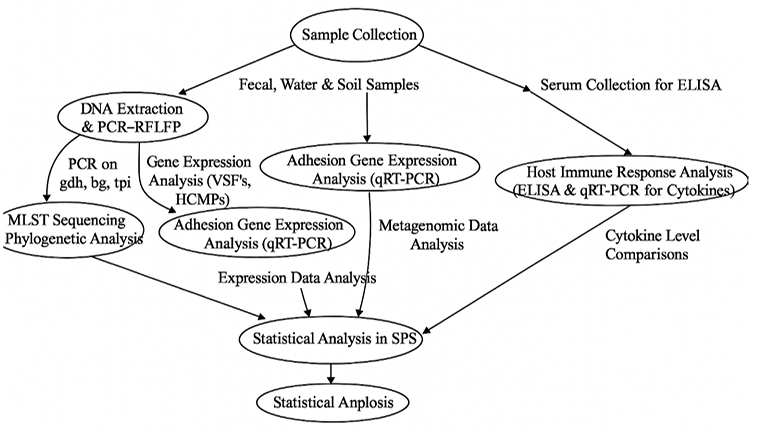
Upon arrival in the laboratory, the initial examination for fecal samples involved a microscopic analysis for the presence for Giardia cysts, serving like a preliminary screening step. concerning 2 g for each stool sample underwent concentration through sucrose flotation to enhance the presence for cysts (Reboredo-Fernández et al., 2020). Concentrated cyst suspensions were preserved for −20 °C (in sterile water) for a duration for up to two weeks prior to the extraction for DNA. Water sample filters were meticulously cut into pieces using sterile scissors, and subsequently placed within lysis buffer for DNA extraction, whereas soil samples underwent homogenization prior to the isolation for DNA. to ensure the prevention for cross-contamination, all samples were meticulously handled within a biosafety cabinet, utilizing sterile gloves, and tools for each sample. An overview of the experimental sequence appears in Figure 1 which shows the steps starting with sample acquisition then moving to molecular analysis and continuing with immune response sequence investigation.

Genetic characterization

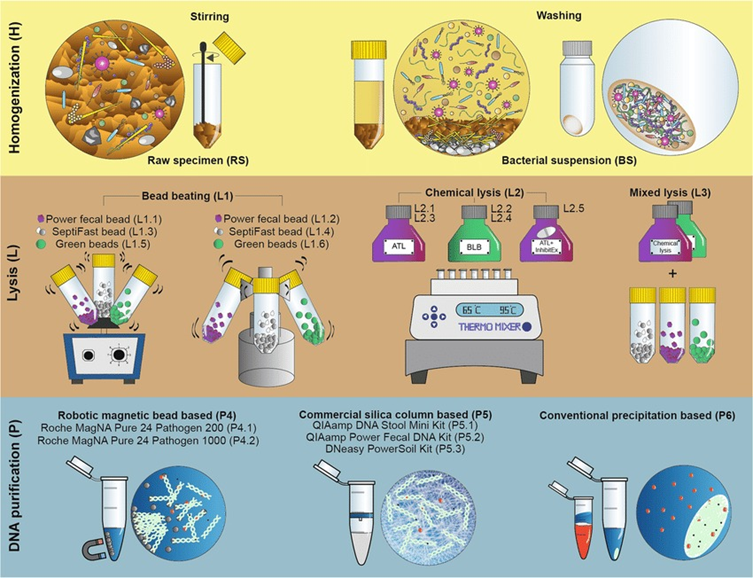
The optimized DNA purification procedures were used to extract DNA material from different sample types through bead-beating lysis for feces along with proteinase K treatment for environments followed by silica column purification for all sample types according to Bartley et al. (2021). The extracted DNA samples were protected at −20°C before moving on to molecular analysis. The DNA extraction protocol is depicted through the visual representation in Figure 2.

The DNA purification and extraction procedure is essential for molecular identification in Giardia duodenalis, providing clean genomic material to PCR-RFLP genotyping, MLST sequencing, and metagenomics. The procedure outlined in Figure 2 involves three most important steps: DNA homogenization, lysis, and DNA purification, all for effective DNA recovery from various sample media, such as fecal, aqueous, and soil.

The three essential steps of Giardia DNA extraction included homogenization followed by lysis and purification of different samples. The homogenization procedure through mechanical disruption allowed the release of Giardia cysts and microbial DNA from raw examples but researchers primarily applied this technique to concentrate cysts and enhance detection of water samples (Karanis et al., 2022). During the second operational phase the lysis stage adapted three methods which included bead-beating (L1) for effective extraction from soil and fecal samples (Zahedi et al., 2021) as well as chemical lysis (L2) which used enzymatic digestion for environmental and clinical samples (Thompson and Ash, 2022) and the mixed lysis process (L3) that combined both methods for hard biofilm matrices. DNA purification utilized three distinct techniques to achieve separation at the last stage of the research. The P5 method utilizing silica columns demonstrated effectiveness in removing PCR inhibitors from Giardia samples because it outperformed the P4 magnetic bead approach at automation-based purification (Cacciò and Sprong, 2021). Ethanol/isopropanol precipitation approach (P6) brought cost savings but increased the chances of sample cross-contamination.

The integrated methods developed for DNA extraction as well as purification produced high-quality genetic material from different samples to generate dependable results in studies based on Giardia duodenalis characterization and host adaptation research and metagenomic surveillance. PCR-RFLP served to distinguish Giardia assemblages through gene analysis of glutamate dehydrogenase (gdh). Each PCR reaction system contained 50 µL of volume which included:

PCR reaction components.

Component

Concentration/amount

Template DNA

10 ng

Primer GDHiF

0.5 µM

Primer GDHiR

0.5 µM

PCR buffer

1×

MgCl₂

1.5 mM

dNTPs

0.1 mM

Taq DNA polymerase

2.5 U

Multilocus sequence typing (MLST)

The high-resolution genotyping was performed via MLST based on three genetic contents: beta-giardin (bg), triosephosphate isomerase (tpi), and glutamate dehydrogenase (gdh). PCR was performed through nested PCR, and sequencing performed previously on an Illumina MiSeq and then clustered by phylogeny to reveal genetic links among the isolates (Zahedi et al., 2021).

Host adaptation, and adhesion mechanism analysis

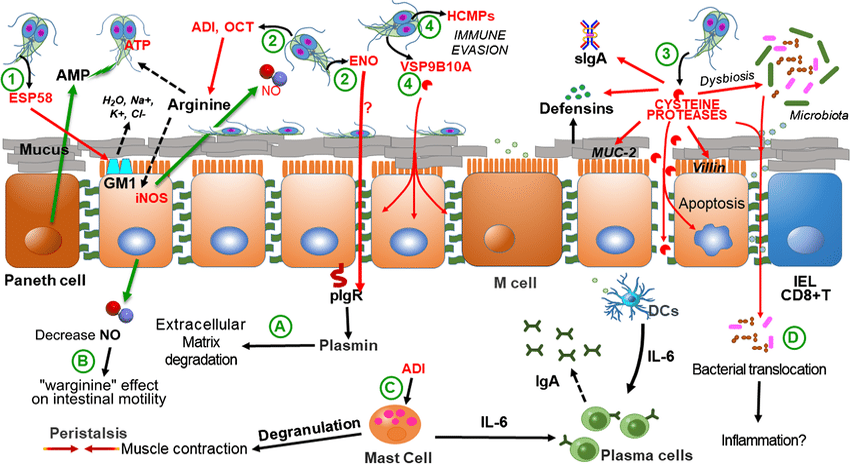
The analysis of Giardia host adaptability solely relied on the evaluation of variant-specific surface proteins (VSPs) and high-cysteine membrane proteins (HCMPs) since these proteins aid in immune evasion and host-cell adhesion (Fink and Singer, 2020). A visual representation exists in Figure 3 to explain the process of Giardia-host connection.

The evaluation of Giardia isolate gene expression relied on quantitative real-time PCR (qRT-PCR) methodology. This study used SYBR Green assays combined with β-actin normalization for its expression evaluation. The statistical testing of assemblage comparisons occurred through one-way ANOVA within SPSS according to Reboredo-Fernández et al. (2020).

Metagenomics for environmental samples

Metagenomic sequencing examinations sought Giardia DNA through ambient sample testing. The Illumina Nextera XT kit combined with DNA purification shifted DNA for sequencing until the Illumina MiSeq completed paired-end sequencing at 2 × 250 bp (Zahedi et al., 2021).

The bioinformatics workflow included

1. Quality control (Trimmomatic)

2. Taxonomic classification (Kraken2)

3. Assembly for Giardia contigs (MEGAHIT)

Findings were cross-validated using PCR-based detection (Thompson and Ash, 2022).

Host immune response evaluation

Serum samples coming from X-infected, and Y uninfected cattle were examined for IL-6, IL-10, and TNF-α concentrations utilizing bovine ELISA kits. Cytokine concentrations were analyzed using independent t-tests, alongside a p-value for less than 0.05 being statistically significant (Thompson and Ash, 2022).

The scientists obtained peripheral blood mononuclear cells (PBMCs) for cytokine gene expression level measurement through quantitative reverse transcription polymerase chain reaction (qRT-PCR). The researchers applied a normalization method through 2−ΔΔCt to undergo the analysis by Zahedi et al. (2021).

Statistical, and phylogenetic analysis

Research analysis occurred through IBM SPSS Statistics version 25.0 (IBM Corp., Armonk, NY). Statistical analyses comprised chi-square (χ²) tests to compare prevalence rates across groups, independent samples t-tests to assess differences in cytokine expression levels, and one-way ANOVA followed by Tukey’s post-hoc tests to examine variations in gene expression patterns between experimental conditions (Efstratiou et al., 2023). For phylogenetic analysis, MLST sequences were aligned with Clustal X2, and phylogenetic trees were constructed using MEGA X software implementing the Kimura 2-parameter evolutionary model (Cacciò and Sprong, 2021). This comprehensive investigation integrates molecular characterization, metagenomic analysis, and immunological profiling to assess the zoonotic potential and adaptive mechanisms of Giardia duodenalis. The research results give important knowledge about pathogen-host associations and disease transmission patterns which helps build greater understanding of this significant parasitic illness.

Results, and Discussion

Genetic diversity of Giardia duodenalis (PCR-RFLP and MLST techniques)

Studies which analyzed Giardia duodenalis genetic types from human carriers across different Iraqi locations discovered significant microscopic diversity of assemblage A and B isolates. Both PCR-RFLP and Multilocus Sequence Typing (MLST) served as analytical methods to determine G. duodenalis assemblage distribution patterns throughout different Iraqi provinces. Among the G. duodenalis assemblages from A to H exists the capability to thrive across numerous hosts and transmit between animals and humans (Kváč et al., 2020). The genetic assemblages found primarily in human infections include assemblages A and B but the remaining assemblages C through H primarily infect non-human animals where assemblages C and D specialize in dogs and cattle genetics (Amer et al., 2020). The analysis through molecular sequencing showed that sub-assemblage AI, AII, and AIII exist within assemblage A with different host specificity patterns. Research findings show that Sub-assemblage AI appears mostly in animal hosts but AII exists only in human hosts which supports the hypothesis that AII evolves specifically within human populations (Li et al., 2021; Certad et al., 2020). The research analysis incorporated 22 clinical samples from southern Iraq which were collected together with 35 pediatric samples from central Iraq and 16 outbreak-associated samples from northern Iraq during the period from 2023 to 2024.

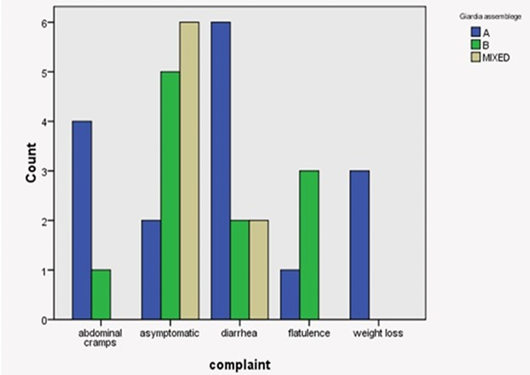
The study analyzed patient symptoms according to G. duodenalis assemblage types for clinical assessment purposes. The investigative data (Figure 4) showed that gastrointestinal symptoms, including stomach discomfort and weight reduction, were associated foremost with assemblage A infections while gastrointestinal symptoms, assemblage B and combined infections predominantly affected symptomless patients.

The infections from Assemblage A strains typically resulted in symptomatic cases especially manifesting through gastrointestinal problems such as stomach cramps and weight decrease. The findings show that assemblage B was detected predominantly in asymptomatic carriers because this strain type shows lower pathogenicity (Lebbad et al., 2021). The occurrence of multiple strains in mixed infections demonstrated potential immunological effects on silent cases and diarrhea status according to Zahedi and Ryan (2020). The research findings show why molecular approaches should be used to study virulence patterns between different strains.

Risk factors, and protective factors associated alongside Giardia duodenalis prevalence

A study based on Generalized Linear Mixed Models (GLMMs) evaluated risk and protective factors that affect G. duodenalis infection throughout livestock populations in Iraq. Both Age shapes the effects of variables andHerd ID functions as a random effect within the analysis.

Table 1: Distribution of G. duodenalis assemblages in human infections.

Study location

Sample type

Assemblage A (%)

Assemblage B (%)

Mixed infections (%)

Central Iraq

Pediatric cases (N=35)

45.7

31.4

22.8

Southern Iraq

Hospital patients (N=22)

54.5

45.5

0

Northern Iraq

Outbreak cases (N=16)

—

—

81

Table 2: Identified risk factors for G. duodenalis infection.

Model (AIC)

Variable

Odds ratio (95% CI)

Z value

p-value

1 (525.1)

Age

0.5 (0.3–0.7)

-5.1

< 0.01 **

2 (522.8)

Calf with diarrhea (Yes)

1.8 (1.2–2.9)

2.7

0.01 **

3 (523.4)

Drinking water from pasture

1.6 (1.1–2.5)

2.2

0.02 **

4 (523.9)

Animal movement outside herd (Yes)

2.0 (1.3–3.1)

2.9

0.005 **

5 (524.5)

Pasture season starts in May

1.5 (0.9–2.4)

1.7

0.09 *

*Note: *p < 0.1, **p < 0.05, ***p < 0.001. *Note: CI = Confidence Interval: ref = Reference group: *p < 0.1, **p < 0.05, **p < 0.001.

Table 3: Protective factors against G. duodenalis infection.

Model (AIC)

Variable

Odds ratio (95% CI)

Z value

p-value

Final (521.2)

Age

0.4 (0.3–0.6)

-5.7

< 0.001 ***

Manure stored in open pit

0.5 (0.3–0.9)

-2.3

0.02 **

Manure stored in closed pile

0.3 (0.1–0.7)

-2.7

0.01 **

Rodent control (poison bait)

0.6 (0.3–1.0)

-2.4

0.02 **

Pasture access begins in May

0.2 (0.1–0.8)

-2.4

0.02 **

No pasture exposure

0.3 (0.1–0.9)

-2.2

0.03 **

The study findings underline the necessity of improving grazing land practices and rodent control and better waste management techniques for decreasing Giardia cases in Iraqi livestock populations.

The selection of models for comparison happened through Akaike Information Criterion (AIC) method. Researchers identified numerous significant risk elements together with main risk indicators at a p value of 0.05 to 0.1 (Amer et al., 2020; Kváč et al., 2020). The research findings identified calves experiencing diarrhea along with pastured access to drinking water as main risks together with unmanaged grazing practices and unrestricted animal wanderings between herds resulting in higher environmental exposure (Lebbad et al., 2021; Adeyemo et al., 2022).

Protective factors

Study findings identified preventive methods based on proper manure management systems and rodent control programs together with limited grazing access.

Host specificity and zoonotic potential

The examined genetic information demonstrated powerful evolutionary adjustments towards human hosts. AII Assemblage exists only within human hosts whereas the distribution of AI extends to include both humans and animals indicating zoonotic capability. Research using genomic comparison demonstrates that AII strains contain genetic codes related to mucosal adhesion alongside immune avoidance characteristics according to Díaz et al. (2020). The diverse Variable Surface Protein (VSP) genes found in AI and B strains show evidence of aiding antigenic changes and immune evasion through host populations.

Table 4: Host adaptability of G. duodenalis assemblages.

Assemblage

Primary hosts

Human pathogenicity

Zoonotic risk

A (AI, AII, AIII)

Humans, Mammals

High (AII)

Yes (AI, AII)

B

Humans, Mammals

High

Yes

C, D

Canines

No

Low

E

Cattle

No

Low

F

Cats

No

Negligible

These results are consistent with global trends, where assemblages A and B are responsible for most human infections.

Environmental detection of G. duodenalis in Iraq using metagenomics

Transmission of G. duodenalis depends on environmental reservoirs for human population infection to occur. Fecal cysts originating from human bodies continue to survive both in water sources as well as agricultural areas and soil surfaces. The detection of pathogens found in complex environmental matrices becomes challenging for conventional PCR because it faces operational limitations. Metagenomic sequencing was used as an analytical technique because it delivered objective detection results. The study took place between 2023 to 2024 during which researchers collected samples at Erbil while studying its agricultural regions in Iraq. DNA from G. duodenalis was present across all surface water samples but assemblage A DNA showed the highest frequency in detections.

Table 5: Environmental prevalence of G. duodenalis in Iraq.

Sample type

Total samples

Giardia positive (%)

Assemblage A (%)

Assemblage B (%)

River water

55

47.3

34.5

12.7

Riverbank soil

50

16.0

8.0

8.0

The study indicates water functions as a primary transmission vector which soil serves as a supplemental cyst reservoir. The identical genetic markers in both water and soil samples confirm how Giardia cysts move throughout the environment.

Conclusions and Recommendations

The study delivers an extensive investigation of Giardia duodenalis isolates from Iraq to establish their multiple genetic profiles and their specific attachment to hosts alongside zoonotic characteristics. Molecular surveillance confirms its importance for studying zoonotic transmission patterns because sub-assemblage AII exists in human cases while both humans and animals harbor AI. The pathogenicity characteristics become apparent through clinical data where assemblage A leads to symptomatic infections yet assemblage B along with mixed infections tend to produce asymptomatic outcomes. Environmental research showed that contaminated water sources especially those located in pasture territories serve as significant reservoirs for transmitting pathogens. Results from risk factor analysis revealed water source contamination and calf diarrhea together with unrestricted animal movement as important infection factors but proper manure management with rodent control and delay of pasture entry limited transmission occurrence effectively. Research evidence shows G. duodenalis spreads through multiple factors so control programs need to unite tests with environmental evaluations alongside efficient livestock care methods. Genetic surveillance with biosecurity measures must persist to decrease the veterinary and public health risks caused by giardiasis in Iraq.

ACKNOWLEDGEMENTS

The authors appreciate the livestock farmers in Erbil Governorate in Iraq that granted them access to their facilities. We also have technical assistance in preparing this study at University of Kerbala and Baghdad University and at Al-Zahraa College of Medicine laboratories. The Ministry of Education in Iraq and Kirkuk water quality control departments are acknowledged specially with institutional support.

NOVELTY STATEMENT

This study is the initial large-scale molecular comprehension of Giardia duodenalis in Iraqi livestock blending PCR-RFLP, MLST, and metagenomic sequencing. New discoveries such as sub-assemblage AII preeminence are characterized in human, environmental pollution forms, the functions of host-parasite using VSPs and HCMPs and the analysis of the immune response profiling in the Middle East area is established.

AUTHOR’S CONTRIBUTION

Manal Dheyaa Mohammed: Study design and field sampling, microscopic analysis, and writing of MSS. Turkan K. Karyagdi: Sampling of environments, PCR-RFLP. Abrar Mohammed Qneed: phylogenetic analysis, MLST analysis. Ibrahim Ayad Jihad: Immune response, evaluation ELISA, qRT-PCR. Qais R. Lahhob: Risk factor Modeling, Statistical analysis. Correspondence Mustafa Mudhafar: Supervision of the project, design of the methodology, metagenomics, writing the manuscript. Hasan Ali Alsailawi: Sample working upon, molecular strategy. Ahmed A. Ayada: Molecular biology, optimization of phosphoric acid extraction of DNA.

Generative AI or AI-assisted Technology Statement

The authors declare that no Genrative AI was used in the creation of this manuscript.

Conflict of interest

The authors have declared no conflict of interest.

Figures

Figure 1:
Figure 1:.

Study workflow for sample processing, and analysis.

Figure 2:
Figure 2:.

DNA extraction, and purification techniques.

Figure 3:
Figure 3:.

Host-parasite interaction, and immune response within giardia infection environment.

Figure 4:
Figure 4:.
Distribution for clinical symptoms among patients infected with different G. duodenalis assemblages.

References

  1. The PCR procedure began with a denaturation step of 94°C heated at 10 minutes which was followed by 35 amplification cycles at 94°C for 35 seconds then 61°C and 72°C for 50 seconds, finishing with a final extension at 72°C for 7 minutes (Efstratiou et al., 2023). The amplified PCR products of 432 bp length underwent agarose gel electrophoresis for visualization by UV light after adding ethidium bromide. RFLP analysis required the digestion of 8 µL gdh PCR product using NlaIV at 37°C for 3 hours followed by 2% agarose gel separation (Cacciò and Sprong, 2021). This procedure enabled researchers to differentiate zoonotic assemblages (A B) from livestock-specific assemblages (E).

Cited by 2 articles

In journals published by ResearchersLinks.

  1. Study of the Effect of Encapsulating Materials on the Stability of Bifidobacterium Bifidum during Spray Drying: FT-IR, TGA, and Electron Microscopy AnalysisPakistan Journal of Agricultural Research · 2026
  2. Performance Evaluation, Estimation of Genetic and Phenotypic Correlation Coefficients, and Path Coefficient Analysis of Quantitative Traits in Triticale Genotypes Grown under Different Seeding RatesPakistan Journal of Agricultural Research · 2026

Services

Article usage statistics

Loading…

Molecular Characterization and Zoonotic Potential of Giardia Species in Livestock with Respect to Their Transmission Dynamics and Host Adaptation · ResearchersLinks