
Mpox virus is a double-stranded DNA virus within the Orthopoxvirus genus and Poxviridae family. The virus causes a zoonotic infection and shuttle between animal and human. The host spectrum of the mpox virus allowed evolutionary adaptation to a newer clade (Clade 1b) which appear to be more pathogenic and transmissible. While similar to smallpox virus, mpox virus was first reported in human during 1970 and since then remained endemic in Africa. First time in 2022, numerous cases were reported in various parts of Africa, as well as in the Northern and Western Hemispheres. Given the wider spread, changing dynamics and host spectrum, we aim to provide critical view of zoonotic nature of mpox virus in human, taxonomical position and signs of illness. Additionally, current research covers various diagnostic techniques for viral detection.
Review · Volume 11, 21 September 2024 · Open Access
Clinical Features, Transmission Dynamics, Pathogenesis, and Diagnostic Approaches of Monkeypox Virus
· · · · ·
Affiliations & Notes ⌄
- 1Department of Zoology, University of Baltistan Skardu, Pakistan
- 2Faculty of Veterinary and Science, University of Agriculture Faisalabad, Pakistan
- 3Department of Medical Lab Technology, Hazara University, Mansehra, Pakistan. *Correspondence | Muhammad Sajid, Faculty of Veterinary and Science, University of Agriculture Faisalabad, Pakistan
- 4Email: msajidkhan663@gmail.com
Article Info ⌄
- Journal:
- Hosts and Viruses
- Published:
- 21 September 2024
From the article
- The mpox virus, once confined to Africa, has now become a global threat to human health due to the emergence of isolated cases in the Western Hemisphere.
- MPOX infection can lead to bronchopneumonia, encephalitis, and pulmonary infections.
- As cases of MPOX are confirmed globally, organizations are focused on understanding how these outbreaks are reemerging across Europe.
- It is essential to investigate potential therapies, comprehend the full spectrum of mpox symptoms, and be aware of the effects of both the viruses and their sign and symptoms.
Selected from the article's own text.
Abstract
Introduction
Mpox is a zoonotic diseases caused by mpox virus (MPXV), which was revealed in 1960 during an outbreak of a smallpox-like disease in macaques. During the period when smallpox surveillance was expanding, the first human case was identified in the Democratic Republic of the Congo in 1970 . Over the next decade, more cases of the mpox virus (MPXV) were identified, with children comprising 83% of cases in the Democratic Republic of the Congo (DRC) and four other countries in Central and West Africa. The first MPXV outbreak outside of Africa was documented in the United States in 2003, linked to an imported exotic pet from Ghana. Individuals exposed to sick prairie dogs reported 71 cases of mpox virus, though no fatalities were observed . The CDC later confirmed the identification of mpox in patients in the USA in 2021 after a group of people visited Nigeria. PCR results from a vesicular swab established the mpox virus diagnosis. In the following months, numerous additional cases were found in over 60 states and seven constituencies, with the highest attentions in Spain, and France .
Features of Mpox epidemics
The virus that causes mpox has split into two distinct clades: West African and Congo Basin also known as Clades 1 and Clades 2. These two MPXV clades are associated with illnesses that exhibit distinct epidemiological and clinical traits. The Congo Basin strain results in a 10% mortality rate, while the death rate in West Africa is about 1%, with a higher risk among individuals co-infected with HIV . Between 1985 and 1991, only thirteen cases of mpox were documented, and none were reported from 1994 to 1996. However, the number of human MPXV infections reported in the DRC increased sharply in 1996, and 92 cases of mpox (MPX) infection were confirmed in 1997. The United States experienced an MPX outbreak in 2003, linked to the introduction of African rodents into the country, marking the first MPX outbreak outside of Africa. Fifty-seven individuals were identified across five states . Sudan reported 10 confirmed cases and 9 suspected cases of MPXV between September 2004 and December 2005 due to an MPX epidemic. In the DRC, mammalian MPX infection was detected again in 2006–2007. Although smallpox vaccination reduces disease risk by 23%, the incidence of the virus increased by 15-20% during the early 1980s .
History of word monkey pox
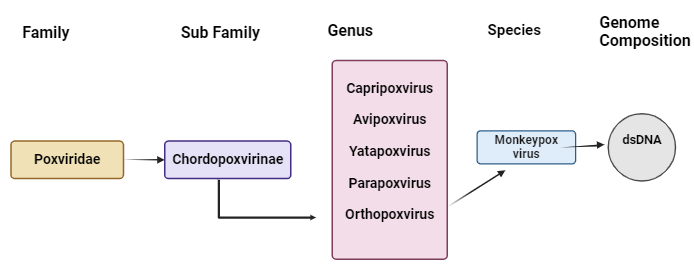
The Poxviridae family includes the Orthopoxvirus genus, responsible for several zoonotic infections, including MPOX. The WHO will now use the new favored nomenclature, MPOXV, in place of mpox . Lemmings, rabbits, and primates are the main hosts of poxviruses, and these animals can sporadically infect humans, increasing the possibility of human-to-human transmission. The two taxonomic groupings within the Poxviridae family are Entomopoxvirinae and Chordopoxvirinae. The subfamily classification is determined by whether the virus infects insects (Entomopoxvirinae) or vertebrates. Unlike other DNA viruses, poxviruses do not rely on cellular proteins in the same way, as they typically replicate and express their genomes in the cytoplasm . Most of the genome encodes genes involved in essential processes like transcription and virus assembly, while some genes at the termini are involved in interactions between the virus and its host. Poxviruses code more than 155 genes; of these, all members of the poxvirus family share 50, and 95 are commonly found within the Chordopoxvirinae subfamily . Furthermore, several vertebrates are hosts to poxvirus genera: Yatapoxvirus, Avipoxvirus, Capripoxvirus, and Parapoxvirus as shown in Figure 1. These viruses share similar antigens for reactivity and the same DNA sequence . Additionally, viruses from other animal species can trigger a pandemic when they mix with the mpox virus, the most common of these viruses in humans. Another zoonotic illness affecting many animals is bovine pox. It has a strong link to livestock exposure in humans, varies in prevalence and severity, and takes several weeks to develop. However, these viruses possess broad genetic capabilities, explaining their ability to evade the immune system .
Mode of transmission
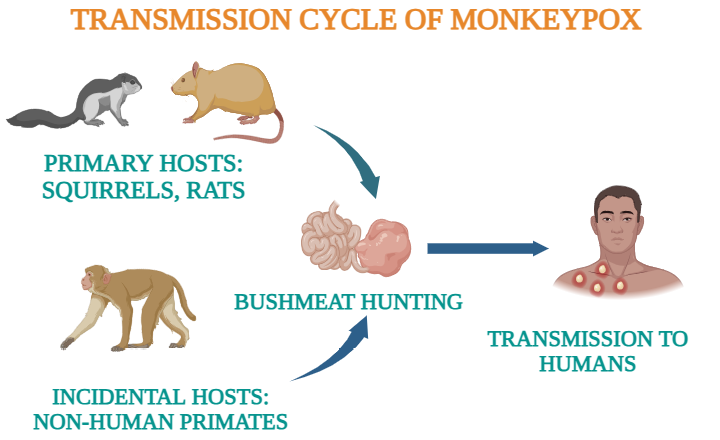
In 2003, human mpox outbreaks began in the US, triggered by the importation of rats from Ghana, marketed as exotic pets. It is believed that prairie dogs, also being sold as pets nearby, were infected by these rodents and contracted the disease. The mpox virus can spread through various methods, all requiring close contact with an infected person or animal as shown in Figure 2 . Direct animal interaction has been linked to human infection. However, research is ongoing to determine whether eating bush meat from common species or rodent infiltrations are the ways in which the virus spreads. Humans contract the mpox virus through direct contact with animals, particularly via bodily fluids like saliva and respiratory fluids, which can arise from mucous and cutaneous exudates . Viral shedding via feces may pose an additional risk of exposure. In endemic areas of South Africa, exposure to animal excrement can be a major risk factor due to a lack of resources and infrastructure. Furthermore, many individuals sleep outdoors, on the ground, or travel to or reside near forests where the number of sick animals is noticeably higher. There is often no option but to hunt in areas with limited resources and necessities, such as food, increasing the risk of contracting mpox . Zoonotic transmission is more frequent than direct transmission from one human to the other; respiratory droplets, face to face contact, and contact with lesions are the means of transmission. The transmission rate within the population is increased by contact with contaminated areas, including handling contaminated objects and sharing living, eating, and drinking utensils with an infected person . The current pandemic has resulted in a higher prevalence of the mpox virus in males than in females due to potential transmission among men who have sex with men. In 2022, genital lesions were the principal symptom of a widespread Mpox epidemic affecting multiple countries, notably in the MSM population. Among a cohort of 600 reported Mpox cases in France in 2022, the MSM population accounted for 99% of cases. The lesions primarily affected the genital and perianal regions . Inguinal lymphadenopathy was a prevalent feature and a primary source of infection in the study. Germany documented 1,300-1,400 confirmed cases in 2022, mostly among MSM. Based on a few confirmed cases from Nigeria, the findings suggest that intercourse contributes to the spread of mpox .
Pathogenesis and morphology of Mpox
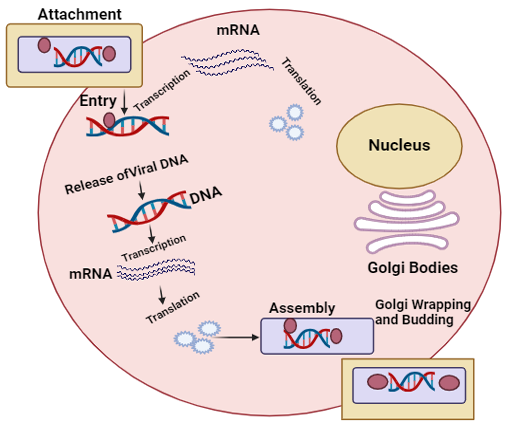
The mature structure of the poxvirus is characterized by an idiosyncratic dumbbell-shaped nucleoprotein core, which contains a dsDNA genome. The virus genome consists of approximately 200 non-overlapping open reading frames (ORFs) and hairpin termini. Replication and morphogenesis of the virion require at least ninety ORFs . A significant number of non-essential ORFs contribute to variations in host tropism, immunomodulation, and pathogenesis, with many of these ORFs yet to be functionally classified. The virus’s pathogenesis and physiology begin with the spread of the virus, which occurs when an animal and a human come into close contact. The nasal mucosa of the host serves as the entry point for smallpox and mpox . After entering the lungs through the injection site, the virus starts to replicate there. During primary viremia, viruses spread to nearby lymph nodes. This process represents the 1-2 week incubation period . The most likely factors influencing mpox virion attachment are extracellular matrix components, intracellular glycosaminoglycan on the surface of the target cell, and external virion proteins. For mature intracellular viruses and coated external viruses to fuse with the cell, the release of the viral core into the cytoplasm occurs when poxvirus strains enter host cells through a low-pH endosomal pathway or fuse with their plasma membranes at neutral pH . When a virus enters the body, its prepared multi-subunit DNA-dependent RNA polymerase enzyme starts the process of transcription. This causes host ribosomes to translate early, intermediary, and late peptides. In poxvirus the synthesis of DNA proceeds in cytoplasmic components known as manufacturing facilities, that develop gradually from crescent-like shapes where the formation of virion proceeds to dense DNA-containing structures wrapped in membranes generated from the Endoplasmic Reticulum . These encased virions can either exodus the cell through the fusion of the intracellular membrane, becoming extracellular wrapped virions, shown in Figure 3 .
Symptoms
In nonhuman monkeys, MPV typically causes a transient rash. The initial clinical signs include plaques and 2-5 mm dermal papules that evolve into blisters and eventually crust over. A characteristic lesion is marked by epidermal hyperplasia surrounding a necrotic, depressed center . Although lesions can develop anywhere on the body, the extremities and face are most frequently affected by these pustules . After immunization, MPV-induced disease was observed in several rodents, including squirrels and prairie dogs. Each of these cases presents with varying clinical signs, including high fever, nasal discharge, lung involvement, and the development of oral ulcers as shown in Figure 4 . It has been reported that MSM account for most infections in the current pandemic, often presenting with genital sores. The disease may have originated through sexual intercourse, as the rash frequently affects the perineum and genital area. Mpox is often mistaken for other STIs, such as herpes simplex infection . Traditional smallpox, which has a high mortality rate, is characterized by typical and altered clinical features, including variola sine eruptione, hemorrhagic forms, and flat-type lesions. Both the flat form, where pustules remain flat, and the hemorrhagic form, which causes extensive bleeding in the skin and mucous membranes, were commonly fatal. Very little is known about the physiology of these highly pathogenic smallpox. The Smallpox virus infections in nonhuman primates have been cultured using cynomolgus monkeys .
Diagnostic test
For serological testing, the ELISA can detect specific IgG and IgM in the serum of individuals diseased with mpox after five and eight days of infection, correspondingly . Both the acute and chronic phases of mpox viral infection can be identified by a four-fold rise in blood antibodies . Therefore, this technique widely used in epidemiologic studies is ineffective at distinguishing mpox virions. Similarly, because virions cannot be morphologically differentiated, identification using an electron microscope is not entirely reliable . Mpox is genetically detected using real-time polymerase chain reaction. To detect MPXV DNA the following techniques have been employed; restriction fragment length polymorphism, loop mediated isothermal amplification and recombinase polymerase amplification .
Treatment
Smallpox vaccinations are highly active against MPOX, reducing the brutality of symptoms, according to research. These vaccines fall into three categories. In the U.S. Strategic National Stockpile, licensed smallpox vaccines include ACAM2000 and JYNNEOSTM . Additionally, Aventis Pasteur’s smallpox vaccine is being considered as a potential novel treatment. JYNNEOSTM, a live attenuated, non-replicating orthopoxvirus vaccine, was approved by the FDA in 2019. It results from a modified virus (Ankara Bavarian Nordic) and is currently used to treat both smallpox and mpox . Research indicates that smallpox vaccination is 85% effective in preventing mpox. The vaccine IMVANEX is approved in Europe and has been used off-label in the UK to treat mpox cases. ACAM2000® contains a live virus . In 2017, the Food and Drug Authority accepted it as a replacement for the Orthopoxvirus vaccine Dry vax, which had been withdrawn by its manufacturer . The CDC has recommended a rapid approach using ACAM2000® for non-variola orthopoxvirus infections during the pandemic. Neutralizing antibodies appear to play a crucial role in the immune response underlying the cross-protection provided by vaccinia virus immunization . Vaccination with a human smallpox vaccine, which cross-protects against mpox, is consistent with this vaccine’s effectiveness .
Vaccine
In 1996, the Food and Drug Administration first approved cidofovir for treating patients with attained immune insufficiency syndrome and preventing cytomegalovirus-related ocular disorders . Cidofovir, which is particularly effective against adenovirus and herpes, has a broad antiviral spectrum. Regarding its application to orthopoxvirus infections, cidofovir was administered to treat a 28-month-old boy with chronic atopic skin disease, which he developed after contact with his father, who had severe eczema . The treatment was successful, and the child experienced no lasting effects. Chan-Tack et al. (2021) previously, it had been used in patients with adenovirus, and cytomegalovirus infections. Brincidofovir was administered alongside other treatments to a smallpox-vaccinated individual who later developed leukemia. This patient underwent chemotherapy, progressive inoculation, and a treatment regimen that included six doses of brincidofovir . A 2022 report detailed the identification and management of seven mpox cases in the UK. In this retrospective analysis, three patients treated with cidofovir all showed high hepatic enzymes, a communal adverse effect that ultimately commanded to the termination of the treatment . In 2019, the FDA approved tecovirimat as a treatment for smallpox, and in 2022, the European Medicines Agency accepted its use for treating cowpox. Tecovirimat has been used in multiple cases to treat ocular infections caused by cowpox and as part of a multi-drug treatment program. Additionally, a research laboratory employee infected with the virus received tecovirimat as part of their treatment .
Conclusions and Recommendations
The mpox virus, once confined to Africa, has now become a global threat to human health due to the emergence of isolated cases in the Western Hemisphere. Social distancing and contact tracing are crucial, as respiratory droplets and direct contact with mucocutaneous sores are the primary means of person-to-person transmission. Cases of MPX have been reported in young children. This is attributed to the waning immunity from the smallpox vaccine in older individuals and those under 45 who are unvaccinated in many countries, particularly in Europe. It replicates in the cytoplasm, goes into the primary viremia, and spreads and infects the adjacent lymph nodes. MPOX infection can lead to bronchopneumonia, encephalitis, and pulmonary infections. Corneal scarring, which can cause vision loss, is the most concerning condition. Providing necessary supportive care is crucial to minimizing the risk of these complications. It is therefore advisable to use supportive therapies where the rash is densest, this could be in the form of moist occlusive raunges. As cases of MPOX are confirmed globally, organizations are focused on understanding how these outbreaks are reemerging across Europe. It is essential to investigate potential therapies, comprehend the full spectrum of mpox symptoms, and be aware of the effects of both the viruses and their sign and symptoms.
Acknowledgement
We would like to express our sincere gratitude to all the researchers and healthcare professionals whose work contributed to the understanding of monkeypox virus. Their efforts in studying the clinical features, transmission dynamics, pathogenesis, and diagnostic approaches have been invaluable in advancing the field. We also appreciate the support and guidance of our colleagues and mentors throughout the preparation of this review. Finally, we thank the journal’s editorial team and reviewers for their constructive feedback, which helped improve the quality of this manuscript.
Novelty Statement
This review paper provides a comprehensive and up-to-date synthesis of the latest insights into the clinical features, transmission dynamics, pathogenesis, and diagnostic approaches of the monkeypox virus. While previous literature has primarily focused on individual aspects of the virus, this paper uniquely integrates these key areas to offer a holistic understanding of monkeypox. Furthermore, it highlights recent advances in diagnostic technologies and elucidates emerging trends in transmission dynamics, offering valuable perspectives for improving public health strategies and clinical management. This integrative approach positions the review as a timely resource in response to the recent resurgence of monkeypox cases globally.
Author’s Contribution
Yawar Abbas and Muhammad Sajid: Conceptualized and wrote the manuscript.
Musharraf Hussain, Shahida Batool: Data collection and Revision.
Saeed Ur Rehman, Jamil Ahmad: Investigation and software.
Conflict of interest
The authors have declared no conflict of interest.
Figures
Taxonomy of Mpox virus.
Transmission of MPXV.
Pathogenesis of Mpox virus.
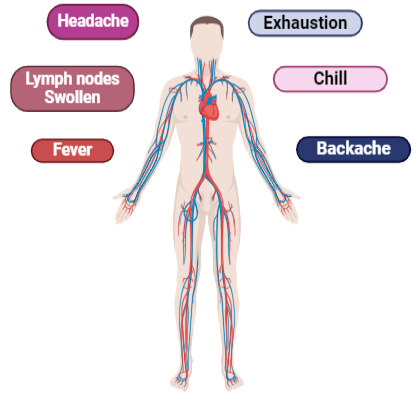
Symptoms of MPXV.
References
- Alakunle, E., Moens, U., Nchinda, G. and Okeke, M.I., 2020. Monkeypox virus in Nigeria: Infection biology, epidemiology, and evolution. Viruses, 12(11): 1257. https://doi.org/10.3390/v12111257[CrossRef]
- Alcamí, A., 2023. Pathogenesis of the circulating mpox virus and its adaptation to humans. Proc. Natl. Acad. Sci., 120(13): e2301662120. https://doi.org/10.1073/pnas.2301662120[CrossRef]
- Altindis, M., Puca, E. and Shapo, L., 2022. Diagnosis of monkeypox virus. An overview. Travel Med. Infect. Dis., 50: 102459. https://doi.org/10.1016/j.tmaid.2022.102459[CrossRef]
- Alvarez-Cardona, J.J., Whited, L.K. and Chemaly, R.F., 2020. Brincidofovir: Understanding its unique profile and potential role against adenovirus and other viral infections. Future Microbiol., 15(6): 389-400. https://doi.org/10.2217/fmb-2019-0288[CrossRef]
- Anwar, F., Haider, F., Khan, S., Ahmad, I., Ahmed, N., Imran, M. and Ji, X.Y., 2023. Clinical manifestation, transmission, pathogenesis, and diagnosis of monkeypox virus: A comprehensive review. Life, 13(2): 522. https://doi.org/10.3390/life13020522[CrossRef]
- Beeson, A.M., Haston, J., McCormick, D.W., Reynolds, M., Chatham-Stephens, K., McCollum, A.M., and Godfred-Cato, S., 2023. Mpox in children and adolescents: epidemiology, clinical features, diagnosis, and management. Pediatrics, 151(2): e2022060179. https://doi.org/10.1542/peds.2022-060179[CrossRef]
- Besombes, C., Mbrenga, F., Schaeffer, L., Malaka, C., Gonofio, E., Landier, J. and Dankpea, J.N., 2022. National monkeypox surveillance, central African Republic, 2001–2021. Emerg. Infect. Dis., 28(12): 2435. https://doi.org/10.3201/eid2812.220897[CrossRef]
- Butic, A.B., Katz, Z.E., Jin, G., Fukushima, K., Hazama, M., Lukacher, A.E. and Lauver, M.D., 2024. Brincidofovir inhibits polyomavirus infection in vivo. Mbio, e01049-01024. https://doi.org/10.1128/mbio.01049-24[CrossRef]
- Candela, C., Raccagni, A.R., Bruzzesi, E., Bertoni, C., Rizzo, A., Gagliardi, G. and Gismondo, M.R., 2023. Human monkeypox experience in a tertiary level hospital in Milan, Italy, between May and October 2022: Epidemiological features and clinical characteristics. Viruses, 15(3): 667. https://doi.org/10.3390/v15030667[CrossRef]
- Chakravarty, N., Hemani, D., Paravastu, R., Ahmad, Z., Palani, S.N., Arumugaswami, V. and Kumar, A., 2024. Mpox virus and its ocular surface manifestations. The ocular surface. https://doi.org/10.1016/j.jtos.2024.07.001[CrossRef]
- Chan-Tack, K., Harrington, P., Bensman, T., Choi, S.Y., Donaldson, E., O’Rear, J. and Ghantous, H., 2021. Benefit-risk assessment for brincidofovir for the treatment of smallpox: US food and drug administration’s evaluation. Antiviral Res., 195: 105182. https://doi.org/10.1016/j.antiviral.2021.105182[CrossRef]
- Farahat, R.A., Sah, R., El-Sakka, A.A., Benmelouka, A.Y., Kundu, M., Labieb, F. and Bonilla-Aldana, D.K., 2022. Human monkeypox disease (MPX). Le infezioni in Medicina, 30(3): 372. https://doi.org/10.53854/liim-3003-6[CrossRef]
- Forni, D., Molteni, C., Cagliani, R. and Sironi, M., 2023. Geographic structuring and divergence time frame of monkeypox virus in the endemic region. J. Infect. Dis., 227(6): 742-751. https://doi.org/10.1093/infdis/jiac298[CrossRef]
- Ghaseminia, M., 2023. Preventing monkeypox outbreaks: Focus on diagnosis, care, treatment, and vaccination. J. Clin. Transl. Sci., 7(1): e60. https://doi.org/10.1017/cts.2023.11[CrossRef]
- Gomez-Lucia, E., 2022. Monkeypox: Some keys to understand this emerging disease. Animals, 12(17): 2190. https://doi.org/10.3390/ani12172190[CrossRef]
- Guo, L., Song, R., Zhang, Q., Li, D., Chen, L., Fang, M. and Gao, R., 2024. Profiling of viral load, antibody and inflammatory response of people with monkeypox during hospitalization: A prospective longitudinal cohort study in China. EBioMedicine, 106. https://doi.org/10.1016/j.ebiom.2024.105254[CrossRef]
- Hazra, A., Zucker, J., Bell, E., Flores, J., Gordon, L., Mitjà, O. and Nozza, S., 2024. Mpox in people with past infection or a complete vaccination course: A global case series. Lancet Infect. Dis., 24(1): 57-64. https://doi.org/10.2139/ssrn.4491622[CrossRef]
- Joshi, L.R. and Diel, D.G., 2021. Poxvirus vectors. Viral vectors in veterinary vaccine development: A textbook, pp. 71-94. https://doi.org/10.1007/978-3-030-51927-8_6[CrossRef]
- Karmarkar, E.N., Golden, M.R., Kerani, R.P., Pogosjans, S., Chow, E.J., Bender Ignacio, R.A. and Dombrowski, J.C., 2024. Association of tecovirimat therapy with mpox symptom improvement: A cross-sectional study, King County, Washington, May–October 2022. https://doi.org/10.1093/ofid/ofae029[CrossRef]
- Kulshrestha, S., Rastogi, A. and Goel, A., 2022. Monkeypox virus: Lessons learnt. J. Pure Appl. Microbiol., 16(suppl 1): 3072-3082. https://doi.org/10.22207/JPAM.16.SPL1.17[CrossRef]
- Lansiaux, E., Jain, N., Laivacuma, S. and Reinis, A., 2022. The virology of human monkeypox virus (hMPXV): A brief overview. Virus Res., 322: 198932. https://doi.org/10.1016/j.virusres.2022.198932[CrossRef]
- Liu, Q., Fu, L., Wang, B., Sun, Y., Wu, X., Peng, X. and Vermund, S.H., 2023. Clinical characteristics of human Mpox (monkeypox) in 2022: A systematic review and meta-analysis. Pathogens, 12(1): 146. https://doi.org/10.3390/pathogens12010146[CrossRef]
- Lucena-Neto, F.D., Falcão, L.F.M., Vieira-Junior, A.S., Moraes, E.C.S., David, J.P.F., Silva, C.C. and Quaresma, J.A.S., 2023. Monkeypox virus immune evasion and eye manifestation: Beyond eyelid implications. Viruses, 15(12): 2301. https://doi.org/10.3390/v15122301[CrossRef]
- Nakhaie, M., Arefinia, N., Charostad, J., Bashash, D., Haji Abdolvahab, M. and Zarei, M., 2023. Monkeypox virus diagnosis and laboratory testing. Rev. Med. Virol., 33(1): e2404. https://doi.org/10.1002/rmv.2404[CrossRef]
- Nakhriry, M.A., 2023. Evaluating monkeypox transmission dynamics: Implications for public health interventions. Eigenpub Rev. Sci. Technol., 7(1): 71-84.
- Ogoina, D., Damon, I. and Nakoune, E., 2023. Clinical review of human mpox. Clin. Microbiol. Infect., https://doi.org/10.1016/j.cmi.2023.09.004[CrossRef]
- Organization, W.H., 2021. WHO advisory committee on variola virus research: Report of the twenty-second meeting, Geneva, 4-5 November 2020.
- Parvin, R., Ali, A., Nagy, A., Zhu, Z., Zhao, S., Paul, A.K. and Shehata, A.A., 2022. Monkeypox virus: A comprehensive review of taxonomy, evolution, epidemiology, diagnosis, prevention, and control regiments so far. Ger. J. Microbiol., 2: 1-15. https://doi.org/10.51585/gjm.2022.2.0014[CrossRef]
- Poland, G.A., Kennedy, R.B. and Tosh, P.K., 2022. Prevention of monkeypox with vaccines: A rapid review. Lancet Infect. Dis., 22(12): e349-e358. https://doi.org/10.1016/S1473-3099(22)00574-6[CrossRef]
- Pourkarim, F. and Entezari-Maleki, T., 2024. Clinical considerations on monkeypox antiviral medications: An overview. Pharmacol. Res. Perspect., 12(1): e01164. https://doi.org/10.1002/prp2.1164[CrossRef]
- Prasad, S., Casas, C.G., Strahan, A.G., Fuller, L.C., Peebles, K., Carugno, A. and McMahon, D.E., 2023. A dermatologic assessment of 101 mpox (monkeypox) cases from 13 countries during the 2022 outbreak: Skin lesion morphology, clinical course, and scarring. Journal of the American Acad. Dermatol., 88(5): 1066-1073. https://doi.org/10.1016/j.jaad.2022.12.035[CrossRef]
- Rao, A.K., 2023. Interim clinical treatment considerations for severe manifestations of mpox—United States, February 2023. MMWR. Morbidity and Mortality Weekly Report, pp. 72. https://doi.org/10.15585/mmwr.mm7209a4[CrossRef]
- Rizk, J.G., Lippi, G., Henry, B.M., Forthal, D.N. and Rizk, Y., 2022. Prevention and treatment of monkeypox. Drugs, 82(9): 957-963. https://doi.org/10.1007/s40265-022-01742-y[CrossRef]
- Saalbach, K.P., 2024. Treatment and Vaccination for Smallpox and Monkeypox. Poxviruses, pp. 301-316. https://doi.org/10.1007/978-3-031-57165-7_19[CrossRef]
- Saghazadeh, A. and Rezaei, N., 2023. Insights on Mpox virus infection immunopathogenesis. Rev. Med. Virol., 33(2): e2426. https://doi.org/10.1002/rmv.2426[CrossRef]
- Sasidharanpillai, S., 2022. Monkeypox: An update. J. Skin Sex. Trans. Dis., 4(2): 149. https://doi.org/10.25259/JSSTD_46_2022[CrossRef]
- Schwartz, D.A., Ha, S., Dashraath, P., Baud, D., Pittman, P.R. and Adams W.K.M., 2023. Mpox virus in pregnancy, the placenta, and newborn: An emerging poxvirus with similarities to smallpox and other orthopoxvirus agents causing maternal and fetal disease. Arch. Pathol. Lab. Med., 147(7): 746-757. https://doi.org/10.5858/arpa.2022-0520-SA[CrossRef]
- Shchelkunova, G.A. and Shchelkunov, S.N., 2022. Smallpox, monkeypox and other human orthopoxvirus infections. Viruses, 15(1): 103. https://doi.org/10.3390/v15010103[CrossRef]
- Siami, H., Asghari, A. nd Parsamanesh, N., 2023. Monkeypox: Virology, laboratory diagnosis and therapeutic approach. J. Gene Med., 25(9): e3521. https://doi.org/10.1002/jgm.3521[CrossRef]
- Simadibrata, D.M., Lesmana, E., Pratama, M.I.A., Annisa, N.G., Thenedi, K. and Simadibrata, M., 2023. Gastrointestinal symptoms of monkeypox infection: A systematic review and meta-analysis. J. Medi. Virol., 95(4): e28709. https://doi.org/10.1002/jmv.28709[CrossRef]
- Taha, T.Y., Townsend, M.B., Pohl, J., Karem, K.L., Damon, I.K., Mbala, K.P. and Huggins, J.W., 2023. Design and optimization of a monkeypox virus specific serological assay. Pathogens, 12(3): 396. https://doi.org/10.3390/pathogens12030396[CrossRef]
- Villa, T.G., Abril, A.G., Sánchez, S., de Miguel, T. and Sánchez-Pérez, A., 2021. Animal and human RNA viruses: Genetic variability and ability to overcome vaccines. Arch. Microbiol., 203: 443-464. https://doi.org/10.1007/s00203-020-02040-5[CrossRef]
- Yu, Z., Zhang, W., Fu, H., Zou, X., Zhao, M., Liang, S. and Xiao, Q., 2021. Genomic analysis of poxviridae and exploring qualified gene sequences for phylogenetics. Comput. Struct. Biotechnol. J., 19: 5479-5486. https://doi.org/10.1016/j.csbj.2021.09.031[CrossRef]
Services
Article usage statistics
Loading…