
The purpose of this study is to investigate the feasibility of using waste rubber tyres (WRT) in conjunction with rice straw (RH) and sugarcane bagasse (SCB) for microwave-assisted co-pyrolysis to recover char and oil. While co-pyrolysing SCB:WRT and RH:WRT blends, the study carefully investigated the impacts of temperature profiles and average heating rates. In addition to comparing and contrasting products, it delves into how char, oil, and gas yields change when subjected to varying feedstock blends and catalysts. Both the KOH and NaOH catalysts improved the oil and char yields at a SCB: WRT ratio of 2.5:17.5. With a 1:1 RH: WRT ratio, the char yield was raised by more than 34% with KOH and NaOH, while the gas output was increased by 42.66% with CaO. While NaOH retained a larger percentage of oxygenated chemicals, KOH was better at deoxygenating and aromatising liquid products to improve their quality; conversely, CaO promoted gasification. The SCB: WRT combination increased oil yield by 37.72%, which is somewhat less than the RH: WRT combination’s 37.05%; thus, the analysis concludes that SCB: WRT is the optimal mix for increasing total product production. In addition, KOH facilitated the production of hydrocarbon-rich oil with a lower oxygen concentration and a more fragrant char structure. According to XRD examination, the char matrix contained highly crystalline potassium and sodium salts as a result of a reaction between silica in rice husk ash and alkali catalysts (KOH and NaOH). The results show that catalyst selection is the most important factor in controlling the distribution of renewable energy products produced by microwave-assisted co-pyrolysis, which is a strong and highly adjustable method for processing complex waste streams.
Research Article · Volume 01, Issue 2, 15 September 2026 · Open Access
Microwave Co-Pyrolysis of Agro–Waste and Tire Rubber: Char and Oil Characterisation
· · · · · ·
Affiliations & Notes ⌄
- 1Department of Chemical Engineering, College of Engineering (A), Andhra University, Visakhapatnam, Andhra Pradesh, India
- 2Department of Computer Engineering, Al-Farabi University, Baghdad 10022, Iraq. *Correspondence | Almuntadher Alwhelat, Department of Computer Engineering, Al-Farabi University, Baghdad 10022, Iraq
- 3Email: almuntadher.mahmood@alfarabiuc.edu.iq
Article Info ⌄
- Journal:
- Smart Technologies in Science and Engineering
- Published:
- 15 September 2026
From the article
- The present study demonstrates that microwave-assisted catalytic and non-catalytic co-pyrolysis is an effective valorisation route for converting agricultural wastes, rice husk (RH) and sugarcane bagasse (SCB) with waste rubber tyres (WRT) into valuable products such as liquid oil, char, and combustible gases.
- At an SCB:WRT ratio of 2.5:17.5, both KOH and NaOH catalysts enhanced char and oil yields.
- A slightly higher oil yield (37.72%) was obtained with SCB:WRT compared to RH:WRT (37.05%), indicating SCB:WRT as the more effective blend.
- These findings establish SCB:WRT as the optimal feedstock blend for improved bio-oil production.
Selected from the article's own text.
Abstract
Introduction
The effective management of agro-industrial waste plays a pivotal role in mitigating various forms of pollution. Sustainable treatment is necessary for sugarcane bagasse (SCB), a large biomass waste product of the sugar industry following cane juice extraction . Wet sugarcane bagasse is used as fuel in some sugar mills, but most of the time it’s piled up and burnt on-site, creating a highly combustible biomass that is harmful to both the industry and the environment . The energy potential of biomass is significant in a variety of agricultural and forestry waste products, including straw, bagasse, coffee husks, rice husks, wood chips, sawdust, and bark ; ; .
Out of the 500 Mt of crop residues produced annually, 60 Mt is generated in Uttar Pradesh, 51 Mt in Punjab, and 46 Mt in Maharashtra, according to the National Policy for Management of Agricultural Residues. Of this, about 92 Mt are burnt in the open fields. The two staple grains that produce the most excess produce are wheat and rice ; ; . The Ministry of New and Renewable Energy (MNRE) reported that India’s installed biomass power capacity was 10,205.6 MW as of October 2022. The capacity to generate electricity from biomass in India is over 18,000 MW. The government has pushed industries to meet their energy needs by adopting biomass wastes through its laws .
After biomass devolatilisation, scientists have found that turning agricultural waste into biochar is an efficient way to harness energy; thus, they’ve set out to solve this problem. The conversion of biomass into charcoal, biogas, and added-value biofuel products is a topic of scholarly interest. To counteract stubble burning in agricultural areas, one key waste-management technique is the thermochemical conversion of crop wastes into biochar . In India, the potential production of biochar from 517.82 MT of agricultural residues could reach 212.04 ± 44.27 million metric tonnes, resulting in a market value of $500 billion. An effective technique being used to achieve a circular economy is the valorisation of crop leftovers for possible uses such as organic manure, compost, biochar amendment in soil, and renewable solid fuel ; . To avoid polluting the environment, the present method of managing rice husks involves either mass burning or direct disposal into soil. Therefore, it is necessary to transform rice husks into byproducts with additional value.
Conversely, WRT is a waste product that originates from fossil fuels. According to Ahmed et al. (2018), the global production of tyres is approximately 1.5 billion units per year ; . Unfortunately, WRT is also utilised for direct combustion heat generation, which has a greater effect on air quality despite the tiny increase in energy gained ; Martínez et al., 2015). Due to their petrochemical nature, the hydrocarbon solids (char), liquids, and gases that are formed during the subsequent breakdown of polymers are considered fuel grade ; ; ; .
Biomass and tyre debris can be transformed into useful bioproducts through thermochemical and biochemical conversion ; . Microwave pyrolysis has recently attracted researchers’ attention due to its potential to outperform traditional pyrolysis methods in heating efficiency and the quality of the fuel and chemical compounds produced. Microwaves accelerate and uniformise the pyrolysis process. Because it is more efficient, requires less energy, and can be controlled more precisely, microwave heating has surpassed traditional heating methods . It is possible to produce less complex chemicals by heating long-chain polymer molecules and using a catalyst. Pyrolysis and co-pyrolysis procedures that use microwave heating systems can boost product yield, enhance product quality, and shorten reaction times. By manipulating the pyrolysis processes with microwaves, product distribution and yield can be improved. The fast and effective heating capability of microwave-assisted pyrolysis makes its commercialisation feasible. By providing a more environmentally friendly and cost-effective alternative, this technology has the potential to revolutionise pyrolytic heating; increased automation and safety are a few further benefits of microwave processing . The oil that results from pyrolysing lignocellulosic biomass is acidic, has a low calorific value, and contains a lot of moisture, which makes it unstable in both heat and storage. Crucially, a large need for hydrogen develops due to the oil’s high oxygen concentration. By encouraging synergistic interactions between the intermediates generated from the two feedstocks,co-pyrolysing biomass with hydrogen-rich polymers is one way to improve oil quality. The high carbon content and heating potential of scrap tyres make them an ideal candidate for co-pyrolysis .
The possibility of catalytic co-pyrolysis and co-pyrolysis to increase the yield and quality of pyrolysis oil has recently attracted a lot of interest. Several studies have found that catalytic co-pyrolysis improves the oil’s characteristics and yield, which could be due to the synergistic effects of two materials used in the pyrolysis process ; . Waste tyres and biomass pyrolysis byproducts have radical interactions, which are associated with the upgrading process. Also, the new bio-oils are more stable since the number of aldehydes and phenolic chemicals is greatly reduced when waste tyres are added to the feedstock mix ; ; , b; ; . Using a fixed-bed reactor, Ahmed et al. (2018) investigated the co-pyrolysis of sugarcane bagasse (SCB) and tyre waste (WRT) . Results showed that pyrolysis oil yield was 49.7 weight percent when using an optimised ratio of WRT to SCB of 1:3, compared to 42.1 weight percent when using SCB as a single feedstock. The calorific value of the oil reached 41.0 MJ kg-1 (WRT/SCB; 1:3), a considerable increase from 19.1 MJ kg-1 (SCB). The purpose of this research was to examine the effects of catalytic co-pyrolysis of SCB and RH with WRT on liquid and char yields, in terms of both quality and quantity. This study is anticipated to contribute significantly to the current body of knowledge regarding the synergistic effects of co-pyrolysis, which are contingent upon the composition and combination of the feedstock. Up until now, no research has examined the production of oil and char through catalytic co-pyrolysis of this particular feedstock combination, so it is important to fill this gap.
Materials and Methods
Materials
In this study, the rice husk feedstock was sourced from a nearby mill in the Indian city of Visakhapatnam, in the state of Andhra Pradesh. A nearby sugarcane processing company supplied the sugarcane bagasse, which is a byproduct of sugarcane juice extraction.Carbon-rich polymeric waste was obtained from a local tyre recycling facility. Industrial-grade graphite powder (Fe 98.5% pure, ~50 μm), procured from Sisco Research Laboratories Pvt. Ltd., India, and was used as a susceptor. The borosilicate flask was protected by a ceramic wool thermal insulation muffle with a shallow cylindrical shape. A sturdy base for the reactor was constructed by wrapping the insulation muffle with Teflon® tape. Additionally, the joints of the condensation, thermocouple, and oil collection system were sealed using Teflon® tape.
Materials and Methods
A modified microwave oven was used to conduct pyrolysis tests. The top side of the microwave oven cavity was machine drilled to provide a circular opening. To hold the mixture of feedstock and susceptor, a 500 mL borosilicate flask was utilised. This was accomplished using a K-type thermocouple. To track the feedstock temperature during the pyrolysis process, this sturdy sensor is made of two different metal alloy wires, Chromel and Alumel, which are connected at a sensing junction. A condensation network was attached to the flask in order to condense the pyrolysis vapours. The feedstock mixture also included ambient oxygen; therefore, nitrogen gas was used to purge it. Direct measurement and mass balance were used to determine the gas, oil, and char yields. For every experiment, the feedstock combinations of SCB: WRT and RH: WRT were combined with 10 g of graphite and 5 g of KOH catalyst; the identical procedure was repeated with other catalysts. A large number of studies were conducted to determine the microwave catalytic co-pyrolysis of RH and SCB with WRT.
Product collection and quantification
The solid (biochar) and liquid (bio-oil) byproducts were measured and collected once the reaction was finished. Here are the formulas (1-3) that were used to determine the yields of char, oil, and gaseous products:



Product (char and oil) analysis
The characterisation of bio-oil included FTIR, NMR and GC-MS analyses, while that of bio-char included XRD, BET and SEM analyses. The analysis was performed using a Bruker TENSOR II FTIR spectrometer. Spectra were observed in the wavenumber range of 4000 to 400 cm⁻¹. The carbon structures present in the liquid bio-oil can be determined using Nuclear Magnetic Resonance (NMR) spectroscopy. Specifically, ¹³C NMR spectra were observed on a Bruker Avance III 400 MHz instrument. The pyrolysis-oil fraction obtained from microwave pyrolysis experiments was analysed by using GC/MS (Agilent 7890, 5975C) for organic composition. The column used for the separation of pyrolysis vapours was HP-5MS (30 m length × 0.25 mm i.d. × 0.25 μm film thickness). Ultra-high pure helium (99.9995%) was used as the carrier gas at a flow rate of 0.8 mL min-1.
Regarding the product of solid char, using a PANalytical Empyrean diffractometer with Cu Kα radiation (λ = 1.54 Å), X-ray diffraction (XRD) was performed to investigate the crystalline structure, phase composition, and any changes to its graphitic nature. The surface area, pore volume, and pore size distribution of the solid char obtained from microwave co-pyrolysis experiments were analysed using BET (Brunauer-Emmett-Teller) analysis. The surface morphology of the solid char obtained from microwave co-pyrolysis experiments was examined using Scanning Electron Microscopy (SEM). The analysis was performed using a JEOL JSM-IT200 InTouchScope™ Scanning Electron Microscope.
Results and Discussion
Temperature profiles of RH: WRT and SCB: WRT
The purpose of the co-pyrolysis tests was to examine the effects of WRT on SCB and RH (Rice Husk). The temperature-time patterns displayed in Figure 1 clearly demonstrate that the overall pyrolysis time can vary between 4 and 13 minutes. There is a clear upward trend in the SCB:WRT temperature-time profile compared to the RH:WRT profile. Additionally, RH:WRT showed a more linear relationship with an upward trend. In comparison to traditional heating methods, microwave pyrolysis was discovered to exhibit a distinct non-linear property. Low dielectric losses at room temperature cause biomasses like RH and SCB to heat slowly at first until they reach the critical temperature or moisture content. That was the only reason susceptors like graphite were used as microwave absorbers. In around 4 min, it was seen that the RH:WRT and SCB:WRT plots were linear, and this region is known as the initial drying phase. From around 4 to 10 min, a steep upward slope was observed in the SCB:WRT plot. This phase is known as the rapid heating phase. In this phase, the decomposition of the materials takes place with the formation of pyrolysis oil and gas over the char. The slope of the graph rapidly increased in this region, indicating decomposition followed by product formation. As in the previous works mentioned earlier, Suriapparao et al. (2022) plotted and studied the graphs for temperature-time data for the various feedstock ratios.
Susceptors play an important role in microwave pyrolysis by converting incident microwave energy into thermal energy. The converted microwave energy into heat energy is associated with frictional resistance offered by materials in the microwave field. Kinetic energy associated with vibrational, rotational and translational movement of valence electrons is responsible for the generation of thermal energy. Graphite was used as a susceptor as it was a promising susceptor owing to high average heating rate, thermal stability and high heating rates achieved in the initial phase of pyrolysis. With high sample heating rate, the hi yields of oil and lower yields of non-condensable gases and solid char were obtained; heating rate proved to be an important criterion in microwave pyrolysis, there wbutfactors that deal with the essential nature or chemical structure of the susceptor, the type of catalyst and susceptor to feed ratio also played significant roles in the microwave pyrolysis reaction.
Product yields of RH: WRT and SCB: WRT
Figure 2 predicts the percentage yields of char, oil, and gas obtained from the combinations of RH:WRT and SCB:WRT with the KOH catalyst at the microwave power of 450 W. was observed that the oil yield for RH:WRT was 37.05%, whereas the oil yield for the SCB:WRT was 37.72%. The slight increase in oil yield in the SCB:WRT mixture was due to the formation of more hydrocarbons as the end product and to the high synergistic effect of the feed mixture compared with the RH:WRT mixture. The char yield for the co-pyrolysis of RH:WRT was found to be 35.83%, and that of the SCB:WRT it was 18.45%. Char formation in the SCB:WRT mixture was lower than in the RH:WRT mixture; this indicated that the biomass content in the RH was higher than that of SCB. But when the gas yield was analysed, it was observed that in the RH:WRT mixture it was 27.13% and in the SCB:WRT mixture it was 43.84%. The SCB:WRT mixture showed a significantly higher gas yield, indicating that there were more volatiles in the SCB:WRT mixture than in the RH:WRT mixture.
Overall, the data showed that feedstock combinations significantly influence product distribution, with moderate energy inputs favouring oil yields and higher consumption driving gas production, necessitating tailored optimisation for desired outcomes a, 2025, a).
Average heating rates of co-pyrolysis RH: WRT and SCB: WRT
Higher heating rates achieved at higher microwave powers (450 W) are due to sustained generation of microplasmic spots. The microplasma spots were generated due to the ejection of electrons from the valence shell of the susceptor at a high microwave power level. In both of the mixtures RH:WRT and SCB:WRT, the higher microwave power of 450 W helped generate a large amount of energy; the temperature rise or heating rate was steady at 14+8 0C min-1 in a time period of around 20 minutes. However, heating rates in the initial 5 min or above of microwave irradiation increased to 118 °C min-1 in RH:WRT and 406 °C min-1 in SCB:WRT, respectively. Because of the synergistic effect of SCB:WRT, the average heating rate peaked at a very high value, indicating that the initial temperature boost led to uncontrolled or excessive cracking of long-chain polymer and resulted in the production of light hydrocarbons (Figure 3). The product formation and trend suggested that, with a catalyst, there was increased thermal energy transfer, driving rapid cracking and deoxygenation, while the decline correlates with the observed yield variation, with higher gas yields at slow initial rates and increasing gas yields. A similar report was also studied by Suriapparao and Vinu (2015).
Product yield of catalysts co-pyrolysis of RH: WRT and SCB: WRT
Figure 4 shows the changes in char, oil and gas yields from the microwave co-pyrolysis of RH:WRT and SCB:WRT at different catalysts. It was observed that the highest yield percentage of oil, char and gas, respectively, for RH:WRT was 37.05%, 35.83% and 65.6% and that for SCB:WRT was 37.72%, 34.14% and 43.84% .
The introduction of KOH significantly modified the product distribution in both the feed mixtures RH:WRT and SCB:WRT. The oil yield continued to rise steadily with catalyst loading. This trend indicates that lower amounts of KOH and NaOH effectively catalyse reactions that favour the formation of condensable volatiles. The oil yield showed a progressive increase with less catalyst loading, and higher loadings resulted in a decreasing oil yield. This indicated that higher concentrations of NaOH intensify catalytic dehydration and decarboxylation reactions, converting condensable hydrocarbons into solid and gaseous products. In contrast to the alkali hydroxides, the catalytic activity of CaO favoured gasification and charring reactions over oil production across all tested loadings. Even the smallest addition of CaO resulted in a low oil yield that continued to decrease progressively. This confirms that CaO is a strong catalyst for decarboxylation and reforming reactions, converting potential oil vapours directly into non-condensable gases, leading to gas yields consistently above 42 wt%. From this study, it was concluded that all catalysts were effective in altering the product distribution; their impact on oil yield was highly dependent on type and concentration. Both KOH and NaOH showed optimal performance at a 5 g loading for maximising liquid oil yield. However, at higher dosages, all catalysts promoted excessive cracking and gasification, thereby lowering the total oil recovery , a; .
Characterisation of char
X-ray diffraction (XRD) studies: The XRD results provided critical insight into how catalyst-induced structural evolution in char governs the overall thermochemical environment, linking solid-phase transformation with liquid product selectivity ; .
The phase composition and crystallinity of the solid char generated by microwave co-pyrolysis of SCB:WRT and RH:WRT, with a KOH catalyst, were examined using X-ray diffraction (XRD) analysis and are shown in Figure 5A, B. It was noticed that in SCB:WRT mixture, there was an amorphous halo in the background, suggesting amorphous carbon and silica; the crystalline signals predominate. A prominent peak at approximately 26.5° (2θ), corresponding to the graphite (002) plane, remains discernible, likely reflecting the carbonisation of rubber tyre components under microwave heating. However, the most striking features are the dense clusters of sharp peaks within the 20°–40° range, with notable intensities around 28°–30° and 35°–38°, characteristic of crystalline potassium compounds formed at high temperatures. But in the RH:WRT mixture, the susceptor’s strong peak at around 26.5° (2θ), which corresponds to the graphite’s (002) plane, is still discernible. The new, dense clusters of sharp peaks in the 20°–40° range, however, are the most noticeable features. These peaks are typical of different high-temperature-formed crystalline potassium salts. Additional minor peaks, such as those near 50°–60°, may indicate potassium oxides or residual char phases .
In addition, both mixtures formed major new phases that were most likely potassium carbonate (K₂CO₃), formed from the reaction of the catalyst with CO₂, and various forms of potassium silicates (e.g., K₂Si₂O₅), formed from the reaction between KOH and the abundant silica. Finally, the XRD analysis confirms that the KOH catalyst acted as a chemical reactant, converting the char into a highly crystalline composite of amorphous carbon/silica, residual graphite, and newly formed potassium salts, suggesting potential applications in catalysis or as a value-added material. These peaks are also reported for multi-walled carbon nanotubes (Hamzah et al., 2024; .
Scanning electron microscopy (SEM)
The Scanning Electron Microscopy (SEM) analysis of the char produced from microwave co-pyrolysis of SCB: WRT utilising 450 W microwave power, 5 g KOH catalyst, and 10 g graphite susceptor provides detailed insights into its surface morphology and structural characteristics. The SEM micrographs in Figure 6A, B reveal a highly porous and heterogeneous surface, with a network of irregular pores ranging from micro- to mesopore sizes. The presence of these pores, likely formed through KOH-catalyzed etching and thermal decomposition of the biomass and rubber components, suggests an enhanced surface area, which supports potential applications in adsorption or catalysis. The char exhibits a rough texture with distinct particle agglomerates, indicative of the carbonisation of rubber tyre components and the interaction of silica from bagasse ash with KOH. Small, spherical particles scattered across the surface may represent residual catalyst residues or carbonised residues, while the absence of large, smooth domains points to minimal graphitisation. The porous structure and heterogeneous composition reflect the synergistic thermal effects of microwave heating, with KOH facilitating deoxygenation and cracking, contributing to the stable 18.45 wt% char yield. Overall, the SEM analysis highlights the char’s potential as a value-added material, with its morphology optimised under the optimum conditions. A similar surface morphology was also observed in microwave pyrolysis char from P. juliflora biomass .
Characterisation of oil
FTIR Analysis of pyrolysis oil
For the SCB:WRT mixture, FTIR Analysis was performed, and H stretching vibrations were observed. These assignments are further corroborated by deformation vibrations at 1457 and 1377 cm⁻¹, confirming the prevalence of saturated aliphatic moieties. A distinct but relatively weak band at 1709 cm⁻¹ indicates the presence of carbonyl (C=O) functionalities, suggesting a minor fraction of oxygenated species within the matrix. The fingerprint region provides additional structural information. Absorptions at 886, 728, and 695 cm⁻¹ are assigned to out-of-plane C–H bending vibrations of aromatic rings, The absence of a strong carbonyl band and broad O-H signal, along with an increase in aliphatic C-H stretching and bending modes (2924–2958 cm⁻¹, 1451, and 1375 cm⁻¹) and distinct aromatic out-of-plane bending peaks (886, 728, and 695 cm⁻¹), indicate a significant decrease in oxygenated functional groups in the KOH-catalyzed spectrum. This implies improved aromatisation and deoxygenation under KOH. For the RH:WRT mixture, FTIR Analysis was performed, and it was observed that in Figure 7b, the high, sharp peaks between 2958 and 2924 cm⁻¹ were attributed to aliphatic C-H stretching. These were further confirmed by C-H bending peaks at 1451 and 1375 cm⁻¹. Out-of-plane C-H bending vibrations in the fingerprint region, notably at 886 cm⁻¹, 728 cm⁻¹, and 695 cm⁻¹, indicate the presence of aromatic chemicals. Importantly, the spectrum shows a low concentration of alcohols, phenols, and carbonyl compounds because it lacks a strong carbonyl (C=O) peak around 1700 cm⁻¹ and a noticeable broad O-H band around 3300 cm⁻¹. There may be trace amounts of free O-H or N-H groups, or overtones, responsible for the abrupt, faint peaks at 3676 cm⁻¹ and 3916 cm⁻¹. All things considered, the spectrum indicates an oil that is rich in hydrocarbons and has a notable aliphatic character . It was concluded that the KOH catalyst effectively enhances deoxygenation and aromatisation, resulting in a hydrocarbon-dense oil with significantly reduced oxygenated functionalities. It is proven that SCB:WRT produced better results than RH:WRT in the formation of bio-oil.
Gas chromatography- mass spectrometry (GC-MS) of oil
The GC-MS analysis of the microwave co-pyrolysis oil from SCB:WRT revealed a complex mixture dominated by cyclic hydrocarbons (e.g., Cyclobutane, 1,2-bis(1-methylethyl)-, trans-at 49.05%) and aromatic compounds (e.g., 1,3,5-Trimethylbenzene and naphthalene derivatives) (Figure 8). These findings indicate a pyrolysis oil with potential applications in fuel production or as a source of aromatic chemicals, though further processing may be needed to mitigate PAH and impurity levels. The results underscore the effectiveness of microwave co-pyrolysis in producing a hydrocarbon-rich oil, offering insights for optimising process conditions or upgrading strategies. This was also verified in a study by during microwave pyrolysis of SCB.
Conclusion
The present study demonstrates that microwave-assisted catalytic and non-catalytic co-pyrolysis is an effective valorisation route for converting agricultural wastes, rice husk (RH) and sugarcane bagasse (SCB) with waste rubber tyres (WRT) into valuable products such as liquid oil, char, and combustible gases. At an SCB:WRT ratio of 2.5:17.5, both KOH and NaOH catalysts enhanced char and oil yields. KOH was more effective in upgrading liquid products through deoxygenation and aromatisation, whereas NaOH retained a higher proportion of oxygenated compounds. In contrast, CaO favoured gas production. At a 1:1 RH:WRT ratio, KOH and NaOH increased char yield to over 34%, while CaO enhanced gas yield up to 42.66%. A slightly higher oil yield (37.72%) was obtained with SCB:WRT compared to RH:WRT (37.05%), indicating SCB:WRT as the more effective blend. The temperature–time profile of SCB:WRT showed a steeper rise than RH:WRT, reflecting a higher heating rate due to synergistic interactions. This rapid heating led to excessive cracking of long-chain polymers, producing lighter hydrocarbons. Catalyst performance strongly depended on type and dosage. KOH and NaOH showed optimal performance at a 5 g loading for maximising oil yield, whereas higher dosages promoted excessive cracking and gasification, reducing oil recovery. XRD analysis revealed that KOH acted as a chemical reactant, converting char into a crystalline composite of amorphous carbon/silica, residual graphite, and potassium salts, indicating potential value-added applications. Overall, KOH proved most effective in enhancing deoxygenation and aromatisation, resulting in hydrocarbon-rich oil with reduced oxygenated compounds. GC–MS analysis of SCB: WRT-derived oil confirmed the presence of cyclic hydrocarbons and aromatic compounds. These findings establish SCB:WRT as the optimal feedstock blend for improved bio-oil production.
Acknowledgements
The authors sincerely acknowledge the Department of Chemical Engineering, College of Engineering, Andhra University, Visakhapatnam, India, for providing the basic infrastructure and lab facilities for carrying out this research study.
Novelty Statement
This study presents the first systematic evaluation of catalytic microwave-assisted co-pyrolysis of two distinct agro-residues, rice husk and sugarcane bagasse, blended separately with waste rubber tyre, under KOH, NaOH, and CaO catalysis. Unlike prior co-pyrolysis studies that address a single feedstock-tyre pairing or a single catalyst, this work directly compares two biomass-tyre systems and three catalysts within one experimental framework, linking char crystallinity (XRD), surface morphology (SEM), and oil chemistry (FTIR, GC-MS) to catalyst-specific reaction pathways (deoxygenation/aromatisation by KOH versus gasification by CaO). This integrated comparison of feedstock blend and catalyst type on product yield and quality has not been previously reported, filling a clear gap in the co-pyrolysis literature.
Author’s Contribution
MM: Investigation, methodology, formal analysis, writing original draft. PK: Conceptualisation, supervision, resources, writing review and editing. VS: Methodology, validation, data curation, writing review and editing. VAK: Characterisation (FTIR, XRD, SEM, GC-MS), formal analysis, writing review and editing. RP: Experimental investigation, data analysis, visualisation. GGBM: Investigation, sample preparation, writing review and editing. All authors reviewed and approved the final manuscript.
Generative AI and AI-assisted technology statement
During the preparation of this work, the authors did not use any generative AI or AI-assisted technologies to produce scientific content, data, or conclusions. AI-assisted tools were used only for language polishing and grammar checking of the manuscript text, after which the authors reviewed and edited the content as needed and take full responsibility for the accuracy and integrity of the published work.
Conflict of interest
The authors have declared that they have no known competing financial interests or personal relationships that could have appeared to influence the work reported in this paper.
Figures
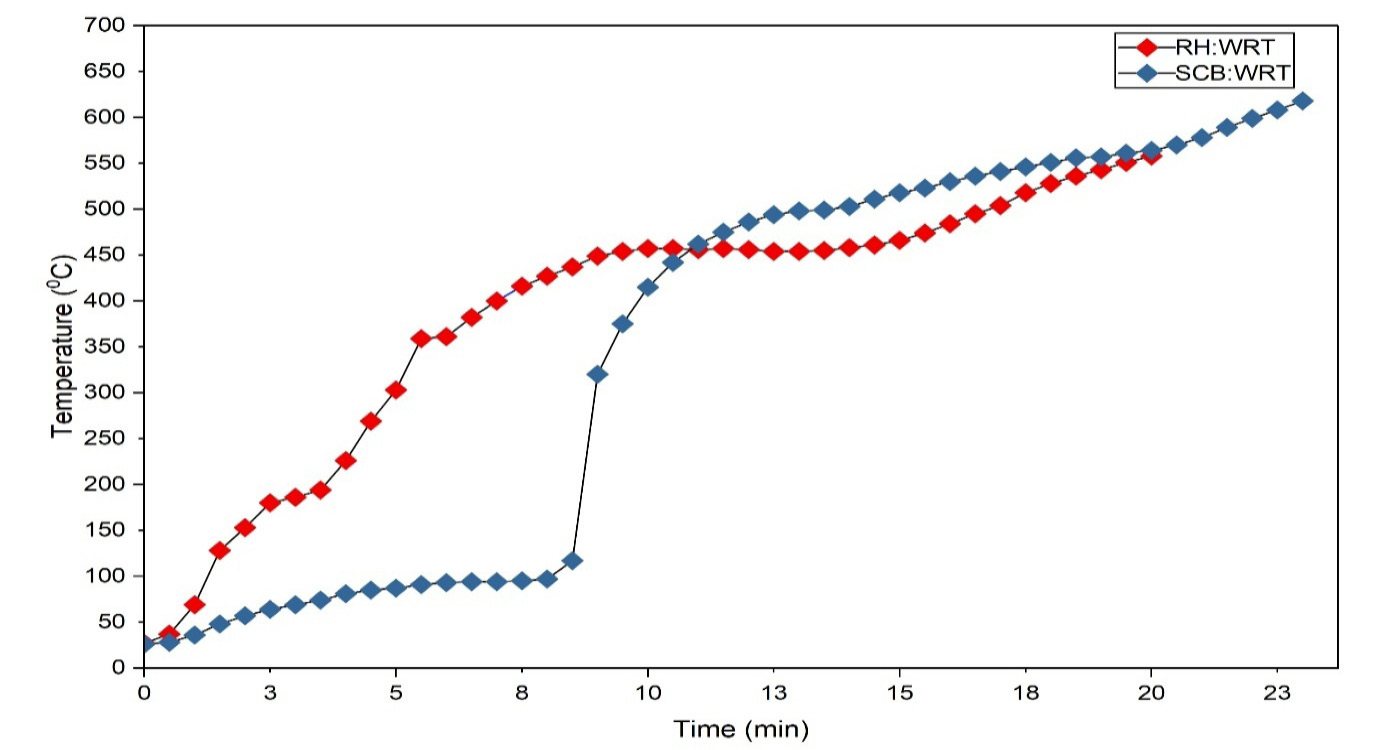
Temperature profile of co-pyrolysis of RH: WRT and SCB: WRT
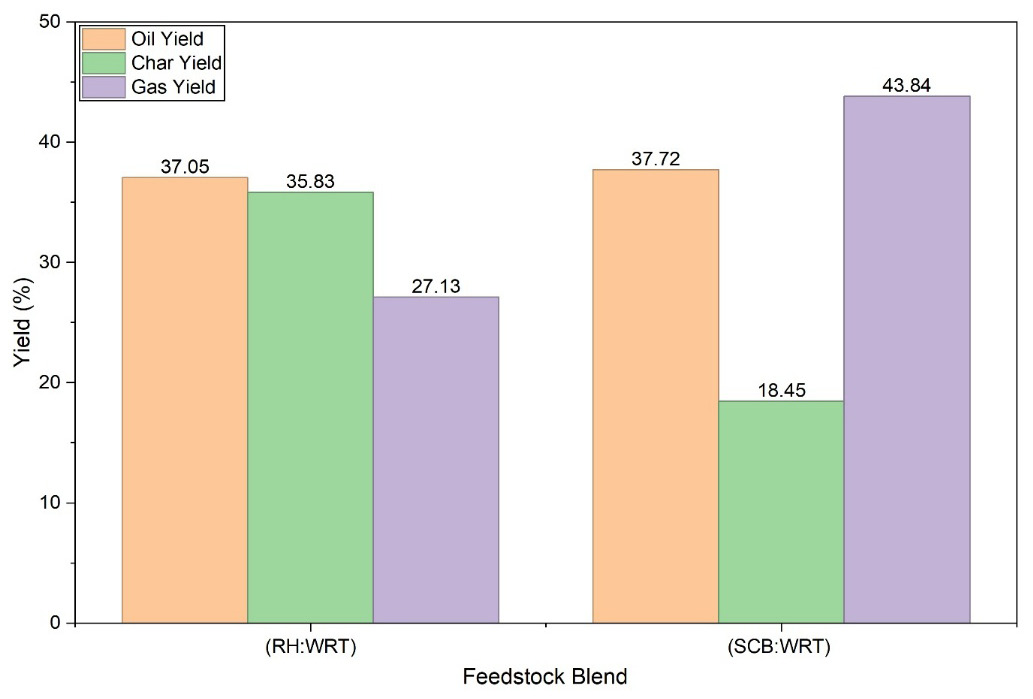
Product yields for different feedstock combinations.
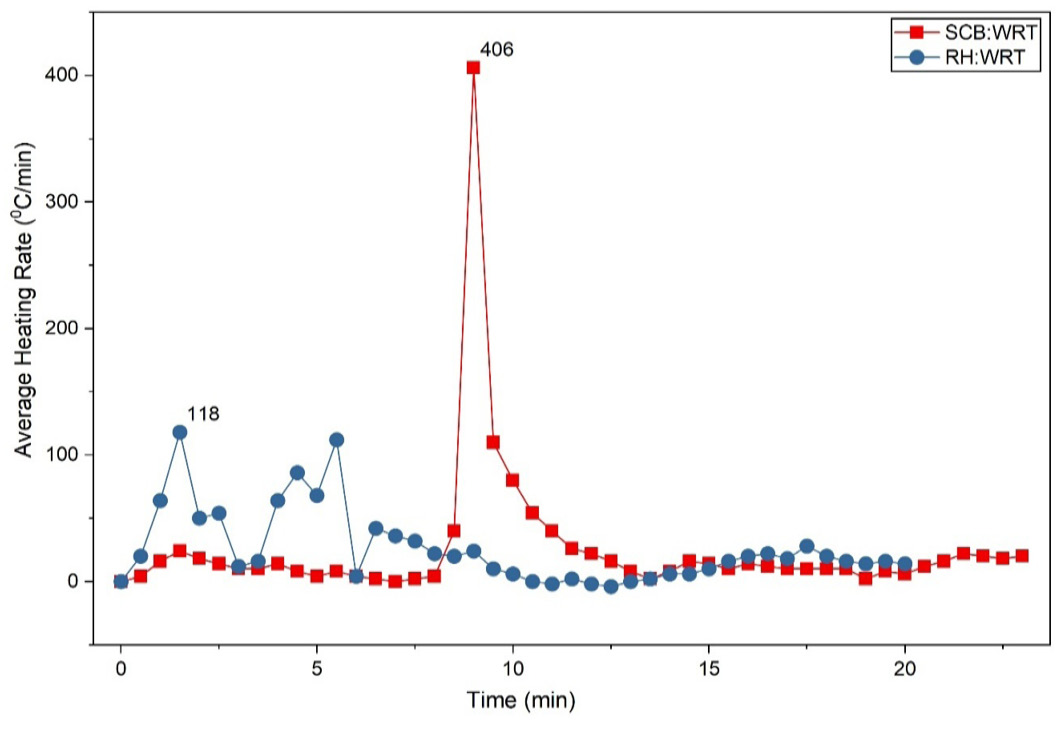
Average heating rates of co-pyrolysis of RH: WRT and SCB: WRT
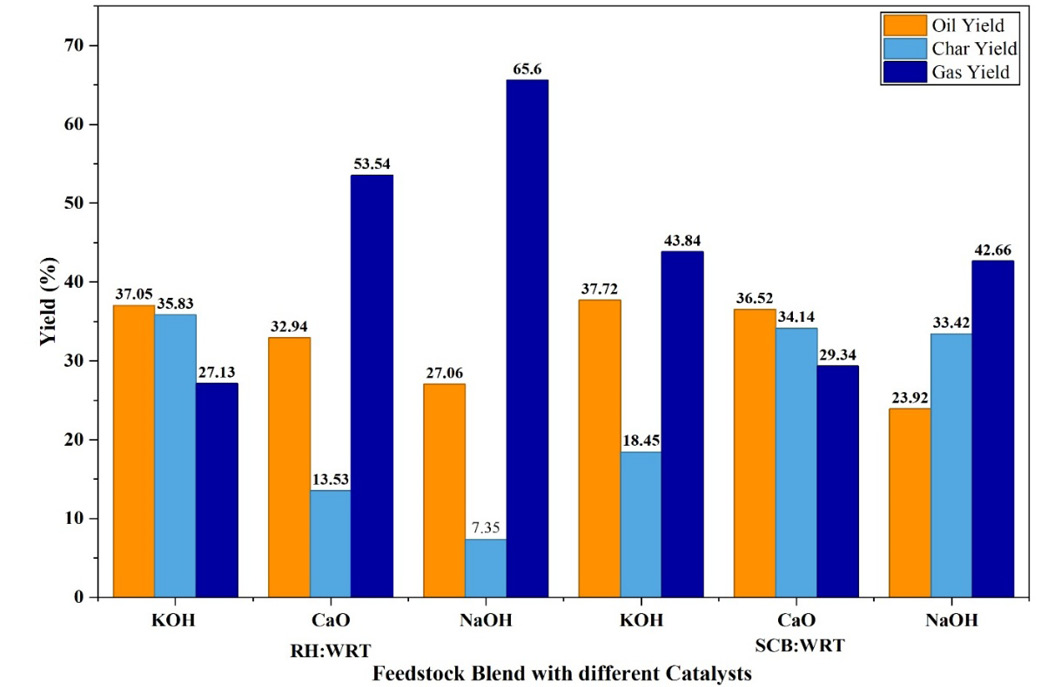
Effect of catalysts on feedstock blend.
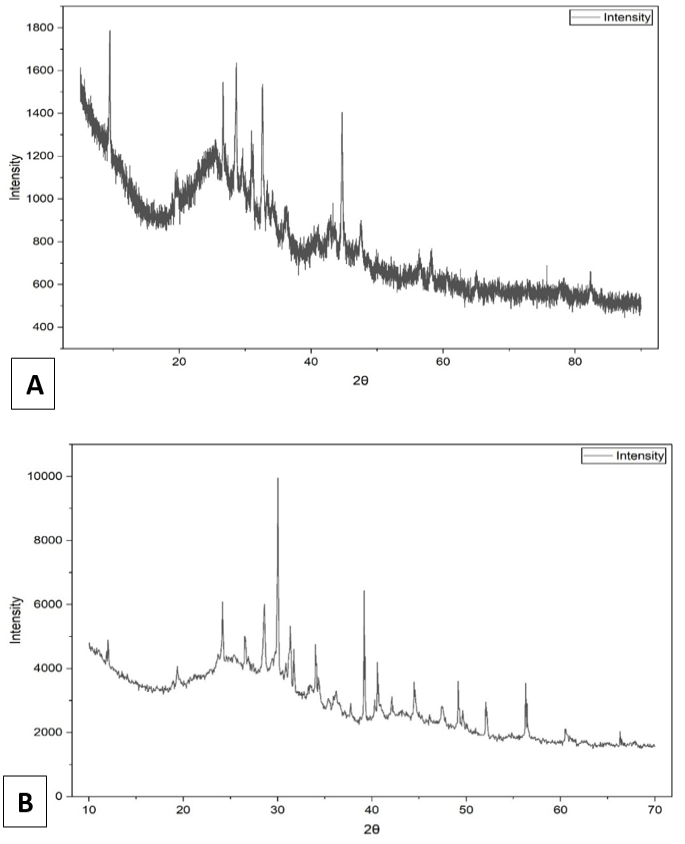
XRD spectrum of char from co-pyrolysis of (A) SCB: (B) RH: WRT with KOH catalyst
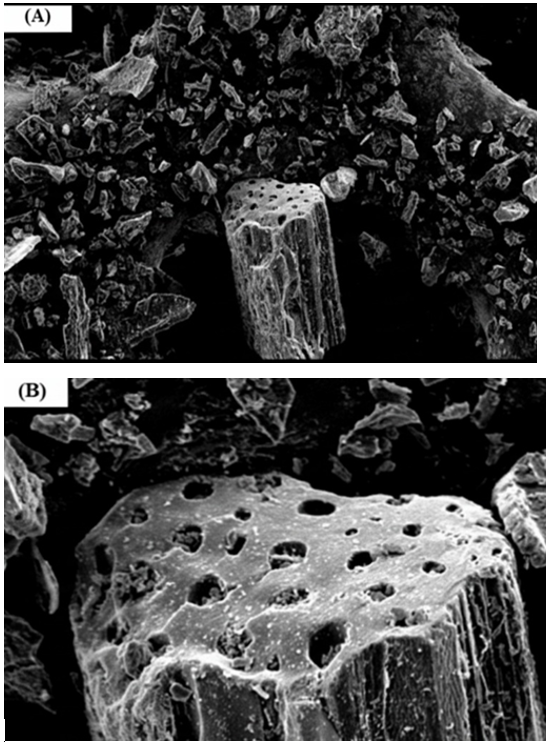
A and B: SEM images of the char from copyrolysis of SCB: WRT with KOH catalyst.
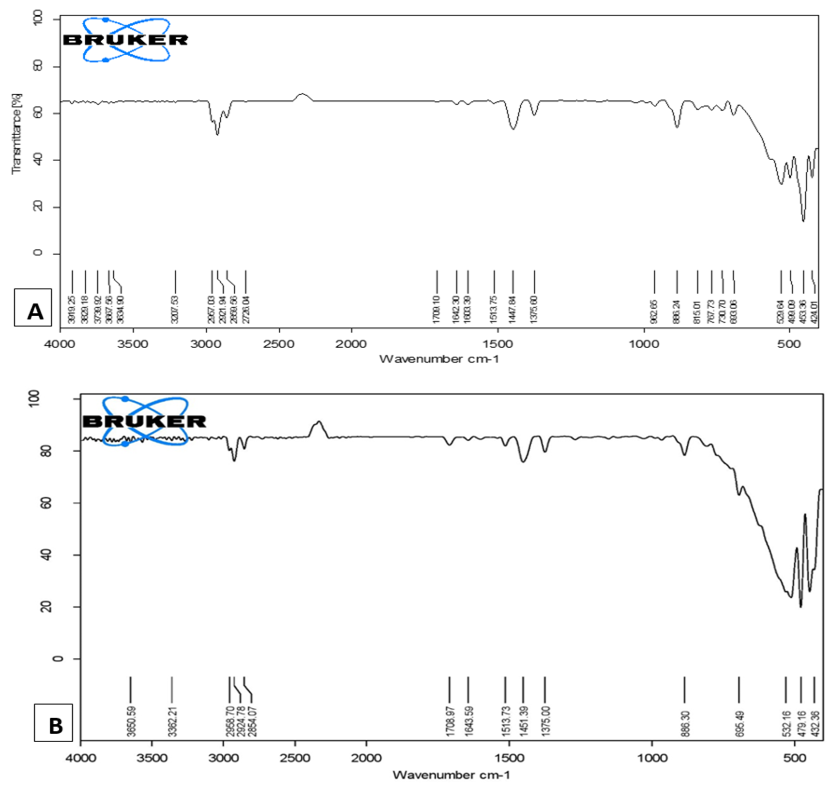
FTIR analysis of (A) SCB and (B) RH: WRT mixture with KOH as catalyst.
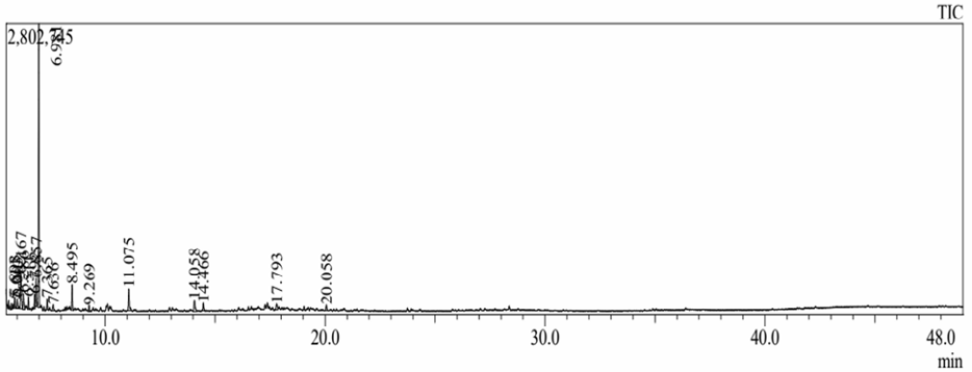
GC-MS spectrum of the oil from co-pyrolysis of SCB:WRT:: 2.5:17.5 with KOH Catalyst.
References
- Ahmed, N., Muhammad, Z., Naseem, I., Muhammad, Z.F. and Syed, A.Y.S., 2018. Investigation on bio-oil yield and quality with scrap tire addition in sugarcane bagasse pyrolysis. J. Cleaner Prod. Jclepro, 6: 142. https://doi.org/10.1016/j.jclepro.2018.06.142[CrossRef]
- Anand, A., Kumar, V. and Kaushal, P., 2022. Biochar and its twin benefits: Crop residue management and climate change mitigation in India. Renew. Sustain. Energy Rev., 156: 111959. https://doi.org/10.1016/j.rser.2021.111959[CrossRef]
- Bhuvaneshwari, S., Hettiarachchi, H. and Meegoda, J.N., 2019. Crop resi due burning in India: policy challenges and potential solutions. Int. J. Environ. Res. Publ. Health, 16(5): 832. https://doi.org/10.3390/ijerph16050832[CrossRef]
- Dulaimi, M.A., Oqaili, F.A., Al-Anssari, S., Kadhum, A.a.H., Hamzah, H.T., Sridevi, V., Abdullah, T.A. and Abdullah, O., 2025. Effect of CaO nanocatalyst on bio-oil production from algae and date seeds via microwave-assisted co-pyrolysis. Commun. Sci. Technol., 10(1): 190–200. https://doi.org/10.21924/cst.10.1.2025.1675[CrossRef]
- Fan, S., Zhang, Y., Cui, L., Maqsood, T. and Nižetić, S., 2023. Cleaner production of aviation oil from microwave-assisted pyrolysis of plastic wastes. J. Cleaner Prod., 390: 136102. https://doi.org/10.1016/j.jclepro.2023.136102[CrossRef]
- Farooq, M.Z., Zeeshan, M., Iqbal, S., Ahmed, N. and Shah, S.A.Y., 2018. Influence of waste tire addition on wheat straw pyrolysis yield and oil quality. Energy, 144: 200-206. https://doi.org/10.1016/j.energy.2017.12.026[CrossRef]
- Feng, Q. and Lin, Y., 2017. Integrated processes of anaerobic digestion and pyrolysis for higher bioenergy recovery from lignocellulosic biomass: A brief review. Renew. Sustain. Energy Rev., 77: 1272-1287. https://doi.org/10.1016/j.rser.2017.03.022[CrossRef]
- Giwa, A.S., Xu, H., Wu, J., Li, Y., Chang, F., Zhang, X., Jin, Z., Huang, B. and Wang, K., 2018. Sustainable recycling of residues from the food waste (FW) composting plant via pyrolysis: Thermalcharacterisation and kinetic studies. J. Clean. Prod., 180: 43-49.. https://doi.org/10.1016/j.jclepro.2018.01.122[CrossRef]
- Hamzah, H.T., 2025. In-sito co-pyrolysis of tea waste and polypropylene using microwave-assisted pyrolysis: Products analysis, energy consumption, and synergy effect. Sigma Journal of Engineering and Natural Sciences – Sigma Mühendislik Ve Fen Bilimleri Dergisi, pp. 1653–1662. https://doi.org/10.14744/sigma.2025.00063[CrossRef]
- Hamzah, H.T., Alawi, N.M., Hasan, H.M., Abed, H.Y., Veluru, S., Hamdullah, N.A., Ibrahim, A.A., Poiba, V.R., Srikanth, R., 2023. Effect of acids and alkaline pretreatment of used tea waste powder under microwave-assisted pretreatment. Key Eng. Mater., 960: 149–160. https://doi.org/10.4028/p-g78H5O[CrossRef]
- Hamzah, H.T., Mahdi, S.A., Abdullah, O.I., Al-Zahiwat, M.M., Mohammed, M.N., Al-Zubaidi, S., Veluru, S. and Abdullah, T.A., 2025a. Effect of solvent pre-treatment and catalyst on microwave-assisted pyrolysis of rice straw. Indones. J. Sci. Technol., 10(2): 317–332. https://doi.org/10.17509/ijost.v10i2.82583[CrossRef]
- Hamzah, H.T., Sridevi, V., Seereddi, M., Suriapparao, D.V., Ramesh, P., Rao, C.S., Gautam, R., Kaka, F. and Pritam, K., 2022. The role of solvent soaking and pretreatment temperature in microwave-assisted pyrolysis of waste tea powder: Analysis of products, synergy, pyrolysis index, and reaction mechanism. Bioresour.Technol., 363: 127913. https://doi.org/10.1016/j.biortech.2022.127913[CrossRef]
- Hamzah, H.T., Sridevi, V., Surya, D.V., Palla, S., Yadav, A. and Rao, P.V., 2023a. Conventional and microwave-assisted acid pretreatment of tea waste powder: Analysis of functional groups using FTIR. Environ. Sci. Pollut. Res., 31(46): 57523–57532. https://doi.org/10.1007/s11356-023-28272-8[CrossRef]
- Hamzah, H.T., Veluru, S., Hasan, H.M., Abed, H.Y., Mahdi, H.S., Hamdullah, N.A., Tukarambai, M., Poiba, V. R. and Srikanth, R., 2023b. Microwave assisted pyrolysis of biomass feedstock fundamentals and the effect of process parameters - A review. J. Phys. Conf. Ser., 2550(1): 012003. https://doi.org/10.1088/1742-6596/2550/1/012003[CrossRef]
- Hamzah, H.T., Sridevi, V., Surya, D.V., Palla, S., Yadav, A. and Rao, P.V., 2023c. Conventional and microwave-assisted acid pretreatment of tea waste powder: Analysis of functional groups using FTIR. Environ. Sci. Pollut. Res., 31(46): 57523–57532.
- Hamzah, H.T., Sridevi, V. and Ali, F.H., 2026. The lipid extraction methods from algae for biofuel production: A review of recent developments and future prospects. Smart Technol. Sci. Eng., 1(1): 16-22.
- Hamzah, H.T., Sridevi, V. and Ali, F.H., 2026a. A mini review on the impact of solvent polarity and temperature on lipid extraction and biofuel production from algae: Current progress, greener solvents and promising technology. Smart Technol. Sci. Eng., 1(2): 70-74.
- Husam, T.H., Suhair, A.M., Sridevi, V. and Thamer, A.A., 2024. Microwave-assisted pyrolysis and co-pyrolysis: Oil, char, and gases-a technological review. El-Cezeri J. Sci. Eng., 11(2): 186-198.
- Idris, R., Chong, C.T., Asik, J.A. and Ani, F.N., 2020. Optimisation studies of microwave-induced co-pyrolysis of empty fruit bunches/waste truck tire using response surface methodology. J. Cleaner Prod., 244: 118649. https://doi.org/10.1016/j.jclepro.2019.118649[CrossRef]
- Iwuozor, K.O., Emenike, E.C., Ighalo, J.O., Omoarukhe, F.O., Omuku, P.E. and Adeniyi, A.G., 2022. Review on the thermochemical conversion of sugarcane bagasse into biochar. Cleaner Mater., 6: 100162. https://doi.org/10.1016/j.clema.2022.100162[CrossRef]
- Joglekar, S.N., Tandulje, A.P., Mandavgane, S.A. and Kulkarni, B.D., 2019. Environmental impact study of bagassevalorisation routes. Waste Biomass Valor, 10: 2067–2078. https://doi.org/10.1007/s12649-018-0198-9[CrossRef]
- Keiluweit, M., Nico, P.S., Johnson, M.G., Kleber, M., 2010. Dynamic molecular structure of plant biomass-derived black carbon (biochar). Environ. Sci. Technol., 44(4): 1247–1253. https://doi.org/10.1021/es9031419[CrossRef]
- Lan, R., Eastham, S.D., Liu, T., Norford, L.K. and Barrett, S.R., 2022. Air quality impacts of crop residue burning in India and mitigation alternatives. Nat. Commun., 13(1): 6537. https://doi.org/10.1038/s41467-022-34093-z[CrossRef]
- Martínez, J.D., Veses, A., Mastral, A.M., Murillo, R., Navarro, M.V., Puy, N., Artigues, A., Bartrolí, J. and García, T., 2014. Co-pyrolysis of biomass with waste tyres: upgrading of liquid bio-fuel. Fuel Process. Technol., 119: 263-271. https://doi.org/10.1016/j.fuproc.2013.11.015[CrossRef]
- Nair, V. and Vinu, R., 2016. Peroxide-assisted microwave activation of pyrolysis char for adsorption of dyes from wastewater. Bioresour. Technol., 216: 511-519. https://doi.org/10.1016/j.biortech.2016.05.070[CrossRef]
- Niju, S., Ajieth Kanna, S.K., Ramalingam, V., Satheesh, K.M. and Bala, J.M., 2023. Sugarcane bagasse derived biochar–a potential hetero geneous catalyst for transesterification process. Energy Sour. A: Recover Utiliz. Environ. Effects, 45(4): 9815–9826. https://doi.org/10.1080/15567036.2019.1680771[CrossRef]
- O’Connor, D., Peng, T., Zhang, J., Tsang, D.C., Alessi, D.S., Shen, Z., Bolan, N.S. and Hou, D., 2018. Biochar application for the remediation of heavy metal polluted land: A review of in situ field trials. Sci. Total Environ., 619: 815-826. https://doi.org/10.1016/j.scitotenv.2017.11.132[CrossRef]
- Porichha, GK., Hu, Y., Rao, KTV., Xu, CC., 2021. Crop residue man agement in India: stubble burning vs. otherutilisations including bioenergy. Energies, 14(14): 4281. https://doi.org/10.3390/en14144281[CrossRef]
- Prajitno, H., Subagjo, S. and Park, S.E., 2021. The effects of NaOH and KOH as activating agents on the characteristics and adsorption performance of rice husk-based activated carbon. J. Indian Chem. Soc., 98(12): 100244.
- Prajitno, H., Subagjo, S. and Park, S.E., 2021. The effects of NaOH and KOH as activating agents on the characteristics and adsorption performance of rice husk-based activated carbon. Jo. Indian Chem. Soc., 98(12): 100244.
- Rahman, M.A., Jahiruddin, M., Kader, M.A., Islam, M.R. and Solaiman, ZM., 2022. Sugarcane bagasse biochar increases soil carbon sequestration and yields ofmaisee and groundnut in charland ecosystem. Arch. Agron. Soil Sci., 68(10): 1338–1351. https://doi.org/10.1080/03650340.2021.1892651[CrossRef]
- Saini, K., Biswas, B., Kumar, A., Sahoo, A., Kumar, J. and Bhaskar, T., 2021. Screening of sugarcane bagasse-derived biochar for phenol adsorption: Optimisation study using response surface methodology. Int. J. Environ. Sci. Technol., 19(9): 1–14. https://doi.org/10.1007/s13762-021-03637-z[CrossRef]
- Shah, S.A.Y., Zeeshan, M., Farooq, M.Z., Ahmed, N. and Iqbal, N., 2019. Co-pyrolysis of cottonstalk and waste tyre with a focus on liquid yield quantity and quality. Renew. Energy, 130: 238e244. https://doi.org/10.1016/j.renene.2018.06.045[CrossRef]
- Shen, Y., 2025. Microwave-assisted pyrolysis of biomass and plastic wastes for hydrogen production. Green Chem., 27(35): 10402-10422. https://doi.org/10.1039/D5GC03030G[CrossRef]
- Shinde, R., Shahi, D.K., Mahapatra, P., Singh, C.S., Naik, S.K., Thombare, N. and Singh, A.K., 2022. Management of crop residues with special reference to the on-farmutilisation methods: A review. Ind. Crops Prod., 181: 114772. https://doi.org/10.1016/j.indcrop.2022.114772[CrossRef]
- Sikarwar, V.S., Zhao, M., Fennell, P.S., Shah, N. and Anthony, E.J., 2017. Progress in biofuel production from gasification. Progress Energy Combust. Sci., 61: 189-248. https://doi.org/10.1016/j.pecs.2017.04.001[CrossRef]
- Sridevi, V., Hamzah, H.T. and Ali, F.H., 2026. A review of modern waste to energy recycling technologies: Between innovation, challenges, and circular economy prospects. Smart Technol. Sci. Eng., 1(1): 52-60.
- Suriapparao, D.V. and Vinu, R., 2015. Resource recovery from synthetic polymers via microwave pyrolysis using different susceptors. J. Anal. Appl. Pyrol., 113: 701-712. https://doi.org/10.1016/j.jaap.2015.04.021[CrossRef]
- Suriapparao, D.V., Kumar, D.A. and Vinu, R., 2022. Microwave co-pyrolysis of PET bottle waste and rice husk: effect of plastic waste loading on product formation. Sustain. Energy Technol. Assess., 49: 101781. https://doi.org/10.1016/j.seta.2021.101781[CrossRef]
- Tiwari, M. and Vinu, R., 2024. Microwave-assisted co-pyrolysis of rice straw pellets and plastic packaging wastes for value-added products and energy recovery. Process Saf. Environ. Prot., 190: 606-621. https://doi.org/10.1016/j.psep.2024.08.033[CrossRef]
- Wang, G., Dai, Y., Yang, H., Xiong, Q., Wang, K., Zhou, J. and Wang, S., 2020. A review of recent advances in biomass pyrolysis. Energy Fuels, 34(12): 15557-15578. https://doi.org/10.1021/acs.energyfuels.0c03107[CrossRef]
- Yao, Y., Huang, Z., Xie, P., Lacey, S.D., Jacob, R.J. and Xie, H., 2018. Carbothermal shock synthesis of high-entropy-alloy nanoparticles. Science, 359: 1489-1494. https://doi.org/10.1126/science.aan5412[CrossRef]
- Zhang, Y.Z., Bian, T.T., Zhang, Y., Xu-Dong, Z. and Zhong-Yu, L., 2018. Effective and green tire recycling through microwave pyrolysis. J. Zhejiang Univ. Sci. A, 19: 951–960. https://doi.org/10.1631/jzus.A1800388[CrossRef]
Services
Article usage statistics
Loading…