
Pre-treatment of plants with chemical elicitors can induce systemic resistance against plant pathogens and insect herbivores. The plan of the study was to study induction of defense responses and protective effects against Phytophthora infestans (Mont.) de Bary and sucking insect pests of potato (Solanum tuberosum L.) with application of salicylic acid (SA) and β-aminobutyric acid (BABA). Concentration of SA and BABA (2, 4 and 5 mM) were applied to foliage. Application of both resistance inducers suppressed disease development by 54.1% and 67.4%, for SA and BABA, respectively, 5 days after pathogen inoculation. Numbers and size of lesions per plant was reduced by application of SA and BABA. Plants treated with BABA exhibited increased resistance against herbivory by aphids (Myzus persicae Sulzer) (Homoptera: Aphidiae), thrips (Thrips tabaci Lindeman) (Thysanoptera: Thripidae) and whitefly (Bemisia tabaci Gennadius) (Hemiptera: Aleyrodidae) compared to SA treated plants. Potato plants treated with SA and BABA had higher peroxidase and polyphenol oxidase activity than water treated plants. Enzymes produced as result of treatment with elicitors are responsible for protection against late blight and sucking insect pests. The inducers can be used for disease and insect pest’s management.
Research Article · Volume 36, Issue 2, 23 May 2020 · Open Access
Management of Late Blight and Sucking Insect Pests of Potato with Application of Salicylic Acid and β-aminobutyric Acid under Greenhouse Conditions
· · · ·
Affiliations & Notes ⌄
- 1Department of Plant Pathology, College of Agriculture, University of Sargodha, Pakistan
- 2Department of Continuing Education, University of Agriculture, Faisalabad, Pakistan
- 3Department of Entomology, University of Agriculture, Faisalabad, Pakistan
- 4Department of Animal Sciences, College of Agriculture, University of Sargodha, Pakistan. waqasraza61@yahoo.com
Article Info ⌄
- Journal:
- Sarhad Journal of Agriculture
- Published:
- 23 May 2020
From the article
- Defense induction with application of BABA and SA can be an alternative control strategy offering durable, broad spectrum, control of P. infestans and sucking insect pests of potato using the plant’s own resistance.
- Although authentic information is available on the elicitor’s role treated response of plants to certain plant pathogens and insects while little is known about how plants synchronize attacker-induced signals into specific defense response.
- However, pathway effects of so far un-identified regulatory factors in plant pathogens interaction and insect herbivory need further investigation.
Selected from the article's own text.
Abstract
Introduction
Potato late blight caused by the fungus Phytophthora infestans (Mont.) de Bary is probably the most destructive disease of potato crop and is accountable for estimated crop losses of $6.7 billion worldwide ; . The pathogen infects directly through sporangia and affects on leaves, stems, and tubers . In Pakistan, late blight is the major yield limiting factor resulting in 70% reduction in yield .
The most appropriate, and practical, approach to manage late blight is the use of resistant varieties . However, developing potato varieties with established resistance to potato blight is complex, because some specific known resistance genes can be swiftly conquer by mutants in local populations . Integrated management of late blight includes use of healthy seed, sanitation and cull clean-up, crop rotation, scouting, forecasting techniques, application of fungicides, storage monitoring and use of moderately resistant varieties . However, none of these practices give complete control of potato late blight. Use of fungicides is effective but is expensive and many virulent strains of P. infestans have developed fungicide resistance, causing a worldwide recurrence of the potato late blight disease . The frequent exercise of fungicides reduces both yield and lower quality of tubers.
One novel method that can minimize potato blight infection without having any negative impact on the environment may be resistance induction; that is application of non-hazardous compounds that stimulate or commence plant defense . Among resistance inducers, BABA known as DL-ß-aminobutyric acid, non protein amino acid , has the capacity to boost defense in a wide range of plant species ; ; ; ; . It is an effective plant defense initiator against fungi, bacteria, viruses ; ; , nematodes and abiotic stress. BABA (β-aminobutyric acid) and salicylic acid (SA) have been reported as effective plant defense initiators in potato and other crops ; . In numerous cases, BABA treatment induced accretion of pathogenesis-related (PR) proteins in treated tissues before challenge with pathogen .
Potato production in Pakistan is hampered by sucking insect pests . The green peach potato Myzus persicae (Sulzer) (Aphid), associated with many diseases including potato virus Y (PVY), potato leaf roll virus (PLRV) and potato virus X (PVX) and sweet potato whitefly, Bemisia tabaci (Gennadius) are the most destructive pests of numerous crops . Bemisia tabaci biotype A (Gennadius) has the ability to transmit 111 economically important viruses . Thrips tabaci Lindeman, worldwide in distribution are also rated as potential threat to potato . Conventionally, these sucking insect pests are managed by application of insecticides but due to injudicious use of chemicals, insecticide resistance has developed ; ; in these insect pests. Induced resistance is a new approach that could be augmented in the successful integrated pest management for sucking insect pests of potato.
Among most successful reported inducing agents is BABA, non protein amino acid ; ; ; ; . BABA has been reported very effective in field conditions in Israel . Depend on pathosystem, different defense mechanisms are induced by BABA application. The initiation of systemic acquired resistance, a type of IR mediated by BABA has been described in literature. Exogenous applications of defense inducers intensify plant resistance to various herbivores and induce expression of defensive proteins. Drenching of BABA resulted in increased aphid mortality ; ; .
The purpose of current study was to examine induction of defense responses against Phytophthora infestans (Mont.) de Bary and sucking insects by application of salicylic acid (SA) and β-aminobutyric acid (BABA) to formulate a common strategy to manage the disease and sucking insect pests.
Materials and Methods
Research experiments were conducted in the Plant Pathology laboratory, College of Agriculture, University of Sargodha, Punjab, Pakistan during 2017-18 on the highly susceptible potato cv. Desiree. Plants were grown in 12-cm diameter pots (one eye per pot) from tuber eyes in a loam sand mixture under greenhouse conditions of 22°C and 16:8 h light dark. Plants were fertilized one week once after planting with 5% solution of N:P:K (20:20:20) and maintained for a further 5 weeks until plants developed 8 to 11 leaves.
Leaves showing typical sporulating lesions collected from the field were washed in 0.5% sodium hypochlorite solution and placed in humid boxes with the leaf’s abaxial side up (inverted petri dishes with agar media). The inoculated petri plates were incubated at 15-18°C until fresh sporulation appeared. Small pieces of infected tissues from the sporulating border of the lesion were cut and placed under potato slices in empty Petri dishes. These dishes were incubated at 15-18°C until abundant sporulation appeared. Tissues were washed in distilled water. The sporangial solution was passed through a 30 micron mesh filter to remove mycelium and other debris. The final concentration was adjusted to 1.2×10⁶ spores /ml using a Neubauer haemocytometer.
Aphids, thrips, and whiteflies were reared on potato leaves maintained at 16:8 h light dark, 22°C in an insect rearing room until used in bioassays. The concentrations 2, 4 and 5 mM of β-aminobutyric acid (BABA) and salicylic acid (SA) purchased from Sigma (Lahore, Pakistan) were prepared. Each concentration was applied to the upper (adaxial) leaf surface of plants using a glass sprayer until the plant was uniformly covered. Control plants were treated with distilled water.
Induced plants were challenge inoculated with P. infestans, 5 days post treatment. Plants were treated on the adaxial surfaces with sporangial suspension (10 ml/plant) containing 7500 sporangia·mL-1 with the hand sprayer. Plants were kept in the dark at 90% relative humidity and then moved to a green house with 22°C under 16:8 h light dark regime. Late blight development was recorded 5 days after inoculation. Lesion size and numbers on leaves of each plant were observed. Percent reduction in disease was calculated according to Cohen et al. (1991).
Excised leaves from control and induced plants were placed on wet cotton in Petri dishes (140 mm diameter × 25 mm height). Twenty-five adults of potato aphids, thrips and whitefly were added separately to each Petri dish and the plates maintained in incubator at 22°C under a 16:8 h light dark regime. Numbers of dead aphids, thrips and whitefly were counted on the 5th day after inoculation.
Samples (0.5 g) of potato leaflets were ground using a mortar and pestle and the extracts filtered and centrifuged with the supernatants used for enzyme assay. The polyphenol oxidase activity was measured spectrophotometrically at 400 nm by using chlorogenic acid as a substrate. The enzyme activity unit was distinct as the change in absorbance·min-1·μg-1 protein. Peroxidase activity was observed spectrophotometrically by oxidation of guaiacol (@420 nm) by using extract described above. The enzyme activity unit was expressed in mkatal·min-1·μg-1 protein
The experiments were performed 3 times independently for disease reduction and insect herbivory. Data were evaluated by Analysis of Variance (ANOVA) and treatment means separated by Tukey’s HSD through Statistix® (version 8.1) . Corrected mortality % for in vitro study was computed using Abbott’s formula .
Results and Discussion
Application of BABA and SA to potato leaf surfaces protected these against P. infestans. BABA was more effective (F= 3884.23; df= 3, 11; P<0.05) followed by SA (F= 1777.43; df= 3, 11; P<0.05) (Figure 1). Application of resistance elicitors reduced the number of the lesions (F= 4244; df= 3, 11; P<0.05) in case of SA and BABA (F= 1963.67; df= 3, 11; P<0.05) and their size of (F= 6.67; df= 3, 11; P<0.05) in case of BABA while in case of SA it was F= 21; df= 3, 11; P<0.05. Protection was obvious as reduction in lesion size and number (Figure 2). The minimum number of lesions was for BABA at the maximum conc. for SA numbers of lesions was higher with the same conc. (Figure 3).
Treatment affected mortality of potato aphids, thrips and whiteflies. The resistance inducers affected mortality of potato aphid (F= 566.53; df= 3, 11; P<0.05) for SA and (F= 1901.91; df= 3, 11; P<0.05) for BABA. For thrips (F= 116.10; df= 3, 11; P<0.05) for SA and for BABA (F= 2345.06; df= 3, 11; P<0.05). Mortality of whitefly (F= 728.83; df= 3, 11; P<0.05) with SA and with BABA (F= 1228.71; df= 3, 11; P<0.05). Application of BABA to potato leaves increased mortality of aphids (61.2%) and whitefly (48.2%) compared with the control (Figure 4A, B). Both inducers did not modify thrips mortality compared with the control (Figure 4C).
The activity of peroxidase (POX) and polyphenol oxidase (PPO) in untreated potato leaves were lower compared to treated leaves. There was slight increase in the peroxidase activity for SA as compared with BABA treatments. The polyphenol oxidase contents increased due to application of SA and due to application of BABA. The greatest increase in polyphenol oxidase and peroxidase activities was with application of BABA. However, increase in these enzyme activities occurred in presence of BABA and SA at the highest concentration (5mM) (Figures 5 and 6).
Application of SA and BABA reduced numbers and size of lesions produced as result of pathogen infection. Reduction in numbers and size of lesions provided protection against this disease. Sharma et al. (2010, 2012) and Tamm et al. (2011) reported reduction in P. infestans, blight severity from 43-100% on young leaves of tomato, a related crop, and 62% reduction in the severity of Plasmopara viticola by application of BABA. In the potato late blight pathosystem, BABA reduces appressoria formation . Liljeroth et al. (2010) reported application of BABA resulted in reduction of lesion sizes compared to untreated control in different susceptible and partially resistant potato cultivars indicating the response is likely widespread across potato cultivars. Application of BABA in vivo and in vitro demonstrated reduction in P. infestans in tomato, a related crop. Promising results from laboratory tests demonstrated antifungal activity where the BABA EC50 was similar to the fungicide tebuconazole effecting spore germination and hyphal growth (Sasek et al., 2012). Moushib et al. (2013) reported that BABA was effective in reducing lesion size of P. infestans under greenhouse conditions; Similarly, downy mildew disease severity was reduced by application of BABA compared to non-treated controls and findings agree with those reports.
The SA role in signaling disease resistance was first established by injecting tobacco leaves (Nicotiana tabacum L.) with SA, or aspirin, resulting in 90% reduction in lesion number indicating the response is widespread across plant types. Higher SA concentrations increased resistance against potato late blight when inserted into potato tubers (seed) before planting as stated by , but disagree with Tosun et al. (2003) as SA and HarpinEa treatments elicited systemic protection against late blight under greenhouse conditions by reducing disease severity.
Application of BABA and SA increased mortality of the three sucking insect pests. The peach-potato aphid, M. persicae was most susceptible, particularly to BABA; followed by whitefly; the least susceptible to both inducers were thrips as occurred in other studies (Cipolline et al., 2004; ; ; ; ; indicating responses in potato are similar to unrelated crops. It may be that BABA and SA induce an enhanced resistance in plants to sucking insect pests, by making them physically more difficult to penetrate or by inhibiting feeding.
Peroxidases (POX) and polyphenol oxidases (PPO) activities in potato leaves after application of BABA and SA has been reported ; as a change indicator associated with chemically induced resistance against plant pathogen, P. infestans and different sucking insect pests. There was an increase in activity of these enzymes by applying resistance elicitors. Diverse defense responses in form of enzymes activated upon application of elicitors result in changes in cell metabolism, activity of enzymes, particularly, peroxidase (POD), lipoxygenase (LOX), phenylalanine ammonia lyase (PAL), polyphenol oxidase (PPO), ß-1,3 glucanase and superoxide dismutase (SOD) ; ; . Phenylpropaniod metabolism is a pathway which catalyze phenylalanine ammonia-lyase (PAL) leading to production of phenylpropaniod metabolites which are highly toxic to invade pathogens and insects ; . Phenoloxidases have been demonstrated to be important in defense against herbivores in many crops ; . Oxidases play a role in defense against multiple herbivores ; ; .
Conclusions and Recommendations
Defense induction with application of BABA and SA can be an alternative control strategy offering durable, broad spectrum, control of P. infestans and sucking insect pests of potato using the plant’s own resistance. Although authentic information is available on the elicitor’s role treated response of plants to certain plant pathogens and insects while little is known about how plants synchronize attacker-induced signals into specific defense response. This should be determined at the molecular level to produce more insight into events occurring during all induction processes against pathogens or insect invasion. However, pathway effects of so far un-identified regulatory factors in plant pathogens interaction and insect herbivory need further investigation.
Novelty Statement
Pre-treatment of plants with salicylic acid (SA) and β-aminobutyric acid (BABA) proved helpful induction of defense response against Phytophthora infestans (Mont.) de Bary and sucking insects. Potato plants treated with SA and BABA had higher peroxidase and polyphenol oxidase activity than water treated plants.
Author’s Contribution
Muhammad Usman Ghazanfar conceived the idea and facilitated, guided and supervised the experiments while Waqas Wakil guided and co-supervised the experiments. Imtiaz Hussain and Misbah Iqbal Qamar helped in data collection. Waqas Raza helped in experiments, wrote and finalized the manuscript.
Conflict of interest
The authors have declared no conflict of interest.
Figures
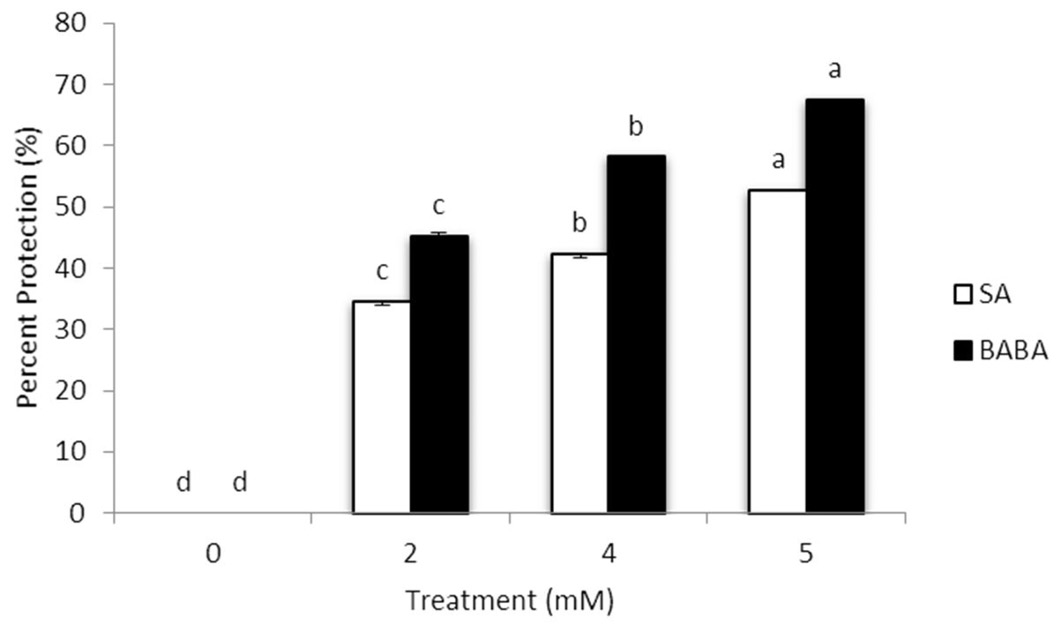
Effect of SA and BABA dose on percent protection against Phytophthora infestans on potato. Bars with the same letter are not significantly different, P = 0.05, Tukey’s HSD test.
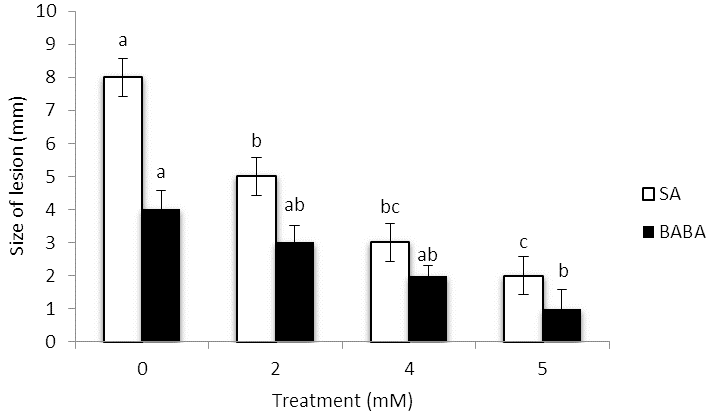
Effect of SA and BABA dose on lesion size against Phytophthora infestans on potato. Bars with the same letter are not significantly different, P = 0.05, Tukey’s HSD test.
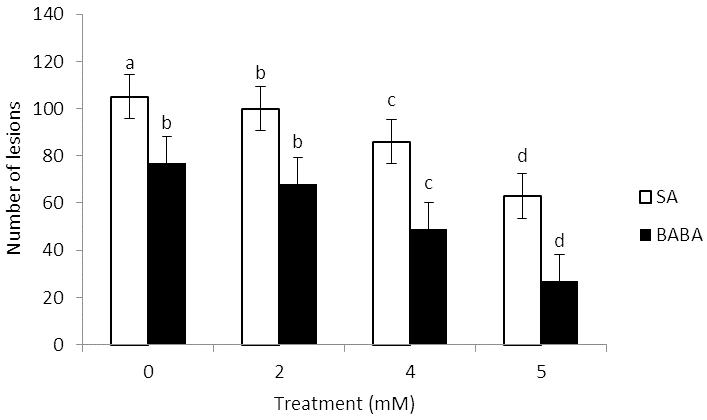
Effect of SA and BABA dose on numbers of lesions against Phytophthora infestans on potato. Bars with the same letter are not significantly different, P = 0.05, Tukey’s HSD test.
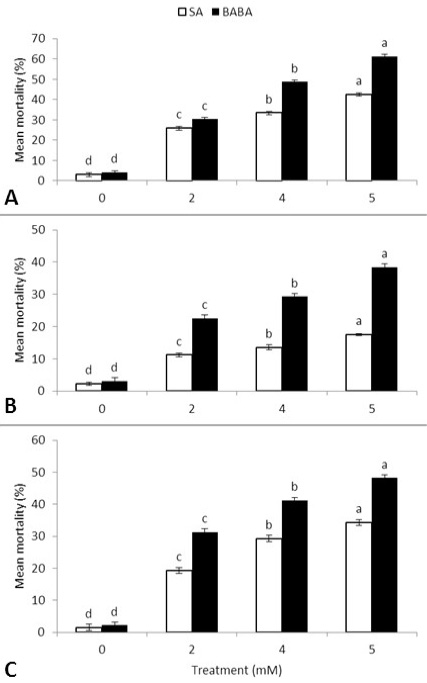
Percent mean mortality of potato aphid, thrips and whitefly on potato leaves treated with aqueous solutions of SA and BABA. Bars with the same letter are not significantly different, P= 0.05, Tukey’s HSD test.
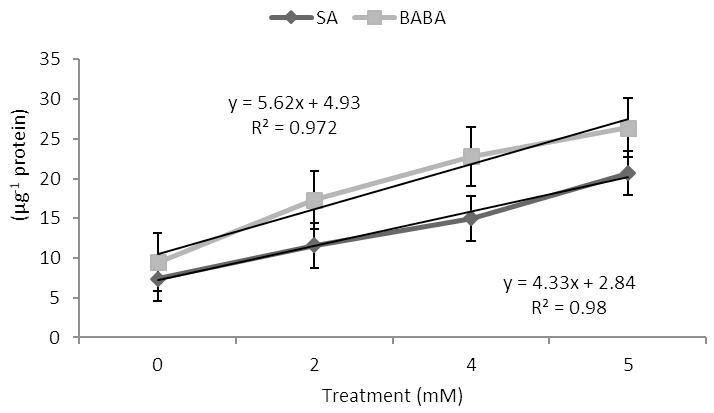
Peroxidase (POX) activity in potato leaves after treatment with SA or BABA. Assays of POX activities performed 15 days post-inoculation. Bars with the same letter are not significantly different, P= 0.05, Tukey’s HSD test.
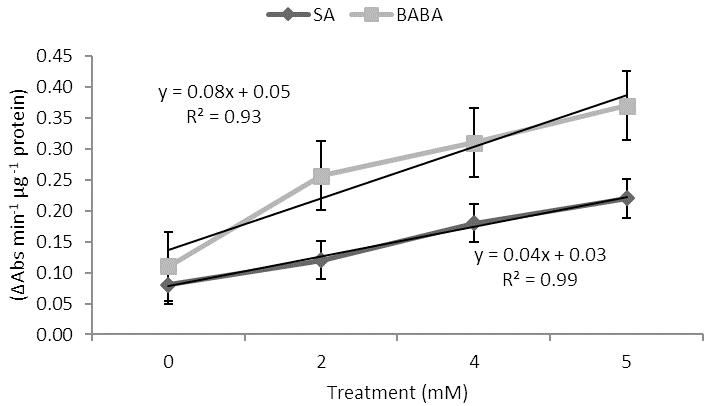
Polyphenol oxidase (PPO) activity in potato leaves after treatment with SA and BABA. Assays of PPO activity performed 15 days post-inoculation. Bars with the same letter are not significantly different, P = 0.05, Tukey’s HSD test.
References
- Abbott, W.S., 1925. A method of computing the effectiveness of an insecticide. J. Econ. Entomol. 18: 265-267. https://doi.org/10.1093/jee/18.2.265a[CrossRef]
- Ahmad, M., M.I. Arif, Z. Ahmad and I. Denholm. 2002. Cotton whitefly (Bemisia tabaci) resistance to organophosphate and pyrethroid insecticides in Pakistan. Pest Manage. Sci. 58: 203-208. https://doi.org/10.1002/ps.440[CrossRef]
- Ali, H., R.A. Shah, Q. Zeb, H. Badshah and M. Rehman. 2010. Evaluation of some chemicals against the aphids, jassids and white flies in potato. Sci. Int. Lahore. 22: 289-291.
- Allen, M.K.J., C.D. Scott-Dupree, J.H. Tolman and C.R. Harris. 2005. Resistance of Thrips tabaci to pyrethroid and organophosphorus insecticides in Ontario, Canada. Pest Manage. Sci. 61: 809-815. https://doi.org/10.1002/ps.1068[CrossRef]
- Altamiranda, E.G., A.B. Andreu, G.R. Daleo and F.P. Olivieri. 2008. Effect of β-aminobutyric acid (BABA) on protection against Phytophthora infestans throughout the potato crop cycle. Aust. Plant Pathol. 37: 421-427. https://doi.org/10.1071/AP08033[CrossRef]
- Arıcı, S.E. and H.W. Dehne. 2007. Induced resistance against Phytophthora infestans by chemical inducers BION and BABA in tomato plants. Acta Hortic. 729: 503-507. https://doi.org/10.17660/ActaHortic.2007.729.86[CrossRef]
- Chandra, A., R. Saxena, A. Dubey and P. Saxena. 2007. Change in phenylalanine ammonia lyase activity and isozyme patterns of polyphenol oxidase and peroxidase by salicylic acid leading to enhanced resistance in cowpea against Rhizoctonia solani. Acta Physiol. Plant. 29: 361-367. https://doi.org/10.1007/s11738-007-0045-2[CrossRef]
- Cipollini, D., S. Enright, M.B. Traw and J. Bergelson. 2004. Salicylic acid inhibits jasmonic acid-induced resistance of Arabidopsis thaliana to Spodoptera exigua. Mol. Ecol. 13: 1643-1653. https://doi.org/10.1111/j.1365-294X.2004.02161.x[CrossRef]
- Cohen, Y., 2001. The BABA story of induced resistance. Parasitol. 29: 375-378. https://doi.org/10.1007/BF02981855[CrossRef]
- Cohen, Y., 2002. ß-Aminobutyric acid-induced resistance against plant pathogens. Plant Dis. 86: 448-457. https://doi.org/10.1094/PDIS.2002.86.5.448[CrossRef]
- Cohen, Y., U. Gisi and E. Mosinger. 1991. Systemic resistance of potato plants against Phytophthora infestans induced by unsaturated fatty acids. Physiol. Mol. Plant Pathol. 38: 255-263. https://doi.org/10.1016/S0885-5765(05)80117-1[CrossRef]
- Cohen, Y., A.E. Rubin and M. Vaknin. 2011. Post infection application of DL-3-amino-butyric acid (BABA) induces multiple forms of resistance against Bremia lactucae in lettuce. Eur. J. Plant Pathol. 130: 13-27. https://doi.org/10.1007/s10658-010-9724-8[CrossRef]
- Conrath, U., C.M.J. Pieterse and B. Mauch-Mani. 2002. Priming in plant-pathogen interactions. Trends Plant Sci. 7: 210-216. https://doi.org/10.1016/S1360-1385(02)02244-6[CrossRef]
- Constabel, C.P., C. Yip, J.J. Patton and M.E. Christopher. 2000. Polyphenol oxidase from hybrid poplar. Cloning and expression in response to wounding and herbivory. Plant Physiol. 124: 285-295. https://doi.org/10.1104/pp.124.1.285[CrossRef]
- Cooper, W. and F.L. Goggin. 2005. The impact of jasmonate induced defenses on the feeding behavior, fecundity, and mortality of the potato aphid, Macrosiphum euphorbiae. Entomol. Exp. Appl. 115: 107-115. https://doi.org/10.1111/j.1570-7458.2005.00289.x[CrossRef]
- Evenhuis, A., H.G. Spits and H.T.A.M. Schepers. 2006. Efficacy of fungicidal protection of newly developing potato leaves against Phytophthora infestans. Crop Prot. 25: 562-568. https://doi.org/10.1016/j.cropro.2005.09.001[CrossRef]
- Fry, W.E. and S.B. Goodwin. 1997. Re-emergence of potato and tomato late blight in the United States. Plant Dis. 81: 1349-1357. https://doi.org/10.1094/PDIS.1997.81.12.1349[CrossRef]
- Ghazanfar, M.U., S.T. Sahi, W. Wakil and Z. Iqbal. 2010. Evaluation of various fungicides for the management of late blight of potato (Phytophthora infestans). Pak. J. Phytopathol. 22: 83-88.
- Gomez, K.A. and A.A. Gomez. 1984. Statistical procedures for agricultural research. John Wiley and Sons, New York.
- Halim, V.A., A. Vess, D. Scheel and S. Rosahl. 2006. The role of salicylic acid and jasmonic acid in pathogen defense. Plant Biol. 8: 307-313. https://doi.org/10.1055/s-2006-924025[CrossRef]
- Haruta, M., J.A. Pedersen and C.P. Constabel. 2001. Polyphenol oxidase and herbivore defense in trembling aspen (Populus tremuloides): cDNA cloning, expression, and potential substrates. Physiol. Plant. 112: 552-558. https://doi.org/10.1034/j.1399-3054.2001.1120413.x[CrossRef]
- Hassan, M.A.E. and K.A.M. Abo-Elyousr. 2013. Activation of tomato plant defence responses against bacterial wilt caused by Ralstonia solanacearum using DL-3-aminobutyric acid (BABA). Eur. J. Plant Pathol. 136: 145-157. https://doi.org/10.1007/s10658-012-0149-4[CrossRef]
- Haverkort, A.J., P.M. Boonekamp, R. Hutten, E. Jacobsen, L.A.P. Lotz, G.J.T. Kessel, R.G.F. Visser and E.A.G. van der Vossen. 2008. Societal costs of late blight in potato and prospects of durable resistance through cisgenic modification. Potato Res. 51: 47-57. https://doi.org/10.1007/s11540-008-9089-y[CrossRef]
- Heller, W.E. and C. Gessler. 1986. Induced systemic resistance in tomato plants against Phytophthora infestans. J. Phytopathol. 116: 323-328. https://doi.org/10.1111/j.1439-0434.1986.tb00927.x[CrossRef]
- Hodge, S. and G. Powell. 2012. Factors influencing the inhibition of aphids by b-aminobutyric acid. Int. Org. Biol. Integer. Cont. 83: 47-51.
- Hodge, S., G.A. Thompson and G. Powell. 2005. Application of DL ß- aminobutyric acid (BABA) as a root drench to legumes inhibits the growth and reproduction of the pea aphid Acyrthosiphon pisum Harris. Bull. Entomol. Res. 95: 449-455. https://doi.org/10.1079/BER2005375[CrossRef]
- Hodge, S., J.L. Ward, A.M. Galster and M.H.B.G. Powell. 2011. The effects of a plant defense priming compound, ß-aminobutyric acid, on multitrophic interactions with an insect herbivore and a hymenopterous parasitoid. Bio. Contr. 56: 699-711. https://doi.org/10.1007/s10526-011-9344-z[CrossRef]
- Hussain, M., M.I. Hamid and M.U. Ghazanfar. 2014. Salicylic acid induced resistance in fruits to combat against postharvest pathogens: a review. Arch. Phytopathol. Plant Prot. 48: 34-42. https://doi.org/10.1080/03235408.2014.882111[CrossRef]
- Jakab, G., V. Cottier, V. Touquin, G. Rigoli, L. Zimmerli, J.P. Metraux and B. Mauch-Mani. 2001. Beta-aminobutyric acid-induced resistance in plants. Eur. J. Plant Pathol. 107: 29-37. https://doi.org/10.1023/A:1008730721037[CrossRef]
- Jones, D.R., 2003. Plant viruses transmitted by whiteflies. Eur. J. Plant Pathol. 109: 195-219. https://doi.org/10.1023/A:1022846630513[CrossRef]
- Judelson, H.S. and F.A. Blanco. 2005. The spores of Phytophthora: Weapons of the plant destroyer. Nat. Rev. Microbiol. 3: 47-58. https://doi.org/10.1038/nrmicro1064[CrossRef]
- Kim, H.J. and Y.C. Jeun. 2007. Infection structures on the infected leaves of potato pre-inoculated with bacterial strains and DL-3-amino butyric acid after challenge inoculation with Phytophthora infestans. Plant Pathol. J. 23: 203-209. https://doi.org/10.5423/PPJ.2007.23.3.203[CrossRef]
- Kranthi, S., K.R. Kranthi and R.R. Wanjari. 2003. Influence of semilooper damage on cotton host-plant resistance to Helicoverpa armigera (Hub). Plant Sci. 164: 157-163. https://doi.org/10.1016/S0168-9452(02)00345-X[CrossRef]
- Kröner, A., G. Hamelin, D. Andrivon and F. Val. 2011. Quantitative resistance of potato to Pectobacterium atrosepticum and Phytophthora infestans: Integrating PAMP-triggered response and pathogen growth, 2011. PLoS One, 6: e23331. https://doi.org/10.1371/journal.pone.0023331[CrossRef]
- Liljeroth, E., T. Bengtsson, L. Wiik and E. Andreasson. 2010. Induced resistance in potato to Phytophthora infestans-effects of BABA in greenhouse and field tests with different potato varieties. Eur. J. Plant Pathol. 127: 171-183. https://doi.org/10.1007/s10658-010-9582-4[CrossRef]
- Mersha, Z., S. Zhang, F. Fu, X. Mo, R.N. Raid and B. Hau. 2013. Efficacy of acibenzolar-S-methyl and ß-aminobutyric acid for control of downy mildew in greenhouse grown basil and peroxidase activity in response to treatment with these compounds. J. Phytopathol. 161: 154-164. https://doi.org/10.1111/jph.12045[CrossRef]
- Moushib, I.L., J. Witzell, M. Lenman, E. Liljeroth and E. Andreasson. 2013. Sugar beet extract induces defence against Phytophthora infestans in potato plants. Eur. J. Plant Pathol. 136: 261-271. https://doi.org/10.1007/s10658-012-0160-9[CrossRef]
- Ngadze, E., D. Icishahayo, T.A. Coutinho and J.E. Waals. 2012. Role of polyphenol oxidase, peroxidase, phenylalanine ammonia lyase, chlorogenic acid, and total soluble phenols in resistance of potatoes to soft rot. Plant Dis. 96: 186-192. https://doi.org/10.1094/PDIS-02-11-0149[CrossRef]
- Oka, Y. and Y. Cohen. 2001. Induced resistance to cyst and rootknot nematodes in cereals by DL-beta-amino-n-butyric acid. Eur. J. Plant Pathol. 107: 219-227.
- Olivieri, F.P., M.C. Lobato, A.E. Gonzalez, G.R. Daleo and M. Huarte. 2009. Guevara, M.G. and Andreu, B.A., BABA effects on the behaviour of potato cultivars infected by Phytophthora infestans and Fusarium solani. Eur. J. Plant Pathol. 123: 47-56. https://doi.org/10.1007/s10658-008-9340-z[CrossRef]
- Perring, T.M., 2001. The Bemisia tabaci complex. Crop Prot. 20: 725-737. https://doi.org/10.1016/S0261-2194(01)00109-0[CrossRef]
- Quintanilla, P. and S. Brishammar. 1998. Systemic induced resistance to late blight in potato by treatment with salicylic acid and Phytophthora cryptogea. Potato Res. 41: 135-142. https://doi.org/10.1007/BF02358436[CrossRef]
- Roditakis, E., N.E. Roditakis and A. Tsagkarakou. 2005. Insecticide resistance in Bemisia tabaci (Homoptera: Aleyrodidae) populations from Crete. Pest Manage. Sci. 61: 577-582. https://doi.org/10.1002/ps.1029[CrossRef]
- Ruuhola, T., S. Yang, V. Ossipov and E. Haukioja. 2008. Foliar oxidases as mediators of the rapidly induced resistance of mountain birch against Epirrita autumnata. Oecologia. pp. 725-730. https://doi.org/10.1007/s00442-007-0869-x[CrossRef]
- Šašek, V., M. Nováková, P.I. Dobrev, O. Valentová and L. Burketová. 2012. β-aminobutyric acid protects Brassica napus plants from. infection by Leptosphaeria maculans: resistance induction or a direct antifungal effect. Eur. J. Plant Pathol.133: 279-289. https://doi.org/10.1007/s10658-011-9897-9[CrossRef]
- Senthil-Nathan, S., K. Kalaivani, Y.M. Choi and H.C. Paik. 2009. Effects of jasmonic acid-induced resistance in rice on the plant brownhopper, Nilaparvata lugens Stål (Homoptera: Delphacidae). Pest. Biochem. Physiol. 95: 77-84. https://doi.org/10.1016/j.pestbp.2009.07.001[CrossRef]
- Shahbazi, H., H. Aminian, N. Sahebani and D.A. Halterman. 2011. Activity of ß-1,3-glucanase and ß-1,4-glucanase in two potato cultivars following challenge by the fungal pathogen Alternaria solani. Phyto. Parasitol. 39: 455-460. https://doi.org/10.1007/s12600-011-0184-2[CrossRef]
- Sharma, K., C. Bruns, A.F. Butz and M.R. Finckh. 2012. Effects of fertilizers and plant strengtheners on the susceptibility of tomatoes to single and mixed isolates of Phytophthora infestans. Eur. J. Plant Pathol. 133: 739-751. https://doi.org/10.1007/s10658-012-9954-z[CrossRef]
- Sharma, K., A.F. Butz and M.R. Finckh. 2010. Effects of host and pathogen genotypes on inducibility of resistance in tomato (Solanum lycopersicum) to Phytophthora infestans. Plant Pathol. 59: 1062-1071. https://doi.org/10.1111/j.1365-3059.2010.02341.x[CrossRef]
- SI-Ammour, A., B. Mauch-Mani and F. Mauch. 2003. Quantification of induced resistance against Phytophthora species expressing GFP as a vital marker: β-aminobutyric acid but not BTH protects potato and Arabidopsis from infection. Mol. Plant Pathol. 4: 237-248. https://doi.org/10.1046/j.1364-3703.2003.00168.x[CrossRef]
- Silue, D., E. Pajot and Y. Cohen. 2002. Induction of resistance to downy mildew (Peronospora parasitica) in cauliflower by DL-beta-amino-n-butanoic acid (BABA). Plant Pathol. 51: 97-102. https://doi.org/10.1046/j.1365-3059.2002.00649.x[CrossRef]
- Tamm, L., B. Thürig, A. Fliessbach, A.E. Goltlieb, S. Karavani and Y. Cohen. 2011. Elicitors and soil management to induce resistance against fungal plant diseases. Wageningen J. Life Sci. 58: 131-137. https://doi.org/10.1016/j.njas.2011.01.001[CrossRef]
- Thaler, J.S., 2002. Effect of jasmonate-induced plant responses on the natural enemies of herbivores. J. Anim. Ecol. 71: 141-150. https://doi.org/10.1046/j.0021-8790.2001.00586.x[CrossRef]
- Tosun, N., L. Aktas, N. Ülkü Karabay Yavaşoğlu and N. Türküsay. 2003. Effects of salicylic acid, Harpin and phosphorus acid in control of late blight (Phytophthora infestans Mont. De Barry) disease and some physiological parameters of tomato. J. Turk. Phytopathol. 32: 165-174.
- Troncoso-Rojas, R., A. Sánchez-Estrada, T. Carvallo, A. González-León, A. Ojeda-Contreras, A. Aguilar-Valenzuela and M.E. Tiznado-Hernández. 2013. A fungal elicitor enhances the resistance of tomato fruit to Fusarium oxysporum infection by activating the phenylpropanoid metabolic pathway. Phytoparasitology. 41: 133-142. https://doi.org/10.1007/s12600-012-0271-z[CrossRef]
- Tscharntke, T., S. Thiessen, R. Dolch and W. Doland. 2001. Herbivory, induced resistance, and interplant signal transfer in Alnus glutinosa. Biochem. Syst. Ecol. 29: 1025-1047. https://doi.org/10.1016/S0305-1978(01)00048-5[CrossRef]
- Van Toor, R.F and D.A.J. Teulon. 2006. Insecticide practice for aphid control in potatoes. N. Z. Plant Prot. 59: 235-241. https://doi.org/10.30843/nzpp.2006.59.4547[CrossRef]
- Vanitha, S.C., S.R. Niranjana and S. Umesha. 2009. Role of phenylalanine ammonia lyase and polyphenol oxidase in host resistance to bacterial wilt of tomato. J. Phytopathol. 157: 552-557. https://doi.org/10.1111/j.1439-0434.2008.01526.x[CrossRef]
- Vlot, A.C., D.M.A. Dempsey and D.F. Klessig. 2009. Salicylic acid, a multifaceted hormone to combat disease. Ann. Rev. Phytopathol. 47: 177-206. https://doi.org/10.1146/annurev.phyto.050908.135202[CrossRef]
- Worrall, D., G.H. Holroyd, J.P. Moore, M. Glowacz, P. Croft, J.E. Taylor, N.D. Paul and M.R. Roberts. 2012. Treating seeds with activators of plant defence generates long-lasting priming of resistance to pests and pathogens. New Phytol. 193: 770-778. https://doi.org/10.1111/j.1469-8137.2011.03987.x[CrossRef]
- Xie, B.Y., H.X. Li and L.X. Feng. 2002. Induction of resistance to Phytophthora capsici in pepper plants by DL-beta-aminobutyric acid. Acta Phytopathol. Sin. 29: 137-140.
- Yardımci, N., H.C. Kılıc and T. Özdemir. 2014. Detection of PVY (Potato Y potyvirus), on potato cultivars using biological and molecular methods growing in South-West Turkey. J. Anim. Plant Sci. 24: 1525-1530.
Services
Article usage statistics
Loading…