Special Issue: Emerging and Re-Emerging Animal Health Challenges in Low and Middle-Income Countries · Volume 13, Issue 1, 13 January 2026 · Open Access
Isolation and Molecular Identification of Local New Two Strains of Virulent Newcastle Disease Virus in Iraq
·
Affiliations & Notes ⌄
- 1Department of Pathology and Poultry Diseases, Collage of Veterinary Medicine, Al-Qasim Green University, Babylon 51013, Iraq. *Correspondence | Hayder Salih Kadhim, Department of Pathology and Poultry Diseases, Collage of Veterinary Medicine, Al-Qasim Green University, Babylon 51013, Iraq
- 2Email: haydersalih@vet.uoqasim.edu.iq
Article Info ⌄
- Journal:
- Journal of Animal Health and Production
- Published:
- 13 January 2026

From the article
- This study confirmed the presence of virulent Newcastle Disease Virus strains in Iraqi poultry flocks.
- The isolates were classified as velogenic based on MDT, ELD₅₀, ICPI, sequencing and phylogenetic analysis.
- These results stress the urgent need for continuous genetic monitoring of NDV, and the application of locally tailored vaccination strategies based on prevailing genotypes, updating vaccines are critical to mitigating the economic and epidemiological impact of NDV in Iraq.
Selected from the article's own text.
Abstract
Introduction
Newcastle disease (ND) is one of the most economically important and highly contagious viral diseases of poultry, caused by Avian orthoavulavirus 1, commonly known as Newcastle disease virus (NDV). The disease affects more than 250 avian species and is enzootic in many parts of Asia, Africa, and the Middle East, leading to significant losses in poultry production through high mortality rates, decreased egg production, and trade limitations . NDV belongs to the family Paramyxoviridae, genus Avulavirus, and is a single-stranded, negative-sense RNA virus. It encodes six structural proteins: NP, P, M, F, HN, and L. The fusion (F) protein is a key determinant of virulence, particularly its cleavage site. Velogenic strains contain a polybasic cleavage site that allows systemic spread of the virus and severe disease . ND was first reported in 1926 and has since become a global threat to poultry health. According to the World Organisation for Animal Health (WOAH, formerly OIE), outbreaks of ND were reported in over 70 countries between 2020 and 2023, with genotype VII accounting for more than 85% of velogenic isolates globally (WOAH, 2023). In Iraq, multiple outbreaks have been reported in both commercial and backyard poultry flocks, particularly in Najaf, Baghdad, Babil and Wasit provinces. A study by detected velogenic strains in 92% of tested flocks, with mortality rates ranging from 40% to 90%, despite vaccination. The virus spreads primarily through inhalation or ingestion of contaminated material, including feces, water, and fomites. The incubation period ranges from 2 to 15 days, depending on the virulence and host immunity . Genetic evolution of NDV has resulted in the emergence of at least 21 genotypes, with genotype VII.1.1 and VII.2 being the most prevalent in recent outbreaks. Molecular detection using real-time RT-PCR and genetic sequencing of the F and HN genes is essential for accurate diagnosis and classification. Phylogenetic analysis helps monitor virus evolution, track outbreaks, and update vaccine strains . Despite the availability of commercial vaccines, the continuous emergence of new genotypes and genetic drift have led to vaccine failure in 60–70% of reported outbreaks in endemic regions . This highlights the need for local surveillance and genetic monitoring of circulating NDV strains.
This study was conducted to identify, characterize and genetical assess the diversity of NDV strains and to establish a base for future surveillance and vaccine design.
Materials and Methods
Sample collection and case history
Between July and September 2024, two broiler chicken flocks were investigated following high mortality events suspected to be due to Newcastle Disease Virus (NDV). The first flock (50,000 birds) was located in Babylon District, while the second (30,000 birds) was in Al-Najaf District, Iraq. Both flocks exhibited mortality rates exceeding 80%, with clinical signs appearing on days 19 and 20, respectively. Affected birds were examined at the Uruk Baghdad Laboratory and regional veterinary centers. Clinical signs, post-mortem findings, and case history were suggestive of ND. Tissue samples (proventriculus, lungs, trachea, intestines, cecal tonsils, spleen, and brain) were aseptically collected and stored at −81°C at Babil Veterinary Hospital until further analysis.
Virus isolation and processing
Samples from both flocks (designated Hayder isolate 3 and Hayder isolate 4) were processed at the Virology Department, Babil Veterinary Hospital, using a Class II biosafety cabinet. After thawing, 2 g of each tissue was homogenized with 4 mL of sterile phosphate-buffered saline (PBS) using a sterile mortar and pestle. The homogenates were centrifuged at 2000 rpm for 10 minutes at 4°C. Supernatants were used for downstream applications.
Real-time RT-PCR for NDV detection
Real-time RT-PCR is a sensitive and specific method for detecting Newcastle Disease Virus (NDV) in poultry samples. In this study, a one-step assay targeting the conserved aPMV-1 gene was used to confirm NDV in tissue and allantoic fluid samples. RNA was extracted from pooled tissues and allantoic fluid using a commercial kit, then amplified in a single-step reaction combining reverse transcription and PCR. Fluorescent probes enabled real-time monitoring, and cycle threshold (Ct) values indicated viral load, with lower Ct reflecting higher virus levels. Positive and negative controls ensured reliability. This method provides rapid, accurate detection essential for diagnostics and surveillance.
Mean death time (MDT)
Mean Death Time (MDT) was used to assess the pathogenicity of NDV isolates. Tenfold serial dilutions (10⁻⁶ to 10⁻⁹) of infective allantoic fluid were prepared, and 0.1 mL of each dilution was inoculated into the allantoic cavity of five 9-day-old SPF embryonated chicken eggs. Embryo mortality was monitored every 12 hours for 7 days. The MDT was calculated based on the average time required to kill the embryos. Interpretation of results classified strains as velogenic (<60 hrs), mesogenic (60–90 hrs), or lentogenic (>90 hrs), providing a measure of viral virulence.
Intracerebral pathogenicity index (ICPI)
The Intracerebral Pathogenicity Index (ICPI) was performed according to OIE guidelines to evaluate NDV virulence. Seventy 1-day-old SPF chicks were divided into seven groups. A 1:10 dilution of allantoic fluid (HA titer: log₂ 1/16) was prepared, and 0.05 mL was injected intracerebrally into each chick. Birds were observed for 8 days, and clinical signs were scored as follows: 0 = normal, 1 = sick, and 2 = dead. The ICPI value was calculated as the mean score per bird per observation, providing a quantitative measure of pathogenicity. Higher ICPI values indicate greater virulence of the NDV isolates.
Virus titration (EID₅₀)
Virus titration was performed using the Reed and Muench method. Serial dilutions were inoculated into SPF embryonated eggs (5 per dilution), and mortality was recorded for 5 days post-inoculation to determine EID₅₀ values.
PCR amplification of the F gene
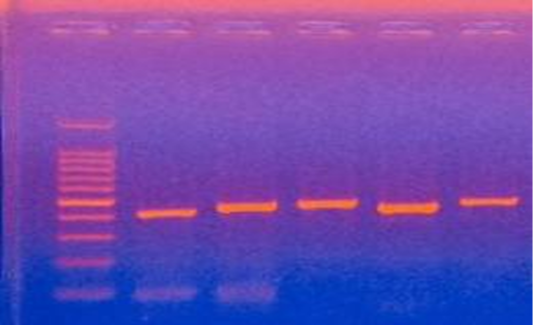
Five different primer sets were used to amplify fragments of the F gene, which plays a critical role in NDV virulence. PCR products were separated on 1.5% agarose gel stained with RedSafe (Intron, Korea), and sizes were recorded.
Fusion gene sequencing and BLAST analysis
Positive PCR products were purified and sent to Unigen Laboratory, then shipped to South Korea for Sanger sequencing. The resulting sequences were analyzed using BLASTn to determine similarity with known NDV strains.
Phylogenetic tree construction
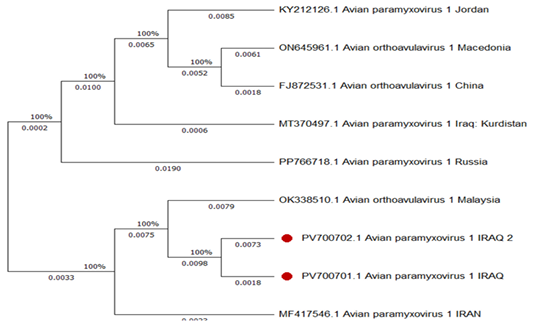
A phylogenetic tree was built using MEGA11 software with the Neighbor-Joining method and 1000 bootstrap replicates to determine the evolutionary relationships of the NDV isolates with global strains.
Results and Discussion
Real-time PCR
Real-time PCR is a highly sensitive and specific molecular technique widely used for the detection of RNA viruses, including avian Paramyxovirus (aPMV). In this study, pooled tissue samples from trachea, spleen, and brain were analyzed to evaluate viral distribution and load. The cycle threshold (Ct) values obtained were 26.32, 23.01, and 19.78 for trachea, spleen, and brain, respectively. Ct values represent the number of cycles required for the fluorescence signal to cross a predefined detection threshold and are inversely proportional to the amount of target RNA in the sample . Lower Ct values indicate higher viral loads, while higher Ct values suggest lower amounts of viral RNA. The detection of aPMV in the brain with the lowest Ct value (19.78) indicates a high viral load, reflecting the neurotropic nature of the virus. Such neurotropism is characteristic of velogenic Newcastle Disease Virus (NDV) strains, which are known for their ability to invade the central nervous system and cause neurological signs in infected birds . The presence of the virus in the spleen (Ct 23.01) suggests systemic spread, as the spleen is a major lymphoid organ responsible for immune responses and viral replication during systemic infections. Detection in the trachea (Ct 26.32) confirms respiratory tract involvement, consistent with the primary entry route and initial replication site for NDV (OIE, 2021). These findings demonstrate that the infection is not limited to a single tissue but is widespread, affecting multiple organs, which is indicative of a highly virulent strain. Real-time PCR provides both qualitative and quantitative information. Unlike conventional PCR, it allows the monitoring of amplification in real time, providing rapid detection and an estimation of viral load. This capability is particularly valuable for epidemiological studies and outbreak investigations, where knowing the distribution and intensity of viral infection across tissues can inform control strategies. In this study, the gradient of Ct values from trachea to spleen to brain illustrates the dynamics of viral replication, suggesting initial replication in the respiratory tract followed by systemic dissemination and accumulation in the central nervous system. Such patterns are critical for understanding the pathogenesis of NDV and for designing effective interventions, including targeted vaccination and biosecurity measures. Moreover, the use of pooled tissue samples enhances detection sensitivity, especially in cases where individual tissues may contain low viral titers. This approach is efficient for screening multiple birds simultaneously and provides a broader view of viral prevalence within affected flocks. The findings align with previous studies reporting that velogenic NDV strains show high viral loads in both lymphoid and nervous tissues, reflecting their aggressive nature and the severe clinical signs observed in field outbreaks . In conclusion, the real-time PCR results confirm the presence of aPMV in multiple organs, with the highest viral load in the brain, supporting the hypothesis that the isolates are velogenic and highly pathogenic. These molecular findings are consistent with clinical observations and underscore the importance of rapid molecular diagnostics in the management of NDV outbreaks. The data also highlight the necessity for continuous surveillance and molecular characterization of circulating strains to guide vaccination strategies and prevent widespread mortality in poultry populations ; OIE, 2021).
Table 1: Real-time PCR detection of avian paramyxovirus in pooled tissue samples.
| Sample description | Ct | Result |
| 3 trachea pooled in 1 sample | 26.32 | Positive |
| 3 spleens pooled in 1 sample | 23.01 | Positive |
| 3 brains pooled in 1 sample | 19.78 | Positive |
Mean death time (MDT) of NDV isolates
Mean Death Time (MDT) is a classical in vivo assay used to assess the virulence of Newcastle Disease Virus (NDV) isolates. It measures the time taken for embryonated chicken eggs to die following inoculation with the virus, providing a quantitative indicator of viral pathogenicity. In this study, tenfold serial dilutions (10⁻⁶ to 10⁻⁹) of infective allantoic fluid (AF) were prepared in phosphate-buffered saline (PBS), and 0.1 mL of each dilution was inoculated into the allantoic cavities of five 9-day-old embryonated chicken eggs per dilution. Embryo deaths were monitored twice daily over a period of seven days, and the MDT was calculated based on the average time required for viral-induced mortality. MDT is interpreted according to established criteria: velogenic strains cause death in less than 60 hours, mesogenic strains in 60–90 hours, and lentogenic strains require more than 90 hours to induce embryo mortality. In this study, the MDT values were 44 hours for the Hayder 3 isolate and 43 hours for the Hayder 4 isolate. Both values fall clearly within the velogenic range, indicating that these isolates possess high virulence potential. The short MDT observed reflects the rapid replication of the virus in embryonic tissues, leading to accelerated embryo death. This is consistent with clinical observations of acute disease and high mortality in affected poultry flocks in the field, suggesting that these isolates are capable of causing severe outbreaks. The MDT assay not only confirms the virulence of the isolates but also provides insights into the kinetics of viral replication. A shorter MDT is indicative of a highly aggressive virus capable of rapid systemic spread, which correlates with other pathogenicity measures such as Intracerebral Pathogenicity Index (ICPI) and EID₅₀ titers. The rapid embryo mortality observed in this study aligns with previous reports in the region documenting the circulation of velogenic NDV strains, which are responsible for sudden, severe losses in commercial poultry operations ; . Moreover, MDT results are valuable for comparing isolates across different geographic regions or outbreaks. The similarity of MDT values between Hayder 3 and Hayder 4 suggests that both isolates share comparable virulence characteristics, which may be associated with genetic factors, including the structure of the fusion (F) protein and its cleavage site. These molecular determinants have been shown to correlate with pathogenicity indices and in vivo assays, supporting the use of MDT as a reliable indicator of virulence. In conclusion, the MDT analysis demonstrates that both Hayder isolates are velogenic, confirming their high pathogenic potential. The short time to embryo death emphasizes the aggressive nature of these strains and their capacity to induce severe disease outbreaks in poultry populations. MDT, in combination with other virulence assessments, provides a comprehensive evaluation of NDV pathogenicity, informing epidemiological investigations, control measures, and vaccine strategy development. These findings reinforce the importance of monitoring circulating strains to predict outbreak severity and implement timely interventions in poultry management.
NDV detection in allantoic fluid by one-step real-time PCR
The one-step real-time PCR targeting a specific gene of avian Paramyxovirus (aPMV) confirmed the presence of Newcastle Disease Virus (NDV) in all tested allantoic fluid samples. The Ct values were 23.3 (Sample A) and 22.46 (Sample 3B), indicating varying viral loads. The variation in viral loads among samples was measured using the cycle threshold (Ct) values obtained from the one-step real-time PCR assay. Ct values represent the number of amplification cycles needed for the fluorescent signal to exceed a set threshold and are inversely proportional to the amount of viral RNA in the sample. Thus, lower Ct values indicate higher viral RNA concentrations, reflecting more active viral replication ; OIE, 2021). These results reflect successful virus isolation in embryonated chicken eggs, a gold standard for NDV propagation and detection . The relatively higher Ct in sample A (23.3) may indicate a lower viral titer or later stage of infection. Overall, the positive results confirm NDV presence and justify proceeding with further characterization, such as pathotyping or sequencing, to determine the virulence and genotype of the isolates .
Table 2: One-step real-time PCR detection of Newcastle disease virus (NDV) in Allantoic fluid samples
| Sample description | Ct | Result |
| Allantoic fluid # A | 23.3 | Positive |
| Allantoic fluid # 3B | 22.46 | Positive |
Virus titration, ICPI, and fusion (F) gene sequencing
Virus titration was performed using the Reed and Muench method to determine the fifty percent egg infectious dose (EID₅₀) of the NDV isolates. Serial tenfold dilutions of the virus were inoculated into five embryonated chicken eggs per dilution, and mortality was recorded over five days post-inoculation. The results showed high viral titers, with Hayder 3 exhibiting an EID₅₀ of 10⁸ and Hayder 4 reaching 10⁹. Such elevated titers correlate with rapid embryo death and are indicative of highly pathogenic, velogenic strains. These findings align with previous reports linking high EID₅₀ values to outbreaks characterized by acute clinical signs and swift mortality in poultry flocks . The intracerebral pathogenicity index (ICPI) was also assessed according to OIE guidelines. Seventy-one-days old SPF chicks were divided into seven groups of ten chicks each, with 0.05 mL of a 1:10 dilution of allantoic fluid inoculated intracerebrally. One group served as a negative control and received only PBS. Birds were monitored for eight days, scoring 0 for normal, 1 for sick, and 2 for dead. ICPI values were 1.85 for Hayder 3 and 1.90 for Hayder 4, demonstrating that both isolates can cause central nervous system manifestations and death in juvenile chickens. These results confirm the virulent genotype of the isolates and are consistent with molecular characterization of the F gene cleavage site, which typically correlates with ICPI outcomes . To further elucidate molecular determinants of virulence, positive allantoic fluid samples were prepared on FTA cards and sent to Unigen Laboratory, Babil District, for full sequencing of the Fusion (F) protein gene in South Korea. Sequencing of the F gene provides critical information on the cleavage site motifs, which are essential markers for differentiating velogenic, mesogenic, and lentogenic NDV strains, thereby complementing phenotypic pathogenicity assessments.
PCR amplification of NDV isolates
Two field isolates of suspected Newcastle Disease Virus (NDV) were obtained from commercial poultry flocks experiencing high mortality rates in Babylon and Al-Najaf governorates. PCR amplification of the F gene (a critical virulence determinant) yielded products of varying lengths across five different sets for each sample: Set 1 (407 bp), Set 2 (436 bp), Set 3 (439 bp), Set 4 (408 bp), and Set 5 (438 bp). The amplicons were visualized on 1.5% agarose gel stained with RedSafe, confirming the expected sizes and successful amplification. These fragment sizes suggest potential sequence diversity among isolates. The F gene is often used as a molecular marker to differentiate NDV strains and to assess their virulence levels .
Sequencing and BLAST analysis
PCR products from both isolates were purified and subjected to Sanger sequencing. The resulting sequences were analyzed using the BLASTn tool at NCBI. Isolate NDV-Babylon showed 99.2% identity with an NDV strain isolated in Pakistan, while isolate NDV-Najaf showed 98.8% identity with a strain from India. These high similarity values indicate that the two Iraqi isolates are genetically close to strains circulating in South Asia, which may be attributed to trade in live poultry or movement of migratory birds .
Phylogenetic tree construction
A phylogenetic tree was constructed using MEGA11 software with the Neighbor-Joining method and 1000 bootstrap replicates. The analysis revealed that both Iraqi isolates clustered within a clade containing strains from India, Pakistan, and Iran, clearly distinct from European and African NDV lineages. This phylogenetic relationship highlights the regional circulation of specific NDV genotypes and underscores the need for vaccine strains to be genetically matched with circulating field viruses to ensure optimal protection (OIE, 2021). These molecular findings confirm the introduction or persistence of South Asian-like NDV strains in Iraq and emphasize the importance of routine molecular surveillance and sequence-based monitoring to guide local vaccine formulation and epidemiological control strategies. introduces implications for vaccine design, particularly the need for local vaccine strains genetically similar to circulating viruses .
Conclusions
This study confirmed the presence of virulent Newcastle Disease Virus strains in Iraqi poultry flocks. The isolates were classified as velogenic based on MDT, ELD₅₀, ICPI, sequencing and phylogenetic analysis. These results stress the urgent need for continuous genetic monitoring of NDV, and the application of locally tailored vaccination strategies based on prevailing genotypes, updating vaccines are critical to mitigating the economic and epidemiological impact of NDV in Iraq.
Acknowledgements
The authors would like to express their sincere gratitude to the staff of the Department of Pathology and Poultry Diseases, College of Veterinary Medicine, Al-Qasim Green University, for their technical support. We also thank the poultry farm owners in Babylon and Al-Najaf governorates for their cooperation during sample collection.
Novelty Statement
This study reports the isolation and molecular characterization of two virulent Newcastle Disease Virus strains circulating in Iraq. It provides new insights into the genetic relationship between local and South Asian NDV strains, emphasizing the importance of regionally adapted vaccines for effective disease control.
Author’s Contribution
HSK: Conceptualization, study design, sample collection, molecular analysis, data interpretation, manuscript drafting. FHKA: Sample processing, laboratory experiments, data analysis, manuscript review.
Generative AI and AI-assisted technology statement
We did not use AI technology for the current research, except Grammarly for Grammar and spell check.
Conflict of interest
The authors have declared no conflict of interest regarding the publication of this study.
Figures

The size of the PCR products are: Set 1= 407 bp; Set 2 = 436 bp; Set 3 = 439 bp; Set 4 = 408; Set 5 = 438bp.The gel was 1.5% and the DNA dye is RedSafe (Intron, Korea). V: 90, Time: 45 minutes. M: DNA ladder

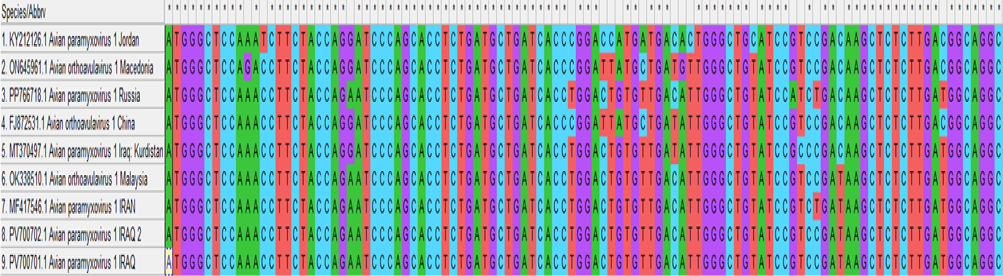
Multiple sequence alignment of nucleotide and protein sequences performed using MEGA11 software.

Phylogenetic tree constructed using MEGA11 showing Iraqi NDV isolates clustering with South Asian strains (India, Pakistan, Iran), distinct from European and African lineages, indicating regional circulation and implications for vaccine design.
References
- Aldous EW, Alexander DJ (2001). Detection and differentiation of Newcastle disease virus (avian paramyxovirus type 1). Avian Pathol., 30(2): 117–128. https://doi.org/10.1080/03079450120044515[CrossRef]
- Alexander DJ (2000). Newcastle disease and other avian paramyxoviruses. Rev. Sci. Tech. (OIE), 19(2): 443–462. https://doi.org/10.20506/rst.19.2.1231[CrossRef]
- Alexander DJ (2003). Newcastle disease, other avian paramyxoviruses, and pneumovirus infections. In: Diseases of poultry (11th ed., pp. 63–87). Iowa State Press.
- Alexander DJ (2003). Newcastle disease. Br. Poult. Sci., 44(1): 5–22. https://doi.org/10.1080/713655022[CrossRef]
- Al-Zubaidi AJ, Al-Janabi AK, Abdulwahab MK (2022). Detection and pathotyping of Newcastle disease virus in Iraq using molecular tools. Iraqi J. Vet. Sci., 36(2): 255–262.
- Bustin SA, Benes V, Garson JA, Hellemans J, Huggett J, Kubista M, Mueller R, Nolan T, Pfaffl MW, Shipley GL, Vandesompele J, Wittwer CT (2009). The MIQE guidelines: Minimum information for publication of quantitative real-time PCR experiments. Clin. Chem., 55(4): 611–622. https://doi.org/10.1373/clinchem.2008.112797[CrossRef]
- Chen L, Zhang J, Wei T, Zhang Y, Liu X (2024). Genetic evolution and phylogenetic analysis of Newcastle disease virus in Asia during 2020–2023. Viruses, 16(2): 198.
- Diel DG, da Silva LHS, Liu H, Wang Z, Miller PJ, Afonso CL (2012). Genetic diversity of avian paramyxovirus type 1: Proposal for a unified nomenclature and classification system of Newcastle disease virus genotypes. Infect. Genet. Evol., 12(8): 1770–1779. https://doi.org/10.1016/j.meegid.2012.07.012[CrossRef]
- Diel DG, Susta L, Garcia SC, Killian ML, Miller PJ (2012). Complete genome and clinicopathological characterization of a virulent Newcastle disease virus isolate from South America. J. Clin. Microbiol., 50(2): 378–387. https://doi.org/10.1128/JCM.06018-11[CrossRef]
- Dimitrov KM, Afonso CL, Yu Q, Miller PJ (2016). Newcastle disease vaccines. A solved problem or a continuous challenge? Vet. Microbiol., 206: 126–136. https://doi.org/10.1016/j.vetmic.2016.12.019[CrossRef]
- Dimitrov KM, Lee DH, Goraichuk IV, Afonso CL (2023). Global spread and genetic diversity of Newcastle disease virus: 2020–2023 update. Avian Pathol., 52(1): 1–13.
- Dimitrov KM, Ramey AM, Qiu X, Bahl J, Afonso CL (2016). Temporal, geographic, and host distribution of avian paramyxovirus 1 (Newcastle disease virus). Infect. Genet. Evol., 39: 22–34. https://doi.org/10.1016/j.meegid.2016.01.008[CrossRef]
- Kim SH, Xiao S, Paldurai A (2021). Cleavage site of the fusion protein determines Newcastle disease virus pathogenicity. J. Gen. Virol., 102(1): 001592.
- Miller PJ, Afonso CL (2011). Newcastle disease virus. In: Dufour-Zavala D, Swayne DE, Glisson JR, Pearson JE, Reed WM, Jackwood MW, Woolcock PR (Eds.), Manual of Poultry Diseases. American Association of Avian Pathologists.
- Miller PJ, Decanini EL, Afonso CL (2010). Newcastle disease: Evolution of genotypes and the related diagnostic challenges. Infection, Genetics and Evolution., 10(1): 26–35. https://doi.org/10.1016/j.meegid.2009.09.012[CrossRef]
- Mohd-Azmi ML, Khalil MI, Noor ZS (2022). Molecular pathotyping of Newcastle disease virus from outbreaks in vaccinated poultry in Southeast Asia. Vet. Microbiol., 268: 109423.
- OIE (2021). Newcastle disease technical disease card. Retrieved from https://www.woah.org/en/disease/newcastle-disease
- OIE (World Organisation for Animal Health) (2021). Manual of Diagnostic Tests and Vaccines for Terrestrial Animals. Chapter: Newcastle Disease. Retrieved from https://www.woah.org/en/what-we-do/standards/codes-and-manuals/terrestrial-manual-online-access
- Samuel AS, Emikpe BO, Akpavie SO (2013). Clinicopathological studies on experimental Newcastle disease virus infection in Nigerian local chickens. Afr. J. Biomed. Res., 16(3): 219–227.
- World Organisation for Animal Health (WOAH) (2023). Newcastle Disease – WOAH Animal Health Status and Reporting Portal. Retrieved from https://wahis.woah.org
Services
Article usage statistics
Loading…