In the present experimental study, the growth of Japanese quails was found to be significantly impacted by BSF feed compared to the group that fed a baseline diet.
In conclusion, the study demonstrated that the inclusion of 30% Black Soldier Fly Larvae (BSFL) in the diet positively influenced the growth performance of Japanese quails.
Over the ten-week experimental period, increased protein content, decreased fat content, and high mineral retention were recorded in the tissues of Japanese quails.
The inclusion of BSFL in the daily diet could therefore be considered a promising alternative protein source for quail production.
Selected from the article's own text.
Abstract
Japanese quail (Coturnix japonica) farming has emerged rapidly in the recent era as a sustainable protein source due to its rapid growth rate, easy management and high-quality meat production. The increasing demand of the alternative, sustainable and cost-effective feed for quail farming has intensified the interest to use the insect-based meal as a potential and environmentally friendly substitute. The study was designed to evaluate the effects of Black Soldier Fly (Hermetia illucens) Larvae (BSFL) as an alternative protein source on the growth performance, mortality, meat composition, and mineral profile of Coturnix japonica over 10 weeks. One hundred and twenty quails were divided into control and experimental groups 60 birds in each group. Then the groups were further subdivided into three replicates containing 20 birds each. The experimental group received a diet containing 30% BSFL and 70% basal feed while the control group was fed 100% of basal feed. Experimental birds showed significantly higher body weight gain (175.48±4.28 g) compared to the control group (165.73±3.54 g) at week 10 (p<0.05). Protein content in breast meat increased from 64.63 ± 6.36 g/100 g in the control group to 80.15 ± 7.73 g/100 g in the experimental group, representing an approximately 24.0% increase (p<0.05). In contrast, fat content decreased (p<0.05) by 41.4%, from 23.05 ± 1.53 g/100 g in the control group to 13.51 ± 0.70 g/100 g in the experimental group. Higher concentrations (p<0.05) of essential minerals, including calcium (58.58 ± 0.94 µg/g), iron (4.48 ± 0.42 µg/g), phosphorus (52.21 ± 2.11 µg/g), and potassium (418.33 ± 17.55 µg/g), were also observed in the breast meat of BSFL-fed quails as compared with control group. Mortality was mainly recorded during the first two weeks, after that no significant mortality was observed during the remaining experimental period. The findings suggest that BSFL can serve as an effective, sustainable and potential protein substitute to improve growth performance, nutritional quality, and mineral composition of quail meat.
Japanese quail (Coturnix japonica), a small poultry species widely used for meat and egg production due to their rapid growth rate, high reproductive efficiency, low feed and space requirements, and high-quality lean meat ; . Quail meat is rich in protein, essential vitamins, and minerals such as iron and zinc, while being relatively low in fat, making it a healthier alternative to other poultry meats ; .
Optimal growth and production in quails depend on diets containing adequate energy, high-quality protein, and balanced amino acids . Traditionally, soybean meal has been a major protein source in poultry feeds; however, rising costs, import dependency, and concerns related to genetically modified organisms (GMOs) have increased the need for alternative protein sources.
In this context, insect meal has emerged as a sustainable and nutritionally rich substitute for conventional feed ingredients. Among insect-based proteins, black soldier fly larvae (Hermetia illucens) are considered highly promising due to their high protein content, favorable amino acid profile, and ability to convert organic waste into valuable biomass ; . Insect meals also contribute to environmental sustainability by reducing reliance on land-intensive protein sources and supporting waste recycling systems.
The growing global demand for sustainable animal protein production has further intensified interest in circular bioeconomy approaches, where insects play a key role in converting organic waste into high-value feed ingredients. This approach not only reduces environmental pollution but also decreases dependency on conventional feed resources, thereby improving the sustainability of poultry production systems. In addition, insect farming requires significantly less land, water, and energy compared to traditional protein sources, making it a viable solution for future livestock nutrition challenges .
Black soldier fly larvae (BSFL) meal contains essential amino acids, lipids, and bioactive compounds such as lauric acid and chitin, which may enhance immune response, gut health, and nutrient utilization in poultry. These properties can improve feed efficiency, growth performance, and overall health status of birds ; . Additionally, insect-based proteins have been reported to enhance meat quality by improving amino acid composition, fatty acid profiles, and mineral content while potentially reducing cholesterol levels .
Recent advances in poultry nutrition have also highlighted the functional properties of insect-derived bioactive compounds in modulating gut microbiota. Chitin and antimicrobial peptides present in BSFL may promote beneficial microbial populations while suppressing pathogenic bacteria, thereby improving nutrient absorption and immune resilience in quails. These physiological benefits are particularly important in intensive production systems where birds are exposed to environmental and nutritional stressors .
Several studies have demonstrated that replacing conventional protein sources such as soybean meal, fish meal, or meat and bone meal with insect meal can improve growth rate, feed conversion ratio, and carcass characteristics in Japanese quails ; . BSFL inclusion has also been associated with improved gut health, immune function, and nutrient digestibility, contributing to better productivity. Furthermore, BSFL meal is rich in minerals including calcium, phosphorus, potassium, magnesium, and trace elements, which can enhance bone strength, muscle development, and overall meat nutritional value (Dalle-Zotte et al., 2019). However, variations in inclusion levels may influence meat quality parameters such as moisture, fat, protein content, pH, water-holding capacity, and cooking loss .
Despite increasing research on insect-based diets in poultry, no studies have evaluated the effects of whole full-fat Black Soldier Fly Larvae (Hermetia illucens) incorporated directly into the basal diet of Japanese quail without reformulating the diets to be isocaloric or isonitrogenous. In the present study, the experimental diet consisted of 30% whole dried BSFL and 70% basal feed, whereas the control group received 100% basal feed. We hypothesized that inclusion of whole full-fat BSFL would improve growth performance and meat quality without adversely affecting mortality in Japanese quail. Therefore, this study aimed to evaluate the effects of BSFL inclusion on growth performance, proximate meat composition, and mortality rate, thereby assessing its potential as a sustainable alternative protein source in poultry nutrition.
MATERIALS AND METHODS
Place of work, purchasing of quail birds and ethical consideration
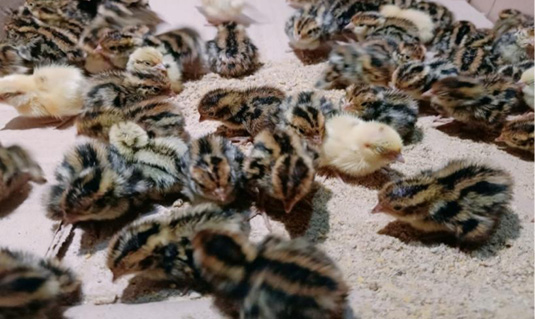
The research work was carried out in Research Laboratory, Lahore Garrison University (LGU) and Nutrition Laboratory of Food and Biotechnology, PCSIR at Ferozepur Road, Lahore, Pakistan. One-day-old quails (n= 120) were purchased from Hussain Batair Farm Afshan PK Road, Lahore (Figure 1). The research study was approved from the ethical committee LGU, Lahore.
Preparation of control and experimental diet
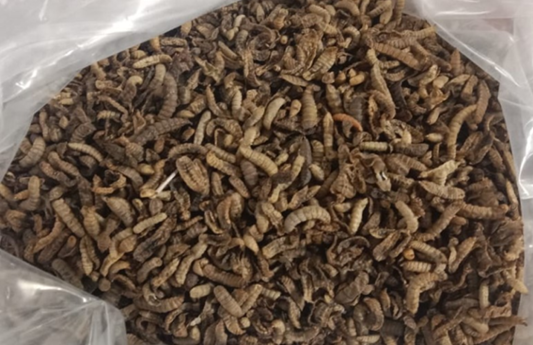
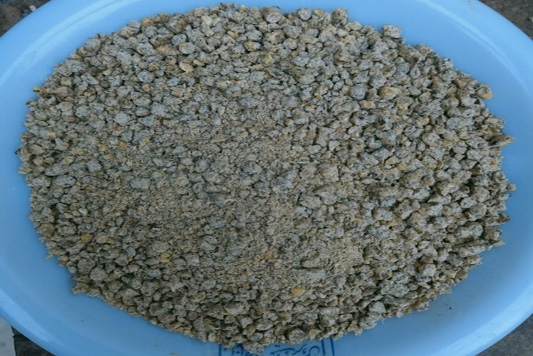
Two dietary treatments were used in the experiment: A control diet and a BSFL-based experimental diet. The basal diet, purchased from Chuburji, Lahore, was used as the control diet. The experimental diet was prepared by incorporating 30% dried BSFL (Hermetia illucens) meal, purchased from a local supplier in Lahore, with 70% of the basal diet (Figures 2 and 3). The dried BSFL retained its naturally occurring lipid content and was ground using an electric grinder, passed through a sieve to achieve uniform particle size, and thoroughly mixed with the basal diet before feeding. The experimental diet was not reformulated to achieve an isocaloric or isonitrogenous composition; therefore, the observed responses may reflect the combined effects of BSFL-derived nutrients and changes in the overall dietary nutrient profile. This unadjusted inclusion approach was intentionally adopted to evaluate the direct effects of BSFL incorporation on growth performance, meat composition, and health parameters of Japanese quail.
Housing and management
A total of 120 one-day-old Japanese quail chicks were reared under controlled conditions and fed a basal diet for the first two week. Afterward, the birds were randomly allocated into two dietary treatment groups: a control group and an experimental group, each consisting of 60 birds. Each group was further divided into three replicates of 20 birds each. The control group received a diet consisting of 100% basal feed, whereas the experimental group was fed a diet containing 70% basal feed and 30% BSFL meal. After 2.5 months, ten quails from each group were slaughtered using the Halal method for further laboratory analysis (National Research Council, 2011; .
Growth performance analysis
Growth performance of Japanese quail was evaluated over 10 weeks by recording feed intake and weekly body weight gain ; .
Proximate analysis
Proximate composition of quail meat, including moisture, ash, fat, crude protein, crude fiber, and mineral contents, was determined using standard analytical methods as mentioned by Yasmeen et al. (2023). Moisture was measured by oven drying one gram of sample, ash content by muffle furnace incineration, fat by Soxhlet extraction using n-hexane, and protein by the Kjeldahl method involving digestion, distillation, and titration. Crude fiber was estimated through acid–alkali digestion followed by ashing.
Mineral analysis
The minerals were analyzed using the dry-ashing technique by AOAC (2005). About 2 g of the meat samples was weighed and placed in a porcelain crucible and incinerated in a muffle furnace at 550 °C until the formation of white ash. Thereafter, 10 mL of 6 N hydrochloric acid (HCl) was added to the ash. This solution was then heated in a hot plate in a fume cupboard until excess acid was evaporated. Distilled water was used to reconstitute the sample, which was filtered through a Whatman No. 42 filter paper and pipetted in a 50 mL volumetric flask. The volume was brought to the mark with distilled water. Spectrophotometric analysis was done on the sample solutions using the specified wavelength for each mineral.
Statistical analysis
Statistical analysis was carried out by independent sample t-test and significant differences were found between control and experimental groups at p value of <0.05.
RESULTS
Growth performance analysis
Growth performance was assessed on a weekly basis, and the experimental birds showed greater body weight gain compared to the control group throughout the study period. At week 4, the body weight of the experimental group (100.26±4.75 g) was higher than the control group (94.08±6.92 g). Similarly, at week 8, the experimental group reached 154.898±7.104 g compared to 142.93±4.75 g in the control group. At the end of week 10, the experimental birds achieved a final body weight of 175.48±4.28 g, whereas the control group recorded 165.73±3.54 g (Table 1). Statistical analysis revealed statistically significant differences in body weight gain between groups (p = 0.031).
Table 1: The absolute growing body weight of quails in control and experimental groups.
Growing body weight
Control group
(g)
Experimental group (g)
1st week
12.60±1.55
12.57±1.49
4th week
94.08±6.92
100.26±4.75*
8th week
142.93±4.75
154.89±7.10*
10th week
165.73±3.54
175.48±4.27*
* Indicates statistically significant difference compared to control group (p < 0.05).
Proximate analysis
Estimation of moisture content
Quail breast and thigh meat samples from control and experimental groups were collected and tested for moisture contents. The moisture of control and experimental groups compared, and it was noticed that breast (70.14±1.83 g/100 g) and thigh (69.62±0.84 g/100 g) of experimental group have higher percentage of moisture contents than the breast (64.95±0.07 g/100 g) and thigh (65.21±0.14 g/100 g) of control group as shown in (Table 2).
Estimation of ash content
Ash estimation was carried out for both breast and thigh samples and high level of ash was recorded for breast and thigh of experimental group (2.99±0.21 g/100 g), (2.51±0.72 g/100 g) compared to control group (2.77±0.55 g/100 g), (2.39±1.03 g/100 g) respectively while, a non-significant difference (p = 0.31) was found for independent sample t test (Table 2).
Estimation of fiber
The highest fiber content was recorded in the control group compared with the experimental group in both breast and thigh meat samples. The level of fiber in breast samples of control group was high (0.87±0.35 g/100 g) compared to experimental group (0.71±0.68 g/100 g). While, inverse relation was noticed for thigh as values were high for experimental group (0.46±0.18 g/100 g) than control group (0.61±0.19 g/100 g). The data were statistically analyzed using an independent-samples t-test. A significant difference was observed in breast meat samples (P = 0.043), whereas the difference in thigh meat samples was non-significant (Table 2).
Estimation of protein
The level of protein in breast samples of experimental group was (80.15±7.73 g/100 g) and higher as compared to control group (64.63±6.36 g/100 g). Similarly, the level of protein was recorded high in thigh of experimental group (75.02±2.73 g/100 g) than control group (62.31±7.61 g/100 g). Data was also statistically analyzed for independent sample T test and significant differences (p = 0.043) were recorded for breast samples between control and experimental group (Table 2).
Estimation of fat
The control group showed higher fat content in both breast (23.05 ± 1.53 g/100 g) and thigh (25.02 ± 0.71 g/100 g) meat compared with the experimental group, which had fat contents of 13.51 ± 0.70 and 14.17 ± 1.51 g/100 g, respectively. A significant difference was observed between the groups (P= 0.025) for both breast and thigh meat samples (Table 2).
Table 2: Proximate analysis of fresh quail meat samples of control and experimental groups.
S. No.
Parameter
Organs
Control group (g/100 g)
Experimental group (g/100 g)
1.
Moisture
Breast
64.95±0.07
70.14±1.83
Thigh
65.21±0.14
69.62±0.84
2.
Ash
Breast
2.77±0.55
2.99±0.21
Thigh
2.39±1.03
2.51±0.72
3.
Fiber
Breast
0.87±0.35
0.71±0.68
Thigh
0.46±0.18
0.61±0.19
4.
Protein
Breast
64.63±6.36
80.15±7.73*
Thigh
62.31±7.61
75.02±2.73*
5.
Fat
Breast
23.05±1.53
13.51±0.70*
Thigh
25.02±0.71
14.17±1.51*
* Indicates statistically significant difference compared to control group (p < 0.05).
Estimation of minerals
Essential mineral analysis was performed on whole meat of Japanese quail to determine the levels of calcium, iron, sodium, phosphorus, and potassium concentrations in breast and thigh meat. The experimental group fed with BSFL showed higher concentrations of most essential minerals compared to the control group. Notably, iron (4.48±0.42 µg/g), phosphorus (52.21±2.11 µg/g), and potassium (418.33±17.55 µg/g) levels in breast meat were significantly higher (p < 0.05) in the experimental group, indicating improved nutritional quality of quail meat due to the insect-based diet (Table 3).
Records of mortality data
Mortality records of Japanese quail were monitored at four key intervals during the study. In the 1st week, mortality was recorded as 3 birds in the control group and 2 birds in the experimental group. By the 4th week, no mortality was observed in either group, indicating stabilization after the initial adaptation phase. A single mortality was recorded in the control group at the 8th week, while no mortality was observed in the experimental group. By the 10th week, both groups showed complete survival with no further mortality recorded, suggesting improved adaptability and overall survival under the experimental conditions (Table 4).
Table 3: Estimation of essential minerals in control and experimental groups of quails.
S. No.
Metals
Organs
Control
(µg/g)
Experimental (µg/g)
1
Calcium
Breast
50.92±1.30
58.58±0.94*
Thigh
45.72±0.81
47.62±1.78
2
Iron
Breast
3.34±0.28
4.48±0.42*
Thigh
2.52±0.09
2.69±0.77
3
Sodium
Breast
453.11±3.06
532.61±86.83
Thigh
356.70±13.99
429.65±16.69*
4
Phosphorus
Breast
45.16±2.10
52.21±2.11*
Thigh
42.06±3.69
51.89±1.68*
5
Potassium
Breast
300±21.79
418.33±17.55*
Thigh
270±20
304±14.42*
* Indicates statistically significant difference compared to control group (p < 0.05).
Table 4: A mortality record of Japanese quails during the experiment.
No. of weeks
Control group
Experimental group
1st week
03
02
4th week
No mortality
No mortality
8th week
01
No mortality
10th week
No mortality
No mortality
DISCUSSION
In the present experimental study, the growth of Japanese quails was found to be significantly impacted by BSF feed compared to the group that fed a baseline diet. The group that fed BSF larvae had a positive impact on the quail’s growth in terms of overall weight gain, which was measured at the interval of 4 week. This study supported earlier investigations on diets based on insects. The body weight gain and feed conversion ratio significantly improved when MBM was used in place for insect meal obtained from S. littoralis larvae (p ≤ 0.05).
A total of two experimental group quails died during the study as compared with the four quail in the control group, indicating a positive effect of experimental diet on the health and survival of birds. The improved growth performance may be attributed to the high biological value of insect meal. Previous studies have also reported that insect-based diets enhance productivity in poultry, including improved body weight gain, feed intake, and feed conversion ratio when Hermetia illucens meal replaces soybean meal . Similarly, partial substitution of fish meal with maggot meal in quails improved feed efficiency and growth performance , while mealworm meal has been shown to be safe up to 25% inclusion without affecting growth ; .
The results of the proximate analysis also supported that insect based diet has potential to use in quail farming as an alternative and sustainable protein feed source. When moisture content of Japanese quail meat was analyzed in this study, results showed that the experimental group fed black soldier fly larvae (BSFL) had significantly higher moisture content in breast (70.14±1.83 g/100 g) and thigh (69.62±0.84 g/100 g) than the control group fed a basal diet. These results supported by other studies that indicate the beneficial effects of insects-based diet on quail meat quality and suggest that adding BSFL and other insects may improve the meat quality of Japanese quail by increasing its water retention, thereby enhancing its texture and juiciness ; ; ; ; .
According to this study, the amount of ash in Japanese quail meat did not alter considerably when BSFL meal was added to the diets. The amount of ash in the experimental group was only slightly higher in breast (2.99±0.21 g/100 g) and thigh (2.51±0.72 g/100 g) than the control group breast (2.77±0.55 g/100 g) and thigh (2.39±1.03 g/100 g), and the current study’s findings are consistent with and does not match with the result of ; who described that the experimental group fed BSFL had meat from Japanese quail that was considerably higher in ash contents and minerals than the control group fed a basic diet.
There was not a noticeable difference seen between the experimental and control groups according to the study’s fiber analysis. This might be due to the reason that fiber is a component of a plant-based diet, and both groups almost had received same fiber content while, not aligned with the findings of Waithaka et al. (2022) and Mat et al. (2021) whose result showed that BSF larvae can significantly elevate fiber level in quail meat.
The fat analysis of quail meat showed a significant difference (p<0.05) between the control group breast (23.05±1.53 g/100 g) and thigh (25.02±0.71 g/100 g), and the experimental group breast (13.51±0.701 g/100 g) and thigh (14.17±1.51), which was fed BSFL. When quails were fed BSFL, their lipid profile improved and they had a higher percentage of unsaturated fatty acids and a reduced overall fat content. This suggests that quail meat’s nutritional value increased by including BSFL in the diet. The outcomes coincide with the researches of Silva et al. (2024) and Schiavone et al. (2017) showed the advantages of using insect-based meals to enhance meat quality and lower total fat content. The fat from BSF larvae alters the fatty acid profiles of quail meat.
The protein content of the experimental group was higher in breast (80.15±7.73 g/100 g) and thigh (75.02±2.73 g/100 g) than control group breast (64.63±6.36 g/100 g) and thigh (62.30±7.61 g/100 g) p value is p<0.05. Result is consistent with earlier studies that have emphasized the rich amino acid profile and effective protein conversion of BSFL. According to , these results imply that adding BSFL to poultry diets can improve the quality of the meat. The high digestibility and balanced nutritional composition of the larvae may also be responsible for the increased protein levels .
Full-fat BSFL meal typically contains approximately 5–7% chitin on a dry-matter basis. Therefore, inclusion of 30 g of BSFL meal would provide approximately 1.5–2.1 g of chitin. Quails can generally tolerate approximately 1–2% chitin in the complete diet without adverse effects .
Mineral composition analysis demonstrated significantly elevated concentrations of calcium and iron in the breast tissue of the experimental group (58.58±0.94 µg/g and 4.48±0.42 µg/g, respectively) compared with the control group (50.92 ± 1.30 µg/g and 3.34 ± 0.28 µg/g, respectively). However, in case of sodium the high concentration was determined in the experimental thigh sample (429.65±16.69 µg/g) in comparison to the control group (356.70±13.99 µg/g). The analysis results also indicated that the concentration of the phosphorus and potassium in the breast and thigh samples was significantly high in the experimental group, measuring (52.21±2.11 µg/g and 51.89±1.68 µg/g in breast and 418.33±17.55 µg/g and 304±14.42 µg/g in thigh respectively) as compared to the control groups measuring (45.16±2.10 µg/g and 42.06±3.69 µg/g in breast and 300±21.79 µg/g and 270±20 µg/g in thigh, respectively).
These findings are consistent with other studies that suggest BSF larvae can raise the levels of iron, potassium, and phosphorus in quail meat and so increase its quality due to their high nutritional content and ease of digestion. A variety of physiological functions in quails depend on minerals such calcium, phosphorus, potassium, magnesium, sodium, iron, zinc, copper, and manganese, which are found in BSFL ; . This study does not match with the findings of ; who suggested that iron, potassium, and phosphorus levels in quail meat are not considerably impacted by BSF larvae. They are more advantageous as nutritious animal feed.
CONCLUSION
In conclusion, the study demonstrated that the inclusion of 30% Black Soldier Fly Larvae (BSFL) in the diet positively influenced the growth performance of Japanese quails. Over the ten-week experimental period, increased protein content, decreased fat content, and high mineral retention were recorded in the tissues of Japanese quails. The inclusion of BSFL in the daily diet could therefore be considered a promising alternative protein source for quail production. However, further assessment of the economic costs and benefits of BSFL-based diets is recommended to evaluate their feasibility for large-scale commercial production.
Acknowledgement
The authors gratefully acknowledge the Head of the Department of Biology, Lahore Garrison University, Lahore, Pakistan, for providing the necessary laboratory facilities and institutional support to conduct this study.
Novelty Statement
This study is novel, as limited information is available on the direct use of whole, full-fat Black Soldier Fly Larvae (BSFL; Hermetia illucens) in Japanese quail diets without reformulation. This study evaluated a 30% whole dried BSFL diet for its effects on growth performance, meat composition, and mortality. The findings support BSFL as a potential alternative protein source for quail production.
Author’s Contribution
RY: Conceptualization, formal analysis, supervision, writing review and editing. AK: Visualization. SN: Resources. I: Investigation. writing original draft.
Generative AI and AI assisted technology statement
The authors declare that no generative AI and AI assisted technology was used in the creation of this manuscript.
Conflict of interest
The authors have declared no conflict of interest.
Figures
Figure 1:.
Day-old Japanese quails (Coturnix japonica).
Figure 2:.
Black soldier fly larvae for the experimental diet.
Figure 3:.
Basal diet.
References
Ait-Kaki A, Hornick JL, El Otmani S, Chebli Y, Moula N (2021). Effect of dried mealworms (Tenebrio molitor) larvae and olive leaves (Olea europaea L.) on growth performance, carcass yield and some blood parameters of Japanese quail (Coturnix coturnix japonica). Animals, 11: 1631. https://doi.org/10.3390/ani11061631[CrossRef]
AOAC (2005). Official methods of analysis of AOAC International. 18th ed. AOAC International, Gaithersburg, Maryland, USA.
Aviagen (2022). Ross broiler management handbook. Aviagen Ltd.
Boni I, Nurul H, Noryati I (2010). Comparison of meat quality characteristics between young and spent quails. Int. Food Res. J., 17: 661–667.
Bovera F, Loponte R, Marono S, Piccolo G, Parisi G, Iaconisi V, Gasco L, Nizza A (2016). Use of Tenebrio molitor larvae meal as protein source in broiler diet: Effect on growth performance, nutrient digestibility, and carcass and meat traits. J. Anim. Sci., 94: 639–647. https://doi.org/10.2527/jas.2015-9201[CrossRef]
Cullere M, Tasoniero G, Giaccone V, Miotti-Scapin R, Claeys E, De Smet S, Dalle Zotte A (2016). Black soldier fly as dietary protein source for broiler quails: Apparent digestibility, excreta microbial load, feed choice, performance, carcass and meat traits. Animal, 10: 1923–1930. https://doi.org/10.1017/S1751731116001270[CrossRef]
Cullere M, Woods MJ, Van Emmenes L, Pieterse E, Hoffman LC, Dalle Zotte A (2019). Hermetia illucens larvae reared on different substrates in broiler quail diets: Effect on physicochemical and sensory quality of the quail meat. Animals, 9: 525. https://doi.org/10.3390/ani9080525[CrossRef]
Dabbou S, Gai F, Biasato I, Capucchio MT, Biasibetti E, Dezzutto D (2018). Black soldier fly defatted meal as a dietary protein source for broiler chickens: Effects on growth performance, blood traits, gut morphology and histological features. J. Anim. Sci. Biotechnol., 9: 49. https://doi.org/10.1186/s40104-018-0266-9[CrossRef]
Dalle Zotte A, Singh Y, Michiels J, Cullere M (2019). Black soldier fly (Hermetia illucens) as dietary source for laying quails: Live performance, egg physico-chemical quality, sensory profile and storage stability. Animals, 9: 115. https://doi.org/10.3390/ani9030115[CrossRef]
de Souza Vilela J, Andronicos NM, Kolakshyapati M, Hilliar M, Sibanda TZ, Andrew NR, Swick RA, Wilkinson S, Ruhnke I (2021). Black soldier fly larvae in broiler diets improve broiler performance and modulate the immune system. Anim. Nutr., 7: 695–706. https://doi.org/10.1016/j.aninu.2020.08.014[CrossRef]
Dias AN, Reis TL, Quintero JCP, Calixto LF (2020). Fiber levels in laying quail diets. An. Acad. Bras. Cienc., 92: e20190650. https://doi.org/10.1590/0001-3765202020190650[CrossRef]
Finke MD (2007). Estimate of chitin in raw whole insects. Zoo Biol., 26: 105–115. https://doi.org/10.1002/zoo.20123[CrossRef]
Hawkey KJ, Lopez-Viso C, Brameld JM, Parr T, Salter AM (2021). Insects: A potential source of protein and other nutrients for feed and food. Annu. Rev. Anim. Biosci., 9: 333–354. https://doi.org/10.1146/annurev-animal-021419-083930[CrossRef]
Khan SH (2018). Recent advances in role of insects as alternative protein source in poultry nutrition. J. Appl. Anim. Res., 46: 1144–1157. https://doi.org/10.1080/09712119.2018.1474743[CrossRef]
Lu S, Taethaisong N, Meethip W, Surakhunthod J, Sinpru B, Sroichak T, et al. (2022). Nutritional composition of black soldier fly larvae (Hermetia illucens L.) and its potential use as alternative protein sources in animal diets: A review. Insects, 13: 831. https://doi.org/10.3390/insects13090831[CrossRef]
Makkar HPS, Tran G, Heuzé V, Ankers P (2014). State-of-the-art on use of insects as animal feed. Anim. Feed Sci. Technol., 197: 1–33. https://doi.org/10.1016/j.anifeedsci.2014.07.008[CrossRef]
Mancini S, Vitali A, Meneguz M, Volterrani C, Battisti S, Cucci S, Carvelli A, Santori D, Grossi G, Batistini E, Lacetera N (2025). Full-fat Hermetia illucens larvae meal as a sustainable soybean meal substitute in laying hen diets: effects on performance, egg quality, and shelf-life. Italian J. Anim.Sci., 24(1):1586-95. https://doi.org/10.1080/1828051X.2025.2539251[CrossRef]
Mat K, Mohamad NAS, Rusli ND, Rahman MM, Harun HC, Al-Amsyar SM, Mahmud M (2021). Preliminary study on the effect of feeding black soldier fly larvae (BSFL) on growth and laying performance of Japanese quail (Coturnix japonica). Int. J. Agric. Technol., 17: 977–986. https://li04.tci-thaijo.org/index.php/IJAT/article/view/6081
Mohammad SF, Shah AA, Wanapat M, El-Mogy MM, Al-Hoshani N, Alyami EM (2026). Utilizing insects to convert waste into nutrients for sustainable feed and food production. Entomol. Res., 56: e70105. https://doi.org/10.1111/1748-5967.70105[CrossRef]
Mohassesi AR, Kuhi HD, Mohit A, Ghovvati S (2025). Effect of dietary inclusion of gamma-ray irradiated black soldier fly larvae or grasshopper on blood metabolites and immunity in broiler chickens. Poult. Sci., 106012. https://doi.org/10.1016/j.psj.2025.106012[CrossRef]
National Research Council (2011). Guide for the care and use of laboratory animals. 8th ed. National Academies Press.
Nguyen H, Quan V, Thi M, Tam L, Le T, Le N (2024). Effect of inclusion of black soldier fly larvae (Hermetia illucens) meal in diets on growth performance and meat quality of growing quail. Livest. Res. Rural Dev., 35.
Prates JVS, Braga YC, Pereira DD, da Costa DV (2023). Insect protein in the feeding of Japanese quail: A review. Res. Soc. Dev., 12: e21212139386. https://doi.org/10.33448/rsd-v12i1.39386[CrossRef]
Rido M, Maulana F, Fajri F, Agasi SY, Susalam MK, Prima HS, Montesqrit, Harnentis, Damela P (2026). A comparative study of fresh blood and probio FM–fermented tofu waste as growth media for black soldier fly (Hermetia illucens) and their application in laying quail feed. J. Anim. Health Prod., 14: 458–466. https://doi.org/10.17582/journal.jahp/2026/14.2.458.466[Full text][CrossRef]
Saeed M, Aslam F, Khan MS, Kamboh AA, Farooq Z, Khan RU, Sultan R, Moryani AA, Chen H (2025). Nutritional significance and health benefits of quail’s meat and eggs: An empirical review. Pak. J. Zool., 57: 439. https://doi.org/10.17582/journal.pjz/20220507070529[Full text][CrossRef]
Sakurai H (1978). Influence of dietary levels of fiber and fat on laying performance of Japanese quail. Jpn. Poult. Sci., 15: 102–107. https://doi.org/10.2141/jpsa.15.102[CrossRef]
Salahuddin M, Abdel-Wareth AA, Hiramatsu K, Tomberlin JK, Luza D, Lohakare J (2024). Flight toward sustainability in poultry nutrition with black soldier fly larvae. Animals, 14: 510. https://doi.org/10.3390/ani14030510[CrossRef]
Sayed WA, Ibrahim NS, Hatab MH, Zhu F, Rumpold BA (2019). Comparative study of the use of insect meal from Spodoptera littoralis and Bactrocera zonata for feeding Japanese quail chicks. Animals, 9: 136. https://doi.org/10.3390/ani9040136[CrossRef]
Schiavone A, Cullere M, De Marco M, Meneguz M, Biasato I, Bergagna S, Dezzutto D, Gai F, Dabbou S, Gasco L, Dalle Zotte A (2017). Partial or total replacement of soybean oil by black soldier fly larvae (Hermetia illucens L.) fat in broiler diets: Effect on growth performances, feed choice, blood traits, carcass characteristics and meat quality. Ital. J. Anim. Sci., 16: 93–100. https://doi.org/10.1080/1828051X.2016.1249968[CrossRef]
Secci G, Dabbou S, Lira de Medeiros AC, Addeo NF, Atallah E, Parisi G, Moniello G, Bovera F (2022). Low dietary inclusion levels of Tenebrio molitor larva meal slightly modify growth performance, carcass and meat traits of Japanese quail (Coturnix japonica). J. Sci. Food Agric., 102: 6578–6585. https://doi.org/10.1002/jsfa.12023[CrossRef]
Silva BCR, Paulino MTF, da Silva LAL, de Moura Andrade JM, Marcato SM (2024). Black soldier fly (Hermetia illucens) larvae meal improves quail growth performance. Trop. Anim. Health Prod., 56: 1–8. https://doi.org/10.1007/s11250-024-03899-y[CrossRef]
Siregar M, Tumanggor S (2022). Effect of maggot BSF meal supplementation on slaughter weight, carcass weight, and carcass percentage of 8-week-old quails. J. Visi Eksakta, 3: 122–130. https://doi.org/10.51622/eksakta.v3i1.1106[CrossRef]
Waithaka MK, Osuga IM, Kabuage LW, Subramanian S, Muriithi B, Wachira AM, Tanga CM (2022). Evaluating the growth and cost–benefit analysis of feeding improved indigenous chicken with diets containing black soldier fly larva meal. Front. Insect Sci., 2: 933571. https://doi.org/10.3389/finsc.2022.933571[CrossRef]
Widjastuti T, Wiradimadja R, Rusmana D (2014). The effect of substitution of fish meal by black soldier fly (Hermetia illucens) maggot meal in the diet on production performance of quail (Coturnix coturnix japonica). Anim. Sci., 57: 125–129.
Yasmeen R, Gillani SS, Iqbal SS, Usman S (2023). Effect of almond and thyme oils on the nutritional profile of broiler and quail meat. Int. Health Rev., 3: 1–18. https://doi.org/10.32350/ihr.0302.01[CrossRef]
Yildirim U, Sarica S, Kanoglu B (2020). Defatted yellow mealworm larvae (Tenebrio molitor L.) meal as possible alternative to fish meal in quail diets. S. Afr. J. Anim. Sci., 50: 481–491. https://doi.org/10.4314/sajas.v50i3.15[CrossRef]
Yu M, Li Z, Chen W, Rong T, Wang G, Li J, Ma X (2019). Use of Hermetia illucens larvae as a dietary protein source: Effects on growth performance, carcass traits, and meat quality in finishing pigs. Meat Sci., 158: 107837. https://doi.org/10.1016/j.meatsci.2019.05.008[CrossRef]
Zadeh ZS, Kheiri F, Faghani M (2019). Use of yellow mealworm (Tenebrio molitor) as a protein source on growth performance, carcass traits, meat quality and intestinal morphology of Japanese quails (Coturnix japonica). Vet. Anim. Sci., 8: 100066. https://doi.org/10.1016/j.vas.2019.100066[CrossRef]
Zheng L, Li Q, Zhang J, Yu Z (2012). Double the biodiesel yield: Rearing black soldier fly larvae, Hermetia illucens, on solid residual fraction of restaurant waste after grease extraction for biodiesel production. Renew. Energy, 41: 75–79. https://doi.org/10.1016/j.renene.2011.10.004[CrossRef]