
The present study was focused on determining the effect of L-tryptophan on quality of sperm and its fertilizing capacity in endangered trout Salmo coruhensis, Anatolian trout Salmo rizeensis and rainbow trout Oncorhynchus mykiss. Different activation media (NaCl, 0.3%; NaHCO3, 1%) were supplemented with L-tryptophan [Control (0), 0.5, 1, 2, 3, 4 and 5 mM] for assessing sperm motility and its duration, fertility and hatching rate of eggs. The results from the present study indicated that addition of L-tryptophan increased the motility rate and duration in O. mykiss, S. rizeensis and S. coruhensis compared to control group. Highest sperm motility rate and its duration, and fertility and hatching rate of eggs of O. mykiss, S. rizeensis and S. coruhensis were 0.5 mM, 5 mM and 2 mM, respectively. To conclude, sperm quality and fertility were positively affected by quantitative changes different concentrations of L-tryptophan. In addition, L-tryptophan can be used in activation medium for O. mykiss, S. rizeensis and S. coruhensis.
Research Article · Volume 50, Issue 3, 12 April 2018 · Open Access
In vitro Effect of L-Tryptophan on the Quality and Fertilizing Capacity of Sperms of Endangered Species of Trouts
Affiliations & Notes ⌄
- 1Fisheries Faculty, Munzur University, Tunceli 62000, Turkey , * Corresponding author: filizkutluyer@hotmail.com
Article Info ⌄
- Journal:
- Pakistan Journal of Zoology
- Published:
- 12 April 2018

From the article
- Sperm parameters (mean ± SD) are presented in Table I. Effect of L-tryptophan on the motility rate and duration, fertility and hatching rate of O. mykiss sperm was shown in Figure 1.
- In S. rizeensis, an increase in the concentration of L-tryptophan in activation media caused a significant increase in the motility rate and duration of sperm.
- In S. coruhensis, a remarkably decrease was observed in motility duration after concentration 3 mM.
- L-tryptophan was used efficiently in activation medium for rainbow trout O. mykiss, Anatolian trout S. rizeensis, endangered trout S. coruhensis sperm.
Selected from the article's own text.
Abstract
Introduction
Oncorhynchus mykiss and Salmo trutta are the most important Salmonid fish species owing to its aquaculture potential, economic value and wide consumer demand ; Kocabas and Bascinar, 2013). Salmo trutta forms resident populations in the upper streams of rivers and occurs in North Africa, Europe, West Asia and Anatolia ; ; Kocabas and Bascinar, 2013). In addition, it is an important potential species for recreational fishery. Recently, S. t. labrax and S. t. macrostigma ecotype have been described by Turan et al. (2009) as S. coruhensis and S. rizeensis ; . In addition, S. coruhensis is an endemic anadromus fish and only distributed in the rivers of Eastern Black Sea Region (Kocabas and Bascınar, 2013). In particular, populations of the species are affected by natural hybridization, the local devastation in water sources through habitat fragmentation and modification, water eutrophication and contaminations, environmental instability and global warming ; ; ; . Sperm motility is the essential functional parameter for successful fertilization in fish ; . Sperm cells in most fish species immotile in seminal fluid and require to release into the water in order to trigger motility and become metabolically active ; . Therefore, characteristics of activation media are crucial in terms of initiation and progression of sperm motility . In addition, determination of suitable activation media is crucial in terms of increasing the fertilization rate .
Amino acids are the building blocks of proteins and have a crucial role for biologically and psychologically process ; Husan et al., 2017). Thus far, several studies about sperm cryopreservation in different fish species (Dicentrarchus labrax, Sparus aurata, Oncorhynchus mykiss, Salvelinus fontinalis, Pagrus major, Carassius auratus) ; ; ; Ekici et al., 2014; ; , 2015; or dietary effect of amino acid on sperm quality (O. mykiss) have been published over the past decade the latest available literature.
L-tryptophan (TRP) is aromatic amino acid, and research and clinical trials have been widely conducted due to critical role in metabolic functions . The essential amino acid L-tryptophan (TRP) is needed for the biosynthesis of proteins . As far as the authors of this work are aware, no attempt has been made to use of L-tryptophan in sperm activation medium of fish species. Within this context, the aim of this study was to examine effect of supplementation of different activation mediums (NaCl, 0.3%; NaHCO3, 1%) with different L-tryptophan concentrations (0.5 mM; 1 mM; 2 mM; 3 mM; 4 mM; 5 mM) on endangered trout S. coruhensis, Anatolian trout S. rizeensis and rainbow trout O. mykiss sperm.
Materials and methods
Mature endangered trout males (1589.17±0.13 g, 44.13±3.25 cm as mean±SD), rainbow trout (1357.36±0.46 g, 42.36±1.89 cm as mean±SD) and Anatolian trout (1445.10±0.18 g, 43.37±3.87 as mean±SD) were obtained from commercially trout farm, Trabzon, Turkey for sperm collection. Males were anesthetized (Benzoacaine, 50 mg/L) before stripping. Caution was exercised to prevent contamination of the semen with urine, feces, blood, mucus or water. The sperm was collected by a gentle abdominal massage, collected into glass vials and stored on ice (2-4°C) until use.
The pH of semens was measured with a pH meter (Thermo Scientific Orion 5-Star Plus pH meter, USA). The spermatocrit is defined as the ratio of white packed material (sperms) volume to the total volume of semen × 100 . Microhaematocrit capillary tubes (75 mm in length and 1.1–1.2 mm in diameter) were used for spermatocrit measurement. Microhaematocrit capillary tubes filled with semen were centrifuged at 3000 rpm for 10 min in a LD5-2B centrifuge (Beijing Shiningsun Technology, Japan) and then spermatocrit was calculated on the basis of the ratio of spermatozoa volume (white part) to total volume of semen × 100.
L-tryptophan was separately added to the activation mediums (NaCl, 0.3%; NaHCO3, 1%) (one per experimental group): Control (0) (C), (a) 0.5 mM (T1), (b) 1 mM (T2) (c) 2 mM (T3), (d) 3 mM (T4), (e) 4 mM (T5), (f) 5 mM (T6). Motility parameters were measured using an automated system, SCA (Sperm Class Analyzer v. 4.0.0. by Microptic S.L., Barcelona, Spain). The spermatozoa movement was monitored using a camera (Basler A312fc, with sensor type CCD) at 50 Hz mounted on a Nikon Eclipse 50i microscope, coworking with SCA. The duration of motility was determined as the time until forward movement stops. The negative phase contrast lens of 10 magnification and intermediate optic 2.5 were used to trace sperm head. Half-second films (25 frames) were recorded at 7, 10 and then at each 5 s intervals until the motility completely stopped. Undiluted milt (1–2 µl) was added to 400 µl while diluted milt (2 µl) was added to 50 µl of the activating solution in a polyethylene Eppendorf. After rapid pippeting mixing, a portion of 1.2 µl of this mixture was placed directly in one well of a 12-well multi-test glass slide with coverslip (MP Biomedicals LLC, Germany). The activation and film recording of undiluted milt was repeated triplicate. These operations of diluted milt were repeated five times in order to capture at least 50 sperm at beginning of recording. Sperm motility parameters were chosen for analysis: MOT (percent of motile sperm, %), VCL (curvilinear velocity, >20 µ ms-1), VAP (average path velocity, µ ms-1), VSL (straight line velocity, µ ms-1), LIN (linearity, %), STR (straightness), and BCF (beat cross frequency, Hz) .
Fertilization experiments were conducted at 8-10°C. One homogenous egg pool was used for the fertilization experiments. From the eggs the ovarian fluid was drained off and the eggs were placed in fertilization solution a ratio of 1:2 (eggs: solution), then the semen was added and the components were mixed with each other. 100 ± 5 eggs were fertilized with 100 µl sperm (sperm to egg ratio: X105: 1). Three to 5 minutes after fertilization the eggs were rinsed in hatchery water and incubated in flow incubators at water temperature of 9 ± 0.5 °C. The experimental success was determined as the percentage of eyed embryos in relation to the total number of eggs 28 to 30 d after fertilization .
Statistical analysis was performed using the software package SPSS 14.0 for Windows and results were expressed as means ± Standard deviation. Differences among the treatments were tested by one-way ANOVA. The Duncan test was used for all post-hoc comparisons. Significance was set at p<0.05.
Table I.- Sperm parameters (Mean±SD) of Salmo coruhensis, Salmo rizeensis, Oncorhynchus mykiss.
| Species | Semen volume (ml) | pH | Spermatocrit (%) | Sperm density* (×109) |
| S. coruhensis | 6.67±0.53 | 7.71±0.14 | 50.00±0.35 | 6.18±0.52 |
| S. rizeensis | 7.00±0.25 | 7.76±0.22 | 55.33±0.24 | 9.27±0.56 |
| O. mykiss | 7.33±0.18 | 7.17±0.34 | 40.00±0.18 | 3.81±0.24 |
* Sperm density is density/ml
Results
Sperm parameters (mean ± SD) are presented in Table I. Effect of L-tryptophan on the motility rate and duration, fertility and hatching rate of O. mykiss sperm was shown in Figure 1. The results of the present study indicated that differences in the motility rate and duration of O. mykiss sperm were significant among the treatments (p<0.05).Highest motility rate (96.67%) and duration (110 s), fertility (95.19%) and hatching rate (85.12%) were at concentration 0.5 mM in activation medium (NaCl). Highest motility (100%) and duration (38 s), fertility (93.57%) and hatching rate (83.07%) were at concentration 0.5 mM in activation medium (NaHCO3).
Effect of supplementation of L-tryptophan to activation medium on motility and duration for S. rizeensis is presented in Figure 2. The trials in this study indicated that differences in the motility rate and duration of S. rizeensis sperm were significant among the treatments (p<0.05). Highest motility rate (100%) and duration (60 s), fertility (95.19%) and hatching rate (85.19%) were at concentration 5 mM in activation medium (NaCl). Highest motility (100%) and duration (47 s), fertility (94.05%) and hatching rate (84.07%) were at concentration 5 mM in activation medium (NaHCO3).
Effect of addition of L-tryptophan to activation medium on motility and duration for S. coruhensis is presented in Figure 3. The data in this study indicated that differences in the motility rate and duration of S. coruhensis sperm were significant among the treatments (p<0.05). Highest motility (90.00%) and duration of motility (80.33 s), fertility (92.19%) and hatching rate (82.09%) were at concentration 1 mM in activation medium (NaCl). Highest motility (94.05%) and duration of motility (84.07 s) were at concentration 2 mM in activation medium (NaHCO3).
Effect of L-tryptophan on the motility parameters (VCL, VSL, VAP, LIN, STR and BCF) of sperm is presented in Figure 4. Highest VCL, VSL, VAP, LIN, STR and BCF were at concentration 0.5 mM for O. mykiss, 5mM for S. rizeensis, 1 mM (NaCl) and 2 mM (NaHCO3) for S. coruhensis.
Discussion
To the best of our knowledge, this is apparently the first report on effect of sperm activation medium supplemented with L-tryptophan on O. mykiss, S. coruhensis and O. mykiss sperm, although studies have been conducted about sperm cryopreservation in different fish species (Dicentrarchus labrax, Sparus aurata, Oncorhynchus mykiss, Salvelinus fontinalis, Pagrus major, Carassius auratus) ; ; ; Ekici et al., 2012;; , 2015; or dietary effect of amino acid on sperm quality (O. mykiss) .
In this study, we demonstrated the usefulness of L-tryptophan in different activation mediums for three species sperm. Supplementation of L-tryptophan in activation media was increased motility rate and duration. The best concentration of L-tryptophan changed depending on species. Using L-tryptophan in different activation mediums resulted in high sperm motility rate of S. coruhensis (2 mM), O. mykiss (0.5 mM) and S. rizeensis (5 mM) for different concentrations. In O. mykiss, motility rate and duration decreased after concentration 0.5 mM. In S. rizeensis, an increase in the concentration of L-tryptophan in activation media caused a significant increase in the motility rate and duration of sperm. In S. coruhensis, a remarkably decrease was observed in motility duration after concentration 3 mM. This may be due to antioxidant property of amino acids. However, the mechanisms and role of amino acids on sperm quality have yet to be fully explored, and thus future studies on this question are required.
Sperm velocities play a crucial role for success of fertilization ; ; . In previous studiess, it was reported that success of fertilization correlated with sperm motility velocities (VCL, VSL, VAP, LIN, STR and BCF) in turbot (Psetta maxima) , African catfish (Clarias gariepinus) , carp (Cyprinus carpio) , streaked prochilod (Prochilodus lineatus) and rainbow trout (Oncorhynchus mykiss) ; . In present study, sperm from treatments containing L-tryptophan had higher fertility, hatching rate, VCL, VSL, VAP, LIN, STR and BCF. The present results may be due to protection the cells against damage of free radicals and oxidative stress of L-tryptophan .
In conclusion, based on the data obtained within the context of this study, best concentrations of L-tryptophan changed depending on species. L-tryptophan was used efficiently in activation medium for rainbow trout O. mykiss, Anatolian trout S. rizeensis, endangered trout S. coruhensis sperm. Determination of suitable activation solution is important due to be increasing the fertilizing capacity . Therefore, our study provides new insights related to use of L-tryptophan on fish sperm quality. The knowledge of effects of L-tryptophan and its mechanism of action might be helpful for both research and commercial use. Further studies would be needed to evaluation the precise mechanisms.
Acknowledgments
This work was funded by Karadeniz Technical University. Authors like to express deep thanks to continuous help of Aziz Kutluyer and Devrim Altuntaş.
Statement of conflict of interest
The authors declare that they have no conflict of interest.
Figures
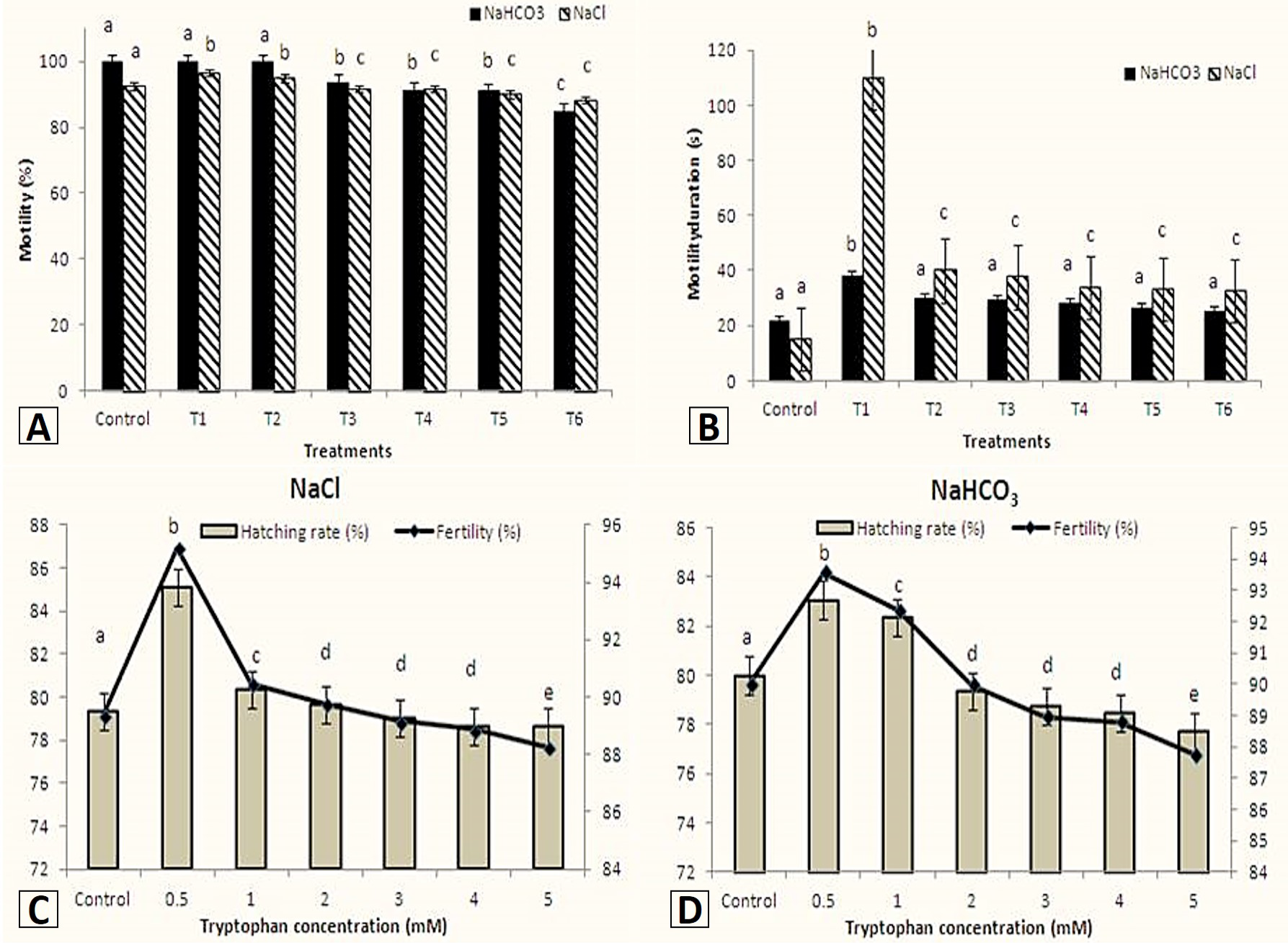
Effect of supplementation of L-tryptophan to different activation mediums (NaCl and NaHCO3) on the sperm motility (A), its duration (B), fertility (C) and hatching rate of eggs (D) of O. mykiss (n=6). Different letters show differences between treatments (p<0.05). T1; 0 mM, T2; 1 mM, T3; 2 mM, T4; 3 mM, T5; 4 mM, T6; 5 mM.
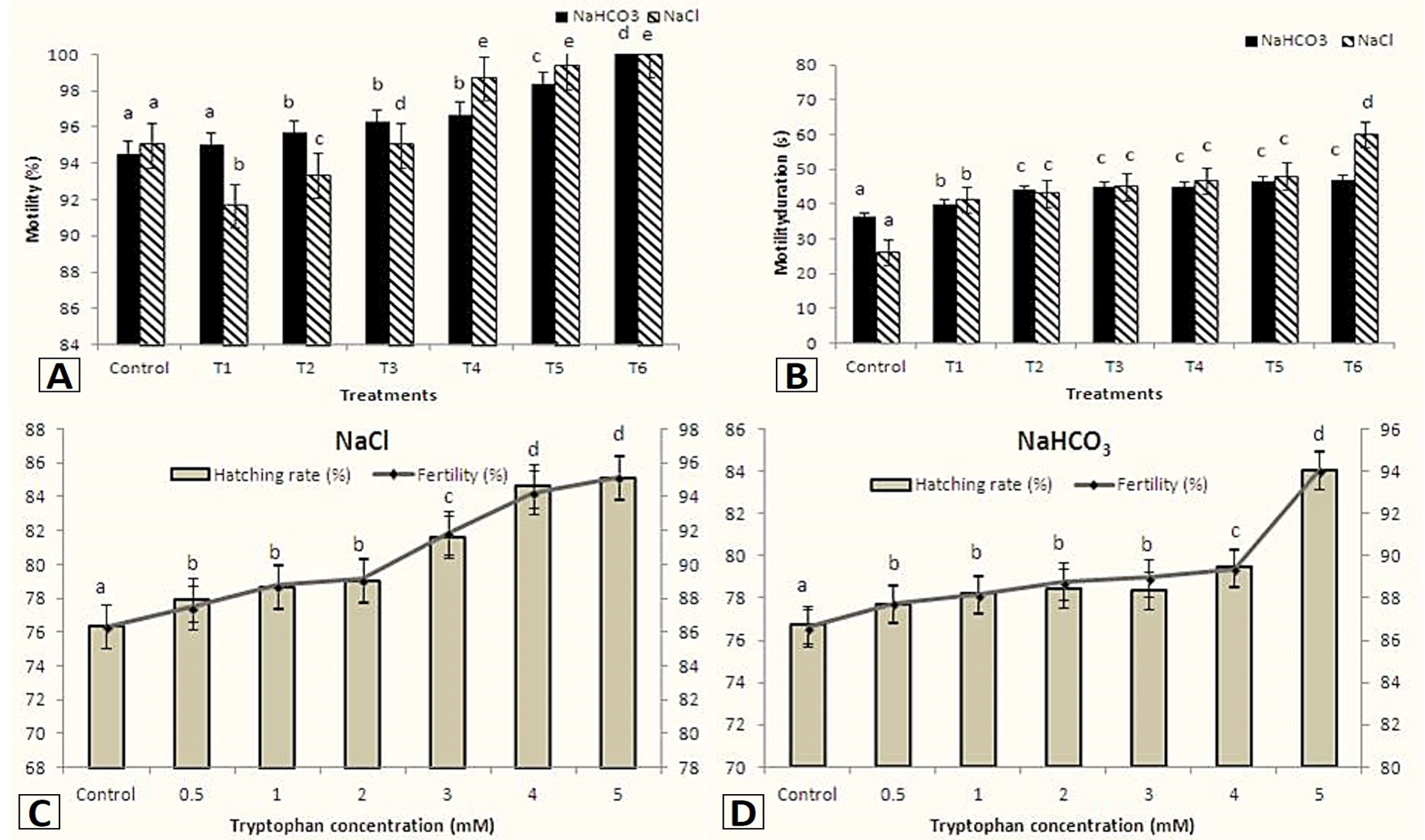
Effect of supplementation of L-tryptophan to different activation mediums (NaCl and NaHCO3) on sperm motility (A), its duration (B), fertility (C) and hatching rate of eggs (D) of S. rizeensis (n=6). Different letters show differences between treatments (p<0.05).
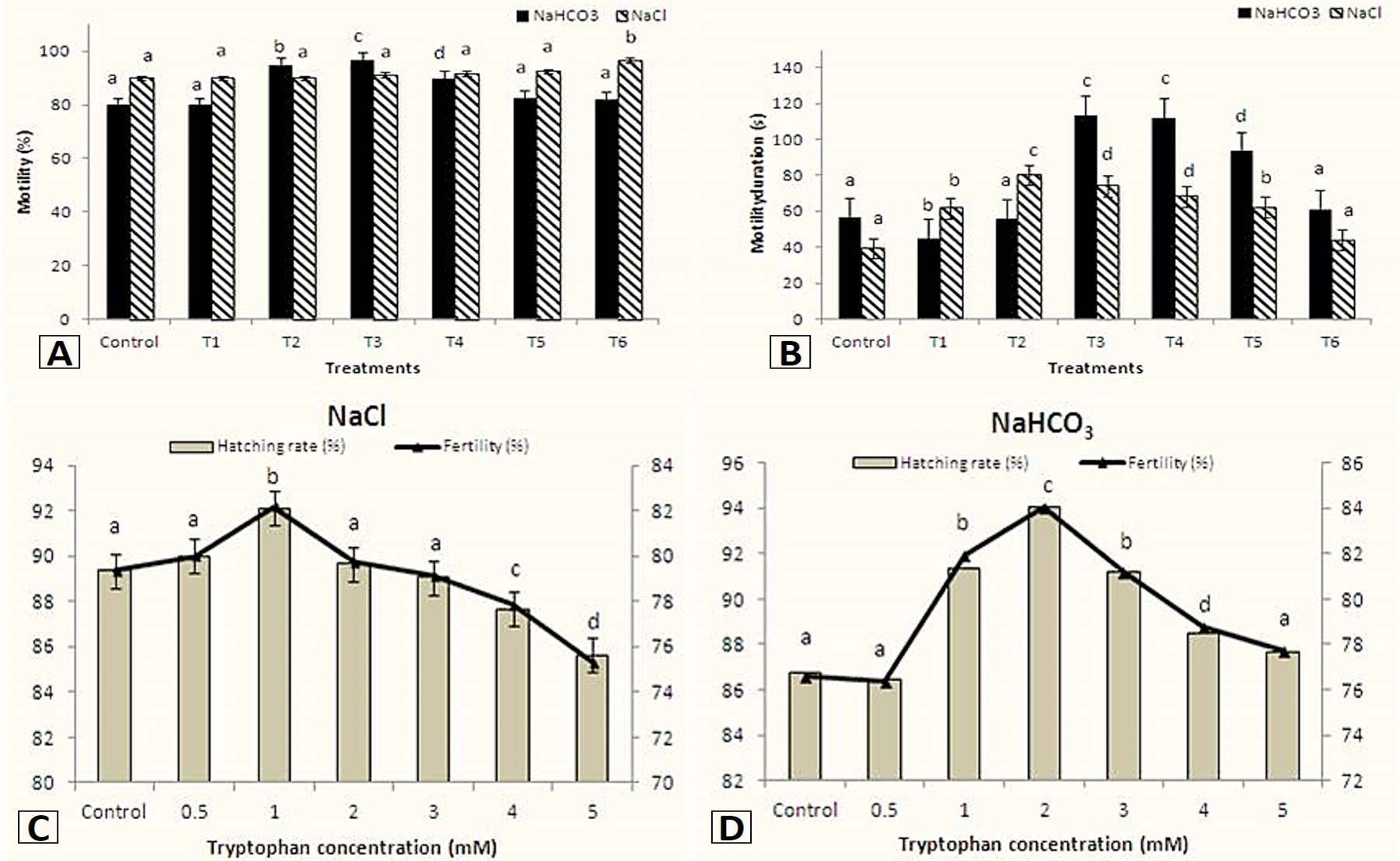
Effect of supplementation of L-tryptophan to different activation mediums (NaCl and NaHCO3) on sperm motility (A), its duration (B), fertility (C) and hatching rate of eggs (D) of S. coruhensis (n=6). Different letters show differences between treatments (p<0.05).
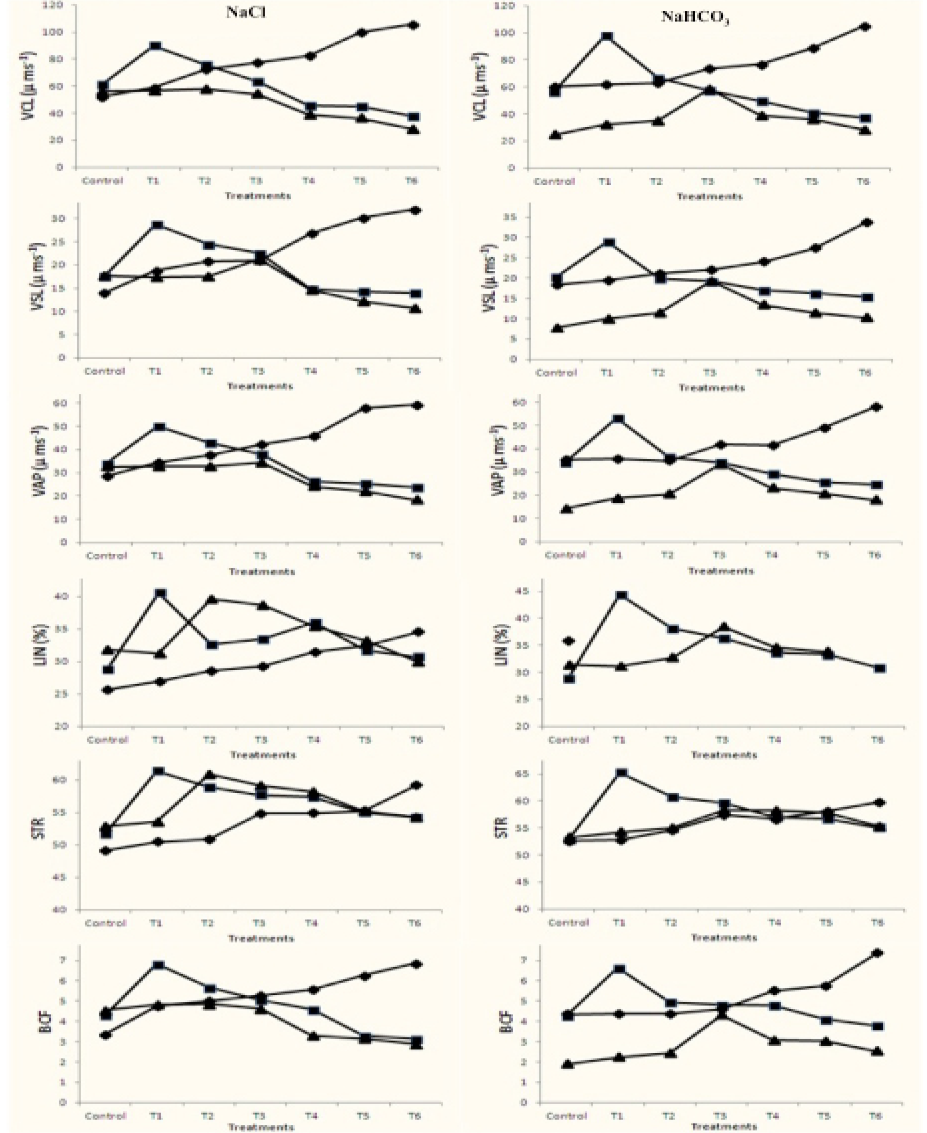
Effect of L-tryptophan on the motility parameters of rainbow trout O. mykiss, S. rizeensis, S. coruhensis sperm for different activation mediums (NaCl, NaHCO3). BCF, beat cross frequency; STR, straightness; LIN, linearity; VAP, average path velocity; VCL, curvilinear velocity; VSL, straight line velocity.
References
- Butts, I.A.E., Litvak-Kaspar, M.K.V. and Trippel, E.A., 2010. Cryopreservation of Atlantic cod Gadus morhua L. spermatozoa: Effects of extender composition and freezing rate on sperm motility, velocity and morphology. Cryobiology, 61: 174-181. https://doi.org/10.1016/j.cryobiol.2010.07.001[CrossRef]
- Can, E., Kutluyer, F., Delihasan-Sonay, F. and Köse, Ö., 2012. The use of kefir as potential probiotic in Çoruh trout (Salmo coruhensis): Effects on growth performance and immunoglobulin (IgM) levels. Afr. J. Biotechnol., 11: 7775-7780.
- Canyurt, M.A. and Akhan, S., 2008. Effect of ascorbic acid supplementation on sperm quality of rainbow trout (Onchorynchus mykiss). Turkish J. Fish. aquat. Sci., 8: 171-175.
- Costedoat, C., Pech, N., Chappaz, R. and Gilles, A., 2007. Novelties in hybrid zones: Crossroads between population genomic and ecological approaches. PLoS One, 2: e357. https://doi.org/10.1371/journal.pone.0000357[CrossRef]
- Crego-Prieto, V., Martinez, J.L., Roca, A. and Garcia-Vazquez, E., 2012. Interspecific hybridization increased in congeneric flatfishes after the Prestige oil spill. PLoS One, 7: e34485. https://doi.org/10.1371/journal.pone.0034485[CrossRef]
- Dreanno, C., Cosson, J., Suquet, M., Seguin, F., Dorange, G. and Billard, R., 1999. Nucleotides content, oxidative phosphorylation, morphology and fertilizing capacity of turbot (Psetta maxima) spermatozoa during the motility period. Mol. Reprod. Dev., 53: 230-243. https://doi.org/10.1002/(SICI)1098-2795(199906)53:2<230::AID-MRD12>3.0.CO;2-H[CrossRef]
- Dzyuba, B., Boryshpolets, S., Rodina, M., Gela, D. and Linhart, O., 2010. Spontaneous activation of spermatozoa motility by routine freeze-thawing in different fish species. J. appl. Ichthyol. 26: 720-725. https://doi.org/10.1111/j.1439-0426.2010.01553.x[CrossRef]
- Ekici, A., Baran, A., Yamaner, G., Özdaş, Ö.B., Sandal, A.İ., Güven, E. and Baltacı, M.A., 2012. Effects of different doses of taurine in the glucose-based extender during cryopreservation of rainbow trout (Oncorhynchus mykiss) semen. Biotechnol. Biotechnol. Equip., 26: 3113-3115. https://doi.org/10.5504/BBEQ.2012.0041[CrossRef]
- Husna, A., Ansari, M.S., Rakha, B.A., Ejaz, R., Ullah, N., and Shamim, A. 2017. Melatonin supplementation in extender enhances the post thaw quality of buffalo bull spermatozoa. Pakistan J. Zool., 49: 171-175.
- Islam, S.M. and Akhter, T., 2011. Tale of fish sperm and factors affecting sperm motility: A review. Adv. Life Sci., 1: 11-19. https://doi.org/10.5923/j.als.20110101.03[CrossRef]
- Kocabaş, M. and Bascinar, N., 2013. The effect of salinity on spotting features of Salmo trutta abanticus, S. trutta fario and S. trutta labrax of cultured. Iran. J. Fish. Sci., 12: 723-732.
- Kocabas, M., Kayim, M., Can, E., Ateş, M., Kutluyer, F. and Aksu, Ö., 2011. Spotting pattern features in the brown trout (Salmo trutta macrostigma, T., 1954) population. Scient. Res. Essays, 6: 5021-5024.
- Kottelat, M. and Freyhof, J., 2007. Handbook of European freshwater fishes. Kottelat, Cornol, Switzerland and Freyhof, Berlin, Germany, pp. 646.
- Kuru, M., 2004. The last systematic status of inland fish in Turkey. G. U. J. Fac. Educ., 24: 1-21.
- Kutluyer, F., Kayım, M., Öğretmen, F., Büyükleblebici, S. and Tuncer, P.B., 2014. Cryopreservation of rainbow trout Oncorhynchus mykiss spermatozoa: Effects of extender supplemented with different antioxidants on sperm motility, velocity and fertility. Cryobiology, 69: 462-466. https://doi.org/10.1016/j.cryobiol.2014.10.005[CrossRef]
- Kutluyer, F., Öğretmen, F. and İnanan, B.E., 2015. Effects of semen extender supplemented with L-methionine and packaging methods (straws and pellets) on post-thaw goldfish (Carassius auratus) sperm quality and DNA damage. Cryoletters, 36: 336-343.
- Kutluyer, F. and Kocabaş, M., 2016. Use of amino acids in fish sperm cryopreservation: A review. Austin Biol., 1: 1014.
- Lahnsteiner, F., 2000. Semen cryopreservation in the Salmonidae and in the Northern pike. Aquacult. Res., 31: 245-258. https://doi.org/10.1046/j.1365-2109.2000.00452.x[CrossRef]
- Lahnsteiner, F., Mansour, N. and Kunz, F.A., 2011. The effect of antioxidants on the quality of cryopreserved semen in two salmonid fish, the brook trout (Salvelinus fontinalis) and the rainbow trout (Oncorhynchus mykiss). Theriogenology, 76: 882-890. https://doi.org/10.1016/j.theriogenology.2011.04.019[CrossRef]
- Liu, Q., Wang, X., Wang, W., Zhang, X., Xu, S., Ma, D., Xiao, Z., Xiao, Y. and Li, J., 2014. Effect of the addition of six antioxidants on sperm motility, membrane integrity and mitochondrial function in red seabream (Pagrus major) sperm cryopreservation. Fish Physiol. Biochem., 41: 413-422. https://doi.org/10.1007/s10695-014-9993-9[CrossRef]
- Le, M.H. and Pham, H.Q., 2016. Sperm motilities in Waigieu Seaperch, Psammoperca waigiensis: effects of various dilutions, pH, temperature, osmolality, and cations. J. World Aquacult. Soc., 48: 435-443. https://doi.org/10.1111/jwas.12357[CrossRef]
- Martínez-Páramo, S., Pe´rez-Cerezales, S., Go´mez-Romano, F., Blanco, G., Sánchez, J.A. and Herráez, M.P., 2009. Cryobanking as tool for conservation of biodiversity: Effect of brown trout sperm cryopreservation on the male genetic potential. Theriogenology, 71: 594-604. https://doi.org/10.1016/j.theriogenology.2008.09.034[CrossRef]
- Martínez-Páramo, S., Diogo, P., Dinis, M.T., Soares, F., Sarasquete, C. and Cabrita, E., 2013. Effect of two sulfur-containing amino acids, taurine and hypotaurine in European sea bass (Dicentrarchus labrax) sperm cryopreservation. Cryobiology, 66: 333-338. https://doi.org/10.1016/j.cryobiol.2013.04.001[CrossRef]
- Öğretmen, F., İnanan, B.E., Kutluyer, F. and Kayım, M., 2015. Effect of semen extender supplementation with cysteine on post-thaw sperm quality, DNA damage, and fertilizing ability in the common carp (Cyprinus carpio). Theriogenology, 83: 1548-1552. https://doi.org/10.1016/j.theriogenology.2015.02.001[CrossRef]
- Öğretmen, F., Inanan, B.E. and Kutluyer, F., 2016. Combined effects of physicochemical variables (pH and salinity) on sperm motility: Characterization of sperm motility in European sea bass Dicentrarchus labrax, Mar. Freshw. Behav. Physiol., 49: 217-222. https://doi.org/10.1080/10236244.2016.1163838[CrossRef]
- Rani, K.U. and Munuswamy, N., 2014. Effect of DNA damage caused by cryopreservation of spermatozoa using a modified Single cell gell electrophoresis in the freshwater catfish Pangasianodon hypophthalmus (Fowler, 1936). J. Coast. Life Med., 2: 515-519.
- Richard, D.M., Dawes, M.A., Mathias, C.W., Acheson, A., Hill-Kapturczak, N., and Dougherty, D.M. 2009. L-tryptophan: Basic metabolic functions, behavioral research and therapeutic indications. Int. J.Tryptophan Res.IJTR, 2: 45–60.
- Roberts, D.G., Gray, C.A., West, R.J. and Ayre, D.J., 2009. Evolutionary impacts of hybridization and interspecific gene flow on an obligatory estuarine fish. J. Evol. Biol., 22: 27-35. https://doi.org/10.1111/j.1420-9101.2008.01620.x[CrossRef]
- Rudolfsen, G., Figenschou, L., Folstad, I. and Kleven, O., 2008. Sperm velocity influences paternity in the Atlantic cod (Gadus morhua L.). Aquacult. Res., 39: 212–216. https://doi.org/10.1111/j.1365-2109.2007.01863.x[CrossRef]
- Rurangwa, E., Volckaert, F.A.M., Huyskens, G., Kime, D.E. and Ollevier, F., 2001. Quality control of refrigerated and cryopreserved semen using computer-assisted sperm analysis (CASA), viable staining and standardized fertilization in African catfish (Clarias gariepinus). Theriogenology, 55: 751-769. https://doi.org/10.1016/S0093-691X(01)00441-1[CrossRef]
- Rurangwa, E., Kime, D.E., Ollevier, F. and Nash, J.P., 2004. The measurement of sperm motility and factors affecting sperm quality in cultured fish. Aquaculture, 234: 1-28. https://doi.org/10.1016/j.aquaculture.2003.12.006[CrossRef]
- Seyhaneyildiz Can, S., Kutluyer, F., Can, E., Kayiş, Ş., Delihasan-Sonay, F. and Köse, Ö., 2014. Effect of dietary kefir on the digestive and liver enzymes activities, and glucose level of Coruh trout, Salmo coruhensis (Actinopterygii: Salmoniformes: Salmonidae). Acta Ichthyol. Piscat., 44: 167-170. https://doi.org/10.3750/AIP2014.44.2.13[CrossRef]
- Skjæraasen, J.A., Mayer, I., Meager, J.J., Rudolfsen, G., Karlsen, O., Haugland, T. and Kleven, O., 2009. Sperm characteristics and competitive ability in farmed and wild cod. Mar. Ecol. Prog. Ser., 375: 219-228. https://doi.org/10.3354/meps07774[CrossRef]
- Šimková, A., Vojtek, L., Halačka, K., Hyršl, P. and Vetešník, L., 2015. The effect of hybridization on fish physiology, immunity and blood biochemistry: A case study in hybridizing Cyprinus carpio and Carassius gibelio (Cyprinidae). Aquaculture, 435: 381-389. https://doi.org/10.1016/j.aquaculture.2014.10.021[CrossRef]
- Turan, D., Kottelat, M. and Engin, S., 2009. Two new species of trouts, resident and migratory, sympatric in streams of northern Anatolia (Salmoniformes: Salmonidae). Ichthyol. Explor. Freshw., 20: 333-364.
- Viveiros, A.T.M., Nascimento, A.F., Orfão, L.H. and Isaú, Z.A., 2010. Motility and fertility of the subtropical freshwater fish streaked prochilod (Prochilodus lineatus) sperm cryopreserved in powdered coconut water. Theriogenology, 74: 551-556. https://doi.org/10.1016/j.theriogenology.2010.03.018[CrossRef]
- Zhao, N., Wang, X., Pan, H., Hu, Y. and Ding, L., 2010. Spectroscopic studies on the interaction between tryptophan-erbium(III) complex and herring sperm DNA. Spe ctrochim. Acta Part A, 75: 1435-1442. https://doi.org/10.1016/j.saa.2010.01.013[CrossRef]
Services
Article usage statistics
Loading…