
Beans and legumes are an excellent source of protein, minerals, dietary fiber, carbohydrates and bioactive compounds. They serve as medicinal plants and are used as common food in developing countries. The objective of the current study was to analyze the various biological characteristics of Phaseolus vulgaris and Vigna unguiculata in order to identify new therapeutic leads for specific disorders (colon cancer and memory improvement in Alzheimer’s disease). Phytochemical testing showed the presence of various bioactive compounds including flavonoids, steroids, carbohydrates, proteins, glycosides, saponins, phenols etc. Antibacterial analysis of aqueous extracts of Phaseolus vulgaris and Vigna unguiculata were done by using the disc diffusion method, which showed that both extracts have potential antibacterial activity against Staphylococcus aureus and Escherichia coli, though Phaseolus vulgaris has higher antibacterial activity than Vigna unguiculata. FTIR and in silico analysis showed that the aqueous extracts of both Vigna unguiculata and Phaseolus vulgaris contain multiple phytochemicals with good binding capacities and a considerable number of hydrogen bonds and hydrophobic interactions. Phaseolus vulgaris contains the plant pigment rutin, which showed good docking results with lowest docking energy of –13.461 Kcal/mol against the caspase-3 protein. This protein is an apoptotic marker in colon cancer that prevents colon cancer cells from multiplying by triggering apoptosis, achieved by cell cycle arrest and activation of the caspase protein. While in the case of Vigna unguiculata, Beta-amyloid (APLP1 and APP) proteins were docked with various bioactive compounds showing it have beneficial effects on Alzheimer’s disease treatment and hence can become a potential drug for memory improvement.
Research Article · Volume 70, Issue 1, 4 January 2025 · Open Access
In Silico and In Vitro Analysis of Red Kidney Beans (Phaseolus vulgaris) and Black-Eyed Beans (Vigna unguiculata) and Their Phytochemical Analysis
· · ·
Affiliations & Notes ⌄
- 1Department of Biotechnology, Lahore College for Women University, Lahore. *Correspondence | Afshan Kaleem, Department of Biotechnology, Lahore College for Women University, Lahore
- 2Email: afshan.kaleem@lcwu.edu.pk
Article Info ⌄
- Journal:
- Biologia (Lahore)
- Published:
- 4 January 2025
From the article
- In conclusion, the current study suggests that Phaseolus vulgaris and Vigna unguiculata are excellent source of proteins, carbohydrates and various bioactive compounds.
- Phaseolus vulgaris contain rutin, a glycoside of the flavonoid quercetin and rutinose, that showed good docking results with lowest docking energy of –13.461 Kcal/mol against Caspase-3 protein, which is an apoptotic marker in colon cancer.
- Vigna unguiculata contains rutin, naringenin and benzoic acid, which showed good docking activity against Beta-amyloid (APLP1 and APP) protein for memory improvement in Alzheimer’s disease.
- These results suggest that Vigna unguiculata could be beneficial and may act as a therapeutic agent in Alzheimer’s disease and hence could become a potential drug for memory improvement.
Selected from the article's own text.
Abstract
Introduction
Red kidney beans (Phaseolus vulgaris) are herbaceous plants belonging to the family Fabaceae. These are significant food crops on account of both their nutritive value and their financial advantages. Kidney beans are vital component of human nutrition as they are a rich source of protein, containing approximately 20% to 25% protein, and carbohydrates, which make up 50% to 60% of their nutritional content. In addition, they are also excellent sources of vitamins, minerals, and unsaturated fatty acids . While Black-eyed bean (Vigna unguiculata) is a plant which belongs to Fabaceae. High nutritious values of black-eyed beans make them popular all over the world .
The main difference between red kidney beans and black-eyed beans lies in their shape, flavor and size but they also differ in toxicity. Red kidney beans are large in size while black eyed beans are smaller in size. Red kidney beans have meaty, slightly sweet and nutty taste while Black-eyed beans have dense creamy taste .
Dry beans, including types like red kidney and black-eyed beans, consist of a variety of advantageous phytochemicals and antioxidants, including coumestrol, phytate, isoflavones, lecithin, phytosterols etc. Studies show, consumption of these beans decreases the chance of various diseases like cancer, aging, cardiovascular diseases, obesity, colon cancer etc. .
Beans show anti-microbial potential against many important food-borne pathogens. However, antimicrobial effect is associated with phytochemicals present in beans, vegetables such as polyphenols, lectins, peptides, flavonoids and Tannis. Red kidney beans and black-eyed beans exhibit antimicrobial properties against various types of bacteria for example Staphylococcus aureus, Bacillus subtilis and Salmonella typhi, Klebsiella pneumoniae, Escherichia coli, which are Gram-positive and Gram-negative respectively, as well as some fungi such as Aspergillus fuinigatus, Rhizopus stolonifer and Mucor mucedo . In beans, by using different bioinformatics tools, different modifications are done to overcome the factors which affect their yield like climatic condition, occurrence of insect pest .
The objective of the current study was to analyze the various biological characteristics of Phaseolus vulgaris and Vigna unguiculata to identify new therapeutic leads for specific disorders (colon cancer and memory improvement in Alzheimer’s disease).
Materials and Methods
Sample collection
Red kidney and black-eyed beans were purchased from the local market of Lahore, Pakistan
Extract preparation
Both bean samples were dried and grounded to fine powder and aqueous extracts were prepared. The sample was dissolved in distilled water. The solution was homogenized on the magnetic stirrer for 25-30 minutes, then filtrated and stored at 4°C .
Qualitative analysis
Different qualitative test for detection of phytochemicals were performed including alkaloid, flavonoids, carbohydrates, proteins, saponins, steroids, cardiac glycosides, tannins, terpenoids, phenol and quinones ; ; .
Anti-microbial activity
Anti-microbial activity was performed using the disk diffusion method by Roy et al. (2020).
FTIR analysis
Both aqueous extract samples were run on the Fourier transform infrared (FTIR) to analyze their bioactive compounds . Peaks were matched with FTIR spectra retrieved from the PuBChem database (https://pubchem.ncbi.nlm.nih.gov/) and ligands, which were determined from the FTIR spectra, were downloaded from the PDBeChem software (https://www.ebi.ac.uk/pdbe-srv/pdbechem/).
Bioinformatics investigation
Protein docking was performed by using the Galaxy web server (https://galaxy.seoklab.org/). For docking, protein of interest was downloaded from PDB (Protein Data Bank). Beta amyloid protein (APLP1 (Uniprot ID: P51693), APP (Uniprot ID: P05067)) and Caspase-3 (PDB ID: 1NME) were downloaded from PDB and their charges were removed using the Pymol software.
Results and Discussion
Antibacterial activity of Vigna unguiculata and Phaseolus vulgaris
Antibacterial activity of Vigna unguiculata and Phaseolus vulgaris was evaluated against Staphylococcus aureus and Escherichia coli. Both extracts showed anti-bacterial activity against Staphylococcus aureus and Escherichia coli. The maximum zone of inhibition was reported in both gram-negative and gram-positive strains by Phaseolus vulgaris (Figure 1).
FTIR analysis
FTIR analysis of Vigna unguiculata (Black-eyed beans) and Phaseolus vulgaris (red kidney beans) showed the presence various functional groups like hydroxyl, carbonyl, phenol, alkane, alcohol etc. However, peaks matched from PuBChem software at 3334.92 and 3317.56, 1153.43, 709.80 and 1639.49 indicating rutin, kaempferol, benzoic acid and naringenin bioactive compounds (Figure 2).
Bioinformatic analysis of Vigna unguiculata and Phaseolus vulgaris
Different detected bioactive compounds (ligand) were docked with respective proteins. Rutin, Naringenin, Benzoic acid and kaempferol were docked with both APLP1 and APP proteins, which were determined in Vigna unguiculata, (Tables 2-4) (Figures 3-6), while in the case of Phaseolus vulgaris, rutin was docked with Caspase-3 (Table 5) (Figure 6). The binding with various amino acids were found to consist of different hydrogen bonding (HB) and hydrophobic interactions (HI). However, kaempferol did not bind with any protein.
Table 1: Qualitative phytochemical analysis of extracts.
| Phytochemicals | Phaseolus vulgaris | Vigna unguiculata |
| Aqueous extract | Aqueous extract | |
| Alkaloids | + | + |
| Carbohydrates | + | + |
| Proteins | + | + |
| Flavonoids | + | + |
| Steroid | + | + |
| Saponins | + | + |
| Phenol | + | + |
| Quinones | + | + |
| Tannins | - | + |
| Cardiac glycoside | + | + |
| Terpenoids | + | + |
| Phenol | + | + |
| Saponins | + | + |
Table 2: Binding of different ligands with APLP1 (285-499) protein.
| Ligand | APLP1 amino acid | Types of bonds | Length of the bond | Ligand amino acid binding sites |
| Rutin | Arg 540 Pro 541 Leu 547 | 1: HB 2: HB HI HI | 3.13 3.29 | NH2-O8 NH1-O8 |
| Naringenin | Arg 480 Gln 486 Leu 547 His 548 Gln 483 Glu 519 Lle 518 | HB HB HI HI HI HI HI | 3.02 3.00 | NE-O6 NE2-O8 |
| Benzoic acid | Glu 519 Gln 486 | HB HI | 2.87 | OE2-O5 |
Table 3: Binding of different ligands with APLP1 (290-495) protein.
| Ligand | APLP1 amino acid | Types of bonds | Length of the bond | Ligand amino acid binding sites |
| Rutin | Asn 461 Glu 494 Leu 464 Leu 485 Ser 493 | HB 1: HB 2: HB HI HI HI | 3.20 3.32 2.87 | OD1-O36 OE1-O25 OE1-O27 |
| Naringenin | Arg 478 | HB | 3.26 | NH2-O10 |
| Benzoic acid | Arg 478 Ala 474 Asp 468 | HB HI HI | 3.28 | NH1-O5 |
Table 4: Binding of different ligands with APP protein.
| Ligand | APP amino acid | Types of bonds | Length of the bond | Ligand amino acid binding sites |
| Rutin (Model 6) | Arg 42
Asn 44 Arg 20 Asp 46 Thr 47 | 1: HB 2: HB HB HB 1: HB 2: HB 3: HB HB | 3.08 2.99 2.82 2.95 2.73 3.05 3.18 2.89 | NH1-O16 NH1-O4 ND2-O14 NH2-O16 OD1-O14 OD1-O16 OD2-O20 OG1-O28 |
| Naringenin (Model 5) | Glu 10 Arg 42 | HB HI | 3.23 | OE1-O8 |
| Benzoic acid (Model 3) | Thr 26 Asp 24 Tyr 22 Val 25 Ser 6 | HB HB HI HI HI | 3.27 3.04 | OG1-O5 OD2-O5 |
Table 5: Binding of ligand with caspase-3 protein.
| Ligand | Caspase-3 amino acid | Types of bonds | Length of the bond | Ligand amino acid binding sites |
| Rutin | Lys 271 Lys 186 Leu 194 Leu 269 Leu 273 Lle 187 His 277 Val 189 | HB 1: HB 2: HB 3: HB HI HI HI HI HI HI | 3.24 3.11 3.07 2.91 | NZ-O36 NZ-O34 NZ-O38 NZ-O40 |
Both in developing and developed nations, the tendency of diabetes, obesity, cardiovascular illnesses and cancer are rising. It is anticipated that both the diet and nutrition would be crucial in preventing certain illness problems. Beans and other legumes are an excellent source of protein, minerals, dietary fiber, carbohydrates, and bioactive compounds. They also serve as medicinal plants and are used as common food in developing countries. In current study various experiments were done in order to evaluate biological characteristics of the beans (Phaseolus vulgaris and Vigna unguiculata) and their therapeutic effect on specific diseases (colon cancer and memory improvement in Alzheimer’s disease).
Qualitative analysis of aqueous extracts of Phaseolus vulgaris and Vigna unguiculata showed that both extracts contain alkaloids, steroids, phenols, carbohydrates, proteins, terpenoids, glycosides, saponins, quinones, tannins, flavonoids. All these results were in agreement with the results with the work reported in the literature ; ; . However, tannin was not found in Phaseolus vulgaris, which contradicts the results in literature .
Aqueous extract of Phaseolus vulgaris and Vigna unguiculata, both showed anti-bacterial activity against Staphylococcus aureus and Escherichia. The maximum zone of inhibition was reported in both Gram-Negative and Gram-Positive strains by aqueous extract of Phaseolus vulgaris. However, in Phaseolus vulgaris seeds, lectin which is active phytohemaglutinin is responsible for the antibacterial activity, while in the case of Vigna unguiculata the bioactive component, globulins, has shown comparable antibacterial efficacy .
The FTIR of Vigna unguiculata, peaks obtained in the area of 3334.92 refer to O-H stretching, peak at 1639 refers to C=C, were similar with the working of Akinpelu et al. (2017). While in the case of Phaseolus vulgaris, peak obtained in the area of 1653 cm−1 this was similar with the results of Liu et al. (2013).
FTIR analysis of Phaseolus vulgaris confirms the presence of rutin, which was docked with the protein Caspase-3, an apoptotic marker in colon cancer and binds to various amino acids through hydrogen bonding like Lys 271, Lys 186. These results showed good docking with lowest docking energy of –13.461 Kcal/mol. Rutin have anti-cancerous and anti-proliferative properties, and it prevents colon cancer cells from multiplying by triggering apoptosis, which is achieved by cell cycle arrest and activation of the Caspase protein. Furthermore, Caspase-3 expression was enhanced after treatment with rutin .
FTIR analysis of Vigna unguiculata confirms the presence of rutin, kaempferol, benzoic acid and naringenin. These bioactive compounds were docked with beta amyloid protein (APLP1 and APP). These bioactive compounds bind with various amino acids through hydrogen bonding like Arg 540 (Rutin), Arg 480, Gln 486 (Naringenin) and Arg 478 (Benzoic acid) in the case of APLP1 (285-499) as shown in Table 3. Similarly, Asn 461, Glu 494 (Rutin), Arg 478 (Naringenin) and Arg 478 (Benzoic acid) in APLP1 (290-495) (Table 4). All these interactions take place in the E2 domain, the collagen binding region and the compositional bias region which include acidic and basic residues. In the case of APP, different bioactive compounds form bond with amnio acids like Arg 42, Asn 44, Arg 20, Asp 46, Thr 47 (Rutin), Glu 10 (Naringenin) and Thr 26, Asp 24 (Benzoic acid) as shown in Table 5. Rutin and naringenin interaction take place in the GFLD subdomain and E1 domain.
Rutin has potential to reduce oxidative stress, to prevent Aβ aggregation and cytotoxicity and proinflammatory cytokines. Oral administration has shown to significantly reduce interleukin IL-1 and IL-6 levels in the brain and alleviated memory problems in AD transgenic mice . Moreover, administration of naringenin may lead to an enhanced spatial learning and memory in a rat model of Alzheimer’s disease through controlling the PI3K/AKT/GSK-3 pathway .
The studies by Aduema (2016, 2019) also indicate that consumption of these beans improves learning and memory. The determined bioactive compounds of Vigna unguiculata have beneficial effects on Alzheimer’s disease treatment and hence can become a potential drug for memory improvement.
Conclusions and Recommendations
In conclusion, the current study suggests that Phaseolus vulgaris and Vigna unguiculata are excellent source of proteins, carbohydrates and various bioactive compounds. They have good antimicrobial activity which make them potent agent against several microbes. FTIR analysis indicated the presence of several functional groups. Phaseolus vulgaris contain rutin, a glycoside of the flavonoid quercetin and rutinose, that showed good docking results with lowest docking energy of –13.461 Kcal/mol against Caspase-3 protein, which is an apoptotic marker in colon cancer. It might serve as a standard therapy for colon cancer. Vigna unguiculata contains rutin, naringenin and benzoic acid, which showed good docking activity against Beta-amyloid (APLP1 and APP) protein for memory improvement in Alzheimer’s disease. These results suggest that Vigna unguiculata could be beneficial and may act as a therapeutic agent in Alzheimer’s disease and hence could become a potential drug for memory improvement.
Author’s Contribution
Afshan Kaleem: Conceptualisation, formal analysis, administration, writing, review and editing.
Iqra Noor: Conceptualisation, data curation, formal analysis and writing.
Roheena Abdullah: Conceptualisation, administration, review and editing.
Mehwish Iqtedar: Data curation, administration, review and editing.
Conflict of interest
The authors have declared no conflict of interest.
Figures
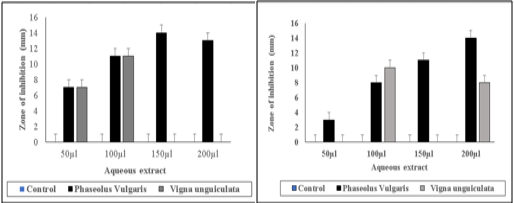
(a) Antibacterial activity of aqueous extracts of Phaseolus Vulgaris and Vigna unguiculata against Staphylococcus aureus (b) Antibacterial activity of aqueous extracts of Phaseolus Vulgaris and Vigna unguiculata against Escherichia coli.
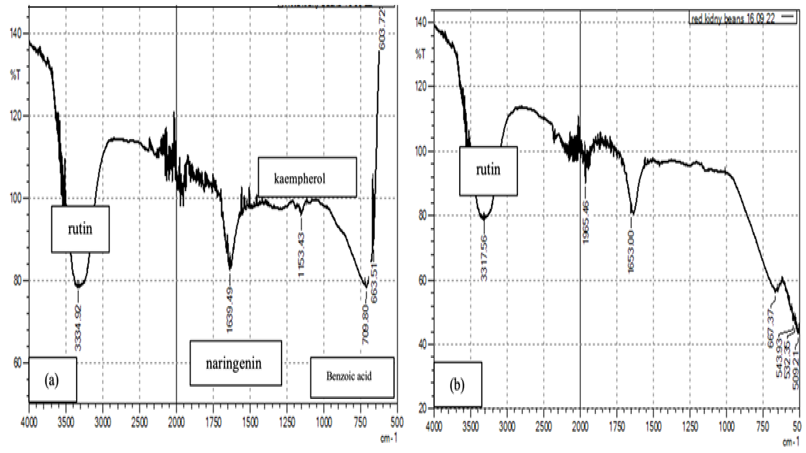
FTIR spectrum of (a) Vigna unguiculata (b) Phaseolus vulgaris.
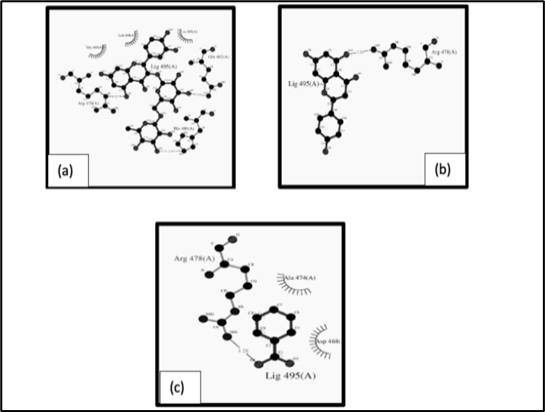
Docking results of (a) rutin (b) naringenin (c) benzoic acid with APLP1 (290-495).
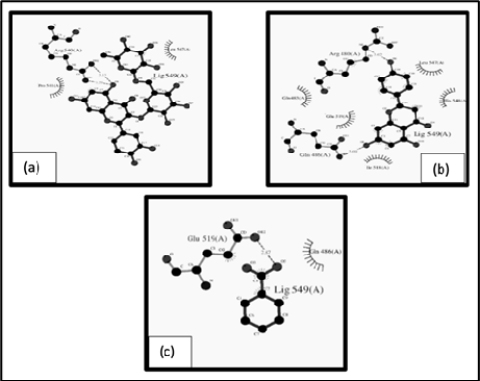
Docking results of (a) rutin (b) naringenin (c) benzoic acid with APLP1 (285-499).
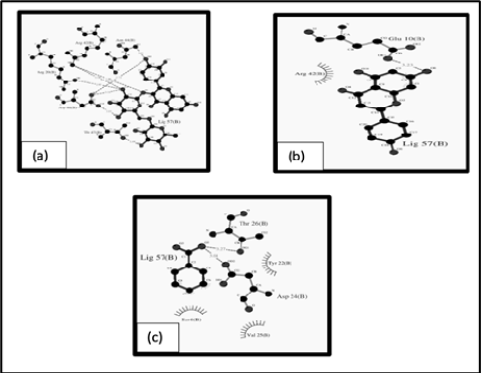
Docking results of (a) rutin (b) naringenin (c) benzoic acid with APP.
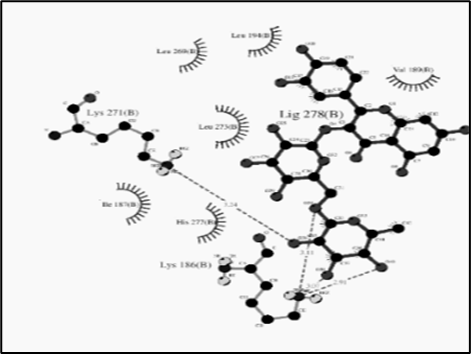
Docking results of rutin with Caspase-3.
References
- Aduema, W., 2016. Neurobehioural effects of chronic consumption of uncooked black eye beans on spatial learning and memory in mice. Curr. Trends Biomed. Eng. Biosci., 1(2): 555556. https://doi.org/10.19080/CTBEB.2016.01.555556[CrossRef]
- Aduema, W., 2019. Effects of long-term administration of cooked beans (Vigna unguiculata) diet on learning and memory in mice. Int. J. Food Sci., 2(1): 65-75. https://doi.org/10.47604/ijf.168[CrossRef]
- Akinpelu, L.A., Adegbuyi, T.A., Agboola, S.S., Olaonipekun, J.K., Olawuni, I.J., Adegoke, A.M. and Olayiwola, G., 2017. Antidepressant activity and mechanism of aqueous extract of Vigna unguiculata sp. Dekindtiana (L.) walp dried aerial part in mice. Int. J. Neurosci. Behav. Sci., 5(1): 7-18. https://doi.org/10.13189/ijnbs.2017.050102[CrossRef]
- Bello, M.H., Moghaddam, S.M., Massoudi, M., McClean, P.E., Cregan, P.B. and Miklas, P.N., 2014. Application of in silico bulked segregant analysis for rapid development of markers linked to Bean common mosaic virus resistance in common bean. BioMed. Central Fenomics, 15(1): 1-13. https://doi.org/10.1186/1471-2164-15-903[CrossRef]
- Chandrasekaran, S., Rajkishore, V.B. and Ramalingam, R., 2015. Vigna unguiculata-an overall review. Res. J. Pharma. Phytochem., 7(4): 219-222. https://doi.org/10.5958/0975-4385.2015.00033.3[CrossRef]
- Chidebelu, P., Onovo, I. and Nweze, E.I., 2019. Antimicrobial activities of Cajanus cajan L., Phaseolus vulgaris L. and Vigna unguiculata L. against some bacterial and fungal isolates. J. Basic Pharmacol. Toxicol., 3(1): 29-33.
- Djordjevic, T.M., Šiler-Marinkovic, S.S. and Dimitrijevic-Brankovic, S.I., 2011. Antioxidant activity and total phenolic content in some cereals and legumes. Int. J. Food Prop., 14(1):175-184. https://doi.org/10.1080/10942910903160364[CrossRef]
- Gyrisco, G.G., Muka, A.A. and Briant, A.M., 1959. Studies of flavors and odors of potatoes and red kidney beans grown in rotation with lindane-treated red clover. J. Econ. Entomol., 52(3): 473-475. https://doi.org/10.1093/jee/52.3.473[CrossRef]
- Hang, Y.O., Steinkraus, K.H. and Hackler, L.R., 1980. Amino acid composition of high protein fractions prepared from mung beans, pea beans, and red kidney beans. J. Food Sci., 45(2): 388-389. https://doi.org/10.1111/j.1365-2621.1980.tb02622.x[CrossRef]
- Hayat, I., Ahmad, A., Masud, T., Ahmed, A. and Bashir, S., 2014. Nutritional and health perspectives of beans (Phaseolus vulgaris L.): An overview. Crit. Rev. Food Sci. Nutr., 54(5): 580-592. https://doi.org/10.1080/10408398.2011.596639[CrossRef]
- Jaya, J.S., Das, J.L. and Sujin, D., 2019. Qualitative analysis of phytochemicals in two legume species. Plant Arch., 19(1): 1391-1394.
- Jayameena, P., Sivakumari, K., Ashok, K. and Rajesh, S., 2018. Rutin: A potential anticancer drug against human colon cancer (HCT116) cells. Int. J. Biol., Pharma. Allied Sci., 7(9): 1731-1745. https://doi.org/10.31032/IJBPAS/2018/7.9.4532[CrossRef]
- Liu, C., Zhao, M., Sun, W. and Ren, J., 2013. Effects of high hydrostatic pressure treatments on haemagglutination activity and structural conformations of phytohemagglutinin from red kidney bean (Phaseolus vulgaris). Food Chem., 136(3-4): 1358-1363. https://doi.org/10.1016/j.foodchem.2012.09.082[CrossRef]
- Luka, C.D., Olatunde, A., Tijjani, H. and Olisa-Enewe, I.A., 2013. Effect of aqueous extract of Phaseolus vulgaris L. (red kidney beans) on alloxan-induced diabetic Wistar rats. Int. J. Sci. Invent. Today, 2(4): 292-301.
- Nouri, Z., Fakhri, S., El-Senduny, F.F., Sanadgol, N., Abd-ElGhani, G.E., Farzaei, M.H. and Chen, J.T., 2019. On the neuroprotective effects of naringenin: Pharmacological targets, signaling pathways, molecular mechanisms, and clinical perspective. Biomolecules, 9(11): 690. https://doi.org/10.3390/biom9110690[CrossRef]
- Olajide, M.A., 2020. Phytochemical screening and medicinal attributes of crude extracts of soybean (Glycine max) and black-eyed bean (Phaseolus vulgaris) leave. J. Adv. Bot. Zool., 7(4): 1-4.
- Pascale, R., Bianco, G., Cataldi, T.R., Kopplin, P.S., Bosco, F., Vignola, L. and Milella, L., 2018. Mass spectrometry-based phytochemical screening for hypoglycemic activity of Fagioli di Sarconi beans (Phaseolus vulgaris L.). Food Chem., 242: 497-504. https://doi.org/10.1016/j.foodchem.2017.09.091[CrossRef]
- Roy, M., Sarker, A., Azad, M.A.K., Shaheb, M.R. and Hoque, M.M., 2020. Evaluation of antioxidant and antimicrobial properties of dark red kidney bean (Phaseolus vulgaris) protein hydrolysates. J. Food Measur. Charact., 14(1): 303-313. https://doi.org/10.1007/s11694-019-00292-4[CrossRef]
- Tripathi, I.P., Tripathi, R. and Tiwari, A., 2017. Investigation of biologically active phytoconstituents present in selected plants material of Verbenaceae, Lamiaceae and Fabaceae family. Int. J. Multidis. Curr. Res., 5: 31-37.
- Xu, P.X., Wang, S.W., Yu, X.L., Su, Y.J., Wang, T., Zhou, W.W. and Liu, R.T., 2014. Rutin improves spatial memory in Alzheimer’s disease transgenic mice by reducing Aβ oligomer level and attenuating oxidative stress and neuroinflammation. Behav. Brain Res., 264: 173-180. https://doi.org/10.1016/j.bbr.2014.02.002[CrossRef]
Services
Article usage statistics
Loading…