Special Issue: Veterinary Medicine between Sustainable Development and Public Health to Confront Global Changes · Volume 12, Issue 1, 6 November 2024 · Open Access
Impact of Transportation Stress on Growth Performance, Behaviour and Welfare of Turkey Pullets
· · · ·
Affiliations & Notes ⌄
1Department of Animal and poultry health, animal production and poultry division, Desert Research Center (DRC), Cairo, Egypt
2Department of Behaviour and Management of Animal, Poultry and Aquatic, Faculty of Veterinary Medicine, Zagazig University, Zagazig, Egypt. *Correspondence | Azza Mohamed Morsi Fahd, Department of Animal and poultry health, animal production and poultry division, Desert Research Center (DRC), Cairo, Egypt
Based on the study’s findings, it can be said that turkey pullets’ feeding, foraging, and drinking habits changed when they were transported over vast distances.
Therefore long-distance transportation of turkey pullets should be avoided because it negatively impacts the animals’ welfare, growth, behaviour, and health.
The study recommended that turkey pullets should be transported under certain parameters, such as road, crate, and vehicle conditions, as well as the density of the pullets in the crates.
Environmental factors that affect foraging behaviour, feeding intake, body weight, growth rate, and farm welfare productivity include temperature and humidity, season, time of day, distance from the airport to the poultry farm, and transportation time.
Selected from the article's own text.
Abstract
One of the most stressful aspects of managing turkey pullets is the transporting procedure. The effects of transportation stress on animal welfare are well understood, but less is known about how transportation affects the behaviour, performance, and crop-filled test of turkey pullets. Therefore, This study aimed to investigate the effect of transportation on the behaviour and growth performance of Turkey. Turkey pullets were classified into 2 groups according to two types of transport, the First Group was150 pullets (Grade marker) one day -old chick (Flight from France) for 4.30 hours with short distance transport and the Second Group was 150 pullets (Grade maker) one day -old chick flight for 30 hours with long distance (flight from Tunisia). Results indicated that the First Group that flies for short distance showed a marked increase in the following behavioural patterns such as foraging behaviour, feeding behaviour and drinking behaviour compared with Second Group that flies for long distance, While growth performance was higher in the First Group (715.90 ±0.68) than the Second Group (615.26±0.79), a full soft rounded crop filled test showed that the First Group was more active than the Second Group. It was concluded that transportation has a significant impact on the growth performance, behaviour and welfare of turkey pullets.
The transportation process is one of the most stressful events in poultry and livestock management and has a major negative impact on birds’ welfare varying from mild stress to death ; . The term “stress” is frequently used in a negative sense, such as having a detrimental impact on the welfare and health of animals. However, the neuroendocrine systems that underlie animals’ stress reactions vary depending on the situation and are mostly change-adaptive. Finding a balance between management techniques that might lessen stress and, on the other hand, increase farm animal productivity has become more and more important in the current delicate environment of changing viewpoints in the animal production industry and social awareness . The handling of birds during transportation should not cause injury, panic, lasting fear or avoidable stress, and one of the five freedoms for animal welfare is freedom from fear and distress by ensuring conditions and treatment that avoid mental suffering .
Almost anywhere in the globe, turkeys can be successfully raised if they are fed properly and shielded from diseases, predators, and inclement weather. Turkeys can adapt to many different types of weather. Turkey shares many of the same dynamics that have dominated the grill industry, but has far lesser production, consumption, and commerce than chicken . Governments and consumers are paying more attention to the wellbeing of turkeys raised for meat production. Leg health and mobility issues are among the welfare-related challenges in turkey production. .
One of the most taxing aspects of managing poultry and livestock is the transportation procedure. . Depending on their developmental and growth stages, chickens may be moved from one farm to another. Creating a very noisy environment, manually collecting, grabbing, and cratting the birds into designated net cages where they are confined, crowded, and deprived of food and water, loading the cages onto motorized vehicles that then travel to their destination, exposing the birds to wind, cold, heat, vibration, and noise, and manually unloading the birds and placing them in a new housing environment are all part of the multifaceted process of transportation. .
Therefore, this study conducted to investigate the effect of transportation on growth performance, behaviour and welfare of turkey pullets.
MATERIALS AND METHODS
Experimental Design and Husbandry
The experiment was done in two farms: lotus farm, located in Red Primus Road, center of wadiEl Natrun, Governorate of El Behera and Abd ElSattar Issa farm, located in Belbeis Obour Road, Kilometer 44. A total of 300 Grade marker one day-old chick divided into two groups according to two types of transportation, the First Group, composed of (150) turkey pullets that were selected randomly from the farm for short-distance transportation, took about 4.30 hours (flight from france to Egypt), and the Second Group, composed of (150) turkey pullets that were selected randomly from the farm for long distance transportation (flight from Tunisia to Egypt) with transit in Turkey then to Egypt; this journey took 30 hours. The pullets were randomly assigned to different two groups to ensure that any observed difference in outcomes is not due to preexisting variations between the groups. The study monitored temperature during transportation of pullets; this is important because temperature can affect the well-being and stress levels of the pullets. we use tempmate flash to record the temperature, and to ensure that the temperatures within the chick boxes are consistently between 28 and 32 degrees Celsius, the holding room should have a temperature between 22 and 26 degrees Celsius. When loading, keep the boxes level. Not the box’s instructions. Chick boxes kept out of extreme heat or cold in a dry, clean, well-ventilated, and sheltered place. If there is a delay or cancellation, stay in touch with the freight forwarder and the end destination.
Housing System
The study was carried out at two turkey farms that are specialized agricultural operations dedicated to the breeding, rearing, and processing of turkeys. These farms have typically large-scale facilities that employ modern techniques to ensure optimal growth performance, normal behaviour and efficient production. Turkey pullets are typically housed in large, climate-controlled barns or sheds. These structures provide a controlled environment to protect the birds from extreme weather conditions and predators. Each group was reared in deep litter by saw dust (10 cm thickness) after sprinkling with slacked lime over the floor. Houses were warmed before the chicks arrived. the number of turkeys per group to 5, 7, and 9 pullets /m2. The ventilation system was designed to keep the temperature between 21°C and 23°C every day.
Feeding System
Turkey pullets were fed twice per day and the feeding quantity 3-4% of body weight per day. Water and feed were supplied by hand whenever needed . The first feed was supplied on plastic trays (small chick feeders); bright colored markers were placed on top of feed as recommended by Moursy (2003). The basal diet was created to satisfy the nutritional needs of pullets fed starter ration, the basal diet was created containing 28% protein according to NRC (1994) and the diets are reported in Table 1.
Lighting Regime
During the experiment, the pullets was supplied by using 200 watt bulbs at 2.5 heights above the level of pullets. This provided adequate light intensity at the pullets level as recommended by Mercia (1986). Lights remain on continuously for the first 3 days lighting for 24hr and then the photoperiod was stopped down by 1h/d.
Brooding Temperature
Electric heaters were positioned between 30 and 46 centimeters above the pen’s bottom to provide the ideal brooding
Table 1: The composition and nutritive value of the basal starter, grower and finisher diet.
Ingredients
Starter
Grower
Finisher
0-8 weeks
9-16weeks
17-24 weeks
yellow corn
41.57
51.81
67.81
Soybean meal, 44%
40
33
21
Corn gluten, 60%
7
2.5
3
Fish meal, 65%
2
2
-
Meat meal, 50%
3
3
-
Soybean oil
2
4
4.5
Calcium carbonate
1.25
0.85
0.85
Calcium dibasic phosphate
2
1.75
1.75
Common salt
0.3
0.3
0.3
Premix1
0.3
0.3
0.3
Lysine, Hcl, 78%
0.30
0.21
0.21
DL- Methionine, 98%
0.13
0.13
0.13
Choline chloride
0.15
0.15
0.15
Total
100
100
100
Calculated analysis
ME, Kcal/Kg
2865.48
3060.88
3261.88
CP, %
28.18
23.14
16.74
EE, %
2.46
2.68
2.82
CF, %
3.98
3.61
3.04
Ca, %
1.38
1.16
0,76
Available phosphorus, %
0.62
0.56
0.46
Lysine, %
1.71
1.42
0.95
Methionine, %
0.6
0.51
0.42
Methionine+cystine, %
1.1
0.92
0.74
temperature for newly hatched pullets. During the first week of brooding, the temperature was kept at roughly 36–38°C using a thermometer at the level of the chick’s back. After that, it was lowered by roughly 3.5°C every week until it reached 20–24°C in the fifth week. Mortality rates rise in the early days of the brooding period when insufficient heat is provided. . In the winter, brooding turkey pullets need additional heat for five weeks. .
Identification Different colored paint was put to the pullets’ wings, head, and body to help identify them.
Vaccination: The pullets were vaccinated by Hitchner vaccine (IB –NCD) at 5th day of age, then repeated at 14th day of age, Lasota vaccine: at 30th day of age, then vaccination by lasota periodically every month.
Medication The pullets were treated by Ciprofloxacin by dose (1ml /litre ) drinking water Colistin: 1/2 gm / litre drinking water. Vit E and Selenium: 1ml / litre drinking water.
Observation and data collection following transportation, for two groups were documented. by a focal sample technique, collected the data, by using a stopwatch, a photographic camera, and an observation sheet were utilized to document the behavioural pattern. According to Shimmura et al. (2007), behavioural patterns according to Abd El Aty (2016), Ingestive behaviour of chicks were fed directly from feeders pullets. Foraging behaviour by scratching and pecking on the floor, ground, or other pen parts according to Bennett et al. (1997). Drinking behaviour of chicks obtained water from drinking troughs.
Live Bird Performance: was noted according to Moursy (2003), live body weight was recorded weekly individually to the nearest gram of each group. Body weight gain was used to determine each body weight gain over the course of two consecutive weeks. Weight growth was equal to W2-W1, where W1 and W2 represent the individual’s weight during two consecutive weeks.
Crop Filled Test
It’s helpful to assess how hungry the chicks are and make sure they’ve all found food and water. The first 24 hours are the most crucial, although the process for evaluating crop fill should be observed over the first 48 hours. Tools An eye-catching frame, Paper and a pen or pencil to record crop fill.
Procedures: Two hours after placement, a preliminary examination will show whether the chicks have located water and feed. Assessments of appetite development must be conducted at 8, 12, 24 and 48 hours following arrival on the farm.
Step 1: Gather 30–40 chicks using the capturing frame, around 10 at a time, from three to four different locations throughout the home (or the surrounding area where spot brooding is employed).
Step 2: Carefully handle each chick by using your thumb and forefinger to feel its crop in the pen.
Step 3: Use the following categories to record each chick’s crop content: Round, soft, and full, the chicks have discovered water and food. Chicks have feed but little to no water. They are full but hard with the original texture of their meal. The chicks have not discovered any food or water, therefore the crop is empty.
Step 4: Divide the total number of chicks evaluated by the number of chicks recorded in each category, then multiply the result by 100 to determine the percentage of chicks in each category.
Step 5: Evaluate your performance in relation to the target crop fill assessment criteria listed below. Results of the target crop fill assessment guidelines: Crop fill meets or surpasses the target parameters. Nothing needs to be done.5 percent or more less crop fill than the target recommendations (e.g., 75 percent or less at 8 hours following installation).
Statistical Analysis
SPSS V.20 software was used for all statistical analyses (SPSS Inc., Chicago, IL, USA). Data that has been examined using SPSS V.20 software by using t- test, the Kolmogorov-Smirnov test was used to verify the normality of distribution Quantitative data was described using mean and standard deviation. Significance of the obtained results was judged at the 5% level . For normally distributed quantitative variables, to compare between two groups, and the Duncan test was employed as a post hoc analysis after the .by using t- test to examine the differences within two groups which have been statistically significant. The results were presented as standard error of the mean (SEM) and the significance level was chosen at P˂ 0.05.
RESULTS AND DISCUSSION
Road, crate, and vehicle transportation conditions, as well as the number of birds in the crates ; . Environmental elements, such as humidity and temperature Season and time of day ; ; ; ; Voslarova et al., 2007; , the distance between the aire port and the poultry farm ; Voslarova et al., 2007; ; ; , and transportation time ; ; ; all have an impact on the behaviour, performance, and production of chickens concerning the ingestive behaviour of turkey birds.
Table 2: The effect of transport-related stress distance on foraging behaviour frequency of turkey pullets throughout three weeks of study/ 8 hours observation weekly.
Foreign Time
Short distance
Long distance
Sign.
1st week
59.00±1.00
43.00±2.08
*
2nd week
43.00±2.51
45.00±5.00
NS
3rd week
38.00±2.16
48.00±1.15
*
Total
46.66±2.89
45.33±1.78
NS
NS: Non-significant changes; *Significant at 0.05 probability. The values expressed as Mean ±SE.
As maintenance behaviour in Table 2 the results showed how transportation affected turkey birds’ foraging behaviour, As the First Group (short transport distance) exhibited a higher frequency of foraging behaviour in the first week (59.00±1.00 respectively) than the Second Group (long transport distance) (43.00±2.08) however, the difference did not show up in the second week. The obtained results agreed with Sherwin and Kelland (1998); Martrenchar, (1999); Cornetto et al. (2002); Gunthner and Bessei (2006); Ventura et al. (2012) findings that benefited how transportation affected badly theforaging behaviour of birds. This agreement might be explained by the management programs’ similarities.
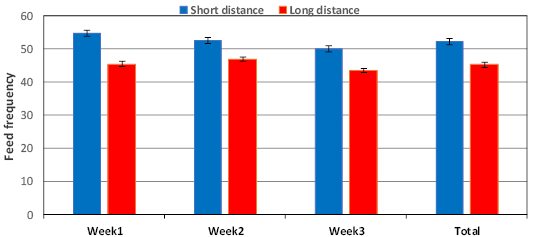
Data presented in Figure 1 showed that less feeding behaviour were observed in the Second Group (long transport distance) (54.75 ±2.42) than the first Group (short transport distance) (45.50 ±2.62) in first week, and after that the difference did not reach significance .These results coincided with the findings of Siddharth et al. (2024) who found that the birds which put under a lot of stressors such as transportation, for a long time showed a decrease in feeding behaviour and appetite and subsequently reduced their output and compromised their welfare. Also, these results go hand in hand with the data cited by Ulupi et al., (2018) who mentioned that management applied stressors, such as food deprivation during transportation, could induce stress resulting in a change in feeding habits and normal behaviour. This agreement may be due to feeding behaviour may affected by means of transport distance.
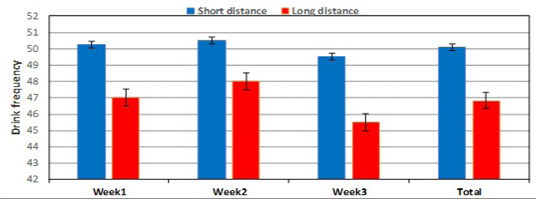
Results shown in Figure 2 revealed that there is non significance between two groups, the first Group (short transport distance) (50.08±1.50) and the Second Group (long transport distance) (46.83±1.60). These findings agreed with Marchewka et al. (2013) who noted that water withdrawal could have a negative impact on the welfare of turkeys, which may manifest through changes in their behaviour patterns. This similarity may be attributed to the decrease in space allowance during transportation leading to frustration of these birds which is evidenced by reducing drinking behaviour.
Table 3: Full soft rounded crop filled test for short and long distance for turkey pullets throughout three weeks of study.
Different periods
Short distance
Long distance
2 hours
37.66±0.88c
34.33±1.20c
8 hours
41.33±1.20b
38.00±1.52c
12 hours
44.00±1.52b
43.00±2.00b
24 hours
48.33±0.66a
44.66±1.76ab
48 hours
49.66±0.33a
49.33±0.33a
Means within the same column carrying different superscripts are Significant different at P < 0.05; The values expressed as Mean ±SE.
The data in Table 3 showed that the effect of transport on determining appetite development of turkey pullets that there is moderate significance between two groups of transport that show full soft rounded crop after 2hours.untill reach 24hours,it indicated that poullets in the First Group (short transport distance) eat and drink faster than Second Group (long transport distance)., but at 48hrs there is no significance, These findings concurred with those of Cobb-Vattress (2015), who suggested that 95% of chicks should have a complete, soft, and rounded crop within 24 hours of implantation. This shows that the pullets have found their food and water.
Table 4: Full hard crop filled test for short and long distance for turkey pullets throughout three weeks of study.
Different periods
Short distance
Long distance
2 hours
3.00±0.57a
4.00±0.57a
8 hours
2.00±0.57ab
3.33±0.33b
12 hours
0.66±0.66bc
1.33±0.88c
24 hours
00.00±0.0c
0.66±0.66c
48 hours
00.00±0.0c
00.00±0.0c
Means within the same column carrying different superscripts are significant different at P < 0.05; The values expressed as Mean ±SE.
Data as mentioned in Table 4 shown the effect of transport on determining appetite development of turkey pullets that there is moderate significance between two groups of transport that show full hard rounded crop after 2hours till reach 12hours in both groups but at 24hours the Second Group show full hard crop indicating that chicks in this group eat but did not drink enough amount of water. These results agreed with the result observed by Cobb-Vattress (2015), who found that After 24 hours following implantation, 95% of chicks should have a full, rounded, and soft crop. This indicates that food and water have been found for the pullets. This agreement attributed to using the same environmental conditions.
Table 5: Crop empty crop filled test for short and long distance for turkey pullets throughout three weeks of study.
Different periods
Short distance
Long distance
2 hours
8.66±0.33a
11.66±1.20a
8 hours
6.66±1.20a
8.66±1.20ab
12 hours
5.33±1.85a
5.66±2.07b
24 hours
1.66±0.66b
4.66±1.76bc
48 hours
0.33±0.33b
0.66±0.66c
Means within the same column carrying different superscripts are significant different at P < 0.05; The values expressed as Mean ±SE.
As regarding to Table 5 the effect of transport on determining appetite development of turkey pullets showed that there is great significance between two groups of transport that show empty crop after 2hours. Till reach 24hours, indicate that pullets in the Second Group (long transport distance) don’t eat or drink more than First Group (short transport distance). At 48hours there is no significance. These results agreed with the finding obtained by Cobb-Vattress (2015), this agreement may be due to use the same managerial practices. A complete ban on long-distance live animal transport may not be tenable, as there may always be the long-distance transport of specialized livestock (turkey for example), but tighter regulations and a transition toward behaviour and welfare of birds serious public health implications of epizootics, whether natural or intentional, and have additional positive social and economic benefits.
Table 6: The effect of transport-related stress distance on average body weight (gram) of turkey pullets throughout three weeks of study.
Different periods
Short distance
Long distance
First day
90.06±0.29a
75.50±0.28b
First week
186.03±0.81a
152.46±0.49b
Second week
250.73±0.41a
225.60±0.74b
Third week
715.90±0.68a
615.26±0.79b
Means within the same rows carrying different superscripts are significant different at P < 0.05;The values expressed as Mean ±SE.
Data presented in Table 6 revealed that the average body weight increased dramatically during the three weeks of the experiment, indicating a significant difference in average live body weight between the two groups. First group (short transport distance) (715.90±0.68) the second group (long transport distance) (615.26±0.79) results were attributed to the impact of transportation and agreed with the findings of ; ; Dozier et al., 2006; ; . Who corroborated that our study found that an increase in travel distance significantly increased the body weight loss in chickens, and they attributed this agreement to the use of the identical environmental circumstances. Also these results coincided with those obtained by Siddharth et al. (2024), who cited that feed efficiency and body weight were significantly decreased with decreasing floor space during transportation for long time.
Table 7: The effect of transport-related stress distance on body weight gain (gram)of turkey pullets throughout three weeks of study.
Different periods
Short distance
Long distance
First week
95.96±0.89a
81.96±0.57b
Second week
64.70±0.90a
73.13±0.96b
Third week
465.16±0.81a
389.66±1.14b
Total gain
625.83±0.71a
544.76±0.86b
Means within the same rows carrying different superscripts are significant different at P < 0.05; The values expressed as Mean ±SE.
The data in Table 7 showed that body weight gain revealed that there is significance difference in the average weight gain at 3 weeks of the study. While the weight gain was significantly higher in First Group (short transport distance) at most weeks of age (625.83±0.71) than the second group(long transport distance)(544.76±0.86). These results agreed with Arikan et al, (2017) who found that the reduction of final body mass can be connected to decrease in food consumption because of transport stress, so transportation distance had a major impact on overall losses. Growth in body weight also concurred with who reported that transportation distance from the hatchery to the imported country was found to reduce live body weight in an experimental investigation. This agreement may be due to using the same species.
Further researches on transportation of turkey pullets should be done under certain parameters, such as road, crate, and vehicle conditions, as well as the density of the pullets in the crates. Environmental factors that affect foraging behaviour, feeding intake, body weight, growth rate, and farm welfare productivity include temperature and humidity, season, time of day, distance from the airport to the poultry farm, and transportation time.
CONCLUSIONS AND RECOMMENDATIONS
Based on the study’s findings, it can be said that turkey pullets’ feeding, foraging, and drinking habits changed when they were transported over vast distances. Therefore long-distance transportation of turkey pullets should be avoided because it negatively impacts the animals’ welfare, growth, behaviour, and health. This vulnerability may be lessened by lowering transport stress and enhancing housing conditions in the new facility, as lowering transport-induced stress is a key goal for enhancing animal welfare. The study recommended that turkey pullets should be transported under certain parameters, such as road, crate, and vehicle conditions, as well as the density of the pullets in the crates. Environmental factors that affect foraging behaviour, feeding intake, body weight, growth rate, and farm welfare productivity include temperature and humidity, season, time of day, distance from the airport to the poultry farm, and transportation time.
ACKNOWLEDGMENTS
The authors would like to thank King Saud University’s Deanship of Scientific Research, RSSU, for their technical support.
NOVELTY STATEMENT
The transportation stress had scientifically bad effect on the growth, behaviour and welfare of Turkey Pullets.
Author’s Contributions
The work done by Azza Mohamed Morsi Fahd under supervision of Al-Sadik Y. Saleem and Mohamed Y. I. Youssef. The statistical analysis done by Azhar F. Abdel Fattah. The study funded by Gehad R. Donia. All authors read and approved the final version of the manuscript.
Conflicts of Interest
The authors declare no conflict of interest.
Figures
Figure 1:.
The effect of transport-related stress distance on feeding behaviour frequency of turkey pullets throughout three weeks of study / 8 hours observation weekly; There is no significant difference between two groups. The values expressed as Mean ±SE.
Figure 2:.
The effect of transport-related stress distance on drinking behaviour frequency of turkey pullets throughout three weeks of study / 8 hours observation weekly;There is no significant difference between two groups; The values expressed as Mean ±SE.
References
Abd El-aty, A.. Behaviour and performance of turkey in relation to management 2016, Master Veterinary Science thesis, Faculty of Veterinary Medicine, Zagazig University, Egypt.
Abdel-Rahman, M.A. Study on the effect of stocking density and floor space allowance on behaviour, health and productivity of turkey broilers. Assiut. Vet. Med. J., 2005, 51 (104): 1-13. https://doi.org/10.21608/avmj.2005.167011[CrossRef]
Arikan, M,S., Akin, A.C., Akcay, A.I., Aral, Y.I., Sariozkan, S.I., Cevrimli, M.B., Polat, M. Effects of Transportation Distance, Slaughter Age, and Seasonal Factors on Total Losses in Broiler Chickens Brazilian Journal of Poultry Science, 2017, 19, 3: 421-428. https://doi.org/10.1590/1806-9061-2016-0429[CrossRef]
Armonk, N.Y. IBM SPSS Statistics for windows, Version 20, IBM Crop, 2011
Bayliss, P.A., Hinton, M.H. Transportation of poultry with special reference to mortality rates. Applied Animal behaviour Science, 1990,28:93-118. https://doi.org/10.1016/0168-1591(90)90048-I[CrossRef]
Bennett, A.T.,Cuthill, I.C., Partridge, J.C. and Lunau,K. Ultraviolet plumage colour s predict mate preferences in starlings. Proceedings N. Aca. Sci., USA, 1997, 94: 8618-8621. https://doi.org/10.1073/pnas.94.16.8618[CrossRef]
Bianchi, M., Petracci, M., Cavani, C. Effects of transport and lairage on mortality, live weight loss and carcass quality in broiler chickens. Italian Journal of Animal Science,2005, 4:516-518. https://doi.org/10.4081/ijas.2005.2s.516[CrossRef]
Chauvin, C., Hillion, S., Balaine, L., Michel, V., Peraste, J., Petetin, I, et al. Factors associated with mortality of broilers during transport to slaughterhouse. Animal, 2011, 5:287-293. https://doi.org/10.1017/S1751731110001916[CrossRef]
Cobb-Vantress. Optimum Broiler Development: A Practical Guid to Ensure Correct Early Broiler Performance. Cobb-Vantress, Siloam Springs, 2015.
Cornetto, T., Estevez, I. and Douglass, L.W. Using artificial cover to reduce aggression and disturbances in domestic fowl. Appl. Anim. Behav. Sci, 2002, 75: 325–336. https://doi.org/10.1016/S0168-1591(01)00195-2[CrossRef]
Dale C. 2000. Econometric Analysis of U.S. Turkey Exports. Paper presented at the Annual Meeting of the North eastern Agricultural and Resource Economics Association, New Green Wich, West Virginia University, Morgantown, 1-6.
Dozier, W.A., Lott, B.D. and Branton, S.L. Live performance of male broilers subjected to constant or increasing air velocities at moderate temperatures with a high dew point. Poult. Sci, 2005, 84, 1328-1331. https://doi.org/10.1093/ps/84.8.1328[CrossRef]
Drain, M.E., Whiting, T.L., Rasali, D.P., D’Angiolo, V.A. Warm weather transport of broiler chickens in Manitoba. I, Farm management factors associated with death loss in transit to slaughter. The Canadian Veterinary Journal, 2007, 48:76-80.
Edward, N. 2023. Animal welfare assessment, Volume III.10. https://doi.org/10.3389/fvets.2023.1135932[CrossRef]
Elsayed, M,A. Effects of length of shipping distance and season of the year temperature stress on death rates and physiological condition of broilers on arrival to slaughterhouse. Journal of Nuclear Science and Technology, 2014, 2:453-463.
Estevez, I. Density allowances for broilers: Where to set the limits? Poult. Sci, 2007, 86: 1265–1272. https://doi.org/10.1093/ps/86.6.1265[CrossRef]
Gencoglan, S., Gencoglan, C. and Akyuz, A. Supplementary heat requirements when brooding tom turkey poults. South. Afr. J. Anim. Sci, 2009, 39(1): 1-9. https://doi.org/10.4314/sajas.v39i1.43539[CrossRef]
Gunthner, P. and Bessei, W. Behavioural reactions of growing turkeys to different stocking densities. EPC 2006 – 12th European Poultry Conference, Verona, Italy, 10-14 September, 2006, P.P 316.
Lalonde, S., Beaulac, K., Crowe, T. G., & Schwean-Lardner, K. The effects of simulated transportation conditions on the core body and extremity temperature, blood physiology, and behaviour of white-strain layer pullets. Poultry Science,(2021). 100(2), 697-706. https://doi.org/10.1016/j.psj.2020.10.077[CrossRef]
Marchewka, J., Watanabe, T. T. N., Ferrante, V., & Estevez, I. Review of the social and environmental factors affecting the behaviour and welfare of turkeys (Meleagris gallopavo). Poultry Science, 2013, 92(6), 1467-1473. https://doi.org/10.3382/ps.2012-02943[CrossRef]
Marco-Ramell, A., A.M., de Almeida, S., Cristobal, P., Rodrigues, P.,Roncada and A. Bassols. Proteomics and the search for welfare and stress biomarkers in animal production in the one health context. Mol. Biosyst, 2016, 12:2024–2035. https://doi.org/10.1039/C5MB00788G[CrossRef]
Martrenchar, A. Animal Welfare and intensive production of turkey broilers. World Poult. Sci, 1999, 55:143-152. https://doi.org/10.1079/WPS19990010[CrossRef]
Mercia, L. Raising Poultry the modern way. 16th printing 1986, P. 22.108.
Metin, P., Recep, Ç., Huseyin, Y., Fisun, A.S., Serife, S.G., Abdülkadir, O. and Cenk, A. The influence of different lighting programs, stocking densities and litter amounts on the welfare and productivity traits of commercial broiler line. Vet. Med. Zoot, 2010, 51 (73): 1392-2130.
Mitchell, M. A. Chick transport and welfare. Avian Biol. Res. 2009,1.2:99–105. https://doi.org/10.3184/175815509X431894[CrossRef]
Moran, E.T., Bilgili, S.F. Influence of broiler livehaul on carcass quality and further-processing yields. The Journal of Applied Poultry Research , 1995,4:13-22. https://doi.org/10.1093/japr/4.1.13[CrossRef]
Moreki, J.C. and Ditshupo, T. Effect of storage time on hatchability of guinea fowl eggs, Anim. Sci., 2012, 2 (7): 631-636.
Moursy, S.M. 2003. Effect of some managerial factors on turkey performance and behaviour, Ph.D. Thesis, Banha, Egypt.
Nijdam, E., Arens, P., Lambooij, E., Decuypere, E., Stegeman, J.A. Factors influencing bruises and mortality of broilers during catching, transport and lairage. Poultry Science, 2004, 83:1610-1615. https://doi.org/10.1093/ps/83.9.1610[CrossRef]
NRC. 1994. Nutrient requirement of poultry. 9th ed. National Academy Press. Washinton. D.C.USA.
Ondrasovicova, O., Saba, S., Smirkjakova, S., Vargova, M., Ondrasovic. M., Matta, S., et al. Effects of vehicle-road transport on blood profile in broiler chickens. Medycyna Weterynaryjna, 2008,64:292-293.
Ondrasovicova, O., Saba, S., Smirkjakova, S., Vargova, M., Ondrasovic, M., Matta, S., et al. Effects of vehicle-road transport on blood profile in broiler chickens. Medycyna Weterynaryjna, 2008, 64:292-293.
Petracci, M., Bianchi, M., Cavani, C., Gaspari, P., Lavazza, A. Pre-slaughter mortality in broiler chickens, turkeys and spent hens Under commercial slaughtering. Poultry Science,2006, 85:1660-1664. https://doi.org/10.1093/ps/85.9.1660[CrossRef]
Randall, M. and Bolla, G. Raising Japanese quail. Prime factor Prime fact of New South Wales department of primary industries (NSW DPI), .602, 2nd . (2008).
Scanes, C. G., Hurst, K., Thaxton, Y., Archer, G. S., and Johnson, A. Effect of transportation and shackling on plasma concentrations of corticosterone and heterophil to lymphocyte ratios in market weight male turkeys in a commercial operation. Poultry science, 2020, 99(1), 546-554 https://doi.org/10.3382/ps/pez485.[CrossRef]
Sherwin, C.M. and Kelland, A. Time-budgets, comfort behaviours and injurious pecking of turkeys housed in pairs. Br. Poult. Sci, 1998, 39: 325-332. https://doi.org/10.1080/00071669888854[CrossRef]
Shimmura, T., Hirahara, S., Eguchi, Y., Uetake, K. and Tanaka, T. Behaviour and Physiology, performance and physical condition of layers in conventional and large furnished cages in a hot environment. Anim. Sci, 2007, 78: 314-322. https://doi.org/10.1111/j.1740-0929.2007.00441.x[CrossRef]
Siddharth M., Rokade, J., Bhanja, S.K., Tyagi, J., Monika, M., Pearlin, B., Kumar, A., Gopi, M. Transportation stress: Impact on behaviour and welfare in meat-type chickens under indian scenario. Heliyon, 2024, https://doi.org/10.1016/j.heliyon.2024.e27129[CrossRef]
Sowinska, J., Wojcik, A., Pomianowski, J.F., Chorazy, L., Mituniewicz, T., Witkowska, D., et al. Effects of different variants of pre-slaughter transport on body weight loss and meat quality in broiler chickens. Medycyna Weterynaryjna, 2013,69:420-423.
Ulupi, N., Aryani, S. S., Evni, F. T., Nugraha, R. Effects of transportation duration on broiler chicken physiology and performance factors. Int J Poult Sci, 2018, 17, 197-204. https://doi.org/10.3923/ijps.2018.197.204[CrossRef]
Vecerek, V., Grbalova, S., Voslarova, E., Janackova, B., Malena, M. Effects of travel distance and the season of the year on death rates in broilers transported to poultry processing plants. Poultry Science, 2006, 85:1881-1884. https://doi.org/10.1093/ps/85.11.1881[CrossRef]
Vecerek, V., Voslarova, E., Conte, F., Vecerkova, L., Bedanova I. Negative trends in transport-related mortality rates in broiler chickens. Asian-Australasian Journal of Animal Sciences, 2016, 29(12):1796-1804. https://doi.org/10.5713/ajas.15.0996[CrossRef]
Ventura, B. A., Siewerdt, F. and Estevez, I. Access to barrier perches improves behaviour repertoire in broilers. PloS ONE 7:e29826.(2012) https://doi.org/10.1371/journal.pone.0029826[CrossRef]
Voslarova, E., Janackova, B., Vitula, F., Kozak, A., Vecerek, V. Effects of transport distance and the season of the year on death rates among hens and roosters in transport to poultry processing plants in the Czech Republic in the period from 1997 to 2004. Veterinární Medicína, 2007, 52:262- 266. https://doi.org/10.17221/1881-VETMED[CrossRef]
Warriss, P.D., Bevis, E.A., Brown, S.N., Edwards, J.E. Longer journeys to processing plants are associated with higher mortality in broiler chickens. British Poultry Science, 1992, 33:201-206. https://doi.org/10.1080/00071669208417458[CrossRef]
Warriss, P.D., Pagazaurtundua, A., Brown, S.N. Relationship between maximum daily temperature and mortality of broiler chickens during transport and lairage. British Poultry Science, 2005, 46:647-651. https://doi.org/10.1080/00071660500393868[CrossRef]