
Owing to established impacts of mass migration, habitat loss and deforestation on biodiversity, it is imperative to investigate the global warming on aquaculture welfare and productivity. Our current understandings on impacts of altered climate dictate a weak relationship between global warming and naturally occurring migrations. However, several models have been presented that elucidate the negative impact of global warming on the aquatic biodiversity. While impact of global warming on habitat is imperative, additional factors such as predation, food shortage or heavy fishing may exacerbate the climatic impacts on the aquaculture biodiversity. Based upon current general consensus among researchers, a global legislation and action-plan is required. Additionally, regulatory authorities from both developed and underdeveloped countries should enforce the implementation of these legislations. Such initiatives are fundamental in conservation of aquaculture, sustainability of increasing food security and to maintain the ecosystem of the planet.
Review · Volume 50, Issue 1, 19 January 2018 · Open Access
Impact of Global Warming on Aquatic Animals
·
Affiliations & Notes ⌄
- 1Ataturk University, Faculty of Aquaculture, Department of Fishery, 25240-Erzurum, Turkey 2Yıldırım Beyazıt University, Faculty of Engineering, Ankara, Turkey * Corresponding author: telatyanik@yahoo.com
Article Info ⌄
- Journal:
- Pakistan Journal of Zoology
- Published:
- 19 January 2018

From the article
- However, several models have been presented that elucidate the negative impact of global warming on the aquatic biodiversity.
- Global warming-induced climatic changes affect directly and indirectly on land and water sources mainly by disturbing the balances between habitats of aquatic and terrestrial species.
- Global warming will have effects on individuals and populations of species and communities living in ecosystems.
- Therefore, it is imperative to declare that climate warming will cause extinction of some aquatic organisms as well as fish species by 2080 or 2100.
Selected from the article's own text.
Abstract
Introduction
Global warming is negatively impacting the natural ecosystems by enforcing the glacial melting, sea level rise, enhanced lake evaporation, green house effects, increase ocean acidity, and biological invasions . Global warming-induced climatic changes affect directly and indirectly on land and water sources mainly by disturbing the balances between habitats of aquatic and terrestrial species. Climatic changes are happening across the globe and impacting the nature and dynamics of flora and fauna. The most prominent examples include the earlier onset of spring and longer crop growing season, which are generally observed in several regions of the world .
Emerging evidences suggest that the deterioration of habitats and marine biodiversity are mainly attributed to the global warming (GW), pollution load and organic matter (OM) pollution ; ; . These climatic alterations are resulting in algal blooms and acidification of marine waters. Such algal blooms have been reported from different parts of world such as Australia, Japan, USA and Europe ; .
In a long-term project, vulnerability of aquatic-terrestrial ecotones to climate change has been proposed . It has been highlighted that destruction of zones with emergent aquatic macrophytes in freshwater, wetlands and terrestrial ecosystems caused serious ecological problems. After using different climate scenarios, determination of occurrence and percentage cover of boreal emergent aquatic vegetation were assessed. Cumulatively, it was predicted that climate change would cause expansion of their distributions in Finland by 2050s .
Recently, Bond et al. (2012) have reported an indirect correlation between rise in water temperature of a river and defecate number, and time spending at riverside of cattle in England. It was mentioned that there may be some effects of climate warming contrary to intuitive expectations such as decrease in animal-mediated decomposition of organic matter and recycling of nutrients . Moreover, they reported that there was a positive relationship between survival of coprophagous beetles and moisture level of dung, which was decreased by heating experimentally.
It is reported that there are many invaders from one continent to another and many lesseptian species from oceans to sea or vice versa . However, there is a paucity of information on their effects on invaders or lessepsians that migrated from one to other habitat for several non-climatic reasons. This raises main question on the impact and degree of climate change on non-native species in their new habitats. Can this be reasoned for such species for their return to original habitats or if they move to another place where they can spread easily? Several efforts have been made to explore logical phenomenon to address these questions ; . Most of these studies are based on the detection of a number of such species especially in Mediterranean Sea, however, these studies failed to establish foundations that help to conserve the populations.
Today, global warming is the main and emerging problem, and several summits have been organized and legislations have been made on country- or continent-based. Keeping in view above mentioned points; the present review describes previous studies focusing on climate changes and their effects on biodiversity of aquatic organisms. This review will help researchers to prepare and plan further actions to be undertaken against the potential effects of global warming. It is also aimed to figure out the interaction of global warming and anthropogenic activities with special reference to aquatic biodiversity. Finally, the present review aims to summarize the recent published data dealing with modelling attempts using sources, factors, mechanisms, possible eventual impacts with remedial measures to conserve the migratory populations of aquatic species.
Human health and well-being is sustained by the critical ecosystem-services provided by biodiversity, which has been effected negatively by global warming in last decades (Millennium Ecosystem Assessment, 2005). It was reported that Nitrogen, as a pollutant, caused losses in terrestrial and aquatic biodiversity under climate warming conditions (Fig. 1). Moreover, de Vries et al. (2011) have concluded that unlike non-agricultural systems, N2O emission effects biodiversity, and eutrophication. Due to usage of anthropogenic enrichment of reactive nitrogen (Nr) deposition, it also negatively impacts the human health by potentiating global warming in agriculture systems.
Effects of human activities and climate changes on marine ecosystems raise serious concerns which require attentions. For this purpose, many guidelines and legislative proposals have been published in European Union (EU) to mitigate effects of climate changes .
Marine biodiversity
Coastal marine ecosystems and their biodiversity are reportedly affected by global warming. Additionally, sea pollution particularly resulting from breaking and recycle industry pollutants, overproduction and incorrect disposal of pharmaceuticals and overfishing have seriously affected the marine diversity ; due to global food shortage (Fig. 2) ; , b).
Temperature effects both bacterioplankton composition and metabolic rates in the Baltic Sea . It has been reported that amount of algal toxins and naturally-derived toxic emerging contaminants (ECs) can cause death of aquatic organisms and humans which feed on contaminated fish or seafood . Graham and Harrod (2009) have mentioned that climate change will continuously threat biodiversity, structure and function of ecosystems. Global warming will have effects on individuals and populations of species and communities living in ecosystems. It will influence their physiological and ecological processes in a number of direct, indirect and complex ways. Each species will respond these factors at different levels, which are difficult to predict, based on their tolerances and life stages. Although adaptation ability of aquatic species to expected climate changes may not the same, fish will move horizontally and vertically to survive and reproduce in water sources. Perhaps some species without shifting opportunity will be extinct in near future or become food for predators. Williams (1999) argued the re-establishment of bottomland hardwood forests and coastal wetland grasses for the restoration of wildlife habitats, which serve as wildlife corridors, increase biodiversity, and decrease soil erosion.
Natural and anthropogenic factors affecting the marine biodiversity
Changes in environmental factors due to pollution, construction of dams, increasing deposition of woody debris from human activities and climate changes effects aquatic ecosystems, especially their nutrient and carbon cycles. Considering pharmaceuticals as pollutants, they are originated from either overproduction or incorrect disposal may play an important part in the water pollution. There are additional sources of water pollution including ship-breaking and recycle industries (SBRIs), overfishing, organic matter (OM) pollution and global warming (GW). These cause deteriorations of habitats and marine biodiversity with algal blooms and acidification. It was reported that changes in environmental factors negatively effect freshwater lignicolous fungi in Asian/Australian regions .
Response of invertebrate and vertebrate to the climate change
It has been reported that range size of pulmonate freshwater snail determined by a niche modelling analysis will be decreased by 2080 in Central Europe unless their dispersal abilities match the rate of climate change . In Austria, it was figured out that invertebrate fauna of Lake Moaralmsee changed due to climate warming in past centuries . In Philippine, it has been observed that direct-developer eggs of five different anuran frog populations living in four different breeding habitats in a tropical montane rain forest were more sensitive to climate warming compared to both metamorph and adult life-history stages . It is also reported that climate warming effects stream ecosystems with mostly ectothermic inhabitants found in risky dendritic networks at very high level .
Kolicka et al. (2015) have reported native and alien Rotifera, Copepoda, Polychaeta, Acari and Insecta larvae in greenhouses of Poznan in Poland whereas Fengqing et al. (2013) have reported stream insects such as Ephemeroptera, Odonata, Plecoptera and Trichoptera diversities are effected by global warming in South Korea. They have cumulatively expected that global warming will effect insect populations either at 71.4% extinction level or increasing at 66.7% level by 2080. In another study, based on macroinvertebrate biodiversity from 521 sites across Korea, it was found that macroinvertebrate communities such as mayflies, stoneflies and caddisflies of benthic taxa living in river ecosystems had highly sensitivity potential to climate change. Additionally, it was predicted that global warming will have less impact on macroinvertebrates in 2060s; however, 55% of these species will extinct by 2080s with the assumption of ambient temperature increase by an average of 3.4°C by the year 2090. It is expected that number of cold-water species will decrease and warm water species will increase in number. Temporally, their population size will increase from 2000 to 2040 followed by gradual decrease by 2080 .
Shah et al. (2014) have suggested a genus-by-genus model by using stream insect orders of Ephemeroptera, Plecoptera and Trichoptera to determine the consequences of climate-change on freshwater biota across North America. In another study, Tisseuil et al. (2012) have developed a novel methodology by combining statistical downscaling and fish species distribution modelling and determined the effects of global climate changes on local riverine fish diversity in France. With the assumption a decrease average annual stream flow by 15% and 1.2°C temperature increase by the year of 2100, they expected that the majority of cool- and warm-water fish species will expand their geographical range within the basin, but the number of few cold-water species will reduce. Correspondingly, Willigalla et al. (2012) have concluded they study that changes in richness of Odonata species may be due to the recent increase in Mediterranean species which are associated with global warming.
Zaitsev et al. (2016) have reported the effects of fire on biodiversity and functional changes in soil communities. In order to conserve freshwater biodiversity in the Alps, in the case of climate warming, as an innovative method four successive and complementary steps related to the upward dispersal of species and colonization of new habitats were suggested .
Isaak et al. (2013) have developed equations using stream temperature and slope to calculate isotherm shift rates of ectothermic organisms in streams for the purpose of representation historical state, and suggested their usage for future warming scenarios about the effects of temperature increases on stream biotas. Domisch et al. (2013), in another study, developed a distribution model by using ensemble of bioclimatic envelope models from 191 species (belonging to 12 orders) for stream macroinvertebrates considering climate changes in Europe. They analyzed climate-dependent changes such as endemicity and rarity within European ecoregions, life cycle, stream zonation preference and current preference in species and their movements to different latitude and longitude with respect to thermal preferences of species. According to their bioclimatic envelope models, at the rate of 99% in the year of 2080, climate will not affect habitat conditions for the modelled species. However, there will be a decrease in the amount of climatically suitable areas and therefore the losses could be of 38-44% on average. Therefore, it was advised that distributional changes should be investigated to determine the degree of vulnerability of freshwater organisms to climate change and to understand the consequences for ecological function and biodiversity conservation .
Temporal change in physico-chemical factors of marine environment
It has been found that melting of glacier and associated changes in amount of runoff and timing, water from additional sources and physico-chemical properties of habitat will affect biodiversity of cold stream communities . Sandu et al. (2009) have mentioned that climate models are downscaling from global climate models to regional climate models as well as from lake and catchment models. Therefore, the long-term fluctuations and changes of annual precipitation, discharge, and air and water temperatures should be monitored and discussed due to their potential effects on river morphology and aquatic flora and fauna.
Floder et al. (2010) have investigated ecosystem traits by using indices of population dynamics of common species and compensatory growth of indigenous species due to high salinity caused by global warming and eutrophication. Additionally, Dossena et al. (2012) have recorded that population size pattern and ecosystem functions were altered profoundly by increasing the temperature at 4°C which is the expected temperature rise at the end of the century. Seifert et al. (2015) identified that increasing water temperatures can cause herbivore extinctions and strongly effect algal relative abundances. They concluded that environmental extremes may prevent ecological recovery and reduces success of species by re-introduction programs.
Bozinovic et al. (2015) have suggested that theoretical and experimental efforts should be used for both improvement of understanding of thermal limits of organisms and for consideration of multiple stressors from land and oceans. They advised that oxygen and capacity limited thermal tolerance (OCLTT) might be used for explanation of limited thermal tolerance of metazoans. Michelutti et al. (2015) have found that there was a positive relationship between air temperature and lake water temperature in Andean water resources and have recorded sudden increase in the planktonic thalassiosiroid diatom Discostella stelligera from traces to dominance within the phytoplankton in the southern Sierra of Ecuador. Accordingly, Penk et al. (2015) have investigated the role of temperature on hypoxia sensitivity level of an opossum shrimp, aquatic glacial relict-Mysis salemaai, in Ireland. They found that rising temperature caused low habitat quality and low survival of animals in climatic refugia. They advised that species-specific responses to temperature increases should be used for predicting future distribution patterns, mitigating threats and for prioritizing conservation measures to protect global biodiversity.
It has been proposed that damselfly larvae are sensitive to zinc and this sensitivity can be lethal with elevated temperature (Dinh et al., 2013). Assuming that temperature will increase by 4°C until 2100, they predicted that it will cause high contaminant rates through these metals and will shape the thermal adaptation along a latitudinal gradient either by thermal evolution or migration to lower latitudes.
In USA, it has been reported that water temperatures are increasing by 0.009-0.077°C each year in many streams and rivers compared to the air temperature. They concluded that if stream temperatures were to continue to increase at current rates, there would be a possible eutrophication, ecosystem processes such as biological productivity and stream metabolism, contaminant toxicity, and loss of aquatic biodiversity due to global warming and urbanization . These warming effects will be observed in habitats including saline coldwater springs, supraglacial lakes on ice shelves, epishelf lakes in fjords, deep meromictic lakes, and shallow lakes, ponds and streams .
Climate change and breeding ground of fishes
Yvon-Durocher et al. (2012) have proven that there are significant correlations between seasonal variation in temperature, community size structure and carbon fluxes. They suggested, using size structure shaped by effecting factors, to realize ties between individual organisms and biogeochemical cycles for prediction of responses of key ecosystem functions for future changes in the environment. In their research, Sommer et al. (2012) have used AQUASHIFT research program to determine effects of global warming on aquatic ecosystems (both marine and freshwater) in temperate zone by evaluation of movements in geographic distribution, seasonal changes, temporal mismatch in food chains, biomass responses to warming, responses of growth, harmful bloom intensity, changes of biodiversity and the dependence of shifts to temperature changes during critical seasonal windows.
In a meta-analytical approach, respond rates of 157 non-native species and 204 co-existing native species against future climatic changes were determined under different temperature, CO2 and precipitation conditions. It was found that response rates of native and non-native species to the environmental changes were generally similar in terrestrial vegetative systems, but they responded differently at aquatic animal systems. Inhibition of growth of native species by increasing temperature and CO2 indicates that climate change exposes aquatic systems a higher risk of invasion . Using macro-scale analysis, negative effects of climate changes on land ecosystems were reported by Ostberg et al. (2013).
Bosma et al. (2011) have used a stakeholder-based screening life cycles assessment (LCA) in intensive farming system for determining and preventing effects of critical environment in production of striped catfish. They concluded that using managing sludge effectively and high quality fish feeds including low aquatic by-products with low feed conversion ratio prevented negative effects of environmental changes in Pangasius grow-out farming.
Although, it is known that newly introduced non-native species are hazardous for biodiversity in any ecosystem, the difference between flesh quality of native and invasive species cannot be realized by the experienced consumers . In marine habitats, fish usually shifts based on their temperature preferences. Eurybiontic species tolerate a wider range of environmental conditions more than the typical Arctic inhabitants and therefore they gain advantages for optimum growth . Negative effects of climate changes have been monitored in the Mediterranean Sea since 1940s. Several foreign fish species migrated from Indian Ocean and red sea via Suez Canal, Gibraltar or in ballast water, which were caught from Mediterranean Sea in recent years. Those factors that underlined these shifts are still undermined . However, it has been reported that there are almost 650 fish species living in Mediterranean Sea and 90 of them reportedly invasive. Also, 30 of these species have migrated from Indian Ocean . Considering current data, it is projected that climate change will effect catchment size of marine fisheries from Mediterranean of Turkey by 2050.
Anthropogenic threats to the fisheries resources
Brander (2007) reported that overfishing makes ecosystems sensitive to climate change by causing decreases age, size and geographical diversity of populations and biodiversity of marine ecosystems. It is reported that geothermal areas may provide ecological passages for aquatic organisms to respond global warming . Modifications in hydrological regimes of wetlands by climate change may cause intense droughts or inundations. Barros et al. (2014) proposed that low or high precipitation might cause either a decline in species numbers of mangroves and floodplains or a substitution of plant species with adaptation problems to new conditions in the Brazilian Amazon. Janssens et al. (2014) have reported major factors causing aquatic biodiversity including global warming and pesticide pollution. They reported that larval pesticide stress and adult heat stress interacted across metamorphosis, and sensitivity to pesticides may be graded by intraspecific evolution along natural thermal gradients. Spatio-temporal variations were reported using multivariate techniques contributing significantly for change in running water quality due to pollution caused by anthropogenic factors such as industrial waste, urbanization, agriculture intensification and global warming ; .
Studies have been conducted to determine the effect of ultraviolet light-A (UV-A) radiation on the relationship between water quality and deepness of lakes at different altitudes . DNA from sediments has also been used for estimating biodiversitical history of a lake . Additionally, using genetic parameters, significance of pre-quaternary climate changes has been evaluated to further understand the impact of global warming in montane salamander species in East Asia .
To further advance our understanding on the impact of climatic changes, a connection has been attributed between genetic structure, climatic changes and habitat disruptions using a modified landscape genetics approach in yellow perch (Perca flavescens) . Several modelling approaches have been reported to develop the lake ecosystems . How climate change will affect the water column has been simplified in Figure 3. Likewise, in cold-water fish populations, warm water fishes will also be affected negatively by climate warming. This means, fish populations have to migrate to other habitats. This will cause hybridizations and probably infertile new species in the aquatic environments. In the time course, due to lack of offspring rate, the extinction of species may occur in natural fish populations.
Anthropogenic threats vs climate change
Ng and Gray (2011) have mentioned that climate change will have negative effect on biodiversity of aquatic species and will affect predator-prey dynamics, which may result into a substantial shift. Pilas and Planinsek (2011) have reported that negative effects of climate changes in lowland forests can be reduced or prevented by applying new water usage methods including various forest managerial and engineering practices for preventing long term droughts and saving groundwater for future.
Verberk et al. (2011) have suggested using oxygen supply index model derived from classic first law of diffusion of Fick in prediction of reactions of aquatic communities for ongoing global climate shifts in aquatic ectotherms. One of the main causes of decline of freshwater biodiversity was considered as biological invasions caused by climate change . With presuming of rising temperature globally, geographical distributions of native and invasive species will be altered. Comparing temperature sensitivity of invader (killer shrimp, Dikerogammarus villosus) and local species (Gammarus pulex) idntifed that invader are more vulnerable to high temperatures than local species, highlighting that global warming is less favourable to the invasive species.
Boyero et al. (2012) have conducted a worldwide study and highlighted that climate change altered stream detritivore distribution in tropical streams. Using a statistical model, Jenny et al. (2014) have proven that global warming caused increases in hypoxic conditions occurring water systems due to negative climatic factors originated from river discharge and air temperatures. They suggested that controlling river discharge might be a complementary strategy to mitigate hypotic conditions for local management of lakes fed by large river systems.
Porter et al. (2013) have stated that in the last 50 years, it has been at accelerated rate for the loss of biodiversity due to human activities and some other factors such as habitat loss, over exploitation, invasive species, climate change, and pollution. Provided that global climate change has major effects on wetlands and ecosystems, it is suggested that ecological risk assessments should be prepared to preserve aquatic biodiversity . It is predicted that there will be a loss of suitable habitat in northern inland distribution and increase in coastal habitats of salt marsh morning glory (Ipomoea sagittata) in the Gulf of Mexico by the year of 2080 . Ashraf et al. (2012) have recommended that worldwide attentions should continue to save ecosystems and biodiversity in both terrestrial and aquatic ecosystems as the risks still valid for habitat degradation due to emitting air pollutants, ozone layer depletion, global warming, heavy metal contamination and eutrophication of water bodies.
Conlusion and prospects
In light of the current understandings and assumptions, the impacts of global warming, invasionism, lessepsianism, and endangerism on the aquatic populations and their ecosystem are undeniable. Therefore, it is imperative to declare that climate warming will cause extinction of some aquatic organisms as well as fish species by 2080 or 2100. While the global warming is happening, it remains to be determined the impact of unbalanced transfer of aquaculture, interactions between naturally occurring migrations and global warming-triggered relocation, and potential of artificial fish releases in the affected medium. Further research is warranted to evaluate the impact of climatic changes on the endangered species, regionally, nationally and globally.
Based on the current data, it is imperative to propose strict global legislation including special precautions on preserving reproduction habitats and restriction of overfishing. These regulations are crucial to safeguard natural environments and prolong the inevitable impact of climate change on the aquaculture. Additionally, prey-predator relationships must also be monitored and precautions must be applied to avoid extinction of the indigenous and newly introduced species in order to save the diversity and to maintain the species-balance.
Finally, it is essential to assess the impact of human activities that may alter the natural ecosystem and influence the habitat of aquatic animals. For instances, the influence of opening Suez channel on the migration patterns of lesseptian species has not been well planned and anticipated. Therefore, research is required to measure the degree of such activities on natural environments.
Statement of conflict of interest
Authors have declared no conflict of interest.
Figures
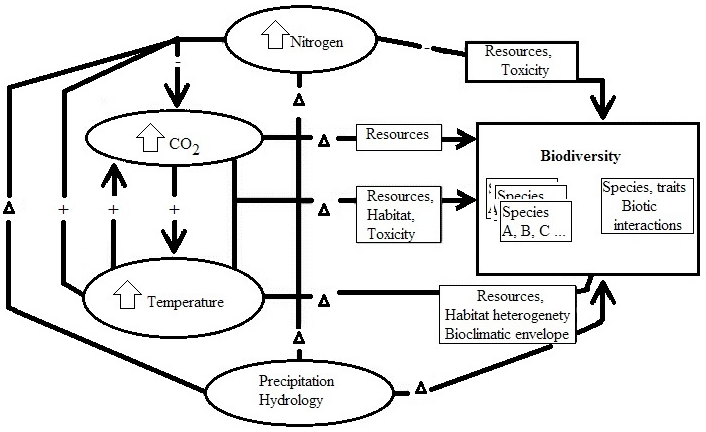
Conceptual model for direct and indirect effects of global changes on biodiversity. Shown are effects on ecosystem biodiversity from elevated nitrogen, CO2 and climate change (elevated temperature and changes in precipitation and hydrology). Predominant direction of effect is shown as positive (+), negative (-) or as a possible change in either direction (∆). Changes in nitrogen, CO2 and climate can influence biodiversity. Nitrogen and CO2 also can interact with climate to effect on biodiversity (Porter et al., 2013).
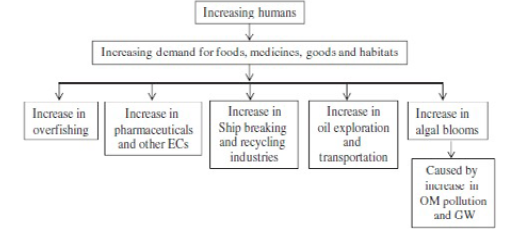
Effects of human on marine ecosystems (adapted from Khan et al. 2013).
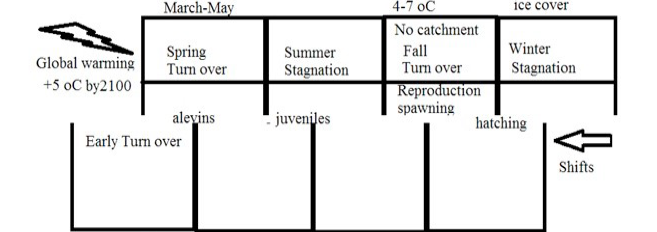
Effects of climate warming on cold-water fish populations living in still waters. Stagnation period gets longer and H2S increases in deep areas, acidity increases with increase of CO2 emissions from atmosphere, available food reduces in time and spawning does not occur in normal timing or no spawning occurs due to elevated temperatures.
References
- Abdullah, H.M., Mahboob, M.G., Banu, M.R., Seker, D.Z., 2013. Monitoring the drastic growth of ship breaking yards in Sitakunda, a threat to the coastal environment of Bangladesh. Environ. Monit. Assess., 185: 3839-3851. https://doi.org/10.1007/s10661-012-2833-4[CrossRef]
- Aguilera, X., Lazzaro, X. and Coronel, J.S., 2013. Tropical high-altitude Andean lakes located above the tree line attenuate UV-A radiation more strongly than typical temperate alpine lakes. Photochem. Photobiol. Sci., 12: 1649-1657. https://doi.org/10.1039/c3pp25285j[CrossRef]
- Alahuhta, J., Heino, J. and Luoto, M., 2011. Climate change and the future distributions of aquatic macrophytes across boreal catchments. J. Biogeogr., 38: 383-393. https://doi.org/10.1111/j.1365-2699.2010.02412.x[CrossRef]
- Altaf, M., Javid, A., Khan, A.M., Hussain, A., Umair, M. and Ali, Z., 2015. The status of fish diversity of River Chenab, Pakistan. J. Anim. Pl. Sci., 25: 564-569.
- Anonymous, 2007. Global warming and report about Turkish seas, (in Turkish). Available at: http://www.tudav.org/kureselis.htm
- Ashraf, M., Hussain, M., Ahmad, M.S.A., Al-Qurainy, F. and Hameed, M., 2012. Strategies for conservation of endangered ecosystems. Pak. J. Bot., 44: 1-6.
- Barros, D.F. and Albernaz, A.L.M., 2014. Possible impacts of climate change on wetlands and its biota in the Brazilian Amazon. Brazilian J. Biol., 74: 810-820. https://doi.org/10.1590/1519-6984.04013[CrossRef]
- Beaufort, L., Probert, I., de Garidel-Thoron, T., Bendif, E.M., Ruiz-Pino, D., Metzl, N., Goyet, C., Buchet, N., Coupel, P. and Grelaud, M., 2011. Sensitivity of coccolithophores to carbonate chemistry and ocean acidification. Nature, 476: 80-83. https://doi.org/10.1038/nature10295[CrossRef]
- Bond, T.A., Sear, D. and Edwards, M., 2012. Temperature-driven river utilisation and preferential defecation by cattle in an English chalk stream. Livest. Sci., 146: 59-66. https://doi.org/10.1016/j.livsci.2012.02.022[CrossRef]
- Bosma, R., Anh, P.T. and Potting, J., 2011. Life cycle assessment of intensive striped catfish farming in the Mekong Delta for screening hotspots as input to environmental policy and research agenda. Int. J. Life Cycle Assess., 16: 903-915. https://doi.org/10.1007/s11367-011-0324-4[CrossRef]
- Boyero, L., Pearson, R.G., Dudgeon, D., Ferreira, V., Graça, M.A.S., Gessner, M.O., Boulton, A.J., Chauvet, E., Yule, C.M., Albariño, R.J., Ramírez, A., Helson, J.E., Callisto, M., Arunachalam, M., Chará, J., Figueroa, R., Mathooko, J.M., Gonçalves Jr, J.F., Moretti, M.S., Chará-Serna, A.M., Davies, J.N., Encalada, A., Lamothe, S., Buria, L.M., Castela, J., Cornejo, A., Li, A.O.Y., M’Erimba, C., Villanueva, V.D., del Carmen Zúñiga, M., Swan, C.M. and Barmuta, L.A., 2012. Global patterns of stream detritivore distribution: implications for biodiversity loss in changing climates. Global Ecol. Biogeogr., 21: 134-141. https://doi.org/10.1111/j.1466-8238.2011.00673.x[CrossRef]
- Bozinovic, F. and Portner, H.O., 2015. Physiological ecology meets climate change. Ecol. Evolut., 5: 1025-1030. https://doi.org/10.1002/ece3.1403[CrossRef]
- Brander, KM., 2007. Global fish production and climate change. Proc. natl. Acad. Sci. U.S.A., 104: 19709-19714. https://doi.org/10.1073/pnas.0702059104[CrossRef]
- Caldow, R.W.G., Stillman, R.A., dit Durell, S.E., West, A.D., McGrorty, S., Goss-Custard, J.D., Wood, P.J. and Humphreys, J., 2007. Benefits to shorebirds from invasion of a non-native shellfish. Proc. R. Soc. B: Biol. Sci., 274: 1449-1455. https://doi.org/10.1098/rspb.2007.0072[CrossRef]
- Cordellier, M., Pfenninger, A., Streit, B. and Pfenninger, M., 2012. Assessing the effects of climate change on the distribution of pulmonate freshwater snail biodiversity. Mar. Biol., 159: 2519-2531. https://doi.org/10.1007/s00227-012-1894-9[CrossRef]
- de Vries, W., Kros, J., Reinds, G.J. and Butterbach-Bahl, K., 2011. Quantifying impacts of nitrogen use in European agriculture on global warming potential. Curr. Opin. environ. Sustain., 3: 291-302. https://doi.org/10.1016/j.cosust.2011.08.009[CrossRef]
- Dinh-Van, K., Janssens, L., Debecker, S., De Jonge, M., Lambret, P., Nilsson-Ortman, V., Bervoets, L. and Stoks, R., 2013. Susceptibility to a metal under global warming is shaped by thermal adaptation along a latitudinal gradient. Global Change Biol., 19: 2625-2633. https://doi.org/10.1111/gcb.12243[CrossRef]
- Domaizon, I., Savichtcheva, O., Debroas, D., Arnaud, F., Villar, C., Pignol, C., Alric, B. and Perga, M.E., 2013. DNA from lake sediments reveals the long-term dynamics and diversity of Synechococcus assemblages. Biogeosciences, 10: 3817-3838. https://doi.org/10.5194/bg-10-3817-2013[CrossRef]
- Domisch, S., Araujo, M.B., Bonada, N., Pauls, S.U., Jahnig, S.C. and Haase, P., 2013. Modelling distribution in European stream macroinvertebrates under future climates. Global Change Biol., 19: 752-762. https://doi.org/10.1111/gcb.12107[CrossRef]
- Dossena, M., Yvon-Durocher, G., Grey, J., Montoya, J.M., Perkins, D.M., Trimmer, M. and Woodward, G., 2012. Warming alters community size structure and ecosystem functioning. Proc. R. Soc. B: Biol. Sci., 279: 3011-3019. https://doi.org/10.1098/rspb.2012.0394[CrossRef]
- Eissa, A.E. and Zaki, M.M., 2011. The impact of global climatic changes on the aquatic environment. Urban environ. Pollut., 4: 251-259.
- Fengqing, L.I, Yong-Su, K., Mi-Jung, B., Namil, C., Tae-Sung, K. and Young-Seuk P., 2013. Potential impacts of global warming on the diversity and distribution of stream insects in South Korea. Conserv. Biol., 28: 498-508.
- Floder, S., Jaschinski, S., Wells, G. and Burns, C.W., 2010. Dominance and compensatory growth in phytoplankton communities under salinity stress. J. exp. Mar. Biol. Ecol., 395: 223-231. https://doi.org/10.1016/j.jembe.2010.09.006[CrossRef]
- Graham, C.T. and Harrod, C., 2009. Implications of climate change for the fishes of the British Isles. J. Fish Biol., 74: 1143-1205. https://doi.org/10.1111/j.1095-8649.2009.02180.x[CrossRef]
- Huerta-Ramos, G., Moreno-Casasola, P. and Sosa, V., 2015. Wetland conservation in the Gulf of Mexico: The example of the salt marsh morning glory, Ipomoea sagittata. Wetlands, 35: 709-721. https://doi.org/10.1007/s13157-015-0662-2[CrossRef]
- Hyde, K.D., Fryar, S., Tian, Q., Bahkali, A.H., Xu, J.C., 2016. Lignicolous freshwater fungi along a north-south latitudinal gradient in the Asian/Australian region; can we predict the impact of global warming on biodiversity and function. Fungal Ecol., 19: 190-200. https://doi.org/10.1016/j.funeco.2015.07.002[CrossRef]
- Isaak, D.J. and Rieman, B.E., 2013. Stream isotherm shifts from climate change and implications for distributions of ectothermic organisms. Global Change Biol., 19: 742-751. https://doi.org/10.1111/gcb.12073[CrossRef]
- Janssens, L., Dinh-Van, K. and Stoks, R., 2014. Extreme temperatures in the adult stage shape delayed effects of larval pesticide stress: A comparison between latitudes. Aquat. Toxicol., 148: 74-82. https://doi.org/10.1016/j.aquatox.2014.01.002[CrossRef]
- Jenny, J.P., Arnaud, F., Alric, B., Dorioz, J.M., Sabatier, P., Meybeck, M. and Perga, M.E., 2014. Inherited hypoxia: A new challenge for reoligotrophicated lakes under global warming. Global Biogeochem. Cycles, 28: 1413-1423. https://doi.org/10.1002/2014GB004932[CrossRef]
- Kaushal, S.S., Likens, G.E., Jaworski, N.A., Pace, M.L., Sides, A.M., Seekell, D., Belt, K.T., Secor, D.H. and Wingate, R.L., 2010. Rising stream and river temperatures in the United States. Front. Ecol. Environ., 8: 461-466. https://doi.org/10.1890/090037[CrossRef]
- Khan, M.G.M., Cong-Qiang, L., Davide, V., Kunshan, G. and Hiroshi, O., 2013. Sources, factors, mechanisms and possible solutions to pollutants in marine ecosystems. Environ. Pollut., 182: 461-478. https://doi.org/10.1016/j.envpol.2013.08.005[CrossRef]
- Kolicka, M., Dziuba, M.K., Zawierucha, K., Kuczynska-Kippen, N. and Kotwicki, L., 2015. Palm house-biodiversity hotspot or risk of invasion? Aquatic invertebrates: The special case of Monogononta (Rotifera) under greenhouse conditions. Biologia, 70: 94-103. https://doi.org/10.1515/biolog-2015-0012[CrossRef]
- Li, F., Chung, N., Kwon, M.J., Kwon, Y.S., Kwon, T.S. and Park, Y.S., 2013. Temperature change and macroinvertebrate biodiversity: Assessments of organism vulnerability and potential distributions. Climat. Change, 119: 421-434. https://doi.org/10.1007/s10584-013-0720-9[CrossRef]
- Li, F., Kwon, Y.S., Bae, M.J., Chung, N., Kwon, T.S. and Park, Y.S., 2014. Potential impacts of global warming on the diversity and distribution of stream insects in South Korea. Conserv. Biol., 28: 498-508. https://doi.org/10.1111/cobi.12219.[CrossRef]
- Luoto, T.P. and Nevalainen, L., 2012. Ecological responses of aquatic invertebrates to climate change over the past similar to 400 years in a climatically ultra-sensitive lake in the Niedere Tauern Alps (Austria). Fund. appl. Limnol., 181: 169-181.
- Maazouzi, C., Piscart, C., Legier F. and Hervant, F., 2011. Ecophysiological responses to temperature of the “killer shrimp” Dikerogammarus villosus: Is the invader really stronger than the native Gammarus pulex? Comp. Biochem. Physiol. A: Mol. Integr. Physiol., 159: 268-274. https://doi.org/10.1016/j.cbpa.2011.03.019[CrossRef]
- Michelutti, N., Wolfe, A.P., Cooke, C.A., Hobbs, W.O., Vuille, M. and Smol, J.P., 2015. Climate change forces new ecological states in tropical Andean lakes. PLoS One, 10: e0115338. https://doi.org/10.1371/journal.pone.0115338[CrossRef]
- Millennium Ecosystem Assessment, 2005. Ecosystems and human wellbeing: Synthesis. Island Press, Washington, DC.
- Milner, A.M., Brown, L.E. and Hannah, D.M., 2009. Hydroecological response of river systems to shrinking glaciers. Hydrol. Process., 23: 62-77. https://doi.org/10.1002/hyp.7197[CrossRef]
- Moiseenko, T.I., Sharov, A.N., Vandish, O.I., Kudryavtseva, L.P., Gashkina, N.A. and Rose, C., 2009. Long-term modification of Arctic lake ecosystems: Reference condition, degradation under toxic impacts and recovery (case study Imandra Lakes, Russia). Limnologica, 39: 1-13. https://doi.org/10.1016/j.limno.2008.03.003[CrossRef]
- Mooij, W.M., Trolle, D., Jeppesen, E., Arhonditsis, G., Belolipetsky, P.V., Chitamwebwa, D.B.R., Degermendzhy, A.G., DeAngelis, D.L., Domis, L.N.D., Downing, A.S., Elliott, J.A., Fragoso, C.R., Gaedke, U., Genova, S.N., Gulati, R.D., Hakanson, L., Hamilton, D.P., Hipsey, M.R., ‘t Hoen, J., Hulsmann, S., Los, F.H., Makler-Pick, V., Petzoldt, T., Prokopkin, I.G., Rinke, K., Schep, S.A., Tominaga, K., Van Dam, A.A., Van Nes, E.H., Wells, S.A. and Janse, J.H., 2010. Challenges and opportunities for integrating lake ecosystem modelling approaches. Aquat. Ecol., 44: 633-667. https://doi.org/10.1007/s10452-010-9339-3[CrossRef]
- Mostofa, K.M.G., Liu, C.Q., Gao, K., Vione, D. and Ogawa, H., 2012. Challenges and solutions to marine ecosystems (Invited Speaker). In: Proceedings of BIT’s 2nd Annual World Congress of Marine Biotechnology WCMB-2012, September 19-23, Dalian, China.
- Mostofa, K.M.G., Liu, C.Q., Mottaleb, A., Wan, G.J., Ogawa, H., Vione, D., Yoshioka, T. and Wu, F.C., 2013a. Dissolved organic matter in natural waters. In: Photobiogeochemistry of organic matter: Principles and practices in water environment (eds. K.M.G. Mostofa, T. Yoshioka, A. Mottaleb and D. Vione). Springer, New York, pp. 1-137. https://doi.org/10.1007/978-3-642-32223-5_1[CrossRef]
- Mostofa, K.M.G., Liu, C.Q., Vione, D., Gao, K.S. and Ogawa, H., 2013b. Sources, factors, mechanisms and possible solutions to pollutants in marine ecosystems. Environ. Pollut., 182: 461-478. https://doi.org/10.1016/j.envpol.2013.08.005[CrossRef]
- Ng, C.A. and Gray, K.A., 2011. Forecasting the effects of global change scenarios on bioaccumulation patterns in great lakes species. Global Change Biol., 17: 720-733. https://doi.org/10.1111/j.1365-2486.2010.02299.x[CrossRef]
- Oertli, B., Ilg, C., Angelibert, S., Bolliger, J., Crovadore, J., Demierre, E., Julliand, C., Finger-Stich, A., Forre, C., Frossard, P.A., Lefort, F., Mayencourt, M., Piantini, U. and Schmid, S., 2014. Freshwater biodiversity under warming pressure in the Alps: A methodological framework for prioritization of restoration areas for small waterbodies. Eco Mont-J. Protect. Mount. Areas Res., 6: 23-34.
- O’Gorman, E.J., Benstead, J.P., Cross, W.F., Friberg, N., Hood, J.M., Johnson, P.W., Sigurdsson, B.D. and Woodward, G., 2014. Climate change and geothermal ecosystems: natural laboratories, sentinel systems, and future refugia. Global Change Biol., 20: 3291-3299. https://doi.org/10.1111/gcb.12602[CrossRef]
- Oral, M., 2010. Alien fish species in the Mediterranean/Black Sea Basin. J. Black Sea/Mediterranean Environ., 16: 87-132.
- Ostberg, S., Lucht, W., Schaphoff, S. and Gerten, D., 2013. Critical impacts of global warming on land ecosystems. Earth Syst. Dynam., 4: 347-357. https://doi.org/10.5194/esd-4-347-2013[CrossRef]
- Papadaskalopoulou, C., Kasidoni, M., Panaretou, V., Moustakas, K., Mesimeris, T. and Loizidou, M., 2016. Review of the current EU framework on adaptation to climate change and assessment of the relative adaptation framework in Cyprus. Desalin. Water Treat., 57: 2219-2231. https://doi.org/10.1080/19443994.2015.1107179[CrossRef]
- Pasha, M., Mahmood, A.H., Rahman, I. and Hasnat, A., 2012. Assessment of ship breaking and recycling industries in Bangladesh - An effective step towards the achievement of environmental sustainability. In: International Conference on Agricultural, Environment and Biological Sciences. ICAEBS’2012, May 26-27, Phuket.
- Penk, M., Donohue, I., Recoules, V. and Irvine, K., 2015. Elevated temperatures interact with habitat quality to undermine survival of ectotherms in climatic refugia. Divers. Distrib., 21: 200-210. https://doi.org/10.1111/ddi.12259[CrossRef]
- Pilas, I. and Planinsek, S., 2011. The reconstruction of the water regime in lowland forests in support of sustainable management. Sumarski List, 135: 138-148.
- Porter, E.M., Bowman, W.D., Clark, C.M., Compton, J.E., Pardo, L.H. and Soong, J.L., 2013. Interactive effects of anthropogenic nitrogen enrichment and climate change on terrestrial and aquatic biodiversity. Biogeochemistry, 114: 93-120. https://doi.org/10.1007/s10533-012-9803-3[CrossRef]
- Qadir, A., Malik, R.N. and Husain, S.Z., 2008. Spatio-temporal variations in water quality of Nullah Aik-tributary of the river Chenab, Pakistan. Environ. Monit. Assess., 140: 43-59. https://doi.org/10.1007/s10661-007-9846-4[CrossRef]
- Reddy, M.S., Mehta, B., Dave, S., Joshi, M., Karthikeyan, L., Sarma, V.K.S., Basha, S., Ramachandraiah, G. and Bhatt, P., 2007. Bioaccumulation of heavy metals in some commercial fishes and crabs of the Gulf of Cambay. Curr. Sci., 92: 1489-1491.
- Rooker, J.R., Secor, D.H., De Metrio, G., Schloesser, R., Block, B.A. and Neilson, J.D., 2008. Natal homing and connectivity in Atlantic bluefin tuna populations. Science, 322: 742-744. https://doi.org/10.1126/science.1161473[CrossRef]
- Sandu, C., Boroneant, C., Trifu, M.C., Balint, G. and Bloesch, J., 2009. Effect of global warming on climate parameters and hydrology of the Mures River Basin. Proc. Int. Assoc. Theoret. appl. Limnol., 30: 8, Now: Int. Soc. Limnol., 30: 1225-1228.
- Scheffers, B.R., Brunner, R.M., Ramirez, S.D., Shoo, L.P., Diesmos, A. and Williams, S.E., 2013. Thermal buffering of microhabitats is a critical factor mediating warming vulnerability of frogs in the Philippine biodiversity hotspot. Biotropica, 45: 628-635. https://doi.org/10.1111/btp.12042[CrossRef]
- Seifert, L.I., Weithoff, G. and Vos, M., 2015. Extreme heat changes post-heat wave community reassembly. Ecol. Evolut., 5: 2140-2148. https://doi.org/10.1002/ece3.1490[CrossRef]
- Sepulveda-Villet, O.J. and Stepien, C.A., 2012. Waterscape genetics of the yellow perch (Perca flavescens): Patterns across large connected ecosystems and isolated relict populations. Mol. Ecol., 21: 5795-5826. https://doi.org/10.1111/mec.12044[CrossRef]
- Shah, D.N., Domisch, S., Pauls, S.U., Haase, P. and Jahnig, S.C., 2014. Current and future latitudinal gradients in stream macroinvertebrate richness across North America. Freshw. Sci., 33: 1136-1147. https://doi.org/10.1086/678492[CrossRef]
- Sommer, U., Adrian, R., Bauer, B. and Winder, M., 2012. The response of temperate aquatic ecosystems to global warming: Novel insights from a multidisciplinary project. Mar. Biol., 159: 2367-2377. https://doi.org/10.1007/s00227-012-2085-4[CrossRef]
- Sorte, C.J.B., Ibanez, I., Blumenthal, D.M., Molinari, N.A., Miller, L.P., Grosholz, E.D., Diez, J.M., D’Antonio, C.M., Olden, J.D., Jones, S.J. and Dukes, J.S., 2013. Poised to prosper? A cross-system comparison of climate change effects on native and non-native species performance. Ecol. Lett., 16: 261-270. https://doi.org/10.1111/ele.12017[CrossRef]
- Srinivasan, U.T., Cheung, W.L., Watson, R. and Sumaila, U.R., 2010. Food security implication of global marine catch losses due to overfishing. J. Bioecon., 12: 183-200. https://doi.org/10.1007/s10818-010-9090-9[CrossRef]
- Stoks, R., Debecker, S., Dinh Van, K. and Janssens, L., 2015. Integrating ecology and evolution in aquatic toxicology: Insights from damselflies. Freshw. Sci., 34: 1032-1039. https://doi.org/10.1086/682571[CrossRef]
- Tisseuil, C., Vrac, M., Grenouillet, G., Wade, A.J., Gevrey, M., Oberdorff, T., Grodwohl, J.B. and Lek, S., 2012. Strengthening the link between climate, hydrological and species distribution modeling to assess the impacts of climate change on freshwater biodiversity. Sci. Total Environ., 424: 193-201. https://doi.org/10.1016/j.scitotenv.2012.02.035[CrossRef]
- Vaquer-Sunyer, R., Conley, D.J., Muthusamy, S., Lindh, M.V., Pinhassi, J. and Kritzberg E.S, 2015. Dissolved organic nitrogen inputs from wastewater treatment plant effluents increase responses of planktonic metabolic rates to warming. Environ. Sci. Technol., 49: 11411-11420. https://doi.org/10.1021/acs.est.5b00674[CrossRef]
- Verberk, W.C.E.P., Bilton, D.T., Calosi, P. and Spicer, J.I., 2011. Oxygen supply in aquatic ectotherms: Partial pressure and solubility together explain biodiversity and size patterns. Ecology, 92: 1565-1572. https://doi.org/10.1890/10-2369.1[CrossRef]
- Vidal-Dorsch, D.E., Bay, S.M., Maruya, K., Snyder, S.A., Trenholm, R.A. and Vanderford, B.J., 2012. Contaminants of emerging concern in municipal wastewater effluents and marine receiving water. Environ. Toxicol. Chem., 31: 2674-2682. https://doi.org/10.1002/etc.2004[CrossRef]
- Vincent, W.F., Whyte, L.G., Lovejoy, C., Greer, C.W., Laurion, I., Suttle, C.A., Corbeil, J. and Mueller, D.R., 2009. Arctic microbial ecosystems and impacts of extreme warming during the International Polar Year. Polar Sci., 3: 171-180. https://doi.org/10.1016/j.polar.2009.05.004[CrossRef]
- Williams, J.R., 1999. Addressing global warming and biodiversity through forest restoration and coastal wetlands creation. Sci. Total Environ., 240: 1-9. https://doi.org/10.1016/S0048-9697(99)00322-8[CrossRef]
- Willigalla, C. and Fartmann, T., 2012. Patterns in the diversity of dragonflies (Odonata) in cities across Central Europe. Europ. J. Ent., 109: 235-245. https://doi.org/10.14411/eje.2012.031[CrossRef]
- Wu, X.W., Duffy, J.E., Reich, P.B. and Sun, S.C., 2011. A brown-world cascade in the dung decomposer food web of an alpine meadow: Effects of predator interactions and warming. Ecol. Monogr., 81: 313-328. https://doi.org/10.1890/10-0808.1[CrossRef]
- Wu, Y.K., Wang, Y.Z., Jiang, K. and Hanken, J., 2013. Significance of pre-Quaternary climate change for montane species diversity: Insights from Asian salamanders (Salamandridae: Pachytriton). Mol. Phylogen. Evolut., 66: 380-390. https://doi.org/10.1016/j.ympev.2012.10.011[CrossRef]
- Yates, B.S. and Rogers, W.J., 2011. Atrazine selects for ichthyotoxic Prymnesium parvum, a possible explanation for golden algae blooms in lakes of Texas, USA. Ecotoxicology, 20: 2003-2010. https://doi.org/10.1007/s10646-011-0793-z[CrossRef]
- Yvon-Durocher, G. and Allen, AP., 2012. Linking community size structure and ecosystem functioning using met abolic theory. Philos. Trans. R. Soc. B: Biol. Sci., 367: 2998-3007. https://doi.org/10.1098/rstb.2012.0246[CrossRef]
- Zaitsev, A.S, Gongalsky, K.B, Malmstrom, A, Persson, T. and Bengtsson, J. 2016. Why forest fires are generally neglected in soil fauna research? A mini-review. Appl. Soil Ecol., 98: 261-271. https://doi.org/10.1016/j.apsoil.2015.10.012[CrossRef]
Services
Article usage statistics
Loading…