
Asthma is a severe bronchial inflammatory disorder with high prevalence. In the current study, a list of significantly asthma-associated genes was created to identify asthma-associated pathways and ranking of genes based on protein interactions and centrality-lethality hypothesis representing that knockdown of influential node and edge leads toward the development of the disease. This ranking allows identification of the influential protein for the targeted drug discovery and therapies. An extensive study of published articles was conducted to enlist asthma-associated genes reported significant (P-value < 0.05) in the Pakistani population. Pathway Connector (http://bioinformatics.cing.ac.cy/PathwayConnector) was used to analyze the pathways associated with genes as well as novel pathways through complimentary network analysis. Protein-protein interaction studies were conducted using String (https://string-db.org/) and genes were ranked on a centrality score basis using Cytoscape (https://cytoscape.org/index.html). IL4, IL13, IL10, IL27, ADAM33, TBXA2R, FCER1β, ORMDL3, IKZF3, LRRC3C, GSDMA, GSTP1, GC, STAT6, CD14 and ACE are asthma-associated genes, significantly reported in the Pakistani population. Pathway-connector provided a network of forty-six pathways and their complimentary-analysis provided thirteen new pathways including (hsa04658) Th1/Th2 and (hsa04659) Th17 cell differentiation pathways having STAT6, IL4, and IL13 genes having contribution in asthma. A network of appropriately matched proteins was provided by the string that was further utilized for centrality-measurement which ranked the thirteen most persuasive genes from top to bottom as IL10, IL4, ORMDL3, IL13, MS4A2, ADAM33, STAT6, GSDMA, IKZF3, LRRC3C, IL27, CD14, and ACE. This study enlightens the significantly associated asthma genes in the Pakistani population, figures out influential asthma linked pathways, and ranking of influential genes predicting their role in targeted drug discovery and therapies.
Research Article · Volume 56, Issue 1, 5 December 2023 · Open Access
Identification of Prognostic Genes Associated with Asthma in Pakistan
· · · ·
Affiliations & Notes ⌄
- 1Centre for Applied Molecular Biology, University of the Punjab, Lahore, Pakistan 2 Department of Cell and System Biology, University of Toronto, Toronto, Canada * Corresponding author: usman.camb@pu.edu.pk
Article Info ⌄
- Journal:
- Pakistan Journal of Zoology
- Published:
- 5 December 2023

From the article
- Having no prior research on the ranking of asthma-related proteins in the Pakistani population, it revealed the important gene candidates for asthma therapy.
- Recent research shows that interleukins are the most important asthma therapeutic targets in Pakistan.
- This study may help doctors to determine target precise targets for asthma therapy.
Selected from the article's own text.
Abstract
INTRODUCTION
Asthma is a severe obstruction of airway passage and chronic inflammatory disorder, characterized by intense infiltration of lymphocytes and eosinophil, mucus hyper-production, and bronchial hyper-responsiveness . Symptomatically, asthma is recognized by wheezing, cough, and imbalanced breathing that range from mild to severe conditions that prove fatal for the patients. Asthma-associated phenotypes and clinical expression is regulated by the gene-environment interaction . Improved management and assessment of asthma may reduce the prevalence rate but clinically no cure is available yet .
It’s a challenging task to discern expanding and multisource information related to complex disorders like asthma. Multiple tools of system-bioinformatics contributed to the synergistic study of multifactorial entities by exploiting information from different fields and supplying data relevant to the drug discovery by specifically targeting the biologically important components .
Proteins are the crucial biological entities, protein-protein, and protein-environment interactions, which greatly impact biological studies. These interactions play a significant role in providing a better understanding of biological processes and help in analyzing their clinical and therapeutic role in complex disorders ; . Biological network studies emphasized the identification of the biologically significant nodes and edges in the biological networks.
Centrality analysis is used as an effective tool for identifying significant elements of the network . Centrality-analysis includes different centrality measurements to rank the biological entities. In this study, the focused measurements include degree centrality, closeness centrality, and betweenness centrality. Degree-centrality focuses on the significant nodes that have interaction with different nodes. Degree centrality follows the Centrality Lethality hypothesis that focuses on the significance of the particular node in a biological network. Knocking down the nodes with high degree-centrality depicts the lethal effect and ultimately plays a major role in the disease susceptibility . Betweenness-centrality calculates the shortest path between the nodes. The shortest path provides an understanding of the flow of information between nodes. Closeness-centrality measures the shortness of the shortest paths for a particular node from other nodes (Malik, 2018).
In the present study, genes significantly associated with asthma specifically reported in the Pakistani population were selected from literature and subjected to the pathway as well as protein interaction studies. Asthma-associated proteins were ranked based on centrality score to identify therapeutic targets. These studies will help researchers to design future research related to therapeutics by identifying influential genes.
MATERIALS AND METHODS
Selection of the genes
Genes that were significantly associated with asthma in the Pakistani population, were selected by extensive study of literature reported in the Pakistani population through Google Scholar, PubMed, Science Direct, BioMed Central, and other web sources related to the subject. The P-value <0.05 was significant selection criteria for the genes.
Enrichment analysis
Pathway-based study of asthma-associated genes allows a comprehensive and better understanding of molecular mechanisms linked to complex disorders. Pathway Connector, an online web source, was used to find the pathways associated with selected genes . Complimentary networks were created from the enrichment results by selecting KEGG as the default browser. The complimentary network was constructed by selecting the top-10 enriched pathway and edge-betweenness algorithm along with assigning weight to edges.
Protein-protein interaction study
In this analysis, our selected genes were converted into appropriately matched proteins and protein-protein interactions between the selected genes set were analyzed using STRING . All the source interactive channels were selected for data retrieval including Textmining (scientific abstract extracts), Experiment (lab experiment based), Database (from organized databases), Co-expression (gene’s expression experimentation and correlation), Neighborhood (identification of repetitive genes nearby), Gene-fusion (fusion score obtained per species), and Co-occurrence (depicts the protein data phylogenetically across species) ; . These interactive sources were used to construct interactions using an interaction score of 0.400 without increasing the interaction shells and applying the display specification of hiding disconnected nodes.
Centrality based ranking
Protein interactions obtained from string analysis provide the score from one protein node to the other node. To find the significant protein nodes, protein interactions were subjected to CYTOSCAPE, freely available software for systems . Degree, betweenness, and closeness centralities were considered to identify significant proteins. Selected centralities were assigned a weighted function approach based on the literature study; as 0.2 factor for the degree-centrality, 0.3 factor to closeness-centrality, and 0.5 factor to the betweenness-centrality, to signify the protein networks .
RESULTS AND DISCUSSION
Gene related the asthma
Table I enlists 16 genes that are significantly associated with asthma in Pakistan. As asthma is a polygenic condition, this study focused on genes related to asthma. This study includes FCER1, ORMDL3, ADAM33, TBXA2R, GSTP1, GC, STAT6, ACE, CD14, IKZF3, LRRC3C, GSDMA, IL4, IL13, IL10, and IL27 genes with P-values (0.05). We identified IL-10, IL-4, IL-13, and IL-27 to be strongly linked to asthma. Micheal et al. (2011,2013) found a strong connection between IL-4 and IL-13 and atopic and non-atopic asthma in Pakistan. IL-13 also has a role in increased mucus production, inflammation, and asthma . Saba et al (2013) identified IL-10 as a key interleukin for T-cell immunity modulation. Reduced IL-10 expression has been linked to asthma exacerbation , 2017). The T-allele of variations of IL-27 revealed a substantial correlation with COPD . One of the main susceptibility genes for asthma, defined by loss in lung function, bronchial hyperresponsiveness, and airway remodeling, is ADM33 .
STAT6 is linked to lung function and regulates Th2-immune response through IL4 and IL13 pathways . STAT6 mutations are linked to non-atopic asthma in Pakistani women. ORMDL3 was linked to childhood asthma, whereas TBXA2R was linked to chronic airway inflammation in multiple genetic investigations . The TT-genotype of FCER1B rs2583476, the CT-genotype of rs11650680, and the C-allele of ORMDL3 rs12603332 (chr.17q21) have recently been linked to asthma in Pakistani women . The promoter polymorphism of CD14 has been associated with atopic asthma in adult Pakistanis and has been demonstrated to regulate IgE levels . In Pakistan, Shahid et al. (2015) found a 17q21 gene connection with asthma. The G-allele of IKZF3 rs3816470 was linked to asthma in the study population. The C-allele of GSDMA polymorphism (chr17q21) variation rs3859192 has been linked to asthma. LRRC3C was shown to be relevant in asthma with a family history in variation rs6503525. Aside from these genes, polymorphisms in GSTP1, group-specific component (GC), and angiotensin I-converting enzyme (ACE) genes have been associated with asthma ; .
Enrichment analysis
Figure 1 shows the direct network connection between the pathways associated with selected genes. Enrichment analysis results were used to construct a complementary network by providing top-10 enriched pathways as input (Table II). Complimentary network depicts new pathways Th1 and Th2 cell differentiation (hsa04658) and Th17-cell differentiation (hsa04659) (having common genes STAT6, IL4, and IL13) associated with the selected genes by retrieving data from defaulted KEGG database.
Enrichment analysis provided numerous pathways based on the genes putative functional involvement by scoring the pathways. However, as indicated in Table II, asthma is the top enrichment. The top ten pathways from the enrichment analysis were chosen for more research on asthma . Pathways including MAPK signaling, ubiquitin-mediated proteolysis, T-cell receptor pathways, Epstein-Bar virus infection, and viral carcinogenesis were introduced. The complementary route network has shown interaction with asthma (Fig. 1). Inflammatory reactions and immunological regulator T-cell differentiation are regulated by these pathways, and their alteration may help find effective therapies .
The research indicated Th1 and Th2 differentiation as well as Th17 differentiation. Included in these pathways are our chosen gene list genes IL-13, IL-4, and STAT6. Because sequence variations influence the original functioning of genes, abnormalities due to sequence pathogenic variants affect the original functionality of genes . By beginning IgE class switching, Th2-cells have been shown to have an inflammatory function in asthma . Th17 cells generate IL17A, which stimulates chemokines and neutrophils, causing airway inflammation. It is also implicated in asthmatic airway remodeling by Th17 cells ; . Th17-cells are resistant to corticosteroid therapy; therefore, these pathways might be studied therapeutically.
Protein-protein interaction
The protein-protein interaction network was acquired from the STRING analysis. It provides a network that shows the interaction between the proteins associated with genes (Fig. 2).
Proteins are ranked according to their centrality score from highest toward lowest. Table III represents the combined score obtained from the sum of degree, betweenness and closeness centralities.
Protein-protein interactions studies emphasize the disease-associated genes, proteins, protein networks, and sub-networks . The protein-protein interaction studies help us find important proteins and their interactions with other proteins in the pathway network (Fig. 2).
The Centrality-Lethality theory states the relevance of the nodes and edges involved in networks. It means that destroying a node or edge causes sickness ; . Protein centrality ranking revealed important nodes. They ranked well among our protein list based on degree, betweenness, and closeness centralities.
IL10, the most important protein (1.716616), maybe a better therapeutic target soon. IL10 is a cytokine generated by Th2 cells that are linked to inflammatory and allergy reactions .
Table II. Top 10 selected enriched pathways.
| Description | Combined score | |
| hsa05310 | Asthma - Homo sapiens | 1596.004 |
| hsa05321 | Inflammatory bowel disease (IBD) - Homo sapiens | 1194.842 |
| hsa05330 | Allograft rejection - Homo sapiens | 512.3525 |
| hsa04672 | Intestinal immune network for IgA production - Homo sapiens | 381.2278 |
| hsa04630 | Jak-STAT signaling pathway - Homo sapiens | 378.7684 |
| hsa05320 | Autoimmune thyroid disease - Homo sapiens | 335.9301 |
| hsa04664 | Fc epsilon RI signaling pathway - Homo sapiens | 243.6045 |
| hsa05140 | Leishmaniasis - Homo sapiens | 222.1044 |
| hsa04614 | Renin-angiotensin system - Homo sapiens | 217.590029 |
| hsa05133 | Pertussis - Homo sapiens | 214.39842 |
Previously, investigations on animal models found therapeutic targets of IL10 to treat allergic diseases . In humans, IL10 regulates T lymphocytes through antigen-presenting cells (APCs). These data suggest that Th2 cell-mediated treatments might be an IL10 therapeutic target and help cure airway inflammation .
Table III. List of ranked genes their combined centrality scores.
| Combined score | ||
| 1 | IL10 | 1.716616 |
| 2 | IL4 | 1.669394 |
| 3 | ORMDL3 | 1.575974 |
| 4 | IL13 | 1.506313 |
| 5 | MS4A2 (FCER1B) | 1.259171 |
| 6 | ADAM33 | 0.993651 |
| 7 | STAT6 | 0.75 |
| 8. | GSDMA | 0.72 |
| 9. | IKZF3 | 0.72 |
| 10. | LRRC3C | 0.72 |
| 11. | IL27 | 0.524138 |
| 12. | CD14 | 0.524138 |
| 13. | ACE | 0.316129 |
IL4 regulates IgE production by B-cells and Th-cell differentiation. Previously, medicines targeting IL4R, such as Dupilumab, have shown promising results in Phase-III studies. The combination or sequential therapy targeting IL4 and IL13 for improvement in asthma may be effective for the Pakistani population.
ORMDL3 of chr.17q21 is a therapeutic target for bronchial reactivity. This asthma-prone gene has been linked to sphingolipid production, ER Ca2+ signaling, and unfolded protein activation. This ER regulation method required inflammation. These regulatory points are currently being studied and may have therapeutic value .
The IL13 was ranked as a significant node in earlier research on asthma genetics in diverse populations ; . Brikizumab and tralokinumab were powerful interleukin-directed medications in clinical studies, although their role varied by community. Since IL4 and IL13 are connected, pharmacological ineffectiveness may be owing to their dependency, which requires more study ; . The MS4A2 -chain (FCER1) has been linked to the release of proinflammatory cytokines. FCER1 is being studied therapeutically in mice to treat asthma (Pavón-Romero et al., 2018).
ADAM33 has been shown to promote the proliferation of airway/bronchial smooth muscles through regulating VEGF . This smooth muscle proliferation causes airway remodeling, which causes Th2-inflammation and asthma . This VEGF regulatory point may be a useful asthma therapy target . STAT6 regulates JAK/STAT pathways triggered by IL4 and IL13. STAT6 is involved in IgE manufacturing and eventually Th2-cell inflammations, which is important in asthma development in animal models. Understanding STAT6’s function in asthma etiology may lead to new treatments for severe asthmatics .
Ranking studies include GSDMA, IKZF3, and LRRC3C on 17q21. The therapeutic and diagnostic function of 17q21 haploblock variations needs more study due to their variable involvement in pathogenic cell types. Identifying harmful cell types and disease-associated pathways may be an important therapeutic target . IL27 is another interleukin that has been studied therapeutically. The TLR7/8 agonist resiquimod (R848) has been shown to suppress IL27 in asthma and additional research may help uncover new treatment targets .
Previous research linked CD14 to atopic illnesses by influencing T-cell maturation and hence IgE levels. The therapeutic function of CD14 in atopic diseases is largely unknown . The involvement of the Renin-angiotensin system makes ACE phenotyping a therapeutic target (RAS). ACE inhibitors were used to treat asthma in several recent research, although this medication is now under question owing to its greater dosage required. RAS research may help identify treatment targets for lung illnesses .
CONCLUSION
The study’s main goal was to illustrate the prospects of focused medication development. Having no prior research on the ranking of asthma-related proteins in the Pakistani population, it revealed the important gene candidates for asthma therapy. Recent research shows that interleukins are the most important asthma therapeutic targets in Pakistan. This study may help doctors to determine target precise targets for asthma therapy.
Statement of conflict of interest
The authors have declared no conflict of interest.
Figures
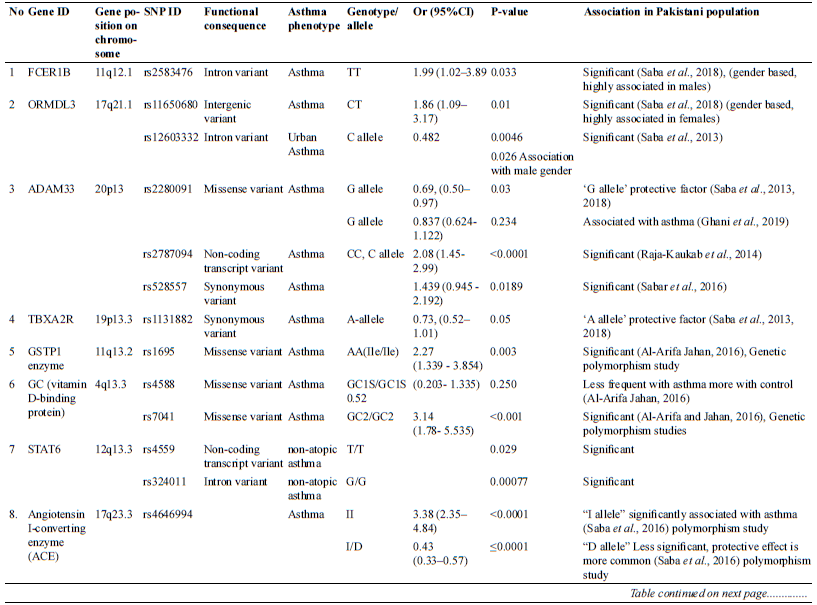
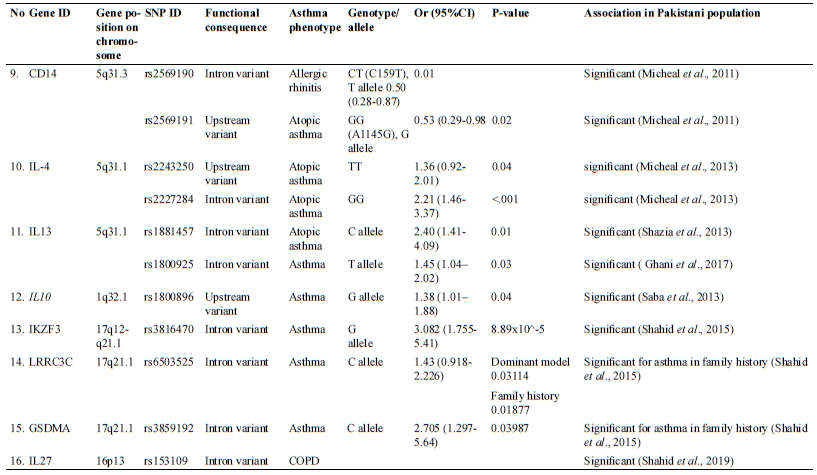
Sixteen significantly asthma associated genes selected from review of literature.
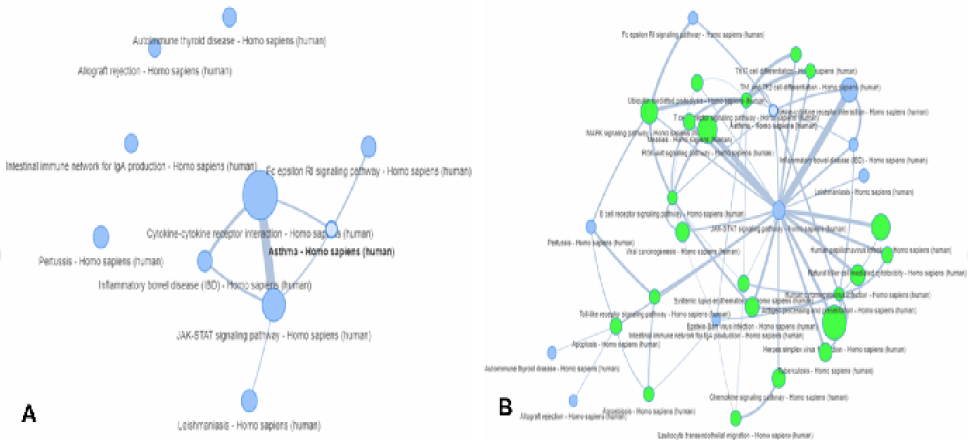
(A) Direct interaction between pathways linked with input gene list; (B) Complimentary pathway network.
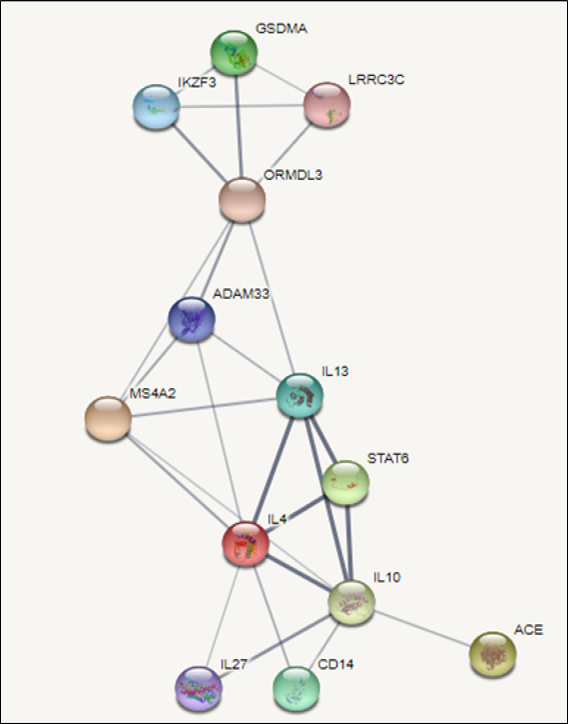
Protein-protein interactions among the best matched proteins of the genes.
References
- Agarwal, A., Singh, M., Chauhan, A., and Paul, N., 2016. B21 genetics, genomics, and gene expression in asthma and copd: Association Of Cd14 C-159t promoter polymorphism with regulatory cytokine response in Indian children with atopic asthma. Am. J. Respir. Crit. Care Med., 193: 1.
- Al-Arifa, N., and Jahan, N., 2016. Association of glutathione-s-transferase P1 (GSTP1) and group-specific component (GC) polymorphism with the risk of asthma in Pakistani population. Pakistan J. Zool., 48.
- Antczak, A., Domanska-Senderowska, D., Gorski, P., Pastuszak-Lewandoska, D., Nielepkowicz-Gozdzinska, A., Szewczyk, K., Kurmanowska, Z., Kiszałkiewicz, J., and Brzezianska- Lasota, E., 2016. Analysis of changes in expression of IL-4/IL-13/STAT6 pathway and correlation with the selected clinical parameters in patients with atopic asthma. Int. J. Immunopathol. Pharmacol., 29: 195-204. https://doi.org/10.1177/0394632015623794[CrossRef]
- Beasley, R., Semprini, A., and Mitchell, E.A., 2015. Risk factors for asthma is prevention possible? Lancet, 386: 1075-1085. https://doi.org/10.1016/S0140-6736(15)00156-7[CrossRef]
- Coomes, S.M., Kannan, Y., Pelly, V.S., Entwistle, L.J., Guidi, R., Perez-Lloret, J., Nikolov, N., Müller, W., and Wilson, M.S., 2016. CD4+ Th2 cells are directly regulated by IL-10 during allergic airway inflammation. Mucosal Immunol., 10: 150-161. https://doi.org/10.1038/mi.2016.47[CrossRef]
- Cosmi, L., Liotta, F., Maggi, E., Romagnani, S., and Annunziato, F., 2011. Th17 cells: New players in asthma pathogenesis. Allergy, 66: 989-998. https://doi.org/10.1111/j.1398-9995.2011.02576.x[CrossRef]
- Davies, E.R., Kelly, J.F.C., Howarth, P.H., Wilson, D.I., Holgate, S.T., Davies, D.E., Whitsett, J.A., and Haitchi, H.M., 2016. Soluble ADAM33 initiates airway remodeling to promote susceptibility for allergic asthma in early life. J. Clin. Invest. Insight, 1. https://doi.org/10.1172/jci.insight.87632[CrossRef]
- Dunn, R., and Wechsler, M., 2015. Anti-interleukin therapy in asthma. Clin. Pharmacol. Ther., 97: 55-65. https://doi.org/10.1002/cpt.11[CrossRef]
- Gazouli, M., Dovrolis, N., Franke, A., Spyrou, G.M., Sechi, L.A., and Kolios, G., 2019. Differential genetic and functional background in inflammatory bowel disease phenotypes of a Greek population: A systems bioinformatics approach. Gut Pathog., 11: 31-40. https://doi.org/10.1186/s13099-019-0312-y[CrossRef]
- Ghani, M.U., Sabar, M.F., Iqbal, B.M.S., Akram, M., Ifrah, K.A.M., and Khan, M.U., 2019. Evaluation of ADAM33 gene’s single nucleotide polymorphism variants against asthma and the unique pattern of inheritance in Northern and Central Punjab, Pakistan. Saudi med. J., 40: 774-930. https://doi.org/10.15537/smj.2019.8.24411[CrossRef]
- Ghani, M.U., Sabar, M.F., Shahid, M., Awan, F.I., and Akram, M., 2017. A report on asthma genetics studies in Pakistani population. Adv. Life Sci., 4: 33-38.
- Hawrylowicz, C.M., and O’Garra, A., 2005. Potential role of interleukin-10-secreting regulatory T cells in allergy and asthma. Nat. Rev. Immunol., 5: 271-283. https://doi.org/10.1038/nri1589[CrossRef]
- Huang, Z.J., Shen, Q.H., Wu, Y.S., and Huang, Y.L., 2017. A Gibbs sampling method to determine biomarkers for asthma. Comput. Biol. Chem., 67: 255-259. https://doi.org/10.1016/j.compbiolchem.2017.01.008[CrossRef]
- Ichinose, M., and Barnes, P.J., 2004. Cytokine-directed therapy in asthma. Curr. Drug Targets Inflamm. Allergy, 3: 263-269. https://doi.org/10.2174/1568010043343688[CrossRef]
- Jeong, H., Mason, S.P., Barabási, A.L., and Oltvai, Z.N., 2001. Lethality and centrality in protein networks. Nature, 411: 41. https://doi.org/10.1038/35075138[CrossRef]
- Jirmo, A.C., Daluege, K., Happle, C., Albrecht, M., Dittrich, A.M., Busse, M., Habener, A., Skuljec, J., and Hansen, G., 2016. IL-27 is essential for suppression of experimental allergic asthma by the TLR7/8 agonist R848 (Resiquimod). J. Immunol., 197: 4219-4227. https://doi.org/10.4049/jimmunol.1601094[CrossRef]
- Kanehisa, M., and Goto, S., 2000. KEGG: Kyoto encyclopedia of genes and genomes. Nucl. Acids Res., 28: 27-30. https://doi.org/10.1093/nar/28.1.27[CrossRef]
- Mallik, M.K., 2018. An attempt to understand glioma stem cell biology through centrality analysis of a protein interaction network. J. Theor. Biol., 438: 78-91. https://doi.org/10.1016/j.jtbi.2017.11.001[CrossRef]
- Meng, J.F., and Rosenwasser, L.J., 2010. Unraveling the genetic basis of asthma and allergic diseases. Allergy Asthma Immunol. Res., 2: 215-227. https://doi.org/10.4168/aair.2010.2.4.215[CrossRef]
- Micheal, S., Minhas, K., Ishaque, M., Ahmed, F., and Ahmed, A., 2011. Promoter polymorphisms of the CD14 gene are associated with atopy in Pakistani adults. J. Invest. Allergol. clin. Immunol., 21: 394-397.
- Micheal, S., Minhas, K., Ishaque, M., Ahmed, F., and Ahmed, A., 2013. IL-4 gene polymorphisms and their association with atopic asthma and allergic rhinitis in Pakistani patients. J. Investig. Allergol. clin. Immunol., 23: 107-111.
- Minadakis, G., Zachariou, M., Oulas, A., and Spyrou, G.M., 2018. PathwayConnector: Finding complementary pathways to enhance functional analysis. Bioinformatics, 35: 889-891. https://doi.org/10.1093/bioinformatics/bty693[CrossRef]
- Newcomb, D.C., and Peebles, Jr, R.S., 2013. Th17-mediated inflammation in asthma. Curr. Opin. Immunol., 25: 755-760. https://doi.org/10.1016/j.coi.2013.08.002[CrossRef]
- Nibbe, R.K., Chowdhury, S.A., Koyuturk, M., Ewing, R., and Chance, M.R., 2011. Protein-protein interaction networks and subnetworks in the biology of disease. Wires Syst. Biol. Med., 3: 357-367. https://doi.org/10.1002/wsbm.121[CrossRef]
- Ono, J.G., Worgall, T.S., and Worgall, S., 2013. 17q21 locus and ORMDL3: An increased risk for childhood asthma. Pediatr. Res., 75: 165-170. https://doi.org/10.1038/pr.2013.186[CrossRef]
- Oulas, A., Minadakis, G., Zachariou, M., Sokratous, K., Bourdakou, M.M., and Spyrou, G.M., 2019. Systems Bioinformatics: Increasing precision of computational diagnostics and therapeutics through network-based approaches. Brief. Bioinform., 20: 806-824. https://doi.org/10.1093/bib/bbx151[CrossRef]
- Pavon-Romero, G.F., Perez-Rubio, G., Ramirez-Jimenez, F., Ambrocio-Ortiz, E., Banuelos-Ortiz, E., Alvarado-Franco, N., Xochipa-Ruiz, K.E., Hernández-Juarez, E., Flores-García, B.A., and Camarena, A.E., 2018. MS4A2-rs573790 is associated with aspirin-exacerbated respiratory disease: Replicative study using a candidate gene strategy. Front. Genet., 9: 363-345. https://doi.org/10.3389/fgene.2018.00363[CrossRef]
- Pei, Q.M., Jiang, P., Yang, M., Qian, X.J., Liu, J.B., Zheng, H., Zhao, L.H., and Kim, S.H., 2016. Upregulation of a disintegrin and metalloproteinase-33 by VEGF in human airway smooth muscle cells: Implications for asthma. Cell Cycle, 15: 2819-2826. https://doi.org/10.1080/15384101.2016.1220462[CrossRef]
- Rael, E.L., and Lockey, R.F., 2011. Interleukin-13 signaling and its role in asthma. World Allergy Organ. J., 4: 54-64. https://doi.org/10.1097/WOX.0b013e31821188e0[CrossRef]
- Raja-Kaukab, G., Khan, M., Saba, N., Saqlain, M., Ahmed, N., and Mansoor, A., 2014. Association of Adam33 gene SNPS with asthma in a local Pakistani population. Am. J. Pharm. Hlth. Res., 2: 97-103.
- Saba, N., Raja, G.K., Yusuf, O., Rehman, S., Munir, S., and Mansoor, A., 2017. Impacts of different cytokine and chemokine polymorphisms in Pakistani asthmatics a case-control study. COPD Res. Pract., 3. https://doi.org/10.1186/s40749-017-0027-8[CrossRef]
- Saba, N., Yusuf, O., Rehman, S., Munir, S., Ahmad, S., Mansoor, A., and Raja, G.K., 2016. An angiotensin I-converting enzyme insertion/deletion polymorphism is associated with Pakistani asthmatic cases and controls. J. Biosci., 41: 439-444. https://doi.org/10.1007/s12038-016-9617-x[CrossRef]
- Saba, N., Yusuf, O., Rehman, S., Munir, S., Noor, A., Saqlain, M., Mansoor, A., and Raja, G.K., 2018. Single nucleotide polymorphisms in asthma candidate genes TBXA2R, ADAM33 FCER1B, and ORMDL3 in Pakistani asthmatics a case-control study. Asthma Res. Pract., 4: 1-6.
- Saba, N., Yusuf, O., Ross, K., Rehman, S., Munir, S., Bashir, N., Mansoor, A., Raja-Kaukab, G., and Ober, C., 2013. Association studies of SNPs in asthma candidate genes in Pakistani asthmatic cases and controls. Respirology, 18: 12–13.
- Sabar, M.F., Ghani, M.U., Shahid, M., Sumrin, A., Ali, A., Akram, M., Tariq, M.A., and Bano, I., 2016. Genetic variants of ADAM33 are associated with asthma susceptibility in the Punjabi population of Pakistan. J. Asthma, 53: 341-348. https://doi.org/10.3109/02770903.2015.1124441[CrossRef]
- Schmiedel, B.J., Seumois, G., Samaniego-Castruita, D., Cayford, J., Schulten, V., Chavez, L., Ay, F., Sette, A., Peters, B., and Vijayanand, P., 2016. 17q21 asthma-risk variants switch CTCF binding and regulate IL-2 production by T cells. Nat. Commun., 7: 1-14. https://doi.org/10.1038/ncomms13426[CrossRef]
- Sevimoglu, T., and Arga, K.Y., 2014. The role of protein interaction networks in systems biomedicine. Comput. Struct. Biotechnol. J., 11: 22-27. https://doi.org/10.1016/j.csbj.2014.08.008[CrossRef]
- Shahid, M., Sabar, M.F., Bano, I., Rahman, Z., Iqbal, Z., Fatim Ali, S.S., Ghani, M.U., Iqbal, M., and Husnain, T., 2015. Sequence variants on 17q21 are associated with the susceptibility of asthma in the population of Lahore, Pakistan. J. Asthma, 52: 777-784.
- Shahid, M., Sabar, M.F., Bano, I., Rahman, Z., Iqbal, Z., Fatim Ali, S.S., Ghani, M.U., Iqbal, M., and Husnain, T., 2015. Sequence variants on 17q21 are associated with the susceptibility of asthma in the population of Lahore, Pakistan. J. Asthma, 52: 777-784.
- Shahid, M., Tayyab, U., Kousar, S., Ghani, M., Sabar, M., and Husnain, T., 2019. rs153109 as possible indicator of effectiveness of vitamin d supplements for suppressing copd symptoms. Chest, 155: 219A. https://doi.org/10.1016/j.chest.2019.02.211[CrossRef]
- Shannon, P., Markiel, A., Ozier, O., Baliga, N.S., Wang, J.T., Ramage, D., Amin, N., Schwikowski, B., and Ideker, T., 2003. Cytoscape: A software environment for integrated models of biomolecular interaction networks. Genome Res., 13: 2498-2504. https://doi.org/10.1101/gr.1239303[CrossRef]
- Shazia, M., Kanza, M., Mehwish, I., Irum, S., Farida, A., and Asifa, A., 2013. IL-13 gene polymorphisms and their association with atopic asthma and rhinitis in Pakistani patients. Iran. J. Allergy, Asthma Immunol., 12: 391-396.
- Szklarczyk, D., Gable, A.L., Lyon, D., Junge, A., Wyder, S., Huerta-Cepas, J., Simonovic, M., Doncheva, N.T., Morris, J.H., and Bork, P., 2018. STRING v11: Protein-protein association networks with increased coverage, supporting functional discovery in genome-wide experimental datasets. Nucl. Acids Res., 47: D607-D613. https://doi.org/10.1093/nar/gky1131[CrossRef]
- Tan, W.S.D., Liao, W., Zhou, S., Mei, D., and Wong, W.S.F., 2018. Targeting the renin-angiotensin system as a novel therapeutic strategy for pulmonary diseases. Curr. Opin. Pharmacol., 40: 9-17. https://doi.org/10.1016/j.coph.2017.12.002[CrossRef]
- Toskala, E., and Kennedy, D.W., 2015. Asthma risk factors. Int. Forum Allergy Rhinol., 5: S11-S16. https://doi.org/10.1002/alr.21557[CrossRef]
- Vroman, H., van den Blink, B., and Kool, M., 2015. Mode of dendritic cell activation: the decisive hand in Th2/Th17 cell differentiation. Implications in asthma severity? Immunobiology, 220: 254-261. https://doi.org/10.1016/j.imbio.2014.09.016[CrossRef]
Cited by 1 article
In journals published by ResearchersLinks.
Services
Article usage statistics
Loading…