
Heterophyiasis is a wide-spread yet under-recognized public health issue in Egypt, especially in regions close to major northern Lakes as Kafrelsheikh Governorate, Egypt. The current study aimed to utilize molecular and histopathological techniques to detect encysted metacercariae (EMC) of Heterophyids in mullet (n= 50) and tilapia (n= 50) fish and describe their pathological effect on fish meat quality. Also, knowledge, attitude and practices (KAPs) related to fish-borne parasitic zoonoses among 100 residents in Kafrelsheikh Governorate were also investigated. The overall prevalence of EMC infection in examined fish was 32% (32/100): 44% (22/50) in mullet and 20% (10/50) in tilapia fish samples. The EMC were 3 times more likely detected in mullet fish compared to tilapia fish (OR= 3.1, P= 0.01). The heterophyids EMC were molecularly confirmed in 32% (16/50) and 18% (9/50) of mullet and tilapia fish samples, respectively. The EMC infection in fish was associated with muscle degeneration, fragmentation, and hyalinization, and mononuclear cell infiltrations, were morphological characteristics of EMC-infected muscles. In mullet fish the lesions were more severe and the EMC were embedded in intermuscular fat. These pathological lesions highlight the poor meat quality of infected fish especially mullet species. Only few residents (14%) had knowledge about Heterophyiasis in the study area. Residents also reported many risk practices as consuming fresh without prior freezing (92.7%), salting fish for less than 10 days (50%), and cooking fish for less than 10 min (2.3%). Health education for residents and infection control in fish are mandate preventive measures in the study area.
Research Article · Volume 56, Issue 6, 18 October 2024 · Open Access
Histopathological and Molecular Characterization of Heterophyids in Fish and Attitude Towards Parasitic Zoonosis among Residents in Kafrelsheikh Governorate, Egypt
· ·
Affiliations & Notes ⌄
- 1Department of Pathology, Faculty of Veterinary Medicine, Kafrelsheikh University, Egypt. 2Department of Hygiene and Preventive Medicine, Faculty of Veterinary Medicine, Kafrelsheikh University, Kafrelsheikh, Egypt. * Corresponding author: walid.elmonir@gmail.com
Article Info ⌄
- Journal:
- Pakistan Journal of Zoology
- Published:
- 18 October 2024

From the article
- The histopathogical changes associated with heterophyids EMC infection highlighting its potential harm effect on fish meat quality, especially in the mullet fish.
- This means that residents who consume fresh fish without freezing are prone to increased risk of heterophyids infection in study area.
- In conclusion, this study reported high rate of heterophyids EMC in mullet and tilapia fish in study area.
- The recorded EMC infection associated pathological lesions highlighted poor meat quality of infected fish.
Selected from the article's own text.
Abstract
INTRODUCTION
Fish is a beneficial diet option and an important source of food and jobs, particularly in developing countries . Heterophyids trematodes are large group of minute flukes with least 36 genera infecting animals, birds and humans ; . Fish-borne zoonotic heterophyids infecting humans constitute 13 genera and 29 species worldwide. More than 30 million people are estimated to be infected with these zoonotic trematodes globally . Their life cycle involves snail and fish as the first and second intermediate hosts, respectively . Mullet fish comes first at the list of the most preferred second intermediate hosts of heterophyids which could detrimentally harm the fish and in the same time constitute a zoonotic threat for fish consumers ; . Undercooked or raw fish dishes are the main sources of human infection of fish borne heterophyids ; . Heterophyiasis in human is usually accompanied with gastrointestinal disturbances; however, ectopic infections beyond the intestine do occur and most commonly involve the brain, spinal cord, and heart .
In Egypt, heterophyiasis is a highly endemic yet under-recognized public health issue . The disease in humans was reported at rates of 13.3% to 33.8% in several locations in northern Egypt ; . Similarly, the heterophyids encysted metacercariae (EMC) were detected at relatively high rates (23%-42%) in fresh and brackish water fish in several locations especially the major lakes as Burullus and Manzala lakes in northern Egypt ; . Previous reports showed that zoonotic transmission of fish-borne parasitoses may be influenced by traditional food habits, like consuming raw, improperly smoked, salted or cooked fish and level of public knowledge about these zoonoses . However, there no sufficient data about knowledge or risk practices among residents in Egypt especially those at risk in northern governorates. Additionally, histopathological characteristics associated with EMC infection in fish and using of molecular techniques for detection and discrimination of heterophyids EMC in fish are scanty in Egypt. Therefore, this study aimed to record the prevalence of heterophyids EMC in brackish water fish (mullet) and fresh water fish (tilapia) using histopathological and molecular techniques. Also, to investigate the knowledge, attitude and practices related to fish-borne parasitic zoonoses among residents in Kafrelsheikh Governorate, Egypt.
MATERIALS AND METHODS
Fish sampling
A total of 50 tilapia (Oreochromis niloticus) and 50 mullet (Mugil cephalus), were randomly collected from local markets in Kafrelsheikh Governorate during the period between October 2016 and January 2017. Tilapia fish had a body weight of 165 - 308 g and a length of 18 - 25 cm, while mullet fish had a body weight of 152 - 298 g and a length of 22 - 28 cm. All examined fish were fresh and passed the organoleptic examination.
Histopathological detection of heterophyids EMC
A total of 100 fish specimens were collected, 50 of which belonged to Tilapia nilotica and the other 50 to Mugil cephalus. Tissues sections from muscle were taken and rapidly fixed in 10% neutral buffered formalin solution. Fixed specimens were dehydrated in ascending grades of ethanol, cleared in xylene, and embedded in paraffin wax. 4-µm-thick paraffin tissue sections were obtained and stained with hematoxylin and eosin (H and E) and examined microscopically to detect any EMCs and their associated histological alterations.
Molecular detection of heterophyids EMCs
The EMC DNA was extracted from muscles sample of each fish using a DNeasy tissue kit (Qiagen, Hilden, Germany) according to manufacturer’s instructions. All DNA extracts were quantified by NanoDrop 2000 (Thermo Fisher Scientific, Delaware, USA) and stored at −20 °C till further analysis.
For PCR detection of EMC belonged to Heterophyidae family, the 18S rDNA was targeted as previously described . The PCR mixture consisted of 5 μL of DNA template (~50 ng), 12.5 μL of EmeraldAmp MAX PCR Master Mix (Takara Bio, Kusatsu, Japan), 1 μL (20 pmol) of each primer (Table I), and distilled water up to a final volume of 25 μL. The PCR cycling conditions were as follow: 94°C for 7 min followed by 35 cycles of [94°C for 1 min, 53°C for 1 min, and 72°C for 1 min], and a final extension at 72°C for 10 min. The PCR was conducted in an Applied Biosystem 2720 thermal cycler (Applied Biosystems, Foster City, CA, USA). The DNA of Heterophyes heterophyes was used as positive control and sterile distilled water was a negative control. The PCR products (361 bp) were visualized with an Alpha Imager (Alpha Innotech, San Leandro, CA, USA).
The EMC belonged to genus Heterophyes was detected by targeting genus-specific cytochrome c oxidase 1 (COI) gene . The primers used are listed in Table I. The PCR mixture and cycling conditions were the same as described for the18S rDNA.
Knowledge, attitude, and practices (KAPs) investigation regarding fish borne parasitic zoonoses
The KAPs regarding fish borne parasitoses were evaluated using a questionnaire. The questionnaire was pretested using a small group of residents of Kafr-Elsheikh city and then a total of 100 residents of various ages, professions, and educational levels were interviewed using the pre-tested questionnaire. The questionnaire contained questions regarding knowledge of fish-borne parasitoses and their related practices.
Statistical analysis
The odds ratio was calculated using the univariate logistic regression analysis in SPSS statistics software version 21.0. (IBM SPSS Inc., Armonk, NY, USA).
RESULTS
Prevalence of heterophyids EMC in examined fish
The histopathological examination showed that EMC were detected in 44% (22/50) and 20% (10/50) of examined mullet and tilapia fish samples, respectively (Table II) with an overall prevalence of 32% (32/100).
Table I. The primers used in this study.
| Target gene | Oligonucleotide sequence (5′ → 3′) | Product size (bp) | Reference |
| 18S rDNA | F: TCATATGCTTGTCTCAGA | 361 | Dzikowski et al. (2004) |
| R: ACGGAAACCTTGTTACGA | |||
| COI | F: CGGAGGAAAAGAAACTAACC | 117 | Nouh et al. (2010) |
| R: CGAGCCAACCTGAACACCAC |
Table II. Prevalence and odds ratio of EMC in muscles of examined tilapia and mullet fish in this study.
| Variables | EMC in Fish samples | Univariate logistic regression | ||||
| Mullet | Tilapia | Total | OR* | P value | C.I. 95% | |
| EMCTotal | 22/50 (44) | 10/50 (20) | 32/100 (32) | 3.1 | 0.01** | 1.3 - 7.5 |
| EMCHeterophyidae | 16/50 (32) | 9/50 (18) | 25/100 (25) | 2.1 | 0.1 | 0.8 - 5.3 |
| EMCHeterophyes | 16/50 (32) | 8/50 (16) | 24/100 (24) | 2.4 | 0.07 | 0.9 - 6.3 |
EMC, Encysted metacercariae; OR, Odds ratio; C.I., Confidence Interval; Brackets, Percent. *Tilapia is the reference category; **, significant at P <0.05.
The EMCs were 3 times more likely detected in mullet fish compared to tilapia fish (OR= 3.1, P= 0.01). The Heterophyids EMC (EMCHeterophyidae) were molecularly confirmed in 32% and 18% of mullet and tilapia fish samples, respectively (Table II, Fig. 1). All mullet EMCHeterophyidae belonged to genus Heterophyes (EMCHeterophyes; 32%), while EMCHeterophyes were detected in 16% of tilapia fish samples (Table II, Fig. 1). The EMCHeterophyidae and EMCHeterophyes were more likely associated with mullet than tilapia fish samples (OR= 2.1 – 2.4); however, these differences were not significant (P= 0.07 - 0.1).
Histopathological changes associated with heterophyids EMCs
Histopathological examination of the fish muscles revealed that heterophyids EMCs were commonly seen embedded in intermuscular fat of mullet fish (Fig. 2A) and between the muscle bundles in tilapia fish with scanty tissue reaction (Fig. 2B). The presence of EMCs was associated with hyalinization of muscle bundles, mononuclear cells infiltration and many melanophores (Fig. 2C). Furthermore, some regions showed rarefication of necrosed muscle bundles (Fig. 2D), as well as atrophy in some muscle bundles (Fig. 2E). In tilapia, the above-mentioned changes were less pronounced than in mullet (Fig. 2F).
KAPs regarding fish-borne parasitic zoonoses among residents of Kafr Elsheikh city
The results of KAPs survey revealed that 50% (50/100) of the respondents were aware of fish-borne parasitic zoonoses and only 14% of them (7/50) had knowledge about heterophyiasis (Table III). However, 98% (49/50) knew that fish consumption was the mode of fish-borne parasitoses transmission to humans (Table III). More than half of respondents (56.4%) consume fish meals multiple times per week. Majority of residents prefer eating fish fried or grilled (61.9% – 85.6%), and around third (32.9%) of them eat salted fish (Table III). Few residents (2.3%) cooked fish for less than 10 min, and half of those who salted fish at home keep their fish in salt for less than 10 days (Table III). Majority of the respondents (95.8%) prefer to purchase fresh fish rather than frozen ones and most of them (92.7%) consume their fish, without freezing, at same day of purchase (Table III).
Table III. KAPs related to fish-borne parasitic zoonoses among residents in the study area.
| Questions | Categories | R | A | P |
| Identification | ||||
| Gender | ||||
| Male | 36 | - | 36% | |
| Female | 64 | - | 64% | |
| Age | ||||
| 20 years > | 3 | - | 3% | |
| 20:40 years | 57 | - | 57% | |
| 40 years < | 40 | - | 40% | |
| Questions | Categories | R | A | P |
| Education | ||||
| No | 15 | - | 15% | |
| Medium | 27 | - | 27% | |
| High | 58 | - | 58% | |
| Profession | ||||
| Fish related | 16 | - | 16% | |
| Agriculture related | 3 | - | 3% | |
| Veterinarian | 5 | - | 5% | |
| Medical related | 13 | - | 13% | |
| Others | 63 | - | 63% | |
| Knowledge | ||||
| Knowledge of diseases transmitted via fish | ||||
| Yes | 100 | 50 | 50 | |
| No | 50 | 50 | ||
| Types of diseases transmitted via fish | ||||
| GIT disturbances | 50 | 19 | 38 | |
| Heterophyiasis | 7 | 14 | ||
| Other diseases | 24 | 48 | ||
| Modes of these diseases transmission from fish to human | ||||
| Ingestion | 50 | 49 | 98 | |
| Contact | 10 | 20 | ||
| Practices | ||||
| Rate of fish eating | ||||
| Once per week | 94 | 38 | 40.4 | |
| ˃ Once per week | 56 | 59.6 | ||
| Preferred type of fish processing | ||||
| Fried | 97 | 60 | 61.9 | |
| Grilled | 83 | 85.6 | ||
| Salted | 32 | 32.9 | ||
| Smoked | 31 | 31.9 | ||
| Preferred cooking time | ||||
| >10 min. | 86 | 2 | 2.3 | |
| 10:15 min. | 48 | 55.8 | ||
| <15 min. | 36 | 41.9 | ||
| Preferred time for fish salting | ||||
| >10 days | 8 | 4 | 50 | |
| ≥10days | 4 | 50 | ||
| Preferred fish for purchase | ||||
| Fresh | 96 | 92 | 95.8 | |
| Frozen | 9 | 9.4 | ||
| Fish freezing after purchasing | ||||
| Yes | 96 | 19 | 19.8 | |
| No | 89 | 92.7 | ||
R, Respondents; A, Answers; P, Percent.
DISCUSSION
Kafrelsheikh governorate contributes by about fifth of the total Egyptian fish production and fish is one of the preferable food sources for the governorate residents. Additionally, the high rate of heterophyids infection in Egypt were reported among human residents and stray animals of this governorate ; . Hence, fish-borne zoonoses are of concern in this governorate.
In this study, the overall prevalence rate of fish EMCs was 32%. Molecular testing confirmed heterophyids EMCs in 25% of examined fish. This was comparable with a previous report (23%) in Alexandria, Egypt , yet lower than that reported (32%) in Nile delta of Egypt . The total EMCs and heterophyids EMCs were more likely detected in mullet fish (44% and 32%) than tilapia fish (20% and 18%), respectively. In agreement, mullet fish was reported as the most preferred second intermediate hosts of heterophyids ; . However, reported higher rates of heterophyids EMCs in tilapia than mullet fish. This variation in fish infection rates between studies may be linked to variations in conditions that support the parasite life cycle, such as differences in habitat, food supply, and the abundance of both aquatic snails (the intermediate host). For instance, it was previously reported that fish grew in natural surface water are more prone to Heterophyids infection than those in aquacultures, regardless of fish species . This was attributed to less number of snails and the use of prophylaxis chemotherapy which reduce incidence of fish infection in aquaculture . Also, variations in temperature and humidity from season to another can affect snails’ reproduction, and hence the infection rate of fish .
Routine microscopic and histopathological identification of heterophyids EMCs at family or genus levels are not applicable due to similarity of morphology between EMC of trematode infections . Moreover, the use of in vivo experimental infection for heterophyids genus identification (e.g. feeding EMCs to puppies) is laborious and time consuming. In this study, molecular testing identified heterophyids EMCs at family (Heterophyidae) level using the 18S rDNA and genus (Heterophyes) level using the COI gene. Molecular testing is still in developing stage for detection of heterophyids yet it is a promising tool that provides rapid, sensitive and reliable method for heterophyids identification ; . Several studies reported use of 18S rDNA and the COI gene for heterophyids family and genera discrimination in fish worldwide ; ; .
In the current study, histopathological evaluation of the collected samples revealed a more heavy infection with EMCs in mullet than tilapia fish, which were most typically detected in the intermuscular fatty tissue. In addition, mullet had more muscle atrophy and injury, as well as inflammatory cell infiltration than tilapia fish. Tissue reaction against EMC depends on infection period and the type of the metabolites induced by the parasitic cysts . In agreement with our findings, previous reports showed that heterophyids EMCs were abundant in the fatty areas and around the internal organs of infected fish ; . Some digenetic trematodes take up their requirements of the fatty acids from their host . Therefore, the parasites’ need for some important fatty acids from the host, and the high fat content of mullet fish compared to other fish species , could clarify concentration of EMC in fatty areas and the higher rate of this parasite in mullets compared to tilapia in this study. The histopathogical changes associated with heterophyids EMC infection highlighting its potential harm effect on fish meat quality, especially in the mullet fish.
The KAPs survey in this study showed that 50% of the residents didn’t know about fish-borne parasitic zoonoses and majority of them had no knowledge about heterophyiasis. Lack of knowledge was previously reported as a risk factor for parasitic diseases among humans . More than half of Kafrelsheikh residents consume fish meals more than once per week. The high rate of fish consumption facilitates infection transmission , and thus considered a predisposing risk for fish-borne zoonoses in the study area. Majority of residents prefer eating fish grilled (85.6%) especially mullet fish. A previous report in Egypt showed that 20-30% of the mullet fish retained viable heterophyids EMC after grilling in a way similar to Egyptian fishermen grilling . This indicates that insufficient heat treatment during grilling may pose a risk of fish Heterophyids transmission to consumers. Few residents (2.3%) cooked fish for less than 10 min, and 50% of them salted fish at home for less than 10 days. Inadequate cooking and/or salting time of fish were previously reported as risk factors for fish-borne heterophyids infection ; .
Majority of the residents (> 90%) prefer to purchase fresh fish and consume their fish at the same day purchase without freezing. Freezing was recommended by the WHO as an effective protective method against fish-born trematodes infection (WHO 1979). Also several studies reported loss of heterophyids EMC viability in fish after freezing foe 2 days to 2 weeks ; . This means that residents who consume fresh fish without freezing are prone to increased risk of heterophyids infection in study area.
conclusion
In conclusion, this study reported high rate of heterophyids EMC in mullet and tilapia fish in study area. The recorded EMC infection associated pathological lesions highlighted poor meat quality of infected fish. Lack of knowledge regarding heterophyiasis and several risk practices reported by majority of residents necessitate public awareness campaign. Also, measures should be taken for infection control among fish to insure high quality of fish and safety of consumers in study region.
Statement of conflict of interest
The authors have declared no conflict of interests.
Figures
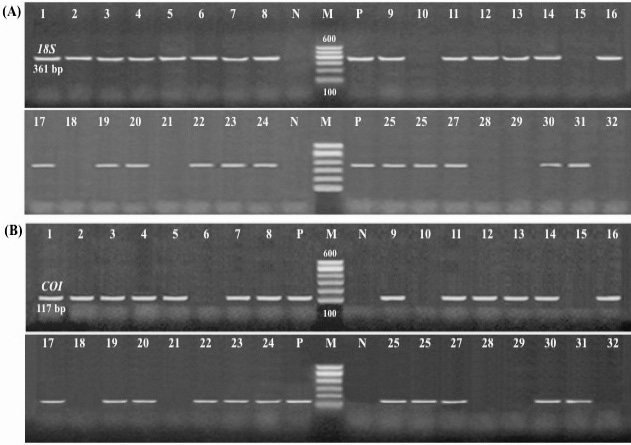
PCR amplification of 18S rDNA and COI genes of EMC detected in examined tilapia and mullet fish samples. A, PCR results for 18S rDNA gene. B, PCR results for COI gene. Lanes 1-10: tilapia fish samples. Lanes 11-32: Mullet fish samples. M: 100 bp DNA marker. P, Control positive; N, Control negative.
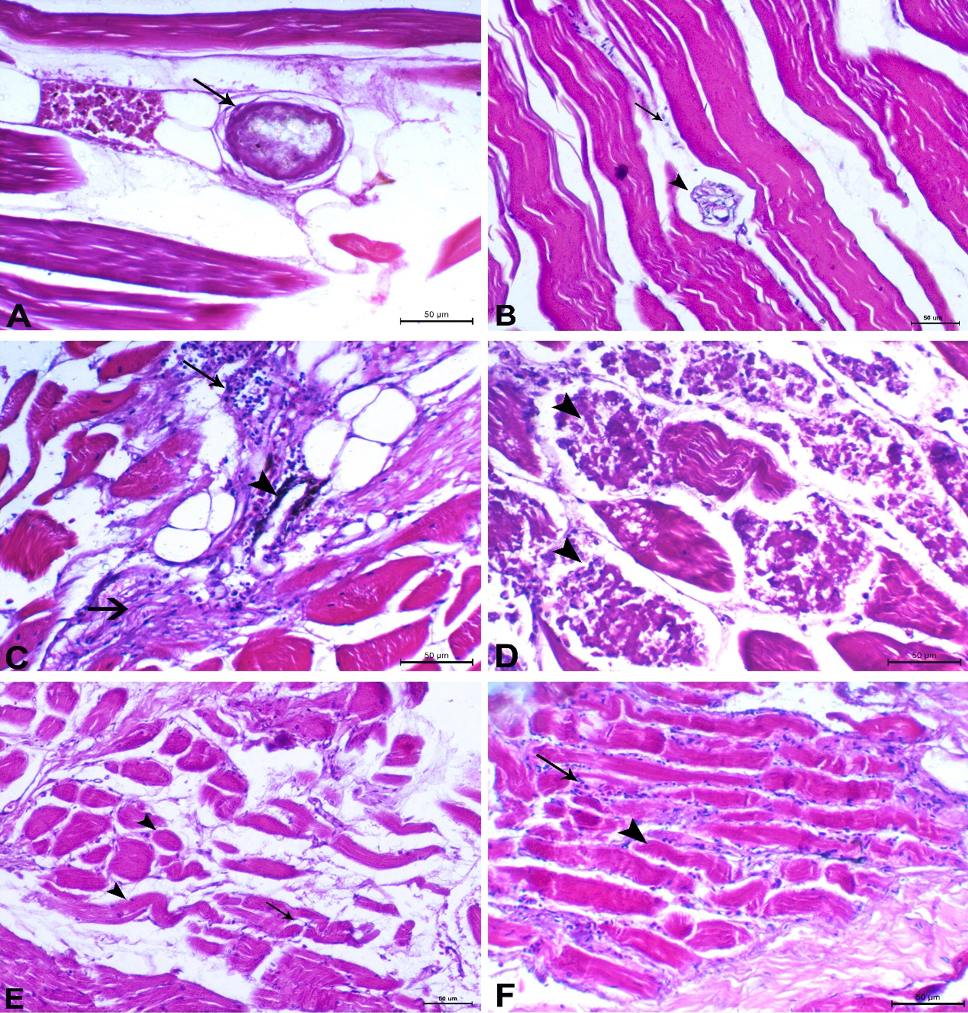
Histopathological findings of EMC infection in muscles of tilapia and mullet fish samples. A, Mullet muscle showing EMC embedded in the intermuscular fat (arrow). B, Nile tilapia muscle showing EMC (arrowhead) between the muscle bundles with few mononuclear cells infiltration (arrow). C, Mullet muscle showing marked degenerative changes of the muscles associated with mononuclear cells infiltration (arrow) and melanophores(arrowhead) with foal areas of muscular hyalinization (thick arrow). D, Mullet muscle showing marked necrotic changes of the muscle bundles with lysis of myofibers (arrowheads). E, Mullet muscle showing atrophy of muscle bundles (arrow heads) associated with destruction and loss of muscle bundles irregularities (arrow). F, Tilapia muscle showing atrophy of muscle bundles (arrowhead) accompanied with mononuclear cells infiltration (arrow). Stain H and E, x200, scale bar 50μm.
References
- Abdallah, K.F., Hamadto, H.H., El-Hayawan, I.A., El-Motayam, M.H., and Ahmed, W.A., 2009. Effect of different temperatures on viability of seven encysted metacercariae recovered from freshwater fishes in Qualyobia, Egypt. J. Egypt Soc. Parasitol., 39: 413-420.
- Abou-Basha, L.M., Abdel-Fattah, M., Orecchia, P., Dicave, D., and Zaki, A., 2000. Epidemological study of heterophyiasis among humans in an area of Egypt. East. Mediterr. Hlth. J., 6: 932–938. https://doi.org/10.26719/2000.6.5-6.932[CrossRef]
- Aly, S., Eissa, I., Badran, A., Elamie, M., and Hussain, B., 2005. Pathological studies on encysted Metacercariae infections among some freshwater fish in Egyptian aquaculture. The global food and product chain dynamics, innovations, conflicts, strategies. Conference. Duetscher Tropentag, October 11-13, 2005 at Hohenham Univ., Stuttgart, Germany.
- Bancroft, J.D., and Layton, C., 2013. The hematoxylin and eosin. In: Theory practice of histological techniques (eds. S.K. Suvarna, C. Layton, J.D. Bancroft). 7th ed. Elsevier inc., Netherlands. https://doi.org/10.1016/B978-0-7020-4226-3.00010-X[CrossRef]
- Belizario, V.Y. Jr, Bersabe, M.J., de Leon, W.U., Hilomen, V.Y., Paller, G.V., de Guzman, A.D. Jr, and Bugayon, M.G., 2001. Intestinal heterophyidiasis: an emerging food-borne parasitic zoonosis in southern Philippines. Southeast Asian J. trop. Med. Publ. Hlth., 32: 36-42.
- Chai, J.Y., and Jung, B.K., 2017. Fishborne zoonotic heterophyid infections: An update. Fd. Waterb. Parasitol., 8-9: 33–63. https://doi.org/10.1016/j.fawpar.2017.09.001[CrossRef]
- Chontananarth, T., Wongsawad, C., Chomdej, S., Krailas, D., and Chai, J.Y., 2014. Molecular phylogeny of trematodes in Family Heterophyidae based on mitochondrial cytochrome c oxidase subunit I (mCOI). Asian Pac. J. trop. Med., 7: 446-450. https://doi.org/10.1016/S1995-7645(14)60072-9[CrossRef]
- Debasree, G. and Misra, K., 2014. Comparison of fatty acid contents of the neutral and phospholipids of the trematode Paramphistomum cervi and liver of its host, Capra hircus. J. Parasit. Dis., 38: 223-232. https://doi.org/10.1007/s12639-012-0229-6[CrossRef]
- Dzikowski, R., Levy, M.G., Poore, M.F., Flowers, J.R., and Paperna, I., 2004. Use of rDNA polymorphism for identification of heterophyidae infecting freshwater fishes. Dis. Aquat. Org., 59: 35-41. https://doi.org/10.3354/dao059035[CrossRef]
- El-Leathy, A.M., 1997. Prevalence of parasites of public health importance in some freshwater fishes. M.V.Sc. thesis, Zagazig Univ., Zagazig, Egypt.
- El-Sayad, M.H., AbouHolw, S.A., Yassine, O.G., and El-Taweel, H.A., 2014. Heterophyid metacercariae in free living and farmed fish of El-Max Bay, West of Alexandria, Egypt. Parasitol. United J., 7: 110-115. https://doi.org/10.4103/1687-7942.149560[CrossRef]
- Elzohry, E., Eladawy, R., and Elsawy, S., 2020. An economic study on the determinants of fish production in Burullus Lake. J. Sustain. Agric. Sci., 46: 135-146.
- Gabr, R. and Ali, A., 2007. Comparison of biochemical composition and organoleptic properties between wild and cultured finfish. J. Fish. Aquat. Sci., 2: 77-81. https://doi.org/10.3923/jfas.2007.77.81[CrossRef]
- Hamed, M.G.E., and Elias, A.N., 1970. Effect of food-processing methods upon survival of the trematode Heterophyes sp. in flesh of mullet caught from brackish Egyptian waters. J. Fd. Sci., 35: 386-388. https://doi.org/10.1111/j.1365-2621.1970.tb00938.x[CrossRef]
- Jitra, W., and Urusa, T., 2014. Collection of fish-borne trematodes in infective stage from the fish: The second intermediate host. In: Approaches to research on the systematics of fish-borne trematodes (eds. W. Jitra and T. Urusa). 1st ed. Chapter 4, Academic Press, Elsevier Inc., Netherlands. pp. 49–60. https://doi.org/10.1016/B978-0-12-407720-1.00004-2[CrossRef]
- Khoa, D.V., Hoa, D.T., Anh, D.N., Van, N.T., Dung, D.T., Huong, L.T.T., Quyen, L.T.B., Su, H.X., and Tran-Anh, L., 2020. Fish-borne trematode metacercariae detected in fish commonly used for raw consumption in Ninh Binh Province, Vietnam. Trop. Biomed., 37: 443-451.
- Lobna, S.M., Metawea, Y.F., and Elsheikha, H.M., 2010. Prevalence of heterophyiosis in Tilapia fish and humans in Northern Egypt. Parasitol. Res., 107: 1029-1034. https://doi.org/10.1007/s00436-010-1976-x[CrossRef]
- Mahdy, O.A., Mahmoud, M.A., and Abdelsalam, M., 2020. Morphological characterization and histopathological alterations of homologs heterophyid metacercarial coinfection in farmed mullets and experimental infected pigeons. Aquac. Int., 28: 2491-2504. https://doi.org/10.1007/s10499-020-00602-4[CrossRef]
- Masala, S., Piras, M.C., Sanna, D., Chai, J.Y., Jung, B.K., Sohn, W.M., Garippa, G., and Merella, P., 2016. Epidemiological and molecular data on heterophyid trematode metacercariae found in the muscle of grey mullets (Osteichthyes: Mugilidae) from Sardinia (western Mediterranean Sea). Parasitol. Res., 115: 3409-3417. https://doi.org/10.1007/s00436-016-5101-7[CrossRef]
- Nouh, W.G., Aly, S., Abdel-Rahman, K., and Amer, O., 2010. Histopathological, parasitological and molecular biological studies on metacercariae from Oreochromis niloticus and Clarias gariepinus cultured in Egypt. Zagazig Vet. J., 38: 92-105.
- Ridha, M.T., 2006. Comparative study of growth performance of three strains of Nile tilapia, Oreochromus niloticus, (L.) at two stocking densities. Aquacult. Res., 37: 172-179. https://doi.org/10.1111/j.1365-2109.2005.01415.x[CrossRef]
- Scholz, T., 1999. Taxonomic study of ascocotyle (Phagicola) longa Ransom, 1920 (Digenea: Heterophyidae) and related taxa. Syst. Parasitol., 43: 147–158. https://doi.org/10.1023/A:1006120500518[CrossRef]
- Tegen, D., and Damtie, D., 2021. Prevalence and risk factors associated with intestinal parasitic infection among primary school children in Dera District, Northwest Ethiopia. Can. J. Infect. Dis. Med. Microbiol., 2021: 5517564. https://doi.org/10.1155/2021/5517564[CrossRef]
- World Health Organization (WHO), 1979. Parasitic zoonoses: report of a WHO expert committee, with the participation of FAO. Available at: https://apps.who.int/iris/handle/10665/41353 (accessed 26-3-2022).
- Youssef, A.I., and Uga, S., 2014. Review of parasitic zoonoses in Egypt. Trop. Med. Hlth., 42: 3-14. https://doi.org/10.2149/tmh.2013-23[CrossRef]
Services
Article usage statistics
Loading…