
The use of different pesticides (including fungicides i.e., pyraclostrobin) is increasing day by day in crop farming for achieving high production from crops which is the major source of environmental hazards. These pesticides including pyraclostrobin are related to humans and animals environment and health. Therefore, the goal of the current study was to ascertain the haematological, serum biochemical and histopathological effects of the organic fungicide pyraclostrobin on Japanese quails. The quails (n= 48) that seemed to be sexually active and mature having 57±3 g weight was randomly and equally (n= 12) divided into control (group A), and treatment groups (B, C, and D). The birds were administered pyraclostrobin orally during first and second weeks @ 15, 30, and 50 mg/kg of body weight to treatment groups B, C, and D respectively. On 7 and 15 days, the samples of blood were drawn and placed in vacutainers for blood and serum analysis, while liver, kidney, and spleen samples were collected for histopathological investigations. The results showed that birds in treatment groups (B, C, and D) were dull, having ruffled feathers, watery droppings, salivated, consuming less feed, and rowed often. The blood analysis indicated that pyraclostrobin had a substantial impact on WBC, RBC, Hb, HCT, MCV, MCH, and MCHC counts in treatment groups. Results revealed that in the treatment group’s WBC count was higher compared to the control group. Compared to the control group, the values for RBCs, Hb, HCT, MCV, MCH, and MCHC fall in the treatment groups. Regarding serum biochemistry the values of AST and ALT were significantly higher (P<0.05) compared to the control group. Histopathological investigations exhibited congestion, fatty change, edema, haemorrhages, atrophy of hepatocytes, and eccentric nuclei of hepatocytes in liver tissue. In kidneys edema, renal tubule degeneration, necrosis of renal tubule, and sporadic haemorrhage were observed. Furthermore, in spleen edema, reduced lymphoid tissues, and degeneration of red and white pulp was visible. Altogether, pyraclostrobin causes clinico-haematological changes including anemia, hematopoietic stress and immune-suppression in birds.
Research Article · Volume 57, Issue 3, 18 April 2025 · Open Access
Haemato-Biochemical and Histopathological Effects of Fungicide Pyraclostrobin on Japanese Quail (Coturnix japonica)
· · · · · · · · · · · · ·
Affiliations & Notes ⌄
- 1Department of Zoology, Faculty of Chemical and Biological Sciences, The Islamia University of Bahawalpur-63000, Bahawalpur, Pakistan 2Key Laboratory of Traditional Chinese Veterinary Medicine and Animal Health in Fujian Province & Fujian Key Laboratory of Chinese Traditional and Western Veterinary Medicine and Animal Health, Fujian Agriculture and Forestry University, Fuzhou 350002, PR China 3Faculty of Veterinary and Animal Sciences, The Islamia University of Bahawalpur-63000, Bahawalpur, Pakis
Article Info ⌄
- Journal:
- Pakistan Journal of Zoology
- Published:
- 18 April 2025

From the article
- In all treatment groups significant abnormalities in liver as congestion, the kidney as inflammation and spleen as oedema were observed.
- According to the results of the current study, pyraclostrobin administration at different dosages significantly increased liver weight at higher dosages (30 and 50 mg/kg).
- However, after 15 days of the birds being exposed to larger dosages of the fungicide pyraclostrobin (30 and 50 mg/kg) the kidney weight was dramatically decreased.
- It is concluded that exposing with pyraclostrobin to C. japonica birds has lethal effect which alters the histological features of liver, kidney, and spleen.
Selected from the article's own text.
Abstract
INTRODUCTION
Use of different pesticides (insecticides, herbicides, and fungicides) is regular in crop farming which is among the major sources of environmental hazards ; . Numerous hazards related to humans and environment are caused by the excessive use of pesticides during crop farming for achieving enhanced outputs ; . About two hundred thousand piles of chemical pesticides are used around the year worldwide with 24% being consumed in The United States of America and 45% in Europe . According to Grue et al. (1991) birds that are exposed to various organophosphate (OP) and carbamate (CB) insecticides consumed less feed and display gastrointestinal problems.
Pyraclostrobin, is a common CB insecticide that is being widely used for managing critical plant diseases, delaying spore generation and mycelial development along with disrupting fungal mitochondrial activity ; ; Wang et al., 2021). It prevents rust, powdery mold, web blotch, downy mildew and rice blast caused by ascomycetes, oomycetes, basidiomycetes, and asexual fungal species . By consuming food contaminated by pesticides humans become prone to their hazardous side effects . Feed prepared from crops that are exposed to higher levels of pesticides can be fatal to birds and have also been reported to decrease their production performance .
Japanese quails (Coturnix japonica) belong to family Phasianidae and are being used as alternative research models to chickens . They have a shorter life cycle, easily manageable and achieve sexual maturity around 7 to 8 weeks after hatching as reported by Nasar (2016) and Huss et al. (2008). According to Nakane and Youshimoura (2014) and Recoquillay et al. (2013) quails serve as important model species for research on genetics, behavioural norms and avian reproduction.
At different doses pyraclostrobin is toxic to terrestrial amphibians as it decreases invertebrate pests’ ability to survive when exposed to aphids . Inhibition of mitochondrial respiratory chain in honey bees is one of the detrimental effects of pyraclostrobin . Pyraclostrobin, however, can kill bees as well, which might have serious negative effects on stingless bee colonies (Da Costa Domingues et al., 2020a). Pyraclostrobin fungicide residues in crops have the potential to be harmful to the environment and human health . In Wistar rats epoxiconazole has been reported to damage the liver and kidneys resulting in genotoxicity, oxidative stress, biochemical and histological changes. In zebrafish, pyraclostrobin aggravated DNA damage due to oxidative stress ; ; European Food Safety, 2008).
Numerous results reported in rats have suggested that the contact pesticides with aforementioned species increases the leakage of lactate dehydrogenase (LDH), alanine transaminase (ALT), urea and creatinine . Oxidative stress causes necrosis, structural alterations in various tissues and alteration of cellular macromolecules. Moreover, numerous results have revealed that extensive use of pesticides, particularly those that cause lipid peroxidation harm biological membranes . Numerous health issues in people and the surrounding environment were caused by the growing use of pesticides as a crop protection method. The objective of the current study was to confirm the hazardous risk that pyraclostrobin causes to Japanese quails.
MATERIALS AND METHODS
Study design
A total number of 50 healthy quail birds were used in this study. All of the birds were kept in cages in environmentally controlled conditions. The basal diet was given twice daily along with fresh water available round-the-clock. After determining that the LD50 is 500mg/kg, several solutions were created for different groups of birds. The medication was administering orally by using 3cc syringes. Pyraclostrobin is one of the most effective fungicides. However, it can degrade via photolysis in water, it is toxic to aquatic life and if inhaled, it has a low solubility in water.
Treatment protocol
After an acclimatisation period of one week a total number of 48 quails were equally and randomly divided (n=12) into four groups: A, B, C, and D. Group A was considered as control group and was only given basal diet, whereas in Groups B, C, and D were considered as treatment groups. The body weight of the birds is measured (57±3) at the time of separation. The various dosages of Pyraclostrobin were administered orally to the various groups. After giving a first dosage of a different solution, first sampling was done. Afterwards, birds received a second dose of different solution and samples were collected. The birds were reared in semi-environmental controlled shed, and we did not notice any disease in the birds during the entire treatment period.
Administration of pyraclostrobin
The concentration of pesticide (Pyraclostrobin) exposed to different groups of birds is as follows; after acclimatisation period, the Group A was administered distilled water with no pyraclostrobin for one week. Group B was given oral solution of comprising of 15 mg of pyraclostrobin diluted in 5 ml of distilled water. Group C was administered 30 mg of pyraclostrobin dissolved in 5 ml of distilled water . Whereas, Group D was given 50 mg of pyraclostrobin diluted in 5 ml distilled water. The 2nd dose of pyraclostrobin was administered orally @ 15, 30, 50 mg/kg of body weight to group B, C, and D, respectively after one week of first dose. The Chemical formula of pyraclostrobin is given in Figure 1.
Haematological parameters
After the pesticide exposure, on 7 and 15-days birds from control and treatment groups were randomly selected. The samples of blood were taken from four birds of each group. Haematological tests were conducted on blood sample for determining of WBC, RBC counts, hemoglobin (Hb), hematocrit (HCT), mean corpuscular volume (MCV), mean corpuscular hemoglobin (MCH) and mean corpuscular hemoglobin concentration (MCHC) according to previous study ; ; Sindi et al., 2022) by using commercial haematology analyser.
Serum biochemistry
Serum was harvested for determining serum biochemical profile that included aspartate aminotransferase (AST) and alanine aminotransferase (ALT) which were determined spectrophotometrically using commercially available kit according to previous study ; ; .
Organ collection and histopathology procedure
On 7th and 15th day of experiment four quails from each group were slaughtered and visceral organs were obtained that included liver, heart, spleen, gizzard, proventricular, lungs, and kidneys. Immediately after slaughter small parts of kidney, lungs, liver, spleen, gut, heart, and spleen were fixed in 10% neutral alkaline formaldehyde (pH 7.2). Tissues were then prepared for embedding in paraffin wax. According to the routine histological protocol 4-5µm thick sections were cut and stained in the haematoxylin and eosin (H and E) ; . Using a photomicroscope, three sections from each specimen were examined at 100x.
RESULTS
Clinical observations
No clinical symptoms were noticed in the birds of control group. However, multiple changes especially behavioural changes with minimal fluctuation were observed in treatment groups in dose and time dependent manner. Open mouth breathing, ruffled feathers, tremors, drabness, wet droppings, torticollis, salivation and decreased crowing was observed. Every bird was severely impacted compared to control group. In addition to this it was also observed that the birds of treatment group significantly less feed intake compared to the birds of control group.
Haematological analysis
Results revealed that there was variation in the selected haematological parameters after administration of different concentration of pyraclostrobin. The quantity of WBCs increased in the treatment group compared to the control group. However, in comparison to the birds of control group it was discovered that the birds of the treatment groups had lower values for RBCs, HB, HCT, MCV, and MCH. Details in variations of haematological parameters in quails after administration of different concentrations of pyraclostrobin are given in Table I.
Serum biochemical analysis
The quails in control group remained healthy and active. But after administration of different concentration of pyraclostrobin the value of AST and ALT altered. The value of AST increased in treatment groups compared to control. The high value of AST shows that liver was infected after administration of pyraclostrobin. The value of ALT also increased in treatment groups compared to control. Variations in biochemical parameters of quails after administration of different concentration of pyraclostrobin are given in Table I.
Histopathological analysis
Microanatomical features of lung, liver, kidney and spleen of birds in control group did not show any abnormalities throughout the course of the investigation. However, the birds administered different amounts of pyraclostrobin had mild to moderate physical abnormalities in lungs, liver, kidneys and spleen. At the 7th day minor cytoplasmic vacuolation in the livers of group B quail that had received dosages of (15 mg/kg body weight) were observed. Whereas, on the 15th day of experiment the birds of groups C and D which were administered dosages of (30 and 50 mg/kg), exhibited infiltration of leukocytes and nuclear condensation.
Table I. Effect of pyraclostrobin administered as 15, 30 and 50 mg/Kg body wt on haematological parameters and aminotransferases of Japanese quails.
| Haematological parameters/ Days | Pyraclostrobin (mg/Kg body wt.) | |||||
| 0 (n= 5) | 15 (n= 5) | 30 (n= 5) | 50 (n= 5) | |||
| White blood cells | ||||||
| 7th | 22.62±0.22 | 23.20±0.04 | 23.13±0.13 | 23.03±0.37 | ||
| 15th | 22.71±0.19a | 23.33±0.15a | 23.29±0.10b | 23.51±0.28c | ||
| Red blood cells | ||||||
| 7th | 3.30±0.07 | 2.87±0.17 | 2.73±0.06 | 2.58±0.09 | ||
| 15th | 3.13±0.03a | 2.74±0.09a | 2.35±0.13b | 2.23±0.09c | ||
| Hemoglobin | ||||||
| 7th | 15.87±0.31 | 14.92±0.34 | 12.15±0.75 | 10.40±0.92 | ||
| 15th | 15.87±0.31a | 14.85±0.33b | 11.32±0.87c | 9.25±0.44d | ||
| HCT | ||||||
| 7th | 37.5±0.52 | 34.02±0.42 | 32.60±1.14 | 26.78±0.79 | ||
| 15th | 37.39±0.43a | 30.47±1.45a | 23.42±0.93b | 19.46±0.41c | ||
| MCV | ||||||
| 7th | 164.25±0.47 | 157.75±0.85 | 149.50±1.04 | 135.25±2.58 | ||
| 15th | 162.50±1.04a | 151.75±2.13a | 138.50±1.93a | 124.50±2.78b | ||
| MCH | ||||||
| 7th | 40.75±0.47 | 36.25±0.85 | 30.75±0.85 | 25.25±0.85 | ||
| 15th | 40.75±0.47a | 34.50±1.32a | 26.75±0.85a | 22.85±0.65c | ||
| MCHC | ||||||
| 7th | 32.25±0.47 | 29.50±0.64 | 22.75±1.37 | 17.50±0.64 | ||
| 15th | 32.25±0.47a | 26.00±1.29a | 19.50±0.64a | 14.50±0.64b | ||
| AST | ||||||
| 7th | 151.66±1.20 | 170.66±2.60 | 188.00±3.05 | 226.33±13.11 | ||
| 15th | 152.00±1.15a | 180.33±4.37a | 228.00±12.05c | 254.66±7.75d | ||
| ALT | ||||||
| 7th | 8.50±0.28 | 9.23±0.14 | 10.92±0.74 | 15.16±0.92 | ||
| 15th | 8.50±0.28a | 10.00±0.28a | 16.30±0.72c | 18.33±0.60d | ||
Different superscript inf the same row indicates significant difference. Hb, hemoglobin; HCT, hematocrit; MCV, mean corpuscular volume; MCH, mean corpuscular hemoglobin and MCHC, mean corpuscular hemoglobin concentration; AST, aspartate aminotransferase; ALT, alanine aminotransferase.
However, excessive dose of pyraclostrobin, caused liver congestion, pyknosis, karyolysis, fatty alteration, edema, karyorrhexis, atrophy of hepatocytes and haemorrhages as shown in Figure 2.
Several histopathological alterations were observed in kidneys. Examination on the 7th day of treatment groups revealed congestion, increase in urinary spaces, and necrosis of renal tubular epithelial cells in the kidneys of birds of group B that were administered dosage of (15 mg/kg). Renal tubule degradation, enlargement of Bowman’s gap, infiltration of inflammatory cells and necrosis of renal epithelial cells was seen in tissues sections from the kidneys of quail from groups C and D that were administered dosages of (30 and 50 mg/kg). In certain birds’ renal tubular necrosis and occasional kidney haemorrhages were also seen during trial at higher dosage as shown in Figure 3.
Spleen of birds in control group had normal histological features. However, with dosages of (30 and 50 mg/kg) birds of group C and D presented mild histopathological abnormalities in splenic parts that included deterioration of lymphoid tissues, deterioration of white and red pulp along with edema as shown in Figure 4.
DISCUSSION
Pesticides and herbicides are extensively used in agro-production to safeguard cereals and vegetable crops. Herbicides are harmful to plants in a variety of ways . The present investigation reveals an unreported relationship between pyraclostrobin levels and macro and micro anatomical alterations caused by it in the selected visceral organs.
The lymphoid organs of developing avian species have a high degree of differentiation, making them more vulnerable to poisoning ; . Pyraclostrobin (C19H18ClN3O4) has been reported to negatively affect humans. Pyraclostrobin is a fungicide which is extremely hazardous to living organisms but still being used extensively worldwide (Zemheri-Navruz et al., 2023; . The current level of information regarding its detrimental effects to fish and aquatic species have been documented .
The current study reveals that WBC increased in treatment groups compared to control group. The RBCs, Hb, HCT, MCV, and MCH values were found to be lower in treatment groups compared to the control group. Regarding haematological parameters the MCH concentration and MCV considerably dropped when the current study was compared to the prior study. From these results, it can be concluded that the quails of treatment groups had anaemia (macrocytic hypochromic). The findings of the current study are comparable to those of Kumar et al. (2010) who suggested anaemia in broilers treated with triazophos. The drop in haemoglobin content is due to decreased feed intake.
The values of AST and ALT in treatment groups were significantly higher than those of control groups. The elevated level of AST and ALT show that liver had undergone significant alterations. The impact of pyraclostrobin on avian blood biochemical changes has not been previously documented in literature to the best of our knowledge.
In all treatment groups significant abnormalities in liver as congestion, the kidney as inflammation and spleen as oedema were observed. Pyraclostrobin has been linked to negative impacts in non-target species like honeybees ; and Danio rerio . Our results reveal that C. Japonica birds were susceptible to every parameter examined following exposure to pyraclostrobin, during the experiment. In accordance with recent literature, other sublethal studies have also shown adverse effects of pyraclostrobin on different organs such as the midgut, mandibular and hypopharyngeal glands ; . Adverse effects of pyraclostrobin have also been documented on the midgut of Brazilian native stingless bee Melipona scutellaris , b) and on the fat body of neotropical solitary bee Tetrapedia diversipes (Rondeau and raine, 2022).
According to the results of the current study, pyraclostrobin administration at different dosages significantly increased liver weight at higher dosages (30 and 50 mg/kg). However, after 15 days of the birds being exposed to larger dosages of the fungicide pyraclostrobin (30 and 50 mg/kg) the kidney weight was dramatically decreased. it has been reported recently that liver exhibits a variety of histological changes that include oedema, pyknosis, fatty changes, congestion and hepatocyte atrophy. According to Ambali et al. (2007) malnutrition and condensed chromatin are the primary causes of liver cell atrophy and congestion. These conclusions concurred with those given by Grote et al. (2006). The effects on liver weight in quails of treatment group is a sign of either increased substrate availability that induces pesticide metabolism or minimal liver-toxic impacts of the insecticide exposure on birds.
In the current experiment, degeneration, leukocyte infiltration, haemorrhages, inflammatory cells, necrosis and edema were seen in kidney and spleen. These necrotic alterations result from necrotic cells releasing more IL-1 and IL-33 along with producing more cytoplasmic peptides and neuropeptides . This systemic toxicity is the cause of observed histological lesions. Birds and mammals have also exhibited same abnormalities in the liver, kidneys, and spleen ; . The buildup of organophosphorus and its pathophysiological effects in the visceral organs of birds is another cause of histological changes ; . The results of this study have significant relevance for identifying hazardous environmental effects of fungicide and an indicator for its accurate ecological effects related to stress.
CONCLUSION
It is concluded that exposing with pyraclostrobin to C. japonica birds has lethal effect which alters the histological features of liver, kidney, and spleen. Pyraclostrobin exposure negatively impacts haemato-biochemical profiles that may lead to anemia, hematopoietic stress and immune-suppression. This study warns about further investigations related to genotoxicity and to adopt precautionary measures to control pesticides usage in the field.
ACKNOWLEDGMENTS
The authors extend their appreciation to the Researchers supporting project number (RSP2023R349) King Saud University, Riyadh, Saudi Arabia.
Funding
The study received no external funding.
Statement of conflict of interest
The authors have declared no conflict of interest.
Figures
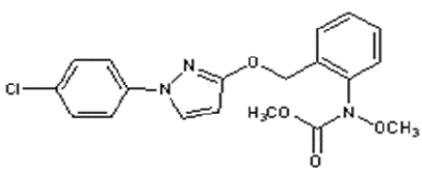
Chemical structure of pyraclostrobin.
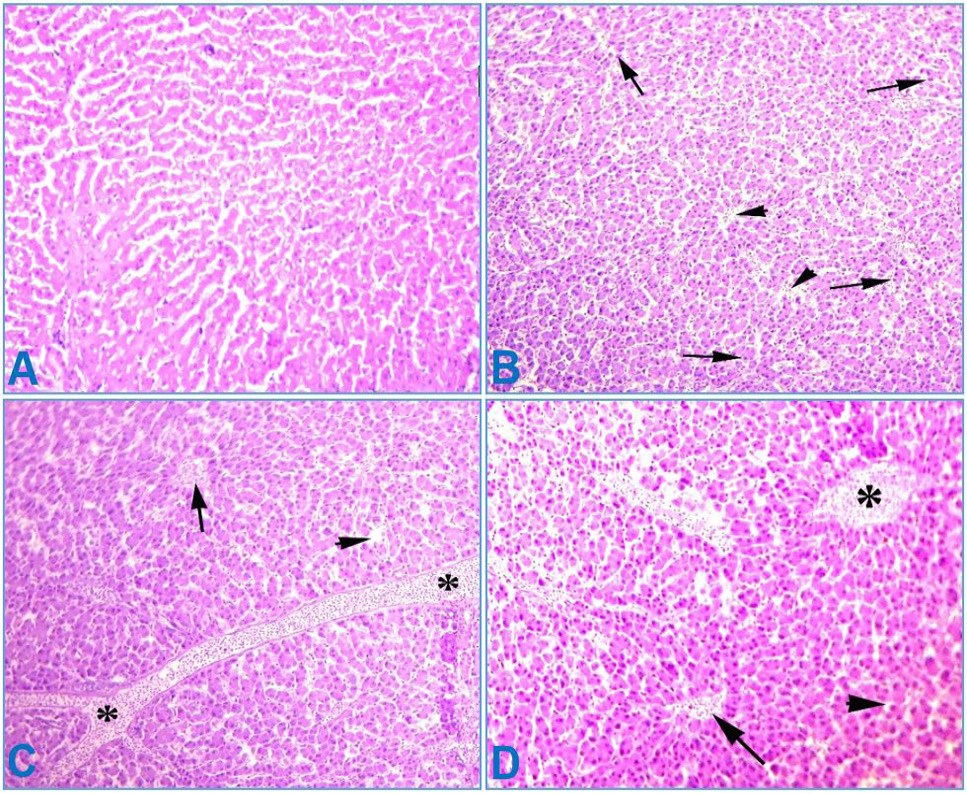
Effects of pyraclostrobin on histological structure of liver of Japanese quail. A, Showing normal histological structures of liver. B, Pyknosis (arrows) and disorganization of hepatocytes (arrow heads). C, Inflammatory exudate (arrow), disorganization of hepatocytes (arrow head), and oedema (asterisk). D, Inflammatory exudate (arrow), disorganization of hepatocytes, atrophy of nuclei and hypertrophy of cytoplasm of hepatocytes, oedema (asterisk); fatty changes (arrow head). Liver H and E sections (400x).
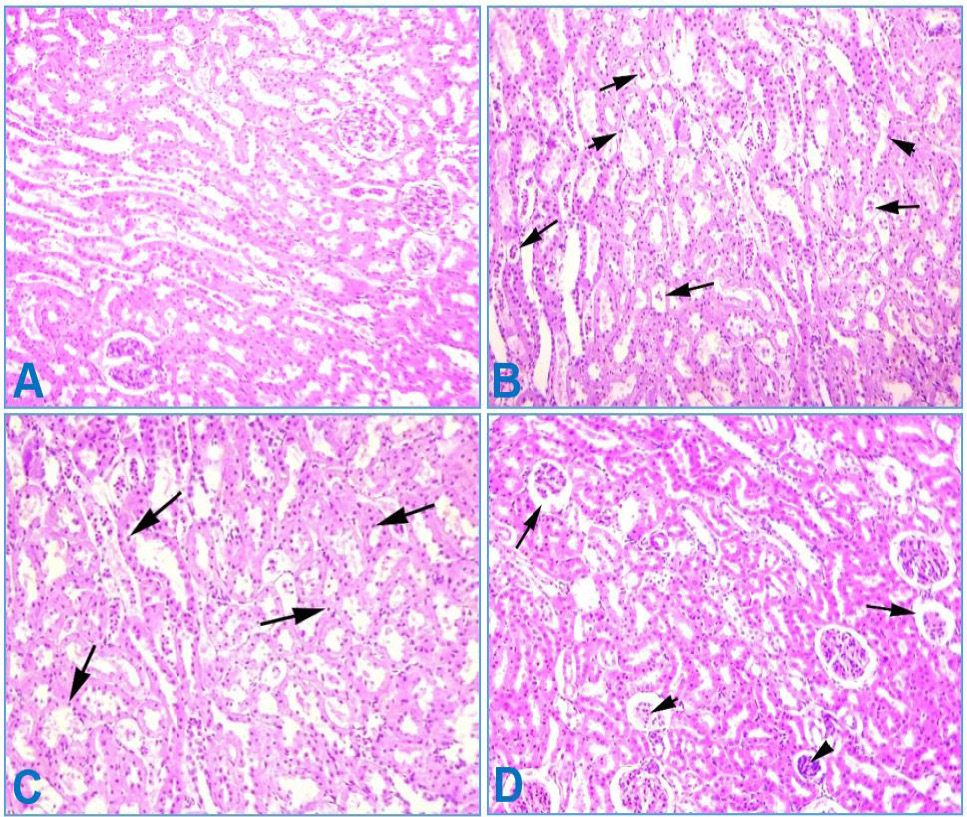
Effect of pyraclostrobin on histological structure of kidney of Japanese quail. A, Showing normal histological structures of kidney. B, Degeneration of renal tubules (arrows), and pyknosis (arrow head). C, Degeneration of renal tubules, necrosis of renal tubules (arrows). D, Degeneration and necrosis of renal tubules (arrow heads) and widening of urinary spaces (arrows). Kidney H and E sections (400x).
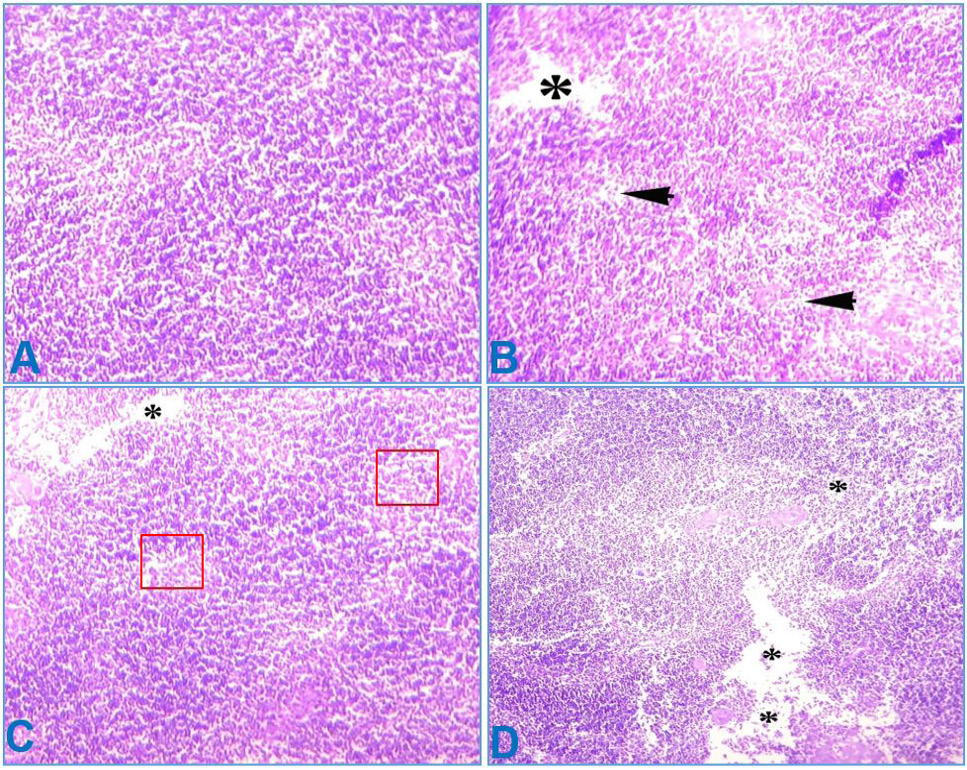
Effect of pyraclostrobin on histological structure of spleen of Japanese quail. A, Showing normal histological structures of spleen. B, Depletion of white pulp (*) and scattered lymphocytes (arrow head). C, Depletion of white pulp (*), and disruption of white pulp and scattered lymphocytes (box). D, Depletion and disorganization of red and white pulp, scattered splenic cells and inflammatory material (*). Spleen H and E sections (400x).
References
- Abdalla, E.S., Nassar, A.M., Neamat-Allah, A.A. and E-Aly, S., 2002. Prevalence of pesticide residues in fish, cheese and human milk. Assiut. Vet. med. J., 47: 110-124. https://doi.org/10.21608/avmj.2002.180243[CrossRef]
- Abhilash, P.C. and Singh, N., 2009. Pesticide use and application: An Indian scenario. J. Hazard. Mater., 165: 1-12. https://doi.org/10.1016/j.jhazmat.2008.10.061[CrossRef]
- Ahmed, M.A.A., Adam, G.O., Yang, D.K., Tungalag, T., Lee, S.J., Kang, H.S., Kim, J.S. and Kim, S.J., 2023. Effect of low-dose indole-3-butyric acid on hematological and serum biochemical parameters against thioacetamide induced acute hepatotoxicity in rats. Pak. Vet. J., 43: 125-131.
- Ahmed, O.M., Abdul-Hamid, M.M., El-Bakry, A.M., Mohamed, H.M. and Rahman, F.E.Z.S.A., 2019. Camellia sinensis and epicatechin abate doxorubicin-induced hepatotoxicity in male Wistar rats via their modulatory effects on oxidative stress, inflammation, and apoptosis. J. appl. Pharm. Sci., 9: 30-44. https://doi.org/10.7324/JAPS.2019.90405[CrossRef]
- Akbel, E., Arslan-Acaroz, D., Demirel, H.H., Kucukkurt, I. and Ince, S., 2018. The subchronic exposure to malathion, an organophosphate pesticide, causes lipid peroxidation, oxidative stress, and tissue damage in rats: The protective role of resveratrol. Toxicol. Res., 7: 503–512. https://doi.org/10.1039/C8TX00030A[CrossRef]
- Altuntas, I., Delibas, N., Demirci, M., Kilinc, I. and Tamer, N., 2002. The effects of methidathion on lipid peroxidation and some liver enzymes: Role of vitamins E and C. Arch. Toxicol., 76: 470-473. https://doi.org/10.1007/s00204-002-0359-1[CrossRef]
- Ambali, S., Akanbi, D., Igbokwe, N., Shittu, M., Kawu, M. and Ayo, J., 2007. Evaluation of sub chronic chlorpyrifos poisoning on haematological and serum biochemical changes in mice and protective effect of vitamin C. J. toxicol. Sci., 32: 111-120. https://doi.org/10.2131/jts.32.111[CrossRef]
- Bartlett, D.W., Clough, J.M., Godwin, J.R., Hall, A.A., Hamer, M. and Parr-Dobrzanski, B., 2002. The strobilurin fungicides. Pest Manage. Sci. Formerly Pest. Sci., 58: 649-662. https://doi.org/10.1002/ps.520[CrossRef]
- Batista, A.C., Domingues, C.E.D.C., Costa, M.J. and Silva-Zacarin, E.C.M., 2020. Is a strobilurin fungicide capable of inducing histopathological effects on the midgut and Malpighian tubules of honey bees? J. Apicult. Res., 59: 834-843. https://doi.org/10.1080/00218839.2020.1724678[CrossRef]
- Chafai, W., El-Gabardi, S., Douira, A. and Khalid, A., 2022. Diversity and mycorrhizal potential of arbuscular mycorrhizal fungi in two natural soils in the eastern region of Morocco. Asian J. Agric. Biol., 2022: 202102101.
- Chirgwin, E., Yang, Q., Umina, P.A., Gill, A., Soleimannejad, S., Gu, X. and Hoffmann, A.A., 2022. Fungicides have transgenerational effects on Rhopalosiphum padi but not their endosymbionts. Pest Manage. Sci., 78: 4709-4718. https://doi.org/10.1002/ps.7091[CrossRef]
- Cusaac, J.P.W., Mimbs, W.H., Belden, J.B., Smith, L.M. and McMurry, S.T., 2017. Factors influencing the toxicity of Headline® fungicides to terrestrial stage toads. Environ. Toxicol. Chem., 36: 2679-2688. https://doi.org/10.1002/etc.3816[CrossRef]
- da Costa Domingues, C.E., Inoue, L.V.B., da Silva-Zacarin, E.C.M. and Malaspina, O., 2020a. Foragers of Africanized honeybee are more sensitive to fungicide pyraclostrobin than newly emerged bees. Environ. Pollut., 266: 115267. https://doi.org/10.1016/j.envpol.2020.115267[CrossRef]
- da Costa Domingues, C.E., Inoue, L.V.B., da Silva-Zacarin, E.C.M. and Malaspina, O., 2020b. Fungicide pyraclostrobin affects midgutmorphophysiology and reduces 61 survival of Brazilian native stingless bee Meliponascutellaris. Ecotoxicol. Environ. Saf., 206: 111395. https://doi.org/10.1016/j.ecoenv.2020.111395[CrossRef]
- Degrandi-Hoffman, G., Chen, Y., Watkins, D.E., Chambers, M.L. and Hidalgo, G., 2015. Effects of oral exposure to fungicides on honey bee nutrition and virus levels. J. econ. Ent., 108: 2518-2528. https://doi.org/10.1093/jee/tov251[CrossRef]
- European Food Safety Authority (EFSA). 2008. Opinion on a request from EFSA related to the default Q10 value used to describe the temperature effect on transformation rates of pesticides in soil. Scientific Opinion of the Panel on Plant Protection Products and their Residues (PPR Panel). EFSA J., 6: 622. https://doi.org/10.2903/j.efsa.2008.622[CrossRef]
- Farooq, U., Mustafa, R., Khalid, M.F., Auon, M., Mahmood, U., Wahaab, A., Rehman, Z.U., Huda, N.U., Bashir, M.K., Mahmood, S. and Hussain, J., 2022. Supplementation of herbal seeds to improve the growth performance and digestion in Japanese quail (Coturnix coturnix japonica). Agrobiol. Rec., 10: 19-25. https://doi.org/10.47278/journal.abr/2022.021[CrossRef]
- Gao, S., Tang, G., Hua, D., Xiong, R., Han, J., Jiang, S. and Huang, C., 2019. Stimuli-responsive bio-based polymeric systems and their applications. J. Mater. Chem. B, 7: 709-729. https://doi.org/10.1039/C8TB02491J[CrossRef]
- Grote, K., Niemann, L., Gericke, C., Selzsam, B. and Chahoud, I., 2006. Effects of fentin hydroxide on reproduction of the Japanese quail (Coturnix coturnix japonica). Environ. Res., 101: 81-88. https://doi.org/10.1016/j.envres.2005.07.004[CrossRef]
- Grue, C.E., Hart, A.D.M. and Mineau, P., 1991. Biological consequences of depressed brain cholinesterase activity in wildlife. In: Cholinesterase inhibiting insecticides, their impact on wildlife and the environment (ed P. Mineau). Elsevier. Amsterdam. pp. 151-209.
- Harris, E.S., Cao, S., Littlefield, B.A., Craycroft, J.A., Scholten, R., Kaptchuk, T. and Eisenberg, D.M., 2011. Heavy metal and pesticide content in commonly prescribed individual raw Chinese herbal medicines. Sci. Total Environ., 409: 4297-4305. https://doi.org/10.1016/j.scitotenv.2011.07.032[CrossRef]
- Huang, X., Yang, S., Li, B., Wang, A., Li, H., Li, X. and Mu, W., 2021. Comparative toxicity of multiple exposure routes of pyraclostrobin in adult zebrafish (Danio rerio). Sci. Total Environ., 777: 145957. https://doi.org/10.1016/j.scitotenv.2021.145957[CrossRef]
- Huss, D., Poynter, G. and Lansford, R., 2008. Japanese quail (Coturnix japonica) as a laboratory animal model. Lab. Anim. (N.Y.), 37: 513–519. https://doi.org/10.1038/laban1108-513[CrossRef]
- Hussain, R., Khan, A. and Mahmood, F., 2013. Pathological and some serum biochemical effects induced by Malathion in Japanese quail (Coturnix japonica). J. Anim. Pl. Sci., 23: 1501-1506.
- Hussain, R., Mahmood, F., Khan, A., Javed, M.T., Rehan, S. and Mehdi, T., 2012. Cellular and biochemical effects induced by atrazine on blood of male Japanese quail (Coturnix japonica). Pest. Biochem. Physiol., 103: 38-42. https://doi.org/10.1016/j.pestbp.2012.03.001[CrossRef]
- Joshi, S.C., Tibrewal, P., Sharma, A. and Sharma, P., 2012. Evaluation of testicular toxicity of butachlor (a chloroacetanilide herbicide) in rats. J. Adv. Sci. Res., 3: 45-50.
- Kazmi, S.A.H., Iqbal, R., Al-Doaiss, A.A., Ali, M., Hussain, R., Latif, F. and Raza, G.A., 2023. Azoxystrobin-induced oxidative stress in gills, hematological biomarkers and histopathological ailments in fresh water fish. Pak. Vet. J., 43: 321-326. https://doi.org/10.29261/pakvetj/2023.025[CrossRef]
- Khan, A., Afsheen, H., Afzal, G., Nisa, Q.U., Alam, S., Ali, A., Irfan, M. and Jamal, A., 2023. Oxidative stress and toxicological impacts of Monomehypo exposure on bone marrow and erythrocytes in male Japanese quail. Continent. Vet. J., 3: 84-90.
- Kiran, H., Kousar, S., Ambreen, F., Ilyas, R. and Abbas, S., 2022. Effect of plant-based feed on the antioxidant enzymes, biochemical and hematological parameters of Oreochromis niloticus. Continent. Vet. J., 2: 67-75.
- Kumar, S., Dispenzieri, A., Katzmann, J.A., Larson, D.R., Colby, C.L., Lacy, M.Q. and Gertz, M.A., 2010. Serum immunoglobulin free light-chain measurement in primary amyloidosis: Prognostic value and correlations with clinical features. Blood, J. Am. Soc. Haematol., 116: 5126-5129. https://doi.org/10.1182/blood-2010-06-290668[CrossRef]
- Li, M., Xu, W., Hu, D. and Song, B., 2018. Preparation and application of pyraclostrobin microcapsule formulations. Colloids Surf. A: Physicochem. Eng. Aspects, 553: 578-585. https://doi.org/10.1016/j.colsurfa.2018.06.009[CrossRef]
- Mahmoud, H.M., Haggag, A.M.H., and El-Gebaly, H.S., 2012. Toxicological studies of malathion on Japanese quail (Coturnix japonica). Life Sci. J., 9: 1725-1732.
- Mossalam, H.H., Abd-El Aty, O.A., Morgan, E.N., Youssaf, S. and Mackawy, A.M.H., 2011. Biochemical and ultra-structure studies of the antioxidant effect of aqueous extract of hibiscus sabdariffa on the nephrotoxicity induced by organophosphorus pesticide (malathion) on the adult albino rats. J. Am. Sci., 7: 561-572.
- Nadeem, M., Khan, M.K., Mughal, M.A.S., Abbas, R.Z., Imran, M., Sindhu, Z.D., Zafar, A., Abbas, Z., Jamil, T. and Latif, M., 2023. Prevalence of haemoparasites and hematological parameters in pigeons of district Faisalabad, Pakistan. Agrobiol. Rec., 12: 76-82. https://doi.org/10.47278/journal.abr/2023.017[CrossRef]
- Nakane, Y. and Yoshimura, T., 2014. Universality and diversity in the signal transduction pathway that regulates seasonal reproduction in vertebrates. Front. Neurosci., 8: 115. https://doi.org/10.3389/fnins.2014.00115[CrossRef]
- Naraharisetti, S.B., Aggarwal, M., Ranganathan, V., Sarkar, S.N., Kataria, M. and Malik, J.K., 2009. Effects of simultaneous repeated exposure at high levels of arsenic and malathion on hepatic drug-bio transforming enzymes in broiler chickens. Environ. Toxicol. Pharmacol., 28: 213-218. https://doi.org/10.1016/j.etap.2009.04.006[CrossRef]
- Nasar, J.L., 2016. 10 perception and evaluation of residential street scenes. Directions in person-environment research and practice (Routledge Revivals), pp. 229. https://doi.org/10.4324/9781315542553[CrossRef]
- Naseem, S., Ghaffar, A., Hussain, R. and Khan, A., 2022. Inquisition of toxic effects of pyriproxyfen on physical, hemato-biochemical and histopathological parameters in Labeo rohita fish. Pak. Vet. J., 42: 308-315.
- Nicodemo, D., Mingatto, F.E., De Jong, D., Bizerra, P.F.V., Tavares, M.A., Bellini, W.C. and de Carvalho, A., 2020. Mitochondrial respiratory inhibition promoted by Pyraclostrobin in fungi is also observed in honey bees. Environ. Toxicol. Chem., 39: 1267-1272. https://doi.org/10.1002/etc.4719[CrossRef]
- Recoquillay, J., Leterrier, C., Calandreau, L., Bertin, A., Pitel, F., Gourichon, D., Vignal, A., Beaumont, C., Le Bihan-Duval, E. and Arnould, C., 2013. Evidence of phenotypic and genetic relationships between sociality, emotional reactivity and production traits in Japanese quail. PLoS One, 8: e82157. https://doi.org/10.1371/journal.pone.0082157[CrossRef]
- Rondeau, S. and Raine, N.E., 2022. Fungicides and bees: A review of exposure and risk. Environ. Int., pp. 107311. https://doi.org/10.1016/j.envint.2022.107311[CrossRef]
- Saleemi, M.K., Raza, A., Khatoon, A., Zubair, M., Yongping, X., Murtaza, B., Li, X., Jamil, M., Imran, M., Muhammad, F., Zubair, K., Bhatti, S.A., Rafique, M.K., Ahmed, I., Azal, F., Jubeen, F. and Basit, A., 2023. Toxic effects of aflatoxin B1 on hematobiochemical and histopathological parameters of juvenile white leghorn male birds and their amelioration with vitamin E and Moringa oleifera. Pak. Vet. J., 43: 405-411.
- Sindi, R.A., Alam, S., Rizwan, M., Ullah, M.I., Ijaz, N., Iqbal, Z., Muzafar, R., Akram, R., Nazar, M.W. and Hussain, R., 2023. Investigations of hemato-biochemical, histopathological, oxidative stress and reproductive effects of thiram in albino rats. Pak. Vet. J., 43: 255-261. https://doi.org/10.29261/pakvetj/2023.031[CrossRef]
- Tchoupou-Tchoupou, E.C., Ndofor-Foleng, H.M., Nwenya, J.M., Okenyi, N.J., Ikeh, N.E., Ngwu, N.R., Nwakpu, P.E., Ossei, J. and Onyimoniy, E.A., 2022. Effects of hexane extract of garlic on hematological, biochemical and histological parameters in F1 crossbred chicks non-infected and infected with Salmonella typhimurium. Int. J. Vet. Sci., 11: 435-442. https://doi.org/10.47278/journal.ijvs/2022.135[CrossRef]
- Undugoda, L. and Kannangara, S., 2022. Nature and activities of microfungi associated with the decomposition of rice straw in Sri Lanka. Asian J. Agric. Biol., 2022: 202103115.
- Vo, V.T., Long, L.T.M., Duong, T.Q.A., Mai, N.A.T. and Thuong, N.H.T., 2022. Assessment of lead toxicity in red tilapia Oreochromis sp. through hematological parameters. Asian J. Agric. Biol., 2022: 202101016.
- Wang, X., Li, X., Wang, Y., Qin, Y., Yan, B. and Martyniuk, C.J., 2021. A comprehensive review of strobilurin fungicide toxicity in aquatic species: Emphasis on mode of action from the zebrafish model. Environ. Pollut., 275: 116671. https://doi.org/10.1016/j.envpol.2021.116671[CrossRef]
- Zaluski, R., Justulin, L.A. and Orsi, R.D.O., 2017. Field-relevant doses of the systemic insecticide fipronil and fungicide pyraclostrobin impair mandibular and hypopharyngeal glands in nurse honeybees (Apis mellifera). Sci. Rep., 7: 15217. https://doi.org/10.1038/s41598-017-15581-5[CrossRef]
- Zemheri-Navruz, F., Ince, S., Arslan-Acaroz, D., Acaroz, U., Demirel, H.H. and Demirkapi, E.N., 2023. Resveratrol alleviates pyraclostrobin-induced lipid peroxidation, oxidative stress, and DNA damage in rats. Environ. Sci. Pollut. Res., 30: 6414-6423. https://doi.org/10.1007/s11356-022-22613-9[CrossRef]
- Zhang, C., Wang, J., Zhang, S., Zhu, L., Du, Z. and Wang, J., 2017. Acute and subchronic toxicity of pyraclostrobin in zebrafish (Danio rerio). Chemosphere, 188: 510-516. https://doi.org/10.1016/j.chemosphere.2017.09.025[CrossRef]
- Zhu, S., Liu, Y., Li, Y., Yi, J., Yang, B., Li, Y., Ouyang, Z., Liu, B., Shang, P., Mehmood, K., Abbas, R.Z., Ahmed, S., Chang, Y.F., Guo, J., Pan, J., Hu, L., Tang, Z., Li, Y. and Zhang, H., 2022. The potential risks of herbicide butachlor to immunotoxicity via induction of autophagy and apoptosis in the spleen. Chemosphere, 286: 131683. https://doi.org/10.1016/j.chemosphere.2021.131683[CrossRef]
Services
Article usage statistics
Loading…