
Pasteurella multocida is an economically vital veterinary pathogen that affects a wide range of animal hosts and causes diseases with major economic effects. This bacterium causes pasteurellosis, a fatal disease in rabbits that is a leading cause of death and a significant contributor to economic losses in rabbit production. However, the in vivo response of antibiotics enrofloxacin and ceftiofur sodium against experimentally induced Pasteurella multocida type B2 infection in rabbits remains unclear. Therefore, this study was conducted to assess the gross pathological lesions, clinical findings, and in vivo response of enrofloxacin and ceftiofur sodium against induced Pasteurella multocida in rabbits. Twenty-four rabbits were divided into three equal groups: untreated control (A), treated with enrofloxacin (B), and treated with ceftiofur sodium (C). All infected rabbits highlighted signs such as respiratory distress, depression, and fever. Mortality was highest in the untreated group (100%), followed by the enrofloxacin group (75%), and lowest in the ceftiofur group (37.5%). Ceftiofur sodium demonstrated higher treatment efficacy (62.5%) compared to enrofloxacin (25%). Pathological findings revealed severe organ congestion and respiratory tract damage. Therefore, Pasteurella multocida was found to be highly pathogenic to rabbits, and ceftiofur sodium demonstrated greater efficacy than enrofloxacin in treating the infection.
Research Article · Volume 12, Issue 2, 7 October 2026 · Open Access
Gross Pathology, Clinical Manifestation, and Comparative Efficacy of Enrofloxacin and Ceftiofur Sodium in Rabbits Experimentally Infected with Pasteurella multocida Type B2
·
Affiliations & Notes ⌄
- 1Department of Veterinary Medicine, Faculty of Animal Husbandry and Veterinary Sciences, Sindh Agriculture University Tandojam, Sindh, Pakistan
- 2Department of Zoology, Faculty of Natural Sciences, University of Sindh, Jamshoro 76080, Sindh, Pakistan. *Correspondence | Shahida Laghari, Department of Veterinary Medicine, Faculty of Animal Husbandry and Veterinary Sciences, Sindh Agriculture University Tandojam, Sindh, Pakistan
- 3Email: slaghari2013@gmail.com
Article Info ⌄
- Journal:
- Veterinary Sciences: Research and Reviews
- Published:
- 7 October 2026
From the article
- The purpose of this study was to evaluate the pathogenicity and clinical signs produced by induced Pasteurella multocida type B2 strain in rabbits and to assess the in vivo therapeutic efficacy of two commonly used antibiotics, enrofloxacin and ceftiofur Sodium.
- While antibiotic intervention reduced mortality, a significant difference in efficacy was observed between the two treatments, with ceftiofur sodium proving superior to enrofloxacin under the experimental conditions.
- Treatment with enrofloxacin (Group B) resulted in a high mortality rate of 75% (25% efficacy), indicating moderate protective effect under this acute challenge model, while ceftiofur sodium (Group C) demonstrated significantly greater efficacy, with mortality rate of 37.5% (62.5% efficacy).
- These findings suggest ceftiofur sodium as an effective candidate for managing acute pasteurellosis outbreaks, though field validation remains recommended.
Selected from the article's own text.
Abstract
Introduction
Rabbit production provides both a source of income and meat, which serves as human food and is a rich source of animal-origin protein . Furthermore, rabbits are extremely vulnerable to multiple infections due to the serious adverse effects on the rabbit industry and a range of economic losses ; . However, Pasteurella multocida is causing a fatal disease in rabbits called pasteurellosis that is the leading cause of death and increases the economic losses in rabbit production .
Pasteurella multocida is a gram-negative, non-spore-forming, rod-like, non-motile, facultatively anaerobic bacterium . It is recognized as endemic in Pakistan and also found across the world . This bacterium was first identified by Louis Pasteur in the 19th century from the chicken causing the disease, fowl cholera . Later, it was observed that it has a diverse group of hosts and a close relation with the epithelial tissue of the respiratory and gastrointestinal tract systems . Furthermore, its causes losses by the morbidity and mortality in all the domestic and wild animals, such as hemorrhagic septicemia in buffaloes and cattle, snuffles in rabbits, avian cholera in chickens, and atrophic rhinitis in swine ; ; . Pasteurella multocida is a causative agent of Upper Respiratory Tract Disease (URTD), which affects a large range of different animal species, including cattle, swine, canines, fowl, and rabbits ; ; ; . However, clinical manifestations of the disease vary from respiratory problems ranging from persistent upper respiratory irritation that is asymptomatic or mild even to acute pneumonia.
Pasteurellosis is the most common bacterial illness on commercial rabbit farms, and Pasteurella multocida is commonly endemic in rabbit colonies ; ; . Pasteurella multocida has been classified on the basis of serogroups; the majority of its pathogenicity is associated with genes that are regularly distributed among the different strains that affect the different hosts depending on the base of 16 capsular antigens (A, B, D, E, and F), somatic lipopolysaccharide antigen-based serotypes, and they show considerable variation in the incidence of these bacteria among various hosts, seasonal or associated with disease . Pasteurella multocida serogroup F was initially identified in turkeys in the United States, and this serogroup is solely linked to avian hosts and poultry-related diseases like fowl cholera . Pasteurellosis in rabbits is mostly caused by the capsular type A . While capsular type A is globally predominant in rabbits, outbreaks associated with other serotypes, such as type B2, pose an emerging threat to rabbit production, necessitating targeted pathological evaluations . Consequently, the most common type of pasteurellosis in rabbits is respiratory illness, which is also the leading cause of sickness and mortality on farms. Pasteurella multocida strains show a wide range of clinical signs, such as, otitis interna, conjunctivitis, genital infection, meningitis, respiratory distress, and abscess formation in the body at different sites . Furthermore, the most common bacterial infection found in rabbits is Pasteurella multocida, with prevalence estimates ranging from 7% to nearly 100% . This bacterium species can be carried asymptomatically but acts as primary pathogen in rabbit colonies, causing upper respiratory tract infection . In addition, rabbits die mostly from respiratory disorders, which are commonly caused by bacterial infections. It has been reported that induction of intramuscular Pasteurella multocida in rabbits causes marked inflammation in the respiratory system, leading to pneumonia, congestion, mild to moderate hemorrhages, and edema and fibrin deposition in the chest cavity in 4 to 8 weeks age rabbits. While, more than 8 months older rabbits do not show any obvious clinical signs .
The disease Pasteurellosis in rabbits is controlled through antibiotic therapy and the slaughter of diseased animals . However, treating infected animals does not completely eliminate the infection, instead, it primarily reduces clinical indications or delays the appearance of the infection . Therefore, it is important to evaluate the challenge strain’s morbidity and mortality, observe the clinical signs and gross necropsy pathological lesions produced by this strain in rabbits, and further, to evaluate the efficacy of the different antibiotics currently available in the market.
Although enrofloxacin (a broad-spectrum fluoroquinolone that inhibits bacterial DNA gyrase) and ceftiofur sodium (a third-generation cephalosporin that inhibits cell wall synthesis) are frequently utilized off-label in clinical veterinary practice to manage respiratory outbreaks, their comparative in vivo therapeutic efficacy and clinical-pathological protection against acute experimental infection with capsular type B2 in rabbits remain unexplored. Evaluating these two distinct mechanistic classes side-by-side is essential to establish targeted therapeutic protocols against emerging non-type-A pasteurellosis outbreaks. Therefore, in the present study, an investigation was conducted in order to reveal the effects of antibiotics in experimentally induced Pasteurella multocida rabbits. The aims of this study were (1) to assess the clinical signs and gross pathological lesions produced by induced Pasteurella multocida type B2 in rabbits, and (2) to determine the in-vivo efficacy of various enrofloxacin and ceftiofur sodium antibiotics against the infection.
Materials and Methods
Experimental design
The experiments were conducted in the laboratory environment. A total of 24 healthy rabbits (age 4–6 weeks) were purchased from the local market of Tandojam. All rabbits were kept in separate cages for one week to acclimatize to the condition and were provided feed and water adlibitum. Rabbits were assigned to three experimental groups (A, B, and C; n=8/group) using a computer-generated simple randomization sequence to ensure baseline comparability in body weight and sex distribution across groups. Group A was kept as an untreated positive control group, while Group B and Group C were treated with enrofloxacin and ceftiofur sodium, respectively. The sample size of 8 rabbits per group was selected in accordance with the 3Rs principles (Reduction, Refinement, Replacement) for ethical animal experimentation. A post-hoc power analysis using G*Power software (v3.1.9.7) based on observed mortality rates confirmed that n=8 per group provided a statistical power (1 − β) exceeding 0.82 at α = 0.05.
Bacterial strain, experimental infection and clinical examination
Pasteurella multocida type B2 strain was obtained from Vaccine Production Unit (VPU), Central Veterinary Diagnostic Laboratory (CVDL), Tandojam, Sindh, Pakistan. The strain was cultured on 5% sheep blood agar at 37 °C for 24 h. A bacterial suspension was prepared in sterile physiological saline and adjusted to approximately 4 × 10⁸ CFU/mL using McFarland standard No. 1. All the rabbits were confirmed to be clinically healthy and free of Pasteurella multocida prior to the experiment. Each rabbit then received an intramuscular injection of 0.25 mL/kg body weight containing 10⁶ CFU of live bacteria. The rabbits were monitored at least twice daily for clinical signs and time-related changes. All rabbits challenged with Pasteurella multocida were monitored daily for feed and water consumption after the inoculation. Clinical manifestations like, respiratory distress, conjunctivitis, septicemia, fever, anorexia and depression were observed in all groups. Prior to in vivo inoculation, the challenge strain was verified as capsular type B2 via multiplex PCR as described previously . In vitro antimicrobial susceptibility testing was performed using the Kirby-Bauer disk diffusion method on Mueller-Hinton agar supplemented with 5% sheep blood according to CLSI guidelines. Pre-exposure freedom from P. multocida was confirmed by collecting deep nasal swabs from all rabbits during acclimatization, which were plated onto sheep blood agar and found negative for bacterial growth. Intramuscular inoculation (0.25 mL/kg body weight containing 10⁶ CFU) was chosen to provide a precise and standardized systemic bacterial challenge across all animals.
Postmortem examination
Necropsies and pathological evaluations were performed on all rabbits that died during the study by a veterinary pathologist who was blinded to the treatment group allocations. Gross pathological lesions of the carcass and major internal organs (lungs, liver, stomach, intestine, and kidneys) were evaluated using a standardized semi-quantitative scoring scale: 0= Normal (no visible lesions); 1= Mild (localized congestion/edema, <25% organ involvement); 2= Moderate (diffuse congestion, 25–50% involvement); 3= Severe (extensive consolidation, hepatization, or multifocal necrosis/hemorrhage, >50% involvement).
Efficacy of enrofloxacin and ceftiofur sodium
Antibiotic therapy was initiated exactly 24 hours post-inoculation upon the onset of clinical pyrexia (body temperature ≥ 104 °F) and early systemic signs. Group B received enrofloxacin at 5 mg/kg body weight intramuscularly once daily (q24h) for 5 consecutive days. Group C received ceftiofur sodium at 2.2 mg/kg body weight intramuscularly once daily (q24h) for 5 consecutive days. Group A served as the untreated positive control receiving intramuscular sterile physiological saline (0.25 mL/kg). Treatment efficacy was evaluated by recording clinical signs, body temperature, mortality rate, and gross postmortem lesion scores as described by Hassan et al. (2016).
Data analysis
Statistical analyses were conducted using SPSS version 25.0 and GraphPad Prism version 9.0. Repeated physiological parameters (temperature, respiration rate, heart rate) over time were analyzed using a Two-Way Repeated-Measures Analysis of Variance (RM-ANOVA), with Treatment Group as the between-subject factor and Time as the within-subject repeated factor. Sphericity was evaluated using Mauchly’s test. Pairwise post-hoc comparisons were conducted using Tukey’s Honest Significant Difference (HSD) test, reporting mean differences and 95% confidence intervals (95% CI). Animal survival distributions were analyzed using Kaplan-Meier survival curves, and group differences were evaluated using the Log-rank (Mantel-Cox) test. Proportional mortality rates were compared using Fisher’s exact test. Statistical significance was set at p < 0.05.
Results
Baseline and post-inoculation clinical parameters
In vitro antimicrobial susceptibility testing confirmed that the challenge strain was susceptible to ceftiofur sodium (inhibition zone: 28 mm) and moderately susceptible to enrofloxacin (inhibition zone: 19 mm). Prior to experimental infection, all 24 rabbits across the three groups (A, B, and C) exhibited physiological parameters within the physiological norm for baseline body temperature, respiration rate, and heart rate (Table 1). Following the intramuscular inoculation with Pasteurella multocida type B2, a significant physiological derangement was observed across all cohorts. Group A (untreated control) manifested severe hyperthermia, reaching a peak mean body temperature of total of 106 °F (Table 1). Concurrently, pronounced respiratory and cardiovascular distress was recorded, with the maximum acceleration in respiration rate (101 breaths/min) and heart rate (204 beats/min) peaking in group B (Table 1).
Clinical signs observed in rabbits after the inoculation of Pasteurella multocida
All the rabbits had shown clinical signs after the 24 h of inoculation of Pasteurella multocida. Clinical signs including depression, fever, anorexia, oral mucous secretions, and nasal discharge, were observed across the cohorts (Table 2).
Post-treatment effect of enrofloxacin and ceftiofur sodium in induced rabbits
All the rabbits developed clinical parameters related to septicemia on the second day. Enrofloxacin treatment was started, and group B rabbits showed gradual improvement in appetite, body temperature, respiration rate, and heart rate on the 5th and 6th days (Supplementary Table S1). Furthermore, all the rabbits of group C were treated with ceftiofur sodium and showed improvement in appetite, body temperature, respiration rate, and heart rate on the 4th and 5th days (Supplementary Table S2).
Table 1: Mean values of body temperature, respiration rate and heart rate of rabbits before and after the induction of Pasteurella multocida.
|
Group of rabbits |
Before induction (mean±SD) |
After induction (mean±SD) |
||||
|
Temperature °F |
Respiration rate/minute |
Heart rate/minute |
Temperature °F |
Respiration rate/minute |
Heart rate/minute |
|
|
A |
101.9 ± 0.7 |
36.0 ± 2 |
152 ± 5 |
105 ± 1.0 |
85± 10 |
190±12.0 |
|
B |
101.1±0.6 |
38±3 |
153±4 |
105±0.8 |
90±11 |
192±.12.0 |
|
C |
101.3±1.5 |
38±4 |
154±4 |
104±0.5 |
90±9 |
192±10.0 |
Table 2: Clinical signs observed in infected rabbits after induction of Pasteurella multocida.
|
Groups |
Clinical signs |
No: infected rabbits showed clinical signs (%) |
|
A (n=8) |
Increased respiratory rate, body temperature, and heart rate, depression, fever, anorexia, mucous discharge from the mouth, and nasal discharge. |
100 |
|
B (n=8) |
Increased respiratory rate body temperature, and heart rate, depression, fever, anorexia, mucous discharge from the mouth, and nasal discharge. |
100 |
|
C (n=8) |
Increased respiratory rate body temperature, and heart rate, depression, fever, anorexia, mucous discharge from the mouth, and nasal discharge. |
100 |
Table 3: Statistical summary and comparative therapeutic efficacy of enrofloxacin and ceftiofur sodium on rectal temperature in rabbits infected with Pasteurella multocida type B2.
|
Experimental Cohorts |
Baseline temperature °F (Pre-infection) |
Peak infection temperature °F (Day 2) |
Post treatment recovery Phase (°F) (Day 5) |
Statistical significance (p-value) |
|
Group A (Untreated control) |
101.4 ± 0.3°F |
106.0 ± 0.5 °F |
– (100% Mortality by Day 4) |
P < 0.01 (vs. Baseline) |
|
Group B (Enrofloxacin) |
102.5 ± 0.3 °F |
105.8 ± 0.4 °F |
102.7 ± 0.3 °F (Gradual recovery) |
P < 0.05 (vs. Day 2) |
|
Group C (Ceftiofur Sodium) |
102.2 ± 0.4 °F |
105.9 ± 0.3 °F |
101.6 ± 0.2 °F (Accelerated recovery) |
P < 0.01 (vs. Day 2) |
Clinical parameters observed in positive control Group-A rabbits
After the inoculation of Pasteurella multocida, all the rabbits showed deterioration in their health and became severely ill, showing pyrexia, anorexia, and an increase in eye and nasal secretions. Later, all the rabbits died on the 4th day after the induction of Pasteurella multocida, as depicted in (Supplementary Table S3).
Comparative therapeutic efficacy and overall summary
The overall comparative analysis of the experimental cohorts demonstrated that post-challenge, ceftiofur sodium (Group C) showed a substantially faster and more pronounced therapeutic response compared to enrofloxacin (Group B) (p < 0.05), with parameters returning to normal baseline thresholds much earlier. Conversely, the untreated positive control (Group A) sustained a progressive clinical decline, leading to 100% mortality by day 4th. A comprehensive summary of the baseline values, peak infection metrics, and post-treatment recovery timelines across all experimental groups is systematically detailed in (Table 3).
Mortality and survival analysis
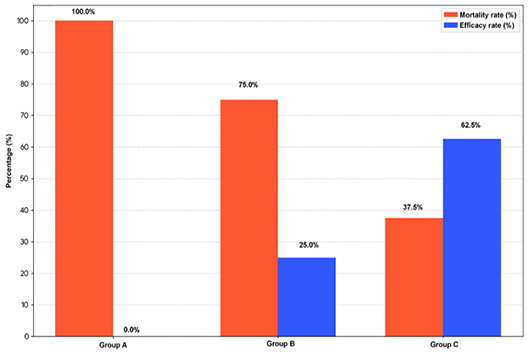
The mortality rate observed in the rabbit groups (A, B, and C) induced by Pasteurella multocida, especially in positive control group A, where the highest mortality rate of 100% was observed, followed by Group B (75%) and Group C (37.5%) (Figure 1). Kaplan-Meier survival analysis demonstrated significant differences in survival trajectories among the groups (Log-rank χ²= 11.42, p= 0.0033). Ceftiofur sodium treatment (Group C) significantly extended median survival time compared to both the untreated control Group A (p < 0.001) and the enrofloxacin-treated Group B (p= 0.041).
Postmortem findings
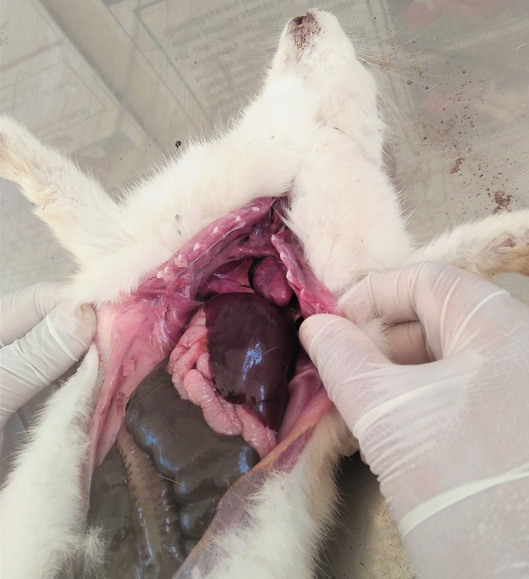
Postmortem gross lesions in infected rabbits inoculated by Pasteurella multocida type B were observed in all dead rabbits of group A, B, and C. All rabbits demonstrated lesions related to septicemia and characterized by vascular changes such as eye, nasal mucosa, mouth, pharynx, and larynx, which were observed to be mildly to severely congested and presented increased secretions, intracapillary hemorrhage; they were also congested, trachea had shown multifocal white necrotic patches. The diaphragm had mild congestion; the lungs had shown severe congestion and edema, and the heart had shown pericarditis. The stomach and intestine were empty, and the walls were mildly congested; the kidney and liver had shown diffuse congestion. All of the infected rabbits’ lymph nodes were moderately swollen and black in color, and the spleen was found to be normal to mildly enlarged in size (Figure 2).
Macroscopic evaluation of target organs (lungs, liver and kidneys)
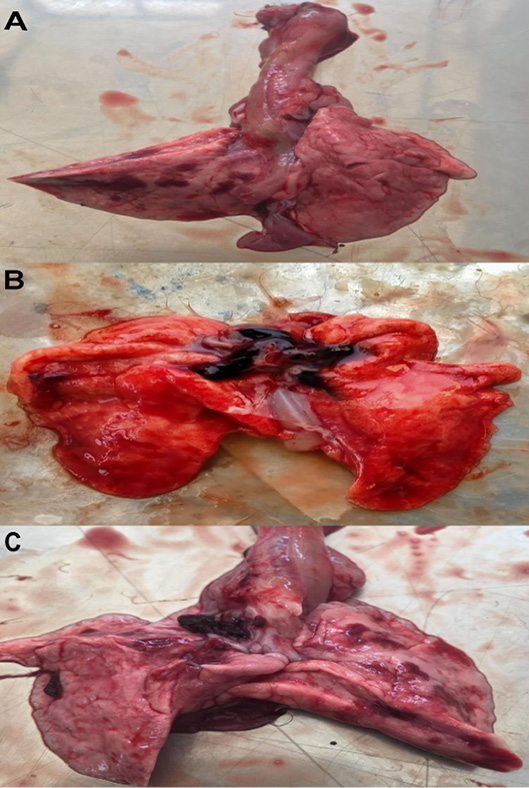
Gross pathological examination of the lungs revealed severe acute vascular congestion and moderate to severe bilateral diffuse pulmonary edema in dead rabbits across all groups. Lungs failed to collapse upon thoracotomy and presented a dark-red to distinct hepatized appearance, consistent with acute exudative pneumonia. This severe pulmonary consolidation and
diffuse congestion across the cohorts are clearly visualized in the panel layout of (Figure 3). The pathological examination of the liver in infected rabbits confirmed severe, diffuse passive congestion, marked hyperemia and widespread petechial (pinpoint) hemorrhages distributed across the subcapsular hepatocytes. Variable degrees of hepatomegaly were consistently observed. The gallbladder in affected rabbits was notably distended, congested, and showed a deep yellowish-green discoloration. These significant pathological changes and widespread congestion are detailed across the experimental groups in (Figure 4). Structural alterations in both the left and right kidneys were characterized by mild-to-severe diffuse cortical and medullary congestion. The kidneys exhibited bilateral organ enlargement (nephromegaly) at the time of death and were severely engorged. These macroscopic pathological findings of diffuse renal congestion and enlargement are detailed in (Figure 5). Furthermore, blinded macroscopic scoring showed significantly higher pulmonary lesion scores in untreated Group A (mean score: 2.88 ± 0.13) compared to Group B (1.88 ± 0.23) and Group C (1.12 ± 0.22; p < 0.05). Hepatic and renal congestion scores followed a similar pattern, with Group C exhibiting lower lesion severity scores relative to Group B and Group A.
Discussion
The purpose of this study was to evaluate the pathogenicity and clinical signs produced by induced Pasteurella multocida type B2 strain in rabbits and to assess the in vivo therapeutic efficacy of two commonly used antibiotics, enrofloxacin and ceftiofur Sodium. The findings demonstrated that the challenge strain was highly virulent, inducing acute and fatal septicemia. While antibiotic intervention reduced mortality, a significant difference in efficacy was observed between the two treatments, with ceftiofur sodium proving superior to enrofloxacin under the experimental conditions.
The intramuscular challenge with Pasteurella multocida type B2 induced a rapid and consistent disease course. Within 24 h post-inoculation, rabbits showed a suite of clinical signs characteristic of acute pasteurellosis, including, pyrexia, tachycardia, tachypnea, severe mucopurulent oculonasal discharge, and terminal dyspnea. This rapid onset and symptom profile are consistent with previous reports of experimental Pasteurella multocida infection in rabbits, underscoring its role as a primary pathogen capable of causing acute systemic illness (Jaglic al., 2006). The high mortality rate (100%) in the infected, untreated control group (A) within seven days confirms the acute septicemic nature of the infection, leading to respiratory failure and endotoxemia, as reported by .
Post-mortem examination revealed gross pathological lesions that further delineated the disease’s pathogenesis. The most prominent findings were confined to the respiratory system and included severe congestion and hemorrhages of the upper respiratory mucosa, marked pulmonary consolidation with red hepatization, and fibrino-purulent pleuritis. Systemic manifestations, such as diffuse hepatic congestion, were also noted. This constellation of lesions particularly the severe, consolidated pneumonia and pleuritis is a hallmark of acute Pasteurella multocida septicemia and aligns closely with pathological descriptions in other studies . The absence of significant splenic lesions suggests an acute, fulminant disease course without the chronic, abscess-forming progression sometimes associated with other serotypes.
The main experimental findings of the current study highlighted a significant differential efficacy between two tested antibiotics. Treatment with enrofloxacin (Group B) resulted in a high mortality rate of 75% (25% efficacy), indicating moderate protective effect under this acute challenge model, while ceftiofur sodium (Group C) demonstrated significantly greater efficacy, with mortality rate of 37.5% (62.5% efficacy). This indicates that ceftiofur sodium was more effective in reducing mortality under this acute challenge model. However, the lower than expected efficacy of ceftiofur sodium is noteworthy. This finding aligns with general trends of varying antimicrobial susceptibility in clinical isolates and is also comparable to the efficacy variations previously reported in rabbit models under acute bacterial challenge .
It is highlighted that Pasteurella multocida is a highly pathogenic bacteria and causes acute disease and high mortality in sensitive animals; therefore, in cattle and buffalo, a mass vaccination program should be completed before the rainy season. Further, the study may be carried out on a molecular level on the Pasteurella multocida organism to find out the antibiotic resistance. Farmers’ awareness programs should be started on the disease losses and effectiveness of the treatment with ceftiofur sodium. Therefore, further studies will be required in the future to evaluate whether this bacterium may have an impact on the entire animal.
It should be noted, although the sample size (n= 8 per group) provided sufficient statistical power to detect significant differences in mortality and clinical recovery, larger cohorts will provide further precision regarding therapeutic effect sizes. Additionally, parenteral injection served as a controlled challenge model but does not replicate natural aerosol transmission. Future pharmacokinetic and pharmacodynamics (PK/PD) studies in field settings are recommended to further optimize dosing schedules.
Conclusion
In conclusion: (1) Pasteurella multocida type B2 is highly pathogenic in young rabbits, inducing rapid mortality and widespread respiratory consolidation; (2) under these experimental conditions, ceftiofur sodium demonstrated higher therapeutic protection (62.5% survival) and faster clinical recovery compared to enrofloxacin (25.0% survival); and (3) prompt antibiotic administration mitigates gross pathological organ damage. These findings suggest ceftiofur sodium as an effective candidate for managing acute pasteurellosis outbreaks, though field validation remains recommended.
Acknowledgements
The authors are grateful to Dr. Riaz Ahmed Laghari (Professor at Department of Veterinary Medicine, Faculty of Animal Husbandry and Veterinary Sciences, Sindh Agriculture University Tando Jam) for providing initial guidance to Shahida Laghari during the early phase of this research.
Novelty Statement
This study provides the first direct comparative evaluation of the therapeutic efficacy of enrofloxacin versus ceftiofur sodium against experimental Pasteurella multocida type B2 infection in rabbits, detailing specific gross pathological outcomes and clinical recovery dynamics.
Author’s Contribution
Both authors contributed to the study conception and design. Material preparation and data collection were performed by SL and AA. Data analysis was conducted by AA. The first draft of the manuscript was written by SL, and AA reviewed and commented on previous versions. Both authors read and approved the final manuscript.
Funding
The study was not financially supported by any organization.
Ethical approval
The animal study protocol was approved by the Institutional Animal Ethics Committee (IAEC) of the Faculty of Animal Husbandry and Veterinary Sciences, Sindh Agriculture University Tandojam, Sindh, Pakistan. All experiments were performed in strict accordance with the committee’s recommendations for the care and use of laboratory animals.
Data availability
Data will be made available on request.
Generative AI and AI assisted technology statement
The authors declare that no generative AI and AI assisted technology was used in the creation of this manuscript.
Supplementary material
There is supplementary material associated with this article. Access the material online at:
Conflict of interest
The authors have declared no conflict of interest.
Figures
Comparison of mortality and efficacy rates across treatment groups.
Post-mortem examination lesions of Pasteurella multocida-infected rabbits.
Rabbit’s gross pathological lesions on the lungs infected with Pasteurella multocida.
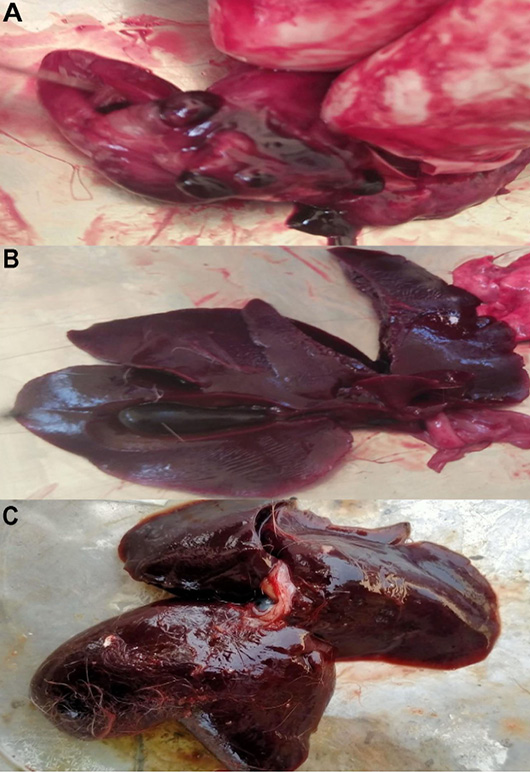
Gross pathological lesions in the liver of infected rabbits showing severe congestions, pinpoint hemorrhages and enlargement. Groups (A, B, and C).
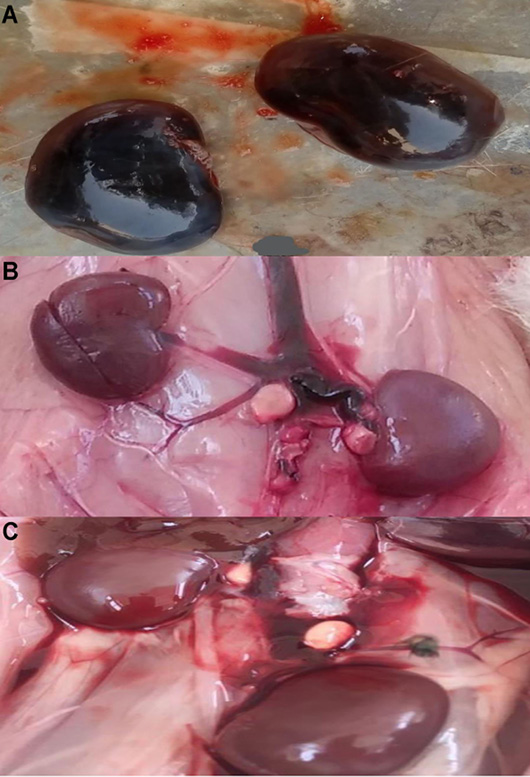
Gross pathological lesions of kidneys showing mild to severe diffuse congestion and enlargement in infected rabbits. Groups (A, B, and C).
References
- Ahmad, T.A., Rammah, S.S., Sheweita, S.A., Haroun, M. and El-Sayed, L.H., 2014. Development of immunization trials against Pasteurella multocida. Vaccine, 32: 909–917. https://doi.org/10.1016/j.vaccine.2013.11.068[CrossRef]
- Alam, R., Fawzi, E.M., Alkhalf, M.I., Alansari, W.S., Aleya, L. and Abdel-Daim, M.M., 2018. Anti-inflammatory, immunomodulatory, and antioxidant activities of allicin, norfloxacin, or their combination against Pasteurella multocida infection in male New Zealand rabbits. Oxid. Medi. Cell. Long., e1780956. https://doi.org/10.1155/2018/1780956[CrossRef]
- Ali, S., Tariq, M.H. A., Yaqoob, M., Haq, M.U. and Zahra, R.., 2025. Molecular epidemiology and characterization of antibiotic resistance of Pasteurella multocida isolated from livestock population of Punjab, Pakistan. Int. J. Vet. Sci. Med., 13: 1–12. https://doi.org/10.1080/23144599.2024.2437223[CrossRef]
- Amico, F.D., Casalino, G., Bozzo, G., Camarda, A., Lombardi, R., Dimuccio, M.M. and Circella, E., 2022. Spreading of Pasteurella multocida infection in a pet rabbit breeding and possible implications on healed bunnies. Vet. Sci., 9: 301. https://doi.org/10.3390/vetsci9060301[CrossRef]
- Asran, E.A., Khalil, S.A. and Hegaz, A.E.H.M., 2016. Identification and molecular analysis of Pasteurella Multocida isolated from rabbits. Alex. J. Vet. Sci., 48. https://doi.org/10.5455/ajvs.187808[CrossRef]
- Botzler, R.G., 1991. Epizootiology of avian cholera in wildfowl. J. wildl. Dis., 27: 367–395. https://doi.org/10.7589/0090-3558-27.3.367[CrossRef]
- Boyce, J.D., Harper, M., Wilkie, I.W. and Adler, B., 2010. Pasteurella. In: Pathogenesis of bacterial infections in animals, 4th ed. Wiley-Blackwell, Iowa, USA. https://doi.org/10.1002/9780470958209.ch17[CrossRef]
- Cullere, M. and Dalle Zotte, A., 2018. Rabbit meat production and consumption: State of knowledge and future perspectives. Meat. Sci., 143: 137–146. https://doi.org/10.1016/j.meatsci.2018.04.029[CrossRef]
- Eid, A.A.M. and Ibraheem, O.K., 2006. Sudden death among rabbits in Sharkia Province, Egpt. Zag. Vet. J., 34: 108–119.
- Ferreira, T.S., Felizardo, M., Sena de Gobbi, D.D., Gomes, C.R., Nogueira Filsner, Pasteurella. Moreno, M., Paixão, R., Pereira, J.J. and Micke Moreno, A., 2012. Virulence genes and antimicrobial resistance profiles of Pasteurella multocida strains isolated from rabbits in Brazil. Sci. Wrld. J., e685028. https://doi.org/10.1100/2012/685028[CrossRef]
- Giordano, A., Dincman, T., Clyburn, B.E., Steed, L.L. and Rockey, D.C., 2015. Clinical features and outcomes of Pasteurella multocida Infection. Medicine, 94: e1285. https://doi.org/10.1097/MD.0000000000001285[CrossRef]
- Harcourt-Brown, F., 2009. Infectious diseases of domestic rabbits. Textb. Rab. Med., 361. https://doi.org/10.1016/B978-075064002-2.50019-9[CrossRef]
- Hassan, F.S., Altaf, M., Ijaz, M. and Mohy-ud-din, M.T., 2016. A review on ceftiofur sodium. Int. J. Adv. Sci. Res. Man., 1: 22–26.
- Hotchkiss, E.J., Hodgson, J.C., Schmitt-van de, L.E., Dagleish, M.P. and Zadoks, R.N., 2011. Molecular epidemiology of Pasteurella multocida in dairy and beef calves. Vet. Microbiol. 151: 329–335. https://doi.org/10.1016/j.vetmic.2011.03.018[CrossRef]
- Jaglic, Z., Kucerova, Z., Nedbalcova, K., Hlozek, P. and Bartos, M., 2004. Identification of Pasteurella multocida serogroup F isolates in rabbits. J. Vet. Med. Ser. B, 51: 467–469. https://doi.org/10.1111/j.1439-0450.2004.00807.x[CrossRef]
- Jaglic, Z., Kucerova, Z., Nedbalcova, K., Kulich, Pasteurella and Alexa, P., 2006. Characterisation of Pasteurella multocida isolated from rabbits in the Czech Republic. Vet. Med., 5: 278–287. https://doi.org/10.17221/5547-VETMED[CrossRef]
- Katoch, S., Verma, L., Sharma, M., Asrani, R.K., Kumar, S., Chahota, R. and Verma, S., 2015. Experimental study of the pathogenicity of Pasteurella multocida capsular type B in rabbits. J. Comp. Path., 153: 160–166. https://doi.org/10.1016/j.jcpa.2015.06.005[CrossRef]
- Nowland, M.H., Brammer, D.W., Garcia, A. and Rush, H.G., 2015. Biology and diseases of rabbits. In: Lab. Anim. Med. (Pasteurella 411–461). Academic Press. https://doi.org/10.1016/B978-0-12-409527-4.00010-9[CrossRef]
- Petrova, Y., Georgieva, T., Georgiev, I., Petrov, V., Kalkanov, I., Karadaev, M. and Stoev, S., 2017. Changes in red blood count parameters in New Zealand White rabbits after experimentally induced Pasteurella multocida infection. Bulg. J. Vet. Med., 20: 352–358.
- Rimler, R.B. and Rhoades, K.R., 1987. Serogroup F, a new capsule serogroup of Pasteurella multocida. J. Clin. Microbiol., 25: 615–618. https://doi.org/10.1128/jcm.25.4.615-618.1987[CrossRef]
- Soliman, M.A., Abdel Rahman, M.A., Samy, M.M., Mehana, O. and Nasef, S.A., 2016. Molecular, clinical and pathological studies on viral rabbit hemorrhagic disease. Alex. J. Veter. Sci., 48. https://doi.org/10.5455/ajvs.207505[CrossRef]
- Soriano-Vargas, E., Vega-Sánchez, V., Zamora-Espinosa, J. L., Acosta-Dibarrat, J., Aguilar-Romero, F. and Negrete-Abascal, E., 2012. Identification of Pasteurella multocida capsular types isolated from rabbits and other domestic animals in Mexico with respiratory diseases. Trop. Anim. Heal. Prod., 44: 935–937. https://doi.org/10.1007/s11250-011-9995-x[CrossRef]
- Stahel, A.B., Hoop, R.K., Kuhnert, P., Korczak, B.M., 2009. Phenotypic and genetic characterization of Pasteurella multocida and related isolates from rabbits in Switzerland. J. Vet. Diagn. Invest., 21: 793–802. https://doi.org/10.1177/104063870902100605[CrossRef]
- Townsend, K.M., Boyce, J.D., Chung, J.Y., Frost, A.J. and Adler, B., 2001. Genetic organization of Pasteurella multocida cap Loci and development of a multiplex capsular PCR typing system. J. Clin. Microbiol., 39: 924–929. https://doi.org/10.1128/JCM.39.3.924-929.2001[CrossRef]
- Vigneshwar, R., Imayarasi, K. and Divisha, R., 2020. A rare case report of Pasteurella multocida infective valvular endocarditis in a laboratory rabbit. Pharm. Innov. J., 12: 82–85.
- Wilson, B.A. and Ho, M., 2013. Pasteurella multocida: from zoonosis to cellular microbiology. Clin. Microbiol. Rev., 26: 631–655. https://doi.org/10.1128/CMR.00024-13[CrossRef]
Supplementary material
Services
Article usage statistics
Loading…