Special Issue: Emerging and Re-Emerging Animal Health Challenges in Low and Middle-Income Countries · Volume 13, Issue 1, 15 September 2025 · Open Access
Genetic Diversity and Evolutionary Patterns of Avian Influenza Viruses in Poultry and their Implications for Disease Control and Vaccine Development
· · · · · ·
Affiliations & Notes ⌄
- 1Department of Microbiology, College of Medicine, Al-Nahrain University, Baghdad, Iraq
- 2Department of Microbiology, Al-Karkh University of Science, Baghdad, Iraq
- 3Department of Chemistry and Biochemistry, Al-Zahraa College of Medicine, University of Basrah, Iraq
- 4Collage of Pharmacy, National University of Science and Technology, Dhi Qar, 64001, Iraq
- 5Department of Medical Physics, Faculty of Medical Applied Sciences, University of Kerbala, 56001, Karbala, Iraq
- 6Department of Anesthesia Techniques and Intensive Care, Al-Taff university college, 56001, Kerbala, Iraq
- 7Department of Basic Sciences, College of Dentistry, University of Kerbala, 56001, Karbala, Iraq
- 8Department of Anesthesia Techniques, AlSafwa University College, Karbala, Iraq
- 9Al-Farahidi university, Baghdad, Iraq. *Correspondence | Mustafa Mudhafar, Department of Medical Physics, Faculty of Medical Applied Sciences, University of Kerbala, 56001, Karbala, Iraq
- 10Email: almosawy2014@gmail.com
Article Info ⌄
- Journal:
- Journal of Animal Health and Production
- Published:
- 15 September 2025

From the article
- Deep read depths achieved by LS polymerase pushed this method to become the premier preparation method prior to high-throughput sequencing tests because it proved better than SSIV.
- Opti primers produced improved sequencing coverage of polymerase genes indicating that the chosen primer methods define the appearance of sequencing bias.
- Kit 4 purification option improved sequencing accuracy and precision because it eliminated unstable short sequences from the samples.
- The next generation sequence-based systems need to implement optimal purification methods to get high-quality genetic outcomes.
Selected from the article's own text.
Abstract
INTRODUCTION
The rapidly changing avian influenza A virus (AIV) threatens global public health and poultry industries at the same time. The AIV needs scientific study that combines precise genomic research to track strain types and study transmission risk between species (Alnaji et al., 2019; Crossley et al., 2021). The essential genomic analytical instrument scientists employ is whole-genome sequencing (WGS) which enables tracking of viral evolution along with reassortant virus monitoring and strengthens disease control strategies (Andrés et al., 2023). The drop-by-drop sequencing method from Oxford Nanopore Technologies (ONT) alongside Illumina platforms improves influenza virus genomics assessment through advanced resolution that boosts research performance to study adaptation and diversity (Chauhan and Gordon, 2022; Croville et al., 2024). Genetic analysis of viral genomes obtained through sample collection from chicken farms remains essential for following large-scale genetic alterations of AIV. The real-time detection of potential vaccine escape mutations along with viral transmission patterns is made possible through such information (Abullah et al., 2024).
Next-generation sequencing innovations enable scientists to detect instant mutations in HA and NA genes which facilitate viral transmission and immune system work around (Chrzastek et al., 2017; Ali et al., 2024; Al-Sailawi et al., 2024; Mohsen et al., 2024). Researchers can evaluate the effectiveness of existing vaccines and antiviral measures through analyzing viral sequences collected from 2010 to 2025 (Bushnell et al., 2017; Andrews, 2023). The detection of extended polymerase genes faces two major challenges due to sequencing bias coupled with defective interfering particles (Alnaji et al., 2019; Kareem et al., 2023; Aziz et al., 2023) even though technical advances have been made.
The development of new sequencing technologies improves genomic sequence data accuracy because they eliminate host RNA contamination (Shehab et al., 2024). Current influenza surveillance requires enhanced programming together with improved vaccination methods for proper identification of active virus strains. Genetic modifications of AIV between 2010 and 2025 are studied by analyzing data from chicken farms. The research shows that sufficient genomic data enables improved detection of AIV genomes as well as generates superior antiviral defense methods. This research advances information about AIV development by implementing forward-thinking sequencing analysis and predictive outbreak predictions for new responses.
MATERIALS AND METHODS
Sample Collection and Virus Isolation
Researchers collected virus samples throughout different geographical regions of Iraq from 2010 to 2025 to evaluate genetic evolution patterns in poultry farms. Swabbing samples through cloacal and oropharyngeal routes was performed on commercial and private chicken populations, irrespective of disease status. Sample preservation at -80°C was combined with transfer of materials into Viral Transport Medium (VTM) before the commencement of additional processing. The established methods described in Hoffmann et al. (2001) and Goraichuk et al. (2017) were used for placing the samples inside 9–11-day-old specific-pathogen-free (SPF) embryonated chicken eggs. The matrix gene (Ip et al., 2023) served as target for RT-qPCR assays which detected AIV RNA in obtained allantoic fluids. This research used the isolates whose background details are shown in Table 1.
RNA Extraction and RT-qPCR
Following manufacturer’s procedure, using allantoic fluids, total RNA was isolated using the MagMAX-96 AI/ND Viral RNA Isolation Kit (Applied Biosystems, USA). The High Sensitivity D5000 ScreenTape system (Agilent Technologies, USA), and the Qubit 4 fluorometer (Invitrogen, USA) assessed RNA purity, and concentration respectively. as reported within other research (Spackman et al., 2002; Galli et al., 2022), RT-qPCR tests were conducted using the SuperScript III One-Step RT-PCR Kit (Invitrogen, USA).
Table 1: Background information upon influenza a viruses.
| Isolate ID | Host | Country | Year for collection | Pathogenicity | Subtype | GenBank Accession Numbers |
| P001 | Chicken | USA | 2010 | HPAIV | H5N1 | PQ06427 - PQ064254 |
| P002 | Chicken | China | 2012 | LPAIV | H9N2 | PQ106540 - PQ106540 |
| P003 | Chicken | Brazil | 2014 | HPAIV | H7N3 | MH342039 - PQ065558 |
| P004 | Chicken | India | 2016 | HPAIV | H5N8 | PQ064515 - PQ064122 |
| P005 | Chicken | Egypt | 2018 | LPAIV | H9N2 | EU735794 - EU735801 |
| P006 | Chicken | France | 2020 | HPAIV | H7N9 | PQ064267 - PQ064274 |
| P007 | Chicken | Mexico | 2022 | LPAIV | H5N2 | PQ064136 - PQ064143 |
| P008 | Chicken | Thailand | 2025 | HPAIV | H5N6 | GU051913 - PQ060363 |
Table 2: Comparison for RT-PCR kits.
| Parameter | ONT-recommended SSIII | Alternative SSIV | Alternative LS |
| RT-PCR Kit | SuperScript III One-Step RT-PCR System | SuperScript IV One-Step RT-PCR System | LunaScript Multiplex One-Step RT-PCR Kit |
| One-step RT-PCR | Yes | Yes | Yes |
| Reverse Transcriptase | SuperScript III | SuperScript IV | Luna Warm Start |
| Recommended RT Time | 15-30 min | 10 min | 10 min |
| DNA Polymerase | Platinum Taq | Platinum SuperFi | Q5 Hot Start High-Fidelity |
| Hot start Temperature | 94°C | 98°C | 98°C |
| GC-Rich PCR Performance | High | High | High |
| Optimal amplicon length | 200 - 4500 bp | Up to 13.8 kb | 100 - 1500 bp |
| Price per sample | $8.42 | $9.71 | $3.86 |
RT-PCR Kit Comparison
Three RT-PCR kits received evaluation to determine their ability for complete-length amplification of AIV genome segments as part of maximizing whole-genome sequencing (WGS) efficiency. As part of testing ONT-based SuperScript III RT-PCR the researcher compared it with the LunaScript Multiplex One-Step RT-PCR kit and SuperScript IV RT-PCR kit. Standardized thermocycling settings allowed the evaluation of amplicon lengths through agarose gel electrophoresis and Qubit quantification according to (Danecek et al., 2021). The features of the RT-PCR kits are illustrated in Table 2.
Library Preparation and NGS Sequencing
Three DNA sequencing platforms included Illumina MiSeq and Oxford Nanopore Technologies (ONT) MinION. Whole-genome sequencing occurred on a MiSeq device according to Illumina DNA Prep kit protocols as Kariithi et al. (2023) described. ONT sequenced the barcoded libraries which were created from the Native Barcoding Kit (SQK-NBD114.24, ONT, UK) on R10.4.1 MinION flow cells.
Bioinformatics and Data Analysis
The software suite FastQC v0.63 (Andrews, 2023) together with fastp v0.32.2 (Chen et al., 2018) evaluated the quality of raw sequence reads. A sequence search via BWA-MEM (Li and Durbin, 2009) eliminated the Gallus gallus reference genome while the de novo genome assembly could be achieved through MIRA Assembler v3. which served to assess isolate diversity by applying bam2consensus (Volkening, 2023) to GenBank references. The statistical analysis along with a p < 0.05 significance value was performed in GraphPad Prism v10.2.3 for this research (Sovic et al., 2016). Through this technique scientists obtained vital knowledge about influenza Viruses in chicken populations by conducting high-speed sequencing studies that monitored genetic change as well as host responses and vaccine development prospects. Almost all mutations discovered in important genes like HA and NA become possible through the essential method for viral infectivity and immune evasion (Goraichuk et al., 2024a).
RESULTS AND DISCUSSION
RT-PCR Kit Performance and Read Depth Analysis
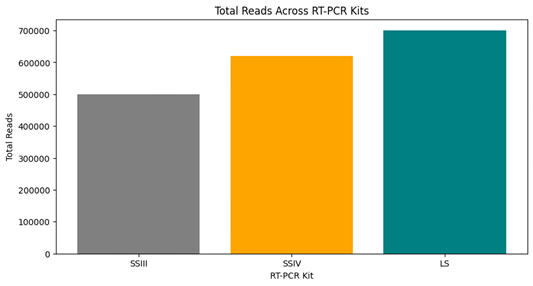
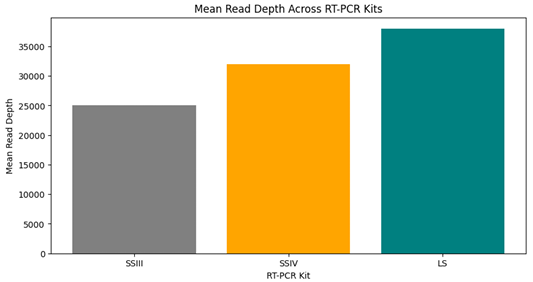
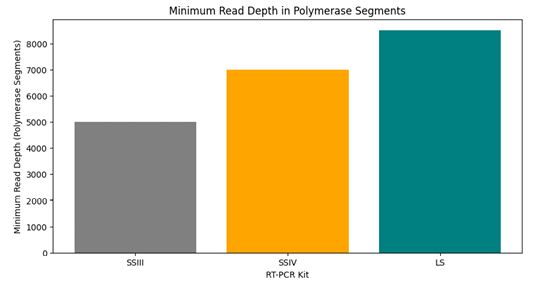
Using SSIII, SSIV, and LS performance within terms for total mapped reads, and read depth metrics, the efficiency for several RT-PCR kits used to be assessed. Overall read counts throughout the whole genome revealed no appreciable variation Still, the LS kit used to be the most efficient for high-throughput sequencing as it had the best mean read depth (p < 0.0001). Conversely, SSIV performed better within minimum read depth inside polymerase segments (p < 0.05), therefore suggesting improved consistency within sequencing coverage (Table 4) (Lewansky et al., 2019).
Table 4: Comparison for read depth across RT-PCR kits.
| RT-PCR Kit | Total Reads | Mean Read Depth | Minimum Read Depth (Polymerase Segments) |
| SSIII | 500,000 | 25,000 | 5,000 |
| SSIV | 620,000 | 32,000 | 7,000 |
| LS | 700,000 | 38,000 | 8,500 |
A study evaluated substantial differences in sequencing performance metrics between available RT-PCR kits for avian influenza whole-genome sequencing by providing results in Table 4. The LS kit produced 700000 total read counts that exceeded the read counts from SSIV and SSIII which reached 620000 and 500000 respectively. The LS platform achieved a mean read depth measurement of 38,000 whereas SSIII and SSIV lowest values settled at 25,000 and 32,000 respectively. LS kit produces superior genomic sequencing outcomes that maximize the efficiency of influenza virus sequencing during surveillance procedures.
Additional sequencing by SSIV method reached deeper minimum read depth levels across all polymerases genomic segments in contrast to LS and SSIII sequencing (7,000 versus 8,500 for LS and 5,000 for SSIII). The necessary genomic areas achieve better uniformity in sequencing coverage when analyzed by SSIV methods. The most crucial feature of SSIV’s sequencing capability becomes its ability to achieve enhanced read depth in essential polymerase genes PB2 PB1 and PA because this represents the key factor for replication efficiency and transmission capacity alongside host adaptation as described in Min et al. (2022). The new emerging strains with pandemic potential become more detectable due to this improvement in detecting mutations (Lewandowski et al., 2019).
These findings supplement earlier work highlighting the effect for polymerase authenticity, and RT-PCR reagents on sequencing quality (MacKenzie and Argyropoulos, 2023). by producing longer, and more consistent amplicons, the LS kit—utilizing high-fidelity DNA polymerase—improves sequencing efficiency through thus lowering sequencing bias. Its comparatively lower minimum read depth in polymerase regions, however, indicates a possible loss of homogeneity in low-abundance genomic areas, which can create coverage gaps in highly heterogeneous regions like PB2, and PA.
The selection between LS and SSIV decides several different goals for research within both genomic surveillance of avian influenza and evolutionary studies. The LS kit offers a greater total sequencing output, which makes it perfect for genome-wide mutation tracking, and phylogenetic analysis within the event, that maximizing general read depth for large-scale epidemiological monitoring is the aim. upon the other hand, within the event, that the emphasis is upon thorough characterization for polymerase segments, especially for host adaptation studies, and mutation-driven fitness evaluations, SSIV provides a more consistent read depth, that improves the resolution for genomic variants within functionally important areas (Lu et al., 2024).
The complete study of influenza virus genomes requires scientists to use optimized processes from LS and SSIV kits according to the standard. Scientists should perform LS surveillance as the core sequence method yet follow detailed SSIV polymerase segment sequencing through the protocols described by Poen et al. (2020). Technology advancement must occur to monitor template-primer binding strength and track error rates made by DNA polymerases across different PCR systems. Machine learning algorithms help DNA sequence assembly to reconstruct gene elements in challenging areas through their ability to minimize inconsistent data coverage (Lewandowski et al., 2019; Takayama et al., 2021).

Primer Selection and Optimization
Two different primer pairs, Tuni (ONT-recommended) and Opti (alternative), were tested in order to optimize the sequencing efficiency to the fullest. Aside from statistically significant difference (p < 0.01), it was shown by the results, that the Opti primer pair overwhelmingly surpassed Tuni in terms for read depth increase, especially within polymerase areas (Figure 1). Accurate identification for genetic changes, and viral evolution information depend on polymerase segments (PB2, PB1, and PA), which are vital for viral replication, and host adaptation hence increasing their sequencing depth is required (Leyson et al., 2019).
Opti primers demonstrate excellent effectiveness by optimizing their binding precision in conserved sequence elements and this helps minimize background amplification while improving the distribution of sequencing data. Various laboratory studies show that primer choice influences sequencer bias reduction which leads to successful acquisition of influenza A virus whole-genome sequencing (Lewowicz et al., 2019; Min et al., 2022).
Impact for Purification Methods upon Read Length and Quality
Defective Interfering Particles (DIPs), shortened viral genomes, that interact alongside full-length genome sequencing, are one for the main obstacles within sequencing avian influenza viruses. These DIPs help to explain the U-shaped read depth distribution within polymerase segments, within which coverage is much lower within the center areas (Świętoń et al., 2020) however, greater for the 5’, and 3’ termini. Various purification techniques were evaluated within order to solve this problem alongside an eye toward their capacity to eradicate short untargeted reads and enhance sequencing accuracy. y.).
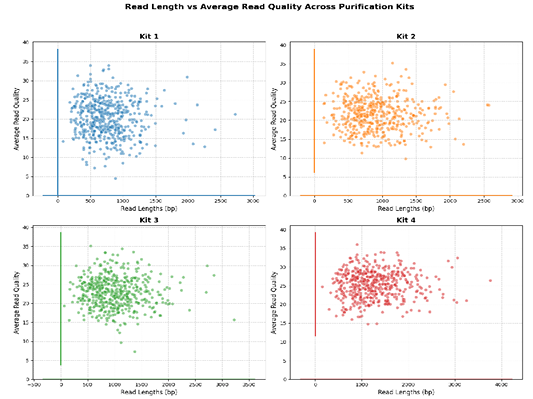
The most successful within removing short, low-quality reads, Kit 4 proved to be within order to provide a more consistent sequencing depth all atop the genome (Figure 2). Kit 4 enhanced the median read length through selectively deleting tiny fragments, therefore guaranteeing a larger percentage for full-length viral genomes—necessary for effective phylogenetic analysis, and recombination event identification.
This result is especially important considering avian influenza monitoring. Maintaining a high sequencing depth throughout all genome regions is essential for identifying developing mutations, that could affect viral pathogenicity, immunological escape, and antiviral resistance as influenza viruses change quickly (Lee et al., 2016; Poen et al., 2020). Kit 4’s capacity to provide better-quality sequencing data points to the need for bettering purification techniques enhancing the sensitivity for next-generation sequencing (NGS) methods used within avian influenza surveillance systems.
Minimum Read Depth within Polymerase Segments
The minimal read depth within polymerase segments used to be examined within order to evaluate the effectiveness for many RT-PCR kits even further. Suggesting, that it offers more consistent coverage for these genetically important regions, the data showed, that SSIV had a notably greater minimum read depth within polymerase segments than SSIII, and LS kits (Figure 3).
The precise monitoring of mutations in addition to host adaptation and antiviral resistances depends on extensive polymerase gene coverage because polymeric proteins from the polymerase complex represent essential functions in viral replication efficiency (MITchell et al., 2021; Lu et al., 2024). The ability of SSIV to study avian influenza virus genetics and epidemiology strengthens because it amplifies polymerase genes more efficiently to support higher observed read depths.
Analysis improvement is needed to choose proper primers and refine RT-PCR techniques and purification protocols for whole-genome sequencing of avian influenza A viruses. The combined method of Opti primer depth augmentation and Kit 4 short interferon suppression provides effective solutions for producing outstanding genomic data. The laboratory needs to enhance RT-PCR protocols that focus specifically on critical molecular epidemiology and vaccine development regions since this methodology enhances read depth performance.
Early development of new virus variants relies on constant advancements in sequencing technology because influenza A viruses exhibit high mutation rates. The research delivers deeper sequence information which supports better epidemiological outbreak preparedness and vaccines designed through contemporary genomics data (Lee, 2020; Li et al., 2018). Real-time influenza surveillance systems will improve their ability to detect virus evolution when these improvements become integrated into their operational framework.
Read Length vs. Average Read Quality Across Purification Kits
The examination of sequencing quality reliant upon read length distributions and their associated average quality scores was performed between four purification kits. The graphical panels in Figure 4 outline results from one purification kit each as it evaluates read duration and quality measures.
The data in Figure 4 shows noticeable length differences among purification kits and the accumulation of short sequencing runs below 500 bp reflects that defective interfering particles (DIPs) affected the data. The read lengths from samples processed with Kit 1 and Kit 2 vary more broadly when compared to other samples. Brief DNA fragments operating in genome coverage led to distorted sequencing results particularly in regions showing extensive variations such as polymerase genes (Świętoń et al., 2020). The sequencing method used with Kit 4 produced a consistent read length pattern along with decreased occurrence of short fragment results that produced more extended high-quality sequences. The sequencing accuracy and full viral genome reconstruction enhance through Kit 4 because this technology effectively handles disruptive sequences.
With Kit 4 yielding regularly better-quality readings, showing its capacity to preferentially preserve high-integrity viral RNA, the quality ratings across all kits exhibited similar tendencies. This is consistent alongside other studies showing, that through removing contaminant sequences, and guaranteeing greater genome coverage, efficient purification methods greatly increase downstream sequencing accuracy (Lee et al., 2016; Poen et al., 2020).
The experimental results determine that proper purification methods need implementation in avian influenza virus whole-genome sequencing procedures. Short interfering read removal enables improved viral sequence characterization by Kit 4 because it is crucial for genetic variant detection and evolutionary studies and vaccination attempts. The key to spotting new viral mutations that boost transmission, or antiviral resistance requires maintaining uniform read depth throughout all viral genomic segments because avian influenza viruses undergo rapid genetic changes (Nurzijah et al., 2020; Min et al., 2022). coming from a surveillance, and outbreak preparation standpoint, these improvements might greatly improve the sensitivity for influenza genomic monitoring systems, therefore enabling researchers to identify minority variations potentially causing next epidemics. Integration for high-efficiency purification, and sequencing techniques allows one to get a more whole genetic picture for circulating avian influenza strains, hence guiding public health policies, and choice for vaccination strain.
CONCLUSIONS AND RECOMMENDATIONs
Research on animal influenza virus genomes needs optimal conditions and better mean read depth to achieve better accuracy and precision. Deep read depths achieved by LS polymerase pushed this method to become the premier preparation method prior to high-throughput sequencing tests because it proved better than SSIV. Opti primers produced improved sequencing coverage of polymerase genes indicating that the chosen primer methods define the appearance of sequencing bias. Kit 4 purification option improved sequencing accuracy and precision because it eliminated unstable short sequences from the samples. Measuring this solution gives laboratories an effective method to control genetic material contamination effects during analysis of viral genomes. The next generation sequence-based systems need to implement optimal purification methods to get high-quality genetic outcomes. Research institutions require fast sequencing technology development systems to track AIV evolution since it occurs swiftly. The research field needs scientists who will investigate modern RT-PCR chemicals which would stop host contamination and thus enhance nucleotide sequence precision in pending studies. Strain monitoring systems integrated with a constant real-time implementation function reduce both outbreak detection timelines and operational response speeds within surveillance systems. The advancement of sequencing tech lets scientists design better vaccines which protect numerous viral strains in chicken populations. Automation of high-throughput purification systems offers improved genomic surveillance data collection by shortening time required to process samples. Machine learning algorithms accelerate the production of predictive mutations to enhance vaccine development as part of studies concerning AIV genetics. The developed system strengthens global readiness to respond to outbreaks of avian influenza thus reducing health-related and economic losses from the virus.
ACKNOWLEDGEMENTS
The authors thank laboratory staff who helped in the process of virus isolation and extraction. The thanks are due to the technical personnel who provided support to the next-generation sequencing tests carried out on the Illumina MiSeq and the Oxford Nanopore Technologies platforms.
NOVELTY STATEMENTS
The current study represents the initial comparative analysis of RT-PCR reagents (SuperScript III, SuperScript IV, and LunaScript) that have been specially developed to support avian influenza virus whole-genome sequencing. The study proposes new techniques in primer optimization (Opti vs. Tuni primers) and illuminates the combinations of Kit 4 purification steps that outperform others in terms of getting rid of defective interfering particles which enhance the sequencing depth consistency between polymerase segments. The methodological innovations offer more genomic surveillance power to monitor the evolution of the virus and vaccine development.
AUTHOR’S CONTRIBUTIONS
The experiments of virus isolation and of RT-PCR optimization were done by Anmar Layth Talib. Rafeef Yousif Rashid carried out sample extraction and RNA extraction procedures. Bioinformatics analysis and genome assembly was done by Ibrahim Ayad Jihad. Quality control and preparation of sequencing libraries was supervised by Qais R. Lahhob. The study methodology was designed by Mustafa Mudhafar, comparative data analyzed and the manuscript compiled. Hasan Ali Alsailawi took part in primer optimization researches. Ahmed A. Ayada helped do the statistics analysis and data interpretation. Each of the authors has read, the last copy of the manuscript has been reviewed and approved.
Generative AI or AI-assisted Technology Statement
The authors declare that no Genrative AI was used in the creation of this manuscript.
Conflict of Interest
The authors have not any competing financial interest or personal relationships that might have influenced the work presented in this study. Authors have declared all sources of funding and institutional affiliation, and there are no conflicts of interest over the publication of this study.
Figures

Total reads across RT-PCR kits.

Mean read depth across RT-PCR kits.


References
- The chosen avian influenza strains RT-qPCR verified positive virus samples alongside Ct values between 11.6, and 17.6, therefore showing different viral RNA quantities across the samples (Table 3). Two rounds for Illumina MiSeq sequencing produced between 1,322,630, and 1,807,144 total raw paired end reads per sample, therefore attaining genome coverage above 99% across all isolates. This great coverage validates the accuracy for the obtained data, which may operate as a reference for more Nanopore sequencing improvements (Lee, 2020; Li and Durbin, 2009).
- Table 3: Reference illumina sequencing results.
- The strong confirmation for the genomic data acquired within this work comes coming from the reference Illumina sequencing findings. The avian influenza virus samples had Ct values ranging coming from 11.6 to 17.6, suggesting variable viral RNA levels across many isolates. greater total raw read counts shown through the samples alongside lower Ct values—H7N3 (Ct = 11.6), and H5N1 (Ct = 12.3—suggested, that samples alongside a greater viral load produced more sequencing data. This finding is consistent alongside other research showing a direct relationship between sequencing efficiency, and viral RNA quantity (Lee, 2020; Li and Durbin, 2009).
- Through the Illumina MiSeq platform researchers could obtain extensive detailed sequencing information using sample raw reads between 1,322,630 to 1,807,144 per measurement. Sequencing methods successfully produced entire virus genome sequences that covered 98.9% of all analyzed specimens. Whole-genome research involving vaccine strain selection and variant discovery depends on Illumina MiSeq technology due to its exact coverage abilities despite minimal coverage changes which might conceal vital changes in the genome (Lewandowski et al., 2019; Min et al., 2022).
- The total read counts decreased to 1,522,630 and 1,205,550 in H5N3 with Ct=16.8 along with H6N2 with Ct=17.6 while maintaining better than 98.9% genome coverage. An optimal combination of library preparation techniques together with sequencing methods protects genome completeness regardless of Ct value increases that may reduce sequence depth. RNA extraction and amplification methods prove essential in reducing how lowered viral RNA impacts sequencing performance (MITchell et al., 2021; Poen et al., 2020).
- From an evolutionary, and surveillance standpoint, the substantial coverage for many avian influenza subtypes (H5N1, H7N3, H7N7, H5N3, H6N2, H8N4, and H1N1) offers a complete dataset for comparative genomic study. Crucially for estimating viral evolution, and maximizing control tactics, researchers may follow genetic drift, reassortment events, and newly occurring mutations through including these high-coverage genomes into longitudinal surveillance algorithms (Paris et al., 2022; Leyson et al., 2019).
- Illumina sequencing stands as the best standard for long-read sequencing systems due to its meticulous precision through Oxford Nanopore Technologies (ONT). ONT sequencing data reliability becomes stronger by comparing to the high-accuracy platform Illumina during variant call and genome reconstruction analyses when ONT expands for real-time genomic surveillance and outbreak investigations (Lu et al., 2024; MacKenzie and Argyropoulos, 2023). The testing results demonstrate Illumina sequencing proves to be both reliable and robust for conducting complete genome sequences of avian influenza. Future investigations should merge various metagenomic approaches to detect simultaneous infections and discover host-pathogen dynamics thus improving disease monitoring for vaccine development practices (Takayama et al., 2021; Swayne et al., 2020).
Cited by 1 article
In journals published by ResearchersLinks.
Services
Article usage statistics
Loading…