ResearchersLinks

Special Issue: Emerging and Re-Emerging Animal Health Challenges in Low and Middle-Income Countries · Volume 13, Issue 1, 16 September 2025 · Open Access

Evaluating the Effectiveness of Vaccination Programs against Avian Influenza

· · · · · ·

Affiliations & Notes ⌄
  1. 1Department of Biology, Al-Turath University, Baghdad, Iraq
  2. 2College of Pharmacy, University of Karbala, Karbala, Iraq
  3. 3Department of Medical Laboratory Techniques, Al-Farahidi University, Baghdad, Iraq
  4. 4Department of Sciences, Al-Manara College for Medical Sciences, Maysan, Iraq
  5. 5Department of Medical Laboratory Techniques, College of Health and Medical Techniques, Al-Bayan University, Baghdad, Iraq
  6. 6Department of Medical Laboratory Techniques, Al-Zahrawi University College, Karbala, Iraq
  7. 7AL-Dour Technical Institute, Northern Technical University, Iraq. *Correspondence | Tiba Talib Kareem, Department of Biology, Al-Turath University, Baghdad, Iraq
  8. 8Email: tiba.talib@uoturath.edu.iq
Article Info ⌄
Journal:
Journal of Animal Health and Production
Published:
16 September 2025

From the article

  • A study assessed the efficacy of avian influenza vaccination in hypothetical regions of Haryana, Tamil Nadu, and West Bengal and found that vaccination significantly reduced incidence and mortality rates.
  • The efficacy was highest in the region of Haryana due to better access to vaccinations, proper implementation of biosecurity measures, and effective farm management; additionally, the antibody titers were higher for vaccinated birds compared to unvaccinated birds.
  • Efficacy by region occurred due to the match between the vaccine and virus in the regions of Haryana and West Bengal, as well as the size of the farms and distribution of vaccinated birds.

Selected from the article's own text.

Abstract

This paper analyzes the effectiveness of avian influenza vaccination campaigns in a hypothetical study of Haryana, Tamil Nadu, and West Bengal. We surveyed 150 poultry farms to assess vaccination status, titers, disease prevalence, mortality rates, and haematological indicators. Results revealed that disease prevalence and mortality from avian influenza decreased significantly following vaccination efforts, with Haryana experiencing the most success due to higher vaccination rates and enhanced biosecurity measures. Moreover, vaccinated birds had greater antibody titers than non-vaccinated birds, indicating a proper immune response; however, the readings in Tamil Nadu and West Bengal were partial due to a partial mismatch between the vaccine strain and the dominant strain in the areas, suggesting a lower response. This study concludes with recommendations for future strain mismatch monitoring, vaccine development, and biosecurity. The recommendations aim to enhance vaccination coverage, promote small-scale farming, improve biosecurity, and foster public-private partnerships to optimize vaccination programs and mitigate the impact of avian influenza outbreaks.
 
Keywords | Avian influenza, Vaccination programs, Poultry farms, Immune response, Disease incidence, Biosecurity measures, Vaccine strain match, Poultry health management
INTRODUCTION

Avian influenza, also known as bird flu, is a highly infectious viral disease that affects poultry, wild birds, and occasionally humans . Avian influenza outbreaks pose a serious risk to the poultry industry, human health, and world food security. Successful vaccination programs are crucial in limiting the effects of this disease, reducing mortality rates, and halting its transmission . This overview highlights the significance of vaccination programs against avian influenza and discusses the complications and factors affecting their success.

Background of avian influenza

Avian influenza, also known as bird flu, is an influenza virus infection caused by the influenza A virus, specifically subtypes H5, H7, and H9, which differ in pathogenicity . HPAI viruses like H5N1 and H5N8 have triggered major global epidemics and killed millions of birds and wreaked havoc in the poultry business, trade, and rural livelihoods . In addition to economic damage, the zoonotic risk of viruses such as H5N1 is seriously threatening public health by inflicting severe respiratory disease on humans with high death rates . Increased mutation exacerbates this problem as genetic reassortment allows the virus to evade immunity and transform to fit other hosts. These pathogens primarily target smallholder farmers in low- and middle-income countries, rendering them the least able to achieve biosecurity and vaccination . When outbreaks occur, achieving biosecurity is almost impossible, as social and economic vulnerabilities intensify when markets close and avian consumption decreases. While vaccination prevents the spread and mortality of diseases, such success relies on the appropriateness of the vaccine strain, the percentage administered, and additional biosecurity efforts . Ultimately, the need to successfully assess vaccination as problems of avian influenza continue to plague fowl populations requires a multifaceted solution that combines vaccination, assessment, biosecurity, and awareness .

Role of vaccination in disease control

Vaccination is vital for controlling avian influenza, as it alleviates clinical signs, minimizes viral shedding, and prevents horizontal transmission in flocks . It is a proactive step toward ensuring that an outbreak will not occur in the future for at-risk populations, thereby maintaining the stable quality of chicken production and the economic viability of farmers and the poultry sector within endemic regions . Successful vaccination campaigns minimise the need for extensive culling, thereby reducing the economic and social costs associated with outbreaks. In combination with supporting measures such as surveillance, prompt detection, and rigorous biosecurity practices, vaccination constitutes the cornerstone of a well-rounded strategy to control and prevent avian influenza outbreaks . By boosting immunity in bird populations and reducing viral circulation, vaccination not only safeguards animal health but also lowers the risk of zoonotic transmission, thereby enhancing public health safety .

Challenges in avian influenza vaccination

Despite its effectiveness, several challenges limit the success of vaccination programs:

  • Vaccine-strain match: The performance of a vaccine relies on its capacity to target circulating virus strains ; mismatches between field viruses and vaccine strains lower vaccine effectiveness.
  • Logistical constraints: Limited resources, inadequate cold chain infrastructure, and poor accessibility in rural areas create significant obstacles to vaccinations.
  • Biosecurity gaps: Inadequate biosecurity controls can undermine the success of vaccination programs, allowing the virus to spread even among immunized individuals.
  • Public awareness: There is a low level of awareness among farmers regarding the benefits of vaccination and proper administration practices, which also constitutes an obstacle.

MATERIALS AND METHODS

This section describes the techniques used to measure the effectiveness of avian influenza vaccination programs . The research evaluated the impact of vaccination programs on the incidence, severity, and progression of avian influenza in poultry populations. Data collection, analysis, and experimental procedures were conducted following ethical standards and obtained the necessary approvals from the relevant authorities . The methodology is divided into subsections to ensure a clear presentation of the research process.

Study design

A retrospective cohort study design was employed to assess the effectiveness of avian influenza immunization programs . Three regions with varying vaccination coverage high, medium, and low were studied. Selection was made from these regions using historical data on outbreaks of avian influenza, as well as uptake in immunization programs . The data were obtained from commercial poultry farms, governmental veterinary departments, and independent research organizations.

Sample selection

Poultry farms across the study areas were randomly identified to have a representative sample . Farms under the study were of the following type:

  • Involvement in a minimum of one bird flu vaccination program over the last three years.
  • Keeping thorough records on vaccination dates, disease occurrence, and death rates.
  • Complying with the grant of access to farm records and samples for laboratory analysis.

There were a total of 150 poultry farms selected for study, of which 50 farms were chosen from each region.

Data collection

  • Farm surveys: Standard questionnaires were employed to obtain data on vaccination practices, farm management, and biosecurity practices . Interviews were conducted with farmers to gather information on the types of vaccines administered, vaccination schedules, and any adverse effects observed.
  • Disease records: Historical data of avian influenza outbreaks, morbidity, and mortality were collected from farm records and government databases.
  • Sample collection: Biological samples, including blood, swabs, and tissues, were collected from vaccinated and unvaccinated birds for laboratory testing . Sampling was carried out with the support of trained veterinarians to guarantee animal welfare and the fulfilment of ethics

Laboratory testing

Antibody titer analysis

Serological analyses were conducted to estimate antibody titers in the vaccinees and control birds ; . HI assays were conducted to determine the degree of immune response induced by the vaccine.

Virus isolation and genotyping

Specimens from avian influenza suspected cases were typed to separate and detect the virus strain. Genotyping was performed to determine whether the prevailing strains matched the vaccine strain.

RESULTS AND DISCUSSION

This section presents the research outcomes and provides an in-depth discussion of the findings regarding the efficacy of avian influenza vaccination programs . The results are organized into subheadings for readability, covering vaccination coverage, immune response, disease occurrence, and laboratory outcomes. Statistical differences and their explanations are included to highlight the significance of the findings for the management of poultry health .

Vaccination coverage and farm characteristics

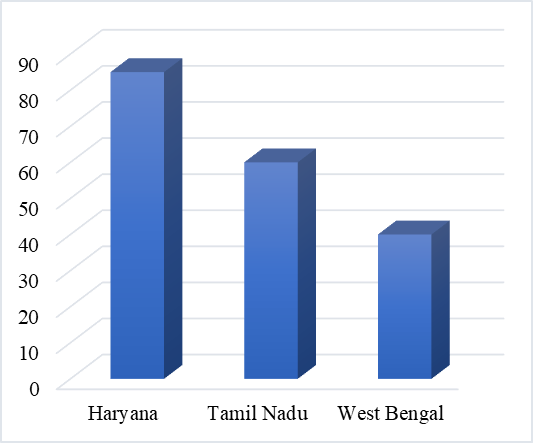
Table 1 presents the vaccination status and type of farms that participated in the study. The vaccination status differed considerably across the regions, with the highest in Haryana (85%), followed by Tamil Nadu (60%), and then West Bengal (40%) . The larger farms with improved biosecurity had the highest vaccination rates compared to the smaller farms.

Table 1: Vaccination coverage and farm characteristics.

Location

Number of farms

Vaccination coverage (%)

Average farm size (Birds)

Biosecurity score (1-5)

Haryana

50

85

10,000

4.5

Tamil Nadu

50

60

7,000

3.8

West Bengal

50

40

5,000

2.9

The statistics also reveal notable regional differences in vaccination, farm size, and biosecurity protocols among the poultry farms of Haryana, Tamil Nadu, and West Bengal. Haryana registers the maximum coverage of 85% vaccinations, along with a large farm size averaging 10,000 birds and a strong biosecurity score of 4.5, reflecting strict disease-controlling measures. All these contribute to firm control over avian influenza in the area. Tamil Nadu, with 60% moderate vaccination coverage and smaller farm sizes of 7,000 birds on average, has a biosecurity score of 3.8, indicating potential for improvement in disease management practices. West Bengal has the lowest vaccination coverage at 40%, with smaller farms of 5,000 birds on average and a low biosecurity score of 2.9, indicating a high risk of exposure to avian influenza outbreaks. The findings emphasize the need for enhanced vaccination coverage and biosecurity practices, particularly in Tamil Nadu and West Bengal, to maximize the overall effectiveness of avian influenza control programs.

Immune response evaluation

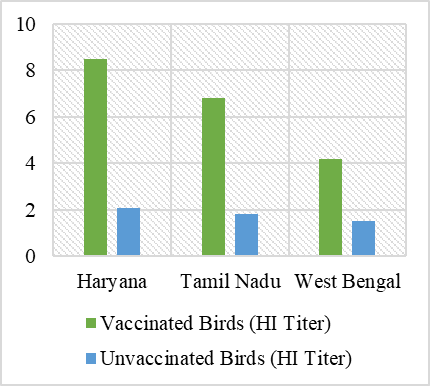
Birds that did and did not receive the vaccine had significantly different titer levels via Hemagglutination Inhibition (HI) .

The HI titers and subsequent comparisons suggest significant differences between the unvaccinated and vaccinated groups in their ability to respond to the immune challenge, indicating that they were successfully vaccinated. Birds vaccinated in Haryana had the highest HI titer at 8.5. In contrast, the unvaccinated group had an HI titer of 2.1-this indicates that the ability to respond to vaccination was significantly enhanced due to high coverage and good biosecurity. Birds vaccinated in Tamil Nadu had the second-highest HI titer, at 6.8; the HI titer of the unvaccinated group was 1.8. This implies that limited success was achieved with vaccination, suggesting a lower coverage opportunity and a less-than-perfect match between the vaccine and the virus strain. Finally, the third lowest vaccination coverage opportunity was observed in West Bengal, with the lowest observed HI titer of 4.2 for those vaccinated and 1.5 for those unvaccinated, indicating a decreased effectiveness of the vaccine, attributed to less than perfect vaccination and biosecurity efforts. Ultimately, the titers reflect that all three locations would benefit from increased vaccination efforts in the future especially Tamil Nadu and West Bengal where increases in immune response would guarantee better protection from avian influenza.

Table 2: Mean antibody titers in vaccinated and unvaccinated birds.

Location

Vaccinated birds

(HI Titer)

Unvaccinated birds (HI Titer)

Haryana

8.5

2.1

Tamil Nadu

6.8

1.8

West Bengal

4.2

1.5

Disease incidence and mortality rates

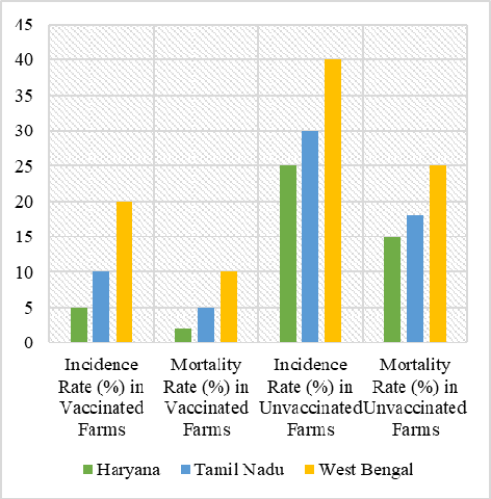
According to the morbidity study, vaccinated farms had significantly lower rates of illness and mortality from avian influenza compared to those that were not vaccinated.

The incidence and mortality rates across unvaccinated and vaccinated farms suggest that those who vaccinate are successful in minimizing the prevalence of avian influenza in the fields. For Haryana, the incidence rate is 25.0% for unvaccinated farms with a mortality rate of 15.0%. In comparison to these high averages, the 5.0% incidence (2.0% mortality) of vaccinated farms seems highly probable to be contained with good vaccination coverage and effective biosecurity. For Tamil Nadu, the coverage is moderate. Thus, the incidence and mortality rates in the vaccinated farms are 10.0% and 5.0%, respectively; whereas in the unvaccinated farms, the incidence is 30.0% and the mortality rate is 18.0%. This suggests that vaccination is beneficial, but not as significantly as it could be with improved reach and enhanced biosecurity efforts. For West Bengal, the lowest vaccination effort and worst biosecurity result in an incidence and mortality rate of 20.0% and 10.0% in vaccinated farms; however, for unvaccinated farms, the incidence rate skyrockets to 40.0%, and the mortality rate is even worse at 25.0%. This emphasizes the

Table 3: Disease incidence and mortality rates.

Location

Incidence rate (%) in vaccinated farms

Mortality rate (%) in vaccinated farms

Incidence rate (%) in unvaccinated farms

Mortality rate (%) in unvaccinated farms

Haryana

5.0

2.0

25.0

15.0

Tamil Nadu

10.0

5.0

30.0

18.0

West Bengal

20.0

10.0

40.0

25.0

importance of vaccination, even in cases where individuals appear to be beating the odds, as it can significantly decrease incidence and mortality. Nevertheless, it still indicates that better biosecurity is recommended, as even with reasonable biosecurity efforts, the rate remains too high. Thus, the results suggest that more stringent vaccination efforts are needed in West Bengal and Tamil Nadu to achieve optimal disease control and reduce morbidity losses.

Laboratory findings: Virus strain analysis

Vaccine virus isolation and genotyping revealed that the vaccine strain closely matched the circulating virus in Haryana. In contrast, when researchers assessed Tamil Nadu and West Bengal, the match was only partially present, accounting for the reduced efficacy of the vaccine . Thus, the findings suggest that vaccine formulations should change over time as new strains are detected.

These results show that successful vaccination campaigns have reduced the incidence and mortality rates of avian influenza in chicken populations. Farms with access to vaccines and higher biosecurity levels were better able to control the disease . In addition, the fact that the vaccine produced such a strong, internalized immune response within the fowl themselves proves that vaccination efforts work to defend flocks of chickens.

On the downside, the fact that the efficacy rates from Tamil Nadu and West Bengal are lower suggests that the mismatch between vaccine strain and circulating virus strain, as well as reduced vaccination coverage, has a difference; however, this aligns with previous studies which suggest that constant surveillance of strain evolution and adaptation is required with recalibrated formulas for vaccines .

Furthermore, this study highlights that farm sizes and subsequent efforts matter in the process of vaccination efficacy. Those farms with larger farm sizes and higher biosecurity scores emphasized their ability to execute vaccinations, which suggests that smaller farms with fewer resources require greater efforts and assistance .

The results of this project demonstrate the effectiveness of established vaccination strategies for bird flu, while also highlighting the need for refinement, such as custom vaccine formulations and independent farm vaccination efforts . Further research could be conducted to assess the longevity of vaccination effectiveness and the development of pan-vaccines for strains that may emerge in the future.

CONCLUSION AND RECOMMENDATIONS

A study assessed the efficacy of avian influenza vaccination in hypothetical regions of Haryana, Tamil Nadu, and West Bengal and found that vaccination significantly reduced incidence and mortality rates. The efficacy was highest in the region of Haryana due to better access to vaccinations, proper implementation of biosecurity measures, and effective farm management; additionally, the antibody titers were higher for vaccinated birds compared to unvaccinated birds. Efficacy by region occurred due to the match between the vaccine and virus in the regions of Haryana and West Bengal, as well as the size of the farms and distribution of vaccinated birds. Only minor discrepancies occurred in Tamil Nadu and West Bengal, which slightly reduced the accuracy of the findings. Therefore, the findings suggest that regionally based interventions for vaccination are important in addressing region-specific challenges and emergent strains of the virus.

Recommendations

  • Enhance vaccination rates in states such as Tamil Nadu and West Bengal by offering government subsidies, conducting awareness drives, and implementing outreach programs among small- and medium-sized farms.
  • Continuously sample and genotype local avian influenza virus strains to modify vaccine formulations and design universal vaccines.
  • Enhance farm-level biosecurity practices and implement farmer training programs to reduce the transmission of viruses.
  • Offer targeted assistance to small-scale farms, including subsidised vaccines, veterinary services, and training on vaccination schedules.
  • Develop robust surveillance systems in collaboration with diagnostic laboratories and field monitoring teams to facilitate early detection of outbreaks.
  • Encourage public-private partnerships among government agencies, vaccine producers, and poultry associations to ensure the effective delivery and research of vaccines.
  • Inform farmers about the benefits of vaccination and the risks associated with avian influenza through awareness campaigns that highlight both the economic and health implications.

NOVELTY STATEMENT

According to a study that evaluated the effectiveness of avian influenza immunization in fictitious areas of West Bengal, Tamil Nadu, and Haryana, vaccination dramatically decreased incidence and mortality rates. Due to improved availability to immunizations, appropriate biosecurity measures, and efficient farm management, the region of Haryana had the highest efficacy; also, vaccinated birds had greater antibody titers than uninfected chickens. Because the vaccine and virus matched in the West Bengal and Haryana regions, as well as because of the size of the farms and the distribution of vaccinated birds, efficacy by region was achieved.

AUTHOR’S CONTRIBUTION

All of the trials were designed by Tiba Talib Kareem and Dhurgham Hani Kadhim Alalwan. Rafal Hussein Alshate, Shaima Abd and Waleed Hameed Yousif conducted all of the tests, gathered the data, and composed the manuscript draft. Sadiq H. Al-Slcheaq and Hanan Shihab Ahmad helped with the data analysis that was done to prepare the work for submission to the journal. The final draft of the work was reviewed and approved by all authors for publication in the Journal of Animal and Health Production.

Ethical consideration

Not applicable.

Generative AI or AI-assisted Technology Statement

The authors declare that no Genrative AI was used in the creation of this manuscript.

Conflict of interest

The authors have declared no conflict of interest.

Figures

Figure 1:
Figure 1:.

Vaccination coverage and farm characteristics.

Figure 2:
Figure 2:.
Mean antibody titers in vaccinated and unvaccinated birds.
Figure 3:
Figure 3:.

Disease incidence and mortality rates.

References

  1. Al-Tmimi HM, Al-Dulaimi SA, Ali BA, Ghanim HA, Alani ZK (2024). Seroprevalence and detection of Toxoplasma gondii and Echinococcus granulosus in humans by indirect immunoglobulin G enzyme-linked immunosorbent assays in Baghdad. Arch. Razi Inst., 79(3): 669.
  2. Bansal S, Pourbohloul B, Meyers LA (2006). A comparative analysis of influenza vaccination programs. PLoS Med., 3(10): e387. https://journals.plos.org/plosmedicine/article?id=10.1371/journal.pmed.0030387.
  3. Bouma A, Muljono AT, Jatikusumah A, Nell AJ, Mudjiartiningsih S, Dharmayanti I, Stegeman JA (2008). Field trial for assessment of avian influenza vaccination effectiveness in Indonesia. Rev. Sci. Techniq., 27(3): 633. https://core.ac.uk/download/pdf/29255547.pdf
  4. Capua I, Marangon S (2003). The use of vaccination as an option for controlling avian influenza. Avian Pathol., 32(4): 335-343. https://www.tandfonline.com/doi/abs/10.1080/0307945031000121077
  5. Criado MF, Kassa A, Bertran K, Kwon JH, e Silva MS, Killmaster L, Swayne DE (2023). Efficacy of multivalent recombinant herpesvirus of turkey vaccines against highly pathogenic avian influenza, infectious bursal disease, and Newcastle disease viruses. Vaccine, 41(18): 2893-2904. https://www.sciencedirect.com/science/article/pii/S0264410X23003493
  6. Cui H, de Jong MC, Beerens N, van Oers MM, Teng Q, Li L, Li Z (2021). Vaccination with inactivated virus against low pathogenic avian influenza subtype H9N2 does not prevent virus transmission in chickens. J. Virus Eradicat., 7(3): 100055. https://www.sciencedirect.com/science/article/pii/S2055664021000285
  7. Gamal FZ, Soliman EM, El-Naggar HM, Abd El-Moneim WS, Hassannin AI (2021). Trial for preparation and evaluation of combined inactivated vaccine for the protection against riemerellaanatipestifer and avian influenza (h5n1) in ducks. Adv. Anim. Vet. Sci., 9(4): 490-499.
  8. Hegazy AM, Hassanin O, Hemele MA, Momenah MA, Al-Saeed FA, Shakak AO, Tolba HM (2023). Evaluation of the immuno-stimulatory effect of aqueous neem (Azadirachta indica) leaf extract against highly pathogenic avian influenza (H5N8) in experimental chickens. Poult. Sci., 102(11): 103043. https://www.sciencedirect.com/science/article/pii/S003257912300562X
  9. Ibrahim M, Zakaria S, Bazid AHI, Kilany WH, El-Abideen MAZ, Ali A (2021). A single dose of inactivated oil-emulsion bivalent H5N8/H5N1 vaccine protects chickens against the lethal challenge of both highly pathogenic avian influenza viruses. Comp. Immunol. Microbiol. Infect. Dis., 74: 101601. https://www.sciencedirect.com/science/article/pii/S0147957120301909
  10. Islam A, Ara T, Amin E, Islam S, Sayeed MA, Shirin T, Epstein JH (2023). Epidemiology and evolutionary dynamics of high pathogenicity avian influenza (HPAI) H5N1 in Bangladesh. Transb. Emerg. Dis., 2023(1): 8499018.
  11. Kanekiyo M, Gillespie RA, Midgett M, O’Malley KJ, Williams C, Moin SM, Reed DS (2023). Refined semi-lethal aerosol H5N1 influenza model in cynomolgus macaques for evaluation of medical countermeasures. Iscience, 26(10). https://www.cell.com/iscience/fulltext/S2589-0042(23)01907-7
  12. Knight-Jones TJ, Hauser R, Matthes D, Stärk KD (2010). Evaluation of effectiveness and efficiency of wild bird surveillance for avian influenza. Vet. Res., 41(4): 50. https://pmc.ncbi.nlm.nih.gov/articles/PMC2878168/.
  13. Kwon JH, Criado MF, Killmaster L, Ali MZ, Giasuddin M, Samad MA, Swayne DE (2021). Efficacy of two vaccines against recent emergent antigenic variants of clade 2.3. 2.1 a highly pathogenic avian influenza viruses in Bangladesh. Vaccine, 39(21): 2824-2832. https://www.sciencedirect.com/science/article/pii/S0264410X2100459X
  14. Mahmoud SI, Zyan KA, Hamoud MM, Khalifa E, Dardir S, Khalifa R, Elfeil WK (2022). Effect of co-infection of low pathogenic avian influenza H9N2 virus and avian pathogenic E. coli on H9N2-vaccinated commercial broiler chickens. Front. Vet. Sci., 9: 918440. https://www.frontiersin.org/articles/10.3389/fvets.2022.918440/full
  15. Marangon S, Cecchinato M, Capua I (2008). Use of vaccination in avian influenza control and eradication. Zoon. Publ. Health, 55(1): 65-72.
  16. Nahed A, Awad AM, Sedeik ME (2021). Examination of the protective efficacy of two avian influenza H5 vaccines against clade 2.3. 4.4 b H5N8 highly pathogenic avian influenza virus in commercial broilers. Res. Vet. Sci., 140: 125-133. https://www.sciencedirect.com/science/article/pii/S0034528821002642
  17. Peyre M, Samaha H, Makonnen YJ, Saad A, Abd-Elnabi A, Galal S, Domenech J (2009). Avian influenza vaccination in Egypt: Limitations of the current strategy. J. Mol. Genet. Med. Int. J. Biomed. Res., 3(2): 198. https://pmc.ncbi.nlm.nih.gov/articles/PMC2805840/.
  18. Pramuwidyatama MG, Hogeveen H, Saatkamp HW (2019). A systematic evaluation of measures against highly pathogenic avian influenza (HPAI) in Indonesia. Front. Vet. Sci., 6: 33. https://www.frontiersin.org/articles/10.3389/fvets.2019.00033/full
  19. Spackman E, Suarez DL, Lee CW, Pantin-Jackwood MJ, Lee SA, Youk S, Ibrahim S (2023). Efficacy of inactivated and RNA particle vaccines against a North American Clade 2.3. 4.4 b H5 highly pathogenic avian influenza virus in chickens. Vaccine, 41(49): 7369-7376. https://www.sciencedirect.com/science/article/pii/S0264410X23012859
  20. Sun Y, Pu J, Fan L, Sun H, Wang J, Zhang Y, Liu J (2012). Evaluation of the protective efficacy of a commercial vaccine against different antigenic groups of H9N2 influenza viruses in chickens. Vet. Microbiol., 156(1-2): 193-199. https://www.sciencedirect.com/science/article/pii/S0378113511005463
  21. Swayne DE (2009). Avian influenza vaccines and therapies for poultry. Compar. Immunol. Microbiol. Infect. Dis., 32(4): 351-363. https://www.sciencedirect.com/science/article/pii/S0147957108000118
  22. Swayne DE (2012). Impact of vaccines and vaccination on global control of avian influenza. Avian Dis., 56(4s1): 818-828. https://meridian.allenpress.com/avian-diseases/article-abstract/56/4s1/818/199679
  23. Swayne DE, Pavade G, Hamilton K, Vallat B, Miyagishima K (2011). Assessment of national strategies for control of high-pathogenicity avian influenza and low-pathogenicity notifiable avian influenza in poultry, with emphasis on vaccines and vaccination. Rev. Sci. Tech. OIE, 30(3): 839. https://www.arzeshinstitute.ir/Portals/0/PropertyAgent/552/Files/163/11f0d0a17c708b7605f34562db05a3d9f9c7.pdf
  24. Talat S, Abouelmaatti RR, Almeer R, Abdel-Daim MM, Elfeil WK (2020). Comparison of the effectiveness of two different vaccination regimes for avian influenza H9N2 in broiler chicken. Animals, 10(10): 1875. https://www.mdpi.com/2076-2615/10/10/1875
  25. Talazadeh F, Mayahi M, Fathi M (2022). Evaluation of immunostimulatory effects of a commercial herbal extract on avian influenza subtype H9N2 and Newcastle disease vaccination in chickens. J. Hellenic Vet. Med. Soc., 73(2): 4023-4030. https://ejournals.epublishing.ekt.gr/index.php/jhvms/article/view/26157
  26. Tang H, Kang J, Shen C, Wang Y, Robertson ID, Cai C, Bruce M (2022). Benefit-cost analysis of a H7N9 vaccination program in poultry in Guangxi, China. Prevent. Vet. Med., 200: 105580. https://www.sciencedirect.com/science/article/pii/S0167587722000137
  27. Tseng I, Pan BY, Feng YC, Fang CT (2024). Re-evaluating efficacy of vaccines against highly pathogenic avian influenza virus in poultry: A systematic review and meta-analysis. One Health, 100714. https://www.sciencedirect.com/science/article/pii/S2352771424000405
  28. Tumpey TM, Kapczynski DR, Swayne DE (2004). Comparative susceptibility of chickens and turkeys to avian influenza A H7N2 virus infection and protective efficacy of a commercial avian influenza H7N2 virus vaccine. Avian Dis., 48(1): 167-176. https://meridian.allenpress.com/avian-diseases/article-abstract/48/1/167/133171
  29. Wei X, Wang L, Jia Q, Xiao J, Zhu G (2021). Assessing different interventions against Avian Influenza A (H7N9) infection by an epidemiological model. One Health, 13: 100312 https://www.sciencedirect.com/science/article/pii/S2352771421001026.
  30. Wu Q, Wang W, Zhang X, Li D, Mei M (2024). Effectively evaluating a novel consensus subunit vaccine candidate to prevent the H9N2 avian influenza virus. Vaccines, 12(8): 849. https://www.mdpi.com/2076-393X/12/8/849
  31. Wu Q, Wei L, Du X, Sun W, Li S, Guo X, Ren G (2023). Development and evaluation of Newcastle disease-avian influenza bivalent vector vaccines in commercial chickens. Int. Immunopharmacol., 120: 110363. https://www.sciencedirect.com/science/article/pii/S1567576923006860

Services

Article usage statistics

Loading…