
This study aimed to assess the feeding preference of blackbuck Antilope cervicapra and the nutritional analysis in a breeding enclosure at Lal Suhanra National Park, district Bahawalpur, Pakistan, from May 2021 to April 2022. The feeding preference of 180 (60 males, 60 females and 60 fawns) blackbuck was evaluated through cafeteria-type trials with 15 palatable species, including five trees, five shrubs, and five grasses. There were significant differences in feeding preference among different gender groups, with Salvadora oleoides and Prosopis cineraria being the most preferred tree species correlated with high values of crude fiber (CF) and dry matter (DM). Male blackbuck preferred Vachellia nilotica, while female blackbuck preferred Zizyphus mauritiana correlated with DM, CF, ether extract (EE), and total ash (TA), neutral detergent fiber (NDF), acid detergent fiber (ADF), hemicellulose (HC) and lignin (L) concentration. Tamarix aphylla was the least preferred species for all genders. Haloxylon salicornicum was the most preferred shrub species, again correlated with DM, NDF, HC and L concentration but did not have the highest concentration, while Prosopis cineraria was the least preferred. Cenchrus pennisetiformis was the most preferred species among grasses, correlated with high concentration of DM, HC, and L. The DM content was found to vary significantly among the different plant species studied, with the highest value observed in Prosopis cineraria at 94.5%. The highest content of CP was in Vachellia nilotica at 10.56%. The maximum content of CF was found in Prosopis cineraria at 30.04%. The nutritional content of selected shrub species’ DM content ranged from 91.56% to 95.24%, with Suaeda fruticosa having the highest value (95.24%). The highest concentration of CP was found in Suaeda fruticosa (16.90%) with the highest nutritive value among the selected shrubs. Among the selected grass species, the highest DM content was found in Cenchrus pennisetiformis. The highest concentration of CF was found in Lasiurus scindicus, while Panicum antidotale had the highest value for CP content, ranging from 3.9% to 5.8%. Overall, there was a weak correlation between forage preference and the nutritive potential of selected species. However, blackbuck showed a preference for species that are higher in DM, NDF, HC and L.
Research Article · Volume 58, Issue 3, 4 April 2026 · Open Access
Foraging Behavior and Nutritional Assessment of Selected Forage Species for Captive Blackbuck (Antilope cervicapra) at Lal Suhanra National Park, Bahawalpur, Pakistan
· · · · · · · ·
Affiliations & Notes ⌄
- 1Department of Forestry and Range Management, Bahauddin Zakariya University, Multan, Pakistan 2Wildlife Ecology and conservation, University of Florida, Gainesville, FL, USA 3Department of Forestry and Range Management, Gomal University, Dera Ismail Khan, KP, Pakistan. 4Warnell School of Forestry and Natural Resources, University of Georgia, Athens, GA, USA 5Department of Renewable Resources, University of Alberta, Canada * Corresponding author: drbhabha@bzu.edu.pk
Article Info ⌄
- Journal:
- Pakistan Journal of Zoology
- Published:
- 4 April 2026

From the article
- It can be concluded that blackbuck has distinct preference for different tree, shrub and grass species.
- The study found that Salvadora oleoides and Prosopis cineraria were the most preferred tree species, while Tamarix aphylla was the least preferred species.
- Male blackbuck showed a higher preference for Vachellia nilotica, while female blackbuck preferred Zizyphus mauritiana.
- The nutritional analysis of the selected species showed significant variations in DM, CP, CA, CF, EE, NDF, ADF, HC, and L content among the selected shrubs.
Selected from the article's own text.
Abstract
INTRODUCTION
Large herbivores living in heterogeneous environments face significant challenges in acquiring forage (Dostaler et al., 2011). They must balance the potential for energy and nourishment against competition and predator attack, exposure to plant poisons, or conspecific animosity (Felton et al., 2020). The amount of nutrients in different forage species and plant sections varies substantially (Dostaler et al., 2011). Even if an animal may consume plants as they are available, larger herbivores require a higher nutritional diet and fewer secondary metabolites (Stutz et al., 2018). Therefore, large herbivores avoid random feeding and use only those plants or parts of plants that best satisfy their metabolic requirements (Balluffi-Fry et al., 2022). The forage species as well as individual parts of the plant may vary greatly in terms of nutrient concentration (Dostaler et al., 2011).
The blackbuck antelope Antilope cervicapra was extinct in the wild from Cholistan by 1967 (Aleem, 1978), the only habitat in the wild where it occurred in Pakistan. Despite the minimal impact of urbanization and cultivation due to limited irrigation water and scanty rainfall in that area, the primary cause of its extermination was illegal hunting and poaching (Abid and Tasleem, 2022). However, the worldwide population of blackbuck is the “Least Concern”, but the population is declining under the high pressure of urbanization, commercialization, and over-exploitation (IUCN, 2017). Because of their iconic regional importance, blackbuck was re-introduced from Texas, U.S. in the late 1970s via captive breeding method (Khan et al., 2023). Blackbuck is currently maintained in captivity in several wildlife parks, breeding centers, and zoos, both in private and public sector facilities (Farooq et al., 2022). Breeding animals in captivity to release them back into the wild later is one of the most effective strategies for conserving a species in the wild (Wakchaure and Ganguly, 2016) For this reason, all wildlife and forest departments in Pakistan are working together to restore the iconic species of the Cholistan Desert using the restoration method of captive breeding (Farooq et al., 2022).
The blackbuck is a gazelle-shaped antelope, that belongs to the family Bovidae subfamily Antilopinae, tribe Antilopini (Choudhary and Chisty, 2022). Four subspecies of Antilope cervicapra L. have been reported viz. Southeastern blackbuck (A. cervicapra cervicapra), Pakistan and northwestern blackbuck (A. cervicapra rajputanae), A. cervicapra centralis is from central India, and A. cervicapra rupicapra found in Nepal and North India (Csurhes and Fisher, 2010; Khalil et al., 2020). The blackbuck is native to South Asia, primarily India, Pakistan, Nepal, and Bangladesh (Choudhary and Chisty, 2022; Tahir, 2022). It has been introduced to other regions, including Texas in the 1930s, where its population grew from 1,000 in 1955 to over 7,000 by 1980 (Wright, 1985). The species’ ability to inhabit various environments, from grasslands to scrublands, contributes to its survival, but continued conservation efforts are crucial for its long-term preservation (Choudhary and Chisty, 2022; Tahir, 2022).
There is noticeable sexual dimorphism in this ungulate species. The term “blackbuck” refers to the male’s dark brown to blackish coat hue (Meena and Saran, 2018). The length of the whorled horns of males is 79 cm, but none are present in females (Csurhes and Fisher, 2010) The species tail measures 10–17 cm in length, while its body is typically between 100 and 150 cm long (Khalil et al., 2020). The average body weight of males is 19.5-56.7 kg and of females, 19-33 kg. The average recorded lifespan in general is 10 to 15 years (Csurhes and Fisher, 2010). The highest recorded age is 12 to 13 years for males and up to 16 years for females (Tahir, 2022).
Blackbuck was most abundant in the Cholistan Desert in 1950s but due to overexploitation, they became extinct in the wild (Aleem, 1978). Their population was extremely vulnerable to habitat loss, lack of forage, and under considerable stress from overhunting, which may be the reason for their extinction in the wild (Meena and Saran, 2018). In 1970 WWF International arranged a donation of 10 blackbuck, three males and seven females, from Texas ranches (through San Antorio Zoo) where they were introduced from Cholistan in 1930s. Lal Suhanra irrigated forest plantation was selected as the venue for the introduction (Chambers, 1996). The animals were initially kept in a small enclosure covering an area of about one hectare. In 1973 they were transferred to a bigger enclosure, a 3-meter-high wire netting fence 10 cm mesh made of 8-gauge galvanized wire (donated by children of Holland, arranged by WWF International) was erected in a perimeter of about 10 km covering 288 hectares. Wire netting was also extended in the ground up to a depth of 0.6 meter to keep the burrowing animals away from the enclosure (Aleem, 1978).
The blackbuck breeds all the year round but the main rut takes place in February to March and each female bears one to two young (Prater and Barruel, 1971). In the absence of any predators in the enclosure, the population should have greatly increased in seven years in 1978, when the study was conducted; only 22 blackbuck were present in the enclosure (Aleem, 1978). The total population of blackbuck in the Blackbuck Breeding Enclosure RD-25 Lal Suhanra National Park in March 2021 was 324 (Khan et al., 2023). In terms of feeding preference, knowledge of a species’ behavior is crucial for its conservation. Therefore, plant availability and foraging preference are crucial to keeping the population of these animals in the wild (Davies et al., 2012). Since an animal in captivity may exhibit behavior that differs from that in the wild, it is always preferable to examine an animal in its natural habitat (Vats and Bhardwaj, 2009; Jhala and Isvaran, 2016). However, blackbuck in Pakistan still could not be reintroduced in the wild therefore, studying them in captivity is the only choice (Farooq et al., 2022). The primary objective of the current study was to determine the palatability and nutritional potential of different plant species that blackbuck can access in their native range. This research can help maintain animals in captivity and help design effective restoration of natural habitats for the reintroduction of blackbuck and other ungulates into the wild.
MATERIALS AND METHODS
Study area
The study was conducted in RD-25 Blackbuck Breeding enclosure, Lal Suhanra National Park, Bahawalpur latitude 29°22’49.89” N and longitudes 71°58’6.24”E, at altitudes from 125 to 140 meters above sea level, located in the southern part of Punjab, Pakistan (Fig. 1) from May 2021 to April 2022. Lal Suhanra National Park spans around 65,790.36 hectares (Wariss et al., 2014), whereas the RD- 25 Blackbuck Breeding enclosure is 7.95 hectares in size.
The study site experiences a subtropical continental climate, which is marked by hot temperatures, little to no humidity, strong summer winds, and a high rate of evaporation. The hottest months are May and June, with temperatures ranging from 50oC in the summer to -2oC in the winter. The annual precipitation range is 90 to 200 mm, and the relative humidity is usually around 60%. The summer wind comes from the southeast, whereas the winter wind comes from the northeast (Wariss et al., 2014).
Nutritional analysis
The samples for nutritional analysis of selected browse species were collected from the Cholistan Desert in August 2021. Each sample was collected at a fresh weight of 500 grams. Most of the samples were a combination of twigs, leaves, and inflorescence. Following collection, samples were gathered and allowed to air dry in the shade. The samples were pulverized for laboratory examination using a Wiley mill with a 2 mm sieve tube. Samples were ground and then stored in plastic bags for later analysis.
Nutritional contents including dry matter (DM), crude protein (CP), crude fiber (CF), ether extract (EE), and total ash (TA) were analyzed proximally using the procedures outlined in the Association of Official Analytical Chemists’ Standard Protocol (AOAC, 2005). Hemicellulose (HC) was evaluated by computing the difference between neutral detergent fiber (NDF) and acid detergent fiber (ADF), and lignin (L) was computed using the methods provided by Babayemi and Bamikole (2006). The Bahauddin Zakariya University Multan’s Institute of Food Science and Nutrition conducted all the aforementioned chemical analyses. All these variables usually determine the nutritional quality of a forage species. A high nutritive forage species has a high percentage of nitrogen, ADF, and NDF, which improves its digestibility as well, however, CP, L and HC determine the enhanced quality of forage (Codron et al., 2007).
Statistical analysis
The data on individual preference were analyzed through a Univariate test (two-way ANOVA) and nutritional parameters and fiber fraction was subjected to analysis of variance (ANOVA) in a completely randomized design, followed by the Latin-Square Design (LSD) method to test the difference (Steel et al., 1997) among means of all forage species using Statistical Analysis System Computer Package (SAS, 2014). All the analyses were considered significant at a 95% confidence interval (P ≤ 0.05).
RESULTS
Tree: Nutritional analysis
Different tree species perform differently in terms of each nutrient but overall Prosopis cineraria and Vachellia nilotica were the best in terms of nutrients. DM, CP, ash content, EE, NDF, ADF, HC and L levels varied amongst tree species. The DM content differed substantially (P ≤ 0.05) among tree species, ranging from 92.58% to 94.50%. Prosopis cineraria had the greatest DM value while Zizyphis mauritiana had the lowest (Fig. 3).
The concentration of CP varied from 8.08 to 10.56%, with Vachellia nilotica having the highest (P ≤ 0.05) and Prosopis cineraria having the lowest. Tamarix aphylla had the greatest crude ash value (P ≤ 0.05), whereas Prosopis cineraria had the lowest (9.52). Similarly, Prosopis cineraria had the highest CF content and Tamarix aphylla had the lowest (P ≤ 0.05), with fiber concentrations varying from 30.44 to 18.39%. EE varied substantially (P ≤ 0.05) from 1.67 to 3.55%, with Vachellia nilotica having the highest and Tamarix aphylla having the lowest percentage (Fig. 3). The NDF varied (P ≤ 0.05) from 41.51 to 47.18% with the highest percentage in Vachellia nilotica and the lowest in Tamarix aphylla. The ADF ranged from 26.03 to 30.56% whereas Prosopis cineraria was found to have a maximum (P ≤ 0.05) value and Zizyphus mauritiana had the lowest value whereas the concentration of HC significantly varied (P ≤ 0.05) from 15.27 to 18.43% (Fig. 3).
The highest content of HC was observed in Vachellia nilotica (18.43%) and lowest in Tamarix aphylla (15.27%). Similarly, the highest L concentration was 10.63% in Vachellia nilotica and the lowest in Tamarix aphylla (7.28%; Fig. 3).
Shrubs: Nutritional analysis
The DM percentage of shrubs varied considerably (P≤0.05) among species, ranging from 91.56% to 95.24 %. Suaeda fruticosa had the greatest DM value while Calotropis procera had the lowest (Fig. 5).
The CP concentration ranged from 8.69 to 16.90%, with Suaeda fruticosa having the greatest (P ≤ 0.05) CP content and Haloxylon salicornicum having the lowest. The greatest value (P ≤ 0.05) of crude ash was found in Suaeda fruticosa (18.72%) and the lowest in Capparis decidua (9.17%). Similarly, Calotopis procera had the highest CF content and Haloxylon recurvum had the lowest, with fiber concentration ranging from 13.56 to 33.93% (P ≤ 0.05). EE varied considerably (P ≤ 0.05) from 1.07 to 3.10%, with Suaeda fruticosa having the highest and Haloxylon salicornicum having the lowest. The content of NDFs ranged (P ≤ 0.05) from 30.65 to 42.84%, with Capparis decidua having the greatest proportion and Haloxylon recurvum having the lowest. The ADF varied from 11.60 to 23.53%, with Capparis decidua having the highest (P ≤ 0.05) value and Haloxylon recurvum having the lowest. The HC, on the other hand, varied considerably (P ≤ 0.05) from 12.65 to 21.05%. The highest contents of HC were observed in Haloxylon salicornicum (21.05%) and lowest in Suaeda fruticosa (12.65%). Similarly, the highest concentration of L was 6.91% in Capparis decidua and lowest in Calotropis procera (5.15%) as shown in Figure 5.
Grasses: Nutritional analysis
The DM percentage of grasses differed substantially (P 0.05) across selected grass species, ranging from 94.28% to 96.5%. Cenchrus pennisetiformis had the greatest DM value and Lasiurus scindicus had the lowest (Fig. 7).
The concentration of CP ranged from 3.9 to 5.8% and the highest (P ≤ 0.05) content of CP was observed in Panicum antidotale and lowest in Lasiurus scindicus. The highest value (P ≤ 0.05) of crude ash was observed in Cenchrus pennisetiformis (18.62%) and the lowest in Panicum antidotale (8.54%) which ranged in between these values among selected grasses. Similarly, maximum content of CF was present in Lasiurus scindicus and lowest in Cenchrus pennisetiformis and the concentration of fiber was significantly (p ≤ 0.05) varied from 32.56 to 45.54%. EE significantly (P ≤ 0.05) varied from 1.28 to 2.62% with the maximum in Cymbopogon jwarancusa and minimum in Lasiurus scindicus. The concentration of NDFs varied (P ≤ 0.05) from 58.04 to 69.0% with the highest percentage in Lasiurus scindicus and the lowest in Panicum antidotale.
The ADF ranged from 34.8 to 41.53% where Cymbopogon jwarancusa was found to have a maximum (P ≤ 0.05) value and Aristida depressa the lowest value whereas the concentration of HC significantly varied (P ≤ 0.05) from 23.91 to 34.50%. The highest contents of HC were observed in Cenchrus pennisetiformis (34.50%) and lowest in Aristida depressa (23.91%). Similarly, the highest concentration of L was 5.59% in Lasiurus scindicus and the lowest in Cymbopogon jawarancusa (4.5%; Fig. 7).
Discussion
Trees
Salvadora oleoides and Prosopis cineraria were the most favored tree species for blackbuck in the Cholistan rangeland. Previous research has identified Salvadora oleoides and Prosopis cineraria as preferred food species for other herbivorous animals such as camels and sheep in arid and semiarid environments (Moyo et al., 2011; Gul et al., 2014). A high nutritive forage species has a high percentage of nitrogen, ADF, and NDF, which improves its digestibility as well. However, CP, L, and HC determine the enhanced quality of forage (Codron et al., 2007).
In contrast, Tamarix aphylla was the least preferred species for blackbuck, as indicated by both the time taken to visit forage and the number of animal visits. These results are consistent with previous studies showing Tamarix aphylla as an unpalatable species by other herbivorous animals i.e., goats and sheep (El-Shaer, 2004). However, this is contradictory to another study suggesting that Tamarix aphylla was highly palatable for camels and overall it was categorized as moderately palatable (Khan and Hussain, 2012). This could be due to the presence of secondary compounds such as tannins and terpenoids that could reduce their palatability and digestibility (McDonald et al., 2011).
Gender-based differences in forage preference were also observed, with male blackbuck showing high preference for Vachellia nilotica and female blackbuck showing a higher preference for Zizyphus mauritiana. Similar results were observed in various studies that depicted the gender-based differences in forage preference among herbivorous animals such as sheep and deer (Abdullah et al., 2017; Seri et al., 2018; Jesmer et al., 2020). These variations could be due to variation in dietary needs, social behavior, and physiological variation among different gender groups (Arganini et al., 2012).
Our results also revealed considerable differences in the nutritional potential of some tree species. Prosopis cineraria had the highest DM content, while Vachellia nilotica had the highest concentration of CP. These findings are consistent with previous studies that reported Prosopis cineraria and Vachellia nilotica as having high nutritional value for herbivorous animals in arid and semi-arid regions (Bhatta et al., 2005; Abdullah et al., 2017). Also, Prosopis cineraria and Vachellia nilotica are the most palatable species for livestock in rangelands (Fagg and Stewart, 1994). However, the nutritive potential of forage is not the sole determinant of forage preference, as other factors such as availability, accessibility, and palatability could also influence forage selection by all herbivores.
Shrubs
Haloxylon salicornicum was the most preferred shrub species overall by blackbuck in our study in line with previous studies on blackbuck that reported their preference for Haloxylon salicornicum (Ashraf et al., 2013). In terms of gender-based preference, male blackbuck showed a significant preference for Haloxylon salicornicum, while female blackbuck preferred Capparis decidua and fawn preferred Suaeda fruticosa among the shrub species. These results are consistent with previous studies that reported gender-based preference in blackbuck (Mirza and Waiz, 1973).
The nutritional analysis of shrub species showed significant variations in DM, CP, crude ash, CF, EE, NDFs, ADF, HC, and L contents among the selected shrubs. The highest value of DM, CP, and crude ash was determined in Suaeda fruticosa and the lowest in Calotropis procera, Haloxylon salicornicum, and Capparis decidua respectively consistent with previous studies that have examined the nutritional value of various shrub species for blackbuck. For instance, a study reported that the CP content of Haloxylon salicornicum ranged from 5.06 to 15.44% (Ashraf et al., 2013) which was lower than the value obtained in this study. Similarly, the CP content of Suaeda fruticosa ranged from 10 to 13.5% (Joshi et al., 2018), which is consistent with the value obtained in this study. EE is a lipid component, and animals primarily rely on it for energy generation and maintenance. The presence of high amounts of EE in meal samples indicates that the animals’ energy levels are greater (Odedire and Babayemi, 2008). According to our results, the maximum value of EE was observed as 03.55% (Vachellia nilotica) and a minimum of 01.07% (Haloxylon salicornicum). Our findings were almost comparable with the work of Mahala et al. (2009) and Abdullah et al. (2017). The results indicated higher EE levels than those found by Towhidi and Zhandi (2007) but slightly lower than those reported by Njidda and Ikhimioya (2010). Elevated EE can enhance feed palatability and provide essential fatty acids, aiding in energy density and vitamin absorption, which is beneficial for blackbuck’s growth and health. However, excessive EE may cause digestive issues, nutrient imbalance, and obesity (Katoch, 2022), That’s why there is much need for careful dietary balance to optimize the nutritional benefits without adverse effects on the health of blackbuck.
The results of the study suggest that there is a significant correlation between the food preference of blackbuck and the nutritional contents of shrubs. Blackbuck prefers Haloxylon salicornicum and Suaeda fruticosa because of their high value of HC, DM, and CP, which indicates that they have strong nutritional potential. Whereas, Calotropis procera, was the least preferred shrub species, and had the lowest values of DM, CP, and EE. This suggests that the low nutritional value of Calotropis procera may be a factor in being unpalatable for blackbuck. These results are in line with earlier studies on herbivorous mammals, which show a preference for plants with more nutrients that are easier to digest (Fritz et al., 2002). Furthermore, a correlation can be observed between those shrubs’ palatability and nutritional content. Haloxylon salicornicum, having the highest number of visits, also had the highest concentration of HC among the selected shrubs in line with previous research (Ashraf et al., 2013). Similarly, Suaeda fruticosa, which had the second-highest number of visits, had the highest values of DM and CP.
Grasses
Our results for grass species preference by blackbuck are in line with earlier research on other herbivorous animals. For instance, preferred grass species like Cenchrus ciliaris and Pennisetum mezianum had high protein content (Otieno and Kinyamario, 2018). According to the current study, Lasiurus scindicus and Panicum antidotale were the most palatable grass species for blackbuck in line with the previous nutritional study of the grasses, which showed that Panicum antidotale had the highest CP content and Cenchrus pennisetiformis had the highest DM content (Fritz et al., 2002).
There is a correlation between species preference and nutrient content, the grasses selected by herbivorous animals were enriched with CF which is an important nutrient and is helpful for gastrointestinal function (Mena and Bresciani, 2020). Additionally, because they encourage growth and reproduction, high protein grasses were chosen by herbivorous animals (Van Dyne et al., 2019).
Conclusion
It can be concluded that blackbuck has distinct preference for different tree, shrub and grass species. The study found that Salvadora oleoides and Prosopis cineraria were the most preferred tree species, while Tamarix aphylla was the least preferred species. Male blackbuck showed a higher preference for Vachellia nilotica, while female blackbuck preferred Zizyphus mauritiana. The study also found that Haloxylon salicornicum was the most preferred shrub species overall, with male blackbuck showing a significant preference for it, while female blackbuck preferred Capparis decidua and fawn preferred Suaeda fruticosa. Furthermore, male blackbuck prefers Panicum antidotale the most, female preferred Panicum antidotale and fawn preferred Cenchrus pennisetiformis. It is important to consider these preferences when managing the habitats of blackbuck. Preserving the vegetation that blackbuck prefers, may support the plans to reintroduce them in the wild more securely. The nutritional analysis of the selected species showed significant variations in DM, CP, CA, CF, EE, NDF, ADF, HC, and L content among the selected shrubs. The study suggests that palatability could be influenced by different nutrients in different gender groups of blackbuck. Because of the nutritional needs of different gender groups, they may have different requirements.
Declarations
Acknowledgements
We express our sincere gratitude to the teachers at Bhauddin Zakariya University Multan’s Department of Forestry and Range for their kind cooperation and help during the data collection phase. We would also like to extend our sincere gratitude to the administrators and workers at Lal Suhanra National Park, especially Mr. Muhammad Zahoor (SDFO (Retd.).
Funding
This research project was entirely self-funded by the authors.
Data and materials availability
All the data and material can be provided on request at any of the author’s email.
Generative AI and AI-assisted technology statement
The authors have declared that no generative AI or AI-assisted technologies were used to create this manuscript.
Statement of conflict of interest
The authors have declared no conflict of interest.
Figures
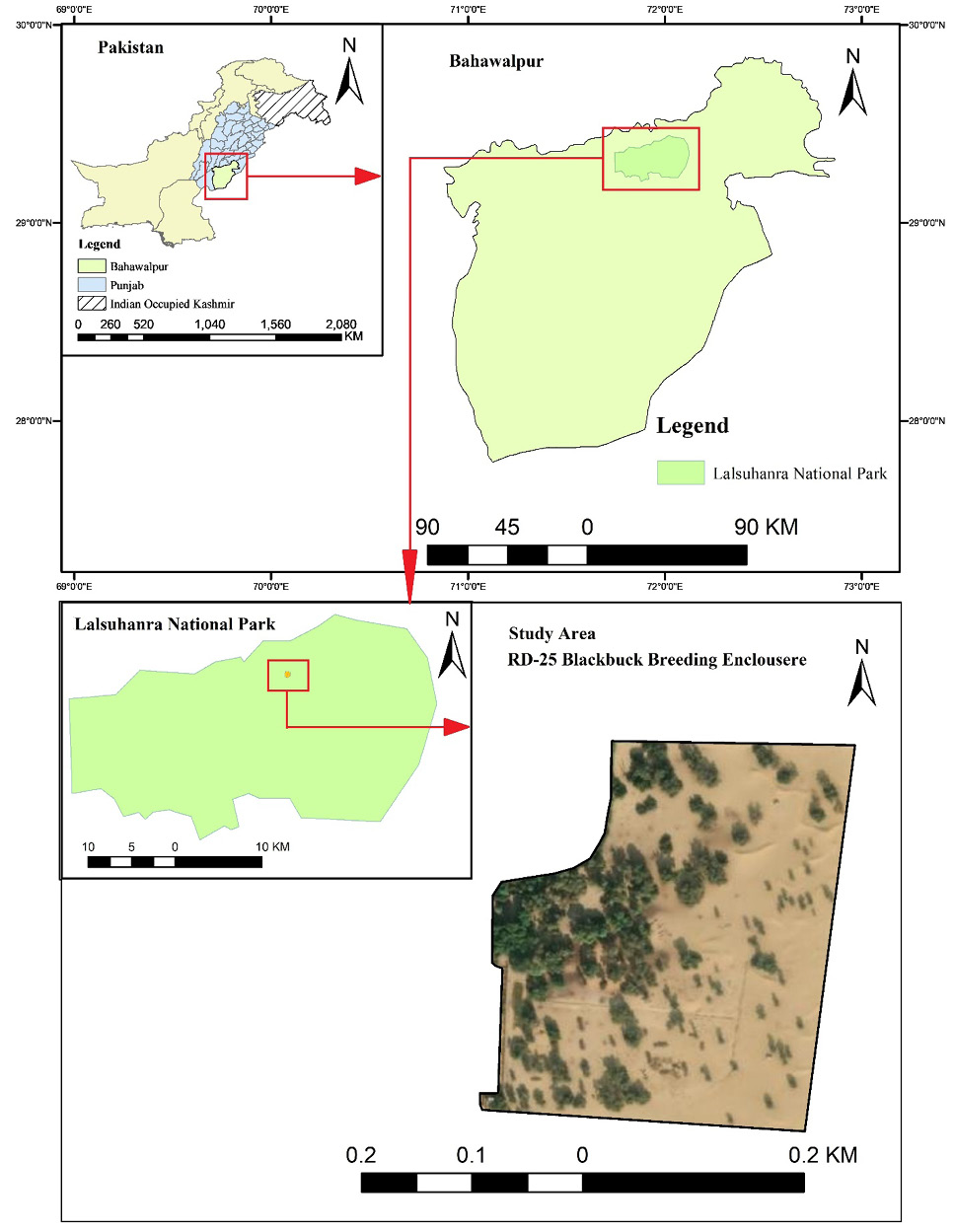
Map of the study area, RD-25 Blackbuck breeding enclosure, Lalsuhanra National Park, Bahawalpur.
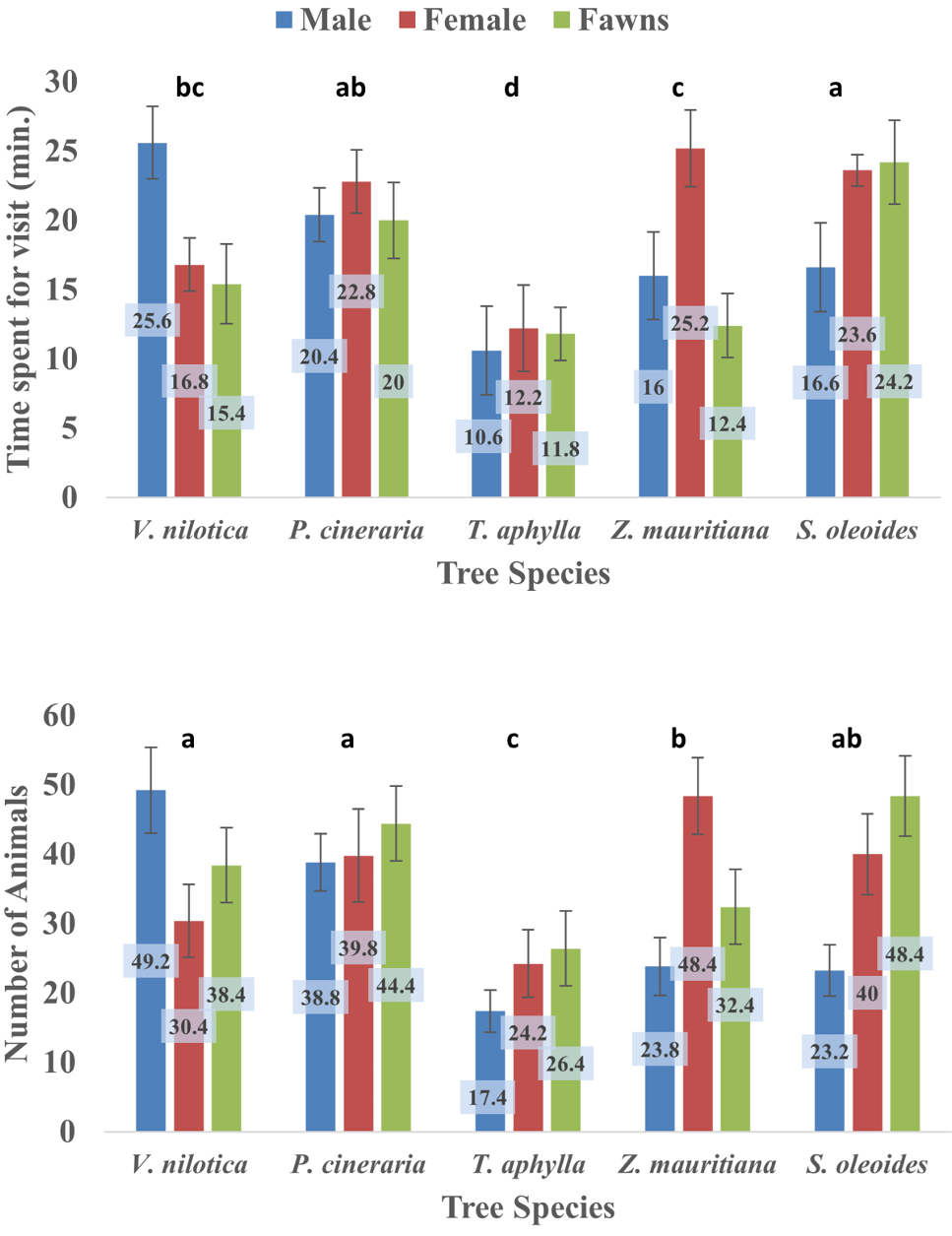
Preference of tree species for forage by blackbuck based on the average number of animal visits and average time spent per visit of each tree species. Where similar alphabets show the non-significance of the treatment and different alphabets show a significant difference between treatments at 95% Confidence intervals.
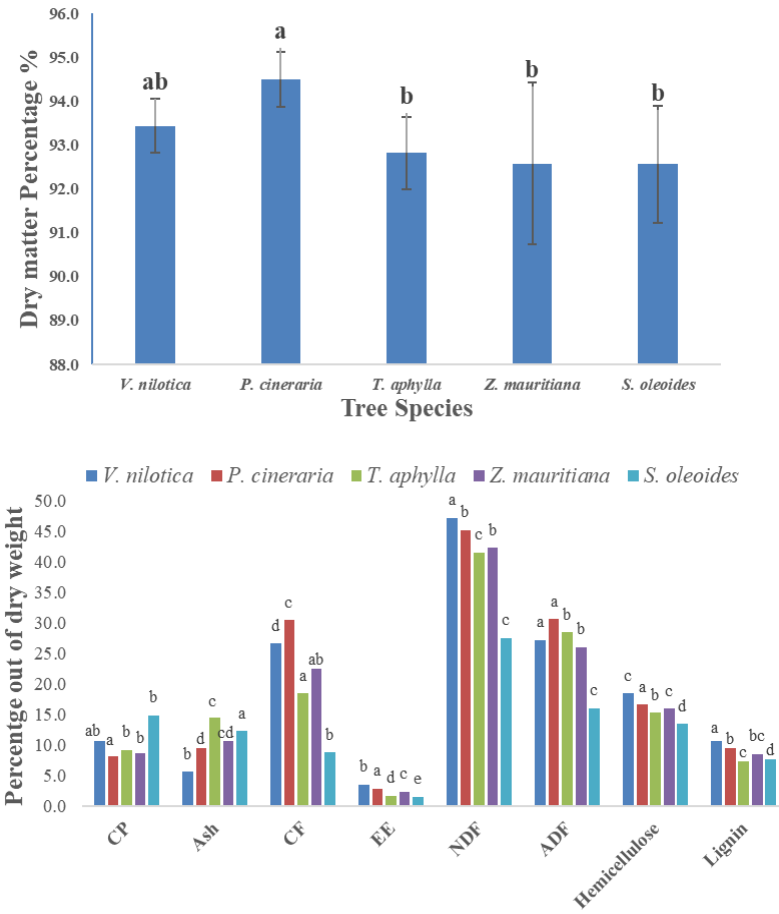
Different nutrients in trees preferred by blackbuck for forage, CP, crude protein; CF, crude fiber; EE, ether extract; NDF, neutral detergent fiber; ADF, acid detergent fiber. Where similar Alphabets show the non-significance of the treatment and different alphabets show a significant difference between treatments at 95% Confidence intervals.
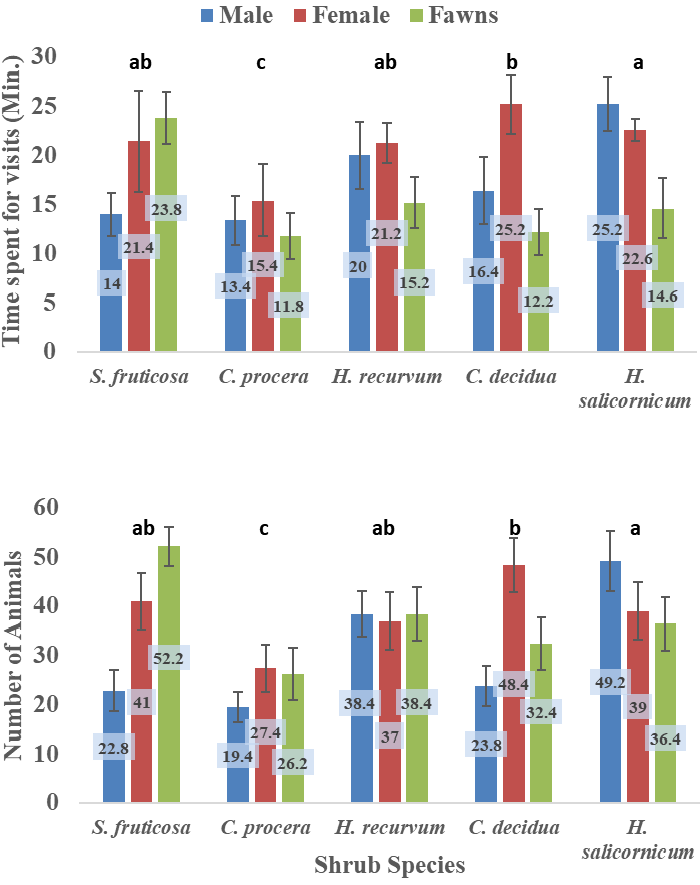
Shrub species preferences for forage by blackbuck based on the average number of animal visits and average time spent per visit of each shrub species. Where similar Alphabets show the non-significance of the treatment and different alphabets show a significant difference between treatments at 95% Confidence intervals.
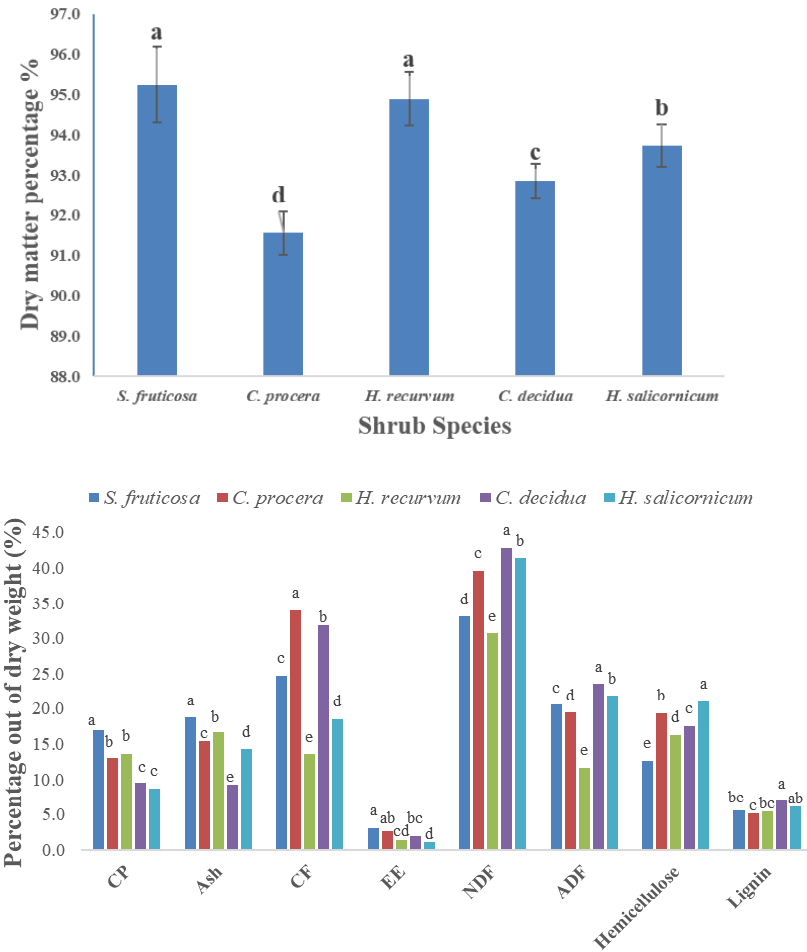
Different nutrients in shrub species preferred by blackbuck for forage. CP, crude protein; CF, crude fiber; EE, ether extract; NDF, neutral detergent fiber; ADF, acid detergent fiber. Where similar Alphabets show the non-significance of the treatment and different alphabets show a significant difference between treatments at 95% confidence intervals.
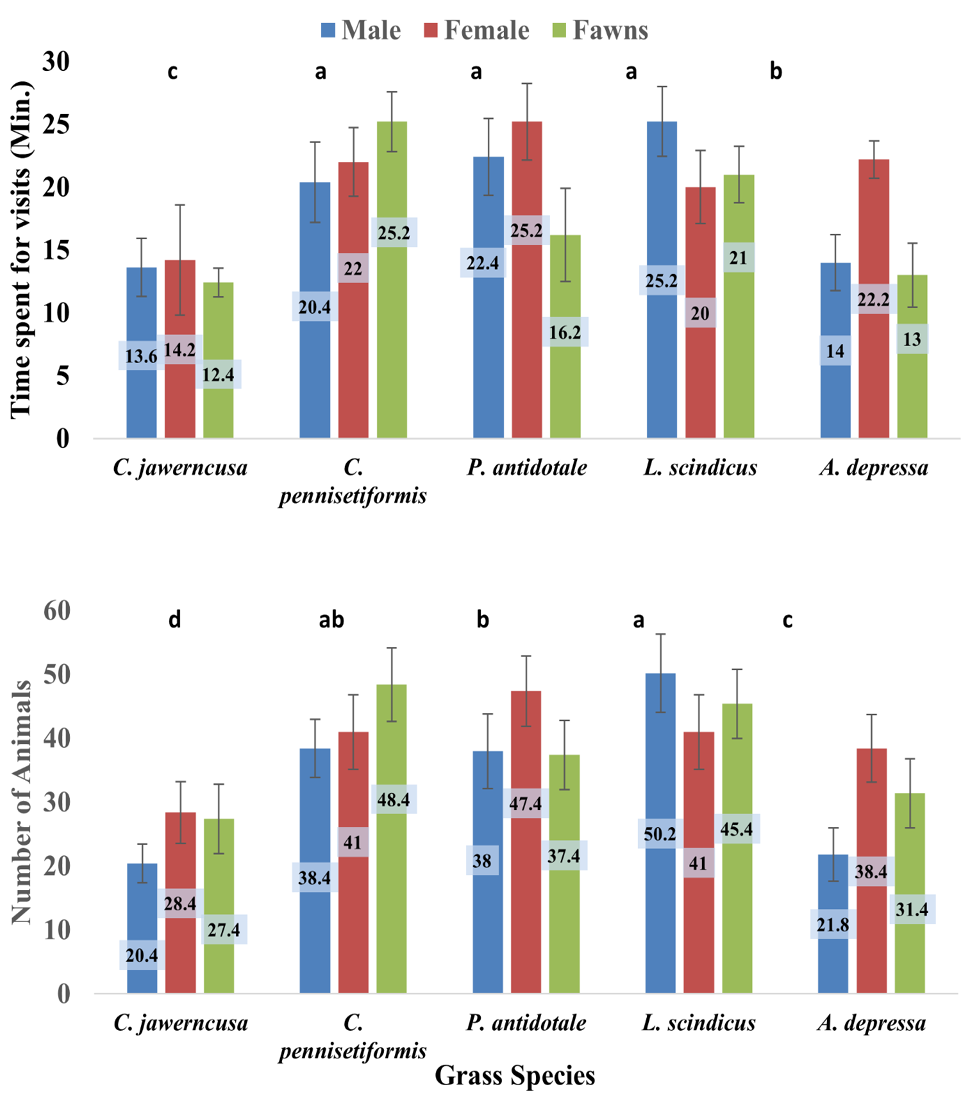
Grass species preferences for forage by blackbuck blackbuck based on the average number of animal visits and average time spent per visit of each grass species. Where similar Alphabets show the non-significance of the treatment and different alphabets show a significant difference between treatments at 95% confidence intervals.
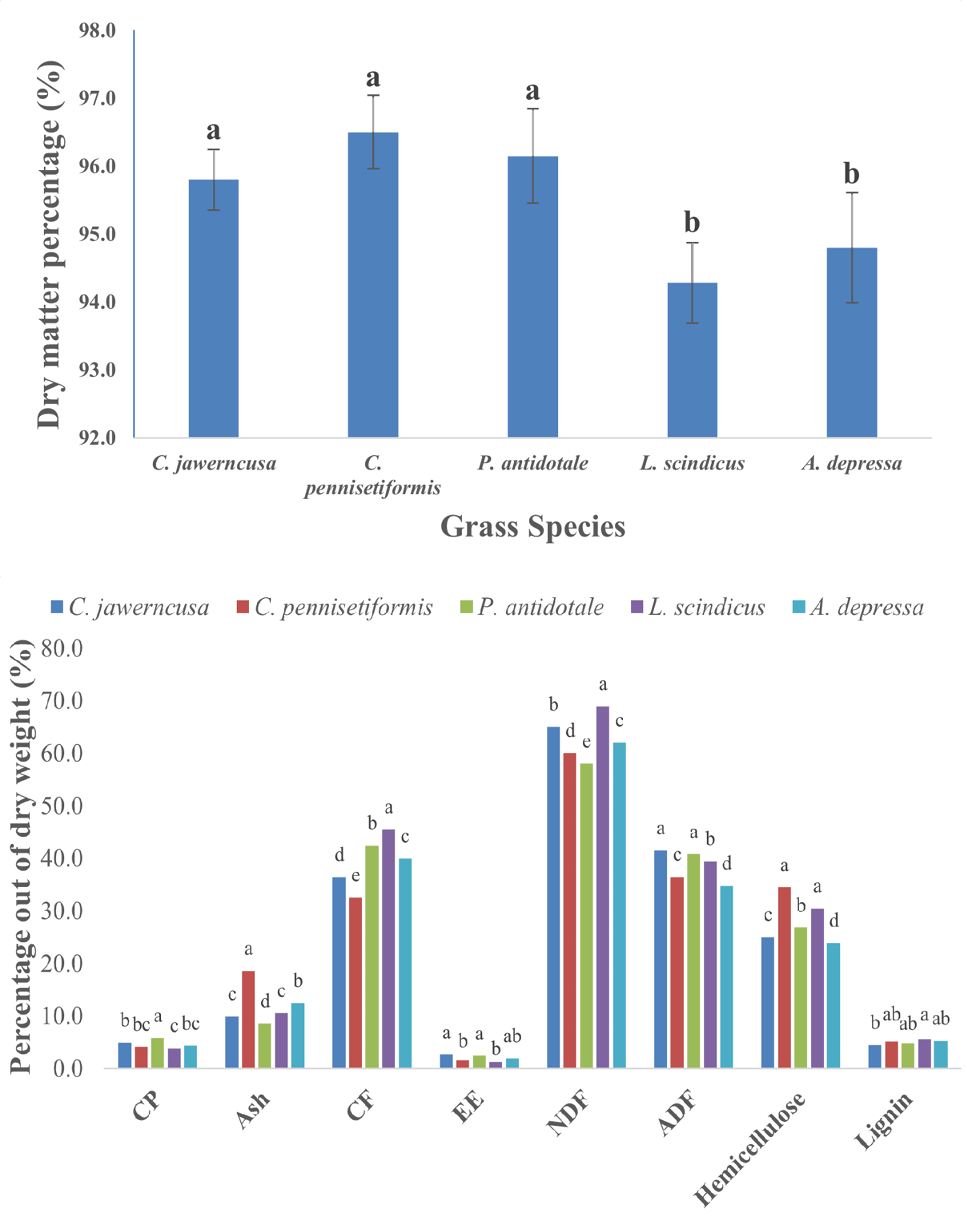
Different nutrients in grass species preferred by blackbuck for forage. CP, crude protein; CF, crude fiber; EE, ether extract; NDF, neutral detergent fiber; ADF, acid detergent fiber. Where similar Alphabets show the non-significance of the treatment and different alphabets show a significant difference between treatments at 95% confidence intervals.
References
- Forage preference trials were conducted in a cafeteria-type style, and the data were collected from May 2021 to April 2022. For the trials, a temporary pen of 60m2 was erected with an adjacent barn. Based on knowledge from literature studied and consulting wildlife keepers, we selected 15 palatable plant species [five species of trees (kikar/babul Vachellia nilotica, kandi Prosopis cineraria, farsh/okan Tamarix aphylla, beri Zizyphus mauritiana, wan/peelu Salvadora oleoides), five species of shrubs (buee Suaeda fruticosa, aak Calotropis procera, sajji Haloxylon recurvum, sajji Haloxylon salicornicum, dela Capparis decidua) and five species of grasses (khawi Cymbopogon jwarancusa, buffel grass Cenchrus pennisetiformis, ghamur/ blue panic grass Panicum antidotale, sewan grass Lasiurus scindicus, lumb Aristida depressa)] that may be present all the year round. We collected these plants growing in the Lal Suhanra National Park. Ten kilograms each of all respective forage species were collected and placed in each pile and fed into a feeder divided into 15 trays made in the pen to conduct the feeding trials. We randomly selected 60 male blackbuck, 60 females, and 60 fawns below the age of three years from the enclosure for the investigation of feeding preference. Each gender class underwent individual tests for each forage species for 60 min, following the protocol by Mirza and Waiz (1973). The number of visits and average time spent on each pile was recorded in each trial using a high-definition camcorder to minimize human disturbance and record precise time measurements. The feeding trials experiment was conducted five times each season. Food preference was computed by the total time spent and the total number of visits to each tray (Kravetz and Suárez, 1998).
Services
Article usage statistics
Loading…