Research Article · Volume 12, Issue 10, 26 August 2024 · Open Access
Exploring Multiple Impacts of Dietary Tea Supplements on Ruminants: A Meta-Analysis
· · · ·
Affiliations & Notes ⌄
1Department of Animal Production, Faculty of Animal Husbandry, Universitas Padjadjaran, Sumedang, West Java, Indonesia
2Department of Animal Nutrition and Feed Technology, Faculty of Animal Husbandry, Universitas Padjadjaran, Jatinangor Campus, Sumedang, Indonesia
3Department of Animal Nutrition and Feed Technology, Faculty of Animal Husbandry, IPB University, Bogor, Indonesia. *Correspondence | Ririn Siti Rahmatillah, Department of Animal Production, Faculty of Animal Husbandry, Universitas Padjadjaran, Sumedang, West Java, Indonesia
Polyphenols from tea plants go through complex changes in the digestive system.
These studies, in general, show that tea can significantly improve Dry Matter Intake (DMI) and digestibility compared to controls.
Some studies also found that certain forms of tea can significantly lower blood glucose and urea levels.
The decrease in blood urea levels may be related to the increased efficiency of protein metabolism and the reduced protein catabolism due to tea consumption.
Selected from the article's own text.
Abstract
In many developing countries, small-scale ruminant farmers are often faced with health and productivity issues of livestock. Meanwhile, tea can act as a natural additive in ruminant diets. Different tea product supplementations (including leaf, extract, and waste) have the potential to improve the performance and health of ruminants. Both past and current studies regarding the effects of various dietary tea leaf products on ruminants do not show a comprehensive outcome. Therefore, this meta-analysis aimed to systematically examine the effects of different tea leaf product supplementations on ruminants. The PRISMA protocol was used to ensure the rigorous selection of suitable articles, and the OpenMEE approach was used to calculate effect sizes (Hedges’ g) across various output parameters. The results shows that tea leaf product supplementations had mostly no influence on the average weight gain in mass (AWG, Kg/head/day), body condition scores (BCS), DMI (g/day), dry matter digestibility (DMD, %), crude protein digestibility (CPD, %), acid detergent fiber digestibility (ADFD, %), neutral detergent fiber digestibility (NDFD, %), and blood urea levels. However, a significant reduction in blood glucose levels was observed (P = 0.002). A sub-group analysis showed that spent tea leaves supplementation affected the DMI (P=0.004) and ADFD (P = 0.032). In contrast, tea extract influenced blood glucose (mg/dl, P < 0.001) and blood urea (mg/dl, P < 0.001) levels. Based on the results, the tea can reduce glucose absorption in the intestines and further affect urea synthesis in the liver.
Ruminants such as cattle, sheep, and goats are crucial in the global food supply, providing significant sources of meat and milk. Enhancing productivity in these animals is a key objective for ruminant producers worldwide. For the past few years, products that are safe for to both people and the environment have become very popular. This popularity has led the use of plant-base compounds in animal feed. ; . Using natural additives in animal diets is good for health of ruminants, and matches the growing preference for more eco-friendly and health-farming practices. Plant extracts are being investigated due to the potential ability to act as natural feed additives with anthelmintic effects that improve boost productivity ; while also supporting sustainability.
Tea, which comes from the Camellia sinensis plant, is well-known for having many different natural chemicals like polyphenols, catechins, and caffeine ; ; ; . These chemicals have been studied a lot for their antioxidant, anti-inflammatory, and metabolism-regulating effects in humans . There is a great deal of interest in exploring plant bioactive compounds with beneficial effects on ruminants. A previous study stated that the application of green tea waste enhanced lactic acid fermentation of silage and affected performance in ruminants ; b).
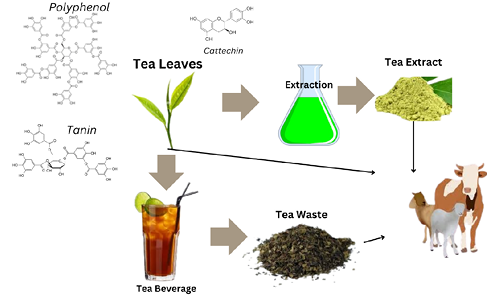
Several main components of tea include caffeine (15.2%), epigallocatechin gallate (49.8%), epigallocatechin (11.7%), epicatechin gallate (13.4%), theobromine (1.35%), rutin (1.11%), and other catechins namely catechin, gallocatechin gallate, and catechin gallate in lower amounts . These components influence the health of ruminants by regulating gut microbiota activity and nutrient absorption . Several forms of tea products are used as supplements, including leaf, extracts, and waste. Tea leaf was collected from Cammelia sinensis plant and then subjected to various processes such as withering, rolling, oxidation, and drying. Tea leaf, especially non-graded, has beneficial value due to the active ingredients, but does not have economic value, leading as ruminant dietary additive . Tea waste originates from beverage companies, which produce about 100.000 tons every year. The majority of the waste is burned, thrown into landfills, or turned into compost, resulting in economic and environmental problems ; . Meanwhile, tea extract is produced from non-grade tea which has been subjected to an extraction process to identify the active ingredients and used as feed supplement for ruminants. Numerous studies have investigated the potential advantages of tea extract and waste supplementation in ruminants. However, the results varied, underscoring the need for a comprehensive synthesis of the available data to establish the overall effect of tea supplementation on productivity. A meta-analysis approach can consolidate published data to provide a comprehensive. Therefore, this meta-analysis aimed to determine the influence of tea supplementation on performance, digestibility, and blood parameters of ruminants.
MATERIALS AND METHODS
Procedures
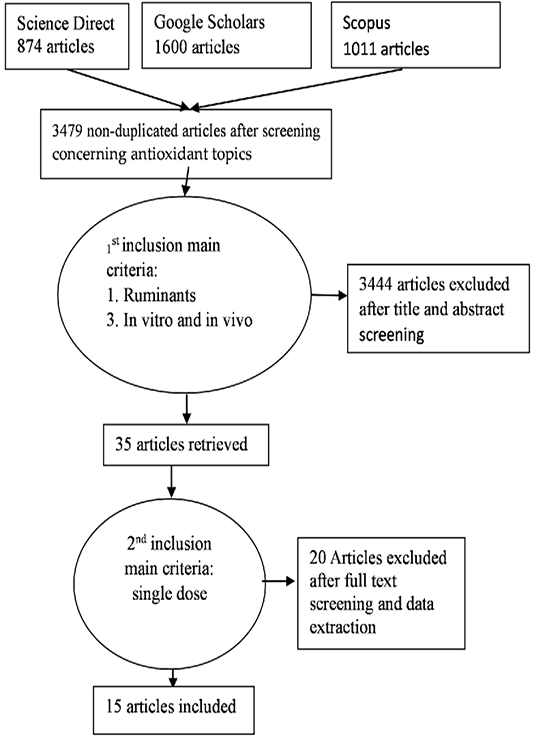
All articles were selected in line with the standard inclusion criteria for a systematic review and meta-analysis, considering their quality and relevance. The initial step was to check the article databases from Science Direct and Scopus using keywords (“Tea” AND “Rumen” OR “Sheep” OR “Goat” OR “Cattle” OR “Cow”) in the reference manager software (Mendeley). The Preferred Reporting Items for Systematic Reviews and Meta-Analyses (PRISMA, procedure was used for this review (Figure 1). Following the identification articles, a title review procedure was carried out. The criteria applied in the selection stage include article published in English as a full text, and belonging to reputable journal.
The appropriateness evaluation stage was completed by viewing the articles and selecting based on reasons-ableness for the point under study. This method provides good quality control for systematic reviews and minimizes the risk of error . The review process showed that about 3,479 articles were not duplicated. The next step was to select articles based on the relevance of each title, performance, and blood analysis, comparison between control and experimental treatments, as well as the addition of tea. A total of 2,464 articles were deleted, and 15 were selected for meta-analysis.
Data Analysis
A meta-analysis was performed using OpenMEE software (http://www.cebm.brown.edu/openmee/index.html) specifically designed for meta-analyses in the fields of biology and ecology . The continuous outcome data for the averages of the experimental units (control vs. treatment) were set and organized in a comma-separated value (CSV) file, which was then input into the software. Hedges g was used to calculate the effect size for each outcome variable using a random-effects model. Generally, random effects models are applied when displaying the data as standardized mean differences (SMD) between the control and treatment groups. Hedges g accounts for the bias that can arise from small sample sizes in effect size estimation. When studies with different sample sizes are included in the meta-analysis, the correction improves the measure’s accuracy and dependability. Specifically, g≅d×(1-3/(4(n1+n2)-9)) was the formula used for this computation, where n is the sample size of the treatment and control groups . Using a random-effects model with 95% confidence intervals (CIs), the output was produced. Due to the established analytical strength, particularly when working with small sample size, Hedge g was selected (Galkanda-Arachchige et al., 2020). When tea supplementation was given in this investigation, a positive value of Hedges g (P < 0.05) showed a significantly larger treatment effect when compared to the control group. Additionally, the DerSimonian and Laird test (Q-statistic) was used to compute the heterogeneity index (I2) at a significance threshold of P < 0.05. The degree of heterogeneity was categorized as follows no heterogeneity (0 < I2 ≤ 25%), low (25% < I2 ≤ 50%), moderate (50% < I2 ≤ 75%), and high (I2 > 75%) .
RESULTS AND DISCUSSION
The growing emphasis on animal welfare and human health has led to a rise in the usage of plant extracts as additives in animal feed ; . Fruits, vegetables, tea, and nuts all contain polyphenols, a kind of naturally occurring plant chemical that is crucial for ruminant nutrition . In addition to providing color and flavor, these substances shield plants from environmental stressors and function as antioxidants. According to Vasta et al. (2010), polyphenols can neutralize free radicals and lessen oxidative stress, preventing cell damage. Numerous studies demonstrate the anti-inflammatory qualities of polyphenols, which enhance digestive health by reducing inflammation in ruminant digestive systems . Additionally, the chemicals have potent antioxidant and antibacterial qualities that aid in preventing harmful microbial activity and safeguard important food proteins in the rumen.
Vasta et al. (2007) found that dietary tannins might slow down the activity of ruminal microorganisms responsible for biohydrogenation. Several studies have shown that tannins can bind to proteins ; and inhibit the growth of bacteria in ruminants . Polyphenols from tea plants go through complex changes in the digestive system. This process starts when polyphenols are eaten and move through the digestive tract, encountering various enzymes . In the rumen, the main fermentation chamber of ruminants, microorganisms like bacteria and protozoa help break down the compounds through enzymatic actions, releasing metabolites . The metabolites then move to the lower digestive segments, where further changes occur. Absorption of these metabolites happens in the small intestine, allowing entry into the bloodstream.
The liver is essential for processing and modifying compounds before being distributed to various tissues. This complex series of metabolic events highlights the dynamic nature of how polyphenols are handled in ruminant systems. Additionally, the interaction between polyphenols and the microbial community in the rumen affects both the fate of these compounds and overall digestive efficiency. Understanding this interaction is crucial for grasping the broader effects on animal health and nutrition. The metabolic journey of polyphenols in ruminants is a key focus of ongoing research, offering insights into the complex dynamics of plant-derived compounds in animal physiology.
As shown in Table 1, various studies have examined three forms of tea, namely leaf, extracts, and waste. These studies, in general, show that tea can significantly improve Dry Matter Intake (DMI) and digestibility compared to controls. However, some studies did not find significant changes. Different forms of tea can have varying effects on the observed parameters, likely due to the bioactive content of tea, such as polyphenols and catechins (Figure 2), which can affect gut microbiota and boost digestive efficiency. The increased DMI might also be due to tea’s high palatability, leading to greater feed consumption. However, not all studies reported significant results, presumably due to differences in the type of tea used, dosage, environmental conditions, and subjects. Some studies also found that certain forms of tea can significantly lower blood glucose and urea levels. This blood glucose-lowering effect is presumably due to the presence of compounds such as epigallocatechin gallate (EGCG) in tea, which has been shown to increase insulin sensitivity and reduce resistance. The decrease in blood urea levels may be related to the increased efficiency of protein metabolism and the reduced protein catabolism due to tea consumption. However, similar to DMI and digestibility,
Table 1: Articles selected for metaanalysis and its general effect.
No.
Articles
Form
Doses
Animals
Outcome
1.
Kolling et al., 2022
Extract
0,
0.028% DM
Cow
~DMI, ~BCS
2.
Stivanin et al., 2019
Extract
0, 0.028% DM
Cow
~DMI, ~BCS
3.
Vizzotto et al., 2021
Extract
0, 5 gr/ Kg DM
Cow
~DMI, ~BCS, ~blood urea, ~blood glucose
4.
Gessner et al., 2020
Extract
0, 10 gr/ Kg DM
Cow
↓DMI
5.
Ma et al., 2021
Leaves
0, 0.2 gr/ Kg DM
Cow
~DMI
6.
Heryadi et al., 2019
Leaves
0, 2% DM
Lamb
~AWG
7.
Ramdani et al., 2020
Leaves
0, 0.50%; 1%, 1.50%, 2% DM
Lamb
~AWG, ~DMI
8.
Zhong et al., 2015
Extract
0, 2, 4, 6 g/kg
Lamb
↑DMD, ↑CPD, ↑NDFD, ↑ADFD
9.
Kondo et al., 2004 a
Waste
0, 2.5, 5%
Cow
~DMD, ↑CPD, ~NDFD, ↓ADFD
10.
Nishida et al., 2006
Waste
0, 20%
Steer
~Blood urea, ~blood glucose.
11.
Ahmed et al., 2015
Waste
0.5, 1, 2 %
Goat
~Blood urea, ↓blood glucose
12.
Kondo et al., 2004 b
Waste
0, 2.5, 5%
Cow
~DMI, ~Blood urea
13.
Liu et al., 2019
Extract
0, 20 g
Ewe
↑NDFD, ↑ADFD
14.
Zhuang et al., 2021
Waste
0, 15; 30%
Cattle
↑AWG, ↓blood glucose
15.
Sundod et al., 2023
Waste
0, 5;10%
Goat
~Blood glucose, ↑DMD, ~CPD, ↓NDFD, ↑ADFD
↑: significant increase; ↓: significant decrease; ~: unchanged or not significantly different.
not all studies reported significant reductions. This suggests that the physiological response to tea may vary depending on factors such as the type of tea, dose, duration of administration, and health status of the subject before the study.
The meta-analysis results in Table 2 showed that there was almost no significant influence from various types of tea sources on AWG, DMI, body condition score, dry matter, crude protein, acid detergent fiber, and neutral detergent fiber digestibility (P > 0.05), except for blood glucose levels (P = 0.069) and blood urea content (P = 0.006). However, when analyzed using subgroup analysis, the administration of various forms of tea such as extract, leaf, and waste showed different effects (Table 3). Tea waste supplementation had a significant effect on DMI (P = 0.004) and acid detergent fiber digestibility (P = 0.032). Tea extract supplementation also had a significant effect on blood glucose (P < 0.001) and blood urea (P < 0.001). In contrast, untreated tea did not show any significant effects on AWG, DMI, as well as dry matter, crude protein, acid detergent fiber, and neutral detergent fiber digestibility.
Po et al. (2012) reported that tannin supplementation in ruminant diets led to decreased feed intake, attributed to the bitter taste. Similarly, Méndez-Ortiz et al. (2018) concluded that tannin intake did not have a significant impact on DMI and AWG in sheep. Various studies ; ; also showed that there was no significant difference between the control and treatment groups regarding DMI.
Diets supplemented with polyphenols may affect nutritional profiles that not only influence DMI but also have a positive effect on the efficiency of using certain nutrients . Polyphenols can modulate metabolic processes in sheep, including the effects on the absorption and use of nutrients. This may lead to differences in the AWG, even though the DMI is relatively stable . Green tea, which is abundant in tannins, can diminish the solubility and rumen degradability of numerous leaf proteins due to the protein-binding properties ; . However, the results in Table 3 showed that giving various types of tea did not affect digestibility, including dry matter, protein, acid detergent fiber, or neutral detergent fiber. The subgroup analysis showed that the administration of tea waste had a significant effect on acid detergent fiber digestibility.
Nutrient balance in the diet plays an important role in the psychological well-being of ruminants by ensuring ade
Table 2: Meta-analysis the effect tea supplementations on AWG (Kg/head/day), DMI (g/head/day), MEI (MJ/day), TDNI (kg/day), NDFI (kg/day), CPI (kg/day) Daily time spent in activity (Min), Diurnal time spent standing up (Min), Diurnal time spent lying down (Min), DMD (%), CPD (%), ADFD (%), NDFD (%), Blood Glucose (mg/dl) and Blood Urea (mg/dl) in ruminants.
Model Results
Heterogeneity
Response variable
N
Unit
Estimate
Lower Bound
Upper Bound
SE
P-Value
r2
Q
Het P-value
P
Performance
AWG
11
Kg/head/day
0.265
-0.040
0.571
0.156
0.088
< 0.001
3.206
0.976
0
DMI
20
g/head/day
3.74
-1.04
8.52
2.44
0.125
48.8
892
< 0.001
97.9
BCS
6
Score (1-5)
-0.316
-0.732
0.101
0.212
0.137
0.011
5.20
0.392
3.917
Blood Analysis
Urea
10
mg/dl
4.62
1.32
7.92
1.68
0.006
20.1
144.5
< 0.001
93.7
Glucose
13
mg/dl
-1.97
-4.10
0.152
1.08
0.069
10.46
176.9
< 0.001
93.2
Digestibility
DMD
7
%
0.192
-1.52
1.91
0.875
0.827
3.45
36.5
< 0.001
83.6
CPD
7
%
0.178
-1.56
1.91
0.88
0.840
3.44
36.7
< 0.001
83.6
ADFD
8
%
-0.253
-1.72
1.21
0.747
0.735
3.07
43.8
< 0.001
84.0
NDFD
8
%
0.124
-1.32
1.57
0.738
0.867
2.93
42.6
< 0.001
83.5
AWG: average weight gain; DMI: dry matter intake; MEI: metabolizable energy intake; TDNI: total digestible nutrient intake; NDFI: neutral detergent fiber intake; CPI: crude protein intake; DMD: dry matter digestibility; CPD: crude protein digestibility; ADFD: acid detergent fiber digestibility; NDFD: neutral detergent fiber digestibility.
quate nutrition that supports brain function and hormonal balance . Polyphenols reportedly have the potential to support brain function through antioxidant activity and the ability to protect neurons from oxidative stress . According to several studies, these compounds can influence hormonal balance by interacting with the endocrine system, including modulating the activity of hormones such as insulin and estrogen (Williams et al., 2009).
In the same context, the administration of tea, containing polyphenols, has been recognized for the potential impact on physiological parameters. Previous studies reported a connection between polyphenol-rich tea and blood chemistry, specifically in terms of urea and blood glucose levels. Kondo et al. (2004b) observed a significant reduction in serum cholesterol levels in lactating cows fed ensiled green tea waste. According to Kasahara and Kato (1993), green tea contains polyphenols (catechins), tannins, caffeine, and pyrroloquinoline quinone. Some components of these compounds can enhance both basal and insulin-stimulated glucose uptake in adipocytes . Additionally, these components have demonstrated the ability to hinder intestinal glucose uptake by targeting sodium-dependent glucose transporters in intestinal epithelial cells, as reported by Kobayashi et al. (2000). The subgroup analysis showed that among the various types of tea sources, the extract had a significant influence on glucose levels in the blood.
The results also showed that tea extract had a significant influence on blood urea levels. Ruminants and other mammals produce urea through a process known as urea synthesis. This physiological mechanism plays a significant role in preventing the accumulation of excess nitrogen, thereby preventing potential toxicity. The rate and amount of ammonia production reflect the solubility and fermentation ability of food and the endogenous N source . Previous studies (Vizotto et al., 2021; Kondo et al., 2004b; have shown that tea waste and extract reduced glucose content in the blood.
CONCLUSIONS AND RECOMMENDATIONS
In conclusion, many tea varieties have an impact on ruminant health, particularly on factors like blood chemistry, digestibility, average weight gain (AWG), and dry matter intake (DMI). While the overall effects of tea supplementation on AWG and DMI were not statistically significant, certain subgroups exhibited significant outcomes. For instance, tea extract dramatically reduced blood glucose and urea levels, while tea waste considerably increased the digestion of acid-detergent fiber. Overall, the absence of meaningful outcomes was a result of the disparities between trials, which included differences in tea type, dose, animal breed, and experimental circumstances. To create dietary plans for the future, it is essential to comprehend the intricate metabolism of polyphenols in ruminants, which influences metabolic consequences and the effectiveness of the digestive system.
Table 3: Sub-group effect of different type of tea on AWG (Kg/head/day), DMI (g/head/day), DMD (%), CPD (%), ADFD (%), NDFD (%) Blood Glucose (mg/dl) and Blood Urea (mg/dl) in ruminants.
Response Variable
Sub-Group
Estimate
Lower Bound
Upper Bound
Std. Error
P-value
AWG
Tea
0.124
-0.254
0.502
0.193
0.519
Waste
0.530
-0.004
1.06
0.273
0.052
Overall
0.265
-0.040
0.571
0.156
0.088
DMI
Tea
1.91
-2.11
5.94
2.05
0.351
Extract
326
-32.9
685
183
0.075
Waste
226
71.4
381
79.0
0.004
Overall
3.74
-1.04
8.52
2.44
0.125
DMD
Extract
0.507
-0.465
1.48
0.496
0.307
Waste
-0.584
-6.04
4.87
2.78
0.834
Overall
0.192
-1.52
1.91
0.875
0.827
CPD
Extract
0.290
-0.664
1.24
0.487
0.551
Waste
1.05
-5.18
7.28
3.177
0.741
Overall
0.178
-1.56
1.91
0.885
0.840
ADFD
Extract
0.726
-0.337
1.79
0.542
0.181
Waste
-5.34
-10.2
-0.462
2.487
0.032
Overall
-0.253
-1.72
1.21
0.747
0.735
NDFD
Extract
0.639
-0.365
1.64
0.512
0.212
Waste
-1.39
-6.59
3.82
2.66
0.601
Overall
0.124
-1.32
1.57
0.738
0.867
Glucose
Extract
220
161
279
30.1
< 0.001
Waste
-2.13
-3.60
-0.651
0.753
0.005
Overall
-1.97
-4.10
0.152
1.08
0.069
Urea
Extract
60.1
36.4
83.8
12.1
< 0.001
Waste
0.916
-1.19
3.02
1.07
0.394
Overall
4.62
1.32
7.93
1.68
0.006
AWG: average weight gain; DMI: dry matter intake; MEI: metabolizable energy intake; TDNI: total digestible nutrient intake; NDFI: neutral detergent fiber intake; CPI: crude protein intake; DMD: dry matter digestibility; CPD, crude protein digestibility; ADFD,:acid detergent fiber digestibility; NDFD: neutral detergent fiber digestibility.
ACKNOWLEDGEMENTs
Ririn S. Rahmatillah received a master’s degree scholarship from the Indonesia Endowment Fund for Education Agency (LPDP). This research was jointly supported by an LPDP grant (Number: KET-583/LPDP.4/2023).
NOVELTY STATEMENT
Meta-analysis reveals that while various tea supplements can significantly affect certain physiological parameters such as blood glucose levels, their overall impact on ruminant health and productivity is variable, highlighting the potential but variable benefits of tea as a natural feed additive in small-scale farming
AUTHOR’S CONTRIBUTIONS
Ririn Siti Rahmatillah: Conceptualization, Formal Analysis, Writing Original Draft, Writing review and editing.
Diky Ramdani: Conceptualization, Methodology, Supervision, Validation, Writing review and editing.
Iman Hernaman: Conceptualization, Methodology, Supervision, Validation.
Yulianri Rizki Yanza: Methodology, Writing review and editing.
Conflict of Interest
The authors do not have any conflict of interest.
Figures
Figure 1:.
Flowchart PRISMA Data Selection.
Figure 2:.
Different sources of tea supplementation on ruminants.
References
Ahmed ST, Lee JW, Mun HS, Yang CJ (2015). Effects of supplementation with green tea by-products on growth performance meat quality blood metabolites and immune cell proliferation in goats. J. Anim. Physiol. Anim. Nutr., 99(6): 1127-1137. https://doi.org/10.1111/jpn.12279[CrossRef]
Bodas R, Prieto N, García-González R, Andrés S, Giráldez FJ, López S (2012). Manipulation of rumen fermentation and methane production with plant secondary metabolites. Anim. Feed Sci. Technol., 176(1-4): 78-93. https://doi.org/10.1016/j.anifeedsci.2012.07.010[CrossRef]
Calsamiglia S, Busquet M, Cardozo PW, Castillejos L, Ferret A (2007). Invited review: Essential oils as modifiers of rumen microbial fermentation. Journal of Dairy Science 90(6) 2580–2595. https://doi.org/10.3168/jds.2006-644[CrossRef]
Galkanda‐Arachchige HS, Wilson AE, Davis DA (2020). Success of fishmeal replacement through poultry by‐product meal in aquaculture feed formulations: a meta‐analysis. Rev. Aquacult., 12(3): 1624-1636. https://doi.org/10.1111/raq.12401[CrossRef]
Gessner DK, Brock C, Hof LM, Most E, Koch C, Eder K (2020). Effects of supplementation of green tea extract on the milk performance of peripartal dairy cows and the expression of stress response genes in the liver. J. Anim. Sci. Biotechnol., 11(1): 1-12. https://doi.org/10.1186/s40104-020-00465-y[CrossRef]
Heriyadi D, Yurmiati H, Ramdani D (2019). The effect of green tea (Camellia sinensis) and Turmeric (Curcuma longa) as feed additives on performance of local sheep. In IOP Conference Series: Earth and Environ. Sci., 334(1): 012029. IOP Publishing. https://doi.org/10.1088/1755-1315/334/1/012029[CrossRef]
Huang XD, Liang JB, Tan HY, Yahya R, Khamseekhiew B, Ho YW (2010). Molecular weight and protein binding affinity of Leucaena condensed tannins and their effects on in vitro fermentation parameters. Anim. Feed Sci. Technol., 159(3-4): 81-87. https://doi.org/10.1016/j.anifeedsci.2010.05.008[CrossRef]
Huntington GB, Archibeque SL (1999). Practical aspects of urea and ammonia metabolism in ruminants. In Proc. Am. Soc. Anim. Sci., 77: 1-11.
Jones WT, Mangan JL (1977). Complexes of the condensed tannins of sainfoin (Onobrychis viciifolia Scop.) with fraction 1 leaf protein and with submaxillary mucoprotein and their reversal by polyethylene glycol and pH. J. Sci. Food Agric., 28(2): 126-136. https://doi.org/10.1002/jsfa.2740280204[CrossRef]
Kasahara T, Kato T (1993). Nutritional biochemistry: a new redox-cofactor vitamin for mammals. Nature, 422: 832.
Kim D, Kuppusamy P, Jung JS, Kim KH, Choi KC (2021). Microbial Dynamics and In Vitro Degradation of Plant Secondary Metabolites in Hanwoo Steer Rumen Fluids. Animals, 11(8): 2350. https://doi.org/10.3390/ani11082350[CrossRef]
Kobayashi Y, Suzuki M, Satsu H, Arai S, Hara Y, Suzuki K, Shimizu M (2000). Green tea polyphenols inhibit the sodium-dependent glucose transporter of intestinal epithelial cells by a competitive mechanism. J. Agric. food chem., 48(11): 5618-5623. https://doi.org/10.1021/jf0006832[CrossRef]
Kolling GJ, Stivanin SCB, Gabbi AM, Machado FS, Ferreira AL, Campos MM, Fischer V (2022). Behavior of Holstein and Holstein-Gyr lactating cows supplemented with oregano and green tea extracts: Plant extracts for lactating cows. J. Vet. Behav., 49: 75-79. https://doi.org/10.1016/j.jveb.2021.11.004[CrossRef]
Kondo M, Kita K, Yokota HO (2004a). Feeding value to goats of whole-crop oat ensiled with green tea waste. Anim. Feed Sci. Technol., 113(1-4): 71-81. https://doi.org/10.1016/j.anifeedsci.2003.10.018[CrossRef]
Kondo M, Nakano M, Kaneko A, Agata H, Kita K, Yokota HO (2004b). Ensiled green tea waste as partial replacement for soybean meal and alfalfa hay in lactating cows. Asian-Australasian J. Anim. Sci., 17(7): 960-966. https://doi.org/10.5713/ajas.2004.960[CrossRef]
Li S, Lo CY, Pan MH, Lai CS, Ho CT, Sang S (2019). Black tea: chemical analysis and stability. Food Funct., 10(1): 722-732. https://doi.org/10.1039/C2FO30093A[CrossRef]
Liberati A, Altman DG, Tetzlaff J, Mulrow C, Gøtzsche PC, Ioannidis JP, Moher D (2009). The PRISMA statement for reporting systematic reviews and meta-analyses of studies that evaluate health care interventions: explanation and elaboration. Ann. Intern. Med., 151(4): W-65. https://doi.org/10.7326/0003-4819-151-4-200908180-00136[CrossRef]
Liu Y, Ma T, Chen D, Zhang N, Si B, Deng K, Diao Q (2019). Effects of tea saponin supplementation on nutrient digestibility methanogenesis and ruminal microbial flora in Dorper crossbred ewe. Animals, 9(1): 29. https://doi.org/10.3390/ani9010029[CrossRef]
Ma Y, Feng Y, Song L, Li M, Dai H, Bao H, Liang Y (2021). Green tea polyphenols supplementation alters immunometabolism and oxidative stress in dairy cows with hyperketonemia. Anim. Nutr., 7(1): 206-215. https://doi.org/10.1016/j.aninu.2020.06.005[CrossRef]
Maciej J, Schäff CT, Kanitz E, Tuchscherer A, Bruckmaier RM, Wolffram S, Hammon HM (2016). Effects of oral flavonoid supplementation on the metabolic and antioxidative status of newborn dairy calves. J. dairy Sci., 99(1): 805-811. https://doi.org/10.3168/jds.2015-9906[CrossRef]
Makkar HP (2003). Effects and fate of tannins in ruminant animals adaptation to tannins and strategies to overcome detrimental effects of feeding tannin-rich feeds. Small Ruminant Res., 49(3): 241-256. https://doi.org/10.1016/S0921-4488(03)00142-1[CrossRef]
Makkar HPS, Francis G, Becker K. (2007). Bioactivity of phytochemicals in some lesser-known plants and their effects and potential applications in livestock and aquaculture production systems. animal, 1(9), 1371-1391. https://doi.org/10.1017/S1751731107000298[CrossRef]
Méndez-Ortiz FA, Sandoval-Castro CA, Ventura-Cordero J, Sarmiento-Franco LA, Torres-Acosta JFJ (2018). Condensed tannin intake and sheep performance: A meta-analysis on voluntary intake and live weight change. Anim Feed Sci. Technol., 245: 67-76. https://doi.org/10.1016/j.anifeedsci.2018.09.001[CrossRef]
Mertens DR (1994). Regulation of Forage Intake. In G. C. Fahey Jr (Ed.) Forage Quality Evaluation and Utilization (pp. 450–493). Am. Soc. Agron. Crop Sci. Soc. Am. Soil Sci. So. Am.,
Min BR, Barry TN, Attwood GT, McNabb WC (2003). The effect of condensed tannins on the nutrition and health of ruminants fed fresh temperate forages: a review. Anim. Feed Sci. Technol., 106(1-4): 3-19. https://doi.org/10.1016/S0377-8401(03)00041-5[CrossRef]
Nishida T, Eruden B, Hosoda K, Matsuyama H, Nakagawa K, Miyazawa T, Shioya S (2006). Effects of green tea (Camellia sinensis) waste silage and polyethylene glycol on ruminal fermentation and blood components in cattle. Asian-Australasian J. Anim. Sci., 19(12): 1728-1736. https://doi.org/10.5713/ajas.2006.1728[CrossRef]
Po E, Xu Z, Celi P (2012). The Effect of Yerba Mate (Ilex paraguarensis) supplementation on the productive performance of dorper ewes and their progeny. Asian-Australasian J. Anim. Sci., 25(7): 945. https://doi.org/10.5713%2Fajas.2012.12031
Ramdani D, Budinuryanto DC, Mayasari N (2020). The effect of paddy straw and concentrate containing green tea dust on performance andnutrient digestibility in feedlot lambs. Turk. J. Vet. Anim. Sci., 44(3): 668-674. https://doi.org/10.3906/vet-1909-10[CrossRef]
Ramdani D, Chaudhry AS, Seal CJ (2018). Alkaloid and polyphenol analysis by HPLC in green and black tea powders and their potential use as additives in ruminant diets. In AIP conference proceedings (Vol. 1927 No. 1). AIP Publishing.
Ramdani D, Yuniarti E, Jayanegara A, Chaudhry AS. (2023). Roles of essential oils, polyphenols, and saponins of medicinal plants as natural additives and anthelmintics in ruminant diets: A systematic review. Animals, 13(4), 767. https://doi.org/10.3390/ani13040767[CrossRef]
Ramdani D, Chaudhry AS, Hernaman I, Seal CJ. (2017). Comparing tea leaf products and other forages for in-vitro degradability, fermentation, and methane for their potential use as natural additives for ruminants. KnE Life Sci, 63-71. https://doi.org/10.18502/kls.v2i6.1020[CrossRef]
Ramdani D, Jayanegara A, Chaudhry AS. (2022). Biochemical properties of black and green teas and their insoluble residues as natural dietary additives to optimize in vitro rumen degradability and fermentation but reduce methane in sheep. Animals, 12(3), 305. https://doi.org/10.3390/ani12030305[CrossRef]
Saeed M, Naveed M, Arif M, Kakar MU, Manzoor R, Abd El-Hack ME, Sun C. (2017). Green tea (Camellia sinensis) and l-theanine: Medicinal values and beneficial applications in humans—A comprehensive review. Biomed. Pharmacother, 95, 1260-1275. https://doi.org/10.1016/j.biopha.2017.09.024[CrossRef]
Scalbert A, Johnson IT, Saltmarsh M (2005). Polyphenols: antioxidants and beyond. The Am. J. clin. Nutr., 81(1): 215S-217S. https://doi.org/10.1093/ajcn/81.1.215S[CrossRef]
Spencer JP (2009). The impact of flavonoids on memory: physiological and molecular considerations. Chem. Soc. Rev., 38(4): 1152-1161. https://doi.org/10.1039/B800422F[CrossRef]
Stivanin SCB, Vizzotto EF, de Paris M, Zanela MB, Passos LT, Angelo IDV, Fischer V (2019). Addition of oregano or green tea extracts into the diet for Jersey cows in transition period. Feeding and social behavior intake and health status. Plant extracts for cows in the transition period. Anim. Feed Sci. Technol., 257: 114265. https://doi.org/10.1016/j.anifeedsci.2019.114265[CrossRef]
Sundod R, Poothong S, Nuengjamnong C (2023). Substitution effect of protein source with tea waste on productive performances and ruminal fermentation in crossbred Saanen lactating goats. Ital. J. Anim. Sci., 22(1): 452-461. https://doi.org/10.1080/1828051X.2023.2206429[CrossRef]
Vasta V, Yáñez-Ruiz DR, Mele M, Serra A, Luciano G, Lanza M, Priolo A. (2010). Bacterial and protozoal communities and fatty acid profile in the rumen of sheep fed a diet containing added tannins. Appl. Environ. Microbiol., 76(8), 2549-2555. https://doi.org/10.1128/AEM.02583-09[CrossRef]
Vasta V, Pennisi P, Lanza M (2007). Intramuscular fatty acid composition of lambs given a tanniniferous diet with or without polyethylene glycol supplementation. Meat Sci., 76: 739 –745. https://doi.org/10.1016/j.meatsci.2007.02.015[CrossRef]
Vasta V, Makkar HP, Mele M, Priolo A (2008). Ruminal biohydrogenation as affected by tannins in vitro. Br. J. Nutr., 102(1): 82-92. https://doi.org/10.1017/S0007114508137898[CrossRef]
Vizzotto EF, Stivanin SCB, de Paris M, Passos LT, Werncke D, Klein CP, Fischer V (2021). Supplementation with green tea and oregano extracts on productive characteristics blood metabolites and antioxidant status of Jersey cows during the transition period. Animal, 15(2): 100032. https://doi.org/10.1016/j.animal.2020.100032[CrossRef]
Wallace BC, Lajeunesse MJ, Dietz G, Dahabreh IJ, Trikalinos TA, Schmid CH, Gurevitch J (2017). Open MEE: Intuitive open‐source software for meta‐analysis in ecology and evolutionary biology. Methods in Ecol. Evol., 8(8): 941-947. https://doi.org/10.1111/2041-210X.12708[CrossRef]
Williams RJ, Spencer JP, Rice-Evans C (2004). Flavonoids: antioxidants or signalling molecules?. Free Radic. Biol. Med., 36(7): 838-849. https://doi.org/10.1016/j.freeradbiomed.2004.01.001[CrossRef]
Wu LY, Juan CC, Ho LT, Hsu YP, Hwang LS (2004). Effect of green tea supplementation on insulin sensitivity in Sprague− Dawley rats. J. Agric. Food Chem., 52(3): 643-648. https://doi.org/10.1021/jf030365d[CrossRef]
Zhong RZ, Li HY, Fang Y, Sun HX, Zhou DW (2015). Effects of dietary supplementation with green tea polyphenols on digestion and meat quality in lambs infected with Haemonchus contortus. Meat Sci., 105: 1-7. https://doi.org/10.1016/j.meatsci.2015.02.003[CrossRef]
Zhuang X, Chen Z, Sun X, Li F, Luo J, Chen T, Sun J (2021). Fermentation quality of herbal tea residue and its application in fattening cattle under heat stress. BMC Vet. Res., 17: 1-13. https://doi.org/10.1186/s12917-021-03061-y[CrossRef]