Research Article · Volume 13, Issue 4, 2 October 2025 · Open Access
Evaluating the Anticancer Efficacy of Hylocereus undatus Leaf Extract Against Ehrlich Ascites Carcinoma-Induced Nephrotoxicity in Female Mice
· · · · ·
Affiliations & Notes ⌄
1Iraqi Center for Cancer and Medical Genetic Research, Mustansiriyah University, Baghdad, Iraq
2Scientific Research Commission, Ministry of Higher Education and Scientific Research, Iraq
3Unit of Environment and Prevention of Pollution, College of Science, University of Al-Qadisiyah, Diwaniyah, Iraq
4Department of Human Physiology, Faculty of Medicine, Jabir Ibn Hayyan Medical University, Iraq
5Biotechnology Research Center, Al-Nahrain University, Baghdad, Iraq
6Department of Biology, Al-Farabi University College of Baghdad, Iraq
7Marine Biology Department, King Abdulaziz University, Faculty of Marine Sciences, King Abdulaziz University, Saudi Arabia. *Correspondence | Ahmed Flayyih Hasan, Biotechnology Research Center, Al-Nahrain University, Baghdad, Iraq
Cytological analysis of ascitic fluid in the EAC + HUE group revealed numerous apoptotic bodies and fewer viable EAC cells, while untreated EAC samples showed increased ascitic fluid volume alongside abundant EAC and mitotic cells.
The current study observed elevated levels of urea, creatinine, potassium (K⁺), and chloride (Cl⁻) ions, alongside decreased sodium (Na⁺) and calcium (Ca²⁺) ions, indicating renal dysfunction induced by EAC.
We conclude from our study that EAC cells induce toxicity in kidney cells, evidenced by altered levels of urea, creatinine, sodium, potassium, calcium, chloride, AFP, and CEA, as well as histological kidney damage.
Treatment with HUE significantly improves these biochemical parameters and restores kidney tissue integrity in mice.
Selected from the article's own text.
Abstract
Hylocereus undatus extract (HUE) is a medicinal herb with a long history of use and is frequently referenced in traditional herbal medicine. It is rich in bioactive flavonoids such as kaempferol, isorhamnetin, and quercetin, which are known for their antioxidant and therapeutic properties. Ehrlich Ascites Carcinoma (EAC) is one of the most prevalent experimental tumor models, characterized by aggressive growth and the accumulation of ascitic fluid in its advanced stages. This study was conducted using forty female Swiss albino mice, which were randomly divided into four groups: a control group (G1), a group treated with HUE at a dose of 200 mg/kg body weight (G2), a group inoculated with EAC cells (G3), and a group receiving both EAC cells and HUE treatment (G4). The objective was to evaluate the protective role of HUE against nephrotoxicity caused by EAC cells. The results showed that mice in the EAC group exhibited a significant increase in body weight and elevated levels of serum urea, creatinine, potassium, alpha-fetoprotein (AFP), carcinoembryonic antigen (CEA), and chloride, along with decreased levels of sodium and calcium, compared to the control group (P<0.05). Histopathological examination also revealed considerable destruction and deterioration of kidney tissue in the EAC group. However, treatment with HUE led to notable improvements: body weight gain was reduced, serum levels of urea, creatinine, potassium, AFP, CEA, and chloride significantly decreased, and levels of sodium and calcium increased compared to the EAC group (P<0.05). Additionally, kidney tissue structure was markedly improved in the HUE-treated mice. In conclusion, EAC cells induce severe nephrotoxicity in female mice, and treatment with HUE provides a protective effect, significantly mitigating the biochemical and histological damage. Further research is recommended to explore the mechanisms behind HUE’s protective action and its potential applications in cancer therapy.
Hylocereus undatus Extract (HUE) is a herb with a long history of medicinal use reported in history. HUE is rich in flavonoids such as kaempferol, isorhamnetin, and quercetin, which exhibit potent anti-respiratory and therapeutic effects. These compounds contribute significantly to the medicinal efficacy of HUE, which is traditionally used to treat respiratory conditions such as asthma, cough, and pneumonia, as well as digestive issues like constipation ; ; ; ; . The dried flower of Hylocereus undatus (Haw.) Britton and Rose, commonly known in China as jianhua, is referred to here as HUE. This flower is nutritionally dense, containing vitamins, trace minerals, dietary fiber, and a wide range of amino acids. Among the 17 amino acids present, leucine is the most abundant and has been shown to support intestinal health by stimulating immunoglobulin secretion ; ; ; .
HUE is also a source of essential trace elements such as potassium, zinc, and iron, which are vital for numerous physiological and metabolic functions. Its water-soluble dietary fiber absorbs water to form gel-like substances in the intestines, which can help prevent intestinal cancer ; ; ; . One key fiber component, pectin, plays a protective role in the intestinal mucosa, contributing to the regulation of gut microbiota and slowing the progression of colitis ; ; . In addition, HUE contains a unique, sticky, gelatinous substance known as phytoalbumin, which forms a protective film over the gastrointestinal lining after digestion, offering further gut protection.
HUE is widely considered safe for consumption, as it is traditionally used as a vegetable in culinary dishes and soups across China, Japan, and Korea ; ; . The Lingnan herbal collection and the handbook of commonly used Chinese herbs describe HUE as effective in clearing heat, eliminating toxins, relieving discomfort, treating coughs and asthma, and preventing colon cancer. Notably, HUE has demonstrated a protective effect against the nephrotoxicity and general toxicity induced by Ehrlich Ascites Carcinoma (EAC) in mice, highlighting its potential as a functional and preventive medicinal herb ; .
Ehrlich’s ascites carcinoma (EAC) is one of the most widely studied and aggressive experimental tumor models, known for its rapid proliferation and ability to spread until it reaches the ascitic stage. EAC closely resembles certain types of human malignant tumors, making it a useful model for cancer research. The use of natural resources as alternative cancer therapies has shown significant promise in combating malignancies ; . In recent years, combination drug therapies and multidrug-loaded delivery systems have emerged as advanced strategies in cancer treatment . Notably, the integration of targeted peptide-based nanoformulations with conventional chemotherapeutic agents has demonstrated substantial potential in improving therapeutic outcomes ; .
Despite considerable advances in our understanding of cancer biology and pharmacology, cancer remains a major global health concern. Metastasis the process by which abnormal, rapidly growing cells spread to surrounding tissues and distant organs continues to be the leading cause of cancer-related deaths ; ; ; . The development of cancer is influenced by a range of factors, including environmental exposures, diet, genetics, and personal health history. Current treatment options primarily include chemotherapy, radiation, and surgery. However, chemotherapy often presents severe side effects that limit its long-term use and patient compliance ; .
Cancer is characterized by uncontrolled cell proliferation and disrupted differentiation due to failure of the normal cell cycle. It can develop in nearly any organ at any time . The Ehrlich tumor, a form of adenocarcinoma, can be induced in almost all mouse strains, further highlighting its relevance in experimental oncology . The use of medicinal plants and their active compounds is an emerging approach in oncology, offering both cytotoxic effects on tumor cells and chemopreventive properties that inhibit the carcinogenesis process .
The aim of this research is to evaluate the protective effect of Hylocereus undatus leaf extract against nephrotoxicity induced by Ehrlich ascites carcinoma in female mice.
Materials and Methods
Induction of EAC in female mice
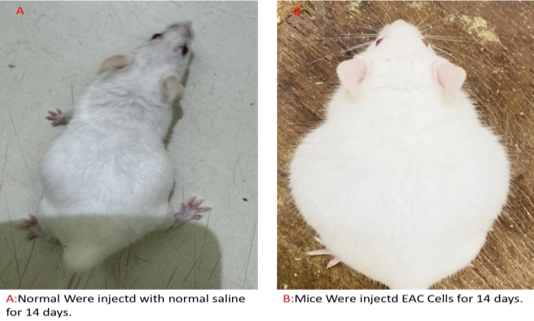
EAC cells were initially obtained from the National Cancer Institute in Cairo, Egypt, for the purpose of the first transplantation. To maintain the cells in vivo, Swiss albino mice were given serial intraperitoneal (I.P.) injections of 2 × 10⁶ EAC cells every 14 days, following the method described by Hasan et al. (2024) (Figure 1).
Experimental animals
Swiss albino mice (female 25-30 g weight) were acquired from Giza, Egypt’s Abo Rawash culture. Mice were housed in cages made of steel mesh. With a 12:12 light/dark cycle and unlimited access to food and drink, mice were housed in pathogen-free, and climate-controlled animal house.
Study design
Forty mature female Swiss albino mice, weighing between 20–30 g, were used in this study. The mice were randomly divided into four groups, with ten mice in each group. Group 1 (G1) served as the control group and received no treatment. Group 2 (G2) received Hylocereus undatus extract (HUE) at a dose of 200 mg/kg body weight. The HUE was prepared using an aqueous extraction method and administered orally via gavage once daily for 14 days, following the method described by Kanchana et al. (2018). Group 3 (G3) was the EAC group, in which mice were intraperitoneally (I.P.) injected with 1 × 10⁶ Ehrlich Ascites Carcinoma (EAC) cells, following the protocol of Medhat et al. (2017). Group 4 (G4) was the treatment group; mice were first injected with 1 × 10⁶ EAC cells (I.P.) and then administered HUE (200 mg/kg) orally once daily for 14 consecutive days.
At the end of the experimental period (day 15), all animals were euthanized for blood and tissue collection.
Blood sampling
Each mouse’s inferior vena cava was used to draw blood samples, which were then centrifuged at 3000×g for 15 minutes after being left to clot for 30 minutes at room temperature. Centrifugation was used to extract serum, which was then kept at -60 °C.
Tissue sampling
After extraction and rinsing in cold saline, 0.8 g of kidney tissue was collected. The remaining portion was preserved in 10% neutral buffered formalin for histological analysis.
Carcinoembryonic antigen (CEA) and serum alpha-fetoprotein (AFP) levels were measured using the MyBioSource Mouse Carcinoembryonic Antigen ELISA Kit, a quantitative sandwich immunoassay (MyBioSource, San Diego, USA), according to the method described by Hasan et al. (2024).
Histopathological investigations
Kidney specimens were preserved in 10% neutral buffered formalin for 48 hours. Tissue sections were then cut at a thickness of 7 microns, cleaned, dried, and embedded in paraffin. The sections were subsequently stained with hematoxylin and eosin (H & E) following the procedure described by Hasan et al. (2024) and Yahya et al. (2024).
Statistical analysis
All statistical analyses were performed using SPSS software version 14.0 for Microsoft Windows (SPSS Inc.). Numerical data are presented as mean ± standard error (SE). Analysis of variance (ANOVA) was used to assess differences in marker levels among the groups. A p-value of less than 0.05 was considered statistically significant.
Results
Effect of EAC or HUE on mice body and kidney weights
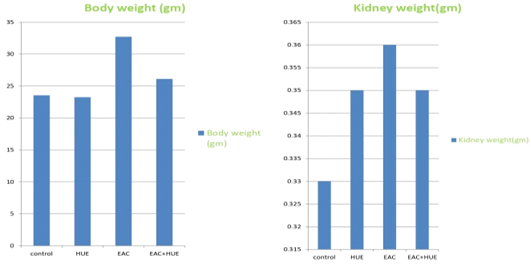
Figure 2 illustrates the variations in body and kidney weights across the different experimental groups. Mice injected with EAC showed significantly increased body and kidney weights compared to the control group (P<0.05). However, treatment with HUE resulted in a substantial reduction in both body and kidney weights in EAC-bearing mice as compared to EAC group (P<0.05).
Effect of HUE on kidney functions and electrolytes
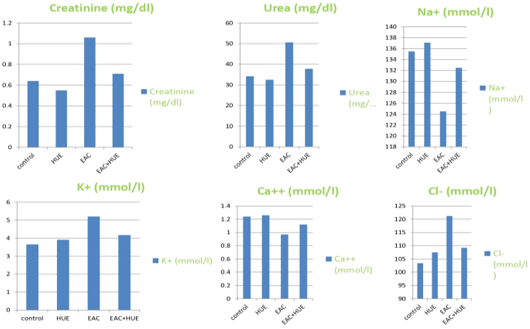
Figure 3 shows that, compared to the control group, EAC caused a significant decrease in sodium and calcium ion levels, along with a marked increase in urea, creatinine, potassium, and chloride ions (P<0.05). Conversely, treatment with HUE (EAC + HUE) significantly increased sodium and calcium levels and decreased urea, creatinine, potassium, and chloride levels compared to the EAC group (P<0.05).
Effect of HUE on tumor markers
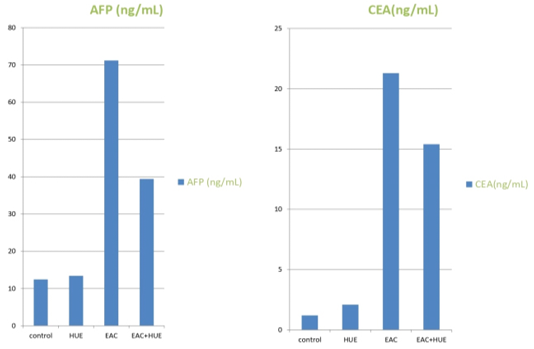
Figure 4 shows that, compared to the control group, EAC induced a significant increase in AFP and CEA levels (P<0.05). However, treatment with HUE (EAC + HUE) led to a marked and significant reduction in these tumor markers compared to the EAC group (P<0.05).
Kidney histopathology
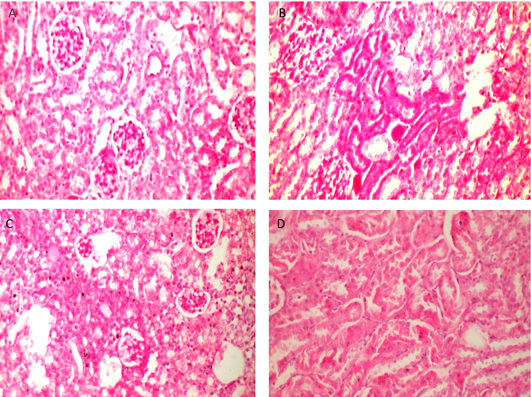
Figure 5 illustrates the histological and morphometric changes in kidney tissues across all treatment and control groups. Kidney sections from the control group exhibited a normal histological structure, with clearly defined renal cortex and medulla. The renal cortex contained multiple renal corpuscles, each comprising a glomerulus surrounded by Bowman’s capsule with a normal filtration space between them. These corpuscles were encircled by a network of convoluted tubules, reflecting typical kidney architecture (Figure 5A). Similarly, kidneys from mice treated with HUE showed normal glomerular and tubular structures comparable to the control group (Figure 5A, B).
In contrast, kidney samples from the EAC group displayed various pathological changes, including severe renal tissue damage, extensive cellular infiltration, and significant degradation of renal structures. The Malpighian corpuscles exhibited loss of their normal shape due to glomerular atrophy (Figure 5C). Treatment with HUE in EAC-injected mice led to moderate histological improvement and tissue organization. Notably, the glomeruli showed remarkable restoration, while the renal tubules demonstrated partial recovery from atrophy and damage (Figure 5D).
Discussion
Chemotherapy is effective against several cancer types; however, its use is often limited by adverse side effects and complications. Cancer remains the second leading cause of death worldwide ; ; . EAC was initially described as an autonomous breast cancer model, mimicking characteristics of common breast cancer . EAC cell invasion into internal organs leads to mitochondrial damage and inflammatory cell aggregation ; . Similar to human cancers, EAC is undifferentiated, rapidly growing, and responsive to therapy ; .
Cytological analysis of ascitic fluid in the EAC + HUE group revealed numerous apoptotic bodies and fewer viable EAC cells, while untreated EAC samples showed increased ascitic fluid volume alongside abundant EAC and mitotic cells. These findings agree with Elbeshlawy et al. (2022), who reported significantly increased ascitic fluid volume, tumor cell count, body weight, and abdominal circumference in EAC-bearing mice.
The current study observed elevated levels of urea, creatinine, potassium (K⁺), and chloride (Cl⁻) ions, alongside decreased sodium (Na⁺) and calcium (Ca²⁺) ions, indicating renal dysfunction induced by EAC. This disruption in kidney function likely results from renal tissue damage caused by EAC, supporting findings from Zahan et al. (2021), who documented similar changes following EAC induction.
Treatment with HUE significantly improved renal function and electrolyte balance in EAC-bearing mice, consistent with Shafiq et al. (2022), who demonstrated renal benefits from HUE administration. Histologically, EAC caused significant glomerular and tubular cell shrinkage and degeneration, echoing the kidney damage reported by Makiyah et al. (2021).
Previous studies ; ; ; ; have confirmed that HUE enhances physiological, tissue, and immune functions due to the high antioxidant content and vital bioactive compounds present in the plant’s leaves.
Conclusions
We conclude from our study that EAC cells induce toxicity in kidney cells, evidenced by altered levels of urea, creatinine, sodium, potassium, calcium, chloride, AFP, and CEA, as well as histological kidney damage. Treatment with HUE significantly improves these biochemical parameters and restores kidney tissue integrity in mice. We recommend further research to explore the therapeutic potential of HUE.
Acknowledgement
Thanks only to the authors for their full support to make the article as good and wonderful as it appears upon publication.
Novelty Statement
This study demonstrates the protective effects Hylocereus undatus Leaf Extract against laboratory mice with Ehrlich Ascites Carcinoma through oncological, histological, and biochemical assays.
Author’s Contribution
The authors contributed equally to the manuscript, including coordination, writing, costs, study design, and statistical analysis.
Ethical approval
This research was conducted with approval from the Biotechnology Research Center at Al-Nahrain University, under ethical approval number E.B.B.30, dated August 2, 2024.
Generative AI and AI-assisted technology statement
No artificial intelligence tools were used in the manuscript, and the authors bear all responsibility for any future consequences thereof.
Conflict of interest
The authors have declared no conflict of interest.
Figures
Figure 1:.
Effect of EAC cells on mice. A: Control group mice injected with normal saline for 14 days. B: EAC group mice injected with Ehrlich ascites carcinoma (EAC) cells for 14 days.
Figure 2:.
Effects of EAC and/or HUE on body and kidney weights.
Figure 3:.
Changes in serum kidney function markers (creatinine and urea) and electrolyte levels (Naâº, Kâº, Ca²âº, Clâ») among the experimental groups.
Figure 4:.
Changes in serum tumor marker levels (AFP and CEA) among the experimental groups.
Figure 5:.
Representative photomicrographs of kidney sections stained with H&E from different experimental groups (H & E, ×400). A: Kidney showing normal histological structure of glomeruli and renal tubules. B: Kidney showing severe necrosis of renal tubules (black arrow) and glomerular capillaries. C: Kidney displaying abnormal renal tubular epithelial cells with marked degeneration and necrosis. D: Kidney showing activated renal tubular epithelium and enhanced pinocytosis.
References
Abd El-Rahmana HA, Hasanb AF, Alyasiric T, El-Wahshd HM, Althubyanie SA, Basyonyf M , Mahmodf DH (2024). Co-treatment with cranberry and vitamin-C mitigates reproductive toxicities induced by phenobarbital in male rats. Cel. Phys. Biol., 58: 722-738. https://doi.org/10.33594/000000745[CrossRef]
Abo-Ser MM, Toson ESA, El-Bindary AA, Schlatter G, Shoueir KR (2024). Smart chitosan nanogel for targeted doxorubicin delivery, ensuring precise release, and minimizing side effects in Ehrlich ascites carcinoma-bearing mice. Int. J. Boil. Macro, 267: 131390. https://doi.org/10.1016/j.ijbiomac.2024.131390[CrossRef]
Aldayel TS, Gad El-Hak HN, Nafie MS, Saad R, Abdelrazek HM, Kilany, OE (2023). Evaluation of antioxidant, anti-inflammatory, anticancer activities and molecular docking of Moringa oleifera seed oil extract against experimental model of Ehrlich ascites carcinoma in Swiss female albino mice. BMC Compl. Med. Ther., 23(1): 457. https://doi.org/10.1186/s12906-023-04279-z[CrossRef]
Al-Dulimia AG, Hasan AF, Al–Mogadamy OA (2022). Anti-tumor activity of gold nanoparticles by use high content screening technique (HCS). J. Med. Lif. Sci., 4(3): 27-40. https://doi.org/10.21608/jmals.2022.256487[CrossRef]
Al-Khuzaay HM, Al-Juraisy YH, Hasan AF, Tousson E (2024). Antitumor activity of β-glucan isolated from date fruits on cancer cells in vivo. Open Med. Physiol., 11(3): 41-48.
Al-Maliki NS, Jumaah YH, Hameed HM, Khudhair OE, Hadid MA, Hasan AF (2025). Evaluation of miRNA-155 as a biomarker for cancer stem cells and its role in chemotherapy resistance in Iraqi patients with acute myeloid leukemia. Open Med. Phys., 12(1): 30-37.
Altemeemi AS, Kadhim NK, Nsaif GS (2021). Changes in interleukins and follicle stimulating hormone in toxoplasmosis male patients. Ind. J. Fore. Med. Tox., 15(1): 803-807.
Antar SA, Ashour A, Abdo W, Khodir AE, Sherif AE, Qiu L, Zaki AA (2024). Anti-tumor effects of Soyasaponin IV as a natural product in Ehrlich ascites carcinoma bearing mice: Modulation of monocyte vascular endothelial growth factor (VEFG) and nuclear factor kappa B (NF-κB) pathways. Ara J. Bas. App. Sci., 31(1): 71-82. https://doi.org/10.1080/25765299.2023.2296723[CrossRef]
Elbeshlawy SM, Hamada R, Goda WM, Abou-Rawash ARA, Hassan SM (2022). Protective role of concanavalin-A and/or IL-27 against adverse effects of cyclophosphamide on hematological and biochemical parameters in tumor-bearing mice. Dam. J. Vet. Sci., 8(1): 31-38. https://doi.org/10.21608/djvs.2022.141297.1076[CrossRef]
El-Zahed MM, Baka ZA, Abou-Dobara MI, El-Sayed AK, Aboser MM, Hyder A (2021). In vivo toxicity and antitumor activity of newly green synthesized reduced graphene oxide/silver nanocomposites. Bior. Biopr., 8(1): 44. https://doi.org/10.1186/s40643-021-00400-7[CrossRef]
Ezz AM, Zaki S, Tabl GA (2023). Anti-diabetic effects of pomegranate peel extract and L-carnitine on streptozotocin induced diabetes in rats. Biom. Pharm. J., 16(3): 1827-1835. https://doi.org/10.13005/bpj/2762[CrossRef]
Fritsch J, Garces L, Quintero MA, Pignac-Kobinger J, Santander AM, Fernández I, Abreu MT (2021). Low-fat, high-fiber diet reduces markers of inflammation and dysbiosis and improves quality of life in patients with ulcerative colitis. Clin. Gastr. Hepat., 19(6): 1189-1199. https://doi.org/10.1016/j.cgh.2020.05.026[CrossRef]
Hameed HM, Hasan AF, Razooki ZH, Abed IJ (2024). Effect of treatment with essential oils on the liver toxicity induced by Ehrlich ascites carcinoma in female mouse model. Egypt. J. Can. Biomed. Res., 8(2): 27-34. https://doi.org/10.21608/jcbr.2024.267473.1339[CrossRef]
Hameed HM, Razooki ZH, Hasan AF, Rasool AAAA, Abed IJ (2025). Therapeutic effect of essential oils (Citrus sinensis) against ehrlich ascites model induced renal toxicity in female mice. Agric. Sci. Dig., 45(2). https://doi.org/10.18805/ag.DF-632[CrossRef]
Hasan AF, Alankooshi AA, Abbood AS, Dulimi AG, Mohammed Al-Khuzaay H, Elsaedy EA, Tousson E (2023). Impact of B-glucan against ehrlich ascites carcinoma induced renal toxicity in mice. Online J. Biol. Sci., 23(1): 103-108. https://doi.org/10.3844/ojbsci.2023.103.108[CrossRef]
Hasan AF, Alankooshi AA, Modher MN, El-Naggar SA, El-Wahsh HM, El-Bagoury AE, Kabil DI (2024). Artemisia annua extract ameliorates hepato-renal dysfunctions in obese rats. Open Med. Physiol., 11(2): 47-65.
Hasan AF, Hameed HM, Hadid MA, Tousson E (2024). Impact of Chia (Salvia hispanica) seeds extract on Ehrlich ascites model induced kidney toxicity in female mice. Asia J. Dairy Food Res., 43(4). https://doi.org/10.18805/ajdfr.DRF-397[CrossRef]
Hasan AF, Hameed HM, Hussein MS, Abbood AS, Jawad AA (2024). Impact of essential oils (Orange peels) on Ehrlich ascites carcinoma against cardiac damage in female mice. J. Med. Li. Sci., 6(1): 41-50. https://doi.org/10.21608/jmals.2024.266129.1018[CrossRef]
Hasan AF, Jasim NA, Abid AT, Tousson E (2024). Role of Salvia hispanica seeds extract on Ehrlich ascites model induced liver damage in female mice. J. Bios. App. Res., 10(2): 161-169. https://doi.org/10.21608/jbaar.2024.274518.1040[CrossRef]
Ibrahim MS, Baker LAA (2024). Isolation and extraction of gallic acid from Hylocereus undatus and a biochemical and histological study on laboratory Wistar albino rats with induced rheumatoid arthritis. J. App. Nat. Sci., 16(1). https://doi.org/10.31018/jans.v16i1.4990[CrossRef]
Islam F, Khatun H, Ghosh S, Ali MM, Khanam JA (2012). Bioassay of Eucalyptus extracts for anticancer activity against Ehrlich ascites carcinoma (eac) cells in Swiss albino mice. Asia. Pac. J. Trop. Biomed., 2(5): 394-398. https://doi.org/10.1016/S2221-1691(12)60063-X[CrossRef]
Jasim BH, Mohammed KR, Mohammed SA, Sulaiman SD, Hasan AF (2025). Extraction, optimization, and purification of anti-cancer l-glutaminase enzyme from bacillus subtilis B7. Open Med. Physiol., 12(2): 43-57.
Kanchana P, Devi SKSV, Latha PP, Spurthi N (2018). Phytochemical evaluation and pharmacological screening of antiparkinson’s and laxative activities of Hylocereus undatus (White Pitaya) in rodents. IO. J. Phama., 8(4): 78-92.
Kareem KN, Hussein ZA (2023). The GGC medium reduces the DNA fragmentation of human spermatozoa via in vitro activation. Arch. Raz. Inst., 78(2): 709-714.
Li C, Zhang Y, Zhao C, Fu X (2023). Physicochemical characterization, antioxidative and immunoregulatory activity of polysaccharides from the flower of Hylocereus undatus (Haw.) britton et rose. Int. J. Biol. Macro, 251: 126408. https://doi.org/10.1016/j.ijbiomac.2023.126408[CrossRef]
Li X, Gao Y, Han W, Lin J, Hu Q, Chen, D (2013). Antioxidant activity and mechanism in flower of Hylocereus undatus (Haw.) Britt. Rose. Ac. Biol. Craco. Bot.
Makiyah SNN, Tasminatun S, Arsito PN, Fauziah KN, Nugrahanti DR, Putriani A (2021). Subchronic toxicity of piperine in piper nigrum on the histology of the kidney, liver, and lungs of mice (Mus musculus L.). Ba. Med. J., 10(3): 1161-1167. https://doi.org/10.15562/bmj.v10i3.2837[CrossRef]
Medhat D, Hussein J, El-Naggar ME, Attia MF, Anwar M, Latif YA, El-Khayat Z (2017). Effect of Au-dextran NPs as anti-tumor agent against EAC and solid tumor in mice by biochemical evaluations and histopathological investigations. Biomed. Pharma, 91: 1006-1016. https://doi.org/10.1016/j.biopha.2017.05.043[CrossRef]
Mohamed AAR, Bohy KME, Moustafa GG, Mohammed HH, Metwally MM, Mohammed HED, Saber TM (2022). Sustained functioning impairments and oxidative stress with neurobehavioral dysfunction associated with oral nicotine exposure in the brain of a murine model of Ehrlich ascites carcinoma: Modifying the antioxidant role of Chlorella vulgaris. Biol, 11(2): 279. https://doi.org/10.3390/biology11020279[CrossRef]
Molitorisova M, Sutovska M, Kazimierova I, Barborikova J, Joskova M, Novakova E, Franova S (2021). The anti-asthmatic potential of flavonol kaempferol in an experimental model of allergic airway inflammation. E. J. Pharma., 891: 173698. https://doi.org/10.1016/j.ejphar.2020.173698[CrossRef]
Naik AV, Dessai SN, Sellappan K (2021). Antitumour activity of Annona muricata L. leaf methanol extracts against Ehrlich Ascites Carcinoma and Dalton’s Lymphoma Ascites mediated tumours in Swiss albino mice. Lib. J. Med., 16(1). https://doi.org/10.1080/19932820.2020.1846862[CrossRef]
Obaid RM, Yaseen FT, Mukhlif MY (2020). Blood cells depletion after chemotherapy in Iraqi women with breast cancer. Ind. J. For. Med. Toxic., 14(4): 3379-3382.
Obaid MR, Tareq YF, Kareem KN, Hameed SD, Tarq SZ, Sahib AD, Hasan AF (2025). Changes in the level of lipid profile in diabetes mellitus in samples patients. J. Bio. Appl. Res., 11(1): 331-336. https://doi.org/10.21608/jbaar.2025.350090.1134[CrossRef]
Obaid RM, Yaseen FT, Salim AK (2020). Correlation between vitamin D3 (cholecalciferol) and thyroid diseases in Iraqi patients. Ann. Trop. Med. Publ. Health, 23: 231-603. https://doi.org/10.36295/ASRO.2020.231603[CrossRef]
Razooki ZH, Al-Mashhadani MK, Abed IJ (2020). Biomaterial composition of the microalga Coelastrella sp. (MH923012): Effect of carbon source. Mat. Tod. Proc., 20: 621-626. https://doi.org/10.1016/j.matpr.2019.09.200[CrossRef]
Razooki ZH, Mohammed SA, Hameed HM, Hasan AF, El-Wahsh HM (2025). Prophylactic action of Moringa oleifera against cyclophosphamide-induced harmful effects in male mice. J. Anim. Health Prod., 13(2): 335-339. https://doi.org/10.17582/journal.jahp/2025/13.2.335.339[Full text][CrossRef]
Razooki ZH, Abed IJ, Al-Mashhadani MK (2019). Effect of the aqueous carbon source on growth rate of the microalgae Coelastrella sp. MH923012. Plant Arch., 19(2): 1420-1425.
Rizzk YW, El-Deen IM, Behery ME, Mourad AA, Mohammed FZ (2024). In vivo anticancer study of sodium 2-[(4-oxidobenzylidene) amino]-6H-1, 3, 4-thiadiazine-5-olate against Ehrlich ascites carcinoma via targeting PI3K/mTOR pathway. Chem. Biol. Dru. Des., 103(2): e14452. https://doi.org/10.1111/cbdd.14452[CrossRef]
Saleh MM, Sabbah MA, Zedan ZK (2024). Isolation and characterization of three lytic bacteriophages to overcome multidrug-, extensive drug-, and pandrug-resistant Pseudomonas aeruginosa. PHA, 5(4): 230-240. https://doi.org/10.1089/phage.2021.0018[CrossRef]
Saleh N, Allam T, Korany RM, Abdelfattah AM, Omran AM, Attia Abd Eldaim M, Borai El-Borai N (2025). Hesperidin exacerbates the therapeutic potency of cisplatin against hepatocytotoxicity of Ehrlich ascites carcinoma in mice. Sci. Rep., 15(1): 20319. https://doi.org/10.1038/s41598-025-02442-9[CrossRef]
Saleh N, Allam T Korany, RM, Abdelfattah AM, Omran AM, Abd Eldaim MA, El-Borai NB (2022). Protective and therapeutic efficacy of hesperidin versus cisplatin against ehrlich ascites carcinoma-induced renal damage in mice. Pharma, 15(3): 294. https://doi.org/10.3390/ph15030294[CrossRef]
Shafiq S, Zahan, R, Yesmin S, Khan, A, Mahmud MS, Reza MA, Batiha GES (2022). Phytochemical analysis and understanding the antioxidant and anticancer properties of methanol extract from Litsea glutinosa: In vitro and in vivo studies. Mole, 27(20): 6964. https://doi.org/10.3390/molecules27206964[CrossRef]
Sharma N, Thakur S, Kour R, Kumar A, Ahmad A, Kaushik P, Kaur S (2023). Plumbago zeylanica L. exhibited potent anticancer activity in Ehrlich ascites carcinoma bearing Swiss albino mice. J. King Saud Univ. Sci., 35(9): 102932. https://doi.org/10.1016/j.jksus.2023.102932[CrossRef]
Song B, Zheng C, Zha C, Hu S, Yang X, Wang L, Xiao H (2020). Dietary leucine supplementation improves intestinal health of mice through intestinal SIgA secretion. J. Appl. Micro, 128(2): 574-583. https://doi.org/10.1111/jam.14464[CrossRef]
Song H, Zheng Z, Wu J, Lai J, Chu Q, Zheng X (2016). White pitaya (Hylocereus undatus) juice attenuates insulin resistance and hepatic steatosis in diet-induced obese mice. PLoS One, 11(2): e0149670. https://doi.org/10.1371/journal.pone.0149670[CrossRef]
Sonu P, Chandrika PN, Abhilash G, Kumar NSJ, Pawar CA (2025). Histological changes of kidney, liver, pancreas in alloxan induced diabetic mice treated with Selenicereus undatus (Haw) ethanolic extract. J. Adv. Zool., 46(1). https://doi.org/10.53555/jaz.v46i1.5098[CrossRef]
Tawfic AA, Ibrahim HM, Mohammed-Geba K, Abu El-Magd M (2024). Immunomodulatory effect of chitosan nanoparticles on ehrlich ascites carcinoma mice. Egypt J. Vet. Sci., pp. 1-9. https://doi.org/10.21608/ejvs.2024.331998.2455[CrossRef]
Tawfic AA, Ibrahim HM, Mohammed-Geba K, El-Magd MA. (2024). Chitosan nanoparticles, camel milk exosomes and/or Sorafenib induce apoptosis, inhibit tumor cells migration and angiogenesis and ameliorate the associated liver damage in Ehrlich ascites carcinoma-bearing mice. Ben-Su. Univ. J. Bas. Appl. Sci., 13(1): 74. https://doi.org/10.1186/s43088-024-00535-4[CrossRef]
Teaima MH, Badawi NM, Attia DA, El-Nabarawi MA, Elmazar MM, Mousa SA (2022). Efficacy of pomegranate extract loaded solid lipid nanoparticles transdermal emulgel against Ehrlich ascites carcinoma. Nanom. Nanot, Biol. Med., 39: 102466. https://doi.org/10.1016/j.nano.2021.102466[CrossRef]
Wahyuni T, Putri SH, Bahtiar A (2023). Study of anti-hyperuricemia, anti-inflammatory, and anti-nociceptive effects of Hylocereus undatus stem bark extract in animal models. Pharma. Sci. Res., 10(3): 6. https://doi.org/10.7454/psr.v10i3.1340[CrossRef]
Wei Y, Gong J, Zhu W, Tian H, Ding C, Gu L, Li, J (2016). Pectin enhances the effect of fecal microbiota transplantation in ulcerative colitis by delaying the loss of diversity of gut flora. Br. Med. Microb., 16: 1-9. https://doi.org/10.1186/s12866-016-0869-2[CrossRef]
Yahya A, Adil OW, Mohammed HO, Hasan AF (2024). Histopathological and immunohistochemical studies on the effects of silver oxide nanoparticles (AgNPs) on male rats’ liver. J. Biol. Appl. Res., 10(3): 392-398.
Yaseen FT, Al-Jumaily RMK (2024). Evaluation of global DNA methylation, homocysteine and vitamin B12 levels among patients with celiac disease. GASTR, 58(4): 258-263. https://doi.org/10.22141/2308-2097.58.4.2024.637[CrossRef]
Yaseen FT, Al-Jumaily RMK (2025). The impact of interleukin-21 and 23 serum level and gene expression in celiac disease among sample of Iraqi patients. Asian J. Da. Food Res., 44(2). https://doi.org/10.18805/ajdfr.DRF-476[CrossRef]
Zahan R, Ahmed S, Sharmin T, Halim MA, Rahi MS, Sheikh MC, Reza MA (2021). Synthesis of bis [benzyl-N′-hydrazinecarbodithioato-κ2 N′, S] nickel (II) complex as a novel lead molecule for cancer treatment. Appl. Organ. Chem., 35(1): e6036. https://doi.org/10.1002/aoc.6036[CrossRef]
Zahran RF, Elsaka RM, Diab M (2024). Effect of 1-((2-hydroxyphenyl) iminomethyl) naphthalene-2-ol on a biochemical and hematological markers in Ehrlich ascites carcinoma bearing mice. Sci. J. Dam. Fac. Sci, 14(3): 1-11. https://doi.org/10.21608/sjdfs.2025.320026.1180[CrossRef]
Zhu JX, Wen L, Zhong WJ, Xiong L, Liang J, Wang HL (2018). Quercetin, kaempferol and isorhamnetin in Elaeagnus pungens Thunb. leaf: Pharmacological activities and quantitative determination studies. Chem. Biodi., 15(8): e1800129. https://doi.org/10.1002/cbdv.201800129[CrossRef]