Mohamed Gharbi1*, Houda Omri1, Mohamed Jedidi1, Samir Zorii2, Mohamed Aziz Darghouth1
1Laboratoire de Parasitologie, École Nationale de Médecine Vétérinaire, Université de Manouba, 2020 Sidi Thabet, Tunisia; 2Office des Terres Domaniales, Agro-Combinat El Alem, Tunisia.
*Correspondence | Mohamed Gharbi, Laboratoire de Parasitologie, École Nationale de Médecine Vétérinaire, Univ. Manouba, 2020 Sidi Thabet, Tunisia; Email: gharbim2000@yahoo.fr
Abstract
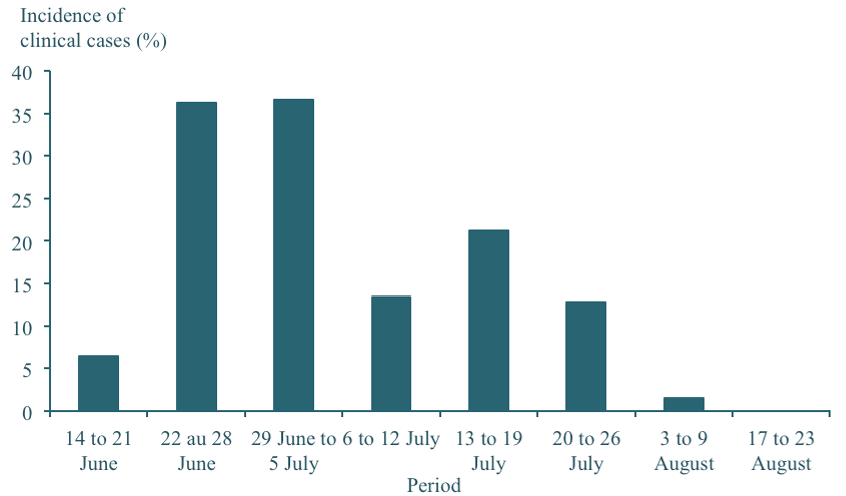
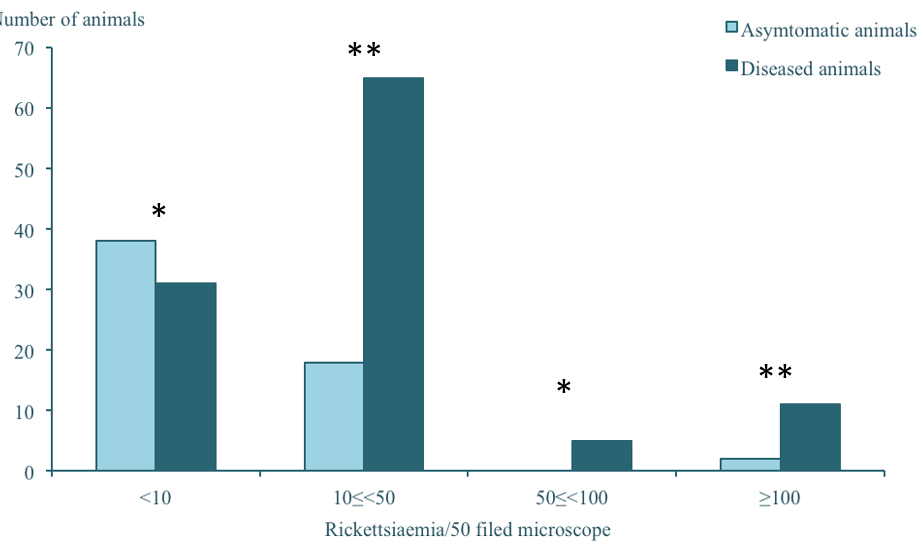
Specific diagnosis of infection with Anaplasma ovis is difficult, if based only on clinical signs. A cross-sectional survey was carried out in 26 flocks totalling 8,049 ear tagged Barbarin sheep. All the animals were clinically examined and Giemsa stained blood smears were performed. A total number of 282 Anaplasma ovis infected sheep were examined for clinical symptoms. The cumulative incidence of sheep anaplasmosis was 11.6%, rickettsiaemia was significantly higher in symptomatic (median=16/50 field microscope) compared to asymptomatic animals (median=6/50 field microscope) (p<0.001). Symptoms of anaplasmosis were pale mucosa (84.4%), anorexia (25%), prostration (51.6%), nasal discharge (18.3%), respiratory distress (22.6%) and fever (100%). Clinical cases with no mortality, and positive blood smears, only occurred in lambs, and adults were apparently immune. The situation may therefore be considered as enzootic stable. We recommend for field veterinarians to suspect erythrocytic anaplasmosis in regions where Rhipicephalus turanicus is present in lambs with prostration, pale mucosa, and fever.
Keywords | Anaplasma ovis, Sheep, Erythrocytic anaplasmosis, Clinical symptoms, Tunisia