
Mohamed Anis Boussaadoun1, Mohamed Gharbi1*, Leila Sayeh2, Mohamed Chiheb Soudani3, Mohamed Aziz Darghouth1
1Laboratory of Parasitology, Ecole Natinale de Médecine Vétérinaire de Sidi Thabet, Institution de la Recherche et de l’Enseignement Supérieur Agricoles, Univ. Manouba, 2020 Sidi Thabet, Tunisia; 2Field Veterinary Surgeon, 7010 Sejenane, Tunisia; 3Field Veterinary Surgeon, 7000 Bizerte, Tunisia.
*Correspondence | Mohamed Gharbi, Laboratory of Parasitology, Ecole Natinale de Médecine Vétérinaire de Sidi Thabet, Institution de la Recherche et de l’Enseignement Supérieur Agricoles, Univ. Manouba, 2020 Sidi Thabet, Tunisia, Tunisia; E-mail: gharbim2000@yahoo.fr
Abstract
The authors present a cross-sectional survey of clinical cases of tropical theileriosis in the humid region of Bizerte (Northwest Tunisia). A total number of 122 belonging to 107 extensive cattle farms were confirmed positive to two species of piroplasms (Theileria annulata and Babesia spp.) by Giemsa technique. The prevalence of co-infections (T. annulata-Babesia spp.) was 5.7% (7/122). The incidence of clinical cases was unimodal, it lasted from early June to mid-August, with a peak in mid-July. The majority (95/735; 12.92%) of clinical cases were observed in exotic breeds; by comparison, the prevalence among crossbred animals was 3.53% (26/735). In total, 14.42% (106/735) of cattle were recently introduced in the farm. The infection prevalence in cows was 10.2% (75/735) they were more infected by T. annulata than the other cattle categories. This study is the first report description concerning tropical theileriosis in Northwest Tunisia; further studies are needed to better characterize the epidemiology of theileriosis in the humid region of Tunisia.
Keywords | Theileria annulata, Cattle, Tropical theileriosis, Giemsa, Tunisia
Editor | Muhammad Imran Rashid, Department of Parasitology, University of Veterinary and Animal Sciences, Lahore, Pakistan.
Received | September 01, 2015; Revised | November 24, 2015; Accepted | November 27, 2015; Published | December 11, 2015
Citation | Boussaadoun MA, Gharbi M, Sayeh L, Soudani MC, Darghouth MA (2015). Epidemiological situation of bovine tropical theileriosis (Theileria annulata infection) in the Northwest Tunisia. J. Adv. Parasitol. 2(4): 69-74.
ISSN | 2311-4096
Copyright © 2015 Boussaadoun et al. This is an open access article distributed under the Creative Commons Attribution License, which permits unrestricted use, distribution, and reproduction in any medium, provided the original work is properly cited.
Short Communication · Volume 2, Issue 4, Pages 69–74, 11 December 2015 · Open Access
Epidemiological Situation of Bovine Tropical Theileriosis (<i>Theileria</i> <i>annulata</i> Infection) in the Northwest Tunisia
· · · ·
Article Info ⌄
- Journal:
- The Journal of Advances in Parasitology
- Published:
- 11 December 2015
From the article
- Abstract | The authors present a cross-sectional survey of clinical cases of tropical theileriosis in the humid region of Bizerte (Northwest Tunisia).
- The majority (95/735; 12.92%) of clinical cases were observed in exotic breeds; by comparison, the prevalence among crossbred animals was 3.53% (26/735).
- The infection prevalence in cows was 10.2% (75/735) they were more infected by T. annulata than the other cattle categories.
- Keywords | Theileria annulata, Cattle, Tropical theileriosis, Giemsa, Tunisia.
Selected from the article's own text.
Abstract
Table
Positive/overall (%) OR [95% CI] | |||||
Parameter | Theileria annulata | Babesia spp. | T. annulata and Babesia spp. | Overall | |
Breed | Holstein | 34/235 (14.46) 1.11 [0.6; 2.05] | 0/235 N.A. | 2/235 (0.85) 0.35 [0.04; 2.23] | 36/235 (14.4) 0.97 [0.54; 1.75] |
Brown Swiss | 53/293 (18.08) 1.59 [0.56; 4.85] | 1/293 (0.3) N.A. | 1/293 (0.3) 0.14 [0.01; 1.32] | 55/293 (18.7) 1.05 [0.61; 1.8] | |
Tarentaise cattle | 5/41(12.19) 0.91 [0.28; 2.77] | 0/41 N.A. | 0/41 N.A. | 5/41 (12.19) 0.75 [0.23; 2.24] | |
Crossbreed | 22/166 (13.25) | 0/166 | 4/166 (2.4) | 26/166 (15.66) | |
Sex | Male | 18/103 (17.47) 1.18 [0.65; 2.12] | 0/103 N.A. | 1/103 (0.97) N.A. | 19/103 (18.44) 1.16 [0.65; 2.05] |
Female | 96/632 (15.18) | 1/632 (0.15) | 6/632 (0.94) | 103/632 (16.29) | |
Animal category | Male calf | 8/32 (25) 1.94 [0.77; 4.77] | 0/32 N.A. | 0/32 N.A. | 8/32 (25) 1.8 [0.71; 4.4] |
Female calf | 5/24 (20.8) 1.53 [0.48; 4.54] | 0/24 N.A. | 0/24 N.A. | 5/24 (20.8) 1.42 [0.45; 4.19] | |
Bull calf | 10/71 (14.08) 0.96 [0.44; 2.04] | 0/71 N.A. | 1/71 (1.4) N.A. | 11/71 (15.5) 0.99 [0.47; 2.05] | |
Heifer | 20/123 (16.26) 1.13 [0.64; 2] | 0/123 N.A. | 2/123 (1.62) 1.99 [0.25; 12.75] | 22/123 (17.88) 1.17 [0.67; 2.03] | |
Cow | 71/485 (14.6) | 1/485 (0.2) | 4/485 (0.82) | 76/485 (15.67) | |
Age | ≤ 6 months | 13/56 (23.2) 1.59 [0.76; 3.29] | 0/56 N.A. | 0/56 N.A. | 13/56 (23.2) 1.44 [0.69; 2.96] |
6 months< <15months | 14/89 (15.73) 0.98 [0.49; 1.93] | 0/89 N.A. | 0/89 N.A. | 14/89 (15.73) 0.89 [0.45; 1.74] | |
15 months≤ <4 years | 29/227 (12.77) 0.77 [0.46; 1.28] | 0/227 N.A. | 3/227 (1.3) 1.2 [0.21; 6.4] | 32/227 (14.09) 0.78 [0.48; 1.27] | |
≥ 4 years | 58/363 (15.97) | 1/363 (0.27) | 4/363 (1.1) | 63/363 (17.35) | |
Number of summer seasons in the farm | 0 1 ≥ 2 Overall | 99/622 (15.91) 1.02 [0.52; 2.01] 2/30 (6.66) 0.38 [0.06; 1.98] 13/83 (15.05) 114/735 (15.51) | 1/622 (0.16) N.A. 0/30 N.A. 0/83 1/735 (0.13) | 7/622 (1.12) N.A. 0/30 N.A. 0/83 (0.94) 7/735 (0.95) | 107/622 (17.2) 1.12 [0.58; 2.21] 2/30 (6.66) 0.38 [0.06; 1.98] 13/83 (16) 122/735 (16.59) |
Abortion | 4/30 (13.33) | 0/30 | 1/30 (3.33) | 5/30 (16.6) | |
Lethality | 2/735 (0.27) | 0/735 | 0/735 | 2/735 (0.27) | |
1: Association between the different parameters and prevalence of piroplasms in cattle
OR: Odds Ratio; N.A: Not Applicable
The clinical symptoms observed on animals with co-infections were in favor of tropical theileriosis, because babesiosis (Babesia spp. infection) is transmitted by Rhipicephalus annulatus which is active during the autumn and winter . This seasonal distribution was similar to that observed in semi-arid regions in Tunisia ; , as well as the activity of the tick vector ; .
The majority of clinical cases (109/122; 89.3%) were from Sejnane delegation, especially El Maâlia locality (71/122; 58.2%) (χ2= 96.15; p<0.0001) (Figure 4). These results can be explained by differences in risk factors such as the technicality of breeders or poorly built cattle enclosures and size of the herd of cattle at risk in these areas. The majority of clinical cases (99/122; 81.1%) (χ2=94.3; p<0.0001) were from farms containing less than or equal to 10 animals. There was a significant negative correlation between the farm size and the incidence of clinical cases (Pearson correlation coefficient = - 0.81; p<0.0001) (Figure 5). Tropical theileriosis is more frequent in small cattle farms characterized by poor technical skills and low financial incomes affecting the cattle premises quality (presence of crevices and cracks) favorable to domestic tick H. scupense and on herd health . Indeed, the nymphs hibernate in the crevices and cracks, these shelters are also the egg laying site of engorged females . When considering the cattle population in the region, pure bred cattle were the most infected, the prevalence of the disease in Brown Swiss breed was 11.25% (54/480), 11.25% (36/320) in Holstein and only 0.34% (26/7500) in the crossbreed (χ2=623.55; p<0001). This difference could be explained by genetic resistance of crossbreed cattle . The majority of diseased animals (106/122; 86.88%) (χ2=135.21; p<0.0001) were recently introduced in the farm (Figure 3). These animals were naive against T. annulata and when introduced to the farms they are infected by the ticks .
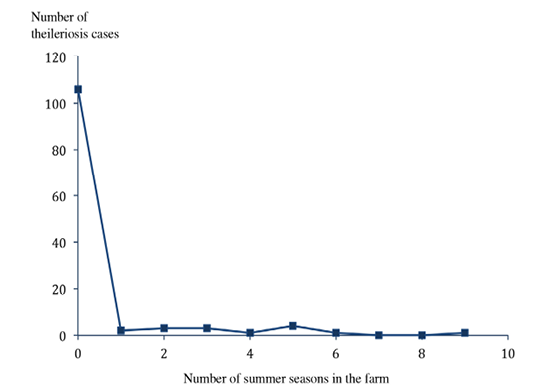
Figure 3:Number of tropical theileriosis clinical cases with regard to the number of summer seasons spent in the farm
These results show that the disease is mainly due to the introduction of exotic cattle breeds. Tropical theileriosis is a problem during any incomplete transition from traditional breeding to exotic breeds without acquiring the necessary technical package. This observation therefore illustrates the need of technical support to breeders by state regional structures concerned to ensure rational transition to the conditions for the breeding of improved breeds. The maximum incidence of clinical cases was observed in animals aged less then or equal to six months, this distribution would indicate the presence of an unstable enzootic state (Darghouth et al., 1996; Darghouth, 2000). Furthermore, the presence of many cases of disease in cows also indicate the presence of an unstable enzootic state as seems to confirm the presence of cows born in stables and yet affected by the disease.
The abortion rate (16.6%) and lethality (0.27%) were probably underestimated. Indeed, they were calculated on the basis of cases reported by breeders. These values were significantly lower than those reported in Tunisia by Darghouth et al. (1997), Khayeche (1998) and Bouattour (2001) which were 30 to 40% and 10 to 13.5%, respectively.
Knowledge of epidemiological indicators is important to define the epidemiological situations and allow an appropriate control programs implementation. Definitively, the failure of control programs against tropical theileriosis is mainly due to the presence of bad cattle premises where exotic cattle are introduced in enzootic tropical theileriosis.
This study is the first to be carried out in humid bioclimatic regions in Tunisia, further studies are needed to better characterize the enzootic states and phenology of the vector in this region.
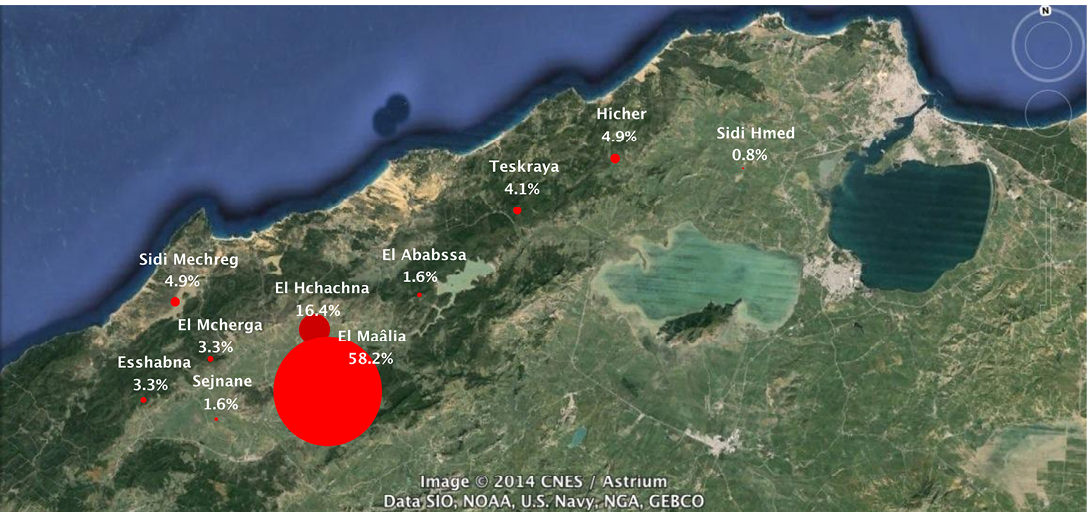
Figure 4: Geographic distribution and prevalence of tropical theileriosis clinical cases in Bizerte gouvernorate (Northwest Tunisia)
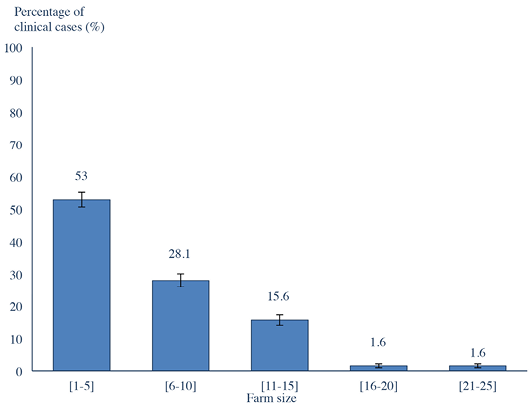
Figure 5: Percentage of tropical theileriosis clinical cases in accordance to farm size
CONFLICT OF INTEREST
We declare that we have no conflict of interest.
ACKNOWLEDGEMENTS
This study was supported by Ministry of Higher Education, Scientific Research and Information, Technology and Communication, Tunisia and the Deutsche Forschungsgemeinschat project “Molecular epidemiology network for promotion and support of delivery of live vaccines against T. parva and T. annulata infection in Eastern and Northern Africa’’ (Grant No. SE 862/2-1) and IRESA project “Etude des contraintes relatives à la filière lait bovin dans la région de Bizerte: vers un nouveau bassin laitier. The authors would like to thank all cattle farmers included in this study and all the staff of Laboratory of Parasitology, National School of Veterinary Medicine, Sidi Thabet, Tunisia: Limam Sassi, Mohamed Jedidi, Taoufik Lahmar and Béchir Guesmi.
Authors’ Contribution
MAB: collected and analyzed the samples and wrote the manuscript;
MG: wrote the manuscript;
MCS and LS: collected the samples;
MAD: designed the study and supervised the work
References
- Bahri S, Kallel A, Garcia A (1995). La theilériose bovine en Tunisie, enquête rétrospective sur cinq années. Bull. Epidémiol. Inst. Rech. Vét. Tunisie. 5: 1-5.
- Bouattour A (2001). Les tiques en Tunisie: rôle de Hyalomma detritum dans la transmission de Theileria annulata. Thèse en Sciences biologiques. Faculté des Sciences de Tunis. Pp. 247.
- Bouattour A, Darghouth MA, Ben Miled L (1996). Cattle infestation by Hyalomma tick and prevalence of Theileria in Hyalomma detritum species in Tunisia. Vet. Parasitol. 65: 256-263. http://dx.doi.org/10.1016/S0304-4017(96)00951-X[CrossRef]
- Darghouth MA (2000). La theilériose tropicale des bovins (Theileria annulata) en Tunisie: caractérisation des états d’endémie et développement de lignées de schizontes atténuées. Thèse de l’Institut National Polytechnique de Toulouse. Pp. 325.
- Darghouth MA (2004). Piroplasmids of livestock in Tunisia. Arch. Inst. Pasteur Tunis. 81: 21-5.
- Darghouth MA (2008). Review on the experience with live attenuated vaccines against tropical theileriosis in Tunisia: considerations for the present and implications for the future. Vaccine. 26(6): G4-G10. http://dx.doi.org/10.1016/j.vaccine.2008.09.065[CrossRef]
- Darghouth MA, Bouattour A, Ben Miled L, Kilani M (1997). Epidemiology and economic impact of tropical theileriosis in Tunisia: Importance and the definition of a strategy of vaccination. Trop. Anim. Health Prod. 29: 50S. http://dx.doi.org/10.1007/BF02632922[CrossRef]
- Darghouth MA, Bouattour A, Ben Miled L, Kilani M, Brown cgd (1996). Epidemiology of tropical theileriosis (Theileria annulata infection of cattle) in an endemic region of Tunisia: characterisation of endemicity states. Vet. Parasitol. 65: 199-211. http://dx.doi.org/10.1016/S0304-4017(96)00974-0[CrossRef]
- Darghouth MA, Bouattour A, Ben Miled L, Sassi L (1996). Diagnosis of Theileria annulata infection of cattle in Tunisia: comparison of serology and blood smears. Vet. Res. 27: 613-621.
- Darghouth MA, Bouattour A, Kilani M (1999). Tropical theileriosis in Tunisia: Epidemiology and control. Parassitologia. 41 (Suppl. 1): 33 – 36.
- Darghouth MA, Preston PM, Bouattour A, Kilani M (2010). Theilerioses. In: Infectious and parasitic diseases of livestock. Eds. Lefèvre P-C, Blancou J., Chermette R., Uilenberg G. Lavoisier, Editions TEC&DOC, Paris, CABI. pp. 1839-1866.
- Gharbi M (2006). Vaccination contre la theilériose tropicale en Tunisie (Theileria annulata): analyse économique et essai d’immunisation par ADN. Thèse de troisième cycle, Institut Polytechnique de Toulouse, France. Pp. 199.
- Gharbi M, Darghouth MA (2014). A review of Hyalomma scupense (Acari, Ixodidae) in the Maghreb region: from biology to control. Parasite. 21: 2. http://dx.doi.org/10.1051/parasite/2014002[CrossRef]
- Gharbi M, Hayouni ME, Sassi L, Dridi W, Darghouth MA (2013). Hyalomma scupense (Acari, Ixodidae) in northeast Tunisia: seasonal population dynamics of nymphs and adults on field cattle. Parasite. 20: 12. http://dx.doi.org/10.1051/parasite/2013012[CrossRef]
- Gharbi M, Mhadhbi M, Darghouth MA (2012). Diagnostic de la theilériose tropicale du boeuf (infection par Theileria annulata) en Afrique du nord. Revue Méd. Vét. 163: 563-571.
- Gharbi M, Rjeibi MR, Darghouth MA (2014). Epidémiologie de la theilériose tropicale bovine (infection par Theileria annulata) en Tunisie: une synthèse. Revue d’Elevage et de Médecine Vétérinaire des Pays Tropicaux. 67(4): 241-247.
- Gharbi M, Sassi L, Dorchies P, Darghouth MA (2006). Infection of calves with Theileria annulata in Tunisia: Economic analysis and evaluation of the potential benefit of vaccination. Vet. Parasitol. 137: 231–241. http://dx.doi.org/10.1016/j.vetpar.2006.01.015[CrossRef]
- Gharbi M, Touay A, Khayeche M, Laarif J, Jedidi M, Sassi L, Darghouth MA (2011). Ranking control options for tropical theileriosis in at-risk dairy cattle in Tunisia, using benefit- cost analysis. Rev. Sci. Tech. Off. Int. Epiz. 30: 763-778.
- Glass EJ, Preston PM, Springbett A, Craigmile S, Kirvar E, Wilkie G, Brown CGD (2005). Bos taurus and Bos indicus (Sahiwal) calves respond differently to infection with Theileria annulata and produce markedly different levels of acute phase proteins. Int. J. Parasitol. 35: 337-347. http://dx.doi.org/10.1016/j.ijpara.2004.12.006[CrossRef]
- Khayeche M (1998). Essai de caractérisation des situations endémiques génératrices de cas cliniques de theilériose bovine à Theileria annulata dans la région de Jedeida. Thèse de doctorat en médecine vétérinaire, Ecole Nationale de Médecine Vétérinaire de Sidi Thabet. Pp. 51.
- Preston PM, Darghouth MA, Boulter NR, Hall FR, Tall R, Kirvar E, Brown DCG (2002). A dual role for immunosuppressor mechanisms in infection with Theileria annulata: well-regulated suppressor macrophages help in recovery from infection; profound immunosuppression promotes non-healing disease. Parasitol. Res. 88: 522–534. http://dx.doi.org/10.1007/s00436-002-0613-8[CrossRef]
- Regional Direction of Agricultural Development, 2007. Annual Report, Bizerte, Tunisia.
- Schwartz D (1993). Méthodes statistiques à l’usage des médecins et des biologistes. Troisième édition. Ed. Flammarion, Paris. Pp. 318.
Services
Article usage statistics
Loading…