Research Article · Volume 11, Issue 2, 24 January 2023 · Open Access
Enumeration and Antibiotic Resistance of S aureus Isolated from Different Meat in Souk Ahras Area, Algeria
· · · ·
Affiliations & Notes ⌄
1Department of Veterinary Science, Institute of Agronomic and Veterinary Sciences, Mohammed Cherif Messaadia University, Souk Ahras, Algeria
2Laboratory of Animal Productions, Biotechnologies and Health (PABIOS), Institute of Agronomic and Veterinary Scien, Algeria
3Laboratory of Hygiene and Animal Pathology, Ibn Khaldoun University, Tiaret, Algeria. Algeria. *Correspondence | Sofiane Tamendjari, Department of Veterinary Science, Institute of Agronomic and Veterinary Sciences, Mohammed Cherif Messaadia University, Souk Ahras, Algeria. Laboratory of Animal Productions, Biotechnologies and Health (PABIOS), Institute of Agronomic and Veterinary Scien, Algeria
A high rate of resistance is also worrying for sulfonamides (93.10%), as this antibiotic is widely used in poultry farming.
This study shows the importance of contamination of sheep carcasses at the communal slaughterhouse, chicken and turkey meat at some butcher shops by Staphylococcus, coagulase positive Staphylococcus and S. aureus.
Moreover, isolated strains are resistant to several antibiotics, and high prevalence of resistance is concerning for penicillin and sulfonamides, hence the need for a rational use of antibiotics and the monitoring of the evolution of these pathogenic and antibiotic resistant strains.
Selected from the article's own text.
Abstract
Staphylococcus aureus is one of the main causes of infections in humans and animals, and it is a contaminant of food and can produce toxins where a real danger of food poisoning for the consumer. In addition, S. aureus are becoming increasingly resistant to antibiotics, leading to therapeutic failures. It is in this context that our study aims to have an idea on the degree of hygiene of meats produced and consumed in the wilaya of Souk Ahras with respect to these strains, and to evaluate their degrees of resistance to certain antibiotics used in human and veterinary medicine A total of 90 samples of sheep, chicken and turkey meat were collected and analyzed. Modified Baird-Parker medium was used for enumeration and isolation of strains, free coagulase and thermonuclease tests were performed as well as other biochemical tests. Antibiotic susceptibility testing was performed to evaluate the resistance of S. aureus to antibiotics. Finally, statistical processing was performed using the STATISTICA 7 software (Statsoft, France). The percentage of samples contaminated with S. aureus was 32.22%, and the average load of S. aureus contaminating sheep, chicken and turkey meat was 3.8×10³ CFU/cm2 +/- 2.55×10³; 2.2×10³ CFU/g +/- 0.99×10³ and 2.01×10³ CFU/g +/- 0.73×10³ respectively. High rates of resistance to penicillin (100%), sulfonamides (93.10%) and multiple resistances were reported in this study. Staphylococci, coagulase-positive Staphylococci and in particular S. aureus are hygiene indicators that should not be neglected. For this reason, the general provisions of the slaughterhouse must be respected, the hygiene conditions improved and the professionals of the sector trained for good production and manufacturing practices. In addition, the use of antibiotics in a reasoned manner and the monitoring of these strains are strongly recommended.
Food safety is an important aspect of public health, fundamental to good health and sustainable development (WHO, 2021).
The 2018 World Bank report on the economic burden of foodborne disease estimates that annual production losses due to foodborne disease in low and middle-income countries are 95.2 US $ billion, with annual treatment costs of 15 US $ billion (WHO, 2020).
Foodborne illnesses are usually infectious or toxic and are caused by bacteria, viruses, parasites or chemicals that enter the body through contaminated food or drink. Despite significant progress made in many countries regarding food safety, millions develop illnesses each year as a result of eating contaminated food.
The pathogenic bacteria that cause a significant number of foodborne illnesses each year worldwide are Salmonella enterica, E.coli, Campylobacter jejuni, Staphylococcus aureus and Listeria monocytogenes .
S. aureus is involved in numerous foodborne illness outbreaks related to a wide variety of foods in many countries . It is responsible for approximately 292,000 cases per year in the Netherlands , 241,000 cases in the United States , 25,000 cases in Canada , and 1300 cases in Australia .
In Algeria, the Ministry of Commerce has recorded 3160 cases of collective food poisoning during the first half of 2021, without giving details of the agents responsible, note to mention the many people who prefer self-medication for fear of COVID-19 at the hospital level. Most studies done on S. aureus in foods, especially milk and dairy products, indicate that it is present at different levels and mainly informs us about its resistance to antibiotics. The resistance of S. aureus to antibiotics is another major problem that should be monitored.
Previous work on S. aureus resistance has revealed that S. aureus can act as a donor and recipient of resistance genes, many resistance genes are located on mobile genetic elements. The acquisition of new resistance genes by S. aureus is ongoing, resulting from its interaction with other bacteria ; .
These strains are responsible for treatment failures and thus limit treatment options for severe infections, leading to increased costs of prevention and medical care .
The Algerian network on antimicrobial resistance is in an alarming situation with regard to multidrug-resistant strains including S. aureus. According to the January 20, 2022 report by Philippa Roxby in BBC Africa, more than 1.2 million people died worldwide in 2019 from infections caused by antibiotic-resistant bacteria, more than the annual number of deaths caused by malaria or HIV. Antibiotic-resistant S. aureus is particularly deadly, as are other resistant bacteria. These data reveal a need for monitoring of antibiotic resistant strains and appropriate and judicious use of antimicrobials. The objective of our study is to evaluate the sanitary quality of meat consumed in the wilaya of Souk Ahras with respect to S. aureus and their resistance to some of the most commonly used antibiotics in human and veterinary medicine.
Materials and Methods
Area and period of study
The study took place at the laboratory of Animal Productions, Biotechnology and Health, at the Institute of Agronomic and Veterinary Sciences, University of Souk Ahras, from March 2018 to September 2020.
Table 1: region, location, origin and number of samples
Region
location
Origine
Number of samples
Souk Ahras
Slaughterhouse
Ovine carcass
30
Souk Ahras
Butchery
Chicken meat
15
Souk Ahras
Butchery
Turkey meat
15
Taoura
Butchery
Chicken meat
15
Taoura
Butchery
Turkey meat
15
The ovine meat samples were taken from ovine carcasses after stamping and before drying, according to the destructive method (ISO 17604 : 2003) with the help of a scalpel, and put in sterile bottles, at the communal slaughterhouse of Souk Ahras.
The chicken and turkey meat samples were taken from the breast at 12 different butcher shops in the commune of Souk Ahras and Taoura, wilaya of Souk Ahras, Algeria.
The samples are put directly into sterile bottles, transported to the laboratory in a cooler and analyzed the same day.
Sample processing
For sheep samples, a volume of 100 ml of previously sterilized peptone water is added to the samples from each sheep carcass to obtain a 10-1 stock solution, and for chicken and turkey meat samples, a volume of nine times the sample weight is added to obtain a 10-1 stock solution after homogenization (ISO 6887-1 : 2017).
Isolation and enumeration of S. aureus
For the isolation of S. aureus, Baird-Parker culture medium (Conda pronadisa, Spain) was used in which egg yolk and potassium tellurite (Giolliti Cantoni Additive, Institut Pasteur, Algeria) were added for better selection (ISO 6888-3 : 2003).
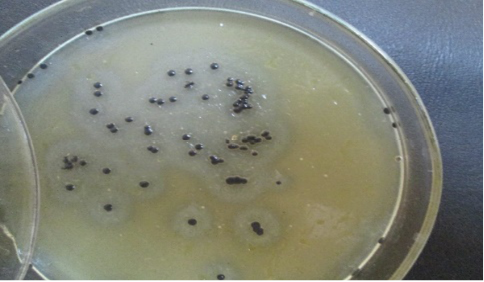
Enumeration was performed after 48 hours of incubation at 37 ℃ for S. aureus presumptive Staphylococci showing black, domed colonies, a clear aureole after 24 hours of incubation, and surrounded by an opaque halo after 48 hours of incubation for 10-2 and 10-3 dilutions, with the following formula : N = ƩC / V × 1.1 × d (ISO 7218 : 2007).
N : number of microorganisms present in the sample.
ƩC : sum of colonies counted from the two dilutions retained namely 10-2 and 10-3, one of the two boxes contains at least 10 colonies.
V : volume inoculated, i.e. 1 ml.
d : the dilution rate of the first dilution retained for the counts, i.e. 10-2.
Presumptive S. aureus colonies are transferred to the heart-brain broth for better enrichment and purification on Mannitol Salt Agar (Chapman) for further testing.
For confirmation, Gram staining, Mannitol degradation, catalase, free coagulase, and thermostable DNase on DNA medium were performed.
Antibiotic susceptibility
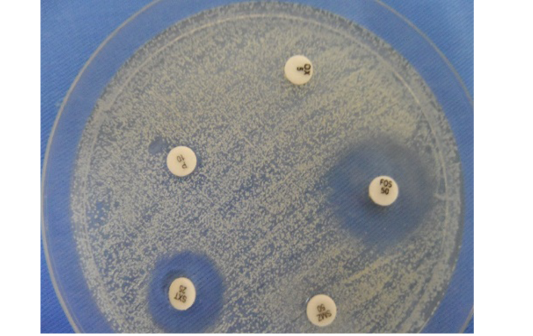
All S. aureus strains were tested against some of the most used antibiotics in human and veterinary medicine by Muller-Hinton agar diffusion method in order to create a sensitivity and resistance profile ; .
The comparison of means and degree of closeness between the isolated strains were performed using STATISTICA 7 software (Statsoft, France).
Results
Prevalence of Staphylococcus
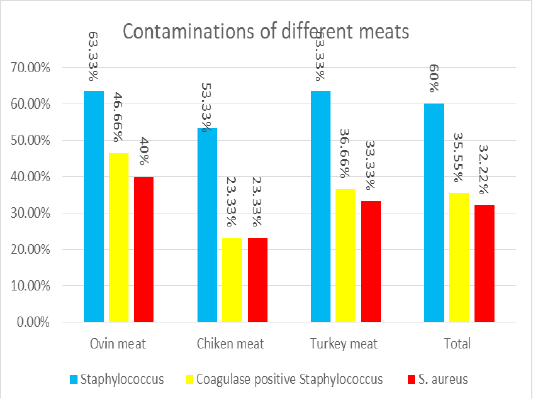
The number of samples contaminated with Staphylococci showing black, round, bulging, shiny colonies with a clear and/or opaque halo after 48 hours of incubation (Figure 1) is 63.33% (19/30) for sheep and turkey meat, and 53.33% (16/30) for chicken meat.
Prevalence of coagulase positive Staphylococcus
The number of samples contaminated with coagulase positive Staphylococci for sheep meat is 46.66% (14/30), for chicken meat 23.33% (7/30) and 36.66% (11/30) for turkey meat.
Prevalence of S. aureus
The number of samples contaminated with S. aureus for sheep meat is 40% (12/30), for chicken meat is 23.33% (7/30), and for turkey meat is 33.33% (10/30) (Figure 2).
Enumeration of Staphylococcus
The average Staphylococcus load for sheep meat is 3.63×10³ CFU/cm2 while the higher and lower values are 11.5×10³ CFU/cm2 and 1.75×10³ CFU/cm2 respectively.
The average Staphylococcus load for chicken meat is 1.9×10³ CFU/gr while the higher and lower values are 3.65×10³ CFU/gr and 8×10² CFU/gr respectively.
The average Staphylococcus load for turkey meat is 1.9×10³ CFU/gr while the higher and lower values are 3.15×10³
Table 2: Frequency of resistance and susceptibility of isolated S. aureus to the antibiotics tested
Antibiotics
Ovin (12)
Chiken (7)
Turkey (10)
Total (29)
Pénicillinea
12 (100%)
7 (100%)
10 100%
29 (100%)
Cefoxiting
0 (0%)
0 (0%)
0 (0%)
0 (0%)
Gentamycinf
3 (25%)
2 (28.57%)
0 (0%)
5 (17.24%)
Ofloxacing
0 (0%)
1 (14.28%)
1 (10%)
2 (6.89%)
Erythromycing
2 (16.66 %)
0 (0 %)
0 (0%)
2 (6.89%)
Lincomycing
0 (0%)
0 (0%)
0 (0%)
0 (0%)
Tetracyclind
2 (16.66%)
2 (28.57%)
3 (30%)
7 (24.13%)
Fosfomycine
0 (0%)
0 (0%)
1 (10%)
1 (3.45%)
Sulfonamide/Trimethoprimf
1 (8.33 %)
2 (28.57%)
2 (20%)
5 (17.24%)
Sulfonamideb
10 (83.33%)
7 (100%)
10 (100%)
27 (93.10%)
Fusidic acidc
3 (25%)
3 (42.85%)
3 (30%)
9 (31.03%)
Chloramphenicolg
0 (0%)
0 (0%)
0 (0%)
0 (0%)
a,b,c,d,e,f,g, significant difference
CFU/gr and 1.1×10³ CFU/cm2 respectively.
Enumeration of coagulase positive Staphylococcus
The average of coagulase positive Staphylococcus load for sheep meat is 3.9×10³ CFU/cm2 while the higher and lower values are 11.5×10³ CFU/cm2 and 1.75×10³ CFU/cm2 respectively.
The average of coagulase positive Staphylococcus load for chicken meat is 2.2×10³ CFU/gr while the higher and lower values are 3.65×10³ CFU/gr and 8×10² CFU/gr respectively.
The average of coagulase positive Staphylococcus load for turkey meat is 1.9×10³ CFU/gr while the higher and lower values are 3.15×10³ CFU/gr and 1.1×10³ CFU/gr respectively.
Enumeration of S. aureus
The average S. aureus load for sheep meat is 3.8×10³ CFU/cm2 +/- 2.55×10³ CFU/cm2 while the higher and lower values are 11.5×10³ CFU/cm2 and 1.75×10³ CFU/cm2 respectively.
The average S. aureus load for chicken meat is 2.2×10³ CFU/gr +/- 0.99×10³ CFU/gr while the higher and lower values are 3.65×10³ CFU/gr and 8×10² CFU/gr respectively.
The average S. aureus load for turkey meat is 2.01×10³ CFU/gr +/- 0.73×10³ CFU/gr while the higher and lower values are 3.15×10³ CFU/gr and 1.1×10³ CFU/gr respectively.
The contamination rate of our samples by S. aureus is 35.55%, 40% for sheep meat, 23.33% for chicken meat and 33.33% for turkey meat with a significant difference (p < 0.05).
Our results are close to the results reported in Algeria by other authors who worked on chicken meat 46.66% , on raw meat and merguez 29.46% and on raw meat 29.4% , or in Ghana (34%) for ready-to-eat meat , in Korea (33.2%) and Combodia (38.2%) for chicken meat and in Turkey (21. 23%) for red raw meats, however low prevalences are reported by Bouzid et al. (2015) (8.3%) and Titouche et al. (2020) (7.05%) having worked on minced meat in Algeria, 14.4% in Italy by Basanisi et al. (2020) for retail meats, and 10.58% in Iran for sheep meats . In Bangladesh, a high prevalence (54.9%) is reported for frozen chicken meat .
Muscle is sterile, for it to become meat, it would need to be worked on and would need time. Both of these are favorable for processing and maturation, but also favorable for contamination, especially as the meat is handled. These contaminations are inevitable during slaughter, during evisceration by the hands of the workers, by the equipment, by the water used and possibly by the contents of the digestive tank.
The average contamination load by coagulase-positive Staphylococci is 3.9×10³ CFU/cm2, or 3.6 log10 CFU/g, for sheep carcasses, and 100% of the sampled carcasses exceeded the contamination load tolerated by Algerian regulations, which is [102-103] CFU/g .
The average contamination load of coagulase-positive Staphylococci for chicken and turkey meat is 2.2×10³ CFU/g (3.34 log10 CFU/g) and 1.9×10³ CFU/g (3.28 log10 CFU/g) respectively, 100% of the samples are within Algerian standards . But according to the European regulation which is 5000 CFU/g for poultry parts and 1000 CFU/g for poultry and poultry cuts since 2020 (FCD, 2019), our samples are not in the standards.
Our results are higher than those reported by Djenidi (2016) and Hamoudi et al. (2013), whose average load of Staphylococci and coagulase-positive Staphylococci on ovine and bovine carcasses are 2.22 log10 CFU/cm2 in Sétif, and 2.15 log10 CFU/cm2 in Tiaret, respectively, in Algeria.
Our results of S. aureus contaminated chicken are lower than those reported by Akermi et al. (2020) (4.09 log10 CFU/g) in western Algeria, but higher than those reported by Guerguab et al. (2014) (1.08 log10 CFU/g) in Algeria, and by Sarhane et al. (2014) (2.67 log10 CFU/g) in Morocco.
The average load of coagulase-positive Staphylococci contaminating turkey meat was 3.28 log10 CFU/g, which is higher than that reported by Hamiroune et al. (2017) (2.02 log10 CFU/g) in Algiers, Algeria.
Some authors who have worked on red meats have reported bacterial loads higher than our results whether for Staphylococci, coagulase positive Staphylococci or S. aureus ; ; , while others have reported lower loads ; ; .
These differences in bacterial loads from one country to another, or from one region to another, depend on the methods used at the level of processing workshops among others slaughterhouses. These methods include compliance with general provisions and training of staff for compliance with safety practices that could affect direct or indirect contamination and increase the bacterial load.
Although these contaminations are unavoidable, it is possible to reduce them. It was noticed in the slaughterhouse that the carcasses are worked on the ground with no separation of the sectors (clean / soiled), no respect of the forward walk, and the cutters do not have specific clothes. At the butcher’s level, it was observed that the butchers do not wear gloves, no smock or smocks stained with blood, no cap, use of the same equipment and wooden surfaces such as tree trunks for cutting and preparing meat, a surface that allows bacteria to encrust, moreover even if the cold is respected, it does not sanitize the food. These conditions increase the likelihood of contamination compared to the regulations of the developed countries, besides some studies have reported that the coagulase positive Staphylococci begin to cause foodborne illnesses and produce free toxins in the food from 105 CFU/g of food .
The highest instance of resistance (Table 4) is observed for Penicillin (100%) and Sulfonamides (93.10%) followed by Fusidic acid (31.03%), Tetracycline (24.14%), Sulfonamides-trimethoprim (17.24%) and Gentamycin (17.24%).
Our results agree with those of Achek et al. (2018) and Titouche et al. (2020) on chicken meat, minced meat and other foods, reporting high rates of resistance to Penicillin. This may be due to the misuse of this antibiotic in these regions. Lower prevalence is reported by other authors observing different meats in Algeria (Challal et al., 2018; , Turkey , Bangladesh , Iran and Korea .
A high rate of resistance is also worrying for sulfonamides (93.10%), as this antibiotic is widely used in poultry farming. For fusidic acid, sulfonamides-Trimethoprim and gentamycin, lower rates are also recorded by some authors in Algeria or in the world ; ;;; ; . These antibiotics are mostly used in human medicine, but other authors have reported higher rates ; . Lower resistances are observed for fosfomycin, Ofloxacin, and Erythromycin, and no resistance was observed for Cefoxitin, lincomycin, and Chloramphenicol. Some of these antibiotics are not used in veterinary medicine, and others are little known by the community for self-medication while others are banned in Algeria like Chloramphenicol. But other countries have recorded higher prevalences ; ; .
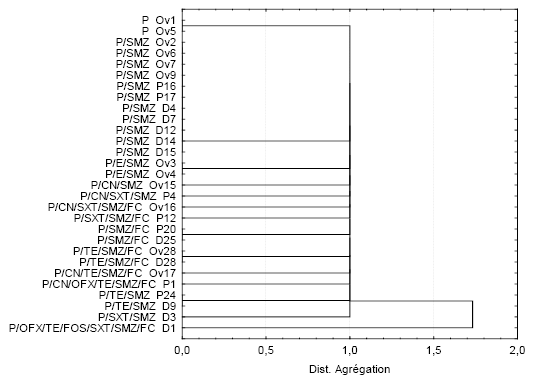
It should be noted that there are 14 different resistance phenotypes, and according to the CLSI (2008) definition, 55.17% have multiple resistance, 37.93% have dual resistance, and 6.89% have single resistance to the antibiotics tested.
In several studies, a large proportion of S. aureus strains isolated from meats were also found to be multi-resistant ; ; ;. Livestock could be an important ecological niche for the emergence of multidrug-resistant S. aureus, as the extensive use of antibiotics for treatment, disease prevention, or growth promotion provides the necessary evolutionary constraints . With respect to community contamination and infection, a multidrug-resistant pathogen is an emerging concern for all meat types .
Conclusion and recommandations
This study shows the importance of contamination of sheep carcasses at the communal slaughterhouse, chicken and turkey meat at some butcher shops by Staphylococcus, coagulase positive Staphylococcus and S. aureus.
These bacteria of human and/or animal origin are an indicator of hygiene and a pathogen not to be neglected since the contamination is done during the stages of transformation either by the animal or by the professionals of the trade. This work provides valuable information on the hygienic quality of these meats which are an important cause of food poisoning and collective food poisoning and it is essential to educate and train professionals in the meat industry to respect good hygiene practices in this region to reduce contamination by pathogenic bacteria.
Moreover, isolated strains are resistant to several antibiotics, and high prevalence of resistance is concerning for penicillin and sulfonamides, hence the need for a rational use of antibiotics and the monitoring of the evolution of these pathogenic and antibiotic resistant strains.
Acknowledgements
The authors thankfully the slaughterhouse staff and butchers for their kind cooperation in sample collection. The authors did not receive any funds for this study.
Conflict of interest
None of the authors have any conflit of interest to declare.
authors contribution
ST and LC : Sample collection, microbiological analysis of samples. ST : Supply of some products. Writing of the manuscript and statistical analysis. FAB, HA, ZB : Follow-up of the study, supply of some products, and correction of the manuscript.
Figures
Figure 1. Figure 1.
Presomptive colonies of S. aureus
Figure 2.
Contaminations of different meat samples
Figure 3.
Results of antibiogram
Figure 4.
S. aureus isolated from different meats according to their antibiotic resistance profiles
References
Abdalrahman L. S., Stanley A., Wells H., Fakhr M. K. (2015). Isolation, virulence, and antimicrobial resistance of methicillin-resistant Staphylococcus aureus (MRSA) and methicillin sensitive Staphylococcus aureus (MSSA) strains from Oklahoma retail poultry meats. Int. J. Environ. Res. Pub. Health., 12: 6148-6161.
Achek R., Hotzel H., Cantekin Z., Nabi I., Hamdi T. M., Neubauer H et al. (2018). Emerging of antimicrobial resistance in Staphylococci isolated from clinical and food samples in algeria. Bmc Res. Notes., 11, 1-7. https://doi.org/10.1186/s13104-018-3762-2[CrossRef]
Adzitey F., Ekli R, Aduah M (2020). Incidence and antibiotic susceptibility of Staphylococcus aureus isolated from ready-to-eat meats in the environs of bolgatanga municipality of ghana. Cogent Environ. Sci., 6: 1791463. https://doi.org/10.1080/23311843.2020.1791463[CrossRef]
Afssa (2006). French Food Safety Agency. Referral n° 2007-SA-0174. The references applicable to foodstuffs as criteria indicators of process hygiene.
Akermi A., Ould A., Aggad H (2020). Bacteriological status of chicken meat in western algeria. Lucrări Stiinţifice Med. Vet., LIII(2): 5-13.
Ammari H. (2011). Standardisation de L’antibiogramme à L’échelle Nationale (Médecine Humaine et Vétérinaire). 6th éd. Réseau Algérien de la Surveillance de la Résistance Des Bactéries Aux Antibiotiques, Algérie. p45-46.
Baghbaderani Z. T., Shakerian A., Rahimi E (2020). Phenotypic and genotypic assessment of antibiotic resistance of Staphylococcus aureus bacteria isolated from retail meat. Infect. Drug Resist., 13: 1339. https://doi.org/10.2147/IDR.S241189[CrossRef]
Basanisi M., La Bella G., Nobili G., Tola S., Cafiero M., La Salandra G (2020). Prevalence and characterization of methicillin-resistant Staphylococcus aureus (MRSA) isolates from retail meat in south italy. Italian J. Food Sci., 32.
Boukili M., Filali F., Aboulkacem A., Sefiani M (2019). Assessment of factors influencing the hygienic quality of retail beef meat in meknes city, morocco. Int. J. Vet. Sci., 8: 43-48.
Bouzid R., Guemour D., Zidane K., Aggad H., Bendella A., Saegerman C (2015). Hygienic quality of minced meat retailed in western algeria. J. Virol. Microbiol., 2015, C1-9. https://doi.org/10.5171/2015.124808[CrossRef]
Chaalal W., Chaalal N., Bourafa N., Kihal M., Diene S. M., Rolain J.-M (2018). Characterization of Staphylococcus aureus isolated from food products in western algeria. Foodborne Pathog. Dis., 15: 353-360. https://doi.org/10.1089/fpd.2017.2339[CrossRef]
Ciupescu L. M., Auvray F., Nicorescu I. M., Meheut T., Ciupescu V., Lardeux A. L et al. (2018). Characterization of Staphylococcus aureus strains and evidence for the involvement of non-classical enterotoxin genes in food poisoning outbreaks. FEMS Microbiol. Lett., 365(13): fny139 https://doi.org/10.1093/femsle/fny139[CrossRef]
CLSI (2008). Performance Standards For Antimicrobial Susceptibility Testing. 15th Informational Supplement, M100-S15, Clinical And Laboratory Standards Institut, Wayne, Pa, Usa.
Cuny C., Köck R., Witte W (2013). Livestock associated MRSA (LA-MRSA) and its relevance for humans in germany. Int. J. Med. Microbiol., 303: 331-337. https://doi.org/10.1016/j.ijmm.2013.02.010[CrossRef]
Dib A. L., Chahed A., Lakhdara N., Agabou A., Boussena S., Ghougal K et al. (2019). Preliminary investigation of the antimicrobial and mechanisms of resistance of enterobacteria isolated from minced meat in the northeast of Algeria: the case of butchers from constantine. Integr Food Nutr. Metab., 6: 1-7. https://doi.org/10.15761/IFNM.1000273[CrossRef]
Djenidi R (2016). Étude de la contamination superficielle des carcasses ovines à l’aide d’examens bactériologiques au niveau de l’abattoir de Bordj Bou Arréridj. Agriculture., 7: 47-56.
FCD (2019). Fédération du Commerce et de la Distribution. Version du 15/11/2019 applicable à partir de Janvier 2020. France.
Fox A., Pichon B., Wilkinson H., Doumith M., Hill R., Mclauchlin J. et al. (2017). Detection and molecular characterization of livestock‐associated mrsa in raw meat on retail sale in north west england. Letters Appl. Microbiol., 64: 239-245. https://doi.org/10.1111/lam.12709[CrossRef]
Gebeyehu A., Yousuf M., Sebsibe A (2013). Evaluation of microbial load of beef of arsi cattle in adama town, oromia, ethiopia. J. Food Process Technol., 4: 1-6. https://doi.org/10.4172/2157-7110.1000234[CrossRef]
Grace D., Fetsch A (2018). S. aureus a foodborn pathogene : epidemiology, detection, characterization, prevention and control : an overview. In : Staphylococcus aureus. Ed : Alexandra Fetsch. pp 3. https://doi.org/10.1016/B978-0-12-809671-0.00001-2[CrossRef]
Guergueb N., Alloui N., Ayachi A., Bennoune O (2014). Effect of slaughterhouse hygienic practices on the bacterial contamination of chicken meat. Scient. J. Vet. Adv., 3: 71-76.
Hachemi A., Zenia S., Denia M. F., Guessoum M., Hachemi M. M., Ait-Oudhia K (2019). Epidemiological study of sausage in algeria: prevalence, quality assessment, and antibiotic resistance of Staphylococcus aureus isolates and the risk factors associated with consumer habits affecting foodborne poisoning. Vet. World., 12: 1240. https://doi.org/10.14202/vetworld.2019.1240-1250[CrossRef]
Hamiroune M., Djemal M., Saidani K (2017). Contamination of meat products by coagulase positive Staphylococci in the algiers, Algeria. African J. Microbiol. Res., 11: 1218-1222. https://doi.org/10.5897/AJMR2017.8621[CrossRef]
Hamoudi A., Bousmahafatma B.R., Aggad H, Claude S (2013). Evaluation de la contamination bacterienne superficielle des carcasses bovines dans un abattoir algérien. J. Anim. Plant Sci., 19: 2901-2907.
Islam M. A., Parveen S., Rahman M., Huq M., Nabi A., Khan Z. U. M et al. (2019). Occurrence and characterization of methicillin resistant Staphylococcus aureus in processed raw foods and ready-to-eat foods in an urban setting of a developing country. Front. Microbiol., 10: 503. https://doi.org/10.3389/fmicb.2019.00503[CrossRef]
ISO 17604 (2003). International Organisation for Standardization. Microbiology of food and animal feeding stuffs — Carcass sampling for microbiological analysis
ISO 6887-1 (2017). International Organisation for Standardization, Second edition 2017-03. Microbiology of the food chain—Preparation of test samples, initial suspension and decimal dilutions for microbiological examination—Part 1: General rules for the preparation of the initial suspension and decimal dilutions
ISO 6888-1 (1999). (En), Microbiology Of Food And Animal Feeding Stuffs — Horizontal Method For The Enumeration Of Coagulase-Positive Staphylococci (Staphylococcus aureus and other species) — Part 1: Technique Using Baird-Parker Agar Medium [Online].
ISO 6888-1, I (1999). Microbiology Of Food And Animal Feeding Stuffs-Horizontal Method For The Enumeration Of Coagulase-Positive Staphylococci (Staphylococcus aureus and other species) : Part 1: Technique Using Baird- Parker Agar Medium. International Organisation For Standardisation, Geneva, Switzerland.
ISO 6888-3 (2003). Microbiology of food and animal feeding stuffs — Horizontal method for the enumeration of coagulase-positive staphylococci (Staphylococcus aureus and other species) — Part 3: Detection and MPN technique for low numbers
ISO 7218 (2007). International Organisation for Standardization, third edition 2007-08-15. Microbiology of food and animal feeding stuffs — General requirements and guidance for microbiological examinations—Enumeration
ISO. (1999) Microbiology of Food and Animal Feeding Stuffs-horizontal Method for the Enumeration of Coagulase-positive Staphylococci (Staphylococcus aureus and Other Species): Part 1: Technique Using Baird-parker Agar Medium. ISO, Geneva, Switzerland.
JORADP (2017). Journal Officiel de la République Algérienne N° 39, du 28 Juillet 2017, Annexe 1, Critères microbiologiques applicables aux denrées alimentaires. 2 : Viandes rouges et dérivées, 3 : viandes de volailles, de lapins et leurs dérivées
Kadlec K., Feßler A. T., Hauschild T., Schwarz S (2012). Novel and uncommon antimicrobial resistance genes in livestock-associated methicillin-resistant Staphylococcus aureus. Clin. Microbiol. Infect., 18: 745-755. https://doi.org/10.1111/j.1469-0691.2012.03842.x[CrossRef]
Kazemi F., Safaeian S., Moogouei R. (2019). Staphylococcus aureus bacteria resistant to methicillin in raw milk. J. Pharmaceut. Res. Int. 29(2): 1-8, 2019; Article no.JPRI.45074 https://doi.org/10.9734/jpri/2019/v29i230232[CrossRef]
Kim Y. H., Kim H. S., Kim S., Kim M., Kwak H. S (2020). Prevalence and characteristics of antimicrobial-resistant Staphylococcus aureus and methicillin-resistant Staphylococcus aureus from retail meat in korea. Food Sci. Anim. Resour., 40: 758. https://doi.org/10.5851/kosfa.2020.e50[CrossRef]
Kirk M., Ford L., Glass K., Hall G (2014). Foodborne illness, australia, circa 2000 and circa 2010. Emerg. Infect. Dis., 20: 1857. https://doi.org/10.3201/eid2011.131315[CrossRef]
Li J., Jiang N., Ke Y., Feßler A. T., Wang Y., Schwarz S. et al. (2017). Characterization of pig-associated methicillin-resistant Staphylococcus aureus. Vet. Microbiol., 201: 183-187 https://doi.org/10.1016/j.vetmic.2017.01.017.[CrossRef]
Mangen M.-J. J., Bouwknegt M., Friesema I. H., Haagsma J. A., Kortbeek L. M., Tariq L et al. (2015). Cost-of-illness and disease burden of food-related pathogens in the netherlands, 2011. Int. J. Food Microbiol., 196: 84-93. https://doi.org/10.1016/j.ijfoodmicro.2014.11.022[CrossRef]
Normanno G., Dambrosio A., Lorusso V., Samoilis G., Di Taranto P., Parisi A. (2015). Methicillin-resistant Staphylococcus aureus (MRSA) in slaughtered pigs and abattoir workers in italy. Food Microbiol., 51: 51-56. https://doi.org/10.1016/j.fm.2015.04.007[CrossRef]
Parvin M., Ali M., Talukder S., Nahar A., Chowdhury E. H., Rahman M. & al. (2021). Prevalence and multidrug resistance pattern of methicillin resistant S. aureus isolated from frozen chicken meat in bangladesh. Microorganisms., 9: 636. https://doi.org/10.3390/microorganisms9030636[CrossRef]
Petternel C., Galler H., Zarfel G., Luxner J., Haas D., Grisold A. J, al. (2014). Isolation and characterization of multidrug-resistant bacteria from minced meat in austria. Food Microbiol., 44: 41-46. https://doi.org/10.1016/j.fm.2014.04.013[CrossRef]
Rortana C., Nguyen-Viet H., Tum S., Unger F., Boqvist S., Dang-Xuan S & et al. (2021). Prevalence of Salmonella spp. and Staphylococcus aureus in chicken meat and pork from cambodian markets. Pathogens., 10: 556. https://doi.org/10.3390/pathogens10050556[CrossRef]
Şanlıbaba P (2022). Prevalence, antibiotic resistance, and enterotoxin production of Staphylococcus aureus isolated from retail raw beef, sheep, and lamb meat in turkey. Int. J. Food Microbiol., 361: 109461. https://doi.org/10.1016/j.ijfoodmicro.2021.109461[CrossRef]
Sarhane B., Mohamed K., Senouci S (2014). Prevalence of Staphylococcus aureus isolated from chicken meat marketed in rabat, morocco. Int. J. Innovat. Appl. Stud., 7: 1665-1670.
Scallan E., Hoekstra R. M., Angulo F. J., Tauxe R. V., Widdowson M.-A., Roy S. L, at al. (2011). Foodborne illness acquired in the united states—major pathogens. Emerg. Infect. Dis., 17: 7. https://doi.org/10.3201/eid1701.P11101[CrossRef]
Teshome G., Assefa Z., Keba A (2020). Assessment of microbial quality status of raw beef around addis ababa city, ethiopia. African J. Food Sci., 14: 209-214. https://doi.org/10.5897/AJFS2019.1844[CrossRef]
Thomas M. K., Murray R., Flockhart L., Pintar K., Pollari F., Fazil A, al. (2013). Estimates of the burden of foodborne illness in canada for 30 specified pathogens and unspecified agents, circa 2006. Foodborne Pathog. Dis., 10: 639-648. https://doi.org/10.1089/fpd.2012.1389[CrossRef]
Titouche Y., Houali K., Ruiz‐Ripa L., Vingadassalon N., Nia Y., Fatihi A & al. (2020). Enterotoxin genes and antimicrobial resistance in Staphylococcus aureus isolated from food products in Algeria. J. Appl. Microbiol., 129: 1043-1052. https://doi.org/10.1111/jam.14665[CrossRef]
Wendlandt S., Feßler A. T., Monecke S., Ehricht R., Schwarz S., Kadlec K (2013). The diversity of antimicrobial resistance genes among Staphylococci of animal origin. Int. J. Med. Microbiol., 303: 338-349. https://doi.org/10.1016/j.ijmm.2013.02.006[CrossRef]
WHO, World Health Organisation (2020). https://www.who.int/fr/news-room/fact-sheets/detail/food-safety
WHO, World Health Organisation (2021). https://www.euro.who.int/fr/media-centre/events/events/2021/06/world-food-safety-day-2021
Yan X., Yu X., Tao X., Zhang J., Zhang B., Dong R & et al. (2014). Staphylococcus aureus ST398 from slaughter pigs in northeast china. Int. J. Med. Microbiol., 304, 379-383. https://doi.org/10.1016/j.ijmm.2013.12.003[CrossRef]