
The nutraceutical milk of goat in agrobased countries is at risk of contamination with pathogenic strains of Staphylococcus aureus. The current study was designed to investigate prevalence of pathogenic strains of S. aureus, assessment of risk factors, and in-vitro antibiogram of non-biofilm producing S. aureus (nbpSA) and biofilm positive S. aureus (bpSA)from mastitic goats. The purposive sampling technique was applied to collect n=200 milk samples from different regions of goat populated areas of district Faisalabad-Pakistan. Using surf field mastitis test, collected milk samples were screened for subclinical mastitis at the spot for subsequent identification of pathogenic strains of S. aureus through microbiological examination in the laboratory. Non-probability statistical tools conferred 42% (84/200, CI=35.37-48.93) prevalence of subclinical mastitis, 38.1% S. aureus (32/84, CI=28.45-48.79), 15.6% MRSA (5/32, CI=6.87-31.76), 46.9% haemolytic S. aureus (15/32, CI=30.87-63.56) and 34.4 % biofilm producing S. aureus (11/32, CI=20.41-51.69). Earthen floor type (OR=1.75, p=0.0996), poor drainage system (OR=7.33, p=0.002), pond as source of drinking water (OR=2.05, p=0.179), stall feeding (OR=7.27, p<0.001), 4-6 years of age of goat (OR=4.2, p=0.0874), and teat injury (OR=13.74, p<0.001) were potential risk factors for subclinical mastitis. The in-vitro findings of current study revealed 100% sensitivity of S. aureus against gentamicin, oxytetracycline, amoxicillin, and linezolid while 80% of biofilm negative S. aureus (nbpSA) showed sensitivity against amoxicillin+clavulanic acid. None of the isolate from bpSA and nbpSA was resistant against linezolid, gentamicin, and oxytetracycline in this study. bpSA were highly resistant against amoxicillin and vancomycin.The study found higher prevalence of pathogenic strains of S. aureus, higher number of potential risk factors, and diversified responses to antibiotic.
Research Article · Volume 53, Issue 5, 20 June 2021 · Open Access
Emergence of Pathogenic Strains of Staphylococcus aureus in Goat Milk and Their Comparative Response to Antibiotics
· · · · · · · · · · · ·
Affiliations & Notes ⌄
- 1Department of Clinical Medicine and Surgery, Faculty of Veterinary Science, University of Agriculture, Faisalabad-38000 2Department of Medicine, Faculty of Veterinary Science, Cholistan University of Veterinary and Animal Sciences, Bahawalpur-63100 3Government College for Women University, Faisalabad-38000 4Institute of Microbiology, Faculty of Veterinary Science, University of Agriculture, Faisalabad-38000 5Institute of Pharmacy, Physiology and Pharmacology, University of Agriculture, Faisalaba
Article Info ⌄
- Journal:
- Pakistan Journal of Zoology
- Published:
- 20 June 2021

From the article
- The present study found overall higher prevalence of subclinical mastitis (42%) in goats with increased percentage of S. aureus (3.8.1%) and pathogenic strains of S. aureus (MRSA 15.6%, hemolytic S. aureus 46.9%, and biofilm producing S. aureus 34.4%).
- The in-vitro drug trial indicated higher sensitivity of S. aureus against oxytetracycline, trimethoprim + sulphamethoxazole, gentamicin and linezolid against S. aureus and biofilm producing S. aureus.
- Biofilm producing S. aureus were highly resistant against amoxicillin and vancomycin.
- Current study reports higher prevalence of pathogenic strains of S. aureus, larger number of potential risk factors, and diversified response of antibiotic susceptibilities which suggest extensive molecular studies and development of effective preventive measures.
Selected from the article's own text.
Abstract
Introduction
Livestock plays an important role in the agriculture sector of Pakistan. The total goat population of Pakistan is up to 74.1 million to produce 0.915 million tons of milk and 0.717 million tons of mutton annually . Milk production in goats is an active and emergent business in harsh climate areas where large ruminants cannot be reared or are difficult to rear and it largely contributes to the mainstream dairy milk production . Milk of goats has certain properties like better digestibility, alkalinity, buffer capacity and medicinal importance which make goat milk better than human and cow milk . Mastitis can be illustrated as a result of pathological alterations in mammary glands resulting in elevation in somatic cell count of milk . Mastitis occurs as clinical and/or subclinical form . In clinical mastitis, signs of inflammation, redness, heat and pain are present, whereas there are no obvious indications of swelling in subclinical mastitis except decrease in milk production and increased somatic cell count . Sub-clinical mastitis has occurrence of 45% in goats in Punjab whereas 53.3% in Khyber-Pakhtunkhwa (KPK), Pakistan ; .
Subclinical mastitis in goats is predominantly caused by transmissible bacteria e.g. Staphylococcus spp., Streptococcus spp., Pasteurella spp. and E. coli ; . Staphylococcus aureus is the major causative agent where its frequency of isolation and identification vary from 4-40% of the entire isolated pathogens . Antimicrobial resistance is reported in S. aureus probably due to excessive administration of antimicrobials (over-prescription, suboptimal termination of treatment regimen and/or insufficient dose administration of antimicrobials) resulting in lateral gene transfer (transformation, transduction and conjugation) of DNA from resistant strain for survivability . S. aureus can produce biofilm which act as a protective layer for the pathogen and provides continuous persistence via development of resistant genes e.g. mecA, vanA, icaA, icaB etc. . Production ability of coagulase enzyme is considered a significant phenotypic determinant in S. aureus linked with pathogenicity . Multiple drug resistance (MDR) is one of additional challenges in bacterial mastitis . In 1972, first MRSA was isolated from dairy mastitic milk . MRSA is now becoming major bacterial etiology of mastitis in addition to its isolation from vaginal and nasal swabs of animals .
Treatment with broad spectrum antibiotics along with anti-inflammatory drugs is used to treat mastitis in goats. Mechanism of development of drug resistance in bacteria associated with goat mastitis is very important to understand transmission frequency, better management strategies and developing valuable remedial interference ; . Therefore, epidemiological studies of pathogenic strains of S. aureus along with their response to antibiotics are necessary for prevention and treatment protocols. Subclinical mastitis in goats remained as neglected issue despite of its increasing prevalence and antimicrobial resistance of bacterial etiologies. Current study was thus designed to investigate the occurrence of different pathogenic strains of S. aureus, associated risk factors, and in-vitro antibiogram of biofilm positive and biofilm negative S. aureus in mastitic goats from Faisalabad, Pakistan.
Materials and methods
Sampling plan and screening for subclinical mastitis
Faisalabad is the second biggest city of province Punjab and the third most populated city of Pakistan having a total area of 5,856km². Purposive sampling technique was applied to collect milk samples (n= 200) from dairy farms located in district Faisalabad (Samundri, n= 62; Rasoolpur, n= 60; Livestock Farm of University of Agriculture Faisalabad, n= 36; Jhapal, n= 42) depending upon the willingness of the farmers to participate in the study and accessibility to Mastitis Research Laboratory, University of Agriculture Faisalabad, Pakistan. Milk samples were collected by strictly following the guidelines of National Mastitis Council of the USA . Samples were screened by using Surf Field Mastitis test (SFMT) proposed by Muhammad et al. (2010). The SFMT positive milk samples, maintained in cold chain (4°C), were transferred to Mastitis Research Laboratory, University of Agriculture Faisalabad, Pakistan and preserved at -20°C till further process .
Risk factor analysis
A questionnaire comprising information like age of animal, type of housing, type of drainage system, type of floor, condition of floor, farm hygiene, source of drinking water, feeding system, vaccination against diseases, deworming, mastitis control program, parity number, stage of lactation, body condition score, milk consistency, milk yield, and teat injury was filled at the time of sampling to assess risk factors associated with mastitis. The risk factors were assumed based on the previous studies conducted by Amin et al. (2011) and Megersa et al. (2010).
Identification of pathogenic strains of S. aureus
SFMT positive samples were cultured on blood agar at 37°C for 24 h. Characteristic pinpoint colonies were further cultured on Mannitol Salt Agar, selective and differential medium for S. aureus, following the same incubation conditions. Series of biochemical tests were performed following guidelines of Bergey’s Manual of Determinative Bacteriology .
Isolates were identified for their expression as α, β and γ haemolysis on blood agar by inoculating S. aureus on blood agar at 37°C for 24 h. Methicillin resistant S. aureus were identified by their resistance against oxacillin disc following standard protocol described in clinical and laboratory standard institute. Biofilm was identified by Congo Red Agar (CRA) method, a previously established method . For biofilm identification, fresh culture of S. aureus was grown on CRA and incubated for 24 h at 37°C. After incubation, colour of colonies indicated strength of biofilm i.e. pinkish red colonies - no biofilm production; slight blackish -weak production; black sheeting - moderate production; and jet black dry sheeting - strong biofilm production ; .
In-vitro drug response against bpSA and nbpSA
In-vitro drug response was evaluated using the Kirby Bauer disc diffusion test. The positive isolates were subjected to testing against various antibiotics such as vancomycin (30µg), chloramphenicol (10µg), oxytetracycline (30µg), trimethoprim+sulphamethoxazole (25µg), gentamicin (10µg), linezolid (30µg), amoxicillin-clavulanic acid (20µg), amoxicillin (10µg), and oxacillin (1µg). Fresh cultures adjusted at 1.5×10⁸ CFU were swabbed on Muller Hinton Agar whereas antibiotic discs were aseptically placed at equal distances from each other following the guidelines of CLSI (2015). Incubation was given at 37°C for 18-20 h and zone of inhibitions were measured by Vernier Callipers in millimetres and compared with provided standards.
Statistical analysis
The obtained data were analysed by descriptive statistics for occurrence of S. aureus and antibacterial activity of antibiotics whereas risk factor analysis was assessed by odd’s ratio at 5% probability using IBM SPSS (version 20).
Results
Prevalence of subclinical mastitis and pathogenic strains of S. aureus
The present study found overall 42.0% (84/200) prevalence of subclinical mastitis from goats based on Surf Field Mastitis Test (SFMT). The prevalence of subclinical mastitis was found higher in Jhapal (59.5%) followed by Samundri (38.7%), Rasoolpur (38.3%) and UAF Livestock Farm (33.3%) while there was non-significant association (p> 0.05) among different areas. The overall prevalence of S. aureus was found 38.1% while among S. aureus there was 15.6% MRSA, 46.9% haemolytic S. aureus, 34.4% biofilm producing S. aureus during current study. The higher prevalence of S. aureus and MRSA was noted from livestock farm (50.0% and 33.3%) followed by Samundri (33.3% and 12.5%), Rasoolpur (39.1% and 11.1%) and Jhapal (36.0% and 11.1%). The percentage of haemolytic S. aureus and biofilm producing S. aureus was 83.3% and 83.3% from UAF livestock farm, 44.4% and 33.3% from Rasoolpur, 37.5% and 12.5% from Samundri, and 33.3% and 22.2% from Jhapal, respectively. The study found non-significant difference (p>0.05) for S. aureus, MRSA and haemolytic S. aureus while significant difference was noted for biofilm producing S. aureus among different areas of study (Table I; Fig. 1).
Table I.- Prevalence of subclinical mastitis, Staphylococcus aureus, methicillin resistant S. aureus, hemolytic and biofilm producing Staphylococci from different areas of Faisalabad.
| Area | Subclinical mastitis (SM) on SFMT basis* | Staphylococcus aureus# | Methicillin resistant S. aureus within S. aureus‡ | Haemolytic S. aureus@ | Biofilm producing S. aureus† | |
| Samundri | No. observed | 24/62 | 8/24 | 1/8 | 3/8 | 1/8 |
| Prevalence (%) | 38.7 | 33.3 | 12.5 | 37.5 | 12.5 | |
| CI (95%) | 27.58-51.15 | 17.97-53.29 | 2.24-47.09 | 13.68-69.43 | 2.24-47.09 | |
| Rasoolpur | No. observed | 23/60 | 9/23 | 1/9 | 4/9 | 3/9 |
| Prevalence (%) | 38.3 | 39.1 | 11.1 | 44.4 | 33.3 | |
| CI (95%) | 27.09-50.98 | 22.16-59.21 | 1.99-43.50 | 18.87-73.33 | 12.06-64.58 | |
| UAF livestock farm | No. observed | 12/36 | 6/12 | 2/6 | 5/6 | 5/6 |
| Prevalence (%) | 33.3 | 50.0 | 33.3 | 83.3 | 83.3 | |
| CI (95%) | 20.21-49.66 | 25.38-74.62 | 9.68-70.00 | 43.65-96.99 | 43.65-96.99 | |
| Jhapal | No. observed | 25/42 | 9/25 | 1/9 | 3/9 | 2/9 |
| Prevalence (%) | 59.5 | 36.0 | 11.1 | 33.3 | 22.2 | |
| CI (95%) | 44.49-72.95 | 20.25-55.48 | 2.24-47.09 | 12.06-64.58 | 6.32-54.74 | |
| Total | No. observed | 84/200 | 32/84 | 5/32 | 15/32 | 11/32 |
| Prevalence (%) | 42.0 | 38.1 | 15.6 | 46.9 | 34.4 | |
| CI (95%) | 35.37-48.93 | 28.45-48.79 | 6.87-31.76 | 30.87-63.56 | 20.41-51.69 |
p<0.05 indicate significant difference. Among different areas subclinical mastitis, *, p=0.072; #, p=0.799 and ‡, p=0.623; @, p=0.244; †, p=0.034.
Table II.- Risk factors associated with spread of mastitis in dairy goats.
| Factor | Variables | No. positive | Percentage (%) | Odds ratio | C.I (95%) | p-value | |||||
| Housing type | Open | 29/80 | 36.25 | 1.093 | 0.49-2.46 | 0.829 | |||||
| Street | 13/38 | 34.21 | 1 | - | - | ||||||
| Backyard | 42/82 | 51.21 | 2.019 | 0.91-4.48 | 0.084 | ||||||
| Floor type | Earthen | 40/80 | 50.00 | 1.75 | 0.90-3.41 | 0.099 | |||||
| Bricks | 20/54 | 37.03 | 1.029 | 0.49-2.17 | 0.939 | ||||||
| Cemented | 24/66 | 36.36 | 1 | - | - | ||||||
| Condition of floor | Even | 56/120 | 46.67 | 1.625 | 0.91-2.91 | 0.102 | |||||
| Uneven | 28/80 | 35.00 | 1 | - | - | ||||||
| Drainage system | Poor | 16/24 | 66.67 | 7.333 | 2.54-21.21 | 0.0002 | |||||
| Partially controlled | 56/120 | 46.67 | 3.208 | 1.54-6.67 | 0.002 | ||||||
| Well formed | 12/56 | 21.42 | 1 | - | - | ||||||
| Farm hygiene | Very poor | 9/32 | 28.13 | 0.671 | 0.24-1.85 | 0.44 | |||||
| Poor | 17/40 | 42.5 | 1.267 | 0.51-3.15 | 0.61 | ||||||
| Normal | 44/90 | 48.89 | 1.64 | 0.75-3.57 | 0.213 | ||||||
| Good | 14/38 | 36.84 | 1 | - | - | ||||||
| Source of drinking water | Pond | 9/16 | 56.25 | 2.047 | 0.72-5.82 | 0.179 | |||||
| Underground | 21/44 | 47.72 | 1.454 | 0.73-2.88 | 0.282 | ||||||
| Bucket | 54/140 | 38.57 | 1 | - | - | ||||||
| Feeding | Grazing | 27/100 | 27.00 | 1 | - | - | |||||
| Stall feeding | 35/48 | 72.92 | 7.279 | 3.35-15.80 | <0.0001 | ||||||
| Mixed | 22/52 | 42.31 | 1.983 | 0.98-4.01 | 0.057 | ||||||
| Vaccinated against diseases | Yes | 25/124 | 20.16 | 2.467 | 1.23-4.95 | 0.011 | |||||
| No | 59/76 | 77.63 | 1 | - | - | ||||||
| Deworming | Yes | 53/128 | 41.41 | 1 | - | - | |||||
| No | 31/72 | 43.05 | 1.069 | 0.60-1.92 | 0.82 | ||||||
| Mastitis control measures | Yes | 30/76 | 39.47 | 1 | - | - | |||||
| No | 54/124 | 43.55 | 1.183 | 0.66-2.11 | 0.571 | ||||||
| Age | Up to 2 years | 13/42 | 31.0 | 3.138 | 0.62-15.85 | 0.166 | |||||
| 2-4 years | 29/102 | 28.4 | 2.781 | 0.59-13.01 | 0.194 | ||||||
| 4-6 years | 12/32 | 37.5 | 4.2 | 0.81-21.77 | 0.087 | ||||||
| 6-8 years | 2/16 | 12.5 | 1 | - | - | ||||||
| Above 8 years | 1/8 | 12.5 | 1 | 0.08-13.02 | 1 | ||||||
| Parity | 1-2 kidding | 27/49 | 55.10 | 0.859 | 0.28-2.63 | 0.79 | |||||
| 2-4 kidding | 20/34 | 58.82 | 1 | 0.31-3.26 | 1 | ||||||
| >5 kidding | 10/17 | 58.82 | 1 | - | - | ||||||
| Stage of lactation | Early | 23/42 | 54.76 | 1 | - | - | |||||
| Mid | 12/23 | 52.17 | 0.901 | 0.33-2.50 | 0.841 | ||||||
| Late | 22/35 | 62.86 | 1.398 | 0.56-3.49 | 0.473 | ||||||
| Body condition score (BCS) | Poor | 29/47 | 61.70 | 1.381 | 0.40-4.77 | 0.609 | |||||
| Normal | 20/40 | 50.00 | 0.857 | 0.24-3.00 | 0.809 | ||||||
| Good | 7/13 | 53.84 | 1 | - | - | ||||||
| Milk consistency | Thin | 70/165 | 42.42 | 1.228 | 0.51-2.97 | 0.648 | |||||
| Thick | 9/24 | 37.50 | 1 | - | - | ||||||
| Purulent | 5/11 | 45.45 | 1.389 | 0.33-5.90 | 0.656 | ||||||
| Milk yield | Decreased | 27/45 | 60.00 | 1.25 | 0.56-2.78 | 0.584 | |||||
| Not Decreased | 30/55 | 54.54 | 1 | - | - | ||||||
| Teat injury | Yes | 59/76 | 77.63 | 13.743 | 6.86-27.55 | <0.0001 | |||||
| No | 25/124 | 20.16 | 1 | - | - | ||||||
C.I, confidence interval set at 95%; *p< 0.05 indicate significant difference.
Risk factor analysis
The findings of the current study presented type of drainage system, type of feeding, vaccination against diseases, and teats injury as potential risk factors (p< 0.05) of subclinical mastitis. Poor type of drainage system (p= 0.0002) and stall feeding (p< 0.0001) showed higher odds of getting mastitis compared to partially controlled drainage system (p= 0.0018) and mixed feeding (p= 0.0572), respectively. The risk factor analysis revealed backyard type of housing showing higher odds of getting mastitis (p= 0.0843) as compared to open type of housing (p= 0.8289). Similar findings were found in case of earthen type of floor (p= 0.0996) as compared to brick floor (p= 0.9393). Mid stage of lactation (p= 0.8414), 1-2 kidding (p= 0.7900), normal body condition scoring (p= 0.8096) were not proved to be potential risk factors of subclinical mastitis (Table II).
Antibiotic Susceptibility testing against S. aureus and biofilm producing S. aureus
The in-vitro findings of current study revealed 100% sensitivity of S. aureus against gentamicin, oxytetracycline, amoxicillin, and linezolid while 80% of biofilm negative S. aureus (nbpSA) showed sensitivity against amoxicillin + clavulanic acid (Table III; Fig. 1). Higher percentages of goat milk based resistant isolates were noted from bpSA and nbpSA against vancomycin, chloramphenicol, oxacillin, amoxicillin+clavulanic acid and amoxicillin. None of the isolate from bpSA and nbpSA was resistant against linezolid, gentamicin, and oxytetracycline in this study. In case of oxacillin, amoxicillin clavulanate and trimethoprim+sulphamethoxazole there was significant (p<0.05) difference at intermediate cadre, and same was observed at sensitive cadre of isolates. The antibiotics did not differ significantly in efficacies between sensitive bpSA strains and sensitive nbpSA strains (Table III).
Discussion
Prevalence of subclinical mastitis, S. aureus, MRSA, hemolytic and biofilm producing S. aureus
The prevalence of subclinical mastitis in current study was in line with findings of Najeeb et al. (2013) who reported 45% subclinical mastitis from goats. On the other hands, 37.5% and 53% subclinical mastitis in goats was also noted in previous studies by Abo-Shama (2014) and Ali et al. (2010). S. aureus has been formerly described
Table III.- Comparative response of antibiogram of biofilm producing and non-biofilm producing S. aureus isolated from mastitic dairy goats.
| Antibiotic | Resistant % | Intermediate % | Sensitive % | ||||||
| NBPSA | BPSA | p-value | NBPSA | BPSA | p-value | NBPSA | BPSA | p-value | |
| Vancomycin | 20 | 57.14 | 0.021 | 40 | 42.86 | 0.014 | 40 | 0 | 0.064 |
| Oxacillin | 40 | 0.000 | 0.383 | 40 | 14.29 | 0.036 | 20 | 85.71 | 0.057 |
| Amoxicillin+Clavulanic acid | 0 | 42.86 | 0.322 | 20 | 0 | 0.024 | 80 | 57.14 | 0.026 |
| Linezolid | 0 | 0 | N/A | 0 | 28.57 | 0.787 | 100 | 71.43 | 0.035 |
| Gentamicin | 0 | 0 | N/A | 0 | 0 | N/A | 100 | 100 | N/A |
| Trimethoprim + Sulphamethoxazole | 20 | 0 | 0.689 | 40 | 0 | 0.044 | 40 | 100 | 0.056 |
| Oxytetracycline | 0 | 0 | N/A | 0 | 0 | N/A | 100 | 100 | 0.457 |
| Chloramphenicol | 40 | 14.29 | 0.047 | 40 | 14.29 | 0.047 | 2 | 71.43 | 0.037 |
| Amoxicillin | 0 | 71.43 | 0.057 | 0 | 0 | N/A | 100 | 28.57 | 0.479 |
NBPSA, non-biofilm producing S. aureus; BPSA, biofilm producing S. aureus; NA, not applicable.
as one of the most significant causative agent in caprine mastitis ; . Higher biofilm positive S. aureus in current study was in contradiction with findings of França et al. (2012) who reported 7.6% bpSA based on CRA from caprine milk.
Hemolysins are involved in various pathological processes. Kenny et al. (1992) reported that haemolytic toxins can develop clinical signs in mastitis cases, and Ebrahimi et al. (2007) reported that the udder of mastitic goats contain hemolytic Staphylococci. In the current study, 15.6% of S. aureus were found to be resistant to methicillin which was in line with the previous results of 9.2% as discussed by El-Deeb et al. (2018), 20% by Bochev and Russenova (2005), and 28.57% by Ebrahimi et al. (2007). The methicillin-resistant Staphylococci cannot be successfully treated with beta-lactam antibiotics as discussed by previous studies ; .
Risk factors
Potential risk factors of current study were in line with findings of previous studies conducted in Pakistan. Feeding system is significant factor for subclinical mastitis. Poor drainage system or farm hygiene can lead to occurrence of mastitis ; Aqib et al., 2019; . Teat injury is also strongly associated with mastitis . Wound on the teats and udder facilitates the entry of microbes into the glands, leading to mastitis . The findings of current study were in line with those of previous trials conducted on prevalence of subclinical mastitis in goats by Ali et al. (2010) and Najeeb et al. (2013).
Antibiogram
The results of current study were in line with those reported by Ali et al. (2010) and Saleem et al. (2018) who found 80-100% of S. aureus sensitive against these antibiotics. The decreased use of gentamicin in the late 1990’s and obvious shift in strains of clinical isolates of S. aureus were major factors for increased gentamicin sensitivity . Oxytetracycline is used as first line treatment by field workers. Oppliger et al. (2012) also suggested that S. aureus isolated from farm workers were 100% sensitive to oxytetracycline.
Vancomycin resistance is a rising problem in S. aureus isolates and their number is increasing day by day which may be due to the acquired resistance as occurred in case of methicillin . Glycopeptide antibiotics such as vancomycin are last choice for the severe clinical infections of MRSA throughout the world. But the continuous use of vancomycin for handling of MDR S. aureus infections has caused a decrease in vancomycin sensitivity in many countries ; . Vancomycin resistance in S. aureus when studied at genomic level shows that the development of vanA gene is associated with this behaviour . Mastitis is well known for its deterioration and lack of response to treatment chiefly due to resistance by bacteria against antibiotics .
Conclusion
The present study found overall higher prevalence of subclinical mastitis (42%) in goats with increased percentage of S. aureus (3.8.1%) and pathogenic strains of S. aureus (MRSA 15.6%, hemolytic S. aureus 46.9%, and biofilm producing S. aureus 34.4%). Risk factor analysis revealed type of drainage system, type of feeding, and teats injury as potential risk factors of mastitis. The in-vitro drug trial indicated higher sensitivity of S. aureus against oxytetracycline, trimethoprim + sulphamethoxazole, gentamicin and linezolid against S. aureus and biofilm producing S. aureus. Biofilm producing S. aureus were highly resistant against amoxicillin and vancomycin. Current study reports higher prevalence of pathogenic strains of S. aureus, larger number of potential risk factors, and diversified response of antibiotic susceptibilities which suggest extensive molecular studies and development of effective preventive measures.
Statement of conflict of interest
The authors have declared no conflict of interest.
Figures
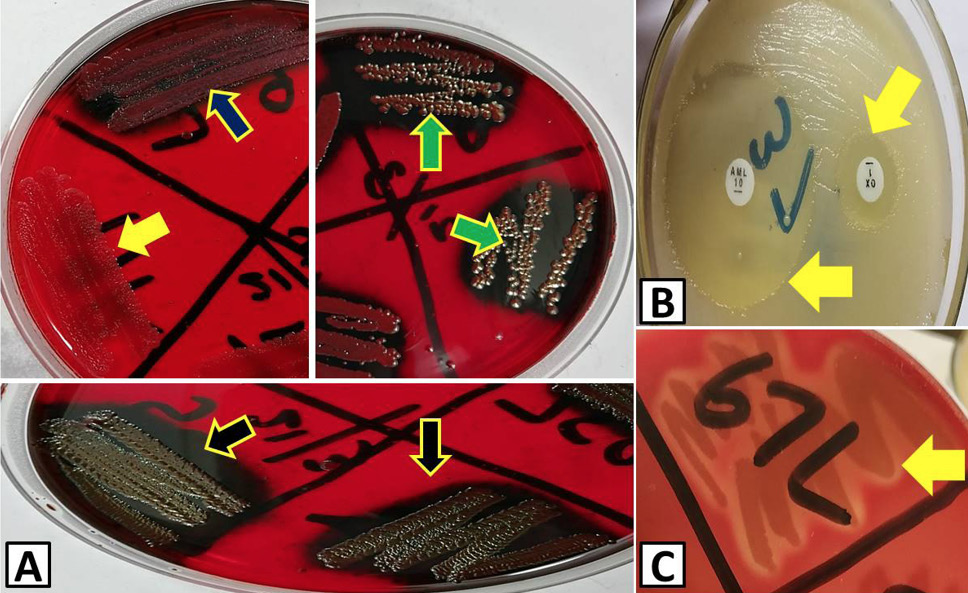
Biofilm producing strains, response of S. aureus against antibiotics and haemolytic strains. A, arrows point out different kinds of biofilm: yellow arrow, no biofilm; blue arrow, weak biofilm; green arrows, moderate biofilm; black arrow, strong biofilm. B, zone of inhibitions produced by antibiotics against S. aureus (yellow arrows, zones of inhibition). C, haemolysis on blood agar produced by S. aureus (yellow arrow, partial haemolysis).
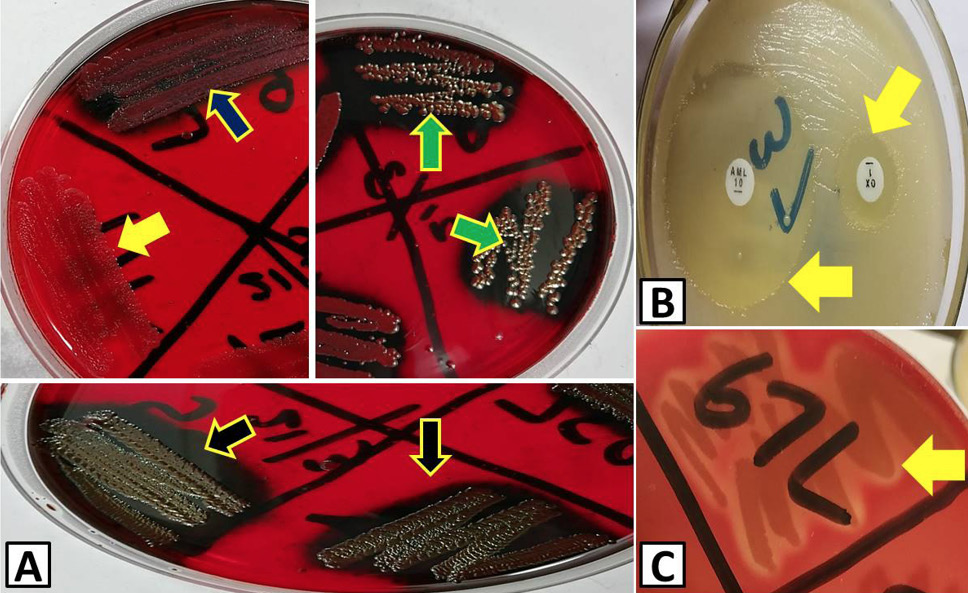
Biofilm producing strains, response of S. aureus against antibiotics and haemolytic strains. A, arrows point out different kinds of biofilm: yellow arrow, no biofilm; blue arrow, weak biofilm; green arrows, moderate biofilm; black arrow, strong biofilm. B, zone of inhibitions produced by antibiotics against S. aureus (yellow arrows, zones of inhibition). C, haemolysis on blood agar produced by S. aureus (yellow arrow, partial haemolysis).
References
- Abo-Shama, U.H., 2014. Prevalence and antimicrobial susceptibility of Staphylococcus aureus isolated from cattle, buffalo, sheep and goats raws milk in Sohag governorate, Egypt. Assiut Vet. Med. J., 60: 141.
- Akpaka, P.E., Roberts, R. and Monecke, S., 2017. Molecular characterization of antimicrobial resistance genes against Staphylococcus aureus isolates from Trinidad and Tobago. J. Infect. Publ. Hlth., 10: 316-323. https://doi.org/10.1016/j.jiph.2016.05.010[CrossRef]
- Ali, Muhammad, G., Ahmad, T., Khan, R., Anwar, H., Farooqi, F.A., Manzoor, M.N. and Usama, A.R., 2010. Prevalence of caprine sub-clinical Mastitis, its etiological agents and its sensitivity to antibiotics in indigenous breeds of Kohat, Pakistan. Pakistan J. Life Soc. Sci., 8: 63-67.
- Amin, M.A., Samad, M.A. and Rahman, A.K.M.A., 2011. Bacterial pathogens and risk factors associated with mastitis in Black Bengal goats in Bangladesh. Bangladesh J. vet. Med., 9: 155-159. https://doi.org/10.3329/bjvm.v9i2.13458[CrossRef]
- Anonymous, 2018. Pakistan economic survey 2017-18. Finance Division, Govt. of Pakistan. Available at: http://www.finance.gov.pk/survey_1718.html (Accessed on 20 August, 2020).
- Aqib, A.I., Ijaz, M., Anjum, A.A., Malik, M.A.R., Mehmood, K., Farooqi, S.H. and Hussain, K., 2017. Antibiotic susceptibilities and prevalence of Methicillin resistant Staphylococcus aureus (MRSA) isolated from bovine milk in Pakistan. Acta Trop., 176: 168-172. https://doi.org/10.1016/j.actatropica.2017.08.008[CrossRef]
- Aqib, A., Ijaz, M., Farooqi, S. and Raza, A., 2018. Dairy Staphylococcus aureus: Epidemiology, drug susceptibilities, drug modulation, and preventive measures. In: Staphylococcus aureus (eds. H. Hemeg, H. Ozbak and F. Afrin). IntechOpen. https://doi.org/10.5772/intechopen.74552[CrossRef]
- Aqib, A.I., Anjum, A.A., Ijaz, M., Hussain, R., Ahmed, R., Farooqi, S.H., Aslam, H., Hussain, K., Mehmood, K. and Zhang, H., 2018a. Development and evaluation of vaccine against Staphylococcus aureus recovered from naturally occurring mastitis in she-camels. Microb. Pathog., 117: 341-347. https://doi.org/10.1016/j.micpath.2018.03.003[CrossRef]
- Aqib, A.I., Ijaz, M., Farooqi, S.H., Ahmed, R., Shoaib, M., Ali, M.M., Mehmood, K. and Zhang, H., 2018b. Emerging discrepancies in conventional and molecular epidemiology of methicillin resistant Staphylococcus aureus isolated from bovine milk. Microb. Pathog., 116: 38-43. https://doi.org/10.1016/j.micpath.2018.01.005[CrossRef]
- Bergey, D.H. and Holt, J.G., 1994. Bergey’s manual of determinative bacteriology. Williams and Wilkins, Baltimore, MA.
- Bochev, I. and Russenova, N., 2005. Resistance of Staphylococcus spp. strains isolated from goats with subclinical mastitis. Bulgarian J. vet. Med., 8: 109-118.
- Castro-Sánchez, E., Moore, L.S.P., Husson, F. and Holmes, A.H., 2016. What are the factors driving antimicrobial resistance? Perspectives from a public event in London, England. BMC Infect. Dis., 16: 465. https://doi.org/10.1186/s12879-016-1810-x[CrossRef]
- Cengiz, S., Dinc, G. and Cengiz, M., 2015. Evaluation of antimicrobial resistance in Staphylococcus Spp. isolated from subclinical mastitis in cows. Pakistan Vet. J., 35: 334-338.
- CLSI, 2015. Performance standards for antimicrobial susceptibility testing. Twenty-Second Informational Supplement Clinical and Laboratory Standards Institute, CLSI document M100-S16CLSI, Wayne, PA.
- Contreras, A., Luengo, C., Sanchez, A. and Corrales, J.C., 2003. The role of intramammary pathogens in dairy goats. Livest. Prod. Sci., 79: 273-283. https://doi.org/10.1016/S0301-6226(02)00172-0[CrossRef]
- Contreras, A., Sierra, D., Sánchez, A., Corrales, J.C., Marco, J.C., Paape, M.J. and Gonzalo, C., 2007. Mastitis in small ruminants. Small Rumin. Res., 68: 145-153. https://doi.org/10.1016/j.smallrumres.2006.09.011[CrossRef]
- Cortimiglia, C., Bianchini, V., Franco, A., Caprioli, A., Battisti, A., Colombo, L., Stradiotto, K., Vezzoli, F. and Luini, M., 2015. Prevalence of Staphylococcus aureus and methicillin-resistant S. aureus in bulk tank milk from dairy goat farms in Northern Italy. J. Dairy Sci., 98: 2307-2311. https://doi.org/10.3168/jds.2014-8923[CrossRef]
- Dar, J.A., Thoker, M.A., Khan, J.A., Ali, A., Khan, M.A., Rizwan, M., Bhat, K.H., Dar, M.J., Ahmed, N. and Ahmad, S., 2006. Molecular epidemiology of clinical and carrier strains of methicillin resistant Staphylococcus aureus (MRSA) in the hospital settings of north India. Annls clin. Microbiol. Antimicrob., 5: 22. https://doi.org/10.1186/1476-0711-5-22[CrossRef]
- Devriese, L.A., Van Damme, L.R. and Fameree, L., 1972. Methicillin (cloxacillin) resistant Staphylococcus aureus strains isolated from bovine mastitis cases. Z. Vet. Reihe B, 19: 598-605. https://doi.org/10.1111/j.1439-0450.1972.tb00439.x[CrossRef]
- Ebrahimi, A., Lotfalian, S. and Karimi, S., 2007. Drug resistance in isolated bacteria from milk of sheep and goats with subclinical mastitis in Shahrekord district. Iranian J. vet. Res., 8: 76-79.
- El-Deeb, W., Fayez, M., Elmoslemany, A., Kandeel, M. and Zidan, K., 2018. Methicillin resistant Staphylococcus aureus among goat farms in Eastern province, Saudi Arabia: Prevalence and risk factors. Prevent. vet. Med., 156: 84-90. https://doi.org/10.1016/j.prevetmed.2018.05.005[CrossRef]
- Ferdous, J., Rahman, M.S., Khan, M.I., Khan, M. and Rima, U.K., 2018. Prevalence of clinical and subclinical caprine mastitis of northern region in Bangladesh. Progr. Agric., 29: 127-138. https://doi.org/10.3329/pa.v29i2.38296[CrossRef]
- França, C.A., Peixoto, R.M., Cavalcante, M.B., Melo, N.F., Oliveira, C.J.B., Veschi, J.L.A., Mota, R.A. and Costa, M.M., 2012. Antimicrobial resistance of Staphylococcus spp. from small ruminant mastitis in Brazil. Pesquisa Vet. Brasil., 32: 747-753. https://doi.org/10.1590/S0100-736X2012000800012[CrossRef]
- Freeman, D.J., Falkiner, F.R. and Keane, C.T., 1989. New method for detecting slime production by coagulase negative Staphylococci. J. clin. Pathol., 42: 872-874. https://doi.org/10.1136/jcp.42.8.872[CrossRef]
- Gebrewahid, T.T., Abera, B.H. and Menghistu, H.T., 2012. Prevalence and etiology of subclinical mastitis in small ruminants of Tigray regional State, north Ethiopia. Vet. World, 5: 103-109. https://doi.org/10.5455/vetworld.2012.103-109[CrossRef]
- Goh, S.H., Byrne, S.K., Zhang, J.L. and Chow, A.W., 1992. Molecular typing of Staphylococcus aureus on the basis of coagulase gene polymorphisms. J. clin. Microbiol., 30: 1642-1645. https://doi.org/10.1128/JCM.30.7.1642-1645.1992[CrossRef]
- Hameed, K.G.A., Sender, G. and Korwin-Kossakowska, A., 2007. Public health hazard due to mastitis in dairy cows. Anim. Sci. Pap. Rep., 25: 73-85.
- Hiramatsu, K., Aritaka, N., Hanaki, H., Kawasaki, S., Hosoda, Y., Hori, S., Fukuchi, Y. and Kobayashi, I., 1997. Dissemination in Japanese hospitals of strains of Staphylococcus aureus heterogeneously resistant to vancomycin. The Lancet, 350: 1670-1673. https://doi.org/10.1016/S0140-6736(97)07324-8[CrossRef]
- Jyothi, J.S., Putty, K., Reddy, Y.N., Dhanalakshmi, K. and Umair, M.A.H., 2018. Antagonistic effect of ursolic acid on Staphylococcal biofilms. Vet. World, 11: 1440. https://doi.org/10.14202/vetworld.2018.1440-1444[CrossRef]
- Kenny, K., Bastida, F.D. and Norcross, N.L., 1992. Secretion of alpha-hemolysin by bovine mammary isolates of Staphylococcus aureus. Canadian J. vet. Res., 56: 265.
- Klevens, R.M., Edwards, J.R., Tenover, F.C., McDonald, L.C., Horan, T., Gaynes, R. and System, N.N.I.S., 2006. Changes in the epidemiology of methicillin-resistant Staphylococcus aureus in intensive care units in US hospitals, 1992–2003. Clin. Infect. Dis., 42: 389-391. https://doi.org/10.1086/499367[CrossRef]
- Leitner, G., Merin, U., Lavi, Y., Egber, A. and Silanikove, N., 2007. Aetiology of intramammary infection and its effect on milk composition in goat flocks. J. Dairy Res., 74: 186-193. https://doi.org/10.1017/S0022029906002299[CrossRef]
- Malinowski, E., Klossowska, A., Kaczmarowski, M., Lassa, H. and Kuzma, K., 2002. Antimicrobial susceptibility of staphylococci isolated from affected with mastitis cows. Bull. Vet. Inst. Pulawy, 46: 289-294.
- Marques, J.B., Dalmolin, T.V., Bonez, P.C., Agertt, V.A., Campos, M.M.A. and de Santos, R.C.V., 2013. Detection of Staphylococcus aureus with an intermediate profile to vancomycin (VISA) isolate from Santa Maria, RS. Brazilian J. Microbiol., 44: 277-279. https://doi.org/10.1590/S1517-83822013000100040[CrossRef]
- Mathur, T., Singhal, S., Khan, S., Upadhyay, D.J., Fatma, T. and Rattan, A., 2006. Detection of biofilm formation among the clinical isolates of staphylococci: An evaluation of three different screening methods. Indian J. med. Microbiol., 24: 25. https://doi.org/10.4103/0255-0857.19890[CrossRef]
- Megersa, B., Tadesse, C., Abunna, F., Regassa, A., Mekibib, B. and Debela, E., 2010. Occurrence of mastitis and associated risk factors in lactating goats under pastoral management in Borana, Southern Ethiopia. Trop. Anim. Hlth. Prod., 42: 1249-1255. https://doi.org/10.1007/s11250-010-9557-7[CrossRef]
- Merz, A., Stephan, R. and Johler, S., 2016. Staphylococcus aureus isolates from goat and sheep milk seem to be closely related and differ from isolates detected from bovine milk. Front. Microbiol., 7: 319. https://doi.org/10.3389/fmicb.2016.00319[CrossRef]
- Moreillon, P., Entenza, J.M., Francioli, P., McDevitt, D., Foster, T.J., Francois, P. and Vaudaux, P., 1995. Role of Staphylococcus aureus coagulase and clumping factor in pathogenesis of experimental endocarditis. Infect. Immun., 63: 4738-4743. https://doi.org/10.1128/IAI.63.12.4738-4743.1995[CrossRef]
- Muhammad, G., Naureen, A., Asi, M.N., Saqib, M. and Fazal-ur-Rehman, 2010. Evaluation of a 3% surf solution (surf field mastitis test) for the diagnosis of subclinical bovine and bubaline mastitis. Trop. Anim. Hlth. Prod., 42: 457-464. https://doi.org/10.1007/s11250-009-9443-3[CrossRef]
- Najeeb, M.F., Anjum, A.A., Ahmad, M.U.D., Khan, H.M., Ali, M.A. and Sattar, M.M.K., 2013. Bacterial etiology of subclinical mastitis in dairy goats and multiple drug resistance of the isolates. J. Anim. Pl. Sci., 23: 1541-1544.
- Oliveira, M., Bexiga, R., Nunes, S.F., Carneiro, C., Cavaco, L.M., Bernardo, F. and Vilela, C.L., 2006. Biofilm-forming ability profiling of Staphylococcus aureus and Staphylococcus epidermidis mastitis isolates. Vet. Microbiol., 118: 133-140. https://doi.org/10.1016/j.vetmic.2006.07.008[CrossRef]
- Oppliger, A., Moreillon, P., Charrière, N., Giddey, M., Morisset, D. and Sakwinska, O., 2012. Antimicrobial resistance of Staphylococcus aureus strains acquired by pig farmers from pigs. Appl. environ. Microbiol., 78: 8010. https://doi.org/10.1128/AEM.01902-12[CrossRef]
- Park, Y.W., 2001. Hypo-allergenic and therapeutic significance of goat milk. Fd. Sci. Indust., 34: 6-13.
- Persson, Y. and Olofsson, I., 2011. Direct and indirect measurement of somatic cell count as indicator of intramammary infection in dairy goats. Acta Vet. Scand., 53: 15. https://doi.org/10.1186/1751-0147-53-15[CrossRef]
- Rağbetli, C., Parlak, M., Bayram, Y., Guducuoglu, H. and Ceylan, N., 2016. Evaluation of antimicrobial resistance in Staphylococcus aureus isolates by years. Interdiscip. Perspect. Infect. Dis., 2016: 9171395. https://doi.org/10.1155/2016/9171395[CrossRef]
- Reyher, K.K. and Dohoo, I.R., 2011. Diagnosing intramammary infections: Evaluation of composite milk samples to detect intramammary infections. J. Dairy Sci., 94: 3387-3396. https://doi.org/10.3168/jds.2010-3907[CrossRef]
- Saleem, M.I., Saqib, M., Khan, M.S., Muhammad, G. and Rehman, S., 2018. Epidemiological study of mastitis in three different strains of beetal goat in selected districts of Punjab, Pakistan. Pakistan Vet. J., 39: 389-394. https://doi.org/10.29261/pakvetj/2018.118[CrossRef]
- Sarker, H. and Samad, M.A., 2011. Udder-halve-wise comparative prevalence of clinical and sub-clinical mastitis in lactating goats with their bacterial pathogens and antibiotic sensitivity patterns in Bangladesh. Bangladesh J. vet. Med., 9: 137-143. https://doi.org/10.3329/bjvm.v9i2.13456[CrossRef]
- Shamila-Syuhada, A.K., Rusul, G., Wan-Nadiah, W.A. and Chuah, L.O., 2016. Prevalence and antibiotics resistance of Staphylococcus aureus isolates isolated from raw milk obtained from small-scale dairy farms in Penang, Malaysia. Pakistan Vet. J., 36: 98-102.
- Silanikove, N., Leitner, G., Merin, U. and Prosser, C.G., 2010. Recent advances in exploiting goat’s milk: Quality, safety and production aspects. Small Rumin. Res., 89: 110-124. https://doi.org/10.1016/j.smallrumres.2009.12.033[CrossRef]
- Thrusfield, M.V., 2007. Veterinary epidemiology. Blackwell Science, Oxford, Ames, Iowa.
Cited by 1 article
In journals published by ResearchersLinks.
Services
Article usage statistics
Loading…