ResearchersLinks

Research Article · Volume 14, Issue 4, 3 September 2026 · Open Access

Effects of Temperature, Humidity and their Combined Index on Feeding Behavior of Phan Rang Sheep Raised in Hue City, Vietnam

·

Affiliations & Notes ⌄
  1. 1Hue University, 03 Le Loi, Hue City, 49000, Vietnam
  2. 2University of Education, Hue University, Vietnam, 32 Le Loi, Hue City, 4900, Vietnam. *Correspondence | Bui Van Loi, University of Education, Hue University, Vietnam, 32 Le Loi, Hue City, 4900, Vietnam
  3. 3Email: bvloi@hueuni.edu.vn
  4. 4University of Agriculture and Forestry, Hue University, Vietnam, 102 Phung Hung, Hue City, 4900, Vietnam
Article Info ⌄
Journal:
Journal of Animal Health and Production
Published:
3 September 2026

Abstract

The research aimed to determine the effects of environmental temperature (T), humidity (H) and temperature-humidity index (THI) on the feeding behavior of Phan Rang sheep raised in hot and humid environmental conditions in Hue city, Vietnam. The experiment was conducted on a flock of sheep transported from Phan Rang City, Ninh Thuan Province, to Hue City, consisting of 12 sheep (6 ewes and 6 rams) at three ages (6, 12, and 18 months old), divided into three groups (4 sheep per group, with 2 ewes and 2 rams each). The results showed that T, H, and THI were correlated with grazing duration, the number of grazing bouts per day, rumination duration, the number of rumination bouts per day, water drinking duration, and the frequency of water drinking per day. When environmental T and THI were elevated, grazing duration and the number of grazing bouts decreased; conversely, rumination duration, the number of rumination bouts, water drinking duration, and the frequency of water drinking increased (P < 0.05). Although fluctuations in T, H, and THI affected sheep feeding behavior indicators, these changes remained within the normal physiological range of sheep digestive function.
 
Keywords | Phan Rang sheep, Feeding behavior, Temperature, Humidity, Temperature-humidity index (THI), Digestive physiology
Introduction

Studying the daily activities and behaviors of livestock, particularly their feeding behaviors, is crucial for understanding their regular habits and routines. This knowledge enables the implementation of measures to enhance their health, reduce stress, and ultimately improve productivity, product quality, and efficiency in livestock farming. Sheep, as small-sized ruminants, engage in daily activities primarily consisting of foraging and drinking water, as well as moving, bleating, playing, resting, sleeping, and excreting (Nguyen and Nguyen, 2009; . Their feeding behaviors including grazing, regurgitating, chewing cud, and drinking water, are essential for survival, growth, and reproduction. These activities are significantly influenced by environmental factors, including temperature, humidity, light, food composition, age, and other variables (Sliworsky, 2009).

Numerous studies have investigated the effects of temperature, humidity, and the temperature-humidity index on physiological indicators, blood biochemistry, reproduction, and growth in livestock ; ; . However, the impact of these environmental factors on the daily activities and behaviors of sheep, particularly their feeding behaviors, has received limited research attention, especially in Vietnam. Despite the significant importance of such studies and their applications, particularly for ruminants like sheep, research efforts in Vietnam remain scarce, largely due to the substantial workload, effort, and meticulousness required.

Research on feeding behaviors, including grazing, regurgitating, chewing cud, and drinking water, typically begins with behavioral observation, data recording, and analysis to identify patterns and evaluate influencing factors. Phan Rang sheep, native to Ninh Thuan Province, have adapted to a hot environment over centuries. When raised in Hue City, which has a distinct hot and humid climate differing from their native habitat, it raises the question: Do their daily activities, particularly feeding and drinking behaviors, adjust to this new environment? “To address this, the present study aims to provide data on feeding and drinking behaviors, examine the relationships between temperature, humidity, THI, and these activities, and support farmers in improving productivity and efficiency in sheep production.

MATERIALS AND METHODS

Materials, location and duration

The experiment was conducted on 12 Phan Rang sheep, divided into three age groups: 6, 12, and 18 months old, with four sheep per group. The average weight of the sheep ranged from 18 to 30 kg. The study took place at Thuy An Livestock Research Center, Faculty of Animal Science and Veterinary Medicine, University of Agriculture and Forestry, Hue University, Hue City. The experiment lasted for 30 consecutive days. Data collection occurred 12 times per day at two-hour intervals, starting at 7:00 am each day and continuing until 7:00 am the following day.

Research objectives and parameters

The study aimed to analyze sheep behavior, particularly daily routine and feeding activities, using the following parameters: (1) Grazing behavior: grazing time, number of grazing sessions, and grazing frequency; (2) Rumination behavior: rumination time, number of ruminations, number of regurgitations per rumination session, and rumination frequency and (3) Water consumption: drinking time and number of drinking instances. Additionally, fluctuations in temperature and humidity were recorded, THI was calculated, and the impact of temperature, humidity, and THI on sheep feeding activities was assessed.

Sheep management and experimental setup

Each sheep was individually numbered for monitoring purposes. Before the experiment, all sheep were dewormed using Albendazole 12mg/kg BW (Han-Dertil-B, Hanvet), with deworming repeated every six months. During the day, sheep were allowed to graze freely in the paddock from 07:00–11:00 am and 1:00–5:00 pm (excluding transition time between barn and paddock). Drinking water was available ad libitum in the grazing area. At night, the sheep were housed individually in cages (0.8 × 1.5 m), constructed with iron bars and elevated 0.2 m above the ground to allow manure to fall through. The barn had a corrugated iron roof and adequate windows for ventilation. Each cage was equipped with roughage and concentrate feed troughs, as well as a drinking water trough, ensuring sufficient feed and water availability.

Measurement of temperature and humidity

Temperature and humidity data in the barn and paddock were recorded using an automatic Hygro-Thermometer (France). Measurements were taken every three hours at the following time points: 1:00, 4:00, 7:00, 10:00, 13:00, 16:00, 19:00, and 22:00 for the barn. In the paddock, measurements were taken at 7:00, 10:00, 13:00, and 16:00. The Hygro-Thermometer was placed at a height of 0.8 m above the ground in the paddock and 0.6 m above the barn floor to align with the average sheep height.

Calculation of temperature-humidity index

THI was calculated at different times of the day using the formula from Marai et al. (2000):

THI = ToC – [(0.31 – 0.31× RH/100)(ToC -14.4)]

Where; T oC: Air temperature oC; RH: Relative humidity (%).

Monitoring of feeding and drinking activities

Data collection was performed continuously for 30 days, with monitoring every two hours from 7:00 am to 7:00 am the next day.

Daytime observations: A total of 12 sheep were monitored in different pastures using a combination of direct visual observation and continuous video recording. Individual sheep were identified by numbered ear tags. Video recording provided clear coverage of the entire pasture area. Cameras recorded continuously during daylight hours. Every two hours, the observer performed a supplementary direct scan using the naked eye to cross-validate behaviours that might be ambiguous on video. Behaviours were analysed at 5-minute intervals. At each scan point, the instantaneous behaviour of all 12 sheep was recorded simultaneously. The following behaviours were scored for each individual: grazing time, number of grazing bouts, rumination time, number of regurgitations, drinking time and number of drinking bouts.

Nighttime observations: Rumination times and regurgitations per rumination were recorded every two hours, with data collection performed every five minutes within each observation period.

All observations were conducted by direct monitoring of individual sheep and manual counting of activities.

Data processing and statistical analysis

Collected data were managed using Microsoft Excel software and analyzed using descriptive statistics and analysis of variance (ANOVA) via the generalized linear model (GLM) in Minitab software version 22.4 (2026).

RESULTS AND DISCUSSION

Temperature, humidity, and THI variations in Hue city and their implications for sheep

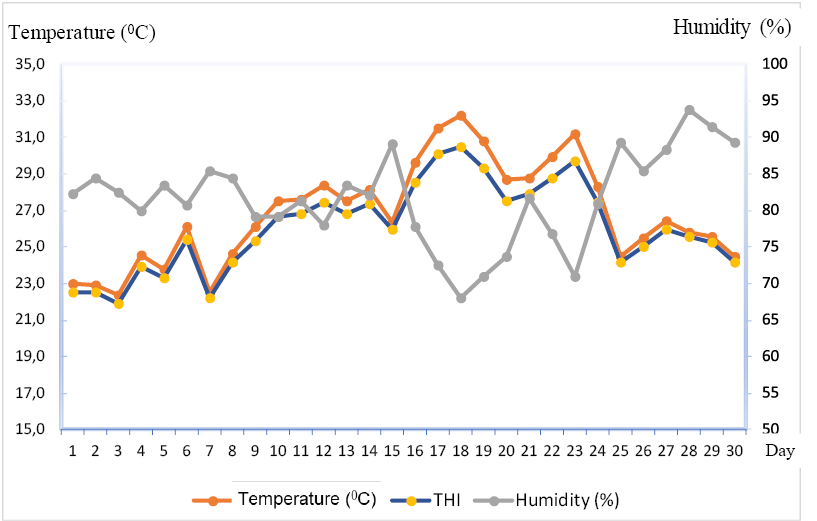
The study, as depicted in Figure 1, analyzed the fluctuations in average temperature, humidity, and THI over the days of the month in Hue City during the research period, revealing distinct differences in absolute values and patterns of variation compared to Ninh Thuan. In Hue City, the temperature remained consistently high, averaging 26.83°C, with a range from 22.3°C (day 3) to 32.2°C (day 18), while humidity was notably elevated, averaging 81.55%, with a low of 69% (day 18) and a high of 93.9% (day 28); this contrasts with Ninh Thuan’s annual average temperature of 26–27°C (peaking at 28–36°C in summer and dropping to 21–25°C in the rainy season) and lower humidity of 78% (Ninh Thuan Statistics Department, 2023). The THI in Hue City, closely tied to temperature trends, averaged 26.08, ranging from 21.9 (day 3) to 30.5 (day 18), higher than Ninh Thuan’s range of 23.8–27.8, indicating that sheep in Hue City experienced heat stress (THI > 22.2) and often severe heat stress (THI ≥ 25.6) on multiple days, per Marai et al. (2000). In contrast, Ninh Thuan’s hot and dry climate, where sheep have adapted for centuries, differs markedly from Hue City’s hot and humid conditions, with the latter featuring a cold, humid cold season and a dry, hot hot season. These climatic disparities highlight critical considerations for sheep rearing in Hue City, where the combination of high temperature and humidity poses significant challenges compared to the more arid, sheep-acclimated environment of Ninh Thuan.

Temperature, humidity and THI of Hue city by times of day

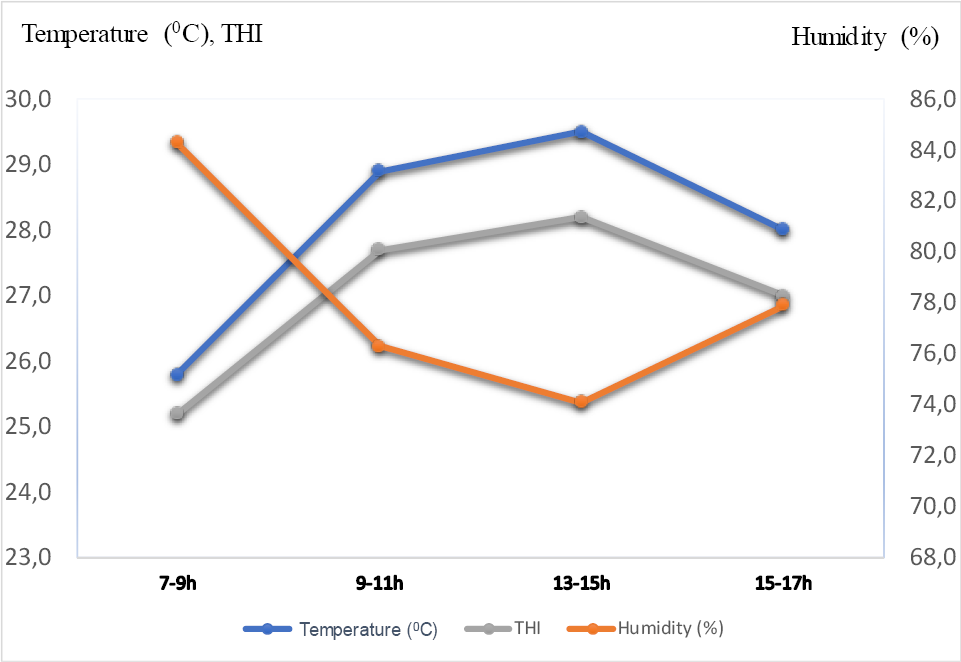
Survey findings on the variations in temperature, humidity, and THI at four daily time points (7:00–9:00, 9:00–11:00, 13:00–15:00, and 15:00–17:00) over a 30-day period in Hue City, as presented in Figure 2, revealed consistent diurnal patterns. Temperature and THI followed a predictable trend: lowest in the early morning at 7:00–9:00 (averaging 25.8°C and 25.2, respectively), gradually rising to peak levels at 13:00–15:00 (averaging 29.5 °C and 28.2), and then declining by 15:00–17:00 (to 28.0 °C for temperature). Conversely, humidity exhibited an inverse relationship, peaking at 7:00–9:00 with an average of 84.3%, dropping to its lowest at 13:00–15:00 with an average of 74.1%, and then gradually increasing into the late afternoon. These fluctuations highlight that at 13:00–15:00, when temperature and THI reached their maximum and humidity dipped, conditions were most likely to induce heat stress in sheep a critical consideration for sheep rearing in Hue City’s climate.

Eating and ruminating activities of Phan Rang sheep during the daytime in semi-grazing system

The findings from monitoring the feeding and rumination behaviors of Phan Rang sheep during daylight hours under semi-grazing conditions at the Thuy A Livestock Research Center, University of Agriculture and Forestry, Hue University, Hue City, as presented in Table 1, revealed distinct patterns over an 8-hour daily grazing period (4 hours in the morning, 4 hours in the afternoon). Grazing time and frequency were notably high, averaging 85.68 minutes/2 hours (71.40% of total free grazing time) and 3,638.04 times/2 hours, peaking at 91.23 minutes (76.03%) and 3,922.74 times from 7:00–9:00, then gradually declining to a low of 82.88 minutes (68.57%) and 3,376.12 times from 13:00–15:00, before slightly increasing to 83.83 minutes (69.86%) and 3,767.94 times from 15:00–17:00; grazing frequency followed a similar trend, ranging from 40.86 times/minute (13:00–15:00) to a high of 44.86 times/minute (15:00–17:00), with statistically significant differences across time periods (P<0.05). These results align with prior studies, such as Nguyen and Nguyen (2009), who reported peak grazing from 7:00–10:00 (161.84 minutes, 43.35%) and 13:00–16:00 (151.31 minutes, 40.35%), Nguyen et al. (2006) noting 422 minutes/day, and Jensen (2005) citing 480 minutes/day under similar conditions. In contrast, rumination time and frequency were low, starting at 5.89 minutes, 5.55 regurgitations, and 457.12 ruminations from 7:00–9:00, rising to 10.01 minutes, 19.86 regurgitations, and 610.34 ruminations from 9:00–11:00, typically occurring during rest periods post-grazing, with rumination speed peaking around noon (11:00–13:00) per Nguyen and Nguyen (2009). Water drinking time averaged 175.46 seconds (2.92 minutes) over 8 hours, peaking at 62.76 seconds from 13:00–15:00 and dropping to 27.06 seconds from 7:00–9:00, with 11.25 drinking episodes, consistent with prior findings of low water needs (e.g., 3.95 minutes/24 hours, Nguyen and Nguyen (2009), often concentrated at 10:00–11:00 (0.57 minutes/head) and 17:00–18:00 (0.50 minutes/head). In conclusion, under this two-session semi-grazing system, sheep maximized grazing early (7:00–9:00), rapidly consuming grass to meet nutritional needs, with intensity decreasing by 9:00–11:00 as rumination and drinking increased; in the afternoon, grazing started moderately (13:00–15:00) before rising again from 15:00–17:00 as cooler temperatures prompted intensified feeding before returning to the barn.

Rumination activity of Phan Rang sheep at night in semi-grazing conditions

Rumination, a key digestive process in ruminants like Phan Rang sheep, allows rapid food intake during grazing followed by regurgitation and thorough chewing during rest, predominantly at night. Monitoring data from the Thuy An Livestock Research Center, presented in Table 2, showed that from 19:00 to 07:00 the next morning, sheep exhibited high rumination time (41.01% of the night),

Table 1: Eating and rummination activities of Phan Rang sheep under semi-grazing farming conditions.

Time/ Indicators

7-9 o’clock

9 - 11 o’clock

13 - 15 o’clock

15 – 17 o’clock

SEM

P

Grazing

Grazing time (minutes)

91.23a

84.77b

82.88b

83.83b

1.236

<0.001

Number of Grazing bouts (GB)

3922.74a

34.85.37bc

3376.12c

3767.94ab

86.413

<0.001

Grazing frequency (times/minute)

43.12ab

41.11b

40.86b

44.86a

0.883

0.005

Rumination

Rumination time (minutes)

5.89a

10.01b

8.51c

8.90bc

0.533

<0.001

Number of Regurgitations (times)

5.55

19.86

17.18

14.69

0.963

<0.001

Number of Rumination chews (times)

457.12a

610.34b

595.70b

569.39b

23.196

<0.001

Rumination frequency (times/minute)

77.34a

60.66b

70.38c

64.30d

0.861

<0.001

Drinking water

Drinking time (seconds)

27.06a

53.10b

62.76c

30.67a

1.924

<0.001

Number of drinking bouts (times)

1.93a

3.21b

3.66b

2.45a

0.235

<0.001

Mean; SEM: Standard Error of the Mean; Data with different exponents in the same row have statistical difference (P<0.05)

Table 2: Rumination indicators of Phan Rang sheep raised under semi-grazing conditions at night.

Indicators/ Time points

Rumination time (minutes)

Number of regurgitations (times)

Number of Rumination chews (times)

Rumination frequency (times/minutes)

19 - 21 o’clock

69.00a

72.24a

4068.76a

59.27ab

21 - 23 o’clock

60.31b

55.07b

3606.97b

60.26ab

23 - 01 o’clock

45.84c

46.72c

2910.66c

65.07ab

1 - 3 o’clock

60.28b

60.62b

4073.21a

68.27a

3 - 5 o’clock

35.02d

45.53c

2070.28d

57.68b

5 - 7 o’clock

24.83e

20.10d

1546.05e

62.87ab

SEM

1.318

1.638

109.761

2.395

P

<0.001

<0.001

<0.001

<0.05

*Data with different exponents in the same column have statistical difference (P<0.05).

number of regurgitations (300.28 times), and ruminations (18,275.93 times), though rumination frequency remained moderate, with significant variations across time periods (P<0.05). In contrast, daytime rumination (Table 1) was minimal (6.94%), with only 57.28 regurgitations and 2,232.55 ruminations, as sheep focused primarily on grazing. This stark daytime-nighttime disparity, regurgitations six times higher and ruminations 8.2 times higher at night, reflects sheep chewing briefly and hastily during the day to resume foraging, while at night, they ruminate slowly and thoroughly to enhance digestion. Rumination peaked from 19:00–21:00, gradually declined until 23:00–01:00, rose slightly from 01:00–03:00, and tapered off toward morning (P<0.05), aligning with Nguyen and Nguyen (2009), who reported 578.44 minutes/day of rumination, with a peak of 264.94 minutes from 19:00–01:00. In Vietnam’s semi-grazing system, daytime grazing on sparse, dry pastures limits rumination, driving sheep to maximize food intake, while nighttime confinement triggers intensive rumination to process the day’s forage. After returning to the barn, sheep initiate vigorous rumination to break down rumen contents, with activity slowing as the digestive system fatigues, requiring rest before resuming, a cycle persisting until the next day’s grazing. Regurgitation frequency, a marker of rumination vigor, varied: Higher counts signal active food breakdown, while lower counts suggest slower chewing, rest, or high-fiber content, offering insights into digestive efficiency.

Feeding and rumination activities of Phan Rang sheep according to age groups

As shown in Table 3, under semi-intensive farming conditions, there was no statistically significant difference (P>0.05) in grazing time among the three age groups of Phan Rang sheep (6, 12, and 18 months). The observation results of Nguyen and Nguyen (2009) also noted that sheep in the grazing area were diligent and grazed close to the ground. However, the number of grazing bouts and consequently the grazing frequency differed significantly among the age groups (P<0.05) (Table 3). The 6-month-old group had a lower number of grazing bouts and grazing frequency compared to the 12- and 18-months old groups. The reason is that 6-month-old sheep grazed more slowly and occasionally stopped to look around. Our research results are consistent with those of Nguyen and Nguyen (2009).

Table 3: Feeding and rumination activities of Phan Rang sheep according to age groups.

Age groups/ Indicators

6 months

12 months

18 months

SEM

P

Grazing

Grazing time (minutes)

85.7

86.6

84.7

1.36

>0.05

Number of Grazing bouts (GB)

3506.8a

3766.8b

3650.5c

7.38

0.001

Grazing frequency (times/minute)

41a

43.4b

43.3b

6.83

0.001

Rumination

Rumination time (minutes)

8.3

8.5

8.2

0.47

>0.05

Number of Regurgitations (times)

5.6a

16.0b

17.2b

2.5

<0.001

Number of Rumination chews (times)

556.0

555.7

562.8

0.07

>0.05

Rumination frequency (times/minute)

67.2a

65.6b

68.6c

4.09

<0.05

Drinking

Drinking time (seconds)

27.1a

53.1b

62.8c

9.44

<0.001

Number of drinking bouts (times)

1.9a

3.2b

3.7c

4.1

<0.001

Data with different exponents in the same row have statistical difference (P<0.05).

Rumination time and number of rumination chews showed no significant differences among the three age groups (6, 12, and 18 months) (P>0.05). However, the number of regurgitations and rumination frequency were significantly different (P<0.05). The study results are consistent with the physiological characteristics of sheep. Sheep are small ruminants; when in the grazing area, they take advantage of time to consume feed quickly on the pasture, and when resting quietly, they regurgitate and chew the cud.

Drinking time and the number of drinking bouts showed significant differences among the three age groups of sheep (6, 12, and 18 months) (P<0.05) (Table 3). The water requirement of sheep is relatively low and depends on their body weight. Since the different age groups had different body weights, their water intake requirements also differed. Our research results are also consistent with the findings of Nguyen and Nguyen (2009).

Effects of temperature and THI on grazing activities of Phan Rang sheep

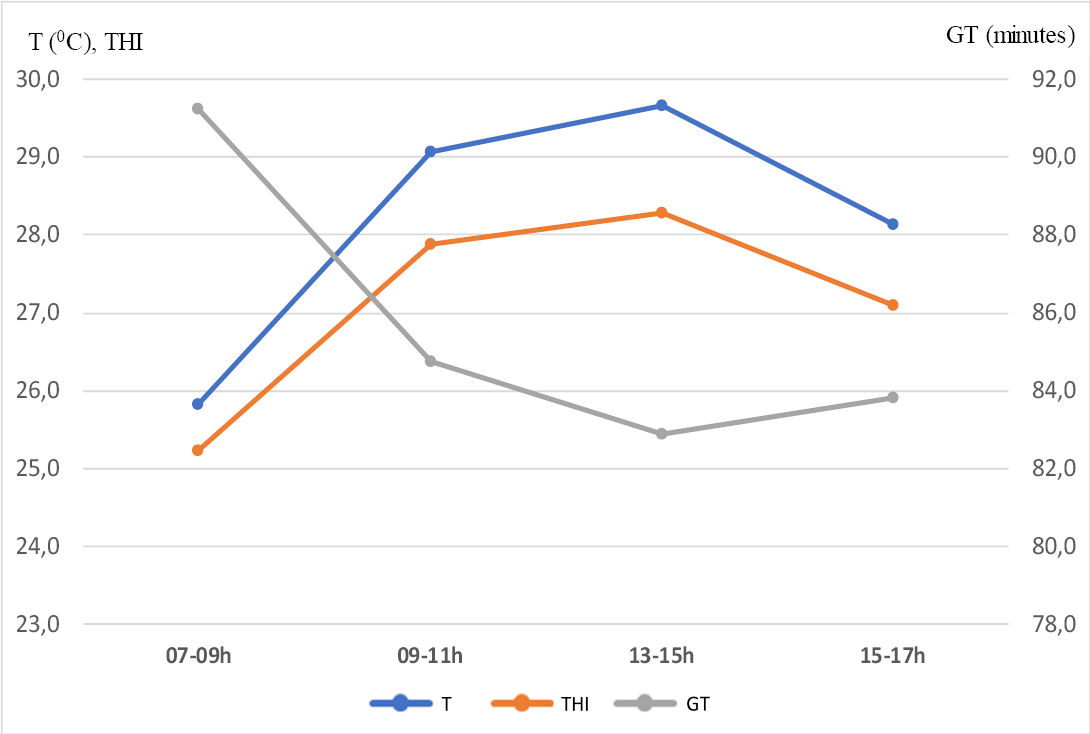
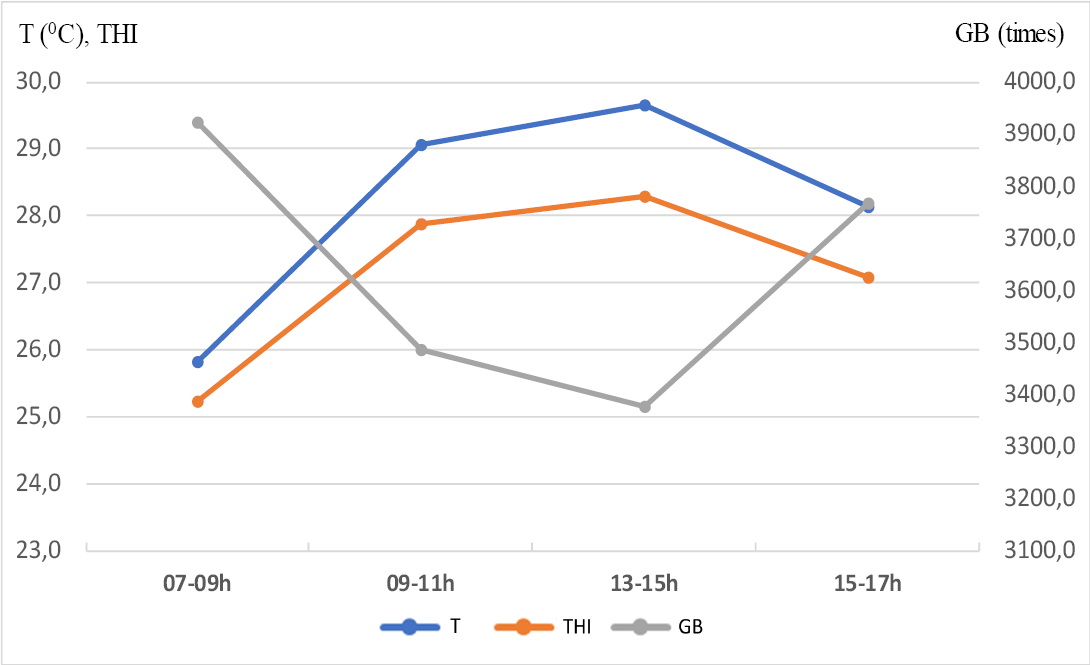
The impact of temperature and THI on the grazing activities of Phan Rang sheep is illustrated in Figures 3 and 4. Figure 3 demonstrates that elevated temperature and THI significantly reduced grazing time (P<0.05), with the highest grazing duration recorded from 7:00–9:00, when cooler conditions prevailed (25.8°C, THI 25.2) at 91.23 minutes (76.03%), dropping to a low of 82.88 minutes (69.07%) from 13:00–15:00 as temperature peaked at 29.5°C and THI reached 28.2 (Table 1). This aligns with findings by Dam and Phan (2008), who noted that high environmental temperatures elevate sheep body temperature, respiratory rate, and heart rate, leading to water loss, reduced appetite, and interrupted grazing as sheep seek water and shade to cope with heat stress. In Hue City’s hot and humid climate, these effects are amplified; Ehrenreich et al. (1966) further observed that even moderate temperatures combined with high humidity impair convective heat dissipation, exacerbating reductions in grazing time. Similarly, Figure 4 shows that the number of grazing episodes followed a parallel trend (P<0.05), peaking at 3,922.74 times (100%) from 7:00–9:00 (25.8°C, THI 25.2) and declining to 3,376.12 times (86.08%) from 13:00–15:00 (29.5°C, THI 28.2) (Table 1), reflecting how heat prompts sheep to prioritize shade-seeking over foraging, disrupting both the duration and frequency of grazing activities.

Effects of temperature and THI on ruminating activities of Phan Rang sheep

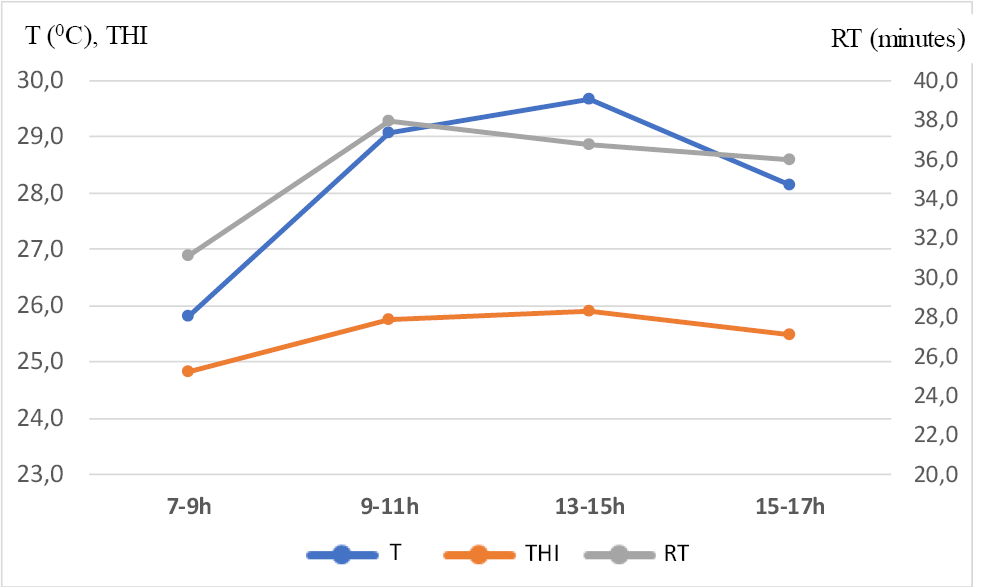
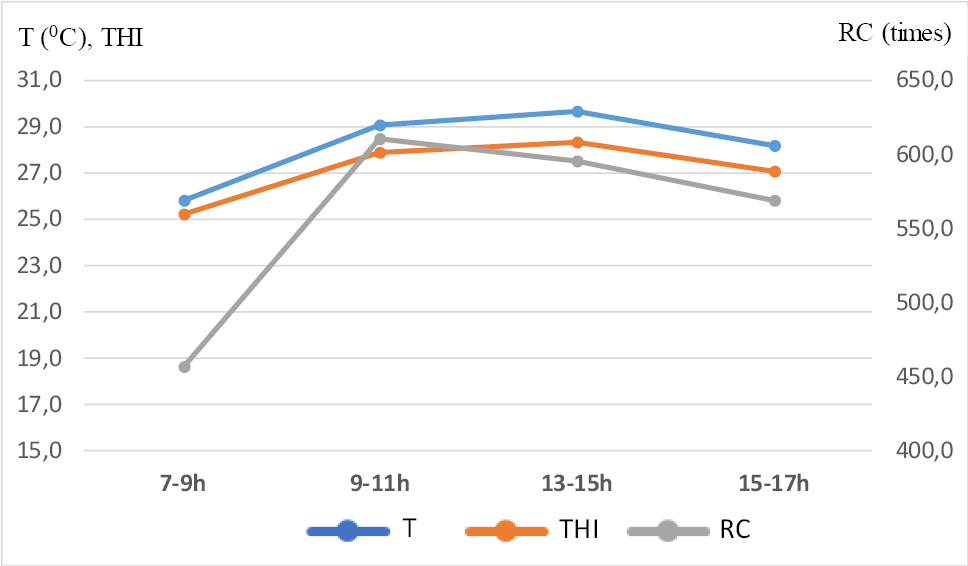
The influence of environmental temperature and THI on the ruminating activities of Phan Rang sheep is illustrated in Figures 5 and 6. Higher temperatures and THI values were associated with a significant increase in rumination time (P<0.05). For instance, between 7:00 and 9:00, when the temperature was 25.8 °C and the THI was 25.2, the sheep exhibited their lowest rumination time of 5.89 minutes (4.98%). In contrast, the highest rumination time occurred between 9:00 and 11:00, with a temperature of 28.9°C and a THI of 27.7, resulting in a rumination time of 10.01 minutes (8.34%) (P<0.05) (see Table 1). During the initial two hours of free grazing (7:00–9:00), the sheep primarily focused on feeding, with minimal rumination activity. However, from 9:00 to 11:00, as environmental temperature and THI increased, grazing activity decreased, and the sheep began to ruminate more actively. In the afternoon, between 13:00 and 15:00, despite a rest period in the barn during which some digestion had occurred, rumination time remained relatively high at 8.51 minutes compared to the 7:00–9:00 period. This elevated rumination was likely due to the peak environmental temperature and THI, which persisted from 13:00 to 17:00. Although daytime rumination time was less significant compared to nighttime, when sheep predominantly grazed, it still played a crucial role in supporting their growth.

Effects of temperature and THI on water drinking activity of Phan Rang sheep

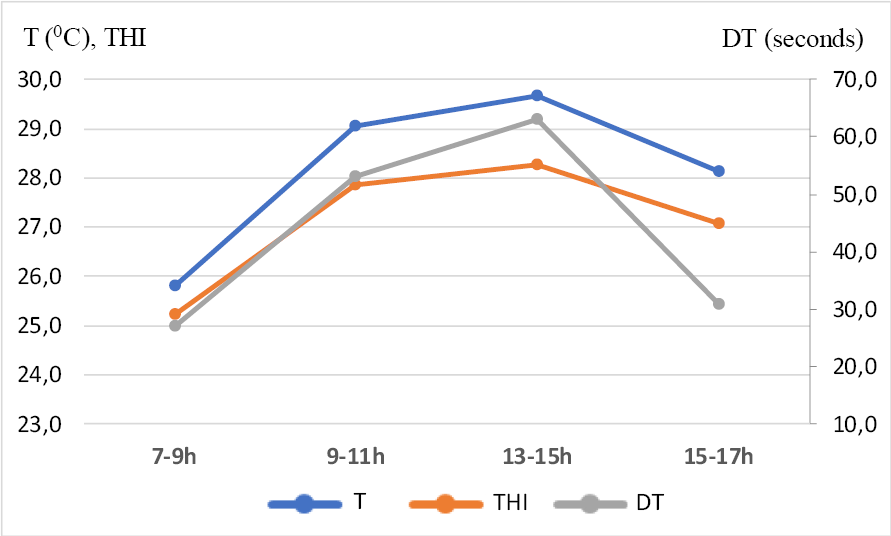
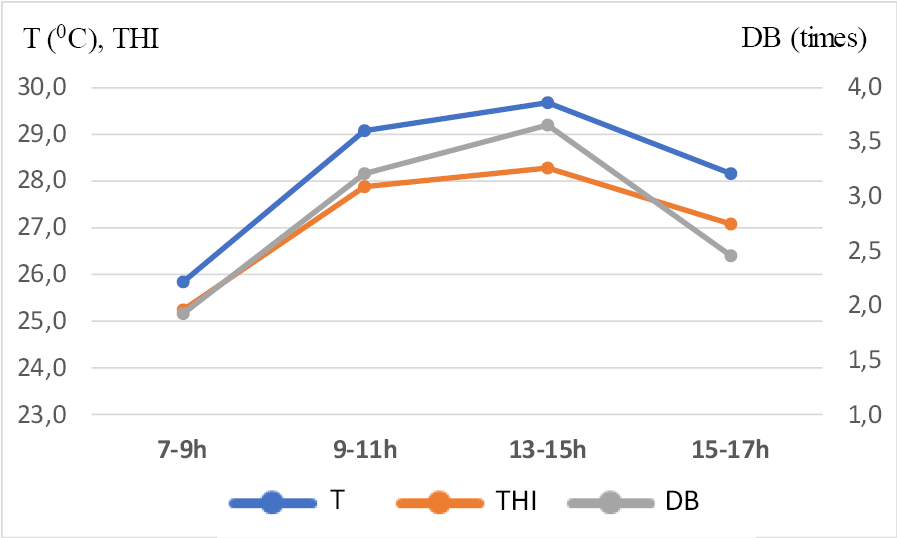
The impact of environmental temperature and Temperature-Humidity Index (THI) on the water drinking activity of Phan Rang sheep is presented in Figures 7 and 8. These figures demonstrate that both water drinking time and frequency in sheep increased significantly (P<0.05) as temperature and THI rose. Monitoring and analysis of water intake at different temperature levels revealed distinct patterns. Between 7:00 and 9:00, with a temperature of 25.8°C and THI of 25.2, the sheep exhibited their lowest water drinking time and frequency: 27.06 seconds and 1.93 times, respectively. In contrast, water consumption peaked between 13:00 and 15:00, when the temperature reached 29.5°C and THI was 28.2, with a drinking time of 62.76 seconds and a frequency of 3.66 times (P<0.05) (Table 1).

These findings align with previous research. Several studies have shown that high environmental temperatures prompt sheep to increase heat loss to regulate body temperature, resulting in elevated respiratory rates, higher water intake, and reduced food consumption ; ; . For example, Nabil (2020) reported that sheep consumed 7.14 liters/day/sheep at a THI of 59–65, increasing to 9.14 liters/day/sheep at a THI of 75–83. Similarly, Marai et al. (2007) found that water intake rose from 2 kg water/kg dry matter (DM) at 0–15°C to approximately 4 kg water/kg DM at 15–30°C. Alhidary et al. (2012) observed that under thermoneutral conditions (maximum 24°C, minimum 16°C), daily water intake was 1.3 liters/day/sheep, but it surged to 4.4 liters/day/sheep under hot conditions (maximum 38°C, minimum 28°C). Savage et al. (2008) noted an increase from 5,826 ml/day/sheep at 20°C to 8,275 ml/day/sheep at 30–40°C. Mathur et al. (2019) further concluded that water intake varied significantly across months, depending on temperature and humidity. Corner-Thomas et al. (2022) examined ewe water intake during summer and autumn, with daily temperatures ranging from 9.9°C to 28.1°C across three studies. Drinking times were recorded as 19, 18.2, and 15.6 seconds, respectively, with variations attributed to individual differences, environmental conditions, and pasture moisture content. Elaref et al. (2022) found that ewe lambs’ water consumption increased with sun exposure: 2.44 liters/day/sheep with no direct sunlight (DS0), 3.41 liters/day/sheep with 4 hours (DS4), and 3.94 liters/day/sheep with 8 hours (DS8).

Water plays a critical role in thermoregulation due to its high heat capacity, thermal conductivity, and ease of evaporation, facilitating rapid heat accumulation and dissipation. Under heat stress, sheep regulate body temperature through increased blood flow, lung evaporation, and sweating through the skin. In cold stress, they reduce surface blood circulation and constrict peripheral vessels to minimize heat loss, maintaining a stable body temperature. Although sheep are less sensitive to heat stress than other livestock under similar conditions, water scarcity or an unbalanced, nutrient-poor diet can exacerbate heat stress effects . This study confirms that temperature and THI significantly influence the water drinking behavior of Phan Rang sheep, with higher values leading to increased drinking time and frequency. These adaptations are vital for thermoregulation and align with broader research, underscoring the importance of adequate water availability to support sheep health and resilience under varying environmental conditions.

CONCLUSIONS

The study investigated how temperature, humidity, and the temperature-humidity index (THI) affect the feeding behaviors of Phan Rang sheep raised in the hot and humid conditions of Hue City, revealing that these factors were associated with variations in grazing time, frequency of grazing, rumination time, frequency of rumination, drinking time, and frequency of drinking; specifically, as temperature and THI rose, grazing time and the number of grazing episodes decreased, while rumination time, frequency of rumination, drinking time, and frequency of drinking increased (P<0.05), though despite these fluctuations, all observed parameters remained within the normal range of sheep digestive physiology.

Acknowledgement

We would like to express our sincere gratitude to the Faculty of Animal Husbandry and Veterinary Medicine, University of Agriculture and Forestry, Hue University and the undergraduate and postgraduate students for their support during the implementation of this research.

Novelty Statement

This study is the first to investigate the effects of environmental temperature, humidity, and THI on the feeding behavior (grazing, rumination, and drinking patterns) of Phan Rang sheep when raised in the hot-humid climate of Hue city, Vietnam. The research demonstrates how elevated temperature and THI significantly alter feeding behavior while maintaining normal physiological digestive function.

Author’s Contribution

All the two authors Bui Van Loi and Nguyen Xuan Ba participated in discussing and designing the experiments, conducted the main experiments and data analysis, wrote and agreed on the final manuscript.

Ethics approval and consent to participate

All animals and samples were applied as per the international, national, regional and institutional guidelines for animal care and rules in Vietnam. The approved animal slaughter license number is HU VN 0004.

Generative AI and AI assisted technology statement

The authors declare that no generative AI and AI assisted technology was used in the creation of this manuscript.

Conflict of interest

The authors have declared no conflict of interest.

Figures

Figure 1:
Figure 1:.

Temperature, humidity and THI of Hue City over days of the month.

Figure 2:
Figure 2:.

Temperature, humidity and THI of Hue City at various times of a day

Figure 3:
Figure 3:.

Relationship between temperature (T) and THI with grazing time (GT) of Phan Rang sheep

Figure 4:
Figure 4:.

Relationship between temperature (T) and THI with number of grazing bouts (GB) of Phan Rang sheep

Figure 5:
Figure 5:.

Relationship between temperature (T) and THI with rumination time (RT) of Phan Rang sheep.

Figure 6:
Figure 6:.

Relationship between temperature (T) and THI with number of rumination chews (RC) of Phan Rang sheep.

Figure 7:
Figure 7:.

Relationship between temperature (T) and THI with water drinking time (DT) of Phan Rang sheep.

Figure 8:
Figure 8:.

Relationship between temperature (T) and THI with number of drinking bouts (DB) of Phan Rang sheep

References

  1. Alhidary IA, Shini S, Al-Jassim RAM, Gaughan JB (2012). Physiological responses of Australian Merino wethers exposed to high heat load. J. Anim. Sci., 90: 212-220. https://doi.org/10.2527/jas.2011-3972[CrossRef]
  2. Bhateshwar V, Rai DC, Datt M (2023). Heat stress responses in small ruminants under arid and semiarid regions of Western India: A Review. Agricultural Reviews, Volume 44 Issue 2: 164-172. https://arccjournals.com/journal/agricultural-reviews/R-2393#:~:text=doi-,10.18805/ag.R%2D2393,-Cite%20article%3A%2D
  3. Corner-Thomas RA, Bunyaga AS, Draganova I, Burkitt L, Kenyon PR (2022). Drinking behaviour of ewes with access to a water trough during summer and autumn a preliminary examination. N. Z. J. Anim. Sci. Prod., 82: 69-76, 69. https://www.nzsap.org/proceedings/drinking-behaviour-ewes-access-water-trough-during-summer-and-autumn-preliminary
  4. Dam VT, Phan VH (2008). Grazing and ruminating times of pregnant sheep freely pastured at semi-arid areas of Ninh Thuan Province. Hue University of Science, No.1/2008.
  5. Ehrenreich JH, Bjugstad AJ (1966). Cattle grazing time is related to temperature and humidity. Journal of Range Management, 19(3): 141-142.
  6. Elaref MY, Solouma GM, Abdel-Latef DA (2022). Physiological and behavioral responses of Sohagi Ewe lambs exposed to direct sunlight under subtropical climatic conditions. Trop. Anim. Sci. J., 45(2). https://journal.ipb.ac.id/index.php/tasj/upcoming/view/36088 https://doi.org/10.5398/tasj.2022.45.2.213[CrossRef]
  7. Jensen, M. B. (2005). The effect of reward duration on demand functions for rest in dairy heifers and lying requirements as measured by demand functions. Applied Animal Behaviour Science, 90(3-4): 207-217.
  8. Marai IFM, Ayyat MS, Abd El-Monem UM (2001). Growth performance and reproductive traits at first parity of New Zealand white female rabbits as affected by heat stress its alleviation under Egyptian conditions. Trop. Anim. Health. Prod., 33: 451-462. https://doi.org/10.1023/A:1012772311177[CrossRef]
  9. Marai IFM, Bahgat LB, Shalaby TH, Abdel-Hafez MA (2000). Fattening performance, some behavioral traits and physiological reactions of male lambs fed concentrates mixture alone with or without natural clay, under hot summer of Egypt. Ann. Arid Zone, 39: 449–460.
  10. Marai IFM, El-Darawany AA, Fadielb A, Abdel-Hafez MAM (2007). Physiological traits as affected by heat stress in sheep. A review. Small Rumin. Res., 71: 1–12. https://doi.org/10.1016/j.smallrumres.2006.10.003[CrossRef]
  11. Mathur BK, Kumar A, Tanwar SPS, Barewa M, Singh JP, Bhatt RK (2019). Climate change adaptation: Coping strategies for minizing constraints of extreme climatic conditions of thar desert on sheep production. Anim. Arid Zone 58(3 and 4): 107-115. https://krishi.icar.gov.in/jspui/bitstream/123456789/43109/1/2019AnnalsBKM.pdf, https://doi.org/10.56093/aaz.v58i3-4.98030[CrossRef]
  12. Nabil M (2020). Heat stress affects some physiological and productive variables and alters metabolism in dairy ewes. J. Dairy Sci., 104(1): January 2021. https://www.sciencedirect.com/science/article/pii/S0022030220309103, https://doi.org/10.3168/jds.2020-18943[CrossRef]
  13. Nguyễn Bá Mùi và Nguyễn Xuân Vỹ (2009). Tập tính của cừu Phan Rang nuôi tại Đăk Lăk. Tạp chí Khoa học và phát triển, 1(7): 25-31.
  14. Nguyen TM, Khuc TH, Tran VN, Nguyen VT, Pham TD, Dinh VB (2006). Feeding behaviour of sheep and goats during grazing on rangeland of Ninh Thuan province. Final workshop on Improved Utilization of Agricultural by-products as Animal feed in Vietnam and Laos, Vientiane November 2006, pp. 54-68.
  15. Ninh Thuan Statistics Department (2023). Ninh Thuan Province Statistical Yearbook 2023. https://www.scribd.com/document/780184101/Nien-Giam-Th%E1%BB%91ng-Ke-T%E1%BB%89nh-Ninh-Thu%E1%BA%ADn-2023.
  16. Per Jensen (2005). The Ethology of Domestic Animals, CABI Publishing, Behaviour of sheep and Goats (S. Mark Rutter), pp. 145-158.
  17. Savage D, Nolan J, Godwin I, Aoetpah A, Nguyen T, Baillie N, Lawlor C (2008). Importance of drinking water temperature for managing heat stress in sheep. J. Exp. Agric., 48: 1044-1047. https://rune.une.edu.au/web/handle/1959.11/11073, https://doi.org/10.1071/EA08056[CrossRef]
  18. Sliwrsky G (2009). Understanding cattle behaviour is critical. http://www.fftimes.com/node/223957.

Services

Article usage statistics

Loading…