
The effects of turmeric (Curcuma longa), quinoa (Chenopodium quinoa), cardamom (Elettaria cardamomum), and chitosan coatings on the rainbow trout fillets were evaluated based on the protein profile, bacterial content (total aerobic mesophilic, psychotropic and lactic acid bacteria, Pseudomonas and Enterobacteriaceae), lipid peroxidation (TBARS), total volatile basic nitrogen (TVB-N) and pH values on quality during 12 days. The decrease in bacterial growth activity, physicochemical values (TVB-N, TBARS and pH) and prolonged shelf life in a natural preservative dependence were observed in the fillets. Generally all the test parameters, such as microbiological, physicochemical as well as the lowest mean values were identified in the coatings of the fillets with turmeric and cardamom (p<0.05). Control and quinoa groups resulted in increased number of bacteria and chemical values compared to other treatment groups (p<0.05). The turmeric coating also results in increased protein concentration compared to other coatings and control group (p<0.05).
Research Article · Volume 51, Issue 1, 27 January 2019 · Open Access
Effect of Natural Preservatives on Protein Degradation, Microbiological and Chemical Alterations in Rainbow Trout Fillets
· · · · ·
Affiliations & Notes ⌄
- 1Graduate School of Natural and Applied Sciences, TR-25030 Erzurum, Turkey 2Department of Aquaculture, Faculty of Fisheries, Ataturk University, TR-25030 Erzurum, Turkey 3Department of Biochemistry, Faculty of Veterinary Medicine, Ataturk University, TR-25030 Erzurum, Turkey , * Corresponding author: galak@atauni.edu.tr
Article Info ⌄
- Journal:
- Pakistan Journal of Zoology
- Published:
- 27 January 2019

Abstract
Introductıon
In recent years, development of healthy nutrition awareness has made it important for food to meet not only the sensory attributes but also the nutritional requirements. In addition to the chemical composition of food, there is also a focus on practices that do not include preservative or additives. Particularly, the recycled packaging materials are environmental friendly, safe for the ozone layer and easily degradable in the environment. Constantly changing consumer demand and sales trends, creates awareness on new packaging technologies such as active packaging. The addition of antimicrobial/antioxidant packaging is one such method among these topics studied extensively in recent years.
Recently, researchers focused on the antibacterial-antioxidant properties of medicinal plants which are integrated in different storage techniques for preservative effect and prolonged shelf life ; . In addition to medicinal aromatic plants, numerous characteristic features have also gained importance as a means of transferring the antimicrobial-antioxidant properties to the target product and as a natural preservative product ; . The desire to keep such plant species in diets is now the most important factor affecting consumers’ decision to buy food, and the food industry has increased its responsibility to produce healthy food through scientific research.
Considering this study, aromatic plant has positive effect on human health with a mechanism to act as cofactor or inhibitor of enzymatic reaction, absorbence by intestinal flora .
Traditional medicinal herbs, exhibit anti-inflammatory, anti-bacteria and antioxidant effects and have nematocidal activities ; ; ; . Aframomum danielli, a member of Zingiberaceae, is known to possess preservative properties and named cardamom. Its antioxidant potential is better than the synthetic ones such as butylated hydroxyl anisole (BHA), and butylated hydroxyl toluene (BHT) ; . Some studies indicated that BHA and BHT are used against lipid peroxidation reactions as a value-added ingredient for stabilizing food industry . Chitosan, which is mainly present in the crustacean’s exoskeletons, is a cationic polysaccharide produced by the removal of an acetyl group from a molecule of chitin . Chitosan is one of the potential edible film components due to its numerous technological and physiological properties ; . Chitosan, which is soluble in aqueous acidic medium, has been used in the food industry with the properties of binding and antimicrobial - antioxidant activity ; ; ; ; . Quinoa is rich in starch, proteins free essential amino acids, minerals and oils, also low amounts of several antioxidants and vitamins .
Fish is one of the four major nutritional protein sources all over the world. The demand for fishing (catches of wild fish plus production in aquaculture) has therefore, progressively increased . Classic methods are used to avoid food deterioration process ; . However, it now needs modern techniques to preserve the food.
Chromatographic method is used for determination of spoilage process not only through microbiological but also physiochemical analyses.
The shelf-life of seafood is relatively short and generally depends on the degree of microbial contamination, and lipid oxidation. Some plant extracts have been recognized as antimicrobials as well as antioxidants in foods. Limited information is available in the literature about the effect of plant extract on the seafood quality and storage time. Therefore, the purpose of this study was to determine the effects of different coating materials based on plant or animal origin substance, as a natural preservative, on the shelf-life extension of fresh fish stored in refrigeration (4±1°C) by evaluating certain microbiological, and chemical parameter. The second aim was to determine protein concentration and its degradation through high performance thin layer chromatography (HPTLC).
Materials and Methods
Solution preparation
Chitosan (low viscous) was bought from Sigma-Aldrich. Chitosan (7.5g) was dissolved in 500 ml of acetic acid solution to obtaine 1.5% solution v/v . Quinoa, cardamom and turmeric seeds were obtained from a private company (Turkey) milled and powdered . The seed powder (20g) was homogenized in 100mL of distilled water, boiled for 3 min and allowed to stand at room temperature for 24h before filtration .
Preparation and storage of samples
The rainbow trout (Oncorhynchus mykiss) weighing 250±15 g were sacrificed and filleted by fish fillet machine. The rainbow trout fillets (n = 300) were assigned to five groups (n = 20 per treatment group) with three replications. The first group was coated with turmeric, the 2nd group with quinoa, the 3rd with cardamom and 4th with chitosan. The 5th fillet received no treatment and was taken as control. The fillets were stored at 4±1oC for 12 days. Microbial, physicochemical and protein degradation analyses were performed in triplicate on the 0, 3, 6, 9, and 12 of storage period.
Total volatile base nitrogen estimation
For total volatile bases nitrogen (TVB-N) estimation, the vapor distillation method was used . The results were expressed as mg TVBN/100 g .
Lipid oxidation determination
Thiobarbituric acid reactive substances (TBARS) values are prducts of lipid oxidation. This parameter was determined according to Lemon (1975).
pH value
Determination of samples (10g) were homogenized in 100 ml distilled water. pH meter was used for pH determination .
SDS-PAGE analyses determination
Meat samples (100g) were mixed with 1 mL of SDS 10 % and then homogenized at 40 1/s osc. for 2 min at -4 °C using a tissue homogenizer (Qiagen TissueLyzer Ltd.). Homogenates were stored at -80°C until analyses.
Fish protein profiles were assessed by SDS-PAGE by using ready to use stain free “Any kDa TGX” gels (BioRad). Fifty µl of meat homogenate samples and 50 µl electrophoresis denaturing sample buffers (1.6 ml 10% SDS, 0.8 ml glycerol, 1 ml 0.5 M tris-HCl pH 6.8, 0.2 ml 0.05% bromophenol blue, 0.4 ml β-mercaptoethanol) were mixed and 10 µl of mixtures were loaded into each well. The proteins were run at 20 mA/gel constant current for 90 min in tris-glycine electrode buffer pH 8.3. SDS-PAGE electropherograms (Fig. 1) visualized by GelDoc XR (BioRad) gel documentation system and analyzed with Image Lab 5.2.1 software (Fig. 2; Table I). Results were expressed as the concentration (volume) and percentages of individual protein .
Microbial analysis
Fish muscle (25 g) was removed in aseptical conditions and homogenized with serum physiologic for
1 min in a Stomacher 400 (Lab Stomacher Blander 400-BA7021, Sewardmedical) bag. 0.1 ml of each dilution was pipetted onto the surface of plate for decimal dilutions. Psychrotrophic and mesophilic bacteria were determined using plate count agar (PCA, Merck). MRS agar (Oxoid) was used as a medium for lactic acid bacteria and Violet-Red-Bile-Glucose agar (VRBG-agar, Merck) for Enterobacteriaceae. Pseudomonas counts were determined by Pseudomonas agar base (Oxoid) (supplemented with Cetrimide-Fucidin-Cephloridine) selective supplement. All bacterial counts were noted as log10 CFU/g .
Statistical analysis
The data were analysed acoording to ANOVA model. Duncan test was applied to obtaine differences (p<0.05) . In microbiologic analyses for Enterobacteriaceae counts, <2 log kob/g is taken as reference .
Results and Discussıon
Evaluation of chemical changes during storage
Protein degradation
After electrophoretic separation 13 bands of fish fillet proteins, between 22.6-195 kDa molecular weight were detected (Supplementary Tables I, II). From the third day, each natural preservative caused different expression of different proteins at different levels when considering the amount and percentages of the individual protein in total protein concentration. Finally, as a function of the herbal or animal origin materials, different total protein concentrations were obtained (Figs. 1, 2). After densitometric analysis of SDS-PAG electrophoretograms, the highest total protein concentration (76.8 x10⁴) that reflects protein protection during storage in the first 6th days was found in the chitosan group and the lowest total protein concentration that reflects protein destruction was in the cardamom group (63.8 x10⁴). However, in the following 3rd days, the highest total protein concentration was in the turmeric group and the lowest was in the quinoa group, while in subsequent 3rd days, the highest total protein concentration was in the turmeric group and the lowest was in the cardamom group (Supplementary Table I, Fig. 1). Protein oxidation can be connected to any of the pro-oxidative factors such as free radicals, oxidized lipids, oxidative enzymes, and haem pigments. MDA reacts with protein derivatives to form carbonyls such as ketones and aldehydes . The linkage between protein and lipid oxidation is still unclear . According to the present study turmeric decreases TBARS and pH value while decreases the protein denaturation. The other explanation for this finding may involve the deamination of proteins by microbial or enzymatic activity, with the ensuing release of hydrogen atoms .
Total volatile base nitrogen (TVB-N)
TVB-N indicates fish quality and freshness. Increase of this parameter is related to the activity of endogenous enzymes and spoilage bacteria ; . In this study, significant effects of different natural antioxidants and antimicrobial treatment groups in cold storage were detected on TVB-N values (p<0.05) (Fig. 3A). Several studies have shown that natural food preservatives based on herbal or animal use cause a decrease in TVB-N values because of their antimicrobial or antioxidant properties ; , 2011; ; . Turmeric usage was more effective than the other treatment groups on TVB-N values . Besides, high TVB-N values had highly compatibility of microbiological spoilage in present study.
TBARS estimation was done for determining lipid oxidation and secondary products of lipid oxidation . The TBARS value, which was around 1.5 µmol MA/kg at the beginning of storage, increased during the advancement of the cold storage period. Figure 3B shows the interaction of storage period and TBARS value (p<0.05). On the last day of storage, the highest mean value was reached for control group. Even the highest mean value obtained in this study was not at a level that would cause rancidity. Herbal application, especially turmeric use was more effective than the other treatment groups.
Due to some properties (typical radical-trapping ability as a chain-breaking antioxidant) turmeric is effective in preventing peroxide developments in foods, and also has unique conjugated structure, and potential antioxidant .
TBARS value of cardamom group was dramatically lower than these control, chitosan and quinoa groups. Cardamom essential oil oleoresins containes a large number of terpenes which may contribute to antioxidant activity. This creates an effective defense system against free radical attacks and terpenoids play an important role in antioxidant activity . For the other group the decline in TBA value during cold storage conditions could be assigned to production of secondary lipid oxidation in fish meat from malondialdehyde (MDA) ; . This is in agreement with the coating of fillet with chitosan which serves as a successful barrier for inhibiting the lipid oxidation and oxygen permeability .
pH
The pH of rainbow trout fillets were between 6.20 and 6.36 at the beginning of the cold preservation, which increased during the period of cold preservation. The pH values were between 6.60 and 6.70 on the 9th day of preservation and were higher than 6.70 on the 12th day in control, chitosan and quinoa groups (Fig. 3C). It is known that pH has an important role in antimicrobial activity of plant. During storage, inhibitory effect of plant extracts was effective in keeping pH low. Burt (2004) and Gutierrez et al. (2008) reported that essential oils at low pH have high hydrophobicity which causes decreasing pH. Because of simple dissolution essential oils in cell membrane of microorganisms, causes decrease in pH.
Evaluation of microbiological changes during storage
The changes in the microflora of rainbow trout fillets during storage under aerobic conditions and coating with/without addition of natural antioxidant-antimicrobial based on herbal or animal are shown in Figure 4. When the total number of aerobic mesophilic bacteria and psychotropic
bacteria identified during the cold storage (4±1 °C) of fillets of rainbow trout application with different natural antioxidant/antimicrobial preservative were evaluated. It was demonstrated that the total number of aerobic mesophilic bacteria increased with the advancement of the duration of cold storage. The highest increase in the treatment groups were found in the control group. The treatment group produced a lower mean value compared to the control and quinoa groups (p<0.05) (Fig. 4C, E). Quinoa has high-level protein content so the presence of high concentrations of protein promoted the growth of bacteria and it is limiting factors for antimicrobial efficiency (Gutierrez et al., 2008). According to Burt (2004) high fat and/or protein levels in food products, preserves the bacteria from the activities of essential oils.
It was known that Pseudomonas sp. was the dominant spoilage microorganism in aerobic storage of fresh, chilled fish . All treatments containing natural preservative group gave a significant reduction in microbial growth compared with the control group (Fig. 4A). Application with turmeric and cardamom showed relatively high inhibition effect on microbial growth because of their antimicrobial properties . Synergistic antimicrobial effects in meat products could be exerted by plant extract when combining with low temperatures, low pH, and anaerobic conditions .
The number of lactic acid bacteria in cold storage rainbow trout of different treatment groups at the beginning of preservation (day 0) were 102 log CFU/g in the all groups. The count of lactic acid bacteria increased during cold storage, and higher values were obtained in control, chitosan and quinoa groups (p<0.05) (Fig. 4B).
Lactic acid bacteria, facultative anaerobic bacteria, may inhibit growth of other bacteria (because of the formation of lactic acid and bacteriocins). During spoilage of seafood products, this fact may contribute to their selective growth ; ; . Enterobacteriaceae, being psychro tolerant, are capable of growing at refrigeration temperatures . Present results for Enterobacteriaceae counts in natural preservative treated under coating fillets are in agreement with different research results ; ; (Fig. 4D).
Even though, the information about the mechanism of antimicrobial action of plant extracts’ essential oils is still scarce. The researcher reported that bioactive compounds has important role on strong antimicrobial effects of some plants materials ; ; ; . Plant esctracts’ antimicrobial activity depends on chemical composition and lipophilic properties, as weel as the potency of aqueous solubility or functional groups .
Conclusion
It has been found that different herbal materials can be evaluated as food contact material with edible film technique in order to prevent food spoilage, to ensure food safety and to control the microorganisms present in the food. Moreover, it is obtained that antimicrobial-antioxidant potentials can be provided by preserving the nutritional value of the food product by using natural additives.
Supplementary material
There is supplementary material associated with this article. Access the material online at: http://dx.doi.org/10.17582/journal.pjz/2019.51.2.405.412
Statement of conflict of interest
The authors declare no conflict of interest.
Figures
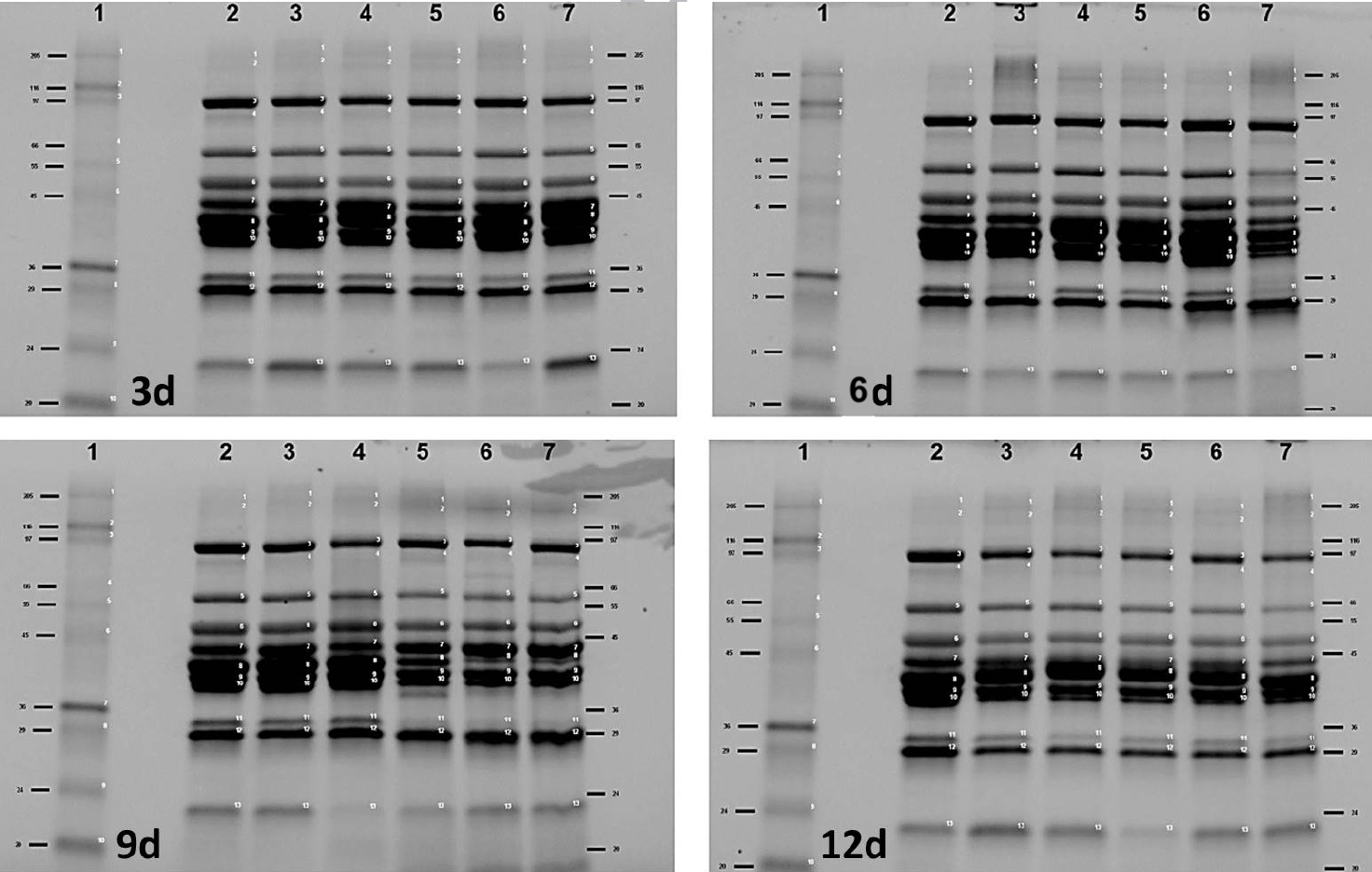
Electrophoretogram of fish fillet proteins peserved for 3, 6, 9 and 12 days. Lane 1, MW marker; 2, Day 0; 3, Turmeric; 4, Quinoa; 5, Cardamom; 6, Chitosan; 7, Control.
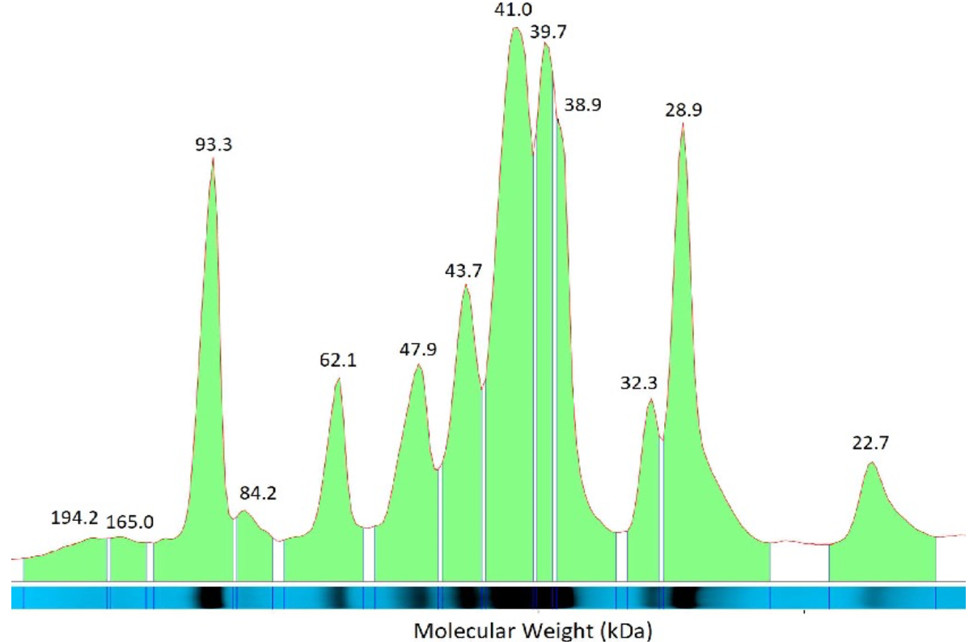
Densitogram of fish fillet proteins at day 0.
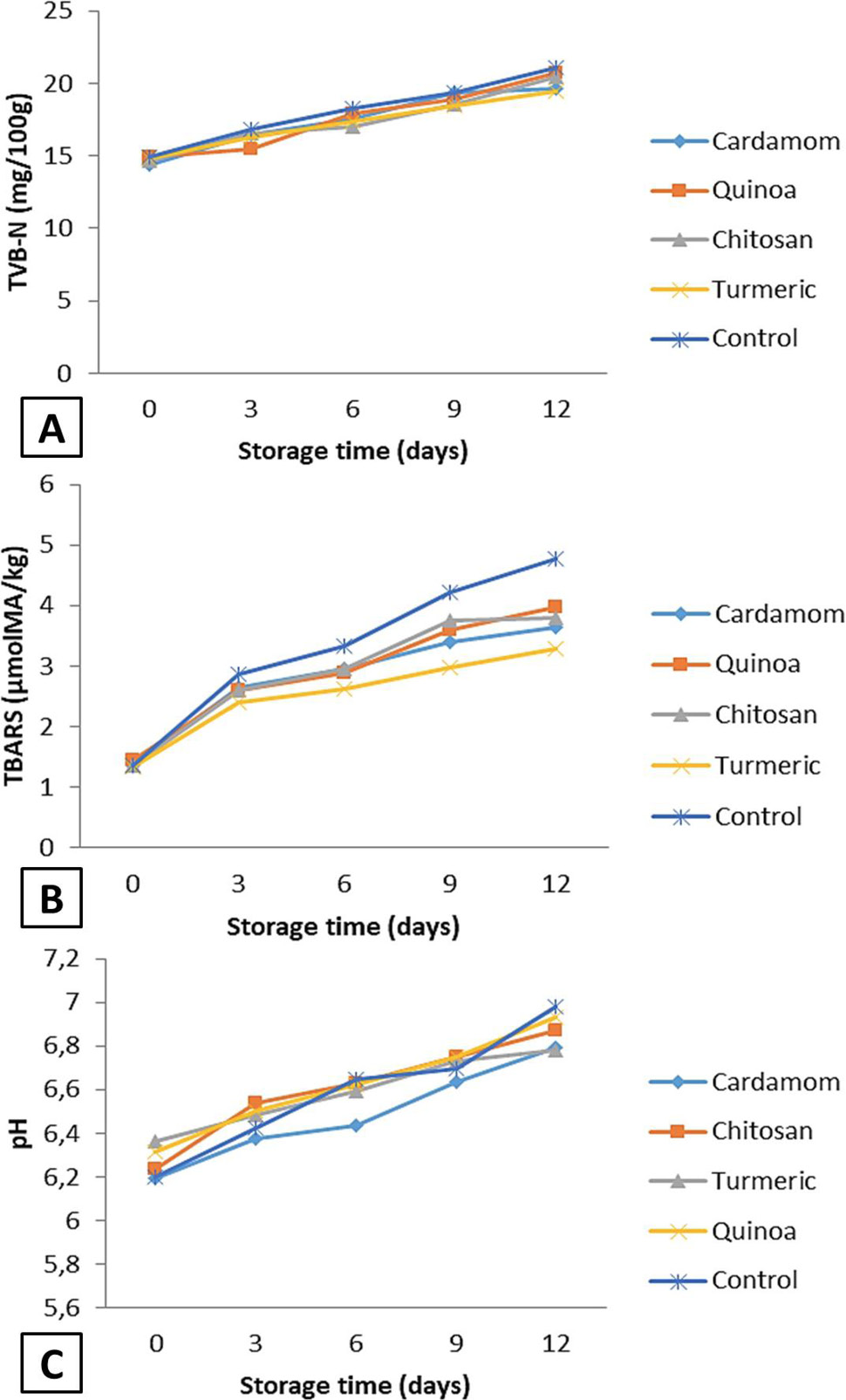
Effect of different plant extracts coating on TVB-N (A); TBARS (B) and pH (C) of rainbow trout fillets during storage time.
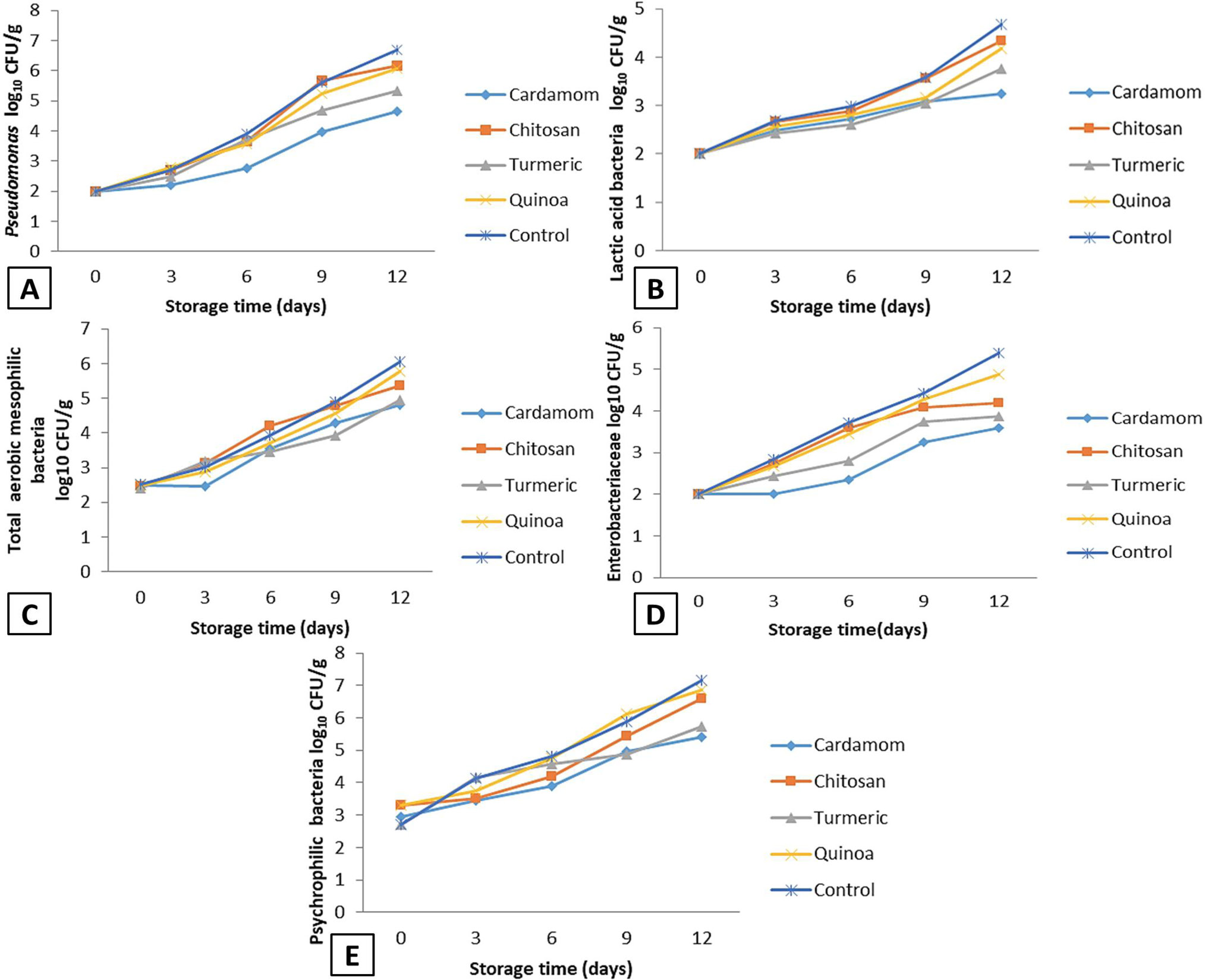
The influence of plant extract coating on microbiological status of Pseudomonas (A); Lactic acid bacteria (B); Total aerobic mesophilic (C); Enterobacteriaceae (D); psychotropic bacteria (E) of rainbow trout fillets during storage time (Log10 cfu/g).
References
- Aal-Tay, A.F., 2014. Natural phenolic extracts from cardamom, (Elettaria cardamomum), sumac (Rhus coriaria) and pomegranate (Punica granatum) - Potential application to control pathogenic bacteria in foods. Master dissertation, School of Biological Sciences, Faculty of Science and Environment, Iraq.
- Abdeldaiem, M.H., 2014. Use of yellow pigment extracted from turmeric (Curcuma longa) rhizomes powder as natural food preservative. Am. J. Fd. Sci. Technol., 2: 36-47.
- Adegoke, G.O., Fasoyiro, B. and Skura, B., 2000. Control of microbial growth browning and lipid oxidation by the spice Aframomum danielli. Eur. Fd. Res. Technol., 211: 342-345. https://doi.org/10.1007/s002170000170[CrossRef]
- Ahn, J., Grün, I.U. and Mustaph, A., 2007. Effects of plant extracts on microbial growth, color change, and lipid oxidation in cooked beef. Fd. Microbiol., 24: 7-14. https://doi.org/10.1016/j.fm.2006.04.006[CrossRef]
- Aihetasham, A., Akhtar, M.S., Umer, M., Rasib, K.Z. and Din, M.I., 2017. Bioactivity of bioactivity of extracts of foeniculum vulgare and Ocimum basilicum against Heterotermes indicola (Wasmann). Pakistan J. Zool., 49: 2193-2199.
- Akhtar, S., Khan, M.I. and Faiz, F., 2013. Effect of thawing on frozen meat quality: A comprehensive review. Pak. J. Fd. Sci., 23: 198-211.
- Alak, G. and Hisar, S.A., 2012. The effects of probiotics and prebiotics on rainbow trout (Oncorhynchus mykiss) ıntestinal flora. Int. J. Aquacul., 2: 11-14.
- Alak, G., 2012. Effects of chitosan prepared in different solvents on quality parameters of mackerel fillets. J. Anim. Vet. Adv., 11: 2813-2816. https://doi.org/10.3923/javaa.2012.2813.2816[CrossRef]
- Alak, G., Aras Hısar, S., Hısar, O., Kaban, G. and Kaya, M., 2010. Microbiological and chemical properties of bonito fish (Sarda sarda) fillets packaged with chitosan film, modified atmosphere and vacuum. Kafkas Univ. Vet Fakul. Derg., 16: S73-S80.
- Alak, G., Hisar, S.A., Hisar, O. and Genççelep, H., 2011. Biogenic amines formation in Atlantic bonito (Sarda sarda) fillets packaged with modified atmosphere and vacuum, wrapped in chitosan and cling film at 4 °C. Eur. Fd. Res. Technol., 232: 23-28. https://doi.org/10.1007/s00217-010-1354-z[CrossRef]
- Al-Bandak, G., Tsironi, T., Taoukis, P. and Oreopoulou, V., 2009. Antimicrobial and antioxidant activity of Majorana syriaca inYellowfin tuna. Int. J. Fd. Sci. Technol., 44: 373-379. https://doi.org/10.1111/j.1365-2621.2008.01775.x[CrossRef]
- Albertos, I., Rico, D., Diez, A.M., González-Arnáiz, L., García-Casasa, M.J. and Jaime, I., 2015. Effect of edible chitosan/clove oil filmsand high-pressure processing on themicrobiological shelf life of trout fillets. J. Sci. Fd. Agric., 95: 2858-2865. https://doi.org/10.1002/jsfa.7026[CrossRef]
- Ammon, H.P.T. and Wahl, M.A., 1991. Pharmacology of Curcuma longa. Pl. Med., 57: 1-7. https://doi.org/10.1055/s-2006-960004[CrossRef]
- Araújo, C.A.C. and Leon, L.L., 2001. Biological activities of Curcuma longa L. Mem. Inst. Oswaldo Cruz Rio de Janeiro, 96: 723-728.
- Ashaye, O.A., Taiwo, O.O. and Adegoke, G.O., 2006. Effect of local preservative (Aframomum danielli) on the chemical and sensory properties of stored warakanshi. Afri. J. agric. Res., 1: 10-16.
- Atrea, I., Papavergou, A., Amvrosıadıs, I. and Savvaıdıs, I.N., 2009. Combined effect of vacuum-packaging and oregano essential oil on the shelf-life of Mediterranean octopus (Octopus vulgaris) from the Aegean Sea stored at 4 ◦C. Fd. Microbiol., 26: 166-172. https://doi.org/10.1016/j.fm.2008.10.005[CrossRef]
- Aziz, M. and Karboune, S., 2016. Natural antimicrobial/antioxidant agents in meat and poultry products as well as fruits and vegetables: A review. Crit. Rev. Fd. Sci. Nutr., 58: 486-511. https://doi.org/10.1080/10408398.2016.1194256[CrossRef]
- Bakkali, F., Averbeck, S., Averbeck, D. and Idaomar, M., 2008. Biological effects of essential oils-A review. Fd. Chem. Toxicol., 46: 446-475. https://doi.org/10.1016/j.fct.2007.09.106[CrossRef]
- Burt, S., 2004. Essential oils: Their antibacterial properties and potential applications in foods – A review. Int. J. Fd. Microbiol., 94: 223-253. https://doi.org/10.1016/j.ijfoodmicro.2004.03.022[CrossRef]
- Carrión-Granda, X., Fernández-Pana, I., Jaime, I., Rovira, J. and Maté, J.I., 2016. Improvement of the microbiological quality of ready-to-eat peeled shrimps (Penaeus vannamei) by the use of chitosan coatings. Int. J. Fd. Microbiol., 232: 144-149. https://doi.org/10.1016/j.ijfoodmicro.2016.05.029[CrossRef]
- Cengiz, M., Kaynar, O., Cannazik, O., Ileriturk, M., Cengiz, S. and Hayirli, A., 2015. Sampling factors causing variability in milk constituentsin early lactation cows. Vet. Med., 60: 6-15. https://doi.org/10.17221/7920-VETMED[CrossRef]
- Ceylan, Z., Gulgun, F., Sengor, U. and Yilmaz, M.T., 2017. A novel approach to limit chemical deterioration of gilthead sea bream (Sparus aurata) fillets: Coating with electrospun nanofibers as characterized by molecular, thermal, and microstructural properties. J. Fd. Sci., 82: 1163-1170. https://doi.org/10.1111/1750-3841.13688[CrossRef]
- Cuero, R.G., 1999. Antimicrobial action of exogenous chitosan. EXS, 87: 315-333. https://doi.org/10.1007/978-3-0348-8757-1_23.[CrossRef]
- Dorman, H.J.D., Deans, S.G., Raymond, C.N. and Surai, P., 1995. Evaluation in vitro of plant essential oils as natural antioxidants. J. Essent. Oil, 7: 645-651. https://doi.org/10.1080/10412905.1995.9700520[CrossRef]
- Duncan, D.B., 1971. Multiple range and multiple F-tests. Biometrics, 11: 313-323.
- Eigner, D. and Scholz, D., 1999. Ferula asa-foetida and Curcuma longa in traditional medical treatment and diet in Nepal. J. Ethnopharmacol., 67: 1-6. https://doi.org/10.1016/S0378-8741(98)00234-7[CrossRef]
- Gobantes, I., Choubert, G. and Gomez, R., 1998. Quality of pigmented (Astaxanthin and Canthaxanthin) rainbow trout (Oncorhynchus mykiss) fillets stored under vacuum packaging during chilled storage. J. Agric. Fd. Chem., 46: 4358-4362. https://doi.org/10.1021/jf980326f[CrossRef]
- Gram, L. and Dalgaard, P., 2002. Fish spoilage bacteria problems and solutions. Curr. Opin. Biotechnol., 13: 262-266. https://doi.org/10.1016/S0958-1669(02)00309-9[CrossRef]
- Gutierrez, J., Barry-Ryan, C. and Bourke, P., 2008. Biological effects of essential oils–A review. Fd. Chem. Toxicol., 46: 446-475. https://doi.org/10.1016/j.fct.2007.09.106[CrossRef]
- Jeon, Y.J., Kamil, J.Y.V.A. and Shahidi, F., 2002. Chitosan as an edible invisible film for quality preservation of herring and Atlantic cod. J. Agric. Fd. Chem., 20: 5167-5178. https://doi.org/10.1021/jf011693l[CrossRef]
- Kamil, J.Y.V.A., Jeon, Y.J. and Shahidi, F., 2002. Antioxidative activity of chitosans of different viscosity in cooked comminuted flesh of herring (Clupea harengus). Fd. Chem., 79: 69-77. https://doi.org/10.1016/S0308-8146(02)00180-2[CrossRef]
- Koide, S.S., 1998. Chitin-chitosan: Properties, benefits and risks. Nutr. Res., 18: 1091-1101. https://doi.org/10.1016/S0271-5317(98)00091-8[CrossRef]
- Laemmli, U.K., 1970. Cleavage of structural proteins duringthe assembly of the head of bacteriophage T4. Nature, 227: 680-885. https://doi.org/10.1038/227680a0[CrossRef]
- Lemon, D.W., 1975. An improved TBA test for rancidity. New Series Circular, Halifax, Nova Scotia.
- Letelier, M.E., Rodríguez-Rojas, C., Sánchez-Jofré, S. and Aracena-Parks, P., 2011. Surfactant and antioxidant properties of an extract from Chenopodium quinoa willd seed coats. J. Cereal Sci., 53: 239-243. https://doi.org/10.1016/j.jcs.2010.12.006[CrossRef]
- Leygonie, C., Britz, T.J. and Hoffman, L.C., 2012. Impact of freezing and thawing on the quality of meat. Meat Sci., 91: 93-98. https://doi.org/10.1016/j.meatsci.2012.01.013[CrossRef]
- Malle, P. and Tao, S.H., 1987. Rapid quantitative determination of trimethylamine using steam distillation. J. Fd. Protec., 50: 756–760.
- No, H.K., Lee, K.S. and Meyers, S.P., 2000. Correlation between physicochemical characteristics and binding capacities of chitosan products. J. Fd. Sci., 65: 1134-1137. https://doi.org/10.1111/j.1365-2621.2000.tb10252.x[CrossRef]
- No, H.K., Meyers, S.P., Prinyawiwatkul, W. and Xu, Z., 2007. Applications of chitosan for ımprovement of quality and shelf life of foods: A review. J. Fd. Sci., 72: 87-100. https://doi.org/10.1111/j.1750-3841.2007.00383.x[CrossRef]
- No, H.K., Park, N.Y., Lee, S.H. and Meyers, S.P., 2002. Antibacterial activity of chitosans and chitosan oligomers with different molecular weights. Int. J. Fd. Microbiol., 74: 65-72. https://doi.org/10.1016/S0168-1605(01)00717-6[CrossRef]
- Odukoya, A.O., Ilori, O.O., Sofidiya, M.O., Aniunoh, O.A., Lawal, B.M. and Tade, I.O., 2005. Antioxidant actıvıty of Nigerian dietary spices. Electronic J. Environ. Agric. Fd. Chem., 4: 1086-1093.
- Oğuzhan Yıldız, P., 2014. Effect of essential oils and packaging on hot smoked rainbow trout during storage. J. Fd. Process. Preserv., 39: 806-815. https://doi.org/10.1111/jfpp.12291[CrossRef]
- Pyrgotou, N., Giatrakou, V., Ntzimani, A. and Savvaidis, I.N., 2010. Quality assessment of salted, modified atmosphere packaged rainbow trout under treatment with oregano essential oil. J. Fd. Sci., 75: 406-411. https://doi.org/10.1111/j.1750-3841.2010.01724.x[CrossRef]
- Qiu, X., Chen, S., Liu, G. and Lin, H., 2016. Inhibition of lipid oxidation in frozen farmed ovate pompano (Trachinotus ovatus L.) fillets stored at −18 °C by chitosan coating incorporated with citric acid or licorice extract. J. Sci. Fd. Agric., 96: 3374-3379. https://doi.org/10.1002/jsfa.7517[CrossRef]
- Rarnsewak, R.S., DeWitt, D.L. and Nair, M.G., 2000. Cytotoxicity, antioxidant and anti-inflammatory activities of curcumins I-III from Curcuma longa. Phytomedicine, 7: 303-308. https://doi.org/10.1016/S0944-7113(00)80048-3[CrossRef]
- Rinaudo, M., 2006. Chitin and chitosan: Properties and applications. Progr. Polym. Sci., 31: 603-632. https://doi.org/10.1016/j.progpolymsci.2006.06.001[CrossRef]
- Shahidi, F., Arachchi, J.K.V. and Jeon, Y.J., 1999. Food applications of
- chitin and chitosans. Trends Fd. Sci. Technol., 10: 37-51. https://doi.org/10.1016/S0924-2244(99)00017-5[CrossRef]
- Singh, O.P., Chakraborty, I., Dasgupta, A. and Datta, S., 2008. A comparative study of oxidative stres and interrelationship of important antioxidants in haloperidol and olanzepine treated patients suffering from schizophrenia. Indian J. Psychiat., 50: 171-176. https://doi.org/10.4103/0019-5545.43627[CrossRef]
- Tomaino, A., Cimino, F., Zimbalatti, V., Venuti, V., Sulfaro, V., De Pasquale, A. and Saija, A., 2005. Influence of heating on antioxidant activity and the chemical comparision of some spice essential oils. Fd. Chem., 89: 549-554. https://doi.org/10.1016/j.foodchem.2004.03.011[CrossRef]
- Undeland, I., Lindqvust, H., Chen-Yun, Y., Falch, E., Ramel, A., Cooper, M., Gildberg, A., Luten, J., Stenberg, E., Nielsen, H.H. and Elvevoll, E., 2009. Seafood and health: What is the full story? In: Marine functional food (ed. J. Luten). Wageningen Academic Publishers, Netherlands, pp. 17-87.
- Wang, L., Liu, Z., Dong S., Zhao, Y. and Zeng, M., 2014. Effects of vacuum and modified atmosphere packaging on microbial flora and shelf-life of pacific white shrimp (Litopenaeus vannamei) during controlled freezing-point storage at −0.8°C. Fd. Sci. Technol. Res., 20: 1141-1152. https://doi.org/10.3136/fstr.20.1141[CrossRef]
Supplementary material
Services
Article usage statistics
Loading…