
Transition period in ruminants is defined as a phase of 3 weeks preceding and post parturition. It is characterized by metabolic stress, reduced feed intake, intense mobilization of energy reserves, increased nutritional requirements and changes in dams’ metabolism. Yeast Supplementation has been found to increase the production performance and nutrient digestibility in ruminants. However, when compared with large ruminants there is scarcity of the data reporting the effects of dietary yeast in transition goats. Therefore, a trial was planned to elucidate the effects of various inclusion levels of live dried yeast (Saccharomyces cerevisiae) on dry matter intake (DMI), body condition score (BCS), body weight (BW) and serum health biomarkers in Beetal goats during the transition period. Twenty-four Beetal goats were randomly allotted to three groups YSC0, YSC5 and YSC10 and were fed a basal diet supplemented with 0g, 5g or 10g yeast day/animal, respectively for 4 weeks before and -4 weeks after kidding. When compared with the non-supplemented goats, dietary yeast improved (P<0.05) DMI during transition period however, BCS (P = 0.81) and BW (P = 0.59) did not vary amongst the groups. During postpartum period, results of the serum biomarkers revealed higher glucose (P=0.02) and lower (P = 0.002) non-esterified fatty acids (NEFA) levels in the supplemented vs. non-supplemented goats. Compared with non-supplemented goats, reduced serum cholesterol (P = 0.05) and elevated catalase levels (P = 0.19) were observed in yeast-supplemented goats. Nevertheless, the treatment and treatment into time interaction for serum cholesterol and catalase levels remained insignificant during the transition period. A lower (P = 0.006) serum malondialdehyde (MDA) and higher (P = 0.05) thyroxine was found in yeast-supplemented goats with insignificant treatment into day interactions during postpartum period. Serum urea, total proteins, albumin, globulin, albumin to globulin ratio, triiodothyronine, aspartate aminotransferase and alanine aminotransferase remained unchanged amongst the groups during the transition period. In conclusion, dietary yeast supplementation has resulted in better DMI and has a potential to improve the ability of Beetal goats to counteract the metabolic stress imposed by the transition period.
Research Article · Volume 52, Issue 5, 20 May 2020 · Open Access
Effect of Live Yeast Supplementation on Dry Matter Intake, Body Condition Score, Body Weight, and Serum Health Biomarkers of Beetal Goats during the Transition Period
· · · · · · ·
Affiliations & Notes ⌄
- 1Department of Physiology, University of Veterinary and Animal Sciences, Outfall Road, Lahore 2Department of Anatomy and Histology, University of Veterinary and Animal Sciences, Lahore 3Department of Clinical Sciences, College of Veterinary and Animal Sciences, Jhang 4Department of Animal Nutrition, University of Veterinary and Animal Sciences, Lahore , * Corresponding author: habibrehman@uvas.edu.pk
Article Info ⌄
- Journal:
- Pakistan Journal of Zoology
- Published:
- 20 May 2020

From the article
- The current experiment revealed that serum glucose was higher in the yeast-fed goats compared with the control goats during the postpartum and transition period but not in prepartum phase.
- The serum catalase activity was not influenced by various inclusion levels of yeast supplementation during the prepartum phase, however a tendency for increased catalase activity was observed during the postpartum period.
- Dietary supplementation of 5 and 10 g yeast did not affect the liver enzymes (AST and ALT) during prepartum phase, however, ALT activity tended to be lower in the yeast supplemented goats during the transition period.
- In conclusion, live yeast supplementation to the transition Beetal goats’ diet had a beneficial impact on DMI, health biomarkers, and the daily inclusion of live yeast in diets upto 10 g is recommended under field conditions.
Selected from the article's own text.
Abstract
Introduction
Transition period in ruminants can be defined as a phase of 3 weeks prior and 3 weeks after parturition . During this period, the maternal metabolism undergoes homeorrhetic adjustments to support the fetal growth and later on dams’ lactation. In caprine, like other domesticated animals, this period is characterized by metabolic stress manifested by reduced feed intake, intense mobilization of body energy reserves and increased nutritional requirements . Therefore the transition goat becomes more prone to negative energy balance, compromised immune system, and oxidative stress leading to metabolic derangements . All of these factors have detrimental impact on health, lactation and overall performance of the dam.
During the past few decades, various dietary interventions including prebiotics and probiotics have been utilized to minimize the stress during the transition period. Yeast, Saccharomyces cerevisiae, is either used as an isolated, active product (live yeast) or combined with its culture media (yeast culture) as a fermentation product . Because of its positive impact on ruminal fermentation and nutrient digestion Saccharomyces cerevisiae supplementation has been found to be beneficial particularly during late gestation and early lactation in dairy cows . Numerous research reports have demonstrated a positive influence of the yeast supplementation on dry matter intake ; ; , weight gain (Salama et al., 2002) and milk production in ruminants during the transition period.
Serum biochemical parameters such as metabolites, enzymes and proteins are commonly used to monitor the health status of pregnant and lactating animals . The serum glucose and non-esterified fatty acids are good indictors of body reserves which help to predict and therefore, prevent the occurrence of many metabolic health problems during the transition period. Several reports in literature have shown a positive influence of yeast supplemented diet on serum glucose, cholesterol (Abdel Rahman et al., 2012) blood total protein (Abu El-Ella and Kommonna. 2013) and non-esterified fatty acids concentration (Al Ibrahim et al., 2012) in dairy animals during transition period.
Reactive oxygen metabolites are produced during normal metabolism and to counteract the harmful effects of these reactive substances, nature has equipped an organism with a scavenging system. Normally a balance is maintained between the formation rate of reactive metabolites and their elimination. However, under some physiological conditions particularly during the late gestation and early lactation their production rate may exceed the scavenging capacity of animal and the transition goat may experience oxidative stress likewise transition cow. Similarly, serum malondialdehyde (MDA) is also considered an excellent biomarker of lipid peroxidation (oxidative stress). A recent and limited data have reported a beneficial effect of dietary yeast on MDA level in early lactating goats during heat stress and thermo-neutral period and in weaned piglets as well .
Dietary supplementation of yeast during the transition period has been useful in stress alleviation and is one of the extensively explored aspects in the dairy cow nutrition management ; ; ; . However, there are only a few studies that describe the effects of yeast supplementation in goats either during gestation period or during early to mid lactation. In addition, most of the studies involving the dietary yeast supplementation in goats have focused on production performance ; Salama et al., 2002; during early and mid-lactation phases with little attention being paid towards the effects of dietary yeast on serum health biomarkers during whole transition period in goats. Therefore, the current study aimed at exploring the effects of live dried yeast supplementation on the production parameters and serum health biomarkers in Beetal goats during the transition period.
Materials and methods
Twenty-four pregnant Beetal goats were included in the current trial. The pregnant goats were assigned randomly to one of the three treatment groups 4 weeks (28±2 days) prior to expected date of kidding. The animals had ad libitum access to water and fresh barseem (Trifolium alexandrinum) during the course of experiment. Concentrated ration was also fed at rate of 500g per day. Refusal of Barseem and concentrate was recorded on daily basis. During the course of the trial, the goats were housed at Small Ruminant Research Centre Pattoki, University of Veterinary and Animal Sciences, Lahore-Pakistan. The study site is located at Latitude 31.057254 (North), Longitude 73.878469 (East) and Altitude (above sea level) of 186 meters (613 feet). Average Annual Rainfall 550-600 millimeters (20-23 inch) and average mean temperature of location is 23°C.
Management and feeding
A routine vaccination and anthelmintic schedule for all experimental pregnant goats on trial was followed by farm management. Goats were vaccinated against enterotoxaemia 2-3 weeks before kidding. The YSC0 group, designated as control group, comprised of pregnant goats (n=8) were fed according to NRC on a basal ration for pregnant goat and later on lactation diet without yeast supplementation. The YSC5 and YSC10 groups (n=8/group) were fed the same basal ration for gestation and later on lactation supplemented with 5.0 and 10.0 g yeast (Yea-Sacc 1026 (1 x 10⁹ CFU/g) / animal/day, respectively during the study period of 2 months(28 ± 2 prepartum to 28 ± 2 days postpartum). The yeast (Alltech Inc., Kentucky, USA) was top dressed on the concentrate offered in the morning and it was hand feed to ensure the consumption of yeast. The goats were acclimatized to the experimental diet two weeks before the start of experiment.
Dry matter intake
Feed intake was calculated on dry matter basis. Dry matter intake was calculated by using the following formula:-Feed intake (kg) = Feed offered (kg) – Feed refused (kg). Samples of diet were subjected to be analyzed for dry matter using the AOAC method.
Body condition score
Body condition score (BCS) was evaluated on fortnightly basis, with a scale from 1 (thin) to 5 (obese) 0.25 point intervals.
Body weight measurements
The goats were weighed on fortnightly basis throughout the study. Body weights of experimental animals were recorded after every 14 days in the morning prior to feeding.
Serum parameters
Blood was collected from day-14 pre-prepartum till day 28 postpartum on uniform time interval with two weeks gap (-14d, 0d, +14d and +28d) from the jugular vein in Vacutainer without anticoagulant before morning feeding on sampling day. Serum was harvested by centrifugation (3000 x g for 20 min). After harvesting, the serum was divided into two aliquots in eppondroff tubes and stored in refrigerator at -20°C till further analysis. Samples were completely thawed before analysis for various blood parameters like Glucose, Urea, Cholesterol, Total proteins, Albumin, MDA, Catalase, AST, ALT, Non-esterified fatty acids using kits by Randox Laboratories, UK and T3, T4 using kits by Bio-Check, UK, Ltd. Globulin (GLOB) was determined by the difference between TP minus ALB and ALB: GLOB ratio by dividing ALB value by its corresponding GLOB value.
Statistical design
For DMI, BCS, BW and serum health biomarkers, data (Mean ± SEM) were analyzed in three separate periods i.e. prepartum, postpartum and whole transition period by General Linear Model using repeated measures in SPSS. Post hoc multiple comparisons were used for p values by using Tukey-Kramer procedure. Differences were considered significant at p < 0.05.
Results
DMI
During prepartum period, treatment into days interaction (p=0.021) revealed higher DMI of the yeast-supplemented goats compared with non-supplemented group (Fig. 1). Near the parturition, DMI of all the goats irrespective of treatment group showed a decline; however, the yeast supplemented goats still had a better DMI compared with the non-supplemented goats.
BW and BCS
The BW and BCS in all three phases were non-significant despite an initial first increase (p<0.001) in prepartum and a later decrease (p<0.001) in postpartum period across the days (Table I). The results of the current study showed that though the goats fed 5 g yeast per day showed a slightly less body weight loss (p = 0.12) compared with non-supplemented goats during the postpartum. However, the treatment × day interaction as well as the treatment for BW and BCS, respectively remained similar between the yeast supplemented and non-supplemented goats during the transition period.
Serum metabolites
The results of serum metabolites (glucose, NEFA, urea nitrogen, cholesterol) are presented in Figures 1, 2 and Table III. The yeast supplemented goats had higher (p=0.03) glucose and low serum NEFA (p=0.0) concentration on 14 d postpartum compared with non-supplemented goats. However, the serum glucose and NEFA was found similar on -14 d prepartum, 0 day of parturition and 28 d postpartum between the yeast supplemented and non-supplemented goats. A significant (p=0.01) decline in serum glucose and sharp rise (p<0.001) for NEFA was observed on the day of parturition in all the goats across the days. The results of Table I indicated that yeast-fed goats showed a tendency for low (p = 0.05) serum cholesterol compared with non-yeast fed goats, during transition period. However, cholesterol conc. did not vary among groups during the prepartum and postpartum phases. The yeast supplementation had no effect on the pre, postpartum and transition period serum urea nitrogen, however the serum urea was reduced (p = 0.01) on the day of parturition in all goats.
Serum protein profile
A non-significant effect of yeast supplementation among goats of the different groups was found in terms of treatment × day interaction and treatment on the serum total proteins, albumin, globulin and albumin to globulin ratio during pre- and postpartum phases of transition period (Table II). However, the serum total proteins and albumin were significantly reduced on the day of parturition in goats of all groups compared with two week prepartum and this trend did not continue during postpartum period.
Table I.- Effect of different levels of Saccharomyces cerevisiae (yeast) supplementation on body condition score (BCS) body weight and serum metabolites in goats during transition period.
| Item | Days | Group | SEM | P value | |||||
| YSC0 | YSC5 | YSC10 | Trt | Day | Trt × Day | ||||
| Body condition score (BCS) | |||||||||
| Prepartum | -28 | 2.50 | 2.43 | 2.50 | 0.05 | 0.40 | <0.001 | 0.34 | |
| -14 | 2.43 | 2.46 | 2.50 | 0.04 | |||||
| 0 | 2.56 | 2.68 | 2.65 | 0.04 | |||||
| -28 to 0 d | 2.50 | 2.53 | 2.55 | 0.02 | |||||
| Postpartum | +14 | 2.50 | 2.50 | 2.53 | 0.05 | 0.89 | 0.18 | 0.92 | |
| +28 | 2.43 | 2.46 | 2.46 | 0.06 | |||||
| +1 to +28 | 2.46 | 2.48 | 2.50 | 0.05 | |||||
| Transition period | -28 to +28 | 2.48 | 2.51 | 2.53 | 0.03 | 0.57 | <0.001 | 0.81 | |
| Body weight (kg) | |||||||||
| Prepartum | -28 | 47.28 | 42.82 | 44.39 | 1.59 | 0.12 | <0.001 | 0.51 | |
| -14 | 54.60 | 48.03 | 49.65 | 2.01 | |||||
| 0 | 45.86 | 40.97 | 42.57 | 2.17 | |||||
| -28 to 0 | 49.25 | 43.94 | 45.53 | 1.79 | |||||
| Postpartum | +14 | 41.41 | 39.43 | 40.96 | 1.5 | 0.74 | 0.09 | 0.71 | |
| +28 | 42.07 | 40.81 | 43.28 | 2.5 | |||||
| +14 to +28 | 41.74 | 40.12 | 42.12 | 1.93 | |||||
| Transition period | -28 to +28 | 46.24 | 42.41 | 44.17 | 1.71 | 0.30 | <0.001 | 0.59 | |
| Serum urea nitrogen (mmol/l) | |||||||||
| Prepartum | -14 d | 7.14 | 7.07 | 7.04 | 0.40 | ||||
| 0 d | 6.03 | 6.00 | 5.92 | 0.58 | |||||
| -14 d to 0 d | 6.58 | 6.53 | 6.48 | 0.53 | 0.97 | 0.01 | 0.99 | ||
| Postpartum | +14 | 6.60 | 6.53 | 6.61 | 0.47 | ||||
| +28 | 6.60 | 6.57 | 5.59 | 0.44 | |||||
| +14 to +28 d | 6.60 | 6.55 | 6.60 | 0.43 | 0.98 | 0.99 | 0.99 | ||
| Transition period | -14 to +28 d | 6.59 | 6.55 | 6.54 | 0.24 | 0.98 | 0.07 | 0.99 | |
| Cholesterol (mmol/l) | |||||||||
| Prepartum | -14 d | 2.14 | 2.11 | 2.05 | 0.20 | ||||
| 0 d | 2.16 | 2.05 | 1.63 | 0.23 | |||||
| -14 d to 0 d | 3.15 | 2.08 | 1.84 | 0.22 | 0.33 | 0.41 | 0.58 | ||
| Postpartum | +14 | 2.53 | 2.18 | 1.63 | 0.23 | ||||
| +28 | 2.49 | 2.13 | 1.88 | 0.22 | |||||
| +14 to +28d | 2.51 | 2.15 | 1.75 | 0.20 | 0.13 | 0.63 | 0.62 | ||
| Transition period | -14 to +28 d | 2.33 | 2.12 | 1.96 | 0.18 | 0.05 | 0.44 | 0.86 | |
1Goats were supplemented with no Saccharomyces cerevisiae (YSC0) or 5 (YSC5) or 10 grams/day/goat (YSC10), respectively from 28 ± 2d prior to expected date of parturition date to 28±2d post parturition. Trt, treatment; D, day, Trt×D, treatment × day interaction.
Serum oxidant and antioxidant status
The results of serum oxidant (malondialdehyde (MDA) and antioxidant (catalase) status are presented in Table III. The serum MDA and catalase concentration were not affected by various inclusions levels of yeast during prepartum phase. However, a low serum MDA (p = 0.006) was observed in yeast supplemented goats compared with control goats during postpartum and transition period. The mean serum catalase of the goats of YSC10 group tended to have higher (p = 0.06) serum catalase activity when compared with the control goats during the postpartum period. The serum catalase activity showed a consistent rise (p = 0.001) from 14 d prepartum to 28 d postpartum period within the groups during whole transition period.
Serum liver enzymes (AST and ALT)
The serum AST and ALT concentration did not vary among the groups during prepartum and postpartum period (Table III). The transition period serum AST was non-significant, however, the goats fed diet with 5 g yeast had a low (p = 0.02) ALT activity level compared with goats receiving diet supplemented with 10 g and zero grams yeast during that time.
Table II.- Effect of varying levels of Saccharomyces cerevisiae (yeast) supplementation on serum protein profile in goats during transition period.
| Item | Period | Group1 | SEM | P-value | |||||
| YSC0 | YSC5 | YSC10 | Trt | Day | Trt x Day | ||||
| Total proteins (g/dL) | |||||||||
| Prepartum | -14 d | 7.56 | 7.43 | 7.33 | 0.25 | 0.97 | 0.01 | 0.99 | |
| 0d | 7.31 | 6.65 | 6.99 | 0.21 | |||||
| -14 d to 0 d | 7.43 | 7.04 | 7.16 | 0.24 | |||||
| Postpartum | +14 d | 7.38 | 7.12 | 7.20 | 0.35 | ||||
| +28d | 7.70 | 7.43 | 7.24 | 0.25 | |||||
| +14 to +28d | 7.54 | 7.27 | 7.22 | 0.30 | 0.60 | 0.32 | 0.84 | ||
| Transition period | -14 to +28 d | 7.49 | 7.16 | 7.19 | 0.16 | 0.29 | 0.08 | 0.92 | |
| Albumin (g/dL) | |||||||||
| Prepartum | -14 d | 3.84 | 3.88 | 3.65 | 0.15 | ||||
| 0d | 3.58 | 3.40 | 3.47 | 0.12 | |||||
| -14 d to 0 d | 3.71 | 3.64 | 3.56 | 0.17 | 0.33 | 0.03 | 0.65 | ||
| Postpartum | +14 d | 3.82 | 3.51 | 3.52 | 0.16 | ||||
| +28d | 3.41 | 3.76 | 3.69 | 0.19 | |||||
| +14 to +28d | 3.61 | 3.63 | 3.60 | 0.15 | 0.98 | 0.98 | 0.14 | ||
| Transition period | -14 to +28 d | 3.67 | 3.64 | 3.58 | 0.08 | 0.73 | 0.20 | 0.58 | |
| Globulin (g/dL) | |||||||||
| Prepartum | -14 d | 3.72 | 3.54 | 3.68 | 0.21 | ||||
| 0d | 3.72 | 3.24 | 3.52 | 0.20 | |||||
| -14 d to 0 d | 3.72 | 3.39 | 3.60 | 0.22 | 0.38 | 0.29 | 0.68 | ||
| Postpartum | +14d | 3.56 | 3.61 | 3.73 | 0.30 | ||||
| +28d | 4.29 | 3.66 | 3.55 | 0.24 | |||||
| +14 to +28 d | 3.92 | 3.63 | 3.64 | 0.25 | 0.59 | 0.27 | 0.13 | ||
| Transition period | -14 to +28 d | 3.82 | 3.51 | 3.61 | 0.15 | 0.34 | 0.33 | 0.57 | |
| Albumin/ Globulin | |||||||||
| Prepartum | -14 d | 1.07 | 1.11 | 1.00 | 0.08 | ||||
| 0d | 0.98 | 1.08 | 1.01 | 0.09 | |||||
| Postpartum | +14d | 1.06 | 1.06 | 0.98 | 0.97 | ||||
| +28d | 0.82 | 1.08 | 1.06 | 0.96 | |||||
| +14 to +28 d | 0.94 | 1.07 | 1.02 | 0.96 | 0.59 | 0.43 | 0.09 | ||
| Transition period | -14 to +28 d | 0.99 | 1.08 | 1.01 | 0.05 | 0.42 | 0.79 | 0.56 | |
1Goats were supplemented with no Saccharomyces cerevisiae (YSC0) or 5 (YSC5) or 10 grams/day/goat (YSC10), respectively from 28±2d prior to expected date of parturition date to 28±2d post parturition. Trt, treatment; D, day; Trt×D, treatment × day interaction.
Table III.- Effect of varying levels of Saccharomyces cerevisiae (yeast) supplementation on oxidative stress biomarkers and liver enzymes markersin goats during transition period.
| Item | Period | Group | SEM | P-value | |||||
| YSC0 | YSC5 | YSC10 | Trt | Day | Trt x Day | ||||
| MDA (µmol/l) | |||||||||
| Prepartum | -14 d | 0.64 | 0.54 | 0.63 | 0.08 | ||||
| 0 d | 0.65 | 0.41 | 0.52 | 0.07 | |||||
| -14 to 0 d | 0.64 | 0.47 | 0.57 | 0.08 | 0.27 | 0.01 | 0.44 | ||
| Postpartum | +14 | 0.64 | 0.41 | 0.40 | 0.06 | ||||
| +28 | 0.55 | 0.40 | 0.44 | 0.06 | |||||
| +14 to +28 d | 0.59 | 0.40 | 0.42 | 0.04 | 0.006 | 0.54 | 0.53 | ||
| Transition period | -14 to +28 d | 0.62 | 0.44 | 0.49 | 0.03 | 0.004 | 0.07 | 0.76 | |
| Catalase (U/l) | |||||||||
| Prepartum | -14 d | 248.86 | 249.52 | 254.09 | 4.36 | ||||
| 0 d | 264.00 | 269.28 | 273.05 | 4.57 | |||||
| -14 to 0 d | 256.43 | 259.40 | 263.57 | 4.41 | 0.52 | 0.001 | 0.06 | ||
| Postpartum | +14 | 271.13 | 281.46 | 283.03 | 4.35 | ||||
| +28 | 274.04 | 286.71 | 290.96 | 4.77 | |||||
| +14 to +28 d | 272.58 | 284.08 | 287.00 | 4.29 | 0.06 | 0.007 | 0.53 | ||
| Transition period | -14 to +28 d | 264.51 | 271.74 | 275.28 | 3.87 | 0.15 | 0.001 | 0.19 | |
| AST (U/l) | |||||||||
| Prepartum | -14 d | 101.77 | 100.61 | 98.39 | 4.90 | ||||
| 0d | 99.17 | 99.80 | 103.90 | 5.33 | |||||
| -14 to 0d | 100.47 | 100.21 | 101.15 | 3.24 | 0.97 | 0.88 | 0.75 | ||
| Postpartum | +14 d | 91.81 | 96.52 | 94.28 | 5.66 | ||||
| +28d | 96.80 | 92.63 | 98.25 | 6.44 | |||||
| +14 to +28 d | 94.31 | 94.58 | 96.26 | 4.64 | 0.94 | 0.71 | 0.68 | ||
| Transition period | -14 to +28 d | 97.39 | 97.40 | 98.71 | 3.07 | 0.94 | 0.32 | 0.96 | |
| ALT (U/l) | |||||||||
| Prepartum | -14 d | 30.19 | 28.79 | 30.06 | 0.70 | ||||
| 0d | 30.06 | 28.35 | 28.72 | 1.12 | |||||
| -14 to 0 d | 30.13 | 28.35 | 29.39 | 0.58 | 0.19 | 0.46 | 0.83 | ||
| Postpartum | +14 d | 30.06 | 28.60 | 28.98 | 1.03 | ||||
| +28d | 30.63 | 27.94 | 29.63 | 1.01 | |||||
| +14 to +28d | 30.34 | 28.27 | 29.30 | 0.63 | 0.10 | 0.84 | 0.81 | ||
| Transition period | -14 to +28 d | 30.24 | 28.42 | 29.35 | 0.43 | 0.02 | 0.88 | 0.98 | |
1Goats were supplemented with no Saccharomyces cerevisiae (YSC0) or 5 (YSC5) or 10 grams/day/goat (YSC10), respectively from 28±2d prior to expected date of parturition date to 28±2d post parturition. Trt, treatment; D, day, Trt×D, treatment × day interaction; AST, aspartate aminotransferase; ALT, alanine aminotransferase.
Thyroid hormones (T3 and T4)
The serum T3 and T4 values (Table IV) were not affected by different levels of yeast during prepartum and transition period expect during postpartum period when T4 was non- significantly (p = 0.05) low in control goats compared with the yeast supplemented goats. Moreover the T3 value was decreased (p = 0.02), while the serum T4 concentration was increased (p=0.001) from prepartum to postpartum phase of the transition period in all goats.
Table IV.- Effect of varying levels of Saccharomyces cerevisiae (yeast) supplementation on serum thyroid hormones (T3 and T4) in goats during transition period.
| Item | Period (days) | Group1 | SEM | P value | |||||
| YSC0 | YSC5 | YSC10 | Trt | Day | Trt x Day | ||||
| T3 (ng/dl) | |||||||||
| Prepartum | -14 d | 2.13 | 2.14 | 2.06 | 0.11 | ||||
| 0d | 2.12 | 2.09 | 2.03 | 0.09 | |||||
| -14 to 0 d | 2.13 | 2.12 | 2.04 | 0.06 | 0.66 | 0.77 | 0.98 | ||
| Postpartum | +14 d | 2.00 | 1.98 | 1.99 | 0.08 | ||||
| +28d | 1.92 | 1.89 | 1.86 | 0.06 | |||||
| +14 to +28 d | 1.96 | 1.93 | 1.93 | 0.05 | 0.91 | 0.04 | 0.93 | ||
| Transition period | -14 to +28 d | 2.04 | 2.03 | 1.99 | 0.04 | 0.57 | 0.02 | 0.99 | |
| T4 (µg/dl) | |||||||||
| Prepartum | -14 d | 10.70 | 11.04 | 11.07 | 0.19 | ||||
| 0d | 8.03 | 7.32 | 7.77 | 0.26 | |||||
| -14 to 0 d | 9.36 | 9.18 | 9.42 | 0.25 | 0.79 | 0.001 | 0.51 | ||
| Postpartum | +14 d | 7.94 | 8.20 | 8.66 | 0.27 | ||||
| +28d | 8.08 | 8.51 | 9.49 | 0. 21 | |||||
| +14 to +28 d | 8.01 | 8.35 | 9.07 | 0.30 | 0.05 | 0.20 | 0.67 | ||
| Transition period | -14 to +28 d | 8.68 | 8.77 | 9.25 | 0.23 | 0.20 | 0.001 | 0.30 | |
1Goats were supplemented with no Saccharomyces cerevisiae (YSC0) or 5grams/day/goat (YSC5) or 10 grams/day/goat (YSC10), respectively from 28±2d prior to expected date of parturition date to 28±2 days post parturition. Trt, treatment; D, day, Trt×D, treatment × day interaction; T3, Triiodothyronine; T4, Thyroxine.
Discussion
The present study demonstrates the effects of different dietary inclusions of live dried yeast of Saccharomyces cerevisiae origin on the production parameters and serum health biomarkers of Beetal goats during the transition period. Transition period in pregnant animals is a stressful period characterized by negative energy balance, metabolic and health problems that may reduce the performance of the dam . Supplementing the diet with yeast might be a strategy to mitigate the negative effects of these metabolic changes during the transition period.
The current study observed a higher DMI in yeast-fed goats compared with the non-yeast supplemented goats during the prepartum phase. During the last week before parturition, the DMI of all the goats declined and interestingly, yeast-fed goats have shown a better DMI in comparison with the non-supplemented goats during that period. Similar to our study, improvement in prepartum DMI was observed in yeast supplemented transition dairy cows . During the last three weeks of gestation, due to rapid growth, the fetus occupies a large space in the abdomen by pushing aside the rumen. This physical fill puts pressure on the rumen and reduces its capacity to accommodate neutral detergent fiber (NDF), a major component of ruminants’ diet. Yeast is well known for accelerated fermentation of NDF in the rumen because of its stimulatory effects on the growth of cellulose digesting bacteria . The reduction in physical fill due to the rapid hydrolysis of NDF, thus might have allowed for greater dry matter intake, as observed during the prepartum phase of the current study.
Similar to prepartum period the current study observed a consistently higher DMI in the yeast supplemented goats during the postpartum period. Our results are in agreement with Abd El-Ghani (2004) and Stella et al. (2007), who reported an increased DMI in yeast-fed dairy goats during early lactation. The observed improvement in DMI during postpartum phase could have resulted from yeast induced stabilization of ruminal pH as the postpartum ration usually contains greater portion of non-fibrous readily fermentable carbohydrates. The high quantity of soluble carbohydrate provides favorable conditions for growth of lactic acid producing bacteria thus enhancing the chances for sub acute ruminal acidosis during the early postpartum period. It is well established phenomenon that yeast can prevent the growth of lactic acid in the rumen because of its ability to compete with lactic acid producing bacteria for fermentation . Similar to the pre- and postpartum phases yeast-fed goats had better DMI as compared to the control group during the transition period. Specific data are lacking regarding the effects of various inclusion levels of yeast supplementation on the transition period DMI in goats. However, findings of the present study are concordant with the extensive data on transition period DMI in dairy cows ; ; ; . The improved transition period DMI in yeast supplemented goats of the current report could be attributed to the similar mechanisms recorded in cattle like stabilization of the ruminal pH and improved fermentation ; . However, further investigations are warranted to verify this presumption.
The results of current study revealed that different levels of yeast did not affect the BW and BCS of the supplemented and non-supplemented goats either during the prepartum and postpartum phases or the transition period as a whole. The findings of the present study are consistent with the experiments reporting lack of effect of yeast supplementation on the prepartum BW and BCS in dairy cattle ; and on postpartum BW and BCS in dairy goats ; . A lot of data are available in dairy cows and less in sheep, however specific data regarding the effects of yeast supplementation on body weight and BCS during the transition period in goats is not available.
Serum glucose is also a good indicator of body reserves which helps to predict and therefore, prevent the occurrence of many metabolic health problems during the transition period . The current experiment revealed that serum glucose was higher in the yeast-fed goats compared with the control goats during the postpartum and transition period but not in prepartum phase. The findings of present study are similar to those by Noeck et al. (2003) who reported a non-significant effect of yeast supplementation on prepartum serum glucose in dairy cows. Similar to the current experiment, Mousa et al. (2012) observed higher serum glucose in sheep during the postpartum phase. Knowing that propionic acid is an important volatile fatty acid which acts as a main substrate for glucose synthesis in ruminants, higher serum glucose levels observed in the yeast-fed goats during postpartum period may be related to higher concentrations of propionic acid .
Pirmohammdi et al. (2014) proposed that serum NFEA can be used as an important indicator of energy status in goat during the late gestation in the same manner as it is considered for large ruminants. Results of the present study revealed a low serum NEFA concentration in goats fed with 10 g dietary yeast compared with control goats during first two weeks of postpartum phase of the transition period. Nevertheless, there was no effect of the yeast supplementation on NEFA level during the prepartum and transition period. Similar to the present study Al Ibrahim et al. (2013) also reported a low NEFA concentration in dairy cows during postpartum period. In the current study, yeast supplementation appeared to promote the energy reserves of the dam with a lesser need to mobilize its fatty tissue hence leading to low NEFA concentration in supplemented goat during postpartum phase of transition period.
The serum urea nitrogen remained unchanged by the dietary supplementation of either 5 or 10 g yeast during both pre- and postpartum phases of the transition period. These results are supported by a number of previous studies conducted in bovines and ovines . Variable results are available in the literature regarding the effects of yeast supplementation on the blood urea nitrogen in different species. Mousa et al. (2012) reported increased blood urea nitrogen in sheep and Yalcin et al. (2011) reported no effect on serum urea nitrogen following yeast supplementation in cows during the postpartum period. The difference found in the studies might have arisen by a number of factors such as differences in levels, duration of yeast supplementation, animal species, diet composition, environmental conditions and physiological status of the animal .
Cholesterol is a precursor of the steroid hormones and its concentration is influenced by a number of factors, including the diet, stage of gestation and lactation in goats. Dietary supplementation of 10 g yeast tended to decrease the serum cholesterol during the transition period in the current study. However, yeast-fed diet did not influence the serum cholesterol levels during the prepartum and postpartum periods. These findings are reinforced by other researchers who did not observe any positive effect of yeast supplementation on serum cholesterol in transition cow . Similarly, the yeast supplementation did not affect the serum total proteins, albumin, globulin and albumin to globulin ratio during prepartum, postpartum and transition period. In agreement to the present study, no effect of yeast on serum total proteins , serum albumin , globulin and albumin to globulin ratio were observed in the yeast supplemented goats. The values of these parameters were found within the reference range indicating that animals in all the groups were in good health condition. Some of the possible reasons for the non-responsiveness of these parameters to the yeast may be the diet composition, environmental condition and individual response of animals.
The MDA is a specific biomarker of lipid peroxidation and its higher concentration in blood leads to the oxidative stress during pregnancy . The current study indicated a low MDA level in yeast-fed goats during the first two week of postpartum phase of the transition period. Specific data referring to the effects of yeast supplementation on oxidative stress biomarkers like MDA in goats is lacking. However, our findings can be compared to the recent reports of Zhu et al. (2017), who reported lower MDA levels in weaned piglets. Probably the yeast has some potential to decrease the lipid peroxidation process which is reflected in a low MDA level in the current study particularly during the postpartum period. These results are further reinforced by a tendency towards higher activity of serum catalase in the yeast supplemented postpartum goats.
The serum catalase activity was not influenced by various inclusion levels of yeast supplementation during the prepartum phase, however a tendency for increased catalase activity was observed during the postpartum period. As for the serum MDA, there is scarcity of specific data referring to the effects of yeast supplementation on antioxidant enzymes like catalase in goats during the transition period. Our findings are similar to those of Czech et al. (2006) who observed an increased catalase activity in pregnant sheep which were fed mannan-oligosaccharides (MOS) during the late gestation and early lactation. Similarly, yeast-fed broiler chickens also shown a higher serum catalase activity indicating a protective effect of yeast against the oxidative stress.
Dietary supplementation of 5 and 10 g yeast did not affect the liver enzymes (AST and ALT) during prepartum phase, however, ALT activity tended to be lower in the yeast supplemented goats during the transition period. The values for AST and ALT in current experiment were within the normal range for caprine . Dietary supplementation of both inclusion levels of yeast did not affect the serum T3 levels during pre- and postpartum which is similar to the observations of Stella et al. (2007) in dairy goats and dairy cows during postpartum period. However, the present study results revealed a higher T4 concentration in yeast supplemented goats during postpartum period only. Similar to our results Glade (1991) reported a tendency for higher T4 levels in the yeast-fed mares during the transition period and suggested that yeast supplemented diet caused changes in circulating energy substrate and amino acid concentrations which may be mediated through changes in thyroid hormone metabolism during the transition period.
Conclusion
In conclusion, live yeast supplementation to the transition Beetal goats’ diet had a beneficial impact on DMI, health biomarkers, and the daily inclusion of live yeast in diets upto 10 g is recommended under field conditions. These results have underlined the need to ascertain proper inclusion levels of yeast supplementation for other physiological states in Beetal goat which could be used in the practical management practices in sub-tropical areas like heat stress, fattening, and lactating goat as well.
Acknowledgment
Authors are grateful to Higher Education Commission (HEC) Islamabad for the award of Ph D fellowship to Shaista Abbas under 5000 Indigenous PhD Fellowship Program. The authors are also indebted to staff at Small ruminant research and training center crew for the care of the goats and assistance with sample collection for this experiment.
Statement of conflict of interest
The authors declare no conflict of interest.
Figures
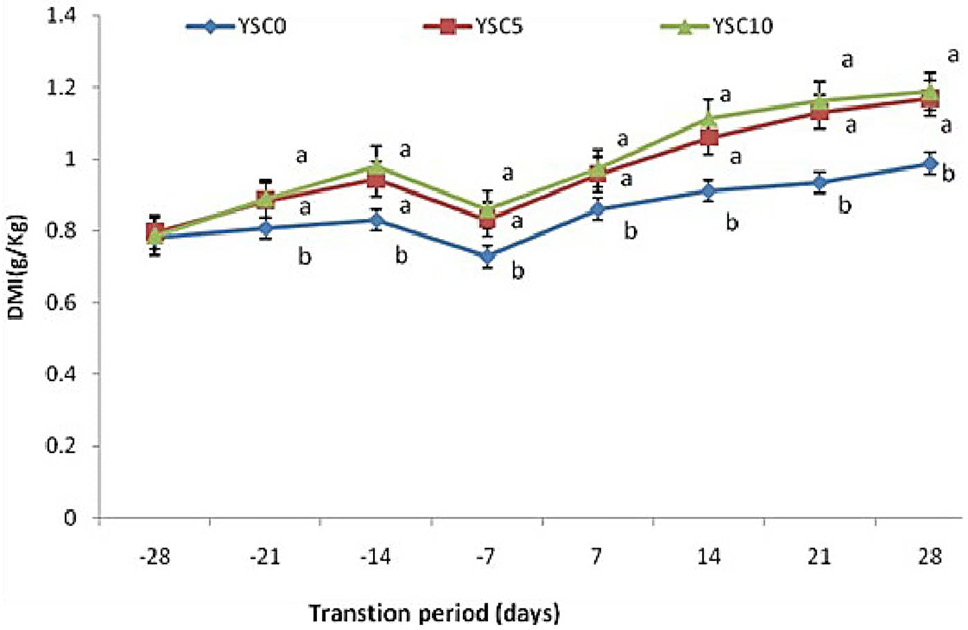
Effect of yeast supplementation on DMI in transition goats after varying levels of Saccharomyces cervisiae (yeast).
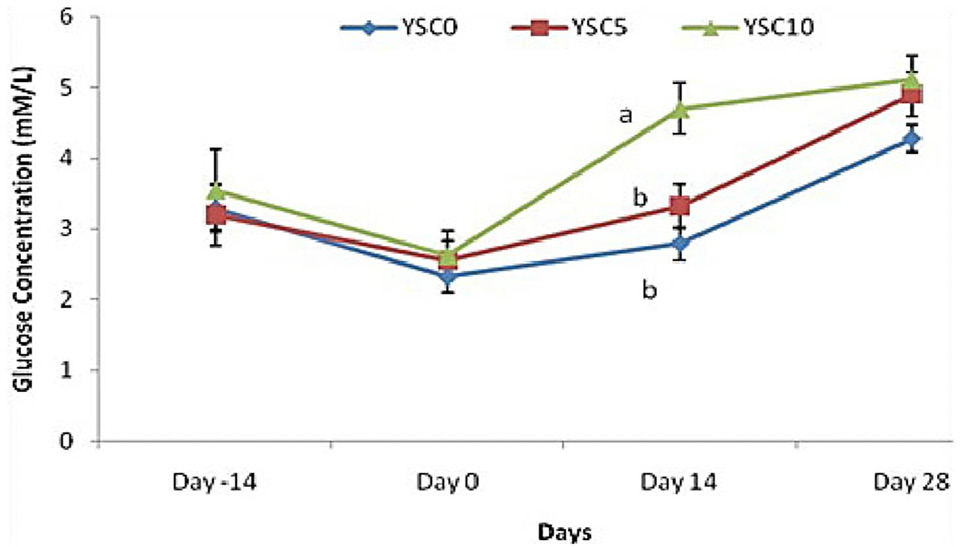
Effect of varying levels of Saccharomyces cervisiae (yeast) supplementation on serum glucose in goats during transition period.
References
- Abdel-Rahman, H., Baraghit, G.A., Abu El-Ella, A.A., Omar, S.S., Faten F., Abo Ammo and Komonna, O.F., 2012. Physiological responses of sheep to diet supplementation with yeast culture. Egypt J. Sheep Goats Sci., 7: 27-38. https://doi.org/10.12816/0005005[CrossRef]
- Abu El-Ella, A.A. and Kommonna, O.F., 2013. Reproductive performance and blood constituents of Damascus goats as affected by yeast culture supplementation. Egypt. J. Sheep Goat Sci., 8: 171-187. https://doi.org/10.12816/0005039[CrossRef]
- Al-Ibrahim, R.M., Gath, V.P., Campion, D.P., Mc Carney, C., Duffy, P. and Mulligan, F.J., 2012. The effect of abrupt or gradual introduction to pasture after calving and supplementation with Saccharomyces cerevisiae (strain 1026) on ruminal pH and fermentation in early lactation dairy cows. Anim. Feed Sci. Technol., 178: 40-47. https://doi.org/10.1016/j.anifeedsci.2012.09.011[CrossRef]
- Aluwong, T., Kawu, M., Raji, M., Dzenda, T., Govwang, F., Sinkalu, V. and Ayo, J., 2013. Effect of yeast probiotic on growth, antioxidant enzyme activities and malondialdehyde concentration of broiler chickens. Antioxidants, 2: 326-339. https://doi.org/10.3390/antiox2040326[CrossRef]
- Bruno, R.G.S., Rutigliano, H.M., Cerri, R.L., Robinson, P.H. and Santos, J.E.P., 2009. Effect of feeding Saccharomyces cerevisiae on performance of dairy cows during summer heat stress. Anim. Feed Sci. Technol., 150: 175-186. https://doi.org/10.1016/j.anifeedsci.2008.09.001[CrossRef]
- Celi, P., Di Trana, A. and Quaranta, A., 2008. Metabolic profile and oxidative status in goats during the peripartum period. Aust. J. exp. Agric., 48: 1004-1008. https://doi.org/10.1071/EA07410[CrossRef]
- Celi, P., Di Trana, A. and Claps, S., 2010. Effects of plane of nutrition on oxidative stress in goats during the peripartum period. Vet. J., 184: 95-99. https://doi.org/10.1016/j.tvjl.2009.01.014[CrossRef]
- Chaucheyras-Durand, F. and Fonty, G., 2002. Yeasts in ruminant nutrition. Experiences with a live yeast product. Kraftfutter, 85: 146-150.
- Czech, A., Klebaniuk, R. and Ognik, K., 2006. Influence of mannan-oligosaccharide prebiotic (MOS) and probiotic (Microbisan) feed additives on the haematology and antioxidant parameters of ewe’s blood. Pol. J. Nat. Sci., 3: 171-176.
- Dann, H.M., Drackley, J.K., McCoy, G.C., Hutjens, M.F. and Garrett, J.E., 2000. Effects of yeast culture (Saccharomyces cerevisiae) on prepartum intake and postpartum intake and milk productionof Jersey cows. J. Dairy Sci., 83: 123-127. https://doi.org/10.3168/jds.S0022-0302(00)74863-6[CrossRef]
- Desnoyers, M., Giger-Reverdin, S., Bertin, G., Duvaux-Ponter, C. and Sauvant, D., 2009. Meta-analysis of the influence of Saccharomyces cerevisiae supplementation on ruminal parameters and milk production of ruminants. J. Dairy Sci., 92: 1620-1632. https://doi.org/10.3168/jds.2008-1414[CrossRef]
- El-Ghani, A., 2004. Influence of diet supplementation with yeast culture (Saccharomyces cerevisiae) on performance of Zaraibi goats. Small Rumin. Res., 52: 223-229. https://doi.org/10.1016/j.smallrumres.2003.06.002[CrossRef]
- Fadel Elseed, A.M.A., Sekine, J., Kamel, H.E.M. and Hishinuma, M., 2004. Changes with time after feeding in ruminal pool sizes of cellular contents, crude protein, cellulose, hemicellulose and lignin. Ind. J. Anim. Sci., 74: 205-210.
- Galip, N., 2006. Effect of supplemental yeast culture and sodium bicarbonate on ruminal fermentation and blood variables in rams. J. Anim. Phys. Anim. Nutri., 90: 446-452. https://doi.org/10.1111/j.1439-0396.2006.00625.x[CrossRef]
- Glade, M.J., 1991. Effects of dietary yeast culture supplementation of lactating mares on the digestibility and retention of the nutrient delivered to nursing foals via milk. J. Equine Vet. Sci., 11: 323-329. https://doi.org/10.1016/S0737-0806(06)81261-X[CrossRef]
- Hadjipanayiotou, M., Antoniou, I. and Photiou, A., 1997. Effects of the inclusion of yeast culture on the performance of dairy ewes and goats and the degradation of feedstuffs. Livest. Produc. Sci., 48: 129-134. https://doi.org/10.1016/S0301-6226(97)00001-8[CrossRef]
- Hostetler, C., Kincaid, R. and Mirando, M., 2003. The role of essential trace elements in embryonic and fetal development in livestock. Vet. J., 166: 125-139. https://doi.org/10.1016/S1090-0233(02)00310-6[CrossRef]
- Kaneko, J.J., Harvey, J.W. and Bruss, M.L., 2008. Clinical biochemistry of domestic animals, 6th edn. Academic Press, San Diego, CA, pp. 916.
- Kawas, J.R., Garcia-Castillo, R., Garza-Cazares, F., Fimbres Durazo, H., Olivares-Saenz, E., Hernandez-Vidal, G. and Lu, C.D., 2007. Effects of sodium bicarbonate and yeast on productive performance and ncarcass characteristics of light weight fed finishing diets. Small Rumin. Res., 67: 157-163. https://doi.org/10.1016/j.smallrumres.2005.09.011[CrossRef]
- Križková, L., Ďuračková, Z., Šandula, J., Sasinková, V. and Krajčovič, J., 2001. Antioxidative and antimutagenic activity of yeast cell wall mannans in vitro. Mutat. Res., 497: 213-222. https://doi.org/10.1016/S1383-5718(01)00257-1[CrossRef]
- Lynch, H.A. and Martin, S.A., 2002. Effects of Saccharomyces cerevisiae culture and Saccharomyces cerevisiae live cells on in vitro mixed ruminal microorganism fermentation. J. Dairy Sci., 85: 2603-2608. https://doi.org/10.3168/jds.S0022-0302(02)74345-2[CrossRef]
- Moallem, U., Lehrer, H., Livshitz, L., Zachut, M. and Yakoby, S., 2009. The effects of live yeast supplementation to dairy cows during the hot season on production, feed efficiency, and digestibility. J. Dairy Sci., 92: 343-351. https://doi.org/10.3168/jds.2007-0839[CrossRef]
- Mousa, K.M., El-Malky, O.M., Komonna, O.F. and Rashwan, S.E., 2012. Effect of live dried yeast supplementation on digestion coefficients, some rumen fermentation, blood constituents and some reproductive and productive parameters in Rahmani sheep. J. Am. Sci., 8: 291-303.
- Nocek, J.E., Kuatz, W.P., Leedle, J.A.Z. and Block, E., 2003. Direct-fed microbial supplementation on the performance of dairy cattle during the transition period. J. Dairy Sci., 86: 331-335. https://doi.org/10.3168/jds.S0022-0302(03)73610-8[CrossRef]
- Nocek, J.E. and Kautz, W.P., 2014. Direct-fed microbial supplementation on ruminal digestion, health, and performance of pre- and postpartum dairy cattle. J. Dairy Sci., 89: 260-266. https://doi.org/10.3168/jds.S0022-0302(06)72090-2[CrossRef]
- Oetzel, G.R., Emery, K.M., Kautz, W.P. and Nocek J.E., 2007. Direct-fed microbial supplementation and health and performance of pre- and postpartum dairy cattle: A field trial. J. Dairy Sci., 90: 2058-2068. https://doi.org/10.3168/jds.2006-484[CrossRef]
- Özsoy, B., Yalçin, S., Erdoğan, Z., Cantekin, Z. and Aksu, T., 2013. Effects of dietary live yeast culture on fattening performance on some blood and rumen fluid parameters in goats. Rev. Méd. Vét., 164: 263-271.
- Pirmohammadi, R., Anassori, E., Zakeri, Z. and Tahmouzi, M., 2014. Effects of garlic supplementation on energy status of pre-partum Mahabadi goats. Vet. Res. Forum, 5: 207-212.
- Plumb, D.C., 2015. Plumb’s veterinary drug handbook, 8th edn. Blackwell Publishing, USA.
- Raeth-Knight, M.L., Linn, J.G. and Jung, H.G., 2007. Effect of direct-fed microbials on performance, diet digestibility, and rumen characteristics of Holstein dairy cows. J. Dairy Sci., 90: 1802-1809. https://doi.org/10.3168/jds.2006-643[CrossRef]
- Slama, A.A.K., Caja, G., Garin, D., Albanell, E. and Such, X., 2002. Effects of adding a mixture of malate and Yeast Culture (Saccharomyces cerevisiae) on milk production of Murciano-Granadiana dairy goats. Anim. Res., 51: 295-303. https://doi.org/10.1051/animres:2002025[CrossRef]
- Stella, A.V., Paratte, R., Valnegri, L., Cigalino, G., Soncini, G., Chevaux, E., Dell’Orto, V. and Savoini, G., 2007. Effect of administration of live Saccharomyces cerevisiae on milk production, milk composition, blood metabolites, and faecal flora in early lactating dairy goats. Small Rumin. Res., 67: 7-13. https://doi.org/10.1016/j.smallrumres.2005.08.024[CrossRef]
- Wang, L., Wang, Z., Zou, H. and Peng, Q., 2016. Yeast culture and vitamin E supplementation alleviates heat stress in dairy goats. Asian-Australas. J. Anim. Sci., 29: 814-822. https://doi.org/10.5713/ajas.15.0414[CrossRef]
- Yalcin, S., Yalcin, S., Pinar, C., Arif, O.G., Cemalettin, B. and Onder, E., 2011. The nutritive value of live yeast culture (Saccharomyces cerevisiae) and its effect on milk yield, milk composition and some blood parameters of dairy cows. Asian-Australas. J. Anim. Sci., 24: 1377-1385. https://doi.org/10.5713/ajas.2011.11060[CrossRef]
- Yang, L.Y., Li, X.S., He, B.X., Yang, X.L., Li, G.H., Liu, P., Huang, Q.H., Pan, X.M. and Li, J., 2011. Malondialdehyde level and some enzymatic activities in subclinical mastitis milk. Afr. J. Biotechnol., 10: 5534-5538.
- Zhu, C., Wang, L., Shao-Yong, W., Zhuang, C., Xian-Yong, M.A., Chun-Tian, Z. and Zong-Yong, J., 2017. Effect of yeast Saccharomyces cerevisiae supplementation on serum antioxidant capacity, mucosal sIgA secretions and gut microbial populations in weaned piglets. J. Integr. Agric., 16: 2029-2037. https://doi.org/10.1016/S2095-3119(16)61581-2[CrossRef]
Cited by 1 article
In journals published by ResearchersLinks.
Services
Article usage statistics
Loading…